Abstract
Geological disasters induce coal mine accidents, which usually cause casualties and large economic losses in coal mines. However, the chain relationship and disaster mechanisms of geological disasters secondary coal mine accidents are still unclear, and the research on risk assessment methods of geological disasters induced coal mine accidents is relatively scarce. Based on investigating typical cases of secondary coal mine accidents caused by different types of geological disasters, this paper analyzed and studied the disaster-causing factors and chain generation relationship of geological disaster secondary coal mine accidents and studied the disaster-causing mechanism of secondary coal mine accidents caused by geological disasters. On the basis of analyzing the influencing factors of geological disaster secondary coal mine accidents, the risk index system of geological disaster secondary coal mine accidents was constructed, the risk grade assessment method was studied. The risk assessment model of geological disaster secondary coal mine accidents was constructed, and the weight of each index in the assessment system was determined by using the analytic hierarchy process, and the normalized treatment was carried out. According to the safety risk index of geological disaster secondary coal mine accidents, the grade division was carried out to guide the targeted prevention and control measures.
1. Introduction
At this stage, although it has made breakthrough progress in clean energy fields such as hydropower generation and photovoltaic power generation, coal resources still occupy
The mainstream position in energy production and energy consumption from the overall situation of the energy market and social demand. Therefore, it can be predicted that the mining intensity of coal resources will remain at a high level for a long time [1]. However, a large number of coal mines are within the scope of geological disasters, which seriously affects the safe and efficient mining of coal mines.
In recent years, geological disasters occur frequently in the coal mine area, which is easy to cause the downstream coal mine industrial plaza and personnel safety accidents [2]. There is a chain relationship between geological disasters and secondary coal mine accidents [3].
In the study of coal mine geological disasters, the geological disasters in mines are generally not isolated, but complex disaster systems or disaster chains that are interconnected [4,5]. Some scholars have studied mine geological disasters, but it is still rare to study it as a disaster chain [6]. There is a chain reaction between geological disasters, and the formation and development of mine geological disasters can be seen as a chain process of comprehensive action of internal and external factors [7]. With the rapid development of economic activities, mine geological disasters have a trend of further aggravation, and accompany other disasters [8,9]. The situation is more complex, and the harm is greater.
The disaster chain of geological disaster secondary coal mine accidents is a kind of disaster chain. It refers to the process of the occurrence of a geological disaster under certain factors, which leads to the occurrence of secondary disasters in the coal mine area [10,11]. It has a common or similar cause of formation, has a sequence of formation time, and has a related cause of formation [12,13]. It is a disaster model composed of a series of disasters. According to the inducing factors, the geological disaster chain can be divided into internal dynamic geological disaster chain, external dynamic geological disaster chain, geological disaster chain of human engineering activities, and composite geological disaster chain [14]. According to the different scale of the geological hazard chain, the geological disaster chain can be divided into four levels.
For the study of geological disaster risk assessment, the danger of geological disaster and vulnerability of bearing body were proposed when analyzing landslides, which has promoted the development of geological disaster risk study [15,16]. Considering the influence of terrain and geological conditions, they used mathematical statistics model to evaluate the geological hazards in Italian mountain areas [17]. When landslide disaster zoning was carried out, terrain factors, rock mass property factors, and landslide distribution status related to landslide are used to classify landslide disaster [18]. With the rise of mathematical statistics, more and more researchers have studied the risk assessment of geological disasters. Different evaluation indexes were selected and calculated with fuzzy mathematics to draw the disaster zoning map [19]. Combined with hierarchical models and mathematical models, the degree index of geological disasters in different regions was calculated, and the development trend of future disasters was analyzed [20,21]. The geological disaster evaluation index was selected, and the study area was zoned based on the principle of the highest degree of membership by using the fuzzy comprehensive evaluation method [22].
However, the research on the influencing factors, disaster-causing mechanisms, and chain generation relationships of secondary coal mine accidents caused by geological disasters is relatively scarce. It is urgent to use the chain generation disaster theory and the risk assessment theory of secondary coal mine accidents caused by geological disasters to carry out research to provide support for disaster prevention and reduction to ensure the safety of coal mine buildings, equipment, and personnel.
2. Characteristics and Types of Geological Disaster Secondary Coal Mine Accidents
2.1. Investigation and Characteristics of Geological Disaster Secondary Coal Mine Accidents
2.1.1. Distribution Characteristics of Geological Disasters in China
Geological disasters refer to the disasters related to geological processes, including rock avalanche, landslide, debris flow, ground collapse, ground fissure, and land subsidence, which are caused by natural factors or human activities and endanger the safety of people’s lives and property. Among them, rock avalanches, landslides, and debris flow are the most serious disasters, which were characterized by wide distribution, strong disaster occurrence and destructiveness, concealment, and easy chain disasters, and caused huge economic losses and casualties every year.
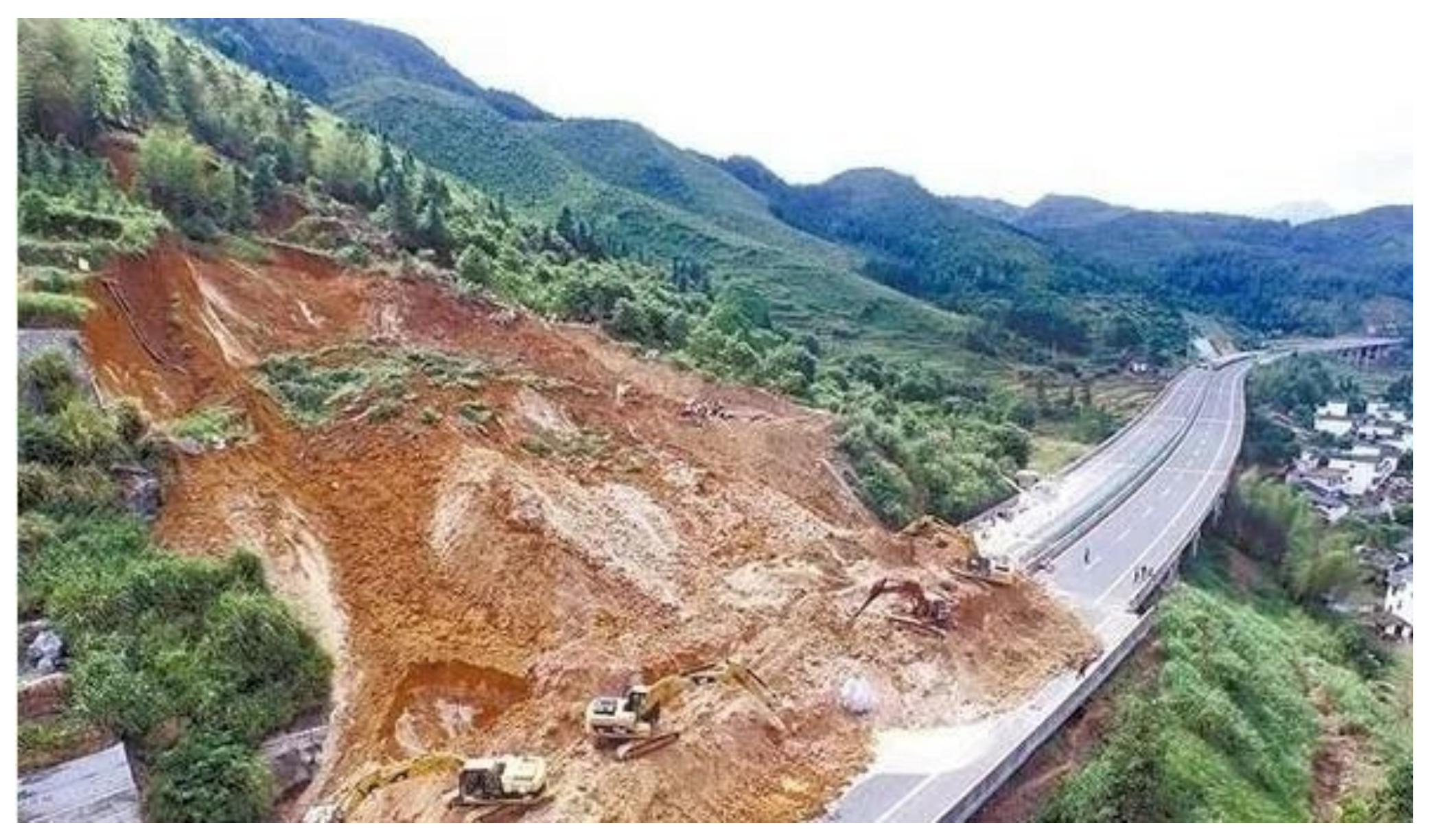
The term landslide (Figure 1) refers to the natural phenomenon in which a soil mass or rock mass on the slope slides down the slope as a whole or dispersedly along a certain weak surface or zone under the effect of gravity due to river scouring, groundwater activity, rainwater immersion, earthquake, artificial slope cutting, and other factors.
Figure 1.
Schematic diagram of landslide disaster.
Debris flow (Figure 2) refers to a special torrent that carries a large amount of sediment and stones due to landslides caused by rainstorms, snowstorms, or other natural disasters in mountain areas, deep ravines, or steep terrain areas. Debris flow was characterized by suddenness, fast velocity, large flow, large material capacity, and strong destructive force.
Figure 2.
Schematic diagram of debris flow.
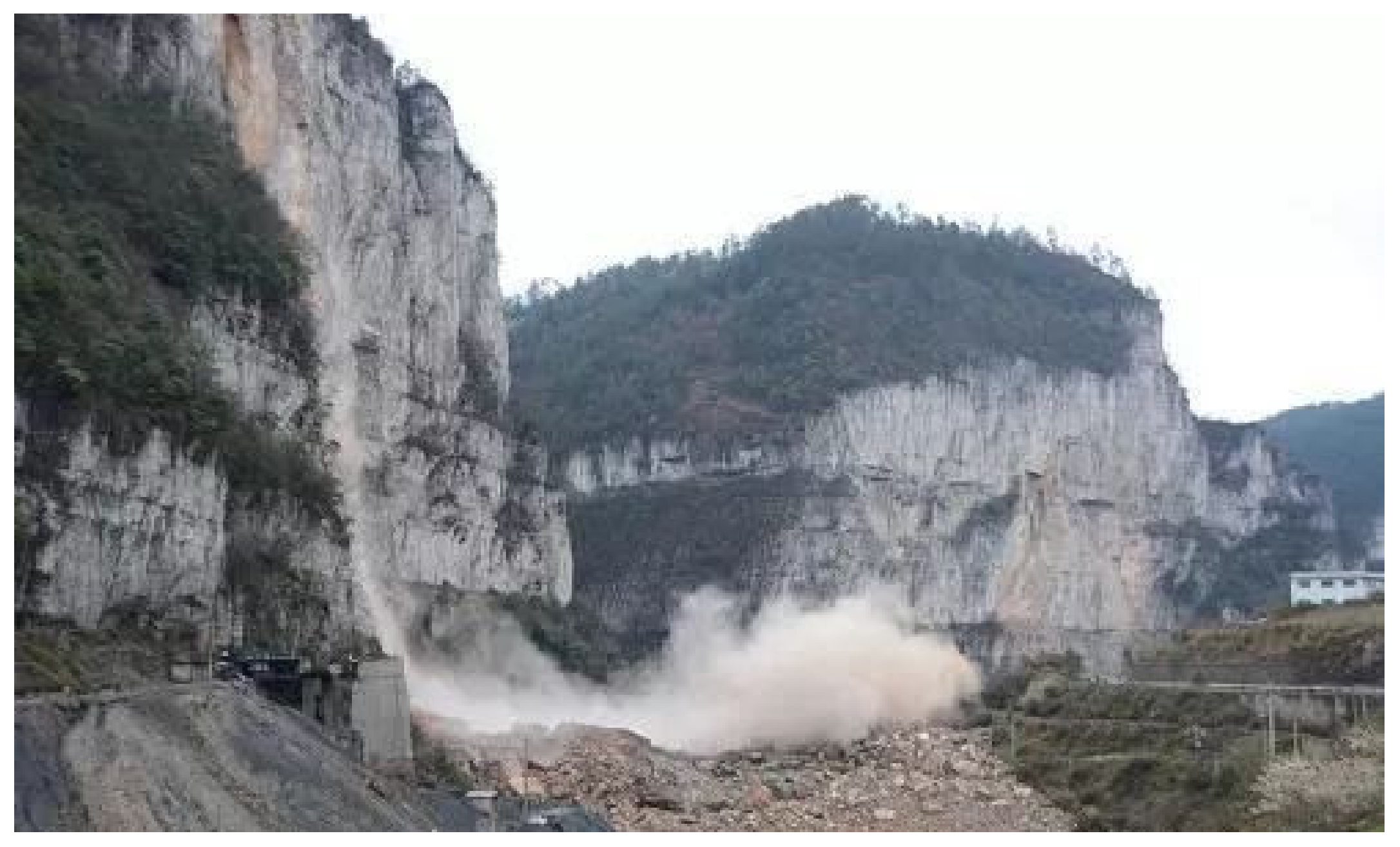
Rock avalanche (Figure 3) refers to the geological phenomenon that the rock and soil mass on the steep slope suddenly break away from the parent body, collapse, roll, and accumulate at the foot of the slope under the action of gravity.
Figure 3.
Schematic diagram of rock avalanche disaster.
2.1.2. Statistics of Typical Geological Disaster Secondary Coal Mine Accidents
According to the analysis in the Table 1, 118 people died in 25 accidents, and ground buildings were severely damaged. Geological disasters pose a serious threat to coal mine safety.
Table 1.
Statistics of typical geological disaster secondary coal mine accidents.
From the perspective of the inducements of secondary coal mine accidents caused by geological disasters, there were 18 landslide accidents, accounting for 72%, 3 debris flow accidents, accounting for 12%, and 4 collapse accidents, accounting for 16%. Landslide accidents are the most likely to induce secondary coal mine accidents.
From the perspective of disaster-bearing bodies, geological disasters secondary coal mine accidents mainly caused damage to surface workers and buildings, totaling 23, accounting for 92%, with a relatively small threat to underground workers and buildings.
From the perspective of the causes of geological disasters, due to the vertical and horizontal gullies in the mining area, severe weathering, and erosion, favorable terrain has been created for the occurrence of geological disasters. With the increasing human engineering activities in the mining area, human engineering activities have become a huge force to change the landform of the mining area. It was intertwined and superposed with natural geological processes, resulting in a relatively stable geological environment tending to be unstable. In addition, the annual distribution of precipitation in some mining areas is extremely uneven. More than 85% of the precipitation was concentrated in the rainy season from May to September, and there were many heavy rains during this period. The precipitation permeated through the soil and penetrated into the rock and soil mass along the pores and fissures in a large amount in a short time, which made the rock and soil mass unstable and lead to a large number of geological disasters. At the same time, mining engineering activities were also the main inducing factors of landslides in the mining area. With the continuous expansion of the construction scale of the mining area, the possibility of geological disasters in the mining area was also increasing.
2.2. Formation Conditions of Geological Disaster Secondary Coal Mine Accidents
The occurrence of geological disasters is usually the result of comprehensive factors. Generally, it includes natural factors and human factors. The natural factors include rock and soil mass type, landform, geological structure, rainfall, etc. Human factors mainly include slope cutting, building houses, road construction, mining, and other human engineering activities. The scale and number of geological disasters around the coal mining area are related to these factors. The following details the formation conditions and influencing factors of geological disasters around the coal mining area and the coal mine accidents induced by them.
2.2.1. Topography
The development of geological disasters was strongly affected by the landform, and the undulating mountains provide a prerequisite for the occurrence of geological disasters. At the same time, the slope structure and shape played a decisive role in the distribution of the internal stress of the slope, and directly affected the stability and sliding deformation mode of the slope. The following will analyze the control effect of landform on geological disasters from three aspects: macro landform, slope angle, and slope height.
- (1)
- Landform
The landform around the mining area is restricted by geological structure, neotectonic movement, and stratum lithology.
- (2)
- Slope angle
The slope angle has a key influence on the stress distribution and magnitude of the slope. The steeper the slope, the greater the tensile stress near the slope face, and the larger the influence range of tensile stress. The larger the slope is, the more concentrated the stress near the free face will be. The corresponding shear stress will also be concentrated and increased, thus causing the slope to lose stability and produce various disasters.
- (3)
- Slope height
The occurrence of geological disasters is obviously affected by the slope height. The slope height directly increases the free face of the slope, making the stress value inside the slope increase with the increase of the slope height. At the same time, the higher the slope, the more concentrated the stress at the free face of the slope, which reduces the safety factor of the slope. When an area is at a high altitude, it will be exposed to solar radiation for a long time. The temperature will rise quickly in the daytime and cool down quickly at night. This larger scale of cold and hot alternation makes the rock and soil on the surface easier to break and is more likely to cause rock avalanches and landslides.
2.2.2. Geological Structure
Geological disasters such as collapses and landslides are affected by faults and special tectonic systems. The geological structure has a direct impact on the structure and fragmentation of rock and soil mass, thus indirectly affecting the development of collapse, landslide, and unstable slope. Generally, under the influence of structure, the joints and fissures of regional rocks with strong faults and special structural systems are developed, the rock mass is relatively broken, and geological disasters are prone to occur.
2.2.3. Types of Rock and Soil Mass and Geological Disasters
The type of rock and soil mass directly affects the basic development of geological disasters. Generally, different rock and soil mass may form geological disasters internally. If the lithology and sedimentary types of the strata around the mining area are complex, the lithology changes greatly, and the sedimentary age span is large, providing conditions for the development of geological disasters.
Under the stability environmental conditions, the aeolian sediments, alluvial proluvial sediments, and residual slope sediments deposited at the foot of the slope are relatively stable. However, in case of rain or when the free face is formed at the foot of the slope due to manual excavation, deformation and damage are likely to occur, resulting in landslide or collapse. Collapse is mainly located on the bedrock. When the rock mass structure is broken, highly weathered, and joints are developed, collapse is easy to occur on the slope with free face.
The pores of rock and soil around the mining area are developed, and some of them produce vertical joints. In addition, the impact of precipitation is very easy to induce geological disasters such as collapse and landslides. Due to the poor engineering properties of rock and soil mass, and a large number of artificial mining activities in this area, a large number of coal seam goafs have been formed, resulting in a large area of ground collapse.
2.2.4. Rainfall
The formation of rock avalanches, landslides, and debris flow are closely related to rainfall. Generally, precipitation will not directly cause landslides and collapse geological disasters. However, rainwater will infiltrate along loess structural joints to form sinkholes and other areas, and long-term rainwater infiltration will greatly reduce the strength of rock and soil mass, thus causing geological disasters. The former study found that the hidden danger of geological disasters is basically positively related to precipitation.
2.2.5. Water System
Most of the rivers near the mining area originate from the surrounding mountains and belong to seasonal rivers. Most of the river water comes from atmospheric precipitation. The precipitation is mostly concentrated in summer and autumn, especially in the case of heavy rain and rainstorm, which makes the water flow gather in the valley in a short time, causing different degrees of downward erosion and lateral erosion to the surface rock and soil mass, creating unique disaster conditions.
2.2.6. Human engineering activities
In recent years, with the substantial increase of human activities, such as slope cutting, building houses and roads, reducing vegetation, and a large number of mining activities, the original geological environmental conditions have been changed, creating conditions for the occurrence of geological disasters.
- (1)
- Geological disasters caused by mining
Large scale mining has destroyed the original geological structure, reduced the stability of the mountain, and is prone to collapse and ground collapse. At the same time, a large number of solid wastes formed by mining are piled up randomly, providing conditions for the development of landslides and debris flows.
- (2)
- Geological disasters caused by building
Due to the vertical and horizontal gullies, there is less flat land available for building houses. Most of the houses and surface structures in the mining area are built at the foot of the slope. Slope cutting changes the natural shape of the natural slope, affects its stability, and causes a large number of hidden soil slopes or adverse geological phenomena.
- (3)
- Geological disasters caused by road construction
For coal mining, roads need to be built around the mining area. Slope cutting, road construction, and slope toe excavation are directly related to the induction of geological disasters. If the hidden danger points are not protected, rock avalanches, landslides, collapses, and rockfalls will become serious.
2.2.7. Vegetation Coverage
Vegetation can play a role in slope protection to some extent, and has a positive role in preventing water and soil loss, and generally has a certain degree of impact on the development and stability of slope morphology. The higher the vegetation coverage is, the less geological disasters are developed. The lower the vegetation coverage, the more developed the geological disasters. Generally, the vegetation coverage and the distribution of geological disasters have a certain degree of correlation, but it does not play a decisive role in the development of geological disasters.

3. Disaster-Causing Factors and Chain Generation Relationship of Geological Disaster Secondary Coal Mine Accidents
The geological disasters are mostly located in the mined area of the mine. Geological disasters in mines often bring about heavy casualties and property losses, which have a huge social impact. Therefore, it is extremely important for the protection of mine geology and ecological environment to carry out in-depth analysis on the characteristics and causes of geological disasters occurring in the mine and propose measures and means to prevent and control the geological disasters.
3.1. Factors Causing Geological Secondary Coal Mine Accidents
3.1.1. Scale of Geological Hazards
The occurrence of geological disasters is the result of comprehensive factors, mainly including natural factors and human factors. In 2014, the debris flow was caused by a rainstorm in Jiangkou Town, Yunyang County, Chongqing. The staff dormitory of Yongfa Coal Mine in the town was in danger. The workers encountered a landslide in the process of organizing evacuation and transfer, and 12 people were missing. The scale of geological disasters around the coal mine was one of the main disasters that induced secondary coal mine accidents. Regarding the surface buildings, roads and living quarters of the coal mine were within the scope of geological disasters. The bearing body of geological disasters was mainly the living quarters of the coal mine, which was easy to induce secondary coal mine accidents.

3.1.2. Distance between Dangerous Rock Body and Surface Buildings or Roads in Mining Area
In 2017, a mountain landslide occurred behind the office building of Fangyuan Coal Mine in Songjiawa Village, Boluo Town, Hengshan District, Yulin City, Shaanxi Province, causing two deaths. The stability of the dangerous rock body with the tendency of geological disasters was the decisive factor for the occurrence of geological disasters. The distance between the dangerous rock body and the coal mine surface buildings, roads, and living quarters is one of the main impacts of the secondary coal mine accidents caused by geological disasters. A cutting slope for building houses in the mining area not only caused a lot of slope hazards or adverse geological phenomena, but also causes secondary coal mine accidents when surface buildings, roads, and industrial squares are close to the dangerous rock slope.

3.1.3. Setting of Retaining Wall around Mining Area
In order to prevent the impact of geological disasters such as rock avalanche and landslide on surface buildings such as coal mine industrial plaza and surface buildings, coal mines usually set retaining walls around the mining area. The setting of retaining walls can block small geological disasters such as rockfall to a certain extent. However, the scope and intensity of geological disasters such as landslides and debris flow are relatively large. In order to reduce the secondary coal mine accidents caused by geological disasters, the height and strength of retaining walls are required to be high. Therefore, the setting of retaining wall is another influencing factor of geological disaster secondary coal mine accidents.
3.1.4. Location of Surface Substations
In 2016, Yongchuan District ushered in heavy rainfall, with the rainfall in Hongqing Village, Honglu Town exceeding 222.5 mm. When the underground Changgou coal mine was buried by the debris flow, the heavy rainfall caused the debris flow disaster. The distribution room at the wellhead of the coal mine was completely buried under the sand, and the first floor of the dormitory, office building, and other buildings were basically buried by the sand. Coal mine production is highly dependent on electricity. Coal mine substations are usually located on the surface of the mining area. The location of surface substations is another major disaster-causing factor of geological disasters secondary to coal mine accidents. When the surface substation is within the scope of geological disaster, the underground ventilation, lifting system, drainage system, and lighting system will stop running, causing catastrophic accidents, which seriously threaten the life and safety of staff.
3.1.5. Coal Mine Wellhead Height
In 2002, there was a sudden rainstorm in Zichang County, Yan’an City, Shaanxi Province, and mountain torrents broke out. Nine coal miners in the construction coal mine of Wayaobao Town were trapped due to landslides, and thousands of cubic meters of mud flowed into the coal wells. On the morning of the 5th, Zichang County was hit by heavy rain again. The rescue work not only failed, but the mountain landslide once again blocked the mine. The location and height of the coal mine wellhead directly affects whether the debris flow will flow into the wellhead. The setting of the wellhead height is one of the disaster-causing factors of secondary coal mine accidents caused by geological disasters such as debris flow.
3.1.6. Layout of Geological Disaster Monitoring and Early Warning Equipment around the Mining Area
The stability of surrounding rock mass such as coal mine surface buildings, roads, and industrial squares is the main factor affecting the safety of the mining area. Early detection and early prevention of geological disasters are important factors to avoid secondary coal mine accidents. The layout of geological disaster monitoring and early warning equipment is an important disaster-causing factor of secondary coal mine accidents caused by geological disasters. The risk assessment and monitoring and hierarchical early warning of mountains around the mining area surface buildings are the key to prevent secondary coal mine accidents.
3.2. Chain Generation Relationship of Geological Secondary Coal Mine Accidents
The main disaster-causing factors of geological disasters are disaster source, trigger factors, and other external factors, and the disaster-bearing bodies are mainly coal mine surface facilities and roadway engineering. By analyzing the action process of landslide, debris flow, and other geological disasters on disaster-bearing bodies such as coal mine surface plants, living area facilities, mine roadway engineering and open-pit mine slopes and the process of inducing secondary disasters, the chain relationship between geological disasters and coal mine secondary disasters is studied, and the inducing mechanism and interaction mechanism of geological disasters, coal mine secondary disasters, and their derivatives are revealed.
3.2.1. Geological Disaster Secondary Coal Mine Accident Disaster Chain
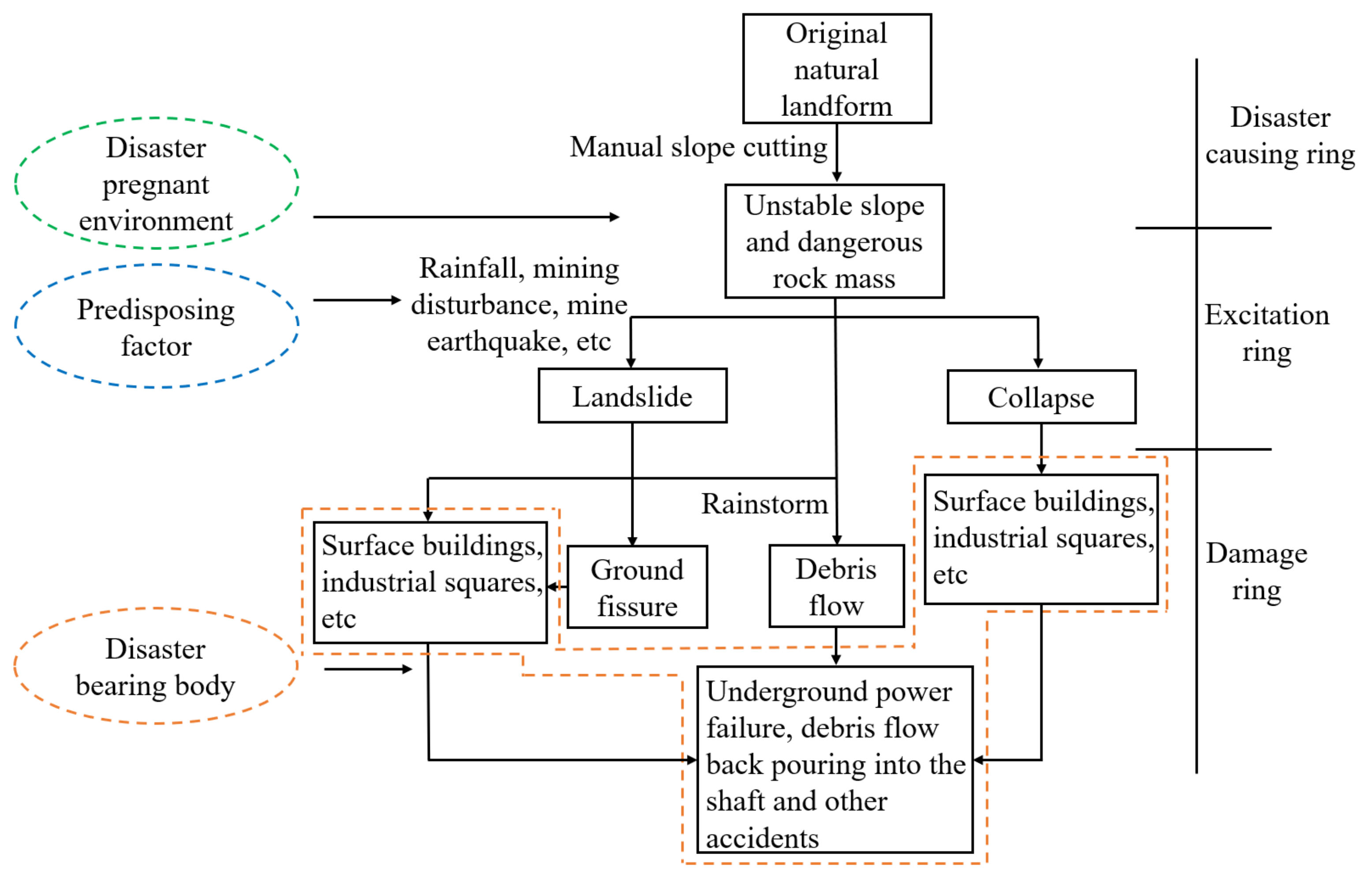
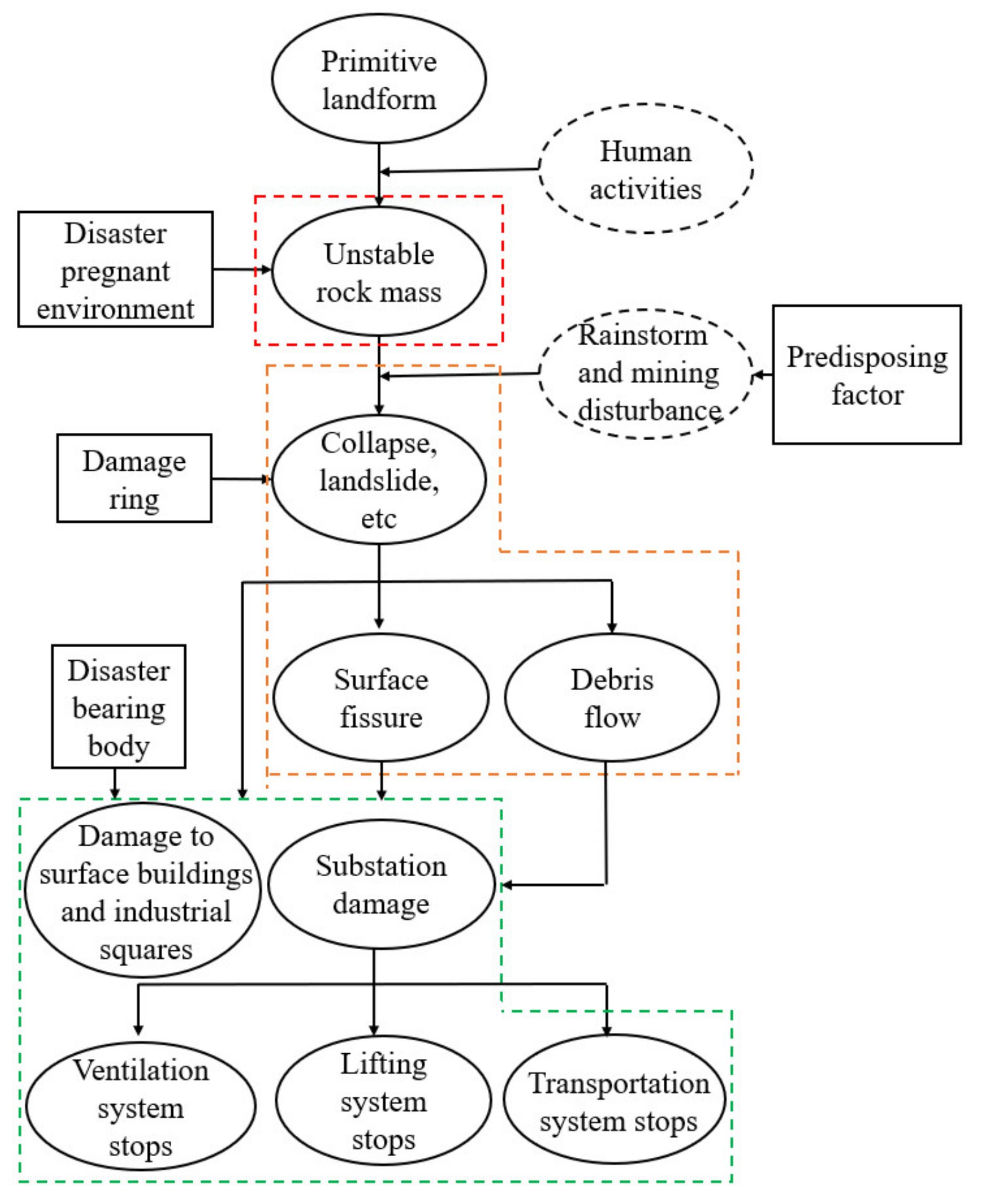
The conditions for the formation of the disaster chain of geological disasters and secondary coal mine accidents are very complex. The main disaster chain structure forms are landslide, collapse, and debris flow, and other geological disasters (secondary disasters such as surface cracks) damage disaster-bearing bodies such as coal mine surface buildings, industrial squares, roads, and so on, as shown in Figure 4.
Figure 4.
Structural form of disaster chain of geological disaster secondary coal mine accidents.
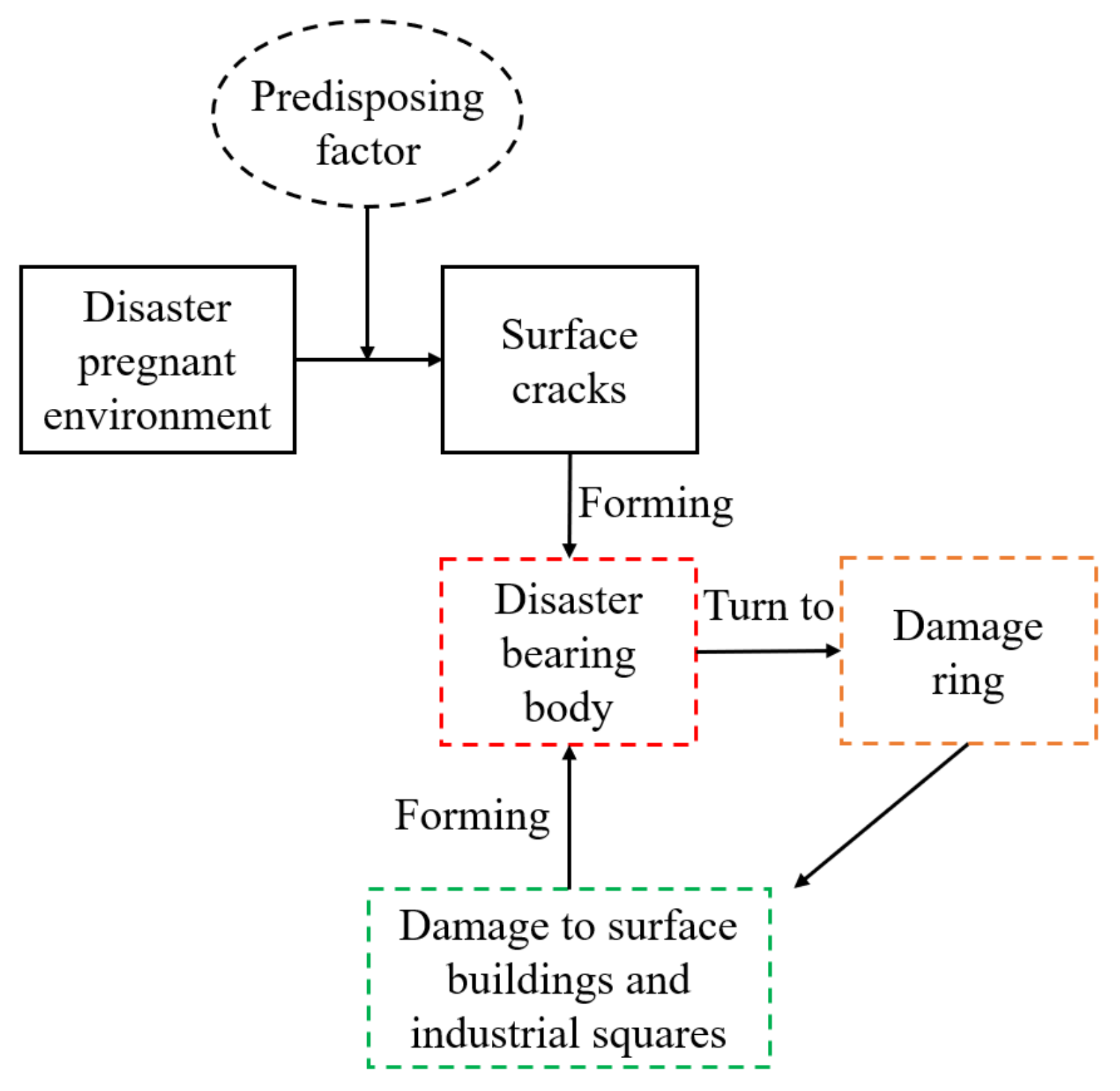
As shown in Figure 5, there is a process of transition from disaster-bearing body to damage ring for surface cracks, that is, due to the existence of disaster generating environment and disaster-causing factors, the buildings, roads, and people on the ground are disaster-bearing bodies. The surface cracks damage the buildings and other disaster-bearing bodies, and then the surface cracks turn into damage rings.
Figure 5.
The structural form of surface fracture transformed into damage ring disaster chain.
3.2.2. Analysis of Single Disaster and Multi-Disaster Coupling Disaster Chain Model
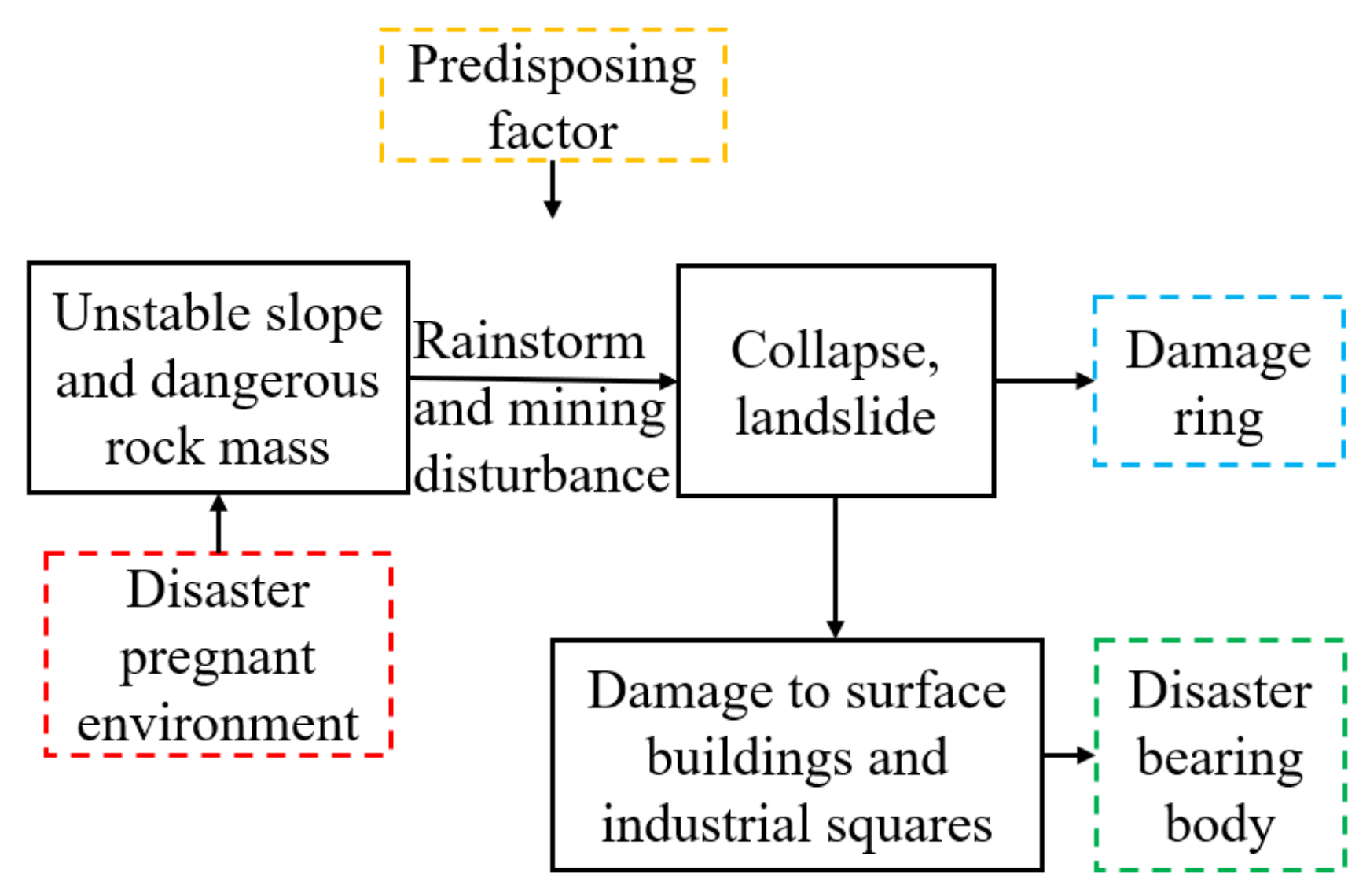
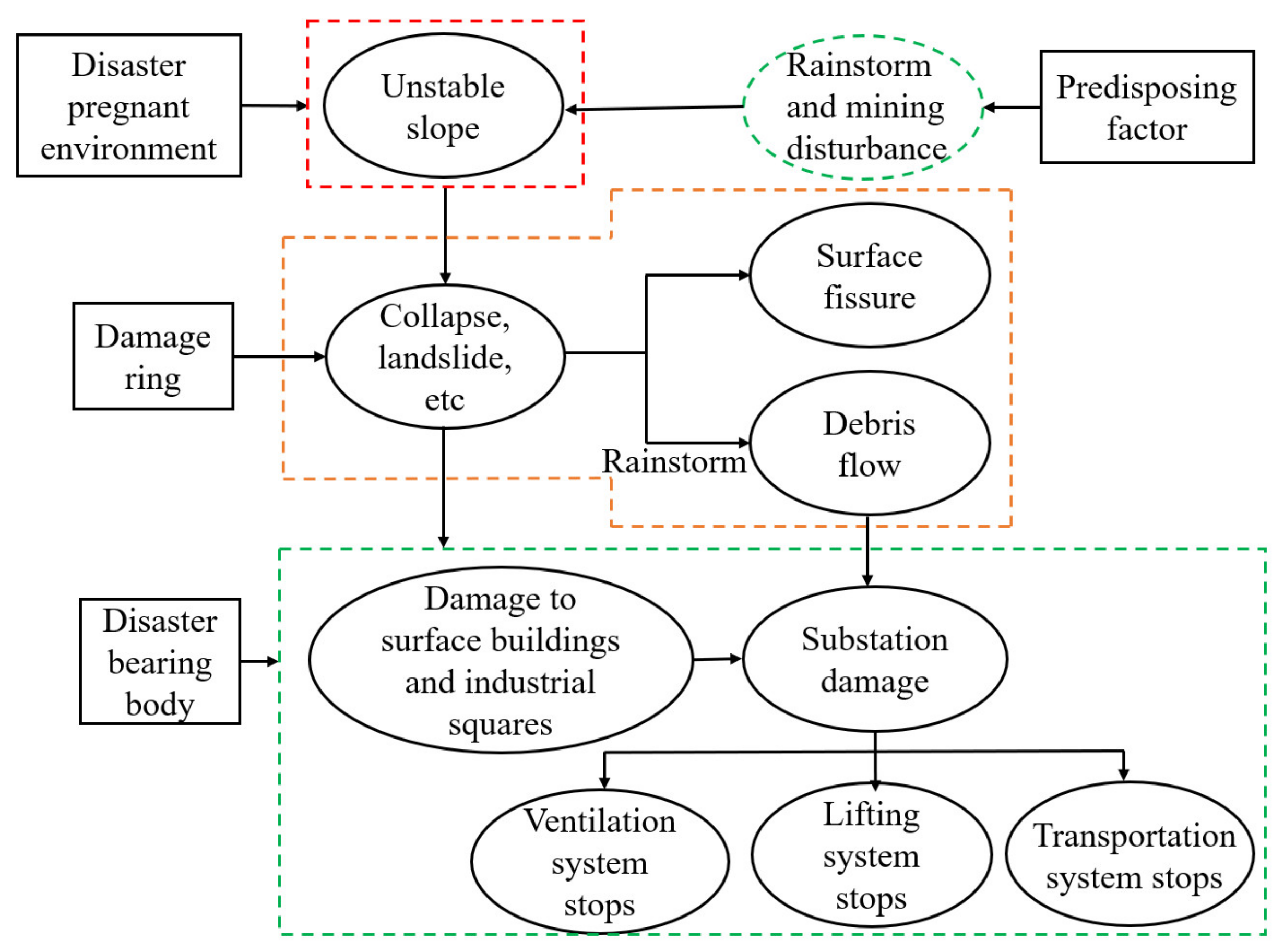
Collapse, landslide, debris flow, and other geological disasters around the mining area can cause disasters independently or by coupling multiple disasters. The disaster chain mode formed by single disaster type, such as the occurrence of landslide, directly damages the disaster-bearing bodies such as surface buildings. The complex disaster chain mode formed by coupling of multiple disasters, such as landslides, has caused the occurrence of secondary disasters such as debris flow and surface cracks, which together cause damage to the disaster-bearing body.
- (1)
- The chain structure of single disaster is simple, which is composed of a disaster-pregnant environment, single damage ring, and disaster-bearing body. The surrounding slope rock mass or unstable slopes are formed by cutting slopes is dangerous rock mass. At this time, the first link in the chain structure, “disaster-prone environment”, is formed. With the multiple uses of rainfall, mining disturbances, and other inducing factors, collapse and landslide occur, and the second link in the chain structure, “damage ring”, is formed. Finally, under the action of “damage ring”, the surface buildings of coal mines are damaged. At this time, the third link in the chain structure, “disaster-bearing body”, is formed. The chain structure of single disaster species is shown in Figure 6.
Figure 6. Chain structure of single type geological disaster secondary coal mine accidents.
- (2)
- Multi-disaster coupling disaster chain structure model
The structural model of multi-disaster coupling disaster chain is complex, and its damage is often greater than that of a single disaster chain. It is composed of a disaster-pregnant environment, multiple damage rings, and disaster-bearing bodies. The coal mine cut slope produces unstable slope or broken rock mass produced by faults, and the first link in the chain structure, “disaster-prone environment”, is formed.
The chain structure of compound disasters is shown in Figure 7. Under the multiple use of rainstorm, mine earthquake, and other inducing factors, a landslide occurs, and the second link in the chain structure, “primary damage ring”, is formed. After the first damage ring occurs, secondary disasters can be induced, such as surface cracks and debris flows. At this time, the second link, “secondary damage ring”, occurs. Finally, under the action of “damage ring”, the surface buildings of coal mines are damaged. At this time, the third link in the chain structure, “disaster-bearing body”, is formed.
Figure 7.
Chain structure of multiple geological disasters secondary coal mine accidents.
3.3. Disaster-Causing Mechanism of Geological Secondary Coal Mine Accidents
3.3.1. Chain Generation and Evolution Mechanism of Geological Disasters
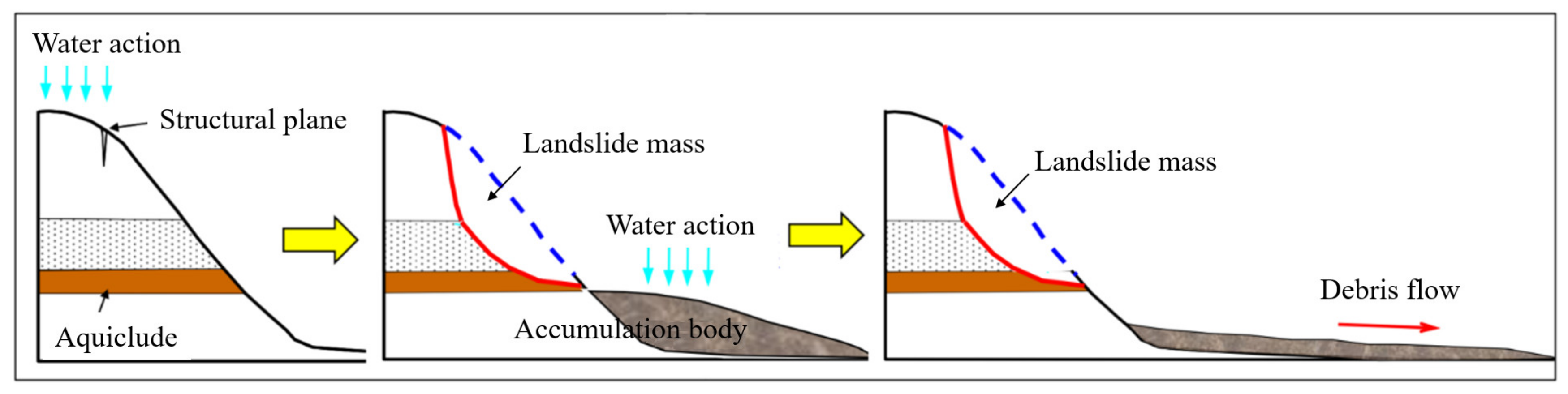
The study on the chain generation and evolution mechanism of secondary coal mine accidents due to unstable slope geological disasters is essentially the transformation and evolution mechanism of continuous solid → deformation body, deformation body → fracture body, fracture body → loose body, and loose body → fluid (Figure 8).
Figure 8.
Chain generation and evolution mechanism of geological disasters.
3.3.2. Evolution Process of Geological Secondary Coal Mine Accidents
During the evolution process of unstable slope and dangerous rock mass, deformation and destruction in different modes and scales may occur, such as landslide and debris flow. The most important of the three links of disaster-pregnant environments, damage ring, and disaster-bearing body is the “damage ring”, that is, geological disasters of different types, modes, and scales. Therefore, in order to better carry out chain breaking disaster reduction and reduce or even eliminate the safety threat of various geological disasters to the coal mine, it is necessary to investigate the formation conditions and evolution process of the deformation and failure mechanism of the coal mine slope and its surrounding rock mass, and analyze the disaster-causing mechanism of geological disasters secondary to coal mine accidents.
The inducements of geological disasters secondary coal mine accidents are complex and changeable, but they are directly affected by the scale of geological disasters such as collapse, landslide, and debris flow. The shear stress on the potential sliding surface inside the unstable slope and dangerous rock mass is greater than its shear strength, which makes the slope unstable.
As shown in Figure 9, the formation mechanism of geological disasters is quite different in slopes with different lithology, rock stratum dip, and dip angle. Due to the difference in the distance between the mine surface buildings and the geological disaster-prone points, the elevation of the mine wellhead, the distance between the mine substation and the geological hazard-prone points, and the effectiveness of the industrial plaza disaster prevention measures, monitoring, and early warning equipment, the process of geological disasters inducing secondary disasters in coal mines is different. The setting of underground emergency power supply and emergency rescue equipment directly affects the occurrence of underground accidents induced by geological disasters.
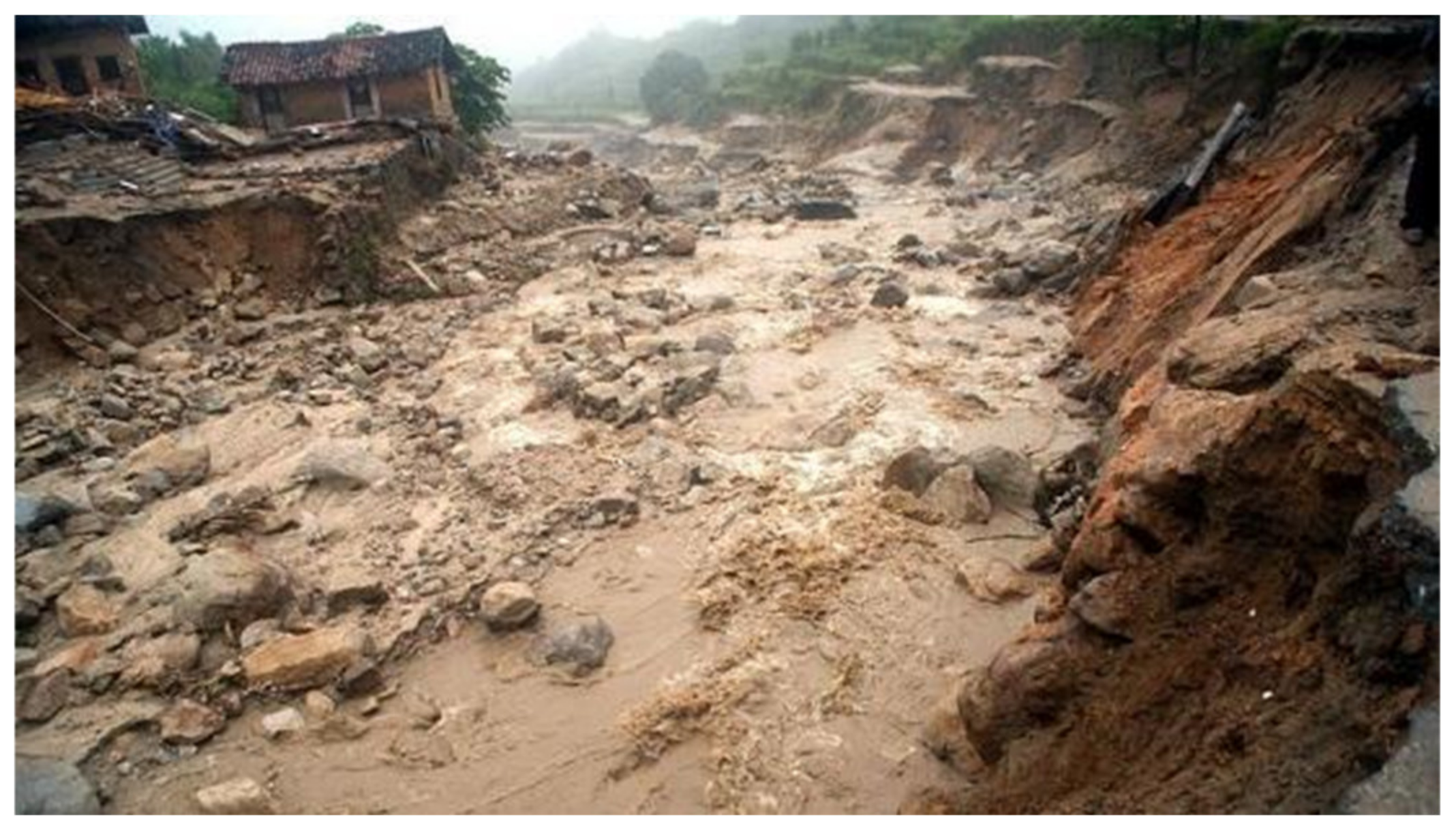
Figure 9.
Disaster-causing mechanism of geological disaster secondary coal mine accidents.
4. Risk Assessment of Geological Disaster Secondary Coal Mine Accidents Based on Analytic Hierarchy Process (AHP)
4.1. Disaster Risk Assessment Model
Geological disasters include natural attributes and social attributes. The natural attribute describes the process of geological events, while the social attribute describes the loss of people’s lives, property, and social economy. Therefore, the study of geological disasters inducing coal mine secondary disasters and disaster chain generation relationship should be analyzed from two aspects: the formation of geological disasters and the induced secondary coal mine accidents. The dual attributes of geological disasters determine that the evaluation of geological disasters should consider the risk of geological disasters, the sensitivity of disaster-prone environments, and the vulnerability of coal mine industrial plaza at the same time.
The risk of geological disaster secondary coal mine accidents should comprehensively consider the risk of geological disaster, the sensitivity of coal mine disaster-pregnant environment, and the vulnerability of coal mine disaster-bearing body. The risk assessment mainly considers various factors related to geological disasters, their own factors, and inducing factors. The sensitivity evaluation mainly considers the fortification of the disaster-bearing environment of the coal mine and the distance between the key buildings on the surface of the coal mine and the vulnerable range of geological disasters. The main object of vulnerability evaluation is to consider the attributes of the disaster-bearing body of the coal mine, including the type, quantity, scale, and price of the disaster-bearing body.
4.2. AHP Evaluation Process
The subjective evaluation method uses the AHP to build a model to determine the subjective weight of indicators. The advantage of AHP method is to use less quantitative information to mathematically turn decision-making thinking into a multi criteria decision-making method combining quantitative and qualitative methods. The specific steps are shown in Table 2.
Table 2.
Determination of subjective weight by AHP.
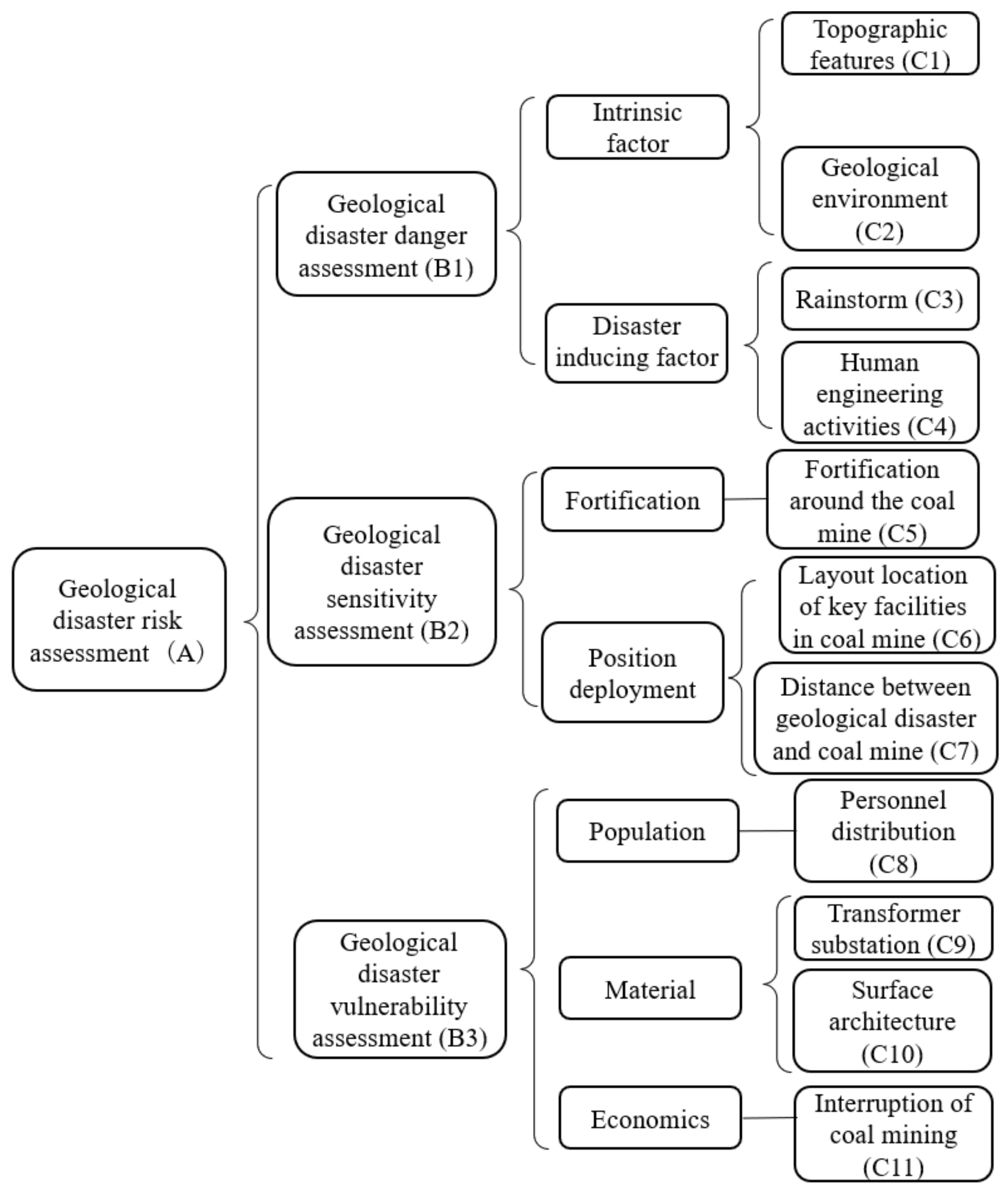
First, we established a hierarchical structure, and constructed a 3-tier structure (A, B, C) shown in Figure 10. Then, we constructed a pairwise judgment matrix according to the 1–9 scaling method to calculate the subjective weight of each indicator. Finally, we checked the consistency to see if the judgment matrix was reasonable.
Figure 10.
Index system for risk assessment of geological disasters secondary coal mine accidents.
4.2.1. Establish Hierarchy
We established the risk assessment system of geological disaster secondary coal mine accidents, as shown in Figure 10, and determined the weight of the assessment index by using the analytic hierarchy process for the risk of geological disasters, the sensitivity of the disaster-bearing environment, and the vulnerability of the disaster-bearing body.
4.2.2. Construct the Judgment Matrix of Each Level
The weight value of each influencing factor in the criteria layer and indicator layer of the hierarchical model reflected the degree of its influence on the target layer. In this paper, AHP was used to determine the weight of each index in the index system of risk assessment of geological disaster secondary coal mine accidents. To determine the weight of a layer in the factors of the previous layer, we mainly solved this problem by constructing a pair comparison matrix and weight vector and obtained quantitative results by combining qualitative and quantitative methods.
If we want to compare the importance of n criteria C1, C2, C3…Cn to target A, we will not consider how to distribute the importance of A in turn, but compare the importance of A in pairs, and then express the importance of A with a relative scale.
where aij represents the ratio of importance of the ith criterion to that of the jth criterion. A is a paired comparison matrix, and A is a positive reciprocal matrix. Then, we need to determine the weight vector of C1, C2, C3… Cn to target layer A through B. First, compare the scale aij.
The criterion level judgment matrix was constructed, and the relative importance scaling method was used to assign the importance, that was, aij taken the value of 1, 2… 9, and its reciprocal 1, 1/2, 1/3… 1/9. Such a rule was proposed to facilitate the transformation from qualitative to quantitative (Table 3 for the meaning of the scaling method).
Table 3.
Meaning of relative importance scale.
4.2.3. Calculate the Weight of Each Index
AHP is a common analysis method which is often used to assign values to various indicators and factors, and then make decisions on fuzzy and complex problems. The main steps are construction of judgment matrix, calculation of index weight, and consistency test. In combination with the indicator system established above, each indicator factor is scored in pairs, the importance of constructing four judgment matrices is compared, and the maximum eigenvalue and corresponding eigenvector of each judgment matrix are calculated to ensure that the weights of all judgments pass the consistency test (CR < 0.1).
According to the established evaluation hierarchy and the affiliation, the superior subordinate relationship was determined one by one. On the basis of the three criteria levels, eleven indicators were selected to jointly establish the risk assessment index system of geological disaster secondary coal mine accidents.
Based on the above hierarchical relationship, each factor of the upper layer was compared with that of the lower layer in pairs, and a matrix was constructed for consistency test and combined consistency test, respectively, to obtain the weight value of each factor (from Table 4, Table 5, Table 6 and Table 7).
Table 4.
Risk judgment matrix of geological disaster secondary coal mine accidents.
Table 5.
Risk judgment matrix of geological hazards and weight of each index.
Table 6.
Judgment matrix and index weights of environmental sensitivity to disasters.
Table 7.
Vulnerability judgment matrix and index weights of disaster-bearing bodies.
4.2.4. Consistency Inspection
To determine the allowable range of errors, the perfect consistency in the ideal state should be examined.
Suppose there is a stone with a unit of 1, cut it into n pieces of different sizes, and divide the weight of each small stone into each criterion as the importance of a criterion. The sum of all weights is equal to 1, and the weight is precisely fixed, forming a matrix with a unit of 1, that is, W(=1)→w1, w2, …wn, so that aij = wi / wj. Then it must be a perfect ideal situation without conflict.
That is, the positive reciprocal matrix A satisfying aij∗ajk = aik, i, j, k = 1, 2, …n, which is called a uniform matrix (Equation (3)).
Property of uniform matrix:
The rank of A is 1;
The unique non-zero characteristic root of A is n;
Any column vector of A is the eigenvector corresponding to n;
The normalized eigenvector of A can be used as the weight vector.
It is known that the unique nonzero eigenvalue of n-order uniform matrix is n, and the maximum eigenvalue of n-order positive reciprocal matrix can be proved λ ≥ n, and when λ = n, it is a uniform matrix.
A characteristic polynomial is constructed according to a matrix, and its characteristic root is obtained after the characteristic polynomial is solved. However, the characteristic polynomial is written by the matrix, and the elements in the matrix determine the coefficients of the characteristic polynomial. Therefore, each element in the matrix jointly determines the coefficients of the characteristic polynomial, and the coefficients are determined when the polynomial is determined, so the characteristic root is actually a function of the elements of the matrix. If it is a positive reciprocal matrix, a consistent matrix, then λ= n.
The constructed elements and the uniform matrix are different. Because the eigenvalue is a continuous function of the uniform matrix, the smaller the difference, the closer the calculated maximum eigenvalue is to n. On the contrary, the greater the difference, the farther the calculated maximum eigenvalue is from n. This is because the characteristic root is related to the continuity of the matrix function, so the maximum characteristic root λ can reflect the degree of inconsistent matrix. When the difference between λ and n is larger, the degree of inconsistency is more serious. When the difference is smaller, the degree is smaller. When the difference is equal, it becomes a matrix. Therefore, define an indicator, namely:
The larger the CI value is, the more serious the inconsistency is. The smaller the CI value is, the smaller the inconsistency is. As in reality, we allowed CI to be different from zero, but the requirements are relatively small. Based on this concept, the relative consistency index is defined to determine the allowable range of inconsistency for A. To measure the size of CI, the random consistency index RI is introduced (Table 8). aij is obtained by random simulation, A is formed, and RI is obtained by calculating CI.
Table 8.
Corresponding relationship between RI value and n.
CI and RI were used as comparison to define CR. When CR < 0.1, it passes the consistency test.
4.2.5. Calculating Combination Weight Vector and Checking Combination Consistency
After calculating the weight vector of the criterion layer to the target layer, the weight vector of the scheme layer to the criterion layer should be determined using the same calculation method. Assume that the weight vector of the second layer to the first layer is:
The weight vector of the third layer to each element of the second layer is:
Construction matrix:
Then the combined weight vector of layer 3 to layer 1 is:
Similarly, the group and weight vector of layer s to layer 1 are:
Finally, in addition to the consistency test of each paired comparison matrix, the consistency test of the sum weight vector is also required to determine whether the combined weight vector can be used as the final decision basis. The combined consistency check can be performed layer by layer.
Assume that the consistency index of layer p is:
The random consistency index of layer p is:
Definition:
Then the combination consistency ratio of layer p is:
The conditions for layer p to pass the consistency test are:
Define the combined consistency ratio of the lowest layer to the first layer as:
For major decision-making projects, only when the CR* is small enough can the comparative judgment of the whole level pass the consistency test.
4.2.6. Determination of Safety Risk Index of Geological Disaster Secondary Coal Mine Accidents
The safety risk index of geological disaster secondary coal mine accident is obtained by weighted summation, as shown in the formula:
where:
A—comprehensive safety risk index of a certain area at a certain time point;
Cj—normalized value of the jth third level index;
βj—the jth third level index weight set;
αi—weight of the ith secondary indicator;
m, n—the first and last number of the third level indicator of the ith second level indicator.
4.3. Classification of Accident Risk in Secondary Coal Mines with Geological Disasters
The risk level of geological disaster secondary coal mine accidents is divided into low, medium, and high levels, and the specific risk level classification is shown in Table 9.
Table 9.
Risk level of geological disaster secondary coal mine accidents.
The scope of high, medium, and low risk levels was divided, and the impact of different risk degrees on coal mine buildings and personnel was analyzed, which provides guidance for coal mine fortification and prevention of secondary coal mine accidents caused by geological disasters.
5. Conclusions
Based on the analysis of typical cases of geological disaster secondary coal mine accidents, the disaster-causing factors and mechanisms were studied. By analyzing and studying the chain generation relationship and disaster process between geological disasters and secondary coal mine accidents, the risk index system of geological disasters secondary coal mine accidents was obtained. The weight calculation and consistency test of different indicators were carried out by using the analytic hierarchy process, and the risk grade assessment of geological disasters secondary coal mine accidents was studied. The details are as follows:
- (1)
- Typical cases of secondary coal mine accidents caused by different types of geological disasters were investigated. From the perspective of the inducements of secondary coal mine accidents caused by geological disasters, there were 18 landslide accidents, accounting for 72%, which is the most likely to induce secondary coal mine accidents. From the perspective of disaster-bearing bodies, geological disasters secondary coal mine accidents mainly caused damage to surface workers and buildings.
- (2)
- The geological disasters were mostly located in the mined area of the mine. Factors causing geological secondary coal mine accidents were scale of geological hazards, distance between dangerous rock body and surface buildings or roads in mining area, setting of retaining wall around mining area, location of surface substations, coal mine wellhead height, layout of geological disaster monitoring, and early warning equipment around the mining area.
- (3)
- The chain structure of single disaster was simple, and was composed of a disaster-pregnant environment, single damage ring, and disaster-bearing body. The structural model of multi-disaster coupling disaster chain was complex, and its damage was often greater than that of a single disaster chain. It was composed of a disaster-pregnant environment, multiple damage rings, and disaster-bearing bodies. The disaster-prone environment, damage ring, and disaster-bearing body were the main link in the chain structure.
- (4)
- The inducements of geological disasters secondary coal mine accidents were complex and changeable, but they were directly affected by the scale of geological disasters such as rock avalanche, landslide, and debris flow. The formation mechanism of geological disasters was quite different in slopes with different lithology, rock stratum dip, and dip angle. Due to the different locations of ground buildings in the mine and the difference in the effectiveness of disaster prevention measures, monitoring, and early warning equipment in the industrial plaza, the process of secondary disasters induced by coal mine geological disasters was different.
- (5)
- The risk of geological disaster secondary coal mine accidents shall comprehensively consider the risk of geological disaster, the sensitivity of coal mine disaster-pregnant environments, and the vulnerability of coal mine disaster-bearing body. The risk assessment model of geological disaster secondary coal mine accidents was constructed, and the weight of each index in the assessment system was determined by using the analytic hierarchy process. The normalized treatment was carried out according to the safety risk index of geological disaster secondary coal mine accidents.
Author Contributions
Data curation, Q.Q. and B.Y.; Investigation, Q.Q., B.Y. and W.L.; Methodology, B.Y. and Q.Q.; Supervision, J.L.; Writing—original draft, B.Y. and B.Z.; Writing—review & editing, Q.Q. and B.Z. All authors have read and agreed to the published version of the manuscript.
Funding
This study was funded by the fellowship of China Postdoctoral Science Foundation (Grant No. 2021M701540) and the key research program of China Coal Science and Industry Group (Grant No. 2019-2-ZD003).
Institutional Review Board Statement
Not applicable.
Informed Consent Statement
Not applicable.
Data Availability Statement
Not applicable.
Conflicts of Interest
The authors declare no conflict of interest.
References
- Yang, X.; Yao, W.; Li, P.; Hu, J.; Latifi, H.; Kang, L.; Wang, N.; Zhang, D. Changes of SOC Content in China’s Shendong Coal Mining Area during 1990–2020 Investigated Using Remote Sensing Techniques. Sustainability 2022, 14, 7374. [Google Scholar] [CrossRef]
- Xu, J.; Zhu, W.; Xu, J.; Wu, J.; Li, Y. High-intensity longwall mining-induced ground subsidence in Shendong coalfield, China. Int. J. Rock Mech. Min. Sci. 2021, 141, 104730. [Google Scholar] [CrossRef]
- Ma, P.H. Study on evolution characteristics and transformation mechanism of loess geohazards chain. Ph.D. Thesis, Chang’an University, Xi’an, China, 2020. [Google Scholar]
- Mao, S. Development of coal geological information technologies in China. Int. J. Coal Sci. Technol. 2020, 7, 320–328. [Google Scholar] [CrossRef]
- Tu, Q.; Cheng, Y.; Ren, T.; Wang, Z.; Lin, J.; Lei, Y. Role of tectonic coal in coal and gas outburst behavior during coal mining. Rock Mech. Rock Eng. 2019, 52, 4619–4635. [Google Scholar] [CrossRef]
- Yan, B.; Liu, J.; Qi, Q.; Liu, W.; Li, X. Study on chain relationship and risk assessment model of coal mine geological disasters. Arab. J. Geosci. 2022, 15, 1–12. [Google Scholar] [CrossRef]
- Xiao, W.; Hu, Z.; Fu, Y. Zoning of land reclamation in coal mining area and new progresses for the past 10 years. Int. J. Coal Sci. Technol. 2014, 1, 177–183. [Google Scholar] [CrossRef]
- Xu, X.; Peng, S.; Yang, F. Development of a ground penetrating radar system for large-depth disaster detection in coal mine. J. Appl. Geophys. 2018, 158, 41–47. [Google Scholar] [CrossRef]
- Jiao, R.; Wang, S.; Yang, H.; Guo, X.; Han, J.; Pei, X.; Yan, C. Comprehensive Remote Sensing Technology for Monitoring Landslide Hazards and Disaster Chain in the Xishan Mining Area of Beijing. Remote Sens. 2022, 14, 4695. [Google Scholar] [CrossRef]
- Guo, W.; Guo, M.; Tan, Y.; Bai, E.; Zhao, G. Sustainable development of resources and the environment: Mining-induced eco-geological environmental damage and mitigation measures—A case study in the Henan coal mining area, China. Sustainability 2019, 11, 4366. [Google Scholar] [CrossRef]
- Jin, P.; Shen, L.; Han, X.; Guo, J.; Wang, M. Spatial-temporal distribution characteristics and influencing factors of geological disasters in the open-pit mining area of western Fushun, Liaoning Province. Chin. J. Geol. Hazard Control. 2022, 33, 68–76. [Google Scholar]
- Bai, E.; Guo, W.; Tan, Y. Negative externalities of high-intensity mining and disaster prevention technology in China. Bull. Eng. Geol. Environ. 2019, 78, 5219–5235. [Google Scholar] [CrossRef]
- Kabiesz, J.; Sikora, B.; Sikora, M.; Wróbel, Ł. Application of rule-based models for seismic hazard prediction in coal mines. Acta Montan. Slovaca 2013, 18, 262–277. [Google Scholar]
- Emery, J.; Canbulat, I.; Zhang, C. Fundamentals of modern ground control management in Australian underground coal mines. Int. J. Min. Sci. Technol. 2020, 30, 573–582. [Google Scholar] [CrossRef]
- Liu, X.; Fan, D.; Tan, Y.; Song, S.; Li, X.; Ning, J.; Gu, Q.; Ma, Q. Failure evolution and instability mechanism of surrounding rock for close-distance parallel chambers with super-large section in deep coal mines. Int. J. Geomech. 2021, 21, 04021049. [Google Scholar] [CrossRef]
- Li, S.C.; Zhou, Z.Q.; Li, L.P.; Lin, P.; Xu, Z.H.; Shi, S.S. A new quantitative method for risk assessment of geological disasters in underground engineering: Attribute interval evaluation theory (AIET). Tunn. Undergr. Space Technol. 2016, 53, 128–139. [Google Scholar] [CrossRef]
- Wu, J.; Liu, X. Risk assessment of underground coal fire development at regional scale. Int. J. Coal Geol. 2011, 86, 87–94. [Google Scholar] [CrossRef]
- Wu, J.; Zhu, Q.; Qiao, N.; Wang, Z.; Sha, W.; Luo, K.; Wang, H.; Feng, Z. Ecological risk assessment of coal mine area based on “source-sink” landscape theory–A case study of Pingshuo mining area. J. Clean. Prod. 2021, 295, 126371. [Google Scholar] [CrossRef]
- Chen, Y.; Zhang, J.; Zhou, A.; Yin, B. A modeling method for a disaster chain–Taking the coal mining subsidence chain as an example. Hum. Ecol. Risk Assess. Int. J. 2018, 24, 1388–1408. [Google Scholar] [CrossRef]
- Ma, S.; Qiu, H.; Yang, D.; Wang, J.; Zhu, Y.; Tang, B.; Sun, K.; Cao, M. Surface multi-hazard effect of underground coal mining. Landslides 2022, 20, 1–14. [Google Scholar] [CrossRef]
- Wang, Q.; Wang, H.; Qi, Z. An application of nonlinear fuzzy analytic hierarchy process in safety evaluation of coal mine. Saf. Sci. 2016, 86, 78–87. [Google Scholar] [CrossRef]
- Rahimdel, M.J.; Aryafar, A.; Vaziri, S. Fuzzy FMEA for the safety risk analysis of underground coal mining (a case study in Iran). Min. Technol. 2022, 131, 104–114. [Google Scholar]
Publisher’s Note: MDPI stays neutral with regard to jurisdictional claims in published maps and institutional affiliations. |
© 2022 by the authors. Licensee MDPI, Basel, Switzerland. This article is an open access article distributed under the terms and conditions of the Creative Commons Attribution (CC BY) license (https://creativecommons.org/licenses/by/4.0/).