Abstract
The main goal of our work was to study a new loading method for photocatalytic asphalt pavement that could effectively solve the problems of photocatalytic degradation efficiency and durability. We adhered nano TiO2 particles to the microscopically textured structure on the surface of glass microbeads by cold alkaline corrosion and high-temperature adhesion technology. We observed good adhesion of nano TiO2 on glass microbeads by a microscopic performance characterization of the composites. The improvement in the light transmittance of the composite material improved the catalytic efficiency of nano TiO2 to a certain extent. Three different groups were established to verify the durability of the nano TiO2 loading method. The result shows that the exhaust gas degradation rate of the spray embedding group did not decrease significantly with the increase in road friction time. Our research provides a new idea for the design of exhaust degradation pavement.
1. Introduction
It is generally acknowledged that vehicle exhaust emissions, which contain many harmful gases, such as NOx, that may form acid rain, are a major problem in environmental governance around the world. Various measures have been taken to alleviate the negative effects of exhaust gas, but most of them have achieved little. During the past decade, there has been an increasing interest in photocatalytic exhaust gas degradation materials. Nano TiO2, as a classic photocatalyst, is an environmentally friendly material that can effectively purify automobile exhaust.
Japan is one of the first countries to promote photocatalytic materials in the field of road engineering. In an earlier study, some new loading technologies emerged that not only allowed photocatalytic materials to be recycled but also had more efficient air purification capabilities. Hisanaga T [1] studied the catalytic degradation effect of pure nano TiO2 and zeolite-nano TiO2 composites on benzene and found that increasing the humidity of gas-phase benzene samples was beneficial for improving the catalytic activity of nano TiO2. Bing yu Jia [2] loaded nano TiO2 onto glass fibers, which confirmed the possibility of recycling photocatalysts; the photocatalytic process of the composite photocatalyst exhibited a higher degradation rate than pure nano TiO2. Japan’s Mitsubishi Corporation [3] has developed a new type of coating, with nano TiO2 as the main component, that can absorb the nitrogen oxides found in automobile exhaust with a rate of high removal, high efficiency, and good durability.
Hassan [4] made a keynote speech at the annual meeting of the Association of Asphalt Paving Technologists (AAPT), pointing out that nano TiO2 can be used as a pavement coating to break down car exhaust, which would revolutionize the environmental performance of traditional hot mix asphalt. Before that, he built the nation’s first test road for air-purifying photocatalytic asphalt pavement on the campus of Louisiana State University [5,6]. It is important to highlight that air-purifying photocatalytic asphalt pavement can effectively eliminate 31~55% of nitrogen oxides and 4~20% of sulfur dioxide pollutants in the air, which has an obvious effect on the purification of car exhaust. However, one remaining challenge is that the durability of nano TiO2 photocatalytic nanoparticle coatings still needs to be studied further, according to the aforementioned report.
Although nano TiO2 photocatalytic oxidation technology provides a good way to degrade air pollutants, it continues to be challenging to develop highly active methods of application of nano TiO2 for asphalt pavement exhaust degradation. It is worthwhile to mention that the nano TiO2 loading methods used in road engineering mainly consist of mixing nano TiO2 powder into pavement materials or spraying nano TiO2 aqueous slurry onto the pavement [7]. In the first case, since the doped nano TiO2 is wrapped by the pavement material, which affects its contact with sunlight and polluting gases, the nano TiO2 is wasted due to its inability to exert photocatalytic activity [8]. In the second case, the nano TiO2 aqueous slurry sprayed onto the surface has difficulty bonding firmly with the pavement material, has a short service life, and affects the anti-skid performance of the pavement [9,10].
In this paper, we propose a new nano-loading method for photocatalytic asphalt pavement that can effectively solve the problems of photocatalytic degradation efficiency and durability.
In summary, this paper makes the following contributions:
- (1)
- We adhere nano TiO2 particles to the microscopically textured structure on the surface of glass microbeads (the main components are Na2O, B2O3, and SiO2) by cold alkaline corrosion and high-temperature adhesion technology.
- (2)
- We perform a microscopic performance characterization of the composites after loading.
- (3)
- We design an asphalt pavement structure for carrying photocatalytic composites.
- (4)
- We evaluate the durability and exhaust gas degradation efficiency of the new photocatalytic asphalt pavement.
The rest of this paper is organized as follows: Section 2 presents the specific implementation steps for loading nano TiO2 particles onto glass microbeads, as well as the micro-properties of the composites. In Section 3, we present a semi-flexible pavement design method, based on a macro-porous parent asphalt mixture, that acts as the carrier of nano TiO2 composites by controlling the surface pore structure reserved after grouting. Section 4 provides detailed experiments to test the durability of the semi-flexible pavement and presents the data analysis for the degradability of vehicle exhaust after the abrasion test. Finally, Section 5 concludes the paper.
2. Materials, Procedures, and Methodologies
2.1. Attempt to Load Nano TiO2 onto the Surface of Glass Microbeads
Breathing fog, before Widawski (1994) cast polymer solutions onto substrates and discovered a method for the formation of an ordered porous film, was originally a very common and annoying natural phenomenon in medicine and metallurgy. Since this discovery, it has evolved into a remarkable self-assembly strategy for fabricating porous structures with pore sizes ranging from several nanometers to hundreds of nanometers. Inspired by this principle, we propose a new method for loading nano TiO2 by manufacturing numerous pore-like structures in glass microbeads to enhance the light transmission properties of the material.
Nano TiO2 and glass microbeads were selected for use in this article. The basic properties of nano TiO2 and glass microbeads are shown in Table 1 and Table 2, respectively.
Table 1.
Technical properties of nano TiO2.
Table 2.
Technical properties of glass microbeads.
Here, the nano TiO2 particles are preloaded onto the surface of glass microbeads treated by cold-alkaline corrosion (CAC). Then, nano TiO2 particles are adhered to the microscopically textured structure on the surface of the glass microbeads by high-temperature adhesion (HTA) to form a stable and firm adhesion structure by using the physical properties of B2O3, which melts at 450 °C. The specific implementation processes are as follows: (a) a saturated Ca(OH)2 solution is prepared in a constant-temperature water tank (20 °C), and the excess Ca(OH)2 solid particles are filtered out; (b) the glass microbeads are soaked in the saturated Ca(OH)2 solution for 12 h; (c) we filter (sieve aperture 0.075 mm) and wash the soaked glass microbeads and dry them in an oven at 105 °C; (d) we use a high-speed mixer (600 r/min, 15 min) to stir until we attain a nano TiO2 solution with a concentration of 0.5%; (e) we put glass microbeads into the nano TiO2 solution, stirring for 30 min at the same speed, and then we repeat step (c); (f) we calcine the dried glass microbeads in a muffle furnace at 450 °C for 2 h; finally, after cooling, the loading process of the nano TiO2 composite is finished.
2.2. Surface Composition and Morphology
Considering that nano TiO2 and glass microbeads may have poor adhesion during high-speed stirring, this article focuses on a surface composition and morphology analysis to observe whether the two achieve a good adhesion effect.
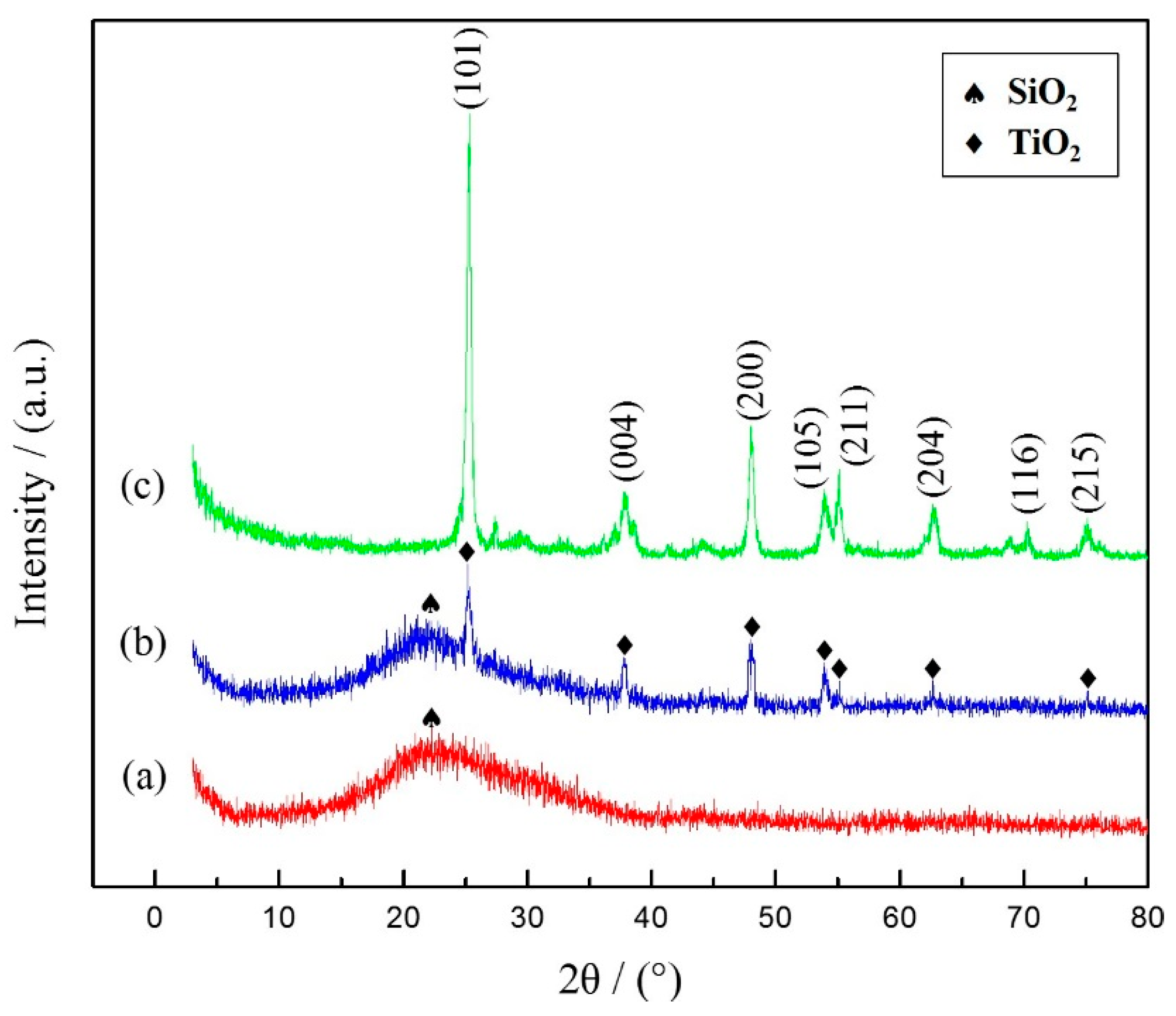
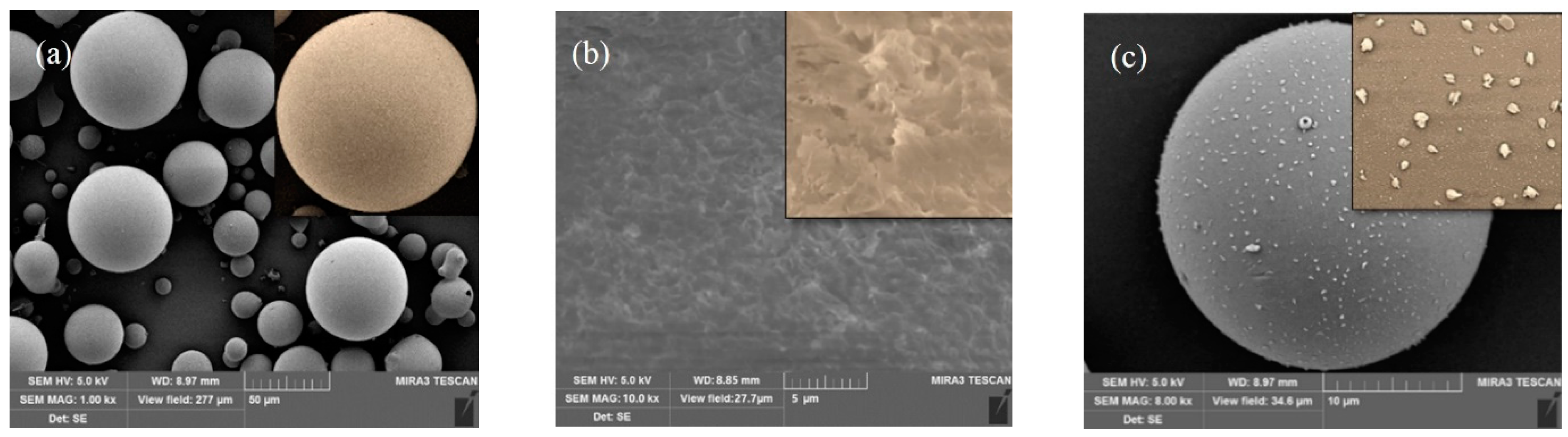
Whether there is a successful reaction of nano TiO2 with glass microbeads can be established by analyzing the surface composition before and after the treatment with nano TiO2, glass microbeads, and the composite material. The scanning electron microscopy (SEM) and X-ray diffraction (XRD) test results are presented in Figure 1 and Figure 2.
Figure 1.
(a) The glass microbeads(50 μm); (b) cold-alkaline corrosion(5 μm); (c) the nano TiO2 composite(50 μm).
Figure 2.
(a) The glass microbeads; (b) the composite material; (c) nano TiO2.
Figure 1a shows the surface of the glass microbeads is very smooth before being soaked in a saturated Ca(OH)2 solution. After the soaking process, an irregular gully-like texture (the width is 20 nm–50 nm, and the depth is about 10 nm) appears on the surface of the glass microbeads, which provides a good channel for loading nano TiO2 (the average particle size is 10 nm), as shown in Figure 1b. It is worthwhile to mention that the main component of glass microbeads is sodium borosilicate, which is an amorphous material composed of three components: SiO2, Na2O, and B2O3. The melting points of the three main components are 1650 °C, 1132 °C, and 445 °C, respectively, which means the surface of glass microbeads produces molten B2O3 at a temperature of 445 °C. According to this theory, we calcine the soaked glass microbeads in a muffle furnace at 450 °C for 2 h in order to adhere nano TiO2 onto the trench-like texture created by the molten B2O3. Figure 1c shows the adhesion-treated photocatalytic composites with a large amount of nano TiO2 attached to the surface.
Figure 2 shows the crystal energy spectrum results for nano TiO2, glass microbeads, and the composite material. The X-axis describes crystals at the test point according to the energy intensity of the characteristic spectral lines, whereas the Y-axis reflects the relative count of the crystals at the test point. Figure 2 shows the results for glass microbeads (a), the composite material (b), and nano TiO2 (c), according to the diffraction parameter of the Joint Committee on Powder Diffraction Standards (JCPDS), Card No. 21-1272. Seven simple anatase nano TiO2 characteristic peaks, namely (101), (004), (200), (105), (211), (204), and (215), can be found in (b,c), which means that the nano TiO2 has been embedded on the surface of the glass microbeads. It must also be mentioned that the characteristic peak (116) was not found in (b), which means that the small intensity of this peak may be masked by the amorphous diffraction peak of the glass microbeads.
2.3. Light Transmittance Analysis
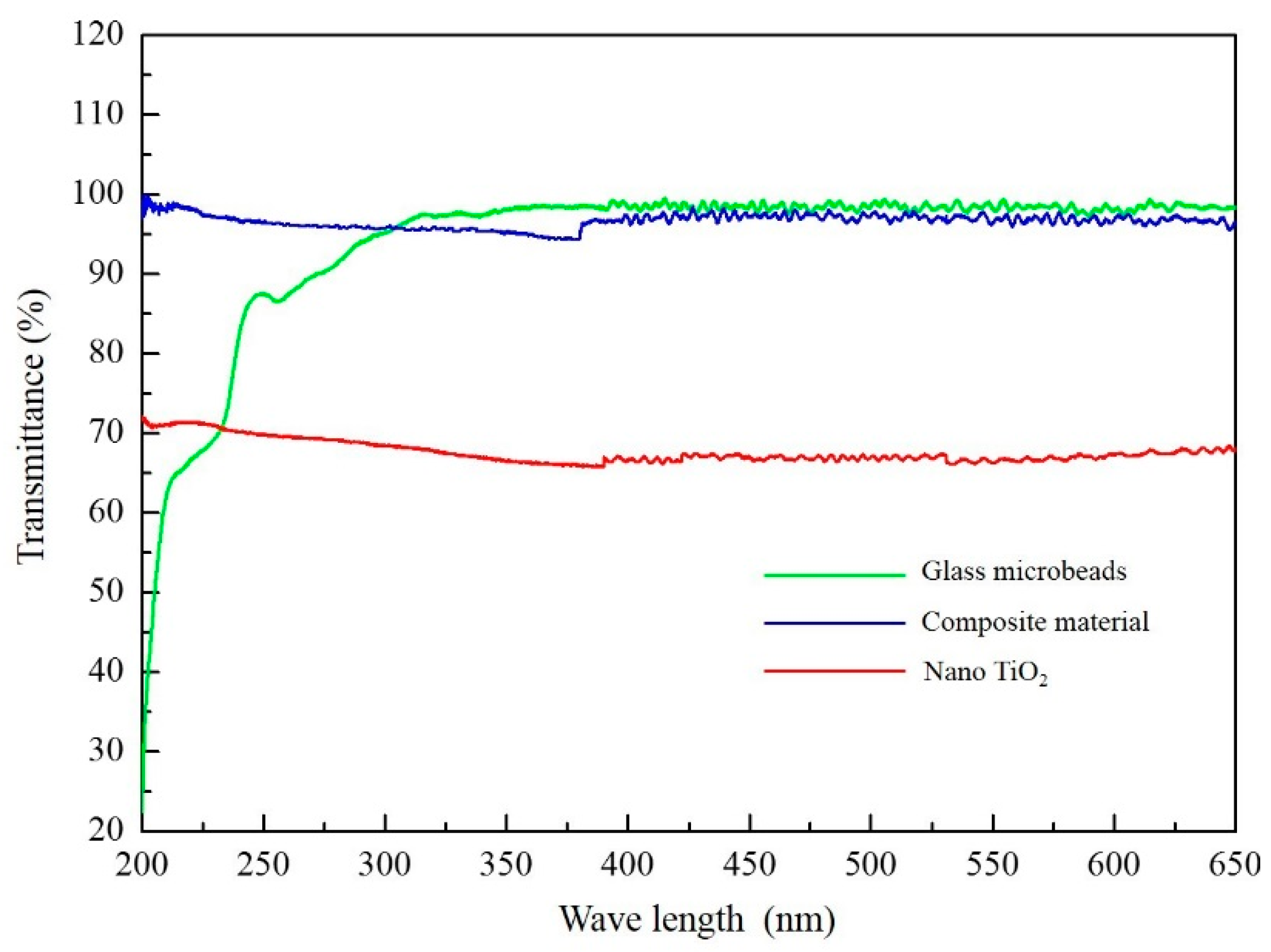
Glass microbeads are a chemically stable mixture and are usually used as a reinforcing agent for plastics. In addition, they have the properties of reflection and diffusion; as such, they are often used in road signs and pavement markings in the field of traffic to enhance light sources and warnings. This article focuses on the photocatalytic degradation rate of nano TiO2, for which sufficient light is a catalytic condition. This section focuses on a test of the light transmittance of nano TiO2 composites by UV-Vis Spectrophotometer. Figure 3 shows that the average transmittance of the glass microbead–nano TiO2 composite material is 94.5%, which is 26.7% higher than that of pure nano TiO2. The result shows that the composite material has stronger light transmittance than pure nano TiO2. It must also be mentioned that the blue line and the red line have a similar inflection point that appears around the wavelength of 380 nm, which offers additional proof of the successful production of the glass microbeads–nano TiO2 composites.
Figure 3.
Light transmittance analysis.
3. Durable Pavement Structure Design
This section focuses on durable pavement structure design to reduce the loss of exhaust gas degradation materials due to friction with tires on the road. This paper is inspired by a type of macro-porous asphalt mixture that can provide sufficient construction depth to carry nano TiO2 composites [11,12,13]. This structure is divided into two parts; one part is the macro-porous parent asphalt mixture, and the other part is the cement-filling slurry material. As such, it offers important advantages over dense-graded asphalt mixtures; it possesses sufficient construction depth to reduce the friction between the tire and the photocatalytic material when they are in direct contact, while improving the durability of the nano TiO2 composites. It is worthwhile to mention that alkaline cement slurry can neutralize the acid product (nitric acid) of the photocatalytic degradation of gas pollutants, forming a sustainable road exhaust degradation cycle under the scouring of rainwater, which is another significant advantage.
The asphalt pavement structure design steps are as follows: (1) select SFAC-13 with large pores as the master mix gradation, and select the optimal design void ratio of 24%; (2) configure the proportion of cement grouting materials and then determine the optimal reserved grouting depth of the master mix according to the test results.
3.1. Gradation Design of Matrix Asphalt Mixtures
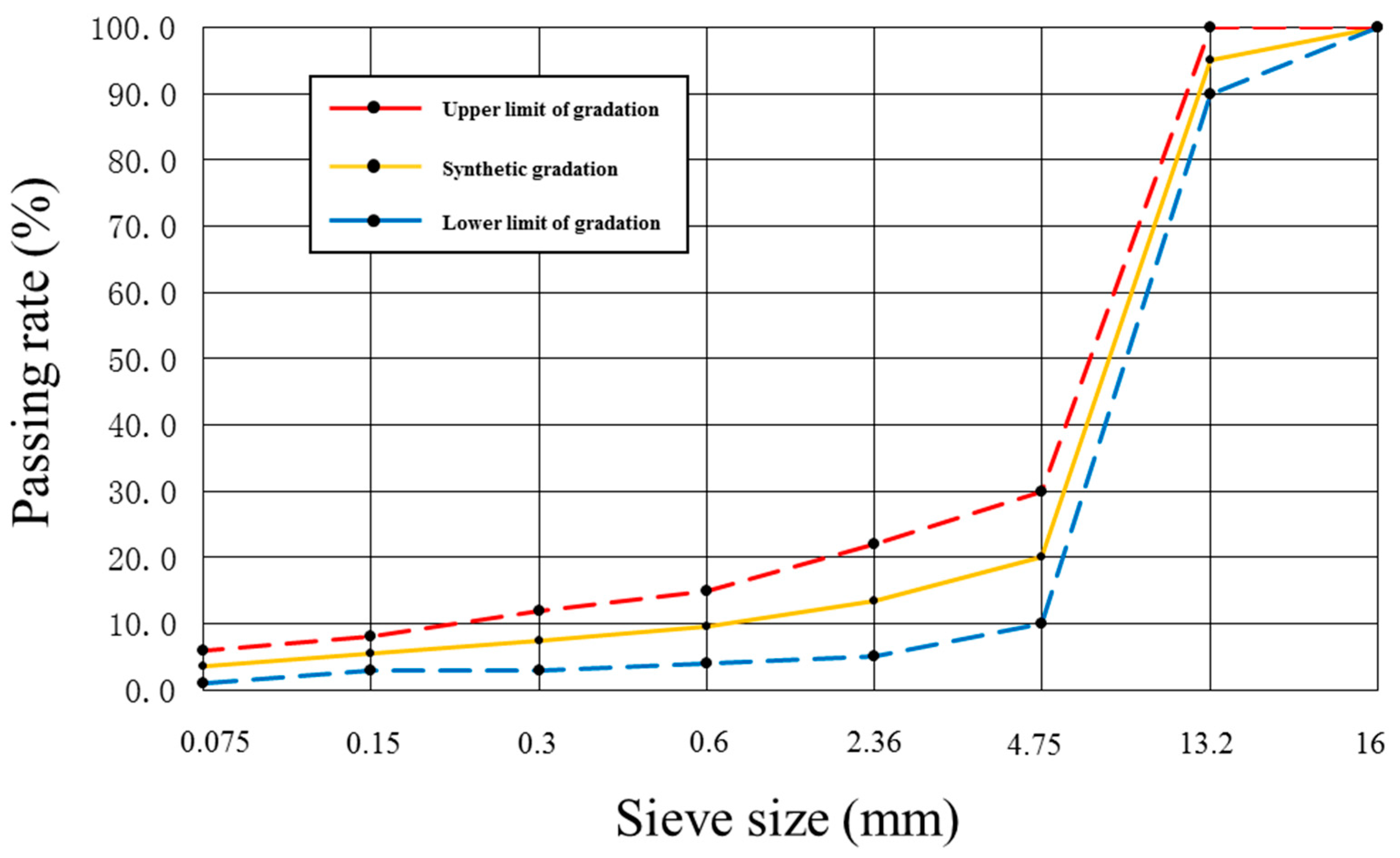
The gradation used in the design of the asphalt mixture in this paper refers to the relevant requirements in the “Technical Specification for Design and Construction of Perfusion Semi-flexible Pavement“ (DB11/T 1817-2021). The gradation composition and gradation curve of the base asphalt mixture are shown in Table 3 and Figure 4, respectively.
Table 3.
The aggregate gradation of SFAC-13.
Figure 4.
The aggregate gradation of SFAC-13.
According to the gradation of SFAC-13 given in Table 1, the Marshall test procedure is used to determine the optimum asphalt content for the asphalt mixture, according to the “Highway Asphalt Pavement Construction Technical Specifications” (JTJF40-2004) requirements. The optimum content of the asphalt binder is 3.4%, and the target void ratio is 24%.
3.2. Optimum Depth Selection of Cement Mortar Grouting
The cement mortar selected in this paper is 42.5 R ordinary Portland cement. Performance test indicators include the initial setting time, final setting time, compressive strength, and flexural strength, according to the “Testing Methods of Cement and Concrete for Highway Engineering” (JTG3420-2020). The test results are shown in Table 4.
Table 4.
The test results for 42.5 R ordinary Portland cement mortar.
In contrast to general flexible pavements, semi-flexible pavement performance is characterized by a mix of flexibility and rigidity; it has not only the advantages of asphalt pavement in terms of noise reduction, sound absorption, driving comfort, etc., but also the advantages of strong bearing capacity and anti-rutting that are typical of cement pavement. Yet, the biggest problem with semi-flexible pavement is the coordinated deformation ability of its dissimilar materials, which may cause cracks in the road [14,15]. Thus, the strength stability of the coordinated deformation of dissimilar materials is paid more attention when selecting the grouting depth of the cement grout.
Considering that the maximum nominal particle size of the aggregate is 13.2 mm, we take the largest nominal particle size of the aggregate as the maximum reserved grouting depth and decrease it with a gradient of 20% to find the best reserved grouting depth. Before grouting the asphalt mixture, we fix the specimens on the cement vibrating table, which is sealed on the bottom and sides with plastic wrap and foil. We grout the specimens while vibrating for 90 s so that the cement mortar can be fully poured into the connected gaps of the specimen. After the perfusion completes, the specimens are left to stand for about 30 min. Then, we use a rubber rake to wipe off the excess cement mortar on the surface of the specimens and place the specimens in a curing box at 20 °C for 6 days.
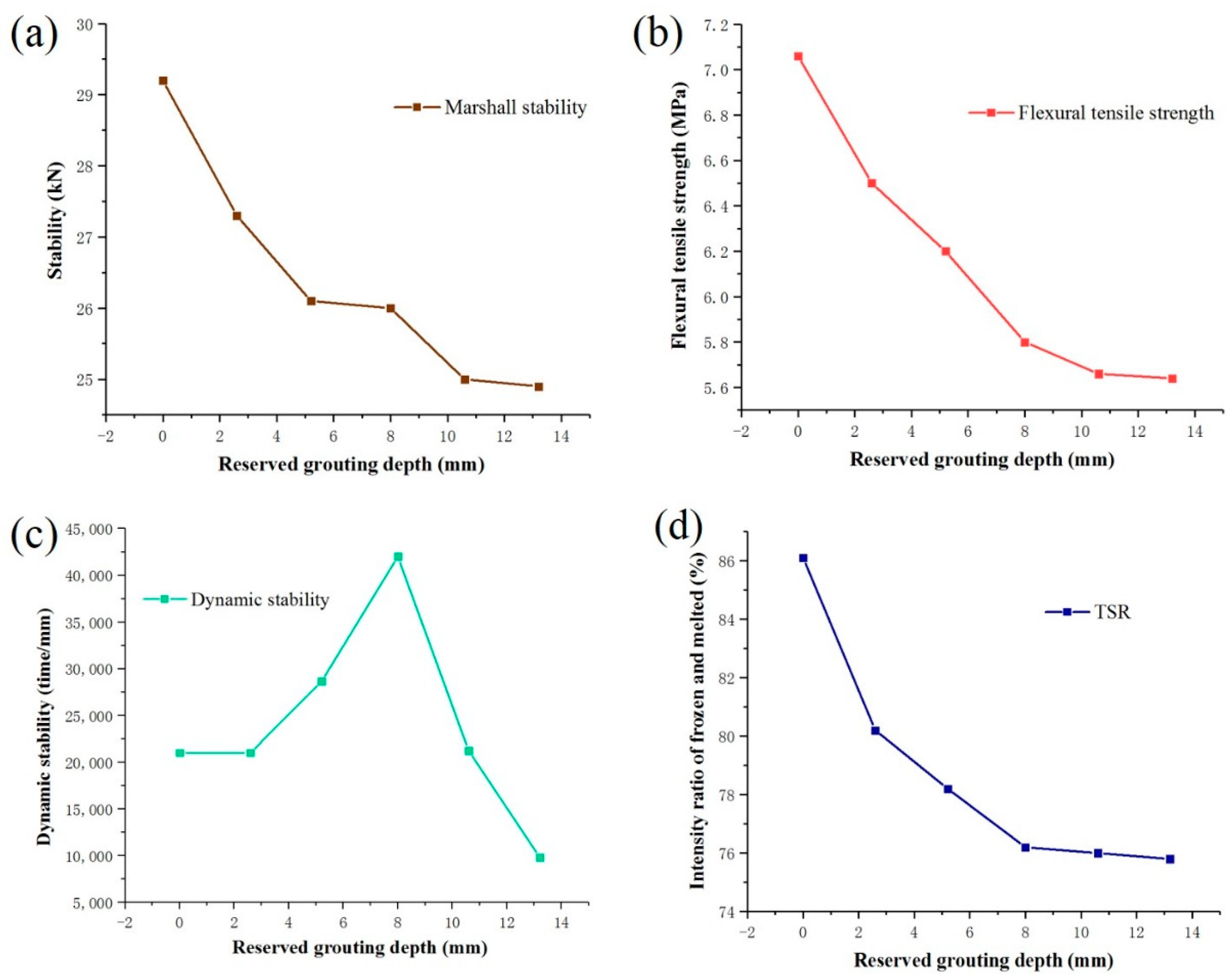
In order to obtain the best reserved depth of the specimens, we focus on a series of mechanical property tests for semi-flexible specimens with different reserved grouting depths, including Marshall stability, high-temperature stability, low-temperature crack resistance, and water stability. The test results are shown in Figure 5.
Figure 5.
Relationship between properties test results and the grouting depth: (a) Marshall stability; (b) the flexural tensile strength; (c) dynamic stability; (d) TSR.
As can be seen from (a,b) of Figure 5, the attenuation law of Marshall stability and the flexural tensile strength show that the curves no longer have obvious attenuation when they reach 10.56 mm, at which point they tend to be stable. From the law of dynamic stability (c), it can be concluded that the semi-flexible asphalt mixture reaches its peak value when the reserved grouting depth is 7.92 mm. In the freeze–thaw splitting test results (d), the reserved grouting depth tends to be stable between 8 mm and 10 mm. Considering the test results alone, the optimal grouting depth of cement grout should be controlled between 7.92 mm and 10.56 mm. Considering that the glass microbead–nano TiO2 composite materials need to reserve a certain paving space when pouring cement mortar, improvements in appropriately adjusting the optimal grouting depth of cement grout should be considered.
4. Evaluation of the Degradation Efficiency of Automobile Exhaust Gas
Given the observed problem with the durability of nano TiO2 photocatalytic nanoparticle coatings, this section focuses on the wear resistance of composite particles in pavement, which is assessed by the change in the degradation efficiency of automobile exhaust gas before and after the abrasion test.
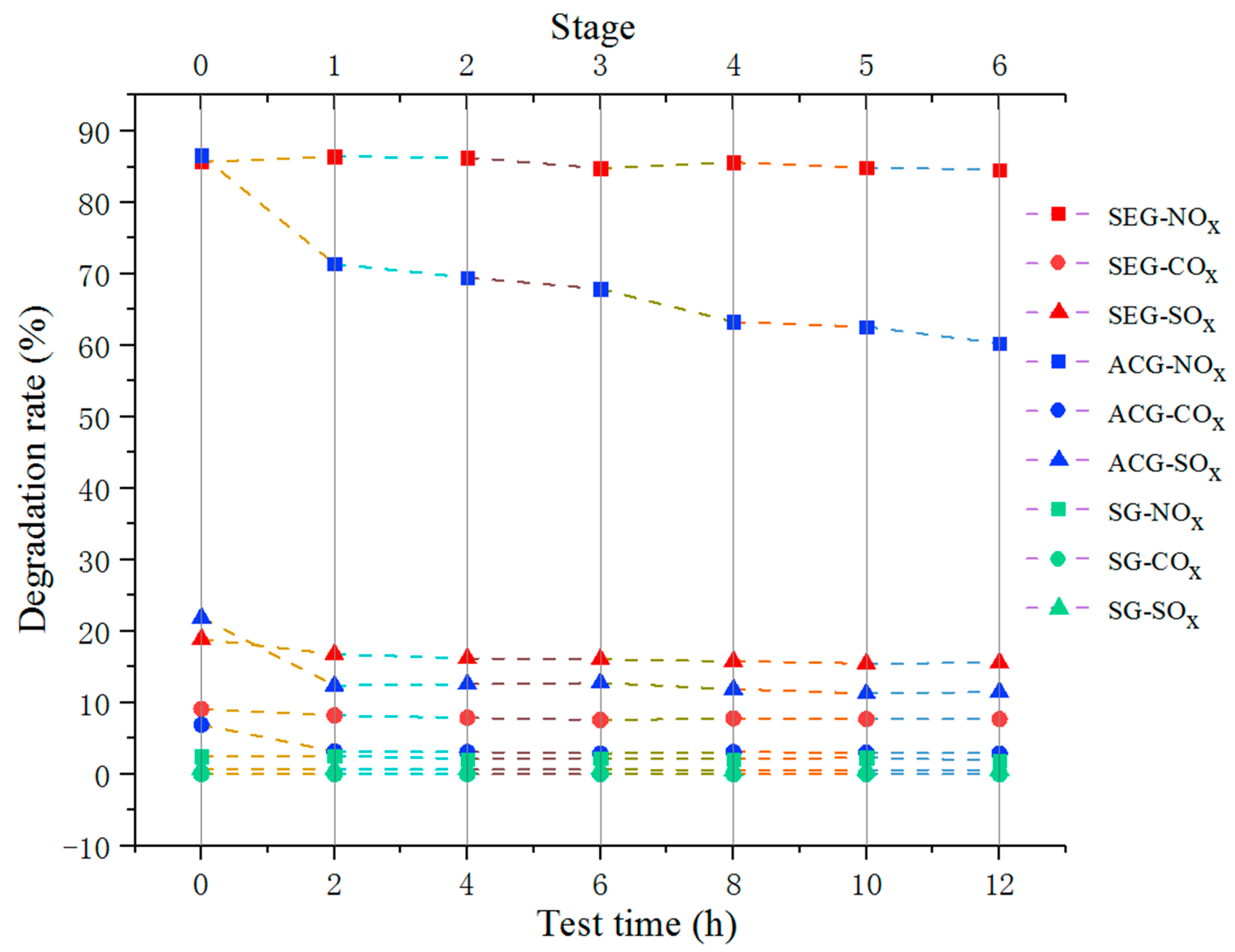
In this experiment, we set up a stirring group (SG), in which we replace mineral powder with the same quantity of composite materials during the mixing process, a spray embedding group (SEG), in which we spray the composite materials on the surface of the unset grout, and an aqueous coating group (ACG), in which we configure the composite water solution and spray applied to the surface of the fully set grout for different durations of abrasion to verify the durability of the new nano TiO2 loading method. In order to facilitate the analysis of the test results, the parameters of the nano TiO2 composites in the three groups are uniformly set to 40 g (the mineral powder in the stirring group is 40 g). We conduct the wear test in a dry environment, rubbing each group of specimens under standard wheel pressure (0.7 MPa). After a phased test (2 h), we use a blower to clean up the dust on the surface of the specimens and then conduct vehicle exhaust gas degradation tests to complete the phased testing. The entire test trial is divided into six stages, for a total of 12 h.
Under sunlight, highly catalytically active groups can be generated on the surface of nano TiO2, which has a strong redox ability. Yet, the photocatalytic reaction process of photocatalysts requires enough excited photons functioning as catalysts to provide sufficient energy [16,17,18]. Generally, the ultraviolet wavelength in sunlight can meet the excitation requirements of photocatalysts. Therefore, in the simulated degradation reaction experiments, UV irradiation intensity is a key factor in the reaction rate and degradation ability. However, under outdoor conditions, UV light intensity changes due to the weather conditions, especially humidity and cloud cover, which may lead to certain errors in the test results. Taking the above observations into account, we carry out the test indoors under 600 W/m2 UV light irradiation.
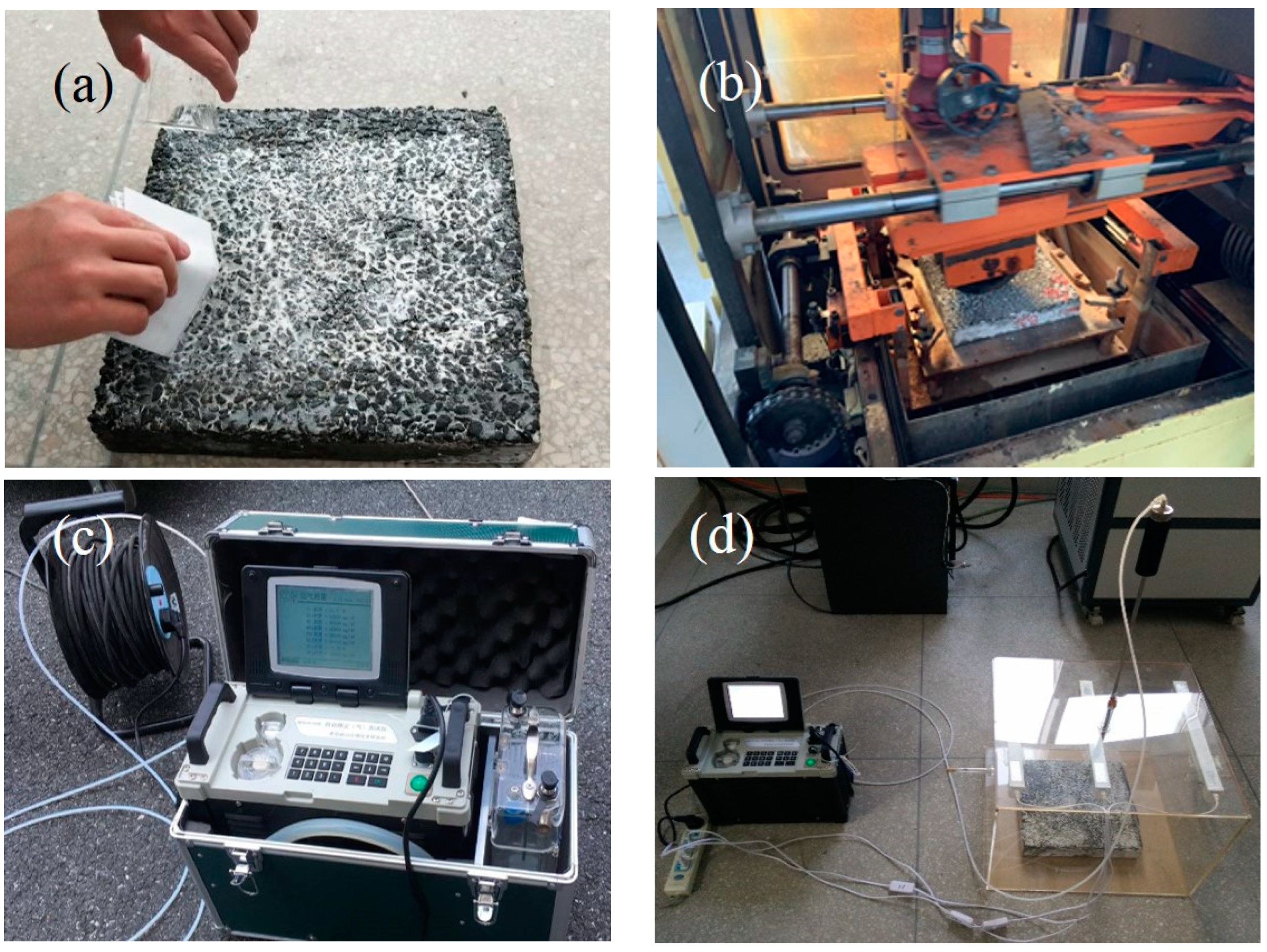
The vehicle exhaust gas degradation test is carried out in a dark room. The specimens are placed in a sealed glass box that has three UV-emitting lamps on the top to adjust the intensity of UV rays. In order to completely avoid the influence of sunlight on the test results, we cover the gas reaction box with a completely effective shading cloth during the test. The sample preparation and the test steps are shown in Figure 6.
Figure 6.
Gas degradation test steps: (a) specimen preparation; (b) abrasion test on the specimens; (c) exhaust gas analyzer debugging; (d) gas degradation test.
The residual degradation ability of the specimens mentioned in this paper refers to the degradation ability of the specimen with respect to automobile exhaust after wheel wear. After preliminary testing, the residual degradation ability of the three groups of specimens is tested under the irradiation of UV light at 600 W/m2 for 30 min because other light intensities make the test either too long or too slow. The average degradation ability results for nitrogen oxides, carbon oxides, and sulfur oxides in automobile exhaust are shown in Table 5.
Table 5.
Evaluation of residual degradation ability of specimens under UV light at 600 W/m2.
After the test specimens for different paving methods are tested, there are significant differences in the degree of degradation capacity. Figure 7 shows that the stirring group has a poor degradation efficiency of only 1.09%. This is because the composite material is mixed into the interior of the specimen, replacing the mineral powder, and, thus, cannot be exposed to the external light source to participate in the photocatalytic reaction. After the first stage of testing for the aqueous coating group, the degradation efficiency with respect to harmful gases, such as nitrogen oxides, carbon oxides, and sulfur oxides, decreases by 17.49%, 53.62%, and 43.25%, respectively. After the fourth stage, the degradation rate is gradually stabilized. The reason it still partially retains the ability to degrade exhaust is that some composite material is embedded in the surface texture of the asphalt mixture. In contrast, in the spray embedding group, the exhaust gas degradation rate is almost not attenuated for its good durability.
Figure 7.
Test results of the exhaust gas degradation test.
5. Conclusions
A new nano TiO2 loading method is proposed that can effectively improve the refractive index of illumination and the durability of materials.
We observed good adhesion of nano TiO2 on glass microbeads via the microscopic performance characterization of composites. The improvement in the light transmittance of the composite material improves the catalytic efficiency of nano TiO2 to a certain extent.
The structure of the macro-porous asphalt mixture designed in this paper protects the composite material from tire friction loss and improves the durability of the material to a certain extent.
Author Contributions
Formal analysis, X.W. (Xiaoyang Wang); Methodology, J.S.; Resources, B.Y. and X.W. (Xiaofeng Wang). All authors have read and agreed to the published version of the manuscript.
Funding
This work was supported by the following projects or agents: the Transportation Science and Technology Achievements Promotion Project of Henan Provincial Department (2021T2), the Transportation Science and Technology Achievements Promotion Project of Henan Provincial Department (2021T8), and the Transportation Technology Project of Henan Provincial Department (2021G3).
Informed Consent Statement
Informed consent was obtained from all subjects involved in the study. Written informed consent has been obtained from the patients to publish this paper.
Conflicts of Interest
The authors declare no conflict of interest.
References
- Hisanaga, T.; Tanaka, K. Photocatalytic degradation of benzene on zeolite-incorporated TiO2 film. J. Hazard. Mater. 2002, 93, 331–337. [Google Scholar] [CrossRef]
- Qiao, X.J.; Li, P.; Wen, L. Study on the effect of nano-titanium dioxide environmental protection coatings on degrading nitrogen oxides in automobile exhaust. Constr. Technol. 2014, 43, 664–666. [Google Scholar]
- Jia, B.Y.; Duan, L.Y.; Ma, C.L.; Wang, C.M. Characterization of TiO2 loaded on activated carbon fibers and its photocatalytic reactivity. Chin. J. Chem. 2007, 25, 553–557. [Google Scholar] [CrossRef]
- Hassan, M.; Mohammad, L.N.; Dylla, H.; Asadi, S.; Cooper, S. Laboratory and field evaluation of sustainable photocatalytic asphalt pavements. AAPT 2012, 81, 1–20. [Google Scholar]
- Photocatalyst Coating Agents, a Proposal of Advanced Environmental Purification Technologies [EB/OL]. 2004. Available online: http://www.khi.co.jp/folium (accessed on 2 May 2022).
- Qian, C.X.; Zhao, L.F.; Fu, D.F. Research on photocatalytic activity of road surface materials. In Proceedings of the 17th ASCE Engineering Mechanics Division Conference, University of Delaware, Newark, DE, USA, 13–16 June 2004. [Google Scholar]
- Leng, Z.; Yu, H. Novel method of coating titanium dioxide onto asphalt mixture based on the breath figure process for air-purifying purpose. J. Mater. Civ. Eng. 2016, 28, 1–7. [Google Scholar] [CrossRef]
- Zhong, L.; Haghighat, F. Photocatalytic air cleaners and materials technologies-Abilities and limitations. Build. Environ. 2015, 91, 191–203. [Google Scholar] [CrossRef]
- Zhu, T.L. Preparation of Modified Nano-TiO2 Composites and Research on Durability and Functional Finishing of Textiles; Shanghai University of Engineering and Technology: Shanghai, China, 2016. [Google Scholar]
- Hassan, M.; Mohammad, L.N.; Asadi, S.; Dylla, H.; Cooper, S. Sustainable photocatalytic asphalt pavements for mitigation of nitrogen oxide and sulfur dioxide vehicle emissions. J. Mater. Civ. Eng. 2013, 25, 365–371. [Google Scholar] [CrossRef]
- Zhang, X.N.; Wang, S.H.; Wu, K.H.; Wang, D.Y. CAVF method for composition design of asphalt mixture. Highway 2001, 12, 17–21. [Google Scholar]
- Lai, F.; Huang, Z.; Guo, F. Noise reduction characteristics of macro porous asphalt pavement based on a weighted sound pressure level sensor. Materials 2021, 14, 4356. [Google Scholar] [CrossRef]
- Chen, Q.; Wang, C.; Yu, S.; Song, Z.; Fu, H.; An, T. Low-temperature mechanical properties of polyurethane-modified waterborne epoxy resin for pavement coating. Int. J. Pavement Eng. 2022, 1–13. [Google Scholar] [CrossRef]
- Zhang, J.; Cai, J.; Pei, J.; Li, R.; Chen, X. Formulation and performance comparison of grouting materials for semi-flexible pavement. Constr. Build. Mater. 2016, 115, 582–592. [Google Scholar] [CrossRef]
- Pei, J.; Cai, J.; Zou, D.; Zhang, J.; Li, R.; Chen, X.; Jin, L. Design and performance validation of high-performance cement paste as a grouting material for semi-flexible pavement. Constr. Build. Mater. 2016, 126, 206–217. [Google Scholar] [CrossRef]
- Wang, Y.; He, Y.; Lai, Q.; Fan, M. Review of the progress in preparing nano TiO2: An important environmental engineering material. J. Environ. Sci. 2014, 26, 2139–2177. [Google Scholar] [CrossRef] [PubMed]
- Kwon, S.; Fan, M.; Cooper, A.T.; Yang, H. Photocatalytic applications of micro-and nano-TiO2 in environmental engineering. Crit. Rev. Environ. Sci. Technol. 2008, 38, 197–226. [Google Scholar] [CrossRef]
- Macwan, D.P.; Dave, P.N.; Chaturvedi, S. A review on nano-TiO2 sol–gel type syntheses and its applications. J. Mater. Sci. 2011, 46, 3669–3686. [Google Scholar] [CrossRef]
Publisher’s Note: MDPI stays neutral with regard to jurisdictional claims in published maps and institutional affiliations. |
© 2022 by the authors. Licensee MDPI, Basel, Switzerland. This article is an open access article distributed under the terms and conditions of the Creative Commons Attribution (CC BY) license (https://creativecommons.org/licenses/by/4.0/).