Review

Measurement and Monitoring of Particulate Matter in Construction Sites: Guidelines for Gravimetric Approach

by
Ingrid Priscylla Silva Araújo
* and
Dayana Bastos Costa
Department of Structural and Construction Engineering, School of Engineering, Federal University of Bahia, Aristides Novis, 2, Federação, Salvador 40210-630, Brazil
*
Author to whom correspondence should be addressed.
Sustainability 2022, 14(1), 558; https://doi.org/10.3390/su14010558
Submission received: 18 November 2021 / Revised: 13 December 2021 / Accepted: 14 December 2021 / Published: 5 January 2022
(This article belongs to the Topic Climate Change and Environmental Sustainability)

Abstract

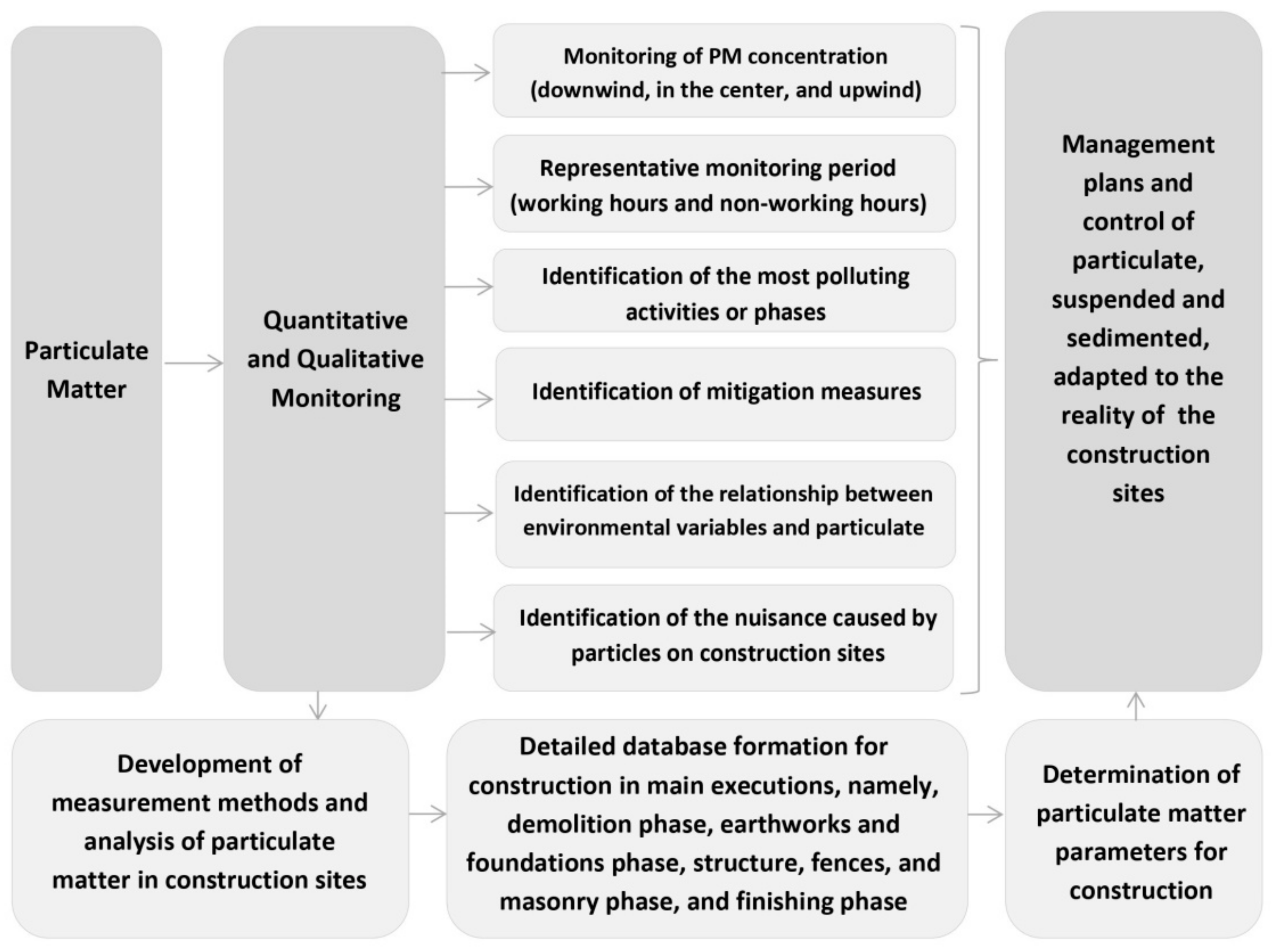
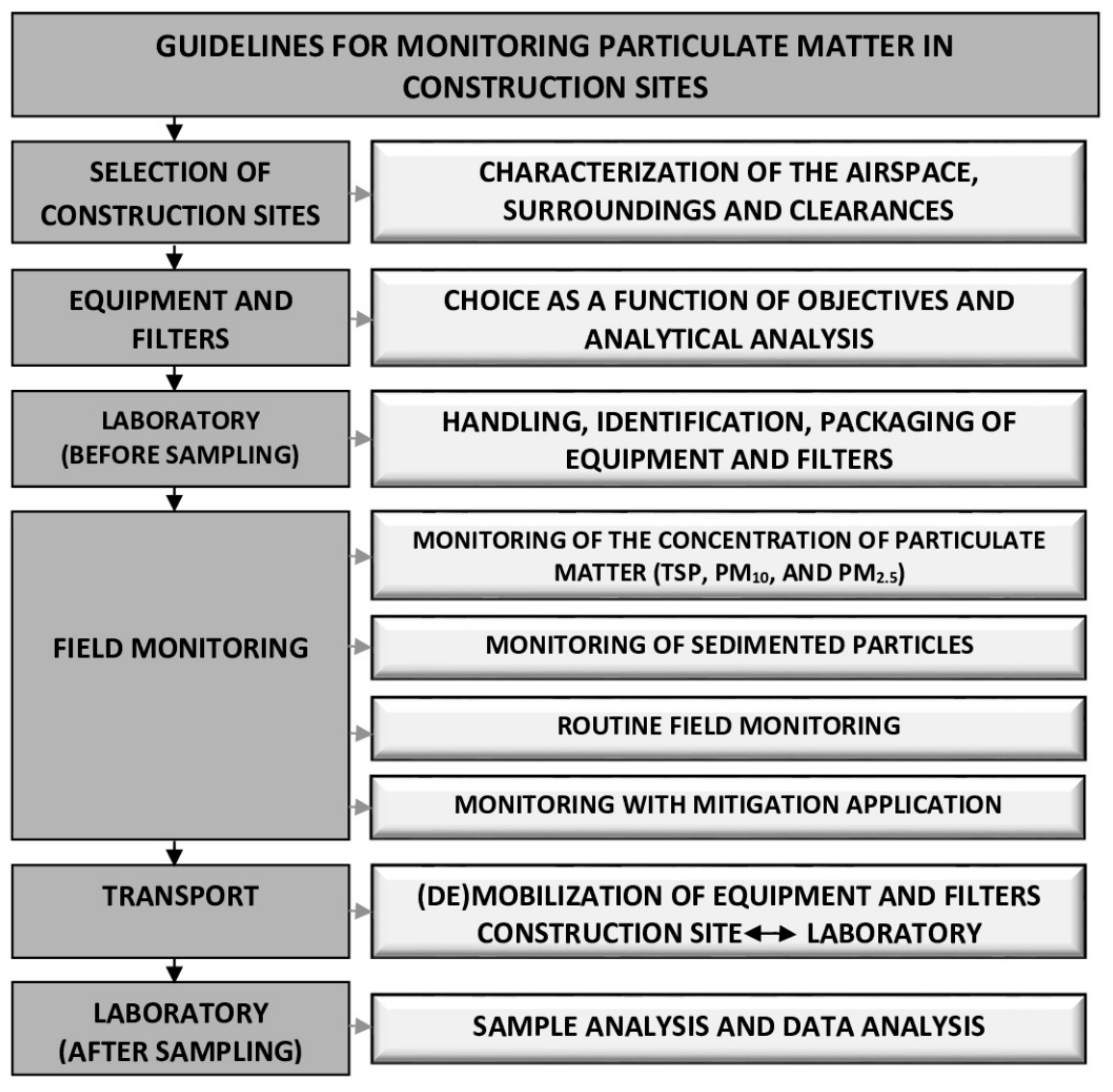
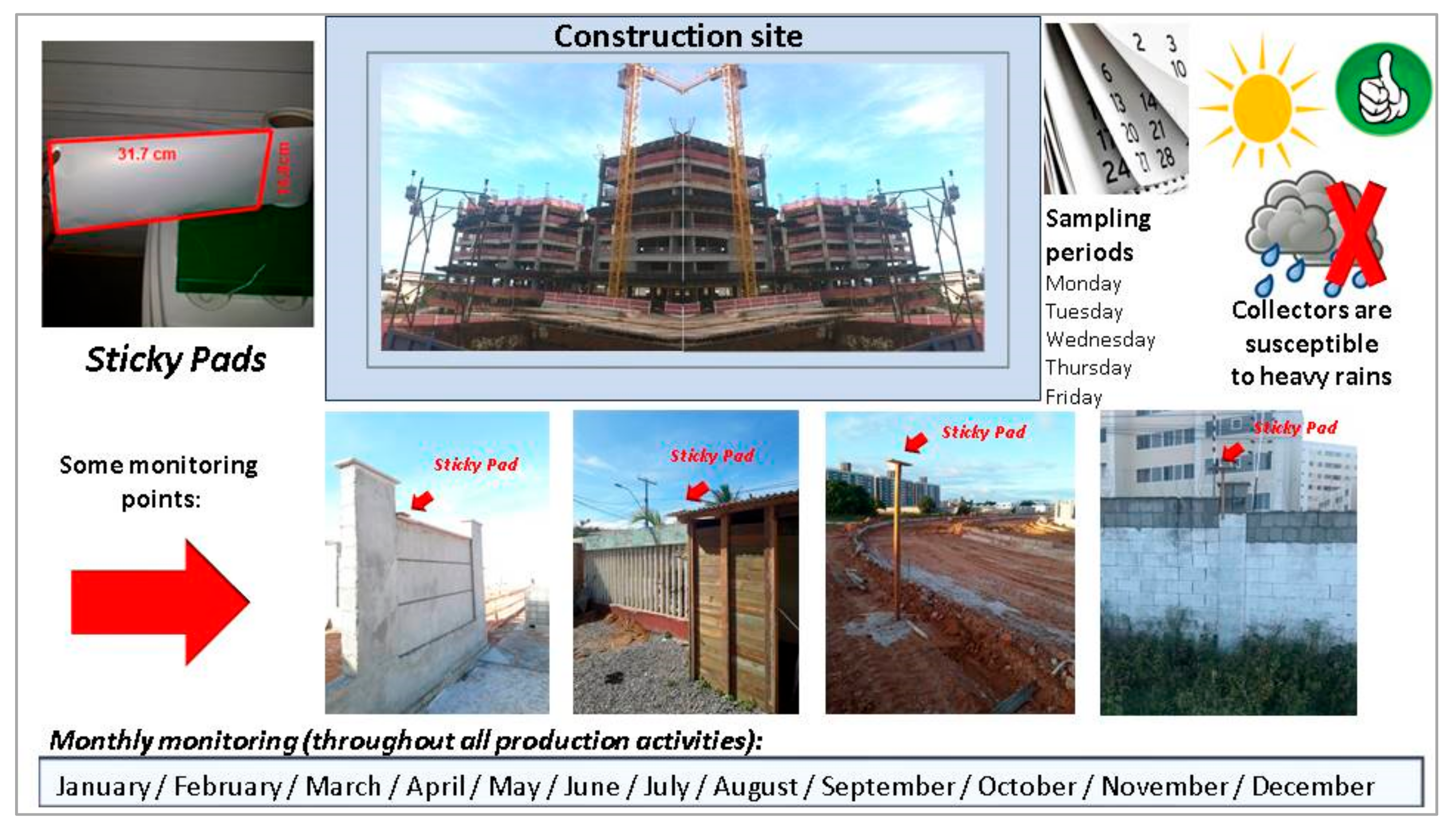
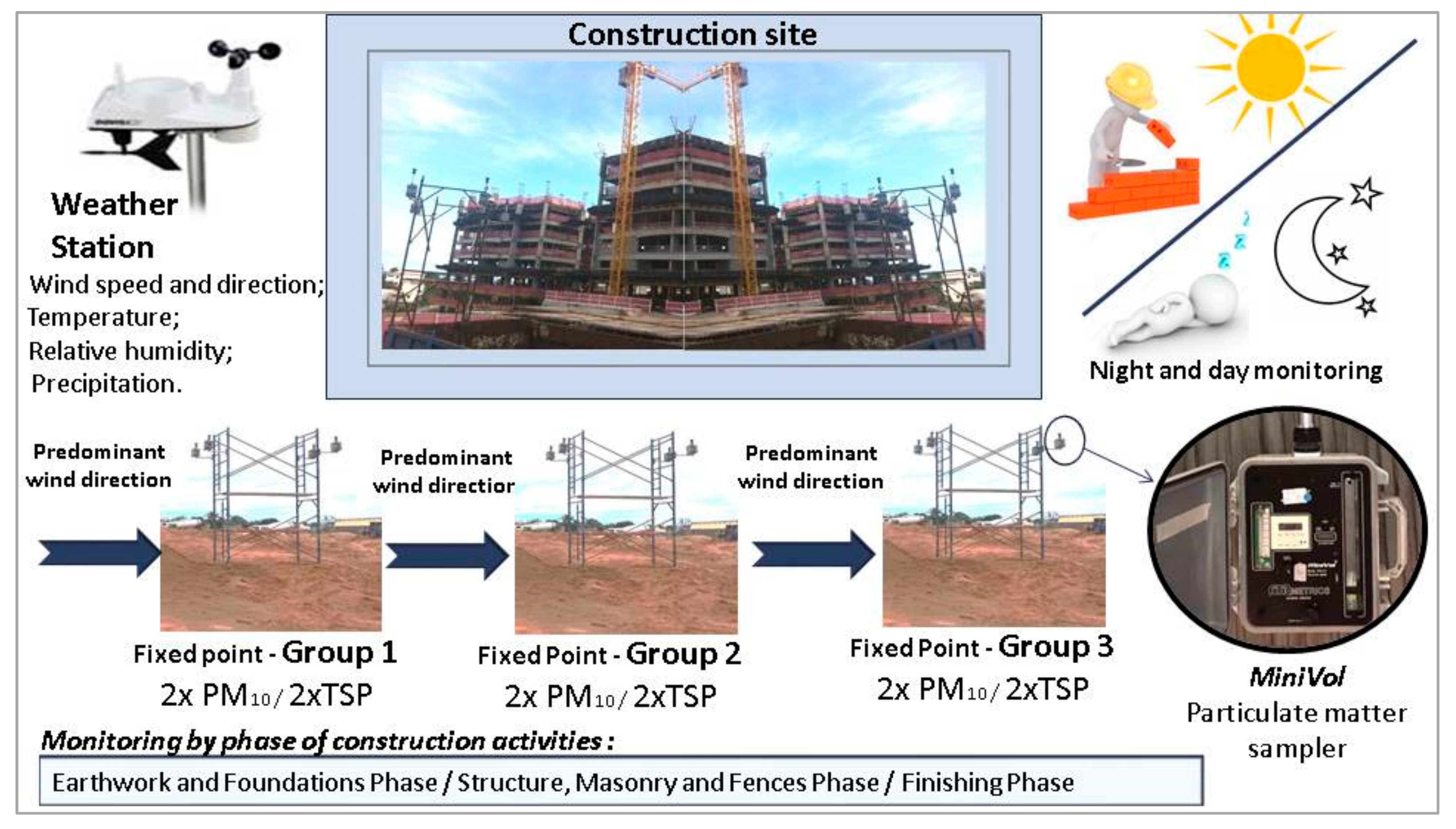
Studies on particulate matter (PM) from construction activities are still at an early stage. Thus, there is still no consensus on standardized experimental methods for monitoring PM in construction sites, which impedes the advancement of knowledge on this subject. This work proposes guidelines for measuring and monitoring the concentration of suspended PM and the annoyance generated by sedimented particles on construction sites in urban areas. These guidelines aim to reduce the variability and uncertainties that exist during the PM sampling processes at construction sites. This study adopts a literature review strategy in order to update the available scientific literature based on empirical evidence obtained in experimental PM studies and relevant documents from government agencies. The proposed guidelines were applied in a study protocol for gravimetric monitoring PM and annoyance tracking generated by sedimented particles using sticky pads. As a result, this article details sampling techniques, procedures, and instruments, focusing on gravimetric sampling, highlighting their characteristics compared to other monitoring approaches. Additionally, it points out a series of parameters for the measurement and monitoring of PM. This paper seeks to support future researchers in this area, inform decision making for experimental sampling, and provide a benchmark for measuring and monitoring PM at construction sites.
Keywords: air pollution; particulate matter; measurement and gravimetric monitoring; annoyance tracking; construction site air pollution; particulate matter; measurement and gravimetric monitoring; annoyance tracking; construction site