Review

A Review on Snowmelt Models: Progress and Prospect
1
College of Urban and Environmental Sciences, Northwest University, Xi’an 710127, China
2
Shaanxi Key Laboratory of Earth Surface System and Environmental Carrying Capacity, Northwest University, Xi’an 710127, China
*
Author to whom correspondence should be addressed.
Sustainability 2021, 13(20), 11485; https://doi.org/10.3390/su132011485
Submission received: 6 September 2021 / Revised: 11 October 2021 / Accepted: 15 October 2021 / Published: 18 October 2021

Abstract

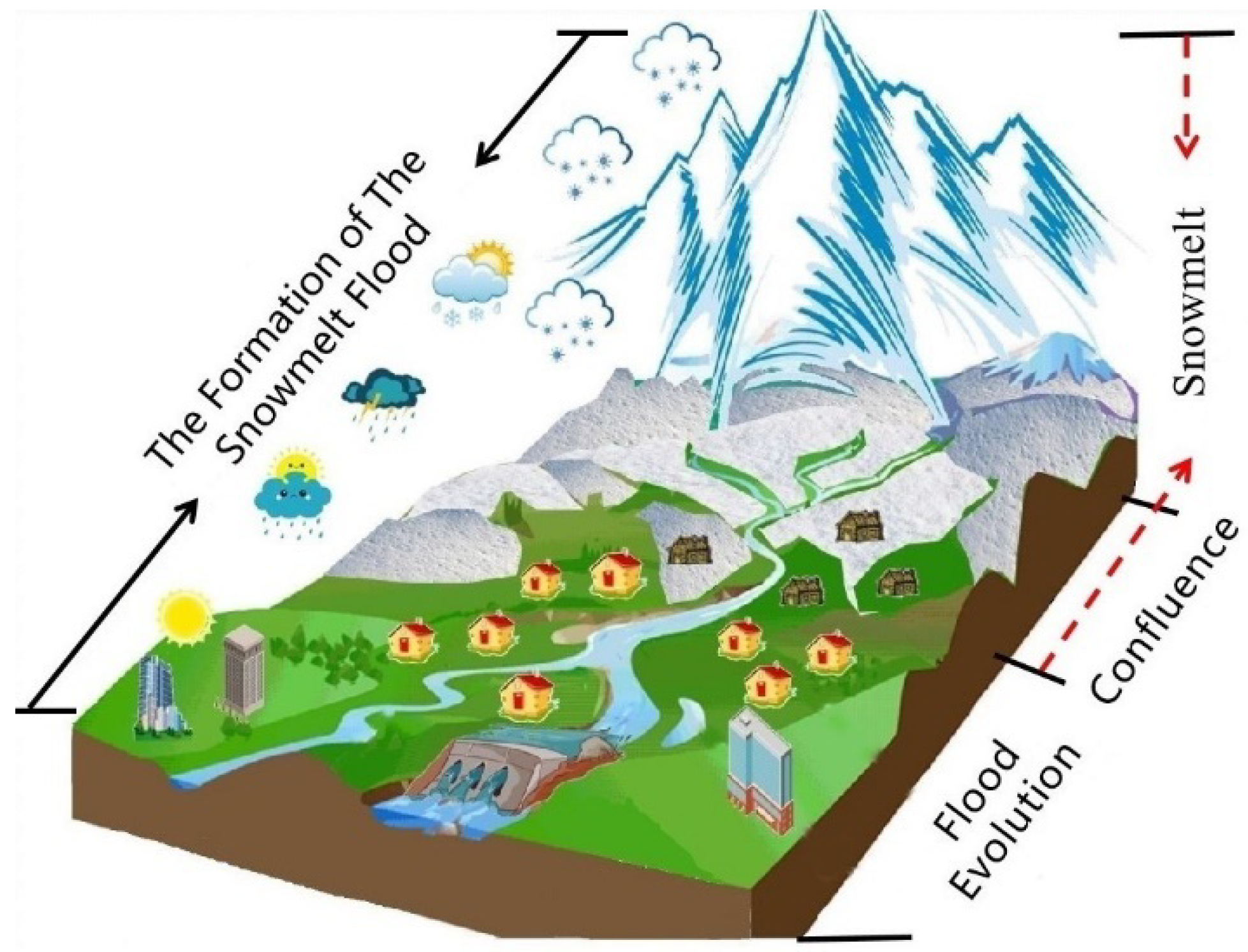
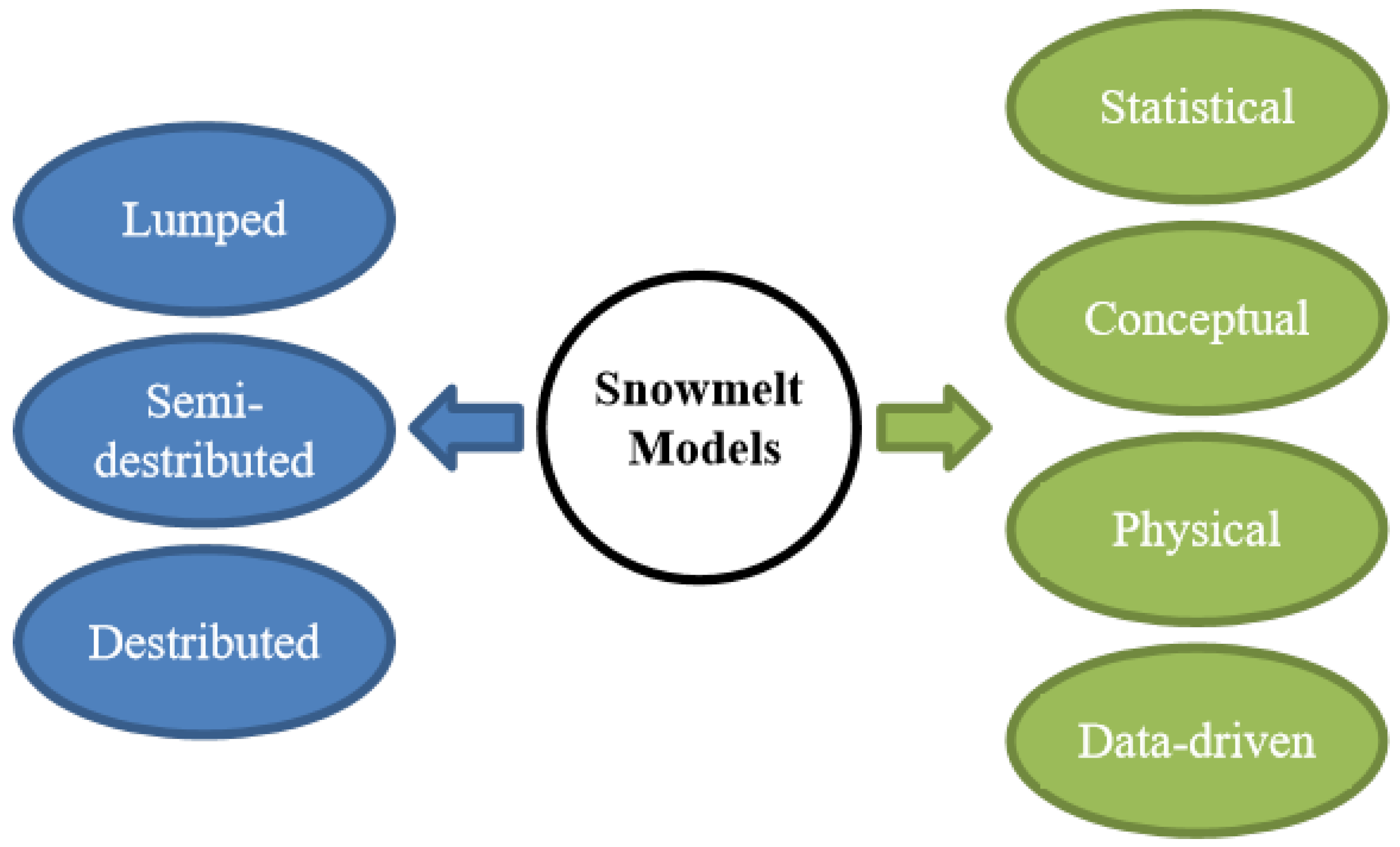
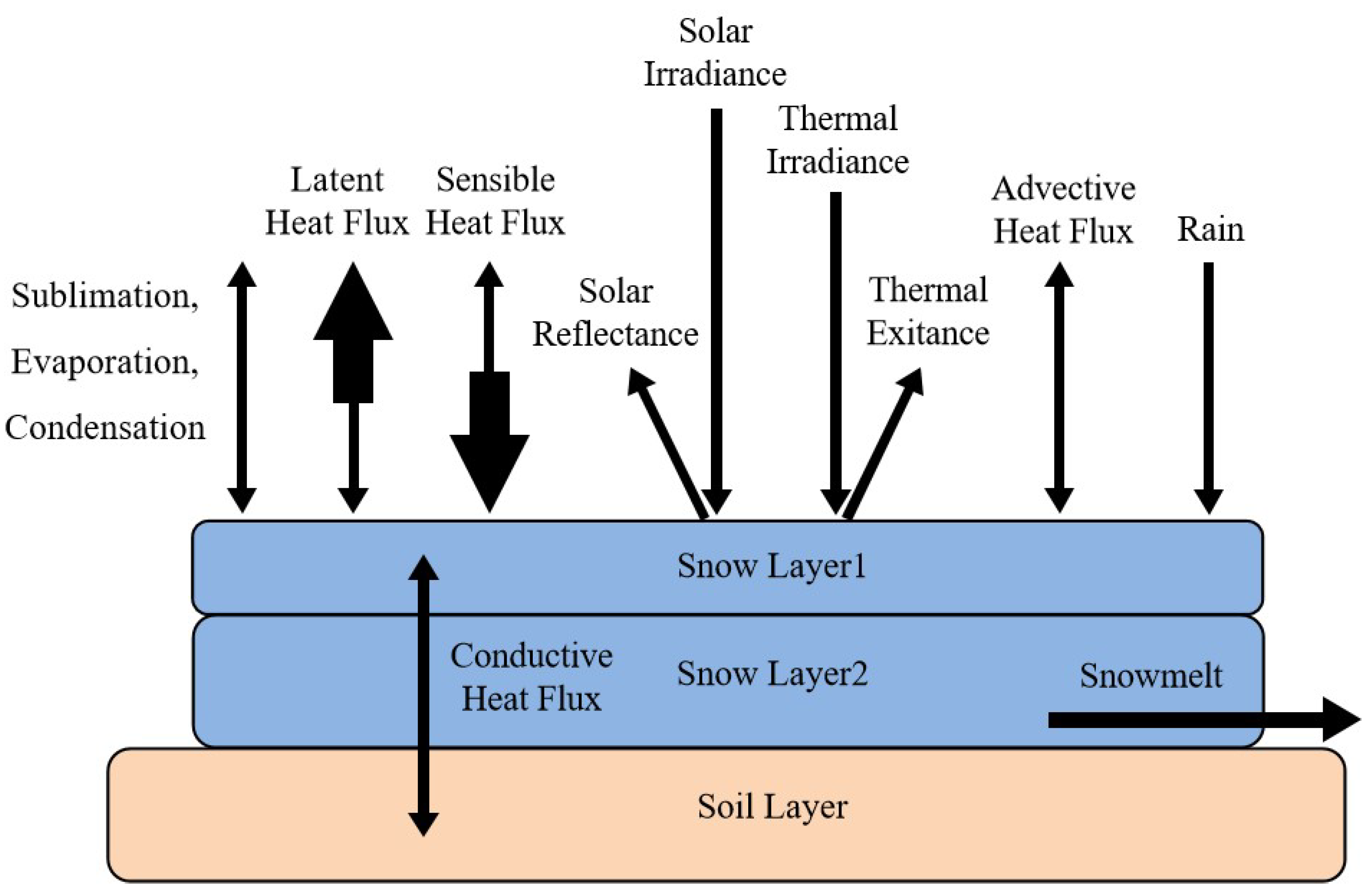
The frequency and intensity of flood events have been increasing recently under the warming climate, with snowmelt floods being a significant part. As an effective manner of simulating snowmelt flood, snowmelt models have attracted more and more attention. Through comprehensive analysis of the literature, this paper reviewed the characteristics and current status of different types of snowmelt models, as well as the different coupling methods of models for runoff generation and confluence. We then discussed key issues in snowmelt modelling, including blowing snow model, frozen ground model, and rain-on-snow model. Finally, we give some perspectives from four aspects: data, model structure, forecast and early warning, and forecast and estimation. At present, most of the snowmelt models do not have blowing snow or frozen ground modules. Explicit consideration of blowing snow and soil freezing/thawing processes can improve the accuracy of snowmelt runoff simulations. With climate warming, rain-on-snow events have increased, but the mechanism of enhanced rain and snow mixed flooding is still unclear, particularly for the mechanism of rain-snow-ice mixed runoff generation. The observation and simulation of rain and snow processes urgently need further study. A distributed physical snowmelt model based on energy balance is an advanced tool for snowmelt simulation, but the model structure and parameter schemes still need further improvements. Moreover, the integration of satellite-based snow products, isotopes, and terrestrial water storage change, monitored by gravity satellites, can help improve the calibration and validation of snowmelt models.
Keywords: snowmelt flood; snowmelt model; blowing snow; frozen ground; rain-on-snow snowmelt flood; snowmelt model; blowing snow; frozen ground; rain-on-snow