Article

Influence of Slope Gradient and Aspect on Soil Organic Carbon Content in the Region of Niš, Serbia


1
Laboratory for Soil and Agroecology, Institute of Filed and Vegetable Crops, National Institute of the Republic of Serbia, Maksima Gorkog 30, 21000 Novi Sad, Serbia
2
Center for Viticulture and Oenology, Bulevar Kralja Aleksandra 84, 11111 Belgrade, Serbia
3
Agromediterranean Faculty, Univerzitetski Kampus, Džemal Bijedic University of Mostar, 88104 Mostar, Bosnia and Herzegovina
*
Author to whom correspondence should be addressed.
Sustainability 2021, 13(15), 8332; https://doi.org/10.3390/su13158332
Submission received: 25 June 2021 / Revised: 18 July 2021 / Accepted: 20 July 2021 / Published: 26 July 2021

Abstract

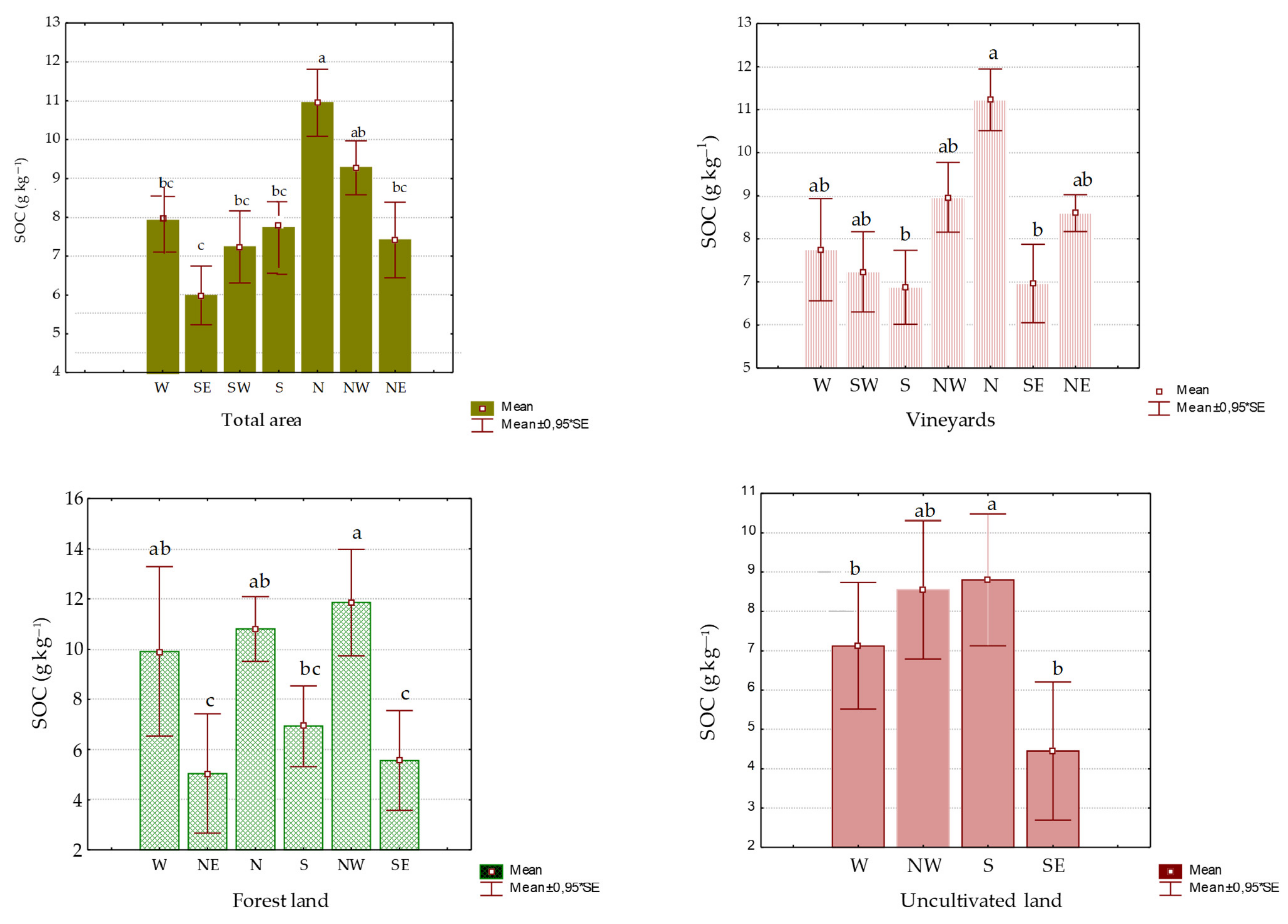
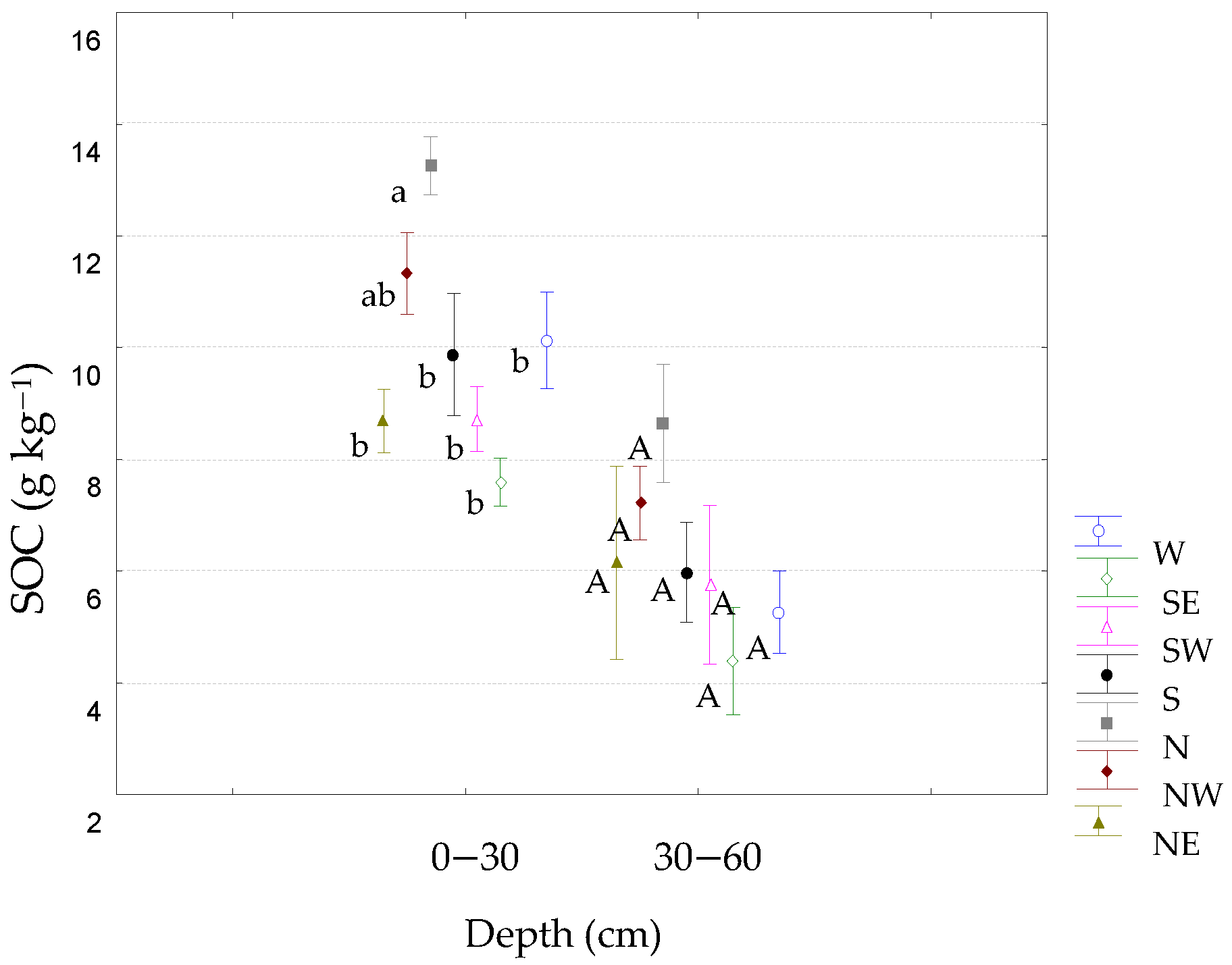
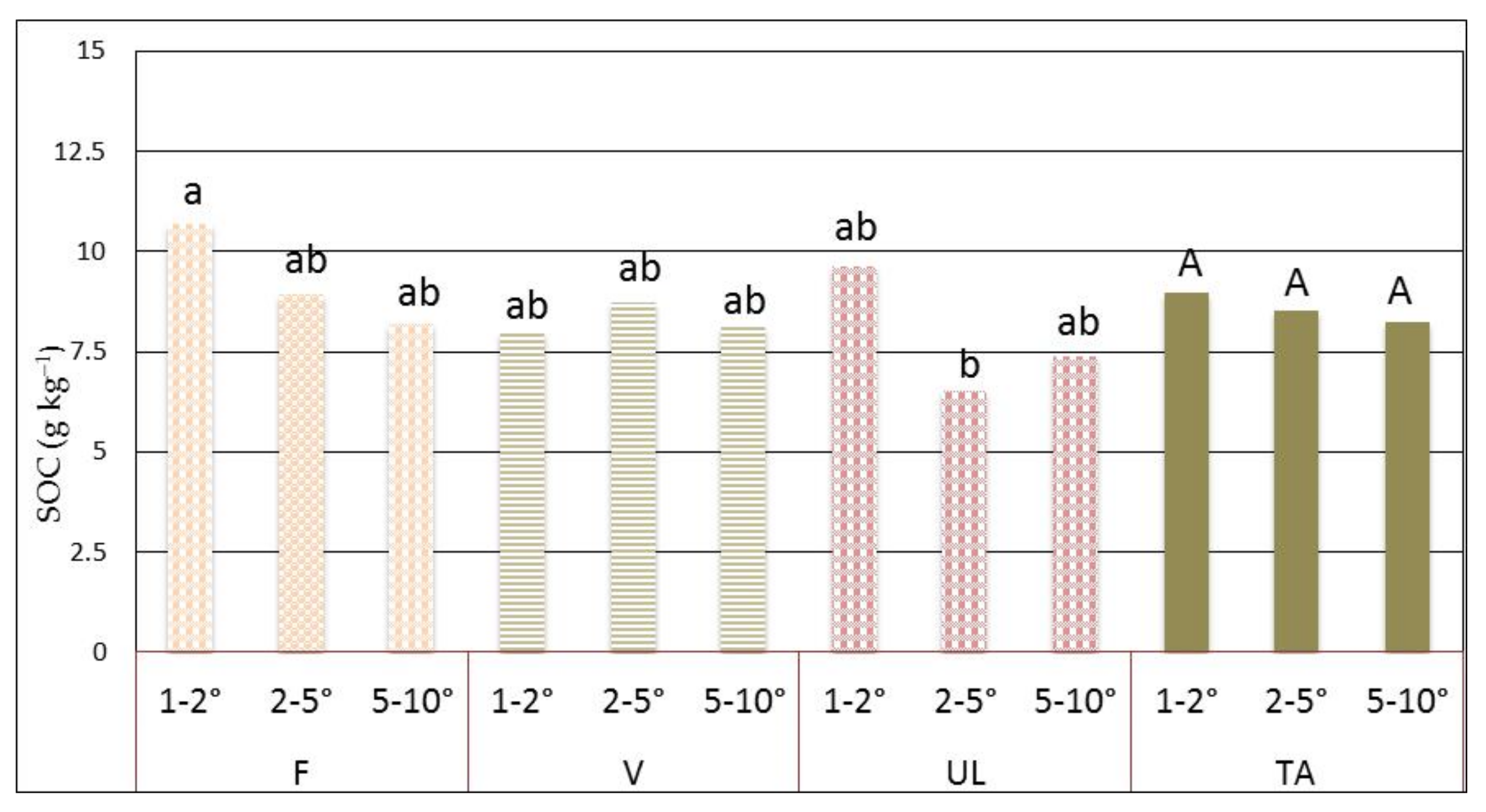
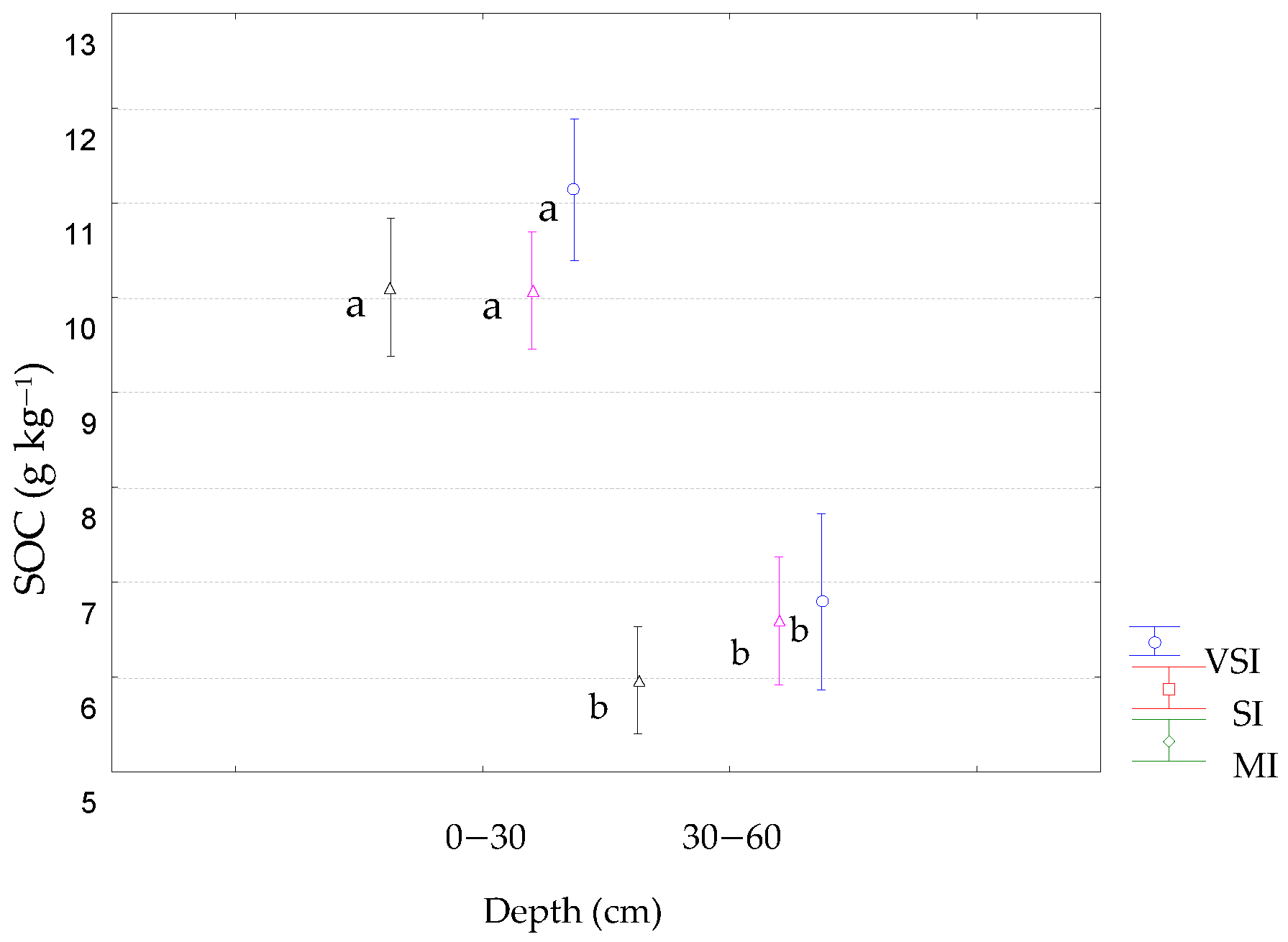
Topography-induced microclimate differences determine the local spatial variation of soil characteristics as topographic factors may play the most essential role in changing the climatic pattern. The aim of this study was to investigate the spatial distribution of soil organic carbon (SOC) with respect to the slope gradient and aspect, and to quantify their influence on SOC within different land use/cover classes. The study area is the Region of Niš in Serbia, which is characterized by complex topography with large variability in the spatial distribution of SOC. Soil samples at 0–30 cm and 30–60 cm were collected from different slope gradients and aspects in each of the three land use/cover classes. The results showed that the slope aspect significantly influenced the spatial distribution of SOC in the forest and vineyard soils, where N- and NW-facing soils had the highest level of organic carbon in the topsoil. There were no similar patterns in the uncultivated land. No significant differences were found in the subsoil. Organic carbon content was higher in the topsoil, regardless of the slope of the terrain. The mean SOC content in forest land decreased with increasing slope, but the difference was not statistically significant. In vineyards and uncultivated land, the SOC content was not predominantly determined by the slope gradient. No significant variations across slope gradients were found for all observed soil properties, except for available phosphorus and potassium. A positive correlation was observed between SOC and total nitrogen, clay, silt, and available phosphorus and potassium, while a negative correlation with coarse sand was detected. The slope aspect in relation to different land use/cover classes could provide an important reference for land management strategies in light of sustainable development.
Keywords: soil organic carbon; topography; slope gradient; slope aspect soil organic carbon; topography; slope gradient; slope aspect