Article

Technological Advances to Reduce Apis mellifera Mortality: A Bibliometric Analysis
by
Cristiano Ziegler
,
Tiago Sinigaglia
*,
Mario Eduardo Santos Martins
and
Adriano Mendonça Souza
Graduate Program in Production Engineering, Federal University of Santa Maria, Santa Maria CEP 97105-900, Brazil
*
Author to whom correspondence should be addressed.
Sustainability 2021, 13(15), 8305; https://doi.org/10.3390/su13158305
Submission received: 18 June 2021 / Revised: 20 July 2021 / Accepted: 21 July 2021 / Published: 26 July 2021
(This article belongs to the Section Sustainable Agriculture)

Abstract

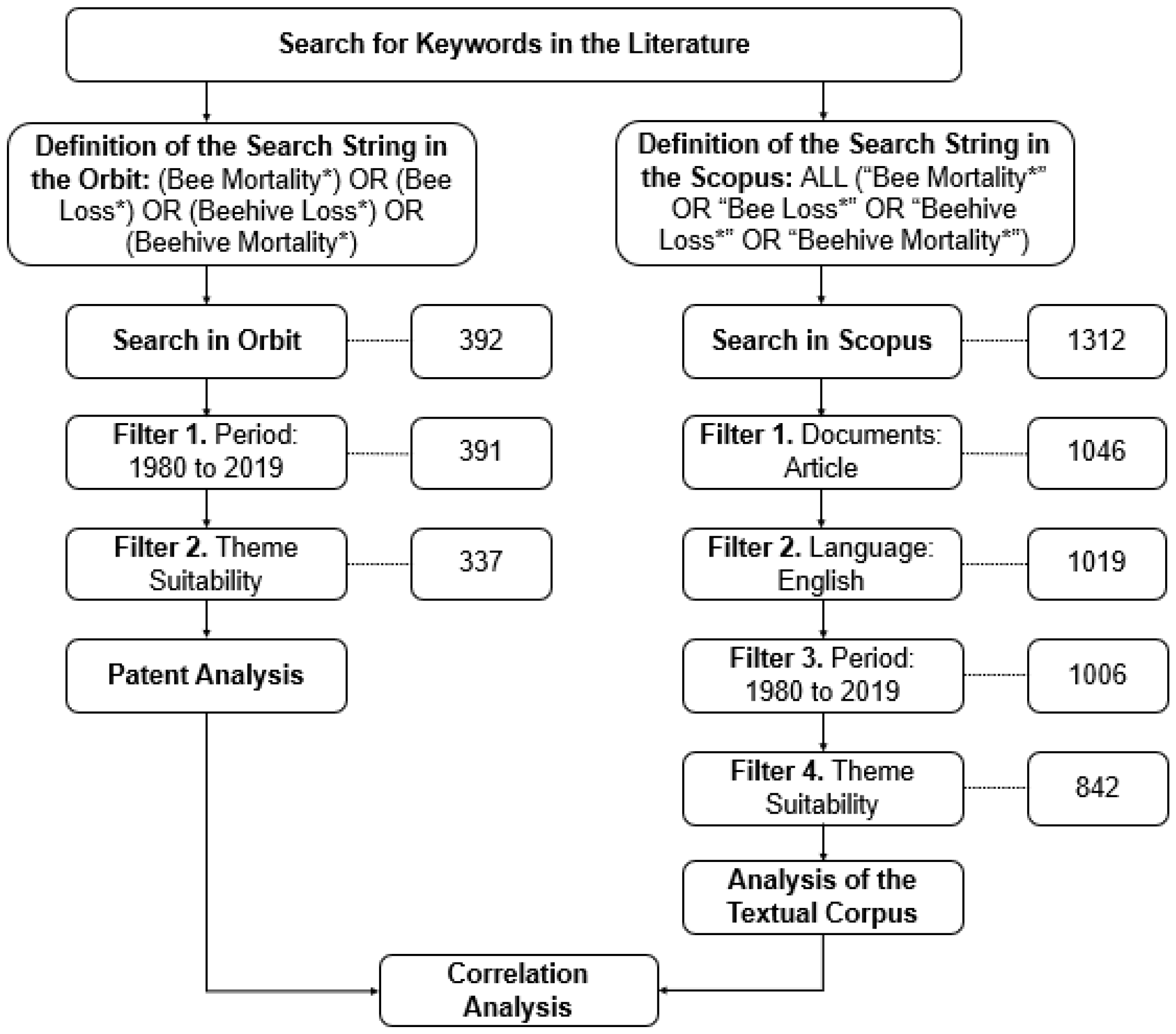
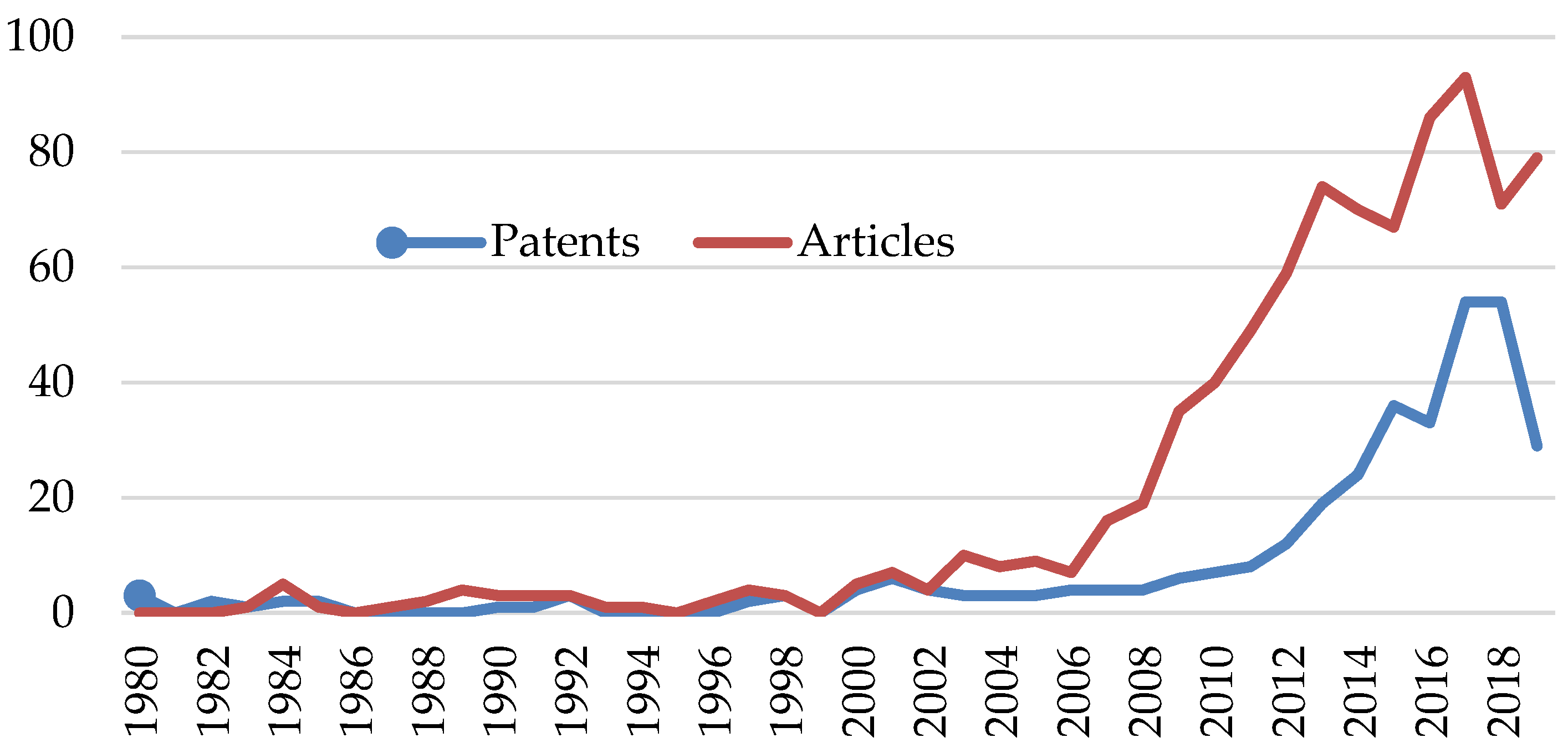
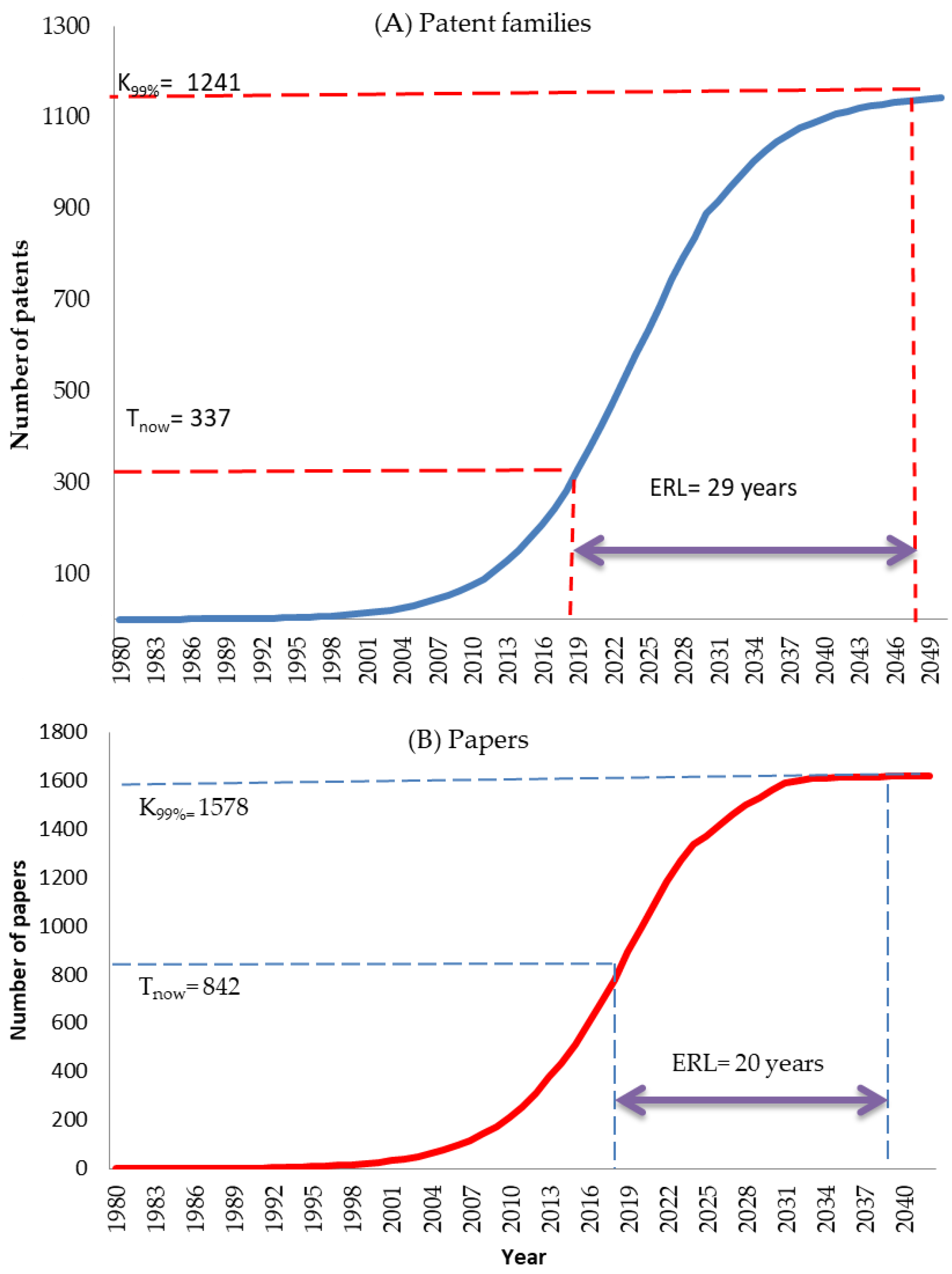
Bees play a fundamental role in the ecological balance of ecosystems, due to the pollination process they carry out on crops, including the production of honey. However, the mortality of bees is a significant concern; bee mortality can occur for several reasons, such as pesticides, mites, viruses, climate change, pathogens and a reduction in food resources and nests. The honey bee (Apis mellifera) is the most widely used bee for commercial pollination and honey production. Therefore, the main objective is to compare the development of patent families and article publications related to the reduction in A. meliífera mortality. Data on patent families were collected on the Orbit platform, while data on scientific articles were collected on the Scopus database, with a time interval of 1980–2019. Subsequently, the data were analyzed in order to show the main priority countries, main assignees, and main IPC (International Patent Classification) codes, an analysis of the technology life cycle and the correlation between the data of patent families and articles published. The technologies that help to decrease bee mortality showed a technological maturity rate of 27.15% for patent families data and 53.35% for data from articles published in journals. It was noticed that the principal interest regarding the reduction in A. mellifera mortality is focused on universities, mainly in the United States and China.
Keywords: Apis mellifera; bee mortality; bibliometric analysis; patent analysis; technology life cycle Apis mellifera; bee mortality; bibliometric analysis; patent analysis; technology life cycle