Article

Expandable Houses: An Explorative Life Cycle Cost Analysis

1
Department of Architectural Engineering, Vrije Universiteit Brussel, 1050 Brussels, Belgium
2
VITO Transition Platform, Flemish Institute for Technical Research, Boeretang 200, 2400 Mol, Belgium
*
Author to whom correspondence should be addressed.
Sustainability 2021, 13(12), 6974; https://doi.org/10.3390/su13126974
Submission received: 16 April 2021 / Revised: 4 June 2021 / Accepted: 15 June 2021 / Published: 21 June 2021
(This article belongs to the Special Issue Towards a Circular Housing Economy)

Abstract

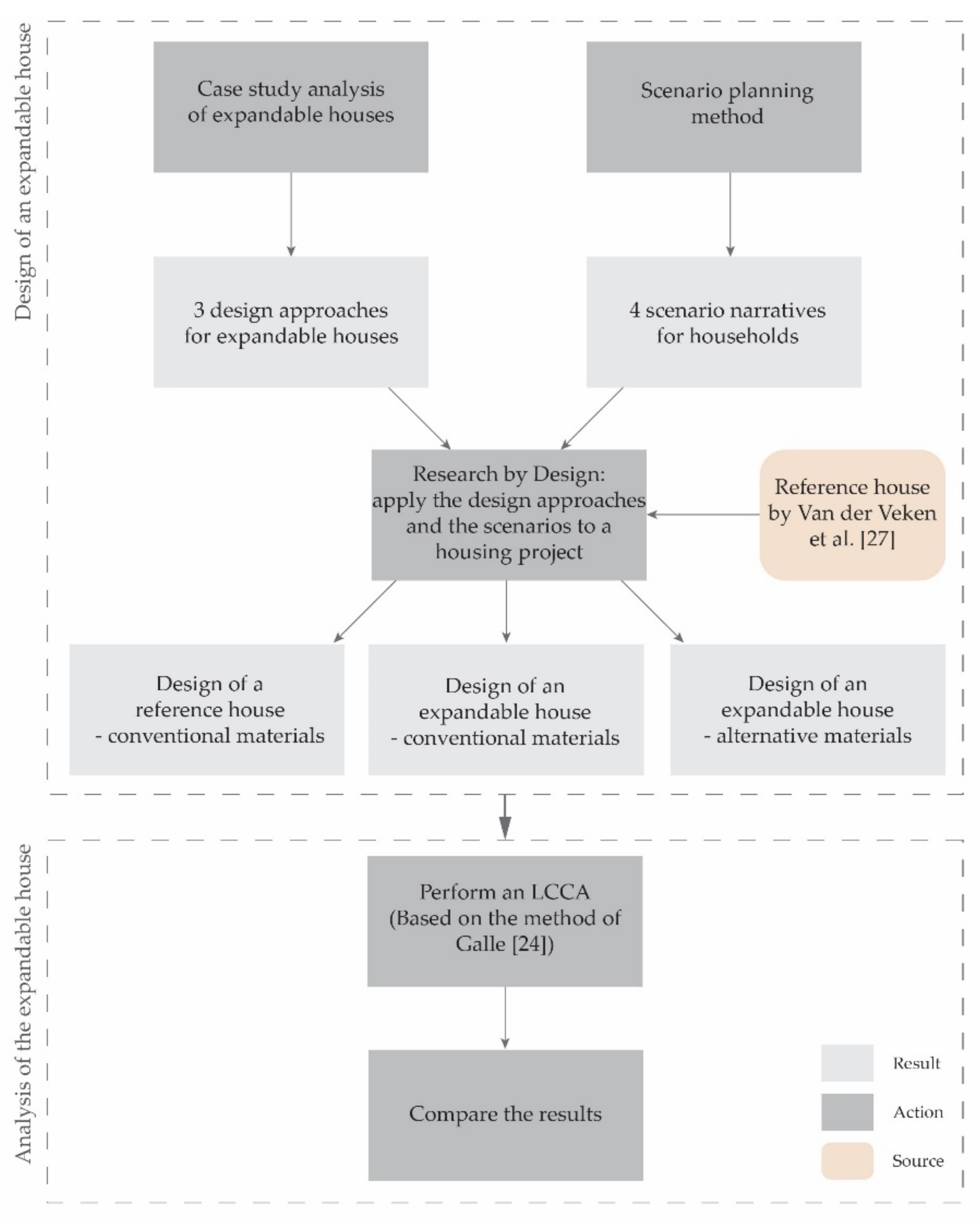
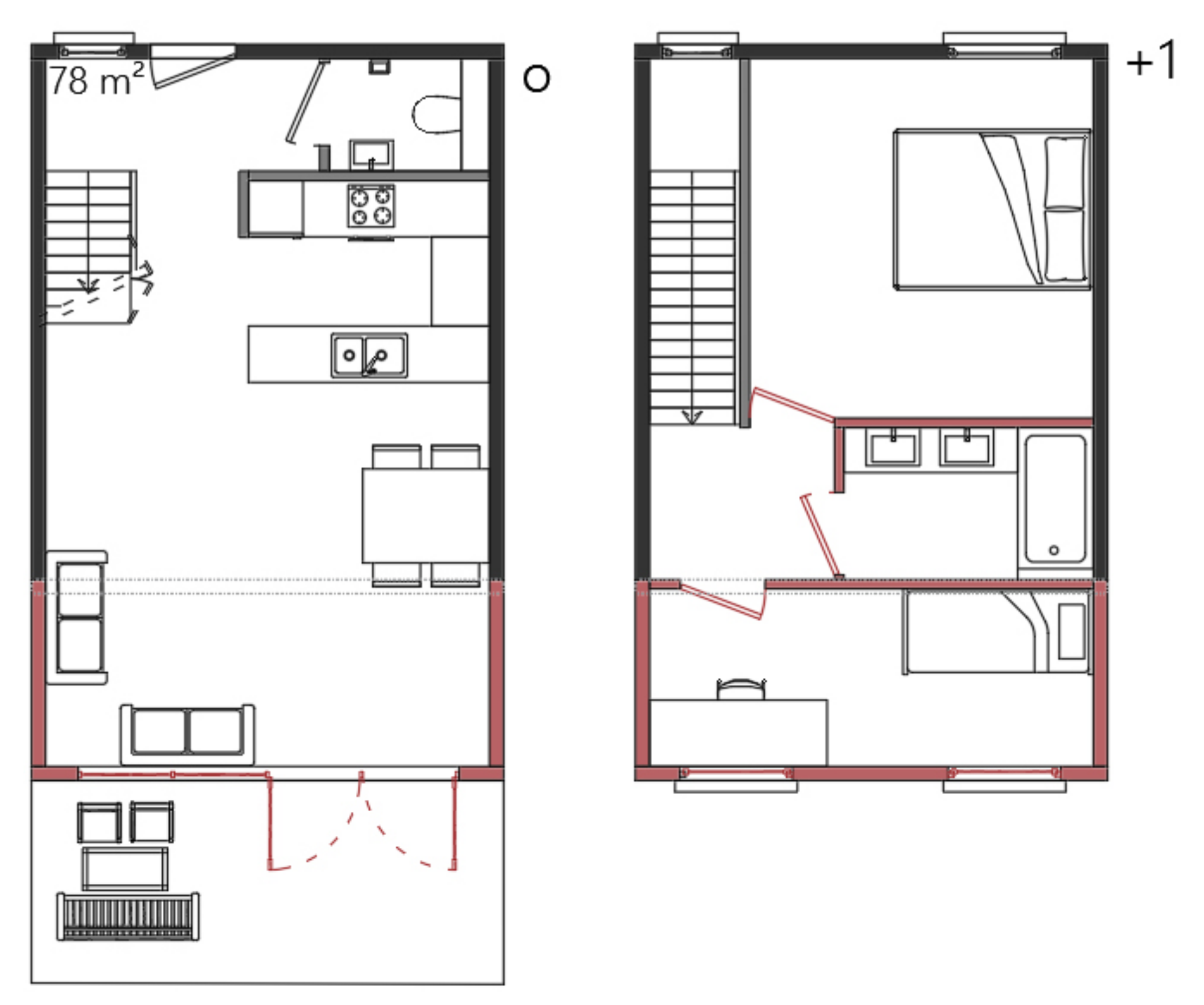
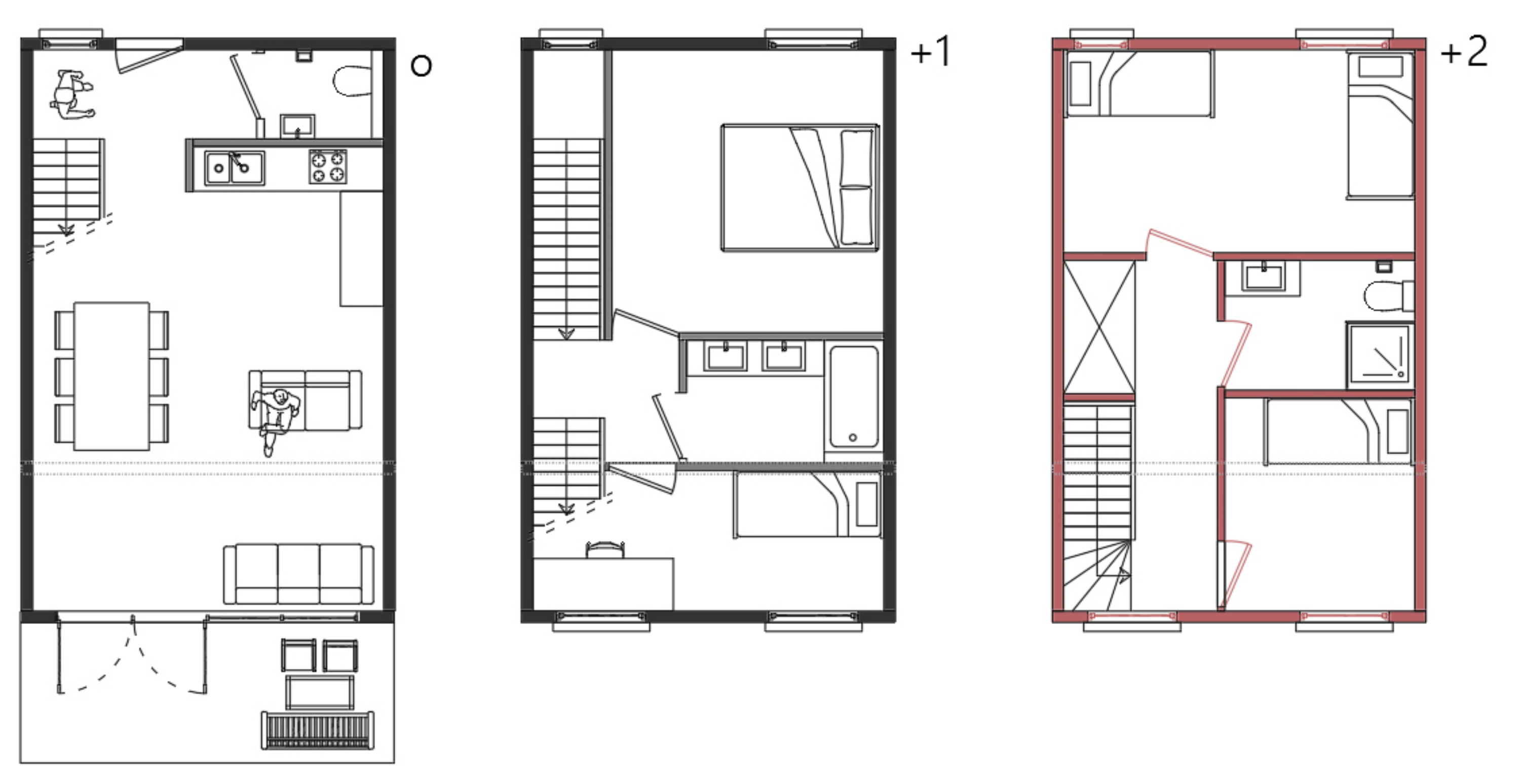
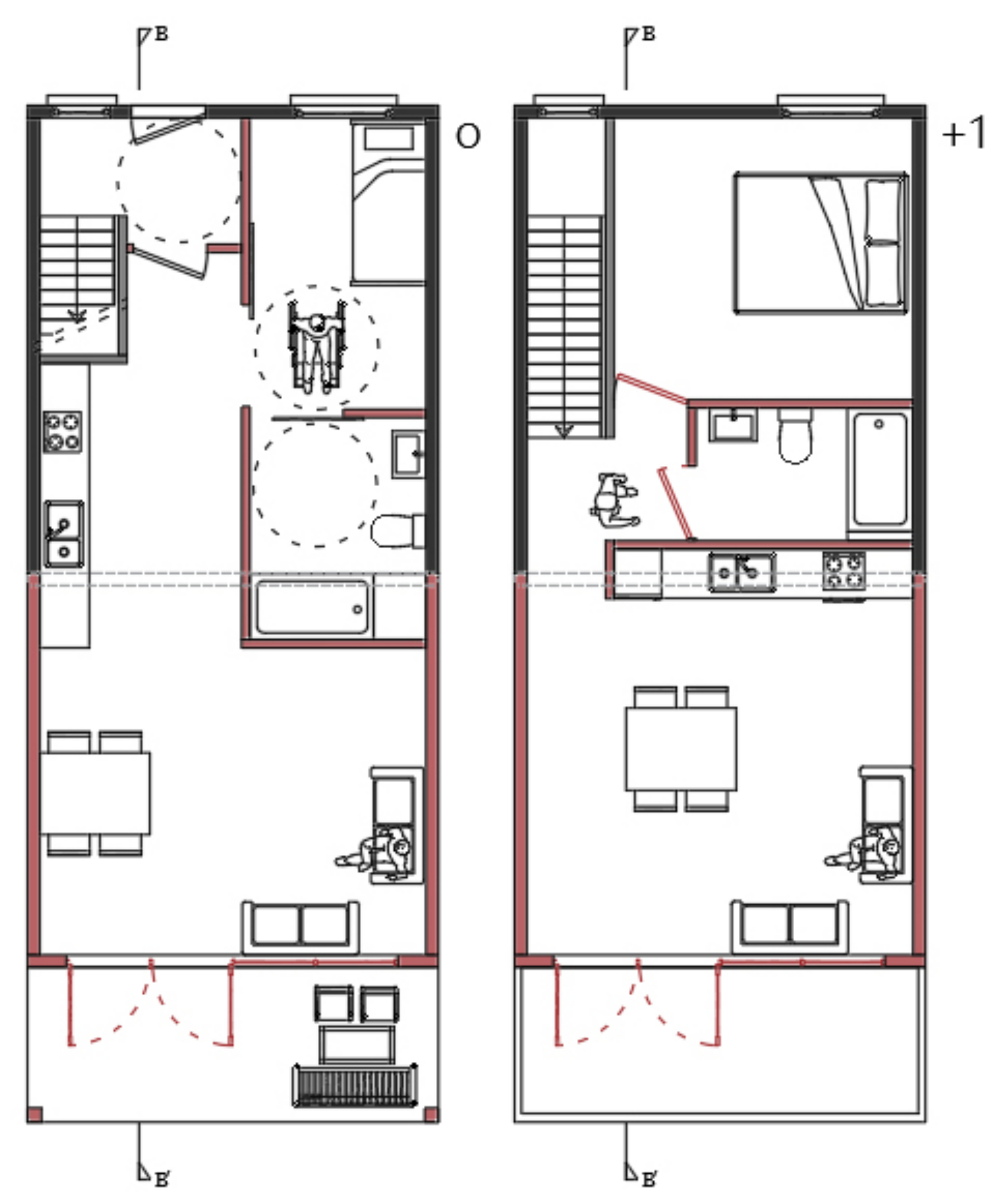
In addition to the environmental burden of its construction and demolition activities, the Flemish housing market faces a structural affordability challenge. As one possible answer, this research explores the potential of so-called expandable houses, being built increasingly often. Through specific design choices that enable the disassembly and future reuse of individual components and so align with the idea of a circular economy, expandable houses promise to provide ever-changing homes with a smaller impact on the environment and at a lower cost for clients. In this paper, an expandable house suitable for various housing needs is conceived through a scenario-based research-by-design approach and compared to a reference house for Flanders. Subsequently, for both houses the life cycle costs are calculated and compared. The results of this exploration support the proposition that designing expandable houses can be a catalyst for sustainable, circular housing development and that households could benefit from its social, economic and ecological qualities. It requires, however, a dynamic perspective on evaluating their life-cycle impact.
Keywords: design for change; housing; life cycle costing; transformable architecture; adaptable buildings; sustainable architecture design for change; housing; life cycle costing; transformable architecture; adaptable buildings; sustainable architecture