Article

Walkability Perception in Asian Cities: A Comparative Study in Bangkok and Nagoya
by
Varameth Vichiensan
1,2,* and
Kazuki Nakamura
3
1
Department of Civil Engineering, Faculty of Engineering, Kasetsart University, Bangkok 10900, Thailand
2
Center for Logistics Engineering Technology and Management, Faculty of Engineering, Kasetsart University, Bangkok 10900, Thailand
3
Department of Civil Engineering, Meijo University, Nagoya 468-8502, Japan
*
Author to whom correspondence should be addressed.
Sustainability 2021, 13(12), 6825; https://doi.org/10.3390/su13126825
Submission received: 14 May 2021 / Revised: 11 June 2021 / Accepted: 12 June 2021 / Published: 16 June 2021
(This article belongs to the Collection Sustainable Urban Mobility Project)

Abstract

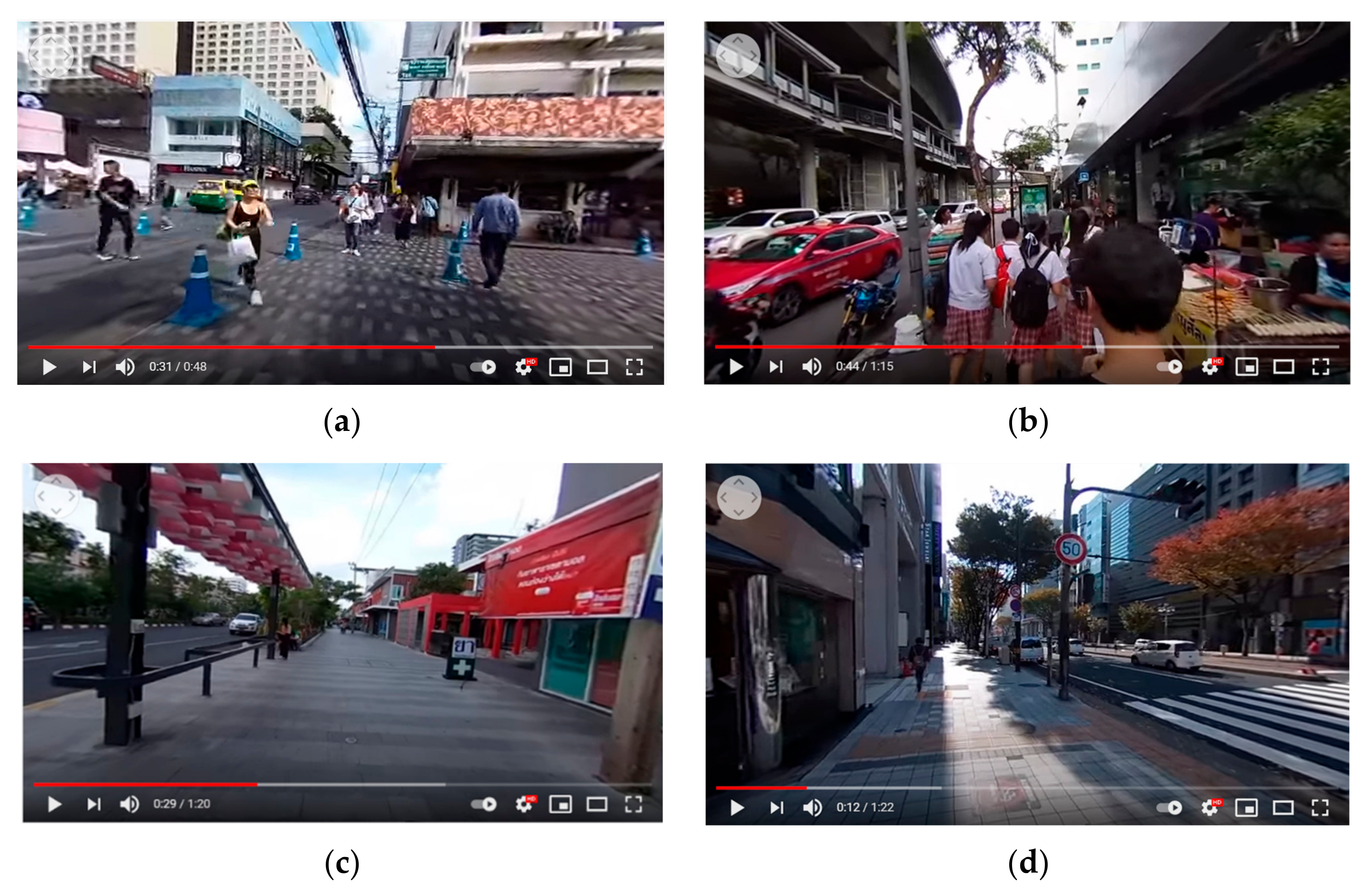
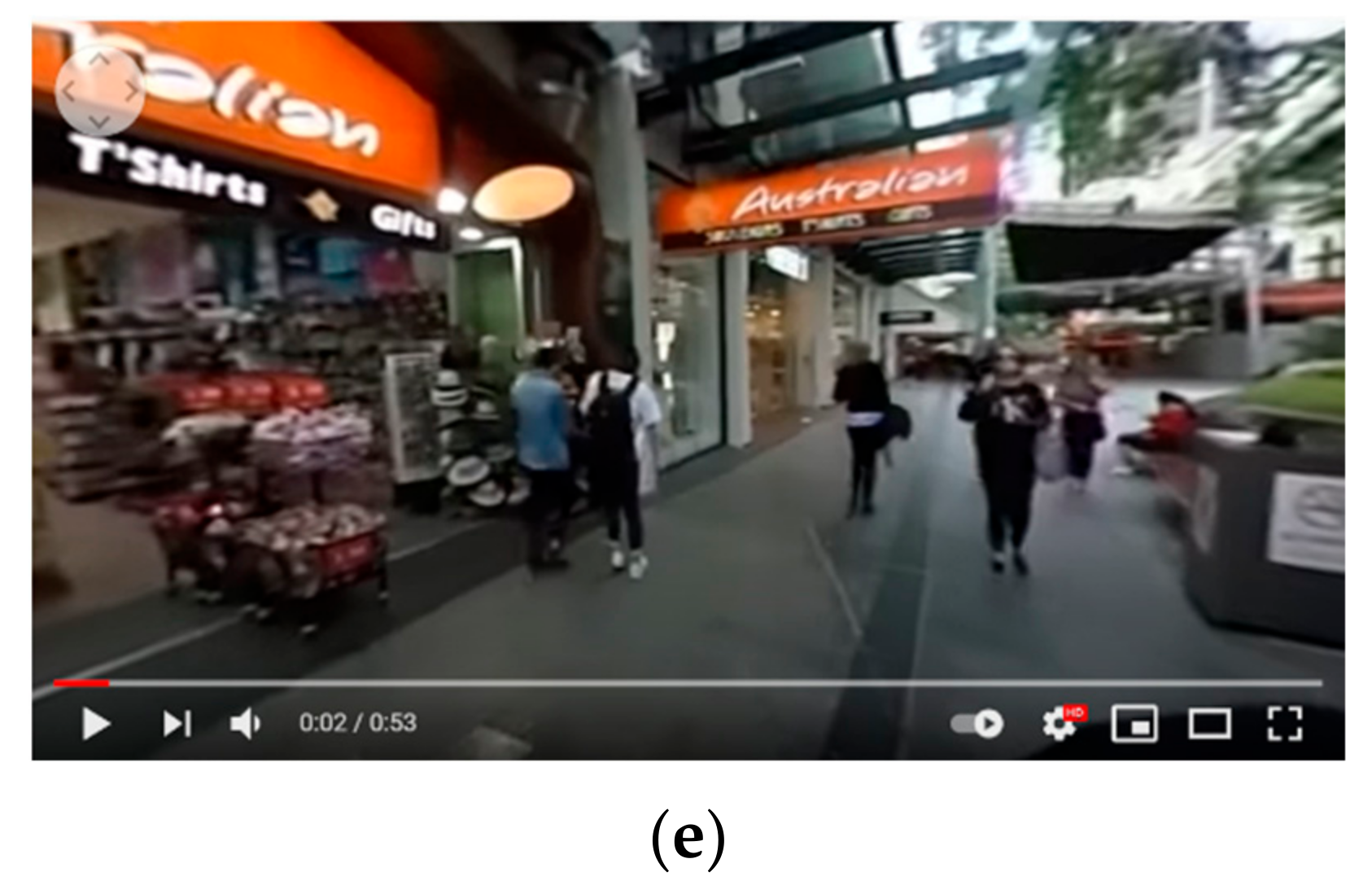
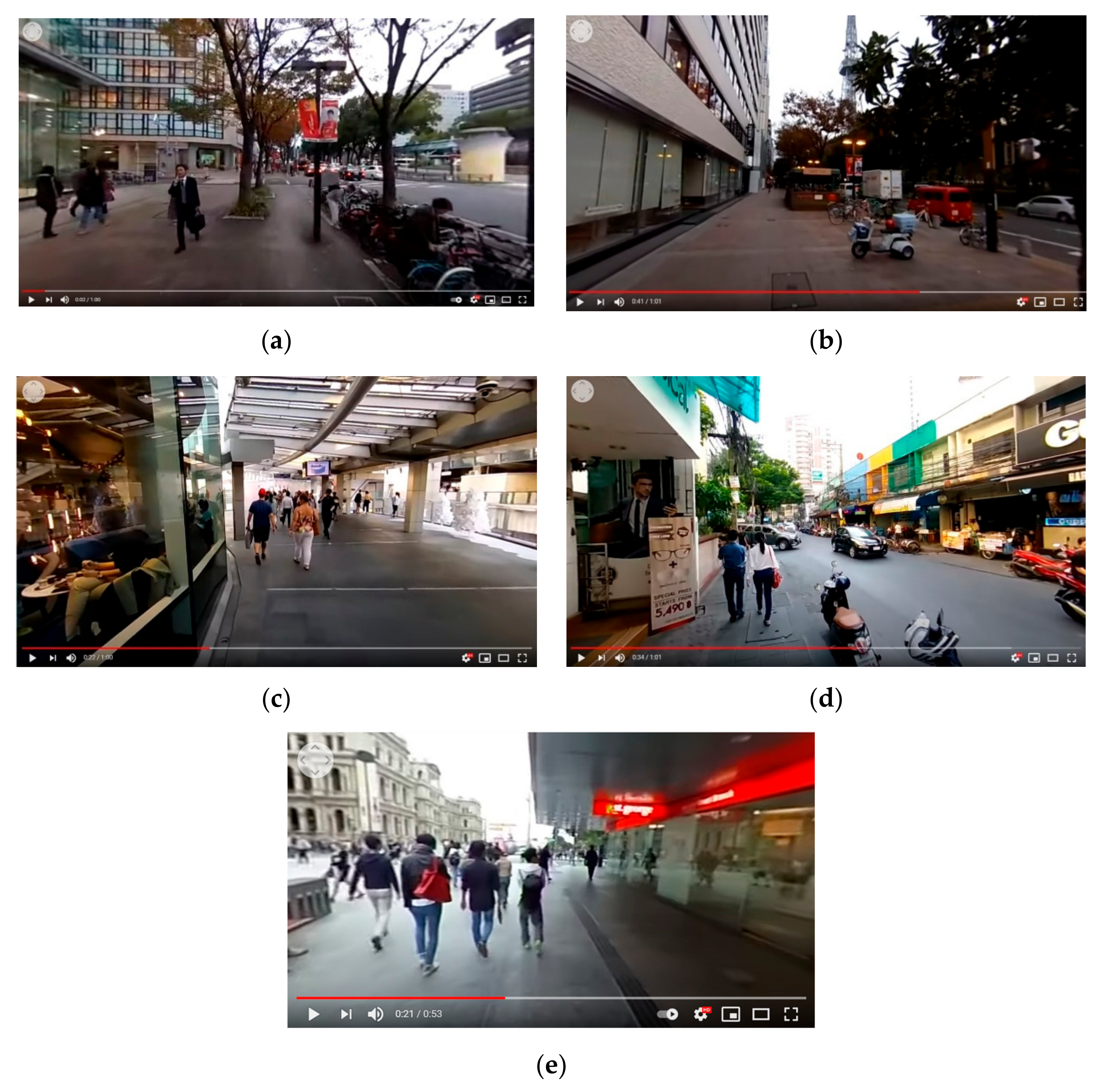
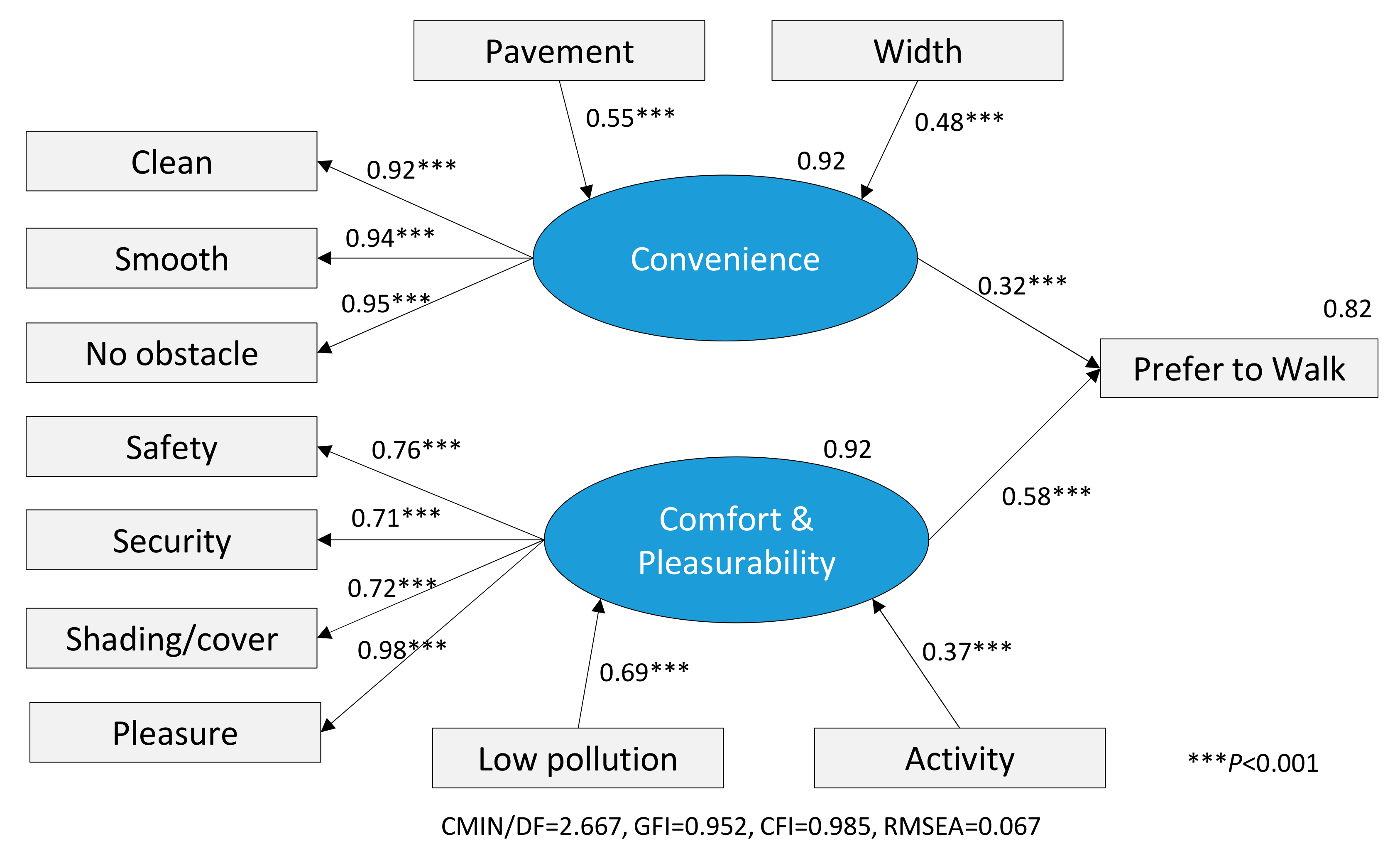
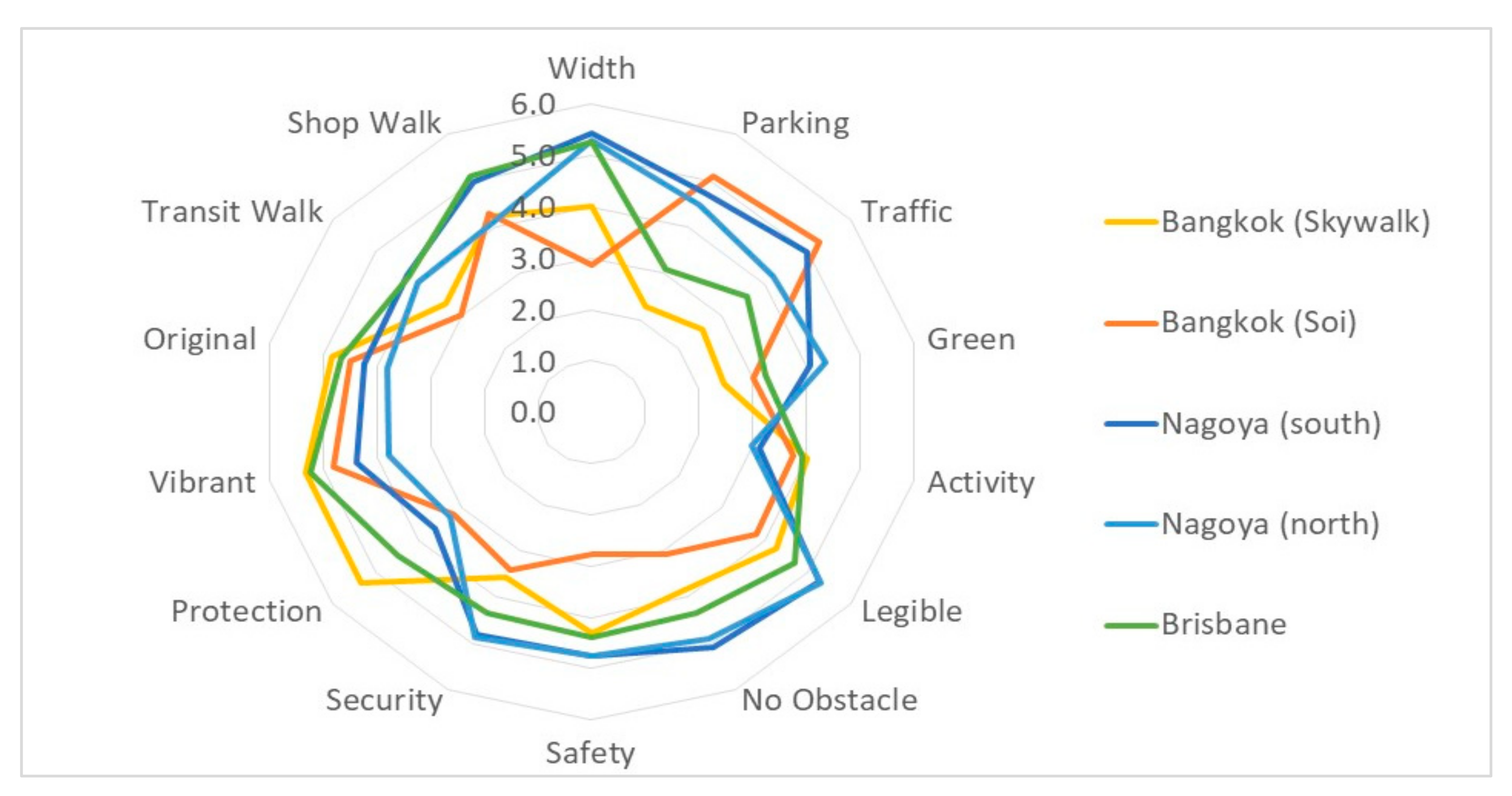
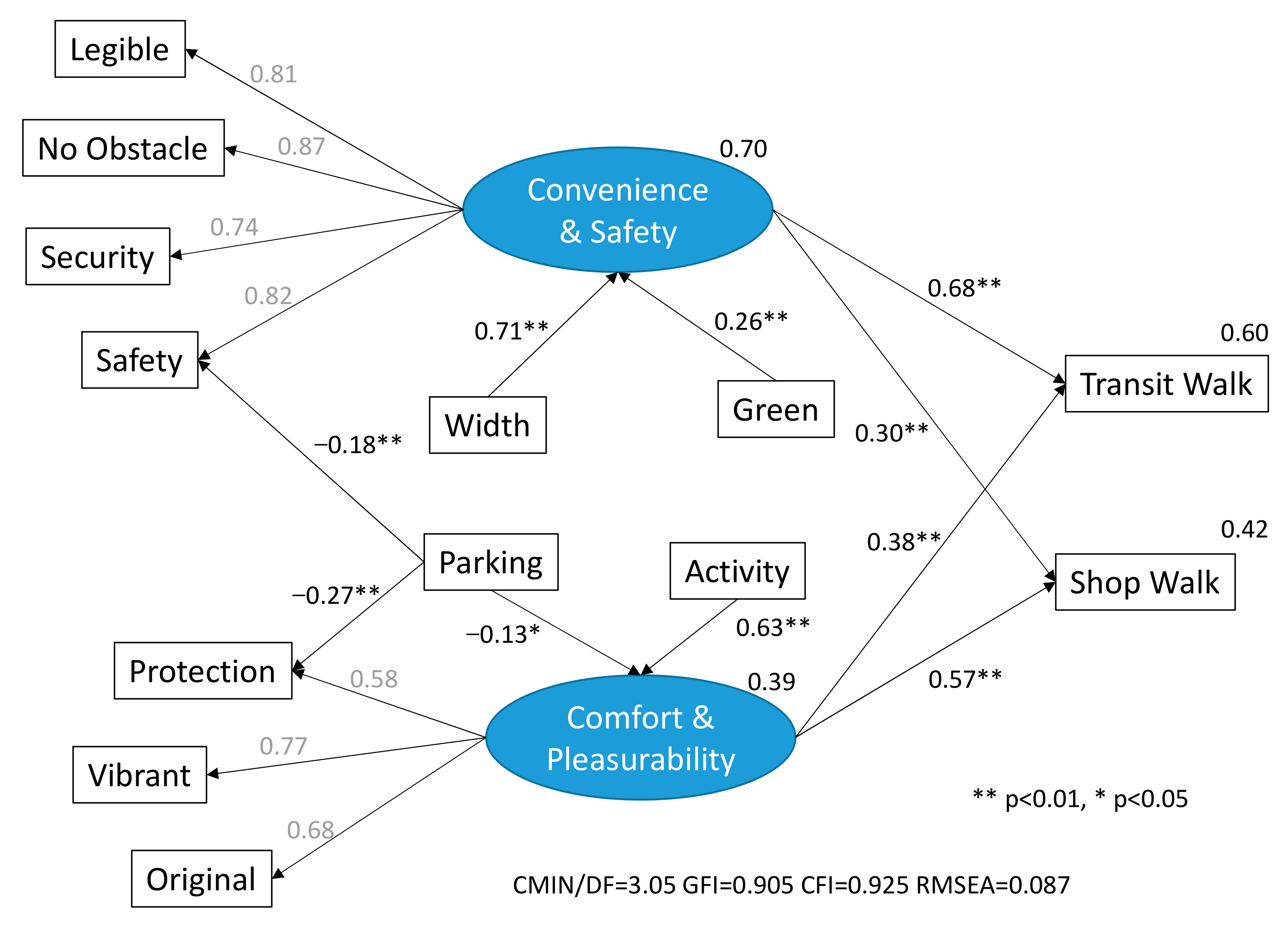
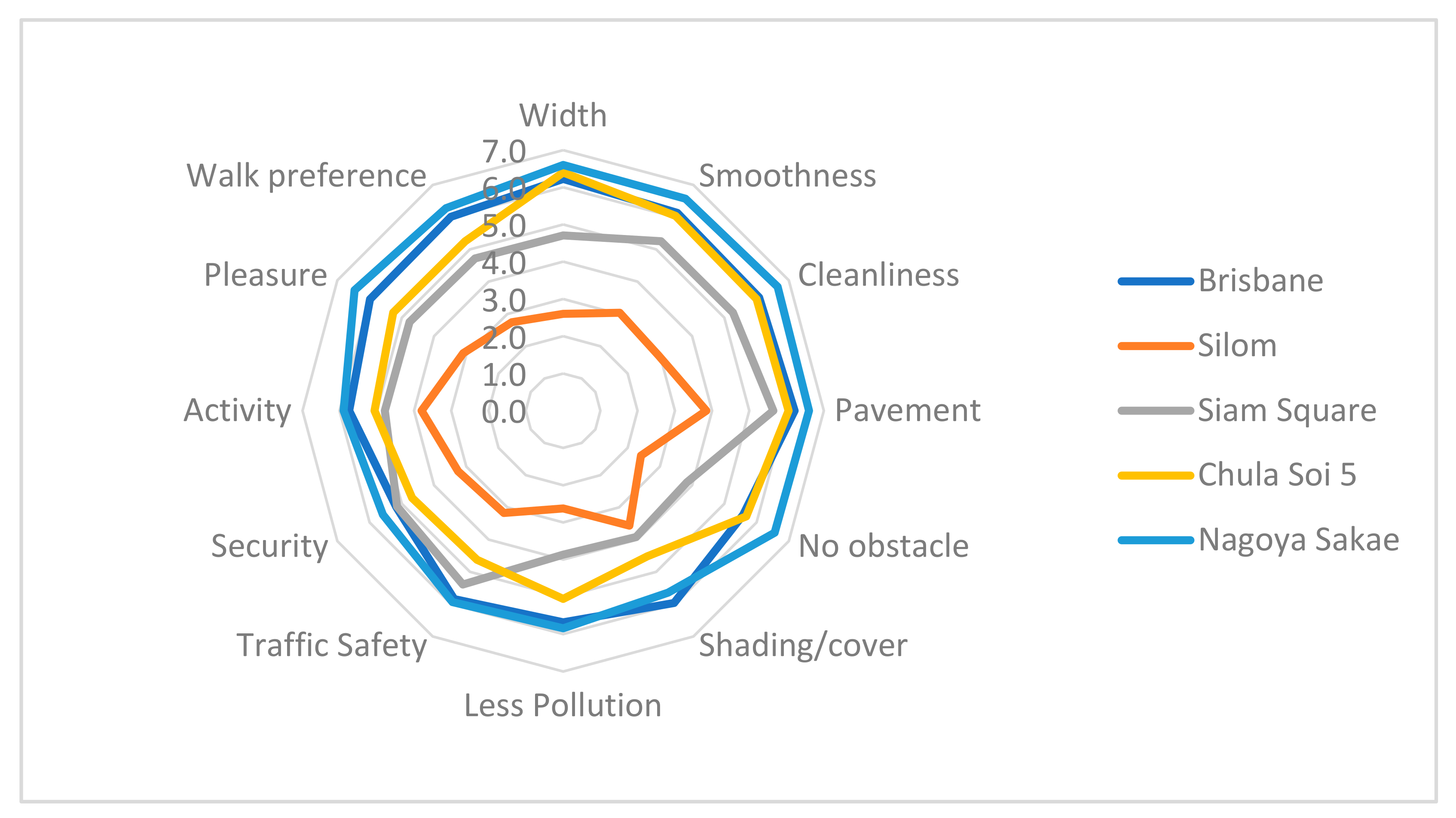
Asian cities are unique, where people may need more than just walking; however, the walkability research in a local context has received less attention. This paper analyses the walking needs and the influential factors of walking behavior in Asian cities. A comparative analysis in Bangkok and Nagoya is presented, taking into account the characteristics of local street design and development. Street evaluation experiments of various streets are conducted through 360-degree videos. The factor analyses indicate that the walking needs in both cities can be considered in two levels, but the components of the needs are different. Being smooth and having no obstacles are common basic needs. Safety and security are regarded as basic needs in Nagoya, but as higher-level needs in Bangkok. Attractiveness of activity and walk pleasure are the common upper-level needs. Street elements such as width, green, traffic, parking, pollution exposure, and activity are found to be influential on the walking needs. The structural equation models indicate that higher-level needs have more of an influence than the lower-level needs for walking behavior in Bangkok and for shop walking in Nagoya, while the basic need has more influence on walking willingness for transit access. These findings call for practical attention for street design and development where local context and street functions must be carefully considered.
Keywords: street design; Asian cities; walkability; factor analysis; structural equation modeling street design; Asian cities; walkability; factor analysis; structural equation modeling