Article

A Landscape Persistence Assessment of Częstochowa Upland: A Case Study of Ogrodzieniec, Poland
by
Anna Żemła-Siesicka
* and
Urszula Myga-Piątek
Faculty of Natural Sciences, University of Silesia, 41200 Sosnowiec, Poland
*
Author to whom correspondence should be addressed.
Sustainability 2021, 13(11), 6408; https://doi.org/10.3390/su13116408
Submission received: 7 May 2021 / Revised: 28 May 2021 / Accepted: 1 June 2021 / Published: 4 June 2021
(This article belongs to the Special Issue Quantifying Landscape for Sustainable Land Use Planning)

Abstract

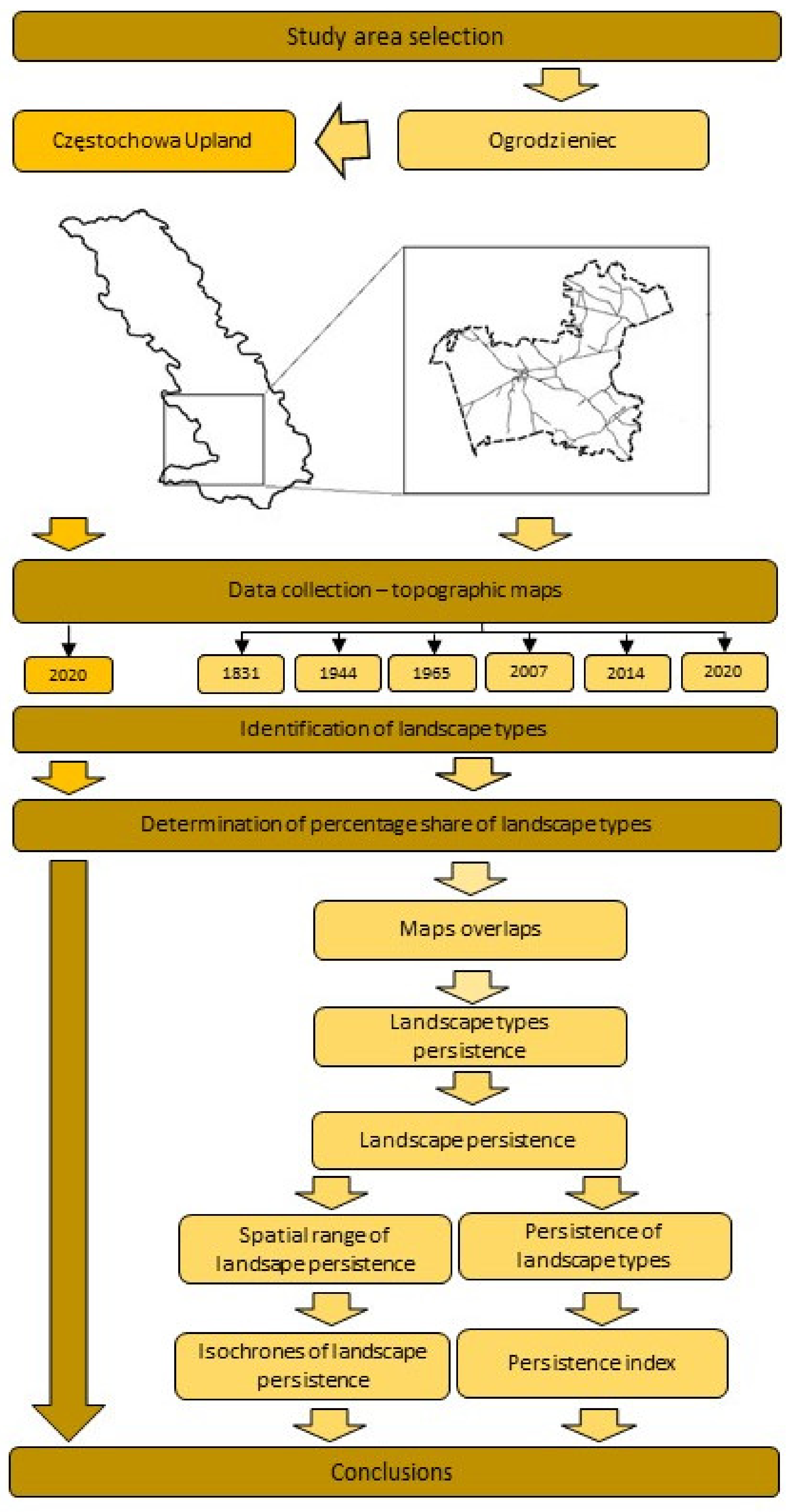
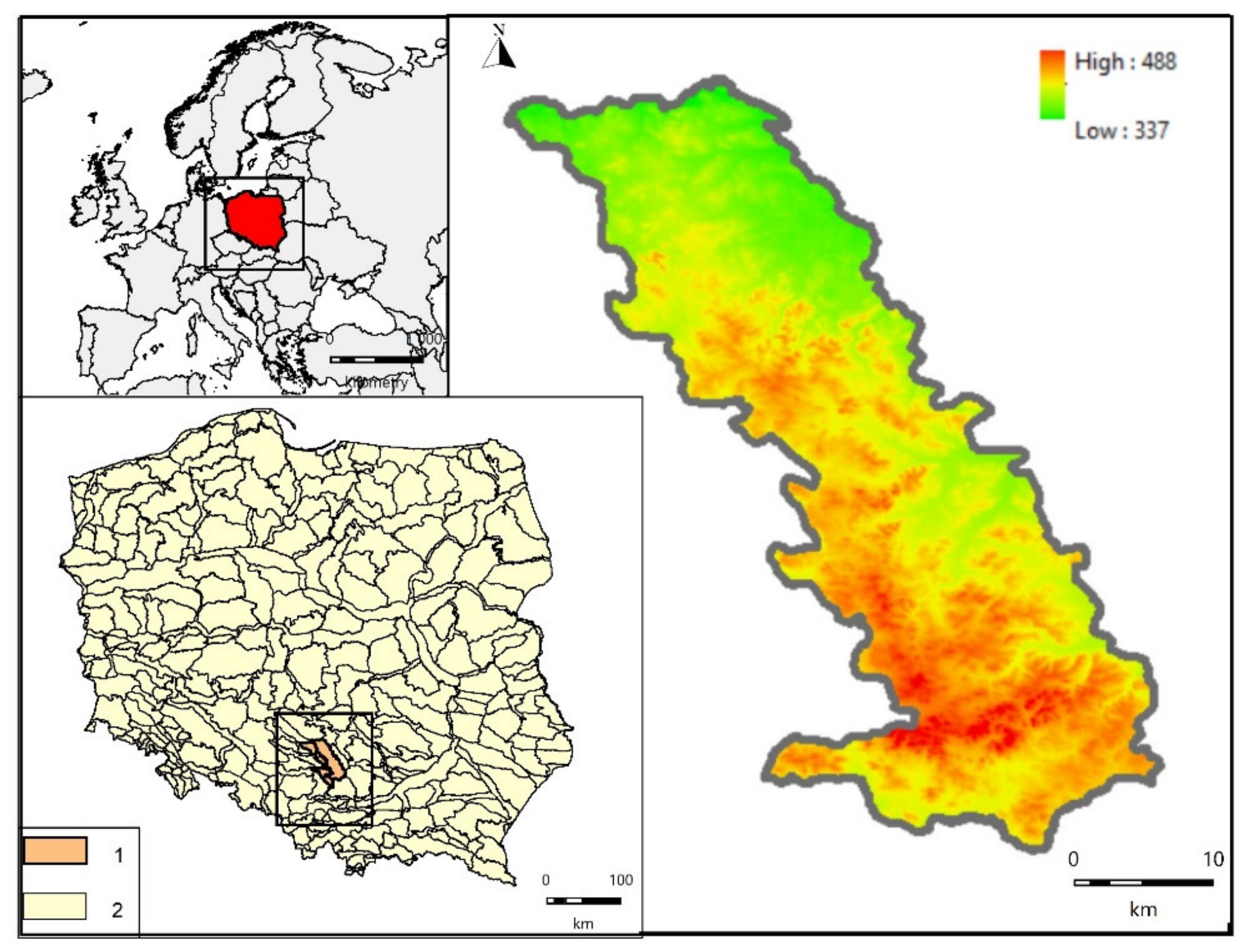
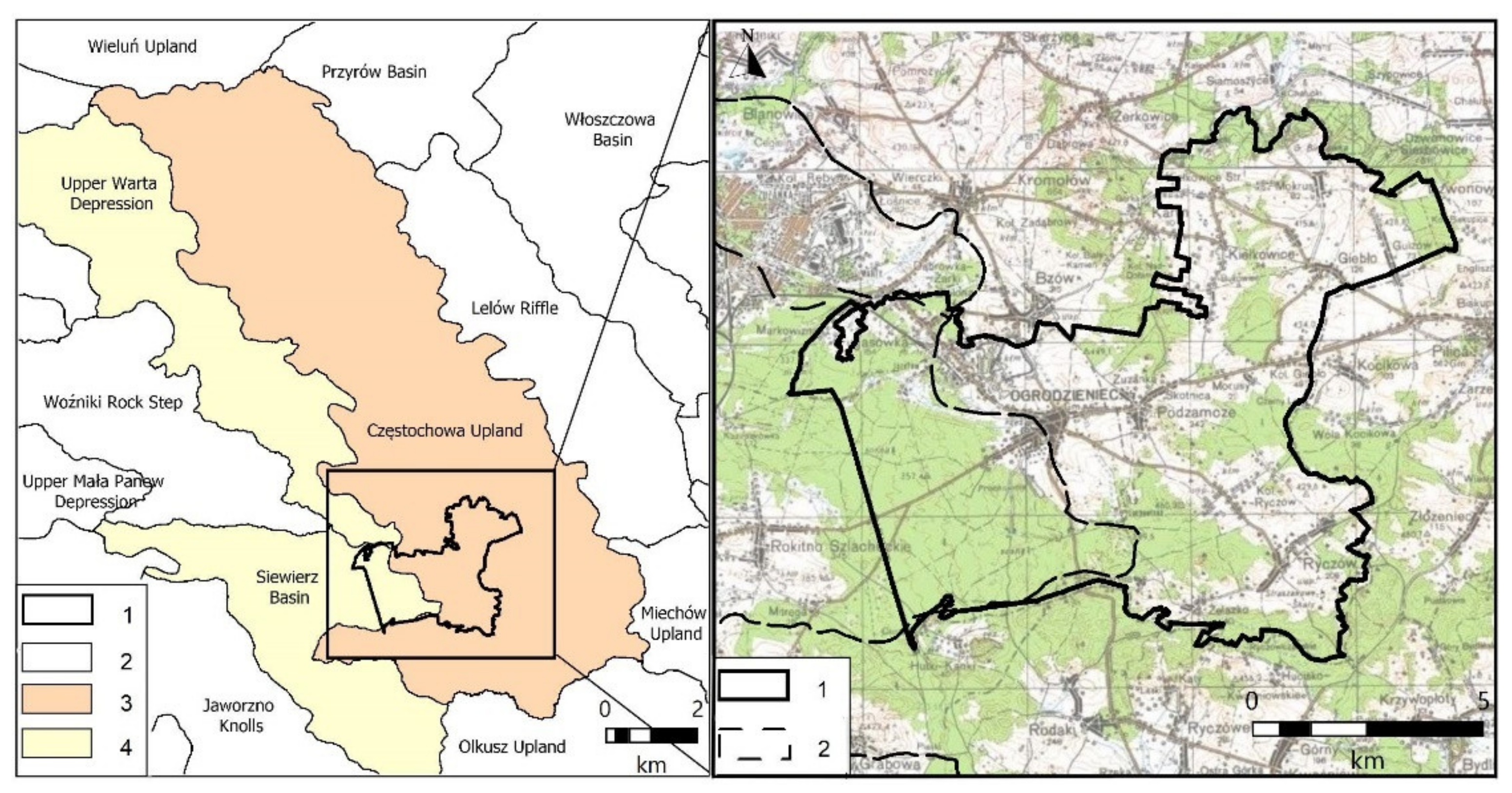
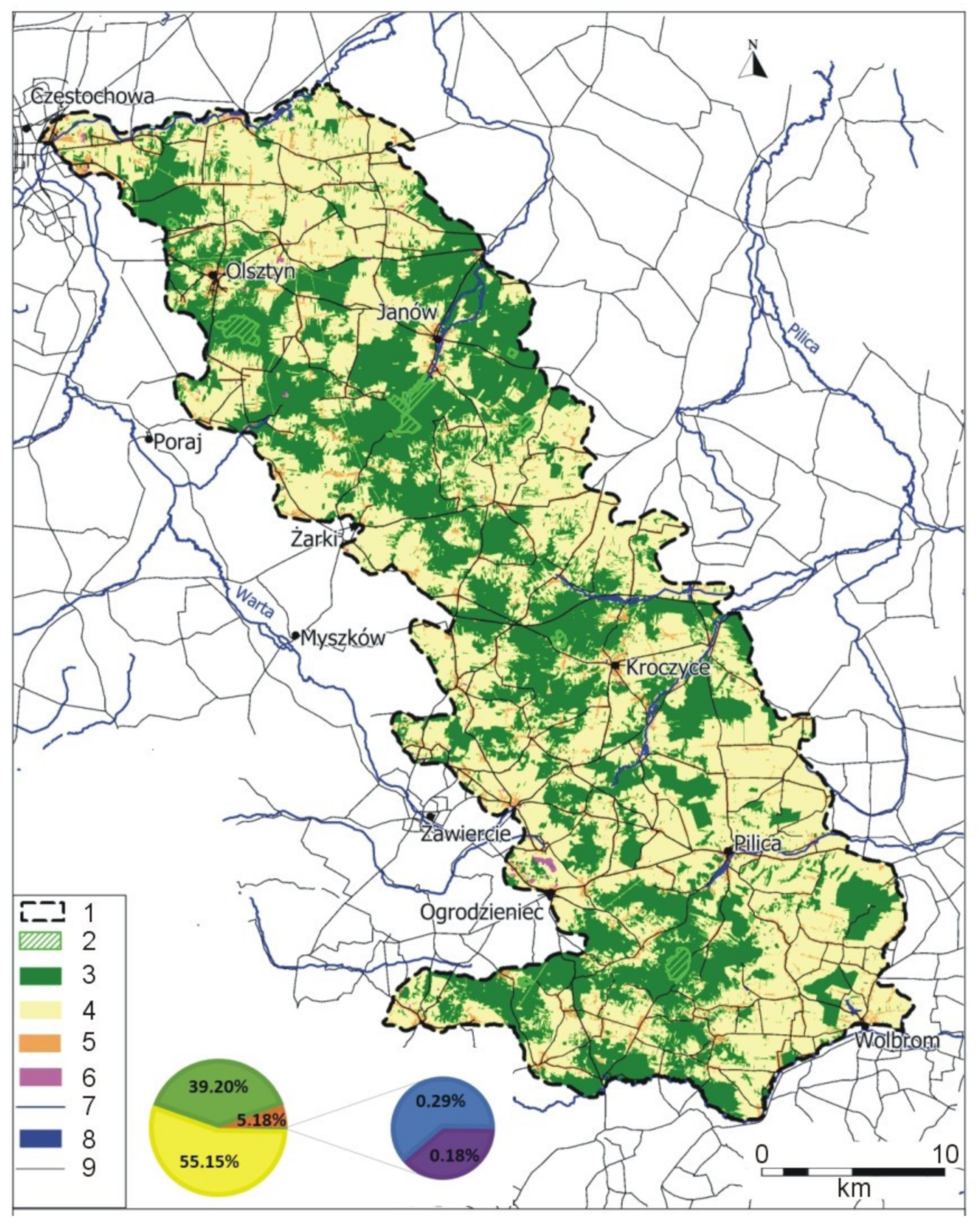
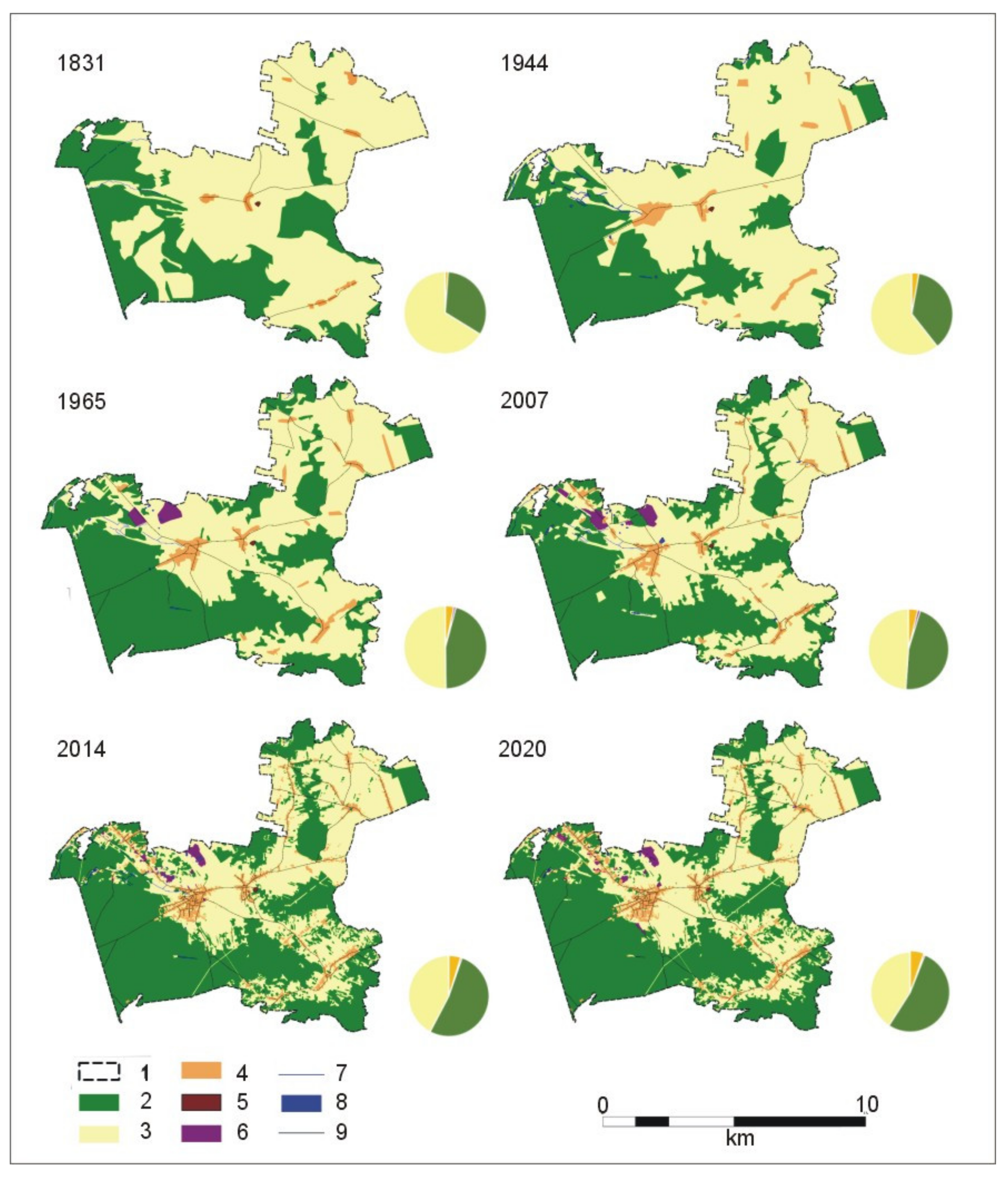
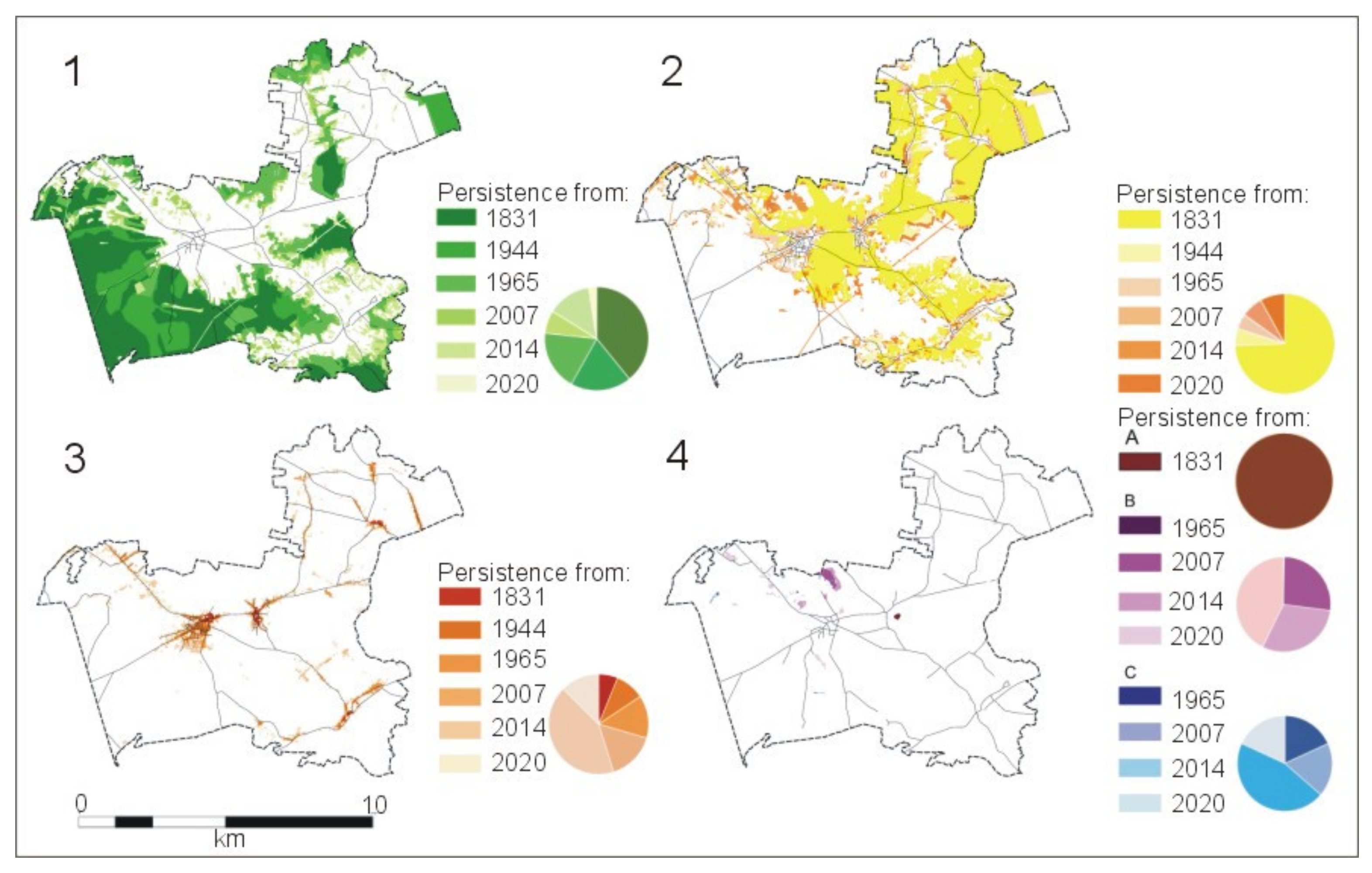
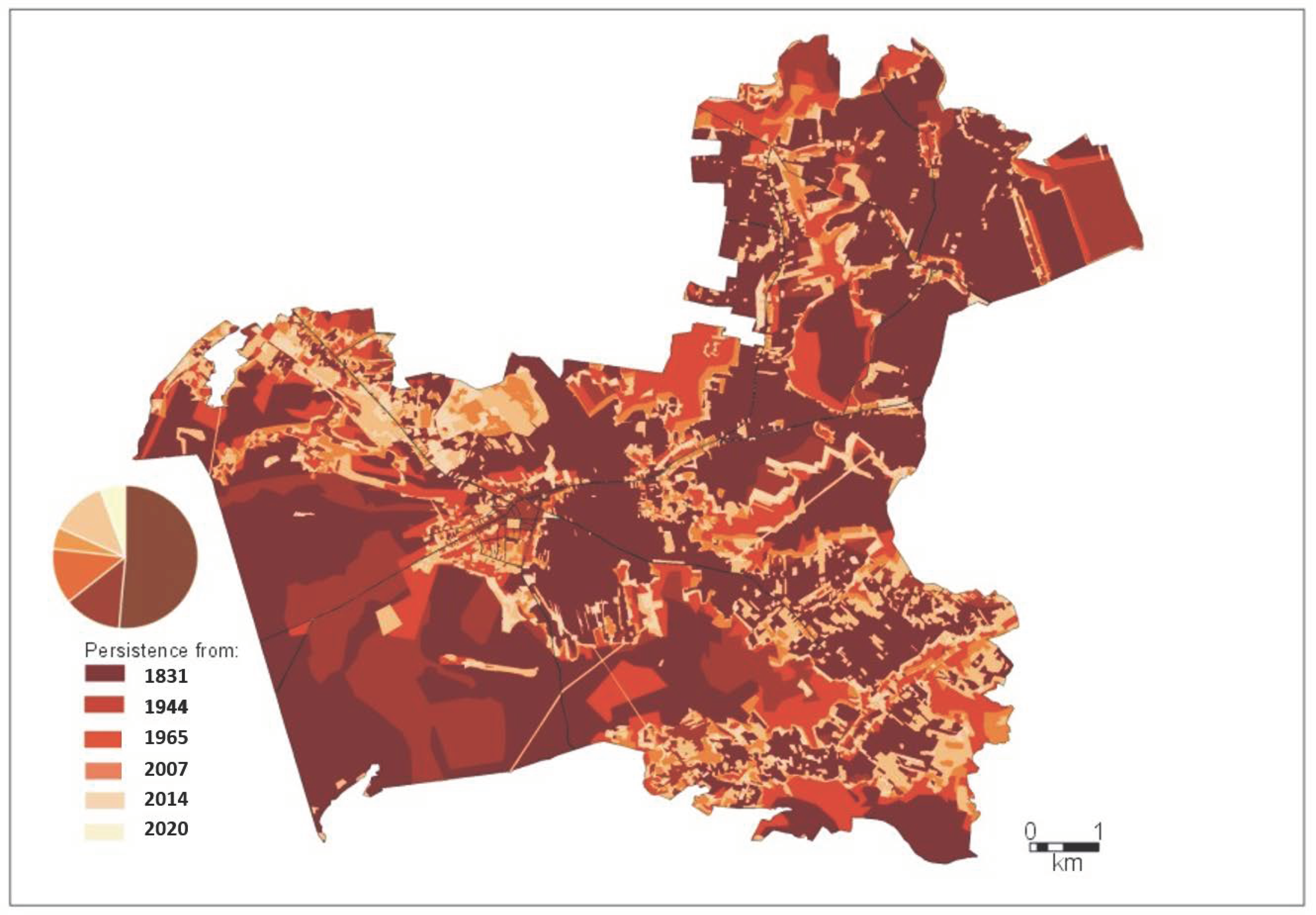
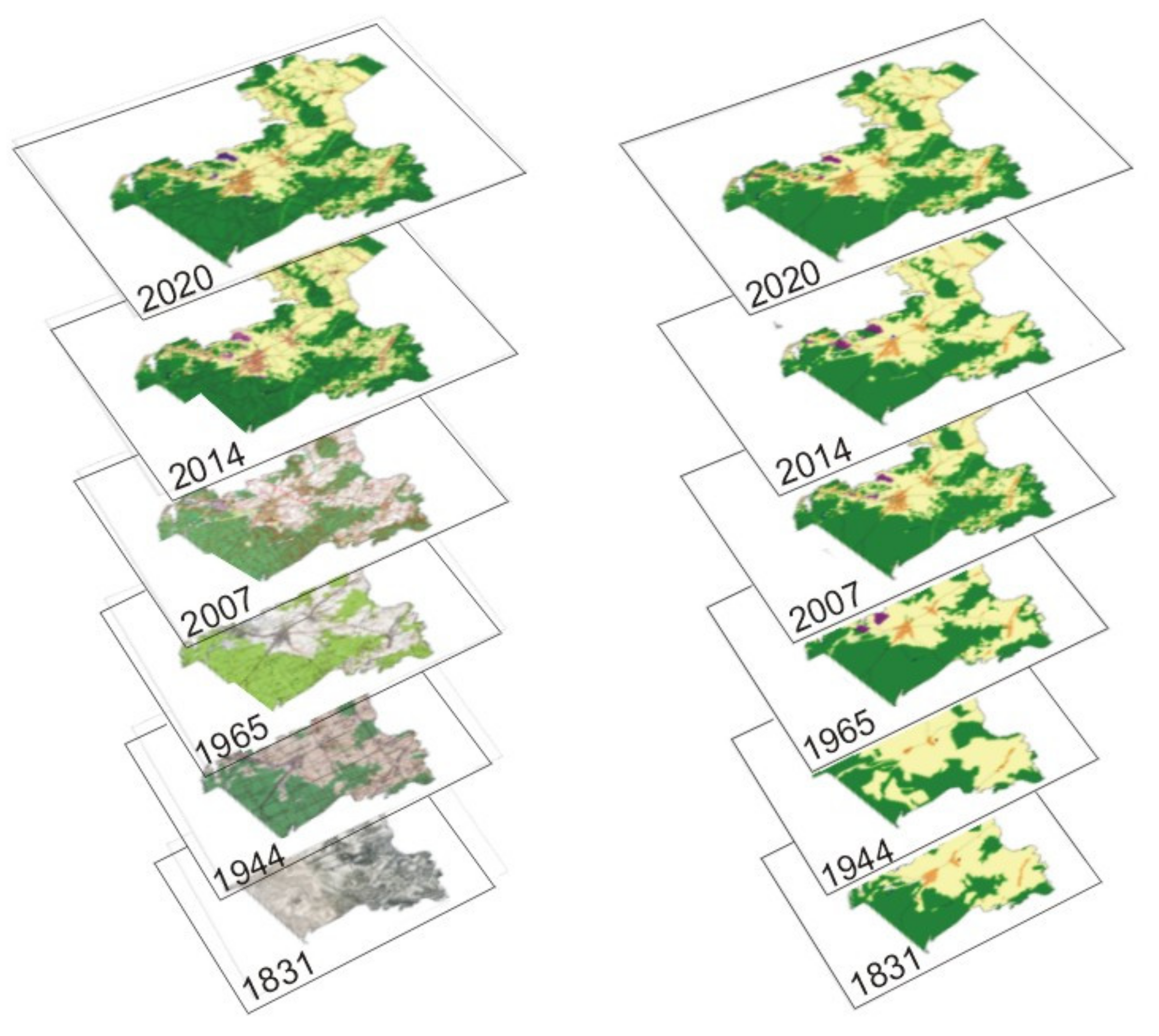
Landscape permanence is understood as the temporal extent of the dominance of a given type of landscape, expressed by the temporal continuity of its use. This issue, already being the subject of much research, is important in proper landscape protection and management. In this paper, spatial landscape persistence and persistence of particular landscape types are presented for the Ogrodzieniec municipality, Częstochowa Upland, Poland. In addition, a background of landscape types and their changes in the Częstochowa Upland has been presented. Based on current and historical topographic maps, landscape types (forest, agriculture, settlement, fortified and industrial) were identified for the following studied periods: 1831, 1944, 1965, 2007, 2014 and 2020. After overlapping the maps, the persistence index was calculated, and isochrones of landscape persistence were determined. The term ‘landscape isochrones’ introduced in this paper is defined as theoretical lines of equal landscape time duration (iso-persistence line). The results show that the landscape of Ogrodzieniec can be considered to be persistent. The largest area of the municipality is occupied by the most permanent landscapes dating from before 1831. The most persistent is the fortified landscape. The method applied is important for planning sustainable development of the region, which is currently under intense tourist and economic pressure.
Keywords: landscape persistence; cultural landscape; isochrones of landscape persistence; iso-persistence lines; landscape assessment; landscape studies; Ogrodzieniec landscape persistence; cultural landscape; isochrones of landscape persistence; iso-persistence lines; landscape assessment; landscape studies; Ogrodzieniec