Article

Mechanical Properties of Spruce Wood Extracted from GLT Beams Loaded by Fire
1
Department of Mechanics, Faculty of Civil Engineering, Czech Technical University in Prague, 166 29 Prague, Czech Republic
2
High Technical School of Architecture, University of Seville, 41012 Seville, Spain
3
Instituto de Matemáticas de la Universidad de Sevilla, University of Seville, 41012 Seville, Spain
*
Author to whom correspondence should be addressed.
Sustainability 2021, 13(10), 5494; https://doi.org/10.3390/su13105494
Submission received: 20 March 2021 / Revised: 28 April 2021 / Accepted: 30 April 2021 / Published: 14 May 2021

Abstract

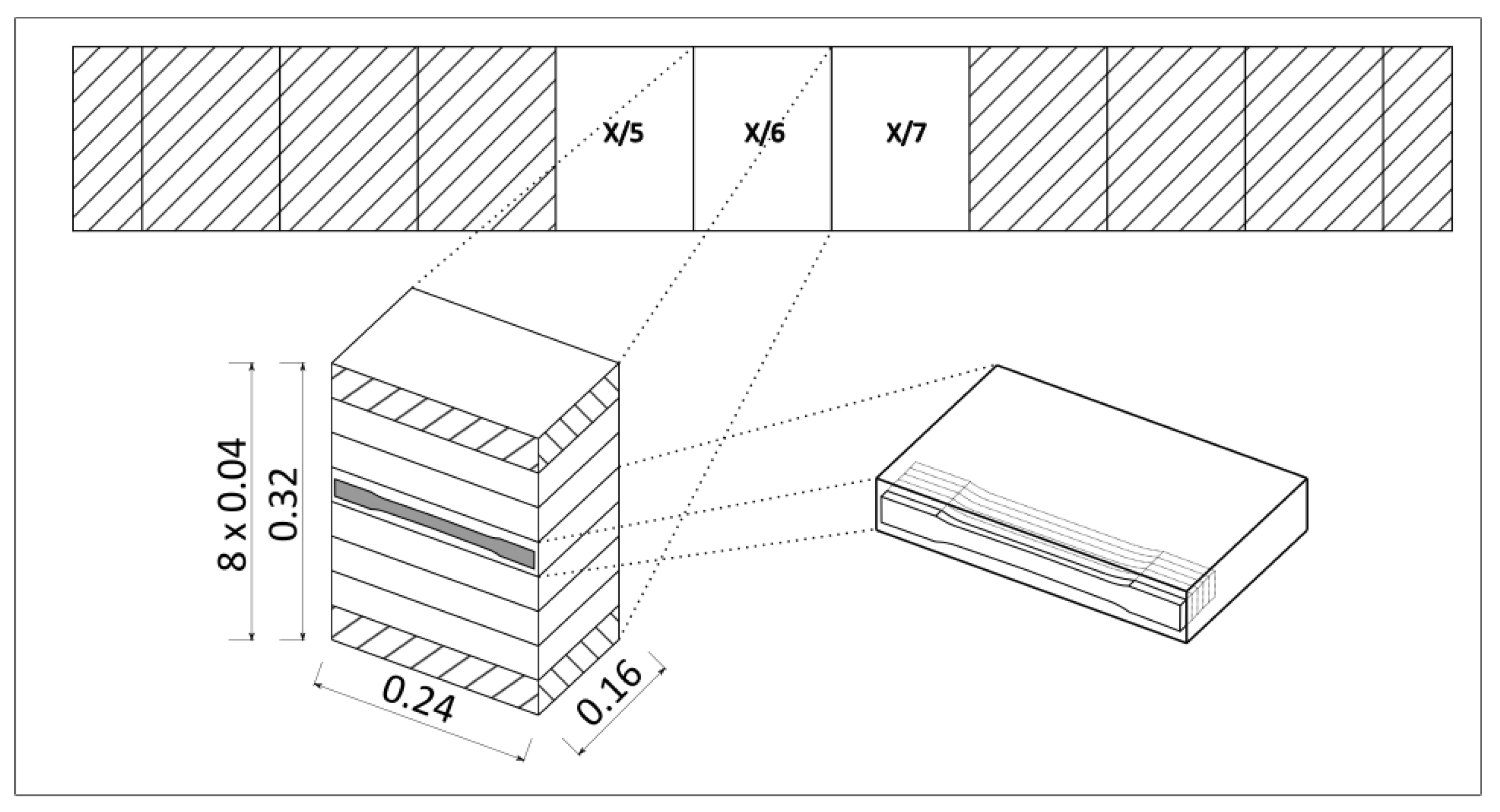
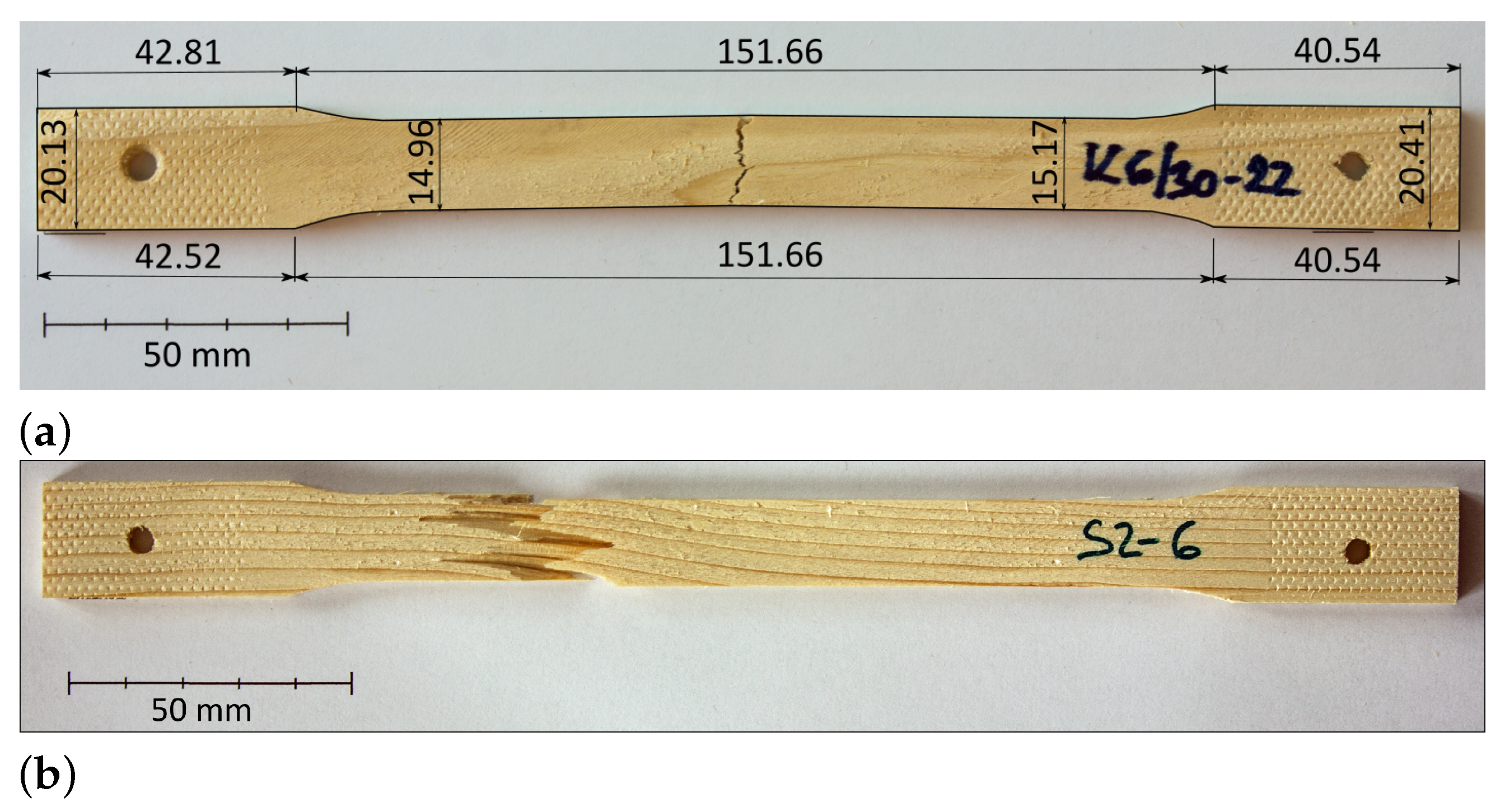
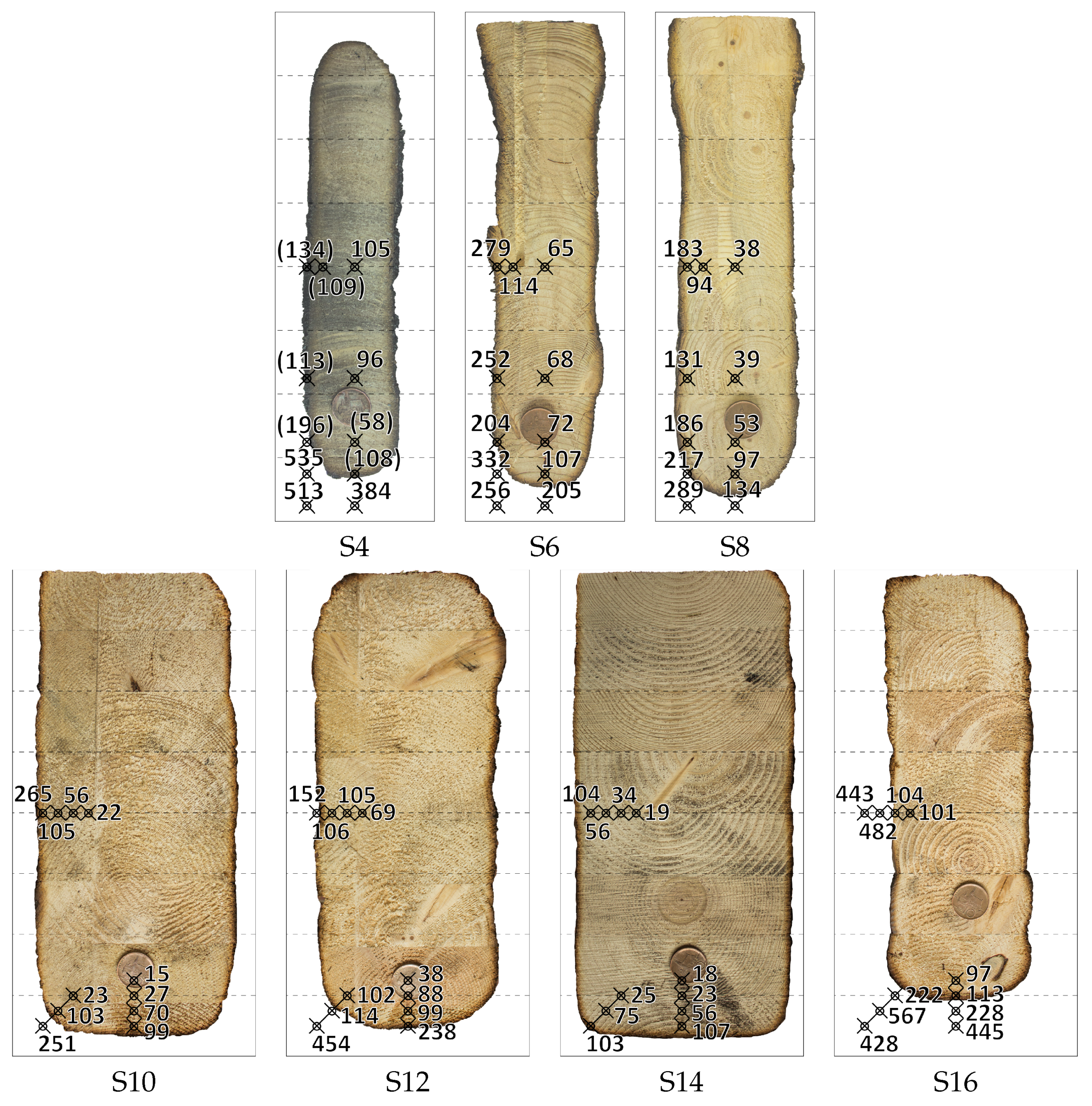
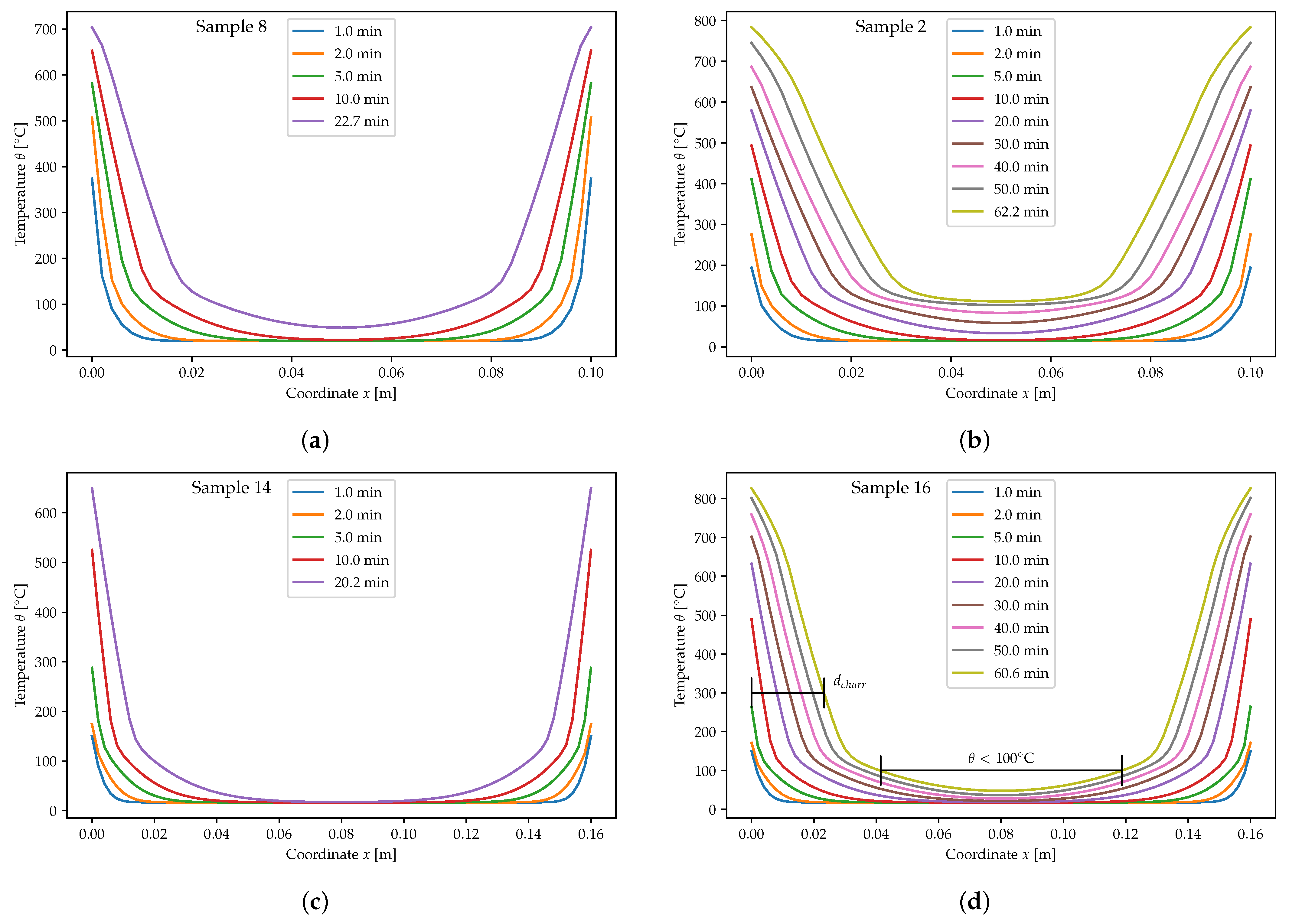
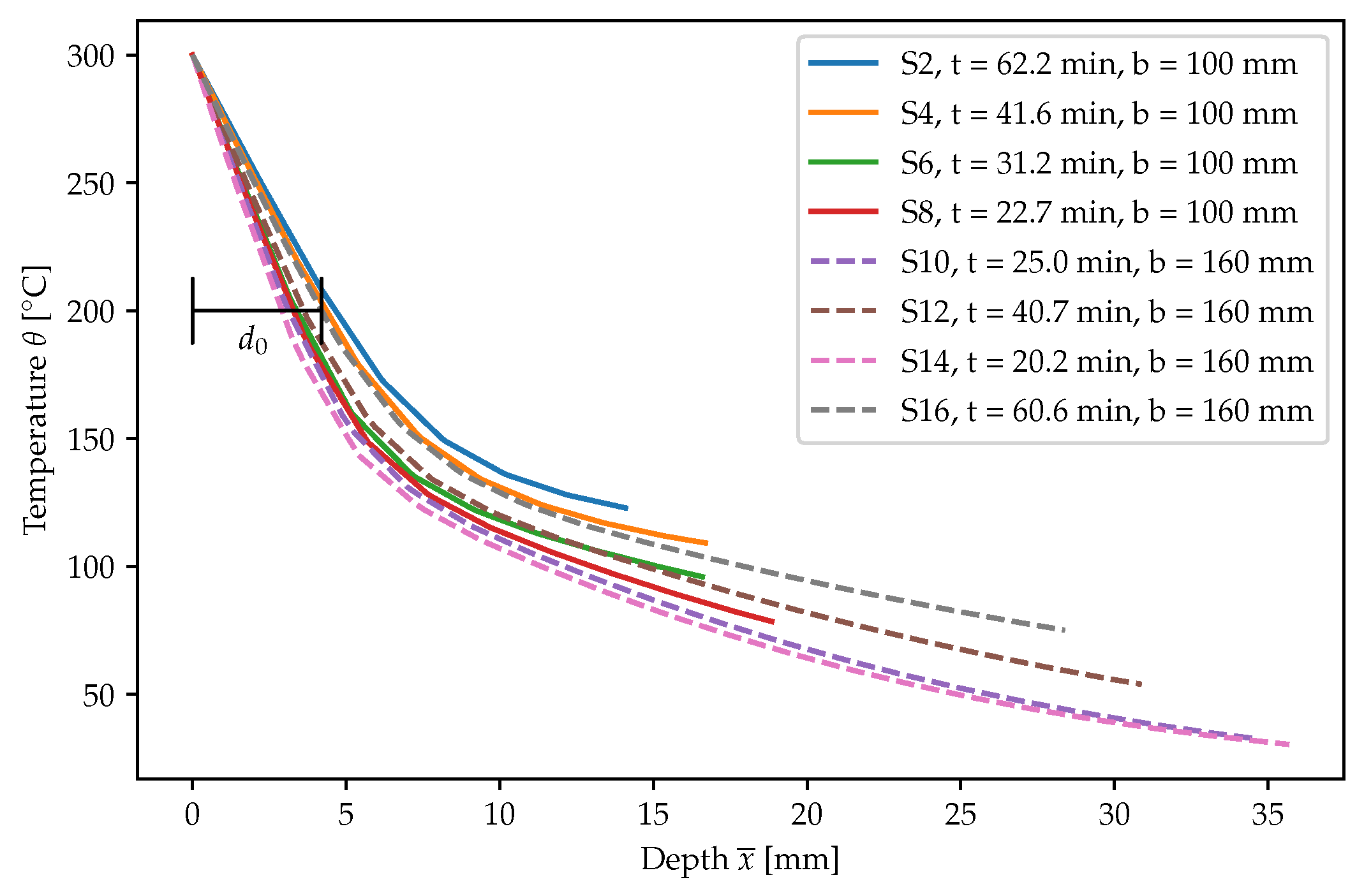
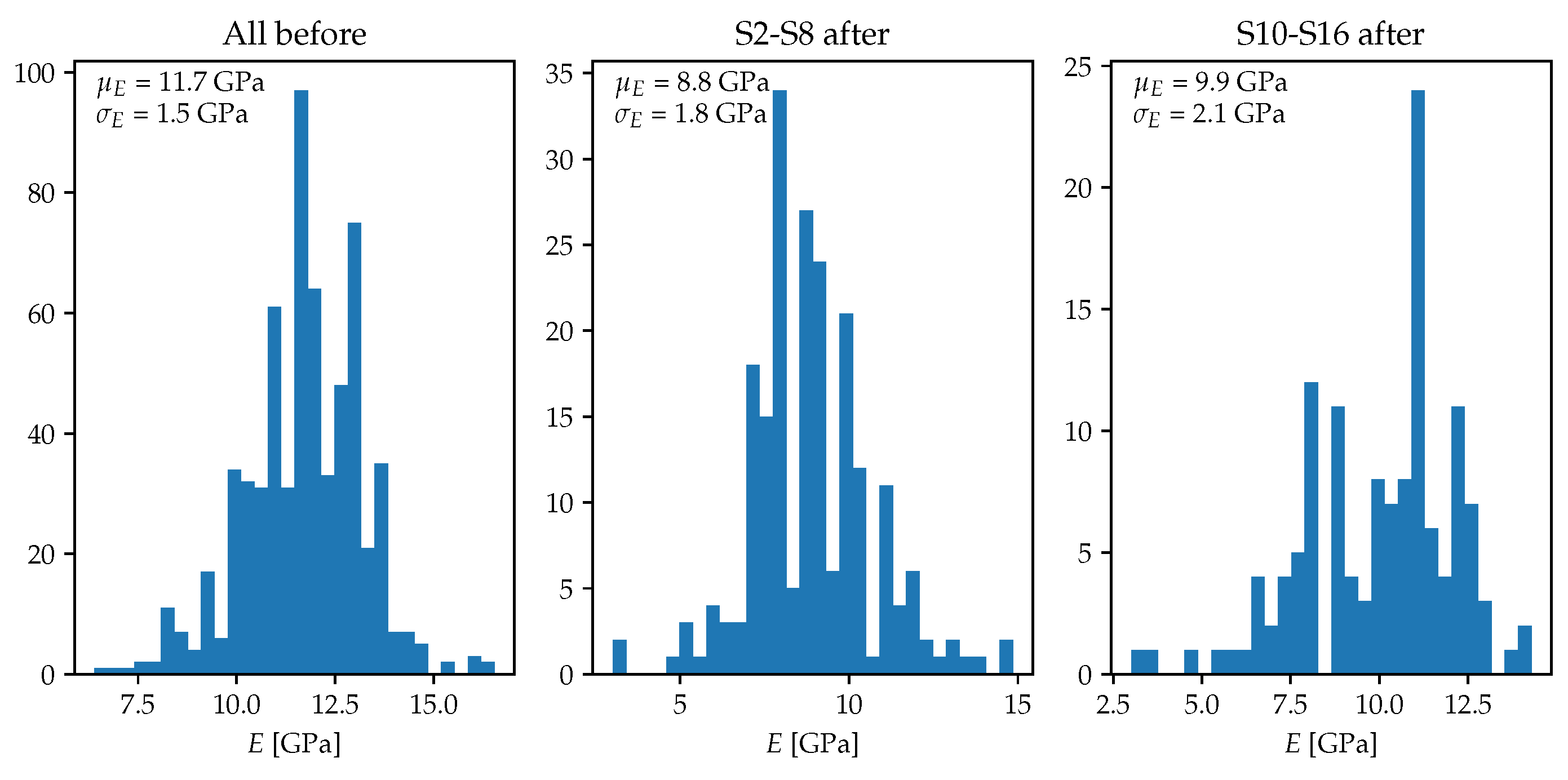
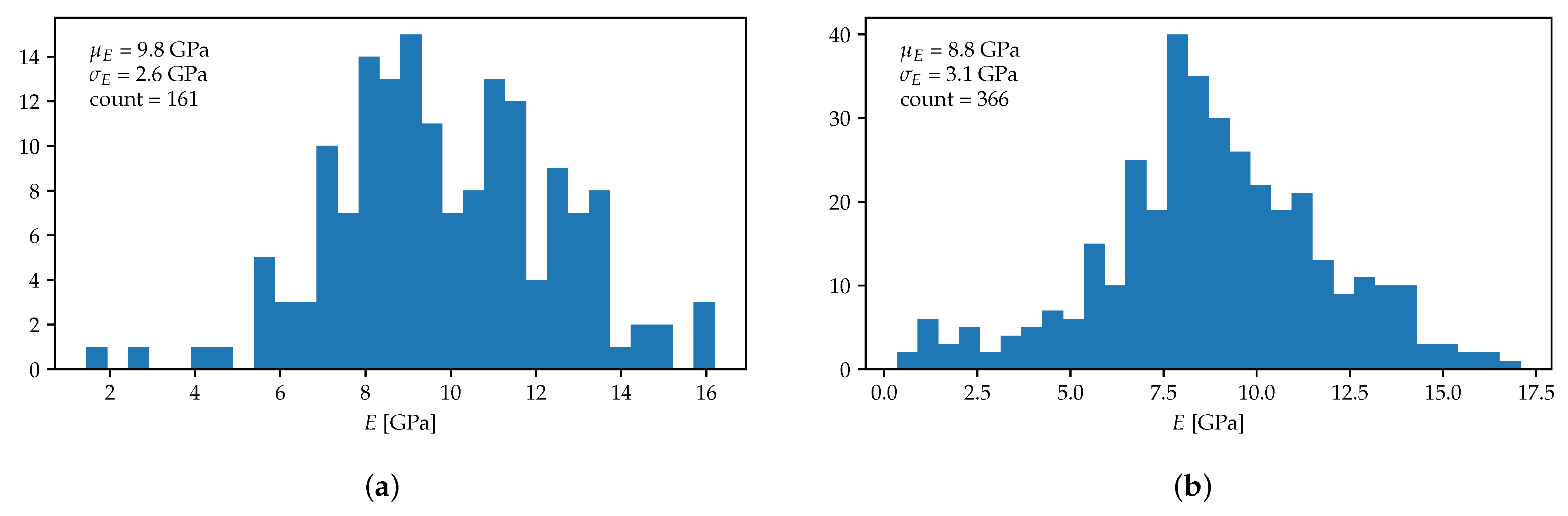
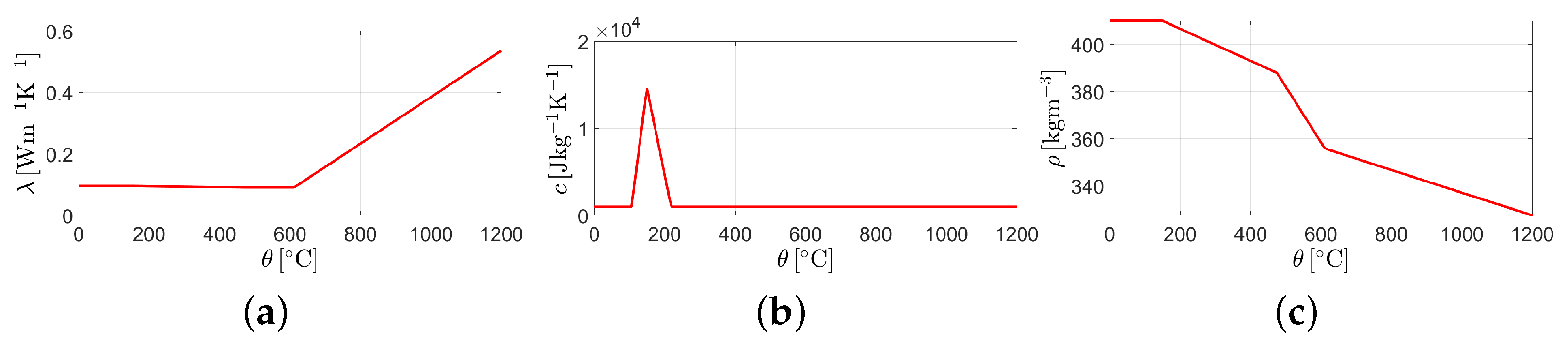
Heating wood to high temperature changes either temporarily or permanently its physical properties. This issue is addressed in the present contribution by examining the effect of high temperature on residual mechanical properties of spruce wood, grounding on the results of full-scale fire tests performed on GLT beams. Given these tests, a computational model was developed to provide through-thickness temperature profiles allowing for the estimation of a charring depth on the one hand and on the other hand assigning a particular temperature to each specimen used subsequently in small-scale tensile tests. The measured Young’s moduli and tensile strengths were accompanied by the results from three-point bending test carried out on two groups of beams exposed to fire of a variable duration and differing in the width of the cross-section, b=100 mm (Group 1) and b=160 mm (Group 2). As expected, increasing the fire duration and reducing the initial beam cross-section reduces the residual bending strength. A negative impact of high temperature on residual strength has also been observed from simple tensile tests, although limited to a very narrow layer adjacent to the charring front not even exceeding a typically adopted value of the zero-strength layer d0=7 mm. On the contrary, the impact on stiffness is relatively mild supporting the thermal recovery property of wood.
Keywords: spruce wood; fire test; heat transport; Young’s modulus; tensile strength spruce wood; fire test; heat transport; Young’s modulus; tensile strength