Article

Forecasting of Disassembly Waste Generation under Uncertainties Using Digital Twinning-Based Hidden Markov Model
1
College of Biological and Agricultural Engineering, Jilin University, Changchun 130022, China
2
Department of Industrial Systems Engineering and Management, National University of Singapore, Singapore 119077, Singapore
*
Author to whom correspondence should be addressed.
Sustainability 2021, 13(10), 5391; https://doi.org/10.3390/su13105391
Submission received: 4 April 2021 / Revised: 7 May 2021 / Accepted: 7 May 2021 / Published: 12 May 2021

Abstract

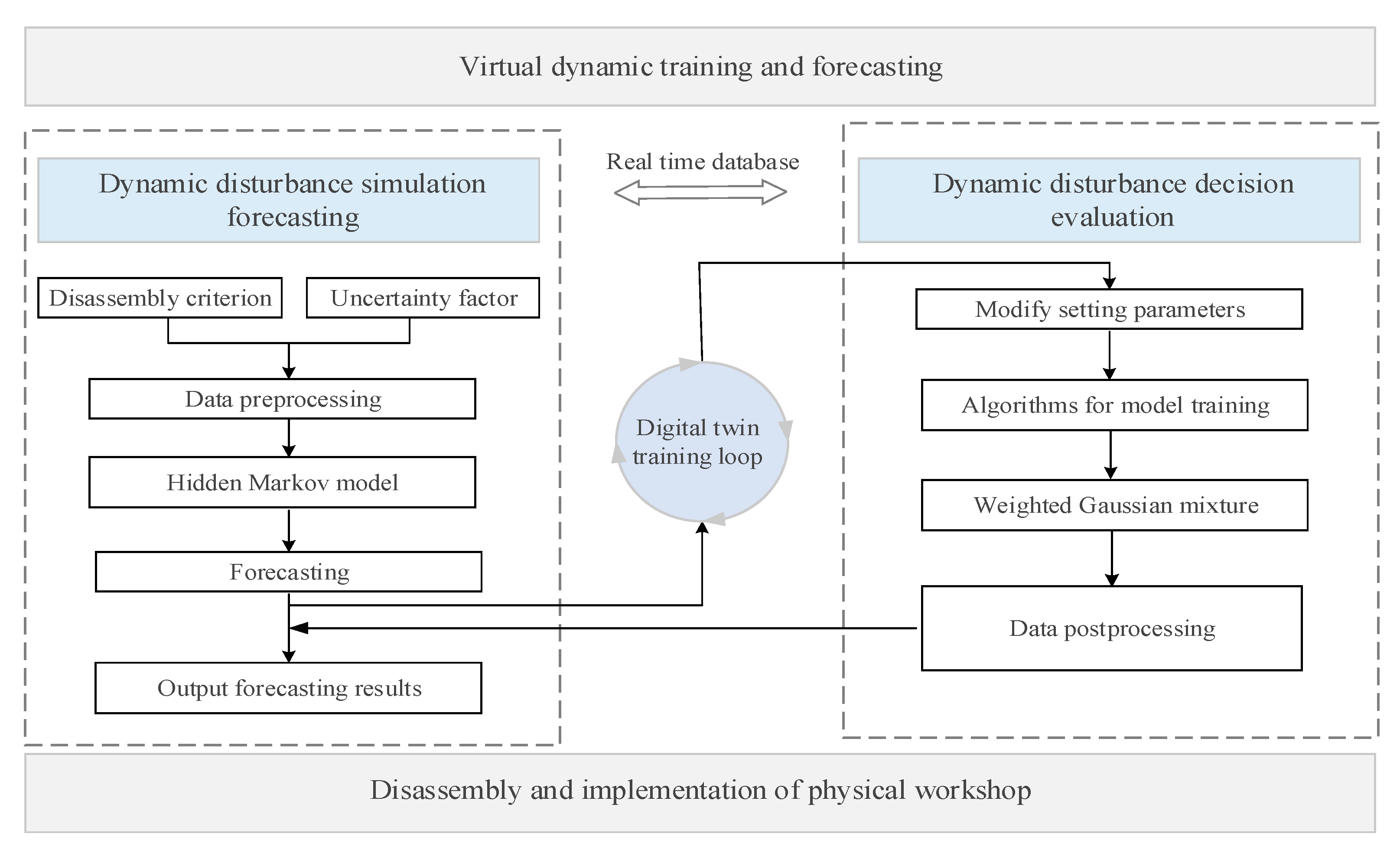
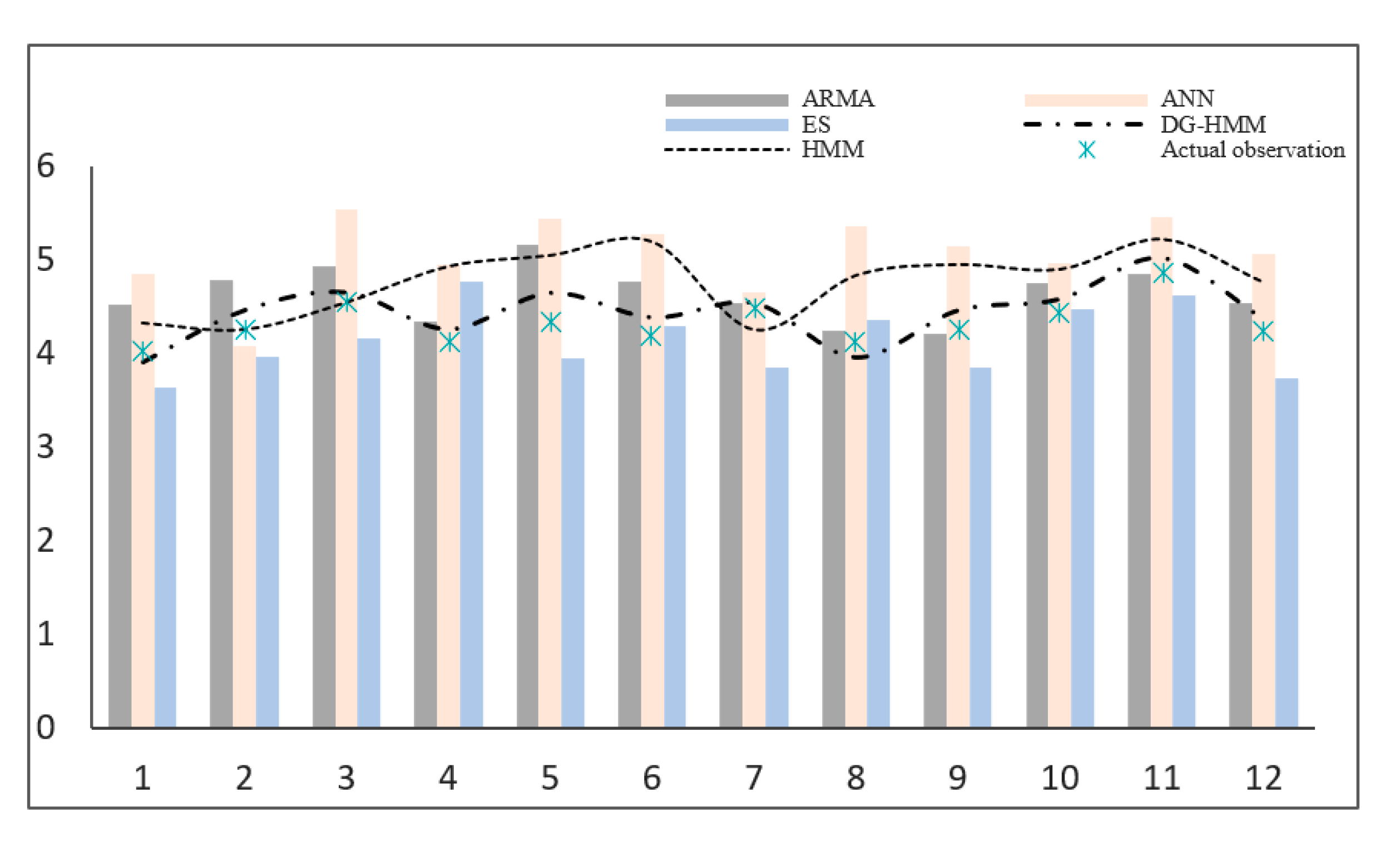
Disassembly waste generation forecasting is the foundation for determining disassembly waste treatment and process formulation and is also an important prerequisite for optimizing waste management. The prediction of disassembly waste generation is a complex process which is affected by potential time, environment, and economy characteristic variables. Uncertainty features, such as disassembly amount, disassembly component status, and workshop scheduling, play an important role in predicting the fluctuation of disassembly waste generation. We therefore focus on revealing the trend of waste generation in disassembly remanufacturing that faces significant influences of technology and economic changes to achieve circular industry sustainable development. To dynamically predict the generation of disassembly waste under uncertainty, this work proposes a statistical method driven by a probabilistic model, which integrates the digital twinning, Gaussian mixture, and the hidden Markov model (DG-HMM). First, digital twinning technology is used for real-time data interaction between simulation prediction and decision evaluation. Then, the Gaussian mixture and HMM are used to dynamically predict the generation of disassembly waste. In order to effectively predict the amount of disassembly waste generation, real data collected from a disassembly enterprise are used to train and verify the model. Finally, the proposed model is compared with other general prediction models to illustrate the correctness and feasibility of the proposed model. The comparison results show that DG-HMM has better prediction accuracy for the actual disassembly waste generation.
Keywords: disassembly; DG-HMM; waste forecasting; digital twinning; optimization; real-time interaction disassembly; DG-HMM; waste forecasting; digital twinning; optimization; real-time interaction