Article

Reduction of Internal Phosphorus Load in New Lakes by Pretreatment of the Former Agricultural Soil—Methods, Ecological Results and Costs


Department of Biology, University of Southern Denmark, DK-5230 Odense, Denmark
*
Author to whom correspondence should be addressed.
Sustainability 2020, 12(9), 3575; https://doi.org/10.3390/su12093575
Submission received: 4 April 2020 / Revised: 24 April 2020 / Accepted: 25 April 2020 / Published: 28 April 2020
(This article belongs to the Special Issue Novel Methods for Restoring Inland Aquatic Ecosystems)

Abstract

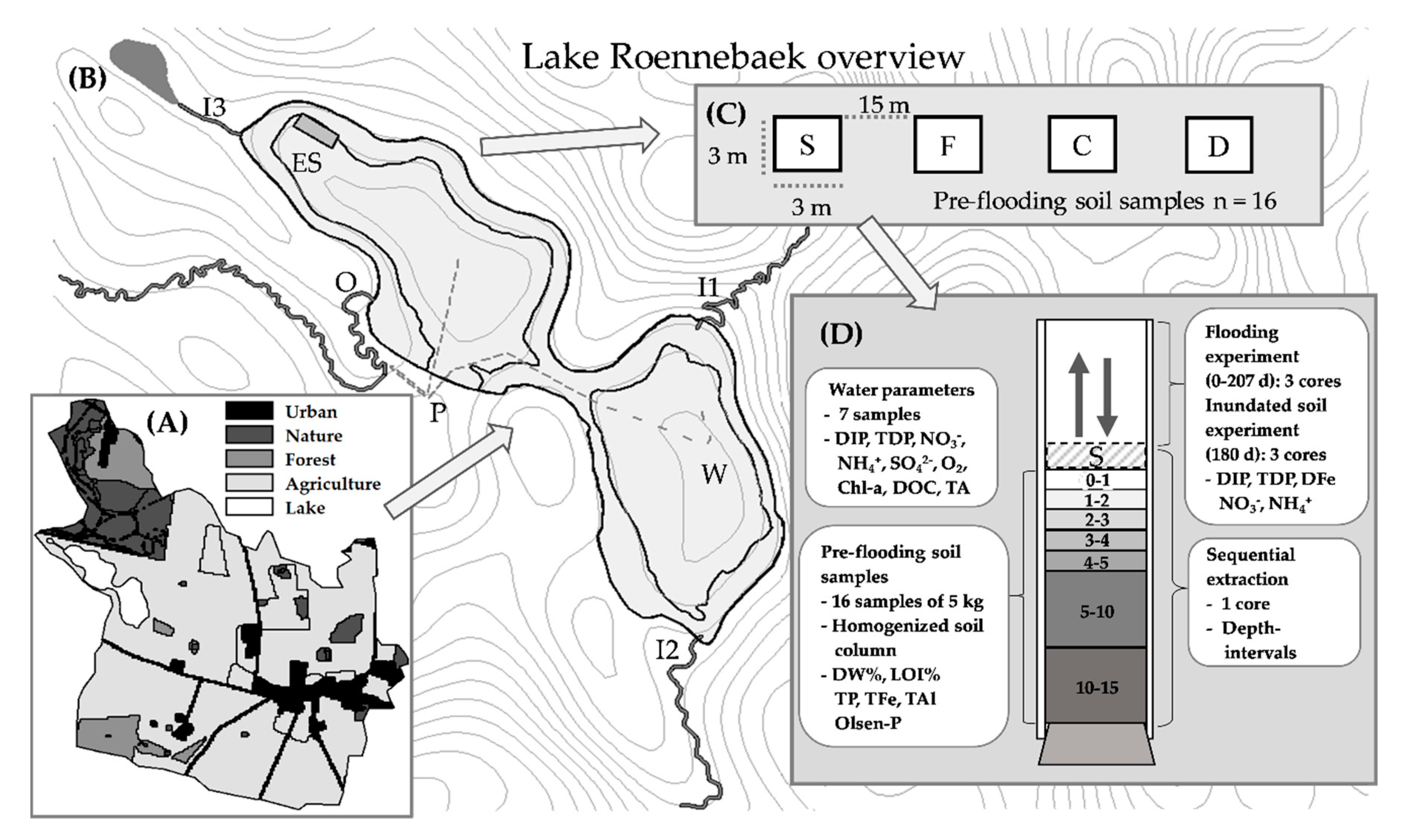
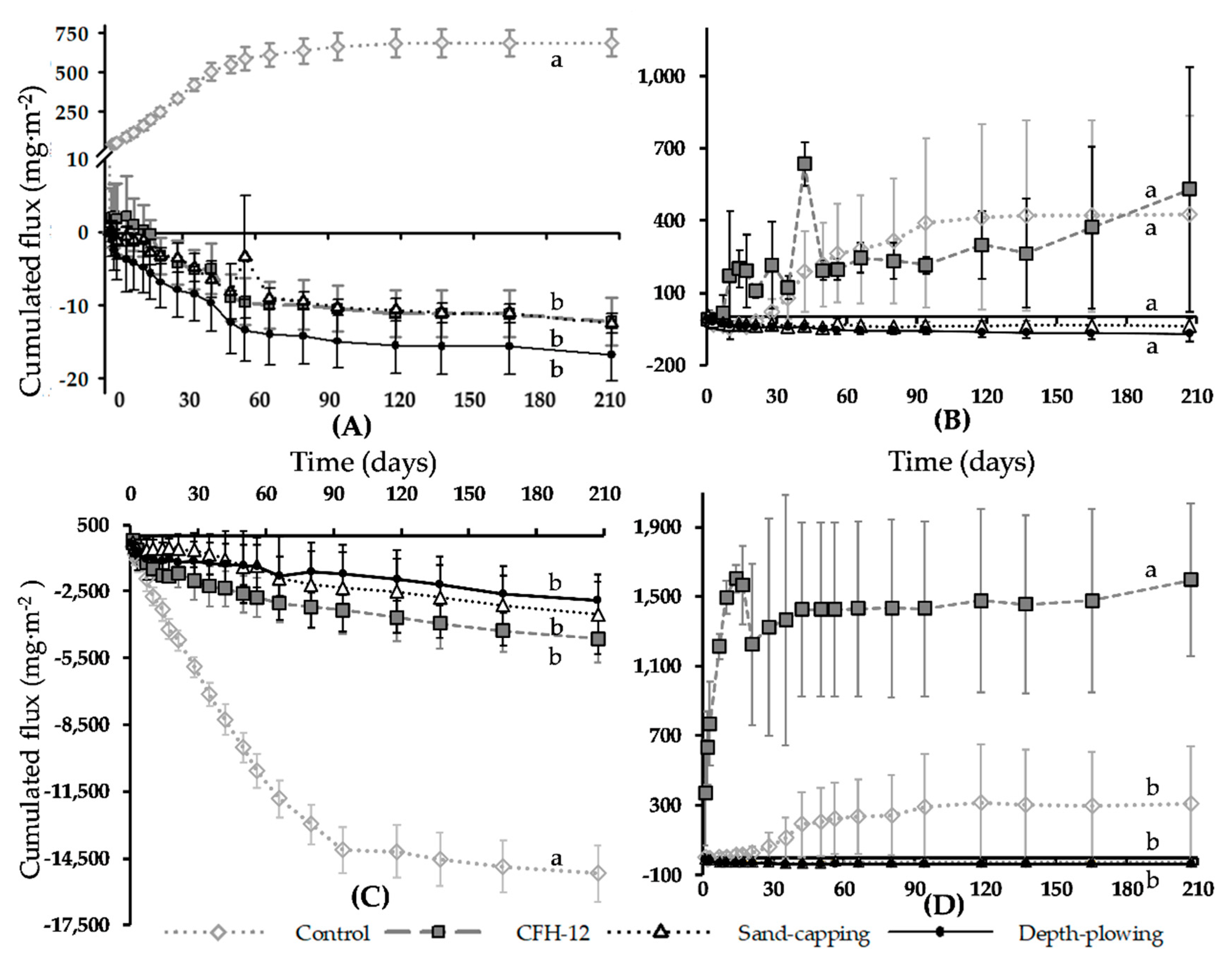
New lakes are established or reestablished to provide ecosystem services such as limiting floods and nutrient discharge and to improve biodiversity. New lakes are often established on fertilized land formerly used for agricultural purposes, thereby posing a risk of issues such as phosphorus (P) release when inundated. Release of P from agricultural soil affects both the developing ecosystem of the new lake and may increase downstream eutrophication. To decrease P release following inundation, three simple and cost-effective soil pretreatments were tested through laboratory soil–water fluxes from the test sites in the new Lake Roennebaek and the fluxes of P, nitrogen (N), and iron (Fe) were compared. The pretreatments compared were sand-capping, depth-plowing, and addition of the commercial iron product CFH-12® (Kemira). Untreated agricultural soil incubated under laboratory conditions released 687 ± 88 mg P·m−2 over 207 days and 85% was released within 60 days from inundation followed by low soil–water P exchange during the remaining incubation period. However, P was still released from the untreated soil 180 days after inundation within the lake. The cumulated P flux of the three pretreatment methods was in comparison negative, between −12 ± 3 and −17 ± 4 mg P·m−2 over 207 days incubation and showed negative P fluxes from cores collected within the lake 180 days after inundation. This study showed that the release of P when establishing new lakes on former agricultural land could be minimized using these simple and cost-effective methods, which may improve the ecological status of future lakes and enable the establishment of new lakes without threatening vulnerable downstream ecosystems.
Keywords: newly established lake; internal P loading; pretreatment; agricultural soil; sand-capping; iron oxyhydroxide; depth-plowing; topsoil removal; reservoir newly established lake; internal P loading; pretreatment; agricultural soil; sand-capping; iron oxyhydroxide; depth-plowing; topsoil removal; reservoir