Article

Waste Reduction in Production Processes through Simulation and VSM

by
Stefania Bait
1,*,
Alessandro Di Pietro
2 and
Massimiliano M. Schiraldi
1
1
Department of Enterprise Engineering, Tor Vergata University of Rome, 00133 Via del Politecnico, Italy
2
Operations Excellence Think Tank, Tor Vergata University of Rome, 00133 Via del Politecnico, Italy
*
Author to whom correspondence should be addressed.
Sustainability 2020, 12(8), 3291; https://doi.org/10.3390/su12083291
Submission received: 30 March 2020 / Revised: 13 April 2020 / Accepted: 15 April 2020 / Published: 17 April 2020

Abstract

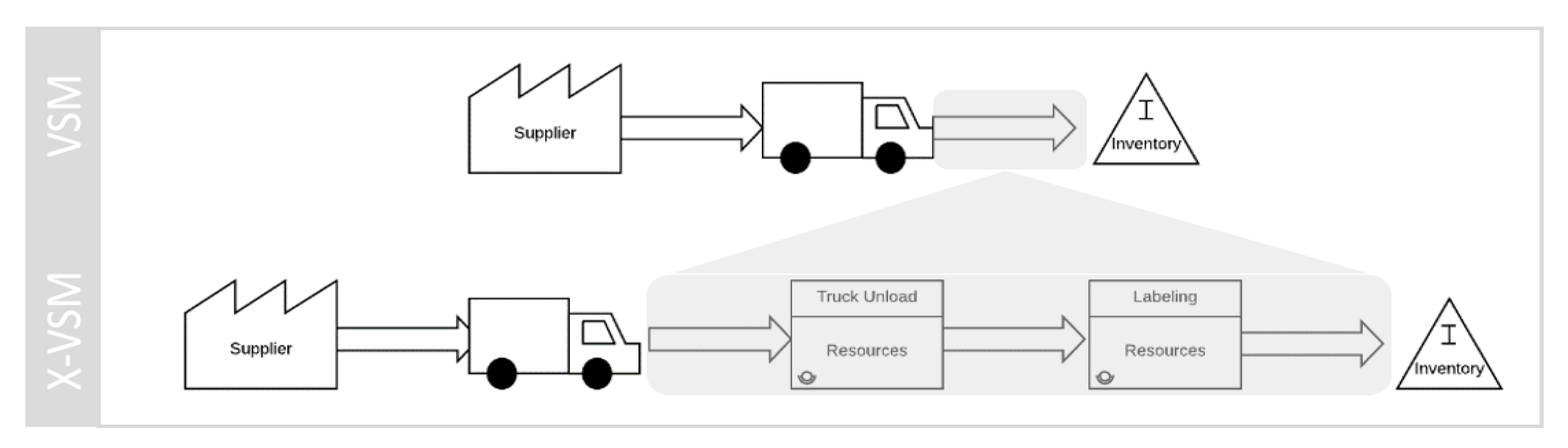
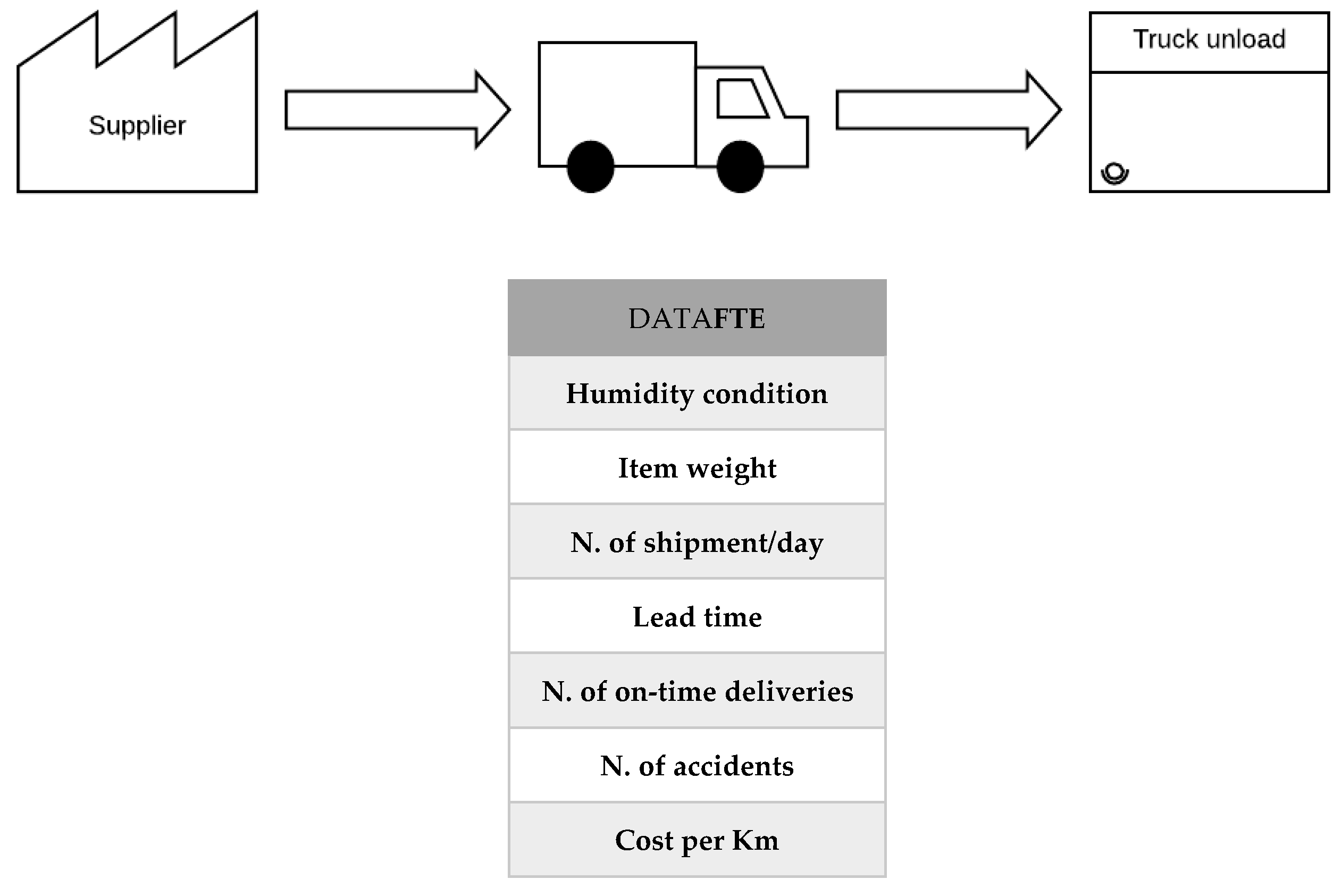
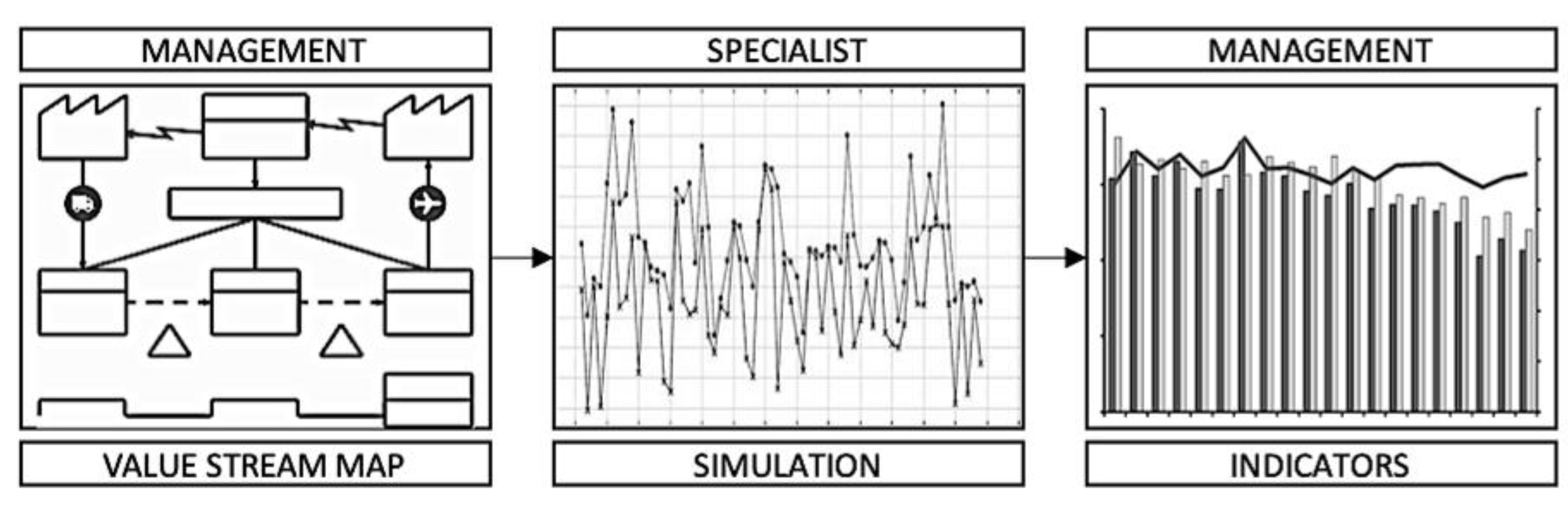
Corporate managers often face the need to choose the optimal configurations of production processes to reduce waste. Research has shown that simulation is an effective tool among those conceived to support the manager’s decisions. Nevertheless, the use of simulation at the company level remains limited due to the complexity in the design phase. In this context, the Value Stream Map (VSM)—a tool of the Lean philosophy–is here exploited as a link between the strategic needs of the management and the operational aspect of the simulation process in order to approach sustainability issues. The presented approach is divided into two main parts: a set of criteria for expanding the VSM are identified in order to increase the level of details of the represented processes; then, data categories required for the inputs and outputs of each sub-process modeling are defined, including environmental indicators. Specifically, an extended version of the classical VSM (X-VSM), conceived to support process simulation, is here proposed: the X-VSM is used to guide the design of the simulation so that the management decisions, in terms of waste reduction, can be easily evaluated. The proposal was validated on a production process of a large multinational manufacturing company.
Keywords: waste reduction; Value Stream Map; process simulation; lean production waste reduction; Value Stream Map; process simulation; lean production