Article

Factors Affecting Residential Satisfaction in Slum Rehabilitation Housing in Mumbai


by
Bangkim Kshetrimayum
1,2,
Ronita Bardhan
1,3,* and
Tetsu Kubota
2
1
Centre for Urban Science and Engineering, Indian Institute of Technology Bombay, Powai, Mumbai 400076, India
2
Graduate School for International Development and Cooperation, Hiroshima University, 1-5-1 Kagamiyama, Higashi-Hiroshima, Hiroshima 739-8529, Japan
3
Department of Architecture, University of Cambridge, 1-5 Scroope Terrace, Cambridge CB2 1PX, UK
*
Author to whom correspondence should be addressed.
Sustainability 2020, 12(6), 2344; https://doi.org/10.3390/su12062344
Submission received: 1 February 2020 / Revised: 7 March 2020 / Accepted: 12 March 2020 / Published: 17 March 2020
(This article belongs to the Special Issue Low-Carbon Affordable Houses for Sustainable Societies)

Abstract

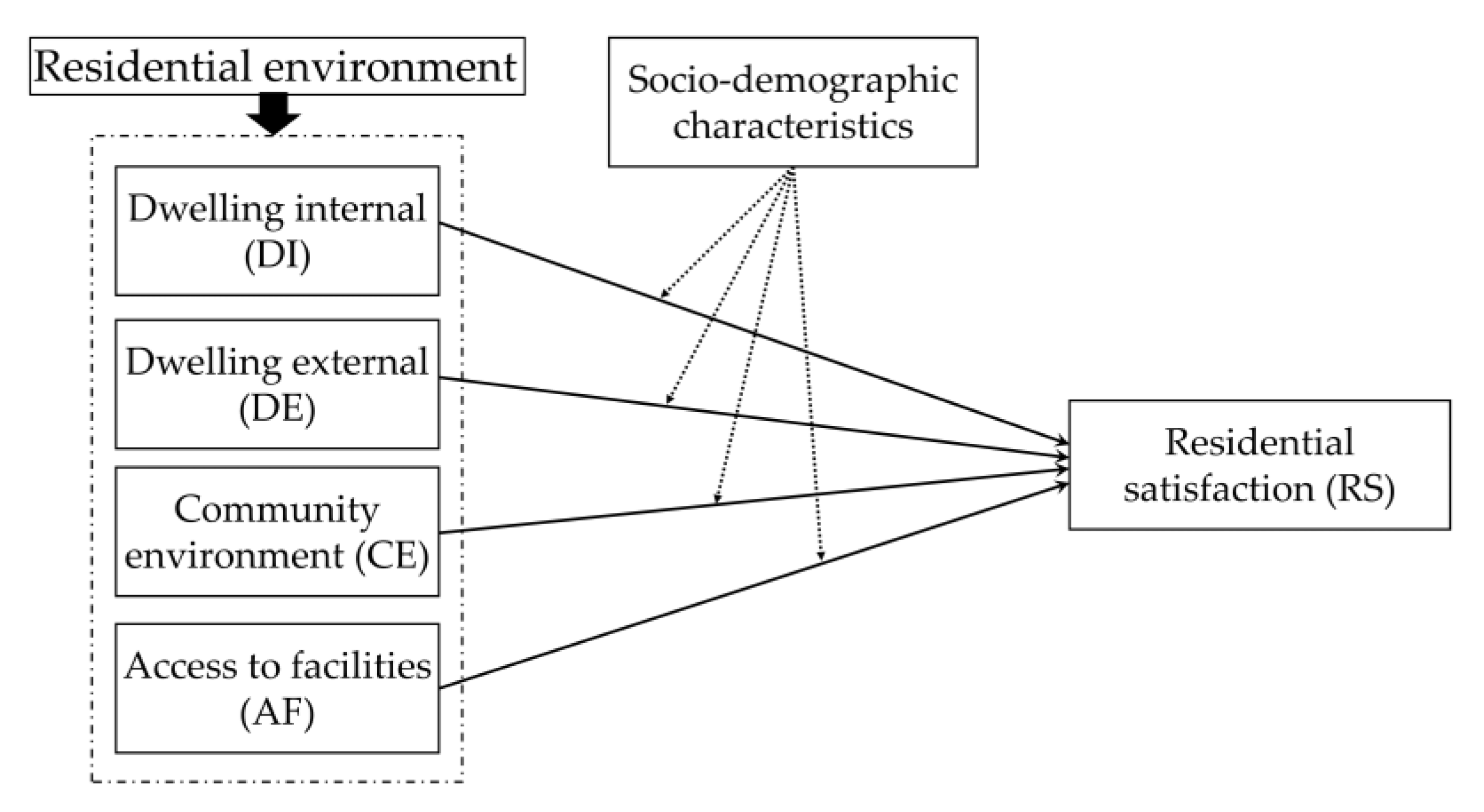
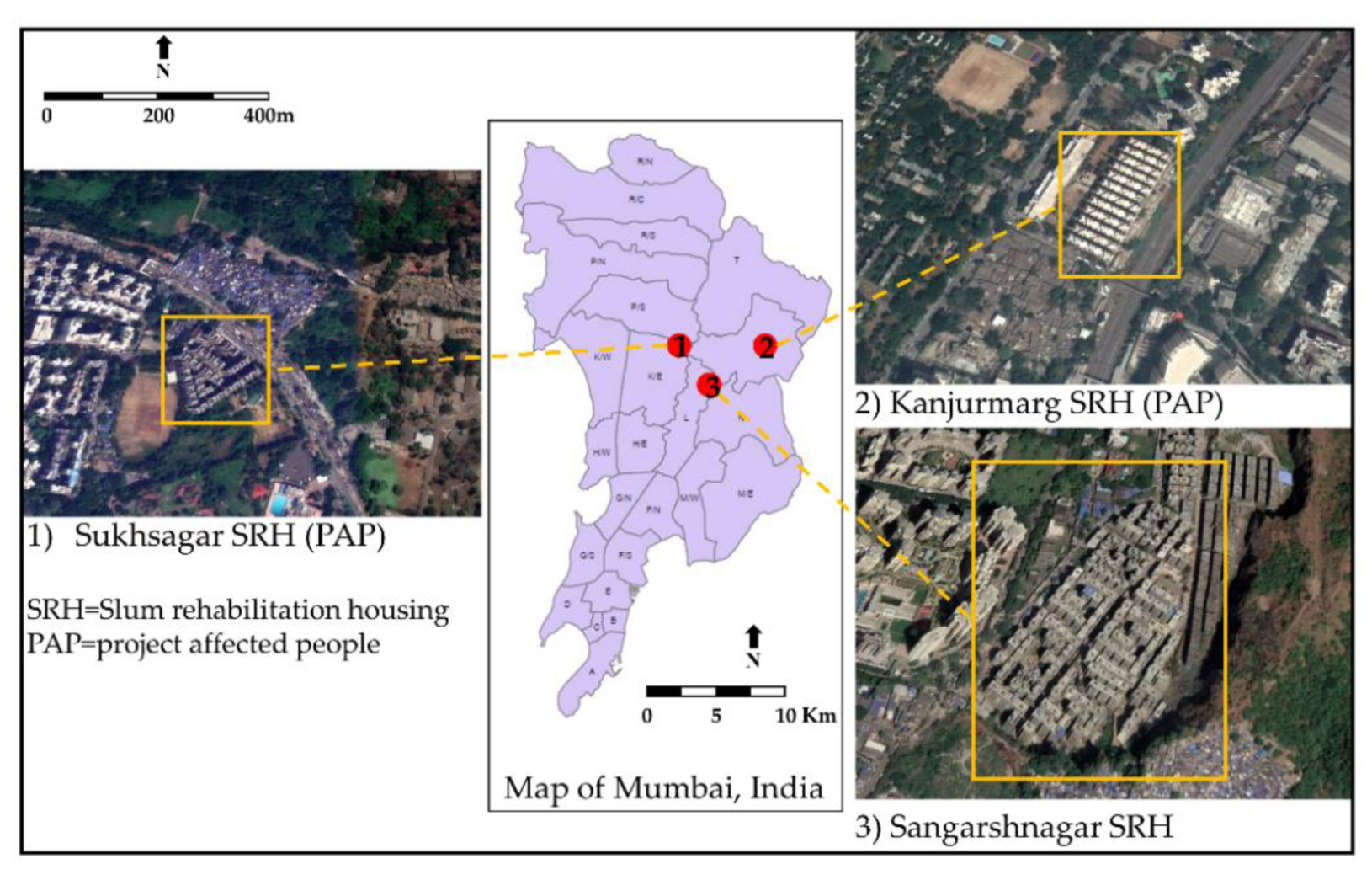
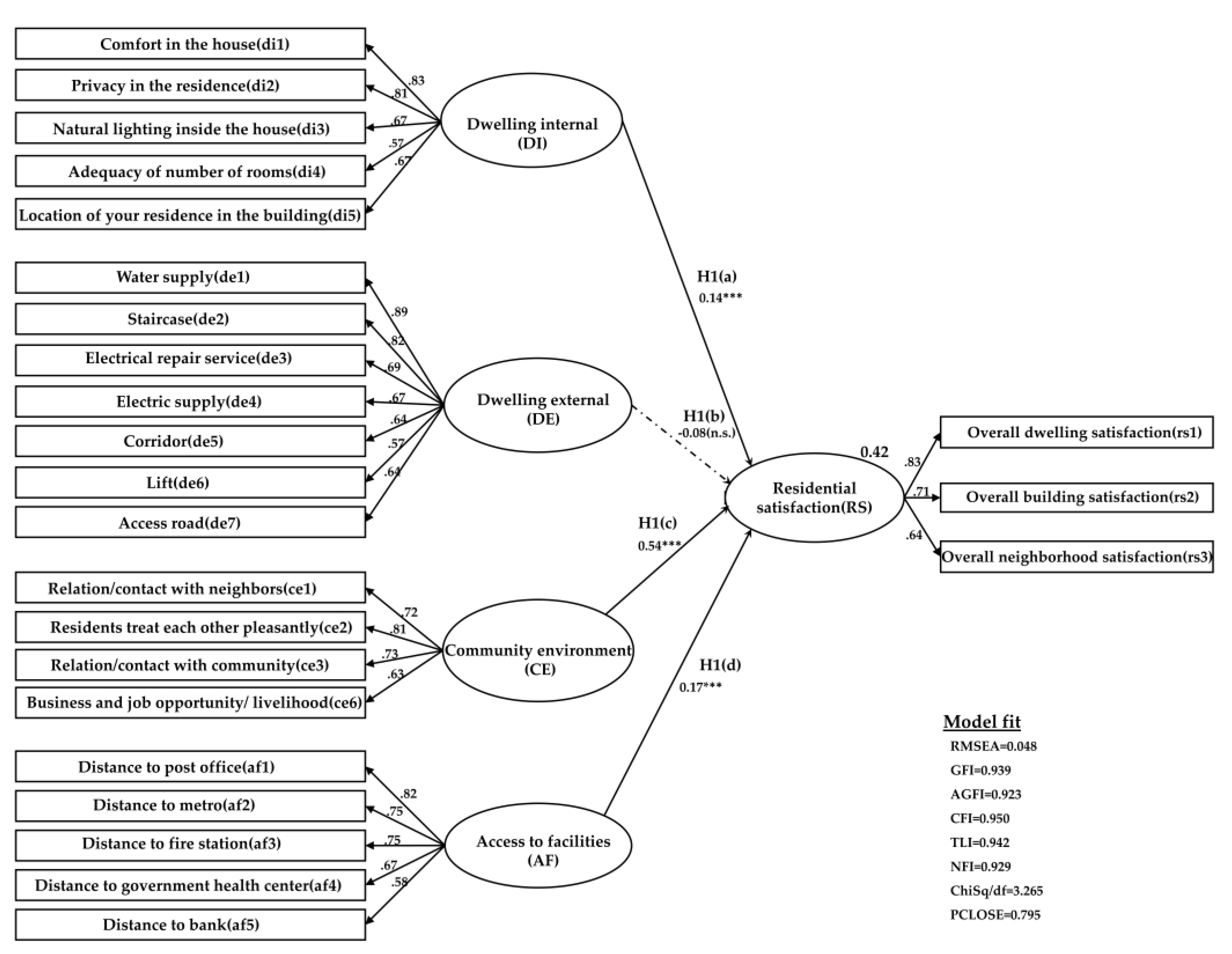
Affordable housing for the low-income population, who mostly live in slums, is an endemic challenge for cities in developing countries. As a remedy for the slum-free city, most of the major metropolis are resorting to slum rehabilitation housing. Rehabilitation connotes the improved quality of life that provides contentment, yet what entails residential satisfaction in such low-income situations remains a blind spot in literature. The study aims to examine the factors affecting residential satisfaction of slum rehabilitation housing in Mumbai, India. Here, the moderation effects of sociodemographic characteristics between residential satisfaction and its predictors are elaborated using a causal model. Data on residents’ perception of the residential environment were collected from 981 households in three different slum rehabilitation housing areas spatially spread across Mumbai. The causal model indicated that residential satisfaction was significantly determined by internal conditions of dwelling resulting from design, community environment and access to facilities. Gender, age, mother tongue, presence of children, senior citizens in the family, and education moderate the relationship between residential satisfaction and its predictors. The need for design and planning with the user’s perspective is highlighted to improve the quality of life.
Keywords: slum; affordable housing; residential satisfaction; rehabilitation; Mumbai slum; affordable housing; residential satisfaction; rehabilitation; Mumbai