Article

A Model for Estimating Passenger-Car Carbon Emissions that Accounts for Uphill, Downhill and Flat Roads


School of Highway, Chang’an University, Xi’an 710064, China
*
Author to whom correspondence should be addressed.
Sustainability 2020, 12(5), 2028; https://doi.org/10.3390/su12052028
Submission received: 16 January 2020 / Revised: 2 March 2020 / Accepted: 4 March 2020 / Published: 6 March 2020

Abstract

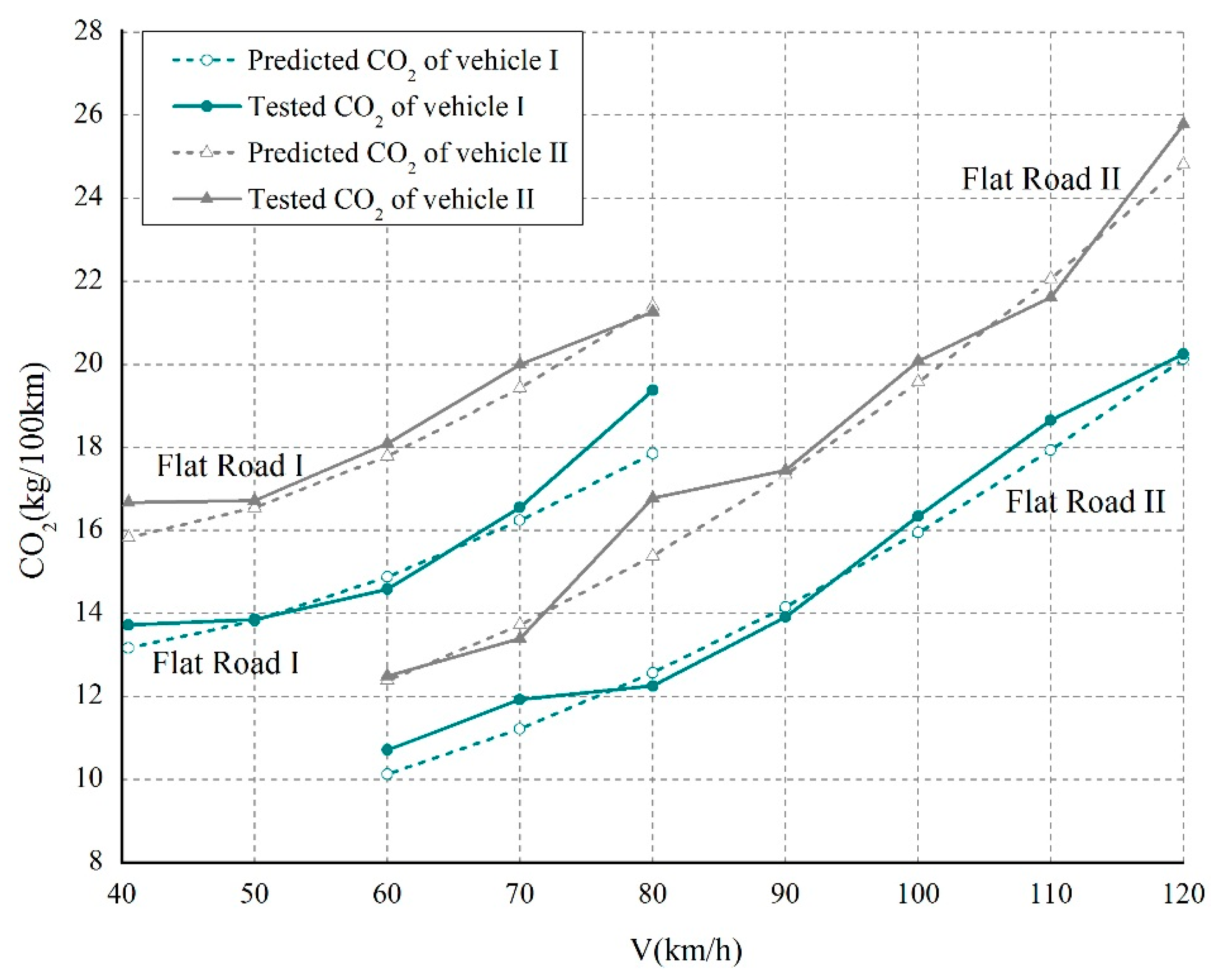
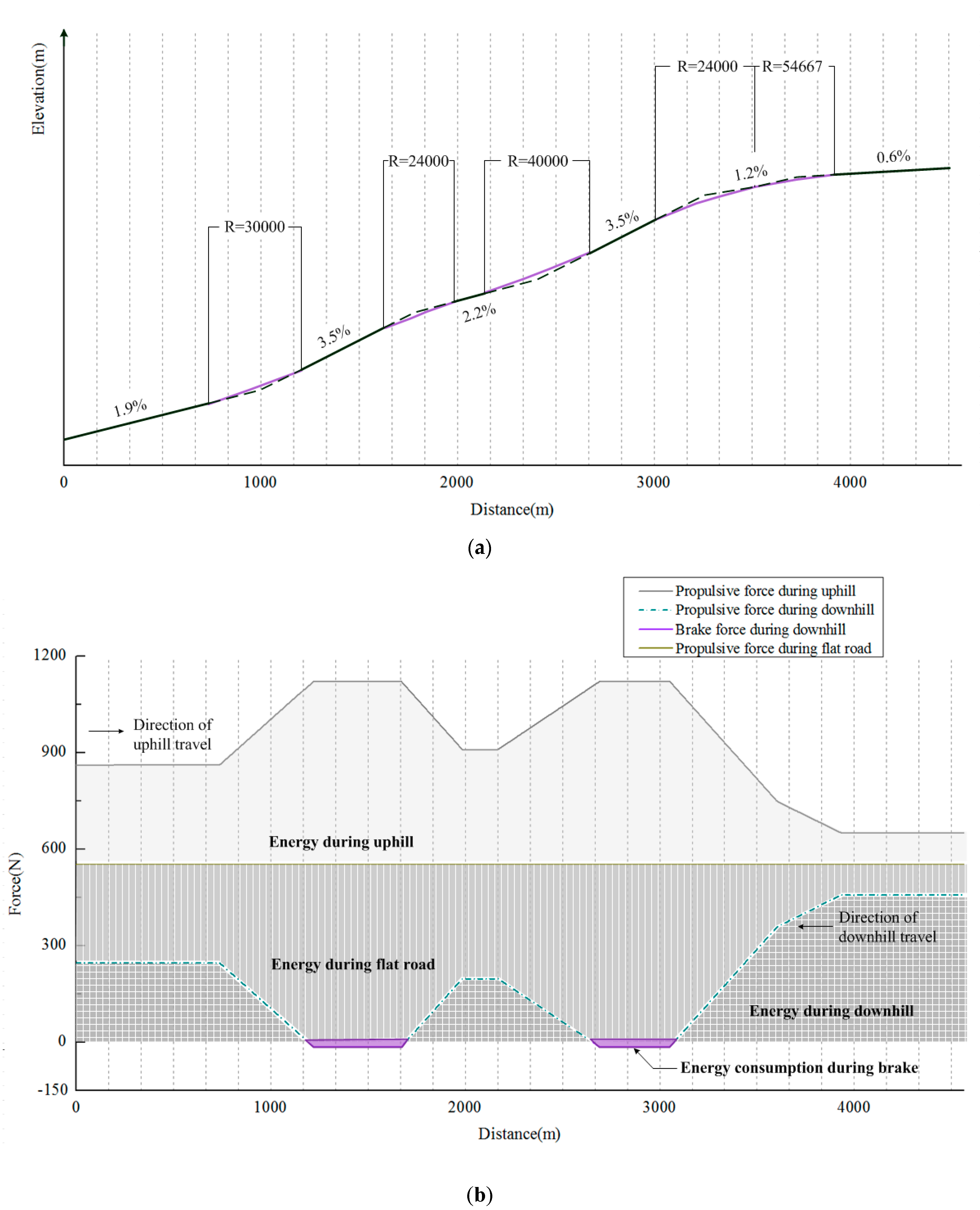
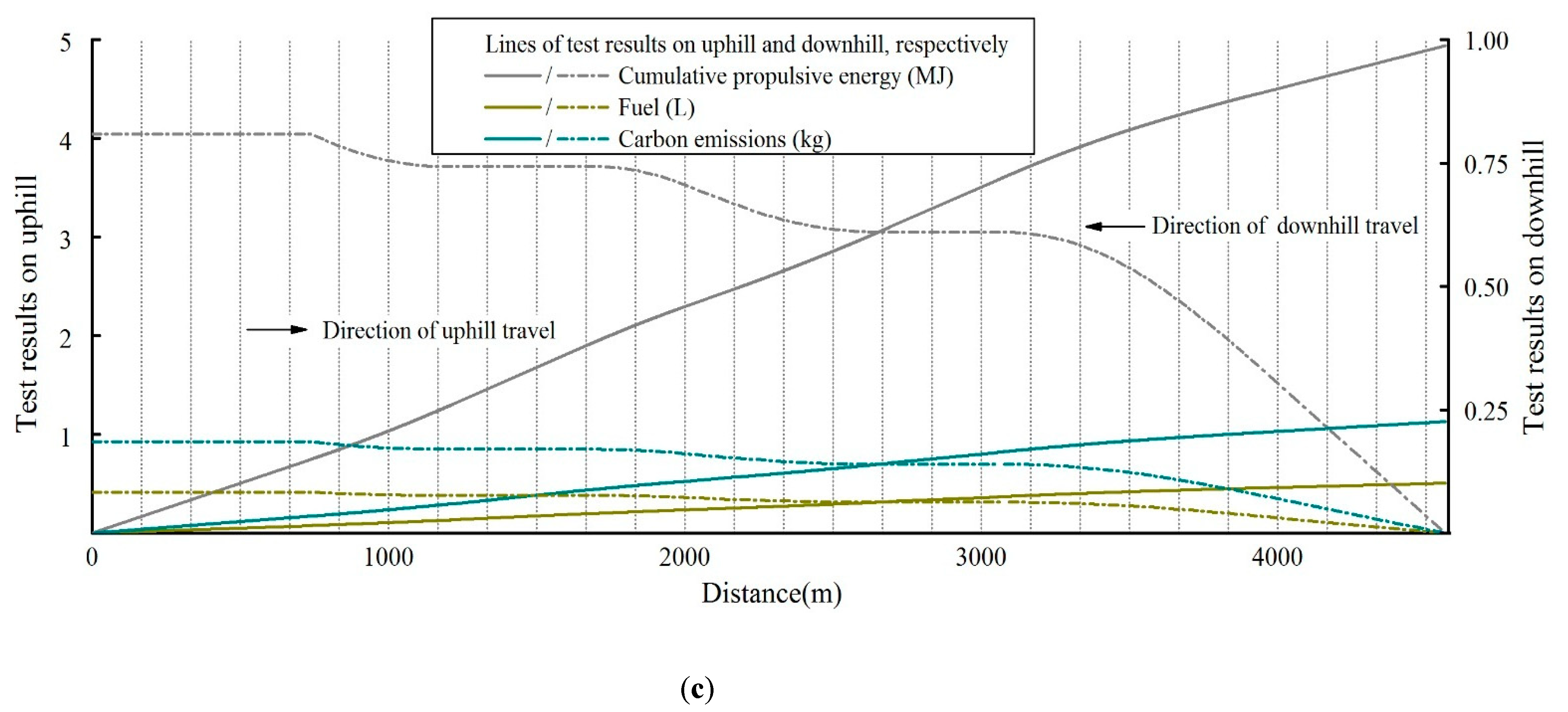
The geometric longitudinal slope line of a given road significantly effects the carbon emissions of vehicles traversing it. This study was conducted to explore the carbon emission rules of passenger cars on various highway slopes. The law of conservation of mechanical energy, the first law of thermodynamics and the vehicle longitudinal dynamics theory were utilized to determine the influence of slope design indicators on fuel consumption. The energy conversion, fuel consumption, and carbon emission models of passenger cars on a flat straight road, uphill road, and downhill road sections were derived accordingly. Two types of passenger cars were selected for analysis. A field test was carried out to verify the proposed model where the vehicle maintained a cruise speed on flat straight road, uphill road and downhill road with equal gradient and mileage, and continuous longitudinal slope to gather fuel consumption data. The proposed model showed strong accuracy and a maximum error of 9.97%. The main factor affecting the vehicle’s carbon emissions on the continuous longitudinal slope was found to be the average gradient. For a round-trip longitudinal slope with a small gradient, the main factor affecting the vehicle’s carbon emissions is speed: higher speed results in higher carbon emissions. The results of this study are likely to provide the data for support and a workable reference for the low-carbon highway design and operation.
Keywords: carbon emissions; prediction model; uphill; downhill; continuous longitudinal slope; gradient; low carbon design; two-way traffic; highway carbon emissions; prediction model; uphill; downhill; continuous longitudinal slope; gradient; low carbon design; two-way traffic; highway