Article

Willingness of the New Generation of Farmers to Participate in Rural Tourism: The Role of Perceived Impacts and Sense of Place

College of Economics and Management, China Agricultural University (CAU), Beijing 100083, China
*
Author to whom correspondence should be addressed.
Sustainability 2020, 12(3), 766; https://doi.org/10.3390/su12030766
Submission received: 27 November 2019 / Revised: 10 January 2020 / Accepted: 15 January 2020 / Published: 21 January 2020
(This article belongs to the Section Sustainable Urban and Rural Development)

Abstract

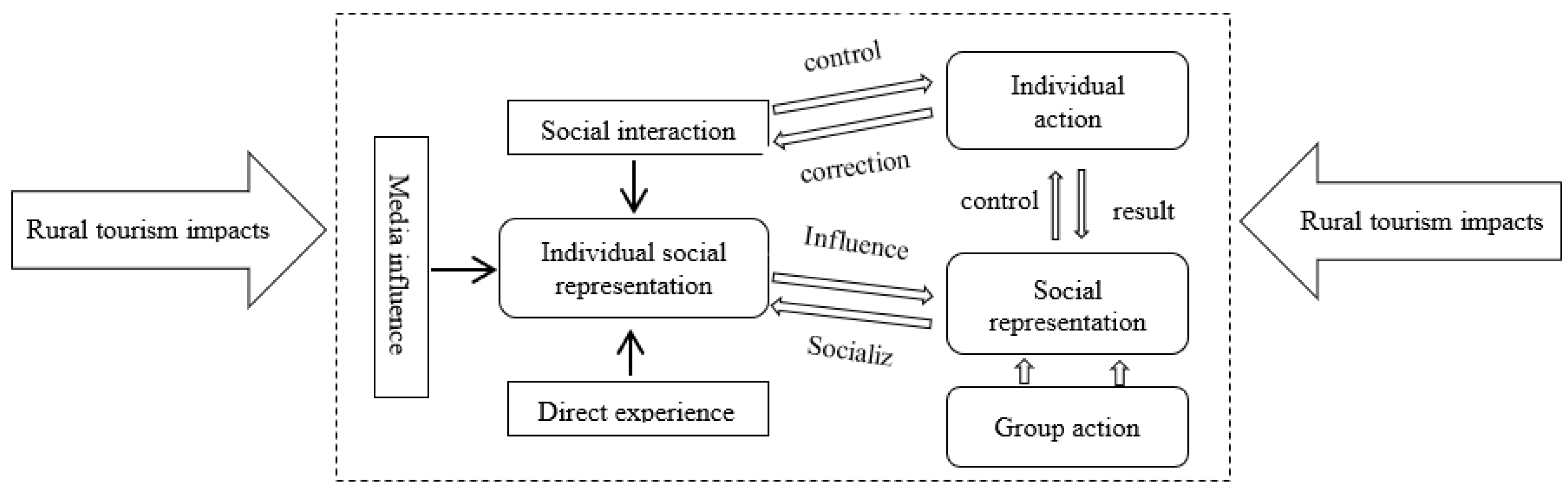
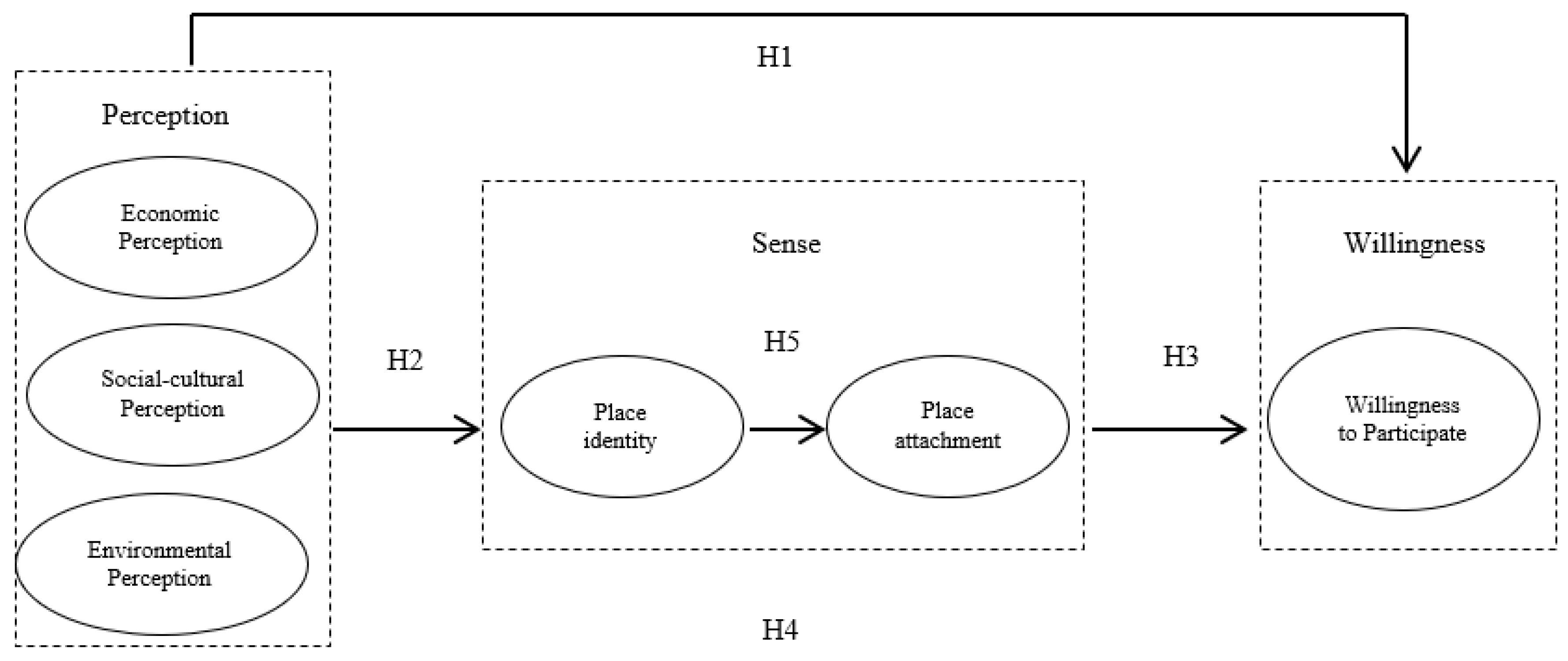
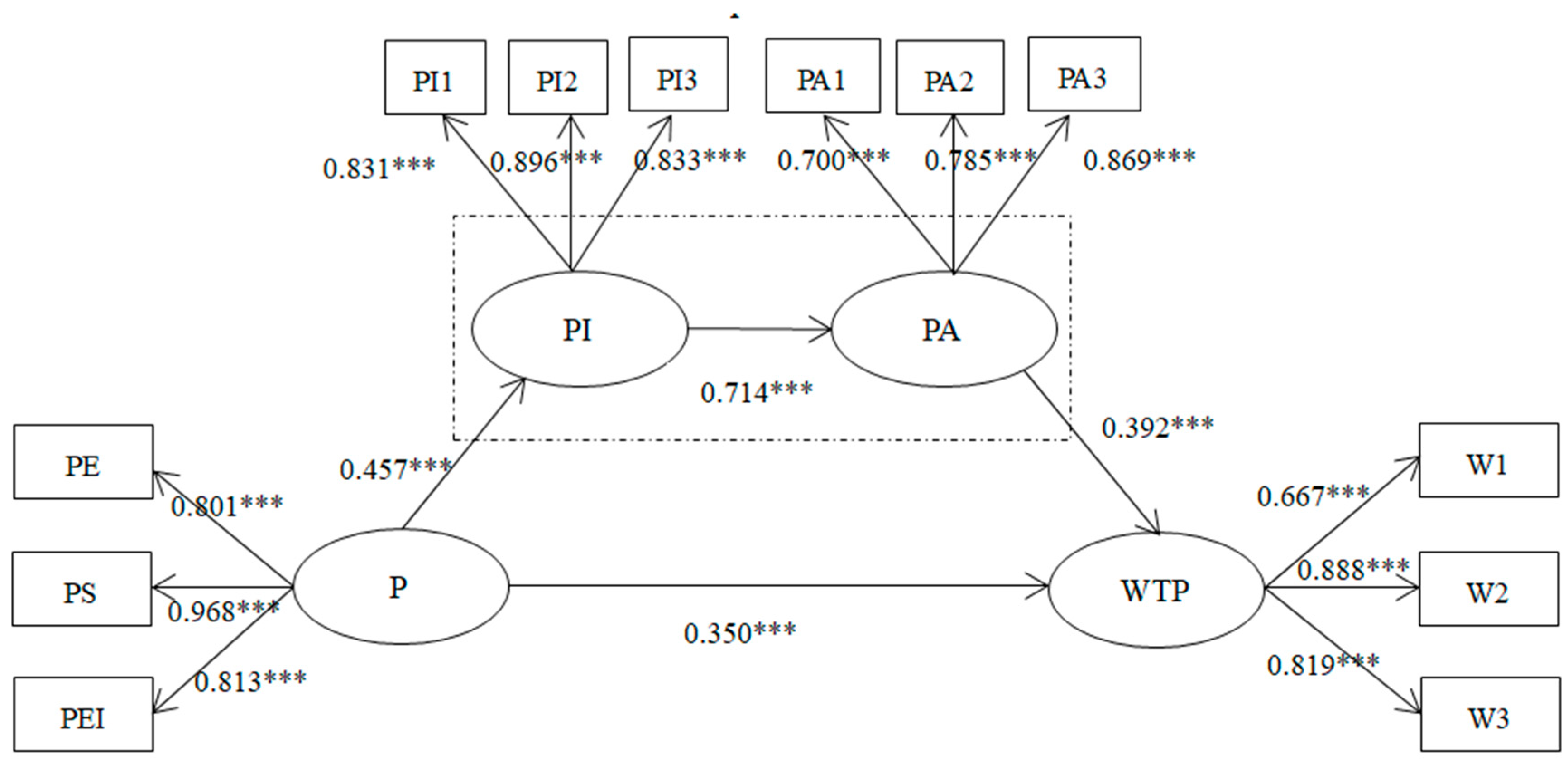
This study aims to assess the willingness of the new generation of farmers in China to return to their hometowns for the purpose of contributing to rural tourism. Based on the hierarchy of effects models (HOE) and the social representation theory (SRT), this study utilized an analysis model of perceived rural tourism impacts (P), sense of place (SoP), and willingness to participate (WTP) by the new generation of farmers, where sense of place was deconstructed into the two independent dimensions of place identification (PI) and place attachment (PA). A total of 263 valid questionnaire surveys were collected in Yanling County, a demonstration county for leisure agriculture and rural tourism in China. The structural equation modeling (SEM) technique was used to analyze the data. The results show that the perceived impacts of rural tourism on the new generation of farmers had a significant positive impact on their willingness to participate in the development of rural tourism. It was also found that sense of place played a mediating role in the perceived impacts of rural tourism and willingness to participate. Additionally, perceived impacts of rural tourism had a significant positive effect on place identity, where place identity played a mediating role between perceived impacts of rural tourism and place attachment. Place identity had a significant positive effect on place attachment, and place attachment played a mediating role between place identity and willingness to participate. The practical implications of these findings for future research and rural tourism development are also discussed.
Keywords: rural tourism; sense of place; willingness to participate; new generation of farmers; China rural tourism; sense of place; willingness to participate; new generation of farmers; China