Article

Historical School Buildings. A Multi-Criteria Approach for Urban Sustainable Projects


by
Maria Rosaria Guarini
1,*,
Pierluigi Morano
2 and
Francesco Sica
3
1
Department of Architecture and Design, “Sapienza” University of Rome, 00196 Rome, Italy
2
Department of Science of Civil Engineering and Architecture, Polytechnic University of Bari, 70125 Bari, Italy
3
Doctoral School of Architecture and Construction, Department of Architecture and Design, “Sapienza” University of Rome, 00196 Rome, Italy
*
Author to whom correspondence should be addressed.
Sustainability 2020, 12(3), 1076; https://doi.org/10.3390/su12031076

Submission received: 20 December 2019 / Revised: 25 January 2020 / Accepted: 29 January 2020 / Published: 3 February 2020

Abstract

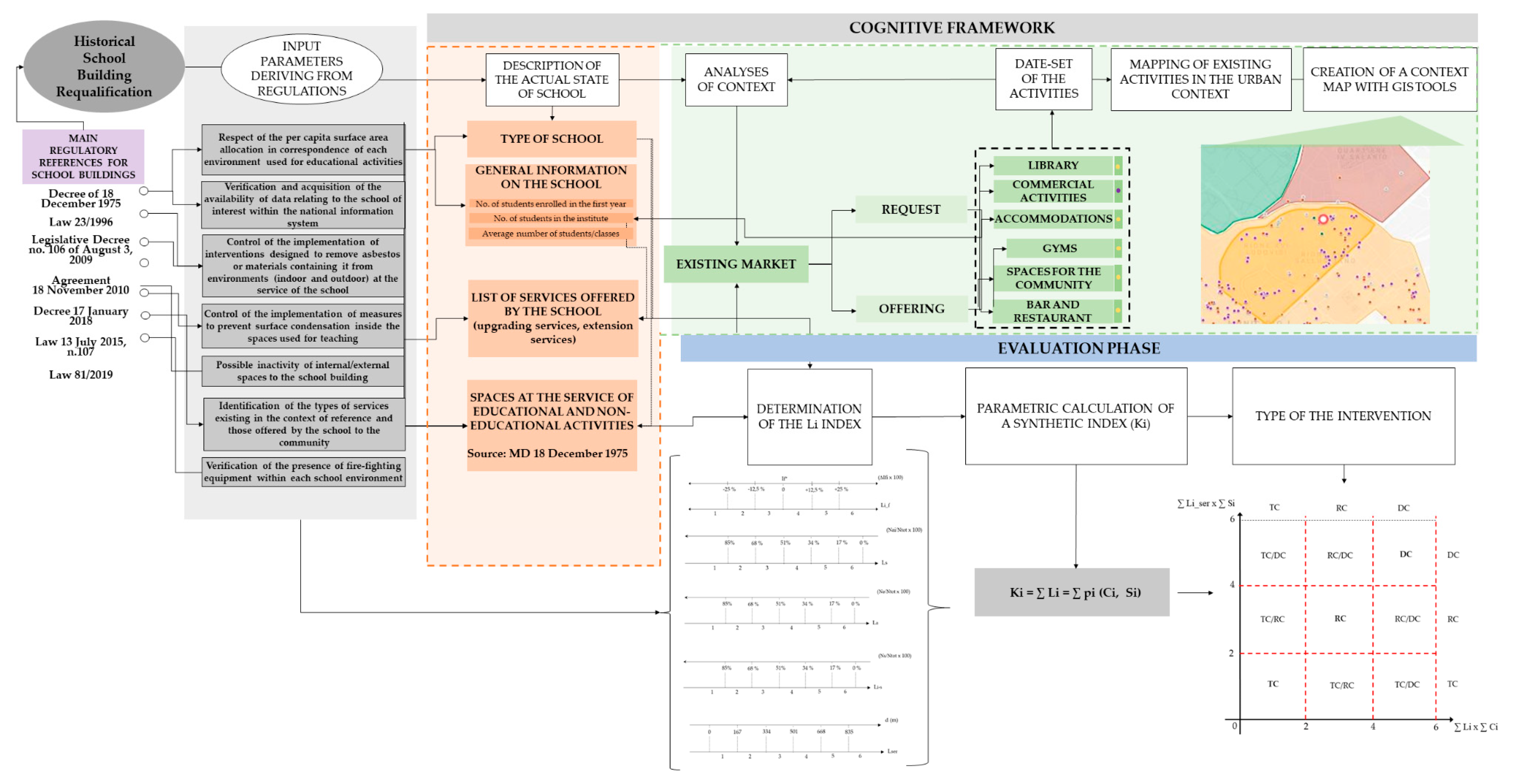
It is recognized, in Europe and elsewhere, that there is a need to implement sustainable urban intervention policies based also on the recovery of existing public real estate assets. In Italy, the schools are a significant part of public property. At this time (2019), many buildings destined for teaching need to be redeveloped, both from a structural and plant engineering point of view, and with regard to the management of the spaces available for teaching and social activities. Although, there have been many attempts by the legislator to regulate the modus operandi in the school construction field, it is clear that there is a lack of a unique regulatory system in which the technical and functional-managerial aspects relating to the same school are considered together. On this basis, with this study a multi-criteria evaluation protocol to support intervention planning for the redevelopment of existing school buildings is proposed. The study defines an evaluation framework with which we can establish the design priorities to be carried out in accordance with the building features and community needs. The evaluation framework is tested on a renewal project regarding a school building located in the historic center of Rome (Italy).
Keywords: urban sustainable development; historical school buildings; multi-criteria evaluation urban sustainable development; historical school buildings; multi-criteria evaluation