1. Introduction
Firms are central for transforming our societies and economies towards systems of sustainable production and consumption, i.e., accomplishing sustainable transition. Firms create and diffuse innovations in the form of new technologies, products, services and business models and contribute to the creation of new markets and industries, all of which is necessary for sustainable transitions to take place [
1]. Smaller innovative entrepreneurial firms—not least knowledge-intensive innovative entrepreneurial firms [
2,
3,
4]—are especially important for sustainable transitions; this type of firm often pursues radically novel solutions and attempts to drastically change markets and industries [
5,
6], thereby making important contributions to technological development [
7]. Entrepreneurs are also often driven by larger goals than just profits, including sustainable value creation [
8].
Transition to a sustainable future moreover relies upon collaboration amongst multiple diverse partners and has increasingly become recognized as a focal goal [
1]. In order to innovate, firms need to collaborate with external actors to augment their internal resources and knowledge base with external inputs; smaller entrepreneurial firms especially need collaboration to overcome the resource constraints resulting from their limited age and size [
9,
10,
11]. The broad notion of transition to a sustainable future is often divided into subproblems, such as the sustainable development goals (SDGs) outlined by the UN, but is also conceptualized as grand challenges (GCs). Grand challenges “by their very nature, require coordinated and sustained effort from multiple and diverse stakeholders towards a clearly articulated problem or goal” [
12] (p. 1881). Similarly, in the innovation public policy literature, Schot and Steinmuller [
13] (p. 1563) described transition as the third framing of policy, requiring focus on “emerging and open-ended coordination in the process of working together towards transformative change”, including experimentation in niches. A more specific line of literature, which we follow here, has analyzed how knowledge-intensive entrepreneurship and collective actions are needed in order to promote transition through collaboration [
4]. These authors argue that sustainability requires knowledge-intensive entrepreneurship (KIE) firms, as these firms are needed to commercialize and diffuse the novel solutions and innovations developed by specialized knowledge generated through collective action.
Being able to develop and introduce new innovative solutions is, however, not sufficient for either firms in general or for KIE firms; they must also be able to appropriate value from their innovations in order to recover their investments [
14]. The ability of these firms to appropriate value from their innovations therefore becomes important in order to successfully promote innovative solutions to transition problems. Specifically, KIE firms need to capture value from innovations sold on the market, where KIE firms translate ideas and specialized knowledge into innovations by taking risks and acting through market forces. To do so, firms need to invest in and establish suitable appropriability strategies by choosing and implementing different appropriability mechanisms for protecting both the innovation itself and the increased rents due to research and development [
15]. However, developing appropriability strategies may be particularly difficult for small, young firms, such as KIE firms, due to their lack of financial resources and relevant complementary assets that could be used to protect their assets [
7,
15,
16].
There is a tension between collaboration for innovation and the need to make profits within a market economy, commonly referred to as the openness paradox. The paradox is that firms need collaboration to innovate but at the same time also need to protect their internal knowledge and intellectual assets from imitation to safeguard their ability to appropriate value from those innovations [
17]. Thus, understanding how KIE firms combine collaboration with appropriability strategies is critical for innovation in light of this paradox between the simultaneous need for openness and protection. We expect that the openness paradox is especially pronounced for KIE firms since their aforementioned resource constraints lead to an inherent need for external collaboration in order to access such assets [
9,
10,
18] and also because of their limited ability to use formal and resource-demanding protection mechanisms, such as patents [
7,
15].
There are a few studies of small young firms that investigate, on the one hand, the association between appropriability strategies and broader collaboration patterns [
16,
19] and, on the other hand, appropriability strategies and innovativeness [
7,
19]. There is, however, a general lack of studies that analyze these three dimensions together [
17,
20]. To the best of our knowledge, there are no existing studies of the relationship between collaboration, appropriability strategies and innovation performance, neither for small, young firms in general nor for KIE firms specifically. It is therefore important to further investigate how the openness paradox affects KIE firms, as this will shed additional light on how innovation with external partners is organized in such firms and how this together with their appropriability strategies impact, positively or negatively, innovation performance.
The aim of this paper is to investigate how knowledge-intensive entrepreneurial firms can overcome the openness paradox by choosing a combination of collaborative partners and appropriability strategies that support their innovativeness. This is an important problem since stimulating and supporting the creation of radical innovations is a vital necessity for sustainable transition to take place [
1,
11]. We explore the explicit considerations of KIE firms in relation to their choice of collaborative partners and the different types of appropriability strategies, ranging from formal appropriability mechanisms protected by law to informal appropriability mechanisms, such as secrecy, lead time and complexity. Thus, we explore the relationship between openness, appropriability strategies and innovation performance in KIE firms.
We first empirically study how KIE firms’ choice of collaboration partners and their assessment of their importance are associated with their choice of appropriability strategy. These strategies range from formal (such as patents and confidentiality agreements) to informal protection mechanisms (such as lead-time advantages and secrecy). We then investigate how the combination of the above two choices is associated with the innovativeness of KIE firms. Here, we focus on collaboration with three specific types of external collaborators—suppliers, universities and competitors—since the choice of partner type can significantly impact the nature of the innovation generated [
21], as well as influence the choice of appropriability strategy [
22]. Thus, we expect that collaborations with suppliers, universities and competitors will be associated with different appropriability strategies as well as different degree of innovativeness. We empirically analyze a sample of more than 2450 young and small KIE firms, drawing on data from a cross-European survey [
23]. KIE firms constitute an appropriate empirical phenomenon for our purpose since they base their competitiveness on the development and application of new knowledge to innovations [
2,
3], implying that this type of firm has a specific need for both collaboration and appropriability strategies in order to innovate and profit.
This paper contributes to our understanding of how transition to a more sustainable future can be achieved by investigating the key issue of how to promote collaboration for innovation amongst multiple, diverse partners [
1,
12,
13], from the perspective of KIE firms [
4]. While the literature on sustainable transitions assumes and highlights the need for collaboration [
1], there are currently few insights on how to stimulate collaboration that support appropriation of innovation. We investigate how KIE firms can overcome the openness paradox [
17,
24] by choosing a combination of collaborative partners and appropriability strategies that supports their ability to create more radical innovations, an approach for which there is currently little evidence in the literature [
17,
20]. Supporting the creation of radical innovations is fundamental for achieving sustainable transitions through entrepreneurship [
1,
5,
13]; the openness paradox is therefore an important barrier to sustainable transitions [
1]. Our study thus provides important policy implications for how to promote future sustainable transition, as well as a foundation for future lines of research regarding entrepreneurship and sustainable transition [
5]. By focusing upon knowledge-intensive entrepreneurship, collaboration and appropriability, this paper also contributes to the interesting, but broader, question of the role of market forces in terms of appropriability in public policy in relation to transition [
13].
4. Results
Since our dependent variables (
Formal/Informal protection mechanism,
New-to-the-market/world innovation) were binary, we employed probit regressions for our estimations. Following common practice, we report the average marginal effects (AMEs) instead of the coefficients of the probit models in order to ease the interpretation of the results [
42].
Table 2 presents the results from bivariate probit models concerning the relationship between the importance of suppliers, competitors and universities as external knowledge sources and the use of formal/informal protection mechanisms, while taking the correlation between formal and informal mechanisms into account.
Suppliers was only significantly, and positively, associated with Informal protection mechanisms, suggesting that the increased importance of this type of external collaborator did not influence the choice of formal protection mechanisms, such as patents. In contrast, the variable Competitors was only significantly, and positively, associated with Formal protection mechanism.
Universities, on the other hand, had a positive and significant effect on both dependent variables, indicating that the more important collaboration with universities was for these firms, the higher the likelihood that they used both formal and informal protection mechanisms. Universities were the only partner type that was positively and significantly associated with the combination of both formal and informal protection mechanisms. This regression was excluded from the paper, since our focus here was on comparing the choice of formal and informal protection mechanisms, but the results are available upon request. The AME was substantially larger for
Formal protection mechanisms than for
Informal mechanisms (and both these dependent variables had a similar base probability, cf.
Table 1), suggesting that increased importance of university collaboration was to a larger extent associated with a higher likelihood of using formal protection.
Table 3 presents the results from probit models on the degree of innovativeness and its association with the different types of appropriability strategies and collaborations partners. The variable
Informal protection mechanisms had a positive and strongly significant effect on the probability of
New-to-the-market innovation, while
Formal protection mechanisms did not have a significant association with this variable.
In contrast, Formal protection mechanisms had a positive and strongly significant effect on New-to-the-world innovation, while Informal protection mechanisms had a smaller and weaker effect on the same. This suggests that the choice of using formal or informal protection mechanisms was strongly related to the degree of innovativeness of the generated product or service of the sampled young small firms; when generating innovations that were new to the market, it sufficed to use informal protection mechanisms, such as secrecy, but for generating innovations that were new to the world, these firms were more prone to use formal mechanisms, such as patents.
Moreover,
Table 3 shows that the effect of
Suppliers was positive and significant on
New-to-the-market innovation, but negative and significant on
New-to-the-world innovation. Thus, young small firms that collaborated more with suppliers were more likely to generate innovations that were new to the market, but the increased importance of these external sources at the same time decreased the likelihood of generating innovations new to the world.
The variable Competitors, on the other hand, had a negative, but nonsignificant, effect on both dependent variables. In contrast, Universities had a positive and significant effect on New-to-the-world innovation but was not significantly associated with New-to-the-market innovation; in other words, the higher the importance of universities as knowledge sources, the higher the likelihood of generating innovations that were new to the world.
Marginal effects of interaction terms in probit estimations were nonlinear in nature and therefore difficult to interpret. Following common practice, we therefore do not report the interactions between
Formal/Informal protection mechanisms and the different partner types in
Table 3, but instead provide graphical representations [
42]. Due to limited space, we chose only to report the interactions for
Informal protection mechanisms with
New-to-the-market innovation and for
Formal protection mechanisms with
New-to-the-world innovation, since these were the strongest associations according to the estimations in
Table 3.
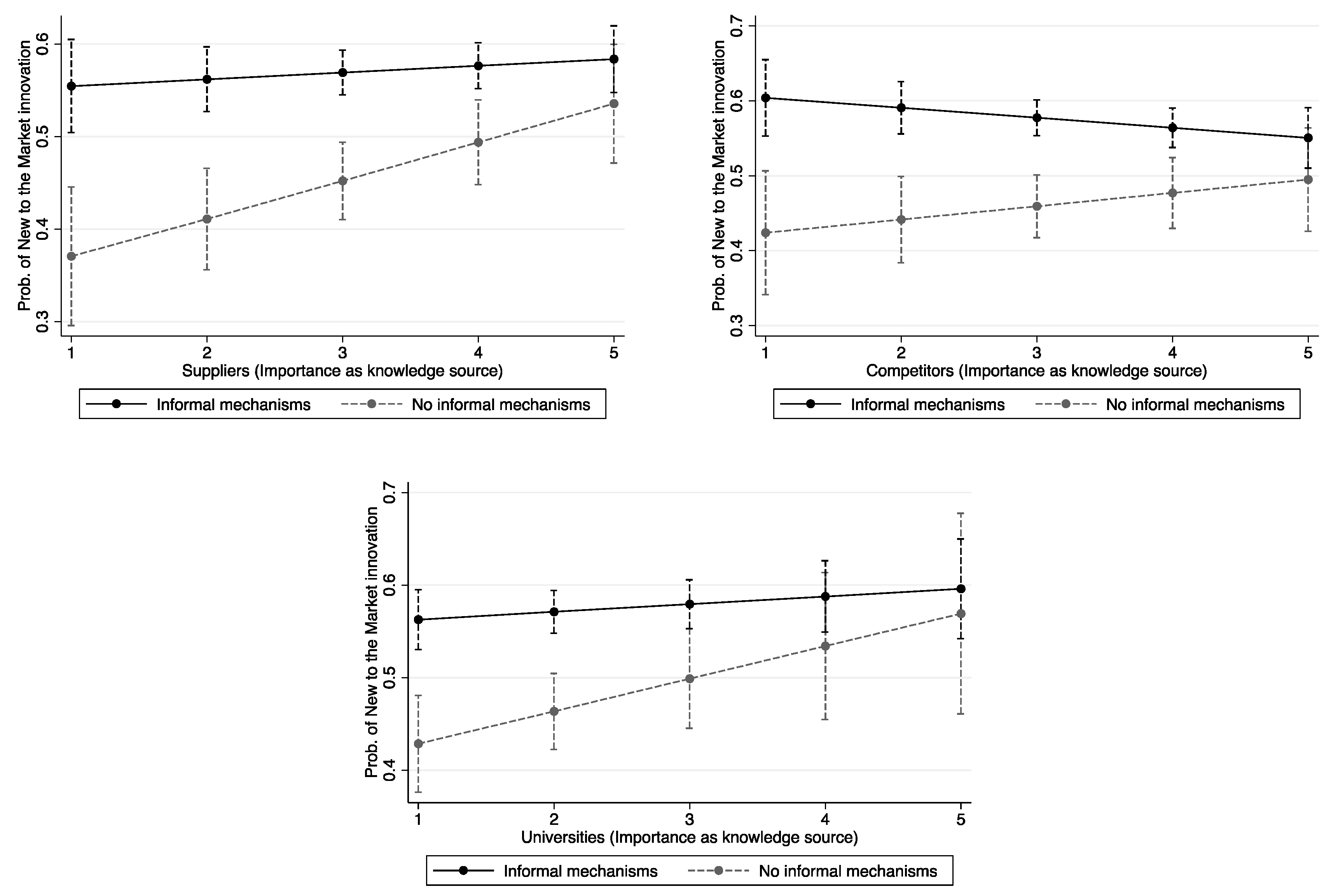
Figure 1 plots the predictive margins of the use and non-use of
Informal protection mechanisms with regard to
New-to-the-market innovation against the importance of the three partner types. The figure shows that the use of
Informal protection mechanisms was generally associated with a higher probability of
New-to-the-market innovation. However, an increase in the perceived importance of all three types of external knowledge sources was associated with increasing margins for firms not using informal mechanisms. Thus, the positive effect of
Informal protection mechanisms decreased with the higher importance of collaboration partner and became insignificant at higher values. This suggests that the more that KIE firms drew on these knowledge sources, the less important the choice of informal protection mechanisms, such as secrecy, was in generating innovations that were new to the market. This further suggests that KIE firms creating new-to-the-market innovations could to some extent substitute the use of informal protection mechanisms with closer (more important) collaboration with suppliers, competitors and universities. When instead estimating the effect of
Formal protection mechanisms on
New-to-the-market innovation, we found similar but less pronounced patterns for the interactions with both
Suppliers and
Universities.
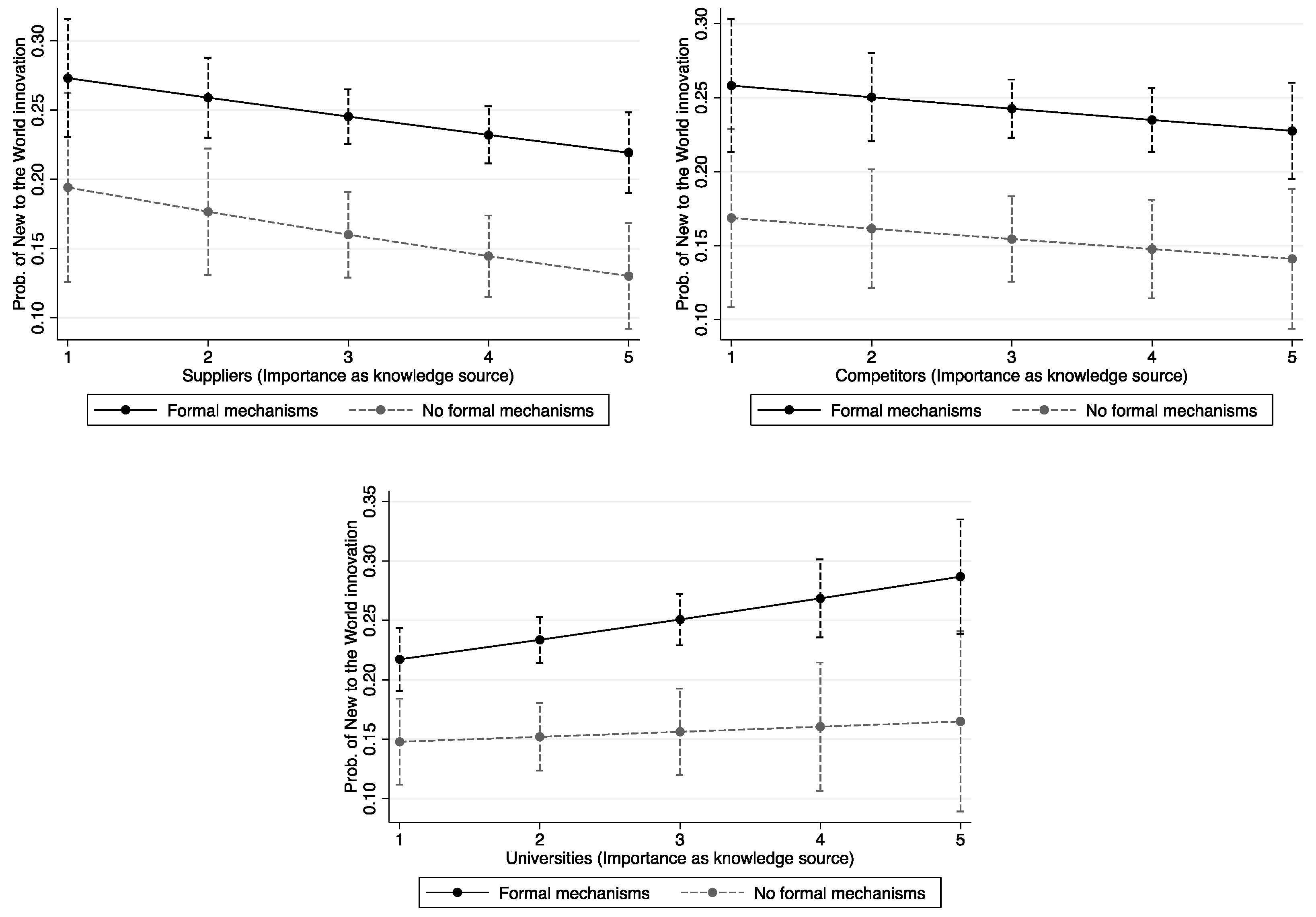
Figure 2 plots the predictive margins of the use and non-use of
Formal protection mechanisms with regard to
New-to-the-world innovation against the importance of the three partner types. The figure shows that the use of
Formal protection mechanisms was associated with a higher probability of
New-to-the-world innovation for all three partner types. The use of formal protection mechanisms continued to be associated with a higher probability of
New-to-the-world innovation at higher values of
Suppliers and
Competitors, and for these partner types there was no apparent interaction effect between importance of collaboration and
Formal protection mechanisms. In other words, while the choice of using formal protection mechanisms was strongly linked to a higher likelihood of generating new-to-the-world innovations (see
Table 3), this higher likelihood was more or less the same no matter how much the firm drew on suppliers or competitors as external knowledge sources.
In contrast, an increase in the perceived importance of Universities seems to be related to an increase of the effect of Formal protection mechanisms. That is, the use of formal protection mechanisms and a higher importance of universities as an external knowledge source, and especially a combination of the two, were related to a higher likelihood of generating innovations new to the world When instead estimating the effect of Informal protection mechanisms on New-to-the-world innovation, we found a somewhat decreasing effect when interacted with Suppliers but no pronounced interaction effect together with Universities.
5. Discussion and Conclusions
This paper investigated the relationship between collaboration, appropriability strategies and innovation performance in KIE firms in light of the fact that sustainable transitions require collaboration between multiple, diverse actors in order to provide innovative solutions to grand challenges. This paper contributed to a transition to a more sustainable future by investigating the key issue of how to promote collaboration for innovation amongst multiple, diverse partners, from the perspective of KIE firms. We investigated this issue by studying how KIE firms can overcome the openness paradox [
17] by choosing a combination of collaborative partners and appropriability strategies that support their ability to innovate. This paradox is an important barrier to sustainable transitions and overcoming it is crucial for supporting and creating new radical innovations, which are needed to achieve a more sustainable future [
1].
We are particularly interested in how KIE firms solve the paradox of openness—how they are able to both collaborate and benefit financially from their innovations—because previous literature suggests that these firms may play a particularly important role in transforming the economy. With regard to entrepreneurial firms more generally, these young innovative firms on the one hand make important contributions to technological development and innovation [
7] but on the other hand face particular difficulties appropriating the value from their innovations due to their resource constraints [
7,
15,
16]. Moreover, understanding how they solve collaboration problems matters because entrepreneurial firms may especially suffer from the openness paradox [
17], since their resource constraints lead to an inherent need for external collaboration [
9,
10,
18], but also to a limited ability to employ suitable appropriability strategies [
7,
15].
In this paper, we built on the existing literature concerning the interplay between collaboration and appropriability and between appropriability and innovativeness [
7,
16,
19]. We did so by investigating how the choice and importance of three types of collaboration partners influenced the choice of formal and informal protection mechanisms, as well as how the combination of these two choices in turn was associated with the degree of innovativeness in KIE firms. The findings in this paper demonstrate that KIE firms’ choice of external collaborative partner (and their perceived importance) was closely related to their choice of appropriability strategy (formal/informal protection mechanisms). Close collaboration with suppliers was found to be associated with a higher likelihood of using informal mechanisms but not with formal mechanisms. Suppliers commonly provide access to market or production knowledge [
21,
29,
30] and such knowledge may often be of a more generic character. The preferred protection mechanism may have therefore been based more on a need to protect not the knowledge itself, but rather the market application of this knowledge. Informal protection mechanisms, such as secrecy and lead-time advantages, may in this way be the most suitable choice for collaboration with suppliers. This also resonates with the finding that both collaboration with suppliers and the use of formal mechanisms were positively related with the creation of new-to-the-market innovations.
In contrast, our findings also point out that close collaboration with competitors was instead only (positively) associated with the use of formal protection mechanisms. This was arguably due to the fact that collaboration between rival firms is uncertain and risky, commonly entailing the exchange of proprietary knowledge [
21,
32]; this increases the need for formal protection, e.g., through patents, to safeguard internal know-how from collaboration partners.
We moreover found that only close collaboration with universities was positively associated with the use of both informal and formal protection mechanisms. When universities are the source of the external knowledge that young small firms draw on for their innovations, the knowledge in itself is likely to be of a more exploratory and scientific character [
21,
34,
35]. In these cases, formal protection of the knowledge may be the most appropriate choice, as the specific areas of market application may still be under consideration. This was also further supported by the finding that university collaboration was more strongly associated with formal mechanisms, and that the use of formal protection mechanisms was positively related to the creation of new-to-the-world innovations.
These findings regarding the association between collaboration and the choice of appropriability strategy are largely in line with results from the few existing studies on this topic for small firms. Leiponen and Byma [
16], for instance, showed that using horizontal (e.g., competitor) collaboration was associated with perceiving speed to market (i.e., lead-time advantage) as an important protection mechanism, while only those firms collaborating with universities considered patents as the most important mechanism. Their study, however, used broad categories of collaboration types (e.g., vertical collaboration, by collaborating with either clients or suppliers) and did not differentiate the degree to which this collaboration was important for the firm. In contrast, we have here shown that the choice of formal or informal mechanisms was related not only to the type of partner but also to how important the firm perceived the collaboration partner to be, or put differently, to how closely they collaborated.
Our study provides important policy implications for how to support and promote future sustainable transitions and also establishes a foundation for future research directions regarding entrepreneurship and sustainable transition [
1,
12]. We show that the use of informal protection mechanisms, such as secrecy or lead-time advantages, can to a large extent be substituted by closer collaboration with suppliers, competitors and universities when creating innovations that are new to the market. Our results furthermore show that formal protection mechanisms, such as patents and confidentiality agreements, are always advantageous when creating new-to-the-world innovations and cannot be substituted by closer collaboration with suppliers and competitors. Moreover, our findings indicate that there are complementary effects between the use of formal protection mechanisms and closer collaboration with universities for new-to-the-world innovation. We have thus demonstrated how different partners and different appropriability strategies are more, or less, relevant to generating the breakthrough knowledge and radical innovations needed to transform society into one with a sustainable future.
One policy implication of our results when considered with regard to future sustainable transition is thereby that policymakers need to be aware of and take into account the need to carefully match collaborative partners and the proper appropriability strategy when designing initiatives to promote sustainable transitions through innovation in small entrepreneurial firms. Policy makers must facilitate adaptable support schemes for entrepreneurial firms, which aid appropriability depending on the composition of collaboration and innovation. When pursuing new-to-the-market innovations, entrepreneurial firms need incentives to collaborate and support in navigating informal protection mechanisms and conditions for establishing close collaboration. Furthermore, when pursuing new-to-the-world innovation, entrepreneurial firms need support in establishing formal protection mechanisms, which are often highly demanding for small resource-constrained firms. Our findings suggest that university collaboration and the use of formal protection mechanisms may be especially important to support and promote, since these relate positively to new-to-the-world innovations. Thus, while collaboration in the generation of new market and technological knowledge is needed for grand challenges, caution in policy and innovation studies is needed with regard to which types of partners to involve in such collaboration and under which circumstances.
We further suggest that KIE firms may be especially necessary in making advances in knowledge to solve large societal problems but at the same time particularly disadvantaged in collaboration. In addition to the general problems of entrepreneurial firms, KIE firms are leading firms in their industries and will have to be content with more knowledge spillovers (i.e., less possibility of generating rents from innovations) as compared to follower firms [
24]. Hence, “emerging and open-ended coordination in the process of working together towards transformative change” [
13] (p. 1563) may not be possible.
There are several limitations to this study which open up future trajectories of research. Due to the nature of survey data, we only showed the association between collaboration, appropriability strategies and innovation performance; further research is needed in order to establish causal interpretations of these relationships. Future research could also address, in a more fine-grained manner, whether and how the relationship between openness, appropriability strategies and innovation performance of KIE firms remains the same across different types of industries and service sectors. Continuing to develop a more realistic and empirically validated view of the opportunities and limits of collaboration in relation to radical and incremental innovations is required in order to achieve societal-wide knowledge to accomplish transitions. Finally, while we have here focused on collaborating in general, future research should address these issues with regard to collaboration with new partners since this may be especially important for achieving radical innovations and future sustainable transitions.