


Abstract
In the context of a circular economy, one can observe that (i) recycling chains are not adapted enough to the end-of-life products they have to process and that (ii) products are not sufficiently well designed either to integrate at best their target recycling chain. Therefore, a synergy between product designers and recycling-chains stakeholders is lacking, mainly due to their weak communication and the time-lag between the product design phase and its end-of-life treatment. Many Design for Recycling approaches coexist in the literature. However, to fully develop a circular economy, Design from Recycling also has to be taken into account. Thus Re-Cycling, a complete circular design approach, is proposed. First, a design for recycling methodology linking recyclability assessment to product design guidelines is proposed. Then, a design from recycling methodology is developed to assess the convenience of using secondary raw materials in the design phase. The recyclability of a smartphone and the convenience of using recycled materials in a new cycle are both analyzed to demonstrate our proposal. The Fairphone 2® and its treatment by the WEEE French takeback scheme are used as a case study.
1. Introduction
Proper management of waste is a key point for avoiding pollution of environmental matrices, such as soil and groundwater, and to avoid contaminant emission in the atmosphere [1,2]. The actions implemented by legislation to encourage the recovery of end-of-life (EoL) products (i.e., waste) can be divided into two main categories. The first one consists of setting up waste treatment chains [3], and the second one aims to prevent the generation of waste through better product design [4,5].
A performance review of extended producer responsibility (EPR) treatment chains has shown that some are insufficiently adapted to the waste they process; on the other hand, products are not systematically designed to best match their chain [6]. This lack of synergy between the product and its treatment chain is due to the weak communication between designers and recovery-chain stakeholders [7]. Moreover, the time-lag between the product design and its end-of-life treatment may weaken this link as well as the geographic performance disparity between the stakeholders involved in the chain [8,9]. This link between design and end-of-life stakeholders is therefore essential to ensure that the product is better recovered when it becomes waste.
This article presents Re-Cycling, an innovative indicator-based design approach that includes both design for recycling and design from recycling in a combined approach that seeks to improve circular economy by creating a direct and bijective link between product designers and EoL chain stakeholders. The article focuses on the designer’s point of view.
2. Materials and Methods
2.1. Re-Cycling: Circularity Management by Both Design and End-of-Life Stakeholders
As previously mentioned, both design and end-of-life phases of the product lifecycle must be connected to ensure the circularity of components and materials. Therefore, designers must take this into account by designing for and from the end-of-life. The corollary is that stakeholders of the product’s end-of-life must also change their practices to work from and for the design. The possible approaches and exchanges between design and EoL stakeholders are illustrated in Figure 1.
Figure 1.
Possible approaches and exchanges between designers and EoL stakeholders.
2.1.1. Product Designers Approaches
From the product designer’s point of view (see Figure 1), two approaches can be followed:
- Design for EoL is the most known and the most used. It aims (i) to improve the product so that it can be recovered in the best possible way when it becomes waste and (ii) to promote the elimination of residues that could not be recovered;
- Design from EoL is concerned with the integration of artefacts from the end-of-life treatment chain into a new product (e.g., use of recycled materials instead of virgin ones, reuse of modules or parts extracted during disassembly, etc.).
2.1.2. End-of-Life Stakeholders Approaches
From the EoL stakeholders’ point of view (see Figure 1), two approaches can be followed:
- EoL from design aims to integrate the information accrued from the product design into the operating mode of the chain or its treatment processes to increase the functional, material, and energy recovery;
- EoL for design is concerned with the end-of-life treatment pathway that becomes a supplier of artefacts (i.e., product, module, part, or material from a recovery pathway), which must meet the designer’s specifications.
2.1.3. Focus of the Article
From the designer’s point of view, assessing the product’s recoverability seems to be the first way to develop or consolidate the link with the EoL chain stakeholders. However, there is a weak correlation between recoverability (theoretical EoL treatment performance) and recovery (real performance) of a product. Indeed, studies have shown a discrepancy between the potential recovery of a product (evaluated from the design step) and what the chain actually recovers. This difference is mainly due to the lack of information available by the designers for their analysis.
A way to improve this link is to create design tools that integrate the EoL notion. In this regard, several tools have been identified in the literature [10]. However, they are proved to be insufficiently used in practice. Despite the aforementioned problems, the assessment of product’s recoverability remains today the assessment tool mainly used in product design [11].
In addition, designers involved in a design-for-EoL approach have to design their product to best integrate the EoL treatment chain. To help them achieve this, a great number of design-for-EoL guidelines are available in the literature [12]. However, they mainly consist of “design advices” among which it is difficult to choose the most convenient. For this reason, we are interested in developing a design approach to determine easily and objectively which guideline is the most appropriate for achieving the desired objective or the most urgent according to the reality of the EoL treatment chain.
Another way to strengthen the link with the EoL chain stakeholders is to create design-from-EoL approaches. Indeed, the recovery chain provides several products from different treatment pathways. For example, the functional recovery pathway can provide either the whole product (full functional recovery) or modules and parts (partial functional recovery). In addition, the material recovery pathway provides recycled materials. Finally, the energy recovery pathway provides electricity, thermal energy, or gas. All these coproducts coming out of the end-of-life recovery processes must meet the needs of the potential clients (among which are designers) who will buy and use them.
Thereby, we also focus on the designer as a customer of the recycling chain to stimulate his interest in integrating recycled materials into a new product. These materials must therefore meet the requirements of the design specifications. However, note that any other artefact could also be considered (e.g., any refurbished part or module that may incorporate a new product). Nevertheless, the classic example of secondary raw materials (i.e., recycled materials) will provide a more accurate way of defining our approach.
Promoting the use of recycled materials in product design is thus a fundamental strategy for achieving a circular economy. For this reason, we are also interested in developing a design approach to determine the convenience of using recycled material (i.e., feasibility and suitability) and thus simplify the process of material selection. This proposal falls within the scope of a design-from-EoL approach.
The design-for-recycling approach is first presented (Section 2.2). Then, the design-from-recycling one is detailed (Section 2.3). Both proposals are then tested with a case study on the results section (Section 3) and lastly commented on the discussion section (Section 4).
2.2. Design-for-Recycling: Proposition of an Indicator-Based Approach
Today, product designers mainly use the assessment of product’s recoverability and the evaluation of environmental impacts to know where design efforts should be directed. However, although recoverability indicators match the elements of validation of regulatory constraints, there are very few (if any) with the action levers associated with the design guidelines [6].
To simplify decision making, it is necessary to know whether the product characteristics to be modified with these levers are consistent with a target or a reference. For this reason, we are interested in linking product assessment to design-for-recycling guidelines by proposing an indicator-based approach.
2.2.1. Method Description
The proposed design-for-recycling approach seeks to allow product designers to identify the product characteristics that are the least efficient in terms of recycling, and to provide the most appropriate guidelines to improve them. It is composed of the four steps listed in Figure 2.
Figure 2.
Schematic representation of the proposed design-for-recycling approach.
The construction of the design-for-recycling approach is carried out in four steps. First, the design-for-recycling guidelines and the product designer’s action levers are identified (see Section 2.2.2), then a grouping of product designer’s action levers is made (Section 2.2.3), later the indicators associated with product designer’s action levers are selected (Section 2.2.4), and finally, the indicator-based design-for-recycling guidelines are presented (Section 2.2.5).
2.2.2. Identification of Design-for-Recycling Guidelines and Product Designer’s Action Levers
Material recovery aims to preserve the added value of various materials by ensuring their compatibility and by minimizing sorting rejects [13]. It aims at recovering all the material of the product as secondary raw material. Therefore, material flows form a closed-loop (as promoted by the circular economy), thus ensuring the preservation of primary raw materials.
The proper functioning of recovery pathways is impacted by several issues: on the one hand, those associated with the pre-treatment stages (decontamination, disassembly, shredding, and sorting), and on the other hand, those associated with the treatment pathways (e.g., recycling). The performance of each stage is thus affected by various factors, the main ones of which are listed below:
- decontamination depends mainly on the identification time, the clarity and durability of the instructions, and the dismantling time;
- dismantling is also affected by the identification time and the dismantling time;
- shredding is impacted by the fragmentation capability of the product as well as the energy required for this fragmentation;
- sorting depends on the difference in physical properties between each of the shredded materials (e.g., magnetism of ferrous metals, density difference between materials, etc.) and is highly dependent on shredding quality;
- recycling is mainly affected by material’s ability to be regenerated, as well as its compatibility with the other materials to recycle, but also with (i) different grades of the same material, (ii) impurities that were not separated during the shredding/sorting phase, and (iii) its surface treatments [13].
Design for material recovery is thus concerned with modifying the product to increase recovering potential and regenerating its materials based on the knowledge of EoL chain processes and its performances [6]. A review of design-for-recycling guidelines will be presented in Section 2.2.5.
The design-for-material-recovery guidelines have been organized into seven categories according to the intended scope. The first five (product, components, materials, fasteners, and cables and connectors) relate to design choices; the last two (marking and labelling, information) concern the transmission of information to the different stakeholders involved in the product’s end-of-life (i.e., from the last user of the product to the stakeholders in the EoL chain) to make the treatment process more efficient. The identified categories and action levers are the following:
- Product. Action levers depend solely on the characteristics of the product, such as its complexity [12,14,15,16], modularity [12,15,16], and disassemblability [12,16,17,18];
- Components. Action levers are here centered on the identifiability [12,13,15,16,19], accessibility [12,15,16,20], and disassemblability [12,13,15,16,17,20,21] of components containing non-recyclable, non-compatible, toxic, precious, rare, and critical materials;
- Materials. This category is mainly concerned with the selection of materials. The levers identified are the diversity [12,15,16,19], compatibility [12,15,16,17,19,20,21], recyclability [12,15,16,17,18], toxicity [14,17,18], and circularity [16] of materials, and also the use of recycled ones [12,15,16];
- Fasteners. In this category, action levers are not only associated with the fasteners themselves (complexity of the fastening system [12,14,15,16] and their diversity [12,16], identifiability [12,15,16,17], accessibility [12,15,16,17,18,20], disassemblability [12,15,16,17,18,19,20], and durability [18]), but also with the dismantling tools (tools’ diversity [12,15] and types [12,14,15,16,18,20]). Therefore, this category includes action levers that seek to simplify the disassembly of fasteners;
- Cables and connectors. The complexity of the wiring system [12,15] is the only action lever;
- Marking and labelling. The action lever is the implementation of identification systems for recyclable and/or problematic components and materials [12,15,16,17,19,20,21];
- Information. This category deals with the communication of useful information about the end-of-life of the product to both users and stakeholders of the EoL chain [17].
The technical and environmental considerations referred to in the previous paragraph are not the only ones to be taken into account. Indeed, the regulatory requirements must also be considered to have an overall view of all the elements that must be validated by designers during a design-for-EoL process.
Within this context, designers must ensure that the recovery potential of their products is in line with the recovery targets imposed by regulations (e.g., [22,23]). Additionally, for certain product categories, the legislation prohibits or restricts the use of several substances [16]. The summary of regulatory constraints to be taken into account in design will be presented in Section 2.2.5.
It should be noted that in this section, we no longer seek to identify the action levers, but rather the verification elements, which are the indicator (or any other tool) enabling us to confirm that the regulatory constraint has been complied with.
Regulatory constraints have been divided into two categories according to the intended scope. The first one relates to the extent to which the product can be potentially integrated by the recycling chain, and the second one to the (potential) recovery requirements imposed on manufacturers. The identified action levers relate to the following elements:
- Product. Reusability, recyclability, and recoverability of the product;
- Materials. Maximum tolerated concentration of harmful substances.
The analysis of design-for-EoL approaches has led to the identification of 23 action levers and three regulatory constraints. A graphical summary of these action levers and regulatory constraints is shown in Figure 3. Most of the action levers (21) are centered on design choices. The others focus on the transmission of information.
Figure 3.
Graphical summary of the identified action levers and regulatory constraints.
2.2.3. Grouping of Product Designer’s Action Levers
It was observed that some of the action levers were related between them and could be used to improve another one. Because of this, we decided to group the following action levers:
- Disassemblability of the product: (i) accessibility of components, (ii) accessibility of fasteners, (iii) complexity of the product, (iv) complexity of the wiring system, (v) complexity of the fastening system, (vi) disassemblability of components, (vii) disassemblability of fasteners, (viii) diversity of fasteners, (ix) diversity of disassembly tools, (x) durability of fasteners, (xi) modularity of the product, (xii) identifiability of components, (xiii) identifiability of fasteners, and (xiv) standardization of disassembly tools
- Recyclability of the product: (i) compatibility of materials, (ii) diversity of materials, and (iii) recyclability of materials
It is to be noted that the action lever recyclability of the product was added to the 23 that were originally identified. A graphical summary of the main action levers is shown in Figure 4.
Figure 4.
Grouping of product designer’s action levers.
2.2.4. Selection and Definition of the Indicators Associated with Product Designer’s Action Levers
As mentioned above, it is important to know whether the characteristics of the product we want or need to change are in line with an objective or a reference. Therefore, this section focuses on defining the performance indicators and indexes associated with the action levers for design choices related to recyclability. This will be followed by the description of the guidelines to be used if the action lever is identified as non-performing.
To compare the performance of the action levers, the value of the performance indicators must be expressed on the same range of values. Thus, we define that indicators and indexes used to assess the performance of the action levers must have the following characteristics:
- the result value must be within the range of 0 to 1;
- the value of 1 must correspond to the best score and 0 to the worst.
Indicators that do not have this form will have to be normalized.
When the aggregation of indicators is necessary, Maurin’s index construction method [24] will be used as a reference. In his analysis, the fundamental, symmetric, algebraic, and homogeneous functions from first to nth degree were studied. He found that:
- for the first-degree function, the variation in each indicator reflects in the same way on the index;
- for the nth degree function, it was observed that for the minimum value of one of the indicators, the partial derivative of the index with respect to this indicator is the highest and for the maximum value, the derivative is the lowest. The function is then sensitive to the lowest values;
- for the intermediate symmetrical functions (degree 2 to n − 1), the same behavior as for the nth degree function has been identified.
Unlike Maurin’s index, we want that the variation of each indicator has the same impact on the index. Therefore, we do not seek to give sensitivity to the highest values as in the original study. We prefer that the variation of each indicator occurs in the same way in the index. Therefore, the average function has been chosen (first-degree function).
- Recyclability of the product
As previously mentioned, three action levers associated with the recyclability of the product have been identified: compatibility, diversity, and recyclability of its materials. An index allowing the indicators associated with these three parameters to be aggregated is therefore necessary. The product’s recyclability index is defined as an average as follows:
with : recyclability of the product; : compatibility of materials; : diversity of materials; : recyclability of materials; : number of aggregated action levers.
- Compatibility of materials
The material compatibility action lever addresses the chemical compatibility of materials during recycling. Two materials are thus incompatible if the properties (mechanical or other) of the material to be recycled decrease if both are recycled together. Some indicators of material compatibility have been identified in the literature:
- Ishii et al. [25] propose to assess the compatibility of materials in a semi-qualitative way. The proposed indicator defines six levels of compatibility: very compatible (1), compatible (0.8), some level of compatibility (0.6), incompatible (0.2), hazardous (0), and no information (0.5). The allocated score is within the range [0,1];
- Qian et al. [26] propose to use matrices to easily visualize the compatibility information. Compatibility is divided into four levels: most compatible, some compatible, limited compatible, and no compatible. Here, the value of the indicator is not numerical, but a graph indicating compatibility degree by zones;
- Pahl et al. [20] propose an indicator similar to that of Qian et al. Compatibility of materials (plastics) is classified on four levels: compatible, limited compatibility, compatible in small quantities, and not compatible. As for the indicator of Qian et al., the value provided by this indicator is graphical and not numerical;
- De Aguiar et al. [27] propose a compatibility indicator similar to the previous ones. They propose to classify material compatibility into four levels: same material (1), compatible materials (2), low compatibility materials (3), and non-compatible materials (4). The indicator’s range is therefore between 1 and 4.
All the identified indicators give a semi-quantitative score of the compatibility between two materials. They could all (with minor modifications) be used in our approach.
A new indicator based on the identified indicators is proposed. Pahl et al.’s compatibility indicator was chosen as the starting point for the construction of ours, because it was considered the most appropriate (due to its ranking). The following modifications were made:
- the compatibility values are expressed in a similar way to those proposed by Ishii et al. so that the provided value is a number (and not a graph). The value is thus contained in the interval [0;1] so the interpretation remains the same as the one adopted for all indicators (i.e., 0 being the worst value and 1 being the best);
- the situation where the designer has no information, proposed by Ishii et al., has been added.
The indicator of compatibility between two materials is defined in Table 1.
Table 1.
Indicator of compatibility between two materials.
In our approach, the compatibility assessment does not stop at the comparison of two materials. Indeed, material’s compatibility must be assessed for a module or a multi-material part. Therefore, compatibility must be assessed with all the other materials contained in the studied module or part. However, an index capable of assessing the compatibility of one material with all the others (with which it will be recycled) is missing. An aggregation of compatibilities is therefore necessary. The compatibility index of a material is thus defined as an average function as follows:
with : compatibility of the ith material; : compatibility between the ith and the jth material; : number of materials.
It is to be noted that there are two reading modes for compatibility analysis:
- the first mode corresponds to the line reading (Figure 5a). It shows the compatibility of our material as one of the main materials (i.e., as a material to be recycled);
- the second mode corresponds to the column reading (Figure 5b). It shows the compatibility of our material as one of the secondary materials (i.e., as an impurity that could compromise the recycling of the main material).
Figure 5.
Reading modes of the material’s compatibility matrix: (a) Compatibility as main material; (b) Compatibility as secondary material. * Material selected for the study.
We can then define, for each material, a compatibility as main material () and another one as secondary material (). The material compatibility score () is assigned according to whether the material is considered as a main or a secondary material in its specific recycling chain. When this information is not available, the worst of both scores is selected. An overall compatibility score () can finally be calculated as the average of the compatibility of all materials. It is expressed as follows:
with : compatibility of all materials; : compatibility of the ith material; : number of materials.
- Diversity of materials
We define material diversity as the variety of materials used in a product. Diversity contributes inversely to the recyclability of the product: the greater the diversity (i.e., more different materials), the more difficult it is to recycle them.
It is important to note that we do not know the precise effect of this diversity of materials on the recyclability of the product. However, in a very general way we expect the following behavior:
- the greater the variety of materials, the more difficult it is to recycle the product;
- the higher the concentration of a material, the easier it is to recycle it.
Therefore, the material diversity indicator must be defined according to two parameters: the number of materials and their concentration in the product.
A literature review on material diversity indicators was conducted. Most of the articles do not specify how this diversity is measured. However, it is implied that it refers to the number of different materials used in a product. Only two indicators were identified:
- Dostatni et al. [28] proposed the rate of materials diversity indicator, whose value is in the range between 0.5 and 5. The rate of material diversity indicator is dependent on the number of occurrences (i.e., the number of parts) of the material the most frequently used in the product, and the number of occurrences of other materials;
- Rzeźnik et al. [29] measure the material heterogeneity (i.e., the material diversity) of a machine using its information entropy.
The indicator proposed by Dostatni et al. does not correspond to our needs. The main problem is that the mass of these materials is not taken into account. This is indeed an important parameter: for example, if the product is made from a wide variety of materials, most of which are in very small quantities, and one of its parts has a mass of more than 99% of the whole, the product could be considered as being single-material. This indicator is not able to reflect this kind of situations.
On the other hand, the indicator proposed by Rzeźnik et al. is consistent with the expected behaviour of the indicator assessing the diversity of materials (in terms of number and concentration of materials):
- the indicator is dependent on the diversity of materials: the more different materials the product contains, the more the entropy value increases;
- the indicator is dependent on the concentration of materials: the higher the concentration of a material, the lower the value of diversity.
However, this indicator had to be adapted to homogenize its range of values with those of our other indicators. Since the diversity of materials contributes inversely to the recyclability of the product, the inverse function was used. Moreover, it is known that entropy values start at 0 (for a single-material product for which there is no disorder) and increase with the number and concentration of materials. For this reason, a coefficient is added to the denominator. The proposed indicator is then defined as follows:
with : diversity of materials; : concentration of the ith material; : number of materials; .
- Recyclability of materials (treatment efficiency)
The action lever recyclability of materials is a performance indicator for the recycling chain that focuses on the efficiency of recycling. The proposed indicator is based on the two parameters used to assess the product’s recoverability and more specifically, to calculate the efficiency potential of material recovery [30]. It is defined by:
with : recyclability of material; : material recycling rate; : material purity rate.
The recycling rate used above is constructed in the same way as the waste treatment recycling rate proposed by Horta Arduin et al. [31], as it seeks to assess treatment chain performance. The only difference is obviously that only one recycled fraction is taken into account in the calculation. The material recycling rate is therefore defined as follows:
with : material recycling rate; : mass of material recycled by the chain; : mass of material treated by the chain.
The purity rate seeks to estimate the degree of quality preservation of recycled materials. Grimaud has defined the output quality as the indicator expressing the capacity of a sorting technology to extract, from a mixed waste stream, a material stream corresponding to a defined typology [32]. He defined this indicator as to the ratio between the amount of material present in the output stream corresponding to this typology and the total amount of waste constituting the output fraction. This material purity indicator has been used as a starting point to build our indicator. However, the fraction that we take into account is the fraction that comes out of recycling and not the fraction that comes out of sorting. The indicator is defined as follows:
with : material purity rate; : mass of material in the recycled fraction; : mass of other materials in the recycled fraction.
An overall value characterizing the recyclability of all materials in the product is required. The material recyclability index is therefore defined as an average as follows:
with : recyclability of materials; : recyclability of the ith material; : number of materials.
2.2.5. Indicator-Based Design for Recycling Guidelines
The indicators defined in the previous section create a link between product assessment and design for X guidelines. In this section, the design for recycling guidelines to be used when a component is identified as non-performant is presented. A summary of the aforementioned guidelines is presented in Table 2. For each guideline, the associated action leaver and its scope (i.e., product, component, material, etc.) can be observed.
Table 2.
Summary of design for recycling guidelines.
A summary of the regulatory constraints to which a product designer is subjected is presented in Table 3. Similarly to the previous table, for each regulatory constraint, the associated validation tool and its scope can be observed.
Table 3.
Summary of regulatory constraints.
2.3. Design from Recycling: Proposition of an Index Assessing the Convenience of Using Recycled Materials
The recovery chain provides several products derived from the different treatment pathways. We focus on product designers as customers of the chain to encourage their interest in using recycled materials in new products. These secondary raw materials must meet the design specifications.
Encouraging the use of recycled material in product design is a fundamental approach to promote the circular economy. For this reason, we are interested in developing a design tool to determine the convenience of using recycled material (i.e., feasibility and suitability) and thus simplify the process of material selection. The convenience of using recycled material is assessed based on an index that aggregates three indicators, each of which concerns one of the selected dimensions (technical, economic, and environmental).
2.3.1. Method Description
Assessing the convenience of using recycled material is a complementary approach to the one proposed in the previous paragraph (Section 2.2). The objective is to provide the designer with validation evidence to judge (and justify if necessary) the appropriateness of using recycled material. The proposed design from recycling approach is composed of the three steps detailed in Figure 6.
Figure 6.
Schematic representation of the proposed design-from-recycling approach.
The index will produce a score whose value varies around 1 (see Figure 7). If the score is inferior to 1, it means that using recycled material is more convenient than using virgin material. Inversely, recycled material is less convenient if the score is greater than 1.
Figure 7.
Graphical result example of the assessment of the convenience of using recycled material.
The construction of the design-from-recycling approach is carried out in three steps. First, the assessment indicators are defined for each dimension (see Section 2.3.2), the weighting method is then determined (Section 2.3.3), and finally, the aggregation method is chosen (Section 2.3.4).
2.3.2. Selection and Definition of the Indicators
Design decision-making tools focusing on the choice of materials are available in the literature. For example, Ecodesign Pilot proposes some guidelines associated with the selective choice of materials for the reduction of environmental impacts [17]:
- use materials that benefit from a good environmental score;
- avoid or reduce the use of toxic materials or components;
- prefer the use of materials coming from renewable raw materials;
- prefer recyclable raw materials;
- avoid irreversible mixing of materials;
- avoid raw materials and parts whose origin is problematic.
Assessing the convenience of using a recycled material involves verifying how it has been recovered. In the context of recoverability assessment, a study showed that product recoverability is evaluated on three dimensions (technical, economic, and environmental) [11]. It was observed that the technical dimension is focused on assessing the technical performance of the product’s processing, and the other two dimensions are interested in assessing the economic and environmental convenience of the process. By extrapolation, we define that the designer seeking to use the recycled material must validate that the technical properties of the material are well recovered and that this recovery is economically and environmentally convenient.
The proposed indicators for assessing the convenience of using recycled materials on each dimension are presented in the following paragraphs.
- Technical Convenience of Using Recycled Materials
As mentioned above, product designers (as potential customers of a material produced by recycling chains) must ensure that the proposed material meets their specifications. Technical compliance must therefore be verified. We propose to evaluate it using two parameters: the quality of the recycled material and the reliability of supply.
On the one hand, the parameter of quality of the recycled material verifies that the technical properties of the material have been properly recovered. In this regard, the use of a purity factor to take into account the preservation of quality in recycled materials has been observed in the assessment of material recyclability [6]. Purity rate is therefore used as an indicator.
On the other hand, raw materials with supply problems should be avoided [17]. Indeed, waste streams vary in quantity and composition, and suppliers of secondary raw materials may be sensitive to this particularity of their input stream. The design team, in partnership with the purchasing department, must therefore ensure that the supplier of recycled material can supply the material in the required quality, quantity, and timeframe. Reliability of supply is thus proposed as a second parameter to be taken into account. The indicator is presented in Table 4.
Table 4.
Indicator of reliability of supply.
The technical convenience index should aggregate both indicators mentioned above. Aggregation in the form of a product was chosen so that the index would be sensitive to low values. In particular, we are interested in the supply reliability indicator. Indeed, if the reliability of supply is not guaranteed, the value of the index will be zero, because the use of this recycled material may be risky, and that makes it not convenient (even if its good quality material). In contrast, if the supply reliability is guaranteed, the relevance solely depends on the quality of the recycled material. The technical convenience index is defined as follows:
with : technical convenience of the recycled material; : purity rate of the recycled material; : supply reliability of the recycled material.
Note that the resulting values of the indicator are contained within the range [1,2]. This choice was made to normalize it with the other two convenience indicators.
- Economic Convenience of Using Recycled Materials
The economic dimension of the convenience of using recycled material aims to assess whether the materials issued from the end-of-life treatment are economically more interesting than the ones coming from the ores. The indicator to be used must therefore compare the price of secondary (i.e., recycled) raw materials to the price of primary (i.e., virgin) ones. In addition, such a comparison must be expressed in the form of a ratio. Indeed, a ratio of two quantities of the same nature would make it possible to better visualize their relationship, thus facilitating not only the interpretation of the indicator, but also design decision making. The indicator to be used is thus defined as follows:
with : economic convenience of the recycled material; : economic value (recycled material); : economic reference value (virgin material).
- Environmental Convenience of Using Recycled Materials
The environmental convenience of using recycled material aims to assess whether the end-of-life treatment has a higher or lower impact than the production of raw materials. To determine the environmental dimension of the convenience of using recycled material, the indicator must therefore compare the environmental impacts generated in the production of secondary raw materials (i.e., through recycling) with the impacts generated in the production of primary raw materials. Thus, it is a special case of the environmental performance of the treatment defined above. As with economic convenience, such a comparison must be expressed in the form of a ratio. However, several environmental impact categories exist and aggregation is then necessary. In our study, no single impact category was supposed more important than another. Therefore, an average of the relevance of all categories is proposed. Such a calculation is possible, since the environmental relevance of each category is obtained as a ratio of two values of the same nature. The resulting values are therefore dimensionless and have the same reference level (1) regardless of the category. The indicator to be used is finally defined as follows:
with : environmental convenience of the recycled material; : environmental value (recycled material) on the kth impact category; : environmental reference value (virgin material) on the kth impact category; : impact category number (1 ≤ k ≤ s); : number of impact categories.
2.3.3. Selection of the Weighting Method
The weighting of the indicators consists of representing the importance given to each one of them. However, it is difficult to reach a consensual objectification, as the coefficients used often result from subjective or self-declared objective points of view [24].
Within the framework of weighting and aggregating sustainability indicators, Gan et al. [33] studied the weighting methods of 90 indexes. They identified that the methods commonly used in the literature are equal weighting (46.9%), principal components analysis (11.5%), public opinion (8.3%), budget allocation (7.3%), analytic hierarchy process (6.3%), regression analysis (6.3%), benefit of the doubt approach (3.1%), conjoint analysis (2.1%), unobserved component models (1%), and others (7.3%).
Our analysis method aims to ensure that the three dimensions for assessing the convenience of using recycled material are given equal importance. The weighting method to be used is thus the equal weighting method. In other words, the indicators will not be weighted.
2.3.4. Selection of the Aggregation Method
Indexes (i.e., aggregated indicators) reduce complex or multi-dimensional elements to a single variable that can be used for decision-making [34]. However, aggregation methods are extremely numerous.
In the study presented in the previous paragraph [33], Gan et al. also identified the aggregation methods most frequently used in the literature:
- Additive aggregation methods (86.5%): They use functions that sum the normalized values of the indicators to form the index. The most common additive method is by far the weighted arithmetic mean;
- Geometric aggregation methods (8.3%). These methods use multiplicative functions instead of additive functions. The geometric aggregation function the most commonly used is the weighted geometric mean;
- Non-compensatory aggregation methods (5.2%). The additive and geometric aggregations imply that the compensation between the indicators is acceptable. Non-compensatory methods are used when such compensation is deemed unacceptable. The result of such a method is rather a rank than a concrete value. As no compensation between the indicators of the method is allowed, all weights reflect the relative importance of each indicator rather than a trade-off ratio.
To define the convenience index for using recycled material, Maurin’s index formal construction method [24] was used again as a reference for the choice of the aggregation function. It is defined as an average function as follows:
with : convenience of the recycled material; : technical convenience of the recycled material; : economic convenience of the recycled material; : environmental convenience of the recycled material; : number of aggregated dimensions.
3. Results
3.1. Implementation of the Design for Recycling Proposition
3.1.1. Step 1—Selection and Characterization of the Product
- Product’s Selection
The product to be studied is chosen to validate our results on the already known intentions and approaches implemented by the designers. We chose a product listed in an EPR. Indeed, their end-of-life processing has been identified as problematic and is therefore the source of significant management costs [35]. We recall that the six products associated with the European EPR sectors are household packaging, batteries and accumulators, electrical and electronic equipment (EEE), automobiles, fluorinated gases, and medicines.
We wanted to test the implementation of the approach by validating the material recovery of a reasonably complex product. Both EEEs and vehicles meet these criteria. However, we have decided to work on EEEs; these are products with higher stakes, as the end-of-life vehicles (ELV) chain is currently more efficient than the waste electrical and electronic equipment (WEEE) chain.
The choice of an EEE is still very wide. We have chosen to focus our study on the smartphones around which our daily lives are increasingly centered. To give an example, seven billion smartphones have been sold worldwide since 2007 (including 1470 million in 2016) [36].
Like any other product, the smartphone impacts the environment throughout its life cycle. Its manufacture (from the extraction of raw materials to final assembly) is responsible for about three-quarters of its impacts, most of which are attributable to the display and complex electronic components (microprocessors, etc.). Indeed nowadays, more than 70 different materials (including about 50 metals) are needed to create a smartphone. Some of them are becoming more and more difficult to obtain. Concerning the end of life, the so-called precious metals are often present in very small quantities, and often in complex alloys, which makes many of them difficult to recycle. [36]
To reduce the impact, the first rule is to extend its lifespan. However, smartphones are subject to a renewal cycle that is too fast: Ademe (French Environment and Energy Management Agency) points out that in France, the smartphone is renewed on average every two years and that 88% of French people renew it even though it is still working [36].
Within this typology of products, the Fairphone® holds a particular place. Fairphone® is a company that aims to develop smartphones designed and produced with minimal environmental impact. Thus, the second smartphone launched by this company (Fairphone 2®) has been designed to be easily repaired and upgradable. Another special characteristic of this company is its transparency. It shares much of its production practices to provide insight into what is involved in obtaining materials and components, as well as the production, transportation, repair, and recycling of the phone. The aim is to provide businesses and consumers with a better overview of [37]:
- production practices, working conditions, working hours, and health and safety regulations on the products that consumers use and buy;
- the origin of raw materials (i.e., transparency in the supply chain);
- the functioning of companies (including economic aspects).
As part of this transparency policy, Fairphone® has carried out several well-documented studies on its products. Most technical, economic, and environmental information is available to the public. The Fairphone 2®, for example, has been the subject of several studies including the evaluation of its life cycle impact, its recyclability, cost breakdown, etc. This is why we have chosen to validate our study using this product.
- Product’s Characterization
The Fairphone 2® is the first modular smartphone available to consumers. Its structure simplifies its repairability and consequently increases its lifespan. It is composed of seven modules.
The Fairphone 2® BOM is shown in Figure 8. It was largely defined from information published by Fairphone ® [38,39,40,41,42]. However, several hypotheses had to be proposed to complete the missing information. The results and analyses presented in this article are therefore only valid for our Fairphone 2® definition. A more detailed bill of materials (BOM) (of both components and materials) is presented in another study [6].
Figure 8.
Bill of materials (BOM) of the Fairphone 2® in mass percent.
3.1.2. Step 2—Evaluation of Action Levers
The Fairphone 2® has been designed in a modular way to make it easier to repair and to be upgraded, thus prolonging its lifespan. However, it has not been designed to facilitate its recycling, and we thus expect a low score for recyclability even though the recycling industry could benefit from the modularity and disassemblability of the smartphone.
The recyclability of the product was defined in the previous section by grouping together three action levers (see Section 2.2.4): compatibility, diversity, and recyclability of the materials.
The product’s recyclability score is thus defined as the average of the indicators associated with these three action levers. The indicators are calculated in the following paragraphs and a summary will be proposed at the end.
- Compatibility of materials
Compatibility between two materials has been defined concerning recycling (see Section 2.2.4). In this context, the following findings were made:
- For metals, compatibility is addressed in the literature by the ability to separate impurities from the material to be recycled. Some authors analyze the impurity distribution rates between the metal, slag, and gas phases using an element radar map [43,44]. Others use the metal recycling wheel, which describes the various possibilities for loss and recovery of impurities as well as the economically viable routes [45,46].
- For plastics, compatibility is approached in the chemical sense, i.e., by the relationship between the material to be recycled and the impurities that could disrupt its recycling. It is represented in a matrix form in the literature [20,26,47]. Maier’s matrix was preferred, because it is more recent and more comprehensive. Information from the Eco3e site on what is tolerated, poorly tolerated, and not tolerated for recycling regarding glass fiber concentration has been used to analyze the compatibility of PC Mix and PA Mix plastics [48].
Inspired by the representation mode used for plastics, all compatibilities have been organized in a matrix. Figure 9 shows the material compatibility matrix for the Fairphone 2®. Two areas can be identified: in purple, the area containing the compatibility between metals and in orange, the area containing the compatibility between plastics. Note that there is no information on any of the other material families, nor on the compatibility between materials of different families (e.g., between metals and plastics).
Figure 9.
Compatibility matrix of Fairphone 2® materials. * Material selected for the study.
Material compatibility will not be included in our study, as the information available in the literature is very limited and consequently our matrix remains fairly incomplete. However, we will use the zone of compatibility between plastics to illustrate the approach. Figure 10 focuses on the plastic compatibility matrix for the Fairphone 2®.
Figure 10.
Compatibility matrix of Fairphone 2® plastics. * Material selected for the study.
In the context of the WEEE stream in France, it has been identified that only PP, ABS, and PS are recovered in the small household appliances stream [49]. Therefore, any other material will be considered as complementary. Table 5 details all plastic compatibilities.
Table 5.
Plastic compatibilities of the Fairphone 2®.
It can be seen in this table that while for some materials the and compatibilities are similar (e.g., PC and PE) or even equal (e.g., PVC), significant differences may exist for other materials. If we consider the example of PC Mix (glass-fiber reinforced PC), we can notice that its compatibility as a base material is good, but it is very poor as complementary material. This statement highlights the interest of the two reading modes of compatibility. As an example, knowing that the industry does not recover the PC Mix, the material should be avoided by the designer, because it may compromise the recycling of other plastics.
Overall, the material compatibility indicator provided a score slightly higher than the average value in our range (0.5). The plastics of the Fairphone 2® are thus fairly compatible with each other.
- Diversity of materials
Material diversity has been defined as a function inversely proportional to the entropy (see Section 2.2.4). The entropy of the smartphone is first determined from the material concentrations of the Fairphone 2® (see Figure 8):
The material compatibility score is then calculated:
The indicator value is in the lowest range of values indicating that the product has a wide diversity of materials.
- Recyclability of materials
Material recyclability has been defined as a function of material recycling rates and material purity rates (see Section 2.2.4).
To obtain these rates, an end-of-life scenario must be defined. Among the possible EoL scenarios [50], the treatment composed of shredding, physical pre-processing, and metallurgy was chosen, because it best represents the current treatment of EoL smartphones. The purity level was set to 1 for all materials, because there was no available information for this scenario. Please note that this is the most optimistic situation.
Table 6 contains the recyclability score obtained by each material as well as the score for all Fairphone 2® materials. The value of the index is relatively low, meaning that the materials in the product are generally poorly recycled.
Table 6.
Recyclability of Fairphone 2® materials.
- Recyclability of the product
The recyclability score of the product is defined as the average of the performance indicators associated with the action levers calculated above. The recyclability score of the Fairphone 2® is 0.26, which is poor.
It should be noted that material compatibility could not be included in our study, because the information available in the literature is limited, and consequently our matrix is very incomplete.
3.1.3. Step 3—Identification of Product’s “Hotspots”
From the results obtained in the previous step, a score chart can be constructed (see Figure 11) and then be used to identify the hotspot of the product (i.e., the action lever with the lowest score).
Figure 11.
Recyclability of the Fairphone 2®.
A designer confronted with these results can easily identify that the action lever the most appropriate to be used to improve the recyclability of the product is the diversity of materials.
3.1.4. Step 4—Proposal of Relevant Guidelines
The guidelines proposed to the designer are those that allow improving the performance of the product’s hotspot. In our case, those who are focused on the diversity of materials (see Table 2):
- minimize the number of different types of materials;
- avoid the mixing of materials in assemblies;
- use a monomaterial strategy: favor using a single material per product or sub-assembly.
3.2. Implementation of the Design from Recycling Proposition
3.2.1. Step 1—Selection of the Recycled Material
Fairphone® states on its website that it uses recycled polycarbonate, copper, and tungsten in its products. To validate our proposed method, we decided to assess the convenience of using one of these materials in a circular economy scenario. In other words, we seek to assess the convenience of using recycled material produced by the WEEE chain for the production of an EEE. Recycled polycarbonate from the French WEEE chain was chosen as a case study.
3.2.2. Step 2—Evaluation of Convenience Indicators
- Assessing the Technical Convenience of Using Recycled Materials
The technical convenience of using a recycled material was defined as a function of the purity rate and the supply reliability (see Section 2.3.2). The following considerations were taken into account:
- The Urban Mines Chair specifies that the impurity of recycled plastics from the WEEE sector is between 12% and 15%. Due to a lack of information on the PC, we used the highest value in this range for our study;
- The following hypothesis is retained: the company responsible for supplying the recycled material has been checked and validated by the purchasing department. Hence, a value of 1 has been assigned to the indicator of supply reliability.
The technical convenience of the using recycled PC is thus presented in Table 7.
Table 7.
Technical convenience of the using recycled PC.
The indicator provides a score of 1.15, which is above the reference value (equal to 1). The use of recycled PCs is technically less convenient than the use of virgin materials because of its impurities.
- Assessing the Economic Convenience of Using Recycled Materials
The economic convenience of using a recycled material has been defined as the price ratio of recycled material (vec) to virgin material (vec,ref) (see Section 2.3.2). The economic convenience of the using recycled PC is thus presented in Table 8:
Table 8.
Economic convenience of the using recycled PC.
The indicator provides a score of 0.82, which is below the reference value (equal to 1). This implies that the use of recycled PCs is economically more attractive than the use of virgin materials.
- Assessing the Environmental Convenience of Using Recycled Materials
The environmental convenience of using a recycled material was defined as the ratio between the environmental impacts of end-of-life processing (ven) and those of raw material production (ven,ref) (see Section 2.3.2).
To conduct this calculation, the impacts were calculated using the CML method with the functional unit being producing one kilogram of PC (virgin or recycled). One should note that:
- the environmental impact of the production of primary (i.e., virgin) raw materials was calculated using the Ecoinvent 3 database;
- the environmental impact of the production of secondary (i.e., recycled) raw materials was calculated using the database created by Eco-systèmes and Récylum [49]. It enables manufacturers to assess the environmental impacts or benefits of recycling more than 60 materials obtained from WEEE;
- the selected impact categories are the same as those used in Fraunhofer’s report [38].
The environmental convenience of using recycled PC as well as those associated with each impact category are detailed in Table 9.
Table 9.
Environmental convenience of using recycled PC.
We can observe that from an environmental point of view, the recycling of PC is very advantageous for the categories of climate change, ecotoxicity, and depletion of fossil fuels. On the other hand, in terms of human toxicity and especially on resource depletion, it is the production of virgin materials that has the least impact and is therefore the most interesting.
The environmental convenience index, constructed from the aggregation of the indicators for each impact category, provides a score of 1.29, which is above the reference value (1). This implies that the use of recycled PCs is environmentally less advisable than the use of virgin materials.
3.2.3. Step 3—Evaluation of Convenience Index
The index convenience of using recycled materials is calculated by aggregating the convenience of use in the technical, economic, and environmental dimensions (see Section 2.3.4). The convenience of using recycled PC is illustrated in Figure 12 and detailed in Table 10.
Figure 12.
Convenience of using recycled PC.
Table 10.
Convenience of using recycled PC.
When analyzing these values, the following observations can be made:
- the technical convenience is not confirmed, as it is 15% above the reference value (100% purity);
- the economic convenience is confirmed, as it is 18% below the reference value (i.e., the price of virgin PC);
- the environmental convenience is not confirmed, as it is 29% above the reference value (the environmental impacts of the production of virgin PC). However, it should be noticed that this recycled material might be environmentally convenient in another product. Another possibility is that recycled PC from another industry might be environmentally more convenient;
- the overall convenience is not confirmed, because the score provided by the aggregation index is 9% above the reference value. Recycled PC is, overall, less interesting than virgin PC.
The convenience index for the use of recycled material provides a score of 1.09, which is above the red line indicating the reference value (1). This implies that the use of recycled PCs coming from the WEEE chain is less recommended than the use of virgin materials, as it is only economically advantageous.
4. Discussion
4.1. Design for Recycling Proposition
An inventory of design for end-of-life approaches has shown that the results of the recoverability assessment need to be presented in the form of design guidelines (such as those used in any design for X approach). To address the issue, an indicator-based design approach has been developed. The proposed indicators create a link between product assessment and the ecodesign guidelines.
Indicators assessing product performance have been defined for each of the identified action levers. It should be noted that the indicators have been chosen or constructed with the objective of the simplicity of use and interpretation; the designer must be able to use them quickly and easily.
To test the proposal, the Fairphone 2® was studied. A low recyclability score was expected, as the phone was not designed to improve its recycling, even if the recycling industry could benefit from its modularity and disassemblability. It can be noted that the low score on the recyclability of the product is consistent with the analysed product, as it was not designed to be recycled but repaired. The low value is explained by the fact that (i) the product has a wide variety of materials, and (ii) these materials have low recyclability. When a designer is confronted with such results, he can identify that the most urgent action lever to be addressed is the diversity of materials.
The design-for-recycling approach has been proposed to allow designers to focus on the areas that need to be improved first. It can be observed in the case study that we can identify the characteristics of the product that are the least efficient in terms of recycling and to propose appropriate guidelines to improve them. This is a big improvement in comparison to traditional design-for-recycling approaches, which consist solely of a set of design guidelines [12,16,20].
The case study thus made it possible to validate this proposal. However, some limitations have been identified for the proposed approach:
- It was not possible to carry out an exhaustive literature search to define each of the performance indicators for the 24 action levers and the three regulatory constraints. This implies that there may be other very relevant indicators that have not been identified. However, careful attention will be needed before selecting any new indicator, especially to its ease of use so that it can be effectively used in the design phase;
- Difficulty in obtaining the detailed EoL information needed to use the indicators.
- The data used to assess the compatibility and recyclability of materials needs to be updated as constantly as possible (for the analysis to best reflect the reality of the recycling chains).
- The recyclability analysis on the Fairphone 2® only considered the phone itself. Accessories (such as USB cable, charger, and headphones) were not part of the scope of the study.
Lastly, several perspectives have been identified for the proposed design approach:
- The first perspective is related to the fact that the indicators linking the design for EoL guidelines have only been confronted with the Fairphone 2®. Therefore, the next step is to test the set of indicators on other “non-modular” smartphones and verify that similar results are obtained.
- Another test to be carried out is to compare the approach with other product typologies. Flat screens, which have been widely discussed in the literature, could be a good option [31,51,52].
- Finally, we believe that the development of a digital platform connected to design software would allow capitalizing on all the expertise developed in this work. The objective is to allow designers to better understand the proposed tools throughout the design process. Such a platform would also ensure the availability and updating of the technical, economic, and environmental databases gathered to feed the data of the current and future studies.
4.2. Design from Recycling Proposition
Promoting the use of recycled material in product design is a fundamental strategy for achieving a circular economy. To this end, a second tool allowing to assess the convenience of using recycled material has been proposed. It is part of a design-from-EoL approach.
To test the proposal we looked again at the Fairphone®, as it states that it uses recycled polycarbonate, copper, and tungsten in its products. To validate our tool, we decided to assess the convenience of using one of these materials. Recycled polycarbonate was chosen as a case study.
Prior to this study, a value below the reference was expected for the technical convenience indicator due to treatment impurities. For the economic and environmental dimensions, we expected that the use of recycled material would be more convenient than the use of virgin material. This was found not to be true for the environmental dimension and the overall score. The case study made it possible to validate this proposal and to highlight the importance of the joint analysis of the three dimensions. Furthermore, the analysis of a graph such as the one shown in Figure 12 allows the designer to verify quickly the convenience, because anything above the red line (reference value) is not considered to be convenient.
The proposed method for assessing the convenience of using recycled material has been created so that the designer can easily and objectively assess the technical, economic, and environmental convenience of using recycled material. Within this framework, we are proving that the proposal meets its objective. However, some limitations have been identified:
- Difficult access to information (especially environmental data).
- The technical, economic, and environmental data used to assess the convenience indicators needs to be constantly updated.
- No consideration of the impact of the decrease in the purity of the materials. On the one hand, this loss conditions the resale market of the material (which might be purely and simply unsaleable), and on the other hand, it might impact the technical performance of the product.
- The convenience of using a recycled material may change over time, so it cannot be reduced to a one-time analysis. A dynamic assessment is thus needed. The economic convenience is a good example, as it may fluctuate over time due to the availability of the metals. Indeed, knowing that smart device production is rising every year and that our planet has a limited reserve of rare-earth and precious metals, it is foreseeable that the price of some metals will increase over time.
- The convenience assessment does not take into account either the economic or environmental impact of the whole production. Indeed, a slight cost reduction can induce sometimes a big save when the whole production is considered. The same happens for environmental impacts, and therefore this can be a decisive factor for the designer.
Several perspectives are foreseen for the proposed design approach:
- The approach has only been tested on one material to show above all the interest of this type of approach. The first perspective would be to first conduct further tests on the same material, and then on others in a second step. However, it should be noted that the approach can only be fully validated when facing a real situation within a company.
- The possible deterioration of the technical performance of the product caused by the decrease in the purity of the materials should be included in the technical convenience assessment.
- The environmental and economic impact of the whole production and the associated savings should also be included in their respective convenience assessment.
- As with the design-for-EoL approach, the development of a digital platform integrated into the design process is necessary to capitalize on the approach on the one hand and to consolidate and update databases on the other hand.
5. Conclusions
Re-Cycling is a design approach looking to improve circular economy by improving and simplifying decision-making in product design. It is constructed by grouping two tools:
- On the one hand, the design-for-recycling proposition allows identifying the product characteristics that are the least performant (concerning recycling) and proposes the most accurate design guidelines to improve them.
- On the other hand, the design-from-recycling proposition allows the convenience of using recycled materials within a technical, economic and environmental point of view to be easily and objectively assessed. A global score is also proposed to simplify decision making.
The proposed approach favors the development of a link between designers and stakeholders in the EoL treatment chain. This link can also be strengthened by proposing the complementary approach (i.e., an approach that integrates recycling tools for and from the design process).
It is important to state that the Re-Cycling design approach is not restricted to electrical and electronic equipment. Indeed, in this article, we want to show the implementation of our approach on a reasonably complex product with high recycling stakes. However, it can also be used on other types of products (e.g., vehicles, furniture, etc.). The only thing to be taken into account is that while the approach remains the same, the databases to be used must be specific (i) to the recovery chain that processes the selected product (for the design-for-recycling proposal) and (ii) to the recovery chain that produces the selected recycled material (for the design-from-recycling proposal).
Author Contributions
Writing—original draft preparation, J.M.L.; Writing—review and editing, S.P., C.C. and N.P. All authors have read and agreed to the published version of the manuscript.
Funding
This research was funded by Ademe (French Environment and Energy Management Agency).
Acknowledgments
The authors would like to thank EcoSD Network (French association encouraging collaboration between academic and industrial researchers in ecodesign fields) for their aid and support.
Conflicts of Interest
The bill of materials used in this article to represent the Fairphone 2® was developed largely from information provided by Fairphone®. However, several hypotheses had to be proposed to complete the missing information. The results and analyses presented in this article are therefore only be valid for our Fairphone 2® definition.
References
- Bortone, I.; Chianese, S.; Erto, A.; Di Nardo, A.; De Crescenzo, C.; Karatza, D.; Santonastaso, G.F.; Musmarra, D. An optimized configuration of adsorptive wells for the remediation of an aquifer contaminated by multiple aromatic hydrocarbon pollutants. Sci. Total Environ. 2019, 696, 133731. [Google Scholar] [CrossRef] [Scilit]
- Bolan, N.; Sarkar, B.; Yan, Y.; Li, Q.; Wijesekara, H.; Kannan, K.; Tsang, D.C.W.; Schauerte, M.; Bosch, J.; Noll, H.; et al. Remediation of poly- and perfluoroalkyl substances (PFAS) contaminated soils—To mobilize or to immobilize or to degrade? J. Hazard. Mater. 2021, 401, 123892. [Google Scholar] [CrossRef] [Scilit] [PubMed]
- European Parliament. Directive 2008/98/EC of the European Parliament and of the Council on Waste and Repealing Certain Directives. EUR-Lex. 2008. Available online: https://eur-lex.europa.eu/legal-content/EN/TXT/?uri=CELEX%3A32008L0098&qid=1606197537028 (accessed on 24 November 2020).
- European Parliament. Directive 2009/125/EC of the European Parliament and of the Council of 21 October 2009 Establishing a Framework for the Setting of Ecodesign Requirements for Energy-Related Products. EUR-Lex. 2009. Available online: https://eur-lex.europa.eu/eli/dir/2009/125/oj (accessed on 24 November 2020).
- European Parliament. Directive 2012/19/EU of the European Parliament and of the Council on Waste Electrical and Electronic Equipment (WEEE). EUR-Lex. 2012. Available online: https://eur-lex.europa.eu/legal-content/EN/TXT/?uri=celex%3A32012L0019 (accessed on 24 November 2020).
- Martínez Leal, J. Développement d’outils d’aide à la décision en conception pilotés par l’analyse multicritère de la valorisabilité du produit et l’outillage des lignes directrices d’écoconception pour la fin de vie; École Nationale Supérieure d’Arts et Métiers: Bordeaux, France, 2019; Available online: https://pastel.archives-ouvertes.fr/tel-02939064 (accessed on 15 September 2020).
- Maudet, C.; Bertoluci, G.; Froelich, D. Integrating Plastic Recycling Industries into the Automotive Supply Chain. 2007. Available online: https://hal.archives-ouvertes.fr/hal-00719227 (accessed on 21 August 2020).
- Mathieux, F. Contribution à l’intégration de la valorisation en fin de vie dès la conception d’un produit. une méthode basée sur l’évaluation multicritères de la recyclabilité du produit et sur l’identification de ses points faibles de conception. Ph.D. Thesis, Arts et Métiers ParisTech, Chambéry, France, 2002. Available online: https://tel.archives-ouvertes.fr/tel-00005689/document (accessed on 23 September 2016).
- Martínez Leal, J.; Charbuillet, C.; Pompidou, S.; Perry, N. Recycling Chains: A Proposal for an Exhaustive Definition. In Proceedings of the 10th International Conference on Society & Materials, SAM10, Rome, Italy, 9–10 May 2016; Available online: https://hal.archives-ouvertes.fr/hal-01500922 (accessed on 3 April 2017).
- Rousseaux, P.; Gremy-Gros, C.; Bonnin, M.; Henriel-Ricordel, C.; Bernard, P.; Floury, L.; Staigre, G.; Vincent, P. “Eco-tool-seeker”: A new and unique business guide for choosing ecodesign tools. J. Clean. Prod. 2017, 151, 546–577. [Google Scholar] [CrossRef] [Scilit]
- Leal, J.M.; Pompidou, S.; Charbuillet, C.; Perry, N. Product Recoverability: A Review of Assessment Methods. Procedia CIRP 2018, 69, 710–715. [Google Scholar] [CrossRef] [Scilit]
- Go, T.F.; Wahab, D.A.; Hishamuddin, H. Multiple generation life-cycles for product sustainability: The way forward. J. Clean. Prod. 2015, 95, 16–29. [Google Scholar] [CrossRef] [Scilit]
- Pôle Éco-Conception. Fascicule de conception pour l’intégration de la pensée fin de vie. 2015. Available online: http://www.eco-conception.fr/articles/nouveau-document--fascicule-de-conception-pour-lintegration-de-la-pensee-fin-de-vie.html (accessed on 13 May 2016).
- Dombrowski, U.; Schmidt, S.; Schmidtchen, K. Analysis and Integration of Design for X Approaches in Lean Design as basis for a Lifecycle Optimized Product Design. Procedia CIRP 2014, 15, 385–390. [Google Scholar] [CrossRef] [Scilit]
- Dowie, T.; Simon, M. Guidelines for Designing for Disassembly and Recycling; Manchester Metropolitan University: Manchester, UK, 1994. [Google Scholar]
- Vezzoli, C.; Manzini, E. Design for Environmental Sustainability; Springer: London, UK, 2008; ISBN 978-1-84800-162-6. [Google Scholar]
- Wimmer, W.; Züst, R. ECODESIGN Pilot: Product Investigation, Learning and Optimization Tool for Sustainable Product Development with CD-ROM; Alliance for Global Sustainability Bookseries; Springer: Dordrecht, The Netherlands, 2001; ISBN 978-1-4020-0965-5. Available online: https://docplayer.net/12541797-Guidelines-for-designing-for-disassembly-and-recycling.html (accessed on 24 November 2020).
- Kriwet, A.; Zussman, E.; Seliger, G. Systematic integration of design-for-recycling into product design. Int. J. Prod. Econ. 1995, 38, 15–22. [Google Scholar] [CrossRef] [Scilit]
- Masanet, E.; Auer, R.; Tsuda, D.; Barillot, T.; Baynes, A. An assessment and prioritization of “design for recycling” guidelines for plastic components. In Proceedings of the Conference Record 2002 IEEE International Symposium on Electronics and the Environment (Cat. No.02CH37273), San Francisco, CA, USA, 6–9 May 2002; pp. 5–10. [Google Scholar]
- Pahl, G.; Beitz, W.; Feldhusen, J.; Grote, K.-H.; Wallace, K.; Blessing, L.T. (Eds.) Engineering Design: A Systematic Approach, 3rd ed.; Springer: London, UK, 2007; ISBN 978-1-84628-319-2. [Google Scholar]
- Reuter, M.A.; van Schaik, A. Product-Centric Simulation-Based Design for Recycling: Case of LED Lamp Recycling. J. Sustain. Metall. 2015, 1, 4–28. [Google Scholar] [CrossRef] [Scilit]
- Parlement Européen; Conseil de l’Union Européenne. Directive 2009/125/CE Établissant un cadre pour la fixation d’exigences en matière d’écoconception applicables aux produits liés à l’énergie. EUR-Lex. 2009. Available online: https://eur-lex.europa.eu/eli/dir/2009/125/oj (accessed on 24 November 2020).
- Parlement Européen; Conseil de l’Union Européenne. Directive 2005/64/CE Concernant la réception par type des véhicules à moteur au regard des possibilités de leur réutilisation, de leur recyclage et de leur valorisation, et en modifiant la Directive 70/156/CEE du Conseil. EUR-Lex. 2005. Available online: https://eur-lex.europa.eu/legal-content/FR/TXT/PDF/?uri=CELEX:32005L0064&from=ET (accessed on 24 November 2020).
- Maurin, M. Pour une construction formelle d’indice global agrégé en pollution de l’air. 2007. Available online: https://www.researchgate.net/publication/238735605_Pour_une_construction_formelle_d%27indice_global_agrege_en_pollution_de_l%27air (accessed on 24 November 2020).
- Ishii, K.; Eubanks, C.F.; Di Marco, P. Design for product retirement and material life-cycle. Mater. Des. 1994, 15, 225–233. [Google Scholar] [CrossRef] [Scilit]
- Qian, X.; Yu, Y.; Zhang, H.C. A semi-quantitative methodology of environmentally conscious design for electromechanical products. In Proceedings of the 2001 IEEE International Symposium on Electronics and the Environment. 2001 IEEE ISEE (Cat. No.01CH37190), Denver, CO, USA, 9 May 2001; pp. 156–160. [Google Scholar]
- De Aguiar, J.; de Oliveira, L.; da Silva, J.O.; Bond, D.; Scalice, R.K.; Becker, D. A design tool to diagnose product recyclability during product design phase. J. Clean. Prod. 2017, 141, 219–229. [Google Scholar] [CrossRef] [Scilit]
- Dostatni, E.; Diakun, J.; Grajewski, D.; Wichniarek, R.; Karwasz, A. Multi-agent system to support decision-making process in design for recycling. Soft Comput. 2016, 20, 4347–4361. [Google Scholar] [CrossRef] [Scilit]
- Rzeźnik, C.; Rybacki, P.; Molińska, A. Assessment of the effect of the material diversity of agricultural machines on their recyclability. J. Res. Appl. Agric. Eng. 2008, 53, 12–15. [Google Scholar]
- Martínez Leal, J.; Pompidou, S.; Charbuillet, C.; Perry, N. Efficacité potentielle de valorisation (Proposition d’indicateurs à l’usage du concepteur pour mieux prendre en compte l’efficacité des voies de traitement du produit en fin de vie). In Les Enjeux D’écoconception en Économie Circulaire; Presse des MINES: Paris, France, 2019. [Google Scholar]
- Horta Arduin, R.; Grimaud, G.; Martínez Leal, J.; Pompidou, S.; Charbuillet, C.; Laratte, B.; Alix, T.; Perry, N. Influence of scope definition in recycling rate calculation for European e-waste extended producer responsibility. Waste Manag. 2019, 84, 256–268. [Google Scholar] [CrossRef] [Scilit] [PubMed]
- Grimaud, G. Conception des scénarios de recyclage pilotée par l’évaluation des performances des procédés; École Nationale Supérieure d’Arts et Métiers: Bordeaux, France, 2019; Available online: https://pastel.archives-ouvertes.fr/tel-02067670 (accessed on 19 August 2019).
- Gan, X.; Fernandez, I.C.; Guo, J.; Wilson, M.; Zhao, Y.; Zhou, B.; Wu, J. When to use what: Methods for weighting and aggregating sustainability indicators. Ecol. Indic. 2017, 81, 491–502. [Google Scholar] [CrossRef] [Scilit]
- Kararach, G.; Nhamo, G.; Mubila, M.; Nhamo, S.; Nhemachena, C.; Babu, S. Reflections on the Green Growth Index for Developing Countries: A focus of selected African countries. Dev. Policy Rev. 2017, 36. [Google Scholar] [CrossRef] [Scilit]
- ADEME. Les filières à responsabilité élargie du producteur: Panorama; ADEME: Angers, France, 2017; ISBN 979-10-297-0750-6. [Google Scholar]
- ADEME; France Nature Environnement. Les impacts du smartphone—Un téléphone pas si «smart» pour l’environnement; ADEME: Angers, France, 2019. [Google Scholar]
- Fairphone Transparency: A Mission and a Challenge, Fairphone. 2013. Available online: https://www.fairphone.com/es/2013/07/26/transparency-a-mission-and-a-challenge/ (accessed on 21 September 2019).
- Fraunhofer IZM. Life Cycle Assessment of the Fairphone 2; Fraunhofer IZM, 2016. Available online: https://www.researchgate.net/publication/311425397_Life_Cycle_Assessment_of_the_Fairphone_2 (accessed on 20 June 2019).
- Fairphone. What are the Technical Specifications of the Fairphone 2? Support. 2019. Available online: http://support.fairphone.com/hc/en-us/articles/203478389-What-are-the-technical-specifications-of-the-Fairphone-2- (accessed on 22 September 2019).
- Fairphone. Impact Report Vol. 1. 2018. Available online: https://www.fairphone.com/wp-content/uploads/2018/11/Fairphone_Report_DEF_WEB.pdf (accessed on 24 November 2020).
- Fairphone. European Patent Application; EP 3 104 250 A1; European Patent Office: Rijswijk, The Netherlands, 2016. [Google Scholar]
- Güvendik, M. From Smartphone to Futurephone: Assessing the Environmental Impacts of Different Circular Economy Scenarios of a Smartphone Using LCA. 2014. Available online: https://www.semanticscholar.org/paper/From-Smartphone-to-Futurephone%3A-Assessing-the-of-of-G%C3%BCvendik/a16cae3a30286796b2e3c0c9befeebaf89b5cc0b (accessed on 24 November 2020).
- Hiraki, T.; Takeda, O.; Nakajima, K.; Matsubae, K.; Nakamura, S.; Nagasaka, T. Thermodynamic criteria for the removal of impurities from end-of-life magnesium alloys by evaporation and flux treatment. Sci. Technol. Adv. Mater. 2011, 12, 035003. [Google Scholar] [CrossRef] [Scilit] [PubMed]
- Reck, B.K.; Graedel, T.E. Challenges in Metal Recycling. Science 2012, 337, 690–695. [Google Scholar] [CrossRef] [Scilit] [PubMed]
- Reuter, M. Challenges of Metal Recycling. Materia 2012, 50–57. Available online: https://www.researchgate.net/publication/270048511_Challenges_of_Metal_Recycling (accessed on 24 November 2020).
- Reuter, M.; Schaik, A.; Ballester, M. Limits of the Circular Economy: Fairphone Modular Design Pushing the Limits. World Metall. ERZMETALL 2018, 71, 68–79. [Google Scholar]
- Maier, C. Design Guides for Plastics; Econology Ltd., 2009. Available online: https://www.tangram.co.uk/Design%20Guides%20for%20Plastics.PDF (accessed on 24 November 2020).
- Eco3e Plastics. 2016. Available online: http://eco3e.eu/en/base/plastics/ (accessed on 3 October 2019).
- Safran, B.; Hugrel, C.; Palluau, M. ICV de la gestion en fin de vie des matériaux constitutifs des Équipements Électriques et Électroniques. 2017. Available online: https://www.ademe.fr/icv-gestion-fin-vie-materiaux-constitutifs-equipements-electriques-electroniques-cadre-filiere-agreee-deee (accessed on 24 November 2020).
- Fairphone. Fairphone’s Report on Recyclability. 2017. Available online: https://www.fairphone.com/wp-content/uploads/2017/02/FairphoneRecyclabilityReport022017.pdf (accessed on 24 November 2020).
- Ardente, F.; Mathieux, F.; Talens Peiró, L.; European Commission; Joint Research Centre; Institute for Environment and Sustainability. Environmental Footprint and Material Efficiency Support for Product Policy: Report on Benefits and Impacts/Costs of Options for Different Potential Material Efficiency Requirements for Electronic Displays; Publications Office: Luxembourg, 2013; ISBN 978-92-79-33255-5. [Google Scholar]
- Vanegas, P.; Peeters, J.R.; Cattrysse, D.; Tecchio, P.; Ardente, F.; Mathieux, F.; Dewulf, W.; Duflou, J.R. Ease of disassembly of products to support circular economy strategies. Resour. Conserv. Recycl. 2018, 135, 323–334. [Google Scholar] [CrossRef] [Scilit] [PubMed]
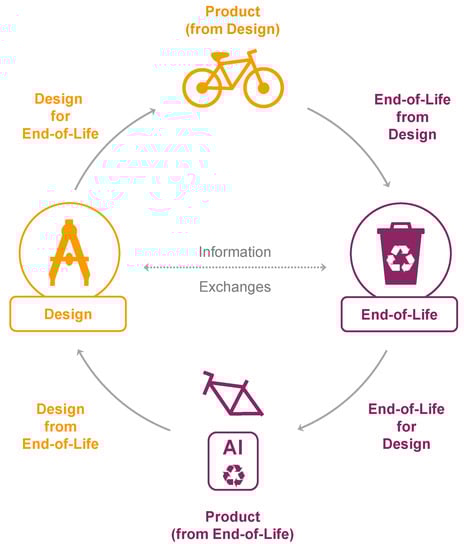
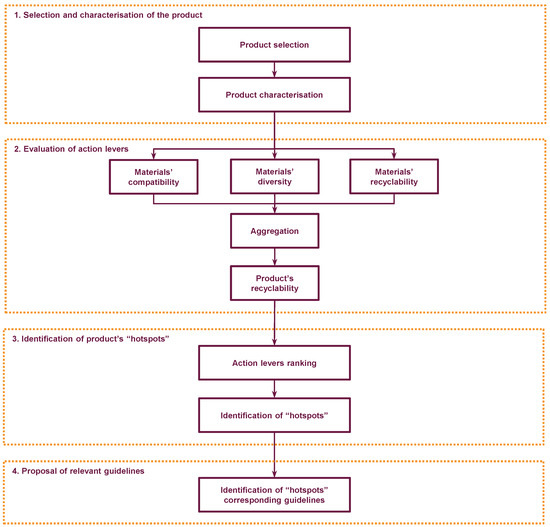
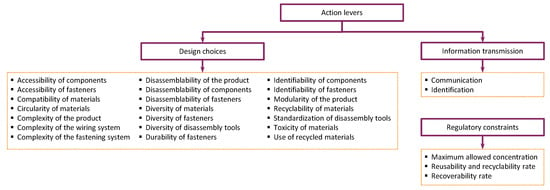
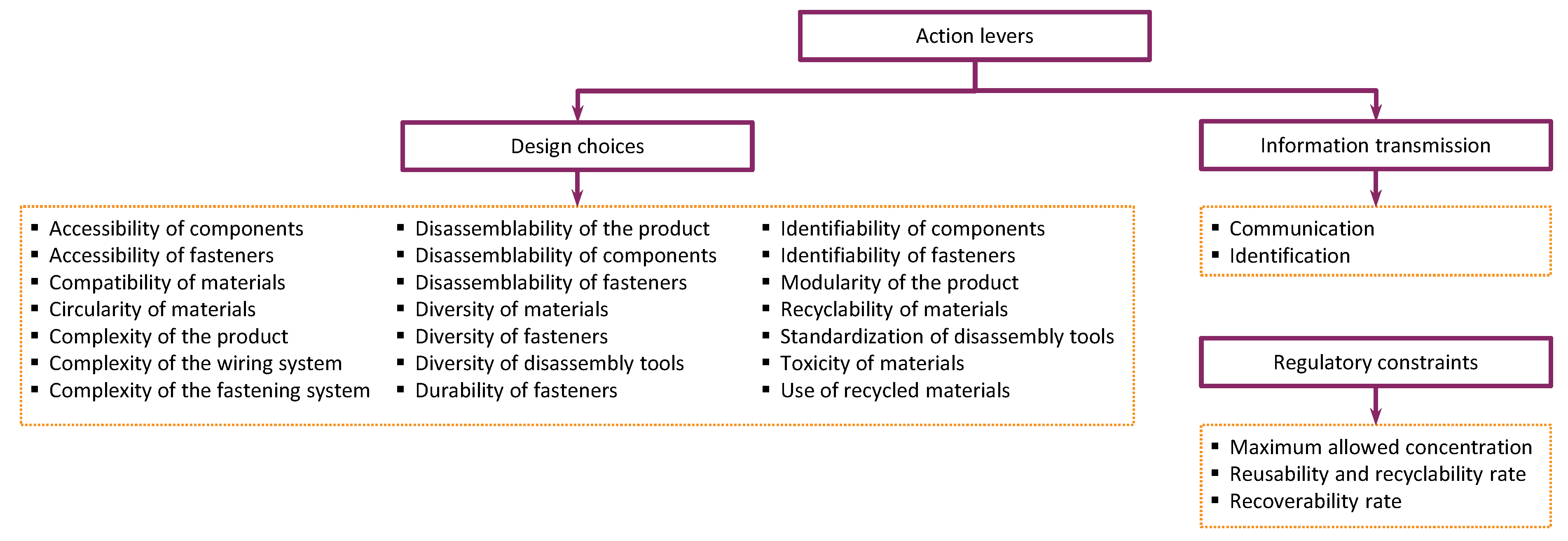
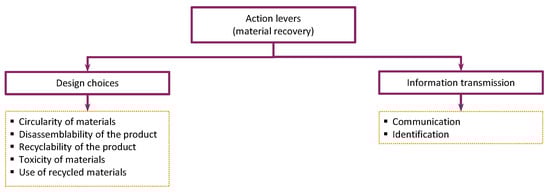
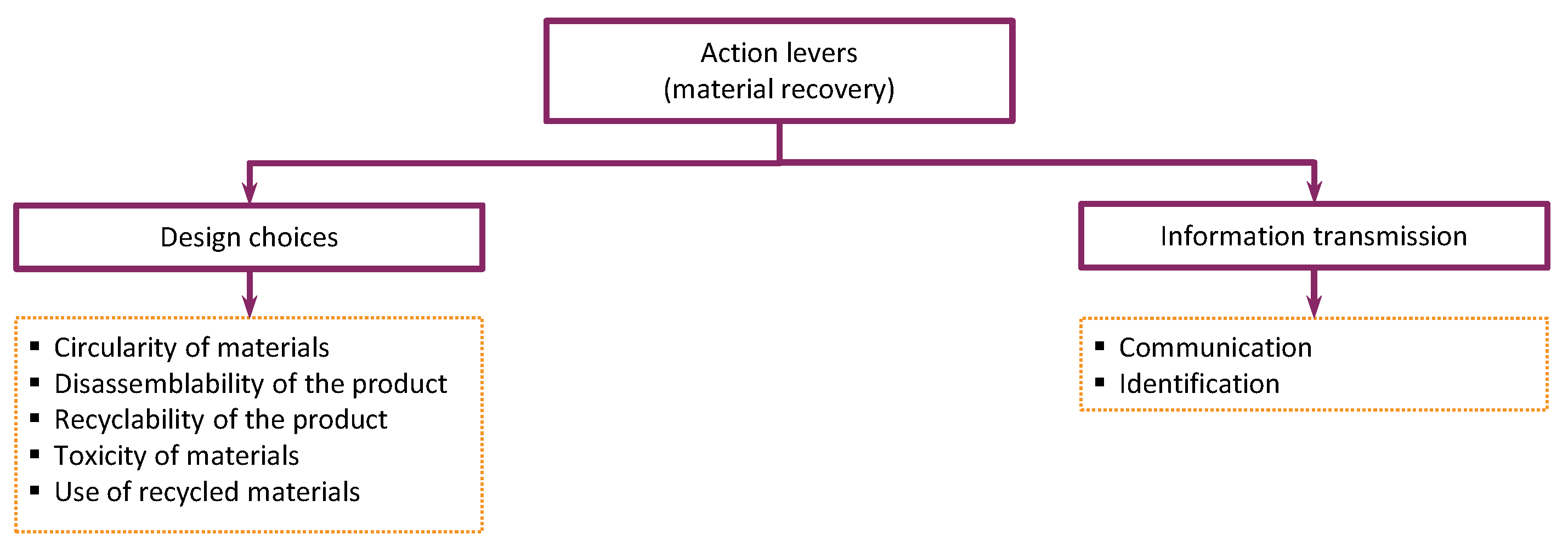
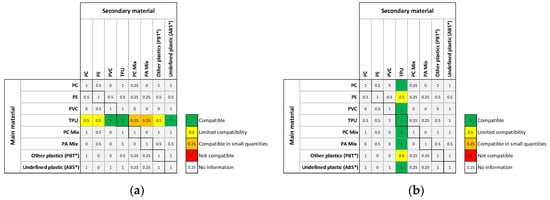
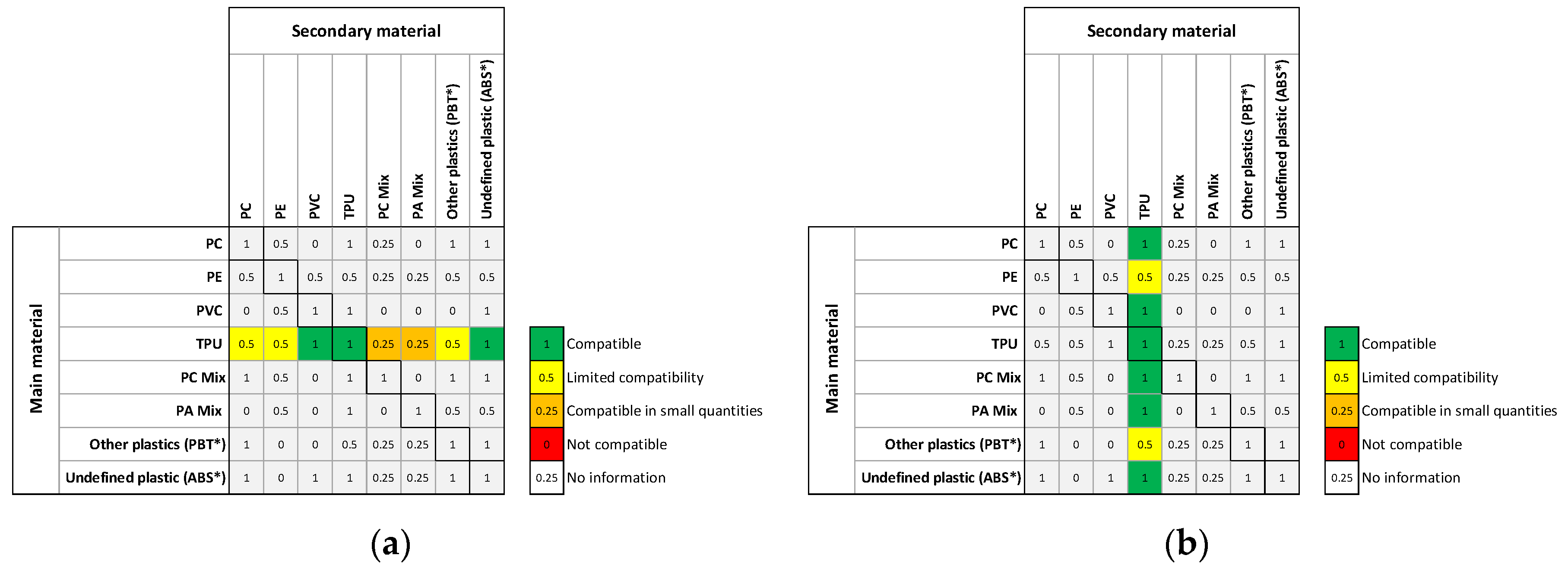
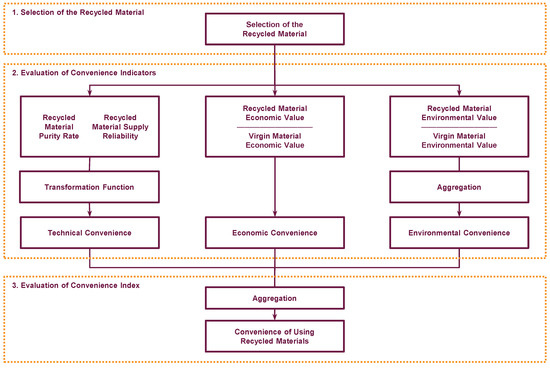
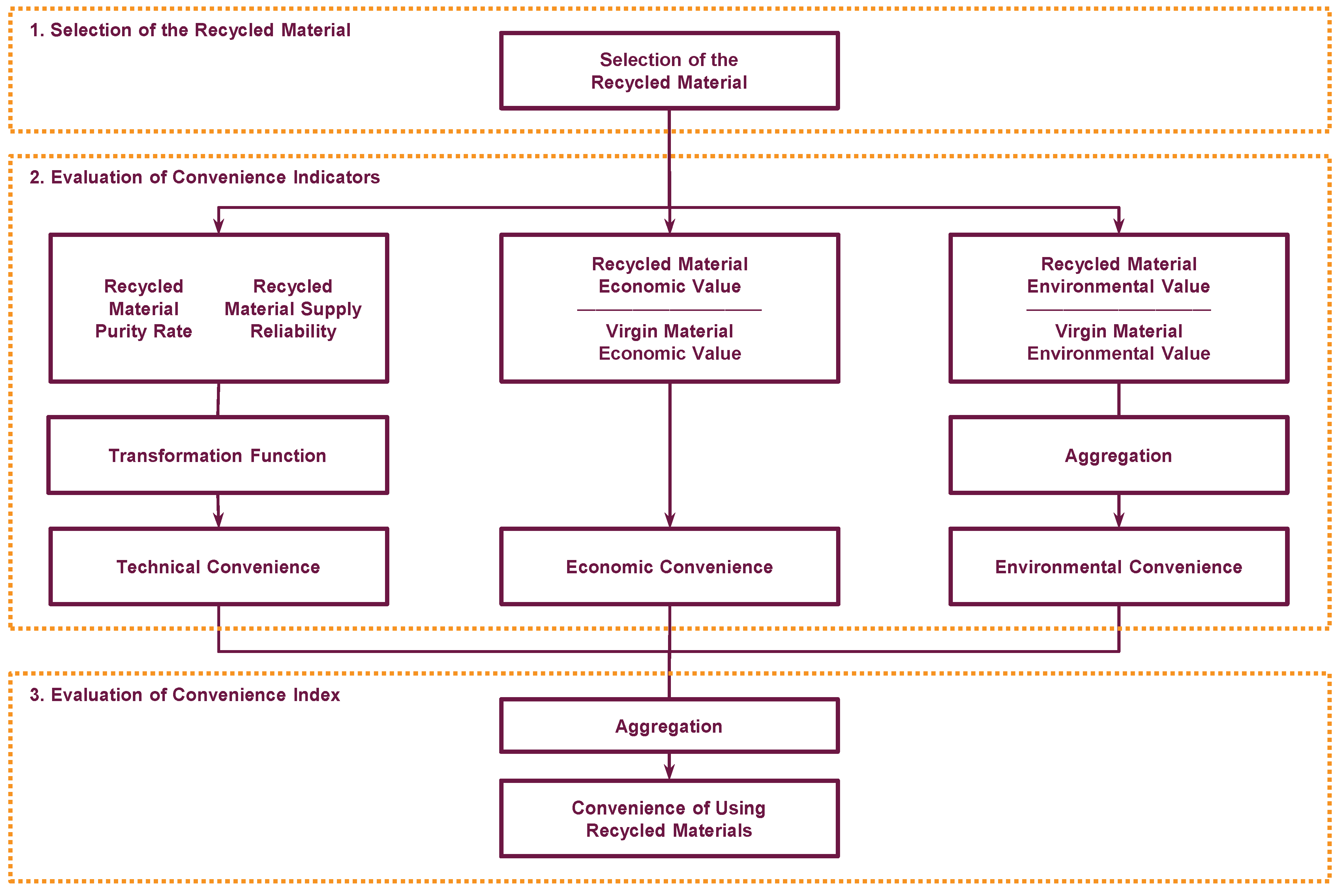
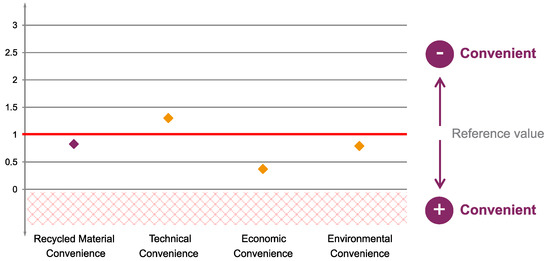
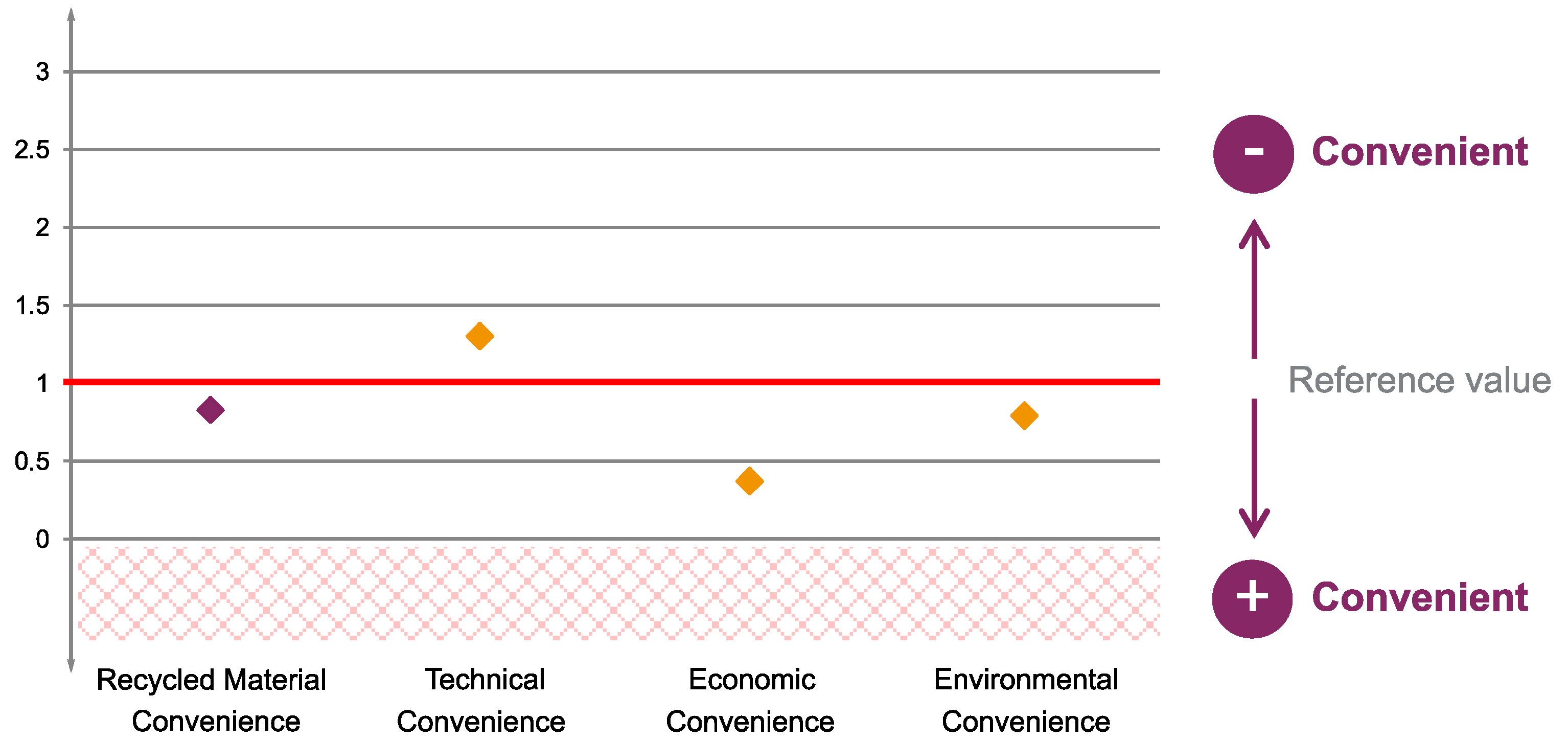
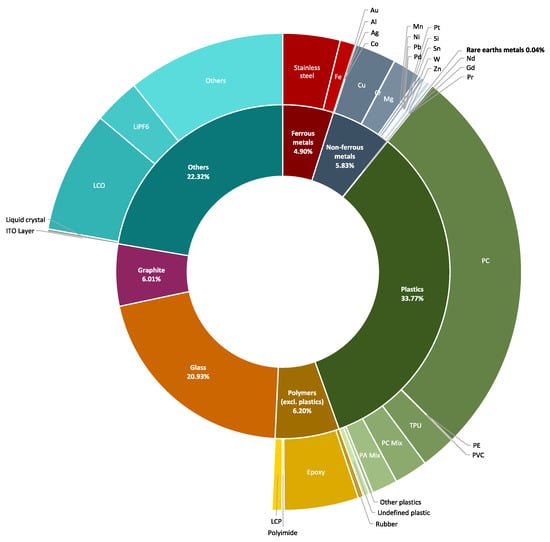
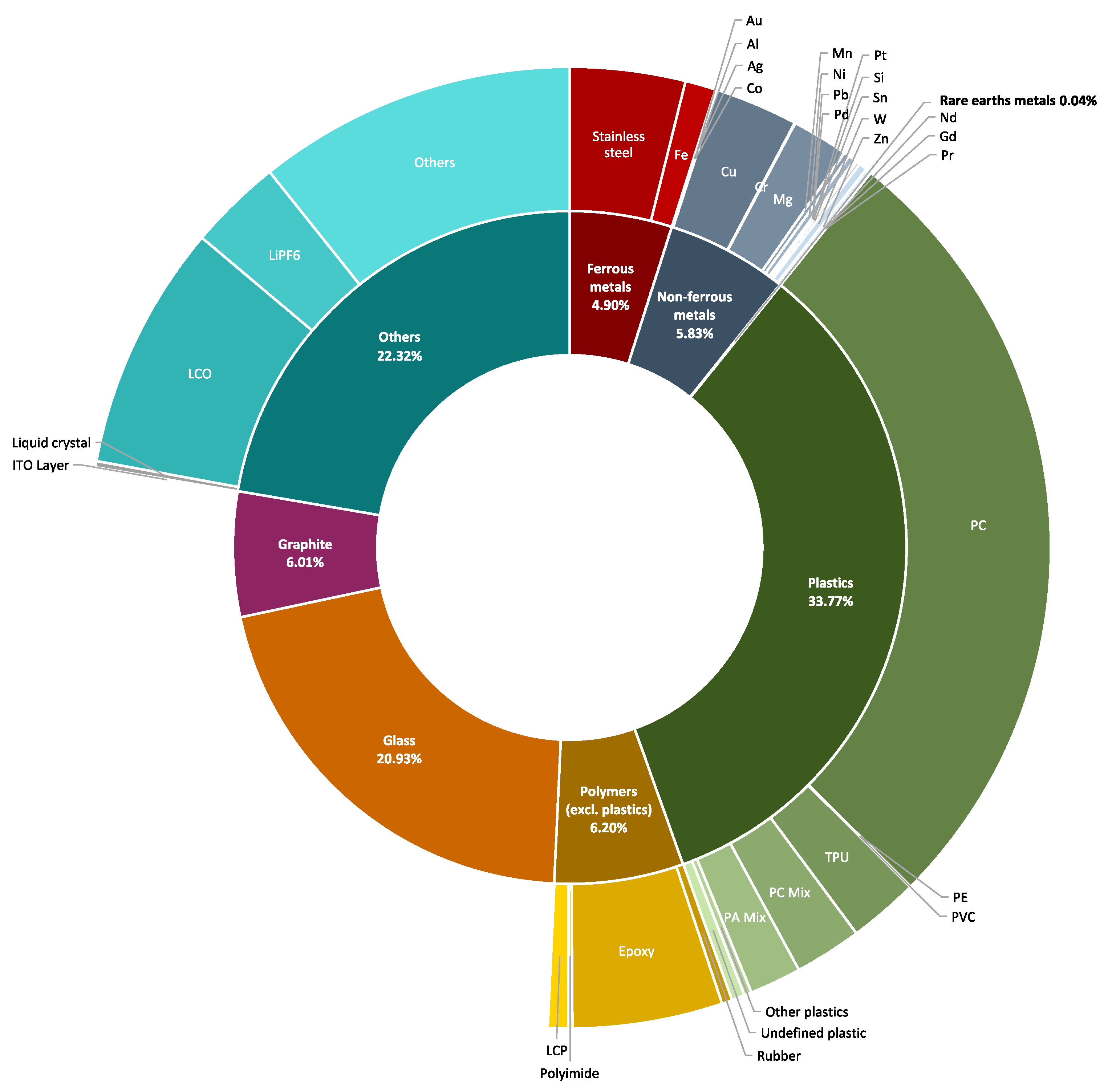
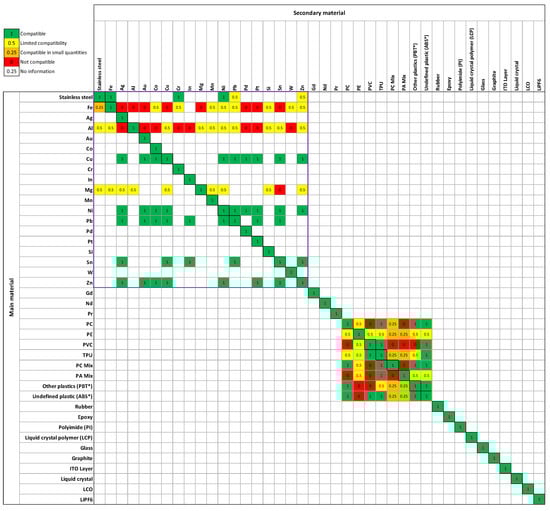
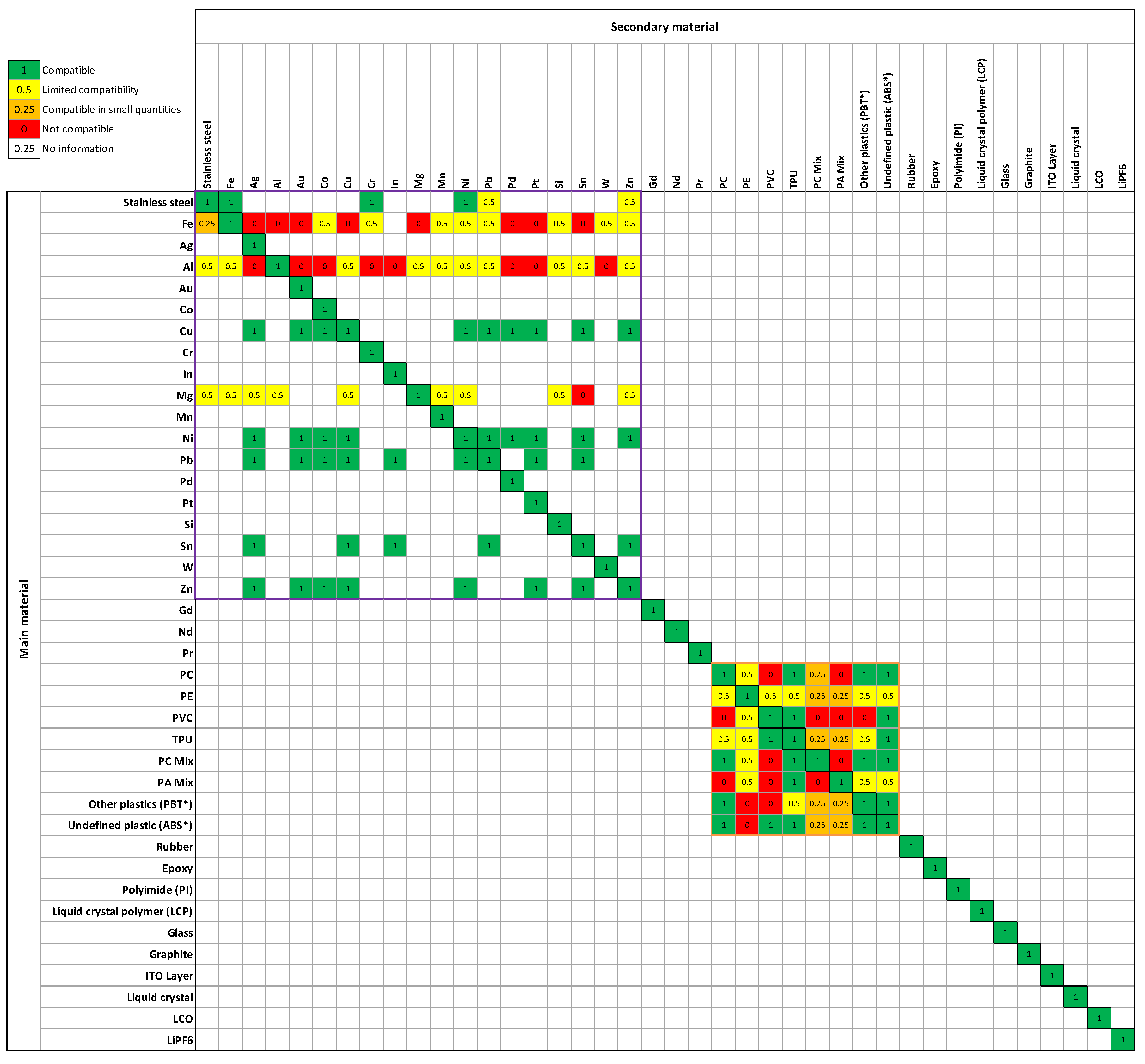
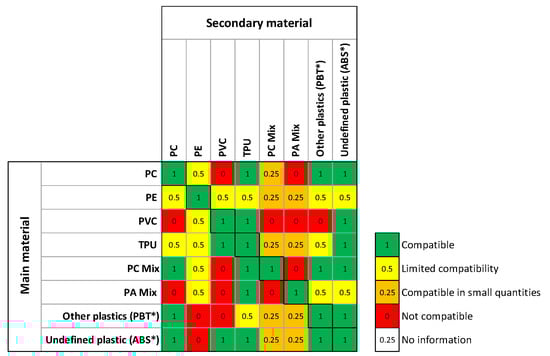
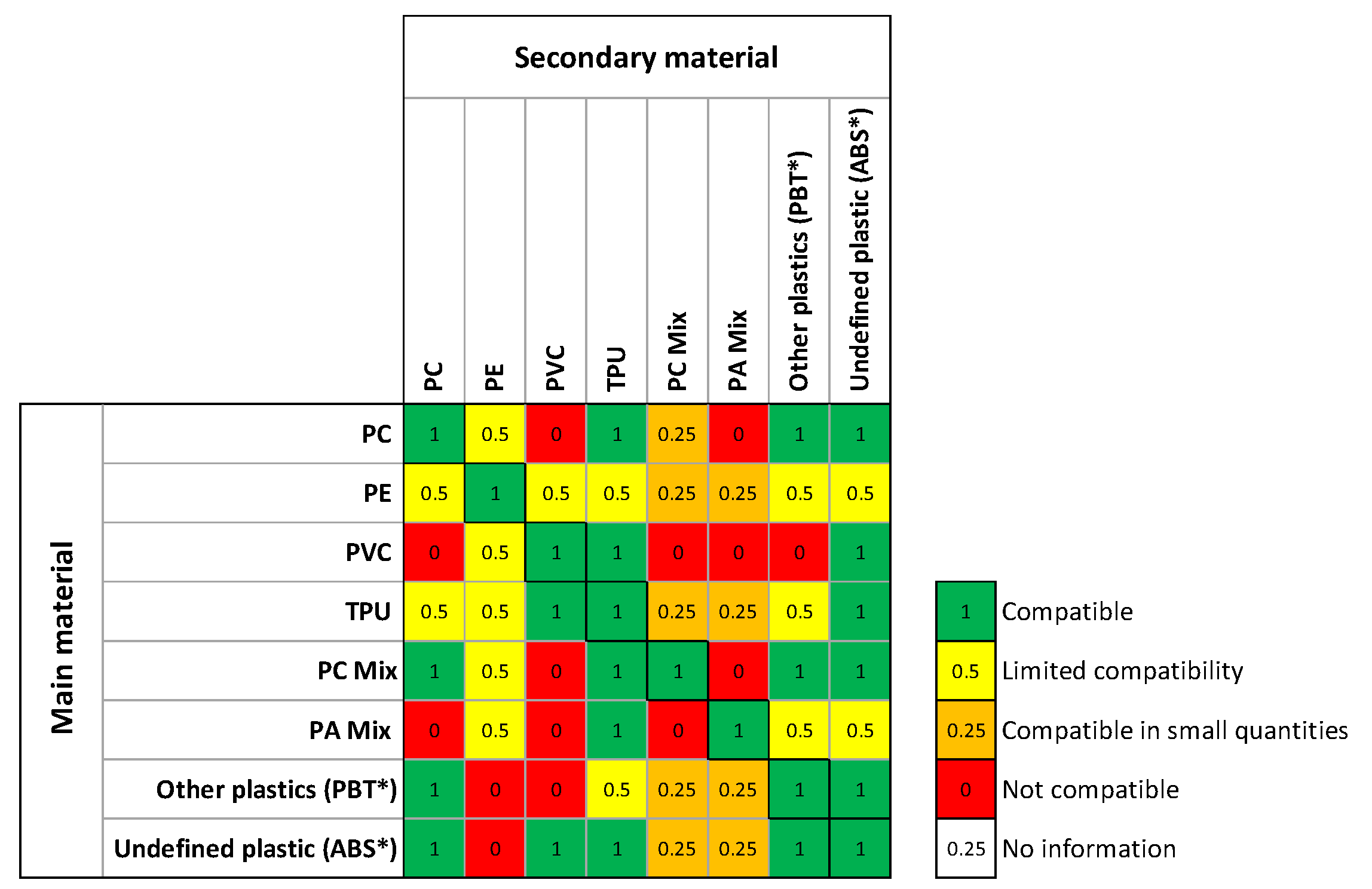
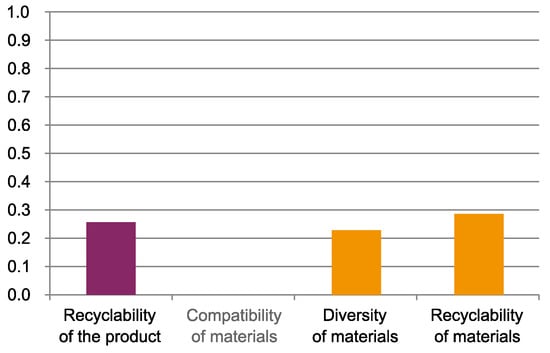
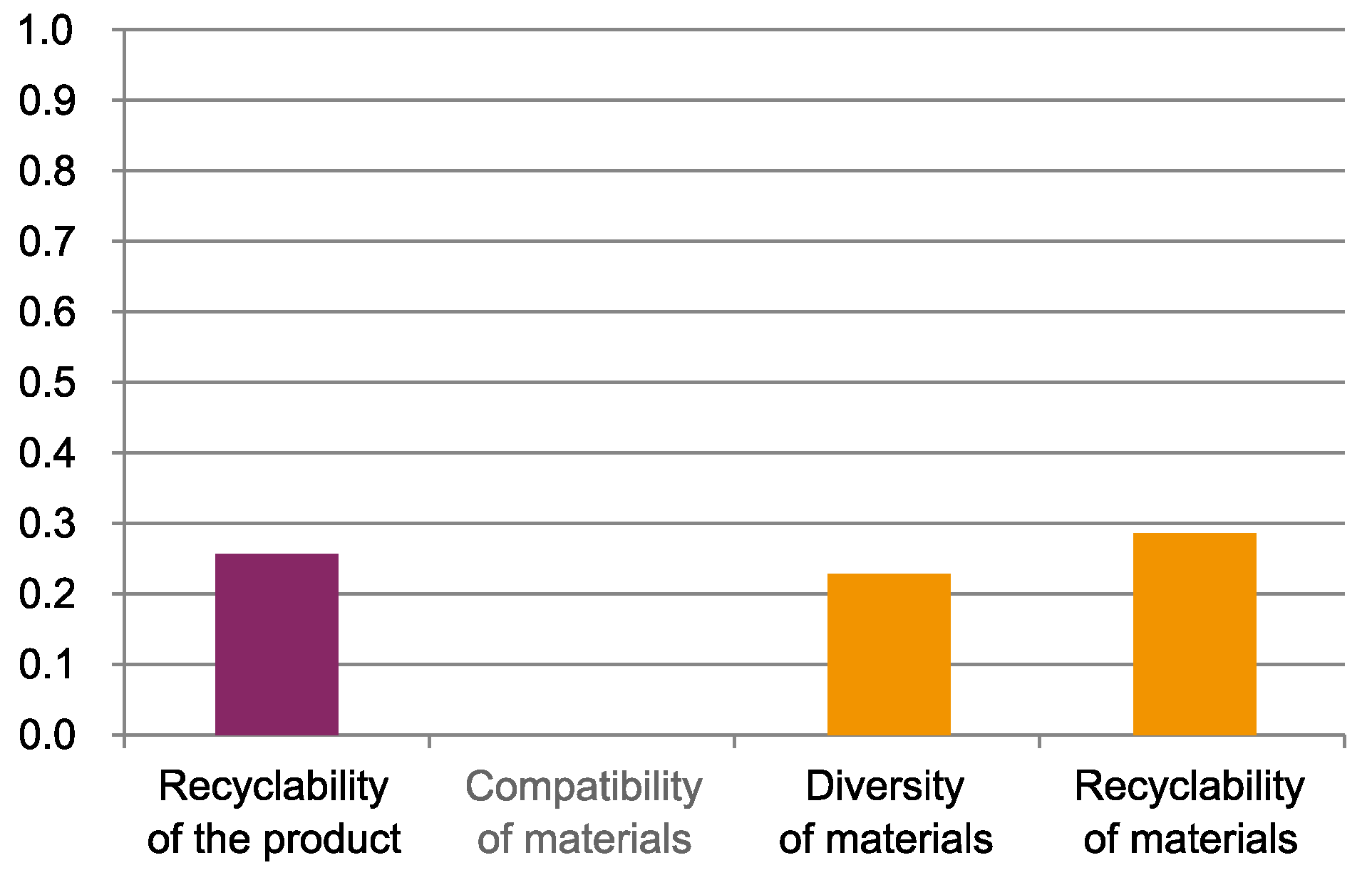
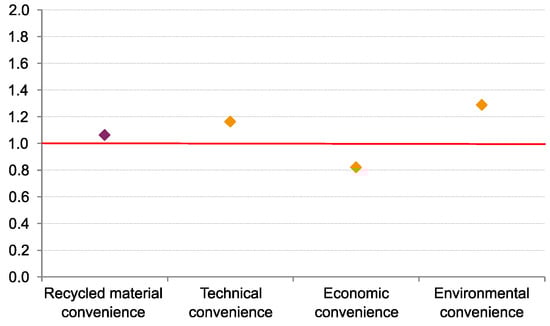
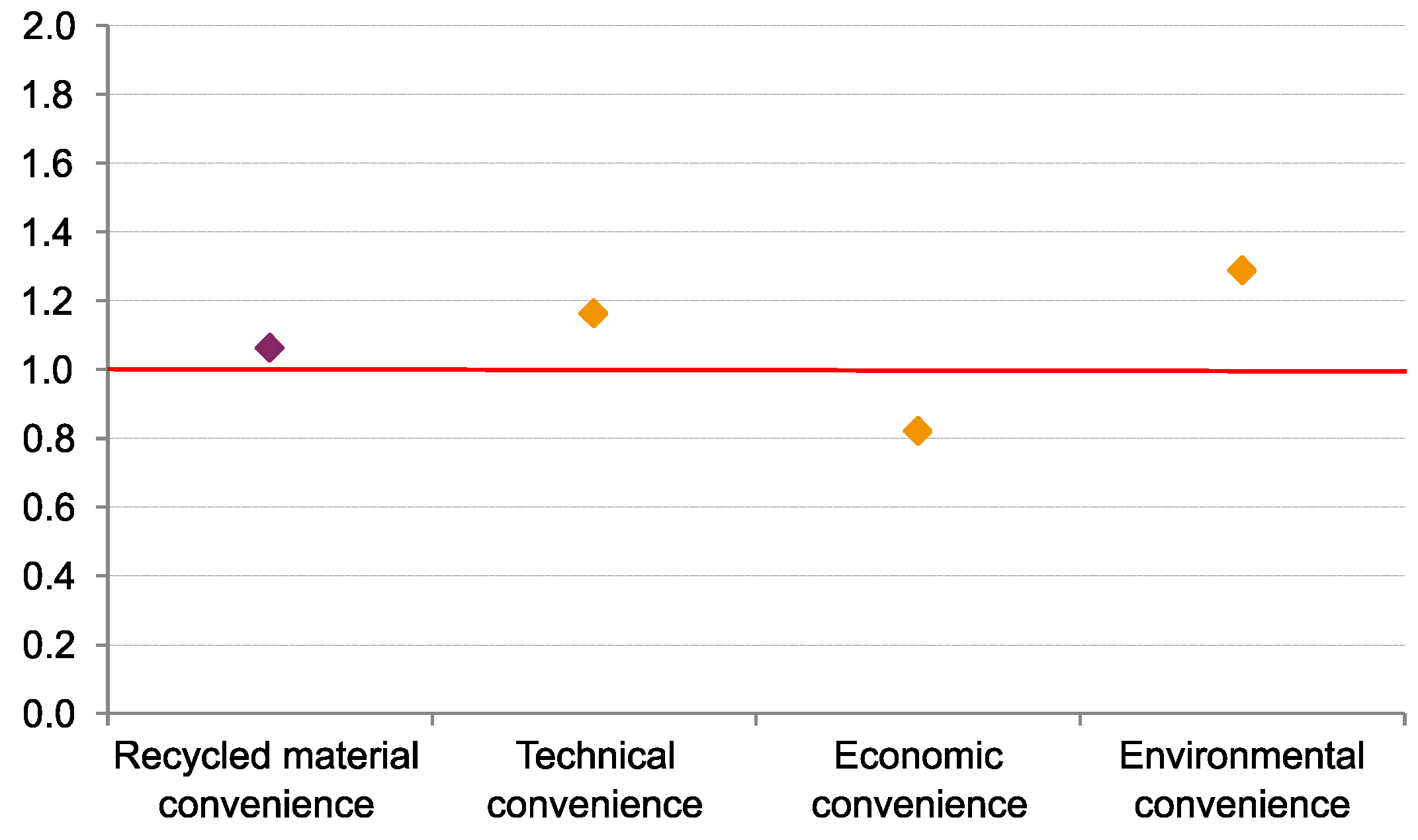

Publisher’s Note: MDPI stays neutral with regard to jurisdictional claims in published maps and institutional affiliations. |
© 2020 by the authors. Licensee MDPI, Basel, Switzerland. This article is an open access article distributed under the terms and conditions of the Creative Commons Attribution (CC BY) license (http://creativecommons.org/licenses/by/4.0/).