Article

How (Un)sustainable Environments Are Related to the Diffusion of COVID-19: The Relation between Coronavirus Disease 2019, Air Pollution, Wind Resource and Energy


CNR—National Research Council of Italy, Research Institute on Sustainable Economic Growth, Collegio Carlo Alberto, Via Real Collegio, 30-10024 Moncalieri (Torino), Italy
Sustainability 2020, 12(22), 9709; https://doi.org/10.3390/su12229709
Submission received: 6 October 2020 / Revised: 15 November 2020 / Accepted: 17 November 2020 / Published: 20 November 2020
(This article belongs to the Collection Sustainable Integrated Clean Environment for Human & Nature)

Abstract

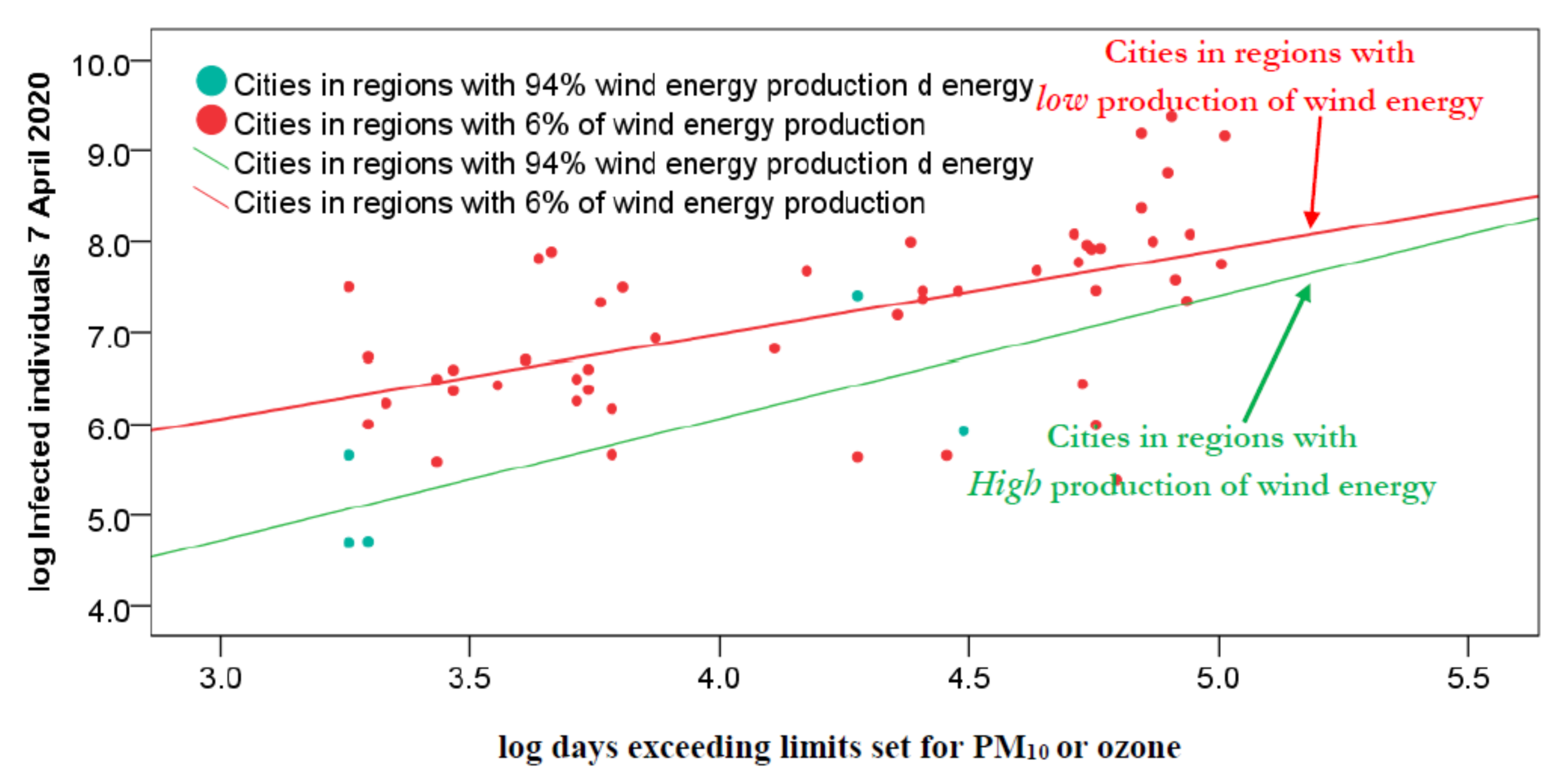
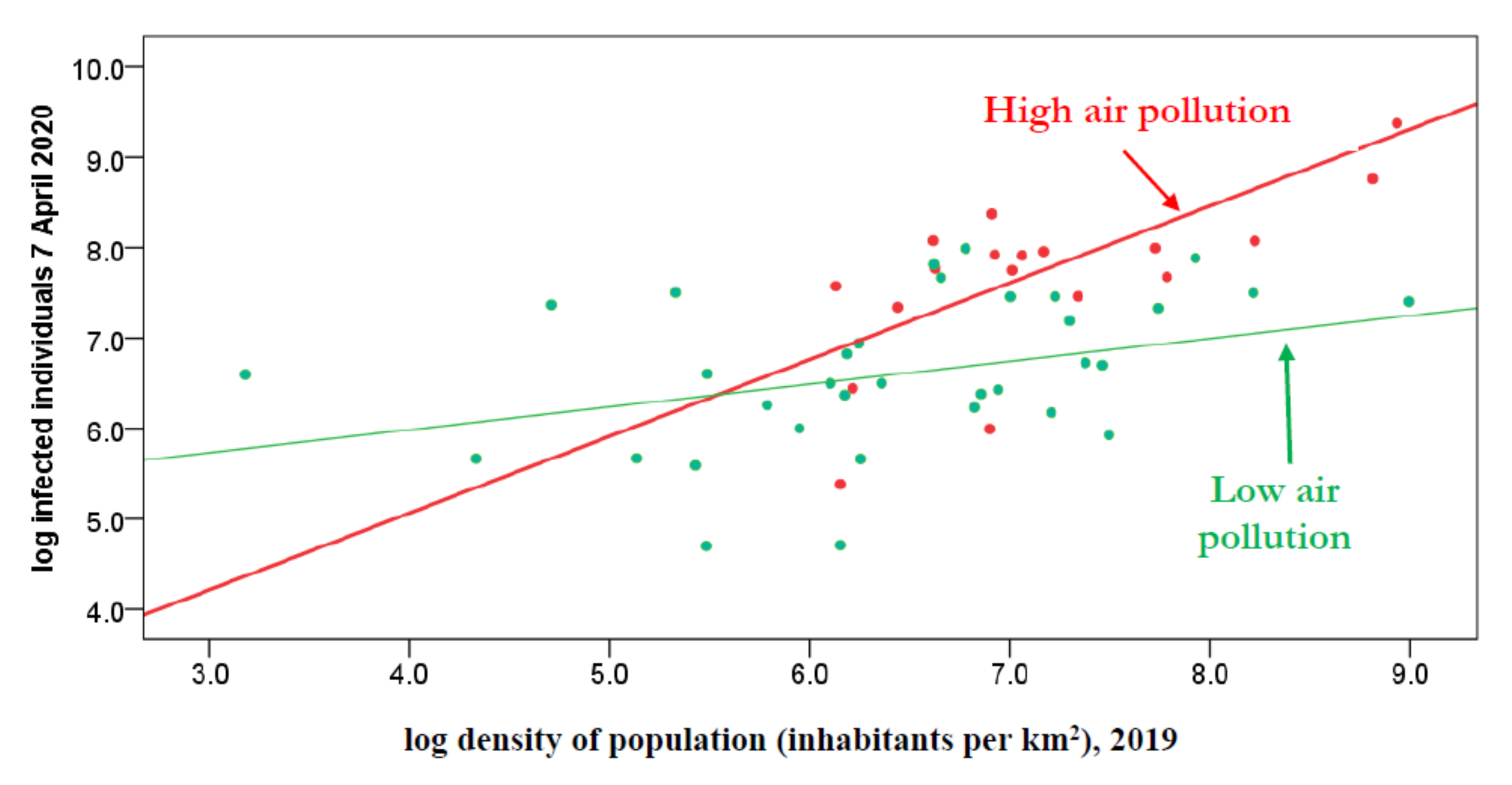
The pandemic caused by novel coronavirus disease 2019 (COVID-19) is generating a high number of cases and deaths, with negative effects on public health and economic systems. One of the current questions in the contemporary environmental and sustainability debate is how high air pollution and reduced use of renewable energy can affect the diffusion of COVID-19. This study endeavors to explain the relation between days of air pollution, wind resources and energy, and the diffusion of COVID-19 to provide insights into sustainable policy to prevent future epidemics. The statistical analysis here focuses on a case study of Italy, one of the first countries to experience a rapid increase in confirmed cases and deaths. The results reveal two main findings: (1) cities with high wind speed and high wind energy production have a lower number of cases of COVID-19 in the context of a more sustainable environment; (2) cities located in hinterland zones with high air pollution, low wind speed and less wind energy production have a greater number of cases and total deaths. The results presented here suggest that the pandemic caused by novel coronavirus (SARS-CoV-2) and future epidemics similar to COVID-19 cannot be solved only with research in medicine but the solution also needs advanced capabilities and technologies for supporting sustainable development based on the reduction of air pollution and increase of production in renewable energy to improve air quality and as a consequence public health.
Keywords: air pollution; wind energy; renewable energy; COVID-19; coronavirus disease; SARS-CoV-2; sustainable development; cleaner production; sustainable technologies air pollution; wind energy; renewable energy; COVID-19; coronavirus disease; SARS-CoV-2; sustainable development; cleaner production; sustainable technologies