Article

Aquaponics (s.l.) Production of Spearmint (Mentha spicata) with African Catfish (Clarias gariepinus) in Northern Germany


by
Ulrich Knaus
1,*,
Lisa Carolina Wenzel
2,
Samuel Appelbaum
3 and
Harry Wilhelm Palm
1
1
Department of Aquaculture and Sea-Ranching, Faculty of Agricultural and Environmental Science, University of Rostock, D-18059 Rostock, Germany
2
Fischzucht Abtshagen GmbH & Co. KG, D-18510 Wittenhagen OT Abtshagen, Germany
3
French Associates Institute for Agriculture and Biotechnology of Drylands, Jacob Blaustein Institutes for Desert Research, Ben-Gurion University of the Negev, Sede Boqer Campus, Midreshet Ben-Gurion 8499000, Israel
*
Author to whom correspondence should be addressed.
Sustainability 2020, 12(20), 8717; https://doi.org/10.3390/su12208717
Submission received: 10 September 2020 / Revised: 14 October 2020 / Accepted: 15 October 2020 / Published: 21 October 2020
(This article belongs to the Section Sustainable Agriculture)

Abstract

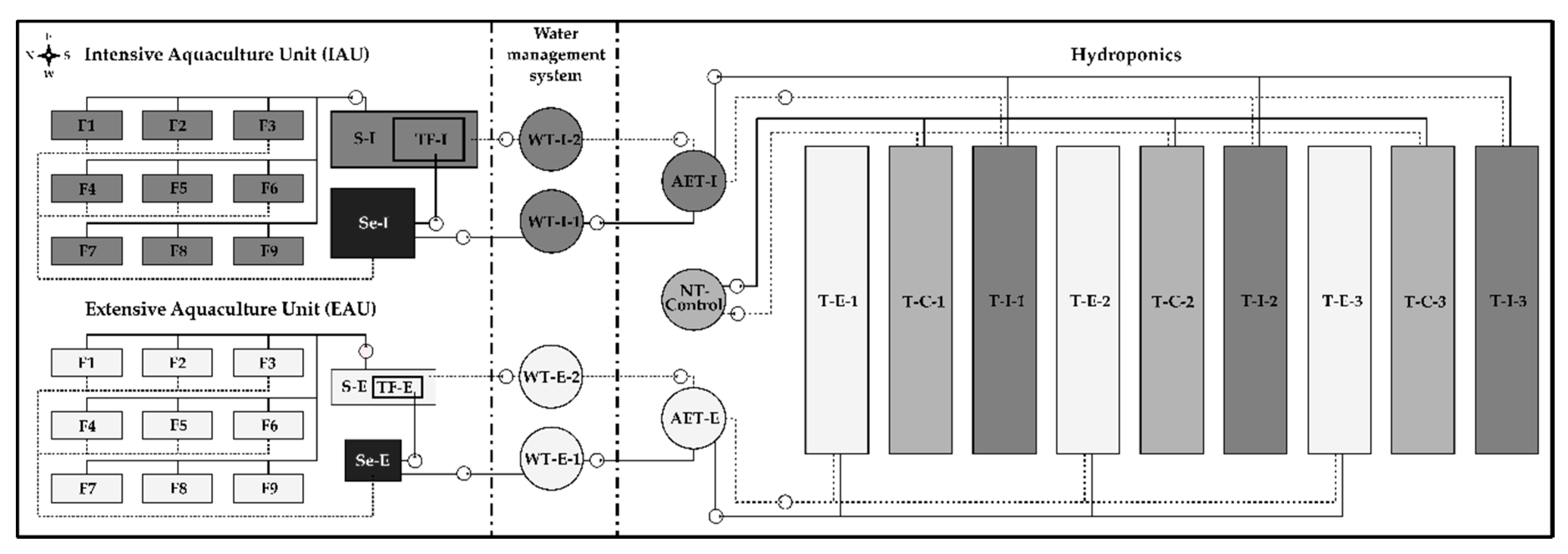
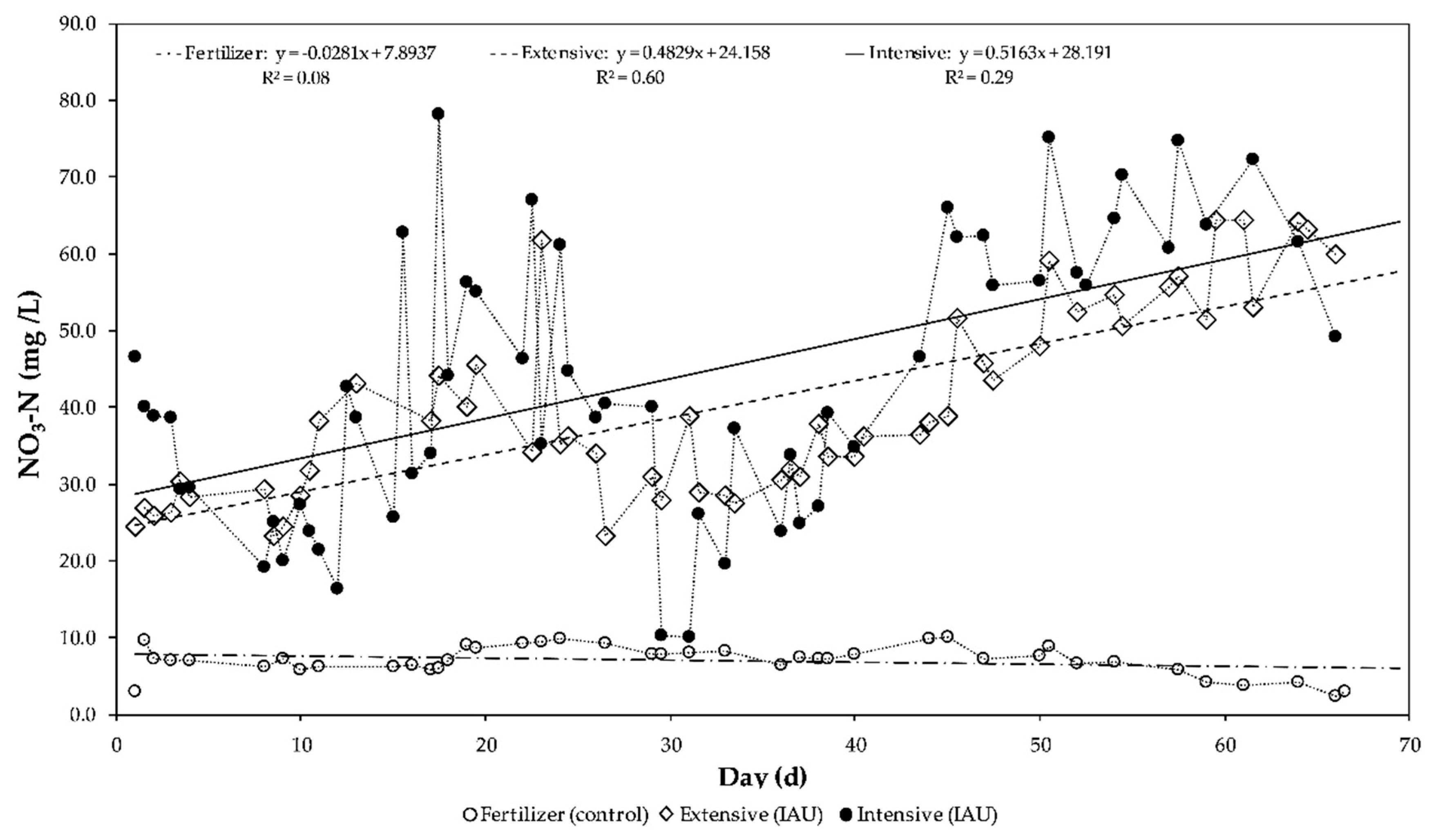
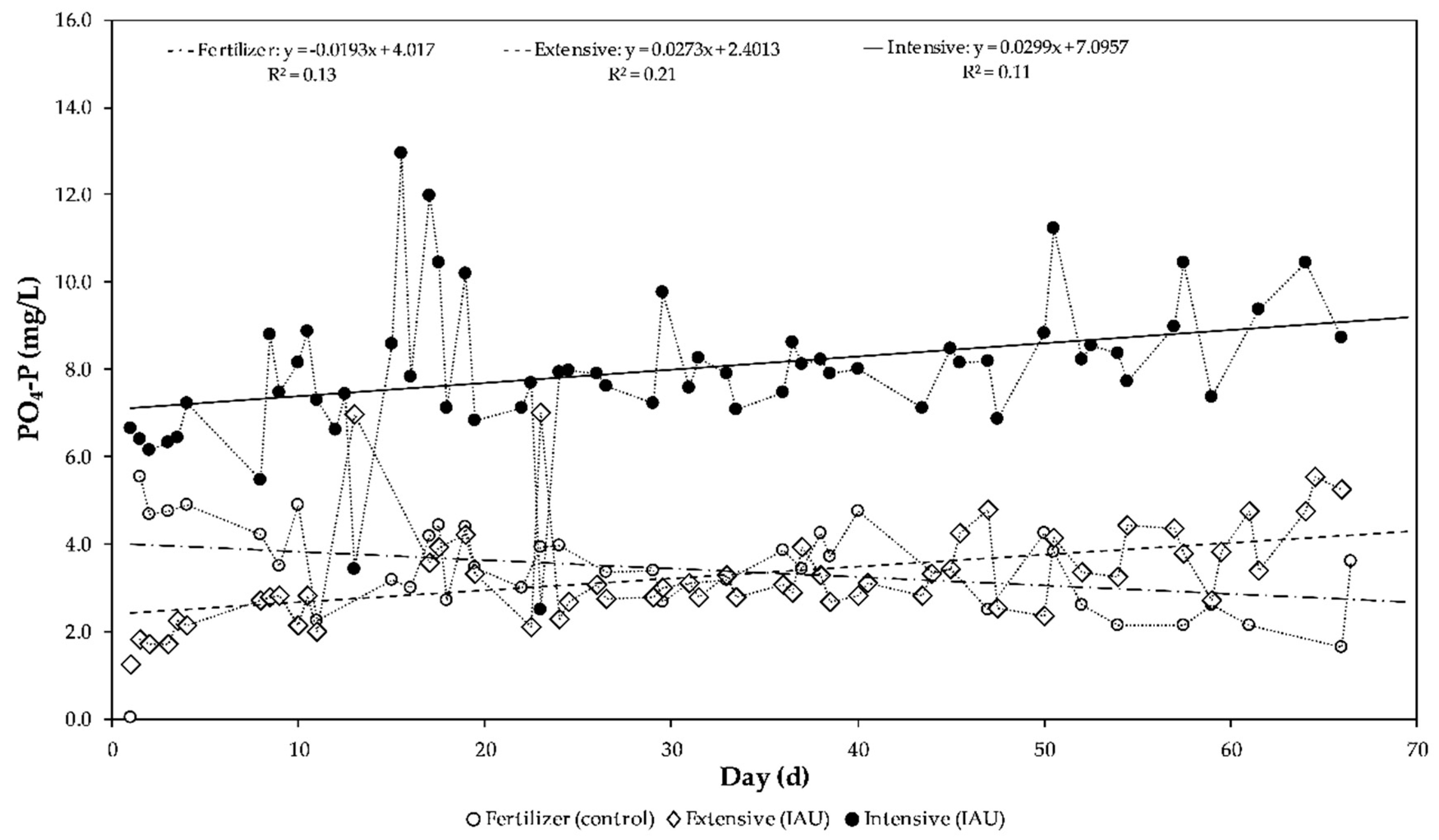
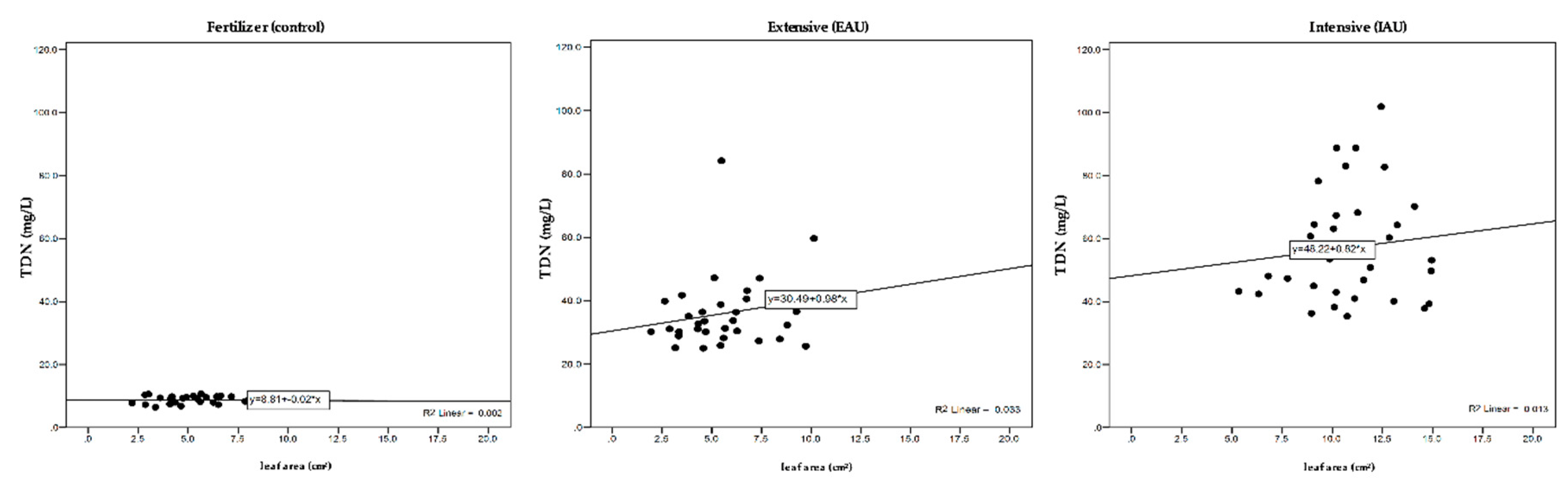
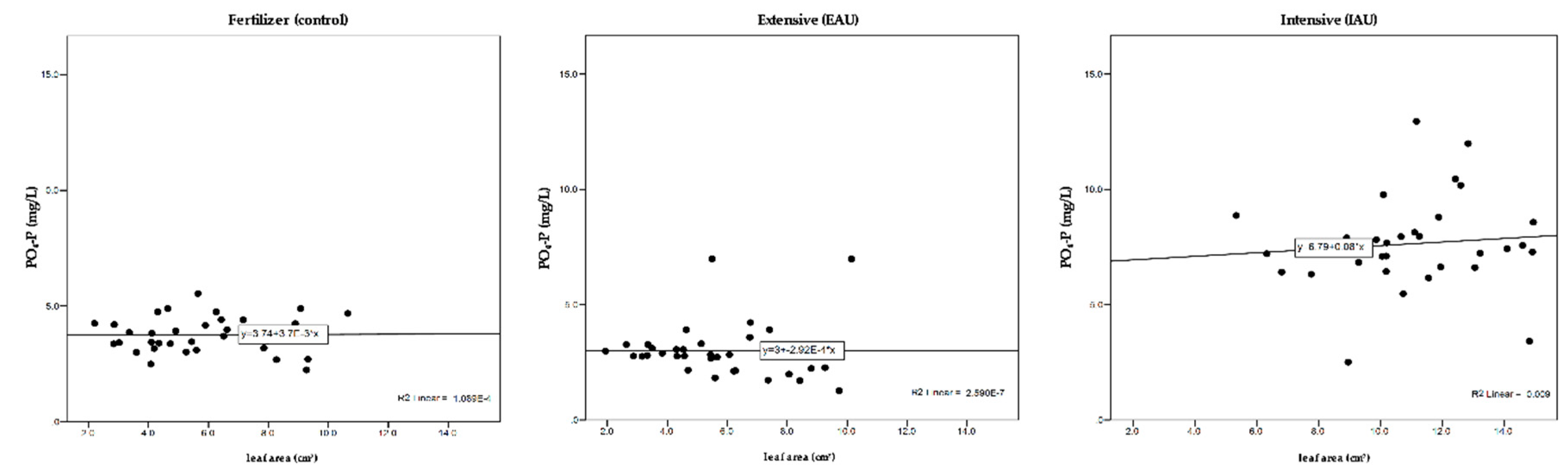
Aquaponics production of spearmint (Mentha spicata) was evaluated under commercial grow-out conditions of African catfish (Clarias gariepinus) in Northern Germany (Mecklenburg-Western Pomerania). Fish batch production under different stocking densities in an extensive aquacultural unit (EAU) and an intensive aquacultural unit (IAU) was connected to conventional plant cultivation on ebb-and-flood planting tables and compared to a liquid fertilizer control. The best growth parameters of M. spicata were found under the intensive stocking density of C. gariepinus (IAU), resulting in a plant leaf area of 10.9 ± 2.5 cm2, leaf length of 8.6 ± 1.6 cm, and a cut fresh biomass from aboveground of 31.8 ± 13.8 g/plant, compared to the EAU (5.6 ± 2.1 cm2; 5.4 ± 1.4 cm; 17.4 ± 4.7 g/plant) and the control (5.7 ± 2.2 cm2; 5.5 ± 1.4 cm; 11.2 ± 5.3 g/plant). The fresh biomass of the whole plants was not significantly different between the EAU (165.5 ± 71.7 g/plant) and the IAU (190.7 ± 105.6 g/plant), though the latter gained more weight. The initial fish number ratio between the EAU and the IAU of 1/4 increased the M. spicata leaf area by twofold in the IAU. Our results demonstrate that aquaponics (s.l.) production of M. spicata is possible under the direct use of effluent waters from intensive African catfish cultivation without the addition of any liquid fertilizer.
Keywords: aquaponics; Mentha spicata; leaf area; African catfish; FishGlassHouse aquaponics; Mentha spicata; leaf area; African catfish; FishGlassHouse