Article

Moose Management Strategies under Changing Legal and Institutional Frameworks


by
Linas Balčiauskas
1,*,
Yukichika Kawata
2 and
Laima Balčiauskienė
1
1
Laboratory of Mammalian Ecology, Nature Research Centre, Akademijos 2, 08412 Vilnius, Lithuania
2
Faculty of Economics, Kindai University, 4-1 Kowakae 3-chome, Higashiosaka, Osaka 577-8502, Japan
*
Author to whom correspondence should be addressed.
Sustainability 2020, 12(20), 8482; https://doi.org/10.3390/su12208482
Submission received: 1 September 2020 / Revised: 7 October 2020 / Accepted: 12 October 2020 / Published: 14 October 2020
(This article belongs to the Special Issue Mammal Status: Diversity, Abundance and Dynamics)

Abstract

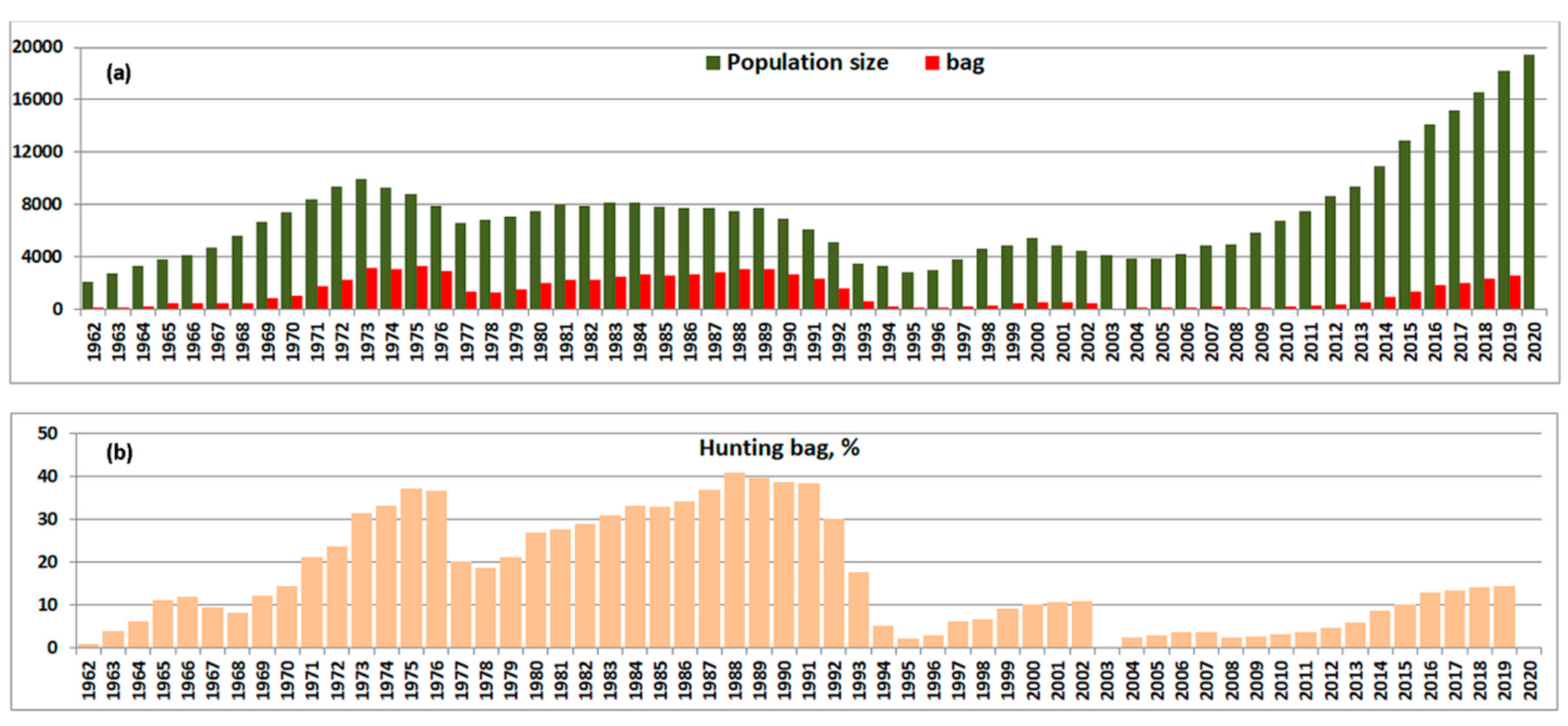
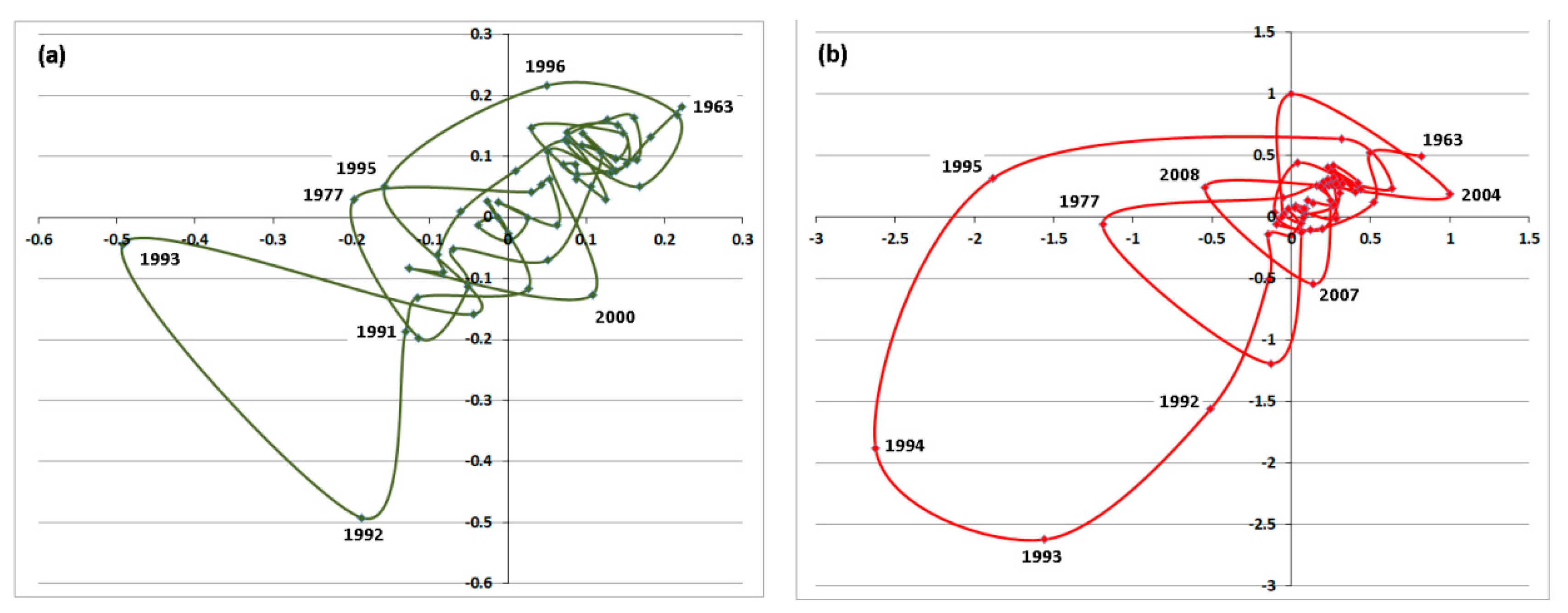
Moose (Alces alces) management strategies in Lithuania, East Europe, were analyzed. The study was intended to show the (un)sustainability of the current management approach in relation to changes in hunting rules, hunting organization and development of the responsible administrative bodies. Moose population and bag dynamics were analyzed using I index in connected scatterplots and compound annual growth rates (CAGR). In 1962–2020, the CAGR of the moose population was 3.84%, resulting in a population size increase of nearly 10 times. The seesaw principle in moose management was confirmed, showing three periods of population decrease (1973–1977, 1989–1995, 2000–2005), and two periods of hunting bag decrease (1976–1978 and 1990–1993). All decline phases were related to legal and administrative issues in the country. Since 2006, population growth has not been controlled. Lithuania has no long-term strategy of the moose population management at any administrative level. The current management approach is not sustainable, as it has not ensured long-term stability of the moose population. The current continuous growth of population, followed by only a moderate increase in the hunting bag, is related to the possibility for owners to adopt long-term planning of the hunting plot units.
Keywords: Alces alces; hunting bag; population management; management strategies Alces alces; hunting bag; population management; management strategies