Article

Efficacy of Enzymatically Induced Calcium Carbonate Precipitation in the Retention of Heavy Metal Ions


by
Arif Ali Baig Moghal
1,
Mohammed Abdul Lateef
2,
Syed Abu Sayeed Mohammed
2,
Kehinde Lemboye
3,
Bhaskar C. S. Chittoori
4 and
Abdullah Almajed
3,*
1
Department of Civil Engineering, National Institute of Technology, Warangal 506004, Telangana State, India
2
Department of Civil Engineering, HKBK College of Engineering, Bengaluru 560045, India
3
Department of Civil Engineering, College of Engineering, King Saud University, P.O. Box 800, Riyadh 11421, Saudi Arabia
4
Department of Civil Engineering, Boise State University, Boise, ID 83725, USA
*
Author to whom correspondence should be addressed.
Sustainability 2020, 12(17), 7019; https://doi.org/10.3390/su12177019
Submission received: 30 July 2020 / Revised: 24 August 2020 / Accepted: 25 August 2020 / Published: 28 August 2020

Abstract

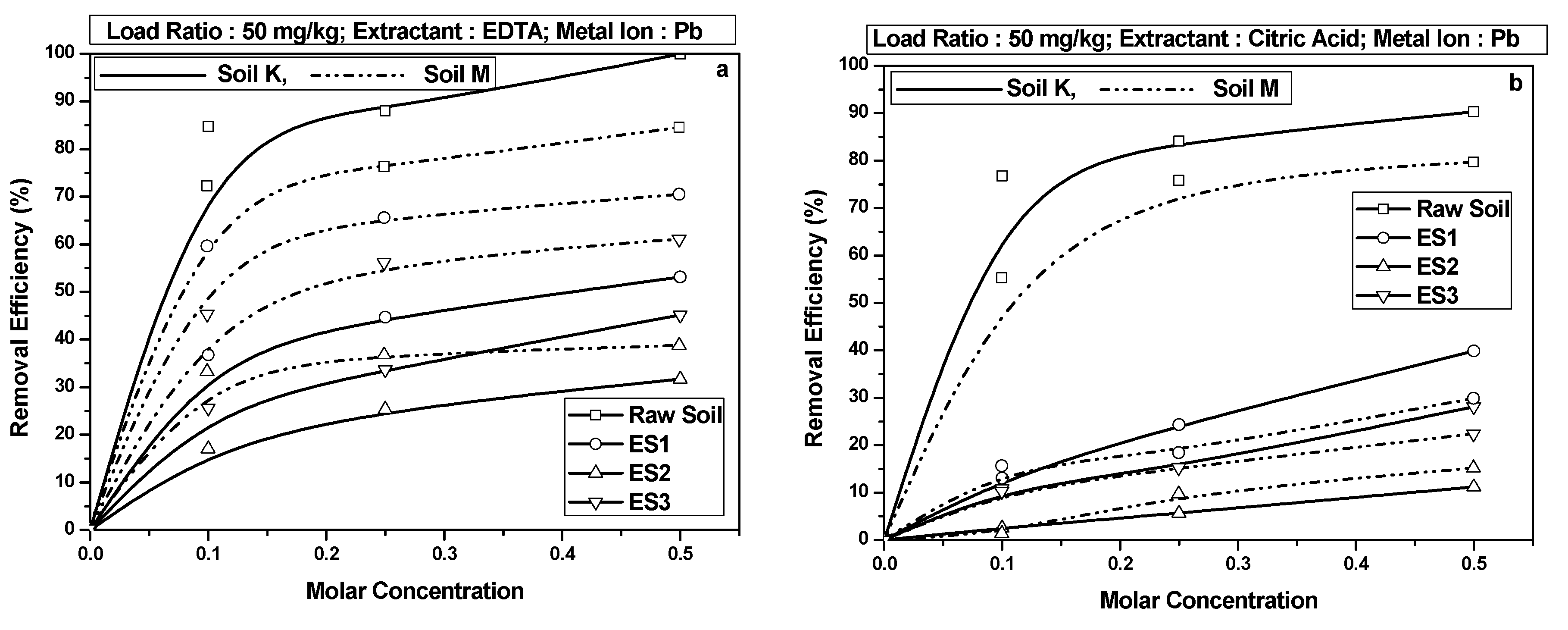
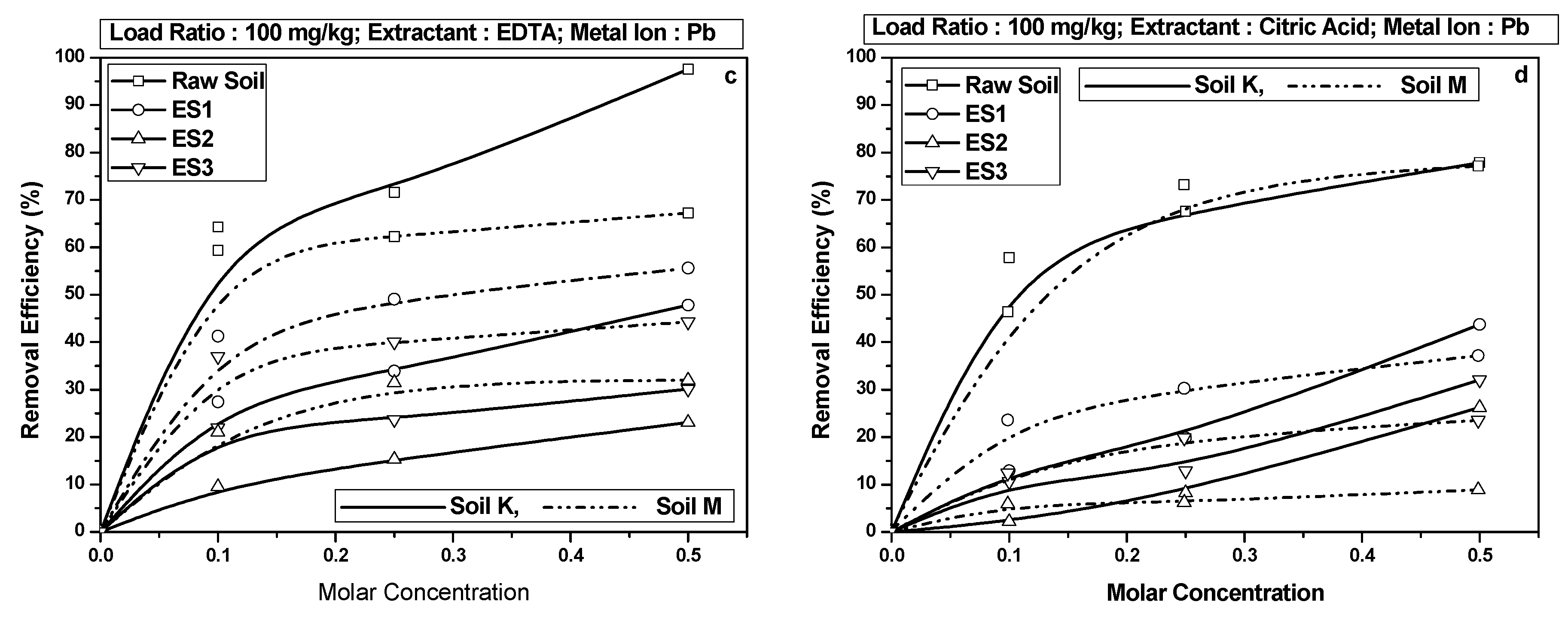
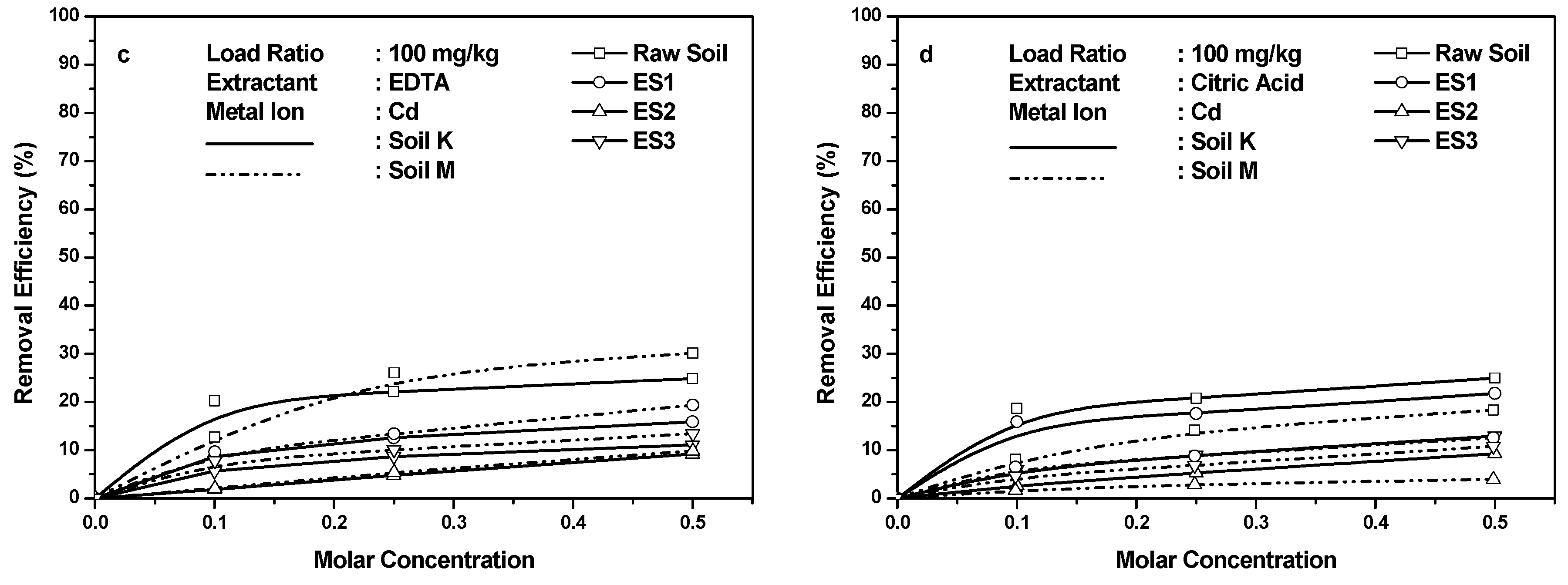
This study evaluated the efficacy of enzyme induced calcite precipitation (EICP) in restricting the mobility of heavy metals in soils. EICP is an environmentally friendly method that has wide ranging applications in the sustainable development of civil infrastructure. The study examined the desorption of three heavy metals from treated and untreated soils using ethylene diamine tetra-acetic acid (EDTA) and citric acid (C6H8O7) extractants under harsh conditions. Two natural soils spiked with cadmium (Cd), nickel (Ni), and lead (Pb) were studied in this research. The soils were treated with three types of enzyme solutions (ESs) to achieve EICP. A combination of urea of one molarity (M), 0.67 M calcium chloride, and urease enzyme (3 g/L) was mixed in deionized (DI) water to prepare enzyme solution 1 (ES1); non-fat milk powder (4 g/L) was added to ES1 to prepare enzyme solution 2 (ES2); and 0.37 M urea, 0.25 M calcium chloride, 0.85 g/L urease enzyme, and 4 g/L non-fat milk powder were mixed in DI water to prepare enzyme solution 3 (ES3). Ni, Cd, and Pb were added with load ratios of 50 and 100 mg/kg to both untreated and treated soils to study the effect of EICP on desorption rates of the heavy metals from soil. Desorption studies were performed after a curing period of 40 days. The curing period started after the soil samples were spiked with heavy metals. Soils treated with ESs were spiked with heavy metals after a curing period of 21 days and then further cured for 40 days. The amount of CaCO3 precipitated in the soil by the ESs was quantified using a gravimetric acid digestion test, which related the desorption of heavy metals to the amount of precipitated CaCO3. The order of desorption was as follows: Cd > Ni > Pb. It was observed that the average maximum removal efficiency of the untreated soil samples (irrespective of the load ratio and contaminants) was approximately 48% when extracted by EDTA and 46% when extracted by citric acid. The soil samples treated with ES2 exhibited average maximum removal efficiencies of 19% and 10% when extracted by EDTA and citric acid, respectively. It was observed that ES2 precipitated a maximum amount of calcium carbonate (CaCO3) when compared to ES1 and ES3 and retained the maximum amount of heavy metals in the soil by forming a CaCO3 shield on the heavy metals, thus decreasing their mobility. An approximate improvement of 30% in the retention of heavy metal ions was observed in soils treated with ESs when compared to untreated soil samples. Therefore, the study suggests that ESs can be an effective alternative in the remediation of soils contaminated with heavy metal ions.
Keywords: heavy metals; soil; enzyme solutions; desorption; extractant heavy metals; soil; enzyme solutions; desorption; extractant