Article

Thermal Conditions for Viticulture in Poland

by
Czesław Koźmiński
,
Agnieszka Mąkosza
*,
Bożena Michalska
and
Jadwiga Nidzgorska-Lencewicz
Department of Environmental Management, West Pomeranian University of Technology in Szczecin, ul. Papieża Pawła VI, 71-459 Szczecin, Poland
*
Author to whom correspondence should be addressed.
Sustainability 2020, 12(14), 5665; https://doi.org/10.3390/su12145665
Submission received: 31 May 2020 / Revised: 22 June 2020 / Accepted: 9 July 2020 / Published: 14 July 2020
(This article belongs to the Collection Sustainable Development of Rural Areas and Agriculture)

Abstract

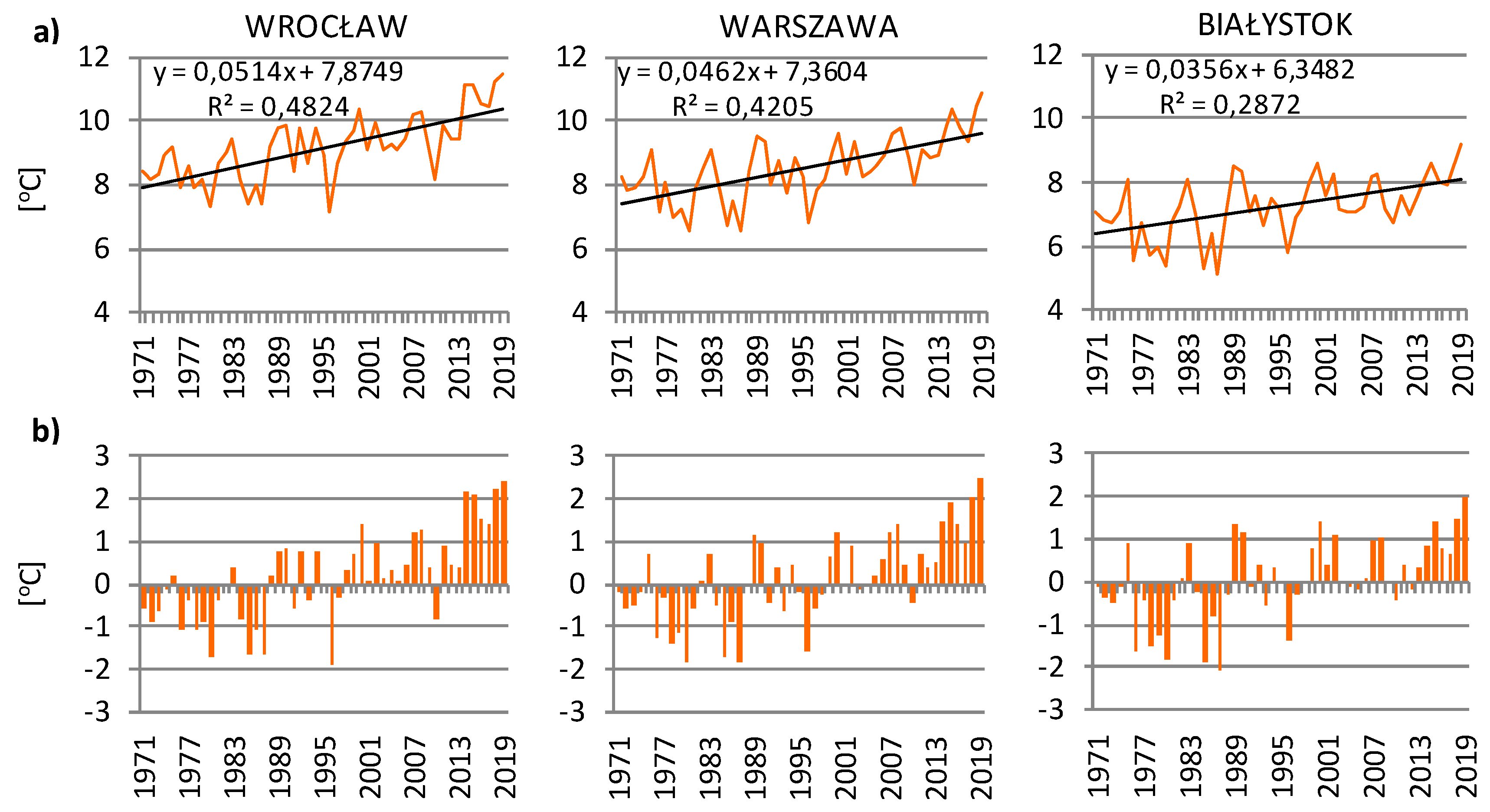
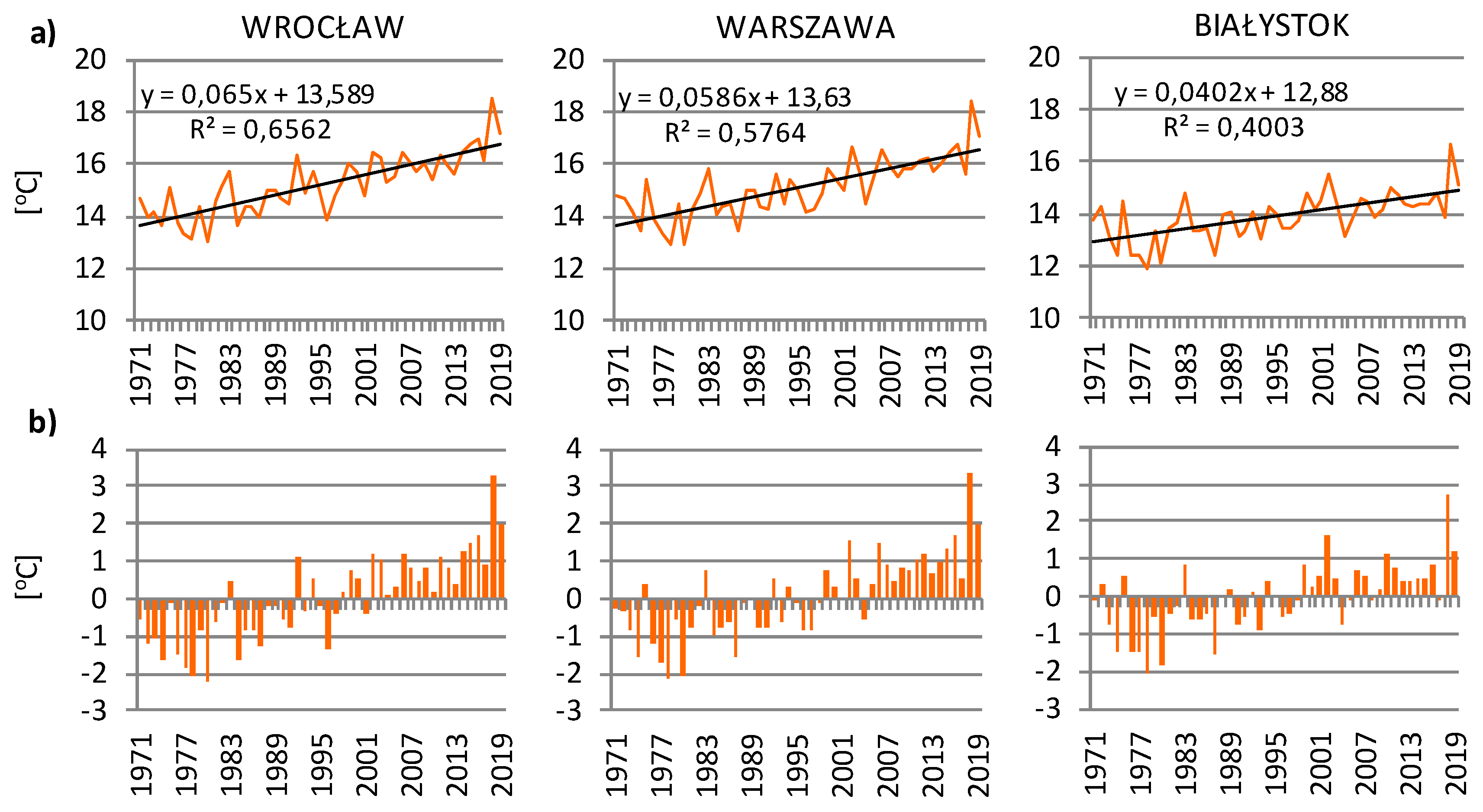
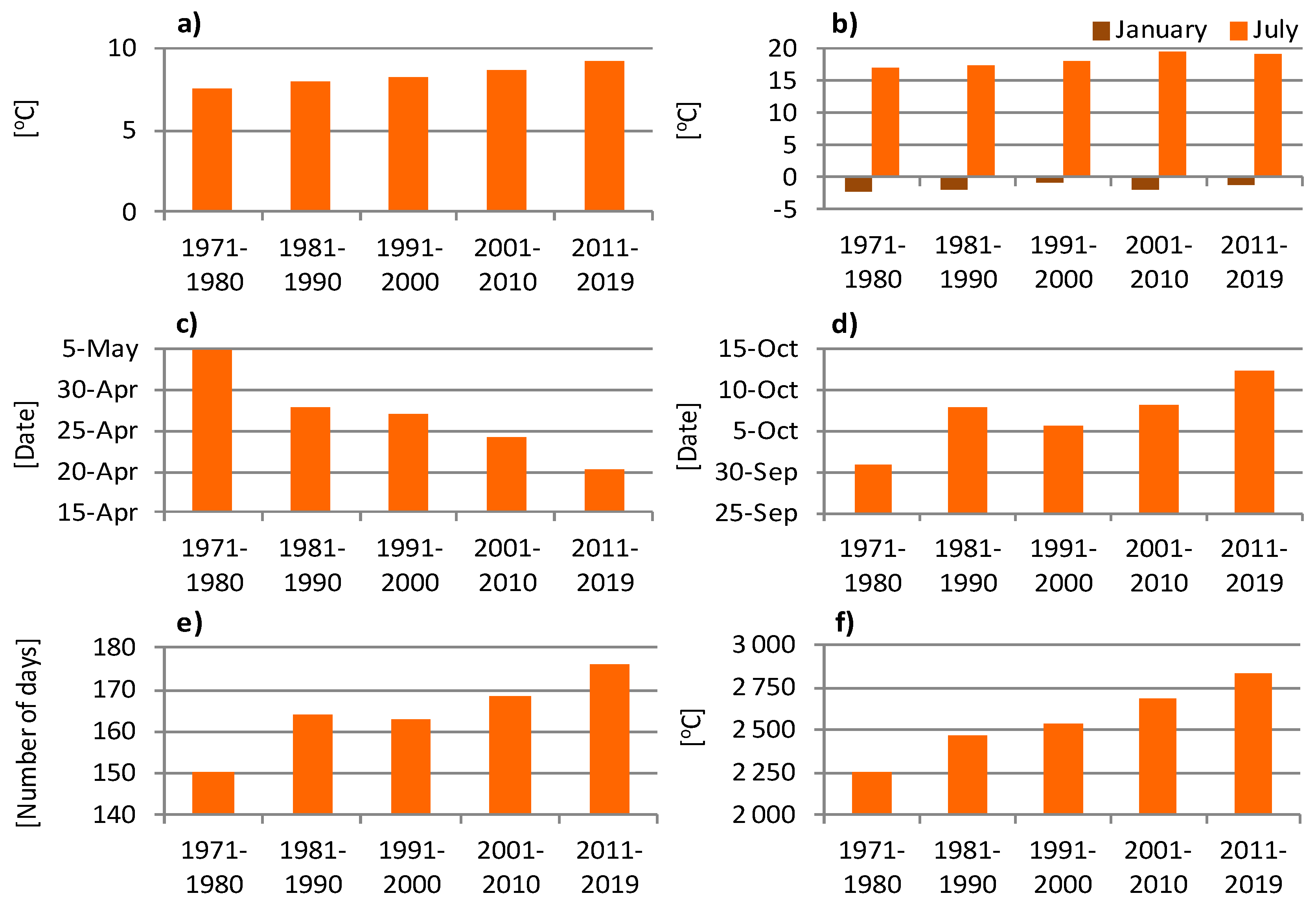
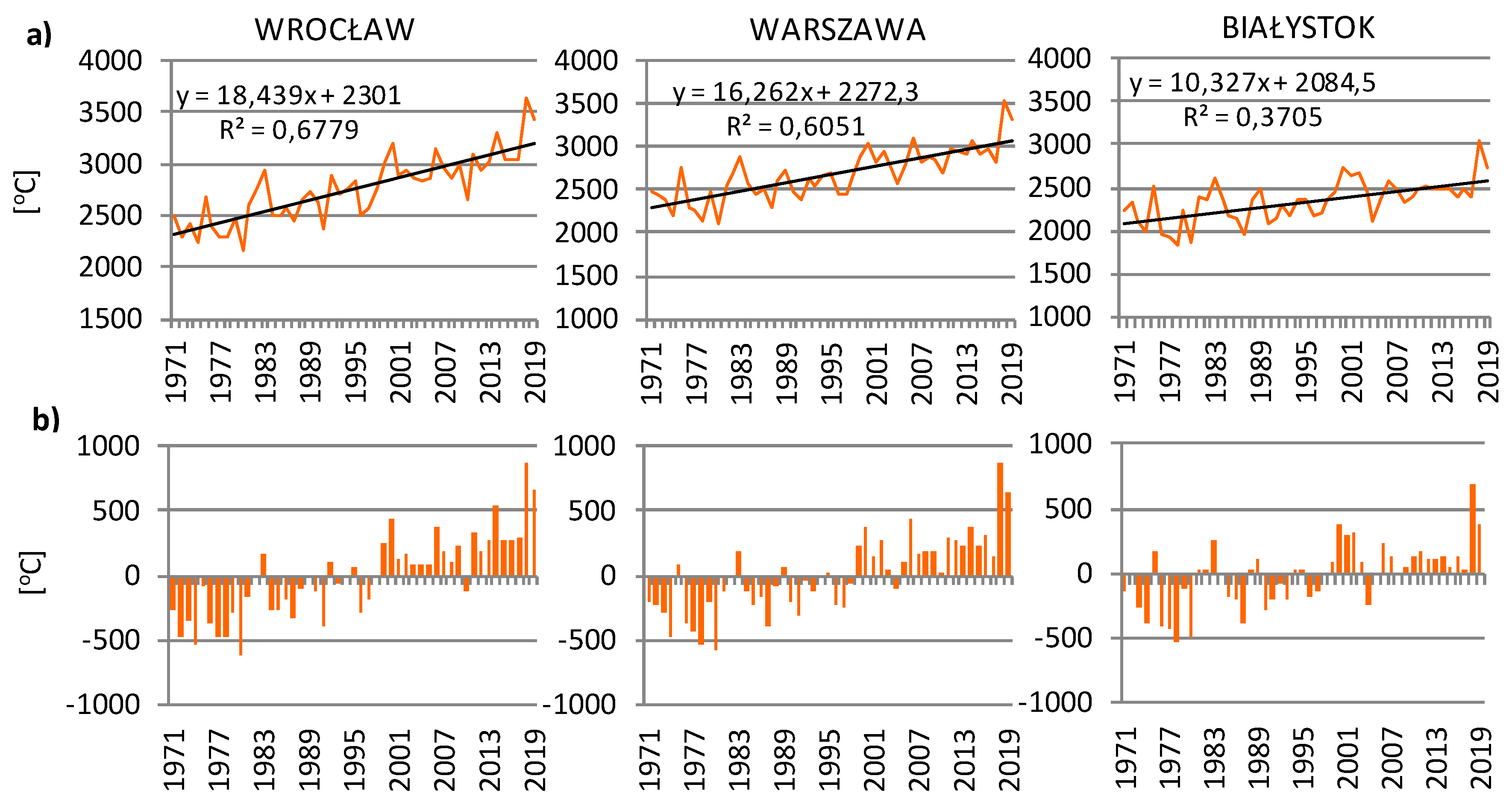
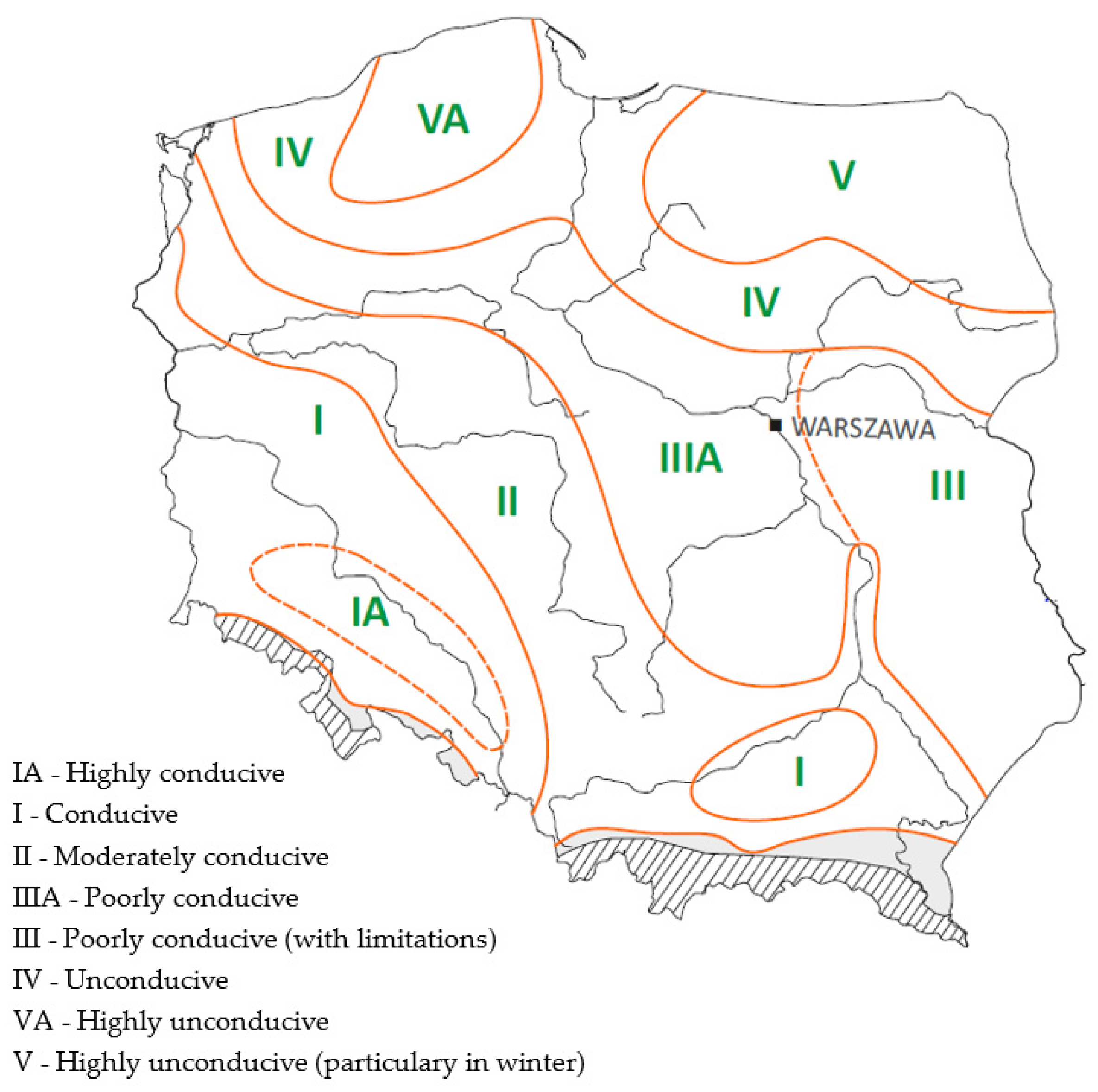
The ongoing global warming promotes an expansion of the areas of land already used for viticulture, as well as the establishment of new vineyards in areas that were previously considered unsuitable. In this study, a temporal and spatial assessment of the thermal conditions for viticulture in Poland was conducted using a series (1971–2019) of daily data on air temperature (mean, maximum and minimum) obtained from 52 stations of the Polish Institute of Meteorology and Water Management—National Research Institute. On the basis of the values of air temperature for the year (January–December), the vegetative period (April–September), and July, as well as the duration of the period of active growth of the plant (air temperature >10 °C) and the sum of active temperatures (SAT) in this period, five potential areas for viticulture in Poland were identified with respect to thermal conditions. It was found that approx. 60% of the country’s area shows conducive and moderately conducive conditions for intense viticulture. In the analysed multiannual period, there is a dynamic increase in air temperature in Poland, an increase in the sums of active temperatures (SAT) as well as an increase in the duration of the period of active growth of the plant. The ongoing global warming causes a shift of the current boundary of intense viticulture to the north of Poland (from 100 to 150 km). The greatest increases in air temperature and SAT values were found in the south-west and west of Poland, with a marked decrease shown towards the north-east and east.
Keywords: air temperature; thermal criterion; SAT; vegetative period; area; grapevines air temperature; thermal criterion; SAT; vegetative period; area; grapevines