Article

Oxcart Route in the City: Tracking the Urbanization Process of an Agricultural Village in Korea


1
Department of Architecture & Built Environment, Northumbria University, Newcastle upon Tyne NE1 8ST, UK
2
Department of Urban Planning & Engineering, Hanyang University, Seoul 04763, Korea
*
Author to whom correspondence should be addressed.
Sustainability 2019, 11(7), 2153; https://doi.org/10.3390/su11072153
Submission received: 24 February 2019 / Revised: 2 April 2019 / Accepted: 3 April 2019 / Published: 11 April 2019
(This article belongs to the Section Sustainable Urban and Rural Development)

Abstract

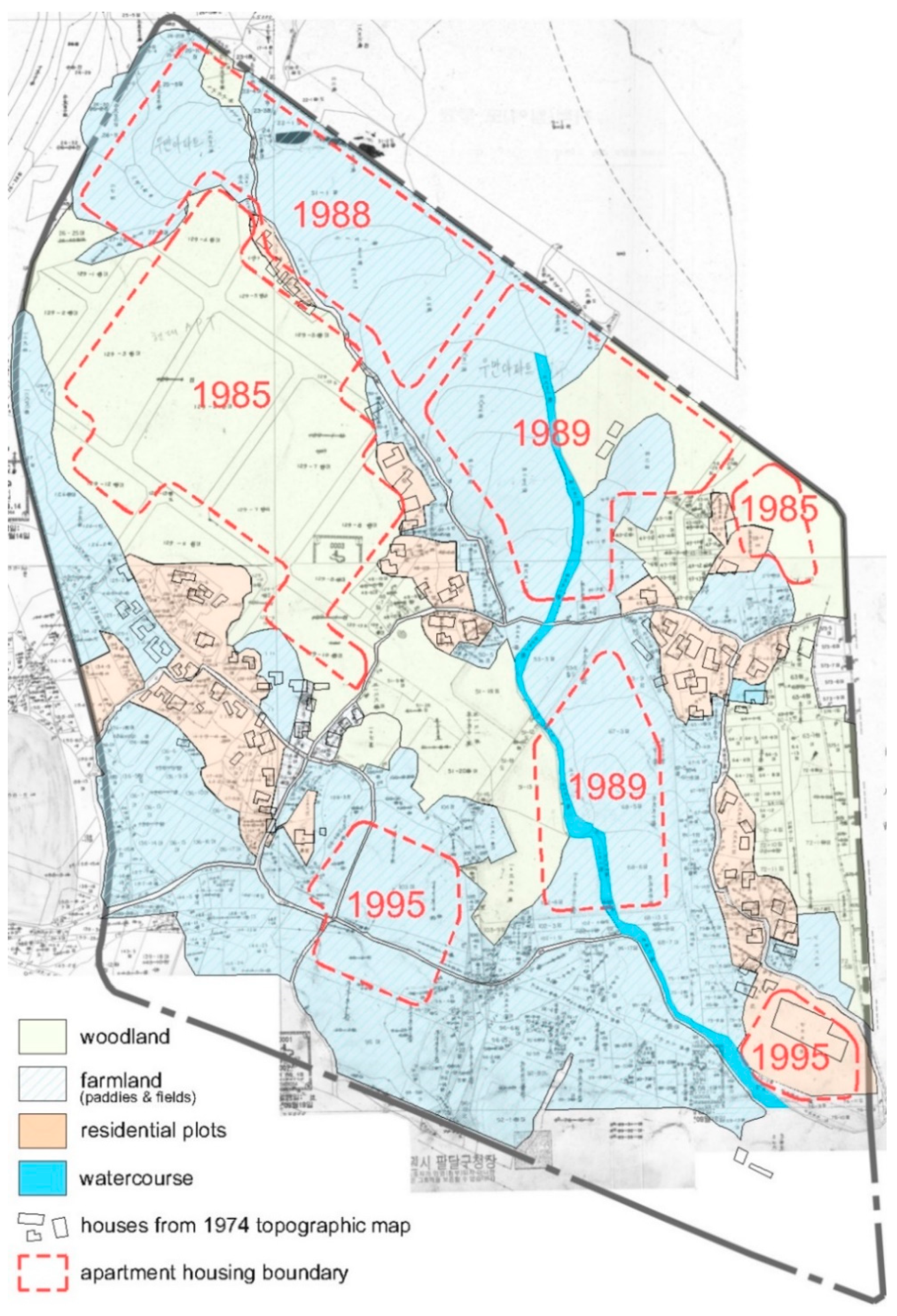
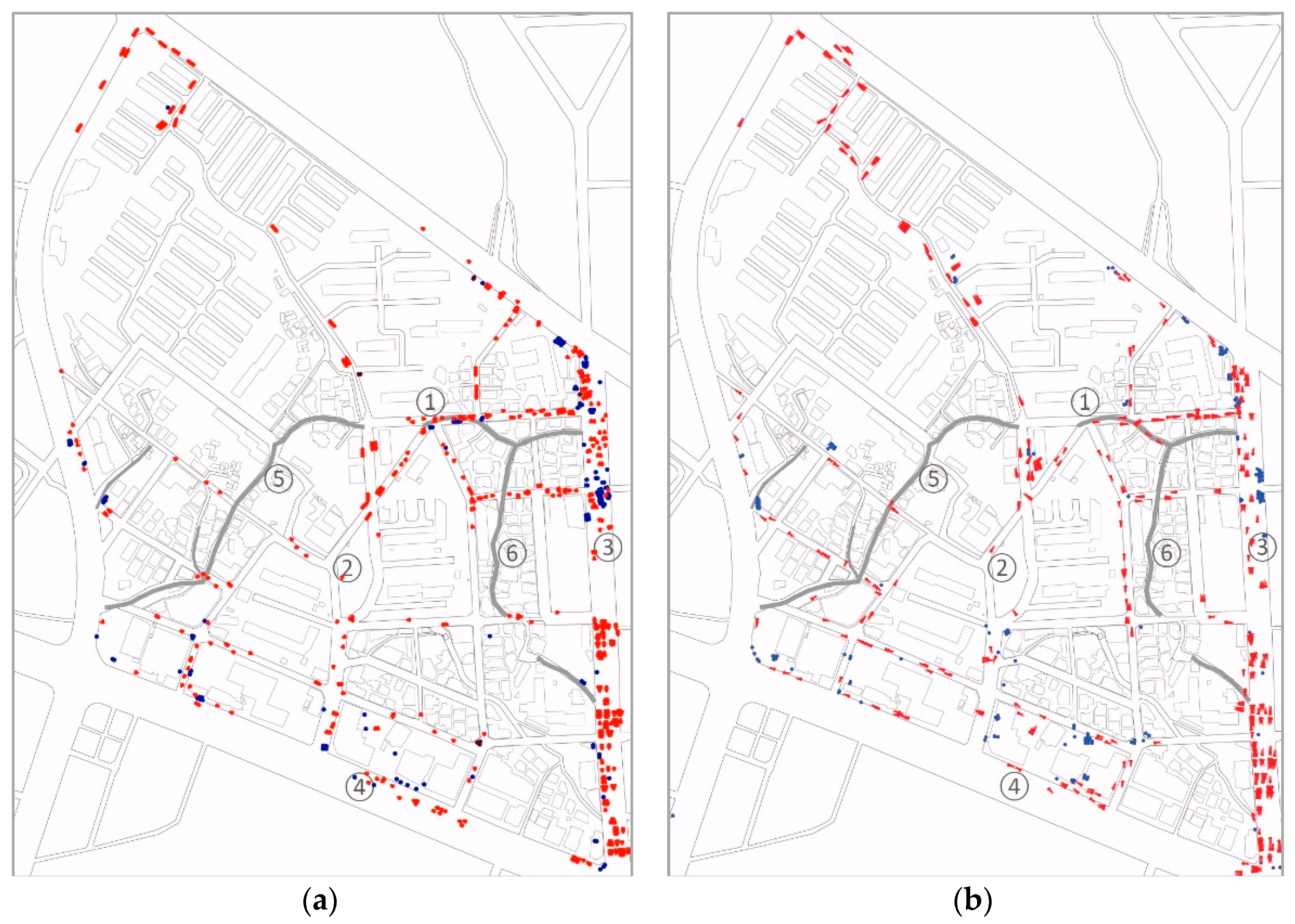
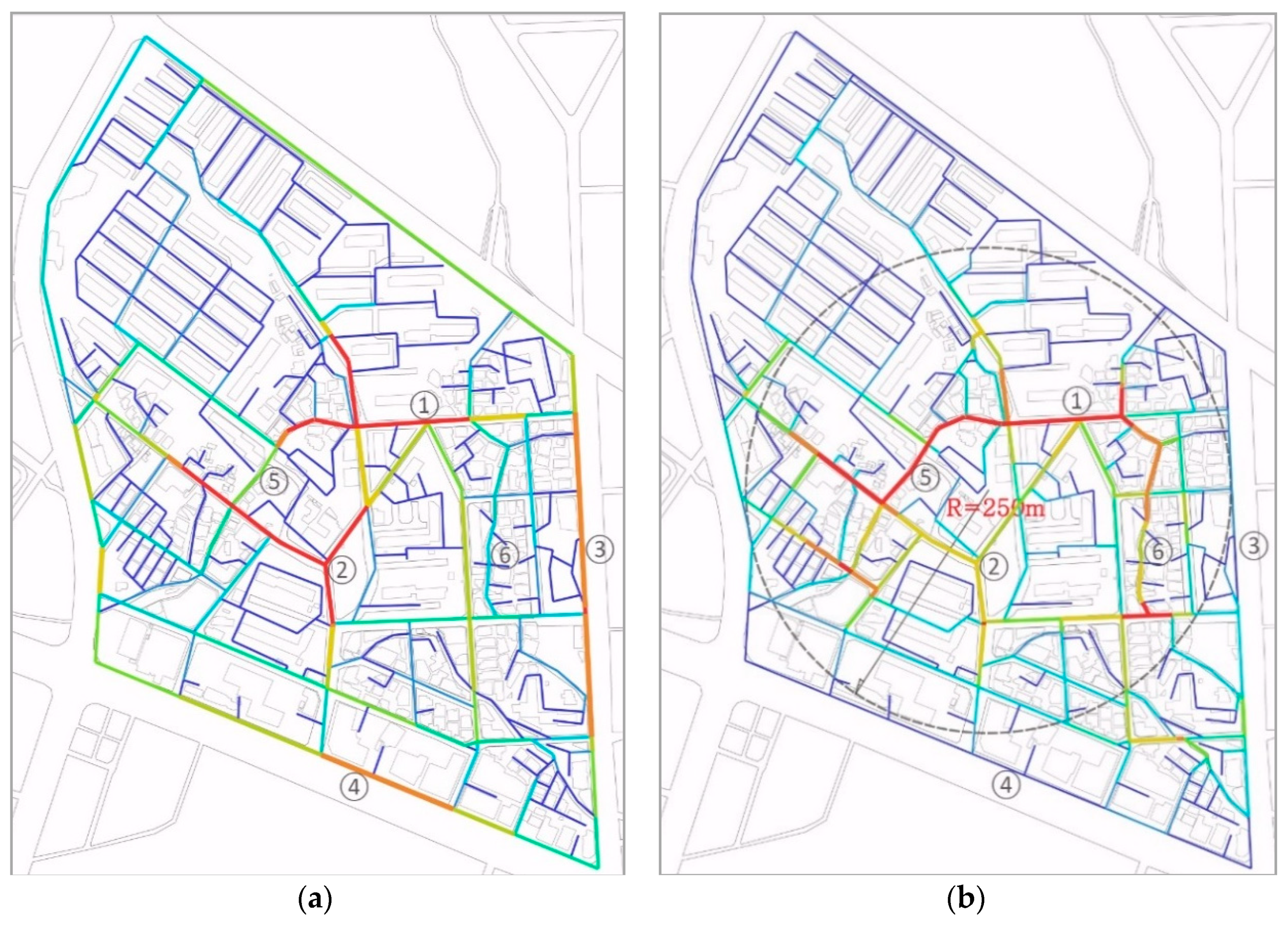
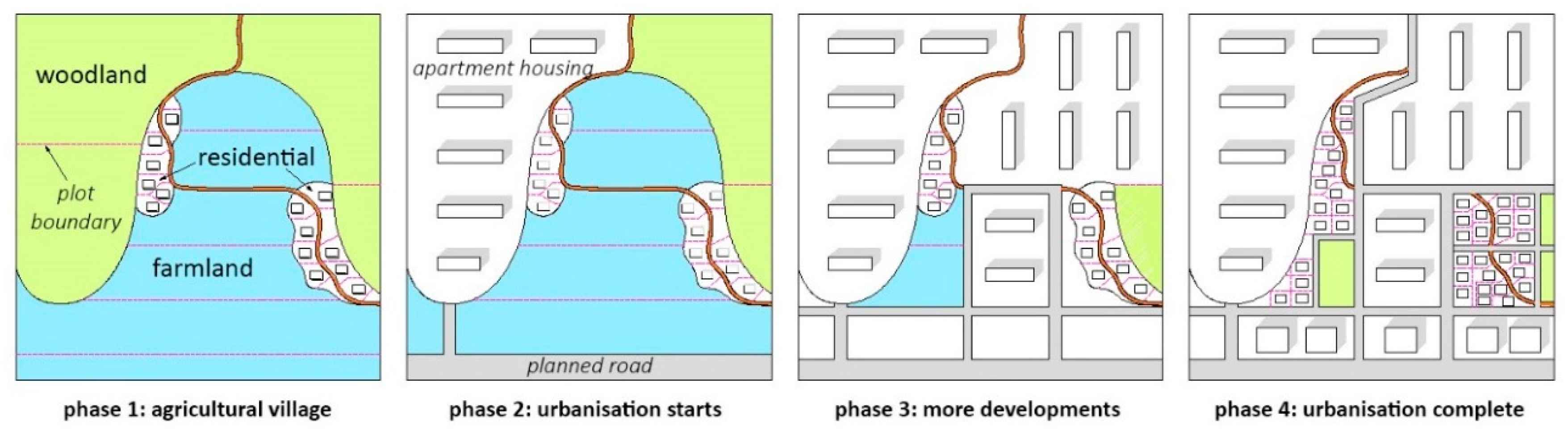
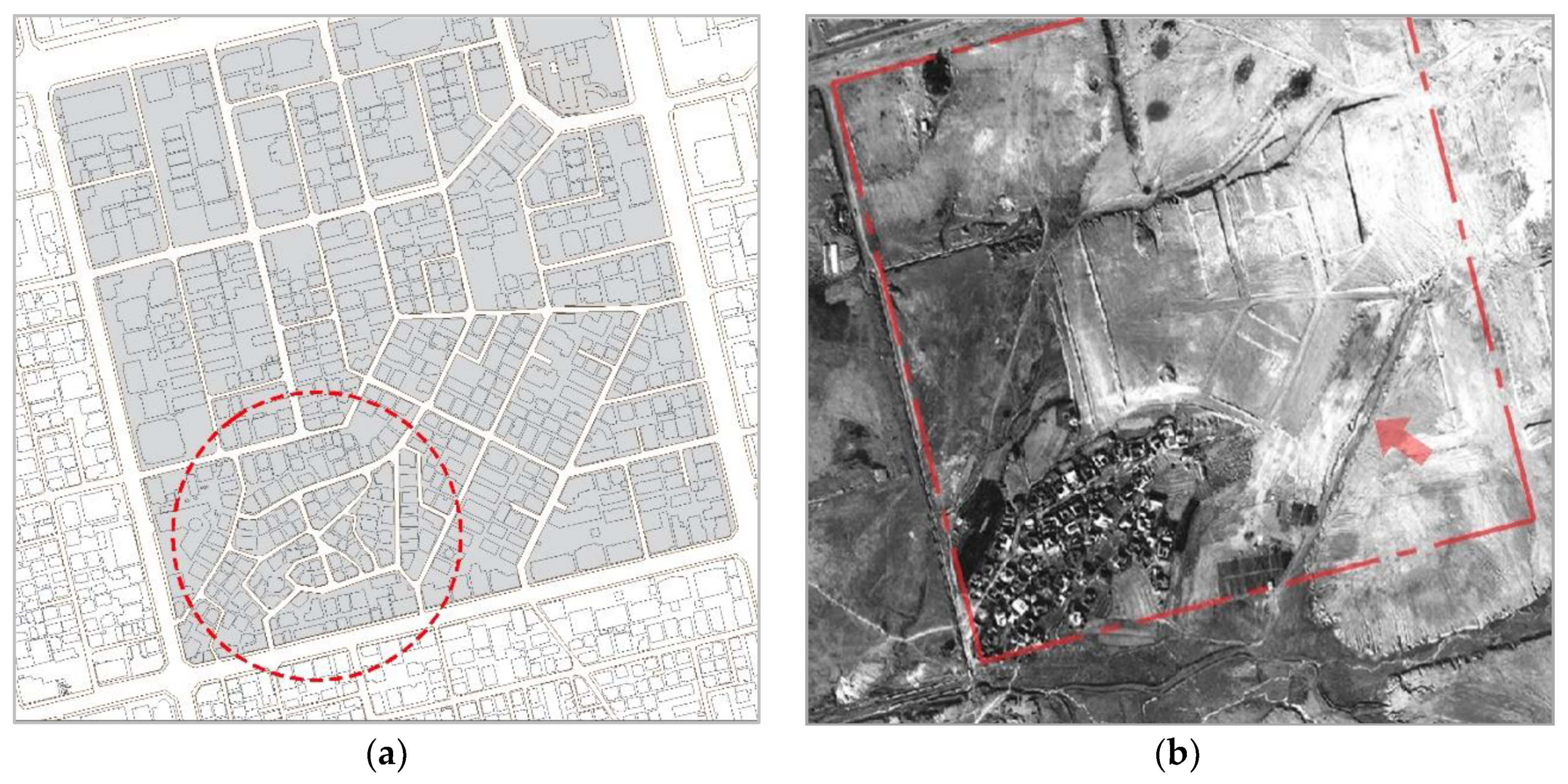
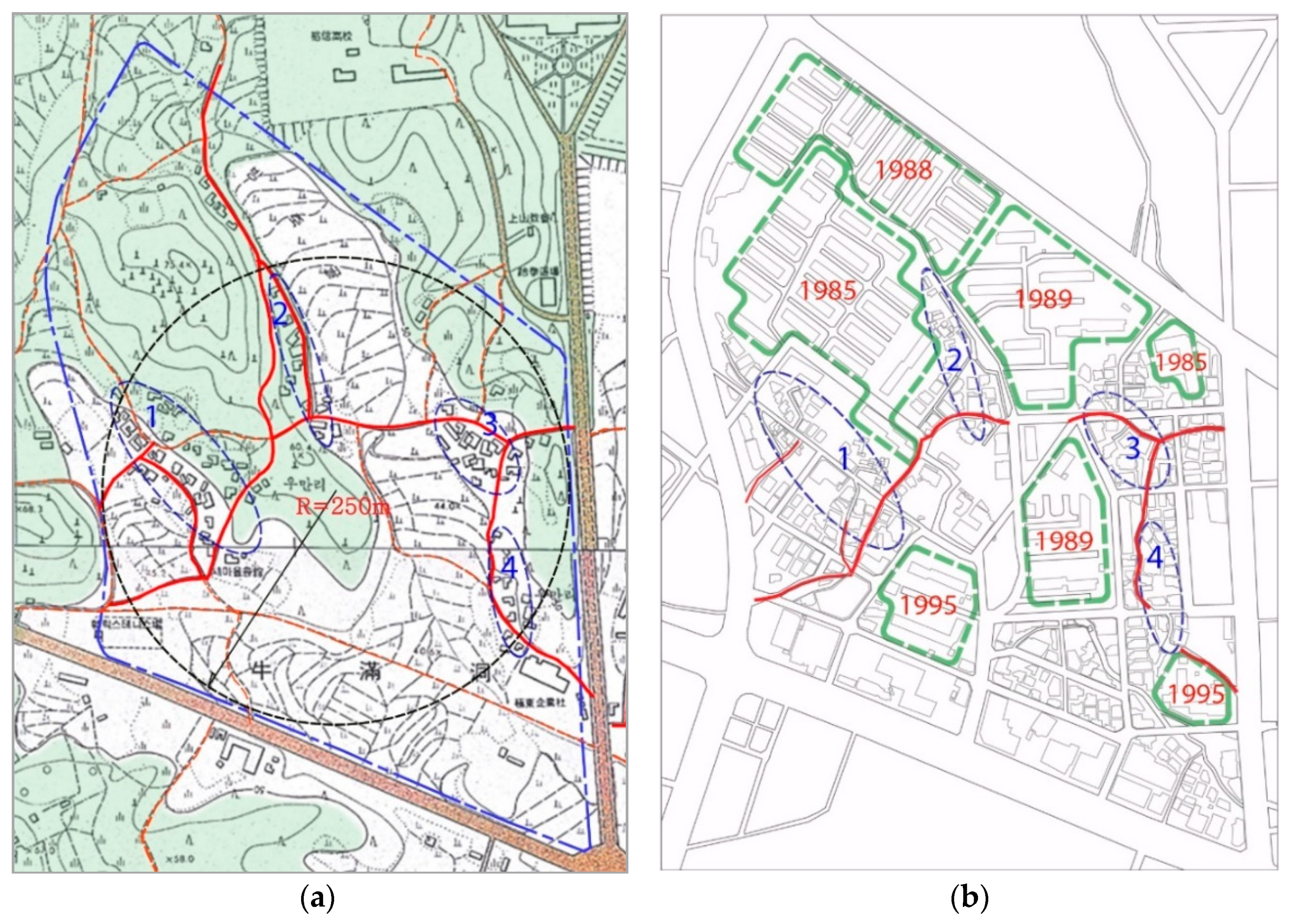
In this research, we traced the process of urbanization of a small agricultural village in Korea through the massive construction of housing estates and the modern street network in the late 20th century. Whereas the existing literature tends to adopt a data-driven macroscopic approach to analyze periurban transformation, we concentrated on the morphological transition of old rural roads in a small village to provide a microscopic interpretation of how they are obliterated, fragmented, or preserved in relation to land types and the acquisition process. Through a careful investigation of various maps and archives, we found that the woodland was the main target for development. In contrast, clustered residential plots were the most enduring feature that resisted change, entailing that their internal route remained intact. To determine the potential benefit of an irregular old route within the modern block, network analysis was executed to measure its performance. The route was shown to provide efficient movement in the current system, especially within the scale of the old village. The preservation of old spatial legacy, therefore, helps assign historical, social, and practical meaning to the design a sustainable modern city.
Keywords: urbanization; periurban development; rural routes; modern network; land types urbanization; periurban development; rural routes; modern network; land types