Article

Divergent Leading Factors in Energy-Related CO2 Emissions Change among Subregions of the Beijing–Tianjin–Hebei Area from 2006 to 2016: An Extended LMDI Analysis


1
Institute of Guangdong, Hongkong and Macao Development Studies (Center for Studies of Hong Kong, Macao and Pearl River Delta), Sun Yat-Sen University, Guangzhou 510275, China
2
Key Laboratory of Regional Sustainable Development Modeling, Institute of Geographic Sciences and Natural Resources Research, Chinese Academy of Sciences, Beijing 100101, China
3
College of Resources and Environment, University of Chinese Academy of Sciences, Beijing 100049, China
4
Department of Geography, Hong Kong Baptist University, Hong Kong 999077, China
*
Author to whom correspondence should be addressed.
Sustainability 2019, 11(18), 4929; https://doi.org/10.3390/su11184929
Submission received: 12 August 2019 / Revised: 3 September 2019 / Accepted: 5 September 2019 / Published: 9 September 2019

Abstract

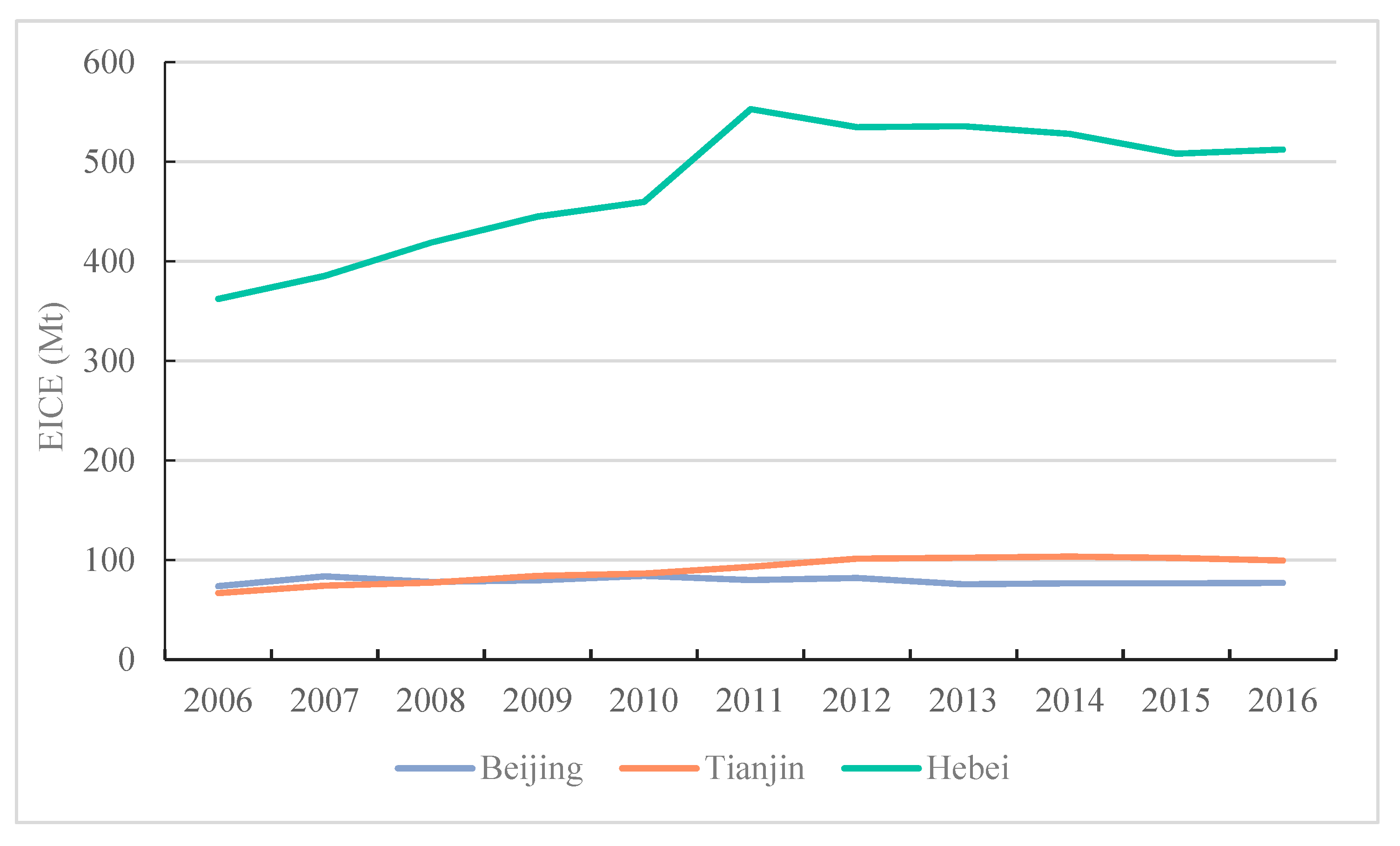
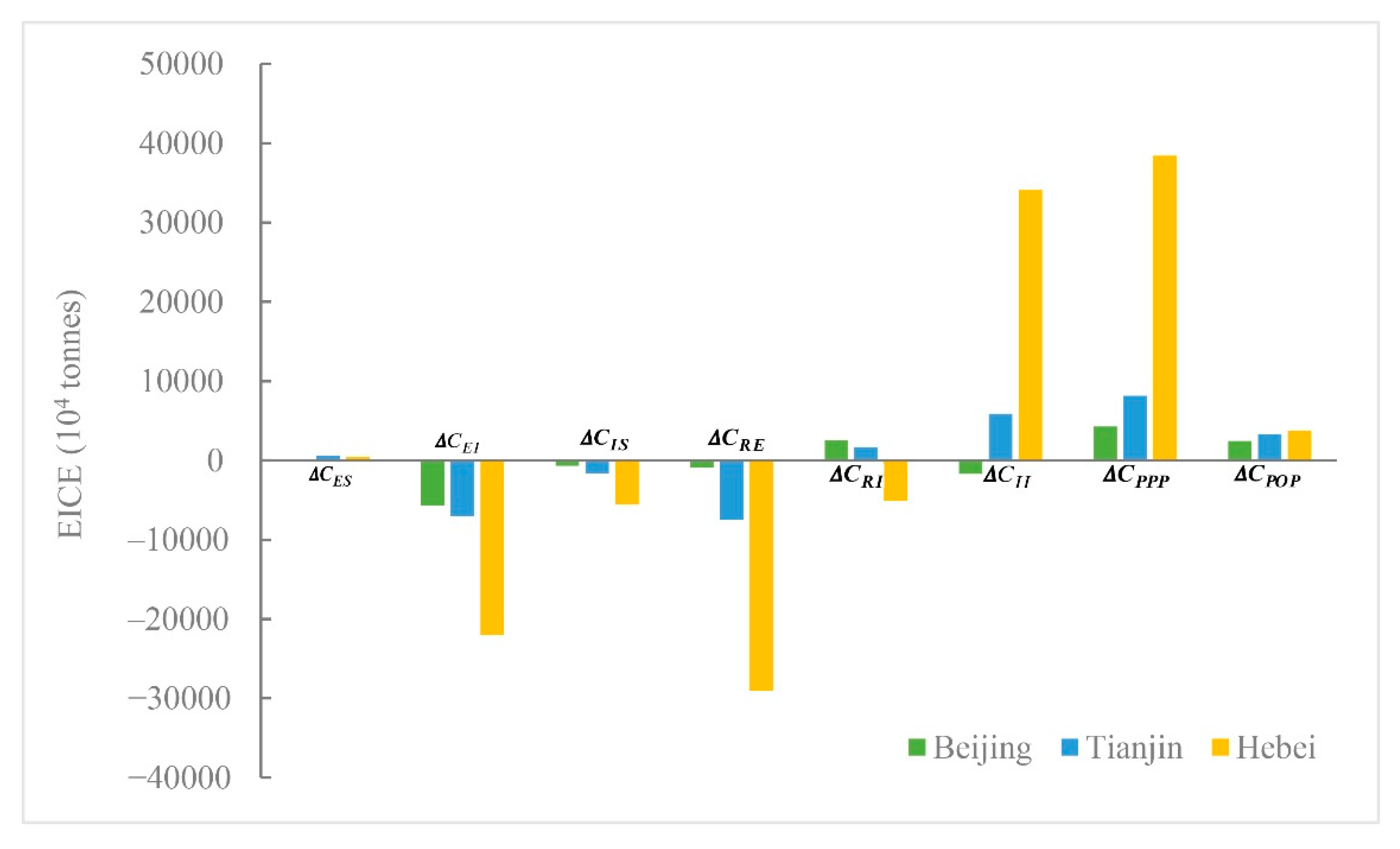
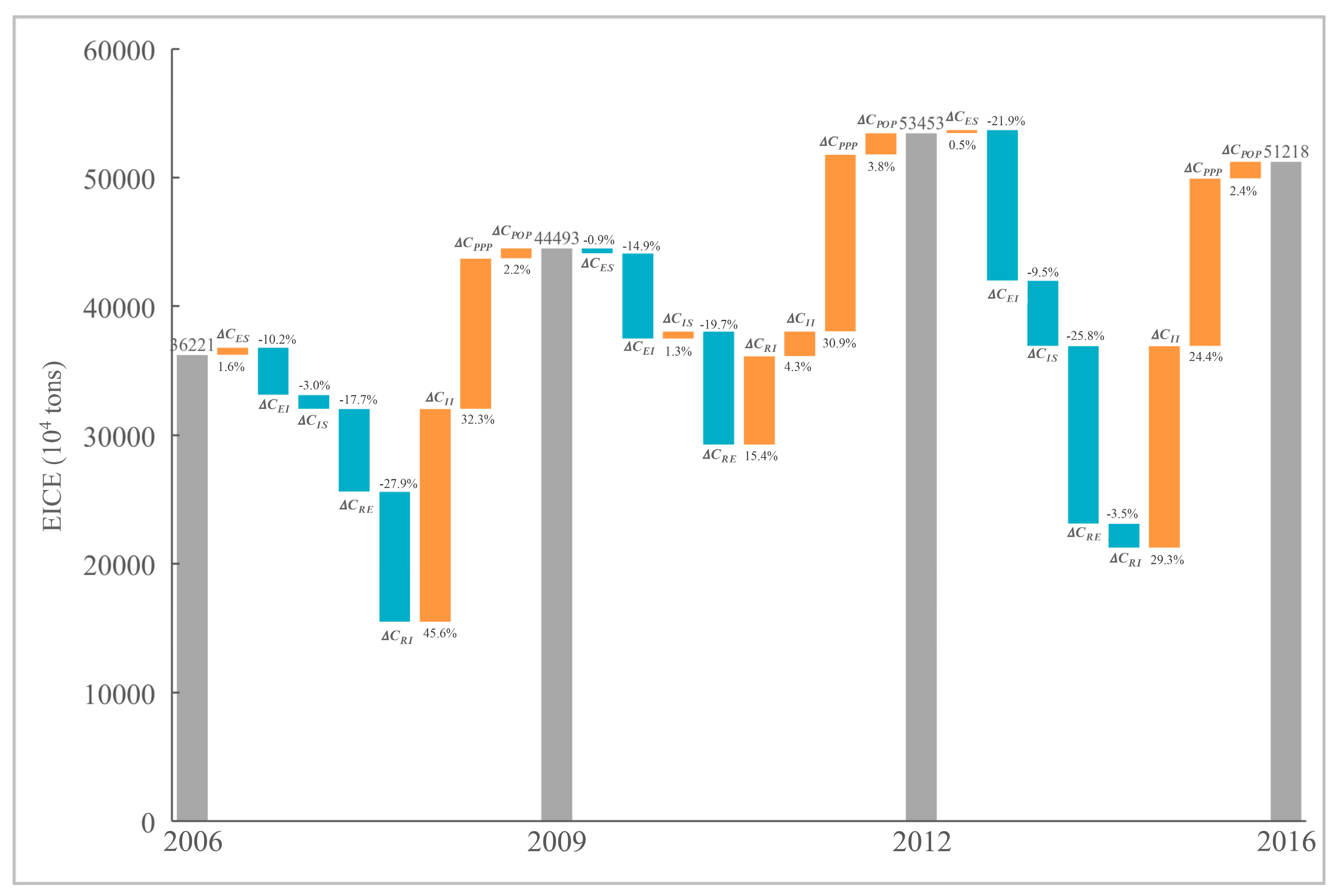
In recent decades, the Beijing–Tianjin–Hebei (BTH) region has experienced rapid economic growth accompanied by increasing energy demands and CO2 emissions. Understanding the driving forces of CO2 emissions is necessary to develop effective policies for low-carbon economic development. However, because of differences in the socioeconomic systems within the BTH region, it is important to investigate the differences in the driving factors of CO2 emissions between Beijing, Tianjin, and Hebei. In this paper, we calculated the energy-related industrial CO2 emissions (EICE) in Beijing, Tianjin, and Hebei from 2006 to 2016. We then applied an extended LMDI (logarithmic mean Divisia index) method to determine the driving forces of EICE during different time periods and in different subregions within the BTH region. The results show that EICE increased and then decreased from 2006 to 2016 in the BTH region. In all subregions, energy intensity, industrial structure, and research and development (R&D) efficiency effect negatively affected EICE, whereas gross domestic product per capita effect and population had positive effects on EICE. However, R&D intensity and investment intensity had opposite effects in some parts of the BTH region; the effect of R&D intensity on EICE was positive in Beijing and Tianjin but negative in Hebei, while the effect of investment intensity was negative in Beijing but positive in Tianjin and Hebei. The findings of this study can contribute to the development of policies to reduce EICE in the BTH region.
Keywords: BTH region; industrial CO2 emissions; LMDI; investment and R&D intensity BTH region; industrial CO2 emissions; LMDI; investment and R&D intensity