

Consumer Attitude, Concerns, and Brand Acceptance for the Vegetables Cultivated with Sustainable Plant Factory Production Systems

Abstract
1. Introduction
2. Methodology
2.1. Sampling
2.2. Questionnaire Design
2.3. Statistical Analysis
3. Results and Discussion
3.1. Profile of Sample
3.2. Consumer Perceptions and Suspicions toward the Plant Factory Vegetables
3.3. Reasons for Buying or Not Buying Plant Factory Vegetables
3.4. Consumer Maximum Willingness to Pay
4. Conclusions
- Consumers can recognize the product value of “pesticide-free” for the crops grown with plant factories, and they perceive those crops as “safe” and “non-toxic,” which can serve as the points for the market promotion of plant factory vegetables.
- Even though plant factories are sustainable production systems from the perspectives of natural resource requirement and pesticide application for agricultural production, some consumers reveal the concerns of whether plant factories are too electricity-consuming or would cause any other pollution to the environment. This implies that the future research and development of plant factories should focus on the technology of electricity saving, as well as the consumer communication regarding whether other possible pollution exists for the use of plant factories.
- Some consumers do not know much about plant factory vegetables, and therefore hesitate to buy them. This implies that for the future development of plant factories, the characteristics and product values generated from the usage of plant factory production systems need to be promoted.
- Consumer purchase intentions for plant factory vegetables are price-sensitive. However, the format of brand influences consumers’ willingness to pay for the plant factory crops. For the future development of plant factory technology, the researchers should aim at the topics of reducing its construction and operation costs, as well as the appropriate format for the name of the brand when commercializing the plant factory vegetables.
- Consumers who have a higher income or consume more organic vegetables are more willing to pay higher prices. Thus, the promotion of plant factory vegetables should aim at those consumers.
Funding
Acknowledgments
Conflicts of Interest
References
- Nichols, M. Plant factories-the ultimate in controlled environment agriculture. ICESC2015 Hydroponics Aquaponics Gold Coast 2015, 1176, 17–22. [Google Scholar] [CrossRef] [Scilit]
- Shamshiri, R.R.; Kalantari, F.; Ting, K.C.; Thorp, K.R.; Hameed, I.A.; Weltzien, C.; Ahmad, D.; Shad, Z.M. Advances in greenhouse automation and controlled environment agriculture: A transition to plant factories and urban agriculture. Int. J. Agric. Biol. Eng. 2018, 11, 1–22. [Google Scholar] [CrossRef] [Scilit]
- WinterGreen Research, Inc. Plant Factory Grow Lights and Control Systems Market Strategies, Shares and Forecasts, Worldwide, 2010–2016; WinterGreen Research, Inc.: Lexington, MA, USA, 2010. [Google Scholar]
- Brammer, H.; Ravenscroft, P. Arsenic in groundwater: A threat to sustainable agriculture in South and South-east Asia. Environ. Int. 2009, 35, 647–654. [Google Scholar] [CrossRef] [Scilit]
- Pei, X.; Tandon, A.; Alldrick, A.; Giorgi, L.; Huang, W.; Yang, R. The China melamine milk scandal and its implications for food safety regulation. Food Policy 2011, 36, 412–420. [Google Scholar] [CrossRef] [Scilit]
- Prabhakar, S.V.R.K.; Sano, D.; Srivastava, N. Food Safety in the Asia-Pacific Region: Current Status, Policy Perspectives, and a Way Forward; Institute for Global Environmental Strategies: Hayama, Japan, 2010. [Google Scholar]
- Kozai, T. Resource use efficiency of closed plant production system with artificial light: Concept, estimation and application to plant factory. Proc. Jpn. Acad. 2013, 89, 447–461. [Google Scholar] [CrossRef] [Scilit]
- Aydinalp, C.; Cresser, M.S. The effects of global climate change on agriculture. Am. Eurasian J. Agric. Environ. Sci. 2008, 3, 672–676. [Google Scholar]
- Watanabe, H. Light-controlled plant cultivation system in Japan—Development of a vegetable factory using LEDs as a light source for plants. Acta Hortic. 2011, 907, 37–44. [Google Scholar] [CrossRef] [Scilit]
- Boccaletti, S.; Nardella, M. Consumer willingness to pay for pesticide-free fresh fruit and vegetables in Italy. Int. Food Agribus. Manag. Rev. 2000, 3, 297–310. [Google Scholar] [CrossRef] [Scilit]
- Cranfield, J.; Magnusson, E. Canadian consumer’s willingness-to-pay for pesticide free food products: An ordered probit analysis. Int. Food Agribus. Manag. Rev. 2003, 6, 13–30. [Google Scholar]
- Cranfield, J.; Henson, S.; Holliday, J. The motives, benefits, and problems of conversion to organic production. Agric. Hum. Values 2010, 27, 291–306. [Google Scholar] [CrossRef] [Scilit]
- Chen, X.L.; Yang, Q.C.; Song, W.P.; Wang, L.C.; Guo, W.Z.; Xue, X.Z. Growth and nutritional properties of lettuce affected by different alternating intervals of red and blue LED irradiation. Sci. Hortic. 2017, 223, 44–52. [Google Scholar] [CrossRef] [Scilit]
- Hwang, J. A Production Line for Plants. Taiwan Review. 2012. Available online: http://taiwanreview.nat.gov.tw/fp.asp?xItem=182083&ctNode=1337 (accessed on 19 November 2013).
- Shimizu, H.; Saito, Y.; Nakashima, H.; Miyasaka, J.; Ohdoi, K. Light Environment Optimization for Lettuce Growth in Plant Factory. In Proceedings of the 18th IFAC World Congress, Milano, Italy, 28 August–2 September 2011; pp. 605–609. [Google Scholar]
- Gasteyer, S.P. Agricultural transitions in the context of growing environmental pressure over water. Agric. Hum. Values 2008, 25, 469–486. [Google Scholar] [CrossRef] [Scilit]
- Son, J.E.; Park, J.S.; Lee, L. Development of urban-type plant factory for plant production and air purification. Acta Hort. 2002, 578, 257–262. [Google Scholar] [CrossRef] [Scilit]
- Specht, K.; Siebert, R.; Hartmann, I.; Freisinger, U.B.; Sawicka, M.; Werner, A.; Thomaier, S.; Henckel, D.; Walk, H.; Dierich, A. Urban agriculture of the future: An overview of sustainability aspects of food production in and on buildings. Agric. Hum. Values 2014, 31, 33–51. [Google Scholar] [CrossRef] [Scilit]
- Taylor, J.R.; Lovell, S.T. Urban home food gardens in the Global North: Research traditions and future directions. Agric. Hum. Values 2014, 31, 285–305. [Google Scholar] [CrossRef] [Scilit]
- Lai, C.C.; Fang, W.; Chang, S.F. Plant factory in Taiwan using moving light with multi-layers. Acta Hort. 2002, 578, 263–267. [Google Scholar] [CrossRef] [Scilit]
- Kim, J.W. Trend and direction for plant factory system. J. Plant Biotechnol. 2010, 37, 442–455. [Google Scholar] [CrossRef] [Scilit]
- Lim, S.T.; Yang, S.R. Is plant factory a sustainable alternative? Korean J. Agric. Manag. Policy 2011, 38, 917–942. [Google Scholar]
- Watanabe, A. Plant factory business aiming for sustainable growth – Trends of entering companies and challenges to establish growth models (持続的成長を目指す植物工場ビジネス--参入企業の動向と成長モデル確立への課題). Ind. Innov. 2010, 68, 1–16. (In Japanese) [Google Scholar]
- Japan Finance Corporation. Consumer Awareness of Vegetables Grown in Plant Factories (植物工場で栽培される野菜に関する消費者意識); Japan Finance Corporation: Tokyo, Japan, 2009. (In Japanese) [Google Scholar]
- Glenna, L.L.; Jussaume, R.A., Jr.; Dawson, J.C. How farmers matter in shaping agricultural technologies: Social and structural characteristics of wheat growers and wheat varieties. Agric. Hum. Values 2011, 28, 213–224. [Google Scholar] [CrossRef] [Scilit]
- Kruseman, G.; Bade, J. Agrarian policies for sustainable land use: Bio-economic modeling to assess the effectiveness of policy instruments. Agric. Syst. 1998, 58, 465–481. [Google Scholar] [CrossRef] [Scilit]
- Wreford, A.; Renwick, A. Estimating the costs of climate change adaptation in the agricultural sector. Cab. Rev. 2012, 7, 1–10. [Google Scholar] [CrossRef] [Scilit]
- Kato, K.; Yoshida, R.; Kikuzaki, A.; Hirai, T.; Kuroda, H.; Hiwasa-Tanase, K.; Mizoguchi, T. Molecular breeding of tomato lines for mass production of miraculin in a plant factory. J. Agric. Food Chem. 2010, 58, 9505–9510. [Google Scholar] [CrossRef] [Scilit]
- Park, J.E.; Murase, H. Optimal Environmental Condition for Moss Production in Plant Factory System. In Proceedings of the 18th IFAC (International Federation of Automatic Control) World Congress, Milano, Italy, 28 August–2 September 2011; pp. 621–626. [Google Scholar]
- Shimizu, H. Current Status and Challenge of Plant Factory in Japan. In Proceedings of the International Agriculture Engineering Conference, Bangkok, Thailand, 7–10 December 2009. [Google Scholar]
- Hair, J.F., Jr.; Black, W.C.; Babin, B.J.; Anderson, R.E. Multivariate Data Analysis: A Global Perspective, 7th ed.; Prentice Hall: Upper Saddle River, NJ, USA, 2010. [Google Scholar]
- Armstrong, G.; Kotler, P. Marketing: An Introduction; Pearson: Boston, MA, USA, 2013. [Google Scholar]
- Council of Labor Affairs of Taiwan. The Salary Distribution for Occupations (In Chinese). Available online: https://pswst.cla.gov.tw/PSDN/Query/wFrmQuery01.aspx (accessed on 26 October 2013).
- Vukasovič, T. Consumers’ perceptions and behaviors regarding organic fruits and vegetables: Marketing trends for organic food in the twenty-first century. J. Int. Food Agribus. Mark. 2016, 28, 59–73. [Google Scholar] [CrossRef] [Scilit]
- Zhang, B.; Fu, Z.; Huang, J.; Wang, J.; Xu, S.; Zhang, L. Consumers’ perceptions, purchase intention, and willingness to pay a premium price for safe vegetables: A case study of Beijing, China. J. Clean. Prod. 2018, 197, 1498–1507. [Google Scholar] [CrossRef] [Scilit]
- Aschemann-Witzel, J.; Zielke, S. Can’t buy me green? A review of consumer perceptions of and behavior toward the price of organic food. J. Consum. Aff. 2017, 51, 211–251. [Google Scholar] [CrossRef] [Scilit]
- You, Z.; Zhang, X.; Chen, C.H.; Ono, K.; Hibino, H.; Koyama, S. Impact of relevant knowledge on purchase intention of plant-factory-produced plants. Focus Mod. Food Ind. 2013, 2, 63–69. [Google Scholar]
- Kurihara, S.; Ishida, T.; Suzuki, M.; Maruyama, A. Consumer evaluation of plant factory produced vegetables. Focus. Mod. Food Ind. 2014, 3, 1–9. [Google Scholar] [CrossRef] [Scilit]
- You, Z.; Zhang, X.; Koyama, S. Informational vs. emotional appeals of logo design in influencing purchase intentions for plant-factory-produced vegetables. Int. J. Adv. Psychol. 2013, 2, 224–231. [Google Scholar] [CrossRef] [Scilit]
- Sugimura, N.; Iwamura, K.; Thinh, N.; Nakai, K.; Fukumoto, S.; Tanimizu, Y. Production Cost Analysis and Production Planning for Plant Factories Considering Markets. In Proceedings of the IFIP International Conference on Advances in Production Management Systems, Tokyo, Japan, 7–9 September 2015; pp. 532–540. [Google Scholar]
- Graamans, L.; Baeza, E.; Van Den Dobbelsteen, A.; Tsafaras, I.; Stanghellini, C. Plant factories versus greenhouses: Comparison of resource use efficiency. Agric. Syst. 2018, 160, 31–43. [Google Scholar] [CrossRef] [Scilit]
- Kikuchi, Y.; Kanematsu, Y.; Yoshikawa, N.; Okubo, T.; Takagaki, M. Environmental and resource use analysis of plant factories with energy technology options: A case study in Japan. J. Clean. Prod. 2018, 186, 703–717. [Google Scholar] [CrossRef] [Scilit]
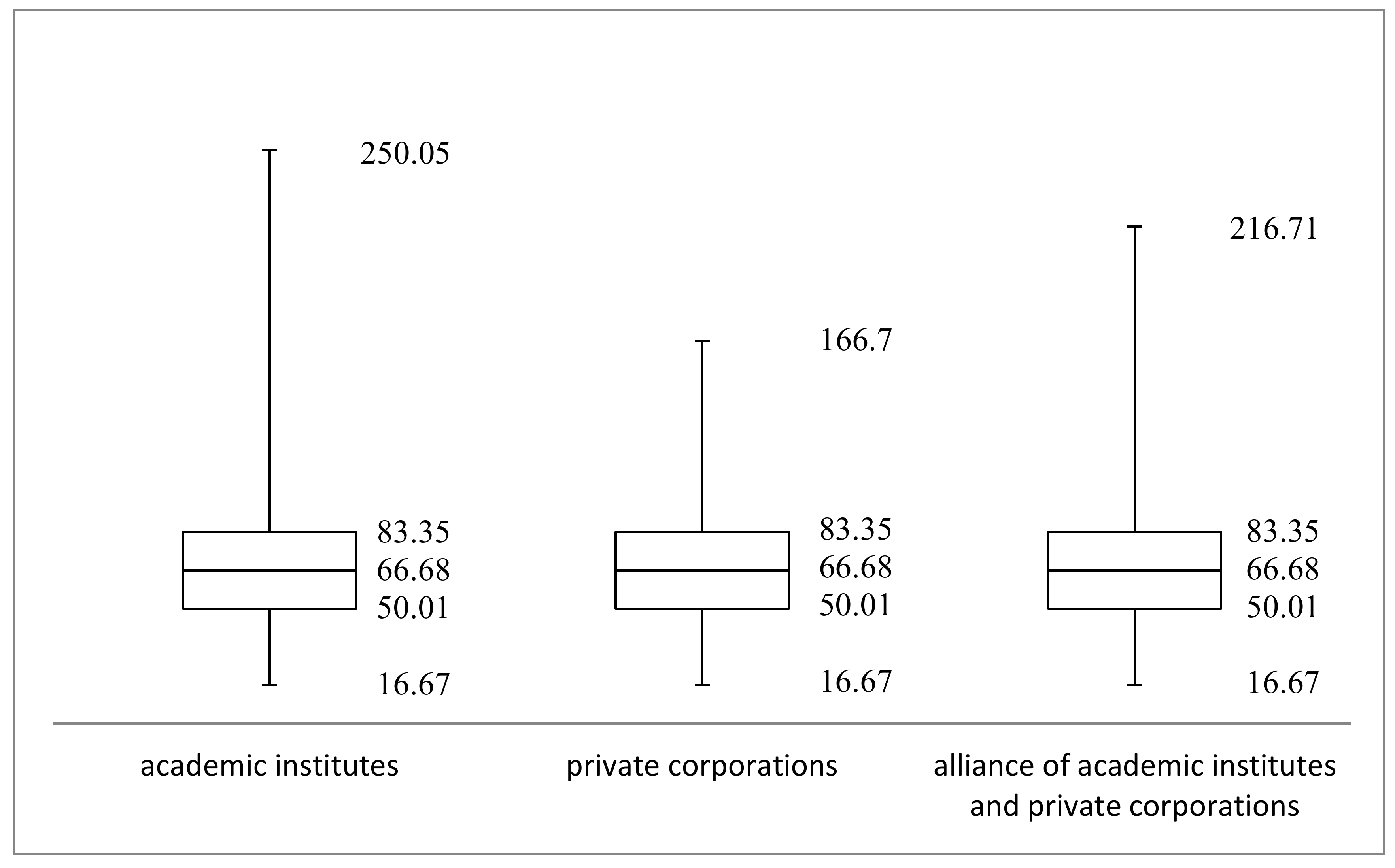
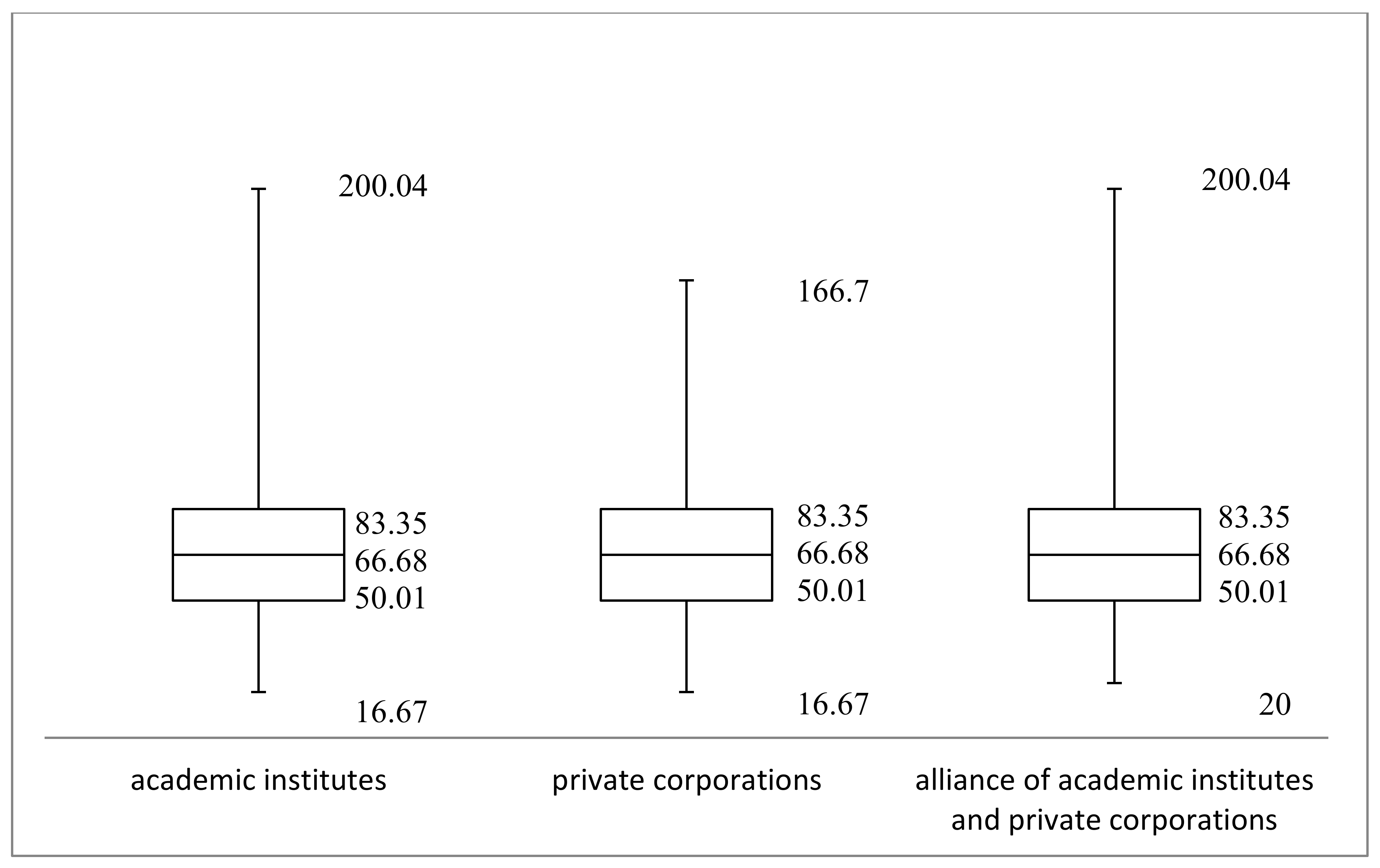
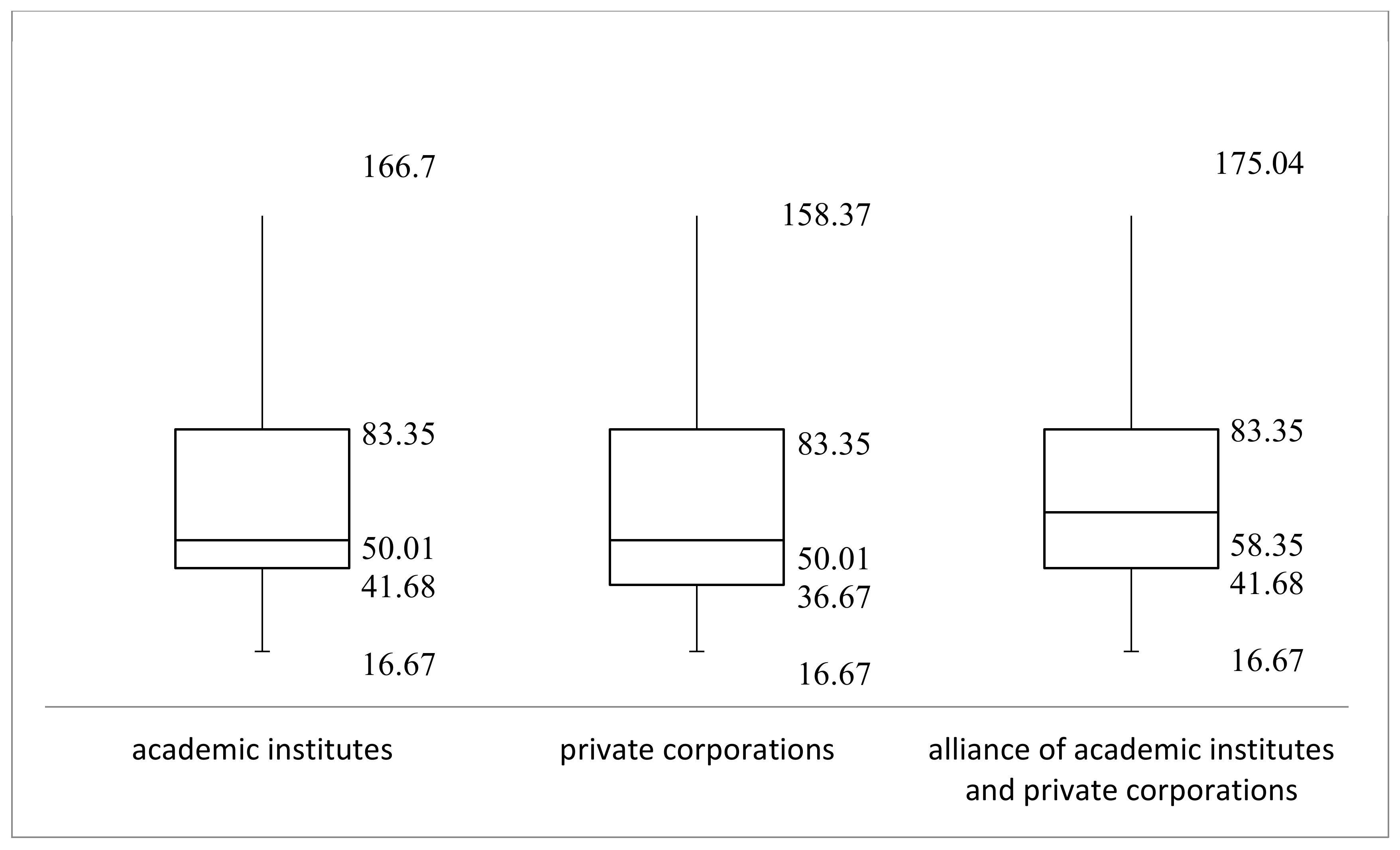

| Advantages | Disadvantages |
|---|---|
|
|
| City/County | District/Town | Vegetable Retail Channels | Sample Size | |
|---|---|---|---|---|
| Urban area (n = 240) | Taipei | Neihu | (Traditional market) Hu Kwang traditional market | 16 |
| (Supermarket) Ting Ho supermarket-Hu Shing store | 16 | |||
| (Department store) Day Lake department store | 16 | |||
| New Taipei | Yonghe | (Traditional market) Shi Zou traditional market | 23 | |
| (Supermarket) Ting Ho supermarket-Zoo Lin second store | 23 | |||
| (Department store) Pacific Ocean department store | 23 | |||
| Taichung | West | (Traditional market) Do Shing traditional market | 14 | |
| (Supermarket) Fong Kong supermarket-Chung Ming store | 14 | |||
| (Department store) SHIN KONG MITSUKOSHI-Taichung store | 14 | |||
| Tainan | Annan | (Traditional market) HerShing traditional market | 10 | |
| (Supermarket) Ting Ho supermarket-Annan store | 10 | |||
| (Department store) SHIN KONG MITSUKOSHI-Chung Shan store | 10 | |||
| Kaohsiung | Sanmin | (Traditional market) Po I traditional market | 17 | |
| (Supermarket) Ting Ho supermarket-Da Fong store | 17 | |||
| (Department store) HanShin department store | 17 | |||
| Non-urban area (n = 150) | Miaoli | Nanzhuang | (Traditional market) Miaoli County public traditional market | 32 |
| (Supermarket) Ting Ho supermarket-Bay Miao store | 32 | |||
| Changhua | Lukang | (Traditional market) The First traditional market | 14 | |
| (Supermarket) Fong Kong supermarket-LuKung store | 14 | |||
| Yunlin | Beigan | (Traditional market) Bay Kung traditional market | 20 | |
| (Supermarket) Chang Lan supermarket-Bay Kung store | 20 | |||
| Taitung | Chishang | (Traditional market) Taitung public traditional store | 9 | |
| (Supermarket) Chishang farmers’ association supermarket | 9 |
| Question | Choice Categories | Frequency (n = 390) | Percentage (%) |
|---|---|---|---|
| Gender | Male | 98 | 25.1 |
| Female | 292 | 74.9 | |
| Age | 18–27 | 52 | 13.3 |
| 28–37 | 82 | 21.0 | |
| 38–47 | 97 | 24.9 | |
| 48–57 | 102 | 26.1 | |
| 58–67 | 40 | 10.3 | |
| 68 or over | 17 | 4.3 | |
| Education | Junior high school or less | 42 | 10.8 |
| Senior high school | 121 | 31.0 | |
| College | 201 | 51.5 | |
| Graduate school | 26 | 6.7 | |
| Occupation | Managers | 15 | 3.8 |
| Specialists | 19 | 4.9 | |
| Administration service staffs | 48 | 12.3 | |
| Sales | 97 | 24.9 | |
| Agricultural, forestry, fishery, and husbandry production | 1 | 0.3 | |
| Artistic workers | 11 | 2.8 | |
| Engineers | 8 | 2.1 | |
| Technicians | 20 | 5.1 | |
| Government staffs | 45 | 11.5 | |
| Homemakers | 85 | 21.8 | |
| Students | 19 | 4.9 | |
| The retired | 18 | 4.6 | |
| Self-employed | 4 | 1.0 | |
| Monthly income | NT$ 40,000 or less | 116 | 29.7 |
| NT$ 40,001–60,000 | 103 | 26.4 | |
| NT$ 60,001–80,000 | 81 | 20.8 | |
| NT$ 80,001 or more | 90 | 23.1 |
| Questions | Choice Categories | Frequency (n = 390) | Percentage (%) |
|---|---|---|---|
| In your thought, what types of vegetables do you think the vegetables cultivated from plant factories are? |
| 214 | 54.9 |
| 190 | 48.7 | |
| 158 | 40.5 | |
| 130 | 33.3 | |
| 73 | 18.7 | |
| 30 | 7.7 | |
| Do you have any suspicion about the vegetables that are grown from plant factories? | No | 139 | 35.6 |
| Yes (Multiple- Choice) | 251 | 64.4 | |
| 112 | 44.6 | |
| 106 | 42.2 | |
| 80 | 31.9 | |
| 76 | 30.3 | |
| 67 | 26.7 | |
| 35 | 13.9 | |
| 12 | 4.8 | |
| Which of the following institute’s plant factory vegetables would you be most willing to buy? |
| 223 | 57.2 |
| 102 | 26.2 | |
| 53 | 13.6 | |
| 6 | 1.5 | |
| 6 | 1.5 |
| Will you buy vegetables which are produced by a plant factory in the future? | Yes, I will. (n = 201, 51.5%) | Reasons | Frequency | Percentage (%) |
| 128 | 63.7 | ||
| 94 | 46.8 | ||
| 66 | 32.8 | ||
| 43 | 21.4 | ||
| 39 | 19.4 | ||
| 34 | 16.9 | ||
| 16 | 8.0 | ||
| 12 | 6.0 | ||
| 10 | 5.0 | ||
| 5 | 2.5 | ||
| It depends. (n = 183, 47.0%) |
| 132 | 72.1 | |
| 96 | 52.5 | ||
| 81 | 44.3 | ||
| 78 | 42.6 | ||
| 75 | 41.0 | ||
| 47 | 25.7 | ||
| No, I will not. (n = 6, 1.5%) |
| 4 | 66.7 | |
| 2 | 33.3 | ||
| 2 | 33.3 | ||
| 1 | 16.7 | ||
| 1 | 16.7 |
| Private Corporations | Academic Institutes | Alliance of Private Corporations and Academic Institutes | F | P | |
|---|---|---|---|---|---|
| Lactuca sativa L. var. longifolia | 71.3 a | 75.8 b | 76.8 b | 3.67 | 0.000 ** |
| Lactuca sacriola L. var. sativa Bisch | 69.1 a | 72.8 a,b | 74.3 b | 3.55 | 0.029 * |
| Brassica campestris L. var. chinensis | 57.4 | 60.6 | 62.5 | 2.96 | 0.052 |
| Average | 65.9 a | 69.7 a,b | 71.2 b | 3.53 | 0.030 * |
| Variables | Unstandardized | Standardized | t | p | |
|---|---|---|---|---|---|
| β | Standard Error | β | |||
| (constant) | 45.978 | 2.879 | 15.973 | 0.000 | |
| Gender z | −0.104 | 1.884 | −0.003 | −0.055 | 0.956 |
| Age | −0.082 | 0.067 | −0.067 | −1.219 | 0.224 |
| Education y | −0.974 | 1.846 | −0.029 | −0.528 | 0.598 |
| Income x | −3.929 | 1.830 | −0.109 | −2.147 | 0.032 ** |
| Money spent in general vegetable consumption | −0.003 | 0.002 | −0.118 | −1.695 | 0.091 |
| Money spent in organic vegetable consumption | 0.015 | 0.004 | 0.260 | 3.715 | 0.000 * |
© 2019 by the author. Licensee MDPI, Basel, Switzerland. This article is an open access article distributed under the terms and conditions of the Creative Commons Attribution (CC BY) license (http://creativecommons.org/licenses/by/4.0/).
Share and Cite
Huang, L.-C. Consumer Attitude, Concerns, and Brand Acceptance for the Vegetables Cultivated with Sustainable Plant Factory Production Systems. Sustainability 2019, 11, 4862. https://doi.org/10.3390/su11184862
Huang L-C. Consumer Attitude, Concerns, and Brand Acceptance for the Vegetables Cultivated with Sustainable Plant Factory Production Systems. Sustainability. 2019; 11(18):4862. https://doi.org/10.3390/su11184862
Chicago/Turabian StyleHuang, Li-Chun. 2019. "Consumer Attitude, Concerns, and Brand Acceptance for the Vegetables Cultivated with Sustainable Plant Factory Production Systems" Sustainability 11, no. 18: 4862. https://doi.org/10.3390/su11184862
APA StyleHuang, L.-C. (2019). Consumer Attitude, Concerns, and Brand Acceptance for the Vegetables Cultivated with Sustainable Plant Factory Production Systems. Sustainability, 11(18), 4862. https://doi.org/10.3390/su11184862

