Article

Interpreting the Inheritance Mechanism of the Wu Yue Sacred Mountains in China Using Structuralist and Semiotic Approaches

Faculty of Geographical Science, Beijing Normal University, Beijing 100875, China
*
Authors to whom correspondence should be addressed.
Sustainability 2018, 10(7), 2127; https://doi.org/10.3390/su10072127
Submission received: 22 April 2018 / Revised: 12 June 2018 / Accepted: 16 June 2018 / Published: 22 June 2018
(This article belongs to the Special Issue Local Heritage and Sustainability)

Abstract

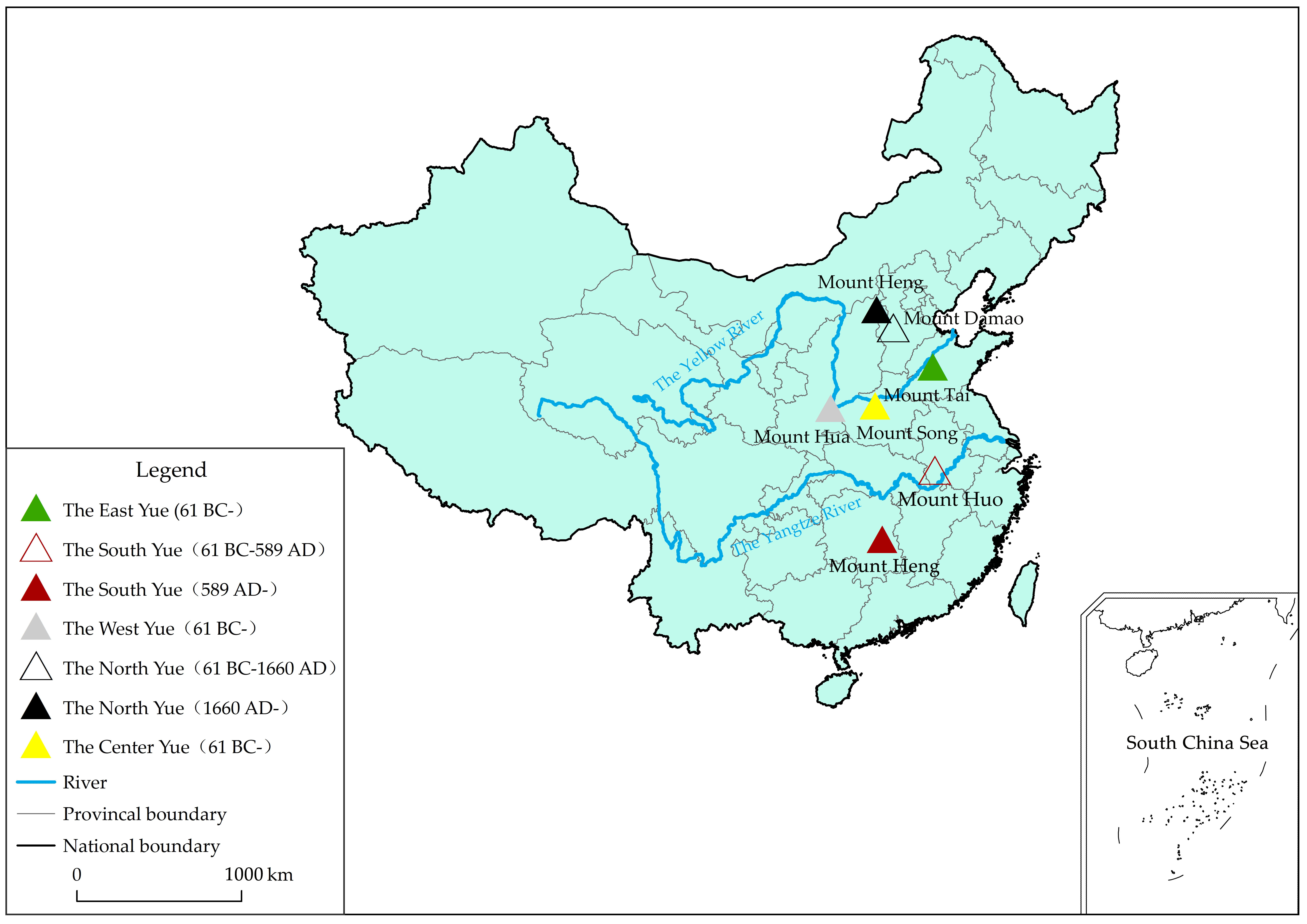
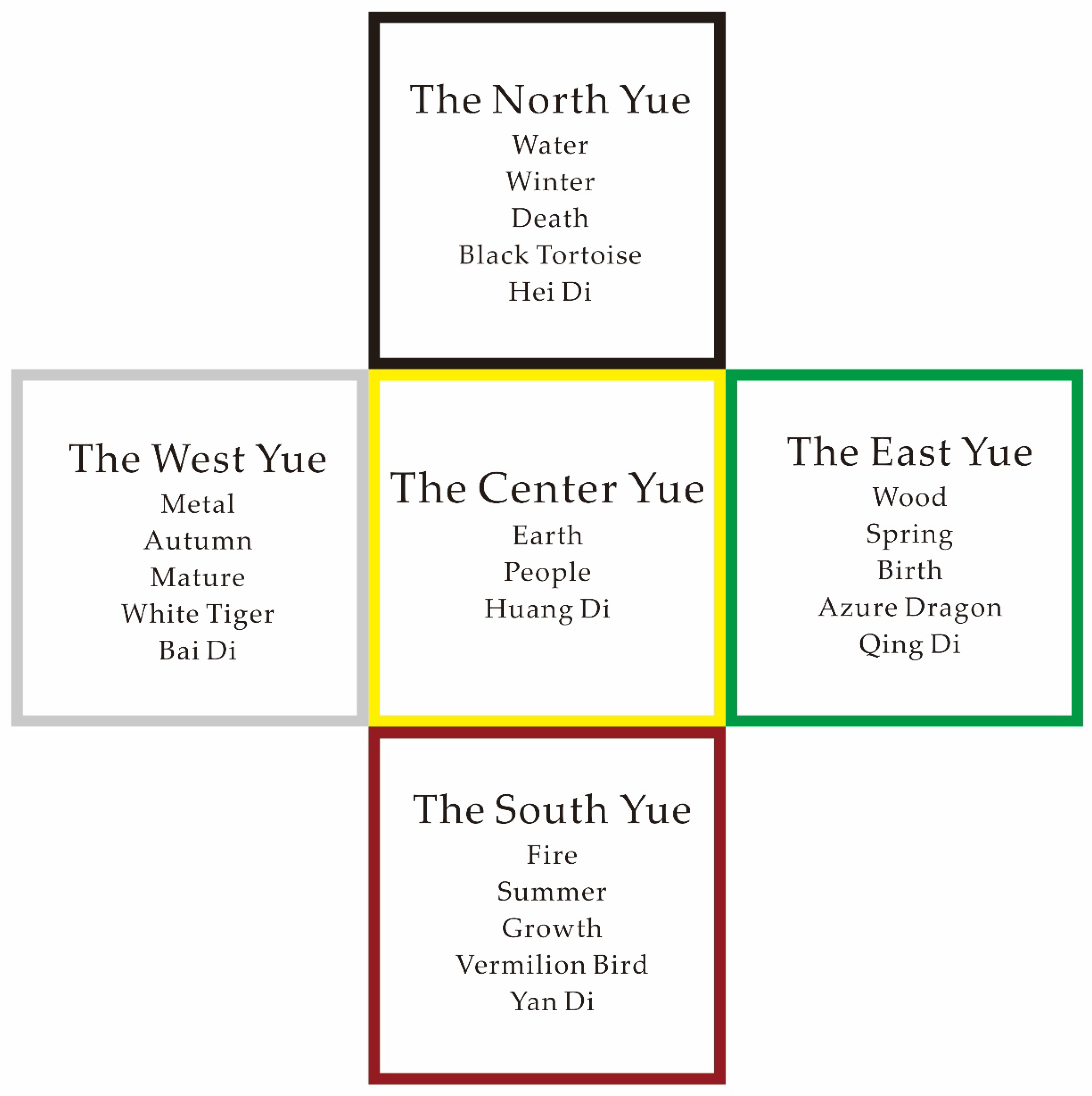
The sustainability of sacred mountains has attracted the attention of both international communities and scholars. However, few studies have focused on the sustainability mechanisms of sacred mountains in the cultural dimension. This article presents a case study of the Wu Yue, i.e., five sacred mountains in China, which is endowed with the highest status and has been a sustainable cultural heritage for more than two thousand years. Drawing on the approaches of structuralist geography and semiotics, this article seeks to systematically interpret the inheritance mechanism of the Wu Yue. Two major conclusions are drawn. First, based on the approach of structuralist geography, the spatial structure of the Wu Yue can be viewed as a surface structure that is determined by a deep structure: the Five Elements Philosophy. Despite the relocation of the South Yue and the North Yue, each mountain of the Wu Yue has almost always been located in the five cardinal directions of the territory in accordance with the Five Elements Philosophy; this fact shows that the deep structure is crucial to maintaining the sustainability of the Wu Yue. Second, based on the semiotic approach, the sign of the sacred mountains has three levels. It is the third level of the sign, consisting of the spatial pattern as signifier and the Five Elements Philosophy as signified, that distinguishes the Wu Yue from other sacred mountains and has allowed them to be inherited for many generations. Poststructuralism can explain the Chinese semiotics of sacred mountains, but it is difficult to interpret the sustainability of the Wu Yue.
Keywords: the Wu Yue; sacred mountain; sustainability; structuralist geography; semiotics the Wu Yue; sacred mountain; sustainability; structuralist geography; semiotics
Graphical Abstract