Article

Integrated Supply Network Maturity Model: Water Scarcity Perspective

by
Ekaterina Yatskovskaya
*,
Jagjit Singh Srai
and
Mukesh Kumar
University of Cambridge, Institute for Manufacturing, Cambridge CB3 0FS, UK
*
Author to whom correspondence should be addressed.
Sustainability 2018, 10(3), 896; https://doi.org/10.3390/su10030896
Submission received: 23 January 2018 / Revised: 11 March 2018 / Accepted: 13 March 2018 / Published: 20 March 2018
(This article belongs to the Special Issue Water Footprint in Supply Chain Management)

Abstract

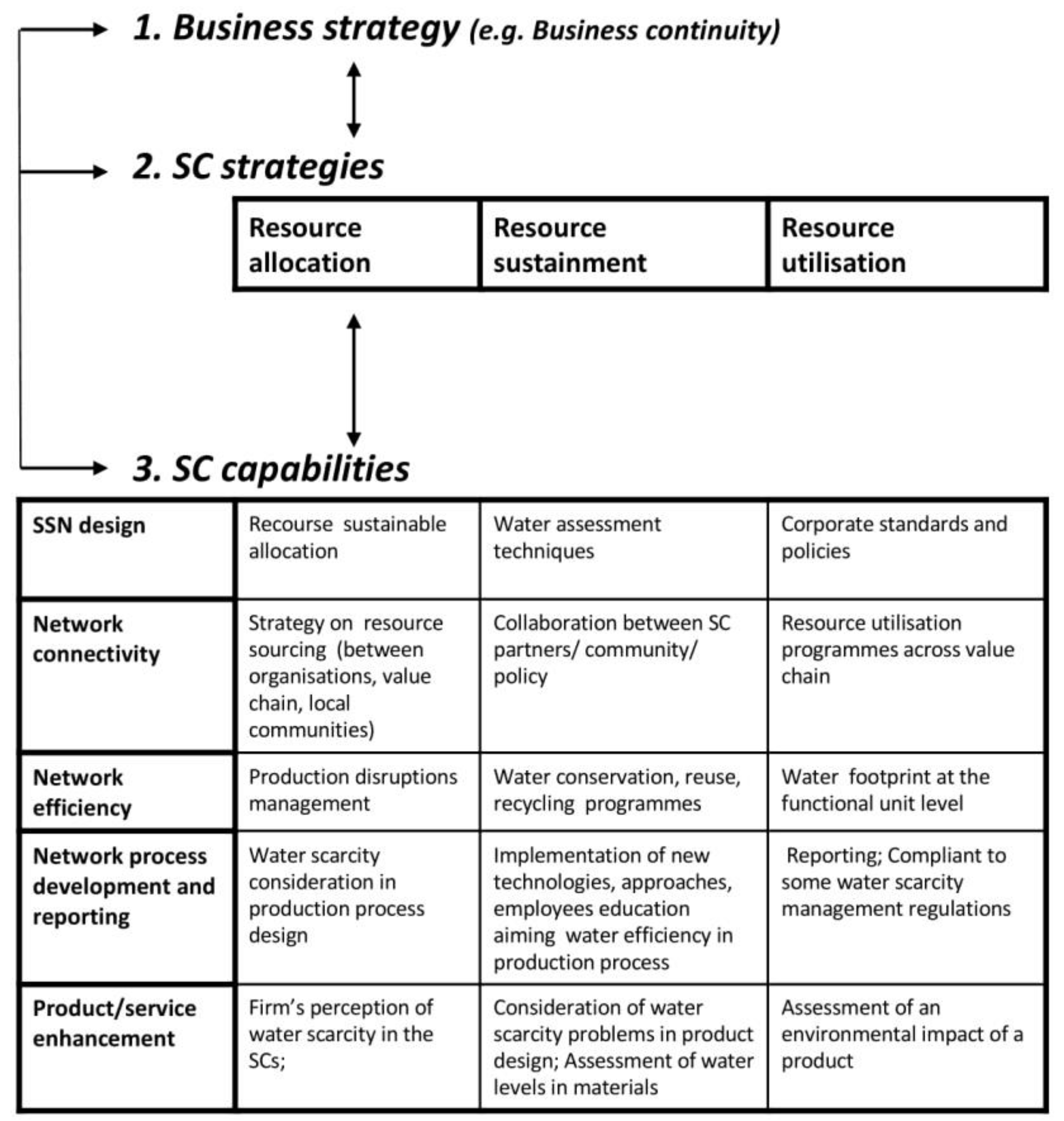
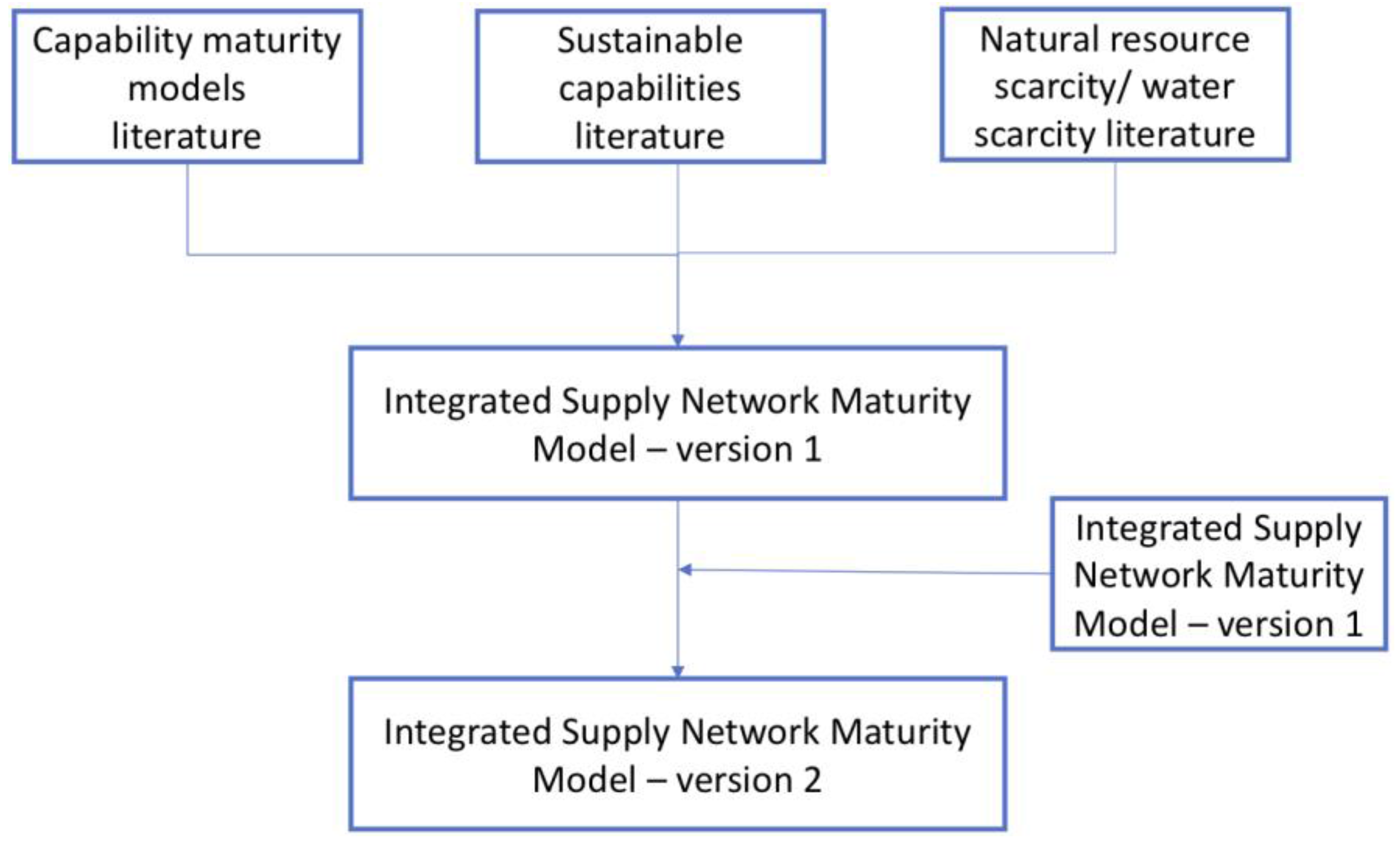
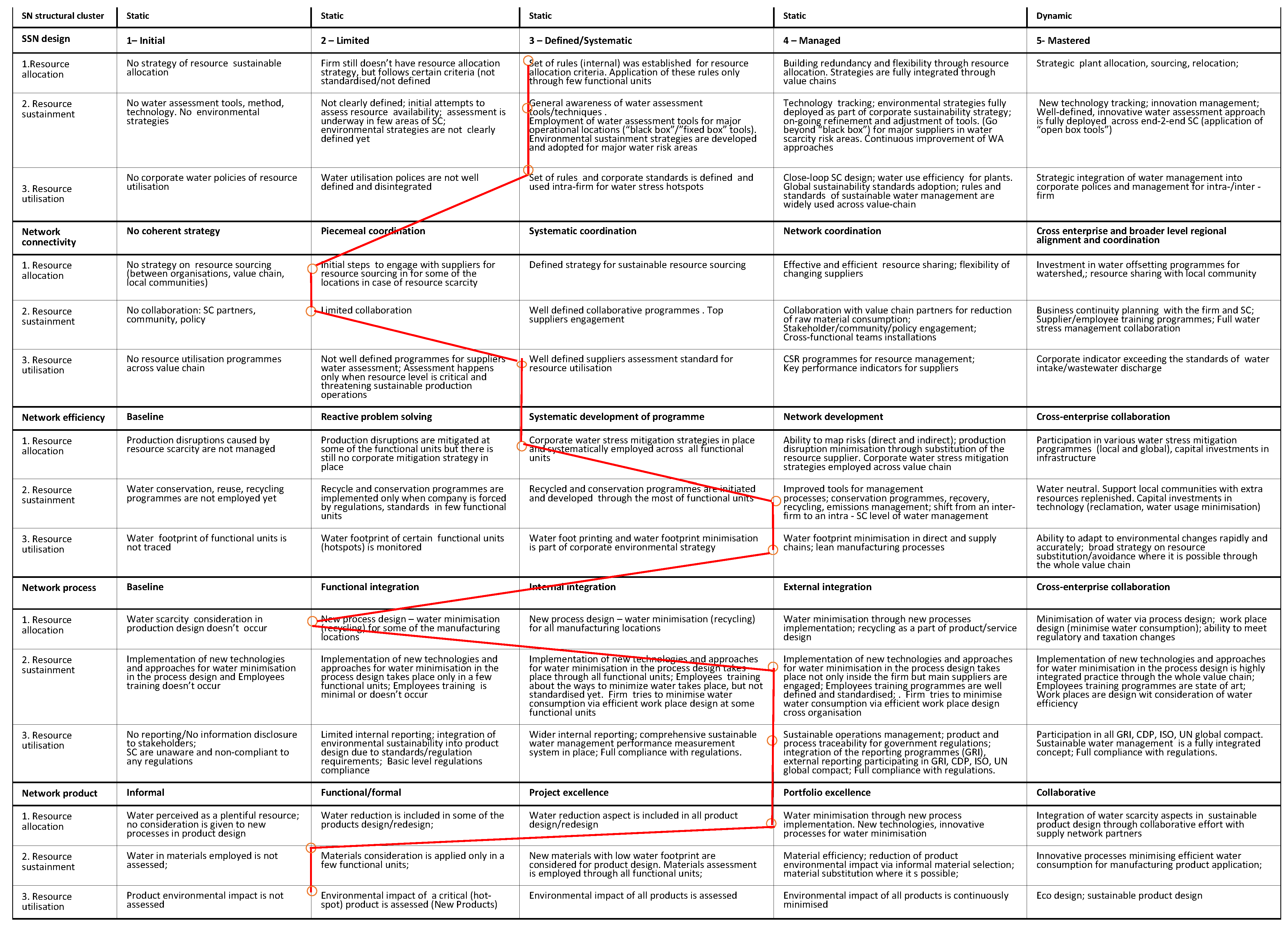
Today’s supply chains (SCs) are more than ever prone to disruptions caused by natural and man-made events with water scarcity identified as one of the highest impact events among these. Leading businesses, understanding that natural resource scarcity (NRS) has become a critical supply chain risk factor, extensively incorporate sustainable water management programmes into their corporate social responsibility and environmental management agenda. The question of how industries can efficiently evaluate the progress of these water scarcity mitigation practices, however, remains open. In order to address this question, the present study proposes a conceptual maturity model. The model is rooted in strategies for water scarcity mitigation using a framework developed by Yatskovskaya and Srai and develops an extensive literature review of recent publications on maturity frameworks in the fields of sustainability and operations management. In order to test the proposed proposed, model an exploratory case study with a leading pharmaceutical company was conducted. The proposed maturity model presents an evaluation tool that allows systematic assessment and visualisation of organisational routines and practices relevant to sustainable manufacturing in the context of water scarcity. This model was designed to help illustrate mitigation capabilities evolution over time, where future state desired capabilities were considered through alternative supply network (SN) configurations, network structure, process flow, product architecture, and supply partnerships.
Keywords: sustainable supply networks; maturity model; mitigation capabilities; water scarcity sustainable supply networks; maturity model; mitigation capabilities; water scarcity