Article

Coral Reef Socio-Ecological Systems Analysis & Restoration

by
Natalia Uribe-Castañeda
1,2,*,
Alice Newton
2,3 and
Martin Le Tissier
4
1
Estuaries and Mangroves Ecology Research Group, Universidad del Valle, Cali, Colombia
2
CIMA, Campus de Gambelas, Universidade do Algarve, 8005-139 Faro, Portugal
3
NILU-IMPACT, Box 100, 2027 Kjeller, Norway
4
Future Earth Coasts, MaREI, Environmental Research Institute, University College Cork, P43 C573 Cork, Ireland
*
Author to whom correspondence should be addressed.
Sustainability 2018, 10(12), 4490; https://doi.org/10.3390/su10124490
Submission received: 25 July 2018 / Revised: 17 October 2018 / Accepted: 30 October 2018 / Published: 29 November 2018
(This article belongs to the Special Issue Social-Ecological Restoration for Coastal Sustainability)

Abstract

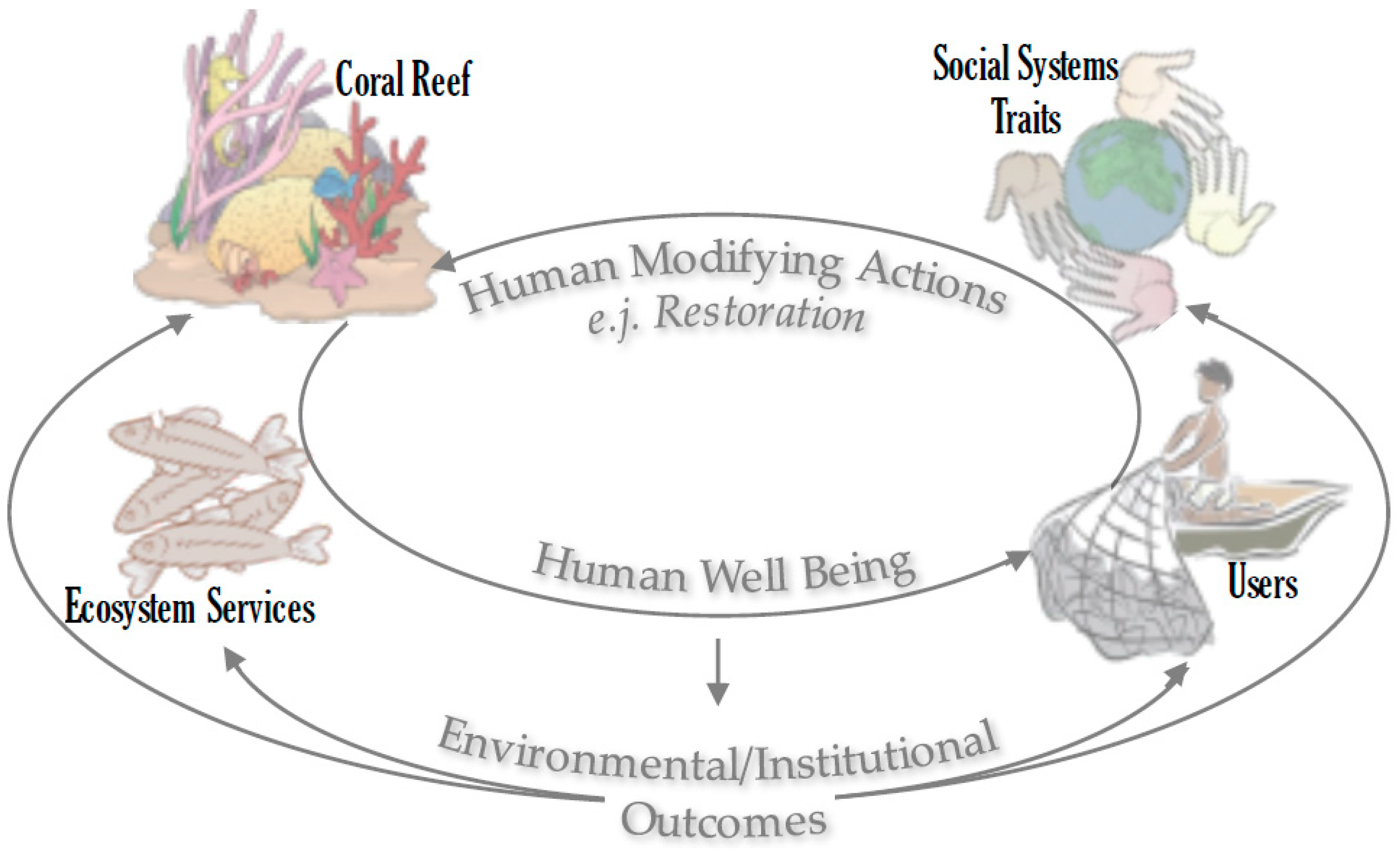
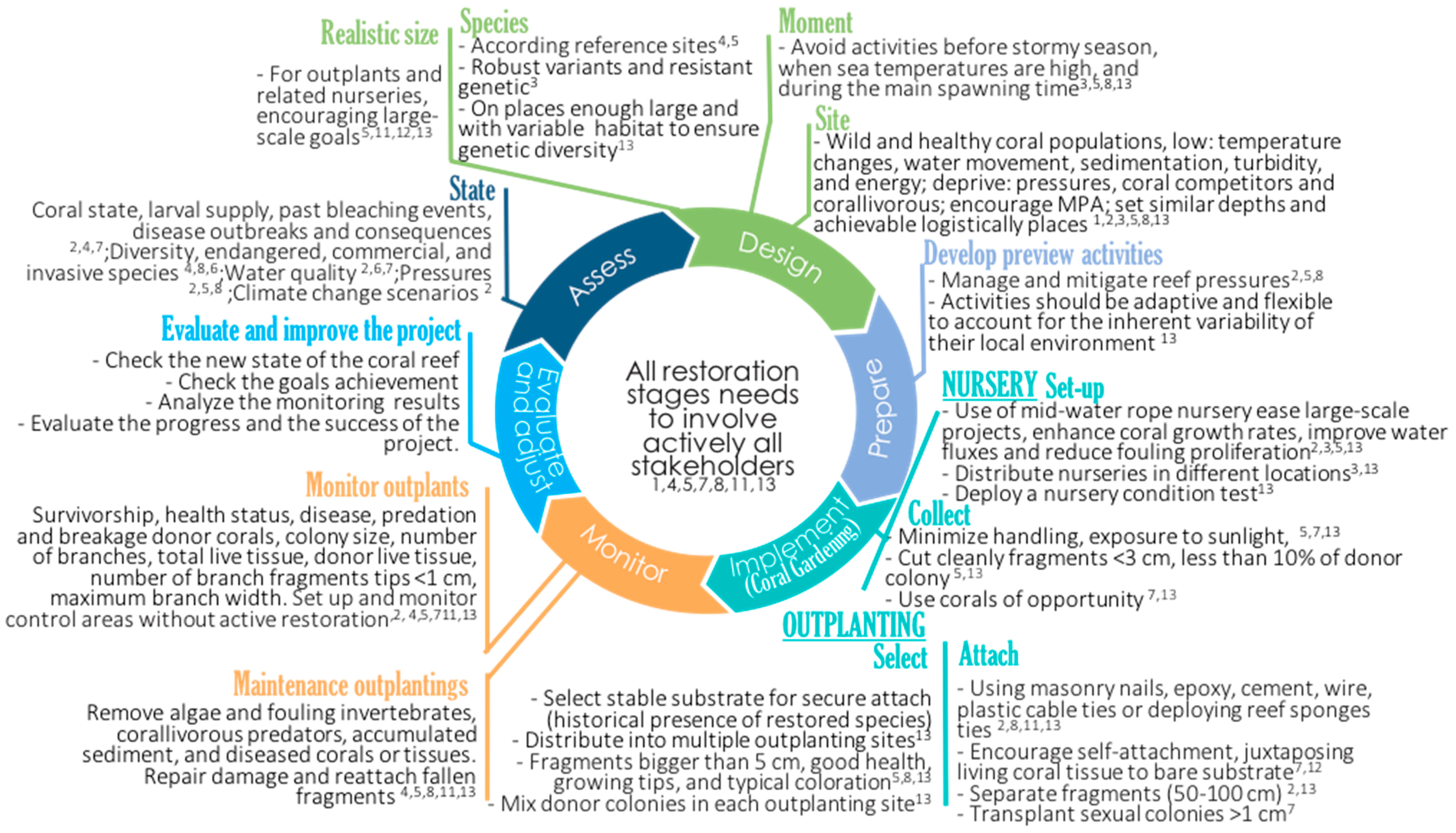
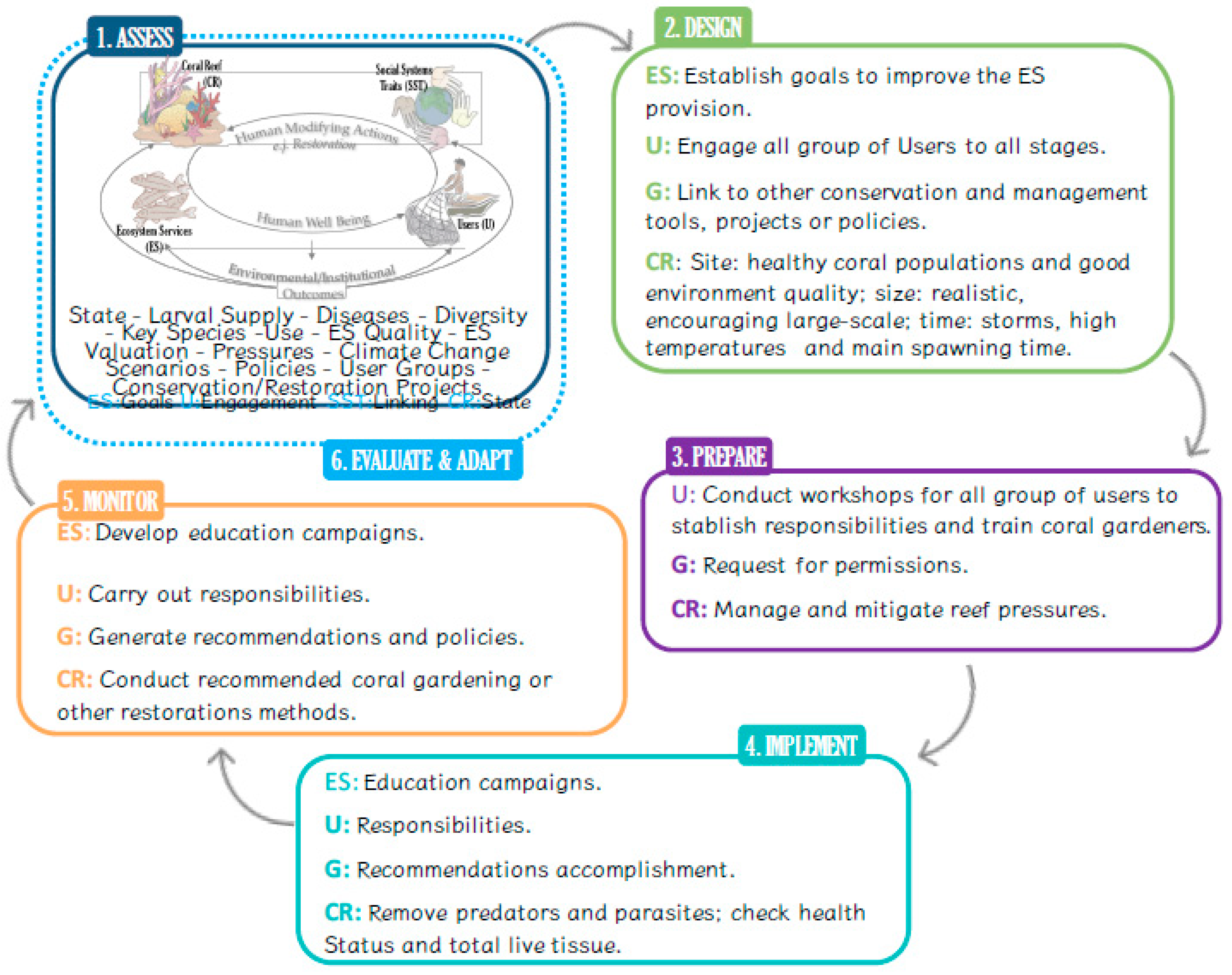
Restoration strategies for coral reefs are usually focused on the recovery of bio-physical characteristics. They seldom include an evaluation of the recovery of the socio-ecological and ecosystem services features of coral reef systems. This paper proposes a conceptual framework to address both the socio-ecological system features of coral reefs with the implementation of restoration activity for degraded coral reefs. Such a framework can lead to better societal outcomes from restoration activities while restoring bio-physical, social and ecosystem service features of such systems. We first developed a Socio Ecological System Analysis Framework, which combines the Ostrom Framework for analyzing socio-ecological systems and the Kittinger et al. human dimensions framework of coral reefs socio-ecological systems. We then constructed a Restoration of Coral Reef Framework, based on the most used and recent available coral reef restoration literature. These two frameworks were combined to present a Socio-Ecological Systems & Restoration Coral Reef Framework. These three frameworks can be used as a guide for managers, researchers and decision makers to analyze the needs of coral reef restoration in a way that addresses both socio-economic and ecological objectives to analyze, design, implement and monitor reef restoration programs.
Keywords: coral restoration; ecosystem services; adaptive management; conceptual frameworks coral restoration; ecosystem services; adaptive management; conceptual frameworks