Abstract
This paper explores the specific energy consumption (SEC) and environmental impacts for typical additive manufacturing processes. Also, the paper examines the possibility that ensure the product quality while reducing energy consumption with experimental analysis. The results show that (1) the SEC of additive manufacturing processes is related not only to material characteristics but also to the process input parameters; (2) it is possible to increase the energy efficiency without reducing product quality by adjusting the process rate or selecting different materials; and (3) the global warming potential (GWP) result of AM processes indicates that the GWP is brought about principally by the energy production process. The information provided by this project can also be of benefit to life cycle assessment and other environmental impact assessment related to AM processes.
1. Introduction
By joining materials layer upon layer to build up objects, additive manufacturing (AM) is capable of fabricating complex parts with minimum material waste [1]. Being different from traditional subtractive manufacturing (SM) processes, which construct three-dimensional (3D) objects by cutting material off a solid block of material, AM process always begins with 3D structure modeling and goes through slicing, fabrication and post-finishing [2]. Because of the direct layer-wise fabrication, AM has many competitive advantages including higher material efficiency, more flexible product design and innovation, less material waste, and energy consumption [3]. Therefore, AM is being used increasingly for fabricating end-use products in aerospace, automotive, biomedical, and sporting goods, among others [4].
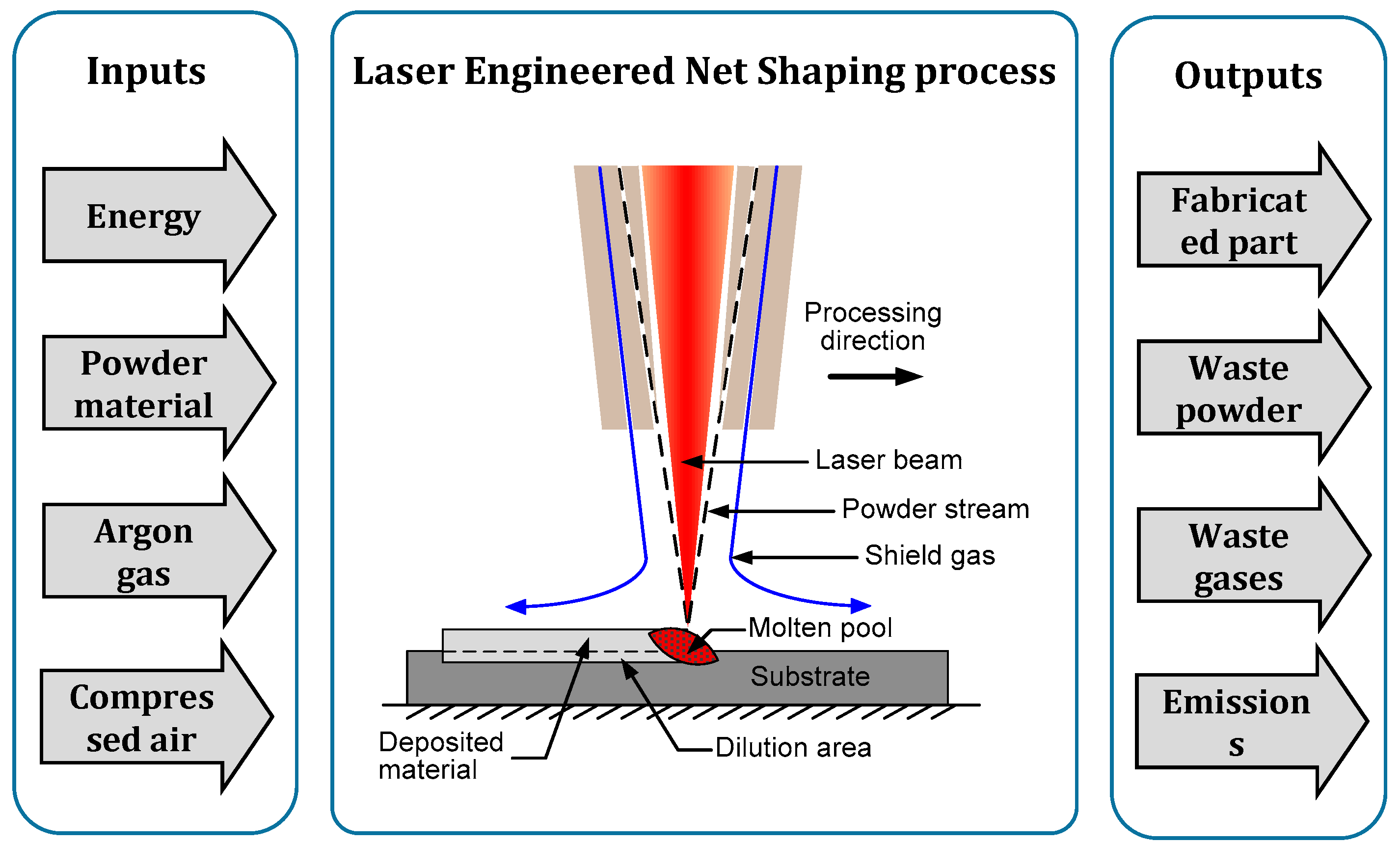
Nowadays, various kinds of materials can be used in AM processes, including metallic material in LENS and DMD, polymer material in FDM and SLA, and biological material in inkjet printing and micro extrusion. Different AM processes build and eventually consolidate the layers through different methods, but all of them take materials and energy resources as inputs and transform them into required products and wastes. Moreover, the production of material and energy always consumes fuels and natural resources and at the same time, it is accompanied by the generation of negative environmental impacts. Taking LENS process as an example, the process inputs include electricity, powder material, argon gas, and compressed air and the outputs are fabricated part, waste powder and gases, as shown in Figure 1.
Figure 1.
Inputs and outputs of the fabricated part in LENS process.
Currently, manufacturing industries are facing problems of environmental degradation and a lack of resources. Energy consumption and environmental impacts have been paid more attention during the manufacturing processes. As a new emerged technology, the energy consumption and environmental performance quantification are necessary for AM before its extensive industrial application. For a better understanding of the environmental impacts of AM, Luo et al. investigated the energy consumption of three AM processes: SLS, FDM, and SLA. An energy consumption rate (kWh/kg) was used to represent the energy consumption. They found that the energy consumption rate of FDM is higher than that of SLS and SLA for polymeric materials [5]. Similarly, Sreenivasan and Bourell estimated that the mean power consumption for SLS system is about 14.5 kWh/kg [6]. Apart from the investigations on energy consumption rate, previous research also suggested that energy consumption of AM process depends on the build parameters, such as laser power, scanning speed, powder feed rate, part orientation, etc. Mognol et al. estimated the energy consumption of three rapid prototyping systems: Thermojet, FDM 3000, and EOSINT M250. They concluded that the part size, volume of support, and manufacturing time must be minimized to reduce the energy consumption [7]. When compared to the energy consumption of metallic AM processes, Baumers et al. found that the powder density, layer thickness, and input efficiency have a significant impact on energy consumption of SLM and EBM processes [8]. Regarding the building efficiency, Kummailil et al. found that the deposition efficiency related not only on the powder feed rate and layer thickness, but also the energy per unit area [9]. Besides, the effects of build parameters on efficiency and part performance for FDM process were evaluated using design of experiment method [10]. To optimize the efficiency outputs, the maximum layer thickness and low level of infill pattern were recommended.
Except for the research on the energy consumption of AM processes, the benefits of AM over SM regarding the energy saving and environmental problems reduction also have been well-documented in previous literature [11,12,13]. It was reported that AM process could simplify or shorten the energy-intensive processes—such as casting, forging, rough machining, etc.—during the SM; therefore, it will generate less environmental impacts [14]. Comparing the energy demand for AM and SM in manufacturing polymer products, Kreiger et al. indicated that AM could reduce the energy consumption by 41 to 64% due to the direct fabrication [15]. Moreover, it is claimed that AM is a more sustainable option than SM because no specialized tooling or fixtures is required, and AM is capable of creating on demand parts without need for extra inventory [16]. Additionally, AM could reduce the environmental impact by lessening the transportation and packaging processes [17].
However, the energy consumption and environmental performance of AM technologies is still a matter of debate and being contradictory with the supporters who believe AM is more environmental friendly, there exists different points of view regarding the sustainability issues of this technology. In 2009, a program held by MIT suggested that the energy consumed in DMD process is hundreds of times higher than that of traditional casting and machining process [18]. Similarly, Yoon et al. pointed out that the AM process consumes much more energy than conventional bulk-forming processes [19]. When comparing the environmental impact of AM with that of SM, Faludi indicated that the environmental benefits of AM depend on the manufacturing scale [20]. At mass-manufacturing scale, inkjet printing has significantly worse ecological impacts than SM process. On the other hand, during the material building process in AM, some negative emissions may appear. The emissions of hazardous substances during FDM process have been evaluated in [21], and it was concluded that FDM process using PLA will generate 4.27 to 4.89 × 10⁸ ea/min cartridge. Literature review suggests that different AM processes or different materials used in the same AM process can have different result regarding the energy efficiency and environmental impacts evaluation [22]. As young processes presently on the hype, the environmental effects of components issued from the AM process are not well known due to the lack of investigation.
Energy consumption is an applicable indicator for building efficiency evaluation in AM processes. Previous research has made some progress regarding the energy consumption rate, efficiency, and their relationship with the input parameters. However, there is little research on energy consumption analysis of the metallic and biologic variants of AM. In the present study, SEC was employed to distinguish the energy efficiency for different AM processes. It would be much more effective and efficient to quantify the total energy consumptions once the part volume is given. In more detail, the energy distribution for specific AM process, the SEC under different process rate, layer thickness, energy density, as well as effect of materials on SEC are also investigated. Moreover, this paper studies the relationship of SEC and material property, such as powder size and density, to testify the possibility that acquires desired property with less energy input. In the end, the environmental impacts of different AM processes were quantified and compared based on the result of SEC. The information provided in this paper can be used as references for future study on life cycle analysis and other environmental counting problems relevant to AM process.
2. Materials and Methods
2.1. Definition and Classification
The energy consumption and environmental performance of five specific AM processes were investigated. Considering the characteristics of different AM processes and equipment availability, block specimens (7.62 L × 7.62 W × 1.727 H mm3) were designed for each process. The AM technologies considered, materials used, and corresponding characteristics are summarized in Table 1.
Table 1.
Materials and AM processes considered in this study.
The specific energy consumption (SEC, J/cm3) of the AM process is expressed as energy consumption per unit deposition volume. SEC is a measure for the averaged applied energy per unit volume of the part during the material building process, as shown in Equation (1).
where P is the input power (W), U is the system voltage (volt), T is the process time (s), I is the current of the system (amps), and V is the volume of the deposited object (cm3).
2.2. Data Collection
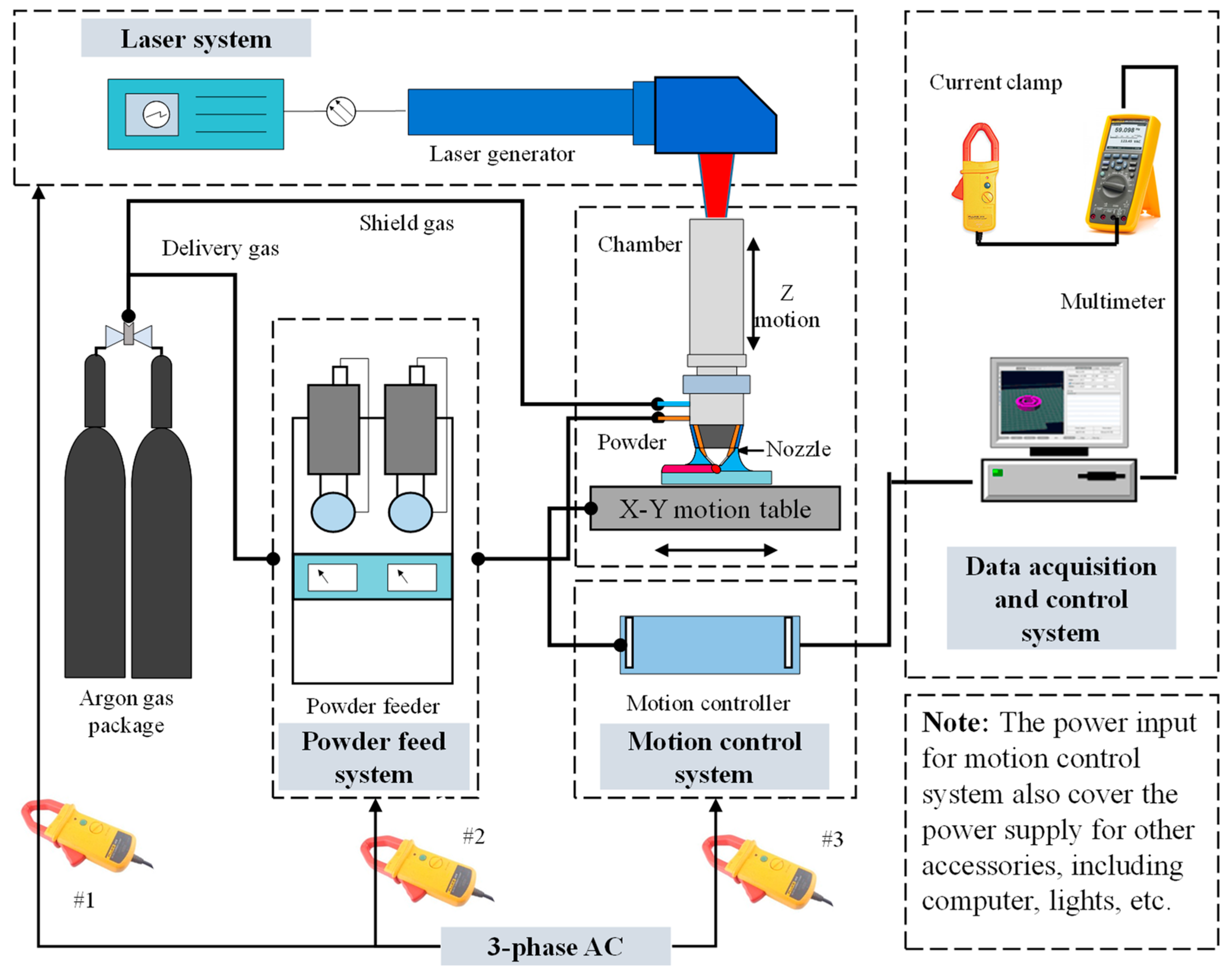
The voltage and current of power supply were measured by a multi-meter (Fluke 289) and a current clamp with 3 KHz bandwidth (Fluke i 410, Fluke Corporation, Everett, WA, USA). The collected data were processed with FlukeView Forms Software version 3.8 (Fluke Corporation, Everett, WA, USA). For each AM process, the current were measured three times for each specimen and an average value was used for SEC calculation. The process time was read off directly from the software and the volume of the specimen was measured by Archimedes’ principle. Taking LENS process as an example, the experimental set-up for the energy consumption measurement is shown in Figure 2.
Figure 2.
Illustration of experimental set-up for energy consumption measurement for LENS process.
2.3. Environmental Impact Quantification
As a useful tool to evaluate environmental performances, life cycle assessment (LCA) could estimate the cumulative environmental impacts generated from the entire product life cycle [23]. Based on the ISO 14040 and 14044 standards, an LCA consists of the following four components: (i) goal and scope definition; (ii) life cycle inventory analysis; (iii) life cycle impact analysis; and (iv) interpretation [24]. In this study, LCA was used to estimate the environmental impacts resulting from the different AM processes. To simplify the quantification and comparison process, only global warming potential (GWP) was considered as the environmental impact. GWP provides a common unit to measure the cumulative effect of greenhouse emissions regarding the global warming and it allows policymakers to compare emissions reduction opportunities across different processes.
The boundary (processes under concern) of the LCA includes: material extraction and energy production, delivery material preparation (powders, filament, etc.), and materials fabrication process. The materials used in the selected AM processes are shown in Table 2. Primary energy including hard coal, crude oil, and natural gas were consumed and greenhouse emissions—such as CO, CO2, SO2, etc.—were generated during the raw materials production. For metal powder preparation, atomization process was selected due to the high productivity [25]. In this process, the metallic material was heated until melting point is reached in the smelter. Then, high-speed inert gas (argon) was used to disintegrate the drop flow of metallic fluid. The metal powder was generated after congealing during the flight of metallic fluid. For the selected materials in this study, the energy consumption per unit mass ranges from 0.27 kWh/kg to 0.65 kWh/kg in atomization process [26]. An average value (0.46 kWh/kg) was used in this study. The energy requirement for preparing 1 kg filament of Nylon, ABS and 1kg liquid epoxy Resin was 23.6 kWh [27], 2.22 kWh [28], and 54.492 kWh [29] respectively, which was referred from the previous literature.
Table 2.
SEC of various AM processes.
The emissions of CO2, CH4, N2O, etc., generated in the raw materials and energy production were obtained from the GaBi software version 6 (Thinkstep, Stuttgart, Germany). The time period used for GWP was set up as 100 years. The GWP of different AM processes can be calculated by Equation (2).
where gj is the environmental emissions, referring to CO2, CH4, N2O, etc., and EFGWPj is the characterization factor of the substance gj (kg CO2-equivalent). Characterization factors were used to convert and combine the environmental emissions into GWP impacts.
3. Results and Discussion
3.1. Discussion of Energy Distribution of AM Process
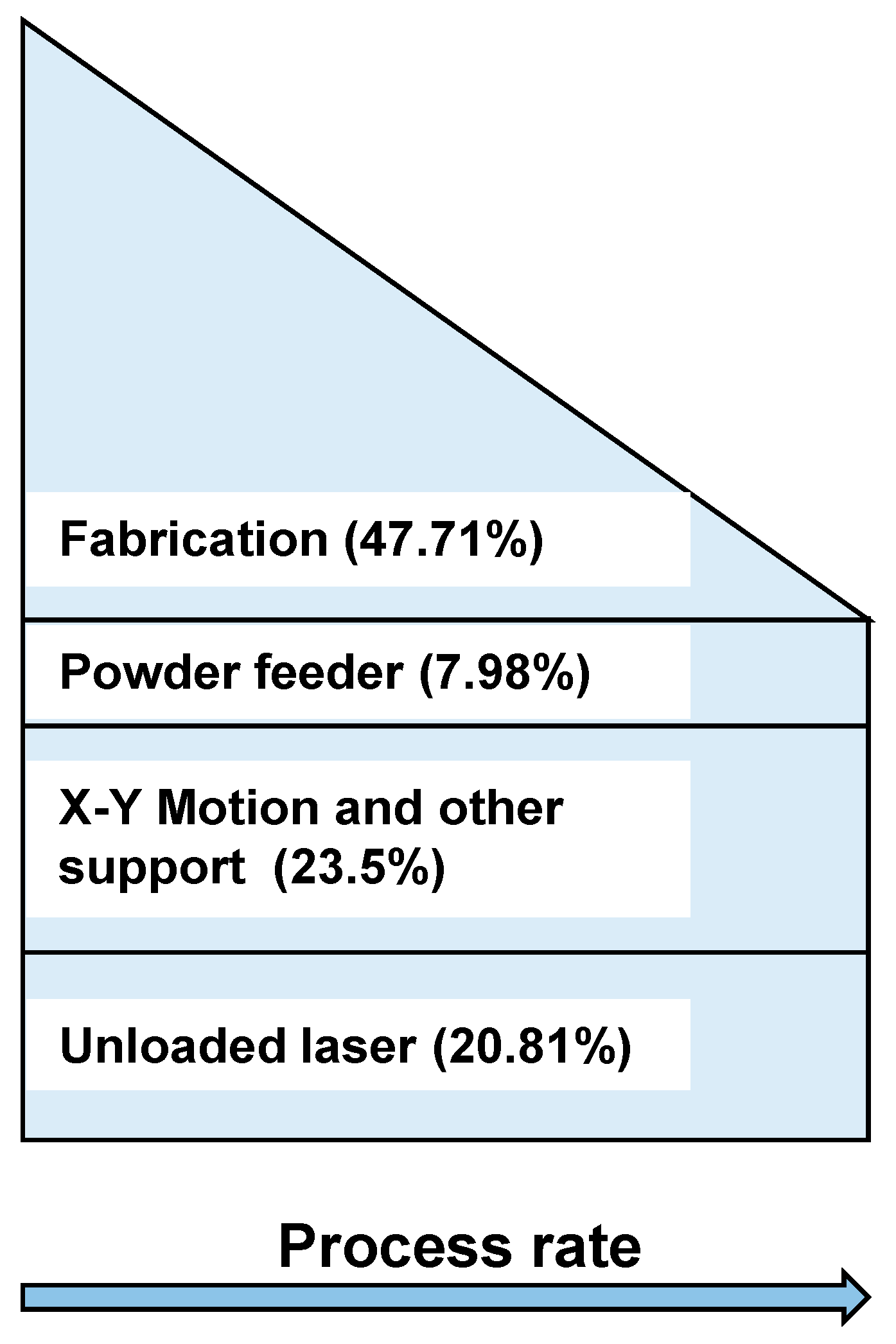
As a highly collaborative process, AM typically involves several systems, such as energy input system, materials delivery system, motion control system, as well as ancillaries and software. Under a certain process conditions, the proportion of energy consumptions for the modules of powder feed, motion control and accessories can be regarded as constant, however, the proportion of energy consumption during the material fabrication process will decrease with the increase of the process rate. Based on the energy requirement modeling for material removal processin [34], the energy requirement modeling of AM process can be expressed with Equation (3)
where P is the total power in kW, Pidle is the idle power in kW, v is the process rate of materials deposition in cm3/s, and k is a constant in J/cm3. Taking LENS process as an example, Pidle is the none-load energy consumption, which takes up 20.81% of the total. k is specific energy consumption (SEC) which is closely related to the materials utilized and power source. The energy consumption and distribution of LENS process is shown in Figure 3, indicating that a considerable amount of energy is needed during the startup and maintenance of the equipment, and the additional energy requirement is proportional to the process rate of materials deposition.
Figure 3.
Energy used as a function of production rate for LENS machine. Material: IN718, laser power: 350 W, powder feed rate: 2.5 rpm.
3.2. Discussion of SEC of AM Processes
3.1.1. Result of SEC for AM Processes
Based on Equation (1), the SEC of various AM processes (LENS, SLA, FDM, inkjet printing, and extrusion) was calculated and summarized in Table 2. In order to compare the SEC of different AM processes with different material, the SEC of some other AM processes was referred from the previous publications.
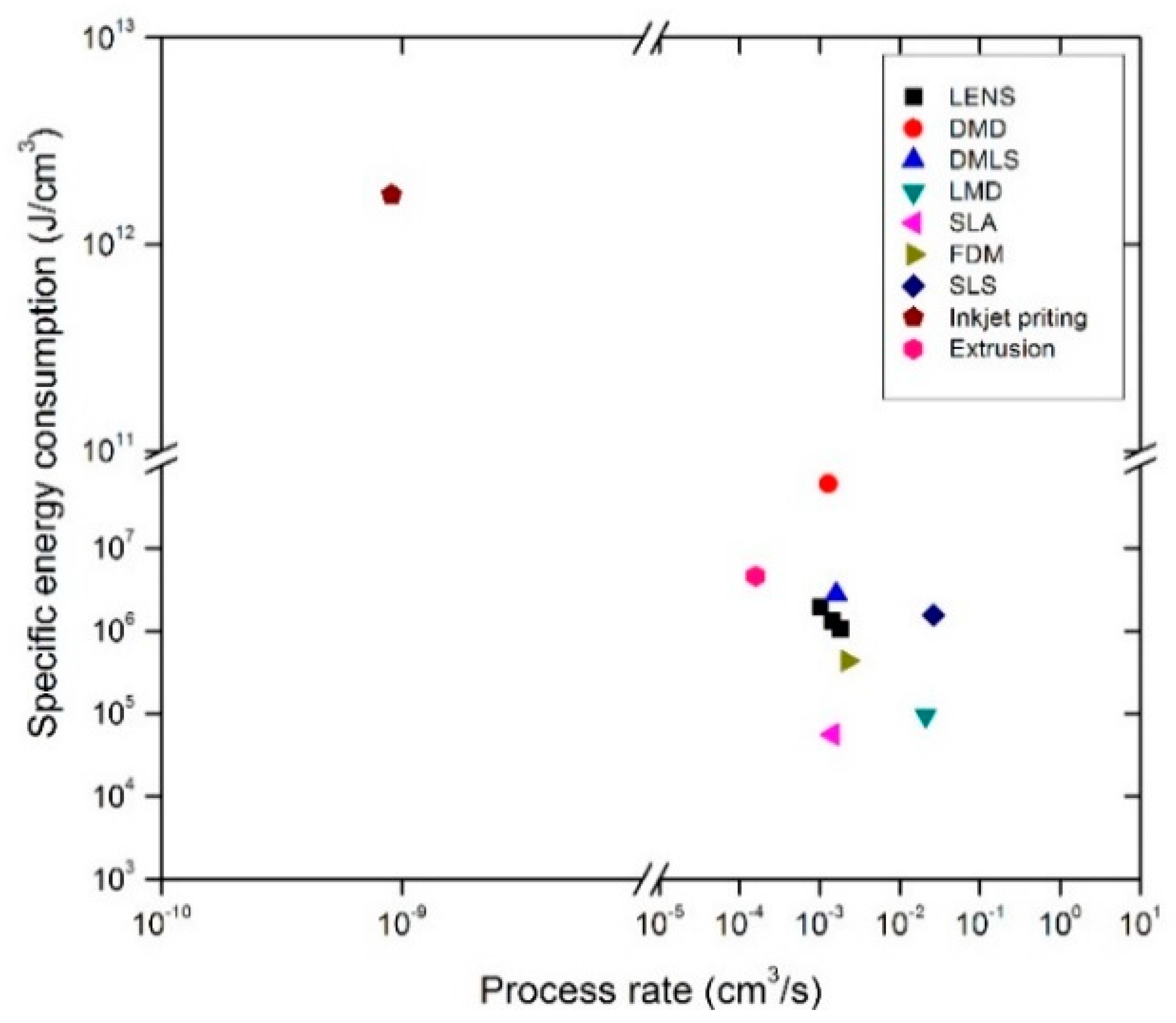
According to the data in Table 2, SEC plot for different AM processes was drawn and illustrated in Figure 4. Generally, the SEC is decreasing with the increase of process rate, and the difference of SEC for different AM processes is as much as seven orders of magnitude. Basically, the SEC of bio materials AM processes is higher than metallic materials, and the SEC of polymer material AM processes is relatively small. Apart from inkjet printing, the SEC for most of the selected AM processes presents a cluster phenomenon. For the polymer materials, it is reported that the SEC of traditional bulk forming process, such as injection molding, is about 6.01 × 10³ J/cm3 [35], which is much less than that of AM processes. For the metallic material, the SEC of subtractive manufacturing processes varies greatly with the different material. The milling and turning processes of AISI 4140 steel were estimated to be 1.45 × 10⁴ J/cm3 (milling) and 7.1~14.5 × 10³ J/cm3 (turning) [36,37] respectively, which only accounts for 0.75% to that of LENS process. Therefore, the traditional bulk forming process for polymer material and subtractive manufacturing process for metallic material are more energy efficient than the corresponding AM processes regarding the SEC when the material preparation process is out of consideration.
Figure 4.
SEC plot for AM processes.
3.2.2. Relation of SEC and Part Surface Hardness
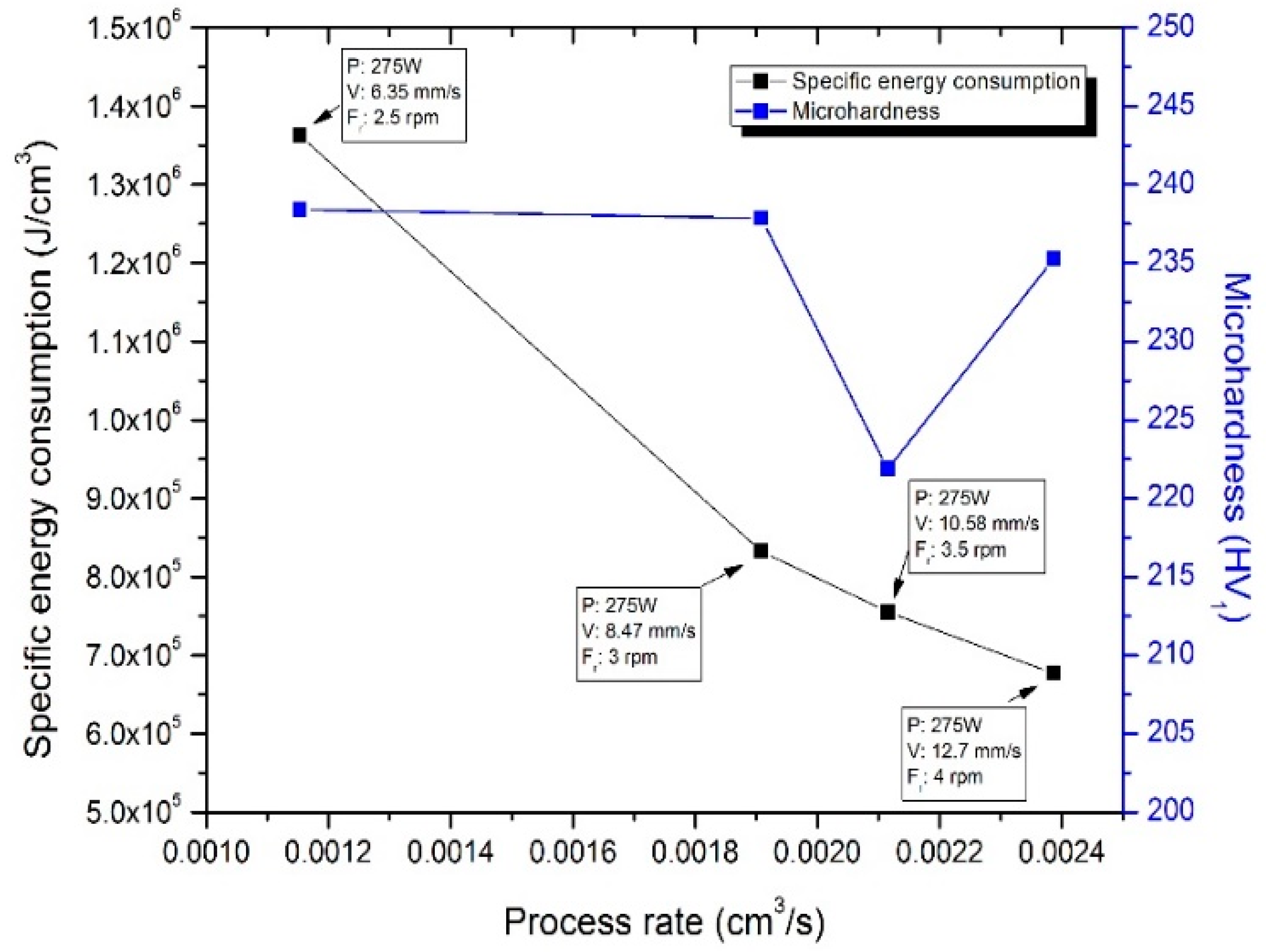
The relation of SEC and materials property (surface hardness) was investigated to examine the possibility that ensure the product quality while reducing the energy consumption. The SEC plot of LENS with Inconel 718 superalloy under different process rate is shown in Figure 5. Although the variation of process rate is small (from 1.15 × 10⁻³ to 2.38 × 10⁻³ cm3/s), the SEC is reduced from 1362.7 J/cm3 to 677.1 J/cm3, which is over 50% reduction. Considering that the part surface hardness under different process rate ranges from 221.9 to 238.7 HV1, it can conclude that it is possible to achieve a satisfied part quality while reducing the energy input. When considering the two factors of energy input and part quality, the parameters of laser power: 275 W, scanning speed: 8.47 mm/s, and powder feed rate: 4 g/min are recommended.
Figure 5.
SEC plot for LENS under different process rate (material: IN 718).
3.2.3. Relation between SEC and Metallic Powder Materials
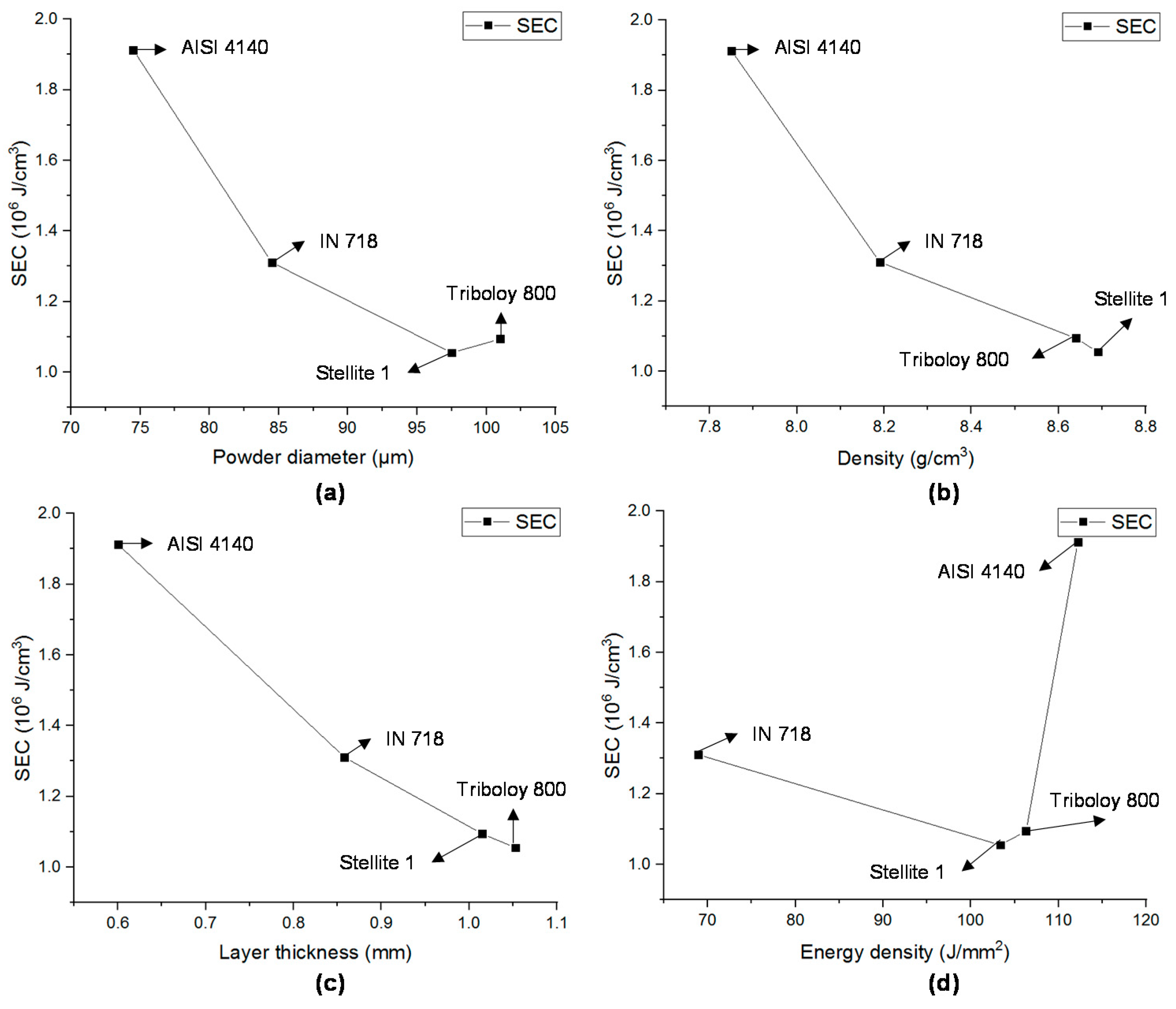
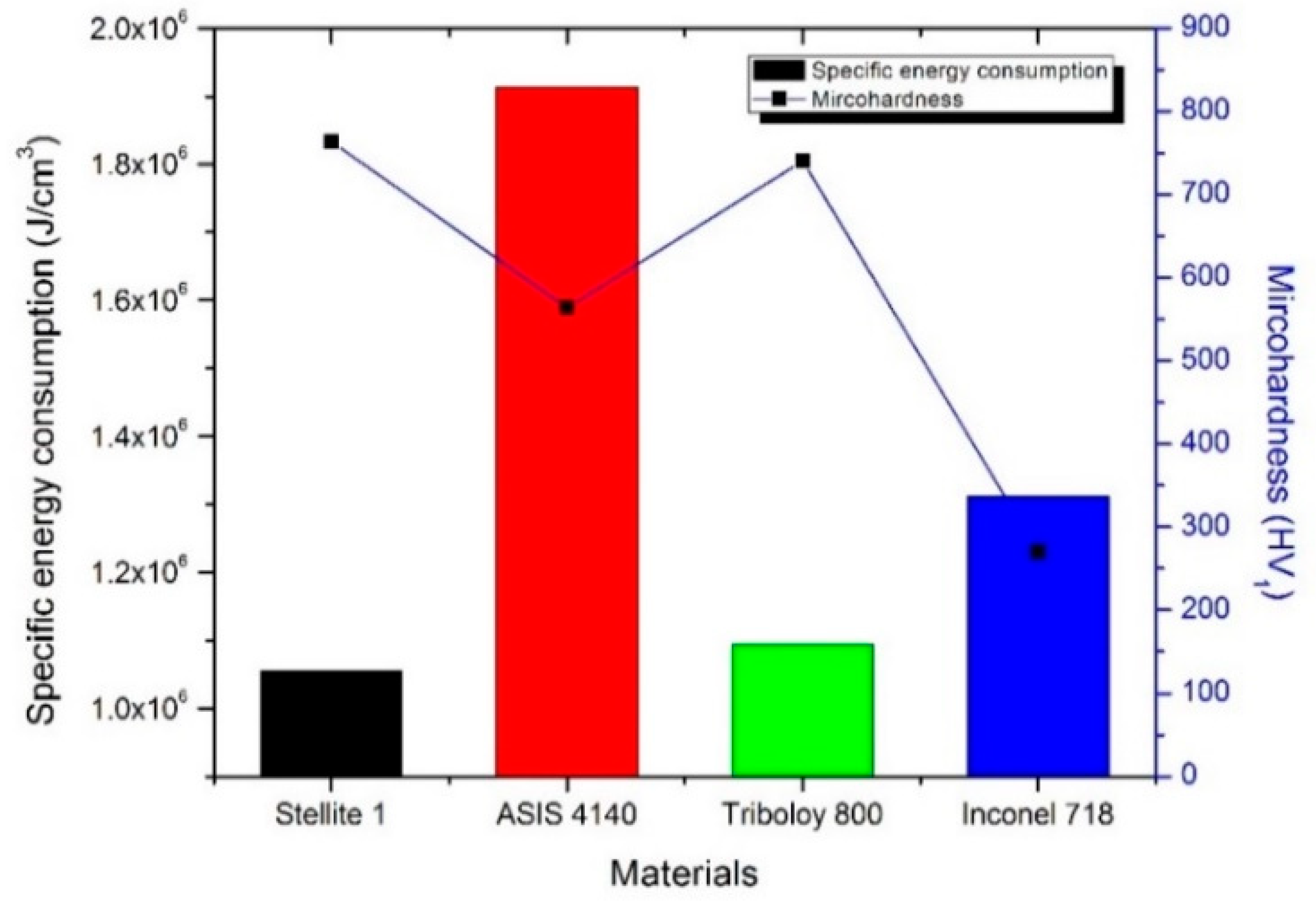
Because different materials have different physical and mechanical property, the best build quality occurs at different parameter combinations. Considering the best final shaping of the fabricated part, the input parameters for each kind of powder is shown in Table 3. The result of SEC for different powders in LENS process is shown Figure 6. It can be found that the SEC of AISI 4140 is highest, followed by Inconel 718, Triboloy 800 and Stellite 1. There are two reasons, for the most part, why the SEC is different: (i) powder characteristics and (ii) input parameters. On the one hand, the higher SEC of AISI 4140 can be partially contributed to the smaller powder size and higher density. More specifically, the energy consumed to heat unit volume by unit temperature, AISI 4140 requires more energy, as can be seen in Figure 7a,b. In addition, the power absorption rate of AISI 4140 is lowest among the selected powders due to the highest thermal conductivity (42.6 W/mK), which causes highest energy requirement. On the other hand, the layer thickness of AISI 4140 is smallest while the energy density is highest during the material deposition process, resulting in the largest number of layers for the unit volume and highest energy input for each layer; therefore, the SEC of AISI is higher than the other materials, as can be seen in Figure 7c,d.
Table 3.
Input parameters selected for each kind of metallic powder in LENS process.
Figure 6.
Effect of powders on SEC in LENS process.
Figure 7.
Effect of powder characteristics and input parameters on SEC: (a) Powder diameter; (b) density; (c) layer thickness; and (d) energy density.
To testify the possibility that acquires desired property with less energy input, the effect of the powders on SEC and part surface hardness was examined and the result is shown in Figure 7. The block part fabricated with Stellite 1 has the highest surface hardness, followed by Triboloy 800, AISI 4140, and Inconel 718, suggesting that it is possible to select powders which can not only cause less energy consumption, but also provide a better part quality, such as Stellite 1 and Triboloy 800.
3.3. Environmental Impacts of AM Processes
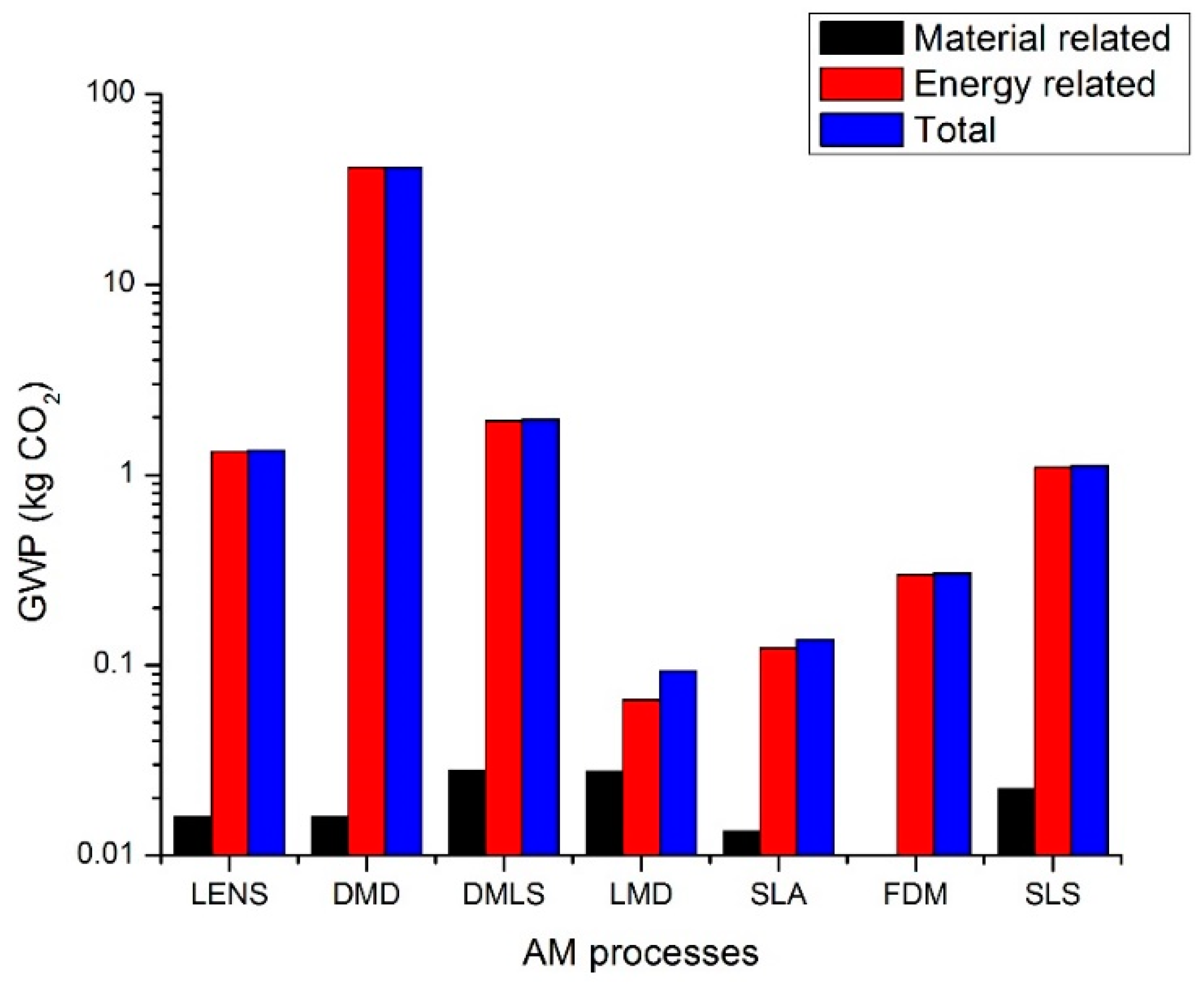
Based on the quantification method in Section 2.3, the environmental emissions generated in the processes of materials production, powder/filament preparation, and energy consumption for unit volume (1 cm3) material fabrication were collected (assuming the materials efficiency is 100%, not including the material recycling process). The GWP impact was calculated with characterization and the results are shown in Table 4. Log scale graphic (Figure 8) was used for the direct display of the GWP impact result in order for the decision maker to compare more conveniently.
Table 4.
Result of GWP during AM process.
Figure 8.
Log scale result of GWP impact result of different AM processes.
Figure 8 suggests that the final GWP impact of AM processes varies due to the different material utilized and energy consumption and it is mainly generated by the energy production process. Along all of the selected AM processes, DMD will contribute the great impact on GWP due to the high SEC during the material fabrication process. Because of the lower SEC, the GWP impact of LMD and SLA is relatively less than the other processes. Due to the lack of emission data of bio material production, the GWP result is not shown in this figure, however, it can be safely inferred that the GWP impact of the extrusion process will be pretty high because of its largest SEC.
4. Conclusions
Energy consumption and environmental impact analysis of AM are challengeable and necessary. It will not only affect the strategy formulation but also the technologies development within the industry. In this paper, the SEC and environmental impacts for a wide range of AM processes have been investigated. With selected geometric and materials properties, the paper also studied the relationship between SEC and material characteristics as well as process input parameters. The main conclusions are as follows:
- (1)
- The SEC and environmental intensity for AM processes were related not only to material characteristics but also to the process input parameters. For LENS process, materials with smaller powder size and higher density as well as a smaller layer thickness and higher energy density will cause a higher SEC.
- (2)
- By adjusting the input parameters, it is possible to increase the energy efficiency without reducing the product quality. When considering the energy input and part quality, the parameters of laser power: 275 W, scanning speed: 8.47 mm/s and powder feed rate: 4 g/min are recommended for Inconel 718 in LENS process.
- (3)
- For the environmental impact quantification, the GWP impact result of AM processes indicates that the GWP is brought about principally by the energy production process. DMD will contribute the great impact to GWP due to the high SEC, and LMD and SLA will bring about relatively less GWP than the other processes.
Although AM is considered more environmentally friendly than SM due to advantages—such as less waste, no specialized tooling, life cycle reduction, etc.—more efforts should be made to explore the overall environmental impacts of AM, especially under different experiment conditions. The information provided by this paper can be of benefit to life cycle assessment and other environmental impact assessment related to AM processes.
Author Contributions
Investigation, Methodology and writing original draft, Z.L.; Software, Q.J.; Revising and editing, F.N. and H.K.; Resources, W.C. and C.X.; Supervision, H.-c.Z.
Funding
This research received no external funding.
Acknowledgments
The authors also would like to extend the acknowledgements to the Foundation of the Whitacre College of Engineering and the Office of Vice President for Research at Texas Tech University.
Conflicts of Interest
The authors declare no conflict of interest.
Nomenclature
| AM | additive manufacturing |
| DMD | direct material deposition |
| DMLS | direct material laser sintering |
| FDM | fused deposition modeling |
| LCA | life cycle assessment |
| LENS | laser engineered net shaping |
| SLA | stereolithography |
| SEC | specific energy consumption |
| SLS | selective laser sintering |
| SLM | selective laser melting |
| EBM | electron beam melting |
| PLA | polylactic acid |
| ABS | acrylonitrile butadiene styrene |
References
- Li, L.; Tirado, A.; Nlebedim, I.C.; Rios, O.; Post, B.; Kunc, V.; Lograsso, T.A. Big area additive manufacturing of high performance bonded NdFeB magnets. Sci. Rep. 2016, 6, 36212. [Google Scholar] [CrossRef] [PubMed]
- Wong, K.V.; Hernandez, A. A review of additive manufacturing. ISRN Mech. Eng. 2012, 2012. [Google Scholar] [CrossRef]
- Attaran, M. The rise of 3-D printing: The advantages of additive manufacturing over traditional manufacturing. Bus. Horiz. 2017, 60, 677–688. [Google Scholar] [CrossRef]
- Srivatsan, T.S.; Sudarshan, T.S. (Eds.) Additive Manufacturing: Innovations, Advances, and Applications; CRC Press: Boca Raton, FL, USA, 2015. [Google Scholar]
- Luo, Y.; Ji, Z.; Leu, M.C.; Caudill, R. Environmental performance analysis of solid freedom fabrication processes. In Proceedings of the 1999 IEEE International Symposium on Electronics and the Environment, (ISEE-1999), Danvers, MA, USA, 11–13 May 1999; pp. 1–6. [Google Scholar]
- Sreenivasan, R.; Bourell, D. Sustainability Study in Selective Laser Sintering—An Energy Perspective. In Proceedings of the Minerals, Metals and Materials Society/AIME, Warrendale, PA, USA, 14–18 February 2010. [Google Scholar]
- Mognol, P.; Lepicart, D.; Perry, N. Rapid prototyping: Energy and environment in the spotlight. Rapid Prototyp. J. 2006, 12, 26–34. [Google Scholar] [CrossRef]
- Baumers, M.; Tuck, C.; Hague, R.; Ashcroft, I.; Wildman, R. A comparative study of metallic additive manufacturing power consumption. In Proceedings of the Solid Freeform Fabrication Symposium, Austin, TX, USA, 9–11 August 2010; pp. 278–288. [Google Scholar]
- Kummailil, J.; Sammarco, C.; Skinner, D.; Brown, C.A.; Rong, K. Effect of select LENS™ processing parameters on the deposition of Ti-6Al-4V. J. Manuf. Process. 2005, 7, 42–50. [Google Scholar] [CrossRef]
- Griffiths, C.A.; Howarth, J.; Rowbotham, G.D.A.; Rees, A. Effect of build parameters on processing efficiency and material performance in fused deposition modelling. Proc. CIRP 2016, 49, 28–32. [Google Scholar] [CrossRef]
- Kellens, K.; Baumers, M.; Gutowski, T.G.; Flanagan, W.; Lifset, R.; Duflou, J.R. Environmental dimensions of additive manufacturing: Mapping application domains and their environmental implications. J. Ind. Ecol. 2017, 21, S49–S68. [Google Scholar] [CrossRef]
- Paris, H.; Mokhtarian, H.; Coatanéa, E.; Museau, M.; Ituarte, I.F. Comparative environmental impacts of additive and subtractive manufacturing technologies. CIRP Ann.-Manuf. Technol. 2016, 65, 29–32. [Google Scholar] [CrossRef]
- Liu, Z.; Jiang, Q.; Li, T.; Dong, S.; Yan, S.; Zhang, H.; Xu, B. Environmental benefits of remanufacturing: A case study of cylinder heads remanufactured through laser cladding. J. Clean. Prod. 2016, 133, 1027–1033. [Google Scholar] [CrossRef]
- Liu, Z.; Ning, F.; Cong, W.; Jiang, Q.; Li, T.; Zhang, H.; Zhou, Y. Energy Consumption and Saving Analysis for Laser Engineered Net Shaping of Metal Powders. Energies 2016, 9, 763. [Google Scholar] [CrossRef]
- Kreiger, M.; Pearce, J.M. Environmental Life Cycle Analysis of Distributed Three-Dimensional Printing and Conventional Manufacturing of Polymer Products. ACS Sustain. Chem. Eng. 2013, 1, 1511–1519. [Google Scholar] [CrossRef]
- Mani, M.; Lyons, K.W.; Gupta, S.K. Sustainability characterization for additive manufacturing. J. Res. Natl. Inst. Stand. Technol. 2014, 119, 419–428. [Google Scholar] [CrossRef] [PubMed]
- Drizo, A.; Pegna, J. Environmental impacts of rapid prototyping: An overview of research to date. Rapid Prototyp. J. 2006, 12, 64–71. [Google Scholar] [CrossRef]
- Gilpin, L. The Dark Side of 3D Printing: 10 Things to Watch, TechRepublic. 2014. Available online: http://www.techrepublic.com/article/the-dark-side-of-3d-printing-10-things-to-watch/ (accessed on 5 March 2014).
- Yoon, H.S.; Lee, J.Y.; Kim, H.S.; Kim, M.S.; Kim, E.S.; Shin, Y.J.; Chu, W.S.; Ahn, S.H. A Comparison of Energy Consumption in Bulk Forming, Subtractive, and Additive Processes: Review and Case Study. Int. J. Precis. Eng. Manuf. Green Technol. 2014, 1, 261–279. [Google Scholar] [CrossRef]
- Faludi, J.; Bayley, C.; Bhogal, S.; Iribarne, M. Comparing environmental impacts of additive manufacturing vs traditional machining via life-cycle assessment. Rapid Prototyp. J. 2015, 21, 14–33. [Google Scholar] [CrossRef]
- Kim, Y.; Yoon, C.; Ham, S.; Park, J.; Kim, S.; Kwon, O.; Tsai, P.J. Emissions of nanoparticles and gaseous material from 3D printer operation. Environ. Sci. Technol. 2015, 49, 12044–12053. [Google Scholar] [CrossRef] [PubMed]
- Kellens, K.; Mertens, R.; Paraskevas, D.; Dewulf, W.; Duflou, J. Environmental Impact of Additive Manufacturing Processes: Does AM Contribute to a more sustainable way of part manufacturing? Proc. CIRP 2017, 61, 582–587. [Google Scholar] [CrossRef]
- Science Applications International Corporation; Curran, M.A. Life-Cycle Assessment: Principles and Practice; National Risk Management Research Laboratory, Office of Research and Development, US Environmental Protection Agency: Cincinnati, OH, USA, 2006.
- Finkbeiner, M.; Inaba, A.; Tan, R.; Christiansen, K.; Klüppel, H.J. The new international standards for life cycle assessment: ISO 14040 and ISO 14044. Int. J. Life Cycle Assess. 2006, 11, 80–85. [Google Scholar] [CrossRef]
- Burkhart, M.; Aurich, J.C. Framework to predict the environmental impact of additive manufacturing in the life cycle of a commercial vehicle. Proc. CIRP 2015, 29, 408–413. [Google Scholar] [CrossRef]
- Serres, N.; Tidu, D.; Sankare, S.; Hlawka, F. Environmental comparison of MESO-CLAD® process and conventional machining implementing life cycle assessment. J. Clean. Prod. 2011, 19, 1117–1124. [Google Scholar] [CrossRef]
- Kočí, V.; Loubal, T. LCA of liquid epoxy resin produced based on propylene and on glycerin. Acta Environ. Univ. Comen. 2012, 20, 62–67. [Google Scholar]
- Spiering, T.; Kohlitz, S.; Sundmaeker, H.; Herrmann, C. Energy efficiency benchmarking for injection moulding processes. Robot. Comput.-Integr. Manuf. 2015, 36, 45–59. [Google Scholar] [CrossRef]
- Telenko, C.; Seepersad, C.C. Assessing energy requirements and material flows of selective laser sintering of Nylon parts. In Proceedings of the 21st Annual International Solid Freeform Fabrication Symposium—An Additive Manufacturing Conference, (SFF 2010), Austin, TX, USA, 9–11 August 2010; pp. 8–10. [Google Scholar]
- Morrow, W.R.; Qi, H.; Kim, I.; Mazumder, J.; Skerlos, S.J. Environmental aspects of laser-based and conventional tool and die manufacturing. J. Clean. Prod. 2007, 15, 932–943. [Google Scholar] [CrossRef]
- Baumers, M.; Tuck, C.; Wildman, R.; Ashcroft, I.; Rosamond, E.; Hague, R. Combined build-time, energy consumption and cost estimation for direct metal laser sintering. In Proceedings of the Twenty Third Annual International Solid Freeform Fabrication Symposium—An Additive Manufacturing Conference, Austin, TX, USA, 6–8 August 2012. [Google Scholar]
- Wang, X.L.; Deng, D.W.; Zhang, H.C. Effects of Mass Energy and Line Mass on Clad Characteristics in the Laser Cladding Process. Lasers Eng. 2016, 34, 1–14. [Google Scholar]
- Telenko, C.; Seepersad, C.C. A comparative evaluation of energy consumption of selective laser sintering and injection molding of nylon parts. Rapid Prototyp. J. 2011, 18, 472–481. [Google Scholar] [CrossRef]
- Gutowski, T.; Dahmus, J.; Thiriez, A. Electrical energy requirements for manufacturing processes. In Proceedings of the 13th CIRP International Conference on Life Cycle Engineering, Leuven, Belgium, 31 May–2 June 2006; CIRP International: Leuven, Belgium, 2006; pp. 623–638. [Google Scholar]
- Thiriez, A.; Gutowski, T. An environmental analysis of injection molding. In Electronics and the Environment, 2006. In Proceedings of the 2006 IEEE International Symposium on Electronics and the Environment, Scottsdale, AZ, USA, 8–11 May 2006; pp. 195–200. [Google Scholar]
- Kara, S.; Li, W. Unit process energy consumption models for material removal processes. CIRP Ann.-Manuf. Technol. 2011, 60, 37–40. [Google Scholar] [CrossRef]
- Neugebauer, R.; Schubert, A.; Reichmann, B.; Dix, M. Influence exerted by tool properties on the energy efficiency during drilling and turning operations. CIRP J. Manuf. Sci. Technol. 2011, 4, 161–169. [Google Scholar] [CrossRef]
- Palut, M.P.J.; Canziani, O.F. Contribution of Working Group II to the Fourth Assessment Report of the Intergovernmental Panel on Climate Change; Cambridge University Press: Cambridge, UK; New York, NY, USA, 2007. [Google Scholar]
© 2018 by the authors. Licensee MDPI, Basel, Switzerland. This article is an open access article distributed under the terms and conditions of the Creative Commons Attribution (CC BY) license (http://creativecommons.org/licenses/by/4.0/).