

Micro- and Nanoplastics Exposure Across the Lifespan: One Health Implications for Aging and Longevity


Abstract
1. Introduction
2. Defining Micro- and Nanoplastics
2.1. Terminology and Size Classifications Definitions
2.2. Physicochemical Properties Related to Aging Biology
2.2.1. Size, Shape, Polymer Type and Surface Chemistry
2.2.2. Aging, Weathering, and Bio-Corona Formation
3. Environmental Sources and Distribution Across the One Health Continuum
3.1. Environmental Compartments and Transport
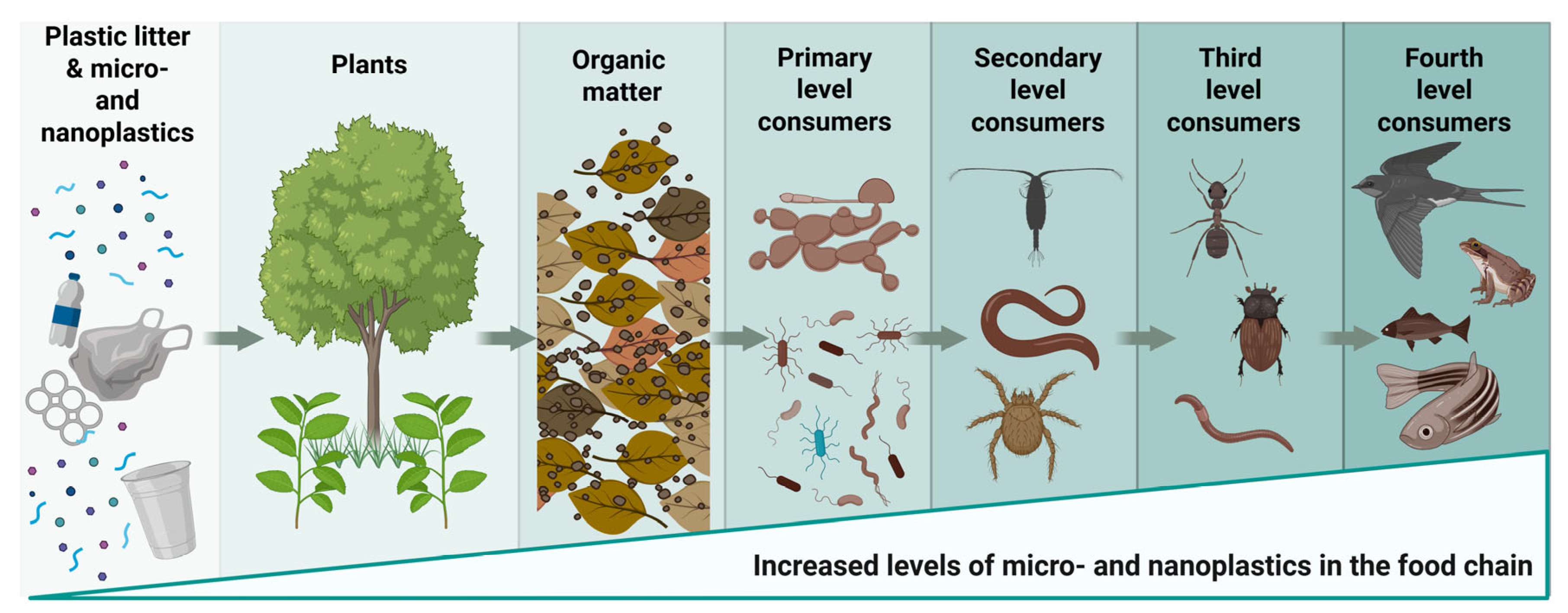
3.2. Entry into Food Webs and One Health Links
4. Internalization, Distribution, and Persistence
4.1. Absorption and Barrier Translocation
4.2. Biodistribution, Persistence, and Accumulation in Aging
5. Cellular and Molecular Mechanisms Relevant to Aging
5.1. Oxidative Stress and Redox Imbalance
5.2. Inflammation and Immune Dysregulation
5.3. Mitochondrial Dysfunction and Metabolic Impairment
5.4. Cellular Senescence and Altered Cell Communication

| Study/Model | Particle Type & Exposure | Aging-Relevant Cell/Tissue Target | Key Cellular & Molecular Mechanisms | Aging-Linked Outcomes | Citations |
|---|---|---|---|---|---|
| Testis multi-omics, young vs. old mice | PS-NPs, chronic oral, 3 months in 3- and 17-month-old mice | Testis, Leydig cells | Age-dependent disruption of RNA metabolism in young vs. DNA catabolism, collagen/ECM remodeling in old; downregulation of SR-BI and impaired steroidogenesis; fibrosis; altered SASP-related pathways | Premature testicular aging in young; aggravated age-related testicular degeneration and sperm decline in old | [168] |
| Colon toxicity, mice + intestinal epithelial cells | PS 100 nm vs. 10 µm, oral and in vitro | Intestinal epithelium | Nanoscale: endocytosis, ROS, iron overload, GSH depletion, GPX4 inhibition, p53–Fosl1-driven ferroptosis and immunogenic cell death. Microscale: mechanical membrane/cytoskeletal damage, YAP activation, metabolic shift from oxidative phosphorylation to glycolysis, inflammation | Chronic epithelial damage, inflammatory milieu, and metabolic reprogramming associated with tissue aging and cancer risk | [167] |
| PS-NPs in polyps, microglia, mice | PS-NPs, in vitro and in vivo | Microglia, marine polyps, mouse brain | ROS increase, decreased CAT and T-AOC, increased MDA; MAPK pathway activation; microglial activation and apoptosis; neuroinflammation | Anxiety-like behaviour and cognitive impairment in mice, consistent with accelerated brain aging phenotypes | [180] |
| PET MPs in accelerated-senescence rats | PET 2–6 µm, 10 or 100 mg/kg, 2 months oral | Brain, lens, retina | Cognitive decline without major blood chemistry changes; progression of cataract and AMD-like retinopathy; mechanisms not fully dissected but linked to chronic exposure | Worsened geriatric phenotypes in OXYS rats, suggesting increased rate of aging and age-related disease burden | [181] |
| PP MPs in mouse colon | PP 8 and 70 µm, 0.1–10 mg/mL, 28 days oral | Colonic epithelium, barrier | Oxidative stress (redox imbalance), tight-junction disruption, reduced mucus and ion transporter expression; TLR4/NF-κB activation; increased pro-apoptotic and pro-inflammatory proteins, elevated apoptosis | Loss of barrier integrity, chronic inflammation and epithelial apoptosis—hallmarks of inflammaging in gut | [182] |
| Weathered MPs in adult zebrafish | Naturally weathered PE/PP MPs, 0.1–1 mg/L, 21 days | Brain and liver mitochondria | Decreased mitochondrial complexes II & IV in brain; liver mitochondrial respiration and membrane potential loss; increased SOD/CAT (ROS-induced ROS release) | Anxiety-like behaviour and mitochondrial dysfunction, aligning with mitochondrial theory of aging | [183] |
| PLA micro/nanoplastics in male mice | PLA MPs → NPs, chronic exposure | Testis, sperm mitochondria, BTB | PLA-NPs cross BTB; excessive mitochondrial ROS, structural damage, impaired mitochondrial function in testes and sperm; transcriptomic suppression of spermatogenesis genes | Reduced sperm quality and hormonal disruption; mitochondrial damage driving reproductive aging | [81] |
| PS MPs/NPs in retinal cells and rat eye | PS MPs vs. NPs, 48 h in RPE cells; intravitreal injection in rats | Retinal pigment epithelium, retina | NPs internalization → high ROS, mitochondrial fission (FIS1, Drp1), mitophagy (LC3B), ↑SOD2; retinal inflammation with ↑TNF-α, IL-1β | Mitochondrial dysfunction and inflammation in RPE, central mechanisms in age-related macular degeneration | [184] |
| PS-NPs in zebrafish | PS-NPs ~70 nm, chronic in adults | Brain, liver, gonads | Tissue accumulation; oxidative stress and disturbed lipid/energy metabolism; altered neurotransmitters and circadian rhythm | Neurobehavioral impairment and reproductive toxicity, consistent with systemic functional aging | [185] |
| PS-NPs in PD mouse model | PS-NPs, 2 mg/kg q.o.d., 3 months, A53T α-syn mice | Gut barrier, microbiota, liver, brain | Goblet-cell loss, epithelial apoptosis; dysbiosis (Desulfovibrio↑); >200 fecal metabolites altered; LPS and apoptosis pathways; liver inflammation; exacerbated neuroinflammation and α-syn aggregation | Acceleration of Parkinson-like pathology via gut–liver–brain axis disruption and metabolic dysregulation | [186] |
| MPs in female mice and offspring | MPs 40 mg/kg/day, gestation + lactation | Oocytes, embryos, offspring germ cells | Elevated ROS in oocytes/embryos; mitochondrial dysfunction, apoptosis; DNA damage and spindle/chromosome defects; altered actin and Juno | Reduced fertility, impaired offspring growth and oocyte quality—evidence of trans-generational reproductive aging | [187] |
| Acute PS-MPs in young vs. old mice | PS 0.1 and 2 µm, 3 weeks in water | Brain, liver; age-stratified | Age-dependent behavioural changes; altered immune markers in brain and liver (inflammation); in vitro cytotoxicity with perinuclear accumulation | Short-term exposure induces inflammation and behavioural shifts differing by age, suggesting age-specific vulnerability | [188] |
| Pre-puberty PS-NPs + cordycepin | PS-NPs 80 nm, 3–12 mg/kg/day (PND 21–95) | Testis, BTB, Sertoli cells | Oxidative stress, BTB disruption (junction proteins↓), inflammation, apoptosis; transcriptomic enrichment of metabolism, lysosome, apoptosis, TLR4 signalling; cordycepin mitigates via TLR4 targeting | Long-term reproductive impairment from early-life exposure; persistent barrier damage and oxidative stress compatible with accelerated gonadal aging | [189] |
| PS-MPs in chicken kidney | PS-MPs 1–100 mg/L, 6 weeks | Renal mitochondria, tubular cells | Altered mitochondrial dynamics (MFN1/2, OPA1, Drp1), structural damage; oxidative stress (SOD, CAT, MDA, GSH, T-AOC changes); NF-κB activation; necroptosis via RIP1/RIP3/MLKL | Inflammation-driven renal degeneration with necroptosis, mapping onto cell-death mechanisms seen in age-related kidney disease | [164] |
| UV-aged PS-MPs, C. elegans | Virgin vs. aged PS-MPs, 0.1–100 µg/L, 10 d | Dopaminergic, glutamatergic, serotonergic neurons | Greater neurodegeneration with aged MPs; altered glutamate, serotonin, dopamine levels; dysregulated neurotransmission genes (eat-4, dat-1, tph-1) | Impaired locomotion and neurotransmission, paralleling age-related decline and neurodegeneration | [190] |
| Aged PS-MPs, zebrafish early life | Pristine vs. UV-aged PS, 0.1–100 µg/L | Embryo/larval mitochondria | Aged MPs → higher ROS, DNA damage, ↓mitochondrial membrane potential, cyt c release; caspase-3/9 activation; transcriptional changes in oxidative stress, mitochondrial dysfunction, apoptosis genes | Developmental defects and mitochondrial apoptosis, pointing to early-life programming of aging pathways | [163] |
| PS-NPs, dopaminergic neurons & mice | PS-NPs 50 nm, 0.5–500 µg/mL in vitro; 250 mg/kg/d, 28 d in mice | Dopaminergic neurons, mitochondria | NP accumulation in mitochondria; complex I interference; ↓membrane potential, ↓ATP, impaired respiration; AMPK/ULK1-driven excessive mitophagy; ROS-independent cytotoxicity; melatonin rescues | PD-like neurodegeneration and motor deficits via maladaptive mitophagy, a central mechanism in brain aging | [179] |
| PE-MPs in human discs and models | Environmental PE-MPs; human disc samples, mouse & cell models | Nucleus pulposus cells | MPs detected in human intervertebral discs; in models, TLR4/NOX2 activation → ROS overproduction, oxidative stress, nucleus pulposus cell senescence; TLR4/NOX2 inhibition reverses effects | Disc degeneration through cellular senescence, directly linking MPs to a hallmark of aging | [191] |
| PS MPs and aging gut microbiome | PS MPs, aged mice | Gut microbiota and fecal metabolome | Loss of beneficial taxa, rise in potentially harmful bacteria; increased metabolites linked to stress and altered host metabolism (e.g., alanine, serine, tryptophan, thymine, methionine, benzoic acid) | Exacerbated gut dysbiosis and aging-associated metabolic signatures, implying higher risk of age-related disease | [192] |
| MPs ± DEHP in mouse liver | MPs, DEHP, MPs + DEHP | Liver | Antioxidant system impairment; hepatic apoptosis and inflammation; transcriptomic/metabolomic disruption of carbohydrate, amino acid, lipid and purine metabolism; PI3K/AKT activation; induction of hepatocarcinogenesis-related genes | Metabolic dysfunction, chronic inflammation and pro-tumorigenic signalling, overlapping strongly with hepatic aging pathways | [193] |
6. One Health Implications of Micro- and Nanoplastics for Aging Populations
6.1. Ecosystem Health, Animal Sentinels, and Conserved Aging Pathways
6.2. Aging as a Modifier of Susceptibility in Humans
6.3. Public Health, Prevention, and Healthy Aging Frameworks
7. Knowledge Gaps and Future Directions
7.1. Limitations in MNP Research and Methodological Challenges in Nanoplastic Detection
7.2. Need for Aging-Focused Experimental and Clinical Models
7.3. Longitudinal, One Health, and Exposomics Approaches
7.4. Future Priorities
8. Conclusions
Author Contributions
Funding
Institutional Review Board Statement
Informed Consent Statement
Data Availability Statement
Acknowledgments
Conflicts of Interest
References
- Thompson, R.C.; Courtene-Jones, W.; Boucher, J.; Pahl, S.; Raubenheimer, K.; Koelmans, A.A. Twenty Years of Microplastic Pollution Research—What Have We Learned? Science 2024, 386, eadl2746. [Google Scholar] [CrossRef]
- Wright, S.; Cassee, F.R.; Erdely, A.; Campen, M.J. Micro- and Nanoplastics Concepts for Particle and Fibre Toxicologists. Part. Fibre Toxicol. 2024, 21, 18. [Google Scholar] [CrossRef]
- Sun, N.; Shi, H.; Li, X.; Gao, C.-Z.; Liu, R. Combined Toxicity of Micro/Nanoplastics Loaded with Environmental Pollutants to Organisms and Cells: Role, Effects, and Mechanism. Environ. Int. 2022, 171, 107711. [Google Scholar] [CrossRef]
- Rafa, N.; Ahmed, B.; Zohora, F.; Bakya, J.; Ahmed, S.; Ahmed, S.F.; Mofijur, M.; Chowdhury, A.; Almomani, F. Microplastics as Carriers of Toxic Pollutants: Source, Transport, and Toxicological Effects. Environ. Pollut. 2023, 343, 123190. [Google Scholar] [CrossRef]
- Rajendran, D.; Chandrasekaran, N. Journey of Micronanoplastics with Blood Components. RSC Adv. 2023, 13, 31435–31459. [Google Scholar] [CrossRef] [PubMed]
- Yang, Z.; Deloid, G.; Zarbl, H.; Baw, J.; Demokritou, P. Micro- and Nanoplastics (MNPs) and Their Potential Toxicological Outcomes: State of Science, Knowledge Gaps and Research Needs. NanoImpact 2023, 32, 100481. [Google Scholar] [CrossRef]
- Liu, Y.; Wang, Z.; Tang, W.; Wang, X.; Dong, Q.; Liu, G.; Guo, Y.; Liang, Y.; Ding, X.; Yin, Y.; et al. Water-Extractable Metals as Indicators of Wheat Metal Accumulation: Insights from Cd, Pb, Mn, Cu, and Zn. J. Hazard. Mater. 2024, 479, 135745. [Google Scholar] [CrossRef] [PubMed]
- Ivleva, N.P. Chemical Analysis of Microplastics and Nanoplastics: Challenges, Advanced Methods, and Perspectives. Chem. Rev. 2021, 121, 11886–11936. [Google Scholar] [CrossRef] [PubMed]
- Koelmans, A.A.; Gebreyohanes Belay, B.M.; Mintenig, S.M.; Mohamed Nor, N.H.; Redondo-Hasselerharm, P.E.; De Ruijter, V.N. Towards a Rational and Efficient Risk Assessment for Microplastics. TrAC Trends Anal. Chem. 2023, 165, 117142. [Google Scholar] [CrossRef]
- Du, J.; Qiu, L.; Zhou, Q.; Jin, M.; Wu, W. Microplastics as Vectors for Environmental Contaminants in the Food Chain: Assessing the Combined Toxicological Effects and Bioavailability. Toxicol. Lett. 2025, 413, 111734. [Google Scholar] [CrossRef]
- Destoumieux-Garzón, D.; Mavingui, P.; Boetsch, G.; Boissier, J.; Darriet, F.; Duboz, P.; Fritsch, C.; Giraudoux, P.; Le Roux, F.; Morand, S.; et al. The One Health Concept: 10 Years Old and a Long Road Ahead. Front. Vet. Sci. 2018, 5, 14. [Google Scholar] [CrossRef]
- Mackenzie, J.S.; Jeggo, M. The One Health Approach-Why Is It So Important? Trop. Med. Infect. Dis. 2019, 4, 88. [Google Scholar] [CrossRef]
- Gibbs, E.P.J. The Evolution of One Health: A Decade of Progress and Challenges for the Future. Vet. Rec. 2014, 174, 85–91. [Google Scholar] [CrossRef]
- Arif, Y.; Mir, A.R.; Zieliński, P.; Hayat, S.; Bajguz, A. Microplastics and Nanoplastics: Source, Behavior, Remediation, and Multi-Level Environmental Impact. J. Environ. Manag. 2024, 356, 120618. [Google Scholar] [CrossRef]
- Jiang, F.; Gao, C.; Chan, A.W.H.; Topping, D.O.; Zhang, H.; Li, W.; Coe, H.; Liu, X.; Ching, J.; Zheng, Z. A Review of Atmospheric Micro/Nanoplastics: Insights into Source and Fate for Modelling Studies. Curr. Pollut. Rep. 2025, 11, 53. [Google Scholar] [CrossRef]
- Mohsen, M.; Gündoğdu, S.; Wang, Q.; Zhou, H.; Zhang, C. Impact of Micro and Nanoplastics on Aquaculture Animals: A Systematic Review. Aquac. Int. 2025, 33, 655. [Google Scholar] [CrossRef]
- Leslie, H.A.; Van Velzen, M.J.M.; Brandsma, S.H.; Vethaak, A.D.; Garcia-Vallejo, J.J.; Lamoree, M.H. Discovery and Quantification of Plastic Particle Pollution in Human Blood. Environ. Int. 2022, 163, 107199. [Google Scholar] [CrossRef] [PubMed]
- Roslan, N.S.; Lee, Y.Y.; Ibrahim, Y.S.; Tuan Anuar, S.; Yusof, K.M.K.K.; Lai, L.A.; Brentnall, T. Detection of Microplastics in Human Tissues and Organs: A Scoping Review. J. Glob. Health 2024, 14, 04179. [Google Scholar] [CrossRef]
- Gao, W.; Deng, X.-J.; Zhang, J.; Qi, L.; Zhao, X.-Q.; Zhang, P.-Y. Assessment of Quality Control Measures in the Monitoring of Microplastic: A Critical Review. Environ. Pollut. Bioavailab. 2023, 35, 2203349. [Google Scholar] [CrossRef]
- Pandics, T.; Major, D.; Fazekas-Pongor, V.; Szarvas, Z.; Peterfi, A.; Mukli, P.; Gulej, R.; Ungvari, A.; Fekete, M.; Tompa, A.; et al. Exposome and Unhealthy Aging: Environmental Drivers from Air Pollution to Occupational Exposures. GeroScience 2023, 45, 3381–3408. [Google Scholar] [CrossRef] [PubMed]
- Tian, W.; Cao, K.; Feng, Q. The Impact of Environmental Exposure on the Health of Older Adults: A Review from the GIScience Perspective. Trans. GIS 2025, 29, e70056. [Google Scholar] [CrossRef]
- Dewika, M.; Markandan, K.; Irfan, N.A.; Mohd Abdah, M.A.A.; Ruwaida, J.N.; Sara, Y.Y.; Khalid, M. Review of Microplastics in the Indoor Environment: Distribution, Human Exposure and Potential Health Impacts. Chemosphere 2023, 324, 138270. [Google Scholar] [CrossRef]
- Chen, C.-Y.; Kamineni, V.; Lin, Z. A Physiologically Based Toxicokinetic Model for Microplastics and Nanoplastics in Mice after Oral Exposure and Its Implications for Human Dietary Exposure Assessment. J. Hazard. Mater. 2024, 480, 135922. [Google Scholar] [CrossRef]
- López-Otín, C.; Blasco, M.A.; Partridge, L.; Serrano, M.; Kroemer, G. The Hallmarks of Aging. Cell 2013, 153, 1194–1217. [Google Scholar] [CrossRef]
- Sangkham, S.; Faikhaw, O.; Munkong, N.; Sakunkoo, P.; Arunlertaree, C.; Chavali, M.; Mousazadeh, M.; Tiwari, A. A Review on Microplastics and Nanoplastics in the Environment: Their Occurrence, Exposure Routes, Toxic Studies, and Potential Effects on Human Health. Mar. Pollut. Bull. 2022, 181, 113832. [Google Scholar] [CrossRef]
- Shiwakoti, S.; Dhakal, B.; Ok, Y.; Gong, D.-S.; Ko, J.-Y.; Kim, P.-G.; Oak, M.-H. Nanoplastics: An Emerging Environmental Concern in Age-Related Diseases. Environ. Pollut. 2025, 384, 126972. [Google Scholar] [CrossRef]
- Kim, D.; Kim, S.A.; Nam, S.-H.; Kwak, J.I.; Kim, L.; Lee, T.-Y.; Kim, H.; An, S.; An, Y.-J. Microplastic Ingestion in Aquatic and Soil Biota: A Comprehensive Review of Laboratory Studies on Edible Size and Intake Pattern. Mar. Pollut. Bull. 2024, 200, 116056. [Google Scholar] [CrossRef] [PubMed]
- Nicholson, K.; Liu, W.; Fitzpatrick, D.; Hardacre, K.A.; Roberts, S.; Salerno, J.; Stranges, S.; Fortin, M.; Mangin, D. Prevalence of Multimorbidity and Polypharmacy Among Adults and Older Adults: A Systematic Review. Lancet Healthy Longev. 2024, 5, e287–e296. [Google Scholar] [CrossRef] [PubMed]
- Prattichizzo, F.; Ceriello, A.; Pellegrini, V.; La Grotta, R.; Graciotti, L.; Olivieri, F.; Paolisso, P.; D’Agostino, B.; Iovino, P.; Balestrieri, M.L.; et al. Micro-Nanoplastics and Cardiovascular Diseases: Evidence and Perspectives. Eur. Heart J. 2024, 45, 4099–4110. [Google Scholar] [CrossRef] [PubMed]
- Soltani, N.S.; Taylor, M.P.; Wilson, S.P. International Quantification of Microplastics in Indoor Dust: Prevalence, Exposure and Risk Assessment. Environ. Pollut. 2022, 312, 119957. [Google Scholar] [CrossRef]
- Ageel, H.K.; Harrad, S.; Abdallah, M.A.-E. Microplastics in Settled Indoor Dust: Implications for Human Exposure. Emerg. Contam. 2025, 11, 100506. [Google Scholar] [CrossRef]
- Kong, L.; Li, S.; Fu, Y.; Cai, Q.; Zhai, Z.; Liang, J.; Ma, T. Microplastics/Nanoplastics Contribute to Aging and Age-Related Diseases: Mitochondrial Dysfunction as a Crucial Role. Food Chem. Toxicol. 2025, 199, 115355. [Google Scholar] [CrossRef]
- Pitt, S.J.; Gunn, A. The One Health Concept. Br. J. Biomed. Sci. 2024, 81, 12366. [Google Scholar] [CrossRef] [PubMed]
- Farrelly, C. The Geroscience Perspective on One Health. BioScience 2025, biaf080. [Google Scholar] [CrossRef]
- Chandra Mouli, S.; Lozada, C.; Dong, W.; Nasir, K.; Ganatra, S.; Osi, K.; Rajagopalan, S.; Fischer, J.; Maddock, J.E.; Al-Kindi, S. Green One Health Cardiology. JACC Adv. 2025, 4, 102368. [Google Scholar] [CrossRef] [PubMed]
- Jeong, E.; Lee, J.-Y.; Redwan, M. Animal Exposure to Microplastics and Health Effects: A Review. Emerg. Contam. 2024, 10, 100369. [Google Scholar] [CrossRef]
- Khan, A.; Qadeer, A.; Wajid, A.; Ullah, Q.; Rahman, S.U.; Ullah, K.; Safi, S.Z.; Ticha, L.; Skalickova, S.; Chilala, P.; et al. Microplastics in Animal Nutrition: Occurrence, Spread, and Hazard in Animals. J. Agric. Food Res. 2024, 17, 101258. [Google Scholar] [CrossRef]
- Scieszka, D.; Bolt, A.M.; McCormick, M.A.; Brigman, J.L.; Campen, M.J. Aging, Longevity, and the Role of Environmental Stressors: A Focus on Wildfire Smoke and Air Quality. Front. Toxicol. 2023, 5, 1267667. [Google Scholar] [CrossRef]
- Ottinger, M.A.; Grace, J.K.; Maness, T.J. Global Challenges in Aging: Insights from Comparative Biology and One Health. Front. Toxicol. 2024, 6, 1381178. [Google Scholar] [CrossRef]
- Huang, X.; Lu, B.; Liu, H.; Wu, X.; Liu, Y. Ecotoxicological Impacts of Microplastics to Gut Microbiota: Response Mechanism, Challenges and Environmental Sustainability-A Review. Ecotoxicol. Environ. Saf. 2025, 302, 118748. [Google Scholar] [CrossRef]
- Jansen, M.A.K.; Andrady, A.L.; Bornman, J.F.; Aucamp, P.J.; Bais, A.F.; Banaszak, A.T.; Barnes, P.W.; Bernhard, G.H.; Bruckman, L.S.; Busquets, R.; et al. Plastics in the Environment in the Context of UV Radiation, Climate Change and the Montreal Protocol: UNEP Environmental Effects Assessment Panel, Update 2023. Photochem. Photobiol. Sci. 2024, 23, 629–650. [Google Scholar] [CrossRef]
- Osman, A.I.; Hosny, M.; Eltaweil, A.S.; Omar, S.; Elgarahy, A.M.; Farghali, M.; Yap, P.-S.; Wu, Y.-S.; Nagandran, S.; Batumalaie, K.; et al. Microplastic Sources, Formation, Toxicity and Remediation: A Review. Environ. Chem. Lett. 2023, 21, 2129–2169. [Google Scholar] [CrossRef]
- Xu, Y.; Ou, Q.; Van Der Hoek, J.P.; Liu, G.; Lompe, K.M. Photo-Oxidation of Micro- and Nanoplastics: Physical, Chemical, and Biological Effects in Environments. Environ. Sci. Technol. 2024, 58, 991–1009. [Google Scholar] [CrossRef]
- Ventura, E.; Marín, A.; Gámez-Pérez, J.; Cabedo, L. Recent Advances in the Relationships Between Biofilms and Microplastics in Natural Environments. World J. Microbiol. Biotechnol. 2024, 40, 220. [Google Scholar] [CrossRef] [PubMed]
- Rose, P.K.; Yadav, S.; Kataria, N.; Khoo, K.S. Microplastics and Nanoplastics in the Terrestrial Food Chain: Uptake, Translocation, Trophic Transfer, Ecotoxicology, and Human Health Risk. TrAC Trends Anal. Chem. 2023, 167, 117249. [Google Scholar] [CrossRef]
- Dal Yöntem, F.; Aydoğan Ahbab, M. Mitochondria as a Target of Micro- and Nanoplastic Toxicity. Camb. Prism. Plast. 2024, 2, e6. [Google Scholar] [CrossRef]
- Vanetti, C.; Broggiato, M.; Pezzana, S.; Clerici, M.; Fenizia, C. Effects of Microplastics on the Immune System: How Much Should We Worry? Immunol. Lett. 2025, 272, 106976. [Google Scholar] [CrossRef]
- Peterson, J.R.; Howell, B.M.; Hahn, M.B. Utilizing the “One Health” Model to Study Human Aging in Urban Environments. Gerontol. Geriatr. Med. 2022, 8, 23337214221116946. [Google Scholar] [CrossRef] [PubMed]
- Bastante-Rabadán, M.; Boltes, K. Mixtures of Micro and Nanoplastics and Contaminants of Emerging Concern in Environment: What We Know About Their Toxicological Effects. Toxics 2024, 12, 589. [Google Scholar] [CrossRef]
- Vogel, A.; Tentschert, J.; Pieters, R.; Bennet, F.; Dirven, H.; Van Den Berg, A.; Lenssen, E.; Rietdijk, M.; Broßell, D.; Haase, A. Towards a Risk Assessment Framework for Micro- and Nanoplastic Particles for Human Health. Part. Fibre Toxicol. 2024, 21, 48. [Google Scholar] [CrossRef]
- Winkler, A.S.; Brux, C.M.; Carabin, H.; Das Neves, C.G.; Häsler, B.; Zinsstag, J.; Fèvre, E.M.; Okello, A.; Laing, G.; Harrison, W.E.; et al. The Lancet One Health Commission: Harnessing Our Interconnectedness for Equitable, Sustainable, and Healthy Socioecological Systems. Lancet 2025, 406, 501–570. [Google Scholar] [CrossRef]
- Shao, K.; Zou, R.; Zhang, Z.; Mandemaker, L.D.B.; Timbie, S.; Smith, R.D.; Durkin, A.M.; Dusza, H.M.; Meirer, F.; Weckhuysen, B.M.; et al. Advancements in Assays for Micro- and Nanoplastic Detection: Paving the Way for Biomonitoring and Exposomics Studies. Annu. Rev. Pharmacol. Toxicol. 2025, 65, 567–585. [Google Scholar] [CrossRef]
- Choi, S.; Lee, S.; Kim, M.-K.; Yu, E.-S.; Ryu, Y.-S. Challenges and Recent Analytical Advances in Micro/Nanoplastic Detection. Anal. Chem. 2024, 96, 8846–8854. [Google Scholar] [CrossRef]
- Santos, F.A.; Andre, R.S.; Alvarenga, A.D.; Alves, A.L.M.M.; Correa, D.S. Micro- and Nanoplastics in the Environment: A Comprehensive Review on Detection Techniques. Environ. Sci. Nano 2025, 12, 3442–3467. [Google Scholar] [CrossRef]
- Koelmans, A.A.; Redondo-Hasselerharm, P.E.; Nor, N.H.M.; De Ruijter, V.N.; Mintenig, S.M.; Kooi, M. Risk Assessment of Microplastic Particles. Nat. Rev. Mater. 2022, 7, 138–152. [Google Scholar] [CrossRef]
- Conway, J.; De Jong, E.N.; White, A.J.; Dugan, B.; Rees, N.P.; Parnell, S.M.; Lamberte, L.E.; Sharma-Oates, A.; Sullivan, J.; Mauro, C.; et al. Age-related Loss of Intestinal Barrier Integrity Plays an Integral Role in Thymic Involution and T Cell Ageing. Aging Cell 2025, 24, e14401. [Google Scholar] [CrossRef]
- Beggel, S.; Kalis, E.J.J.; Geist, J. Towards Harmonized Ecotoxicological Effect Assessment of Micro- and Nanoplastics in Aquatic Systems. Environ. Pollut. 2025, 366, 125504. [Google Scholar] [CrossRef]
- Prata, J.C.; Padrão, J.; Khan, M.T.; Walker, T.R. Do’s and Don’ts of Microplastic Research: A Comprehensive Guide. Water Emerg. Contam. Nanoplast. 2024, 3, 8. [Google Scholar] [CrossRef]
- Rani-Borges, B.; Ando, R.A. How Small a Nanoplastic Can Be? A Discussion on the Size of This Ubiquitous Pollutant. Camb. Prism. Plast. 2024, 2, e23. [Google Scholar] [CrossRef]
- Pradel, A.; Catrouillet, C.; Gigault, J. The Environmental Fate of Nanoplastics: What We Know and What We Need to Know About Aggregation. NanoImpact 2023, 29, 100453. [Google Scholar] [CrossRef] [PubMed]
- Abdolahpur Monikh, F.; Quik, J.T.K.; Wiesner, M.R.; Tapparo, A.; Pastore, P.; Grossart, H.-P.; Akkanen, J.; Kortet, R.; Kukkonen, J.V.K. Importance of Attachment Efficiency in Determining the Fate of PS and PVC Nanoplastic Heteroaggregation with Natural Colloids Using a Multimedia Model. Environ. Sci. Technol. 2025, 59, 4674–4683. [Google Scholar] [CrossRef]
- Ji, Y.; Chen, L.; Wang, Y.; Zhang, J.; Yu, Y.; Wang, M.; Wang, X.; Liu, W.; Yan, B.; Xiao, L.; et al. Realistic Nanoplastics Induced Pulmonary Damage via the Crosstalk of Ferritinophagy and Mitochondrial Dysfunction. ACS Nano 2024, 18, 16790–16807. [Google Scholar] [CrossRef]
- Wang, Z.; He, H.; Zhai, Y.; Chen, Y.; Xu, Z.; Wang, W. Microplastic Photoaging: A Critical Review on Occurrence, Influence Factors, Mechanism and Potential Effect. J. Clean. Prod. 2024, 464, 142783. [Google Scholar] [CrossRef]
- Zhang, W.; Chen, Q.; Walker, T.R. Key Methodological Priorities for Establishing a Microplastics Detection Laboratory. J. Hazard. Mater. Plast. 2025, 1, 100004. [Google Scholar] [CrossRef]
- Song, J.; Wang, C.; Li, G. Defining Primary and Secondary Microplastics: A Connotation Analysis. ACS EST Water 2024, 4, 2330–2332. [Google Scholar] [CrossRef]
- Kukkola, A.; Chetwynd, A.J.; Krause, S.; Lynch, I. Beyond Microbeads: Examining the Role of Cosmetics in Microplastic Pollution and Spotlighting Unanswered Questions. J. Hazard. Mater. 2024, 476, 135053. [Google Scholar] [CrossRef]
- Zhou, Y.; Ashokkumar, V.; Amobonye, A.; Bhattacharjee, G.; Sirohi, R.; Singh, V.; Flora, G.; Kumar, V.; Pillai, S.; Zhang, Z.; et al. Current Research Trends on Cosmetic Microplastic Pollution and Its Impacts on the Ecosystem: A Review. Environ. Pollut. 2023, 320, 121106. [Google Scholar] [CrossRef] [PubMed]
- Folbert, M.; Stoorvogel, J.; Löhr, A. Plastic Pellet Spills and Leakages during Maritime Transportation: A Transdisciplinary Approach to Understand the Complex Causal Pathways. Mar. Pollut. Bull. 2025, 218, 118194. [Google Scholar] [CrossRef]
- Diana, Z.T.; Chen, Y.; Rochman, C.M. Paint: A Ubiquitous yet Disregarded Piece of the Microplastics Puzzle. Environ. Toxicol. Chem. 2025, 44, 26–44. [Google Scholar] [CrossRef]
- Akyildiz, S.H.; Fiore, S.; Bruno, M.; Sezgin, H.; Yalcin-Enis, I.; Yalcin, B.; Bellopede, R. Release of Microplastic Fibers from Synthetic Textiles During Household Washing. Environ. Pollut. 2024, 357, 124455. [Google Scholar] [CrossRef]
- Hernandez, L.M.; Howarth-Forster, L.; Sørensen, L.; Booth, A.M.; Vidal, A.; Tufenkji, N.; Sempéré, R.; Schmidt, N. UV-Degradation Is a Key Driver of the Fate and Impacts of Marine Plastics. How Can Laboratory Experiments Be Designed to Effectively Inform Risk Assessment? Mar. Pollut. Bull. 2025, 219, 118271. [Google Scholar] [CrossRef]
- Gao, Y.; Gao, W.; Liu, Y.; Zou, D.; Li, Y.; Lin, Y.; Zhao, J. A Comprehensive Review of Microplastic Aging: Laboratory Simulations, Physicochemical Properties, Adsorption Mechanisms, and Environmental Impacts. Sci. Total Environ. 2024, 957, 177427. [Google Scholar] [CrossRef]
- Bridson, J.H.; Masterton, H.; Theobald, B.; Risani, R.; Doake, F.; Wallbank, J.A.; Maday, S.D.M.; Lear, G.; Abbel, R.; Smith, D.A.; et al. Leaching and Transformation of Chemical Additives from Weathered Plastic Deployed in the Marine Environment. Mar. Pollut. Bull. 2024, 198, 115810. [Google Scholar] [CrossRef]
- Wu, X.; He, F.; Xu, X.; Wu, L.; Rong, J.; Lin, S. Environmental Health and Safety Implications of the Interplay Between Microplastics and the Residing Biofilm. Environ. Health 2025, 3, 118–132. [Google Scholar] [CrossRef]
- Gouda, M.Z.; Xu, E.G.; Ateia, M. Why Pristine, Aged, and Real-World Microplastics Are All Essential for Environmental Research. Environ. Sci. Technol. 2026, 60, 7–10. [Google Scholar] [CrossRef]
- Vasse, G.; Melgert, B. Microplastic and Plastic Pollution: Impact on Respiratory Disease and Health. Eur. Respir. Rev. 2024, 33, 230226. [Google Scholar] [CrossRef]
- Ompala, C.; Renault, J.-P.; Taché, O.; Cournède, É.; Devineau, S.; Chivas-Joly, C. Stability and Dispersibility of Microplastics in Experimental Exposure Medium and Their Dimensional Characterization by SMLS, SAXS, Raman Microscopy, and SEM. J. Hazard. Mater. 2024, 469, 134083. [Google Scholar] [CrossRef]
- Li, H.; Bai, L.; Liang, S.; Chen, X.; Gu, X.; Wang, C.; Gu, C. The Wheel of Time: The Environmental Dance of Aged Micro- and Nanoplastics and Their Biological Resonance. Eco-Environ. Health 2025, 4, 100138. [Google Scholar] [CrossRef] [PubMed]
- Boháčková, J.; Cajthaml, T. Contribution of Chemical Toxicity to the Overall Toxicity of Microplastic Particles: A Review. Sci. Total Environ. 2024, 957, 177611. [Google Scholar] [CrossRef] [PubMed]
- Binda, G.; Kalčíková, G.; Allan, I.J.; Hurley, R.; Rødland, E.; Spanu, D.; Nizzetto, L. Microplastic Aging Processes: Environmental Relevance and Analytical Implications. TrAC Trends Anal. Chem. 2024, 172, 117566. [Google Scholar] [CrossRef]
- Zhao, Q.; Fang, Z.; Wang, P.; Qian, Z.; Yang, Y.; Ran, L.; Zheng, J.; Tang, Y.; Cui, X.; Li, Y.-Y.; et al. Polylactic Acid Micro/Nanoplastic Exposure Induces Male Reproductive Toxicity by Disrupting Spermatogenesis and Mitochondrial Dysfunction in Mice. ACS Nano 2025, 19, 5589–5603. [Google Scholar] [CrossRef]
- Zhang, X.; Xia, M.; Su, X.; Yuan, P.; Li, X.; Zhou, C.; Wan, Z.; Zou, W. Photolytic Degradation Elevated the Toxicity of Polylactic Acid Microplastics to Developing Zebrafish by Triggering Mitochondrial Dysfunction and Apoptosis. J. Hazard. Mater. 2021, 413, 125321. [Google Scholar] [CrossRef] [PubMed]
- Scalia, F.; Capparucci, F.; Amico, M.; Marino, M.; Lamparelli, E.; Longhitano, L.; Giallongo, S.; Falleti, R.; Rappa, F.; Iaria, C.; et al. Toxic Effects of Biodegradable Polylactic Acid Nanoplastics on Developing Zebrafish (Danio Rerio). Sci. Rep. 2025, 15, 38145. [Google Scholar] [CrossRef]
- Shao, Y.; Hua, X.; Li, Y.; Wang, D. Comparison of Reproductive Toxicity Between Pristine and Aged Polylactic Acid Microplastics in Caenorhabditis Elegans. J. Hazard. Mater. 2024, 466, 133545. [Google Scholar] [CrossRef]
- Wu, J.; Shao, Y.; Hua, X.; Li, Y.; Wang, D. Photo-Aged Polylactic Acid Microplastics Causes Severe Transgenerational Decline in Reproductive Capacity in C. elegans: Insight into Activation of DNA Damage Checkpoints Affected by Multiple Germline Histone Methyltransferases. Environ. Pollut. 2025, 382, 126697. [Google Scholar] [CrossRef]
- Peng, Y.; Lu, J.; Fan, L.; Dong, W.; Jiang, M. Simulated Gastrointestinal Digestion of Two Different Sources of Biodegradable Microplastics and the Influence on Gut Microbiota. Food Chem. Toxicol. 2024, 185, 114474. [Google Scholar] [CrossRef]
- Wen, L.; Hu, Q.; Lv, Y.; Ding, W.; Yin, T.; Mao, H.; Wang, T. Environmental Release Behavior, Cell Toxicity and Intracellular Distribution of Novel Biodegradable Plastic Materials. Environ. Pollut. 2024, 367, 125554. [Google Scholar] [CrossRef] [PubMed]
- Tang, K.H.D.; Li, R.; Li, Z.; Wang, D. Health Risk of Human Exposure to Microplastics: A Review. Environ. Chem. Lett. 2024, 22, 1155–1183. [Google Scholar] [CrossRef]
- Santoro, A.; Marino, M.; Vandenberg, L.; Szychlinska, M.; Lamparelli, E.; Scalia, F.; Della Rocca, N.; D’Auria, R.; Pastorino, G.; Della Porta, G.; et al. PLASTAMINATION: Outcomes on the Central Nervous System and Reproduction. Curr. Neuropharmacol. 2024, 22, 1870–1898. [Google Scholar] [CrossRef]
- Alaraby, M.; Abass, D.; Farré, M.; Hernández, A.; Marcos, R. Are Bioplastics Safe? Hazardous Effects of Polylactic Acid (PLA) Nanoplastics in Drosophila. Sci. Total Environ. 2024, 919, 170592. [Google Scholar] [CrossRef]
- López-Otín, C.; Blasco, M.A.; Partridge, L.; Serrano, M.; Kroemer, G. Hallmarks of Aging: An Expanding Universe. Cell 2023, 186, 243–278. [Google Scholar] [CrossRef]
- Qin, M.; Wang, Y.; Xu, M.; Tang, J.; Tang, X.; Mahmood, Q.; Tang, C.-J. Characterization of the Microplastic Photoaging Under the Action of Typical Salt Ions of Biological Nitrogen Removal Processes. Sci. Total Environ. 2024, 912, 169596. [Google Scholar] [CrossRef] [PubMed]
- Wang, Q.; Gao, Y.; Tang, X.; Yang, Z.; Tang, L.; Luo, G.; Liu, C.; Tong, H. How Aging Microplastics Influence Heavy Metal Environmental Fate and Bioavailability: A Systematic Review. Environ. Res. 2025, 271, 121128. [Google Scholar] [CrossRef] [PubMed]
- Chokejaroenrat, C.; Hammawiboon, N.; Weaoseng, P.; Poomipuen, K.; Žgajnar Gotvajn, A.; Pattanateeradetch, A.; Jamnongkan, T.; Imman, S.; Sakulthaew, C. Unraveling Complexation and Contaminant Vector Potential in Aged Polyamide-Heavy Metal Interactions. ACS Omega 2025, 10, 55446–55460. [Google Scholar] [CrossRef] [PubMed]
- Rasool, A.; Halfar, J.; Brožová, K.; Čabanová, K.; Chromíková, J.; Malíková, P.; Motyka, O.; Pertile, E.; Drabinová, S.; Heviánková, S. Interactions of Microplastics with Heavy Metals in the Aquatic Environment: Mechanisms and Mitigation. J. Hazard. Mater. Adv. 2026, 21, 100984. [Google Scholar] [CrossRef]
- Ali, I.; Tan, X.; Peng, C.; Naz, I.; Zhang, Y.; Hernández, A.; Marcos, R.; Pervez, R.; Duan, Z.; Ruan, Y. Eco- and Bio-Corona-Based Microplastics and Nanoplastics Complexes in the Environment: Modulations in the Toxicological Behavior of Plastic Particles and Factors Affecting. Process Saf. Environ. Prot. 2024, 187, 356–375. [Google Scholar] [CrossRef]
- Yang, H.; Chen, Z.; Kong, L.; Xing, H.; Yang, Q.; Wu, J. A Review of Eco-Corona Formation on Micro/Nanoplastics and Its Effects on Stability, Bioavailability, and Toxicity. Water 2025, 17, 1124. [Google Scholar] [CrossRef]
- Panico, S.; Capolla, S.; Bozzer, S.; Toffoli, G.; Dal Bo, M.; Macor, P. Biological Features of Nanoparticles: Protein Corona Formation and Interaction with the Immune System. Pharmaceutics 2022, 14, 2605. [Google Scholar] [CrossRef]
- Shefer, A.; Yalovaya, A.; Tamkovich, S. Exosomes in Breast Cancer: Involvement in Tumor Dissemination and Prospects for Liquid Biopsy. Int. J. Mol. Sci. 2022, 23, 8845. [Google Scholar] [CrossRef]
- Bocci, V.; Galafassi, S.; Levantesi, C.; Crognale, S.; Amalfitano, S.; Congestri, R.; Matturro, B.; Rossetti, S.; Di Pippo, F. Freshwater Plastisphere: A Review on Biodiversity, Risks, and Biodegradation Potential with Implications for the Aquatic Ecosystem Health. Front. Microbiol. 2024, 15, 1395401. [Google Scholar] [CrossRef]
- Wu, J.; Chen, H.; Xu, J.; Rahman, M.; Li, S.; Wang, J.; Huang, S.; Han, C.; Xu, S.; Liu, Y. The Lull before Microplastics Pollution Outbreaks: Some Implications for Human Health and Control Strategies. Nano Today 2024, 54, 102062. [Google Scholar] [CrossRef]
- Cai, R.; Baimanov, D.; Yuan, H.; Xie, H.; Yu, S.; Zhang, Z.; Yang, J.; Zhao, F.; You, Y.; Guan, Y.; et al. Protein Corona-Directed Cellular Recognition and Uptake of Polyethylene Nanoplastics by Macrophages. Environ. Sci. Technol. 2024, 58, 14158–14168. [Google Scholar] [CrossRef] [PubMed]
- Abdolahpur Monikh, F.; Lehtonen, Š.; Kekäläinen, J.; Karkossa, I.; Auriola, S.; Schubert, K.; Zanut, A.; Peltonen, S.; Niskanen, J.; Bandekar, M.; et al. Biotransformation of Nanoplastics in Human Plasma and Their Permeation Through a Model In Vitro Blood-Brain Barrier: An in-Depth Quantitative Analysis. Nano Today 2024, 59, 102466. [Google Scholar] [CrossRef]
- Müller, L.; Di Benedetto, S. Inflammaging, Immunosenescence, and Cardiovascular Aging: Insights into Long COVID Implications. Front. Cardiovasc. Med. 2024, 11, 1384996. [Google Scholar] [CrossRef]
- Huang, D.; Tao, J.; Cheng, M.; Deng, R.; Chen, S.; Yin, L.; Li, R. Microplastics and Nanoplastics in the Environment: Macroscopic Transport and Effects on Creatures. J. Hazard. Mater. 2020, 407, 124399. [Google Scholar] [CrossRef]
- Alfonso, M.; Arias, A.; Ronda, A.; Piccolo, M. Continental Microplastics: Presence, Features, and Environmental Transport Pathways. Sci. Total Environ. 2021, 799, 149447. [Google Scholar] [CrossRef]
- Jiang, B.; Kauffman, A.; Li, L.; McFee, W.; Cai, B.; Weinstein, J.; Lead, J.; Chatterjee, S.; Scott, G.; Xiao, S. Health Impacts of Environmental Contamination of Micro- and Nanoplastics: A Review. Environ. Health Prev. Med. 2020, 25, 29. [Google Scholar] [CrossRef]
- Jolaosho, T.; Rasaq, M.F.; Omotoye, E.V.; Araomo, O.V.; Adekoya, O.S.; Abolaji, O.Y.; Hungbo, J.J. Microplastics in Freshwater and Marine Ecosystems: Occurrence, Characterization, Sources, Distribution Dynamics, Fate, Transport Processes, Potential Mitigation Strategies, and Policy Interventions. Ecotoxicol. Environ. Saf. 2025, 294, 118036. [Google Scholar] [CrossRef]
- Erkan, S.; Takatas, B.; Ozturk, A.; Gündoğdu, S.; Aydın, F.; Koker, L.; Ozdemir, O.; Albay, M.; Engin, O. Spatio-Temporal Distribution of Microplastic Pollution in Surface Sediments Along the Coastal Areas of Istanbul, Turkey. Mar. Pollut. Bull. 2023, 195, 115461. [Google Scholar] [CrossRef] [PubMed]
- Luo, W.; Su, L.; Craig, N.; Du, F.; Wu, C.; Shi, H. Comparison of Microplastic Pollution in Different Water Bodies from Urban Creeks to Coastal Waters. Environ. Pollut. 2019, 246, 174–182. [Google Scholar] [CrossRef] [PubMed]
- Zhang, W.; Hu, J.; Yin, C.; Ling, L.; Gu, L.; Zheng, L. Characterization of Microplastic Contamination and Influencing Factors in Different Environmental Compartments of a Coal Mining Subsidence Area in Northern Anhui, China. Sci. Total Environ. 2024, 955, 176881. [Google Scholar] [CrossRef]
- Simon-Sánchez, L.; Grelaud, M.; García-Orellana, J.; Ziveri, P. River Deltas as Hotspots of Microplastic Accumulation: The Case Study of the Ebro River (NW Mediterranean). Sci. Total Environ. 2019, 687, 1186–1196. [Google Scholar] [CrossRef]
- Talbot, R.; Granek, E.; Chang, H.; Wood, R.; Brander, S. Spatial and Temporal Variations of Microplastic Concentrations in Portland’s Freshwater Ecosystems. Sci. Total Environ. 2022, 833, 155143. [Google Scholar] [CrossRef]
- Mutshekwa, T.; Mulaudzi, F.; Maiyana, V.; Mofu, L.; Munyai, L.; Murungweni, F. Atmospheric Deposition of Microplastics in Urban, Rural, Forest Environments: A Case Study of Thulamela Local Municipality. PLoS ONE 2025, 20, e0313840. [Google Scholar] [CrossRef] [PubMed]
- Klein, M.; Bechtel, B.; Brecht, T.; Fischer, E. Spatial Distribution of Atmospheric Microplastics in Bulk-Deposition of Urban and Rural Environments—A One-Year Follow-Up Study in Northern Germany. Sci. Total Environ. 2023, 901, 165923. [Google Scholar] [CrossRef] [PubMed]
- Semmouri, I.; Vercauteren, M.; Van Acker, E.; Pequeur, E.; Asselman, J.; Janssen, C. Distribution of Microplastics in Freshwater Systems in an Urbanized Region: A Case Study in Flanders (Belgium). Sci. Total Environ. 2023, 872, 162192. [Google Scholar] [CrossRef] [PubMed]
- Barrows, A.; Christiansen, K.; Bode, E.; Hoellein, T. A Watershed-Scale, Citizen Science Approach to Quantifying Microplastic Concentration in a Mixed Land-Use River. Water Res. 2018, 147, 382–392. [Google Scholar] [CrossRef]
- Wang, W.; Ndungu, A.; Li, Z.; Wang, J. Microplastics Pollution in Inland Freshwaters of China: A Case Study in Urban Surface Waters of Wuhan, China. Sci. Total Environ. 2016, 575, 1369–1374. [Google Scholar] [CrossRef]
- Hu, J.; He, D.; Zhang, X.; Li, X.; Chen, Y.; Wei, G.; Zhang, Y.; Ok, Y.; Luo, Y. National-Scale Distribution of Micro(Meso)Plastics in Farmland Soils Across China: Implications for Environmental Impacts. J. Hazard. Mater. 2021, 424, 127283. [Google Scholar] [CrossRef]
- Merga, L.; Redondo-Hasselerharm, P.; Van Den Brink, P.; Koelmans, A. Distribution of Microplastic and Small Macroplastic Particles Across Four Fish Species and Sediment in an African Lake. Sci. Total Environ. 2020, 741, 140527. [Google Scholar] [CrossRef]
- Egessa, R.; Nankabirwa, A.; Ocaya, H.; Pabire, W.G. Microplastic Pollution in Surface Water of Lake Victoria. Sci. Total Environ. 2020, 741, 140201. [Google Scholar] [CrossRef]
- Koutnik, V.; Leonard, J.; Alkidim, S.; DePrima, F.; Ravi, S.; Hoek, E.; Mohanty, S. Distribution of Microplastics in Soil and Freshwater Environments: Global Analysis and Framework for Transport Modeling. Environ. Pollut. 2021, 274, 116552. [Google Scholar] [CrossRef]
- Pironti, C.; Ricciardi, M.; Motta, O.; Miele, Y.; Proto, A.; Montano, L. Microplastics in the Environment: Intake Through the Food Web, Human Exposure and Toxicological Effects. Toxics 2021, 9, 224. [Google Scholar] [CrossRef]
- Borriello, L.; Scivicco, M.; Cacciola, N.; Esposito, F.; Severino, L.; Cirillo, T. Microplastics, a Global Issue: Human Exposure Through Environmental and Dietary Sources. Foods 2023, 12, 3396. [Google Scholar] [CrossRef] [PubMed]
- Prata, J.; Silva, A.; Da Costa, J.; Mouneyrac, C.; Walker, T.; Duarte, A.; Rocha-Santos, T. Solutions and Integrated Strategies for the Control and Mitigation of Plastic and Microplastic Pollution. Int. J. Environ. Res. Public Health 2019, 16, 2411. [Google Scholar] [CrossRef] [PubMed]
- Ghosh, S.; Sinha, J.; Ghosh, S.; Vashisth, K.; Han, S.; Bhaskar, R. Microplastics as an Emerging Threat to the Global Environment and Human Health. Sustainability 2023, 15, 10821. [Google Scholar] [CrossRef]
- Ziani, K.; Ioniță-Mîndrican, C.-B.; Mititelu, M.; Neacșu, S.; Negrei, C.; Moroșan, E.; Drăgănescu, D.; Preda, O.-T. Microplastics: A Real Global Threat for Environment and Food Safety: A State of the Art Review. Nutrients 2023, 15, 617. [Google Scholar] [CrossRef]
- Zolotova, N.; Kosyreva, A.; Dzhalilova, D.; Fokichev, N.; Makarova, O. Harmful Effects of the Microplastic Pollution on Animal Health: A Literature Review. PeerJ 2022, 10, e13503. [Google Scholar] [CrossRef]
- Yelmame, S.; Sonawane, A.; Katiyar, P.; Joshi, N.; Ahire, K. Impacts of Microplastic Exposure on Animal Physiology and Health: A Global Perspective. UTTAR PRADESH J. Zool. 2025, 46, 312–333. [Google Scholar] [CrossRef]
- Smith, M.; Love, D.C.; Rochman, C.M.; Neff, R.A. Microplastics in Seafood and the Implications for Human Health. Curr. Environ. Health Rep. 2018, 5, 375–386. [Google Scholar] [CrossRef]
- Unuofin, J.O.; Igwaran, A. Microplastics in Seafood: Implications for Food Security, Safety, and Human Health. J. Sea Res. 2023, 194, 102410. [Google Scholar] [CrossRef]
- Barboza, L.G.A.; Lopes, C.; Oliveira, P.; Bessa, F.; Otero, V.; Henriques, B.; Raimundo, J.; Caetano, M.; Vale, C.; Guilhermino, L. Microplastics in Wild Fish from North East Atlantic Ocean and Its Potential for Causing Neurotoxic Effects, Lipid Oxidative Damage, and Human Health Risks Associated with Ingestion Exposure. Sci Total Environ. 2020, 717, 134625. [Google Scholar] [CrossRef]
- Critchell, K.; Hoogenboom, M.O. Effects of Microplastic Exposure on the Body Condition and Behaviour of Planktivorous Reef Fish (Acanthochromis polyacanthus). PLoS ONE 2018, 13, e0193308. [Google Scholar] [CrossRef]
- Prata, J.; Da Costa, J.; Lopes, I.; Andrady, A.; Duarte, A.; Rocha-Santos, T. A One Health Perspective of the Impacts of Microplastics on Animal, Human and Environmental Health. Sci. Total Environ. 2021, 777, 146094. [Google Scholar] [CrossRef] [PubMed]
- Yuan, Z.-H.; Nag, R.; Cummins, E. Human Health Concerns Regarding Microplastics in the Aquatic Environment—From Marine to Food Systems. Sci. Total Environ. 2022, 823, 153730. [Google Scholar] [CrossRef]
- Sánchez, A.; Rodríguez-Viso, P.; Domene, A.; Orozco, H.; Vélez, D.; Devesa, V. Dietary Microplastics: Occurrence, Exposure and Health Implications. Environ. Res. 2022, 212, 113150. [Google Scholar] [CrossRef]
- Subaramaniyam, U.; Allimuthu, R.S.; Vappu, S.; Ramalingam, D.; Balan, R.; Paital, B.; Panda, N.; Rath, P.K.; Ramalingam, N.; Sahoo, D.K. Effects of Microplastics, Pesticides and Nano-Materials on Fish Health, Oxidative Stress and Antioxidant Defense Mechanism. Front. Physiol. 2023, 14, 1217666. [Google Scholar] [CrossRef] [PubMed]
- Prata, J.; Da Costa, J.; Lopes, I.; Duarte, A.; Rocha-Santos, T. Environmental Exposure to Microplastics: An Overview on Possible Human Health Effects. Sci. Total Environ. 2019, 702, 134455. [Google Scholar] [CrossRef] [PubMed]
- Nihart, A.J.; Garcia, M.A.; El Hayek, E.; Liu, R.; Olewine, M.; Kingston, J.D.; Castillo, E.F.; Gullapalli, R.R.; Howard, T.; Bleske, B.; et al. Bioaccumulation of Microplastics in Decedent Human Brains. Nat. Med. 2025, 31, 1114–1119. [Google Scholar] [CrossRef]
- Baroni, A.; Moulton, C.; Cristina, M.; Sansone, L.; Belli, M.; Tasciotti, E. Nano- and Microplastics in the Brain: An Emerging Threat to Neural Health. Nanomaterials 2025, 15, 1361. [Google Scholar] [CrossRef]
- Prata, J. Microplastics and Human Health: Integrating Pharmacokinetics. Crit. Rev. Environ. Sci. Technol. 2023, 53, 1489–1511. [Google Scholar] [CrossRef]
- Bocker, R.; Silva, E.K. Microplastics in Our Diet: A Growing Concern for Human Health. Sci. Total Environ. 2025, 968, 178882. [Google Scholar] [CrossRef]
- Zarus, G.; Muianga, C.; Hunter, C.; Pappas, R. A Review of Data for Quantifying Human Exposures to Micro and Nanoplastics and Potential Health Risks. Sci. Total Environ. 2020, 756, 144010. [Google Scholar] [CrossRef]
- Da Silva Brito, W.; Mutter, F.; Wende, K.; Cecchini, A.; Schmidt, A.; Bekeschus, S. Consequences of Nano and Microplastic Exposure in Rodent Models: The Known and Unknown. Part. Fibre Toxicol. 2022, 19, 28. [Google Scholar] [CrossRef] [PubMed]
- Varma, S.; Duttaroy, A.; Basak, S. Human Exposure to Micro- and Nanoplastics: A Mechanistic Perspective of Health Risks Associated with Metabolic and Reproductive Functions. Sci. Total Environ. 2025, 989, 179879. [Google Scholar] [CrossRef]
- Deloid, G.; Yang, Z.; Bazina, L.; Kharaghani, D.; Sadrieh, F.; Demokritou, P. Mechanisms of Ingested Polystyrene Micro-Nanoplastics (MNPs) Uptake and Translocation in an in Vitro Tri-Culture Small Intestinal Epithelium. J. Hazard. Mater. 2024, 473, 134706. [Google Scholar] [CrossRef]
- Li, Y.; Chen, L.; Zhou, N.; Chen, Y.; Ling, Z.; Xiang, P. Microplastics in the Human Body: A Comprehensive Review of Exposure, Distribution, Migration Mechanisms, and Toxicity. Sci. Total Environ. 2024, 946, 174215. [Google Scholar] [CrossRef]
- Khanna, R.; Chandra, A.; Sen, S.; Konyukhov, Y.; Fuentes, E.; Burmistrov, I.; Kravchenko, M. Microplastics and Nanoplastics as Environmental Contaminants of Emerging Concern: Potential Hazards for Human Health. Sustainability 2024, 16, 8704. [Google Scholar] [CrossRef]
- Brynzak-Schreiber, E.; Schögl, E.; Bapp, C.; Cseh, K.; Kopatz, V.; Jakupec, M.; Weber, A.; Lange, T.; Toca-Herrera, J.; Del Favero, G.; et al. Microplastics Role in Cell Migration and Distribution During Cancer Cell Division. Chemosphere 2024, 353, 141463. [Google Scholar] [CrossRef]
- Yee, M.; Hii, L.-W.; Looi, C.-K.; Lim, W.; Wong, S.; Kok, Y.; Tan, B.; Wong, C.-Y.; Leong, C. Impact of Microplastics and Nanoplastics on Human Health. Nanomaterials 2021, 11, 496. [Google Scholar] [CrossRef] [PubMed]
- Yong, C.; Valiyaveettil, S.; Tang, B. Toxicity of Microplastics and Nanoplastics in Mammalian Systems. Int. J. Environ. Res. Public Health 2020, 17, 1509. [Google Scholar] [CrossRef]
- Deng, Y.; Zhang, Y.; Lemos, B.; Ren, H. Tissue Accumulation of Microplastics in Mice and Biomarker Responses Suggest Widespread Health Risks of Exposure. Sci. Rep. 2017, 7, 46687. [Google Scholar] [CrossRef] [PubMed]
- Zhang, Z.; Chen, W.; Chan, H.; Peng, J.; Zhu, P.-R.; Li, J.; Jiang, X.-L.; Zhang, Z.; Wang, Y.; Tan, Z.; et al. Polystyrene Microplastics Induce Size-Dependent Multi-Organ Damage in Mice: Insights into Gut Microbiota and Fecal Metabolites. J. Hazard. Mater. 2023, 461, 132503. [Google Scholar] [CrossRef] [PubMed]
- Mohamed Nor, N.H.; Kooi, M.; Diepens, N.J.; Koelmans, A.A. Lifetime Accumulation of Microplastic in Children and Adults. Environ. Sci. Technol. 2021, 55, 5084–5096. [Google Scholar] [CrossRef]
- Sha, M.; Peng, J.; Yang, Y.; Zhong, N.; Zhao, Y. Impact of Prenatal Micro/Nanoplastics Exposure on Intrauterine Development and Growth: A Systematic Review. J. Dev. Orig. Health Dis. 2026, 17, e12. [Google Scholar] [CrossRef]
- Mahmud, F.; Sarker, D.B.; Jocelyn, J.A.; Sang, Q.-X.A. Molecular and Cellular Effects of Microplastics and Nanoplastics: Focus on Inflammation and Senescence. Cells 2024, 13, 1788. [Google Scholar] [CrossRef]
- Wen, J.; Lin, Y. Invisible Invaders: Unveiling the Carcinogenic Threat of Microplastics and Nanoplastics in Colorectal Cancer-a Systematic Review. Front. Public Health 2025, 13, 1653245. [Google Scholar] [CrossRef]
- Fournier, E.; Etienne-Mesmin, L.; Grootaert, C.; Jelsbak, L.; Syberg, K.; Blanquet-Diot, S.; Mercier-Bonin, M. Microplastics in the Human Digestive Environment: A Focus on the Potential and Challenges Facing In Vitro Gut Model Development. J. Hazard. Mater. 2021, 415, 125632. [Google Scholar] [CrossRef]
- Das, A. The Emerging Role of Microplastics in Systemic Toxicity: Involvement of Reactive Oxygen Species (ROS). Sci. Total Environ. 2023, 895, 165076. [Google Scholar] [CrossRef]
- Liu, Y.; Li, Y.; Yin, Y.; Yu, L.; Ma, H. Micro/Nanoplastic-Driven Cardiovascular Senescence and Multi-Target Intervention by Traditional Chinese Medicine. Ageing Res. Rev. 2025, 111, 102841. [Google Scholar] [CrossRef] [PubMed]
- Płuciennik, K.; Sicińska, P.; Misztal, W.; Bukowska, B. Important Factors Affecting Induction of Cell Death, Oxidative Stress and DNA Damage by Nano- and Microplastic Particles In Vitro. Cells 2024, 13, 768. [Google Scholar] [CrossRef] [PubMed]
- Banerjee, A.; Shelver, W.L. Micro- and Nanoplastic Induced Cellular Toxicity in Mammals: A Review. Sci Total Environ. 2021, 755, 142518. [Google Scholar] [CrossRef]
- Ding, P.; Xiang, C.; Yao, Q.; Li, X.; Zhang, J.; Yin, R.; Zhang, L.; Li, A.J.; Hu, G. Aged Polystyrene Microplastics Exposure Affects Apoptosis via Inducing Mitochondrial Dysfunction and Oxidative Stress in Early Life of Zebrafish. J. Environ. Manag. 2024, 367, 121995. [Google Scholar] [CrossRef]
- Meng, X.; Yin, K.; Zhang, Y.; Wang, D.; Lu, H.; Hou, L.; Zhao, H.; Xing, M. Polystyrene Microplastics Induced Oxidative Stress, Inflammation and Necroptosis via NF-κB and RIP1/RIP3/MLKL Pathway in Chicken Kidney. Toxicology 2022, 478, 153296. [Google Scholar] [CrossRef]
- Maharana, T.; Taranath, A.; Fernandes, C.S.E.; Mishra, P.; Muralidaran, Y. Micro- and Nanoplastic-Induced Mitochondrial Dysfunction and Organelle Miscommunication: A Toxicological Perspective. Toxicology 2026, 519, 154306. [Google Scholar] [CrossRef]
- Palaniappan, S.; Sadacharan, C.M.; Rostama, B. Polystyrene and Polyethylene Microplastics Decrease Cell Viability and Dysregulate Inflammatory and Oxidative Stress Markers of MDCK and L929 Cells In Vitro. Expo. Health 2022, 14, 75–85. [Google Scholar] [CrossRef]
- Cheng, Y.; Chen, J.; Fu, R.; Zhang, P.; Chen, H.; Cao, H.; Jiang, Z.; Hong, Y.; Li, Y.; He, C.; et al. Molecular Mechanism Differences between Nanoplastics and Microplastics in Colon Toxicity: Nanoplastics Induce Ferroptosis-Mediated Immunogenic Cell Death, While Microplastics Cause Cell Metabolic Reprogramming. J. Nanobiotechnol. 2025, 23, 505. [Google Scholar] [CrossRef]
- Feng, H.; Huang, Y.; Zhang, H.; Li, Z.; Cen, X.; Zhuang, Y.; Zhang, X.; Ma, K.; Ruan, S.; Yi, R.; et al. Multi-Omics Analysis of Testis After Long-Term Exposure to Polystyrene Nanoplastics Reveals Premature Testicular Aging and Age-Dependent Damage in Mice. Part. Fibre Toxicol. 2025, 22, 27. [Google Scholar] [CrossRef]
- Yang, Q.; Dai, H.; Cheng, Y.; Wang, B.; Xu, J.; Zhang, Y.; Chen, Y.; Xu, F.; Ma, Q.; Lin, F.; et al. Oral Feeding of Nanoplastics Affects Brain Function of Mice by Inducing Macrophage IL-1 Signal in the Intestine. Cell Rep. 2023, 42, 112346. [Google Scholar] [CrossRef] [PubMed]
- Chen, J.; Chen, X.; Xuan, Y.; Shen, H.; Tang, Y.; Zhang, T.; Xu, J. Surface Functionalization-Dependent Inflammatory Potential of Polystyrene Nanoplastics Through the Activation of MAPK/NF-κB Signaling Pathways in Macrophage Raw 264.7. Ecotoxicol. Environ. Saf. 2023, 251, 114520. [Google Scholar] [CrossRef] [PubMed]
- Chen, X.; Xuan, Y.; Chen, Y.; Yang, F.; Zhu, M.; Xu, J.; Chen, J. Polystyrene Nanoplastics Induce Intestinal and Hepatic Inflammation Through Activation of NF-κB/NLRP3 Pathways and Related Gut-Liver Axis in Mice. Sci. Total Environ. 2024, 935, 173458. [Google Scholar] [CrossRef]
- Zhao, L.; Shi, W.; Hu, F.; Song, X.; Cheng, Z.; Zhou, J. Prolonged Oral Ingestion of Microplastics Induced Inflammation in the Liver Tissues of C57BL/6J Mice through Polarization of Macrophages and Increased Infiltration of Natural Killer Cells. Ecotoxicol. Environ. Saf. 2021, 227, 112882. [Google Scholar] [CrossRef]
- Busch, M.; Bredeck, G.; Waag, F.; Rahimi, K.; Ramachandran, H.; Bessel, T.; Barcikowski, S.; Herrmann, A.; Rossi, A.; Schins, R.P.F. Assessing the NLRP3 Inflammasome Activating Potential of a Large Panel of Micro- and Nanoplastics in THP-1 Cells. Biomolecules 2022, 12, 1095. [Google Scholar] [CrossRef]
- Lee, S.E.; Kim, D.Y.; Jeong, T.S.; Park, Y. Micro- and Nano-Plastic-Induced Adverse Health Effects on Lungs and Kidneys Linked to Oxidative Stress and Inflammation. Life 2025, 15, 392. [Google Scholar] [CrossRef]
- Chen, J.; Xu, Z.; Liu, Y.; Mei, A.; Wang, X.; Shi, Q. Cellular Absorption of Polystyrene Nanoplastics with Different Surface Functionalization and the Toxicity to RAW264.7 Macrophage Cells. Ecotoxicol. Environ. Saf. 2023, 252, 114574. [Google Scholar] [CrossRef] [PubMed]
- Collin-Faure, V.; Vitipon, M.; Torres, A.; Tanyeres, O.; Dalzon, B.; Rabilloud, T. The Internal Dose Makes the Poison: Higher Internalization of Polystyrene Particles Induce Increased Perturbation of Macrophages. Front. Immunol. 2023, 14, 1092743. [Google Scholar] [CrossRef]
- Hirt, N.; Body-Malapel, M. Immunotoxicity and Intestinal Effects of Nano- and Microplastics: A Review of the Literature. Part. Fibre Toxicol. 2020, 17, 57. [Google Scholar] [CrossRef]
- Skaba, D.; Fiegler-Rudol, J.; Dembicka-Mączka, D.; Wiench, R. Nanoplastics and Immune Disruption: A Systematic Review of Exposure Routes, Mechanisms, and Health Implications. Int. J. Mol. Sci. 2025, 26, 5228. [Google Scholar] [CrossRef]
- Huang, Y.; Liang, B.; Li, Z.; Zhong, Y.; Wang, B.; Zhang, B.; Du, J.; Ye, R.; Xian, H.; Min, W.; et al. Polystyrene Nanoplastic Exposure Induces Excessive Mitophagy by Activating AMPK/ULK1 Pathway in Differentiated SH-SY5Y Cells and Dopaminergic Neurons In Vivo. Part. Fibre Toxicol. 2023, 20, 44. [Google Scholar] [CrossRef] [PubMed]
- Song, K.; Gao, S.-H.; Pan, Y.; Gao, R.; Li, T.; Xiao, F.; Zhang, W.; Fan, L.; Guo, J.; Wang, A. Ecological and Health Risk Mediated by Micro(Nano)Plastics Aging Process: Perspectives and Challenges. Environ. Sci. Technol. 2025, 59, 5878–5896. [Google Scholar] [CrossRef] [PubMed]
- Stefanova, N.; Sotnikova, Y.; Osechkova, A.; Karpova, E.; Polovyanenko, D.; Fursova, A.; Kiseleva, D.; Tolstikova, T.; Ko-losova, N.; Bagryanskaya, E. Invisible but Insidious Effects of Microplastics. Molecules 2024, 29, 5776. [Google Scholar] [CrossRef]
- Jia, R.; Han, J.; Liu, X.; Li, K.; Lai, W.; Bian, L.; Yan, J.; Xi, Z. Exposure to Polypropylene Microplastics via Oral Ingestion Induces Colonic Apoptosis and Intestinal Barrier Damage through Oxidative Stress and Inflammation in Mice. Toxics 2023, 11, 127. [Google Scholar] [CrossRef]
- Félix, L.; Carreira, P.; Peixoto, F. Effects of Chronic Exposure of Naturally Weathered Microplastics on Oxidative Stress Level, Behaviour, and Mitochondrial Function of Adult Zebrafish (Danio Rerio). Chemosphere 2022, 310, 136895. [Google Scholar] [CrossRef]
- Li, X.; Piao, J.; Kang, B.; Eom, Y.; Kim, D.H.; Song, J.S. The Toxic Effects of Polystyrene Microplastic/Nanoplastic Particles on Retinal Pigment Epithelial Cells and Retinal Tissue. Environ. Sci. Pollut. Res. 2024, 31, 54950–54961. [Google Scholar] [CrossRef] [PubMed]
- Sarasamma, S.; Audira, G.; Siregar, P.; Malhotra, N.; Lai, Y.-H.; Liang, S.-T.; Chen, J.-R.; Chen, K.; Hsiao, C.-D. Nanoplastics Cause Neurobehavioral Impairments, Reproductive and Oxidative Damages, and Biomarker Responses in Zebrafish: Throwing up Alarms of Wide Spread Health Risk of Exposure. Environ. Sci. Pollut. Res. 2024, 31, 54950–54961. [Google Scholar] [CrossRef] [PubMed]
- Liang, X.; Wang, Y.; Andrikopoulos, N.; Ke, P.C.; Li, Y. Dysfunctional Digestive Tract Highlights the Metabolic Hallmarks of Nanoplastic-Exacerbated Parkinson’s Pathology. NPJ Parkinson’s Dis. 2025, 11, 300. [Google Scholar] [CrossRef]
- Zhang, Y.; Wang, X.; Zhao, Y.; Zhao, J.; Yu, T.; Yao, Y.; Zhao, R.; Yu, R.; Liu, J.; Su, J. Reproductive Toxicity of Microplastics in Female Mice and Their Offspring from Induction of Oxidative Stress. Environ. Pollut. 2023, 327, 121482. [Google Scholar] [CrossRef]
- Gaspar, L.; Bartman, S.; Coppotelli, G.; Ross, J. Acute Exposure to Microplastics Induced Changes in Behavior and Inflammation in Young and Old Mice. Int. J. Mol. Sci. 2023, 24, 12308. [Google Scholar] [CrossRef]
- Hu, Y.; Jiang, S.; Zhang, Q.; Zhou, W.; Liang, J.; Xu, Y.; Su, W. Protective Effect of Cordycepin on Blood-Testis Barrier against Pre-Puberty Polystyrene Nanoplastics Exposure in Male Rats. Part. Fibre Toxicol. 2024, 21, 30. [Google Scholar] [CrossRef] [PubMed]
- Chen, H.; Hua, X.; Yang, Y.; Wang, C.; Jin, L.; Dong, C.; Chang, Z.; Ding, P.; Xiang, M.; Li, H.; et al. Chronic Exposure to UV-Aged Microplastics Induces Neurotoxicity by Affecting Dopamine, Glutamate, and Serotonin Neurotransmission in Caenorhabditis Elegans. J. Hazard. Mater. 2021, 419, 126482. [Google Scholar] [CrossRef] [PubMed]
- Zhang, W.; Li, Z.; Wang, Z.; Liu, K.; Huang, S.; Liang, J.; Dai, Z.; Guo, W.; Mao, C.; Chen, S.; et al. Polyethylene Microplastics Promote Nucleus Pulposus Cell Senescence by Inducing Oxidative Stress via TLR4/NOX2 Axis. Ecotoxicol. Environ. Saf. 2025, 292, 117950. [Google Scholar] [CrossRef]
- Hwangbo, H.; Kim, E.-J.; Kim, G.-Y.; Hwang, S.-Y.; Lee, M.-H.; Choi, Y. Polystyrene Accelerates Aging Related-Gut Microbiome Dysbiosis and -Metabolites in Old-Aged Mouse. J. Microbiol. Biotechnol. 2025, 35, e2504016. [Google Scholar] [CrossRef]
- Zhang, J.; Li, Y.; Wang, Y.; Li, Z.; Li, X.; Bao, H.; Li, J.; Zhou, D. Transcriptome Sequencing and Metabolite Analysis Revealed the Single and Combined Effects of Microplastics and Di-(2-Ethylhexyl) Phthalate on Mouse Liver. Int. J. Mol. Sci. 2025, 26, 4943. [Google Scholar] [CrossRef]
- Wright, S.; Kelly, F. Plastic and Human Health: A Micro Issue? Environ. Sci. Technol. 2017, 51, 6634–6647. [Google Scholar] [CrossRef]
- Bucci, K.; Tulio, M.; Rochman, C.M. What Is Known and Unknown about the Effects of Plastic Pollution: A Meta-Analysis and Systematic Review. Ecol. Appl. 2020, 30, e02044. [Google Scholar] [CrossRef] [PubMed]
- Franceschi, C.; Garagnani, P.; Parini, P.; Giuliani, C.; Santoro, A. Inflammaging: A New Immune-Metabolic Viewpoint for Age-Related Diseases. Nat. Rev. Endocrinol. 2018, 14, 576–590. [Google Scholar] [CrossRef] [PubMed]
- Landrigan, P.J.; Fuller, R.; Acosta, N.J.R.; Adeyi, O.; Arnold, R.; Basu, N.N.; Baldé, A.B.; Bertollini, R.; Bose-O’Reilly, S.; Boufford, J.I.; et al. The Lancet Commission on Pollution and Health. Lancet 2018, 391, 462–512. [Google Scholar] [CrossRef] [PubMed]
- Sarigiannis, D.; Karakitsios, S.; Anesti, O.; Stem, A.; Valvi, D.; Sumner, S.C.J.; Chatzi, L.; Snyder, M.P.; Thompson, D.C.; Vasiliou, V. Advancing Translational Exposomics: Bridging Genome, Exposome and Personalized Medicine. Hum Genom. 2025, 19, 48. [Google Scholar] [CrossRef]
- Barbosa, F.; Adeyemi, J.; Bocato, M.; Comas, A.; Campiglia, A. A Critical Viewpoint on Current Issues, Limitations, and Future Research Needs on Micro- and Nanoplastic Studies: From the Detection to the Toxicological Assessment. Environ. Res. 2020, 182, 109089. [Google Scholar] [CrossRef]
- Cunningham, B.; Sharpe, E.; Brander, S.; Landis, W.; Harper, S. Critical Gaps in Nanoplastics Research and Their Connection to Risk Assessment. Front. Toxicol. 2023, 5, 1154538. [Google Scholar] [CrossRef]
- Viana, M.; Tonin, F.; Ladeira, C. Assessing the Impact of Nanoplastics in Biological Systems: Systematic Review of In Vitro Animal Studies. J. Xenobiotics 2025, 15, 75. [Google Scholar] [CrossRef]
- Gigault, J.; Hadri, H.E.; Nguyen, B.; Grassl, B.; Rowenczyk, L.; Tufenkji, N.; Feng, S.; Wiesner, M. Nanoplastics Are Neither Microplastics nor Engineered Nanoparticles. Nat. Nanotechnol. 2021, 16, 501–507. [Google Scholar] [CrossRef]
- Gouin, T.; Ellis-Hutchings, R.; Pemberton, M.; Wilhelmus, B. Addressing the Relevance of Polystyrene Nano- and Microplastic Particles Used to Support Exposure, Toxicity and Risk Assessment: Implications and Recommendations. Part. Fibre Toxicol. 2024, 21, 39. [Google Scholar] [CrossRef]
- Bridgeman, L.; Cimbalo, A.; López-Rodríguez, D.; Pamies, D.; Frangiamone, M. Exploring Toxicological Pathways of Microplastics and Nanoplastics: Insights from Animal and Cellular Models. J. Hazard. Mater. 2025, 490, 137795. [Google Scholar] [CrossRef]
- Masseroni, A.; Rizzi, C.; Urani, C.; Villa, S. Nanoplastics: Status and Knowledge Gaps in the Finalization of Environmental Risk Assessments. Toxics 2022, 10, 270. [Google Scholar] [CrossRef]
- Cai, H.; Xu, E.; Du, F.; Li, R.; Liu, J.-F.; Shi, H. Analysis of Environmental Nanoplastics: Progress and Challenges. Chem. Eng. J. 2021, 410, 128208. [Google Scholar] [CrossRef]
- Nene, A.; Sadeghzade, S.; Viaroli, S.; Yang, W.; Uchenna, U.P.; Kandwal, A.; Liu, X.; Somani, P.; Galluzzi, M. Recent Advances and Future Technologies in Nano-Microplastics Detection. Environ. Sci. Eur. 2025, 37, 7. [Google Scholar] [CrossRef]
- Dumont, G.; Rodrigues, A.; Velimirovic, M.; Lievens, S.; Jordens, J.; Focant, J.; Stefanuto, P. Microplastic and Nanoplastic Analysis: From Pyrolysis Gas Chromatography-Mass Spectrometry to Pyrolysis Two-dimensional Gas Chromatography-Mass Spectrometry—A Critical Review. J. Sep. Sci. 2025, 48, e70287. [Google Scholar] [CrossRef]
- Sorolla-Rosario, D.; Llorca-Porcel, J.; Pérez-Martínez, M.; Lozano-Castelló, D.; Bueno-López, A. Microplastics’ Analysis in Water: Easy Handling of Samples by a New Thermal Extraction Desorption-Gas Chromatography-Mass Spectrometry (TED-GC/MS) Methodology. Talanta 2023, 253, 123829. [Google Scholar] [CrossRef] [PubMed]
- Abdolahpur Monikh, F.; Chupani, L.; Vijver, M.G.; Vancová, M.; Peijnenburg, W.J.G.M. Analytical Approaches for Characterizing and Quantifying Engineered Nanoparticles in Biological Matrices from an (Eco)Toxicological Perspective: Old Challenges, New Methods and Techniques. Sci. Total Environ. 2019, 660, 1283–1293. [Google Scholar] [CrossRef] [PubMed]
- Gregar, F.; Baron, D.; Pluháček, T. Advances in ICP-MS-Based Nanoparticle Characterization: Techniques and Challenges in Biological Sample Analysis. J. Sep. Sci. 2025, 48, e70259. [Google Scholar] [CrossRef] [PubMed]
- Tsochatzis, E.; Gika, H.; Theodoridis, G.; Maragou, N.; Thomaidis, N.; Corredig, M. Microplastics and Nanoplastics: Exposure and Toxicological Effects Require Important Analysis Considerations. Heliyon 2024, 10, e32261. [Google Scholar] [CrossRef] [PubMed]
- Adhikari, S.; Kelkar, V.; Kumar, R.; Halden, R.U. Methods and Challenges in the Detection of Microplastics and Nanoplastics: A Mini-Review. Polym. Int. 2022, 71, 543–551. [Google Scholar] [CrossRef]
- Rauert, C.; Wang, X.; Charlton, N.; Lin, C.-Y.; Tang, C.; Zammit, I.; Jayarathne, A.; Symeonides, C.; White, E.; Christensen, M.; et al. Blueprint for the Design, Construction, and Validation of a Plastic and Phthalate-Minimised Laboratory. J. Hazard. Mater. 2024, 468, 133803. [Google Scholar] [CrossRef] [PubMed]
- Barceló, D.; Picó, Y.; Alfarhan, A. Microplastics: Detection in Human Samples, Cell Line Studies, and Health Impacts. Environ. Toxicol. Pharmacol. 2023, 101, 104204. [Google Scholar] [CrossRef]
- Otorkpa, O.J.; Otorkpa, C.O. Health Effects of Microplastics and Nanoplastics: Review of Published Case Reports. Environ. Anal. Health Toxicol. 2024, 39, e2024020. [Google Scholar] [CrossRef]
- Durkin, A.M.; Zou, R.; Boucher, J.M.; Boyles, M.S.; van Boxel, J.; Bustamante, M.; Christopher, E.A.; Dadvand, P.; Dusza, H.M.; van Duursen, M.; et al. Investigating Exposure and Hazards of Micro- and Nanoplastics During Pregnancy and Early Life (AURORA Project): Protocol for an Interdisciplinary Study. JMIR Res. Protoc. 2024, 13, e63176. [Google Scholar] [CrossRef]
- Vojnits, K.; De León, A.; Gibon, J.; Barker, P.; Mahmoudi, M.; Pakpour, S. A Systematic Review of the Potential Neurotoxicity of Micro-and Nanoplastics: The Known and Unknown. Part. Fibre Toxicol. 2025, 22, 29. [Google Scholar] [CrossRef]
- Cai, Z.; Li, M.; Zhu, Z.; Wang, X.; Huang, Y.; Li, T.; Gong, H.; Yan, M. Biological Degradation of Plastics and Microplastics: A Recent Perspective on Associated Mechanisms and Influencing Factors. Microorganisms 2023, 11, 1661. [Google Scholar] [CrossRef]
- Gao, H.-T.; Zhou, H.-Q.; Ji, H.-N.; Shen, J.Z.; Yin, D.-M.; Wu, D. From Exposure to Neurotoxicity Induced by Micro-Nanoplastics with Brain Accumulation and Cognitive Decline. Ecotoxicol. Environ. Saf. 2025, 304, 119114. [Google Scholar] [CrossRef]
- Wild, C.P. The Exposome: From Concept to Utility. Int. J. Epidemiol. 2012, 41, 24–32. [Google Scholar] [CrossRef] [PubMed]



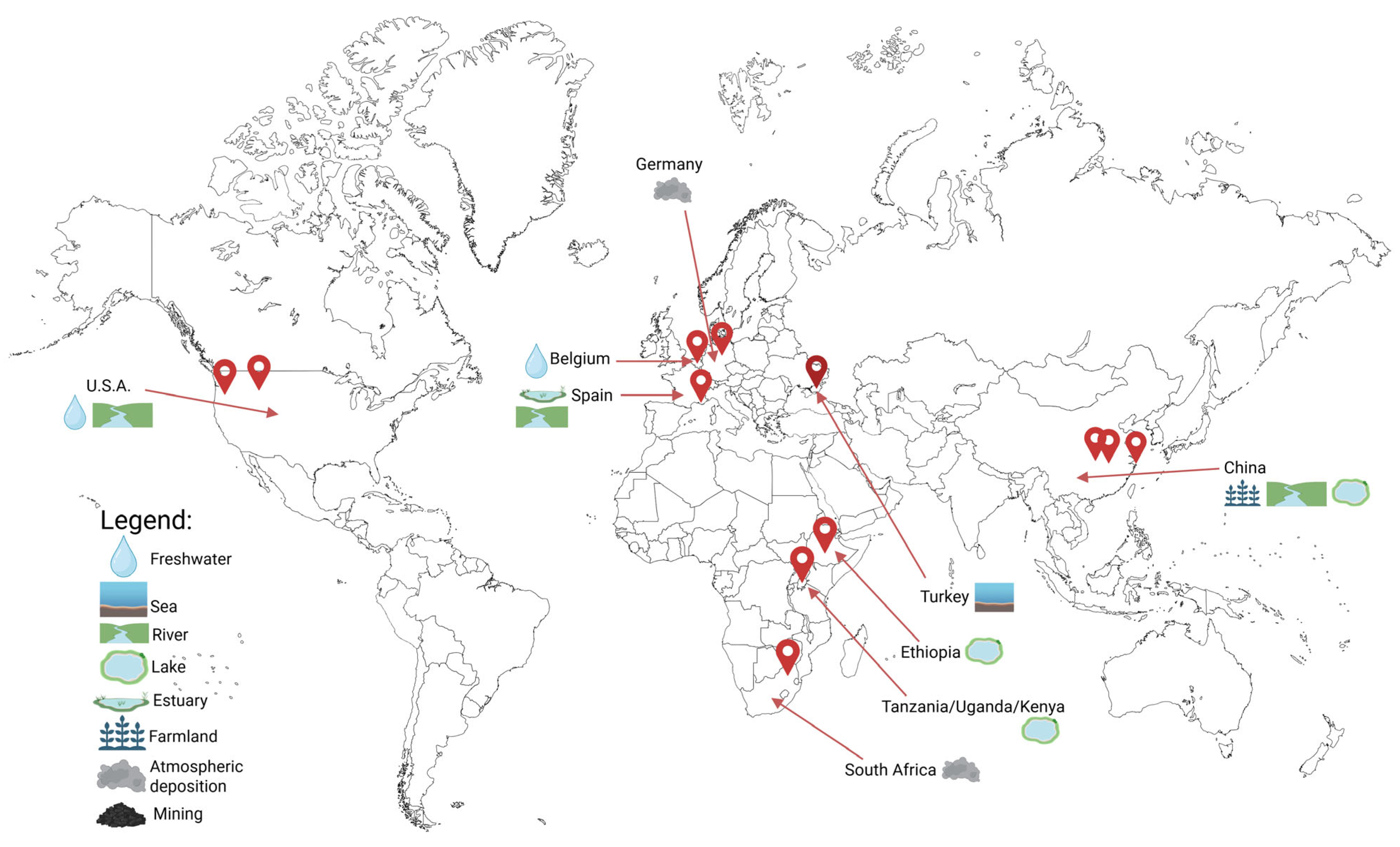
| Study/Location | Compartments Sampled | Sampling Design & Methods | MP Concentration (as Reported) | Dominant Size, Shape, Polymer | Key Spatial/Temporal Patterns | Reference |
|---|---|---|---|---|---|---|
| Coastal Istanbul, Marmara Sea (Turkey) | Marine surface sediments (43 stations, 5–70 m depth) | 4 seasons; grab sediments; density separation; polymer ID by spectroscopy | Mean (±SD) by season: fall 2000 ± 4100, winter 1600 ± 3900, spring 4300 ± 12,000, summer 9500 ± 20,300 particles/kg DW | Fibres dominant in fall–spring; fragments dominant in summer; 11 polymers, mainly PE (44%) and PP (31%) | Hotspots at river mouths (Golden Horn) and sea-outfall discharges; strong seasonal variation linked to mucilage in summer. | [109] |
| Yangtze Delta, China (Shanghai & East China Sea) | Urban creeks, rivers, estuary, coastal waters (surface water) | Multi-reach comparison along river–estuary–coast gradient; grab/net surface samples | 1.8–2.4 items/L in freshwater creeks/rivers vs. ~0.9 items/L in estuary/coastal waters | Fibers highest in creeks (88%) decreasing seaward; polyesters dominate inland; fibre %: creeks 88%, rivers 81–85%, estuary 66%, coastal 37% | MP abundance decreases from small urban creeks to estuary/coast; downstream increase within rivers toward city centre/estuary. | [110] |
| Panji coal-mining subsidence area, Anhui (China) | Soil, surface water, sediment | Field survey across mining landscape; density separation, microscopy; polymer ID | Mean abundance: soil 1860.8 n/kg, surface water 11,323.7 n/m3, sediment 384.0 n/kg | Predominantly transparent fibres < 0.1 mm; PE common in soil; PP dominant in water and sediment | High MP contamination in all three compartments; distributions correlated with pH, TP, TOC in soil/sediment and with pH, TN, NO3-N in water. | [111] |
| Ebro River Delta, NW Mediterranean (Spain) | River surface water, estuarine benthic sediments, sandy beach sediments | Single-campaign field survey; nets for surface water; grabs/cores for sediments; µ-Raman on subset | Mean abundance: river surface water 3.5 ± 1.4 MPs/m3; estuarine benthic sediments 2052 ± 746 MPs/kg DW; sandy beaches 422 ± 119 MPs/kg DW | Fibers ~70 ± 22% of MPs; most particles < 1000 µm, especially 200–500 µm | Estuarine benthic sediments identified as major MP sink; higher MP levels in estuary than adjacent beaches and overlying water. | [112] |
| Portland, Oregon (USA) | Urban–rural rivers/streams (surface water) | Two watersheds; 3 sampling months (Aug, Sep, Feb); spatial gradient; size-fractionated analysis | Concentrations higher in August (low flow) than February; small (<100 µm) particles more common in August | Fragments most common; gray color dominant; PE most frequent polymer | Negative correlation between MP concentration and flow; positive relation with antecedent 24 h precipitation in wet season; near-stream land use stronger predictor than watershed-scale variables. | [113] |
| Thulamela Municipality, South Africa | Atmospheric bulk deposition (urban, rural, forest) | Bulk collectors at 3 environments; MPs/m2/day; polymer ID | 90.51 ± 15.19 to 355.64 ± 47.65 particles/m2/day; mean 211.87 ± 31.44 particles/m2/day | Mainly transparent fibres; PET dominant | Highest fluxes in urban, lowest in forest; in forest, deposition positively correlated with rainfall, indicating scavenging from air. | [114] |
| Northern Germany (Hamburg & Mecklenburg-Western Pomerania) | Atmospheric bulk deposition (urban & rural) | 11 sites; monthly sampling for 1 year (306 samples); Nile Red staining; µ-Raman on subset; >10 µm | Mean 89 ± 61 MP/m2/day | Fibers and fragments; polymer mix characterized by µ-Raman | Significantly higher deposition in urban than rural sites; population density positively related to flux and fibre share; forest canopy “comb-out” effect modifies local deposition. | [115] |
| Pan-regional, Flanders (Belgium) | Freshwater surface water and sediments | 9 locations; 43 water and 9 sediment samples; some resampled under different weather; µFTIR (25–1000 µm) | Surface water: 0–4.8 MP/L (mean 0.48 MP/L); sediments: 0–9558 MP/kg DW (mean 2774.6 ± 2317.9 MP/kg DW) | PS and PP most common polymers; size 25–1000 µm | Large spatial variability; no clear correlation with rainfall, flow, pH, DO, conductivity, or land use; some sediment concentrations above ecological risk thresholds. | [116] |
| Gallatin River watershed, Montana (USA) | River surface water (mixed land-use catchment) | 72 sites; 4 seasons/year over 2 years (714 samples); ~1-L grabs; citizen-science sampling | MPs in 57% samples; mean 1.2 particles/L; majority <-L count range; high temporal variance | Fibers 80%, 0.1–1.5 mm; 93% of analyzed particles synthetic/semi-synthetic | Strong temporal variation; no clear longitudinal or land-use gradient; MP concentration negatively related to discharge at gauged sites (dilution effect). | [117] |
| Wuhan, Hubei (China) | Urban lakes and river reaches (surface water) | 20 lakes plus urban Hanjiang & Yangtze reaches; spatial survey; nets or grabs | 1660.0 ± 639.1 to 8925 ± 1591 n/m3; highest in Bei Lake | Fibers and coloured plastics; >80% <2 mm; PET & PP dominant | MP abundance in lakes decreases with distance from city centre (p < 0.001); rivers generally lower than urban lakes. | [118] |
| Farmland soils across China (30 sites) | Agricultural soils (vertical profiles) | National-scale survey; 30 farmlands; depth-resolved cores; density separation; spectroscopy | 25.56–2067.78 items/kg (mean 358.37 items/kg ≈ 6.79 mg/kg or 0.0007% by mass); MPs ≈93.1% of particles | PP, PE, polyester most common; abundance decreases with depth | Higher soil MP levels in arid/semi-arid north vs. milder southwest; national meta-analysis shows some measured concentrations approach effect thresholds for soil properties and crops. | [119] |
| Lake Ziway (Ethiopia) | Shoreline sediment; fish (4 species) | Sediment cores + GI tracts of 4 fish species; ATR-FTIR; wet/dry season comparison | Sediment median 30,000 (400–124,000) particles/m2 and 764 (0.05–36,233) mg/kg DW; 35% of fish with plastics; median 4 particles/fish (1–26) | PP, PE, alkyd varnish; sizes from micro to small macro; similar log-linear size distributions in fish and sediment | Higher fish ingestion near plastic sources and in wet season; benthic and benthopelagic fish carry more plastics than planktivores; sediment levels exceed some effect thresholds. | [120] |
| Lake Victoria (Tanzania, Uganda, and Kenya) | Lake surface water (near beaches, rural fish landings, river inflows) | Manta trawl (0.3–4.9 mm) along lake-surface transects; sites grouped by human use | 2834–329,167 particles/km2 (0.02–2.19 particles/m2); highest in urban/recreational beach sites (0.69–2.19 particles/m2) | All secondary MPs; 36% < 1 mm; PE and PP dominant | Strong gradient: urban/recreational > rural landings > river-inflow sites; clear influence of local human activity and waste management. | [121] |
Disclaimer/Publisher’s Note: The statements, opinions and data contained in all publications are solely those of the individual author(s) and contributor(s) and not of MDPI and/or the editor(s). MDPI and/or the editor(s) disclaim responsibility for any injury to people or property resulting from any ideas, methods, instructions or products referred to in the content. |
© 2026 by the authors. Licensee MDPI, Basel, Switzerland. This article is an open access article distributed under the terms and conditions of the Creative Commons Attribution (CC BY) license.
Share and Cite
Moulton, C.; Baroni, A.; Tasciotti, E. Micro- and Nanoplastics Exposure Across the Lifespan: One Health Implications for Aging and Longevity. J. Xenobiot. 2026, 16, 52. https://doi.org/10.3390/jox16020052
Moulton C, Baroni A, Tasciotti E. Micro- and Nanoplastics Exposure Across the Lifespan: One Health Implications for Aging and Longevity. Journal of Xenobiotics. 2026; 16(2):52. https://doi.org/10.3390/jox16020052
Chicago/Turabian StyleMoulton, Chantalle, Anna Baroni, and Ennio Tasciotti. 2026. "Micro- and Nanoplastics Exposure Across the Lifespan: One Health Implications for Aging and Longevity" Journal of Xenobiotics 16, no. 2: 52. https://doi.org/10.3390/jox16020052
APA StyleMoulton, C., Baroni, A., & Tasciotti, E. (2026). Micro- and Nanoplastics Exposure Across the Lifespan: One Health Implications for Aging and Longevity. Journal of Xenobiotics, 16(2), 52. https://doi.org/10.3390/jox16020052