Review

Vestibular Atelectasis: A Narrative Review and Our Experience

1
Department of Otorhinolaryngology-Head and Neck Surgery, University Hospital of Modena, 41125 Modena, Italy
2
ENT Unit, Department of Surgery, AUSL-IRCCS di Reggio Emilia, 42123 Reggio Emilia, Italy
3
ENT Unit, Santa Maria Goretti Hospital, Azienda USL di Latina, 04100 Latina, Italy
4
Audiology & Vestibology Service, Centromedico, 6500 Bellinzona, Switzerland
5
Neuroradiology Unit, Department of Diagnostic and Functional Neuroradiology and Brain Stimulation, 15-20 National Vision Hospital, Paris University Hospital Center, 75012 Paris, France
6
Audiology and Ear Surgery Unit, AUSL-IRCCS di Reggio Emilia, 42123 Reggio Emilia, Italy
7
Department of Neurosciences, University of Padova, 35100 Padova, Italy
8
Vertigo Center, Poliambulatorio Chirurgico Modenese, 41125 Modena, Italy
9
Department of Neuroradiology, AUSL-IRCCS di Reggio Emilia, 42123 Reggio Emilia, Italy
*
Author to whom correspondence should be addressed.
These authors contributed equally to this work.
Audiol. Res. 2025, 15(3), 61; https://doi.org/10.3390/audiolres15030061

Submission received: 4 April 2025 / Revised: 14 May 2025 / Accepted: 15 May 2025 / Published: 18 May 2025

Abstract

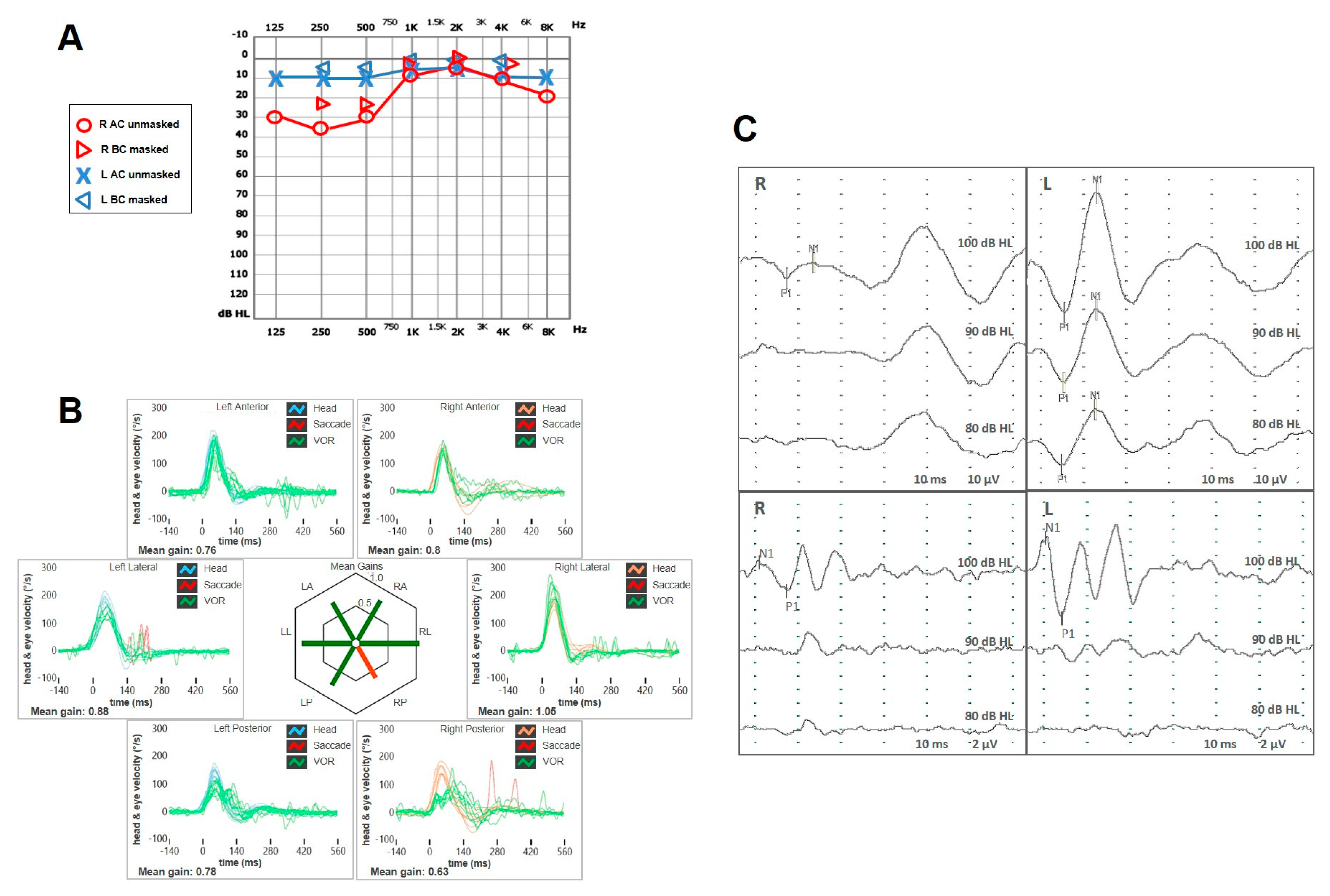
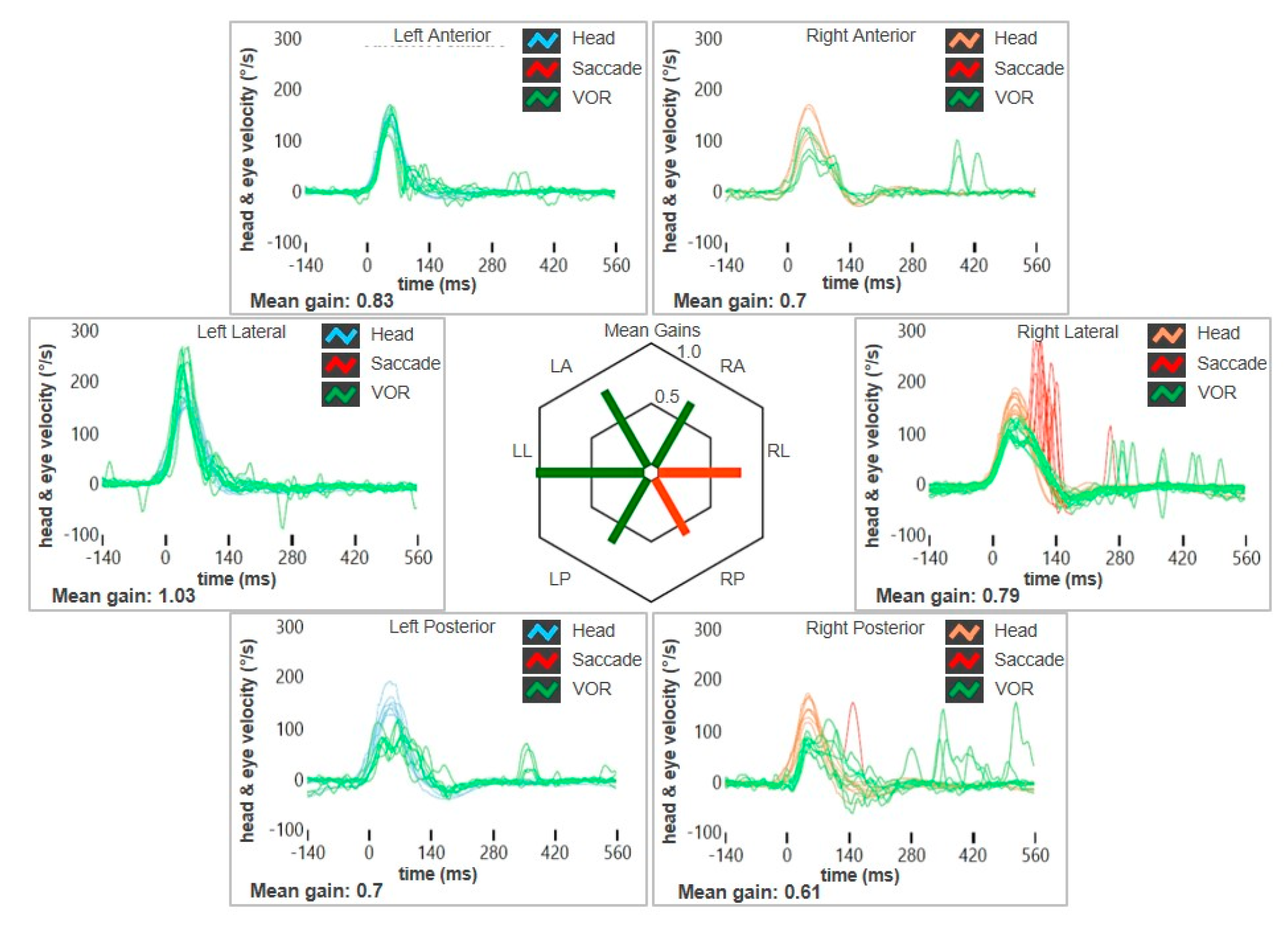
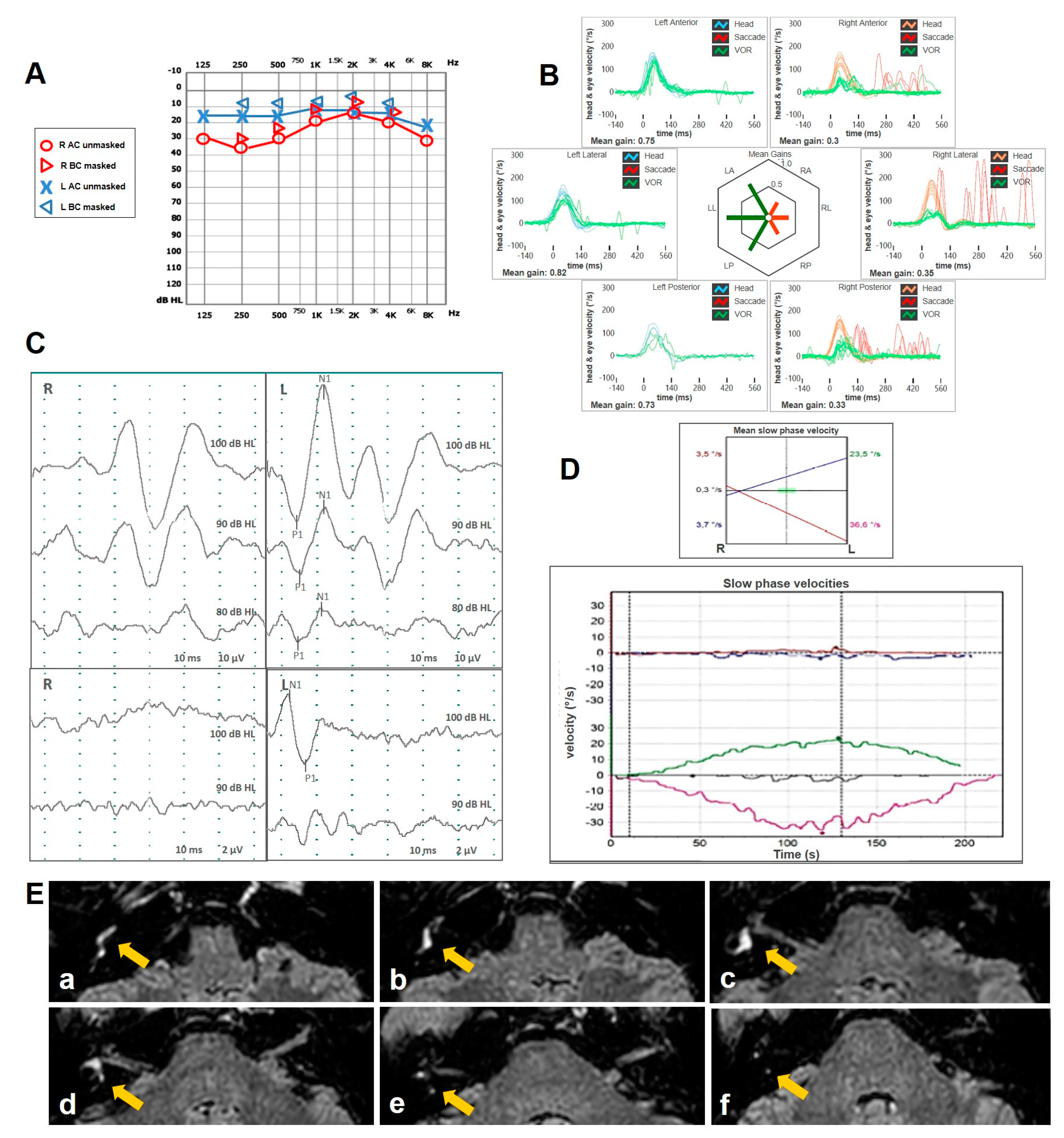
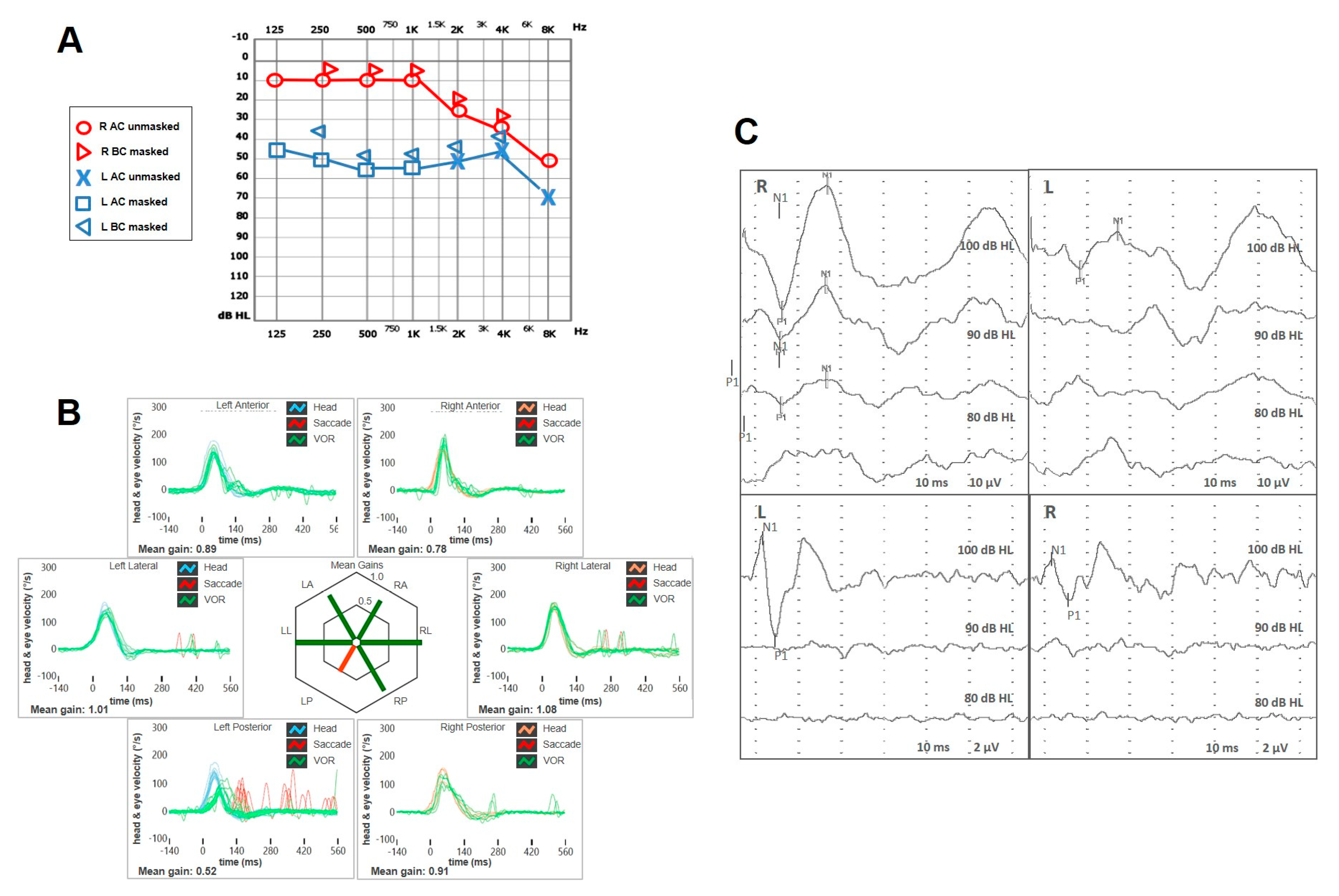
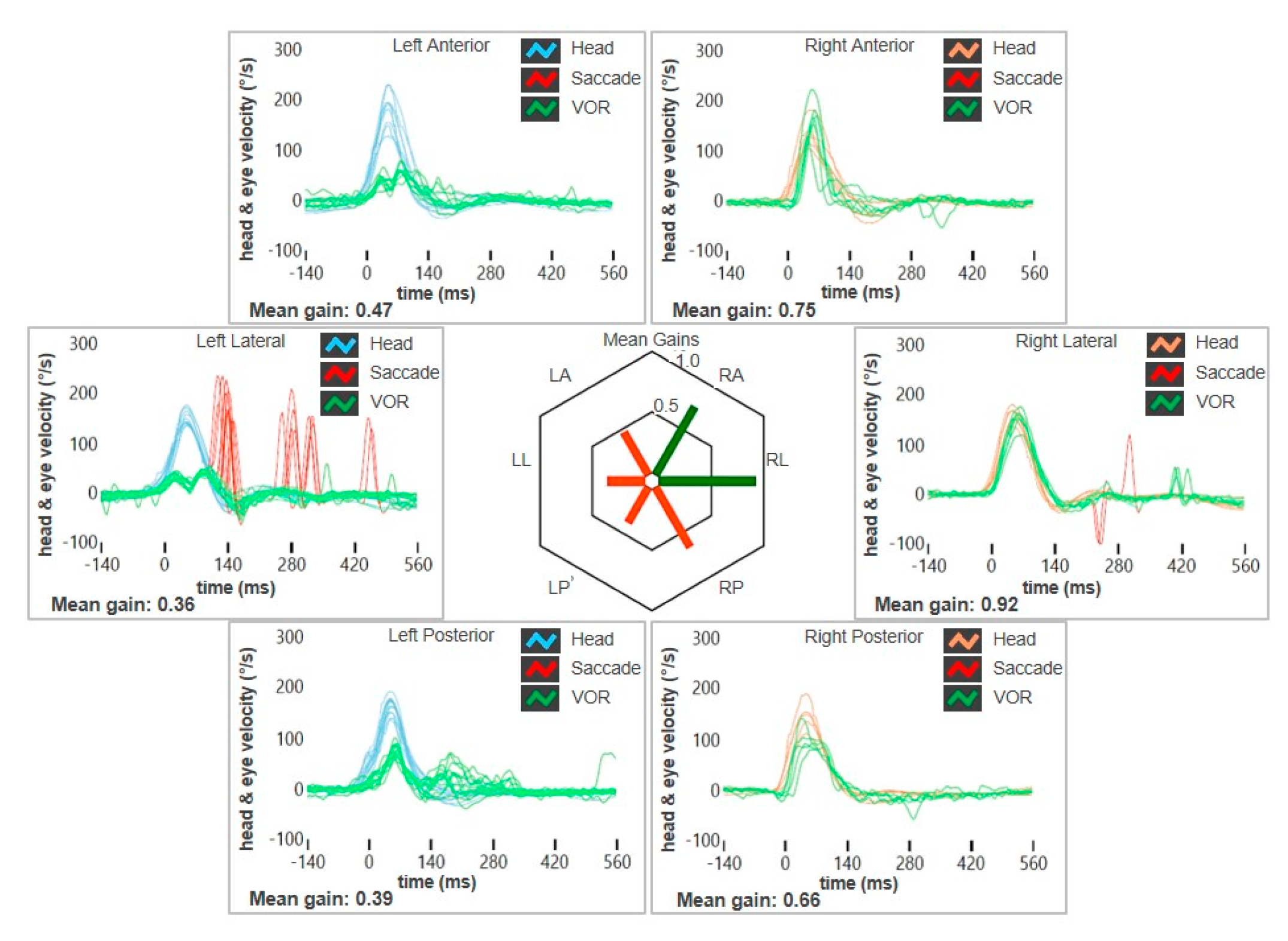
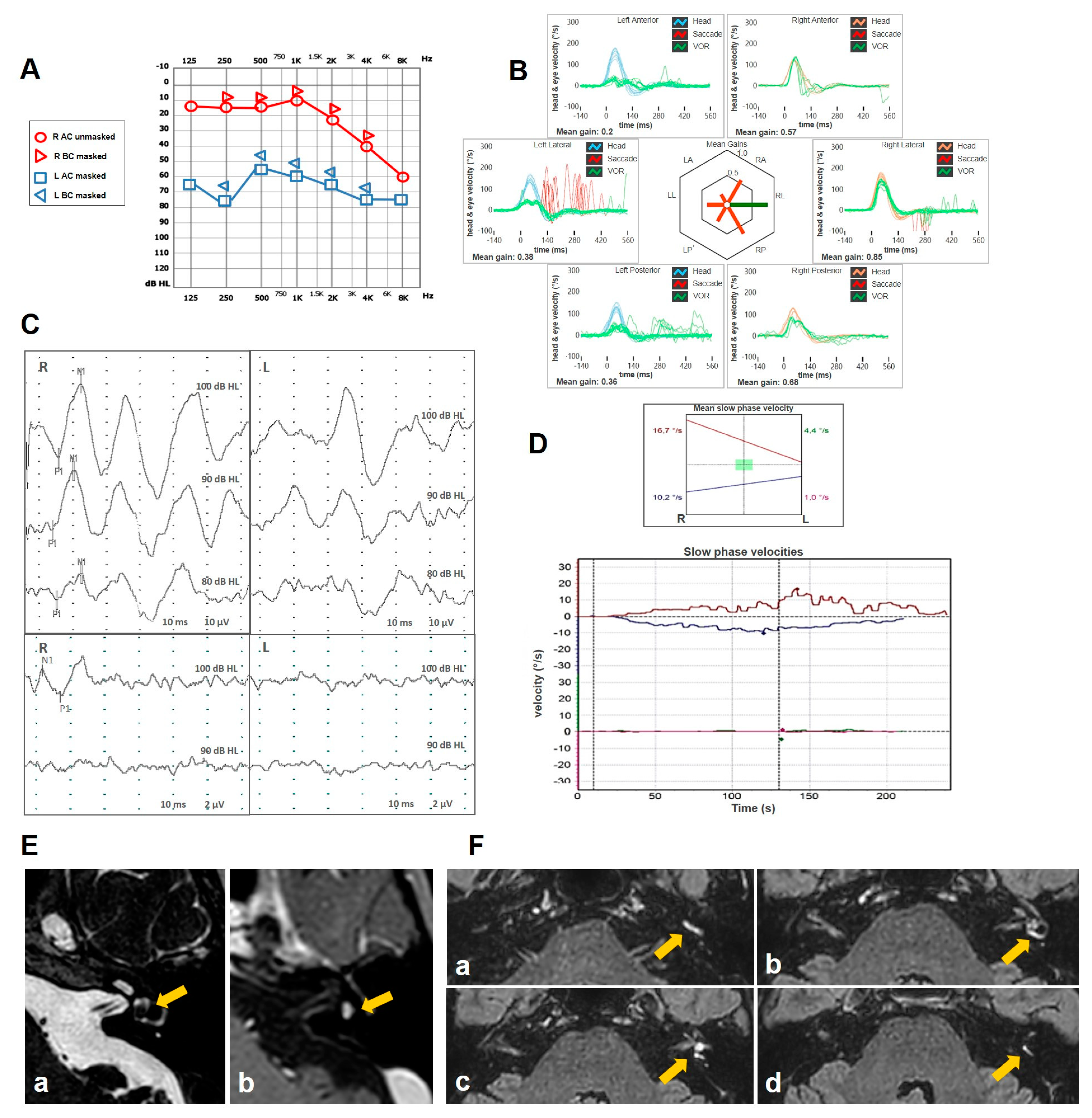
Vestibular atelectasis (VA) is a rare clinical entity characterized by a collapse of the endolymphatic space resulting in vestibular loss with the possible onset of positional and/or sound/pressure-induced vertigo. It could be idiopathic or secondary to other inner-ear diseases including Meniere’s disease (MD). A collapse of the membranous labyrinth involving the semicircular canals (SCs) and the utricle represents its distinctive histopathological feature. While specific radiological patterns consistent with VA have been described on contrast-enhanced MRI with delayed acquisitions, an impairment of the blood–labyrinthine barrier (BLB) could be detected in several disorders leading to vestibular loss. We conducted a narrative review of the literature on VA focusing on the putative pathomechanisms accounting for positional and sound/pressure-induced nystagmus despite unilateral vestibular loss (UVL) in this condition, providing two novel cases of VA. Both patients presented with a clinical picture consistent with unilateral MD that rapidly turned into progressive UVL and positional and/or sound/pressure-induced vertigo. In both cases, the posterior SC was initially impaired at the video-head impulse test (vHIT) and both cervical and ocular VEMPs were initially reduced. Progressively, they developed unsteadiness with paretic spontaneous nystagmus, an impairment also for the lateral and anterior SCs, caloric hypo/areflexia and VEMPs areflexia. They both exhibited ipsilesional nystagmus to sound/pressure stimuli and in one case a persistent geotropic direction-changing positional nystagmus consistent with a “light cupula” mechanism involving the lateral SC of the affected side. A collapse of the membranous labyrinthine walls resulting in contact between the vestibular sensors and the stapes footplate could explain the onset of nystagmus to loud sounds and/or pressure changes despite no responses to high- and low-frequency inputs as detected by caloric irrigations, vHIT and VEMPs. On the other hand, the onset of positional nystagmus despite UVL could be explained with the theory of the “floating labyrinth”. Both patients received contrast-enhanced brain MRI with delayed acquisition exhibiting increased contrast uptake in the pars superior of the labyrinth, suggesting an impairment of the BLB likely resulting in secondary VA. A small intralabyrinthine schwannoma was detected in one case. VA should always be considered in case of positional and/or sound/pressure-induced vertigo despite UVL.
Keywords: vestibular atelectasis; Menière disease; MRI; Tullio phenomenon; Hennebert sign; intralabyrinthine schwannoma; endolymphatic hydrops vestibular atelectasis; Menière disease; MRI; Tullio phenomenon; Hennebert sign; intralabyrinthine schwannoma; endolymphatic hydrops