Article

Sound Localization with Hearables in Transparency Mode


by
Sebastian A. Ausili
1,
Nathan Erthal
2,
Christopher Bennett
2 and
Hillary A. Snapp
1,*
1
Department of Otolaryngology, University of Miami, 1120 NW 14th Street, 5th Floor, Miami, FL 33136, USA
2
Department of Music Engineering, University of Miami, 1314 Miller Dr, Coral Gables, FL 33146, USA
*
Author to whom correspondence should be addressed.
Audiol. Res. 2025, 15(3), 48; https://doi.org/10.3390/audiolres15030048

Submission received: 24 February 2025 / Revised: 11 April 2025 / Accepted: 22 April 2025 / Published: 25 April 2025

Abstract

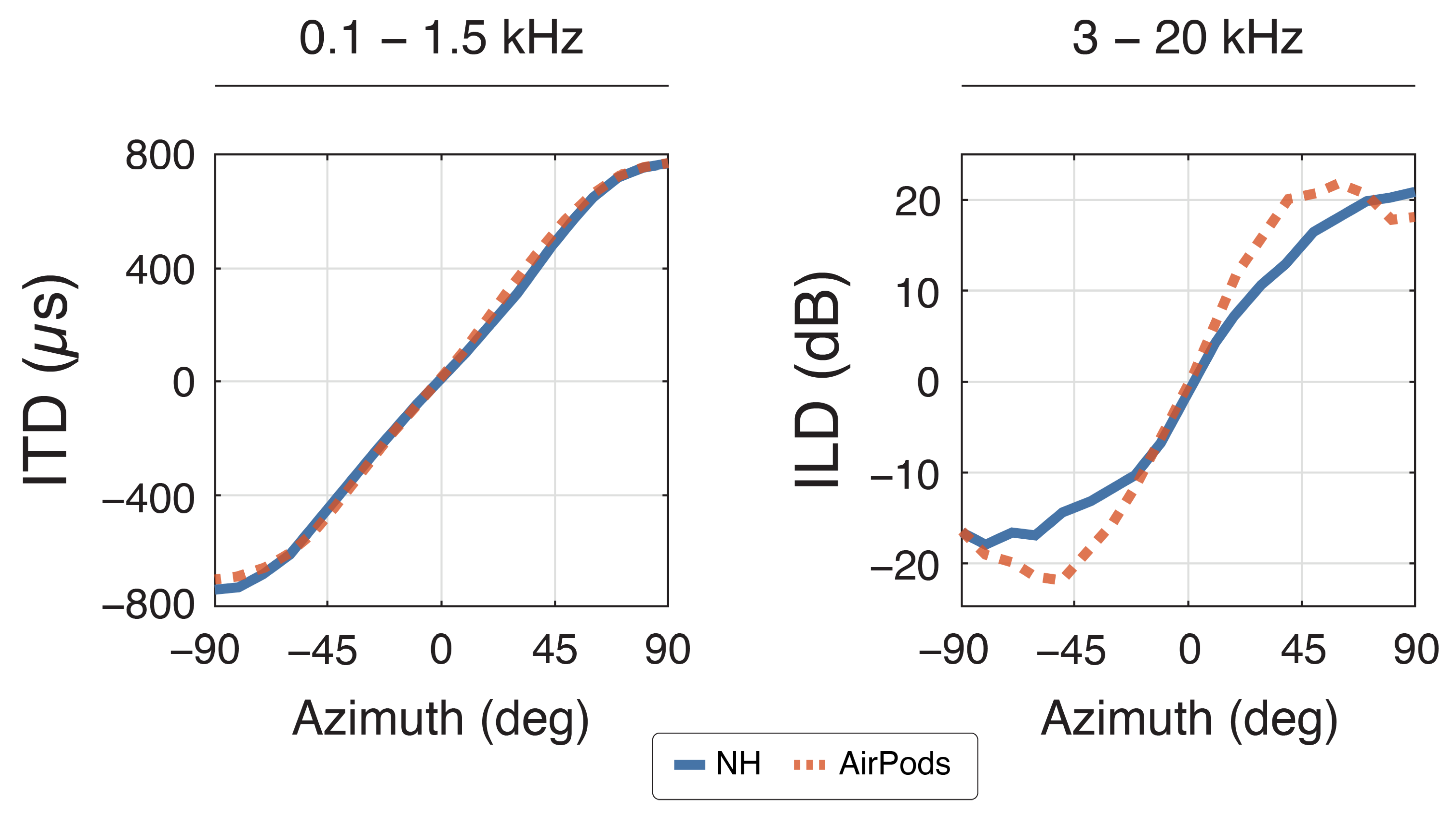
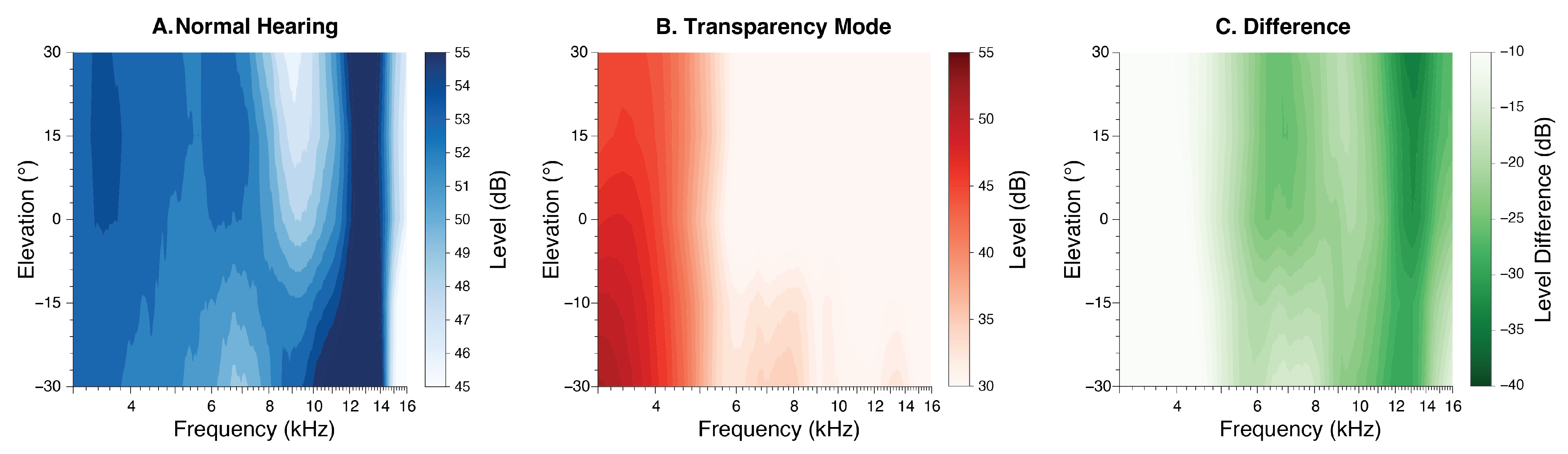
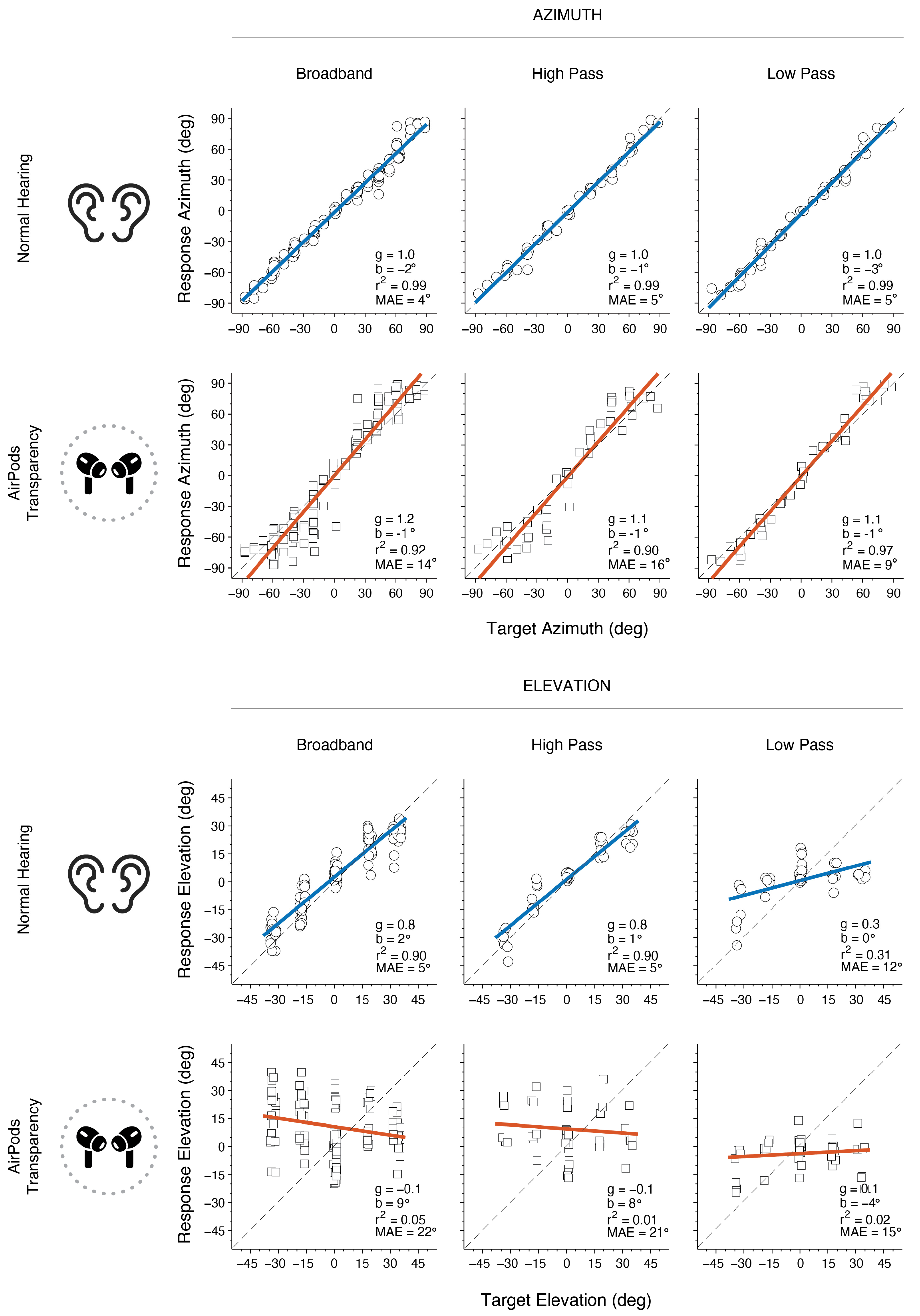
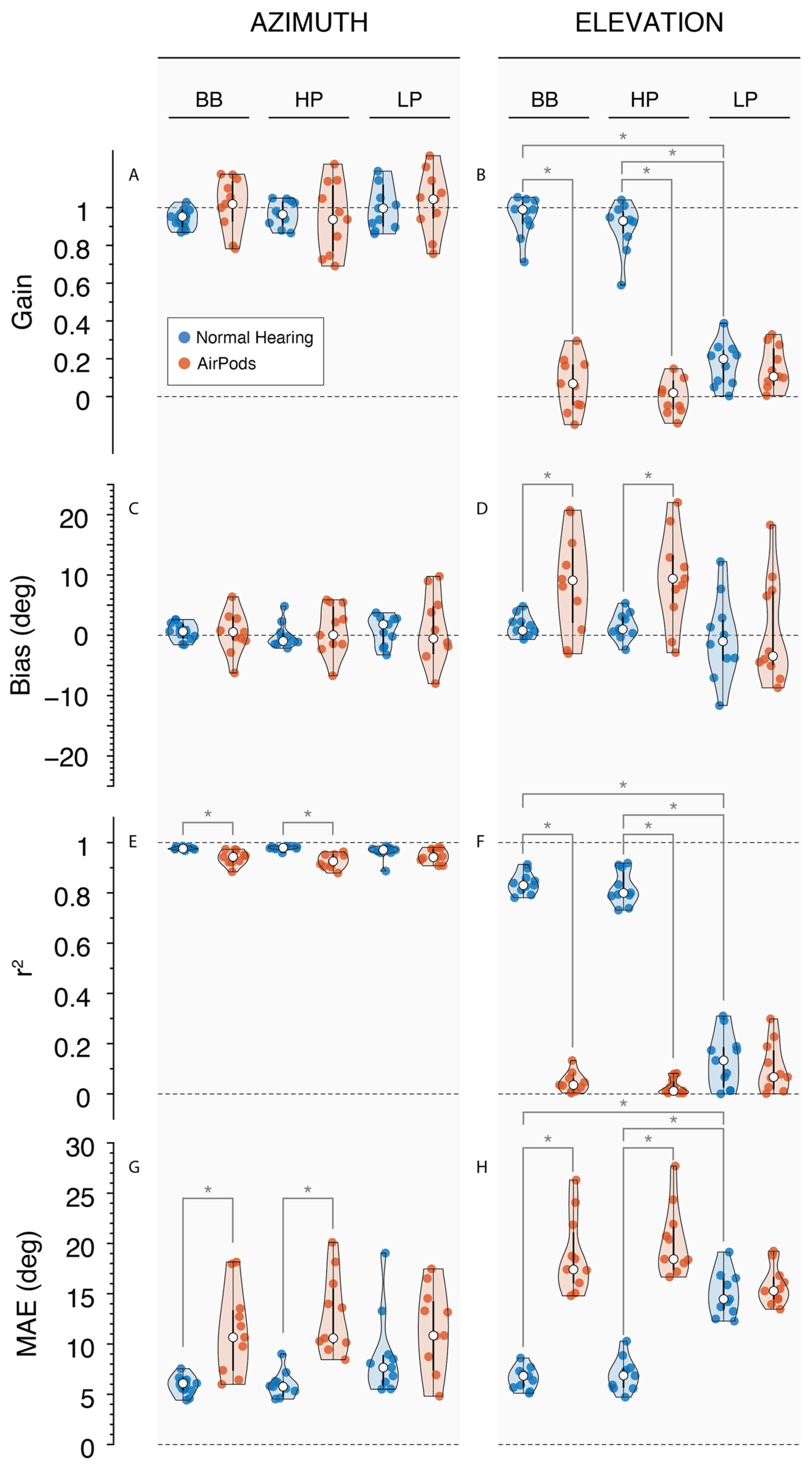
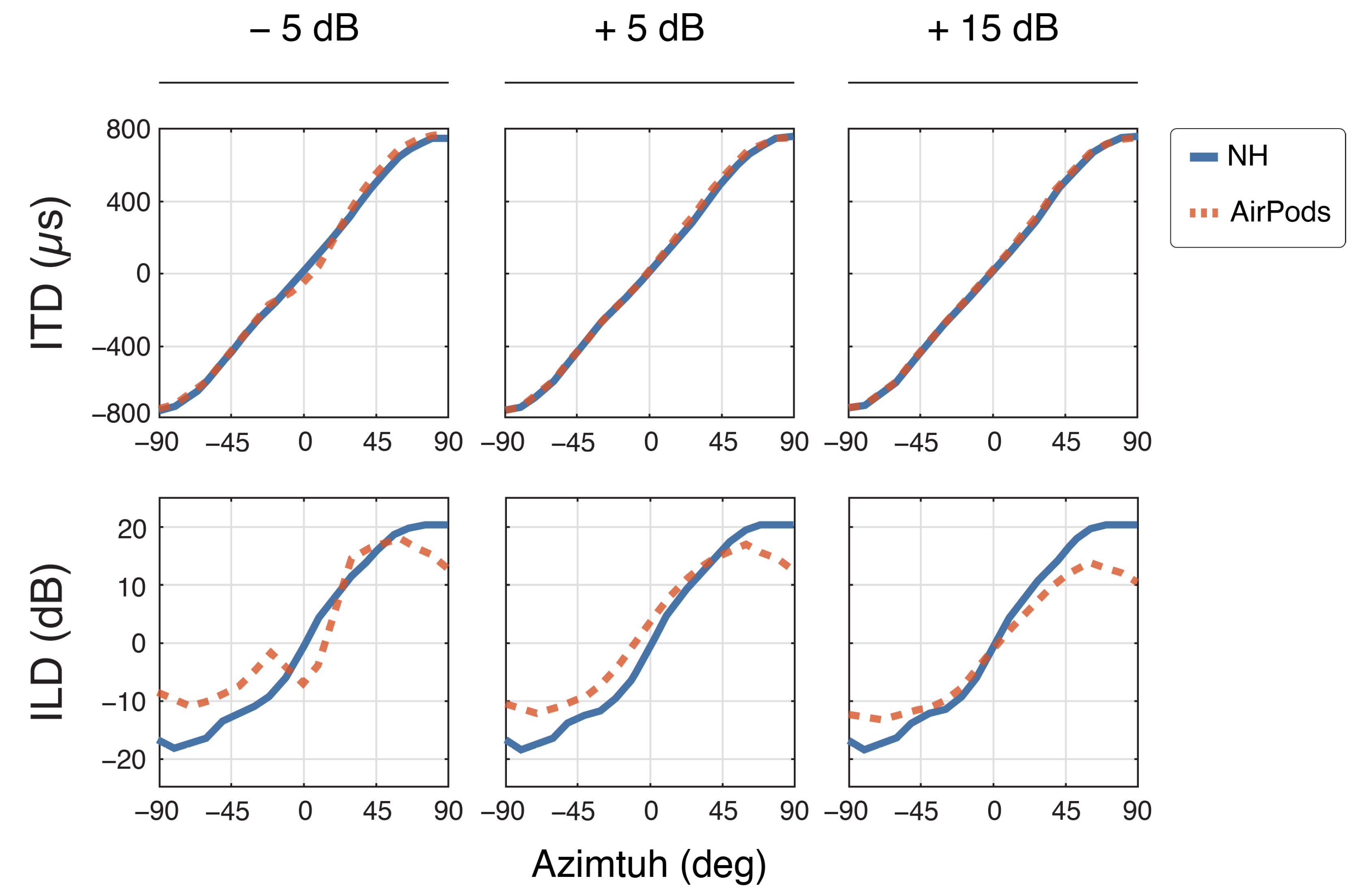
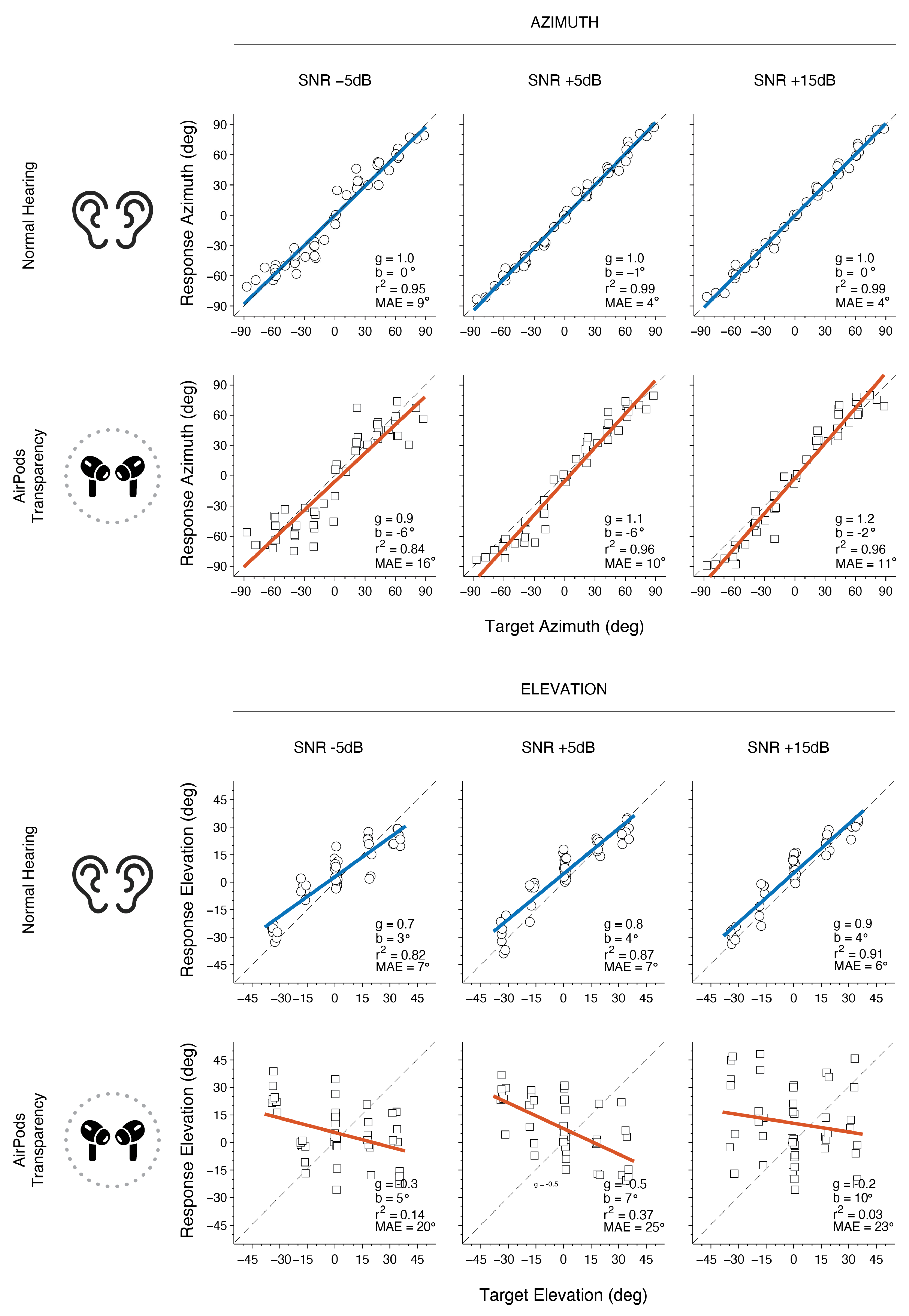
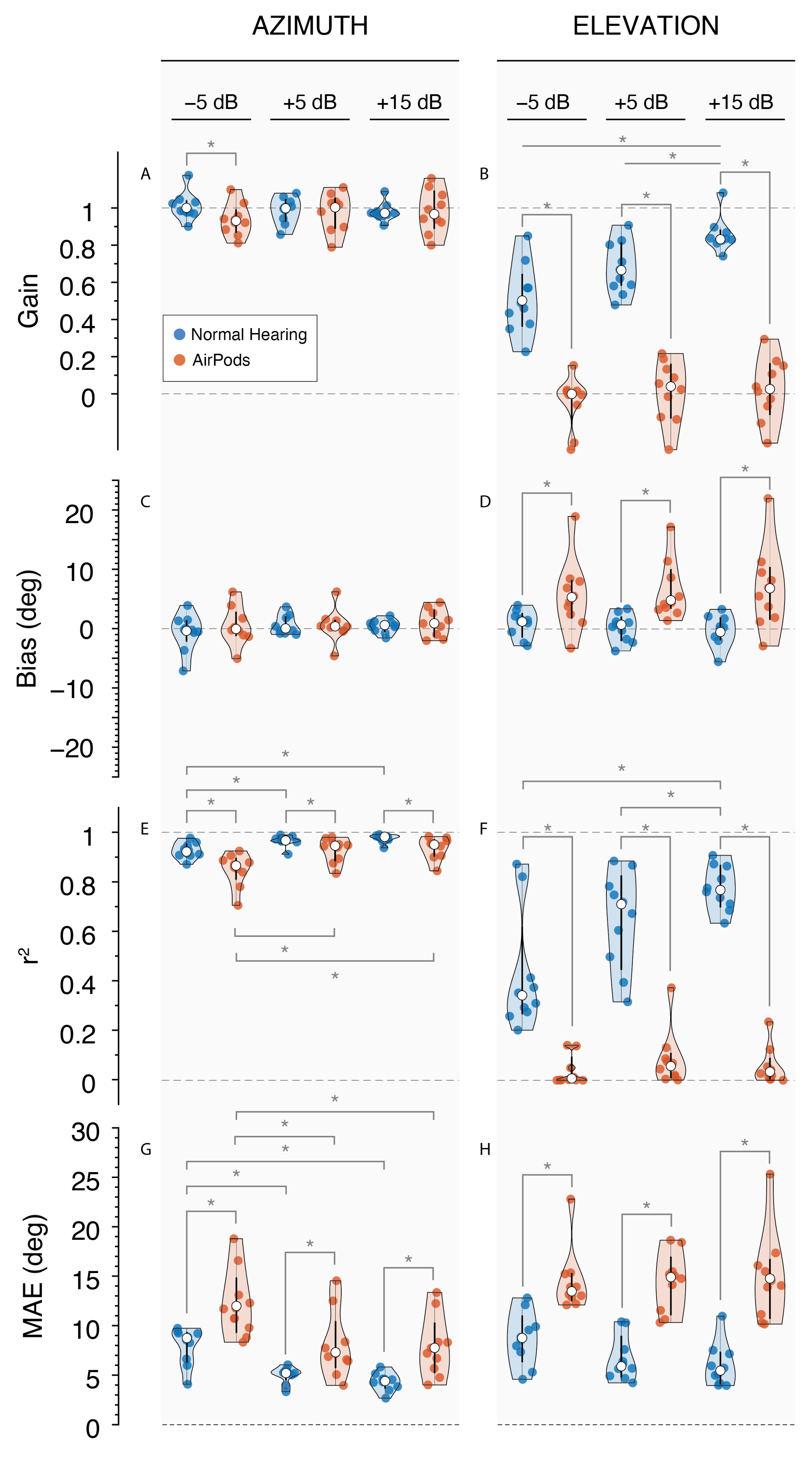
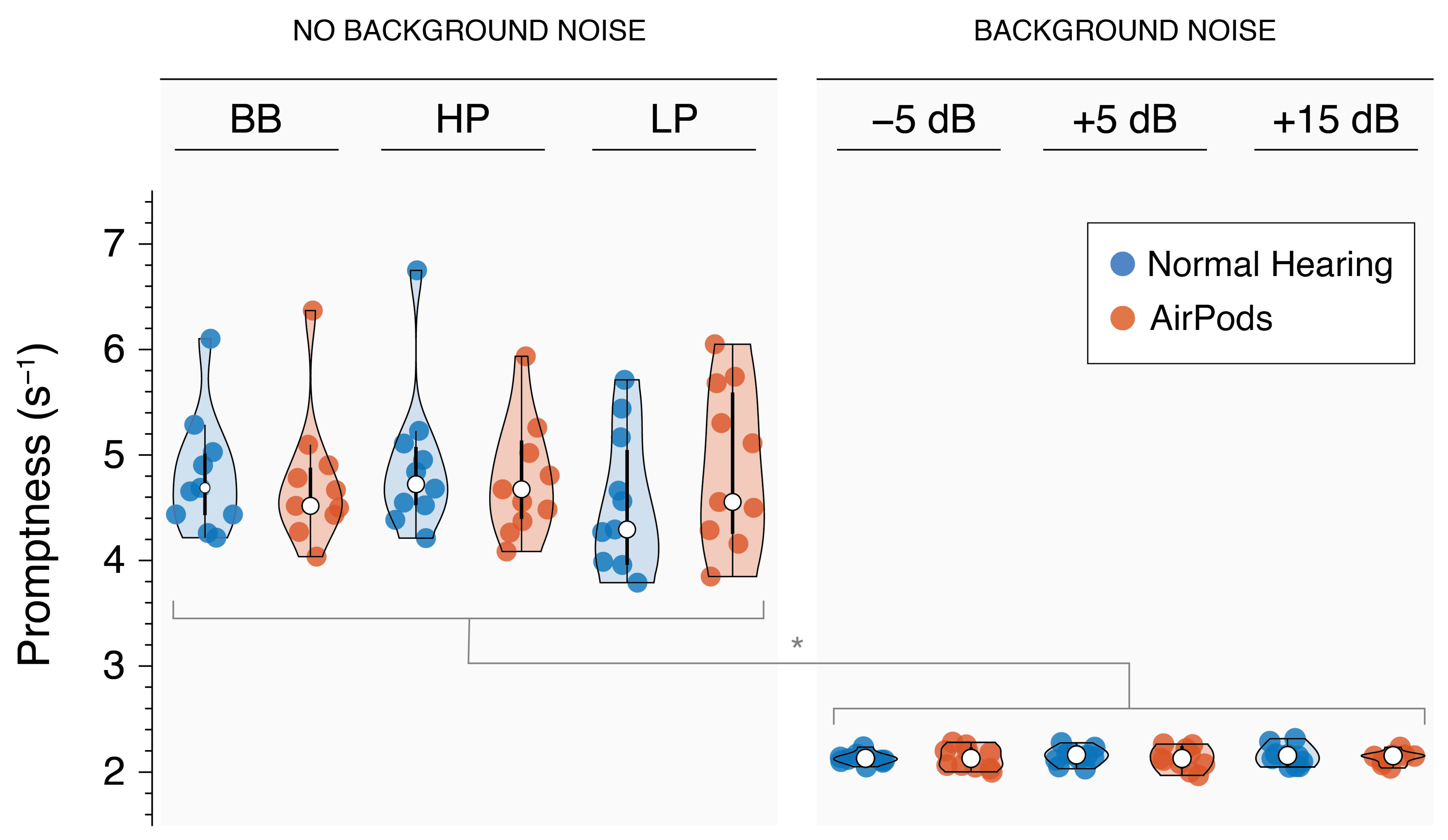
Background: Transparency mode in hearables aims to maintain environmental awareness by transmitting external sounds through built-in microphones and speakers. While technical assessments have documented acoustic alterations in these devices, their impact on spatial hearing abilities under realistic listening conditions remains unclear. This study aimed to evaluate how transparency mode affects sound localization performance with and without background noise. Methods: Ten normal-hearing adults completed sound localization tasks across azimuth (±90°) and elevation (±30°) with and without background noise. Performance was assessed with and without AirPods Pro in transparency mode. Sound localization performance was evaluated through linear regression analysis and mean absolute errors. Head-Related Transfer Function measurements quantified changes in binaural and spectral cues. Results: While interaural time differences were largely preserved, transparency mode introduced systematic alterations in level differences (up to 8 dB) and eliminated spectral cues above 5 kHz. These modifications resulted in increased localization errors, particularly for elevation perception and in noise. Mean absolute errors increased from 6.81° to 19.6° in azimuth and from 6.79° to 19.4° in elevation without background noise, with further degradation at lower SNRs (p < 0.05). Response times were affected by background noise (p < 0.001) but not by device use. Conclusions: Current transparency mode implementation significantly compromises spatial hearing abilities, particularly in noisy environments typical of everyday listening situations. These findings highlight the need for technological improvements in maintaining natural spatial cues through transparency mode, as current limitations may impact user safety and communication in real-world environments.
Keywords: binaural hearing; active hearables; AirPods; transparency mode binaural hearing; active hearables; AirPods; transparency mode