
Case Report

ANKRD26 Gene Mutation and Thrombocytopenia—Is the Risk of Malignancy Dependent on the Mutation Variant?

by
Eirik B. Tjønnfjord
1,2,*,
Kristian Tveten
3,
Signe Spetalen
4,5 and
Geir E. Tjønnfjord
2,5,6
1
Department of Internal Medicine, Østfold Hospital Trust, 1714 Grålum, Norway
2
Department of Haematology, Oslo University Hospital, 0372 Oslo, Norway
3
Department of Medical Genetics, Telemark Hospital Trust, 3710 Skien, Norway
4
Department of Pathology, Oslo University Hospital, 0372 Oslo, Norway
5
Institute of Clinical Medicine, University of Oslo, 0372 Oslo, Norway
6
Section of Cancer Cytogenetics, Institute of Cancer Genetics and Informatics, Oslo University Hospital, 0372 Oslo, Norway
*
Author to whom correspondence should be addressed.
Hematol. Rep. 2025, 17(4), 37; https://doi.org/10.3390/hematolrep17040037

Submission received: 29 May 2025 / Revised: 10 July 2025 / Accepted: 21 July 2025 / Published: 24 July 2025

Abstract

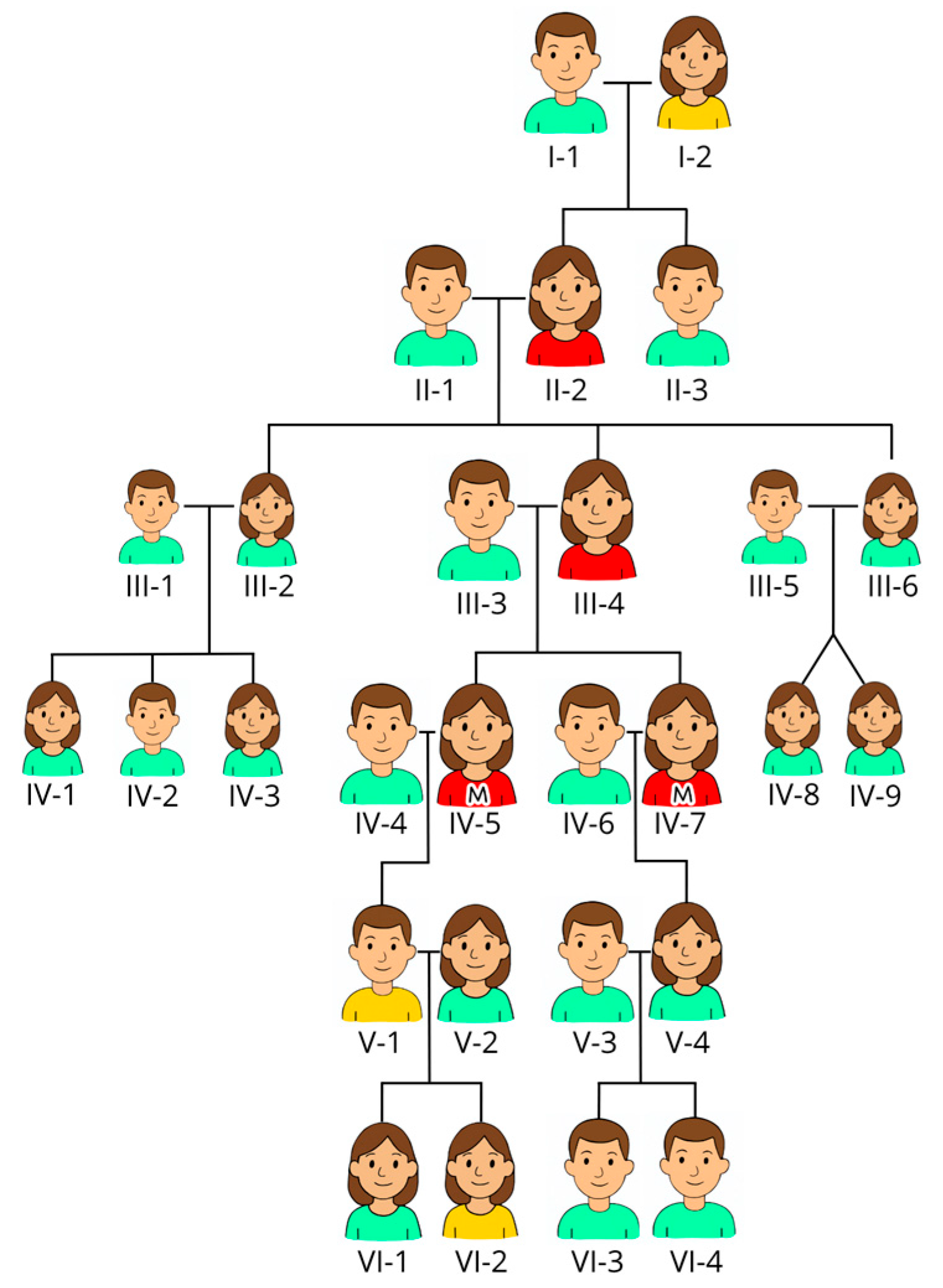
Background and Clinical Significance: Inherited thrombocytopenia (IT) is a heterogeneous group of disorders caused by mutations in over 45 genes. Among these, ANKRD26-related thrombocytopenia (ANKRD26-RT) accounts for a notable subset and is associated with variable bleeding tendencies and an increased risk of myeloid malignancies. However, the extent of this oncogenic risk appears to vary between specific gene variants. Understanding the genotype–phenotype relationship is essential for patient counseling and management. This report presents a multigenerational family carrying the rare c.−118C > G variant in the 5′ untranslated region of ANKRD26, contributing to the discussion on variant-specific cancer predisposition. Case Presentation: Two sisters aged 57 and 60 presented with lifelong bleeding diathesis and moderate thrombocytopenia. Their symptoms included easy bruising, menorrhagia, and excessive postoperative bleeding. Genetic testing confirmed heterozygosity for the ANKRD26 c.−118C > G variant. Bone marrow analysis revealed abnormal megakaryopoiesis without evidence of dysplasia or somatic mutations. One sister underwent major surgery without complications when managed with prophylactic hemostatic therapy. Their family history included multiple female relatives with similar symptoms, although formal testing was limited. Notably, none of the affected individuals developed hematologic malignancy, and only one developed esophageal cancer, with no current evidence linking this variant to solid tumors. Conclusions: This case underscores the importance of distinguishing between ANKRD26 variants when assessing malignancy risk. While ANKRD26-RT is associated with myeloid neoplasms, the c.−118C > G variant may confer a lower oncogenic potential. Variant-specific risk stratification and genetic counseling are crucial for optimizing surveillance and avoiding unnecessary interventions in low-risk individuals.
Keywords: thrombocytopenia; inherited; mutations; genes; ANKRD26 thrombocytopenia; inherited; mutations; genes; ANKRD26