Article

Bioactivity of Ascophyllum nodosum in Mitigating Water Stress Induced by PEG-6000 in Maize Seeds

by
Janyne Soares Braga Pires
1,2,
Francine Bonomo Crispim Silva
2,
Maria Eduarda da Silva Barbosa
2,
Geovana Ribeiro Cavilha
2,
Mateus Moura Coelho
2,
Samile Mardegan Otilia
2,
Fernando Gomes Hoste
1,
Ana Júlia Câmara Jeveaux-Machado
1,
Lúcio de Oliveira Arantes
3,
Vinicius de Souza Oliveira
1,3,*,
Simone Alves Fernandes
2,4,
Johnatan Jair de Paula Marchiori
3,
Adriano Alves Fernandes
2 and
Sara Dousseau-Arantes
1,2,3,*
1
Centro de Ciências Humanas e Naturais, Universidade Federal do Espírito Santo, Vitória 29075-910, ES, Brazil
2
Departamento de Ciências Agrárias e Biológicas, Centro Universitário Norte do Espírito Santo, Universidade Federal do Espírito Santo, São Mateus 29932-540, ES, Brazil
3
Instituto Capixaba de Pesquisa, Assistência Técnica e Extensão Rural—Centro Regional de Desenvolvimento Rural—Norte, Linhares 29901-443, ES, Brazil
4
Homeoplant, Pinheiros 29980-000, ES, Brazil
*
Authors to whom correspondence should be addressed.
Int. J. Plant Biol. 2026, 17(9), 78; https://doi.org/10.3390/ijpb17090078
Submission received: 10 July 2026 / Revised: 30 July 2026 / Accepted: 19 August 2026 / Published: 22 August 2026
(This article belongs to the Section Plant Response to Stresses)

Abstract

Water deficit is one of the main limiting factors for crop establishment and productivity, particularly during seed germination and early seedling development. This study aimed to evaluate the biostimulant potential of Ascophyllum nodosum extract applied to maize (Zea mays L.) seeds subjected to osmotic stress induced by polyethylene glycol (PEG-6000). Three independent bioassays were conducted under controlled conditions. In the first assay, osmotic potentials ranging from 0 to −0.8 MPa were evaluated to characterize stress levels and identify conditions representative of moderate and severe water deficit. In the second assay, increasing doses (0 to 2.0 mL kg−1 of seeds) of a commercial A. nodosum-based extract and its isolated mineral fraction were evaluated to determine the optimal application range. In the third assay, the selected treatment was evaluated under control conditions and under moderate (−0.6 MPa) and severe (−0.8 MPa) osmotic stress. Germination percentage, normal and abnormal seedlings, radicle and epicotyl length, and seedling vigor index were assessed. Osmotic stress progressively reduced germination and seedling growth, with the strongest effects observed at −0.6 and −0.8 MPa. Seed treatment with A. nodosum extract did not impair final germination but improved seedling development in a dose-dependent manner. The highest efficiency was observed at intermediate doses, with maximum normal seedling percentage predicted at 0.45 mL kg−1 and maximum radicle growth at approximately 0.66 mL kg−1. Under water deficit conditions, the complete extract promoted greater improvements in seedling performance than the mineral fraction, indicating that the beneficial effects were mainly associated with bioactive organic compounds rather than mineral nutrition alone. These findings provide new evidence that dose optimization is essential for maximizing the efficiency of seaweed-based biostimulants and demonstrate the potential of A. nodosum seed treatment as a sustainable strategy to improve maize establishment under water-limited conditions.

1. Introduction

Water availability is one of the main limiting factors for agricultural growth and productivity on a global scale. The intensification of climate change has increased the frequency, duration, and severity of drought events, compromising the stability of production systems, especially in semi-arid and tropical regions [1,2]. In this context, water deficit represents one of the most impactful abiotic stresses for modern agriculture, affecting fundamental physiological processes from germination to the reproductive phase of plants.
Germination is particularly sensitive to the reduction in the water potential of the substrate, since imbibition is the first determining event for the metabolic reactivation of the seed. Limitation in water absorption compromises enzymatic activation, reserve mobilization, and cell expansion, which can result in delayed germination, reduced vigor, and an increased incidence of abnormal seedlings [3,4]. Furthermore, osmotic stress triggers hormonal and redox changes, including increased production of reactive oxygen species (ROS), which can act as signaling molecules but also cause cell damage when not properly regulated [5,6].
To simulate drought conditions in a controlled environment, polyethylene glycol 6000 (PEG-6000) has been widely used as an osmotic stress-inducing agent. Due to its high molecular weight and low cell penetration, PEG reduces the water potential of the solution without exerting direct toxic effects, allowing for reproducible evaluation of the physiological responses of seeds under water restriction [4,7]. Studies demonstrate that progressively more negative osmotic potentials promote a reduction in germination and initial growth, especially in root elongation, highlighting the high sensitivity of this phase to water stress [8,9].
Given this scenario, strategies capable of increasing plant tolerance to water deficit have received increasing attention. Among them, the use of biostimulants stands out, defined as substances or microorganisms that promote greater physiological efficiency, better nutrient utilization, and greater tolerance to abiotic stresses, regardless of their nutritional content [10,11]. Unlike conventional fertilizers, biostimulants act predominantly in the modulation of metabolic, hormonal, and molecular processes, stimulating osmoregulation mechanisms, root growth, and antioxidant adjustments.
Seaweed extracts are one of the most studied classes of biostimulants, especially those derived from Ascophyllum nodosum. This species has a complex composition, including phytohormones (auxins, cytokinins, and gibberellins), amino acids, polysaccharides, and micronutrients, which can act synergistically in modulating plant growth and mitigating abiotic stresses [12,13,14]. Recent evidence indicates that A. nodosum extracts can stimulate the expression of genes related to stress response, increase antioxidant activity, and promote root development under adverse conditions [15].
Although several studies have demonstrated the beneficial effects of seaweed extracts on plant growth and tolerance to abiotic stresses, most investigations with Ascophyllum nodosum have focused on established plants, evaluating physiological responses, biomass accumulation, or yield-related traits. Consequently, limited information is available regarding the role of A. nodosum during the critical germination and early seedling establishment stages, when water availability strongly influences crop performance. Furthermore, previous studies have generally evaluated commercial extracts as complex formulations, making it difficult to determine whether the observed benefits are mainly associated with mineral nutrients or with bioactive organic compounds present in the algae extract. Therefore, the contribution of the organic fraction to the regulation of early seedling responses under water restriction remains insufficiently understood.
In this context, the present study aimed to evaluate the biostimulant activity of Ascophyllum nodosum extract in maize seeds (Zea mays L.) subjected to osmotic stress induced by PEG-6000 during germination. Specifically, this study sought to (i) characterize the sensitivity of maize seeds to different levels of water restriction, (ii) identify the optimal application range of the seaweed extract, and (iii) compare the effects of the complete extract with those of its isolated mineral fraction to determine the relative contribution of bioactive organic compounds to early stress responses.

2. Materials and Methods

The study was conducted at the Mineral Nutrition Laboratory of the Federal University of Espírito Santo (UFES), São Mateus campus, under controlled germination conditions. Maize seeds (Zea mays L.), cultivar AL Bandeirante, with a semi-early cycle, from a single commercial batch produced in 2024, were used in order to minimize physiological variations between batches. The seeds were previously treated with a Captan® (Adama S.A., Londrina, Paraná, Brazil) based fungicide (0.2%) and stored in kraft paper bags in a dry environment and protected from light until the experiments were set up.
The study was divided into three independent bioassays; the first bioassay aimed to determine the osmotic potential level most limiting to germination. Five osmotic potentials were evaluated: 0 (control), −0.2, −0.4, −0.6, and −0.8 MPa, obtained using polyethylene glycol 6000 (PEG 6000; Dinâmica Contemporânea Ltda., Indaiatuba, São Paulo, Brazil) solutions, according to the methodology described by Farsiani and Ghobadi [16]. The PEG-6000 concentrations were calculated using the equation proposed by Michel and Kaufmann [7], Ψos = −(C) − (C2) + (CT) + (C2T), where Ψos = osmotic potential (bar); C = concentration (grams of PEG 6000/Kg of distilled water); and T = temperature (°C), which was considered to be 25 °C. The quantities used to obtain the respective osmotic potentials are shown in Table 1.
In the second bioassay, the seeds were pre-treated with five doses of the commercial seaweed extract-based product Baltiko® (Litho Plant, Linhares, Espírito Santo, Brazil) and with five doses of a solution containing the mineral fraction of the product exclusively. The doses evaluated were 0 (control), 0.5, 1.0, 1.5, and 2.0 mL kg−1 of seeds. The objective was to verify the effect of the pre-treatment in mitigating the damage caused by water deficit. The composition of the commercial product is shown in Table 2.
A solution containing the mineral fraction of the biostimulant was prepared and subdivided into three separate solutions due to the chemical incompatibility of some elements. The reagents and their respective quantities used to prepare the mineral fraction are presented in Table 3. Unless otherwise stated, all analytical-grade reagents were purchased from Dinâmica Contemporânea Ltda. (Indaiatuba, São Paulo, Brazil). The mineral fraction was prepared to isolate the effect of the seaweed extract from that of the mineral nutrients.
In the third bioassay, the most effective treatment identified in the previous experiments was evaluated under different germination conditions. Based on the results of the first bioassay, osmotic potentials of −0.6 MPa and −0.8 MPa were selected to represent moderate and severe water stress, respectively. Furthermore, the previous bioassays indicated that the 0.5 dose provided the best overall performance and was therefore adopted in this experiment. The treatments consisted of: (1) severe water stress + product (0.5 dose), (2) moderate water stress + product (0.5 dose), (3) severe water stress + mineral solution, (4) moderate water stress + mineral solution, and (5) an untreated control (without water stress and without product application).
In all bioassays, four replicates of 50 seeds per treatment were used. The seeds, previously treated with Captan® 0.2% fungicide, were distributed in rolls of Germitest paper (three sheets per replicate), moistened with PEG-6000 solution in a proportion of 2.5 times the weight of the dry substrate. The rolls were placed in a B.O.D. type germination chamber, regulated at 25 °C, under a 12 h photoperiod. Evaluations were carried out four and seven days after sowing, determining the percentage of normal seedlings (%PNS), abnormal seedlings (%AS), epicotyl length (EL), and primary radicle length (RL).
The experimental design adopted was completely randomized, with four repetitions of 50 seeds per treatment. The data were subjected to analysis of variance using the Sisvar software (Version 5.7) [18]. When significant, the means of the qualitative treatments were compared by Tukey’s test, and the quantitative variables were subjected to polynomial regression analysis, selecting the models based on the significance of the coefficients and the coefficient of determination (R2), adopting a significance level of 5% (p ≤ 0.05).

3. Results

3.1. Bioassay 1: Characterization of Water Deficit Levels for Soybean Seed Germination

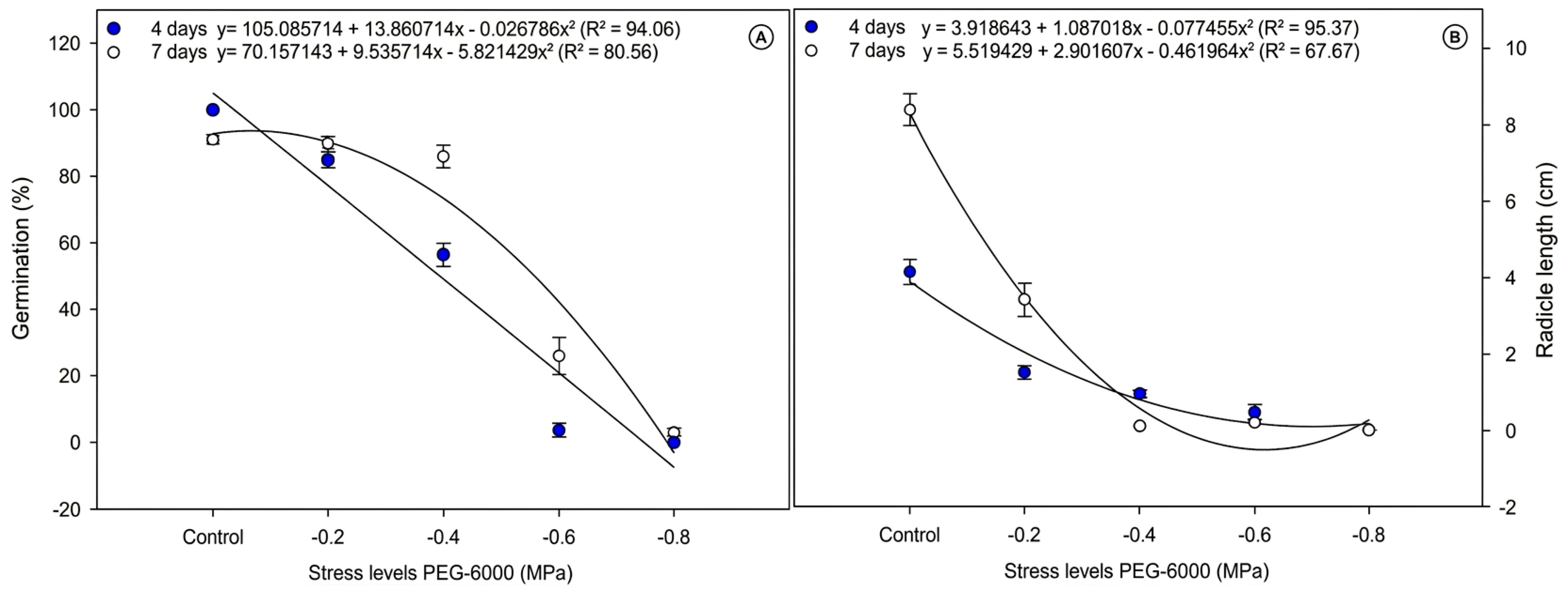
The results of the analysis of variance for the variables evaluated under osmotic stress induced by PEG-6000 are presented in Table 4. Four days after sowing, a highly significant effect of the treatments was observed for all variables analyzed.
At seven days, no statistically significant differences were observed between the applied doses. The coefficients of variation indicated good experimental precision at four days and greater variability at seven days. At four days, the number of germinated seedlings decreased with increasing doses of PEG-6000, showing a significant linear adjustment, evidencing a proportional reduction in germination with the decrease in osmotic potential.
At four days, radicle length adjusted to the quadratic model as a function of PEG-6000 doses. The greatest growth was observed in the control (0 MPa), with 4.15 cm, with progressive reduction at −0.2 and −0.4 MPa, a sharp drop at −0.6 MPa, and total inhibition at −0.8 MPa (Figure 1B). At seven days, there were no significant differences between osmotic potentials.
Epicotyl length and the percentage of vigorous seedlings also showed a significant quadratic adjustment at four days, with a more intense reduction at the more negative potentials. These results, together with Table 4 and Figure 1, allowed us to define the moderate and severe stress levels used in Bioassay 3.

3.2. Bioassay 2: Assessment of the Biostimulant Potential and Optimal Dose of the Product

The results of the analysis of variance at four and seven days after sowing are presented in Table 5 and Table 6. Germination (%) was not significantly influenced by the treatments at either evaluation time, both at four and seven days after sowing. In both evaluations, the treatments showed high and similar values, indicating that the doses of the seaweed extract-based product and the solution containing the mineral fraction exclusively did not compromise the germination potential of the seeds, regardless of the evaluation time.
At four days, a significant effect of the doses was observed only for epicotyl length (EL) and vigor, while the other variables did not show a statistical difference.
At seven days, there was a significant effect of the doses on normal seedlings (%PNS), abnormal seedlings (%AS), radicle length (RL), epicotyl length (EL), and vigor, while germination (%G) was not influenced, although a replication effect was observed in this evaluation.
The coefficients of variation indicated good experimental precision for germination and growth variables at seven days, with greater variability for abnormal seedlings. At four days, there was no significant effect of the treatments on normal and abnormal seedlings, maintaining a pattern similar to that observed for germination at that time.
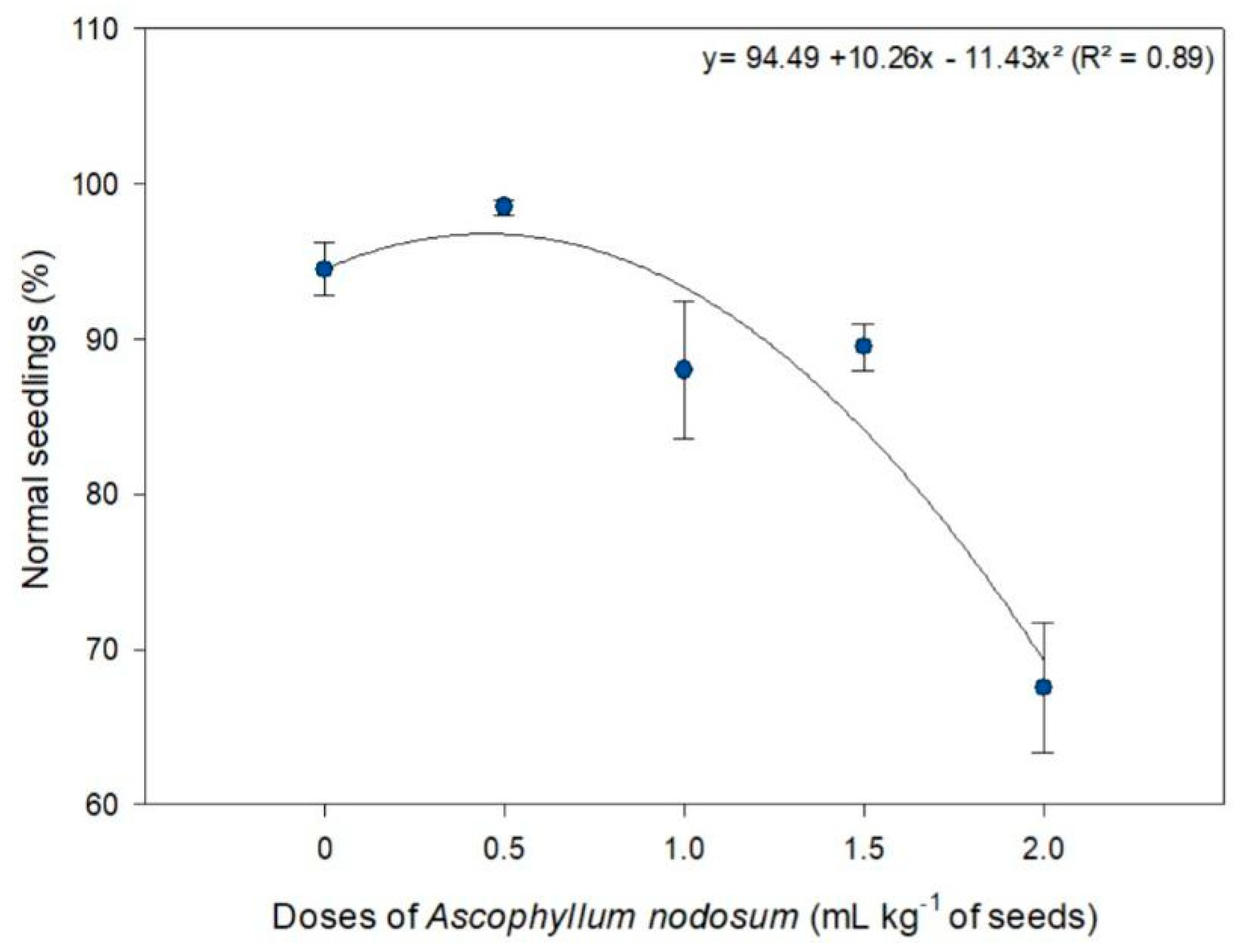
Conversely, seven days after sowing, the number of normal and abnormal seedlings was significantly influenced by the applied doses. For the percentage of normal seedlings (PNS%), a significant fit to the quadratic regression model was observed, characterized by an increase up to intermediate doses, followed by a reduction at the highest concentrations (Figure 2), evidencing a dose-dependent response, with a point of maximum efficiency at a dose of 0.45 mL kg−1 of seeds.
The percentage of normal seedlings showed a significant quadratic adjustment to the doses of Ascophyllum nodosum, with an increase up to the intermediate dose and a reduction at the highest concentrations. The point of maximum technical efficiency was estimated at 0.45 mL kg−1, with a predicted value of 96.8%, while at the dose of 2.0 mL kg−1 there was a reduction to approximately 68%.
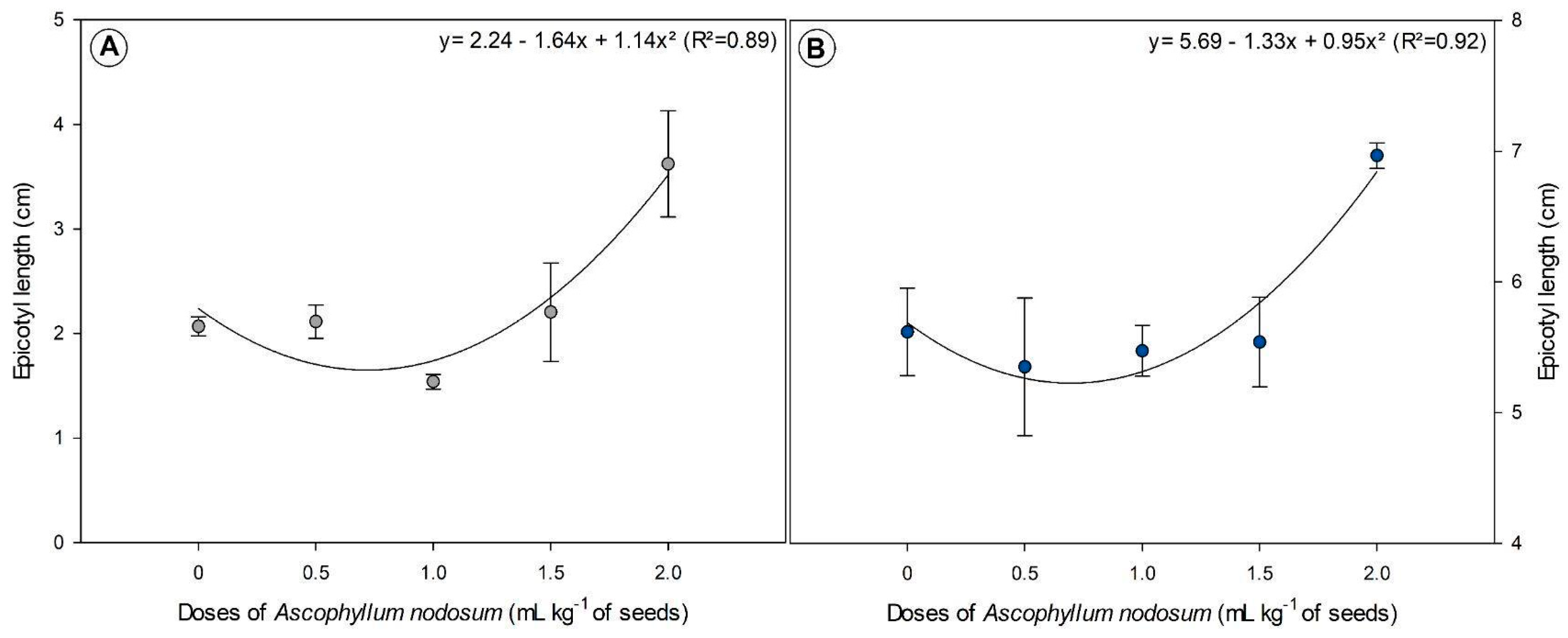
The percentage of abnormal seedlings did not fit regression models; however, the comparison of means indicated lower values at the applied doses (close to zero) compared to the control (5.5%), with a statistical difference. Epicotyl length showed a significant quadratic adjustment at four and seven days (Figure 3), with a reduction at intermediate doses and an increase at the highest concentrations, characterizing a dose-dependent response at both evaluation times.
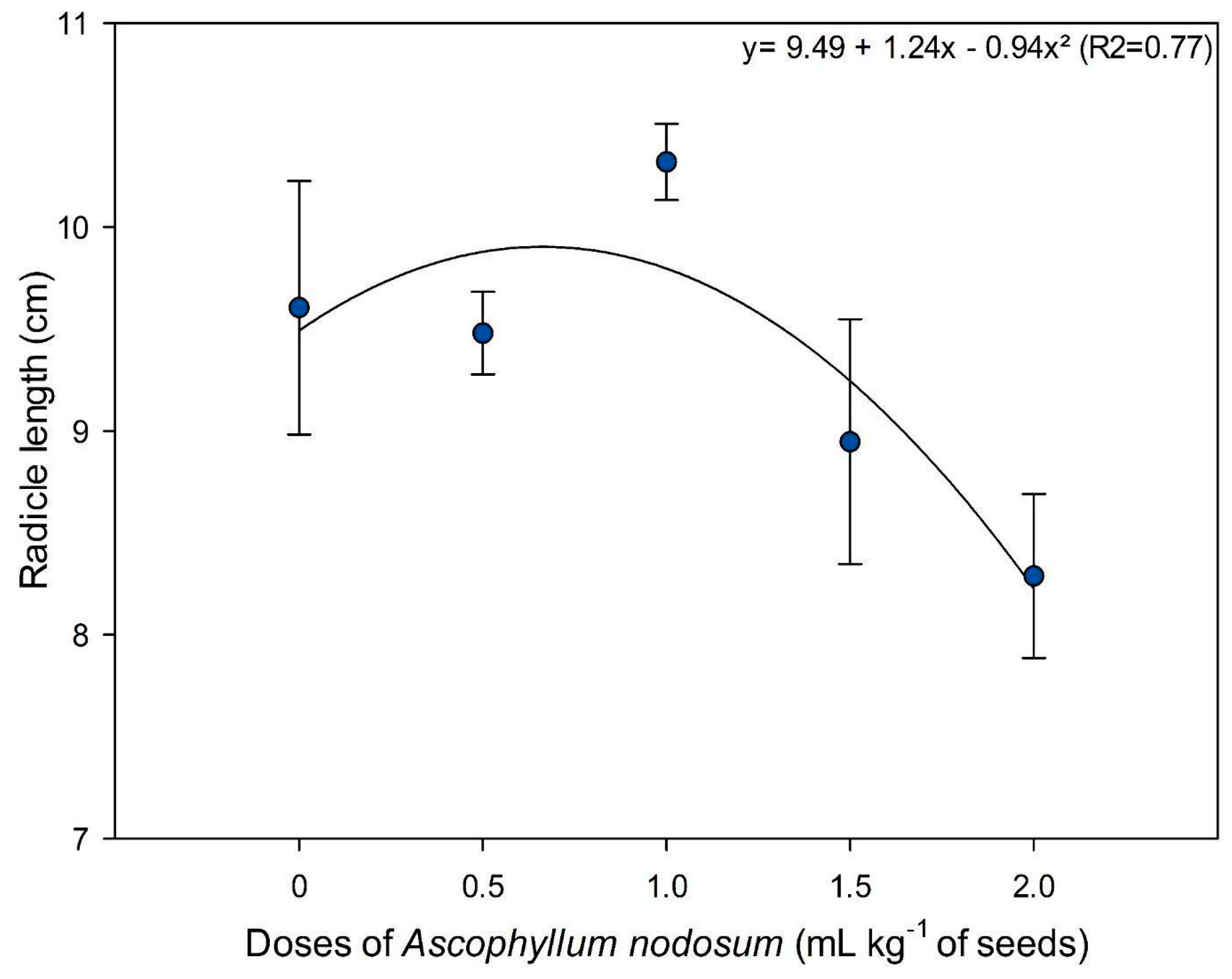
Root length was not influenced by the doses at four days. At seven days, there was a significant effect, with a quadratic adjustment (Figure 4), showing an increase up to 0.66 mL kg−1 and a reduction at the highest concentrations. The values were higher at seven days, reflecting the advancement of development, with moderate experimental variability. Thus, the effect of the doses on root growth was dependent on the evaluation time, manifesting itself only in the final evaluation.
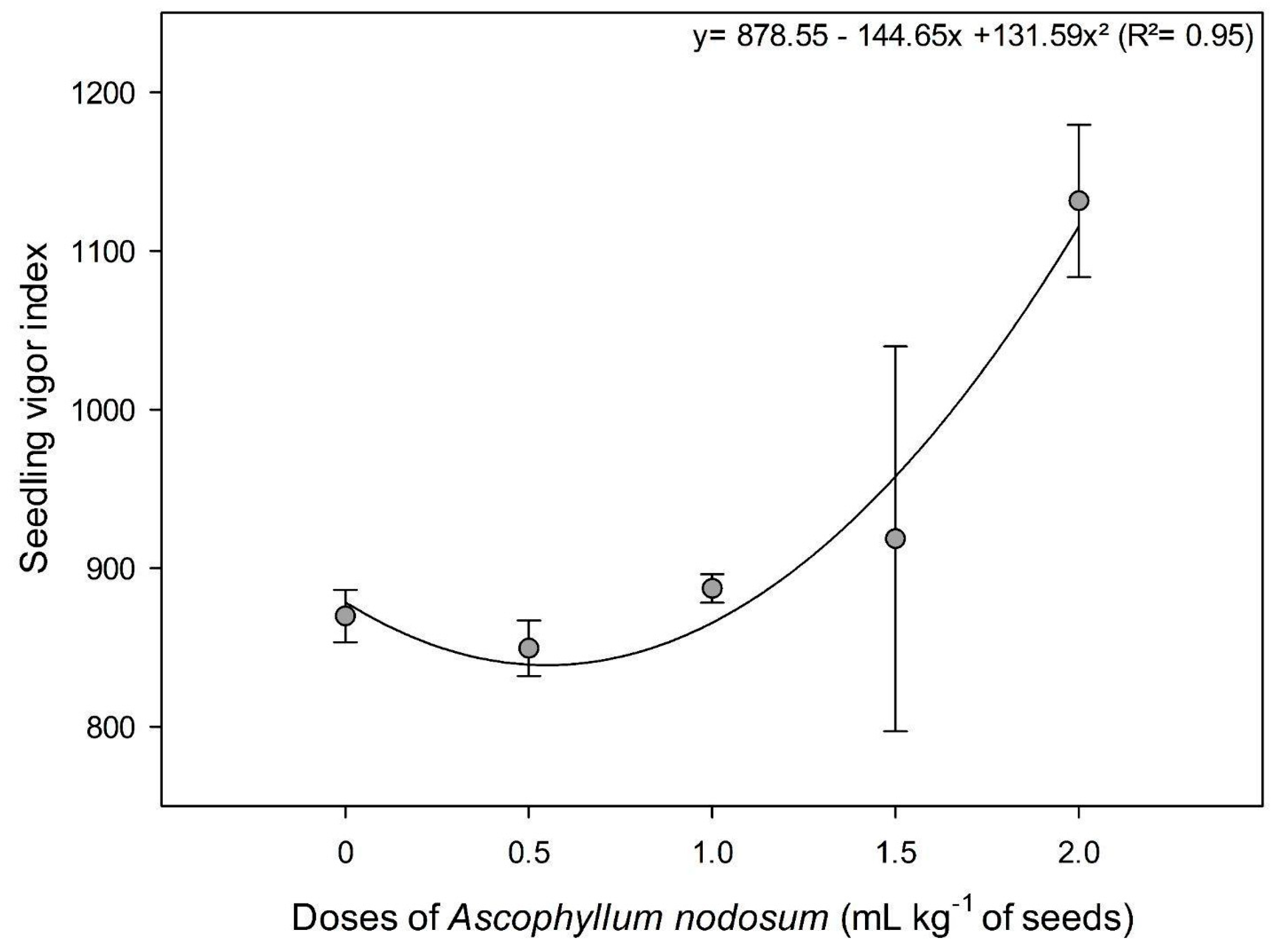
At seven days, radicle length was influenced by Ascophyllum nodosum doses, with a quadratic adjustment (R2 = 0.77). There was an increase up to 0.66 mL kg−1, followed by a reduction at the dose of 2.0 mL kg−1, indicating better performance at intermediate concentrations and a possible limiting effect at higher concentrations. The vigor index at four days also showed a significant quadratic adjustment (Figure 5), with a reduction at intermediate doses and an increase at higher concentrations, evidencing a non-linear and dose-dependent response in the initial germination phase.
Seven days after sowing, the vigor index was significantly influenced by the treatments, with the comparison of means performed using Tukey’s test, since no significant fit was observed to regression models for this variable. The treatment corresponding to the dose of 1.0 mL kg−1 presented the lowest vigor index (95.0), differing statistically from the others.
In contrast, the doses of 0.5 mL kg−1 (1361.2), 1.5 mL kg−1 (1058.8) and 2.0 mL kg−1 (1420.3), as well as the control (1438.7), presented the highest vigor index values, not differing from each other. These results indicate that, in the final evaluation, the intermediate and higher doses, as well as the control, provided greater seedling vigor when compared to the lowest dose evaluated.

3.3. Bioassay 3: Evaluation of the Optimal Dose Under Moderate and Severe Water Deficit

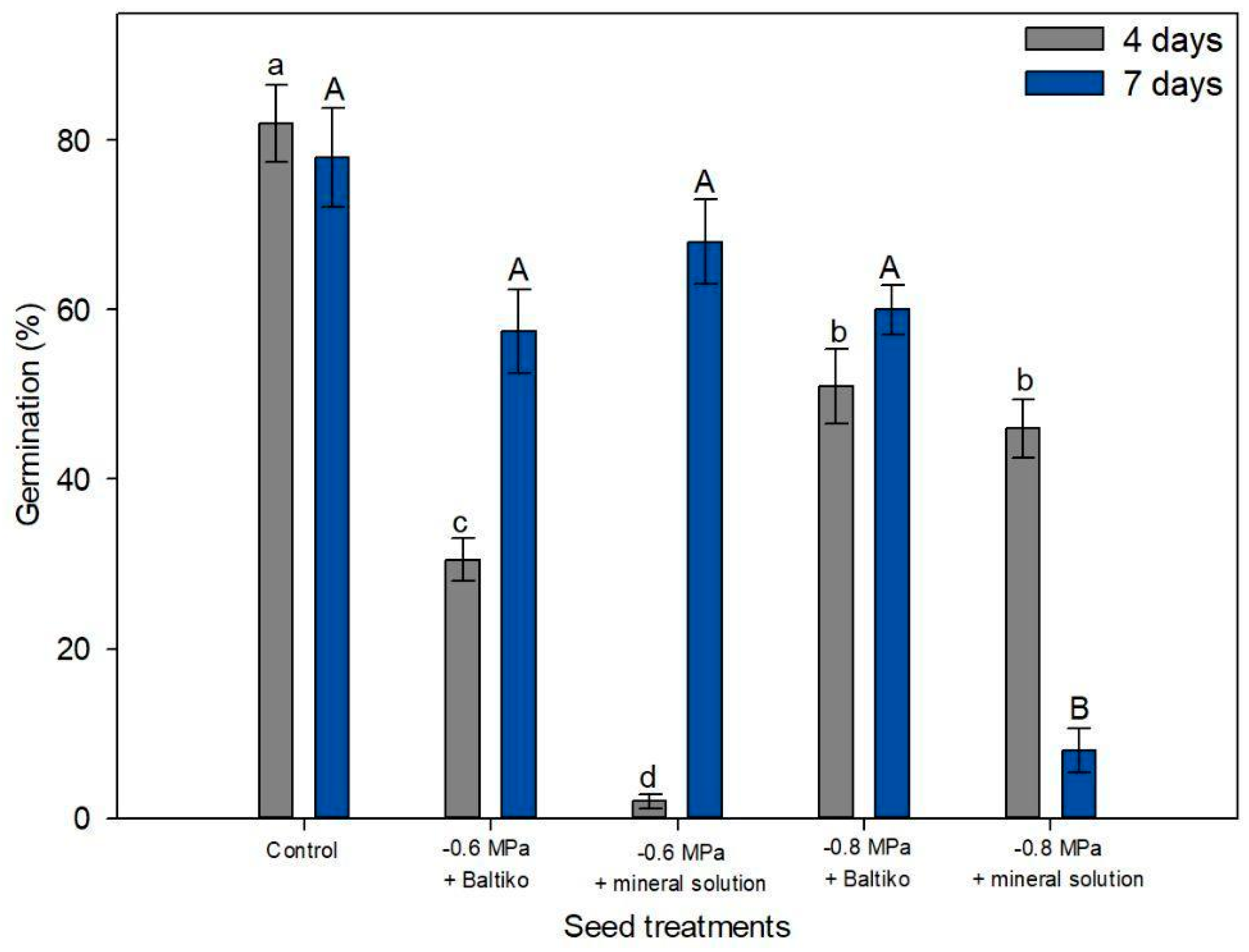
Analysis of variance indicated a significant effect of the treatments on some of the variables, highlighting an interaction between germination conditions and seaweed extract doses. The effects were more pronounced on growth and vigor variables, especially at seven days, indicating an intensification of the physiological response throughout the initial development. The germination percentage was influenced by the treatments (Figure 6). At four days, the differences were mainly related to the germination speed, while at seven days there was a tendency for the averages to stabilize, reflecting the final germination potential under each condition.
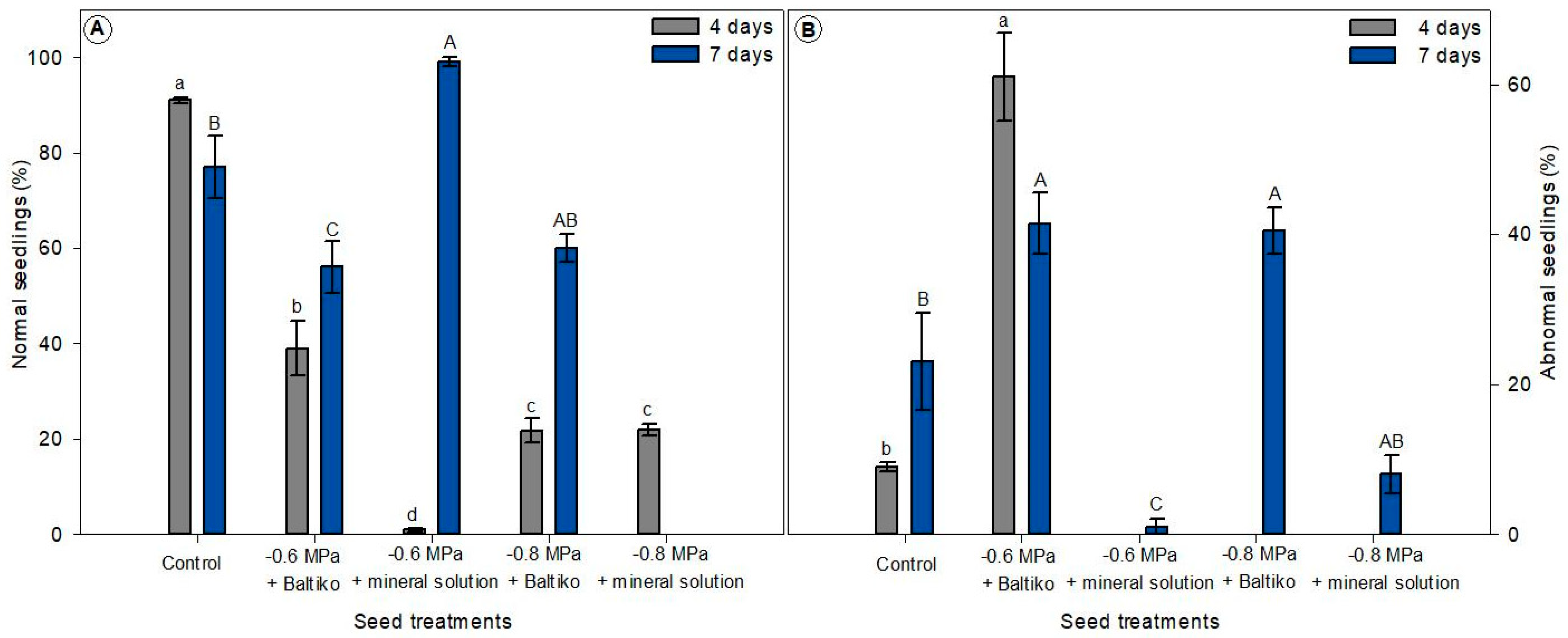
The quality of the seedlings, expressed by the percentages of normal and abnormal seedlings (Figure 7), showed significant differences between treatments, with distinct responses between evaluation periods. The higher proportion of normal seedlings in certain treatments indicates a positive effect on structural development, while the reduction in abnormal seedlings suggests partial mitigation of the effects of water stress.
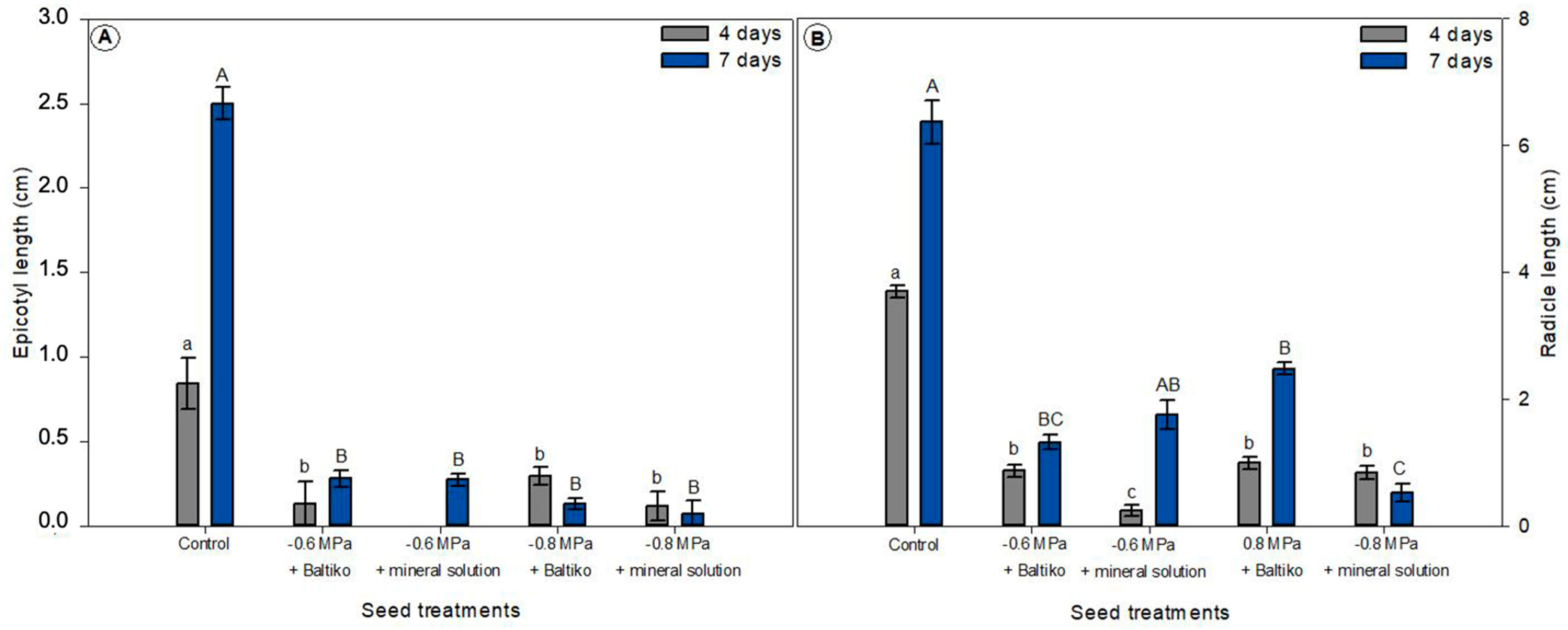
Initial growth was significantly affected by the treatments, as observed for epicotyl and radicle length (Figure 8). The differences were more pronounced at seven days, indicating that the physiological modulation promoted by the seaweed extract is more evident as development progresses. The behavior of the variables suggests a dose-dependent re sponse, a typical characteristic of biostimulants.
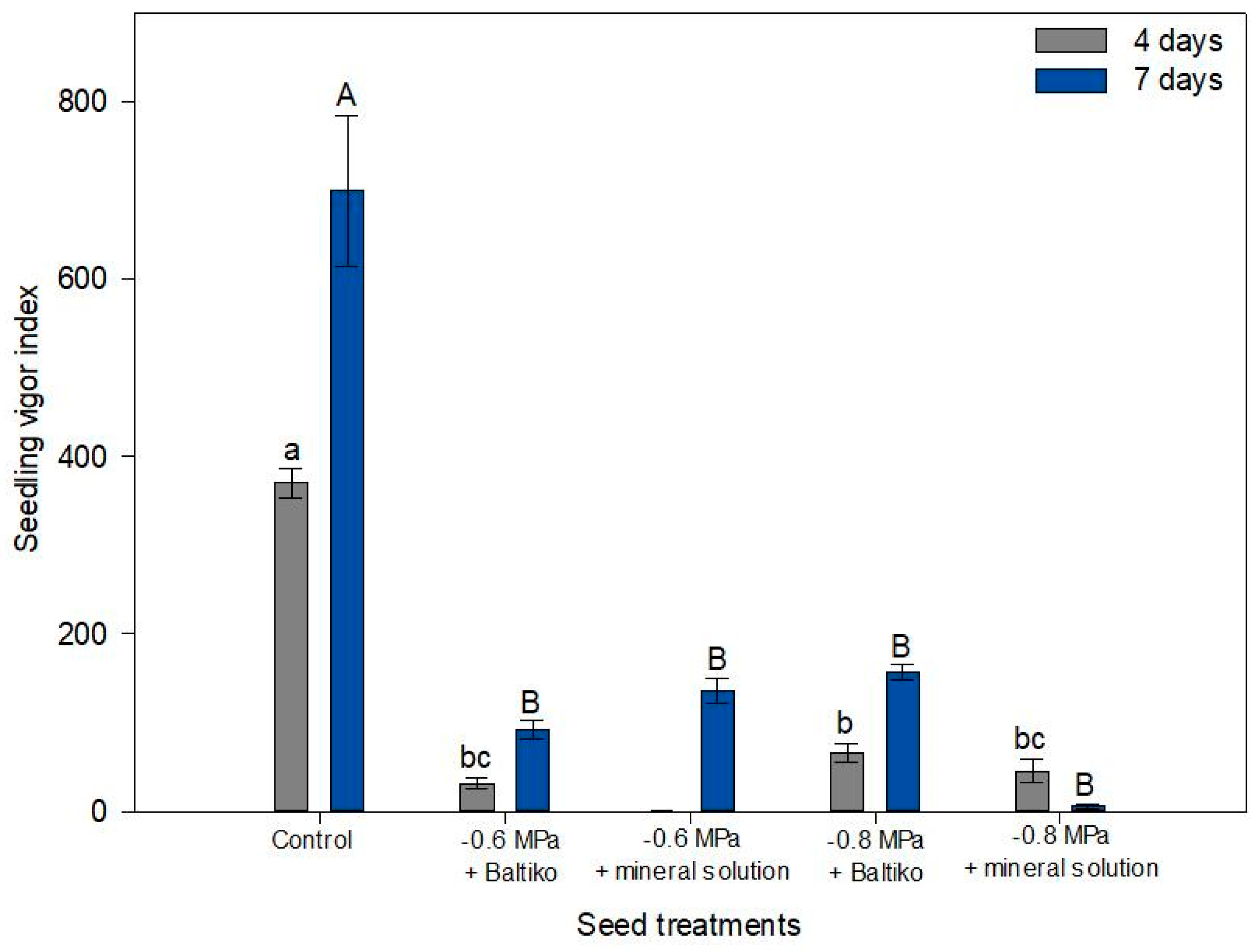
The seedling vigor index (Figure 9), by integrating germination and growth, synthesizes the effects observed in the other variables. The significant differences between treatments confirm that the use of seaweed extract influenced the physiological performance of the seedlings in an integrated manner, especially under water restriction conditions.
Taken together, Figure 6, Figure 7, Figure 8 and Figure 9 show that seed treatment with Ascophyllum nodosum extract promotes relevant physiological changes in the initial phase of maize development, with responses varying depending on the dose applied and the evaluation time.


4. Discussion

The results of Bioassay 1 demonstrate that osmotic stress induced by PEG-6000 significantly reduced germination and initial seedling growth, especially four days after sowing. This response confirms that the reduction in water potential restricts imbibition and delays metabolic activation, compromising the initial developmental processes [7]. The progressive decline in germination with increasing PEG concentrations is consistent with previous reports in agricultural crops subjected to water restriction [3,5,6].
The reduction in radicle elongation observed under severe osmotic stress indicates that root growth is one of the first developmental processes affected by limited water availability. Previous studies have suggested that drought-induced inhibition of root growth may involve alterations in cell expansion, hormonal signaling, osmotic adjustment, and oxidative metabolism [6,19,20]. However, these physiological and molecular processes were not evaluated in the present study. Therefore, our results demonstrate the morphological consequences of water deficit but do not allow direct conclusions regarding the mechanisms responsible for these responses.
Impaired epicotyl growth and vigor under osmotic stress are consistent with responses previously reported under drought conditions, in which alterations in hormonal balance and oxidative metabolism have been described [6]. However, these physiological processes were not investigated in the present study and therefore cannot be confirmed. The smaller difference between treatments at seven days may indicate differential seedling responses to osmotic stress. However, the physiological basis of this response was not investigated in the present study.
In Bioassay 2, the doses of seaweed extract did not affect the germination percentage, indicating an absence of deleterious effects on seed viability, in agreement with the literature [21,22]. However, the variables related to growth showed dose-dependent responses. The vigor index fit a quadratic model, with a slight reduction near 0.5 mL kg−1, followed by a progressive increase from 1.0 mL kg−1 and maximum values at the dose of 2.0 mL kg−1. This pattern is characteristic of biostimulants, in which suboptimal concentrations may not fully activate physiological pathways, while adequate doses favor the mobilization of reserves and hormonal signaling. Although higher doses promoted an increase in vigor, reductions observed in some structural variables indicate the existence of an optimal application range.
Epicotyl length showed a significant quadratic response at both evaluated times, with a greater increase at higher doses, especially at seven days. The radicle responded significantly only at seven days, also with quadratic behavior and an optimum point at an intermediate dose. These results indicate concentration-dependent physiological modulation, consistent with the action of bioactive compounds present in the extract, such as substances with phytohormone-like activity and secondary metabolites [13,14]. Promoting effects on initial growth have been reported in different cultivated species [23,24].
The quadratic response observed for normal seedlings, with a reduction at higher doses, reinforces the existence of a window of physiological efficiency, typical of biostimulants with action related to hormonal mechanisms [11,25]. The greater sensitivity of growth variables at seven days indicates that the expression of biostimulant effects intensifies with the advancement of initial establishment and metabolic activity [22,26].
Comparatively, Bioassay 1 showed that isolated osmotic stress compromised germination and growth, while the seaweed extract maintained germination and positively modulated growth variables, reinforcing evidence of the physiological potential of biostimulants under adverse conditions [12,15].
In Bioassay 3, seed treatment with Ascophyllum nodosum extract under water deficit primarily influenced the physiological quality and vigor of seedlings more than the final germination percentage. The maintenance of initial performance under osmotic restriction suggests partial mitigation of stress effects, as reported for algae extracts [3,12,14]. The increase in the proportion of normal seedlings and the enhancement of root growth at intermediate doses indicate a positive modulation of seedling development, which is consistent with previous studies reporting that seaweed extracts can modulate hormonal pathways and enhance plant tolerance to abiotic stress. However, these physiological mechanisms were not evaluated in the present study [14,26].
Taken together, the three bioassays establish a sequential framework for evaluating the biostimulant effect of Ascophyllum nodosum. The first bioassay defined osmotic potentials representative of moderate and severe water deficit, the second identified the dose that maximized seedling performance, and the third demonstrated the effects of this optimized dose under both stress levels. This sequential experimental approach provides a consistent basis for interpreting the biostimulant response under controlled conditions and highlights the importance of dose optimization when evaluating seaweed-derived biostimulants.
In general, the recurring quadratic patterns observed for epicotyl, radicle, and normal seedlings confirm a dose-dependent response, highlighting the importance of defining an optimal application range [11,12]. Additionally, the superior performance of the complete extract compared to the mineral fraction suggests that the observed effects are predominantly due to bioactive organic compounds and not solely to nutritional input. Overall, the results indicate that seed treatment with Ascophyllum nodosum has the potential to improve early maize seedling performance under controlled water deficit conditions, particularly when applied at optimized doses. Nevertheless, further studies under greenhouse and field conditions are required to determine whether these responses are maintained under practical cultivation conditions.

5. Conclusions

The results demonstrate that PEG-6000-induced water stress significantly impaired maize seed germination and, particularly, early seedling growth, confirming the high sensitivity of this developmental stage to reduced water availability under controlled laboratory conditions. Root elongation, epicotyl development, and seedling vigor were the variables most affected by the reduction in osmotic potential.
Seed treatment with Ascophyllum nodosum extract promoted dose-dependent responses, particularly in growth- and vigor-related traits. The recurrent quadratic responses indicate the existence of an optimal application range, with the 0.5 dose providing the best overall physiological performance under the evaluated conditions.
Under water deficit, the complete extract outperformed the mineral fraction, suggesting that the beneficial effects are mainly associated with its bioactive organic components rather than with mineral nutrition alone. Overall, these findings indicate that Ascophyllum nodosum extract has the potential to improve early maize seedling performance under controlled water deficit conditions. However, additional greenhouse and field studies are required to confirm the effectiveness of this treatment under practical cultivation conditions and to validate the optimal application dose.

Author Contributions

Conceptualization, J.S.B.P., L.d.O.A., S.A.F., J.J.d.P.M., M.E.d.S.B. and F.B.C.S.; methodology, J.S.B.P., S.A.F., J.J.d.P.M., L.d.O.A., M.E.d.S.B., G.R.C. and F.B.C.S.; software, V.d.S.O., S.A.F., J.J.d.P.M., L.d.O.A., J.S.B.P., M.E.d.S.B., G.R.C. and F.B.C.S.; validation, V.d.S.O., S.A.F., J.J.d.P.M., J.S.B.P., M.E.d.S.B., G.R.C. and F.B.C.S.; formal analysis, V.d.S.O., L.d.O.A., J.S.B.P., M.E.d.S.B., G.R.C. and F.B.C.S.; investigation, J.S.B.P., F.G.H., A.J.C.J.-M., M.M.C. and S.M.O.; resources, M.M.C., F.G.H., A.J.C.J.-M. and S.M.O.; data curation, V.d.S.O., F.G.H., A.J.C.J.-M., M.M.C. and S.M.O.; writing—original draft preparation, V.d.S.O., F.G.H., A.J.C.J.-M., A.A.F. and S.D.-A.; writing—review and editing, V.d.S.O., A.A.F. and S.D.-A.; visualization, V.d.S.O., A.A.F. and S.D.-A.; supervision, A.A.F. and S.D.-A.; project administration, A.A.F. and S.D.-A.; funding acquisition, S.D.-A. All authors have read and agreed to the published version of the manuscript.

Funding

This research was funded by Fundação de Amparo à Pesquisa e Inovação do Espírito Santo—FAPES.

Data Availability Statement

The original contributions presented in this study are included in the article. Further inquiries can be directed to the corresponding authors.

Conflicts of Interest

Author Simone Alves Fernandes was employed by the company Homeoplant. The remaining authors declare that the research was conducted in the absence of any commercial or financial relationships that could be construed as a potential conflict of interest.

Abbreviations

The following abbreviations are used in this manuscript:
%GGermination
%PNSPercentage of normal seedlings
%ASAbnormal seedlings
ELEpicotyl length
RLRadicle length

References

  1. IPCC. Climate Change 2021: The Physical Science Basis; Cambridge University Press: Cambridge, UK, 2023. [Google Scholar] [CrossRef] [Scilit]
  2. Marengo, J.A.; Cunha, A.P.; Cuartas, L.A.; Leal, K.R.D.; Broedel, E.; Seluchi, M.E.; Michelin, C.M.; Baião, C.F.P.; Agulo, E.C.; Almeida, E.K.; et al. Extreme drought in the Brazilian Pantanal in 2019–2020: Characterization, causes and impacts. Front. Water 2021, 3, 639204. [Google Scholar] [CrossRef] [Scilit]
  3. Farooq, M.; Wahid, A.; Kobayashi, N.; Fujita, D.; Basra, S.M.A. Plant drought stress: Effects, mechanisms and management. Agron. Sustain. Dev. 2009, 29, 185–212. [Google Scholar] [CrossRef] [Scilit]
  4. Verslues, P.E.; Agarwal, M.; Katiyar-Agarwal, S.; Zhu, J.; Zhu, J.K. Methods and concepts in quantifying resistance to drought, salt and freezing. Plant J. 2006, 45, 523–539. [Google Scholar] [CrossRef] [Scilit] [PubMed]
  5. Hasanuzzaman, M.; Bhuyan, M.H.M.B.; Zulfiqar, F.; Raza, A.; Mohsin, S.M.; Mahmud, J.A.; Fujita, M.; Fotopoulos, V. Reactive Oxygen Species and Antioxidant Defense in Plants under Abiotic Stress: Revisiting the Crucial Role of a Universal Defense Regulator. Antioxidants 2020, 9, 681. [Google Scholar] [CrossRef] [Scilit] [PubMed]
  6. Li, Y.; Jiang, S.; Hong, Y.; Yao, Z.; Chen, Y.; Zhu, M.; Ding, J.; Li, C.; Zhu, X.; Xu, W.; et al. Transcriptomic and Hormonal Changes in Wheat Roots Enhance Growth under Moderate Soil Drying. Int. J. Mol. Sci. 2024, 25, 9157. [Google Scholar] [CrossRef] [Scilit] [PubMed]
  7. Michel, B.E.; Kaufmann, M.R. The osmotic potential of polyethylene glycol 6000. Plant Physiol. 1973, 51, 914–916. [Google Scholar] [CrossRef] [Scilit] [PubMed]
  8. Basal, O.; Szabó, A.; Veres, S. Physiology of soybean as affected by PEG-induced drought stress. Curr. Plant Biol. 2020, 22, 100135. [Google Scholar] [CrossRef] [Scilit]
  9. Mustamu, N.E.; Tampubolon, K.; Alridiwirsah; Basyuni, M.; Al-Taey, D.K.A.; Janabi, H.J.K.A.; Mehdizadeh, M. Drought stress induced by polyethylene glycol (PEG) in local maize at the early seedling stage. Heliyon 2023, 9, e20209. [Google Scholar] [CrossRef] [Scilit] [PubMed]
  10. Du Jardin, P. Plant biostimulants: Definition, concept, main categories and regulation. Sci. Hortic. 2015, 196, 3–14. [Google Scholar] [CrossRef] [Scilit]
  11. Rouphael, Y.; Colla, G. Biostimulants in agriculture. Front. Plant Sci. 2020, 11, 40. [Google Scholar] [CrossRef] [Scilit] [PubMed]
  12. Craigie, J.S. Seaweed extract stimuli in plant science and agriculture. J. Appl. Phycol. 2011, 23, 371–393. [Google Scholar] [CrossRef] [Scilit]
  13. Shukla, P.S.; Mantin, E.G.; Adil, M.; Bajpai, S.; Critchley, A.T.; Prithiviraj, B. Ascophyllum nodosum-Based Biostimulants: Sustainable Applications in Agriculture for the Stimulation of Plant Growth, Stress Tolerance, and Disease Management. Front. Plant Sci. 2019, 10, 655. [Google Scholar] [CrossRef] [Scilit] [PubMed]
  14. El Boukhari, M.E.; Barakate, M.; Bouhia, Y.; Lyamlouli, K. Trends in Seaweed Extract Based Biostimulants: Manufacturing Process and Beneficial Effect on Soil-Plant Systems. Plants 2020, 9, 359. [Google Scholar] [CrossRef] [Scilit] [PubMed]
  15. Jannin, L.; Arkoun, M.; Etienne, P.; Laîné, P.; Goux, D.; Garnica, M.; Fuentes, M.; Francisco, S.S.; Baigorri, R.; Cruz, F.; et al. Brassica napus growth is promoted by Ascophyllum nodosum seaweed extract: Microarray analysis and physiological characterization of N, C and S metabolisms. J. Plant Growth Regul. 2013, 32, 31–52. [Google Scholar] [CrossRef] [Scilit]
  16. Farsiani, A.; Ghobadi, M.E. Effects of PEG and NaCl stress on two cultivars of corn (Zea mays L.) at germination and early seedling stages. World Acad. Sci. Eng. Technol. 2009, 57, 382–385. [Google Scholar]
  17. Pires, J.S.B.; Silva, F.B.C.; Barbosa, M.E.S.; Cavilha, G.R.; Coelho, M.M.; Otilia, S.M.; Moreira, J.W.D.M.; Marquito, G.R.M.; Hoste, F.G.; Jeveaux-Machado, A.J.C.; et al. Biostimulant potential of Ascophyllum nodosum in mitigating salinity effects on the germination of Zea mays L. Seeds 2026, 5, 14. [Google Scholar] [CrossRef] [Scilit]
  18. Ferreira, D.F. SISVAR: A computer analysis system to fixed effects split plot type designs. Rev. Bras. Biom. 2019, 37, 529–535. [Google Scholar] [CrossRef] [Scilit]
  19. Kang, J.; Peng, Y.; Xu, W. Crop Root Responses to Drought Stress: Molecular Mechanisms, Nutrient Regulations, and Interactions with Microorganisms in the Rhizosphere. Int. J. Mol. Sci. 2022, 23, 9310. [Google Scholar] [CrossRef] [Scilit] [PubMed]
  20. Klaus, A.; Marcon, C.; Hochholdinger, F. Spatiotemporal transcriptomic plasticity in barley roots: Unravelling water deficit responses in distinct root zones. BMC Genom. 2024, 25, 79. [Google Scholar] [CrossRef] [Scilit] [PubMed]
  21. Khan, W.; Rayirath, U.P.; Subramanian, S.; Jithesh, M.N.; Rayorath, P.; Hodges, D.M.; Critchley, A.T.; Craigie, J.S.; Norrie, J.; Prithiviraj, B. Seaweed extracts as biostimulants of plant growth and development. J. Plant Growth Regul. 2009, 28, 386–399. [Google Scholar] [CrossRef] [Scilit]
  22. Zhang, X.; Schmidt, R.E. Hormone-Containing Products’ Impact on Antioxidant Status of Tall Fescue and Creeping Bentgrass Subjected to Drought. Crop Sci. 2000, 40, 1344–1349. [Google Scholar] [CrossRef] [Scilit]
  23. Ertani, A.; Schiavon, M.; Muscolo, A.; Nardi, S. Alfalfa plant-derived biostimulant stimulate short-term growth of salt stressed Zea mays L. plants. Plant Soil 2013, 364, 145–158. [Google Scholar] [CrossRef] [Scilit]
  24. Bhattacharyya, D.; Babgohari, M.Z.; Rathor, P.; Prithiviraj, B. Seaweed extracts as biostimulants in horticulture. Sci. Hortic. 2015, 196, 39–48. [Google Scholar] [CrossRef] [Scilit]
  25. Halpern, M.; Bar-Tal, A.; Ofek, M.; Minz, D.; Muller, T.; Yermiyahu, U. The use of biostimulants for enhancing nutrient uptake. Sci. Hortic. 2015, 196, 68–76. [Google Scholar] [CrossRef] [Scilit]
  26. Yakhin, O.I.; Lubyanov, A.A.; Yakhin, I.A.; Brown, P.H. Biostimulants in plant science: A global perspective. Front. Plant Sci. 2017, 7, 2049. [Google Scholar] [CrossRef] [Scilit] [PubMed]
Figure 1. Effect of water stress levels induced by PEG-6000 (MPa) on germination (%) (A) and radicle length (cm) (B), evaluated at 4 and 7 days. Points represent means ± standard error. Lines correspond to quadratic regression fits for each period.
Ijpb 17 00078 g001
Figure 2. Effect of Ascophyllum nodosum doses on the percentage of normal seedlings at 7 days after sowing. Bars represent mean ± SE.
Ijpb 17 00078 g002
Figure 3. Epicotyl length of seedlings as affected by Ascophyllum nodosum doses at 4 days (A) and 7 days (B) after sowing. Data were fitted to quadratic regression models. Bars represent mean ± standard error.
Ijpb 17 00078 g003
Figure 4. Radicle length as affected by Ascophyllum nodosum doses at 7 days after sowing. A quadratic regression model was fitted to the data. Bars represent mean ± SE.
Ijpb 17 00078 g004
Figure 5. Seedling vigor index as affected by Ascophyllum nodosum doses at 4 days after sowing. Data were fitted to a quadratic regression model. Bars represent mean ± standard error.
Ijpb 17 00078 g005
Figure 6. Germination (%) under different seed treatments at 4 and 7 days after sowing. Bars represent mean ± SE. Different lowercase (4 days) and uppercase (7 days) letters indicate significant differences among treatments according to Tukey’s test (p ≤ 0.05).
Ijpb 17 00078 g006
Figure 7. Percentage of normal (A) and abnormal (B) seedlings under different seed treatments at 4 and 7 days after sowing. Bars represent mean ± SE. Different lowercase letters (4 days) and uppercase letters (7 days) indicate significant differences among treatments according to Tukey’s test (p ≤ 0.05). Analyses were performed separately for each evaluation time.
Ijpb 17 00078 g007
Figure 8. Epicotyl length (A) and radicle length (B) of seedlings as affected by seed treatments at 4 and 7 days after sowing. Bars represent mean ± standard error. Different lowercase letters indicate significant differences among seed treatments at 4 days, and different uppercase letters indicate significant differences among seed treatments at 7 days (Tukey’s test, p ≤ 0.05).
Ijpb 17 00078 g008
Figure 9. Seedling vigor index as affected by seed treatments at 4 and 7 days after sowing. Bars represent mean ± standard error. Different lowercase letters indicate significant differences among seed treatments at 4 days, and different uppercase letters indicate significant differences among seed treatments at 7 days (Tukey’s test, p ≤ 0.05).
Ijpb 17 00078 g009
Table 1. Quantities of PEG-6000 used to obtain the respective osmotic potentials.
Osmotic Potential (MPa)Concentration (g PEG 600/L H2O)
00.000
−0.2119.570
−0.4178.350
−0.6223.666
−0.8261.950
Table 2. Mineral composition of the biofertilizer.
ParametersUnitQuantity
Total nitrogen%m/m2.19
Total phosphorus%m/m0.3059
Total potassium%m/m5.71
Total calcium%m/m0.1305
Total magnesium%m/m0.0307
Sulfur%m/m1.925
Iron%m/m0.04444
Zinc%m/m0.0027
Copper%m/m0.0007
Manganese%m/m0.0047
Boron%m/m0.0042
Source: Pires et al. [17].
Table 3. Composition of the Mineral Fraction Solution.
SolutionReagentQuantity (g)Makes Available (%m/m)
Solution AZnSO40.01180.0027 of Zn and 0.000132 of S
CuCl20.00190.0070 of Cu and 0.000388 of Cl
MnSO40.01440.0047 of Mn and 0.00027 of S
H3BO30.0240.0042 of B
CH4N2O1.114570.5293 of N
CaSO40.560.1305 of Ca and 0.104 of S
NKS12.6891.5227 of N, 0.1523 of S and 5.71 de K
Solution BFeCl30.2150.0444 of Fe and 0.0845 of Cl
MgSO40.3110.0307 of Mg and 0.0405 of S
Na2SO47.2881.1627 of S and 1.1792 of Na
Solution CH6NO4P1.1360.138 of N and 0.3059 of P
Source: Pires et al. [17].
Table 4. Summary of the analysis of variance with source of variation (SV), degrees of freedom (DF) and mean square for the characteristics germination (%G), normal seedlings (%PNS), abnormal seedlings (%AS), radicle length (RL), epicotyl length (EL) and vigor of maize seeds treated with doses of Ascophyllum nodosum at four days under stress with PEG-6000.
SVDF%G%PNS%ASRLELVigor
Mean Square
Doses48424.50 ***6509.50 ***2009.50 ***10.57 ***0.972 ***196,901.80 ***
Repetition312.00213.00213.000.2150.00362107.462
Residue1219.16172.16172.160.1210.00271038.24
CV (%) 8.9320.9974.9824.3820.6922.18
Legend: *** p < 0.001 by the F-test. CV (%) = coefficient of variation.
Table 5. Summary of the analysis of variance with source of variation, degrees of freedom and mean square for the characteristics germination (%G), normal seedlings (%PNS), abnormal seedlings (%AS), radicle length (RL), epicotyl length (EL) and vigor of maize seeds treated with doses of Ascophyllum nodosum at four days under stress with PEG-6000.
FVGL%G%PNS%ASRLELVigor
Mean Square
Doses419.70 ns652.70 ns864.90 ns1.65 ns2.43 **52,717.86 *
Repetition319.73415.66510.300.3710.7146448.58
Residue127.56434.16434.160.9730.33916,068.86
CV (%) 2.9123.70172.2013.0325.2213.61
Legend: ns = not significant; * p < 0.05, ** p < 0.01 by the F-test. CV (%) = coefficient of variation.
Table 6. Summary of the analysis of variance with source of variation (SV), degrees of freedom (DF) and mean square for the characteristics germination (%G), normal seedlings (%PNS), abnormal seedlings (%AS), radicle length (RL), epicotyl length (EL) and vigor of maize seeds treated with doses of Ascophyllum nodosum at seven days under stress with PEG-6000.
SVDF%G%PNS%ASRLELVigor
Mean Square
Doses412.30 ns574.20 ***22.70 ***2.31 *1.77 *1,294,067.62 ***
Repetition332.2618.133.461.650.21754,274.57
Residue125.7637.802.300.5710.500106,033.89
CV (%) 2.557.02108.338.1012.2130.30
Legend: ns = not significant; * p < 0.05; *** p < 0.001 by the F-test. CV (%) = coefficient of variation.
Disclaimer/Publisher’s Note: The statements, opinions and data contained in all publications are solely those of the individual author(s) and contributor(s) and not of MDPI and/or the editor(s). MDPI and/or the editor(s) disclaim responsibility for any injury to people or property resulting from any ideas, methods, instructions or products referred to in the content.