
Acaricidal and Repellent Activities of Rhizobacterial Isolates Against Tetranychus urticae (Acari: Tetranychidae) Under Laboratory and Greenhouse Conditions
 , , , , and
Abstract
1. Introduction
2. Materials and Methods
2.1. Isolation and Characterization of Bacterial Agents
2.2. Effects of Four Isolates Against T. urticae Under Controlled Conditions
2.2.1. Acaricidal Activity
2.2.2. Repellent Activity
2.3. Evaluation of the Effect of Isolates on T. urticae Under Greenhouse Conditions
2.3.1. Assessment of T. urticae Incidence and Severity
2.3.2. Assessment of T. urticae Adult Density
2.4. Statistical Analysis
3. Results
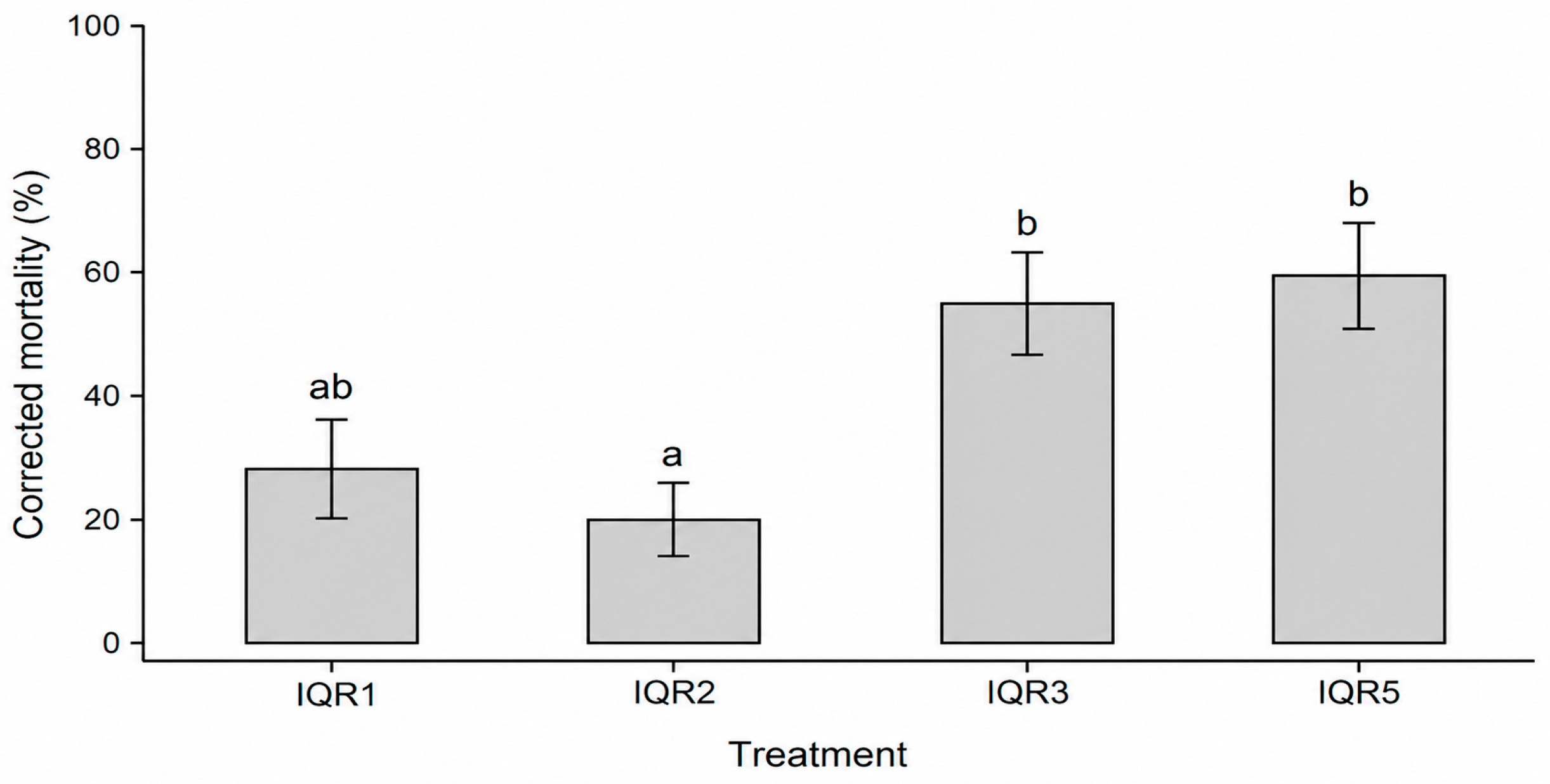
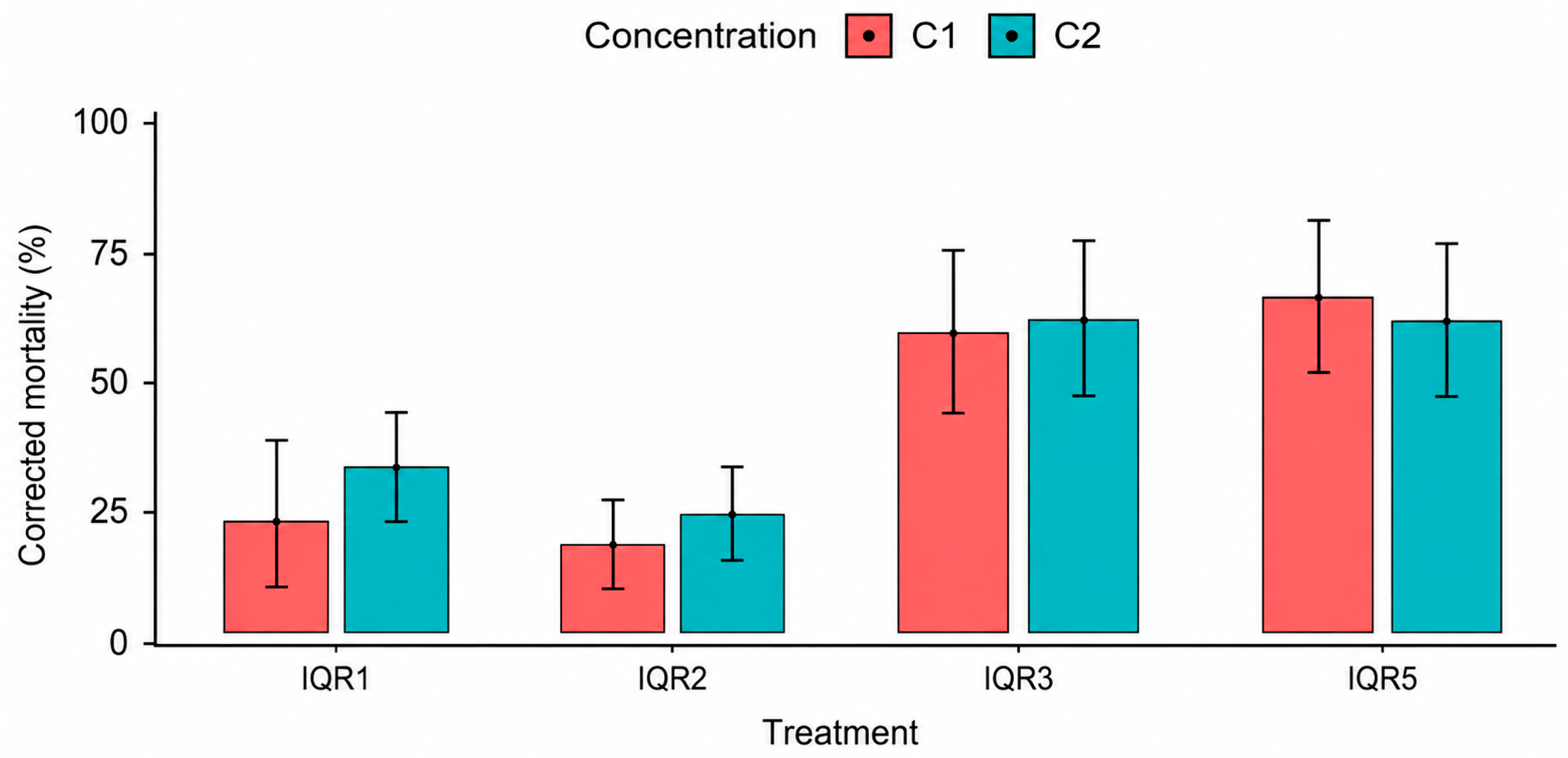
3.1. Acaricidal Activity
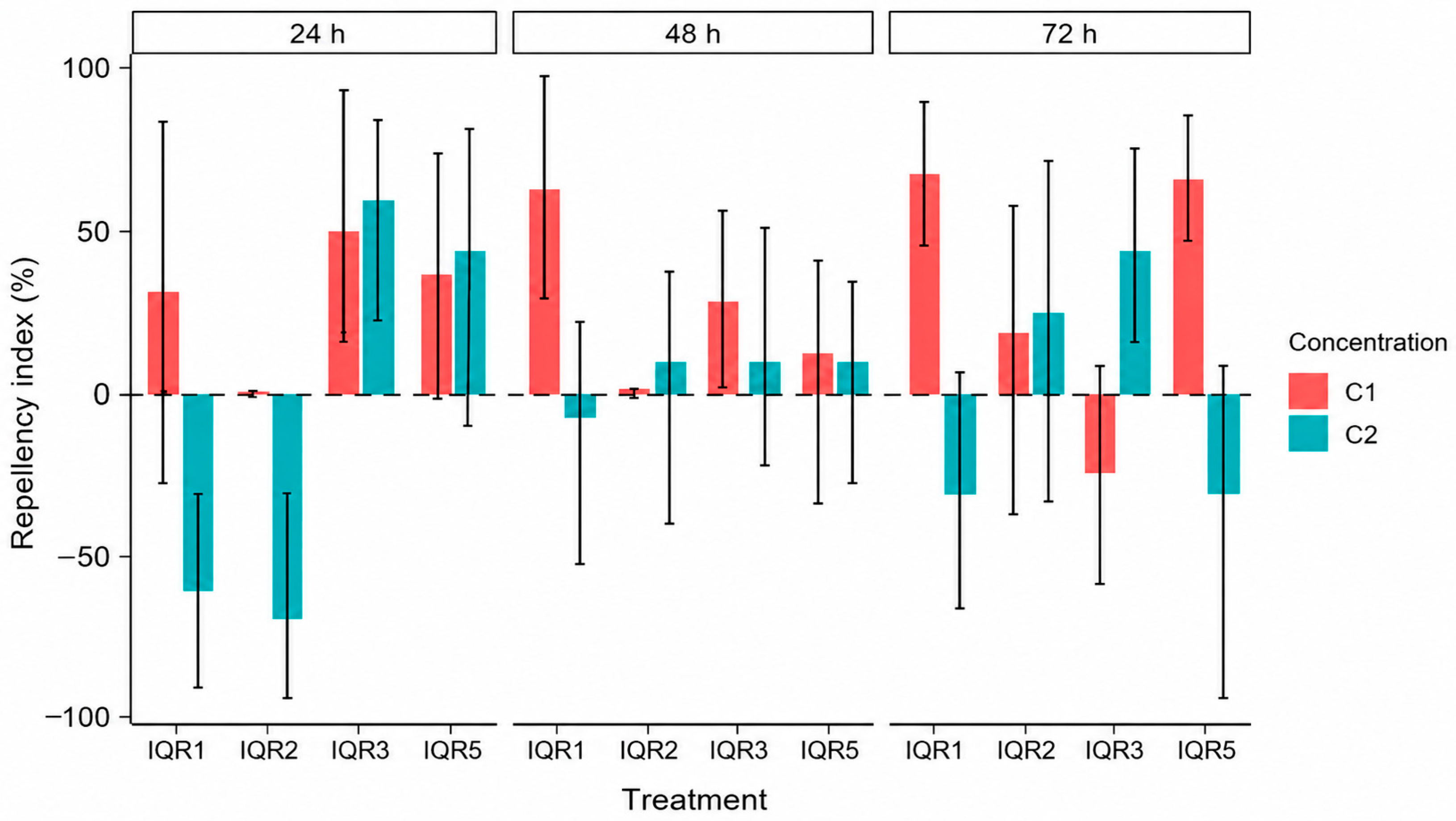
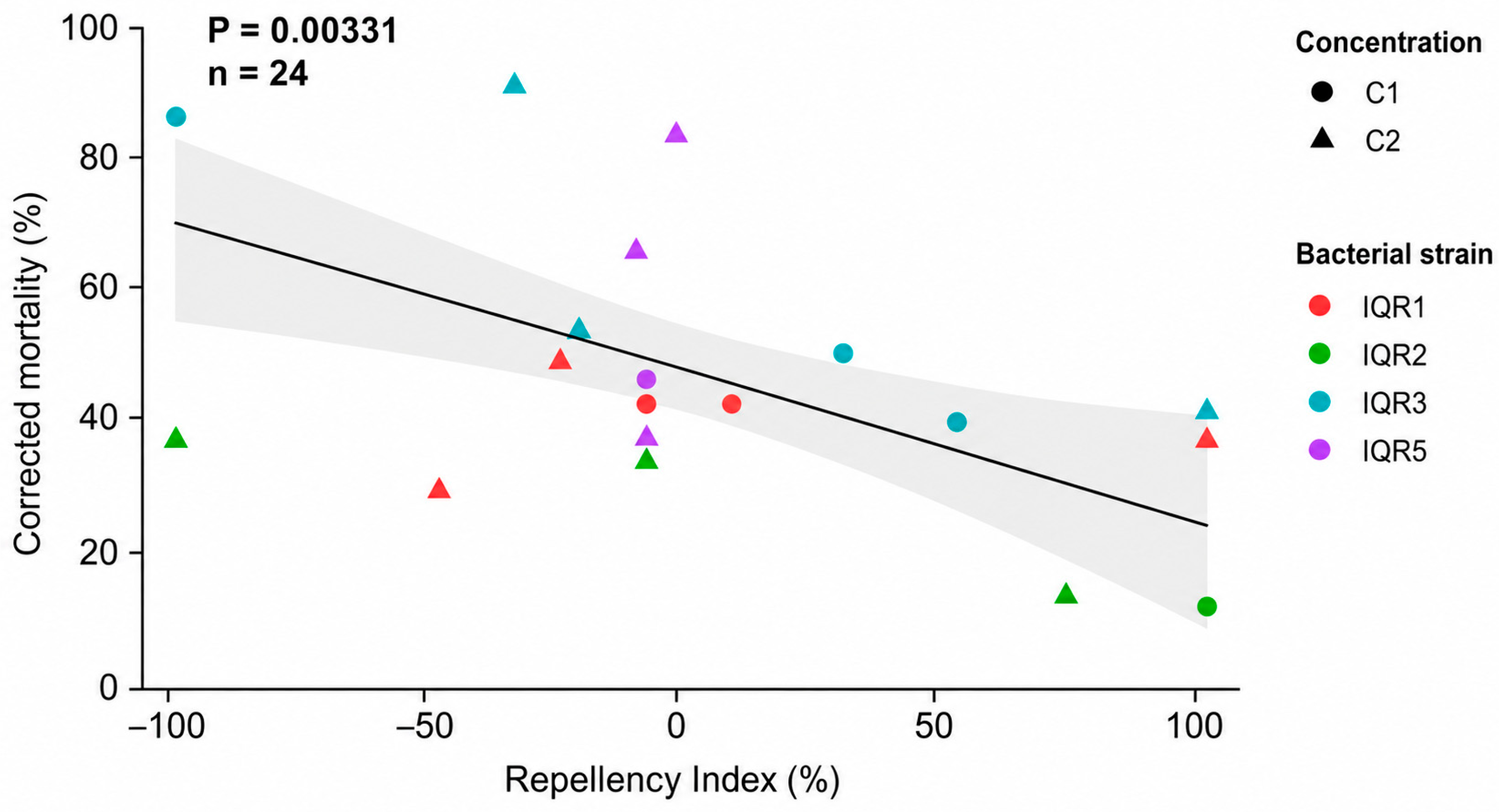
3.2. Repellent Activity
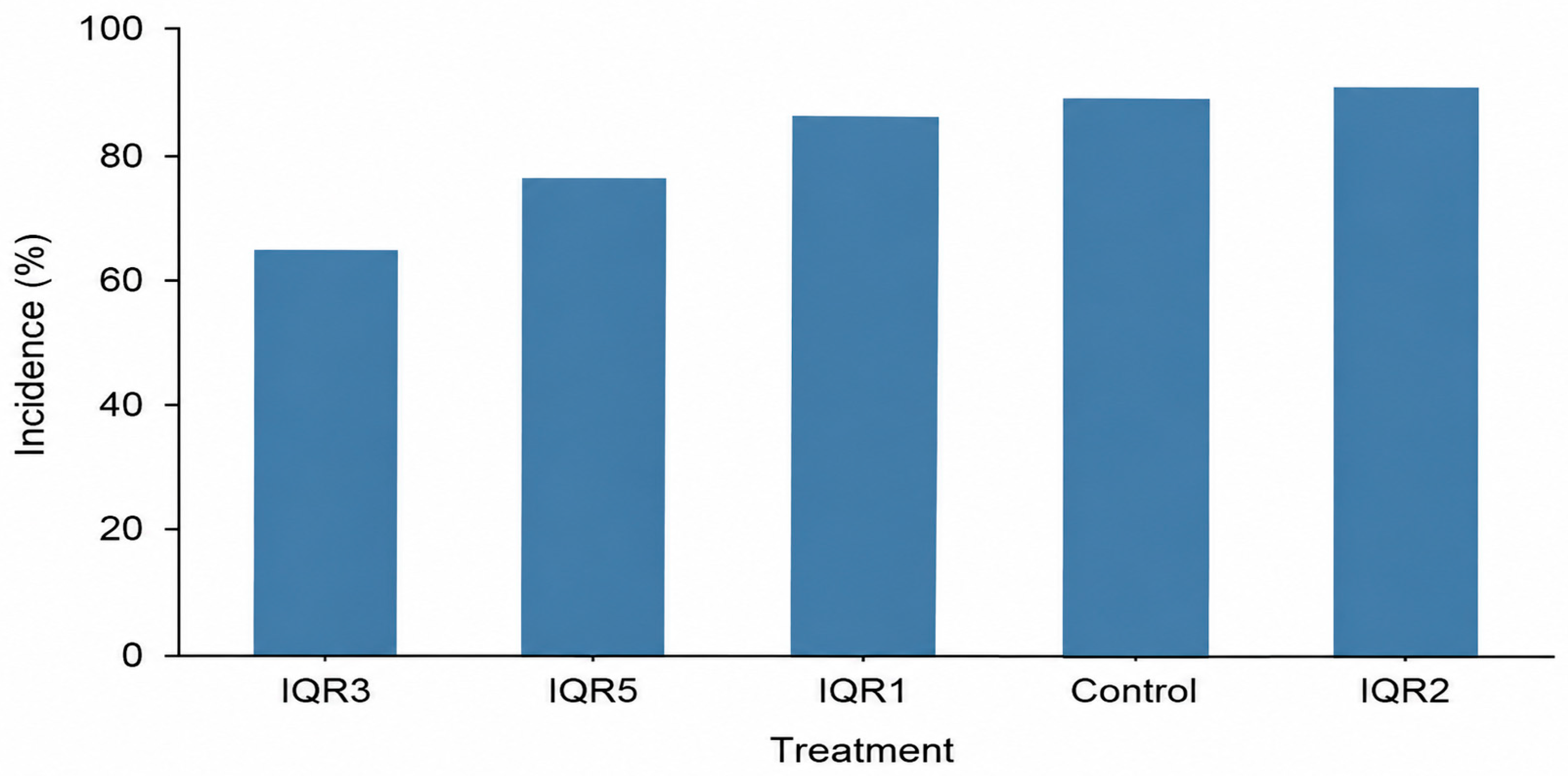
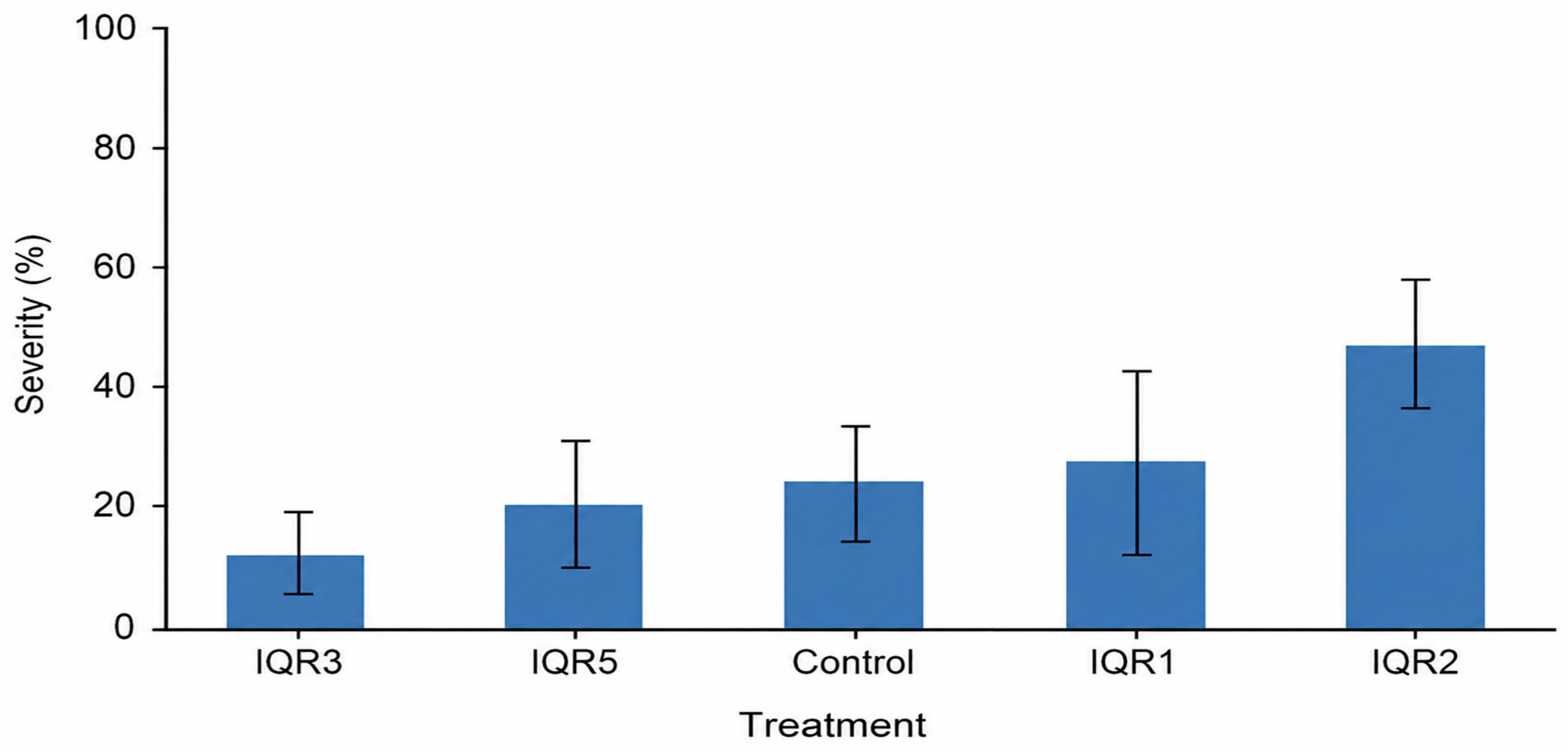
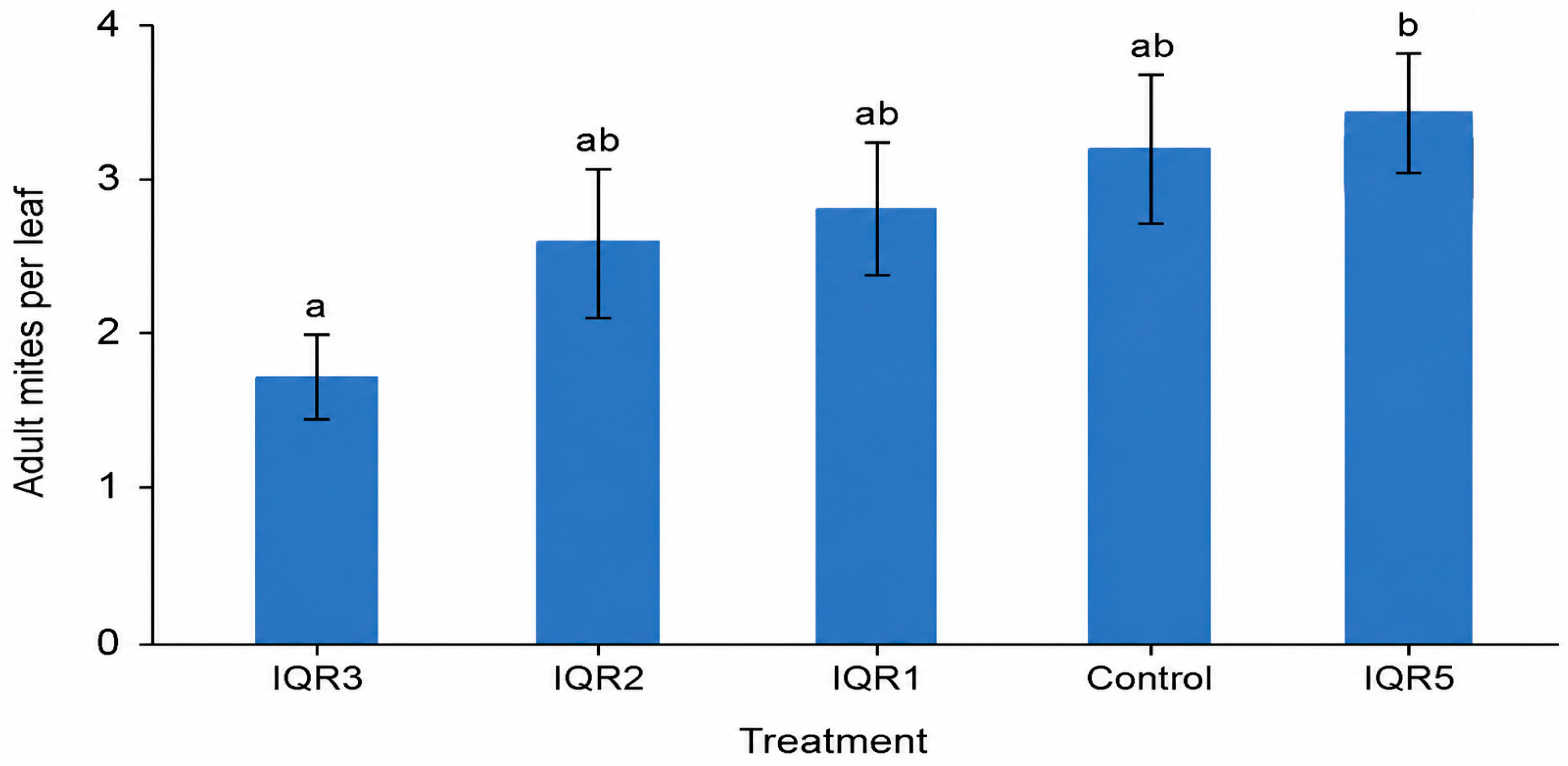
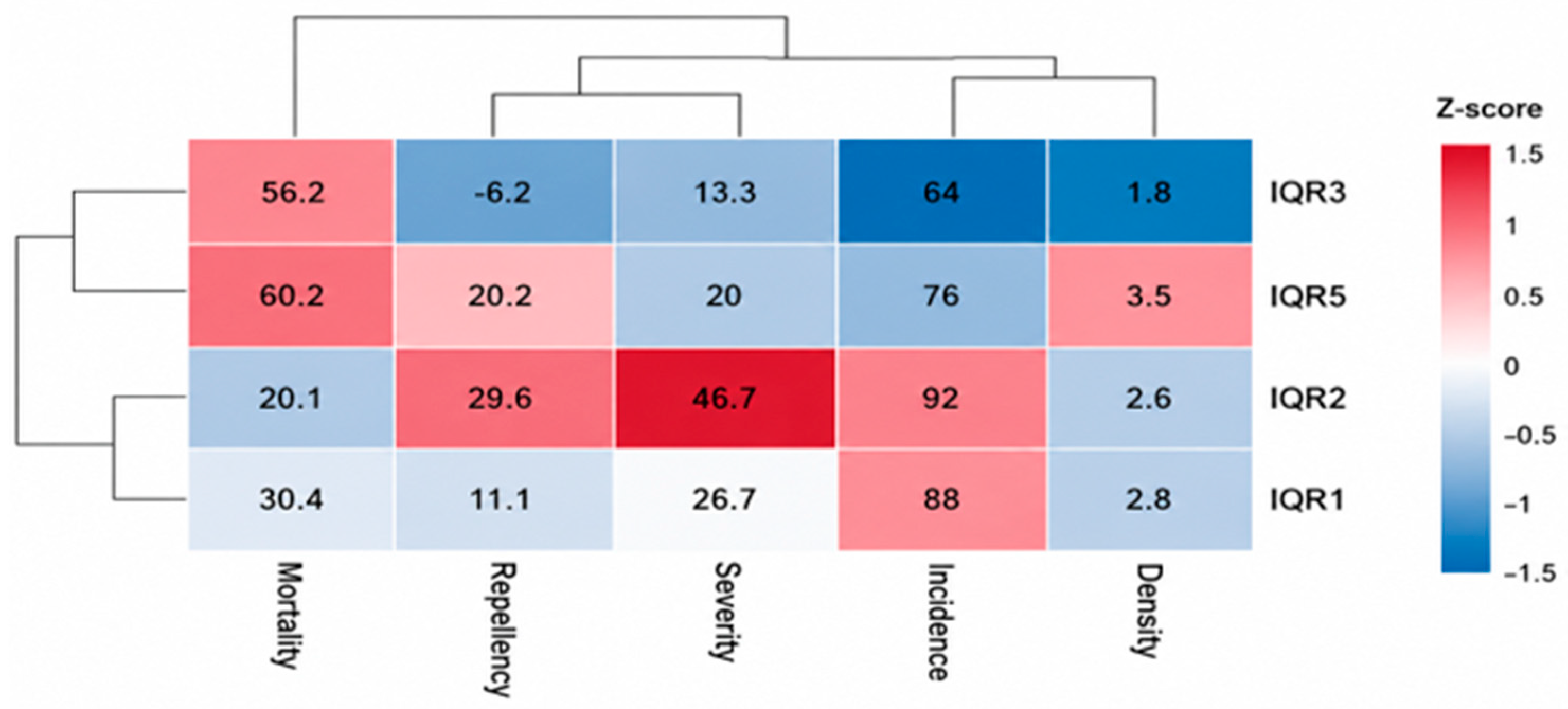
3.3. Evaluation of Isolates Effect on T. urticae Under Greenhouse Conditions
4. Discussion
5. Conclusions
Author Contributions
Funding
Data Availability Statement
Conflicts of Interest
References
- Grbić, M.; Van Leeuwen, T.; Clark, R.M.; Rombauts, S.; Rouzé, P.; Grbić, V.; Osborne, E.J.; Dermauw, W.; Thi Ngoc, P.C.; Ortego, F.; et al. The genome of Tetranychus urticae reveals herbivorous pest adaptations. Nature 2011, 479, 487–492. [Google Scholar] [CrossRef] [PubMed]
- Bolland, H.R.; Gutierrez, J.; Flechtmann, C.H.W. World Catalogue of the Spider Mite Family: (Acari: Tetranychidae); Brill Publishers: Leiden, The Netherlands, 1998. [Google Scholar]
- Fathi, S.A.A. Eggplant-garlic intercrops reduce the density of Tetranychus urticae on eggplant and improve crop yield. Exp. Appl. Acarol. 2023, 91, 43–55. [Google Scholar] [CrossRef] [PubMed]
- Türkoğlu, H.; Çetin, H.; Elma, F.N. The effect of Tetranychus urticae Koch (Acari: Tetranychidae) infestation on some plant nutrients and growth parameters of common bean under laboratory conditions. Acarologia 2024, 64, 1175–1181. [Google Scholar] [CrossRef]
- Qessaoui, R.; Bouharroud, R.; Amarraque, A.; Ajerrar, A.; Mayad, E.H.; Chebli, B.; Dadi, M.; Elaini, R.; El Filali, F.; Walters, A.S. Ecological Applications of Pseudomonas as a Biopesticide to Control Two-Spotted Mite Tetranychus urticae: Chitinase and HCN Production. J. Plant Prot. Res. 2017, 57, 409–416. [Google Scholar] [CrossRef]
- Ghongade, D.S.; Sood, A.K. Economic injury level for Tetranychus urticae Koch on parthenocarpic cucumber under protected environment in north-western Indian Himalayas. Phytoparasitica 2021, 49, 893–905. [Google Scholar] [CrossRef]
- Park, Y.L.; Lee, J.H. Leaf Cell and Tissue Damage of Cucumber Caused by Twospotted Spider Mite (Acari: Tetranychidae). J. Econ. Entomol. 2002, 95, 952–957. [Google Scholar] [CrossRef] [PubMed]
- Carey, J.; Bradley, J. Developmental Rates, Vital Schedules, Sex Ratios and Life Tables for Tetranychus urticae, T. Turkestani and T. Pacificus (Acarina: Tetranychidae) on Cotton. Acarologia 1982, 33, 333–345. [Google Scholar]
- Adesanya, A.W.; Lavine, M.D.; Moural, T.W.; Lavine, L.C.; Zhu, F.; Walsh, D.B. Mechanisms and management of acaricide resistance for Tetranychus urticae in agroecosystems. J. Pest Sci. 2021, 94, 639–663. [Google Scholar] [CrossRef]
- Muir, R.; Cranham, J. Resistance to Pesticides in Damson-Hop Aphid and Red Spider Mite on English Hops. In Proceedings of the British Crop Protection Council: Proceedings of the 1979 British Crop Protection Conference—Pests and Diseases (10th British Insecticide and Fungicide Conference); British Crop Protection Council: Cambridge, UK, 1981; pp. 161–167. [Google Scholar]
- Goka, K. Mode of Inheritance of Resistance to Three New Acaricides in the Kanzawa Spider Mite Tetranychus Kanzawai Kishida (Acari:Tetranychidae). Exp. Appl. Acarol. 1998, 22, 699–708. [Google Scholar] [CrossRef]
- Devine, G.J.; Barber, M.; Denholm, I. Incidence and Inheritance of Resistance to METI-Acaricides in European Strains of the Two-Spotted Spider Mite (Tetranychus urticae) (Acari: Tetranychidae). Pest Manag. Sci. Former. Pestic. Sci. 2001, 57, 443–448. [Google Scholar] [CrossRef] [PubMed]
- Nauen, R.; Stumpf, N.; Elbert, A.; Zebitz, C.P.W.; Kraus, W. Acaricide Toxicity and Resistance in Larvae of Different Strains of Tetranychus urticae and Panonychus Ulmi (Acari: Tetranychidae). Pest Manag. Sci. 2001, 57, 253–261. [Google Scholar] [CrossRef] [PubMed]
- Ay, R.; Yorulmaz, S. Inheritance and Detoxification Enzyme Levels in Tetranychus urticae Koch (Acari: Tetranychidae) Strain Selected with Chlorpyrifos. J. Pest Sci. 2009, 83, 85–93. [Google Scholar] [CrossRef]
- De Rouck, S.; İnak, E.; Dermauw, W.; Van Leeuwen, T. A Review of the Molecular Mechanisms of Acaricide Resistance in Mites and Ticks. Insect Biochem. Mol. Biol. 2023, 159, 103981. [Google Scholar] [CrossRef] [PubMed]
- Cao, L.-J.; Chen, J.-C.; Thia, J.A.; Schmidt, T.L.; Ffrench-Constant, R.; Zhang, L.-X.; Yang, Y.; Yuan, M.-C.; Zhang, J.-Y.; Zhang, X.-Y.; et al. Recurrent Mutations Drive the Rapid Evolution of Pesticide Resistance in the Two-Spotted Spider Mite Tetranychus urticae. eLife 2025, 14, RP106288. [Google Scholar] [CrossRef] [PubMed]
- Kewedar, S.; Chen, Q.R.; Moural, T.W.; Lo, C.; Umbel, E.; Forrence, P.J.; Walsh, D.B.; Zhu, F. Acaricide Resistance Monitoring and Structural Insights for Precision Tetranychus urticae Management. Insects 2025, 16, 440. [Google Scholar] [CrossRef] [PubMed]
- Chandler, D.; Davidson, G.; Pell, J.K.; Ball, B.V.; Shaw, K.; Sunderland, K.D. Fungal Biocontrol of Acari. Biocontrol Sci. Technol. 2000, 10, 357–384. [Google Scholar] [CrossRef]
- Van Der Geest, L.P.S.; Elliot, S.L.; Breeuwer, J.A.J.; Beerling, E.A.M. Diseases of Mites. Exp. Appl. Acarol. 2000, 24, 497–560. [Google Scholar] [CrossRef] [PubMed]
- Qessaoui, R.; Chafiki, S.; Mahroug, A.; Ajerrar, A.; Elaini, R.; Bouharroud, R. Evaluation of Warionia Saharae Ethanolic Extracts under Controlled Conditions: Potent Acaricidal and Repellent Activities Against Tetranychus urticae Koch. (Acari: Tetranychidae). Afr. Mediterr. Agric. J.-AL Awamia 2024, 263–270. [Google Scholar] [CrossRef]
- Mazuecos-Aguilera, I.; Anta-Fernández, F.; Crespo-Barreiro, A.; Martínez-Quesada, A.; Lombana-Larrea, L.; González-Andrés, F. Plant Growth-Promoting Rhizobacteria Enhanced Induced Systemic Resistance of Tomato against Botrytis Cinerea Phytopathogen. Front. Plant Sci. 2025, 16, 1570986. [Google Scholar] [CrossRef] [PubMed]
- Hosseini, A.; Hosseini, M.; Schausberger, P. Plant Growth-Promoting Rhizobacteria Enhance Defense of Strawberry Plants Against Spider Mites. Front. Plant Sci. 2022, 12, 783578. [Google Scholar] [CrossRef] [PubMed]
- MacIntosh, S.C.; Stone, T.B.; Sims, S.R.; Hunst, P.L.; Greenplate, J.T.; Marrone, P.G.; Perlak, F.J.; Fischhoff, D.A.; Fuchs, R.L. Specificity and Efficacy of Purified Bacillus Thuringiensis Proteins against Agronomically Important Insects. J. Invertebr. Pathol. 1990, 56, 258–266. [Google Scholar] [CrossRef] [PubMed]
- Chapman, M.H.; Hoy, M.A. Relative Toxicity of Bacillus Thuringiensis Var. Tenebrionis to the Two-spotted Spider Mite (Tetranychus urticae Koch) and Its Predator Metaseiulus Occidentalis (Nesbitt) (Acari, Tetranychidae and Phytoseiidae). J. Appl. Entomol. 1991, 111, 147–154. [Google Scholar] [CrossRef]
- Aksoy, H.M.; Ozman-Sullivan, S.K.; Ocal, H.; Celik, N.; Sullivan, G.T. The Effects of Pseudomonas Putida Biotype B on Tetranychus urticae (Acari: Tetranychidae). Exp. Appl. Acarol. 2008, 46, 223–230. [Google Scholar] [CrossRef] [PubMed]
- Ruiu, L. Insect Pathogenic Bacteria in Integrated Pest Management. Insects 2015, 6, 352–367. [Google Scholar] [CrossRef] [PubMed]
- Beltrán Pineda, M.E.; Castellanos-Rozo, J. Bacterial Insecticides beyond Bacillus Thuringiensis. Phytopathol. Res. 2025, 7, 19. [Google Scholar] [CrossRef]
- Roobakkumar, A.; Babu, A.; Kumar, D.; Sarkar, S. Pseudomonas Fluorescens as an Efficient Entomopathogen against Oligonychus Coffeae Nietner (Acari: Tetranychidae) Infesting Tea. J. Entomol. Nematol. 2011, 3, 73. [Google Scholar]
- Rathore, A.S.; Gupta, R.D. Chitinases from Bacteria to Human: Properties, Applications, and Future Perspectives. Enzym. Res. 2015, 2015, 791907. [Google Scholar] [CrossRef] [PubMed]
- Bahoch, S.; Elaasri, A.; Chafiki, S.; Elame, F.; Wifaya, A.; Mayad, E.H.; Bouharroud, R.; Qessaoui, R. Biocontrol Potential of Rhizobacteria Against Passalora fulva and Tuta absoluta: A Sustainable Approach for Tomato Protection. Plants 2025, 14, 2672. [Google Scholar] [CrossRef] [PubMed]
- Ateyyat, M.A.; El-Shatnawi, M.K.; Alawi Al-mazra’awi, M. Culturable Whitefly Associated Bacteria and Their Potential as Biological Control Agents. Jordan J. Biol. Sci. 2009, 2, 139–144. [Google Scholar]
- Zhang, C.R.; Zhang, S.; Xia, J.; Li, F.F.; Xia, W.Q.; Liu, S.S.; Wang, X.W. The Immune Strategy and Stress Response of the Mediterranean Species of the Bemisia Tabaci Complex to an Orally Delivered Bacterial Pathogen. PLoS ONE 2014, 9, e94477. [Google Scholar] [CrossRef] [PubMed]
- Abbott, W.S. A Method of Computing the Effectiveness of an Insecticide. J. Econ. Entomol. 1925, 18, 265–267. [Google Scholar] [CrossRef]
- Pascual-Villalobos, M.J.; Robledo, A. Screening for Anti-Insect Activity in Mediterranean Plants. Ind. Crops Prod. 1998, 8, 183–194. [Google Scholar] [CrossRef]
- Qessaoui, R.; Amarraque, A.; Lahmyed, H.; Ajerrar, A.; Mayad, E.H.; Chebli, B.; Walters, A.S.; Bouharroud, R. Inoculation of tomato plants with rhizobacteria suppresses development of whitefly Bemisia tabaci (Gennadius) (Hemiptera: Aleyrodidae): Agro-ecological application. PLoS ONE 2020, 15, e0231496. [Google Scholar] [CrossRef] [PubMed]
- Al-Azzazy, M.M.; Alsohim, A.S.; Yoder, C.E. Biological effects of three bacterial species on Tetranychus urticae (Acari: Tetranychidae) infesting eggplant under laboratory and greenhouse conditions. Acarologia 2020, 60, 587–594. [Google Scholar] [CrossRef]
- Emam, H. Efficiency of Three Bacterial Strains against Tetranychus urticae Koch (Acari: Tetranychidae) under Laboratory Conditions. Arab. Univ. J. Agric. Sci. 2021, 29, 447–457. [Google Scholar] [CrossRef]
- Jupatanakul, N.; Pengon, J.; Selisana, S.M.G.; Choksawangkarn, W.; Jaito, N.; Saeung, A.; Bunyong, R.; Posayapisit, N.; Thammatinna, K.; Kalpongnukul, N.; et al. Serratia Marcescens Secretes Proteases and Chitinases with Larvicidal Activity against Anopheles Dirus. Acta Trop. 2020, 212, 105686. [Google Scholar] [CrossRef] [PubMed]
- Vodovar, N.; Vallenet, D.; Cruveiller, S.; Rouy, Z.; Barbe, V.; Acosta, C.; Cattolico, L.; Jubin, C.; Lajus, A.; Segurens, B.; et al. Complete Genome Sequence of the Entomopathogenic and Metabolically Versatile Soil Bacterium Pseudomonas Entomophila. Nat. Biotechnol. 2006, 24, 673–679. [Google Scholar] [CrossRef] [PubMed]
- Kramer, K.J.; Muthukrishnan, S. Insect Chitinases: Molecular Biology and Potential Use as Biopesticides. Insect Biochem. Mol. Biol. 1997, 27, 887–900. [Google Scholar] [CrossRef] [PubMed]
- Broadway, R.M.; Gongora, C.; Kain, W.C.; Sanderson, J.P.; Monroy, J.A.; Bennett, K.C.; Warner, J.B.; Hoffmann, M.P. Novel Chitinolytic Enzymes with Biological Activity against Herbivorous Insects. J. Chem. Ecol. 1998, 24, 985–998. [Google Scholar] [CrossRef]
- Grahovac, J.; Pajčin, I.; Vlajkov, V. Bacillus VOCs in the context of biological control. Antibiotics 2023, 12, 581. [Google Scholar] [CrossRef] [PubMed]
- Ramamoorthy, V.; Viswanathan, R.; Raguchander, T.; Prakasam, V.; Samiyappan, R. Induction of Systemic Resistance by Plant Growth Promoting Rhizobacteria in Crop Plants against Pests and Diseases. Crop Prot. 2001, 20, 1–11. [Google Scholar] [CrossRef]
- Mnif, I.; Ghribi, D. Potential of Bacterial Derived Biopesticides in Pest Management. Crop Prot. 2015, 77, 52–64. [Google Scholar] [CrossRef]
- Prabhu, S.; Poorniammal, R.; Dufossé, L. Microbial Metabolites: A Sustainable Approach to Combat Plant Pests. Metabolites 2025, 15, 418. [Google Scholar] [CrossRef] [PubMed]
- Dowling, D.N.; O’Gara, F. Metabolites of Pseudomonas Involved in the Biocontrol of Plant Disease. Trends Biotechnol. 1994, 12, 133–141. [Google Scholar] [CrossRef]
- Hernández-Valencia, V.; Santillán-Galicia, M.T.; Guzmán-Franco, A.W.; Rodríguez-Leyva, E.; Santillán-Ortega, C. Combined Application of Entomopathogenic Fungi and Predatory Mites for Biological Control of Tetranychus urticae on Chrysanthemum. Pest Manag. Sci. 2024, 80, 4199–4206. [Google Scholar] [CrossRef] [PubMed]
- Tadesse Mawcha, K.; Malinga, L.; Muir, D.; Ge, J.; Ndolo, D. Recent Advances in Biopesticide Research and Development with a Focus on Microbials. F1000Research 2025, 13, 1071. [Google Scholar] [CrossRef] [PubMed]
- Shourove, J.H.; Meem, F.C.; Chowdhury, R.S.; Eti, S.A.; Samaddar, M. Biocontrol Agents and Their Potential Use as Nano Biopesticides to Control the Tea Red Spider Mite (Oligonychus Coffeae): A Comprehensive Review. Heliyon 2024, 10, e34605. [Google Scholar] [CrossRef] [PubMed]
- Adesanya, A.W.; Beauchamp, M.J.; Lavine, M.D.; Lavine, L.C.; Zhu, F.; Walsh, D.B. Physiological Resistance Alters Behavioral Response of Tetranychus urticae to Acaricides. Sci. Rep. 2019, 9, 19308. [Google Scholar] [CrossRef] [PubMed]





| Isolate | Concentration | Exposition Period | ||
|---|---|---|---|---|
| 24 h | 48 h | 72 h | ||
| IQR1 | C1 | 20.6 ± 14.7 a | 22.5 ± 13.7 ab | 27.5 ± 19.2 a |
| C2 | 10.1 ± 2.1 a | 33.3 ± 4.8 ab | 7.4 ± 16.7 a | |
| IQR2 | C1 | 35.4 ± 5.1 a | 17.2 ± 7.7 a | 31.2 ± 15.8 a |
| C2 | 47.9 ± 11.5 a | 23.0 ± 8.0 a | 31.2 ± 13.6 a | |
| IQR3 | C1 | 35.3 ± 3.8 a | 54.6 ± 17.1 b | 39.0 ± 18.3 a |
| C2 | 28.6 ± 4.6 a | 57.7 ± 15.6 b | 69.9 ± 8.8 a | |
| IQR5 | C1 | 44.4 ± 9.7 a | 62.5 ± 13.0 b | 32.1 ± 17.1 a |
| C2 | 40.6 ± 9.8 a | 57.8 ± 14.9 b | 64.8 ± 12.5 a | |
Disclaimer/Publisher’s Note: The statements, opinions and data contained in all publications are solely those of the individual author(s) and contributor(s) and not of MDPI and/or the editor(s). MDPI and/or the editor(s) disclaim responsibility for any injury to people or property resulting from any ideas, methods, instructions or products referred to in the content. |
© 2026 by the authors. Licensee MDPI, Basel, Switzerland. This article is an open access article distributed under the terms and conditions of the Creative Commons Attribution (CC BY) license.
Share and Cite
Bahoch, S.; Chafiki, S.; El Assri, S.; Elaasri, A.; Elaini, R.; Elame, F.; Wifaya, A.; Ouknin, M.; Mayad, E.H.; Bouharroud, R.; et al. Acaricidal and Repellent Activities of Rhizobacterial Isolates Against Tetranychus urticae (Acari: Tetranychidae) Under Laboratory and Greenhouse Conditions. Int. J. Plant Biol. 2026, 17, 69. https://doi.org/10.3390/ijpb17080069
Bahoch S, Chafiki S, El Assri S, Elaasri A, Elaini R, Elame F, Wifaya A, Ouknin M, Mayad EH, Bouharroud R, et al. Acaricidal and Repellent Activities of Rhizobacterial Isolates Against Tetranychus urticae (Acari: Tetranychidae) Under Laboratory and Greenhouse Conditions. International Journal of Plant Biology. 2026; 17(8):69. https://doi.org/10.3390/ijpb17080069
Chicago/Turabian StyleBahoch, Said, Salahddine Chafiki, Soumaya El Assri, Abdessamad Elaasri, Rachid Elaini, Fouad Elame, Ahmed Wifaya, Mohamed Ouknin, El Hassan Mayad, Rachid Bouharroud, and et al. 2026. "Acaricidal and Repellent Activities of Rhizobacterial Isolates Against Tetranychus urticae (Acari: Tetranychidae) Under Laboratory and Greenhouse Conditions" International Journal of Plant Biology 17, no. 8: 69. https://doi.org/10.3390/ijpb17080069
APA StyleBahoch, S., Chafiki, S., El Assri, S., Elaasri, A., Elaini, R., Elame, F., Wifaya, A., Ouknin, M., Mayad, E. H., Bouharroud, R., & Qessaoui, R. (2026). Acaricidal and Repellent Activities of Rhizobacterial Isolates Against Tetranychus urticae (Acari: Tetranychidae) Under Laboratory and Greenhouse Conditions. International Journal of Plant Biology, 17(8), 69. https://doi.org/10.3390/ijpb17080069