Article

A Clinical Prediction Model for Genetic Risk in Children with GDD/ID: A Retrospective Study

1
Department of Child Healthcare, Children’s Hospital of Nanjing Medical University, Nanjing 210008, China
2
Department of Epidemiology, Harvard T.H. Chan School of Public Health, Boston, MA 02115, USA
*
Authors to whom correspondence should be addressed.
These authors contributed equally to this work.
Pediatr. Rep. 2026, 18(1), 1; https://doi.org/10.3390/pediatric18010001
Submission received: 18 October 2025 / Revised: 5 November 2025 / Accepted: 12 November 2025 / Published: 19 December 2025

Abstract

Objectives: Global Developmental Delay (GDD) and Intellectual Disability (ID) are prevalent neurodevelopmental disorders with significant disability burden, and genetic factors play a crucial role in their etiology. This study aimed to develop and validate a clinical prediction model for identifying children with GDD/ID at high genetic risk, facilitating targeted genetic testing. Methods: We retrospectively analyzed clinical data of children with GDD/ID treated at Nanjing Children’s Hospital from January 2019 to December 2023. Children with comorbid Autism Spectrum Disorder (ASD) were excluded. The dataset was randomly split into training and validation sets (7:3 ratio). Lasso regression was used to identify potential predictive factors for positive genetic test results, followed by multivariable logistic regression to select independent predictors, which were incorporated into a nomogram. Model performance was evaluated by discrimination, calibration, and clinical utility using decision curve analysis in both sets. Results: Four independent predictors—craniofacial abnormalities, visceral abnormalities, physical growth abnormalities, and family history of ID—were identified. The resulting nomogram demonstrated an area under the curve (AUC) of 0.734., with good calibration and positive net benefit on decision curve analysis. Validation confirmed the reliability of the model. Conclusions: We developed a clinically applicable prediction model to identify high genetic risk among children with GDD/ID without ASD. This model may serve as a preliminary screening tool to assist clinicians in prioritizing genetic testing and improving diagnostic efficiency in clinical practice.

1. Introduction

Global developmental delay (GDD) and intellectual disability (ID) are neurodevelopmental disorders characterized by significant clinical and genetic heterogeneity [1]. GDD is diagnosed in children under the age of 5, while ID is diagnosed in children aged 5 years or older. GDD/ID is one of the most common pediatric neurological disorders, affecting approximately 1–3% of children worldwide [2]. In China, the annual incidence of GDD/ID is approximately 1.331‰, which translates to an estimated 136,000 new cases each year. GDD/ID poses severe threats to the physical and mental health of affected children, representing one of the leading causes of childhood disability and placing substantial psychological and economic burdens on families and society.
The etiology of GDD/ID is highly complex and can be broadly categorized into non-genetic and genetic factors. With improvements in living standards and healthcare measures, non-genetic factors such as infections, poisoning, trauma, and malnutrition have been significantly controlled. Consequently, the contribution of genetic factors has become increasingly prominent, with approximately 30–50% of GDD/ID cases attributable to genetic causes [3], a proportion that rises to two-thirds in cases of moderate to severe GDD/ID [4]. Genetic diagnosis of GDD/ID relies on genetic testing, with next-generation sequencing currently being the mainstream method due to its high diagnostic yield. However, the high cost and long turnaround time of such tests make them unsuitable for widespread screening.
Children with neurodevelopmental disorders who exhibit ≥1 special sign, particularly craniofacial anomalies and visceral malformations, have a significantly higher likelihood of pathogenic copy number variations (CNVs) [5], indicating that clinical markers are crucial for assessing genetic risk. Methods for the early identification of genetic diseases based on clinical features have been established for conditions such as Prader–Willi Syndrome (PWS), Silver–Russell Syndrome, and Williams Syndrome. However, these methods are limited to specific diseases and therefore have a narrow scope of application. Currently, effective approaches for broadly identifying the genetic risks of GDD and ID are still lacking. This study aims to develop a genetic risk prediction model that is applicable to all children with GDD/ID to help clinicians identify those at high genetic risk early. This would not only facilitate early diagnosis and precise treatment but also help prevent the recurrence of adverse reproductive events.

2. Materials and Methods

2.1. Study Design and Population

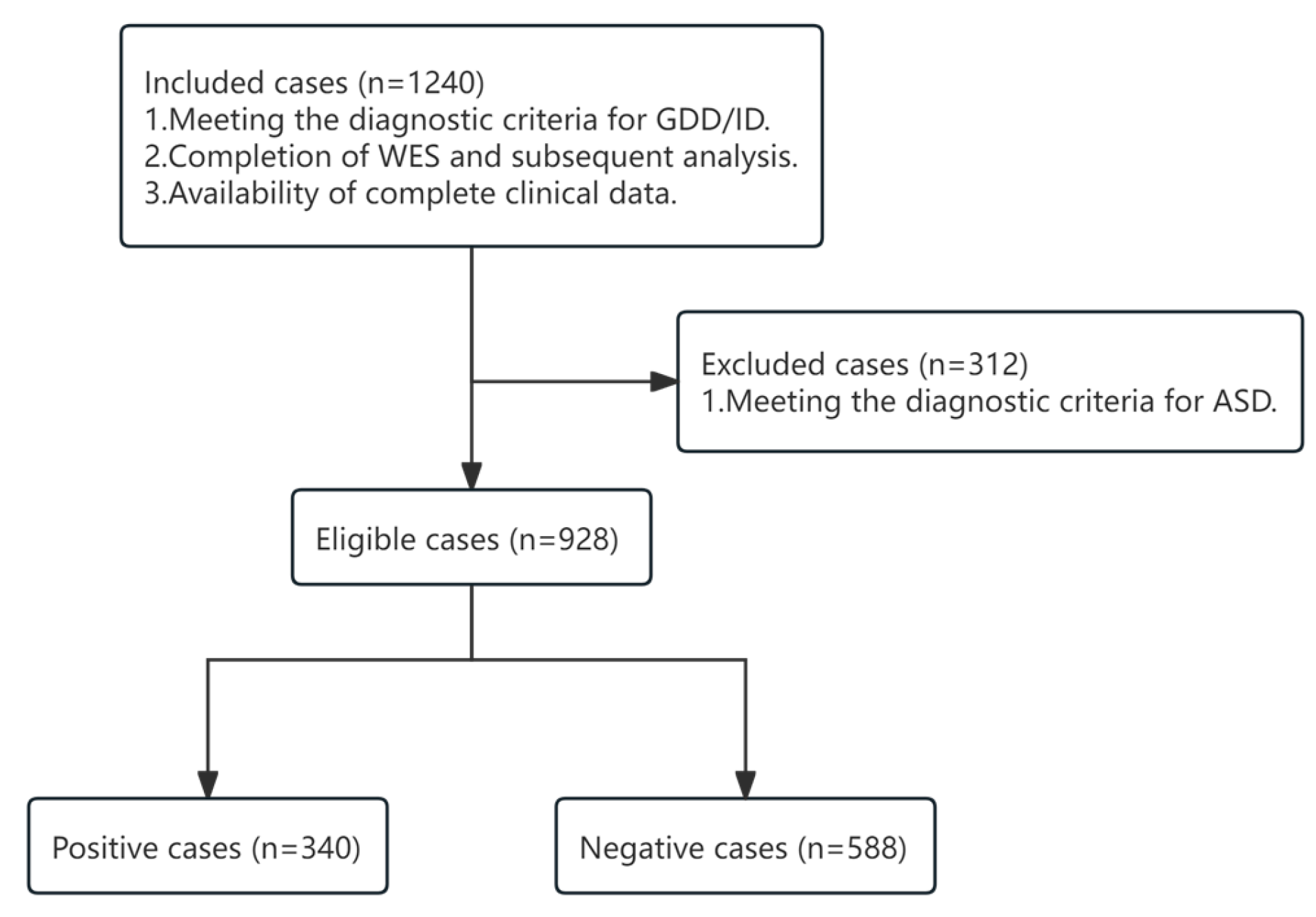
A retrospective analysis was conducted on the clinical data of children with GDD/ID who visited the Department of Child Healthcare at Nanjing Children’s Hospital between January 2019 and December 2023. The inclusion criteria were as follows: (a) Meeting the diagnostic criteria for GDD/ID as outlined in the Diagnostic and Statistical Manual of Mental Disorders, Fifth Edition (DSM-5); (b) Having undergone whole exome sequencing (WES) with subsequent analysis; and (c) Availability of complete clinical data. Exclusion criteria were as follows: (a) Meeting the diagnostic criteria for Autism Spectrum Disorder (ASD) as defined by the DSM-5 (Figure 1).
The study planned to include 11 predictive factors, with each factor requiring data from 5–10 cases. Using the upper estimate of 10 cases per factor and a presumed positive rate of genetic test results at 30%, the minimum required sample size was calculated as 11 × 10 ÷ 30% = 367 cases.
Participation was voluntary, with informed consent obtained from their legal guardians. The study protocol received approval from the Medical Ethics Committee of Nanjing Medical University Affiliated Children’s Hospital (Approval No. 202110083).

2.2. Data Collection

2.2.1. Diagnostic Criteria and Developmental Assessment

All diagnoses were confirmed by pediatricians specializing in child psychological and behavioral development at Nanjing Children’s Hospital. For children under the age of 5, the Gesell and Griffiths developmental scales were used to assess their Developmental Quotient (DQ). Global Developmental Delay was diagnosed if two or more developmental areas (including adaptability, gross motor skills, fine motor skills, language, and personal/social behavior) differed by more than two standard deviations. For children aged 5 years or older, the Chinese Wechsler Intelligence Scale was utilized to assess their Intellectual Quotient (IQ), while the Infants-Juvenile Social Life Ability Scale was used to evaluate social adaptive functioning. Children with an IQ below 70 and a social adaptive functioning score of 9 or lower were diagnosed with Intellectual Disability.

2.2.2. Clinical Data Collection and Phenotyping

Clinical data were collected by clinicians and trained researchers at the Department of Child Healthcare (Table 1). Clinicians gathered information on the child’s gender, pregnancy history, birth history, and family history through medical history interviews. Craniofacial malformations and skin and hair abnormalities were assessed in reference to the Elements of Morphology (https://elementsofmorphology.nih.gov (accessed on 31 December 2023)). Physical examinations were conducted to preliminarily rule out visceral and skeletal malformations, with imaging studies performed for suspected cases to further confirm the diagnosis. Trained researchers conducted physical measurements of the children, including height and weight. Anthropometric measurements were used to diagnose physical growth abnormalities such as short stature, tall stature, low body weight, and obesity. All of these data were recorded in the Clinical Data Assignment Form (Table 2).

2.2.3. Whole Exome Sequencing and Data Analysis

After obtaining informed consent, peripheral venous blood (2 mL each) was collected from the proband and their parents, and genomic DNA was extracted using standard methods. Exonic regions of all genes were captured using the MyGenostics GenCap Whole Exome Capture Kit (probe set P039-Exome; MyGenostics, Beijing, China), following the manufacturer’s instructions. Briefly, genomic DNA was randomly fragmented, ligated with Illumina PE adapters, and libraries were constructed using ligation-mediated Polymerase Chain Reaction (LM-PCR), followed by quality control. Subsequently, the libraries were hybridized with capture probes and sequenced in high throughput using the PE150 mode on the DNBSEQ-T7 platform (BGI, Shenzhen, China). Raw sequencing data underwent image and base recognition, with adapter sequences and low-quality reads removed. High-quality reads were aligned to the human reference genome (GRCh37/hg19) using BWA software (version 0.7.17), and single nucleotide variants (SNVs) and small insertions/deletions (Indels) were detected using GATK. All variants were functionally annotated using ANNOVAR software (version 2018-04-16). Sequencing quality control criteria included: mean sequencing depth > 100×, target region coverage (≥20×) ≥95%, and Q30 base proportion >85%; only samples meeting these criteria were included in downstream analysis.

2.2.4. Variant Filtering and Pathogenicity Assessment

To identify rare variants, loci with minor allele frequency (MAF) ≥0.05 in East Asian populations in the 1000 Genomes Project, ExAC, and gnomAD databases were excluded. Pathogenicity of missense variants was predicted using SIFT, PolyPhen-2, and MutationTaster, with conservation scores provided by GERP++; potential effects of splice-site variants were assessed using SPIDEX (version 1.01.0). All candidate variants were queried in ClinVar (https://www.ncbi.nlm.nih.gov/clinvar/ (accessed on 31 December 2023)) and the Human Gene Mutation Database (HGMD, http://www.hgmd.cf.ac.uk/ (accessed on 31 December 2023)) to assess prior reports and pathogenicity. Subsequently, variants were classified according to the American College of Medical Genetics and Genomics (ACMG) guidelines by integrating population frequency [6], computational predictions, literature evidence, familial co-segregation, de novo occurrence, and gene-phenotype consistency. Specifically, de novo variants (validated via trio analysis) and familial co-segregation consistent with phenotype were considered PS2 and PP1 evidence, respectively; variants with functional experimental support were considered PS3, and those with negative functional results were considered BS3. All variants classified as pathogenic or likely pathogenic were validated by Sanger sequencing and co-segregation analysis in family samples to confirm inheritance patterns. Variants of uncertain significance (VUS) were reviewed by a second independent genetic analyst to minimize subjective bias. Final classifications were reviewed and confirmed by a multidisciplinary team comprising clinical geneticists, molecular geneticists, and pediatric clinicians. In this study, pathogenic and likely pathogenic variants were defined as “positive genetic findings,” whereas VUS were reported with recommendations for follow-up or further functional validation.

2.3. Statistical Analysis

2.3.1. Data Processing and Descriptive Analysis

Data processing and statistical analysis were performed using R software (version 4.4.1, https://www.R-project.org/). Categorical variables were expressed as counts, and group comparisons were conducted using the χ2 test. When the expected frequency was less than 5, Fisher’s exact test was applied.

2.3.2. Model Development and Validation

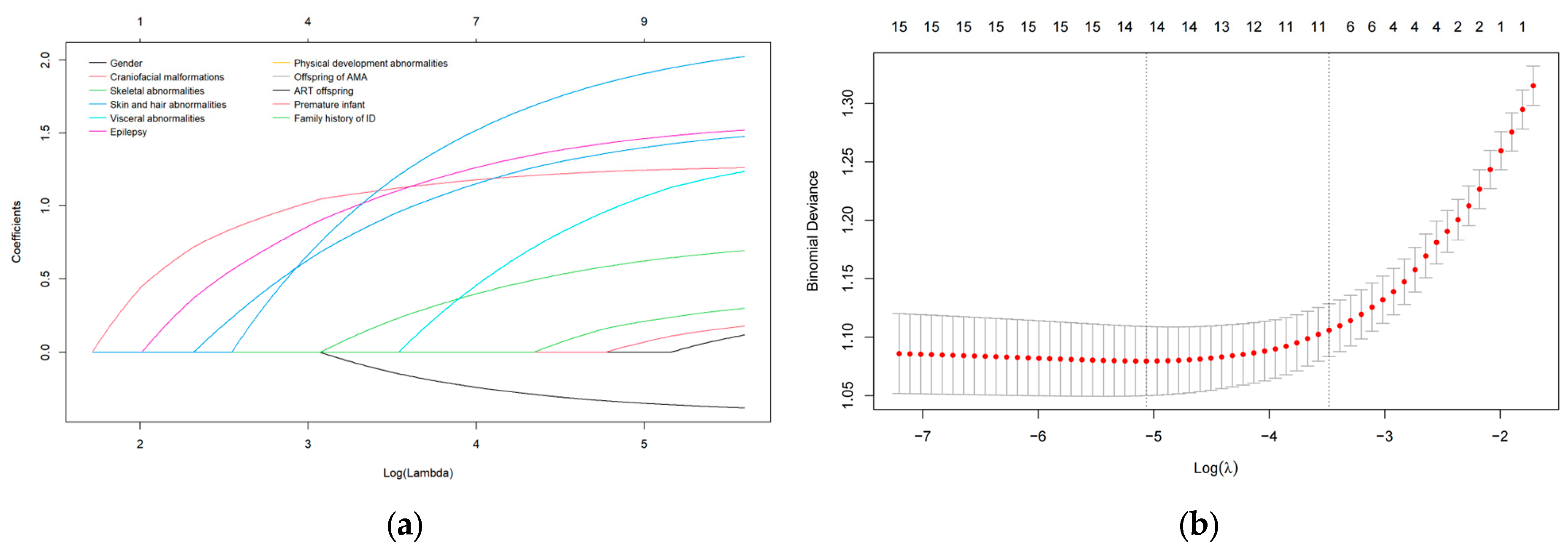
For model development, the glmnet package was used for fitting, with cross-validation performed via the cv.glmnet function to determine the optimal regularization parameter (λ.1se), thereby selecting relevant factors with nonzero regression coefficients. A logistic regression model was then constructed using the lrm function from the rms package, and a nomogram was generated to visually represent the model’s predictive outcomes.

2.3.3. Performance Evaluation and Clinical Utility

The pROC package was employed to plot the receiver operating characteristic (ROC) curves and calculate the area under the curve (AUC) to evaluate the model’s discriminative ability. To further assess performance under class imbalance, precision–recall (PR) curves were generated, and the area under the PR curve was computed using the PRROC package. Calibration curves were generated using the calibrate function in the rms package to evaluate the agreement between predicted and observed outcomes, with calibration intercepts, slopes, and Brier scores reported. Decision curve analysis (DCA) was performed using the rmda package to quantify the clinical net benefit across a range of threshold probabilities. All statistical tests were two-sided, with a significance level set at p < 0.05.

3. Results

3.1. General Characteristics

A total of 928 children were included in the study. Based on genetic testing results, the children were divided into a positive group (340 cases) and a negative group (588 cases). There were no statistically significant differences between the two groups regarding offspring of advanced maternal age (AMA), assisted reproductive technology (ART) offspring, and premature infant (all p ≥ 0.05). However, there were statistically significant differences between the two groups in terms of gender, craniofacial malformations, skeletal abnormalities, skin and hair abnormalities, visceral abnormalities, epilepsy, physical development abnormalities and family history of ID (all p < 0.05) (Table 3). All the data were randomly divided into a training set (649 cases) and a validation set (279 cases) at a ratio of 7:3. The clinical characteristics between the two groups were compared using the chi-square test, and the results showed no statistically significant differences in any variables (all p ≥ 0.05) (Table 4), indicating good consistency in clinical characteristics between the two groups.

3.2. Screening for Predictive Factors

Lasso regression analysis selected six non-zero coefficient predictors (Figure 2): gender, craniofacial malformations, skin and hair abnormalities, visceral abnormalities, physical development abnormalities, and family history of ID. A multivariate logistic regression analysis showed that craniofacial malformations, visceral abnormalities, physical development abnormalities, and family history of ID were statistically significant (all p < 0.05) (Table 5).

3.3. Risk Prediction Nomogram Development

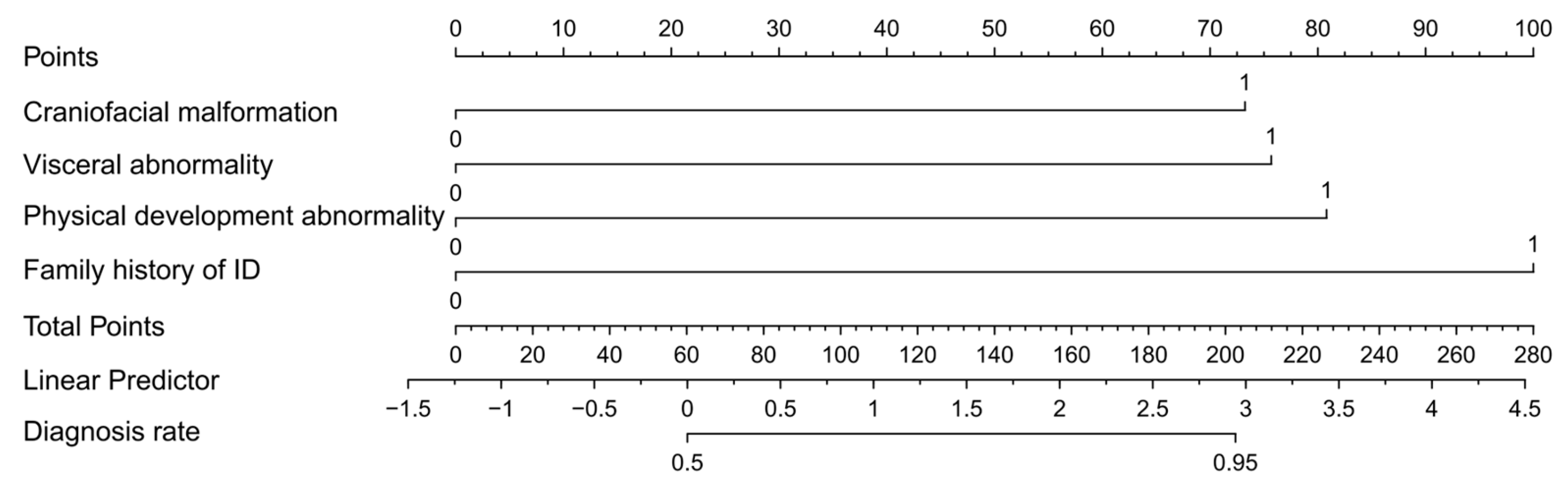
Based on the four independent predictors mentioned above, a clinical prediction model for the genetic risk of GDD/ID in children was established and a nomogram was created (Figure 3). The formula for the logistic regression model is Equation (1):
Logit(P) = −1.24 + 1.51 × craniofacial malformation + 1.56 × visceral abnormality + 1.67 × physical development
abnormality + 2.07 × family history of ID

3.4. Predictive Accuracy and Net Benefit of the Nomogram

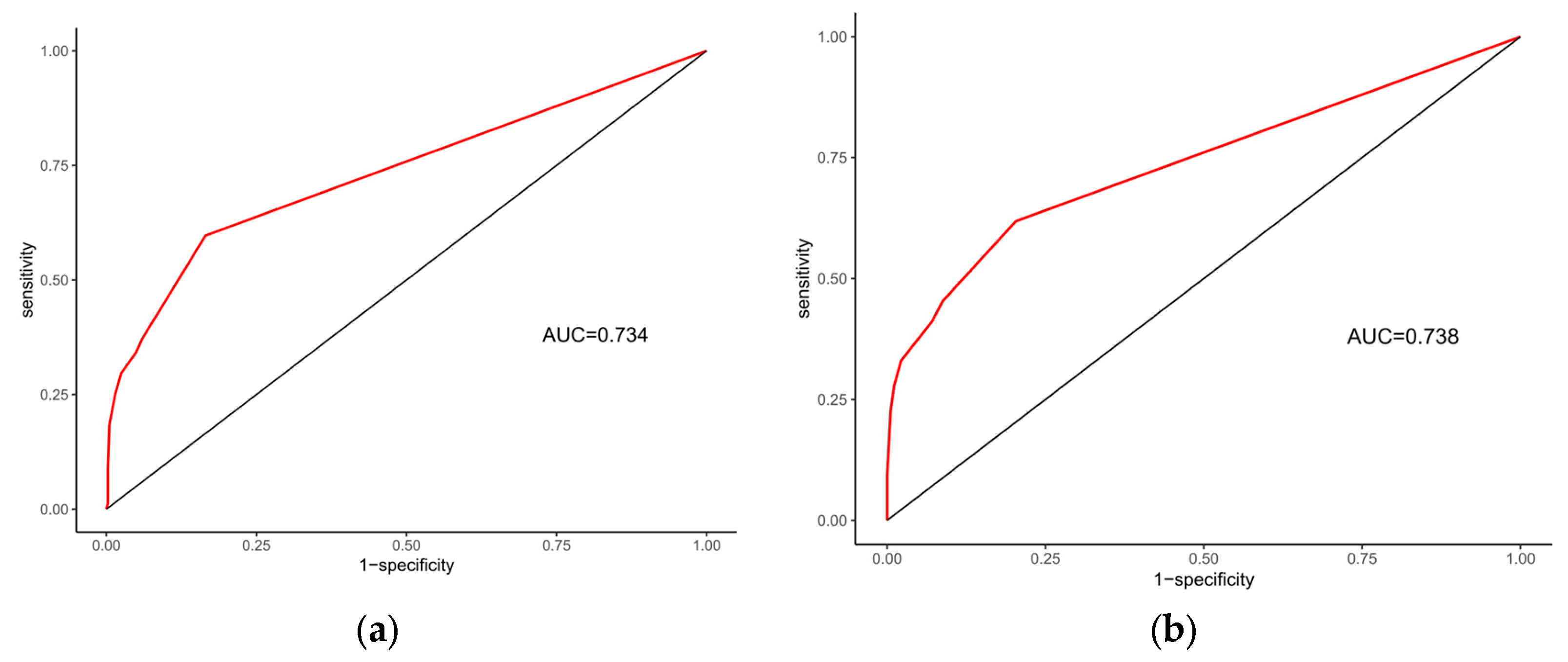
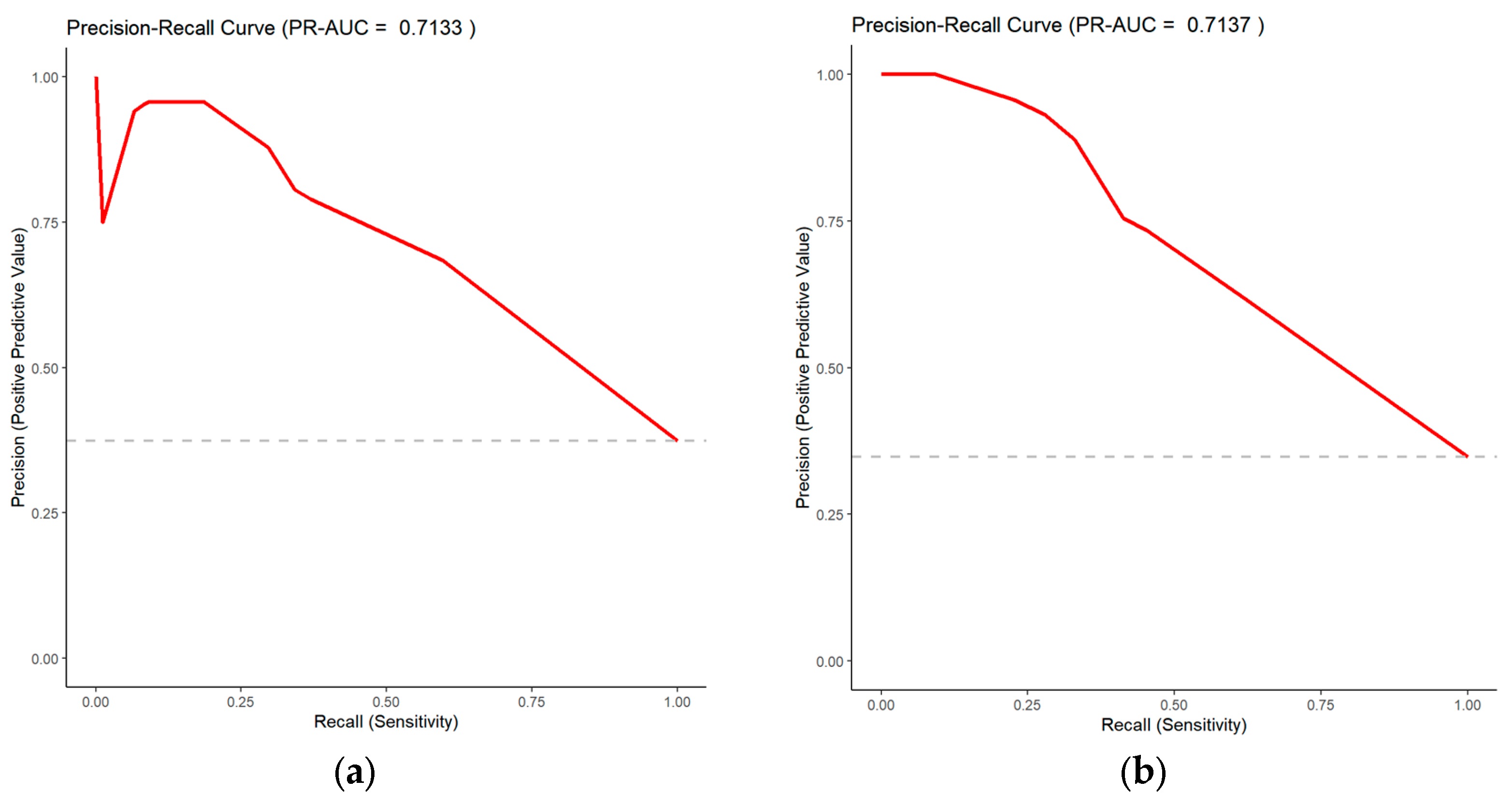
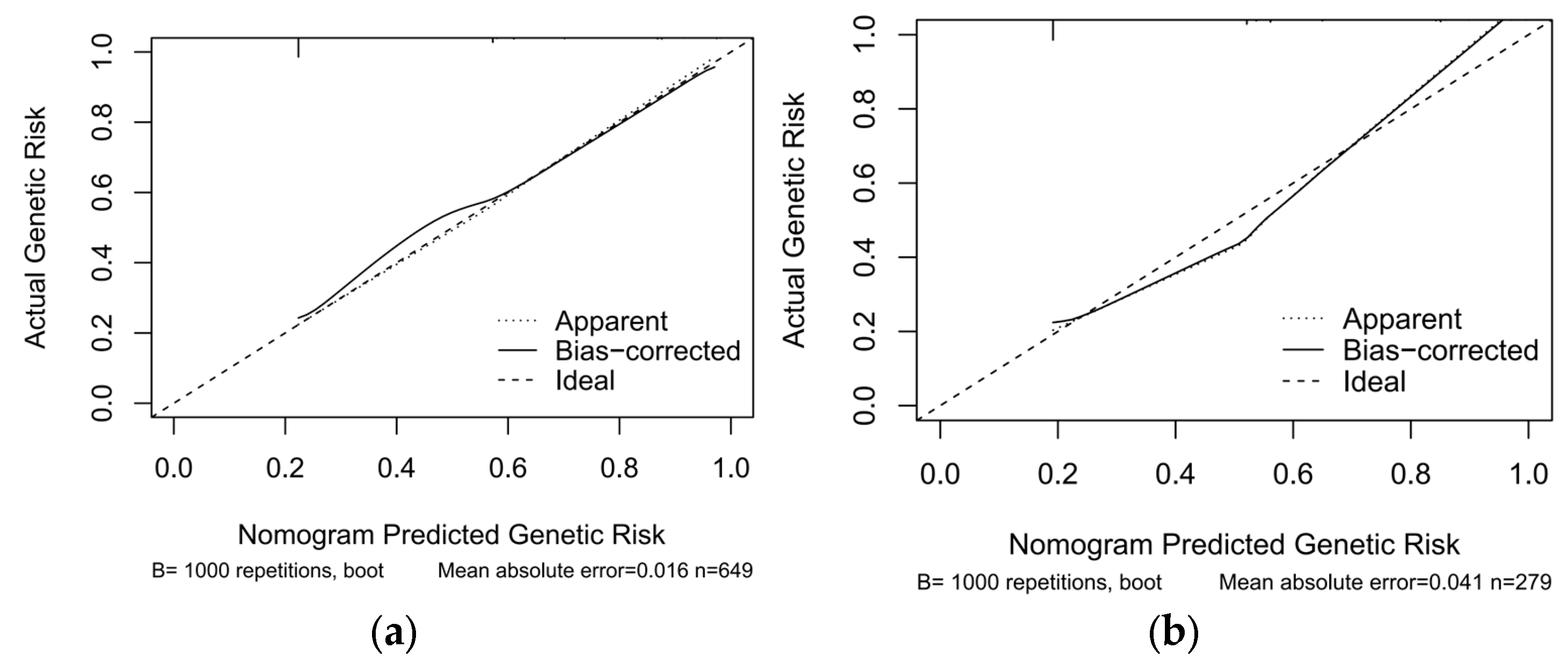
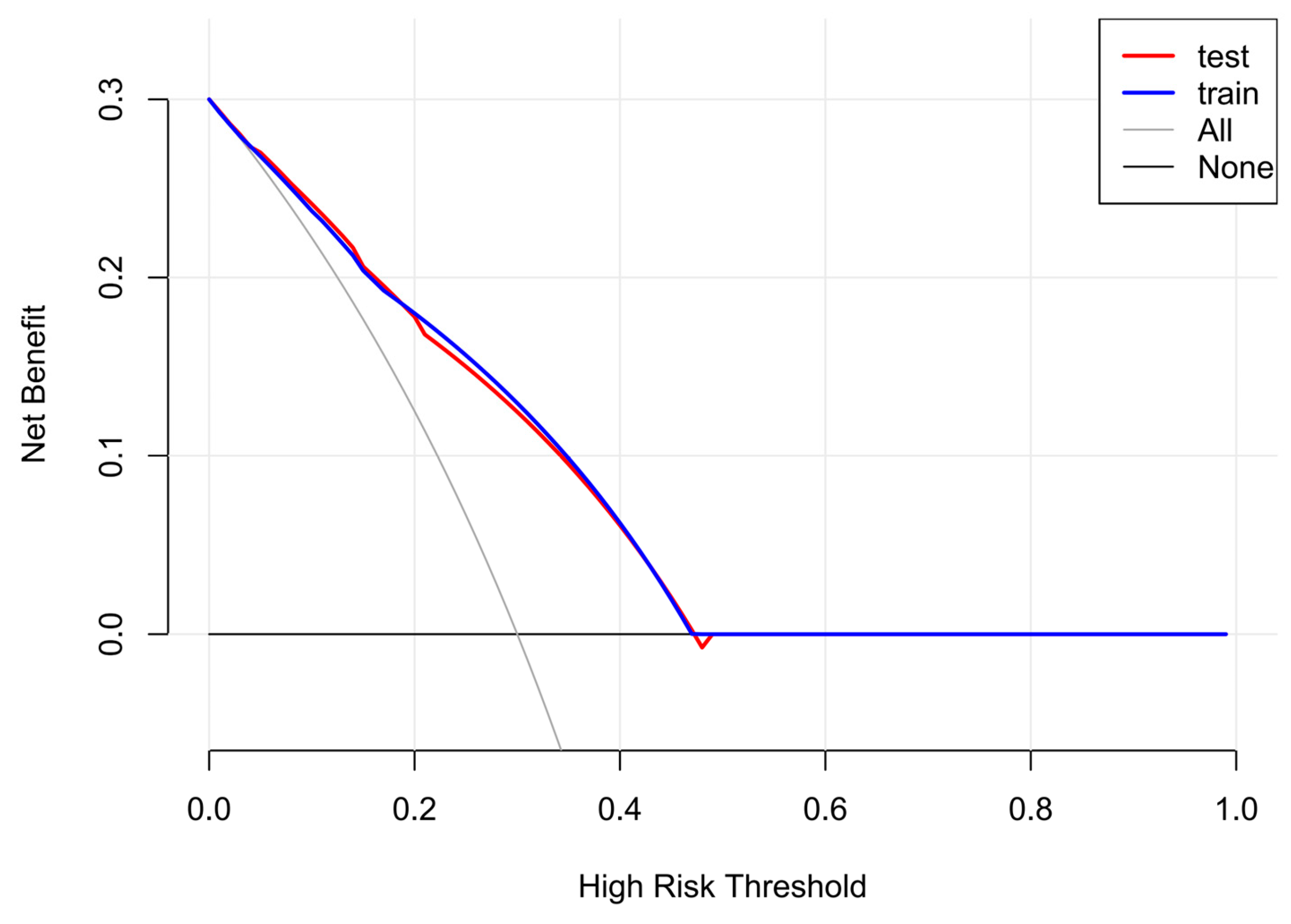
The predictive performance and clinical applicability of the nomogram were comprehensively evaluated in both the training and validation sets. The model demonstrated robust discriminative ability and moderate predictive accuracy across both datasets (Figure 4, Table 6). Specifically, the model achieved an AUC of 0.734 (95% CI: 0.698–0.771) in the training set, with high specificity (0.835) and moderate sensitivity (0.597). In the validation set, the AUC was 0.738 (95% CI: 0.679–0.796), showing similar sensitivity (0.619) and good specificity (0.797). The overall accuracies for the training and validation sets were 0.745 and 0.735, respectively, indicating strong model stability without evident overfitting. The PR-AUC was 0.7133 for the training set and 0.7137 for the validation set (Figure 5), further confirming the model’s stable predictive ability in distinguishing genetically positive and negative cases. In terms of calibration performance, the model demonstrated excellent agreement in both datasets (Figure 6, Table 7). The Brier scores were low (training: 0.180; validation: 0.175). The calibration intercept and slope were very close to the ideal values (training: 1.64 × 10⁻¹⁴, 1.000; validation: −0.199, 0.994). The calibration curves closely followed the ideal diagonal line, indicating high consistency between predicted probabilities and observed outcomes. Furthermore, DCA showed that the model achieved positive net benefits across a wide range of threshold probabilities, strongly supporting its clinical utility in predicting genetic risk among children with GDD/ID (Figure 7).

4. Discussion

4.1. Genetic Heterogeneity of GDD/ID and the Necessity of Risk Assessment

GDD/ID exhibits an extremely complex genetic basis, with etiologies involving multiple systems and numerous gene variants. For example, the “Deciphering Developmental Disorders (DDD)” study has identified 2940 genes definitively associated with developmental disorders, fully illustrating the remarkable genetic heterogeneity of this condition. This complexity makes it difficult to establish a simple correspondence between clinical phenotypes and genotypes: identical phenotypes may arise from different genetic mutations, while mutations in the same gene (pleiotropy) can also lead to diverse phenotypic manifestations. In this study, more than half of the patients with positive genetic findings presented multisystem abnormalities beyond the nervous system, and this high frequency of pleiotropic features provides a solid theoretical basis for integrating multiple clinical characteristics into a systematic genetic risk assessment. Against this background, the early and accurate identification of GDD/ID patients at high genetic risk is of particular importance. Based on four key clinical features, this study successfully constructed and validated a genetic risk prediction model for GDD/ID patients without ASD. The model demonstrated moderate but stable predictive performance and good calibration, supporting its potential value as a preliminary tool for clinical stratification.

4.2. Biological Basis of Model Predictors

Craniofacial malformations occurred in 24.5% of cases in this study cohort, representing the most common associated anomaly, with a significantly higher incidence in the genetically positive group (p < 0.001), consistent with recent multicenter studies in Chinese children [7]. On the embryonic developmental timeline, the central nervous system (CNS) and craniofacial structures share the same developmental window, both beginning at the fifth week of embryogenesis [8]. Anatomically, the cranial base provides both a structural platform for brain development and a connection for craniofacial morphogenesis [9]. At the molecular level, signaling pathways regulate the development of both the CNS and craniofacial structures. Wnt, Sonic Hedgehog (SHH), fibroblast growth factor (FGF), and bone morphogenetic protein (BMP) are classical regulatory molecules involved in craniofacial skeletal and dental development [10,11,12,13], while they also play crucial roles in establishing neural tube polarity, regulating neural progenitor cell proliferation and differentiation, and promoting dendritic development [14,15,16,17]. Abnormalities in any of these signaling pathways may disrupt the development of both the craniofacial structures and the CNS.
Visceral abnormalities, encompassing the cardiovascular, genitourinary, and digestive systems, are also key predictive indicators. Congenital heart disease (CHD) is the most commonly observed visceral abnormality. Although survival rates in children with CHD have improved, the incidence of neurodevelopmental disorders (NDD) remains considerable (approximately 20%) [18]. Among patients with CHD and comorbid NDD, 10% were found to carry deleterious de novo mutations, many of which are highly expressed in the heart and brain and enriched in pathways such as chromatin modification, transcriptional regulation, and Notch and Wnt signaling [19]. CNVs account for about 10% of cases in children with CHD, and the CNV detection rate increases in CHD patients with NDD, suggesting that gene dosage imbalances may be a potential cause of adverse neurocognitive outcomes [20].
This study indicates a significant association between physical growth abnormalities and genetic etiology (OR = 5.31). This association may arise from multiple genetic mechanisms: in chromosomal disorders, exemplified by trisomy 21, the dosage effects of genes such as DYRK1A can directly affect skeletal development, while concomitant structural or functional cardiac abnormalities may further limit the child’s growth potential [21,22]. In the context of monogenic disorders, represented by PWS, the physical phenotype exhibits an age-related dynamic evolution: during infancy, feeding difficulties and growth retardation predominate; in childhood, hyperphagia and central obesity gradually emerge; during adolescence, the degree of obesity further increases, often accompanied by short stature and hypogonadism, ultimately resulting in the characteristic short-statured obese phenotype in adulthood [23,24].
A positive family history of intellectual disability (OR = 7.90) was identified as the most significant predictor. This finding is consistent with results from large-scale family studies [25], highlighting the pivotal role of genetic burden. This predictor has been incorporated as a key factor in both the de Vries scoring system and the PredWES model, further underscoring its reliability [26,27].

4.3. Potential Predictive Factors Not Included

In addition to the four core predictors ultimately included in the model, this study also identified potential associations between genetic risk for GDD/ID and factors such as preterm birth, ART, and AMA. These factors may be related to complex interactions between genetic and environmental influences, such as epigenetic alterations following ART or an increased risk of chromosomal nondisjunction associated with AMA [28,29,30]. Although these variables were not included in the final model due to sample size limitations, their predictive value warrants further investigation in larger future cohorts.

4.4. Comparative Advantages over Existing Prediction Tools

Compared with existing predictive tools, the nomogram model developed in this study demonstrates clear advantages in methodology, predictive performance, and clinical applicability. The de Vries score is primarily designed for assessing submicroscopic telomeric rearrangements, with a relatively limited scope of application [26]. When its cutoff value is set at ≥6 points, although specificity is high (0.88), sensitivity decreases markedly, resulting in a missed diagnosis rate of up to 44%. In contrast, the continuous risk probabilities produced by our model are applicable to a broader range of genetic etiologies in GDD/ID, offering a more balanced overall discriminative performance. Compared with the machine-learning–based PredWES model, which incorporates hundreds of Human Phenotype Ontology (HPO) terms and employs a complex Bayesian logistic regression algorithm, the latter achieved an AUC of 0.76 and a Brier score of 0.175 [27]. Our model achieves comparable discriminative performance but offers advantages in simplicity and interpretability: it includes only four highly integrative and easily interpretable clinical features, forming a transparent and intuitive logistic regression framework that clearly presents each variable’s β coefficient and odds ratio. This approach avoids the common “black box” issue of machine learning models, making it more likely to gain clinicians’ trust. Furthermore, the final presentation of the model as a nomogram relies solely on information obtained from routine physical examinations and medical history, without the need for complex computational platforms or advanced application interfaces. This design significantly enhances its accessibility in clinical practice, particularly facilitating its implementation in primary healthcare settings with limited medical resources.

4.5. Theoretical Basis and Clinical Significance of Excluding ASD Comorbid Patients

The comorbidity of GDD/ID and ASD is not uncommon, with previous studies reporting a prevalence ranging from 4.2% to 32.9% [31,32,33,34]. However, children with isolated GDD/ID differ markedly from those with comorbid ASD in terms of neurodevelopmental mechanisms, core phenotypic characteristics, and potential genetic etiologies. Our univariate analysis revealed that, compared with individuals with isolated GDD/ID, children with comorbid ASD showed significant differences in key clinical features such as gender, craniofacial malformations, skin and hair abnormalities, visceral abnormalities, and physical development abnormalities (all p < 0.05) (Table S1). These phenotypic differences provide statistical justification for considering the two as heterogeneous subgroups. To quantify the impact of this heterogeneity on model performance, we performed a supplementary analysis. This involved expanding the cohort to include patients with comorbid ASD and re-applying the full model-development pipeline. Within this combined patient cohort, LASSO regression was utilized to perform penalized variable selection (Figure S1). Multivariate logistic regression then served to identify the cohort’s independent predictors (Table S2). Based on these factors, the supplementary predictive model was constructed and is visually presented as a nomogram in Figure S2.The performance of the final supplementary model was subject to comprehensive evaluation. Its discriminative ability was assessed via ROC curve (Figure S3) and PR curve (Figure S4). Classification outcomes and detailed performance metrics were presented in the confusion matrix and summarized in Tables S3 and S4. Finally, the model’s calibration was evaluated using the calibration curve (Figure S5), with its specific calibration parameters documented in Table S5. The results showed a marked decline in model discrimination, with the AUC dropping from 0.73–0.74 in the original model to 0.6745 (95% CI: 0.648–0.701) (Table S4), the PR-AUC decreasing from 0.71 to 0.667, accompanied by decreases in sensitivity, specificity, and goodness-of-fit, while the clinical net benefit also deteriorated (Figure S6). Therefore, when applying this model in clinical settings, it is essential to first exclude ASD comorbidity through standardized assessment scales such as the Aberrant Behavior Checklist (ABC), Childhood Autism Rating Scale (CARS), and Autism Diagnostic Observation Schedule (ADOS). For younger children with atypical symptoms, continuous monitoring of their sensorimotor, language–cognitive, and social–interaction developmental trajectories is recommended.

4.6. Clinical Implementation Pathway and Recommendations

Based on the findings of this study, we propose the following clinical decision pathway for children with GDD/ID: first, clinicians should rigorously assess and exclude comorbid ASD. For children without ASD, further evaluation of the four key clinical features should be performed, and individualized genetic risk probabilities should be calculated using the nomogram. For children with a predicted probability ≥0.40, it is recommended to follow ACMG guidelines and use trio whole-exome sequencing or whole-genome sequencing as the first-line diagnostic strategy. For children with a predicted probability of <0.40 who are not classified as high risk, a stepwise diagnostic approach can be considered, starting with chromosomal microarray analysis and gradually advancing genetic testing, while closely monitoring the evolution of key clinical features during follow-up.

5. Conclusions

Given the central role of genetic factors in the etiology of GDD/ID, early identification of individuals at high genetic risk has become a key step toward achieving precise etiological diagnosis. This study focused on children with GDD/ID without comorbid ASD and successfully developed and validated a genetic risk prediction model based on four key clinical features: craniofacial abnormalities, visceral abnormalities, physical growth abnormalities, and a family history of ID. The model demonstrated moderate yet robust discriminative performance and can serve as a practical preliminary screening tool to help clinicians effectively identify children at genetic risk and inform subsequent genetic testing strategies. This tool is expected to play an important role in primary healthcare settings or contexts with limited clinical experience, assisting in improving the efficiency of etiological diagnosis and the rational use of resources for GDD/ID.

6. Limitations and Perspectives

This study has several limitations: first, as a single-center retrospective study, it may be subject to selection and information biases and is constrained by the completeness of clinical records. Second, the study cohort was primarily drawn from the Chinese population, and its generalizability warrants further validation in populations of different ethnicities and regions. The exclusion of patients with comorbid ASD to control for phenotypic heterogeneity also limits the applicability of the model to broader neurodevelopmental disorder populations. Finally, genetic diagnosis relied mainly on WES, which may miss some structural variants or pathogenic mutations in non-coding regions, which could potentially lead to an underestimation of the detection rate of genetic etiologies. Future studies should focus on testing multicenter prospective cohorts for external validation, integrate multiple techniques such as genome sequencing and chromosomal microarray analysis to enhance the genetic assessment system, and explore the development of a comprehensive risk prediction model covering both isolated GDD/ID and cases with comorbid ASD, thereby improving the clinical utility and generalizability of the tool.

Supplementary Materials

The following supporting information can be downloaded at: https://www.mdpi.com/article/10.3390/pediatric18010001/s1, Table S1: Univariate analysis comparing ASD + GDD/ID and ID-only groups. Figure S1: LASSO Regression for Variable Selection. Table S2: Multivariate Logistic Regression Analyses for Screening Predictors. Figure S2: Nomogram for Genetic Risk in Children with GDD/ID. Figure S3: ROC Curves of the Model. Figure S4: Precision-Recall Curves of the Model. Table S3: Confusion Matrix of the Model. Table S4: Performance Metrics of the Model. Figure S5: Calibration Curve for Predicting Probability. Table S5: Calibration and Predictive Performance of the Model. Figure S6: Decision Curve Analysis of the Model.

Author Contributions

Conceptualization, Y.J., R.L. and X.L.; methodology, Y.J. and X.L.; formal analysis, Y.J.; data curation, R.C., M.C., L.P., R.L., X.L. and Y.J.; writing—original draft preparation, Y.J.; writing—review and editing, R.L., X.L. and Y.Z.; funding acquisition, R.L. All authors have read and agreed to the published version of the manuscript.

Funding

This research was funded by the Pediatric Medical Research Special Fund project of Jiangsu Medical Association, grant number SYH-32034-0070 and the Jiangsu Medical Association Scientific Research Special Fund, grant number SYH-32034-0097.

Institutional Review Board Statement

This study was approved by the Ethics Committee of the Children’s Hospital of Nanjing Medical University, with approval number 202110083, on 28 October 2021.

Informed Consent Statement

Informed consent was obtained from all subjects involved in the study.

Data Availability Statement

Data supporting reported results can be found at corresponding authors.

Conflicts of Interest

The authors declare no conflicts of interest.

Abbreviations

The following abbreviations are used in this manuscript:
GDDGlobal developmental delay
IDIntellectual disability
ASDAutism spectrum disorder
AUCArea under the curve
CNVsCopy number variations
PWSPrader–Willi syndrome
DSM-5Diagnostic and Statistical Manual of Mental Disorders, Fifth Edition
WESWhole Exome Sequencing
DQDevelopmental quotient
IQIntellectual quotient
AMAAdvanced maternal age
ARTAssisted reproductive technology
LM-PCRLigation-mediated Polymerase Chain Reaction
SNVsSingle nucleotide variants
IndelsInsertions/deletions
MAFMinor Allele Frequency
HGMDHuman Gene Mutation Database
ACMGAmerican College of Medical Genetics and Genomics
VUSVariants of uncertain significance
ROCReceiver operating characteristic
PRPrecision–recall
DCADecision curve analysis
DDDDeciphering Developmental Disorders
CNSCentral nervous system
SHHSonic hedgehog
FGFFibroblast growth factor
BMPBone morphogenetic protein
CHDCongenital heart disease
NDDNeurodevelopmental disorder
ABCAberrant Behavior Checklist
CARSChildhood Autism Rating Scale
ADOSAutism Diagnostic Observation Schedule

References

  1. The Subspecialty Group of Neurology; Chinese Society of Pediatrics; Chinese Medical Association Project Expert Group of Childhood Neuropathy; China Neurologist Association. Experts’ consensus on the diagnostic strategies of etiology for intellectual disability or global developmental delay in children. Chin. J. Pediatr. 2018, 56, 806–810. [Google Scholar] [CrossRef]
  2. Moeschler, J.B.; Shevell, M.; Committee on Genetics. Comprehensive evaluation of the child with intellectual disability or global developmental delays. Pediatrics 2014, 134, e903–e918. [Google Scholar] [CrossRef] [PubMed]
  3. Srour, M.; Shevell, M. Genetics and the investigation of developmental delay/intellectual disability. Arch. Dis. Child. 2014, 99, 386–389. [Google Scholar] [CrossRef] [PubMed]
  4. Van, B.H. Genetic and epigenetic networks in intellectual disabilities. Annu. Rev. Genet. 2011, 45, 81–104. [Google Scholar] [CrossRef]
  5. Wu, D.; Chen, R.; Zhang, J.; Yan, W.; Chen, M.; Xia, D.; Li, X.; Dai, Y.; Chen, Y.; Li, R. DNA copy number variations and craniofacial abnormalities in 1,457 children with neurodevelopmental disorders. Ital. J. Pediatr. 2025, 51, 9. [Google Scholar] [CrossRef]
  6. Richards, S.; Aziz, N.; Bale, S.; Bick, D.; Das, S.; Gastier-Foster, J.; Grody, W.W.; Hegde, M.; Lyon, E.; Spector, E.; et al. Standards and guidelines for the interpretation of sequence variants: A joint consensus recommendation. Genet. Med. 2015, 17, 405–424. [Google Scholar] [CrossRef]
  7. Zhang, J.; Xu, Y.; Liu, Y.; Yue, L.; Jin, H.; Chen, Y.; Wang, D.; Wang, M.; Chen, G.; Yang, L.; et al. Genetic testing for global developmental delay in early childhood. JAMA Netw. Open 2024, 7, e2415084. [Google Scholar] [CrossRef]
  8. To, K.; Fei, L.; Pett, J.P.; Roberts, K.; Blain, R.; Polański, K.; Li, T.; Yayon, N.; He, P.; Xu, C.; et al. A multi-omic atlas of human embryonic skeletal development. Nature 2024, 635, 657–667. [Google Scholar] [CrossRef]
  9. Rengasamy, V.S.; Van, O.E. The skull’s girder: A brief review of the cranial base. J. Dev. Biol. 2021, 9, 3. [Google Scholar] [CrossRef]
  10. Ruiz-Heiland, G.; Lenz, S.; Bock, N.; Ruf, S. Prevalence of WNT10A gene mutations in non-syndromic oligodontia. Clin. Oral Investig. 2019, 23, 3103–3113. [Google Scholar] [CrossRef]
  11. Von, B.H. BDNF effects on dendritic spine morphology and hippocampal function. Cell Tissue Res. 2018, 373, 729–741. [Google Scholar] [CrossRef] [PubMed]
  12. Mu, X.F.; Bao, N.; Liang, P. Expert consensus on diagnosing and treating craniosynostosis in children. Chin. J. Pediatr. Surg. 2021, 42, 769–773. [Google Scholar] [CrossRef]
  13. Zhang, H.; Gong, X.; Xu, X.; Wang, X.; Sun, Y. Tooth number abnormality: From bench to bedside. Int. J. Oral Sci. 2023, 15, 5. [Google Scholar] [CrossRef] [PubMed]
  14. Yao, Z.; Mich, J.K.; Ku, S.; Menon, V.; Krostag, A.-R.; Martinez, R.A.; Furchtgott, L.; Mulholland, H.; Bort, S.; Fuqua, M.A.; et al. A single-cell roadmap of lineage bifurcation in human ESC models of embryonic brain development. Cell Stem Cell 2017, 20, 120–134. [Google Scholar] [CrossRef]
  15. Winkler, C.C.; Franco, S.J. Loss of Shh signaling in the neocortex reveals heterogeneous cell recovery responses. Dev. Biol. 2019, 452, 55–65. [Google Scholar] [CrossRef]
  16. Manzari-Tavakoli, A.; Babajani, A.; Farjoo, M.H.; Hajinasrollah, M.; Bahrami, S.; Niknejad, H. The cross-talks among bone morphogenetic protein (BMP) signaling and other prominent pathways involved in neural differentiation. Front. Mol. Neurosci. 2022, 15, 827275. [Google Scholar] [CrossRef]
  17. Wu, Q.F.; Yang, L.; Li, S.; Wang, Q.; Yuan, X.B.; Gao, X.; Bao, L.; Zhang, X. Fibroblast growth factor 13 regulates neuronal polarization and migration. Cell 2012, 149, 1549–1564. [Google Scholar] [CrossRef]
  18. Blue, G.M.; Ip, E.; Walker, K.; Kirk, E.P.; Loughran-Fowlds, A.; Sholler, G.F. Genetic burden and neurodevelopment in neonates with CHD. Am. Heart J. 2018, 201, 33–39. [Google Scholar] [CrossRef]
  19. Homsy, J.; Zaidi, S.; Shen, Y.; Ware, J.S.; Samocha, K.E.; Karczewski, K.J.; DePalma, S.R.; McKean, D.; Wakimoto, H.; Gorham, J.; et al. De novo mutations in CHD with neurodevelopmental and other congenital anomalies. Science 2015, 350, 1262–1266. [Google Scholar] [CrossRef]
  20. Zaidi, S.; Brueckner, M. Genetics and genomics of congenital heart disease. Circ. Res. 2017, 120, 923–940. [Google Scholar] [CrossRef]
  21. Antonarakis, S.E. Down syndrome. Nat. Rev. Dis. Primers 2020, 6, 9. [Google Scholar] [CrossRef] [PubMed]
  22. LaCombe, J.M.; Sloan, K.; Thomas, J.R.; Blackwell, M.P.; Crawford, I.; Bishop, F.; Wallace, J.M.; Roper, R.J. Sex-specific Dyrk1a-related skeletal phenotypes in Down syndrome model. Dis. Model. Mech. 2023, 17, dmm050914. [Google Scholar] [CrossRef] [PubMed]
  23. Wang, P.; Zhou, W.; Yuan, W.; Huang, L.; Zhao, N.; Chen, X. Prader–Willi syndrome in neonates: Twenty cases in Southern China. BMC Pediatr. 2016, 16, 124. [Google Scholar] [CrossRef] [PubMed][Green Version]
  24. Butler, M.G.; Manzardo, A.M.; Heinemann, J.; Loker, C.; Loker, J. Causes of death in Prader–Willi syndrome: 40-year mortality survey. Genet. Med. 2017, 19, 635–642. [Google Scholar] [CrossRef]
  25. Lichtenstein, P.; Tideman, M.; Sullivan, P.F.; Serlachius, E.; Larsson, H.; Kuja-Halkola, R.; Butwicka, A. Familial risk and heritability of intellectual disability: A population-based cohort study in Sweden. J. Child Psychol. Psychiatry 2022, 63, 1092–1102. [Google Scholar] [CrossRef]
  26. de Vries, B.B.; White, S.M.; Knight, S.J.L.; Regan, R.; Homfray, T.; Young, I.D.; Super, M.; McKeown, C.; Splitt, M.; Quarrell, O.W.J.; et al. Clinical studies on submicroscopic subtelomeric rearrangements: A checklist. J. Med. Genet. 2001, 38, 145–150. [Google Scholar] [CrossRef]
  27. Dingemans, A.J.M.; Hinne, M.; Jansen, S.; van Reeuwijk, J.; de Leeuw, N.; Pfundt, R.; van Bon, B.W.; Vulto-van Silfhout, A.T.; Kleefstra, T.; Koolen, D.A.; et al. Phenotype based prediction of exome sequencing outcome using machine learning for neurodevelopmental disorders. Genet. Med. 2022, 24, 645–653. [Google Scholar] [CrossRef]
  28. Djuwantono, T.; Aviani, J.K.; Permadi, W.; Achmad, T.H.; Halim, D. Risk of neurodevelopmental disorders in ART children: A meta-analysis. J. Neurodev. Disord. 2020, 12, 33. [Google Scholar] [CrossRef]
  29. Wang, T.H.; Li, T.; Ou, J.P. Effects of ART on offspring epigenetics. Chin. J. Reprod. Contracept. 2022, 42, 296–300. [Google Scholar]
  30. Allen, E.G.; Freeman, S.B.; Druschel, C.; Hobbs, C.A.; O’Leary, L.A.; Romitti, P.A.; Royle, M.H.; Torfs, C.P.; Sherman, S.L. Maternal age and risk for trisomy 21: Nondisjunction origin analysis. Hum. Genet. 2008, 125, 41–52. [Google Scholar] [CrossRef]
  31. Maenner, M.J.; Shaw, K.A.; Bakian, A.V.; Bilder, D.A.; Durkin, M.S.; Esler, A.; Furnier, S.M.; Hallas, L.; Hall-Lande, J.; Hudson, A.; et al. Prevalence and characteristics of autism spectrum disorder among children aged 8 years—Autism and Developmental Disabilities Monitoring Network, 11 sites, United States, 2018. MMWR Surveill. Summ. 2021, 70, 1–16. [Google Scholar] [CrossRef]
  32. Tonnsen, B.L.; Boan, A.D.; Bradley, C.C.; Charles, J.; Cohen, A.; Carpenter, L.A. Prevalence of autism spectrum disorders among children with intellectual disability. Am. J. Intellect. Dev. Disabil. 2016, 121, 487–500. [Google Scholar] [CrossRef]
  33. Lakhan, R. The coexistence of psychiatric disorders and intellectual disability in children aged 3–18 years in the Barwani district, India. ISRN Psychiatry 2013, 2013, 875873. [Google Scholar] [CrossRef]
  34. Schieve, L.A.; Clayton, H.B.; Durkin, M.S.; Wingate, M.S.; Drews-Botsch, C. Comparison of perinatal risk factors associated with autism spectrum disorder (ASD), intellectual disability (ID), and co-occurring ASD and ID. J. Autism Dev. Disord. 2015, 45, 2361–2372. [Google Scholar] [CrossRef]
Figure 1. Flow Chart for Patient Selection.
Pediatrrep 18 00001 g001
Figure 2. LASSO Regression for Variable Selection. (a) Coefficient profiles of predictors. (b) Cross-validation for tuning parameter (λ). In (a), the colored lines show the paths of the coefficients of each predictor in LASSO regression, shrinking gradually to zero as the regularization parameter (Log Lambda) increases. In (b), the red dots mark the optimal Lambda value determined by cross-validation, where the model achieves the best balance between deviance and complexity. The gray line segments indicate the standard error of deviance at each point.
Pediatrrep 18 00001 g002
Figure 3. Nomogram for Genetic Risk in Children with GDD/ID.
Pediatrrep 18 00001 g003
Figure 4. ROC Curves of the Model. (a) Training set. (b) Validation set. The red line is the ROC curve of the model, showing the relationship between sensitivity and 1–specificity. The black diagonal line is the reference line, representing the performance of a random classifier (AUC = 0.5).
Pediatrrep 18 00001 g004
Figure 5. Precision–Recall Curves of the Model. (a) Training set. (b) Validation set. The red line is the Precision–Recall (PR) curve of the model, showing the relationship between precision and recall across different classification thresholds. The grey dashed line is the reference line, representing the prevalence of the positive class in the dataset.
Pediatrrep 18 00001 g005
Figure 6. Calibration Curve for Predicting Probability. (a) Training set. (b) Validation set.
Pediatrrep 18 00001 g006
Figure 7. Decision Curve Analysis of the Model.
Pediatrrep 18 00001 g007
Table 1. Clinical Data Description Table.
Clinical CharacteristicsDescription
Genderfemale, male
Abnormal head circumferencemacrocephaly, microcephaly
Eyebrow abnormalitiesarched eyebrows, unibrow, thick eyebrows, sparse eyebrows, et al.
Eye abnormalitieshypertelorism, epicanthus, strabismus, ptosis, exophthalmos, enophthalmos, heterochromatic sclera, et al.
Ear abnormalitiesprominent ears, low-set ears, posteriorly rotated ears, large ears, auricular deformities, pointed ears, accessory auricles, et al.
Nasal abnormalitieslow nasal bridge, high nasal bridge, upturned nostrils, wide nasal root, et al.
Lip and palate abnormalitiescleft palate, high arched palate, thin upper lip, thick upper lip, cleft lip, long philtrum, downturned mouth corners, et al.
Dental abnormalitiesmalocclusion, geminated teeth, tooth agenesis, et al.
Mandibular abnormalitiesmicrognathia, et al.
Trunk skeletal abnormalitiespectus carinatum, pectus excavatum, shield chest, scoliosis, rickets, et al.
Limb skeletal abnormalitiespolydactyly, brachydactyly, clinodactyly, limb asymmetry, et al.
Skin and hair abnormalitiessimian crease, Mongolian spots, café-au-lait spots, hypertrichosis, alopecia, abnormal hair color, et al.
Visceral abnormalitiescardiovascular, urinary, reproductive, gastrointestinal abnormalities, et al.
Epilepsy-
Physical development abnormalitiesshort stature, tall stature, low body weight, obesity
Offspring of AMAborn to a mother who is typically aged 35 years or older at the time of childbirth
ART offspringborn through assisted reproductive technology
Premature infantborn before 37 weeks of gestation
Family history of IDin immediate family members (such as parents and siblings)
Note: ID = intellectual disability; AMA = advanced maternal age; ART = Assisted Reproductive Technology.
Table 2. Clinical Data Collection Form.
VariablesValues
GenderFemaleMale
Craniofacial malformationsNoneYes
Skeletal abnormalitiesNoneYes
Skin and hair abnormalitiesNoneYes
Visceral abnormalitiesNoneYes
EpilepsyNoYes
Physical development abnormalitiesNoYes
Offspring of AMANoYes
ART offspringNoYes
Premature infantNoYes
Family history of IDNoYes
Note: Any abnormality in one of the following is considered a craniofacial malformation: head circumference, eyebrows, eyes, ears, nose, lips and palate, teeth, or jaw. Any abnormality in one of the following is considered a skeletal abnormality: limbs or trunk bones. ID = intellectual disability; AMA = advanced maternal age; ART = Assisted Reproductive Technology.
Table 3. General Characteristics of the Patients in Negative and Positive Groups.
VariablesNegative Group
(n = 588)
Positive Group
(n = 340)
χ2-Valuep-Value
GenderMale44520821.733<0.001
Female 143132
Craniofacial malformations+72 155129.622<0.001
-516185
Skeletal abnormalities+91810.8020.001
-579322
Skin and hair abnormalities+114142.275<0.001
-577299
Visceral abnormalities+125360.701<0.001
-576287
Epilepsy+276.6260.014
-586333
Physical development abnormalities+228086.223<0.001
-566260
Offspring of AMA+330.4640.674
-585337
ART offspring+451.4010.300
-584355
Premature infant+693.5850.058
-582331
Family history of ID+72829.459<0.001
-581258
Note: + = yes; - = no; ID = intellectual disability; AMA = advanced maternal age; ART = Assisted Reproductive Technology.
Table 4. General Characteristics of All Patients in the Training Set and Validation Set.
VariablesTraining Set
(n = 649)
Validation Set
(n = 279)
χ2-Valuep-Value
Genetic test resultPositive243970.6020.438
Negative406182
GenderMale4591940.1330.716
Female19085
Craniofacial malformations+163640.5000.479
-486215
Skeletal abnormalities+15122.7350.098
-634267
Skin and hair abnormalities+38140.2590.611
-611265
Visceral abnormalities+46190.0230.879
-603260
Epilepsy+720.2660.732
-642277
Physical development abnormalities+64382.8180.093
-585241
Offspring of AMA+510.5160.675
-644278
ART offspring+630.0461.000
-643276
Premature infant+1230.7350.572
-637276
Family history of ID+23120.3080.579
-626267
Note: + = yes; - = no; ID = intellectual disability; AMA = advanced maternal age; ART = Assisted Reproductive Technology.
Table 5. Multivariate Logistic Regression Analyses for Screening Predictors.
Variablesβ (SE)OR (95% CI)p-Value
Craniofacial abnormalities1.51 (0.21)4.55 (2.78–7.44)<0.0001
Visceral abnormalities1.56 (0.44)4.79 (2.02–11.38)0.0003
Physical development abnormalities1.67 (0.36)5.31 (2.69–10.47)<0.0001
Family history of ID2.07 (0.54)7.90 (2.79–22.40)0.0001
Note: ID = intellectual disability.
Table 6. Performance Metrics of the Model.
MetricTraining SetValidation Set
True Negative 339145
False Negative9837
False Positive6737
True Positive14560
Accuracy0.7450.735
Sensitivity0.5970.619
Specificity0.8350.797
Positive Predictive Value0.6840.619
Negative Predictive Value0.7760.797
AUC (95% CI)0.734 (0.698–0.771)0.738 (0.679–0.796)
PR-AUC0.71330.7137
Threshold0.395
Note: AUC = Area Under the Receiver Operating Characteristic Curve; PR-AUC = Area Under the Precision–Recall Curve.
Table 7. Calibration and Predictive Performance of the Model.
MetricTraining SetValidation Set
Brier0.1800.175
Calibration Intercept1.64 × 10−14−0.199
Calibration Slope1.0000.994
95% CI of Slope0.817–1.1960.726–1.288
Disclaimer/Publisher’s Note: The statements, opinions and data contained in all publications are solely those of the individual author(s) and contributor(s) and not of MDPI and/or the editor(s). MDPI and/or the editor(s) disclaim responsibility for any injury to people or property resulting from any ideas, methods, instructions or products referred to in the content.