Article

Synergistic Antifungal Activity of Organoselenium Compounds with Black Seed Oil and Thymoquinone


by
Farhana Haider
1,
Himaxi Patel
1,
Agata J. Pacuła-Miszewska
2,
Magdalena Obieziurska-Fabisiak
3,
Jacek Ścianowski
3,
Ketan Patel
1 and
Blase Billack
1,*
1
Department of Pharmaceutical Sciences, College of Pharmacy & Health Sciences, St. John’s University, Queens, NY 11439, USA
2
Department of Toxicology, Faculty of Pharmacy, Medical University of Gdańsk, 80-416 Gdansk, Poland
3
Department of Organic Chemistry, Faculty of Chemistry, Nicolaus Copernicus University, 87-100 Torun, Poland
*
Author to whom correspondence should be addressed.
Microbiol. Res. 2026, 17(7), 135; https://doi.org/10.3390/microbiolres17070135
Submission received: 31 May 2026 / Revised: 8 July 2026 / Accepted: 9 July 2026 / Published: 13 July 2026
(This article belongs to the Section Antimicrobials and Antimicrobial Resistance)

Abstract

Vulvovaginal candidiasis (VVC) is a common mucosal infection that predominantly affects reproductive-aged women. Although conventional antifungal agents remain the primary treatment option, there is growing interest in developing alternative therapeutic approaches that can enhance antifungal efficacy while potentially reducing treatment burden. Natural products have emerged as valuable sources of bioactive compounds with antifungal potential, offering opportunities for novel combination-based therapies. Ebselen (EB), an organoselenium compound with potent redox-modulating and antifungal properties, and its structurally related analogs represent promising candidates for such strategies. Likewise, black seed oil (BSO), derived from Nigella sativa, and its major active constituent, thymoquinone (TQ), have demonstrated antifungal activity against Candida species, supporting their investigation as natural product-based partners in synergistic antifungal combinations. Commercially prepared BSO and purified TQ were tested across a range of concentrations in a broth microdilution assay in combination with EB and novel organoselenium analogs, including Ebselen Oxide (EB-Ox) and N-octyl-1,2-benzisoselenazol-3(2H)-one (APM C6). Minimum inhibitory concentrations (MICs) for single agents and combinations were determined, and the resulting datasets were analyzed using the web-based Synergy Finder platform. EB, EB-Ox, and APM C6 showed consistent synergy with BSO and TQ against C. albicans (clinical isolate S1), as indicated by positive synergy scores relative to monotherapies.

1. Introduction

Vulvovaginal candidiasis (VVC) is a prevalent mucosal fungal infection mostly caused by Candida albicans, an opportunistic yeast that can transition from a commensal to a pathogenic state under conditions that disrupt vaginal homeostasis [1]. The disease is characterized by pruritus, erythema, vulvar irritation, dyspareunia, and abnormal discharge, and its pathogenesis involves the interplay of fungal virulence factors, host immune responses, and alterations in the vaginal microbiome. C. albicans contributes to infection through adhesion, hyphal morphogenesis, biofilm formation, and secretion of hydrolytic enzymes, all of which enhance colonization and tissue invasion [2,3]. Recurrent or severe episodes of VVC may pose significant clinical challenges, particularly when associated with host susceptibility factors such as risky pregnancies or reduced antifungal responsiveness [2].
Pma1p, the fungal plasma membrane H+-ATPase, is being explored as an alternative antifungal target because it is essential for proton extrusion, nutrient uptake, pH homeostasis, and fungal growth, while lacking a direct human counterpart [4]. Inhibition of this pump can rapidly collapse membrane potential and intracellular pH, making it a promising way to disrupt fungal physiology. It is therefore attractive for antifungal development because it offers a distinct mechanism of action, distinct from conventional drugs that target ergosterol synthesis or cell wall biosynthesis [5].
Ebselen (EB) is an organoselenium compound with the chemical name 2-phenyl-1,2-benzisoselenazol-3(2H)-one and is a hydrophobic drug. Structurally, EB contains a selenium-nitrogen bond within a benzisoselenazolone ring, making it electrophilic and capable of interacting with fungal thiol residues [6]. As an antifungal, it exhibits potent activity against Candida albicans by depleting intracellular glutathione, increasing reactive oxygen species (ROS), and inhibiting the fungal plasma membrane H+-ATPase (Pma1p) pump—mechanisms distinct from standard azoles [7,8].
Ebselen oxide (EB-Ox), also known as 2-phenyl-1,2-benzisoselenazol-3(2H)-one 1-oxide, is the oxidized metabolite of EB containing a selenoxide (Se=O) functional group within the benzisoselenazolone ring structure. EB-Ox is formed when EB rapidly reacts with peroxynitrite and can be reduced back to EB in cells, thereby regenerating its antioxidant activity [9]. While EB-Ox itself has not been directly studied as an antifungal for VVC, it possesses distinct biological activity. Building on the findings of Billack et al. (2010), who showed that an EB-Ox analog exhibited antifungal activity in Saccharomyces cerevisiae [10], EB-Ox warrants direct evaluation against Candida albicans to determine whether oxidation of the EB scaffold preserves or alters antifungal potency and membrane-targeting activity.
N-octyl-1,2-benzisoselenazol-3(2H)-one (APM C6) is a novel organoselenium compound synthesized and recently described [11]. It features a lipophilic 8-carbon alkyl chain attached directly to the nitrogen atom. The fixed Se–N core serves as an essential pharmacophore for antiproliferative potential. Its structural design aimed to balance organic solubility with enhanced drug-target interactions. It was synthesized to evaluate the effects of carbon chain length on antioxidants and cytotoxic capabilities and to test its antifungal potential against C. albicans.
Thymoquinone (TQ), the major bioactive compound of Nigella sativa (black seed) oil (BSO), has been studied for its antimicrobial, anti-inflammatory, and immunomodulatory activities. Prior reports indicate that both N. sativa extracts and TQ possess antifungal effects against Candida albicans and other clinically important Candida species like C. glabrata, C. tropicalis, C. krusei, C. parapsilosis, C. kefyr, and C. dubliniensis, with evidence of growth inhibition and biofilm disruption [12,13,14].
Clinical studies on N. sativa preparations have also reported benefit in women with VVC, supporting further investigation of BSO-derived products as complementary antifungal agents. In addition to its antifungal activity, TQ has demonstrated context-dependent immunomodulatory effects, including modulation of inflammatory mediators, neutrophil function, and oxidative responses, which may be relevant to host defense during fungal infection [15]. Taken together, these findings support the rationale for evaluating TQ and BSO formulations as potential alternatives or adjuncts to conventional antifungal therapy for recurrent VVC.
This paper explores the synergistic effects of organoselenium compounds alone and in combination with TQ and BSO to determine whether organoselenium compounds become more effective when combined with other bioactive agents, enabling lower doses, improving antifungal potency, and potentially reducing toxicity. Combining organoselenium compounds with TQ and BSO may enhance membrane stress, redox imbalance, and fungal growth inhibition through complementary mechanisms, making this combination especially valuable against Candida spp., which are often difficult to eradicate with single agents. Such studies also help identify promising combination therapies for VVC by distinguishing true synergy from simple additive effects and by supporting the development of more effective, resistance-sparing antifungal formulations.

2. Materials and Methods

2.1. Chemicals and Cells

The novel organoselenium compound N-octyl-1,2-benzisoselenazol-3(2H)-one (APM C6) was previously synthesized and described [11]. EB was purchased from AK Scientific, Inc. (cat# J54140, Union City, CA, USA), and EB-Ox from Sigma Life Sciences (Cat# 072M4611V, Sigma-Aldrich, St. Louis, MO, USA). TQ was procured from TCI America (Cat# T0795, Portland, OR, USA), and BSO was purchased from Prime Natural (Cat# 231189127, Portland, OR, USA). The C. albicans strain utilized in this research (clinical isolate S1) was generously provided by Dr. J. Morschhäuser from the University of Würzburg, Würzburg, Germany. S1 strain was originally isolated from a human AIDS patient with recurrent oropharyngeal candidiasis (OPC) during fluconazole therapy [16]. Methanol was obtained from VWR chemicals (Radnor, PA, USA), and RPMI 1640 media and DMSO were acquired from Sigma-Aldrich (St. Louis, MO, USA). Yeast-extract-peptone dextrose (YPD) liquid and agar media were purchased from BD Diagnostic Systems (Sparks, MD, USA). All predicted log Po/w values were obtained using the SwissADME calculator (www.swissadme.ch; accessed 14 May 2025).

2.2. HPLC Quantification of TQ in BSO

The analytical method for TQ was developed by a reverse-phase high-performance liquid chromatography (RP-HPLC) system using a Waters Alliance HPLC system (Waters Corporation, Milford, MA, USA) with a 2998 photodiode array (PDA) detector. Chromatographic separation was performed in a GL Sciences InertSustain C18 column (GL Sciences Inc., Tokyo, Japan) (150 mm × 4.6 mm, 5 μM) at ambient temperature. The mobile phase was acetonitrile and water (70:30, v/v), eluted isocratically at 0.8 mL/min, and the chromatograms were monitored at 254 nm using Empower 3 software.

2.3. Antifungal Broth Test

The synergistic activity of compound EB, EB-Ox, and APM C6 with TQ and BSO was evaluated against C. albicans S1 using a broth microdilution assay as previously described [7]. EB, EB-Ox, and APM C6 were prepared in DMSO; TQ in methanol; and BSO was used directly; however, the final concentration of DMSO and methanol in all wells was kept at 0.1% (v/v). Wells containing the corresponding solvent mixture at the same final concentration, but without the test compounds, were used to confirm that DMSO and methanol did not affect yeast growth or acidification under the assay conditions. These controls demonstrated that the solvent system itself did not produce measurable changes in the readouts, thereby supporting the conclusion that the observed effects were attributable to the tested compounds rather than to the vehicles used for dissolution. Test concentrations for TQ ranged from 5.7 to 91.4 µM. The test concentration of BSO ranged from 0.1 to 1% (v/v). Test concentrations of EB ranged from 1.0 to 12.5 µM. The test concentration of EB-Ox ranged from 0.8 to 25.0 µM. The test concentration of APM C6 ranged from 0.8 to 12.5 µM.
RPMI medium buffered with MOPS at pH 6.9 was used as the assay medium, and the fungal inoculum was prepared from 48 h-old colonies grown on agar plates. Briefly, three well-isolated colonies were selected and suspended in a sterile growth medium. The suspension was adjusted to a predetermined turbidity corresponding to a target A600 inoculum density of 0.010, based on optical density measurements, to ensure equivalent starting cell concentrations across all experiments. Susceptibility testing was conducted using a broth microdilution format in accordance with the CLSI M27-A guidelines, with experimental conditions adapted to the study design. The same inoculum preparation protocol was used for all single-drug and combination assays to ensure comparability of the results.
For each experiment, TQ, BSO, EB, EB-Ox, or APM C6 were tested at varying concentrations, arranged in a 1:2-fold dilution series. Drug interaction analysis was performed using data generated from 24-well plates, with each treatment condition tested in triplicate, including the single-agent and combination-treatment groups. Following 48 h of incubation at 35 °C, optical density (OD) was measured in each well using a Shimadzu UV-160U UV-Vis spectrophotometer (Shimadzu Corporation, Kyoto, Japan), and the triplicate values for each condition were averaged to obtain a single mean OD. The mean OD of each treated condition was then compared with the average OD of the untreated growth-control wells, which represented 100% fungal growth. This normalization was applied consistently across all plates to ensure uniform processing of the single-drug and combination-treatment datasets. The averaged OD values were converted into percent inhibition using the formula [1-(mean OD treated/mean OD untreated)] × 100. The resulting normalized response values were then organized into the appropriate dose–response matrix format and uploaded to the SynergyFinder web platform (www.synergyfinder.aittokallio.group; accessed numerous times between 26 February and 10 April 2026) to calculate the Bliss synergy score, which was used to assess compound interactions across the tested concentration range.

2.4. Medium Acidification Assay

A medium acidification assay was performed to assess the effects of the test compounds on acidification of the growth medium by C. albicans S1 [17,18,19]. The medium acidification assay was designed to assess the effect of EB, EB-Ox, and APM C6 on yeast H+-ATPase activity at both high and low concentrations, with and without TQ. Specifically, EB, EB-Ox, and APM C6 were tested alone at their high concentrations of 12.5 μM, 12.5 μM, and 10 μM, respectively, to determine their individual effects on proton pump activity. The same compounds were then evaluated at low concentration (3.125 μM) to determine whether reduced doses retained any inhibitory activity. To examine potential synergy, the low-concentration treatments were combined with TQ at 45.7 μM (7.5 µg/mL), and the resulting effect on medium acidification was monitored to determine whether co-administration produced a greater blockade of the pump than either agent alone. In addition, TQ at 45.7 μM alone was included as an individual treatment group, and the solvent control was used to establish the baseline acidification profile for comparison across all conditions.

2.5. Statistics

Drug interaction studies were performed using checkerboard assays, and synergy scores were calculated using SynergyFinder (3.0) as described above in Section 2.3. Within each independent checkerboard experiment, all concentration combinations were evaluated in three technical replicates. Technical replicates were averaged prior to synergy analysis and were not treated as independent biological replicates for statistical analysis.
The number of independent biological experiments varied among compound combinations as follows: EB + BSO (N = 1), EB + TQ (N = 2), EB-Ox + BSO (N = 3), EB-Ox + TQ (N = 1), APM C6 + BSO (N = 1), and APM C6 + TQ (N = 1). Statistical analyses were performed only for combinations with sufficient biological replication. Results obtained from a single independent biological experiment are presented as descriptive observations and should be interpreted as exploratory findings.

3. Results

3.1. Physicochemical Properties of the Test Compounds

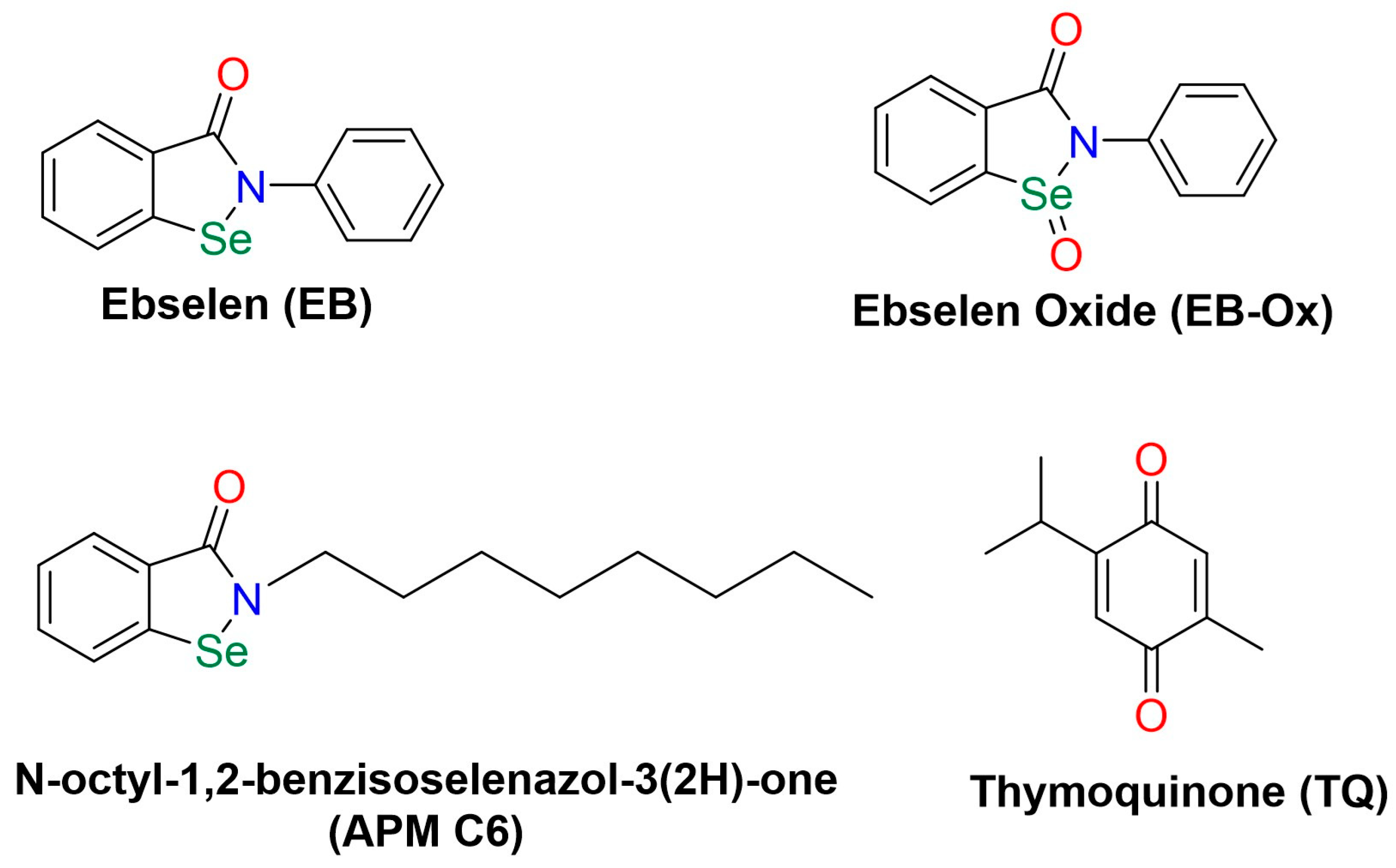
The chemical structures of the test compounds are shown in Figure 1, and their properties were predicted using the SwissADME platform (Table 1). While EB is a planar organoselenium with a divalent Se atom, EB-Ox is also planar but with a tetravalent Se atom. In both EB and EB-Ox, there are six carbons attached to N. While in APM C6, there are eight carbons attached to the N atom, and they are not aromatic. The water solubility of EB (predicted log Po/w) and APM C6 (3.41 and 4.64, respectively) was higher than that of EB-Ox and TQ (2.22 and 2.20, respectively), showing EB and APM C6 are more hydrophobic than EB-Ox and TQ. Indeed, APM C6 is considerably more hydrophobic than EB.

3.2. Quantification of TQ in BSO Using HPLC

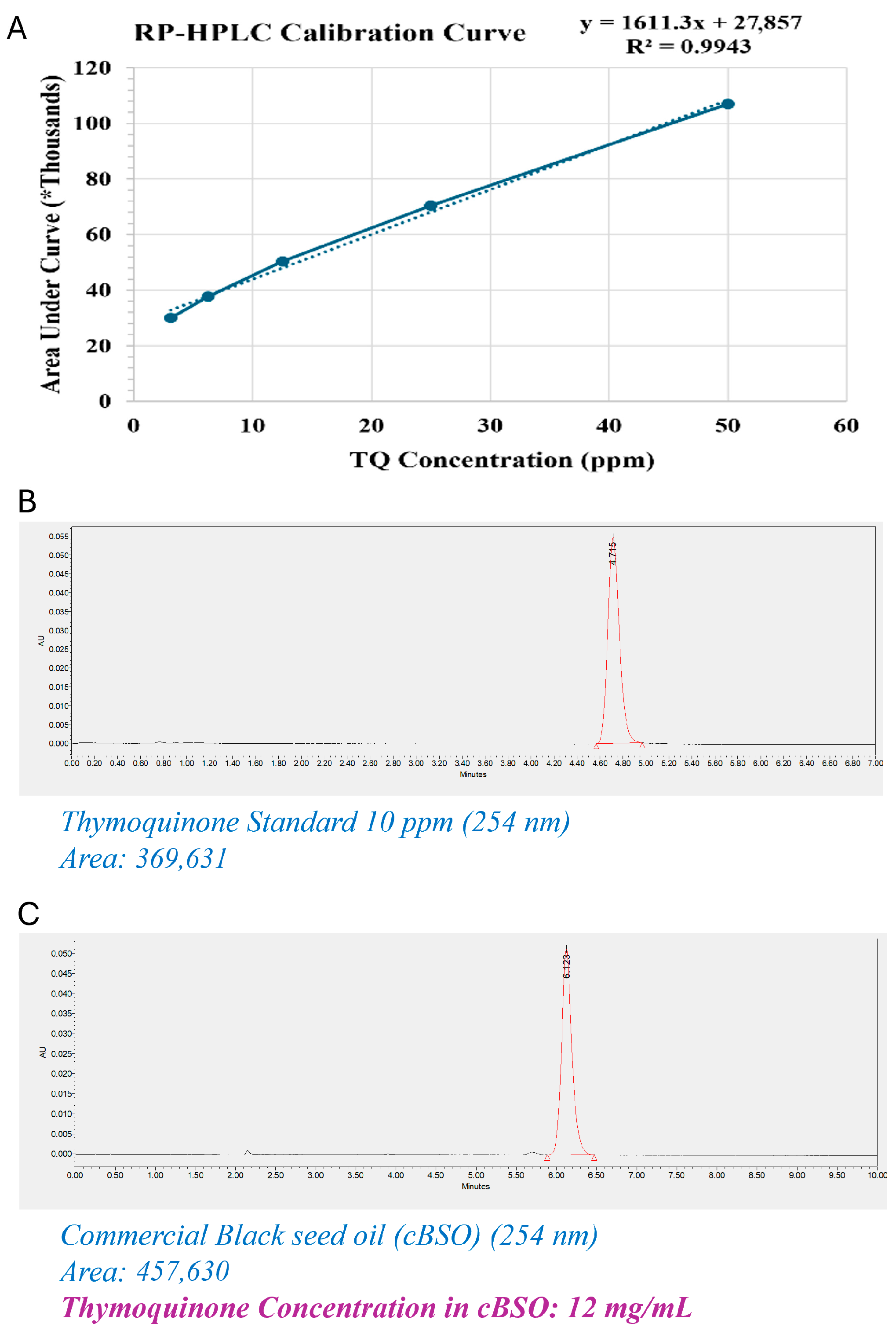
The concentration of TQ in BSO was determined by HPLC with a calibration curve (Figure 2A). The solutions were prepared in the standard way for TQ over the concentration range 3.125–50 ppm and were found to be extremely linear. The linear regression analysis gave the equation y = 1611.3x + 27,857, where the correlation coefficient was R2 = 0.9943. The high correlation coefficient proved the linear response of the method in the concentration range studied and assured the accurate determination of the TQ in BSO samples.
Optimized chromatographic conditions enabled TQ to be separated into a sharp, well-defined peak with a retention time of 4.71 ± 0.01 min (Figure 2B). TQ was extracted from BSO, diluted in acetonitrile, and filtered through a 0.22 μM membrane filter for quantification. Commercial BSO contained 12 ± 0.1 mg/mL of TQ (Figure 2C), indicating that the oil matrix is rich in the bioactive constituent. Overall, the method was found to be suitable for routine quantitative analysis of TQ in BSO samples.

3.3. Antifungal Susceptibility Determination of EB, EB-Ox, APM C6, TQ, and BSO Alone and in Combination

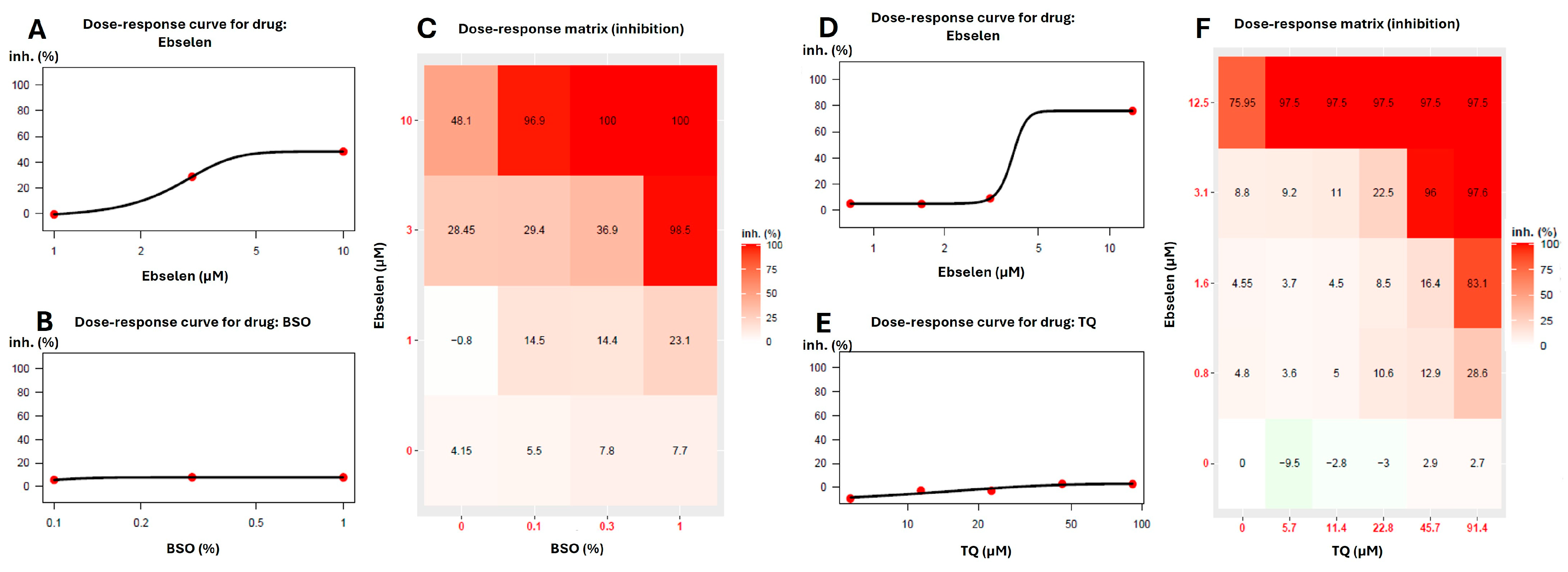
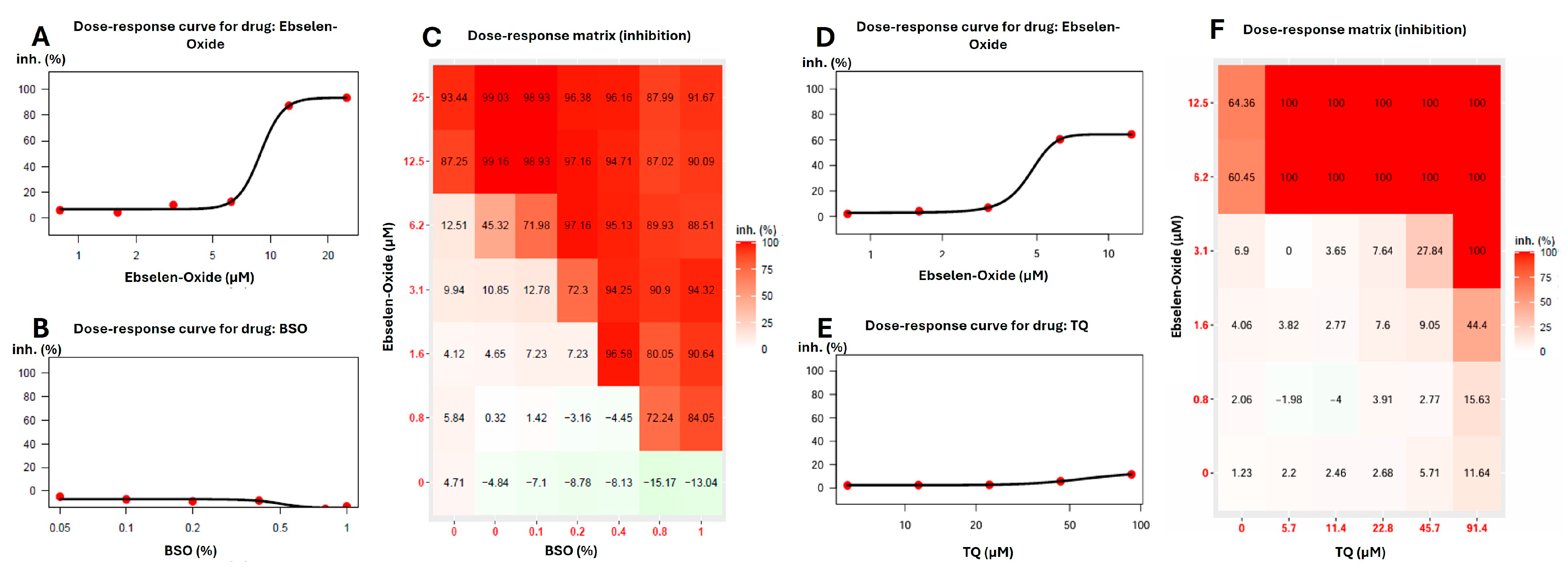
Antifungal susceptibility testing was performed in a single clinical isolate of C. albicans (strain S1) using EB concentrations of 1–10 μM and BSO concentrations of 0.1–1.0% (v/v). Test data were used in the Synergy Finder platform to get the synergy matrix and the graphs. Figure 3 showed a concentration-dependent inhibitory effect: 1, 3, and 10 μM produce varying levels of inhibition, with 10 μM yielding approximately 50% inhibition for EB (Figure 3A,D). In contrast, BSO at test concentrations of 0.1%, 0.3%, and 1% produced only modest inhibition on its own, generally below 10% (Figure 3B). Notably, when 1% BSO was combined with 3.12 μM EB, which alone produced approximately 7% and 28% inhibition, respectively, the synergistic treatment resulted in nearly 98% inhibition (Figure 3C). Similarly, TQ, the active component of BSO, exhibited minimal antifungal activity when tested alone, with the highest concentration (91.4 μM) producing only approximately 3% inhibition (Figure 3E). However, when combined with a low concentration of EB (1.6 μM), TQ demonstrated a marked synergistic effect, resulting in nearly 83% inhibition of yeast growth (Figure 3F). This pronounced increase in activity suggests a strong interaction between the two compounds and highlights the potential contribution of TQ to the observed combinatorial antifungal efficacy, as reflected in the Bliss synergy score of 25.10 and 19.7 of EB with BSO and TQ, respectively (Table 2).
EB-Ox, a more polar organoselenium that reacts with thiols such as glutathione (GSH), was then investigated for its activity towards C. albicans strain S1 (Figure 4A,D). As shown above (Figure 4B), BSO had no meaningful antifungal activity when tested alone across the range of oil concentrations. The same was true for TQ alone (Figure 4E). In contrast, 0.4% BSO combined with 1.6 μM EB-Ox produced 96% fungal inhibition (Figure 4C), despite EB-Ox showing only 4% inhibition by itself at this test concentration, and this combination yielded the highest Bliss synergy score observed in the study (31.9), supporting a strong synergistic interaction. Likewise, evaluation of TQ with EB-Ox showed complete fungal inhibition when 91.4 μM TQ was paired with 3.1 μM EB-Ox (Figure 4F), although EB-Ox alone produced only 7% inhibition at that concentration. This combination yielded a Bliss synergy score of 20.0, further indicating that the antifungal effect of EB-Ox is substantially enhanced by TQ.
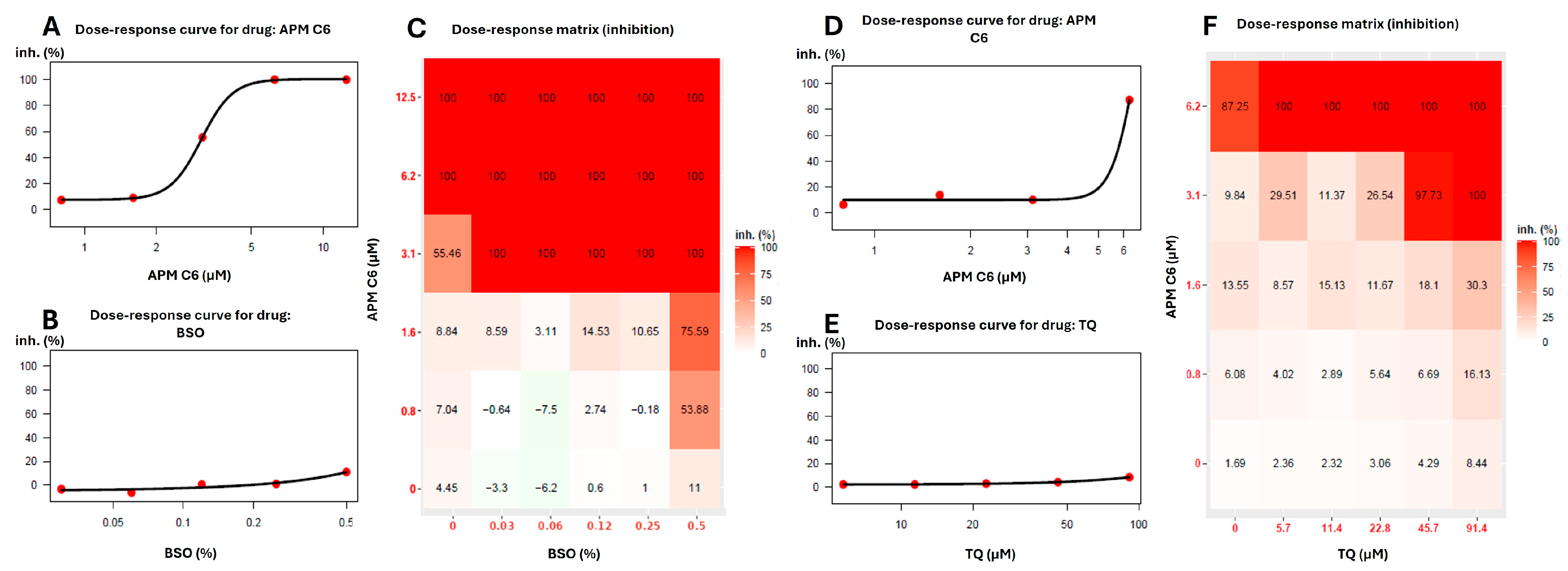
Figure 5A,D shows that the novel organoselenium compound APM C6, the most nonpolar of the tested compounds, exhibited intrinsic antifungal activity at higher concentrations, with yeast toxicity becoming evident at 6.25 μM and above. At 1.6 μM, APM C6 produced only 9% inhibition when tested alone; however, in combination with 0.5% BSO (Figure 5B), inhibition increased to 75%, despite BSO alone showing only 11% inhibition in the corresponding heatmap cell (Figure 5C). This combination generated a Bliss synergy score of 12.5, indicating a clear synergistic interaction. Similarly, TQ alone had only a minimal effect (Figure 5E) while the combination of TQ and APM C6 resulted in complete fungal inhibition, with 100% inhibition observed at the highest TQ concentration paired with 3.12 μM APM C6 (Figure 5F), even though APM C6 alone at this concentration produced only 10% inhibition. This interaction yielded a Bliss synergy score of 15.9, further supporting a potent cooperative effect between the two compounds.

3.4. Synergistic Effect of EB, EB-Ox, APM C6, and TQ on Medium Acidification

To investigate the effect of different test compounds on the yeast plasma membrane H+-ATPase (Pma1p), a medium acidification assay was carried out at two different concentrations of organoselenium compounds (high, completely blocking the pump; and low, minimum effect on the pump when utilized alone) and solvents used to dissolve the compound if they exert any toxic effects on the yeast cells, such as a low concentration of TQ, which has partial inhibition of the pump.
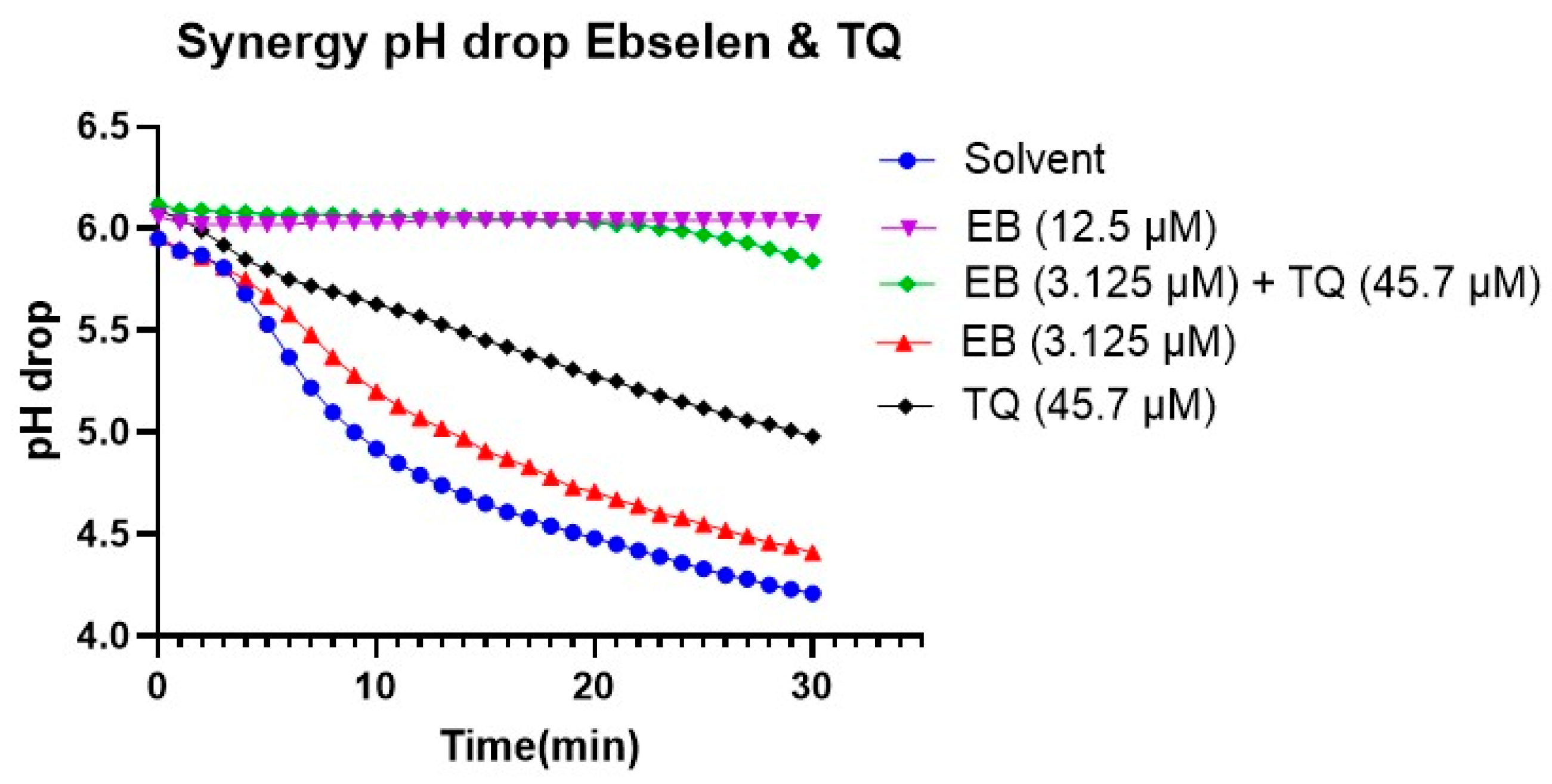
Figure 6 suggests that EB and TQ regulate the yeast H+-ATPase activity by blocking proton extrusion, as reflected by the altered rate of pH decline over time. Under the most active conditions, the vehicle (blue line) and lower concentration of EB (red line) show a steeper drop in extracellular pH, indicating that the pump remains functionally engaged, whereas the higher concentration of EB (purple line) and the TQ/EB (low) combination (green line) both resulted in complete inhibition of the yeast H+-ATPase, as evidenced by the near-absence of the expected pH decline over time. The TQ at 45.7 μM (black line) shows a partial blockade of the pump. This pattern suggests that pump activity was effectively abolished under combination and higher concentration conditions, indicating strong interference with proton extrusion and a consequent loss of pH homeostasis.
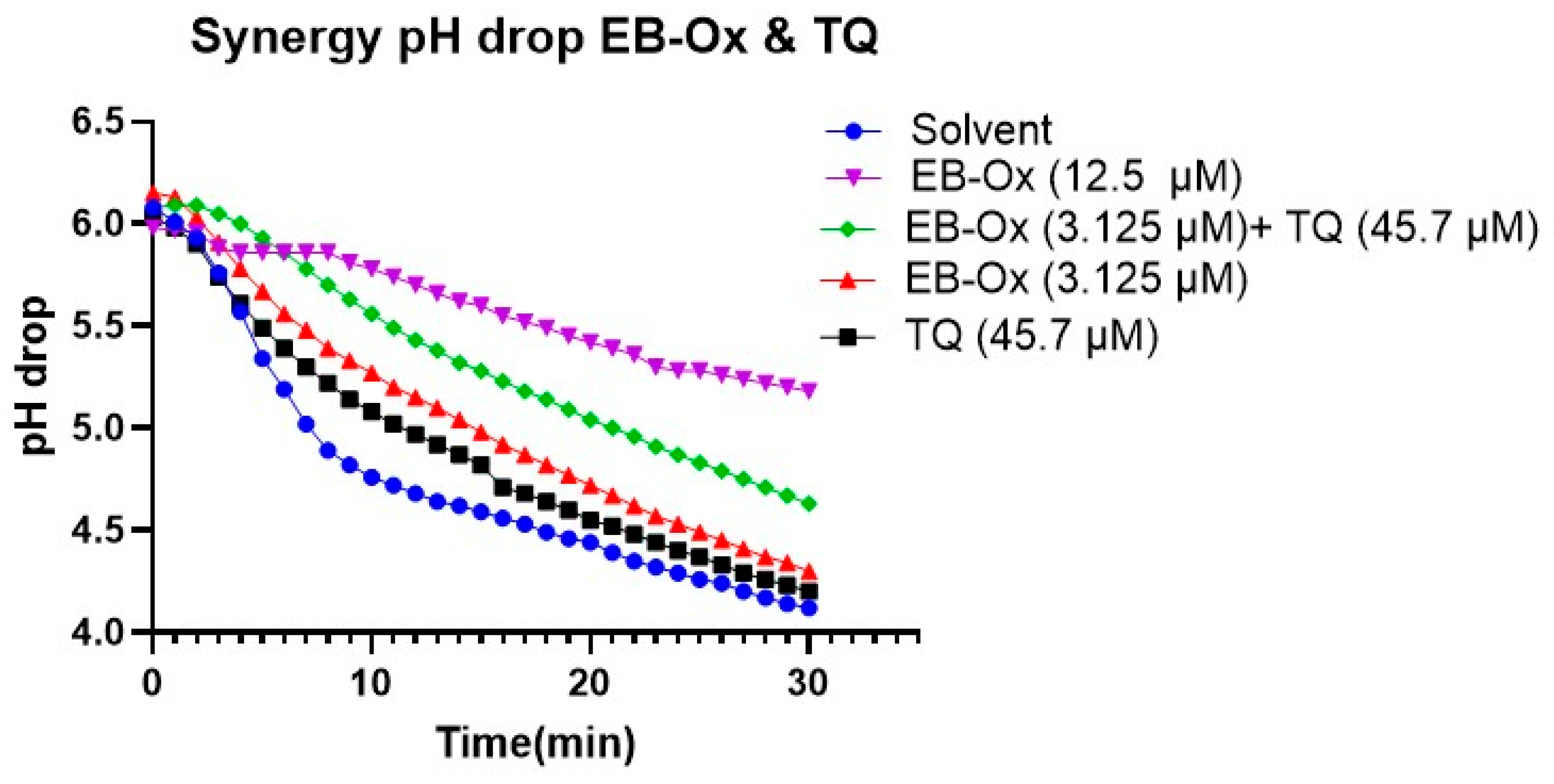
Figure 7 showed that EB-Ox exhibited concentration-dependent inhibitory effects on the yeast H+-ATPase activity. The higher concentration of EB-ox at 12.5 μM (purple line) produced only a slight decrease in pH, indicating limited acidification under these conditions. In contrast, the lower EB-Ox test concentration, −3.12 µM (red line), resulted in a more pronounced pH drop, comparable to that observed with the solvent control (blue line), suggesting preservation of pump-associated acidification at this concentration. TQ at 45.7 μM alone (black line) produced a similar reduction in pH as the lowest EB-Ox concentration. However, the combination treatment (TQ/EB-Ox-3.12 μM) (green line) produced a more pronounced effect on medium acidification, resulting in a smaller pH decline than that observed with either drug alone. This finding suggests that the interaction between EB-Ox and TQ altered the acidification response in a manner distinct from the effects of the individual compounds, with a synergistic effect greater than the sum of both.
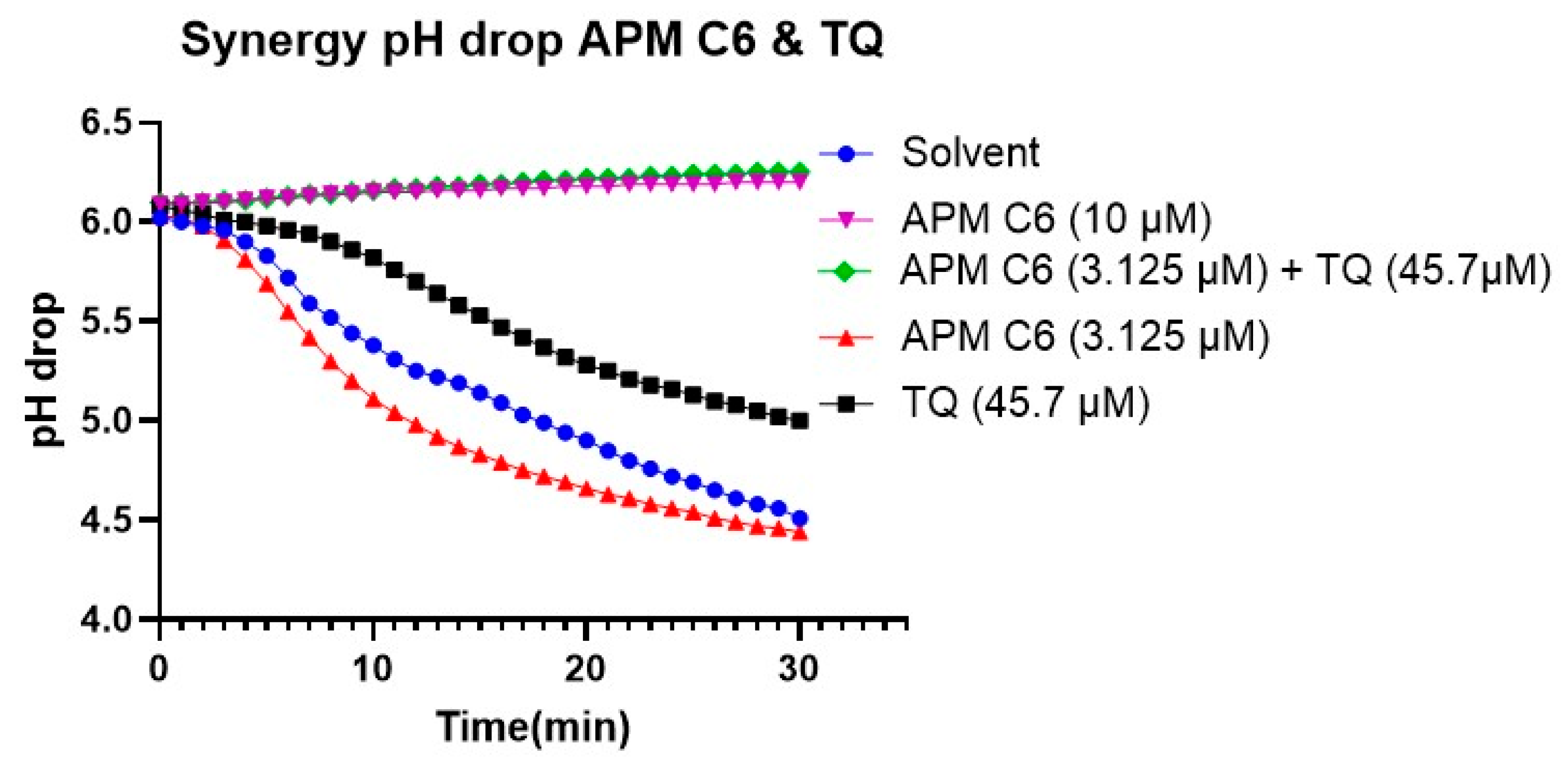
Figure 8 shows that compound APM C6 at its higher concentration markedly inhibited medium acidification (purple line), consistent with strong suppression of yeast H+-ATPase activity. In contrast, the lower AMP C6 concentration of 3.12 µM (red line) did not produce a significant effect, similar to the vehicle control (blue line), indicating that inhibition of the pump was concentration-dependent. TQ alone (black line) produced only a partial blockade of proton extrusion, as reflected by a limited reduction in medium acidification over the 30 min period. Notably, the combination of low-dose APM C6 and TQ (green line) completely inhibited the pump, with no detectable H+ efflux during the assay period. This pattern suggests cooperative interaction between the two compounds and supports the proposed mechanism, in which they enhance each other’s antifungal efficacy by more effectively disrupting yeast membrane proton transport.
Overall, the data in Figure 6, Figure 7 and Figure 8 demonstrated that the test compounds altered medium acidification in a manner consistent with inhibition of fungal proton pumping, and the observation of stronger effects in combination treatments (green lines) than with either agent alone indicates synergistic inhibition. This pattern supports further evaluation of their combined antifungal potential.

4. Discussion

The present investigation tested the hypothesis that black seed oil (BSO) and its active ingredient thymoquinone (TQ) [14,20] will work together with selected organoselenium compounds in a manner greater than additive to reduce microbial growth of the C. albicans clinical isolate strain (S1) and activity of its essential yeast plasma membrane H+-ATPase pump (Pma1p). The selected test organoselenium compounds included EB, EB-Ox, and APM C6. EB and EB-Ox have previously been shown to inhibit the growth of S. cerevisiae and C. albicans by reducing intracellular glutathione (GSH) levels and allowing toxic reactive oxygen species to accumulate [8]. Both EB and EB-Ox also inhibit Pma1p [10]; however, the ability of the recently synthesized organoselenium APM C6 [11] to do so has not been studied. Here, we report that all three organoselenium test compounds each exhibited antifungal activity toward the S1 strain. To our knowledge, this is the first time that EB-Ox and APM C6 have been reported to exhibit growth inhibitory effects in C. albicans.
EB-Ox is predicted to have a lower Log P o/w than EB and theoretically should be more polar and less likely than the latter to penetrate the yeast. On the other hand, APM C6, which, like EB, contains a divalent Se atom but, unlike EB, possesses a long alkyl chain attached to the N atom rather than a phenyl ring, is estimated to have a higher Log P o/w than EB and theoretically should be more hydrophobic and more likely than the latter to be absorbed into the yeast. Despite these physicochemical differences, all three compounds were highly effective at inhibiting S1 growth (measured at 48 h) at test concentrations ≥ 10.0 µM. However, with respect to the inhibition of medium acidification (measured every minute for 30 min), APM C6 and EB, the more hydrophobic test compounds, were more effective than EB-Ox, which was surprising since the tetravalent Se atom of EB-Ox should rapidly react with intracellular sulfhydryls, such as those found in Pma1p and intracellular GSH [21]. This indicates that while possessing a more reactive Se atom, the EB-Ox analog may have difficulty being fully absorbed into the yeast by 30 min and have more difficulty reaching the cytoplasmic side of Pma1p, which is where six of its nine cysteine residues are located (Cys-221, Cys-376, Cys-409, Cys-472, Cys-532, and Cys-569) [22]. However, over 48 h, it is likely that sufficient EB-Ox is absorbed to show a similar growth-inhibitory effect in S1 yeast as APM C6 and EB. This prediction will require additional study, but it appears reasonable on its surface.
While the medium acidification data are promising, it is challenging to distinguish whether the reduced acidification by EB + TQ and the other test combinations result from specific inhibition of Pma1p or from non-specific membrane destruction causing metabolic arrest. We cannot rule out that the attenuated pH decline observed in the combination groups merely reflects accelerated cell death rather than a genuine, targeted blockade of the proton pump. Further validation using an in vitro assay with a yeast membrane fraction containing Pma1p is warranted. Moreover, future work should include the use of viability controls (e.g., CFU counts or vital staining) alongside the acidification assay, which will also help to resolve this ambiguity.
The next aspect of the present work involved examining the interactions between BSO and its active component, TQ, and the organoselenium test compounds. Recent years have seen renewed interest in the therapeutic potential of natural products, particularly those derived from plants and marine organisms, due to their long history of use in traditional medicine and their often-favorable safety profiles [23]. Among the numerous natural products, BSO and its principal bioactive constituent, TQ, have attracted considerable attention due to their diverse biological activities, including antimicrobial, anti-inflammatory, and immunomodulatory effects [14,20,24]. In addition to their extensive historical use in traditional medicine, recent scientific studies have indicated that both BSO [25] and TQ exhibit pharmacologic synergism with antimicrobial agents. Therefore, we investigated whether the antifungal activity of EB, EB-Ox, and APM C6 could be affected by BSO or TQ in a synergistic manner.
The expected drug combination responses for each of the organoselenium test compounds with BSO or TQ were calculated using the Bliss reference model in Synergy Finder [26]. Deviations between observed and expected responses with positive values denote synergy. Test concentrations of BSO ranging from 0.1% (v/v) to 1% (v/v) were used for antimicrobial broth assays; concentrations above 1% were difficult to perform because oil droplets became visible in the treatment wells. Notably, within the usable concentration range, BSO alone exhibited very limited antimicrobial activity, achieving no more than ~10% growth inhibition even at the maximum tested concentration (1% v/v). This low intrinsic activity is important for interpreting combination effects, as it suggests that any enhanced inhibition observed in combination treatments is unlikely to be driven by strong additive activity from BSO itself.
Despite its weak standalone effect, BSO showed pronounced synergy when combined with organoselenium test compounds in antifungal growth assays. Across organoselenium concentrations ranging from 0 to 25.0 µM, synergy scores varied depending on the specific compound, with values of 25.1 for EB, 31.9 for EB-Ox, and 12.5 for APM C6. These differences suggest that the magnitude of interaction is compound-dependent, with EB-Ox demonstrating the strongest synergistic enhancement in this pairing context and APM C6 the lowest synergy score among the three. Such variability may reflect differences in redox activity, membrane interactions, or downstream cellular targets among the organoselenium derivatives.
A similar synergistic pattern was observed when organoselenium compounds were combined with TQ. Synergy scores of 19.7 (EB), 20.0 (EB-Ox), and 15.9 (APM C6) indicate consistent but moderately lower synergistic effects than those observed with BSO in most cases. Importantly, TQ itself showed only minimal antifungal activity as a single agent, with ~ 10% growth inhibition at its highest tested concentration of 91.4 µM (approximately equivalent to 0.125% v/v BSO). As with BSO, the weak monotherapy activity of TQ reinforces the interpretation that the observed enhanced inhibition in combination treatments arises primarily from drug–drug interaction rather than strong independent antifungal activity. It is interesting to note that the long-chain benzisoselenazolone is the worst of the three compounds for synergism with TQ. This may be due to better aqueous solubility of EB and EB-Ox and/or an increased reactivity of these compounds with water [27]. Although the corresponding EB-Ox-water products have not been isolated, their formation is postulated as intermediates during the synthesis of seleninic acids. The group led by Thomas G. Back suggests that during the reaction of selenoxide with nucleophiles (methanol and water), short-lived hypervalent forms of selenium are formed, which may correspond to a structure very similar to a dihydrate. However, these intermediates have not been isolated because they rapidly hydrolyze [28].
Additionally, excessive hydrophobicity of APM C6 may promote self-aggregation of molecules or other intermolecular interactions, which could also limit their bioavailability and effective interaction with TQ. Although we did not conduct studies to directly verify these mechanisms, the results suggest that the relationship between hydrophobicity and biological activity is nonlinear. There is likely an optimal range of lipophilicity that provides a balance between effective membrane penetration and adequate solubility and bioavailability. In this context, the results obtained for EB, and especially EB-Ox, indicate that moderate hydrophobicity may promote more effective interaction with TQ than maximizing lipophilicity.
It should be noted that the MIC values for EB and EB-Ox in the S1 strain were found to be similar (~25 µM), while that of APM C6 was two-fold less (unpublished observation). The MIC for TQ in the S1 strain, on the other hand, was found to be 182.7 µM (30 µg/mL) [24]. These values were not presented here, as they will be included in a forthcoming study from our group. Overall, the concentration of TQ used to achieve synergy was well below the MIC, and the present results indicate that both BSO and TQ function primarily as low-toxicity modulators in this system, with limited direct antifungal activity but a measurable capacity to potentiate the efficacy of organoselenium compounds. The consistent positive synergy scores across multiple organoselenium derivatives support the idea of a broadly cooperative interaction mechanism, although the variability in magnitude suggests compound-specific differences that warrant further mechanistic investigation.
To confirm the pharmacologic synergy between TQ and organoselenium compounds inferred from growth inhibition studies, we evaluated the effect of combining TQ with each of the three organoselenium test compounds on Pma1p activity by monitoring medium acidification as a functional readout [29]. Consistent with the growth inhibition data, combination treatment with TQ and any of the organoselenium test compounds produced a markedly stronger suppression of medium acidification than either agent alone. In each case, the combined effect exceeded the expected additive response based on single-agent activities, indicating enhanced inhibition rather than simple additive effects. Collectively, these findings support a synergistic interaction between TQ and organoselenium compounds in disrupting Pma1p-dependent proton pumping activity. As mentioned above, EB-Ox was less potent than EB or APM C6 at inhibiting Pma1p, either as a single agent or in combination with TQ. Thus, EB-Ox should be evaluated more extensively in the future to optimize its impact on Pma1p in the C. albicans strain S1.
An important limitation of the present work is that it does not investigate the molecular mechanisms underlying the interaction between TQ and each of the three organoselenium compounds that lead to antifungal synergy. Combining BSO or its active ingredient TQ with conventional antibiotics has been proposed as an effective approach to overcome resistance, enhance antibacterial activity, and reduce required dosages [25,30,31,32,33]. In particular, TQ has been shown to exhibit anti-Candida effects by increasing reactive oxygen species production and impairing the integrity of the yeast cell membrane [34]. In the present work, we used 0.06% BSO (vol/vol) in medium acidification assays to confirm the synergy observed in antimicrobial growth assays. A BSO percentage of 0.06% BSO is approximately 7.5 µg/mL or 45.7 µM, considering that the BSO contains 12 mg/mL of TQ. In the present study, we therefore designate this amount as a “low level” of TQ, since, by itself, it did not exhibit strong activity in either the growth inhibition or the medium acidification assays. Thus, we propose a basic mechanism in which the low level of TQ found in BSO (0.06% BSO applied to the yeast) or applied as pure TQ in a vehicle (7.5 µg/mL) increases the permeability of each organoselenium test compound across the yeast membrane, thereby allowing the organoselenium improved access into the yeast, where it can inhibit the Pma1p on the cytoplasmic cysteine residues described above. This would explain why EB-Ox exhibits the highest synergy score among the three compounds, as it is the most polar of the test compounds but the most reactive [11,21]. More work will be needed to confirm this proposed mechanism. To this end, future investigations should include mechanistic studies, MIC determinations, time-kill assays, cytotoxicity testing, and checkerboard synergy assays, followed by validation in animal models before proceeding.
There are additional limitations of the present work that should be considered. The use of a single Candida albicans strain (S1) calls into question whether or not the data observed here can be generalized to other C. albicans strains associated with mucocutaneous infections. The reason for investigating the S1 strain has to do with the animal model of vulvovaginal candidiasis that is utilized by our laboratory. which has found that the S1 strain is highly effective at vaginal colonization of the mouse [7,19]. This strain is used by our lab as a reference strain to decide whether to investigate test compounds further in the mouse model. Future studies examining synergy of TQ or BSO with organoselenium compounds should include additional clinical isolates and additional biological replicates. Another important limitation of the present work is that it does not focus on the effect of these combinations on healthy human cells, such as human vaginal epithelial cells, which will be an important concern moving forward.

5. Conclusions

The present study demonstrates evidence of antifungal synergy when combining BSO or TQ with organoselenium compounds EB, EB-Ox and APM C6 and supports the potential of such combination therapies as a strategy to improve antifungal potency while reducing the amounts of individual compounds required. Additional biological replication and validation in multiple clinical isolates will be required to confirm these observations. Future studies should focus on elucidating the molecular mechanisms underlying this synergy, including potential effects on fungal redox homeostasis and plasma membrane H+-ATPase activity.

Author Contributions

Conceptualization, F.H. and B.B.; methodology, F.H., H.P., A.J.P.-M., M.O.-F., J.Ś., K.P. and B.B.; software, F.H. and B.B.; validation, J.Ś., K.P. and B.B.; formal analysis, F.H. and B.B.; writing—original draft preparation, F.H. and B.B.; writing—review and editing, F.H., A.J.P.-M. and B.B. All authors have read and agreed to the published version of the manuscript.

Funding

This research received no external funding.

Institutional Review Board Statement

Not applicable.

Informed Consent Statement

Not applicable.

Data Availability Statement

The original contributions presented in this study are included in the article. Further inquiries can be directed to the corresponding author.

Acknowledgments

The authors thank Victoria Billack, Karolina Rupinski and Anjali Thykattil for technical assistance with growth inhibition assays.

Conflicts of Interest

The authors declare no conflicts of interest.

Abbreviations

The following abbreviations are used in this manuscript:
APM C6N-octyl-1,2-benzisoselenazol-3(2H)-one
BSOBlack seed oil
EBEbselen
EB-OxEbselen Oxide
Pma1pFungal Plasma Membrane H+-ATPase
TQThymoquinone

References

  1. Willems, H.M.E.; Ahmed, S.S.; Liu, J.; Xu, Z.; Peters, B.M. Vulvovaginal candidiasis: A current understanding and burning questions. J. Fungi 2020, 6, 27. [Google Scholar] [CrossRef] [Scilit]
  2. Czechowicz, P.; Nowicka, J.; Gościniak, G. Virulence factors of Candida spp. and host immune response important in the pathogenesis of vulvovaginal candidiasis. Int. J. Mol. Sci. 2022, 23, 5895. [Google Scholar] [CrossRef] [Scilit] [PubMed]
  3. Talapko, J.; Juzbašić, M.; Matijević, T.; Pustijanac, E.; Bekić, S.; Kotris, I.; Škrlec, I. Candida albicans—The virulence factors and clinical manifestations of infection. J. Fungi 2021, 7, 79. [Google Scholar] [CrossRef] [Scilit]
  4. Rane, H.S.; Hayek, S.R.; Frye, J.E.; Abeyta, E.L.; Bernardo, S.M.; Parra, K.J.; Lee, S.A. Candida albicans Pma1p contributes to growth, pH homeostasis, and hyphal formation. Front. Microbiol. 2019, 10, 1012. [Google Scholar] [CrossRef] [Scilit] [PubMed]
  5. Zhang, Y.Q.; Rao, R. Beyond ergosterol: Linking pH to antifungal mechanisms. Virulence 2010, 1, 551–554. [Google Scholar] [CrossRef] [Scilit] [PubMed]
  6. Nogueira, C.W.; Barbosa, N.V.; Rocha, J.B.T. Toxicology and pharmacology of synthetic organoselenium compounds: An update. Arch. Toxicol. 2021, 95, 1179–1226. [Google Scholar] [CrossRef] [Scilit] [PubMed]
  7. Liang, X.; Menon, S.; Vartak, R.; Gaida, R.; Wojaczyńska, E.; Patel, K.; Billack, B. Nanoformulation of a novel potent ebselen analog for treatment of vulvovaginal candidiasis. Nanomedicine 2023, 18, 1195–1206. [Google Scholar] [CrossRef] [Scilit] [PubMed]
  8. Thangamani, S.; Eldesouky, H.E.; Mohammad, H.; Pascuzzi, P.E.; Avramova, L.; Hazbun, T.R.; Seleem, M.N. Ebselen exerts antifungal activity by regulating glutathione (GSH) and reactive oxygen species (ROS) production in fungal cells. Biochim. Biophys. Acta Gen. Subj. 2017, 1861, 3002–3010. [Google Scholar] [CrossRef] [Scilit] [PubMed]
  9. Masumoto, H.; Sies, H. The reaction of ebselen with peroxynitrite. Chem. Res. Toxicol. 1996, 9, 262–267. [Google Scholar] [CrossRef] [Scilit] [PubMed]
  10. Billack, B.; Pietka-Ottlik, M.; Santoro, M.; Nicholson, S.; Młochowski, J.; Lau-Cam, C. Evaluation of the antifungal and plasma membrane H+-ATPase inhibitory action of ebselen and two ebselen analogs in S. cerevisiae cultures. J. Enzym. Inhib. Med. Chem. 2010, 25, 312–317. [Google Scholar] [CrossRef] [Scilit]
  11. Pacuła-Miszewska, A.J.; Obieziurska-Fabisiak, M.; Jastrzębska, A.; Długosz-Pokorska, A.; Gach-Janczak, K.; Ścianowski, J. The influence of long carbon chains on the antioxidant and anticancer properties of N-substituted benzisoselenazolones and corresponding diselenides. Pharmaceuticals 2023, 16, 1560. [Google Scholar] [CrossRef] [Scilit] [PubMed]
  12. İşcan, G.; İşcan, A.; Demirci, F. Anticandidal effects of thymoquinone: Mode of action determined by transmission electron microscopy (TEM). Nat. Prod. Commun. 2016, 11, 977–978. [Google Scholar] [CrossRef] [Scilit] [PubMed]
  13. Kaypetch, R.; Rudrakanjana, P.; Churnjitapirom, P.; Tua-Ngam, P.; Tonput, P.; Tantivitayakul, P. Geraniol and thymoquinone inhibit Candida spp. biofilm formation on acrylic denture resin without affecting surface roughness or color. J. Oral Sci. 2022, 64, 161–166. [Google Scholar] [CrossRef] [Scilit] [PubMed]
  14. Tavakkoli, A.; Mahdian, V.; Razavi, B.M.; Hosseinzadeh, H. Review on clinical trials of black seed (Nigella sativa) and its active constituent, thymoquinone. J. Pharmacopunct. 2017, 20, 179–193. [Google Scholar] [CrossRef] [Scilit]
  15. Ciesielska-Figlon, K.; Wojciechowicz, K.; Wardowska, A.; Lisowska, K.A. The immunomodulatory effect of Nigella sativa. Antioxidants 2023, 12, 1340. [Google Scholar] [CrossRef] [Scilit] [PubMed]
  16. Franz, R.; Ruhnke, M.; Morschhäuser, J. Molecular aspects of fluconazole resistance development in Candida albicans. Mycoses 1999, 42, 453–458. [Google Scholar] [CrossRef] [Scilit] [PubMed]
  17. Chan, G.; Hardej, D.; Santoro, M.; Lau-Cam, C.; Billack, B. Evaluation of the antimicrobial activity of ebselen: Role of the yeast plasma membrane H+-ATPase. J. Biochem. Mol. Toxicol. 2007, 21, 252–264. [Google Scholar] [CrossRef] [Scilit] [PubMed]
  18. Orie, N.N.; Warren, A.R.; Basaric, J.; Lau-Cam, C.; Pietka-Ottlik, M.; Młochowski, J.; Billack, B. In vitro assessment of the growth and plasma membrane H+-ATPase inhibitory activity of ebselen and structurally related selenium- and sulfur-containing compounds in Candida albicans. J. Biochem. Mol. Toxicol. 2017, 31, e21892. [Google Scholar] [CrossRef] [Scilit]
  19. Menon, S.; Liang, X.; Vartak, R.; Patel, K.; Di Stefano, A.; Cacciatore, I.; Marinelli, L.; Billack, B. Antifungal activity of novel formulations based on terpenoid prodrugs against C. albicans in a mouse model. Pharmaceutics 2021, 13, 633. [Google Scholar] [CrossRef] [Scilit] [PubMed]
  20. Gali-Muhtasib, H.; El-Najjar, N.; Schneider-Stock, R. The medicinal potential of black seed (Nigella sativa) and its components. In Advances in Phytomedicine; Elsevier: Amsterdam, The Netherlands, 2005; Volume 2, pp. 133–153. [Google Scholar]
  21. Glass, R.S.; Farooqui, F.; Sabahi, M.; Ehler, K.W. Formation of thiocarbonyl compounds in the reaction of ebselen oxide with thiols. J. Org. Chem. 1989, 54, 1092–1097. [Google Scholar] [CrossRef] [Scilit]
  22. Petrov, V.V.; Slayman, C.W. Site-directed mutagenesis of the yeast PMA1 H+-ATPase. Structural and functional role of cysteine residues. J. Biol. Chem. 1995, 270, 28535–28540. [Google Scholar] [CrossRef] [Scilit] [PubMed]
  23. Newman, D.J.; Cragg, G.M. Natural products as sources of new drugs over the nearly four decades from 01/1981 to 09/2019. J. Nat. Prod. 2020, 83, 770–803. [Google Scholar] [CrossRef] [Scilit] [PubMed]
  24. Hasegawa, R.; Grigorova, V.; Mihaylova, A.; Doncheva, N.; Billack, B. Antifungal effects of black seed oil and its primary component thymoquinone. In Proceedings of the Science and Youth Anniversary Conference, Plovdiv, Bulgaria, 9–11 May 2025; pp. 247–250. [Google Scholar]
  25. Edis, Z.; Bloukh, S.H.; Zaman, S.L.; Alsuwaidi, A.K. Synergistic effects of black seed oil, fresh clove extracts, and amoxicillin against bacterial skin pathogens: An in vitro experimental study. Cureus 2026, 18, e104471. [Google Scholar] [CrossRef] [Scilit] [PubMed]
  26. Ianevski, A.; Giri, A.K.; Aittokallio, T. SynergyFinder 3.0: An interactive analysis and consensus interpretation of multi-drug synergies across multiple samples. Nucleic Acids Res. 2022, 50, W739–W743. [Google Scholar] [CrossRef] [Scilit] [PubMed]
  27. Krasowska, D.; Sancineto, L.; Deska, M.; Drabowicz, J. Optically Active Selenoxides: Structural and Synthetic Aspects. Molecules 2019, 24, 3020. [Google Scholar] [PubMed]
  28. Sands, K.N.; Burman, A.L.; Ansah-Asamoah, E.; Back, T.G. Chemistry Related to the Catalytic Cycle of the Antioxidant Ebselen. Molecules 2023, 28, 3732. [Google Scholar] [CrossRef] [Scilit] [PubMed]
  29. Soteropoulos, P.; Vaz, T.; Santangelo, R.; Paderu, P.; Huang, D.Y.; Tamás, M.J.; Perlin, D.S. Molecular characterization of the plasma membrane H+-ATPase, an antifungal target in Cryptococcus neoformans. Antimicrob. Agents Chemother. 2000, 44, 2349–2355. [Google Scholar] [CrossRef] [Scilit] [PubMed]
  30. Angelini, P. Plant-derived antimicrobials and their crucial role in combating antimicrobial resistance. Antibiotics 2024, 13, 746. [Google Scholar] [CrossRef] [Scilit] [PubMed]
  31. Bazuhair, M.A.; Alsieni, M.; Abdullah, H.; Mokhtar, J.A.; Attallah, D.; Abujamel, T.S.; Alkuwaity, K.K.; Niyazi, H.A.; AbdulMajed, H.; Juma, N.; et al. The combination of 3-hydrazinoquinoxaline-2-thiol with thymoquinone demonstrates synergistic activity against different Candida strains. Infect. Drug Resist. 2024, 17, 2289–2298. [Google Scholar] [CrossRef] [Scilit] [PubMed]
  32. Emeka, L.B.; Emeka, P.M.; Khan, T.M. Antimicrobial activity of Nigella sativa L. seed oil against multidrug-resistant Staphylococcus aureus isolated from diabetic wounds. Pak. J. Pharm. Sci. 2015, 28, 1985–1990. [Google Scholar] [PubMed]
  33. Mohammed, H.; Mohammed, F.; Velaydhanpilla, P.I.; Berhane, N.; Zemene, A. Synergistic antibacterial activity of black seed (Nigella sativa) and clove (Syzygium aromaticum) against some selected pathogenic bacteria. Int. J. Biomed. Mater. Res. 2022, 10, 1–23. [Google Scholar]
  34. Almshawit, H.; Macreadie, I. Fungicidal effect of thymoquinone involves generation of oxidative stress in Candida glabrata. Microbiol. Res. 2017, 195, 81–88. [Google Scholar] [CrossRef] [Scilit] [PubMed]
Figure 1. Structures of test compounds.
Microbiolres 17 00135 g001
Figure 2. HPLC quantification of thymoquinone (TQ) in commercially available BSO (A) Calibration curve of TQ, (B) Chromatogram of TQ reference standard and (C) Chromatogram of TQ in commercially available BSO. “* Thousands” indicates the value is multiplied by 1000.
Microbiolres 17 00135 g002
Figure 3. Synergy heat map for EB and BSO co-treatment (AC) and EB and TQ co-treatment (DF). inh. (%) means inhibition (%).
Microbiolres 17 00135 g003
Figure 4. Synergy heat map for EB-Ox and BSO co-treatment (AC) and EB and TQ co-treatment (DF). inh. (%) means inhibition (%).
Microbiolres 17 00135 g004
Figure 5. Synergy heat map for APM C6 and BSO co-treatment (AC) and EB and TQ co-treatment (DF). inh. (%) means inhibition (%).
Microbiolres 17 00135 g005
Figure 6. Medium acidification assays of EB, TQ, or the combination of EB + TQ in S1 yeast.
Microbiolres 17 00135 g006
Figure 7. Medium acidification assays of EB-Ox, TQ, or the combination of EB-Ox + TQ in S1 yeast.
Microbiolres 17 00135 g007
Figure 8. Medium acidification assays of APM C6, TQ, or the combination of APM C6 + TQ in S1 yeast.
Microbiolres 17 00135 g008
Table 1. Physicochemical properties of the test compounds 1.
NameMWt (g/mol)LogP (o/w)
Thymoquinone (TQ)164.22.20
Ebselen (EB)274.23.41
Ebselen oxide (EB-Ox)290.22.22
N-octyl-1,2-benzisoselenazol-3(2H)-one (APM C6)310.34.64
1 Estimated Log P (o/w) obtained from https://swissadme.ch; accessed 14 May 2025.
Table 2. Synergy score of the test compounds with Black seed oil (BSO) and thymoquinone (TQ) using the Synergy Finder Platform.
CompoundBSOTQ
Ebselen (EB)25.1019.7
Ebselen oxide (EB-Ox)31.920.0
N-octyl-1,2-benzisoselenazol-3(2H)-one (APM C6)12.515.9
Disclaimer/Publisher’s Note: The statements, opinions and data contained in all publications are solely those of the individual author(s) and contributor(s) and not of MDPI and/or the editor(s). MDPI and/or the editor(s) disclaim responsibility for any injury to people or property resulting from any ideas, methods, instructions or products referred to in the content.