Article

Prevalence and Factors Associated with Uropathogenic Klebsiella spp. Among Women Attending a Tertiary Hospital in Libreville, Gabon: A Single-Center Experience


by
Evrard Mayombo Ngoussou
1,
Rolande Mabika Mabika
1,
Annicet Clotaire Dikoumba
1,2,
Florian Mbadinga Mackanga
2,
Ornella Zong Minko
1,3,
Léonce Fauster Ondjiangui
1,
Mundunge Mambu
4,
Fred Stecy Litchangou Bouka
2,
Franck Mounioko
3,5 and
Jean Fabrice Yala
1,3,*
1
Laboratoire de Bactériologie, Unité de Recherche d’Analyses Médicales, Centre Interdisciplinaire de Recherches Médicales de Franceville (CIRMF), Franceville BP 769, Gabon
2
Laboratoire d’Analyses Biomédicales, Hôpital d’Instruction des Armées Omar Bongo Ondimba (HIAOBO), Libreville BP 20 404, Gabon
3
Laboratoire de Biologie Moléculaire et Cellulaire, Université des Sciences et Techniques de Masuku (USTM), Franceville BP 067, Gabon
4
Laboratoire National de Santé Publique, Libreville BP 10 736, Gabon
5
Unité de Recherche d’Écologie en Santé, Centre Interdisciplinaire de Recherches Médicales de Franceville (CIRMF), Franceville BP 769, Gabon
*
Author to whom correspondence should be addressed.
Microbiol. Res. 2026, 17(7), 136; https://doi.org/10.3390/microbiolres17070136
Submission received: 9 May 2026 / Revised: 27 June 2026 / Accepted: 7 July 2026 / Published: 14 July 2026

Abstract

Urinary tract infections (UTIs) are a significant global health concern, with women being disproportionately affected. As the clinical importance of Klebsiella spp. as uropathogens continues to rise, this study aimed to determine their prevalence and associated factors among women attending a tertiary hospital in Libreville, Gabon. Bacteriological urine analyses were conducted on 791 women (inpatients and outpatients) at the Omar Bongo Ondimba Army Instruction Hospital between April and December 2024. Bacterial identification was performed using Analytical Profile Index (API 20E) strips and the VITEK® 2 Compact system. The overall UTI prevalence was 43.6% (345/791). Klebsiella spp. accounted for 14.4% (114/791) of all cases, representing an isolation rate of 33.0% (114/345) among infected participants. Klebsiella pneumoniae species complex (KpSC) was the predominant species (84.2%), followed by K. aerogenes (9.6%) and K. oxytoca (6.1%). Marital status was significantly associated with Klebsiella spp. UTIs; compared to single/divorced women, widows (OR = 2.1; 95% CI: 1.0–4.5) and those in married or cohabiting unions (OR = 1.7; 95% CI: 1.1–2.6) exhibited a significantly higher risk of infection. These findings highlight a substantial proportion of UTIs caused by Klebsiella spp. in Libreville and underscore the influence of sociodemographic factors on infection risk, emphasizing the need for targeted preventive measures in at-risk populations.

1. Introduction

Urinary tract infections (UTIs) are among the most common bacterial infections in clinical practice [1]. Key symptoms include dysuria, urinary urgency, hematuria, pyuria, increased urinary frequency and pain in the lumbar and/or suprapubic regions [2]. Globally, the burden of UTIs continues to grow; the total number of cases rose by 60.40% from 252.25 million in 1990 to 404.61 million in 2019, with approximately 236.786 deaths attributed to these infections [3]. Several studies have highlighted the high incidence of UTIs in developing countries. A global review reported that the highest incidence was observed in the African Region at 3.60%, compared with 0.40% in the Western Pacific Region, 1.10% in the Eastern Mediterranean Region and 1.90% in the Region of the Americas [4].
UTIs represent a major cause of morbidity, particularly among women; at least one in two women will experience a UTI during her lifetime, often with a high risk of recurrence [5]. This increased susceptibility is largely explained by anatomical, hormonal and behavioral factors [6]. The vagina plays a central role in the pathogenesis of these infections, serving as a potential reservoir for uropathogenic bacteria that ascend from the intestinal microbiota to the urinary tract and bladder [7]. For instance, a study conducted in Italy reported a UTI prevalence of 62.2% in women compared with 37.8% in men [8]. Similarly, in Jordan, women accounted for 92% of cases versus 8% in men [9].
Furthermore, numerous studies have investigated the factors predisposing individuals to recurrent urinary tract infections in both men and women. These studies highlight that key risk factors associated with UTIs in women include a history of previous infections, pre-existing diabetes, menopausal status, hygiene practices, frequent sexual activity, low socioeconomic status, and immunosuppression, among others [10,11].
Urinary tract infections are inflammatory conditions of the urinary tract primarily caused by a variety of microorganisms, including bacteria, fungi, and, less commonly, viruses. In most cases, they are caused by bacteria originating from the commensal gastrointestinal microbiota, among which Enterobacterales are the most frequently isolated and well-recognized uropathogens [2]. These infections are predominantly caused by Escherichia coli (E. coli), which accounts for 70% to 80% of UTIs worldwide, followed by Klebsiella spp. Within this genus, Klebsiella pneumoniae species complex (KpSC) has emerged as the second most common uropathogen globally. A study conducted in China identified Klebsiella spp. as the second leading uropathogen, with an isolation rate of 17% [12]. Similarly, in Iraq, Klebsiella spp. were isolated in 37.1% of UTI cases [13], while in Cameroon, the isolation rate was 14.7% [14]. Furthermore, these bacteria possess an extensive arsenal of virulence factors and a strong capacity to acquire and disseminate antibiotic resistance genes. This increasing resistance represents a major challenge for the effective clinical management of UTIs [15].
Although numerous studies have focused on UTIs in pregnant women, few have investigated the female population as a whole. Furthermore, in Gabon, as in many sub-Saharan African countries, epidemiological data on Klebsiella spp.-associated UTIs remain limited and fragmented. Additionally, few studies in the Gabonese population have examined the specific risk factors associated with UTIs in women. Therefore, the objective of the present study was to evaluate the prevalence and identify the risk factors associated with Klebsiella spp. UTIs among women in Libreville, Gabon.

2. Materials and Methods

2.1. Study Design and Setting

We conducted a cross-sectional analytical study to investigate urinary tract infections (UTIs) among women attending the medical analysis laboratory of the Omar Bongo Ondimba Army Instruction Hospital (HIAOBO) in Libreville, Gabon. The study was carried out from April to December 2024.

2.2. Study Participants

The study included women of all ages residing in Libreville and the surrounding areas, including both outpatients and inpatients referred for cytobacteriological examination of urine. Participants were enrolled upon voluntary agreement and provision of written informed consent. All eligible participants were included to assess the prevalence of Klebsiella spp. in UTIs.

2.3. Data Collection Tools

Data were collected using a structured questionnaire. This tool captured sociodemographic characteristics, including age, district of residence, marital status, and educational level. It also assessed potential risk factors for UTIs, such as gravidity and parity, as well as clinical data, including symptoms and the presence of underlying comorbidities.

2.4. Bacteriological Examination of Urine

Urine bacteriological analysis was performed in accordance with the European urinalysis guidelines [16] and recommendations for urine culture and biochemical identification of bacterial uropathogens in low-resource settings [17]. Midstream urine samples were collected in sterile containers following aseptic procedures as recommended by the institution. All samples were transported immediately to the laboratory and processed within 4 h of collection.

2.5. Isolation and Quantification of Uropathogens

Bacteria were isolated using solid culture media, including MacConkey agar (for the isolation and differentiation of non-fastidious Gram-negative bacilli), cystine–lactose–electrolyte-deficient (CLED) agar (for the enumeration of urinary pathogens), and enriched media such as chocolate agar supplemented with Polyvitex and fresh blood agar (Columbia CNA) for the isolation of Gram-positive bacteria. All media were prepared according to the manufacturers’ instructions.
A calibrated loop was used to inoculate 10 µL of urine onto the agar plates using the streak plate method. Petri dishes were incubated at 37 °C for 24 h. After incubation, colonies were assessed based on morphology, texture, and color. The bacterial load, expressed as the bacterial count, was determined.
Urine culture results were interpreted as follows:
  • Negative: No microbial growth at 24 h; growth < 105 colony-forming units per milliliter (CFU/mL); growth of non-uropathogenic organisms (e.g., skin contaminants); or polymicrobial growth (>2 organisms) without leukocyturia.
  • Positive: Monomicrobial or polymicrobial growth (≤2 organisms) with a bacterial load ≥ 105 CFU/mL.
  • Repeat required: Polymicrobial growth involving more than two distinct uropathogens with a bacterial load > 104 CFU/mL associated with leukocyturia.

2.6. Identification of Uropathogens

Uropathogens were identified using preliminary tests based on colony morphology and Gram staining. For orientation, catalase, oxidase, and coagulase tests were performed (specifically for Staphylococcus spp.). Definitive identification was achieved through standard biochemical methods using Analytical Profile Index (API 20E) strips (bioMérieux SA, Marcy-l’Étoile, France) and the VITEK® 2 Compact automated system (bioMérieux, Marcy-l’Étoile, France), in accordance with the manufacturer’s instructions.

2.7. Data Management and Statistical Analysis

Data from laboratory analyses and questionnaires were entered into Microsoft Excel. The dataset was cleaned and analyzed using R software (version 4.3.1). Descriptive statistics were used to summarize the data. Categorical variables were compared using the Chi-square test or Fisher’s exact test, as appropriate. To identify factors independently associated with Klebsiella spp. infection within the study population, a multivariate binary logistic regression model was performed. In this model, the comparison group (Klebsiella spp. absent) included both UTI-negative participants and participants with UTIs caused by non-Klebsiella pathogens. Variables that demonstrated a p-value < 0.20 in the univariate analysis were entered into the final model to control for potential confounding factors. The results are reported as Adjusted Odds Ratios (aOR) with their corresponding 95% Confidence Intervals. Additionally, to explore the interrelationships between Klebsiella spp. and all study variables, a Multiple Correspondence Analysis was performed exclusively on the subset of UTI-positive patients, using the FactoMineR and factoextra packages. A p-value ≤ 0.05 was considered statistically significant.

3. Results

3.1. Prevalence of Urinary Tract Infection According to Sociodemographic Characteristics

A total of 791 women were enrolled in this study, with ages ranging from 1 to 94 years. The mean age was 36.3 ± 15.9 years, and the median age was 33 years. The sociodemographic characteristics of the participants and the prevalence of urinary tract infections (UTIs) stratified by these parameters are summarized in Table 1.
As shown in Table 1, the most represented age group was 20–39 years (n = 467, 59.0%), followed by the 40–59 age bracket (n = 161, 20.4%). Regarding ethnic distribution, the Merié group was the most frequent (n = 247, 31.2%), followed by the Fang (n = 229, 29.0%) and Nzébi (n = 135, 17.1%) groups.
The overall prevalence of urinary tract infections (UTIs) in the total study population was 43.6% (95% CI: 40.2–47.1%). Analysis of prevalence according to sociodemographic criteria revealed several significant findings: (1) UTI prevalence was significantly associated with age (p = 7.2 × 10⁻³), with the highest rates observed among women aged ≥60 years (59.1%) compared to those under 20 years (32.9%). (2) Among the adult population (N = 758), marital status was a highly significant factor (p = 9.5 × 10⁻⁴); widowed women exhibited the highest prevalence (64.6%), while married or cohabiting women showed a prevalence of 47.2%, compared to 39.5% in the single/divorced group. (3) A significant association was also found regarding neighborhood type (p = 4.9 × 10⁻²), where women residing in precarious (43.3%) and mixed (40.7%) districts were more frequently infected than those in modern districts (27.6%). (4) In contrast, no statistically significant differences in UTI prevalence were observed based on education level (p = 3.4 × 10⁻¹), employment status (p = 1.5 × 10⁻¹), religion (p = 6.2 × 10⁻¹), or ethnic group (p = 6.3 × 10⁻¹). (5) Finally, the number of sexual partners did not significantly influence UTI frequency in this cohort (p = 1.0 × 10⁻¹), although a higher prevalence was noted among women with one partner (42.1%) compared to those with no partners (29.3%).

3.2. Prevalence of UTI According to Gynecological and Medical Factors

The prevalence of UTIs based on gynecological and medical parameters is illustrated in Table 2.
Analysis of urinary tract infection (UTI) data according to gynecological and medical factors showed the following trends:
(1) Regarding reproductive history, menopausal women exhibited a significantly higher prevalence (58.6%) compared to pre-menopausal women (40.3%, p = 2.0 × 10 3 ). Similarly, parity was a significant factor, with parous women showing a higher infection rate (46.3%) than nulliparous women (34.5%, p = 9.0 × 10 3 ). (2) Although the UTI prevalence was higher among pregnant women (50.0%) than non-pregnant women (42.8%), this trend did not reach statistical significance ( p = 2.0 × 10 1 ). Likewise, the use of contraceptives did not significantly influence UTI status ( p = 2.3 × 10 1 ). (3) Hospitalization status was significantly associated with UTIs ( p = 1.2 × 10 2 ), as inpatients presented a higher prevalence (57.9%) compared to outpatients (42.1%). (4) Finally, the presence of at least one underlying chronic pathology (hypertension, diabetes, or HIV) was strongly associated with an increased risk of UTI ( p = 3.5 × 10 3 ). In this group, the prevalence reached 60.7% compared to 41.0% in participants with no known pathology. Notably, very high infection rates were observed among the small subgroups of HIV-positive participants (83.3%) and patients with diabetes (70.0%).

3.3. Temporal Evolution of UTI During the Study Period

The analysis of the monthly prevalence of UTI throughout the study period revealed significant fluctuations (Figure 1). The overall prevalence ranged from a minimum of 31.5% [95% CI: 23.3–39.6] in August to a maximum of 56.8% [95% CI: 40.8–72.7] in December. Other notable peaks were observed in November (45.6% [95% CI: 36.5–54.7]) and April (45.5% [95% CI: 16.1–74.8]). In July, the prevalence was recorded at 40.7% [95% CI: 32.6–48.8]. These monthly variations indicate a dynamic trend in UTI cases among women attending the hospital during the study period.

3.4. Identification of Bacteria Responsible for UTIs in Women

The prevalence of urinary tract infections caused by Klebsiella bacteria in this study was 14.4% (114/791). In addition, data on the identification of bacteria responsible for urinary tract infections in women are presented in Table 3.
Table 3 reveals that Enterobacterales were the overwhelmingly dominant group, accounting for 84.3% [95% CI: 80.5–88.2] of all isolates. (1) E. coli was the most frequently isolated species at 35.4% [95% CI: 30.3–40.4]. However, it was closely followed by Klebsiella spp., which represented 33.0% [95% CI: 28.1–38.0] of the total isolates. (2) Among the Klebsiella genus, the KpSC was the most predominant, representing 84.2% of the isolates within this group. This was followed by Klebsiella aerogenes (9.6%) and Klebsiella oxytoca (6.1%).

3.5. Comparison of Klebsiella spp. and E. coli Isolation Rates

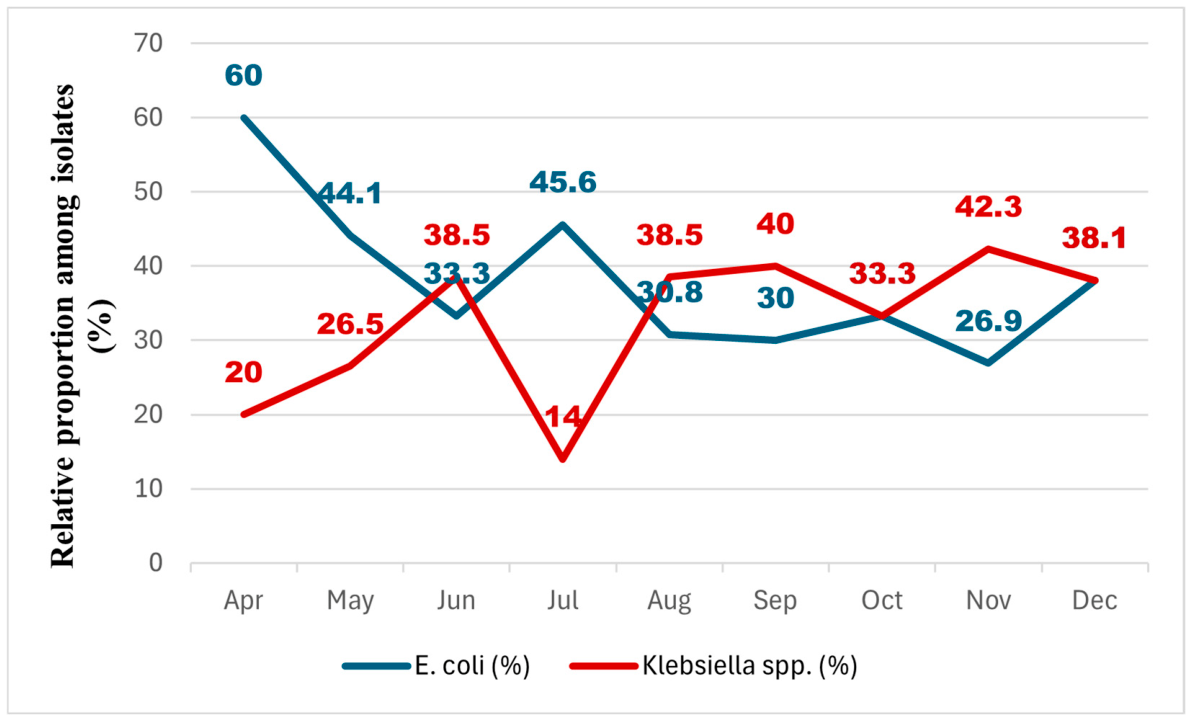
This study also aimed to compare the evolution of isolation rates during the period of study for strains of Klebsiella spp. and E. coli, which is recognized worldwide as the leading uropathogen. The results are presented in Figure 2.
The analysis of the monthly relative proportions of Klebsiella spp. and E. coli throughout the study period revealed significant variations between the two genera. The relative frequency of Klebsiella spp. was higher than that of E. coli during four specific months: June (38.5% vs. 33.3%), August (38.5% vs. 30.8%), September (40.0% vs. 30.0%), and November (42.3% vs. 26.9%). In contrast, E. coli remained the predominant isolate during three months (April, May, and July). Finally, during October and December, both pathogens exhibited identical relative proportions (33.3% and 38.1%, respectively). These fluctuations highlight a dynamic shift in the uropathogenic landscape, with Klebsiella spp. emerging as the leading isolate during the latter half of the year.

3.6. Risk Factors Associated with Klebsiella spp. UTIs

This study also aimed to identify risk factors associated with urinary tract infections caused by Klebsiella spp. in women. Odds ratios (ORs) were estimated as the primary measures of association between the presence of Klebsiella spp. and the different variables. These results are presented in Table 4 and Table 5.
The univariate analysis of sociodemographic factors associated with Klebsiella spp. isolation is presented in Table 4. (1) Marital status was the only sociodemographic variable significantly associated with the presence of Klebsiella spp. Compared to single or divorced women (reference), women in stable unions (married or cohabiting) exhibited a significantly higher risk (OR = 1.7; 95% CI: 1.1–2.6; p = 1.3 × 10 2 ). The risk was even more pronounced among widowed women, who were twice as likely to harbor Klebsiella spp. (OR = 2.1; 95% CI: 1.0–4.5; p = 4.0 × 10 2 ). (2) In contrast, age groups did not show a statistically significant association with Klebsiella spp. infection ( p > 0.05 ), although a slight trend toward increased risk was observed in the 40–59 age bracket (OR = 1.6; 95% CI: 0.7–3.8). (3) Regarding ethnicity, although no single group reached statistical significance ( p = 6.3 × 10 1 ), a notable trend was observed among women of the Membé group, who had higher levels of exposure to Klebsiella spp. isolation (OR = 2.6; 95% CI: 0.9–7.3; p = 7.1 × 10 2 ). Conversely, the Nzébi (OR = 0.6) and Bakota (OR = 0.7) groups showed lower odds of isolation compared to the Merié reference group. (4) Finally, no significant associations were found for employment status, neighborhood type or the number of sexual partners. These findings highlight that marital status and its associated lifestyle or biological factors are key indicators for Klebsiella spp. risk in this population.
The associations between medical or gynecological factors and Klebsiella spp. isolation are summarized in Table 5. Overall, no variables reached the threshold for statistical significance in the univariate analysis (all p > 0.05 ). (1) Regarding reproductive status, pregnant women showed a higher frequency of Klebsiella spp. isolation compared to non-pregnant women (16.8% vs. 12.7%), although this trend was not statistically significant (OR = 1.4; 95% CI: 0.8–2.4; p = 2.3 × 10 1 ). Similarly, a higher isolation rate was observed among menopausal women (21.0%) compared to pre-menopausal women (14.2%, OR = 1.6; 95% CI: 0.9–2.9; p = 1.2 × 10 1 ). (2) Hospitalization status and parity also showed no significant correlation with Klebsiella spp. isolation, with odds ratios of 1.4 and 1.2, respectively ( p > 0.05 ). (3) Finally, the presence of at least one underlying comorbidity (hypertension, diabetes, or HIV) was associated with a slight increase in the odds of Klebsiella spp. isolation (OR = 1.4; 95% CI: 0.7–2.8), but the association was not significant ( p = 3.5 × 10 1 ).

3.7. Multivariate Analyses Associated with Urinary Tract Infections with Klebsiella spp. in Women

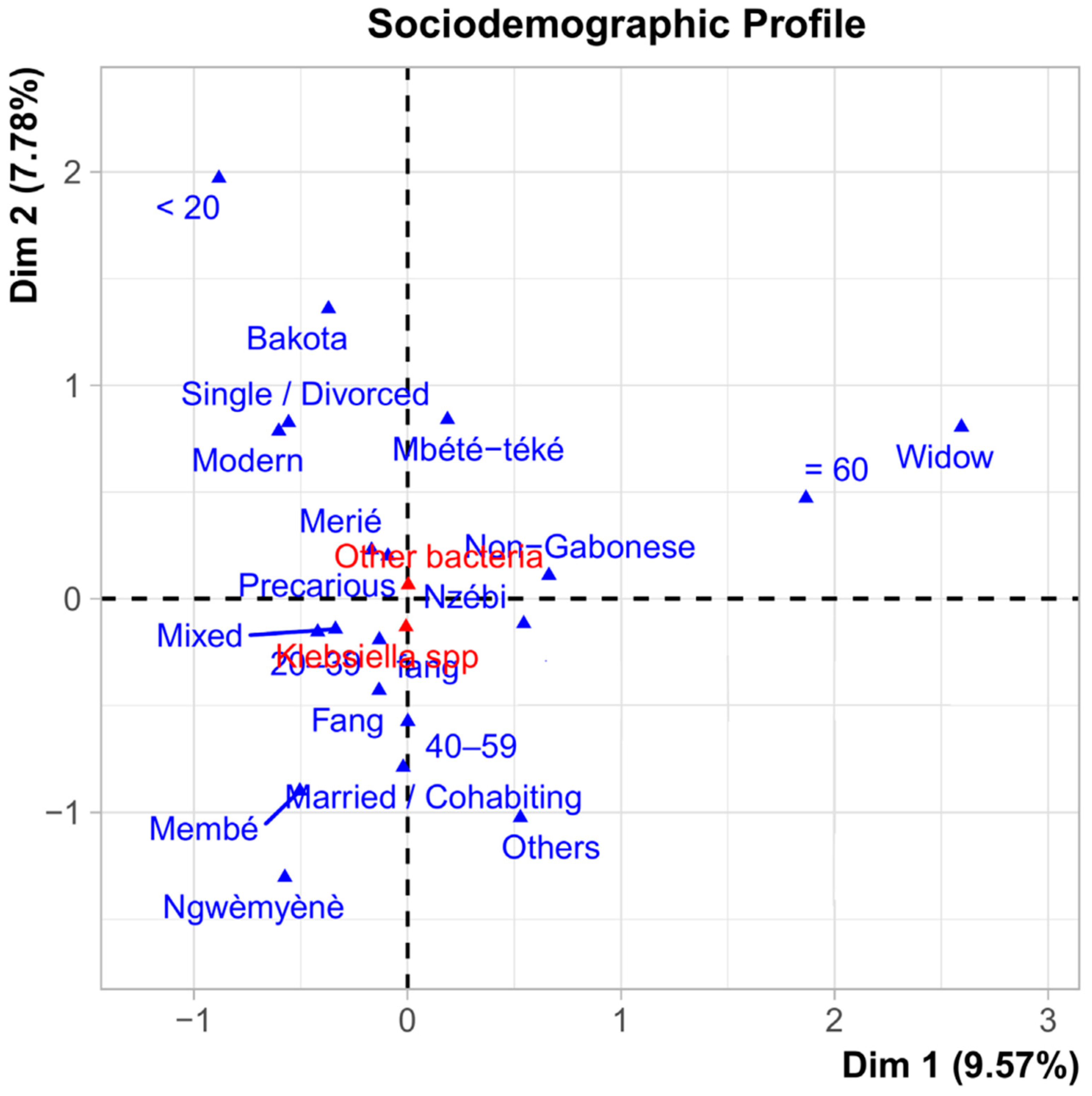
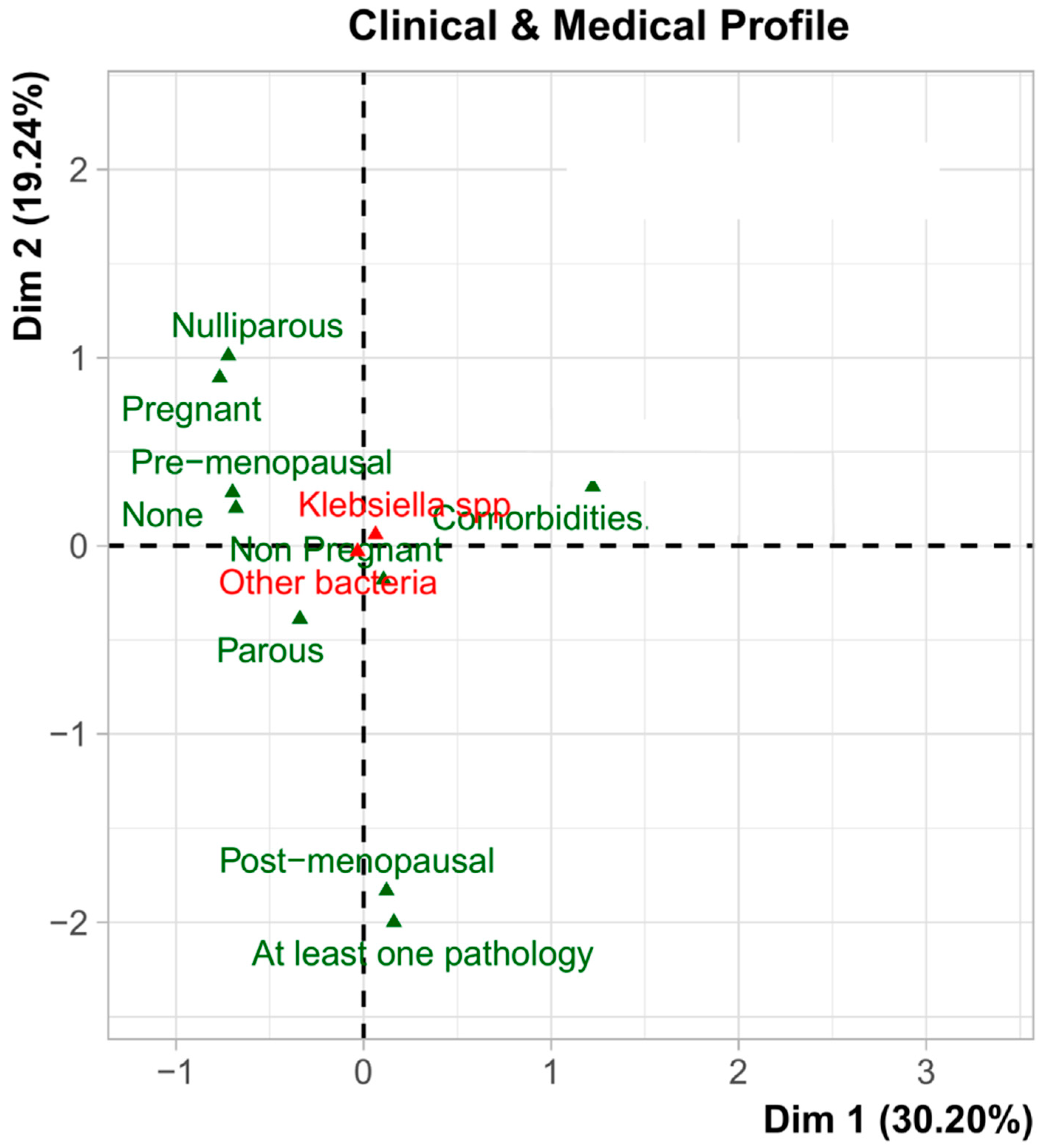
A multivariate descriptive analysis was employed to simultaneously evaluate all variables. Multiple Correspondence Analysis (MCA) was performed to characterize these qualitative variables, and the results are illustrated in Figure 3 and Figure 4.
The Multiple Correspondence Analysis (MCA) presented in Figure 3 explores potential associations between the sociodemographic profiles of the patients and the presence of Klebsiella spp. The two main dimensions account for 17.4% of the total variance (Dim 1: 9.6% and Dim 2: 7.8%). Although these percentages reflect the high variability of the study population, the MCA suggests trends that characterize the epidemiological landscape of urinary tract infections in the study area. A closer examination shows that Klebsiella spp. (red point) is centrally located but leans toward the lower-left quadrant. It exhibits a strong proximity to women aged 20–39 years, those who are married or cohabiting, and those residing in “precarious” or “mixed” neighborhoods. Additionally, Specific ethnic groups, such as the Fang and Nzébi, are positioned near the Klebsiella spp. cluster, suggesting a potential association within these demographic segments.
The Multiple Correspondence Analysis (MCA) for the clinical and medical profile (Figure 4) explains a substantial portion of the total variance (49.4%), with Dimension 1 and Dimension 2 accounting for 30.2% and 19.2%, respectively. The point representing Klebsiella spp. suggests a visual proximity with pre-menopausal status and pregnancy. The exploratory plot also illustrates proximity to nulliparous women and the absence of associated comorbidities (“None”). Conversely, postmenopausal patients and those with at least one pathology form a distinct cluster in the lower part of the graph, moving away from the Klebsiella spp. focal point. This visualization suggests that, in this sample, Klebsiella spp. infection primarily affects young, reproductively active women who generally lack significant underlying medical conditions.

4. Discussion

Numerous studies worldwide have highlighted the high prevalence of urinary tract infections (UTIs) among women, identifying female sex as a predominant risk factor [1,3,18]. To our knowledge, this is the first study in this region to focus specifically on the female population regarding UTIs within a tertiary hospital setting. Our results demonstrate that UTI prevalence among women varies according to age, marital status, and neighborhood type. We found an overall UTI prevalence of 43.6% [95% CI: 40.2–47.1%], which aligns with rates reported in other regions such as Ecuador (37.7%) and Cameroon (31%) [11,19].
Consistent with recent research, this study suggests that socioeconomic and environmental factors significantly influence prevalence. We observed that 59.1% of women aged ≥ 60 years, 64.6% of widows, and 43.3% of women living in precarious districts were infected. In older women, this high prevalence may be explained by age-related morpho-physiological changes, particularly the loss of bladder elasticity and reduced contractility leading to incomplete voiding and subsequent bacterial proliferation [6]. Regarding widows, social isolation or changes in health-seeking behavior might influence vulnerability. Furthermore, inadequate sanitary conditions in disadvantaged neighborhoods remain a major risk factor, facilitating increased exposure to uropathogens.
Moreover, this study highlights the potential influence of cultural factors on the prevalence of urinary tract infections. Indeed, the distribution of cases appears to vary across ethnic groups, with the Membé group exhibiting the highest prevalence (65.0%). Although this difference did not reach statistical significance, it deserves special attention, as this parameter could play an important role in the etiology of urinary tract infections in Gabon. The observed variations could hypothetically be influenced by specific cultural practices. For example, in some Gabonese ethnic groups, women resort to vaginal baths using medicinal plants for intimate maintenance and the treatment of gynecological disorders. An ethnobotanical study conducted in Gabon revealed that many women use traditional herbal remedies for vaginal cleansing and menstrual management [20]. However, as these practices were not directly assessed in our study, they remain speculative explanations. Further research incorporating specific behavioral variables is necessary to confirm whether such practices disrupt the vaginal microbiota and increase UTI susceptibility among these groups.
Gynecological and medical factors also play a significant role in the occurrence and proliferation of urinary tract infections in women. The results of this study indeed indicate that 46.3% of women who have already given birth, 57.9% of hospitalized women, 58.6% of postmenopausal women, and 83.3% of women living with HIV have a high prevalence of urinary tract infections. These high prevalences are justified by anatomical alterations probably due to multiple parities, which likely contribute to weakening the pelvic floor muscles, leading to incontinence, which promotes urinary stagnation and therefore urinary infections [21]. In addition, menopause causes a decrease in estrogen, which modifies the vaginal flora and vaginal pH, factors that greatly increase the risk of contracting urinary tract infections in women [6]. Finally, the high prevalence of urinary tract infections among women living with HIV would be attributed to the decrease in immune defenses that results from the condition. This significantly reduces the body’s ability to contain infections, associated with the high consumption of antibiotics that disrupt the protective flora and promote increased occurrence of urinary tract infections in these [22].
In contrast, monitoring the monthly distribution of UTIs revealed that prevalence peaked in December, exceeding 50%. In Gabon, this month coincides with the dry (cooler) season and major school holidays. It is plausible to hypothesize that these periods might be associated with an increased frequency of sexual activity, which is a well-documented risk factor for UTIs, as evidenced by Vincent et al., who observed higher frequencies of sexual intercourse in UTI cohorts compared to control groups [23]. However, as seasonal activities and behavioral changes were not directly measured in this study, these links remain speculative. Other factors, such as variations in health-seeking behavior during holiday periods, might also influence these trends and warrant further investigation using specific behavioral metrics.
Regarding etiology, Klebsiella species were responsible for 14.4% of all cases. This is higher than the values reported in Nigeria (7.4%) [24]. We hypothesize that this discrepancy could be influenced by several factors. While it is possible that Gabon’s high environmental humidity and rainfall might favor bacterial survival and transmission [25], the selection of Klebsiella spp. is often favored in contexts of frequent antibiotic use and self-medication, both of which are common in Libreville. Furthermore, as a tertiary hospital, our cohort likely includes cases of recurrent or complicated UTIs, where Klebsiella is a well-known major pathogen.
While many studies rank Klebsiella spp. as the second most common uropathogenic group, our study found a notably high isolation rate of 33.04% among positive cases, with KpSC being the predominant species (84.21%). This represents a significant increase compared to previous Gabonese studies in 2012 (13.6%) and 2019 (18.9%) [26,27]. This trend underscores the emerging epidemiological threat posed by Klebsiella [28,29]. Variations compared to Turkey (9.9%), Morocco (17.9%) and Bangladesh (12%) likely result from differences in study populations and identification [30,31]. Furthermore, the monitoring and comparison of E. coli and Klebsiella spp. isolation rates across the study period appear, to our knowledge, to be a novel finding. The explanation for these trends may lie in the differing pathophysiology of these two uropathogens. Indeed, Klebsiella spp. and E. coli compete for binding sites on urothelial cells; consequently, environmental factors that vary across different time periods may favor the colonization of one species over the other [32]. Nevertheless, the specific environmental drivers in our context remain to be elucidated. In conclusion, our study highlights a significant shift in the uropathogenic landscape among women in Libreville, with Klebsiella spp. isolation rates approaching those of E. coli. This evolving trend disrupts established epidemiological hierarchies and emphasizes that Klebsiella spp. are no longer secondary pathogens in this region. These findings underscore the necessity of adapting local empirical antibiotic therapies to address this high prevalence and emphasize the importance of continuous microbiological monitoring in Gabonese tertiary hospitals.
Finally, risk factor analysis specifically for Klebsiella spp. identified marital status (Married/Cohabiting and Widow) as a significant variable. Multivariate analysis suggested the need for a risk profile consisting of specific ethnic groups (Membé).
However, the low total inertia in our Multiple Correspondence Analysis (MCA) model limits the generalization of these specific associations. This study presents some limitations: first, it was conducted in a single hospital (HIAOBO), and second, certain behavioral data, such as self-medication or recent antibiotic use, were not collected.
Regarding risk factors specifically for Klebsiella spp. UTIs, marital status (notably cohabitation) emerged as a relevant variable. While the multivariate analysis suggested a specific risk profile involving women in the 20–59 age range, particularly those belonging to the Fang, Nguèmyènè, or Membé ethnic groups, Multiple Correspondence Analysis further refines this by illustrating a trend of clustering with nulliparity and the absence of known comorbidities. Contrary to the conventional understanding of Klebsiella spp. as a pathogen primarily affecting immunocompromised patients, our study indicates that in this specific setting, the pathogen appears to be more frequent among young or middle-aged, reproductively active women without traditional chronic risk factors. Although this study provides pioneering data on Klebsiella spp. urinary tract infections in Gabon, several limitations must be acknowledged.
First, our findings are based on data collected from a single tertiary hospital (HIAOBO) in Libreville, representing a hospital-based population rather than a community-wide sample. Consequently, the high prevalence rate observed (43.6%) may reflect a selection bias, as individuals visiting the laboratory were often referred due to clinical suspicion of a UTI. Therefore, these results cannot be directly generalized to the entire female population of Libreville or Gabon. Nonetheless, this study provides critical baseline epidemiological data for hospital settings in the region. Second, the cross-sectional design precludes the establishment of direct causality between sociodemographic factors and UTI occurrence. Third, key behavioral variables, such as intimate hygiene practices and prior self-medication with antibiotics, were not documented, potentially confounding some associations. Additionally, the absence of a control group of healthy women and the lack of molecular characterization of the Klebsiella isolates (e.g., identification of virulence or resistance genes) limit the depth of our epidemiological analysis. Furthermore, we acknowledge the lack of antibiotic susceptibility data as a limitation; while this restricts the immediate therapeutic utility of the findings, the study provides a critical epidemiological baseline for the region. Finally, the low total inertia in the MCA model and the small sample size in specific medical subgroups suggest that these preliminary findings should be interpreted with caution.

5. Conclusions

This study aimed to evaluate the prevalence and describe the risk factors associated with Klebsiella spp. urinary tract infections (UTIs) among women in Gabon. To our knowledge, this is the first study to determine the prevalence of Klebsiella spp. in UTIs specifically within the female population of Libreville and to identify the risk factors associated with this uropathogen. Our findings reveal a substantial overall UTI prevalence among women, which varies significantly according to sociodemographic, hormonal, and medical characteristics. This study also highlights the significant involvement of Klebsiella spp. in these infections, with KpSC identified as the predominant species.
These results emphasize the critical need for continuous surveillance of this uropathogen’s dissemination in both hospital and community settings. A deeper understanding of the risk factors for Klebsiella spp. UTIs could significantly improve the prevention, diagnosis and clinical management of these infections. Furthermore, identifying virulence factors and characterizing the genetic diversity of these uropathogens is essential to determine the epidemiological distribution of these strains in Gabon. While these data call for increased clinical attention toward both UTIs in women and the Klebsiella genus, several limitations must be acknowledged. Notably, this was a single-center study. Additionally, the absence of a control group may limit the full characterization of risk factors related to UTIs among women in Gabon.

Author Contributions

Conceptualization, J.F.Y., E.M.N. and R.M.M.; Methodology, E.M.N., J.F.Y., F.M.M., O.Z.M. and R.M.M.; Validation, J.F.Y., R.M.M., F.M. and A.C.D.; Formal Analysis, F.M. and E.M.N.; Investigation, E.M.N., F.M.M., O.Z.M., A.C.D., L.F.O. and M.M.; Resources, F.S.L.B., J.F.Y. and A.C.D.; Data Curation, F.M. and E.M.N.; Writing—Original Draft Preparation, E.M.N.; Writing—Review and Editing, E.M.N., R.M.M., J.F.Y., O.Z.M. and L.F.O.; Visualization, L.F.O., F.M.M. and M.M.; Supervision, J.F.Y. All authors have read and agreed to the published version of the manuscript.

Funding

This research received no external funding.

Institutional Review Board Statement

The study was conducted in accordance with the Declaration of Helsinki and approved by the Gabonese National Ethics Committee for Research and the Ministry of Health (protocol code PROT No. 0020/2015/SG/CNE). Administrative authorization was also obtained from the General Director of the Omar Bongo Ondimba Army Instruction Hospital (HIAOBO) in 10 January 2024, and the head of the bacteriology unit of the medical analysis laboratory.

Informed Consent Statement

Informed consent was obtained from all subjects involved in the study. Written informed consent was obtained from all participants; for minors, consent was obtained from their parents or legal guardians.

Data Availability Statement

The raw data supporting the conclusions of this article will be made available by the authors on request.

Acknowledgments

The authors would like to thank the administrative and technical staff of the Hôpital d’Instruction des Armées Omar Bongo Ondimba (HIAOBO) for their support during the data collection process. We also express our gratitude to the study participants. During the preparation of this manuscript, the authors used ChatGPT-4o (OpenAI, San Francisco, CA, USA) for language editing and translation optimization. The authors have reviewed and edited the results and take full responsibility for the content of this publication.

Conflicts of Interest

The authors declare no conflicts of interest.

References

  1. Kumwenda, P.; Semu, P. Characterization of urinary tract infections among females at a tertiary hospital in Malawi: A retrospective study. BMC Infect. Dis. 2025, 25, 466. [Google Scholar] [CrossRef] [Scilit] [PubMed]
  2. Trześniewska-Ofiara, Z.; Mendrycka, M.; Cudo, A.; Szmulik, M.; Woźniak-Kosek, A. Hospital Urinary Tract Infections in Healthcare Units on the Example of Mazovian Specialist Hospital Ltd. Front. Cell. Infect. Microbiol. 2022, 12, 891796. [Google Scholar] [CrossRef] [Scilit]
  3. Zeng, Z.; Zhan, J.; Zhang, K.; Chen, H.; Cheng, S. Global, regional, and national burden of urinary tract infections from 1990 to 2019: An analysis of the global burden of disease study 2019. World J. Urol. 2022, 40, 755–763. [Google Scholar] [CrossRef] [Scilit] [PubMed]
  4. Mengistu, D.A.; Alemu, A.; Abdukadir, A.A.; Husen, A.M.; Ahmed, F.; Mohammed, B. Incidence of Urinary Tract Infection Among Patients: Systematic Review and Meta-Analysis. Inq. A J. Med. Care Organ. Provis. Financ. 2023, 60, 00469580231168746. [Google Scholar] [CrossRef] [Scilit] [PubMed]
  5. Jung, C.; Brubaker, L. The Etiology and Management of Recurrent Urinary Tract Infections in Postmenopausal Women. Climacteric 2019, 22, 242. [Google Scholar] [CrossRef] [Scilit] [PubMed]
  6. Chen, Y.Y.; Su, T.H.; Lau, H.H. Estrogen for the prevention of recurrent urinary tract infections in postmenopausal women: A meta-analysis of randomized controlled trials. Int. Urogynecol. J. 2021, 32, 17–25. [Google Scholar] [CrossRef] [Scilit] [PubMed]
  7. Stapleton, A.E. The Vaginal Microbiota and Urinary Tract Infection. Microbiol. Spectr. 2016, 4, 10–1128. [Google Scholar] [CrossRef] [Scilit] [PubMed]
  8. Serretiello, E.; Folliero, V.; Santella, B.; Giordano, G.; Santoro, E.; De Caro, F.; Pagliano, P.; Ferro, M.; Aliberti, S.M.; Capunzo, M.; et al. Trend of Bacterial Uropathogens and Their Susceptibility Pattern: Study of Single Academic High-Volume Center in Italy (2015–2019). Int. J. Microbiol. 2021, 2021, 5541706. [Google Scholar] [CrossRef] [Scilit] [PubMed]
  9. Alsharedeh, R.H.; Yehya, A.; Yonis, O.B.; Alameri, O.; Alshraiedeh, N. Characterization of ESKAPE pathogens in urinary tract infections among Jordanian patients. J. Infect. Dev. Ctries. 2023, 17, 374–380. [Google Scholar] [CrossRef] [Scilit] [PubMed]
  10. Getaneh, T.; Negesse, A.; Dessie, G.; Desta, M.; Tigabu, A. Prevalence of Urinary Tract Infection and Its Associated Factors among Pregnant Women in Ethiopia: A Systematic Review and Meta-Analysis. Biomed. Res. Int. 2021, 2021, 6551526. [Google Scholar] [CrossRef] [Scilit] [PubMed]
  11. Mera-Lojano, L.D.; Mejía-Contreras, L.A.; Cajas-Velásquez, S.M.; Guarderas-Muñoz, S.J. Prevalencia y factores de riesgo de infección del tracto urinario en embarazadas. Rev. Med. Inst. Mex. Seguro Soc. 2023, 61, 590. [Google Scholar] [CrossRef] [Scilit] [PubMed]
  12. Liu, J.; Hao, X.; Shang, X.; Chi, R.; Xu, T. Incidence and risk factors of urinary tract infection in hospitalized patients with spinal cord injury in a hospital of China. Sci. Rep. 2024, 14, 3579. [Google Scholar] [CrossRef] [Scilit] [PubMed]
  13. Jalil, M.B.; Al Atbee, M.Y.N. The prevalence of multiple drug resistance Escherichia coli and Klebsiella pneumoniae isolated from patients with urinary tract infections. J. Clin. Lab. Anal. 2022, 36, e24619. [Google Scholar] [CrossRef] [Scilit] [PubMed]
  14. Bayaba, S.; Founou, R.C.; Tchouangueu, F.T.; Dimani, B.D.; Mafo, L.D.; Nkengkana, O.A.; Founou, L.L.; Noubom, M. High prevalence of multidrug resistant and extended-spectrum β-lactamase-producing Escherichia coli and Klebsiella pneumoniae isolated from urinary tract infections in the West region, Cameroon. BMC Infect. Dis. 2025, 25, 115. [Google Scholar] [CrossRef] [Scilit] [PubMed]
  15. Ballén, V.; Gabasa, Y.; Ratia, C.; Ortega, R.; Tejero, M.; Soto, S. Antibiotic Resistance and Virulence Profiles of Klebsiella pneumoniae Strains Isolated from Different Clinical Sources. Front. Cell. Infect. Microbiol. 2021, 11, 738223. [Google Scholar] [CrossRef] [Scilit]
  16. Kouri, T.T.; Hofmann, W.; Falbo, R.; Oyaert, M.; Schubert, S.; Gertsen, J.B.; Merens, A.; Pestel-Caron, M. The EFLM European Urinalysis Guideline. Clin. Chem. Lab. Med. 2024, 62, 1653–1786. [Google Scholar] [CrossRef] [Scilit] [PubMed]
  17. Karah, N.; Rafei, R.; Elamin, W.; Ghazy, A.; Abbara, A.; Hamze, M.; Uhlin, B.E. Guideline for urine culture and biochemical identification of bacterial urinary pathogens in low-resource settings. Diagnostics 2020, 10, 832. [Google Scholar] [CrossRef] [Scilit] [PubMed]
  18. Akoachere, J.F.T.K.; Yvonne, S.; Akum, N.H.; Seraphine, E.N. Etiologic profile and antimicrobial susceptibility of community-acquired urinary tract infection in two Cameroonian towns. BMC Res. Notes 2012, 5, 219. [Google Scholar] [CrossRef] [Scilit] [PubMed]
  19. Ngong, I.N.; Fru-Cho, J.; Yung, M.A.; Akoachere, J.-F.K.T. Prevalence, antimicrobial susceptibility pattern and associated risk factors for urinary tract infections in pregnant women attending ANC in some integrated health centers in the Buea Health District. BMC Pregnancy Childbirth 2021, 21, 342. [Google Scholar] [CrossRef] [Scilit] [PubMed]
  20. Towns, A.M.; van Andel, T. Comparing local perspectives on women’s health with statistics on maternal mortality: An ethnobotanical study in Bénin and Gabon. BMC Complement. Altern. Med. 2014, 14, 113. [Google Scholar] [CrossRef] [Scilit] [PubMed]
  21. Özdemır, Ö.Ç.; Bakar, Y.; Özengın, N.; Duran, B. The effect of parity on pelvic floor muscle strength and quality of life in women with urinary incontinence: A cross sectional study. J. Phys. Ther. Sci. 2015, 27, 2133. [Google Scholar] [CrossRef] [Scilit] [PubMed]
  22. Shabohurira, A.; Eilu, E.; Sankarapandian, V.; Muhwezi, R.; Makeri, D. Prevalence, bacterial profile and factors associated with urinary tract infections among people living with HIV in Africa: A systematic review and meta-analysis. Discov. Public Health 2025, 22, 50. [Google Scholar] [CrossRef] [Scilit]
  23. Vincent, C.R.; Thomas, T.L.; Reyes, L.; White, C.L.; Canales, B.K.; Brown, M.B. Symptoms and risk factors associated with first urinary tract infection in college age women: A prospective cohort study. J. Urol. 2013, 189, 904–910. [Google Scholar] [CrossRef] [Scilit] [PubMed]
  24. Abdulfatai, K.; Sanusi, S.B.; Usman, A.; Lawal, S.M.; Idris, H. Prevalence and Antimicrobial Susceptibility Pattern of Klebsiella pneumoniae and Pseudomonas aeruginosa Among Women with Urinary Tract Infections Attending Antenatal Care in Kaduna, Nigeria. Sci. World J. 2023, 18, 114–119. Available online: https://www.ajol.info/index.php/swj/article/view/246340 (accessed on 6 June 2025).
  25. Li, C.; Tang, F.; Xi, L.; Wang, X. Influence of meteorological and environmental factors on pediatric urinary tract infections: Insights from a 6-year retrospective study in Central China. Front. Public Health 2025, 13, 1512403. [Google Scholar] [CrossRef] [Scilit]
  26. Ndang Ngou, M.; Fall, P.A.; Mougougou, A.; Massandé, J. Étude du Profil de Sensibilite des Bacteries Responsables d’Infections Urinaires Communautaires de l’Adulte en Milieu Urologique–Bulletin Médical d’Owendo. Available online: http://www.lebmo.org/etude-du-profil-de-sensibilite-des-bacteries-responsables-dinfections-urinaires-communautaires-de-ladulte-en-milieu-urologique/ (accessed on 6 June 2025).
  27. Ndzime, Y.M.; Onanga, R.; Kassa, R.F.K.; Bignoumba, M.; Nguema, P.P.M.; Gafou, A.; Lendamba, R.W.; Moghoa, K.M.; Bisseye, C. Epidemiology of Community Origin Escherichia coli and Klebsiella pneumoniae Uropathogenic Strains Resistant to Antibiotics in Franceville, Gabon. Infect. Drug Resist. 2021, 14, 585–594. [Google Scholar] [CrossRef] [Scilit] [PubMed]
  28. Tacconelli, E.; Carrara, E.; Savoldi, A.; Harbarth, S.; Mendelson, M.; Monnet, D.L.; Pulcini, C.; Kahlmeter, G.; Kluytmans, J.; Carmeli, Y.; et al. Discovery, research, and development of new antibiotics: The WHO priority list of antibiotic-resistant bacteria and tuberculosis. Lancet Infect. Dis. 2018, 18, 318–327. [Google Scholar] [CrossRef] [Scilit] [PubMed]
  29. Diab, H.; Rahy, K.; Jisr, T.; El Chaar, M.; Abboud, E.; Tokajian, S. Phenotypic and molecular characterization of multi-drug resistant Klebsiella spp. isolates recovered from clinical settings. Infect. Genet. Evol. 2024, 119, 105583. [Google Scholar] [CrossRef] [Scilit] [PubMed]
  30. Sbiti, M.; Lahmadi, K.; Louzi, L. Profil épidémiologique des entérobactéries uropathogènes productrices de bêta-lactamases à spectre élargi. Pan Afr. Med. J. 2017, 28, 29. [Google Scholar] [CrossRef] [Scilit] [PubMed]
  31. Lee, A.C.C.; Mullany, L.C.; Koffi, A.K.; Rafiqullah, I.; Khanam, R.; Folger, L.V.; Rahman, M.; Mitra, D.K.; Labrique, A.; Christian, P.; et al. Urinary tract infections in pregnancy in a rural population of Bangladesh: Population-based prevalence, risk factors, etiology, and antibiotic resistance. BMC Pregnancy Childbirth 2019, 20, 1. [Google Scholar] [CrossRef] [Scilit] [PubMed]
  32. Juarez, G.E.; Galván, E.M. Role of nutrient limitation in the competition between uropathogenic strains of Klebsiella pneumoniae and Escherichia coli in mixed biofilms. Biofouling 2018, 34, 287–298. [Google Scholar] [CrossRef] [Scilit] [PubMed]
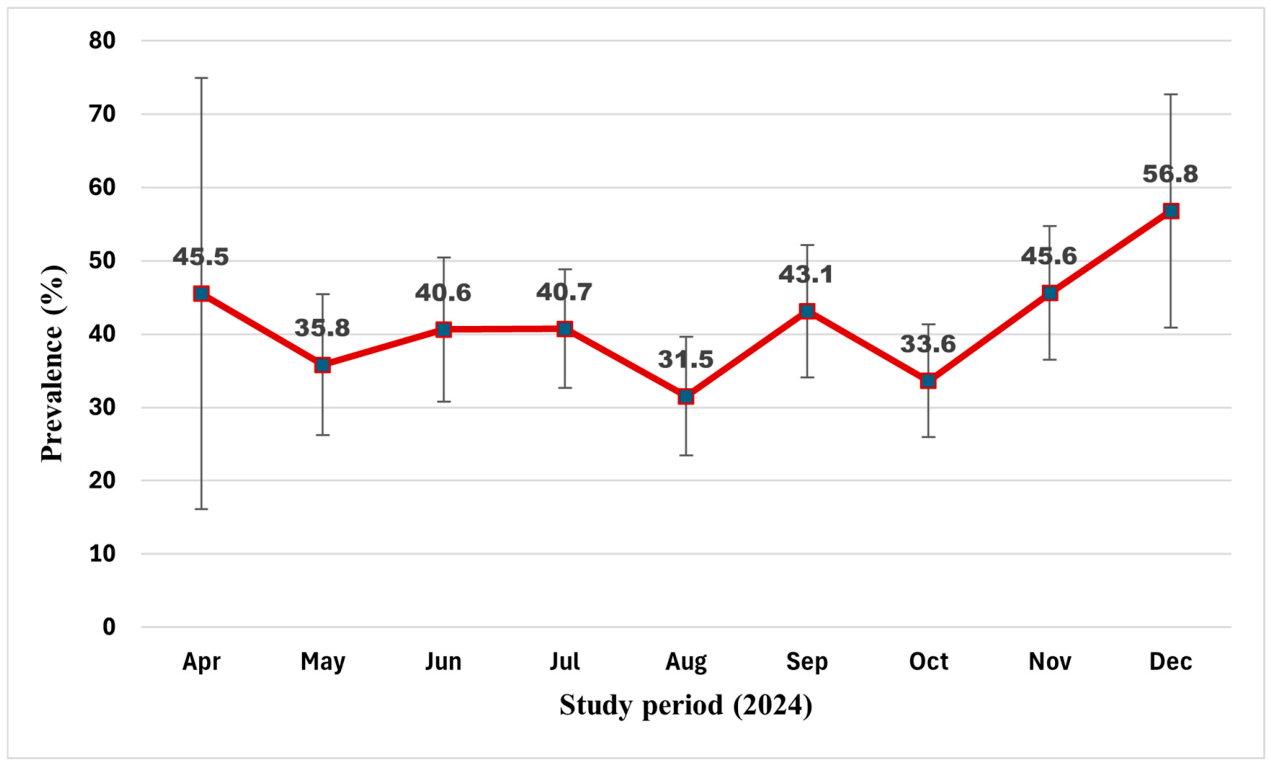
Figure 1. Evolution of the prevalence of urinary tract infections during the study period.
Microbiolres 17 00136 g001
Figure 2. Evolution of isolation rates of Klebsiella spp. and E. coli over time.
Microbiolres 17 00136 g002
Figure 3. Plot of the two-dimensional analysis of sociodemographic parameters and urinary tract infection of Klebsiella spp. using MCA among patients with confirmed urinary tract infections.
Microbiolres 17 00136 g003
Figure 4. Plot of the two-dimensional analysis of gynecological and medical parameters and urinary tract infection with Klebsiella spp. using MCA among patients with confirmed urinary tract infections.
Microbiolres 17 00136 g004
Table 1. Prevalence of UTIs according to sociodemographic characteristics.
CharacteristicsTotal NUTI n (%) [95% CI]No UTI n (%)p-Value
Women791345 (43.6) [40.2–47.1]446 (56.4)
Age Groups791 7.2 × 10⁻³
<207023 (32.9)47 (67.1)
20–39467196 (42.0)271 (58.0)
40–5916171 (44.1)90 (55.9)
≥609355 (59.1)38 (40.9)
Marital Status (Adults)758 9.5 × 10⁻⁴
Single/Divorced337133 (39.5)204 (60.5)
Cohabiting373176 (47.2)197 (52.8)
Widow4831 (64.6)17 (35.4)
Education Level791 3.4 × 10⁻¹
None2714 (51.8)13 (48.1)
Primary8335 (42.2)48 (57.8)
Secondary461211 (45.8)250 (54.2)
Higher Education22085 (38.6)135 (61.4)
Employment Status743 1.5 × 10⁻¹
Unemployed432202 (46.8)230 (53.2)
Employed311127 (40.8)184 (59.2)
Neighborhood Type631 4.9 × 10⁻²
Mixed24399 (40.7)144 (59.3)
Modern7621 (27.6)55 (72.4)
Precarious312135 (43.3)177 (56.7)
Religion791 6.2 × 10⁻¹
Christian609268 (44.0)341 (56)
Muslim188 (44.4)10 (55.6)
Traditionalist2212 (54.5)10 (45.4)
None14257 (40.1)85 (59.9)
Ethnic group791 6.3 × 10⁻¹
Bakota2913 (44.8)16 (55.2)
Non-Gabonese165 (31.2)11 (68.7)
Fang22994 (41.0)135 (58.9)
Mbété-téké7431 (41.9)43 (58.1)
Membé2013 (65)7 (35)
Merié247111 (44.9)136 (55.1)
Ngwèmyènè2210 (45.4)12 (54.5)
Nzébi13561 (45.2)74 (54.8)
Others197 (36.8)12 (63.2)
Number of sexual partners524 1 × 10⁻¹
09929 (29.3)70 (70.7)
1406171 (42.1)235 (57.9)
2196 (31.6)13 (68.4)
Table 2. Prevalence of UTIs according to gynecological and medical factors.
CharacteristicsTotal NUTI n (%)No UTI n (%)p-Value
Pregnancy Status782 2.0 × 10⁻¹
Pregnant10452 (50)52 (50)
Non-pregnant678290 (42.8)388.0 (57.2)
Parity (Mother)638 9 × 10⁻³
No17460 (34.5)114 (65.5)
Yes464215 (46.3)249 (53.7)
Contraceptive use558 2.3 × 10⁻¹
No429186 (43.4)243 (56.6)
Yes7426 (35.1)48.0 (64.9)
Patient Type791 1.2 × 10⁻²
Outpatient715301 (42.1)414.0 (57.90%)
Inpatient7644 (58)32 (42.1)
Menopause573 2 × 10⁻³
No486196 (40.3)290.0 (59.7)
Yes8751 (58.6)36 (41.4)
Known Pathology551 3.50 × 10⁻³
None490201 (41)289 (59)
At least one pathology6137 (60.7)24 (39.3)
Table 3. Isolation rate of uropathogens.
Uropathogens n %95% CI
Enterobacterales29184.3[80.5–88.2]
E. coli12235.4[30.3–40.4]
Klebsiella spp.11433.0[28.1–38.0]
K. pneumoniae species complex a9684.21[77.5–91.0]
K. aerogenes a119.6[4.2–15.1]
K. oxytoca a76.1[1.7–10.5]
Enterobacter spp.329.3[6.2–12.3]
Citrobacter spp.102.9[1.1–4.7]
Raoultella ornithinolytica72.0[0.5–3.5]
Proteus mirabilis61.74[0.4–3.1]
Other Gram-negative bacteria185.2[2.9–7.6]
Pseudomonas spp.92.6[0.9–4.3]
Acinetobacter spp.72.0[0.5–3.5]
Salmonella spp.20.6[0.0–1.4]
Gram-positive bacteria61.7[0.4–3.1]
Yeasts308.7[5.7–11.7]
95% CI = 95% confidence interval. a: Percentages for Klebsiella species are calculated using the total number of Klebsiella isolates ( n = 114 ) as the denominator.
Table 4. Risk factors related to Klebsiella spp. in women.
CharacteristicsN %Klebsiella spp. Test ResultsOR (IC 95%)p-Value
Absent N (%)Present N (%)
age groups791
<2070 (8.8)62 (9.2)8 (7.0)Ref
20–39467 (59.0)404 (59.7)63 (55.3)1.2 (0.5–2.6) 6.3 × 10 1
40–59161 (20.4)133 (19.6)28 (24.6)1.6 (0.7–3.8) 2.5 × 10 1
6093 (11.8)78 (11.5)15 (13.1)1.5 (0.6–3.6) 3.8 × 10 1
Marital Status758
Single/Divorced337 (44.5)300 (48.7)37 (35.1)Ref
Married/Cohabiting373 (49.2)309 (47.7)64 (55.7)1.7 (1.1–2.6) 1.3 × 10 2
Widow48 (6.3)38 (5.9)10 (9.0)2.1 (1.0–4.5) 4.0 × 10 2
Employment Status743
Unemployed432 (58.1)372 (58.8)60 (54.5)Ref
Employed311 (41.9)261 (41.2)50 (45.4)1.2 (0.8–1.8)4.1 ×   10 1
Neighborhood type649
Mixed609 (93.8)517 (93.7)92 (94.8)Ref
Modern18 (2.8)14 (2.5)4 (4.1)1.6 (0.4–4.8)4.1 ×   10 1
Precarious22 (3.4)21 (3.8)1 (1.0)0.3 (0.0–1.5)1.6 ×   10 1
Ethnic group791
Merié247 (31.2)212 (31.3)35 (30.7)Ref
Fang229 (29.0)192 (28.4)37 (32.5)1.2 (0.7–1.9)5.4 × 10⁻¹
Nzébi135 (17.1)122 (18.0)13 (11.4)0.6 (0.3–1.3) 2.0 × 10 1
Mbété-téké74 (9.4)63 (9.3)11 (9.6)1.1 (0.5–2.2) 8.8 × 10 1
Bakota29 (3.7)26 (3.8)3 (2.6)0.7 (0.2–2.4) 5.7 × 10 1
Ngwèmyènè22 (2.8)18 (2.7)4 (3.5)1.3 (0.4–4.1) 6.0 × 10 1
Membé20 (2.5)14 (2.1)6 (5.3)2.6 (0.9–7.3) 7.1 × 10 2
Others19 (2.4)16 (2.4)3 (2.6)1.1 (0.3–4.0) 8.4 × 10 1
Non-Gabonese16 (2.0)14 (2.1)2 (1.8)0.9 (0.2–3.9) 8.5 × 10 1
Number of sexual partners524
1406 (77.5)353 (76.6)53 (84.1)Ref
099 (18.9)91 (19.7)8 (12.7)0.6 (0.3–1.3) 1.8 × 10 1
219 (3.6)17 (3.7)2 (3.2)0.8 (0.2–3.5) 7.4 × 10 1
OR, odds ratio; IC, confidence interval; Ref, reference category.
Table 5. Risk factors associated with gynecological and medical parameters in Klebsiella spp. infections.
CharacteristicsN %Klebsiella spp. Test Results OR (IC 95%)p-Value
Absent N (%)Present N (%)
Pregnancy Status782
Non-pregnant678 (86.7)584 (87.3)94 (83.2)Ref
Pregnant104 (13.3)85 (12.7)19 (16.8)1.4 (0.8–2.4)2.30 × 10⁻¹
Parity (Mother)638
No174 (27.3)153 (27.9)21 (23.6)Ref
Yes464 (72.7)396 (72.1)68 (76.4)1.2 (0.7–2.1)4 × 10⁻¹
Patient Type791
Outpatient715 (90.4)615 (90.8)100 (87.7)Ref
Inpatient76 (9.6)62 (9.2)14 (12.3)1.4 (0.7–2.5)2.9 × 10⁻¹
Menopause573
No486 (84.8)422 (85.8)64 (79.0)Ref
Yes87 (15.2)70 (14.2)17 (21)1.6 (0.9–2.9)1.2 × 10⁻¹
Known Pathology551
None490 (89.4)430 (89.4)60 (85.7)Ref
At least one pathology61 (10.6)51 (10.6)10 (14.3)1.4 (0.7–2.8)3.50 × 10⁻¹
OR, odds ratio; CI, confidence interval; Ref, reference category.
Disclaimer/Publisher’s Note: The statements, opinions and data contained in all publications are solely those of the individual author(s) and contributor(s) and not of MDPI and/or the editor(s). MDPI and/or the editor(s) disclaim responsibility for any injury to people or property resulting from any ideas, methods, instructions or products referred to in the content.