
Genomic Insights into Bombiscardovia sp. JNUCC 75 Isolated from the Flowers of Prunus yedoensis



Abstract
1. Introduction
2. Materials and Methods
2.1. Isolation and Cultivation
2.2. Genome Sequencing, Assembly, and Annotation
2.3. Phylogenetic and Comparative Genomic Analyses
2.4. Secondary-Metabolite Gene Cluster Analysis
2.5. Functional Annotation
2.6. Statistical Analysis
3. Results and Discussion
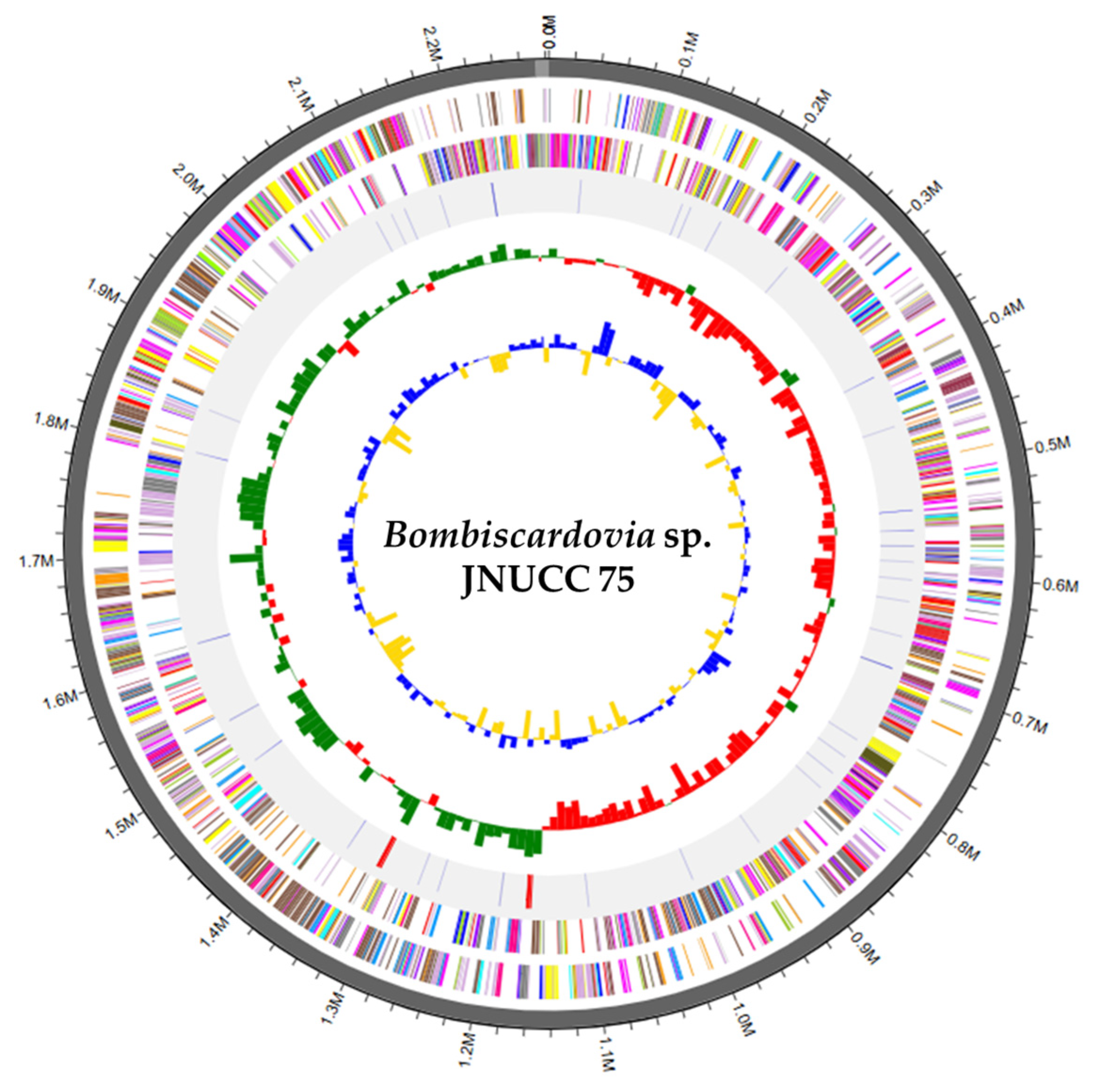
3.1. Genomic Features
3.2. Plasmid Replicon Structure and Genetic Features
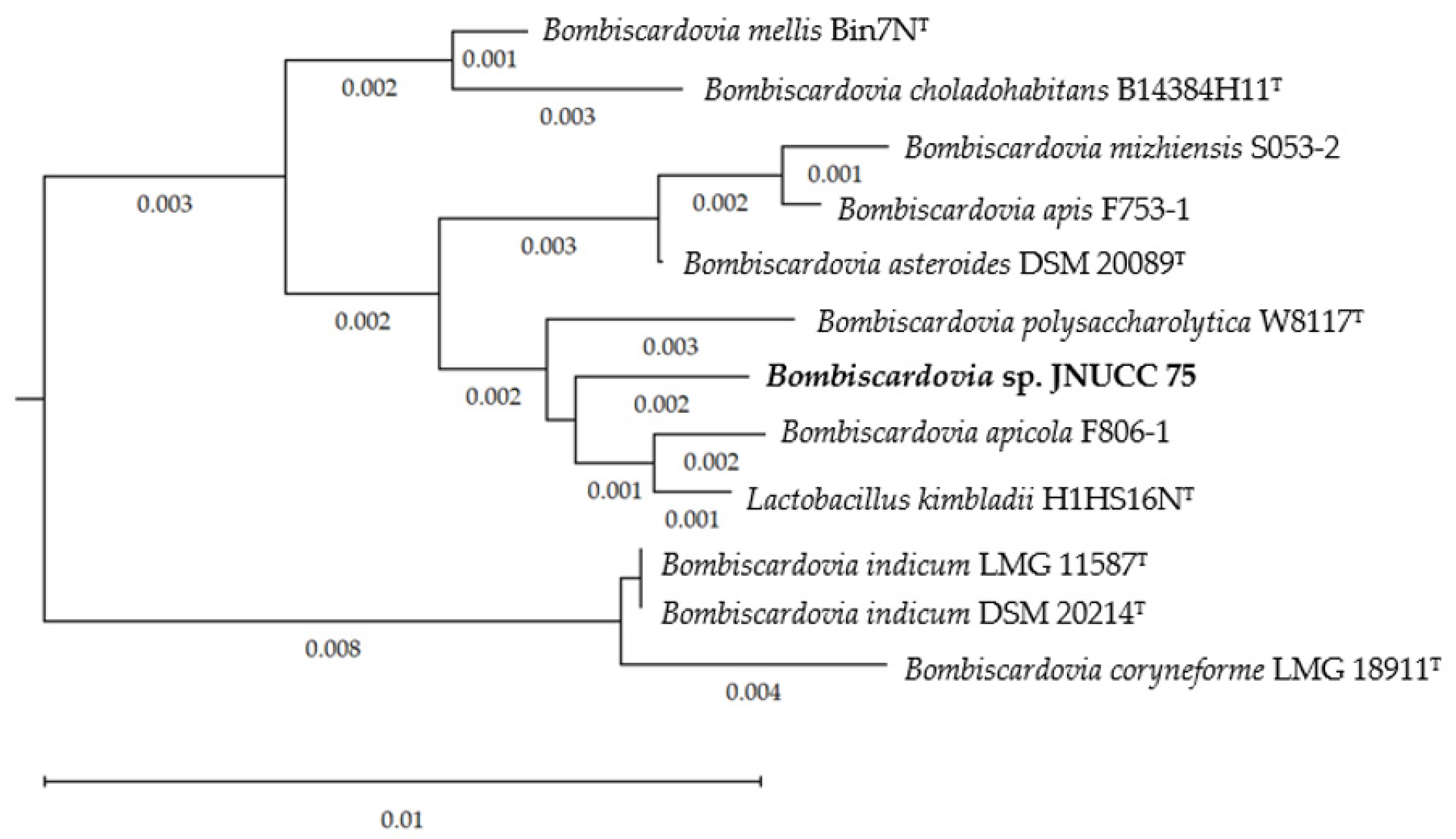
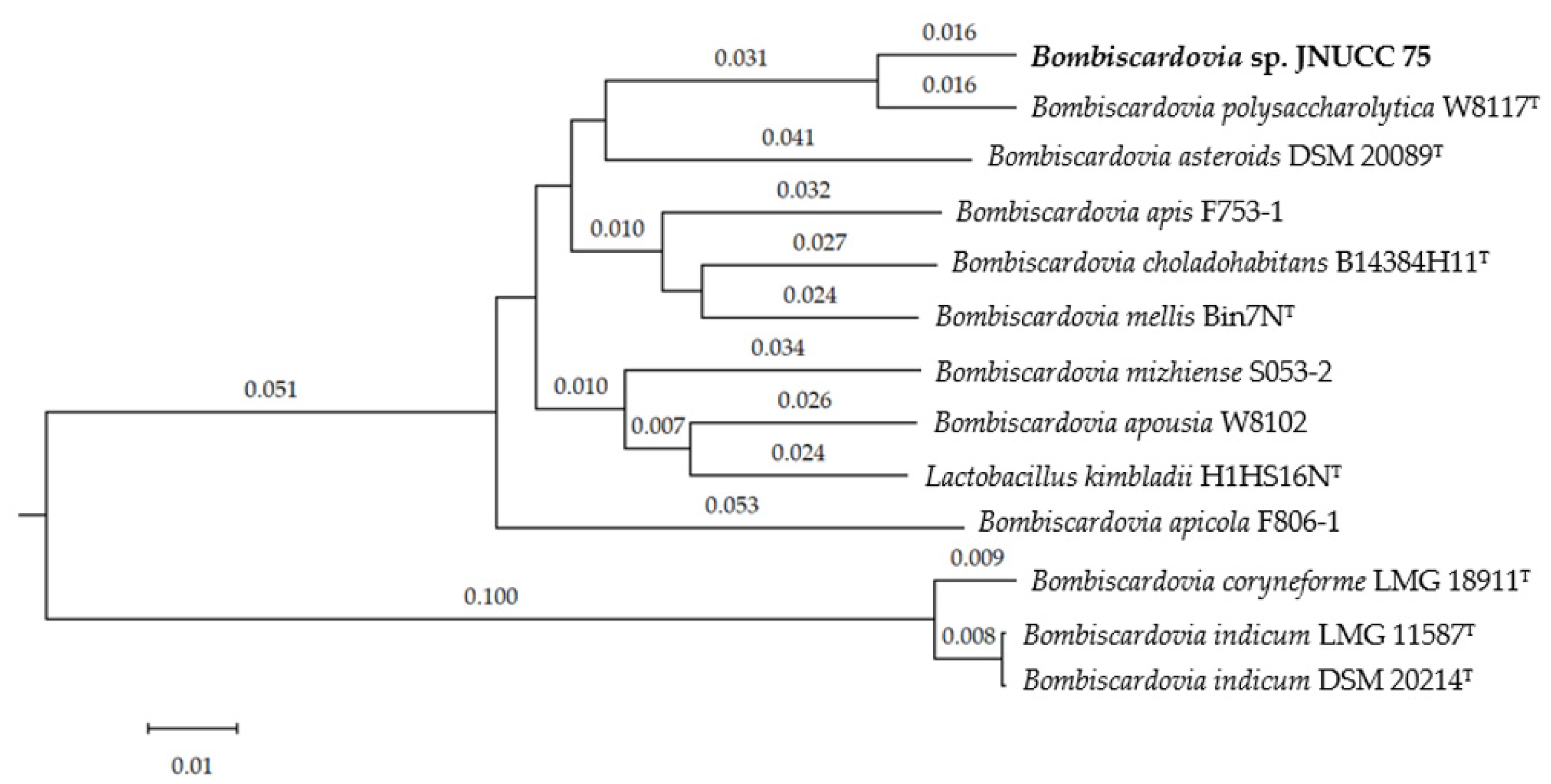
3.3. Phylogenetic Relationships
3.4. Genomic Relatedness
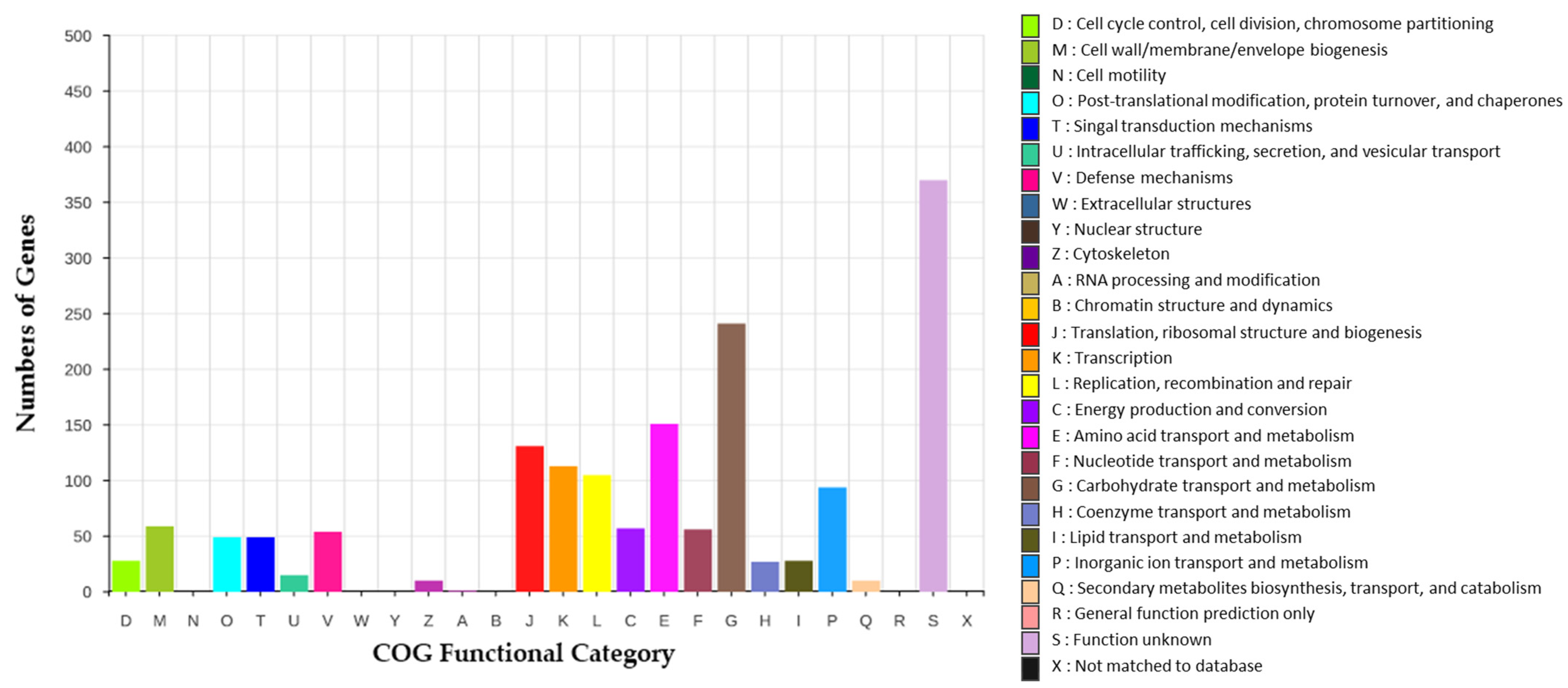
3.5. Functional Annotation and COG Classification
3.6. Secondary Metabolite Gene Clusters
3.7. Ecological and Applied Implications
3.8. Overall Significance
4. Conclusions
Author Contributions
Funding
Institutional Review Board Statement
Informed Consent Statement
Data Availability Statement
Conflicts of Interest
References
- O’Callaghan, A.; van Sinderen, D. Bifidobacteria and Their Role as Members of the Human Gut Microbiota. Front. Microbiol. 2016, 7, 925. [Google Scholar] [CrossRef] [Scilit]
- Turroni, F.; van Sinderen, D.; Ventura, M. Bifidobacteria: Insights into the biology of a key microbial group of early life gut microbiota. Microbiome Res. Rep. 2021, 1, 2. [Google Scholar] [CrossRef] [Scilit]
- Alessandri, G.; van Sinderen, D.; Ventura, M. The genus bifidobacterium: From genomics to functionality of an important component of the mammalian gut microbiota. Comput. Struct. Biotechnol. J. 2021, 19, 1472–1487. [Google Scholar] [CrossRef] [Scilit] [PubMed]
- Ruiz, L.; Delgado, S.; Ruas-Madiedo, P.; Sánchez, B.; Margolles, A. Bifidobacteria and Their Molecular Communication with the Immune System. Front. Microbiol. 2017, 8, 2345. [Google Scholar] [CrossRef] [Scilit] [PubMed]
- Lugli, G.A.; Fontana, F.; Tarracchini, C.; Mancabelli, L.; Milani, C.; Turroni, F.; Ventura, M. Exploring the biodiversity of Bifidobacterium asteroides among honey bee microbiomes. Environ. Microbiol. 2022, 24, 5666–5679. [Google Scholar] [CrossRef] [Scilit]
- Prasad, A.; Pallujam, A.D.; Siddaganga, R.; Suryanarayanan, A.; Mazel, F.; Brockmann, A.; Yek, S.H.; Engel, P. Evolution of gut microbiota across honeybee species revealed by comparative metagenomics. Nat. Commun. 2025, 16, 9069. [Google Scholar] [CrossRef] [Scilit] [PubMed]
- Alberoni, D.; Gaggìa, F.; Baffoni, L.; Modesto, M.M.; Biavati, B.; Di Gioia, D. Bifidobacterium xylocopae sp. nov. and Bifidobacterium aemilianum sp. nov., from the carpenter bee (Xylocopa violacea) digestive tract. Syst. Appl. Microbiol. 2019, 42, 205–216. [Google Scholar] [CrossRef] [Scilit] [PubMed]
- Eckel, V.P.L.; Vogel, R.F. Genomic and physiological insights into the lifestyle of Bifidobacterium species from water kefir. Arch. Microbiol. 2020, 202, 1627–1637. [Google Scholar] [CrossRef] [Scilit]
- Choi, S.S.; Bakalin, V.A.; Bum, H.M.; Park, S.J.; Kim, D.S.; Ahn, U.S.; Moon, M.O. The Liverwort and Hornwort Flora of Jeju Island, Republic of Korea: A Volcanic Island with a Unique Mixture of Subtropical, Temperate, Boreal, and Arctomontane Taxa. Plants 2023, 12, 2384. [Google Scholar] [CrossRef] [Scilit]
- Cho, M.S.; Kim, C.S.; Kim, S.H.; Kim, T.O.; Heo, K.I.; Jun, J.; Kim, S.C. Molecular and morphological data reveal hybrid origin of wild Prunus yedoensis (Rosaceae) from Jeju Island, Korea: Implications for the origin of the flowering cherry. Am. J. Bot. 2014, 101, 1976–1986. [Google Scholar] [CrossRef] [Scilit]
- Kelly, S.M.; Munoz-Munoz, J.; van Sinderen, D. Plant Glycan Metabolism by Bifidobacteria. Front. Microbiol. 2021, 12, 609418. [Google Scholar] [CrossRef] [Scilit]
- Hong, J.Y.; Kwon, D.; Park, K.Y. Microbiome-Based Interventions for Skin Aging and Barrier Function: A Comprehensive Review. Ann. Dermatol. 2025, 37, 259–268. [Google Scholar] [CrossRef] [Scilit] [PubMed]
- Xiao, X.; Hu, X.; Yao, J.; Cao, W.; Zou, Z.; Wang, L.; Qin, H.; Zhong, D.; Li, Y.; Xue, P.; et al. The role of short-chain fatty acids in inflammatory skin diseases. Front. Microbiol. 2023, 13, 1083432. [Google Scholar] [CrossRef] [Scilit] [PubMed]
- Cui, H.; Feng, C.; Zhan, G.T.; Martínez-Ríos, V.; Martorell, P.; Tortajada, M.; Cheng, S.; Cheng, S.; Duan, Z. Effects of a lotion containing probiotic ferment lysate as the main functional ingredient on enhancing skin barrier: A randomized, self-control study. Sci. Rep. 2023, 13, 16879. [Google Scholar] [CrossRef] [Scilit] [PubMed]
- Amobonye, A.; Pillay, B.; Hlope, F.; Asong, S.T.; Pillai, S. Postbiotics: An insightful review of the latest category in functional biotics. World J. Microbiol. Biotechnol. 2025, 41, 293. [Google Scholar] [CrossRef] [Scilit]
- Seemann, T. Prokka: Rapid prokaryotic genome annotation. Bioinformatics 2014, 30, 2068–2069. [Google Scholar] [CrossRef] [Scilit]
- Cantalapiedra, C.P.; Hernández-Plaza, A.; Letunic, I.; Bork, P.; Huerta-Cepas, J. eggNOG-mapper v2: Functional Annotation, Orthology Assignments, and Domain Prediction at the Metagenomic Scale. Mol. Biol. Evol. 2021, 38, 5825–5829. [Google Scholar] [CrossRef] [Scilit]
- Yoon, S.H.; Ha, S.M.; Kwon, S.; Lim, J.; Kim, Y.; Seo, H.; Chun, J. Introducing EzBioCloud: A taxonomically united database of 16S rRNA gene sequences and whole-genome assemblies. Int. J. Syst. Evol. Microbiol. 2017, 67, 1613–1617. [Google Scholar] [CrossRef] [Scilit]
- Meier-Kolthoff, J.P.; Göker, M. TYGS is an automated high-throughput platform for state-of-the-art genome-based taxonomy. Nat. Commun. 2019, 10, 2182. [Google Scholar] [CrossRef] [Scilit]
- Meier-Kolthoff, J.P.; Auch, A.F.; Klenk, H.P.; Göker, M. Genome sequence-based species delimitation with confidence intervals and improved distance functions. BMC Bioinform. 2013, 14, 60. [Google Scholar] [CrossRef] [Scilit]
- Blin, K.; Shaw, S.; Vader, L.; Szenei, J.; Reitz, Z.L.; Augustijn, H.E.; Cediel-Becerra, J.D.D.; de Crécy-Lagard, V.; Koetsier, R.A.; Williams, S.E.; et al. antiSMASH 8.0: Extended gene cluster detection capabilities and analyses of chemistry, enzymology, and regulation. Nucleic Acids Res. 2025, 53, W32–W38. [Google Scholar] [CrossRef] [Scilit] [PubMed]
- Huerta-Cepas, J.H.; Szklarczyk, D.; Heller, D.; Hernández-Plaza, A.; Forslund, S.K.; Cook, H.; Mende, D.R.; Letunic, I.; Rattei, T.; Jensen, L.J.; et al. eggNOG 5.0: A hierarchical, functionally and phylogenetically annotated orthology resource based on 5090 organisms and 2502 viruses. Nucleic Acids Res. 2019, 47, D309–D314. [Google Scholar] [CrossRef] [Scilit] [PubMed]
- Lugli, G.A.; Milani, C.; Turroni, F.; Duranti, S.; Ferrario, C.; Viappiani, A.; Mancabelli, L.; Mangifesta, M.; Taminiau, B.; Delcenserie, V.; et al. Investigation of the evolutionary development of the genus Bifidobacterium by comparative genomics. Appl. Environ. Microbiol. 2014, 80, 6383–6394. [Google Scholar] [CrossRef] [Scilit] [PubMed]
- Bottacini, F.; Milani, C.; Turroni, F.; Sánchez, B.; Foroni, E.; Duranti, S.; Serafini, F.; Viappiani, A.; Strati, F.; Ferrarini, A.; et al. Bifidobacterium asteroides PRL2011 genome analysis reveals clues for colonization of the insect gut. PLoS ONE 2012, 7, e44229. [Google Scholar] [CrossRef] [Scilit]
- Schumacher, M.A. Bacterial plasmid partition machinery: A minimalist approach to survival. Curr. Opin. Struct. Biol. 2012, 22, 72–79. [Google Scholar] [CrossRef] [Scilit]
- Bouet, J.Y.; Funnell, B.E. Plasmid Localization and Partition in Enterobacteriaceae. EcoSal Plus 2019, 8, 23. [Google Scholar] [CrossRef] [Scilit]
- Shintani, M.; Sanchez, Z.K.; Kimbara, K. Genomics of microbial plasmids: Classification and identification based on replication and transfer systems and host taxonomy. Front. Microbiol. 2015, 6, 242. [Google Scholar] [CrossRef] [Scilit]
- Smillie, C.; Garcillán-Barcia, M.P.; Francia, M.V.; Rocha, E.P.; de la Cruz, F. Mobility of plasmids. Microbiol. Mol. Biol. Rev. 2010, 74, 434–452. [Google Scholar] [CrossRef] [Scilit]
- Milani, C.; Lugli, G.A.; Duranti, S.; Turroni, F.; Bottacini, F.; Mangifesta, M.; Sanchez, B.; Viappiani, A.; Mancabelli, L.; Taminiau, B.; et al. Genomic encyclopedia of type strains of the genus Bifidobacterium. Appl. Environ. Microbiol. 2014, 80, 6290–6302. [Google Scholar] [CrossRef] [Scilit]
- Bottacini, F.; Morrissey, R.; Esteban-Torres, M.; James, K.; van Breen, J.; Dikareva, E.; Egan, M.; Lambert, J.; van Limpt, K.; Knol, J.; et al. Comparative genomics and genotype-phenotype associations in Bifidobacterium breve. Sci. Rep. 2018, 8, 10633. [Google Scholar] [CrossRef] [Scilit]
- Argentini, C.; Lugli, G.A.; Tarracchini, C.; Fontana, F.; Mancabelli, L.; Viappiani, A.; Anzalone, R.; Angelini, L.; Alessandri, G.; Bianchi, M.G.; et al. Ecology- and genome-based identification of the Bifidobacterium adolescentis prototype of the healthy human gut microbiota. Appl. Environ. Microbiol. 2024, 90, e0201423. [Google Scholar] [CrossRef] [Scilit] [PubMed]
- Schöpping, M.; Zeidan, A.A.; Franzén, C.J. Stress Response in Bifidobacteria. Microbiol. Mol. Biol. Rev. 2022, 86, e0017021. [Google Scholar] [CrossRef] [Scilit] [PubMed]
- Duranti, S.; Longhi, G.; Ventura, M.; van Sinderen, D.; Turroni, F. Exploring the Ecology of Bifidobacteria and Their Genetic Adaptation to the Mammalian Gut. Microorganisms 2020, 9, 8. [Google Scholar] [CrossRef] [Scilit] [PubMed]
- Zdouc, M.M.; Blin, K.; Louwen, N.L.L.; Navarro, J.; Loureiro, C.; Bader, C.D.; Bailey, C.B.; Barra, L.; Booth, T.J.; Bozhüyük, K.A.J.; et al. MIBiG 4.0: Advancing biosynthetic gene cluster curation through global collaboration. Nucleic Acids Res. 2025, 53, D678–D690. [Google Scholar] [CrossRef] [Scilit]
- Chang, H.Y.; Cheng, T.H.; Wang, A.H. Structure, catalysis, and inhibition mechanism of prenyltransferase. IUBMB Life 2021, 73, 40–63. [Google Scholar] [CrossRef] [Scilit]
- Liang, P.H.; Ko, T.P.; Wang, A.H. Structure, mechanism and function of prenyltransferases. Eur. J. Biochem. 2002, 269, 3339–3354. [Google Scholar] [CrossRef] [Scilit]
- Kawamukai, M. Biosynthesis and applications of prenylquinones. Biosci. Biotechnol. Biochem. 2018, 82, 963–977. [Google Scholar] [CrossRef] [Scilit]
- Liu, M.; Ma, Y.; Du, Q.; Hou, X.; Wang, M.; Lu, S. Functional Analysis of Polyprenyl Diphosphate Synthase Genes Involved in Plastoquinone and Ubiquinone Biosynthesis in Salvia miltiorrhiza. Front. Plant Sci. 2019, 10, 893. [Google Scholar] [CrossRef] [Scilit]
- Satta, A.; Esquirol, L.; Ebert, B.E.; Newman, J.; Peat, T.S.; Plan, M.; Schenk, G.; Vickers, C.E. Molecular characterization of cyanobacterial short-chain prenyltransferases and discovery of a novel GGPP phosphatase. FEBS J. 2022, 289, 6672–6693. [Google Scholar] [CrossRef] [Scilit]
- Pichersky, E.; Raguso, R.A. Why do plants produce so many terpenoid compounds? New Phytol. 2018, 220, 692–702. [Google Scholar] [CrossRef] [Scilit]
- Yue, Y.; Wang, Y.; Han, Y.; Zhang, Y.; Cao, T.; Huo, G.; Li, B. Genome Analysis of Bifidobacterium bifidum E3, Structural Characteristics, and Antioxidant Properties of Exopolysaccharides. Foods 2023, 12, 2988. [Google Scholar] [CrossRef] [Scilit]
- Trompette, A.; Pernot, J.; Perdijk, O.; Alqahtani, R.A.A.; Domingo, J.S.; Camacho-Muñoz, D.; Wong, N.C.; Kendall, A.C.; Wiederkehr, A.; Nicod, L.P.; et al. Gut-derived short-chain fatty acids modulate skin barrier integrity by promoting keratinocyte metabolism and differentiation. Mucosal. Immunol. 2022, 15, 908–926. [Google Scholar] [CrossRef] [Scilit]



| Bombiscardovia sp. Strain JNUCC 75 | |
|---|---|
| Genome size (bp) | 2,282,783 |
| Total number of contigs | 2 |
| Contigs N50 (bp) | 2,272,963 |
| G + C content (%) | 59.66 |
| Total number of predicted genes | 1903 |
| Total number of protein coding genes | 1903 |
| Total number of pseudogenes | 560 |
| Total number of tRNA-coding genes | 44 |
| Total number of rRNA-coding genes (5S, 16S, 23S) | 6 |
| Reference Genome | GCF Accession | ANI (%) | AF Range |
|---|---|---|---|
| Bombiscardovia mellis Bin7NT | GCF_000967265.1 | 91.21 | 66.17–70.84 |
| Bombiscardovia asteroides DSM 20089T | GCF_002715865.1 | 91.61 | 68.15–71.03 |
| Bombiscardovia asteroides | GCF_003202695.1 | 89.48 | 54.61–64.48 |
| Bombiscardovia asteroides | GCF_003202755.1 | 92.90 | 68.58–72.23 |
| Bombiscardovia asteroides | GCF_009683175.1 | 91.34 | 65.56–69.95 |
| Bombiscardovia asteroides | GCF_019469425.1 | 89.68 | 60.16–61.48 |
| Bombiscardovia asteroides | GCF_030758775.1 | 90.94 | 60.64–66.43 |
| Bombiscardovia apousia W8102T | GCF_007559275.1 | 90.93 | 59.02–65.51 |
| Bombiscardovia polysaccharolytica W8117T | GCF_016101585.1 | 97.41 | 89.46–91.42 |
| Bombiscardovia choladohabitans B14384H11T | GCF_016102005.1 | 91.21 | 66.35–72.97 |
| Bombiscardovia mizhiense S053-2T | GCF_020884755.1 | 90.51 | 61.6–67.3 |
| Bombiscardovia apis F753-1 | GCF_036986835.1 | 91.06 | 65.11–71.36 |
| Subject Strain | dDDH (d0, in %) | C.I. (d0, in %) | dDDH (d4, in %) | C.I. (d4, in %) | dDDH (d6, in %) | C.I. (d6, in %) | G + C Content Difference (in %) |
|---|---|---|---|---|---|---|---|
| Bombiscardovia polysaccharolytica W8117T | 92.4 | [89.5–94.5] | 72.7 | [69.7–75.6] | 91.7 | [89.2–93.7] | 0.17 |
| Bombiscardovia asteroides DSM 20089 | 64.4 | [60.6–68.0] | 44.5 | [42.0–47.1] | 60.9 | [57.7–64.1] | 0.31 |
| Bombiscardovia mellis Bin7NT | 65.6 | [61.7–69.2] | 43.6 | [41.0–46.1] | 61.5 | [58.2–64.7] | 1.15 |
| Bombiscardovia choladohabitans B14384H11T | 66.6 | [62.7–70.2] | 43.2 | [40.7–45.7] | 62.2 | [58.9–65.4] | 1.37 |
| Bombiscardovia apis F753-1T | 65.7 | [61.9–69.3] | 42.3 | [39.8–44.9] | 61.2 | [57.9–64.4] | 0.88 |
| Bombiscardovia apousia W8102T | 59 | [55.4–62.5] | 41.1 | [38.6–43.6] | 55.4 | [52.2–58.5] | 0.98 |
| Lactobacillus kimbladii H1HS16N | 60 | [56.4–63.6] | 41.1 | [38.6–43.6] | 56.2 | [53.0–59.3] | 0.97 |
| Bombiscardovia mizhiense S053-2 | 61.7 | [58.0–65.3] | 40.7 | [38.2–43.2] | 57.4 | [54.2–60.5] | 0.54 |
| Bombiscardovia apicola F806-1 | 59.5 | [55.8–63.0] | 38.4 | [36.0–41.0] | 54.8 | [51.6–57.9] | 0.12 |
Disclaimer/Publisher’s Note: The statements, opinions and data contained in all publications are solely those of the individual author(s) and contributor(s) and not of MDPI and/or the editor(s). MDPI and/or the editor(s) disclaim responsibility for any injury to people or property resulting from any ideas, methods, instructions or products referred to in the content. |
© 2026 by the authors. Licensee MDPI, Basel, Switzerland. This article is an open access article distributed under the terms and conditions of the Creative Commons Attribution (CC BY) license.
Share and Cite
Hyun, K.-A.; Kim, J.-H.; Ko, M.N.; Hyun, C.-G. Genomic Insights into Bombiscardovia sp. JNUCC 75 Isolated from the Flowers of Prunus yedoensis. Microbiol. Res. 2026, 17, 37. https://doi.org/10.3390/microbiolres17020037
Hyun K-A, Kim J-H, Ko MN, Hyun C-G. Genomic Insights into Bombiscardovia sp. JNUCC 75 Isolated from the Flowers of Prunus yedoensis. Microbiology Research. 2026; 17(2):37. https://doi.org/10.3390/microbiolres17020037
Chicago/Turabian StyleHyun, Kyung-A, Ji-Hyun Kim, Min Nyeong Ko, and Chang-Gu Hyun. 2026. "Genomic Insights into Bombiscardovia sp. JNUCC 75 Isolated from the Flowers of Prunus yedoensis" Microbiology Research 17, no. 2: 37. https://doi.org/10.3390/microbiolres17020037
APA StyleHyun, K.-A., Kim, J.-H., Ko, M. N., & Hyun, C.-G. (2026). Genomic Insights into Bombiscardovia sp. JNUCC 75 Isolated from the Flowers of Prunus yedoensis. Microbiology Research, 17(2), 37. https://doi.org/10.3390/microbiolres17020037