Article

Identification and Characterization of a Proteinaceous Antibacterial Factor from Pseudomonas extremorientalis PEY1 Active Against Edwardsiella tarda


by
Hyun-Sol Jo
1,2,
Youl-Lae Jo
3,* and
Sun-Mee Hong
1,*
1
Marin Industry Research Institute for East Sea Rim, 22 Haeyanggwahak-gil, Uljin-gun 36315, Gyeongsangbuk-do, Republic of Korea
2
Korea Food Research Institute, Iseo-myeon, Wanju-Gun 55365, Jeollabuk-do, Republic of Korea
3
Department of Biotechnology, College of Life and Applied Sciences, Yeungnam University, 280 Daehak-ro, Gyeongsan 38541, Gyeongsangbuk-do, Republic of Korea
*
Authors to whom correspondence should be addressed.
Microbiol. Res. 2026, 17(1), 6; https://doi.org/10.3390/microbiolres17010006

Submission received: 11 November 2025 / Revised: 18 December 2025 / Accepted: 22 December 2025 / Published: 30 December 2025

Abstract

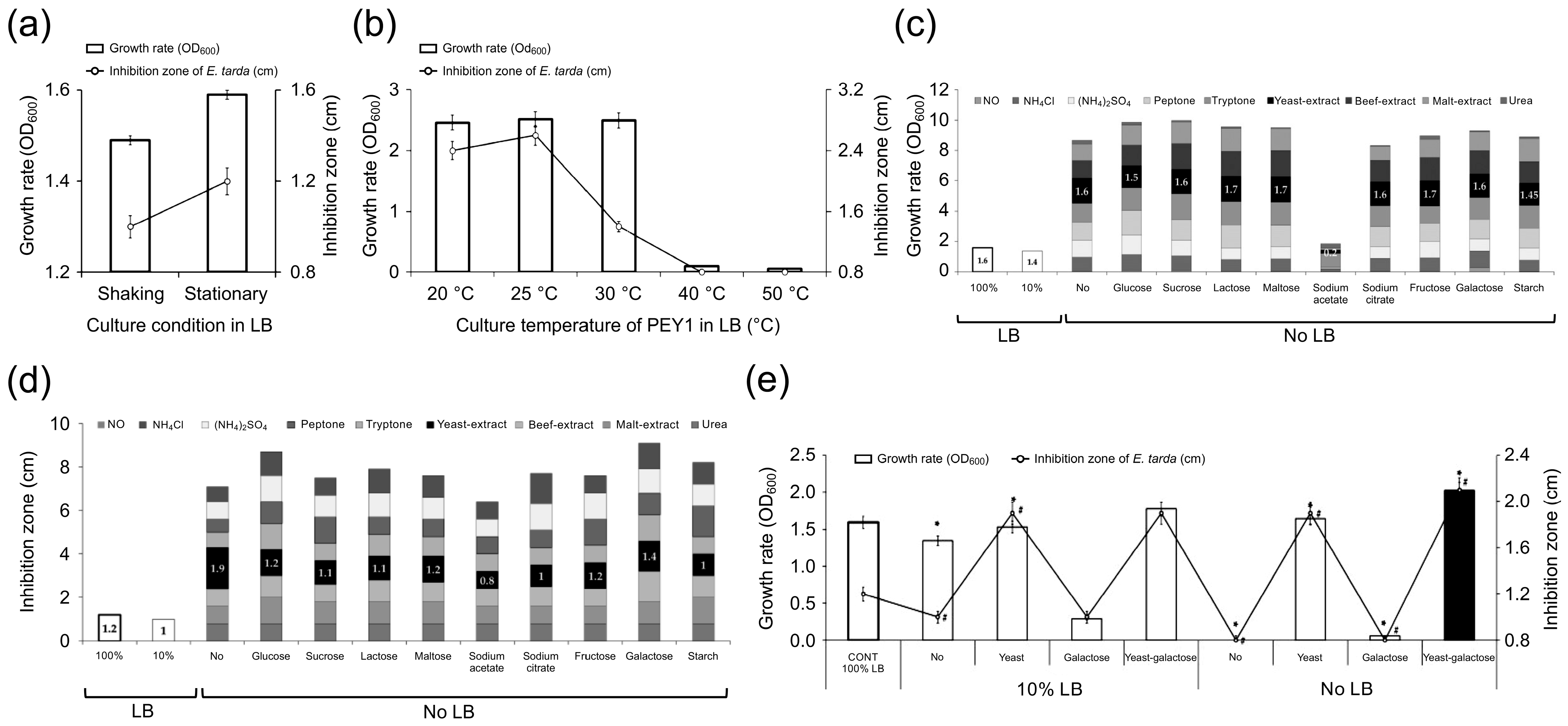
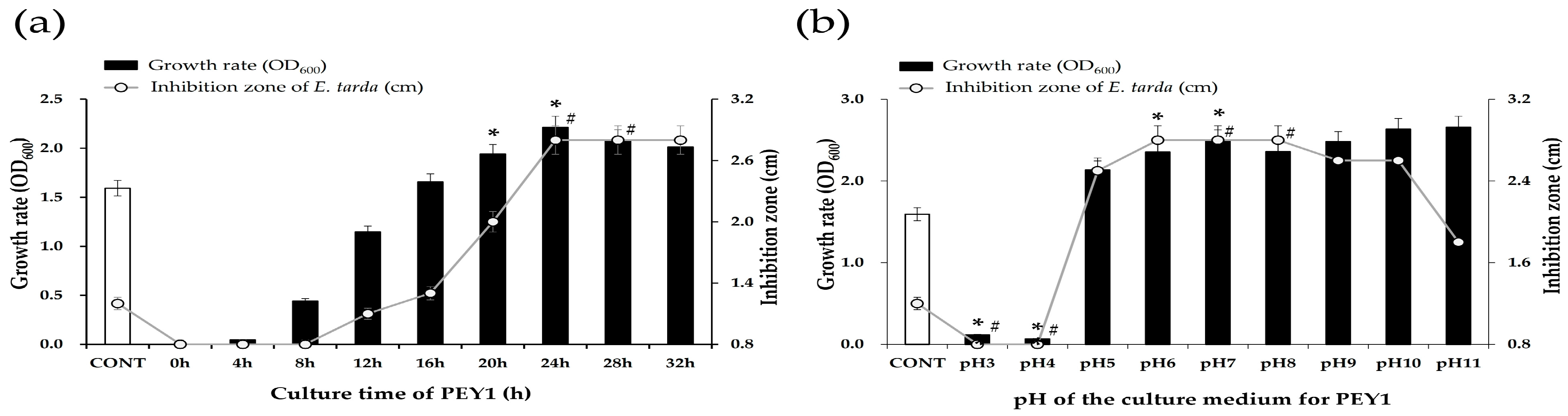
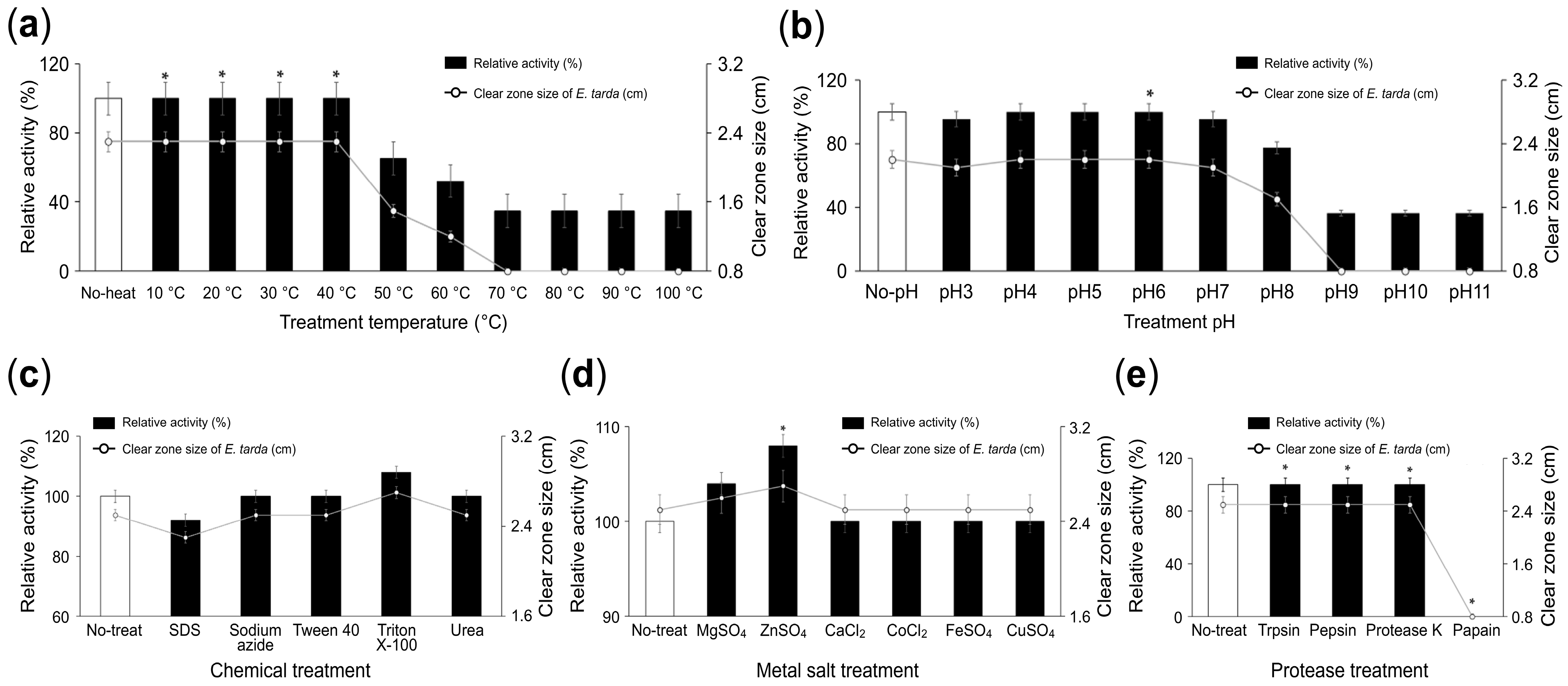
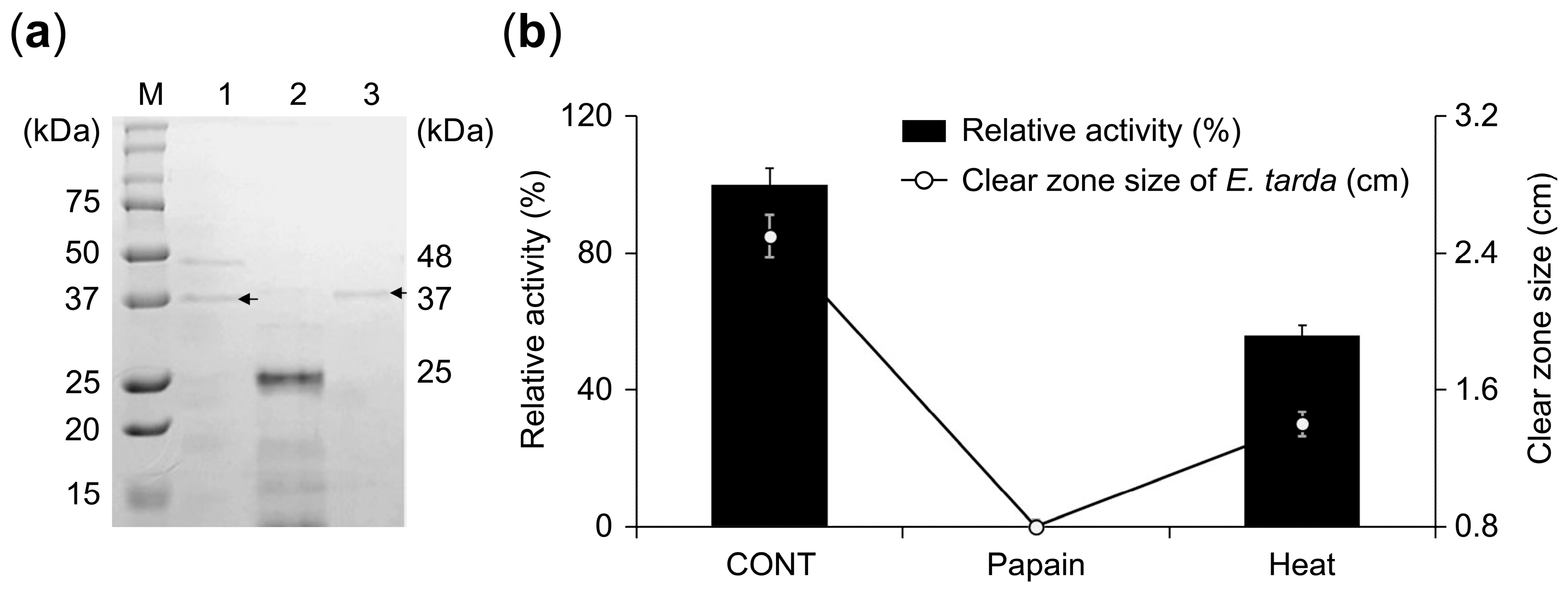
Pseudomonas extremorientalis PEY1, isolated from the intestinal contents of marine fish, was evaluated for the production and properties of antibacterial proteins active against Edwardsiella tarda, a major pathogen in aquaculture. Antibacterial production was maximized in a minimal medium supplemented with 1% yeast extract and 1% galactose under stationary cultivation at 25 °C and pH 7.0. Growth and bioactivity assays were conducted under varying carbon and nitrogen sources, temperatures, and pH levels. Sodium dodecyl sulfate-polyacrylamide gel electrophoresis analysis revealed a distinct ~37 kDa protein band corresponding to antibacterial activity, exhibiting an inhibition zone of 2.4 ± 0.1 cm against E. tarda. The activity was completely abolished by papain digestion but remained detectable after exposure to 55 °C and pH 8, indicating that the active compound is a moderately heat-stable, proteinaceous antibacterial molecule. LC–MS/MS analysis identified the protein as a putative disulfide reductase with ~40% sequence coverage. The antibacterial factor exhibited strong physicochemical stability, retaining activity in the presence of surfactants and metal ions. Collectively, these findings demonstrate that P. extremorientalis PEY1 produces a thermostable, papain-sensitive antibacterial protein with selective activity against E. tarda, highlighting its potential as a promising natural biocontrol or postbiotic candidate for sustainable aquaculture.
Keywords: Pseudomonas spp.; Edwardsiella tarda; antibacterial protein; protein disulfide reductase; postbiotic agent; aquaculture biocontrol Pseudomonas spp.; Edwardsiella tarda; antibacterial protein; protein disulfide reductase; postbiotic agent; aquaculture biocontrol