
Review

Bacterial Bovine Respiratory Disease: A Comprehensive Review of Etiology, Pathogenesis and Management Strategies

1
School of Biosciences and Veterinary Medicine, University of Camerino, 62024 Matelica, MC, Italy
2
College of Agriculture and Biology, Liaocheng University, Liaocheng 252059, China
*
Author to whom correspondence should be addressed.
Microbiol. Res. 2026, 17(1), 18; https://doi.org/10.3390/microbiolres17010018
Submission received: 1 December 2025 / Revised: 3 January 2026 / Accepted: 8 January 2026 / Published: 11 January 2026

Abstract

Bovine Respiratory Disease (BRD) represents one of the largest causes of economic loss and animal morbidity in the global cattle industry, second only to neonatal diarrhea. Its etiology is complex, originating from a multifactorial combination of host susceptibility, environmental stressors, viral infections, and secondary bacterial pathogens. Although viruses are often the initial cause of disease, suppressing the host’s respiratory defense mechanisms, most of the severe pneumonic damage and clinical signs can be attributed to bacterial infections. This review provides an overview of the primary bacterial agents identified within the BRD complex, including Mannheimia haemolytica, Pasteurella multocida, Histophilus somni, and Mycoplasma bovis. We discuss their role as commensals that then become opportunistic pathogens, and further how they interact in a synergistic relationship with a primary viral insult, leading to the resulting pathogenesis and the development of pneumonia. This manuscript discusses in further detail some of the challenges in BRD management, such as the limitations of current diagnostic methodologies, overreliance on antimicrobial therapy, and the growing concern of antimicrobial resistance. Lastly, the need for integrated approaches in management, better husbandry and biosecurity, coupled with the development of novel therapeutic alternatives, is underlined as a means of assuring a sustainable control of this serious syndrome.

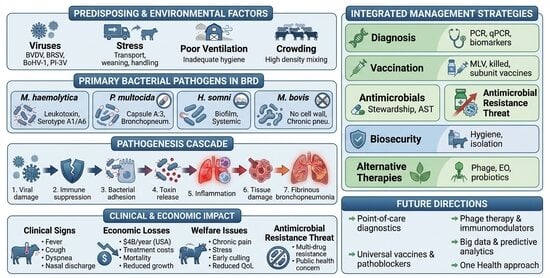
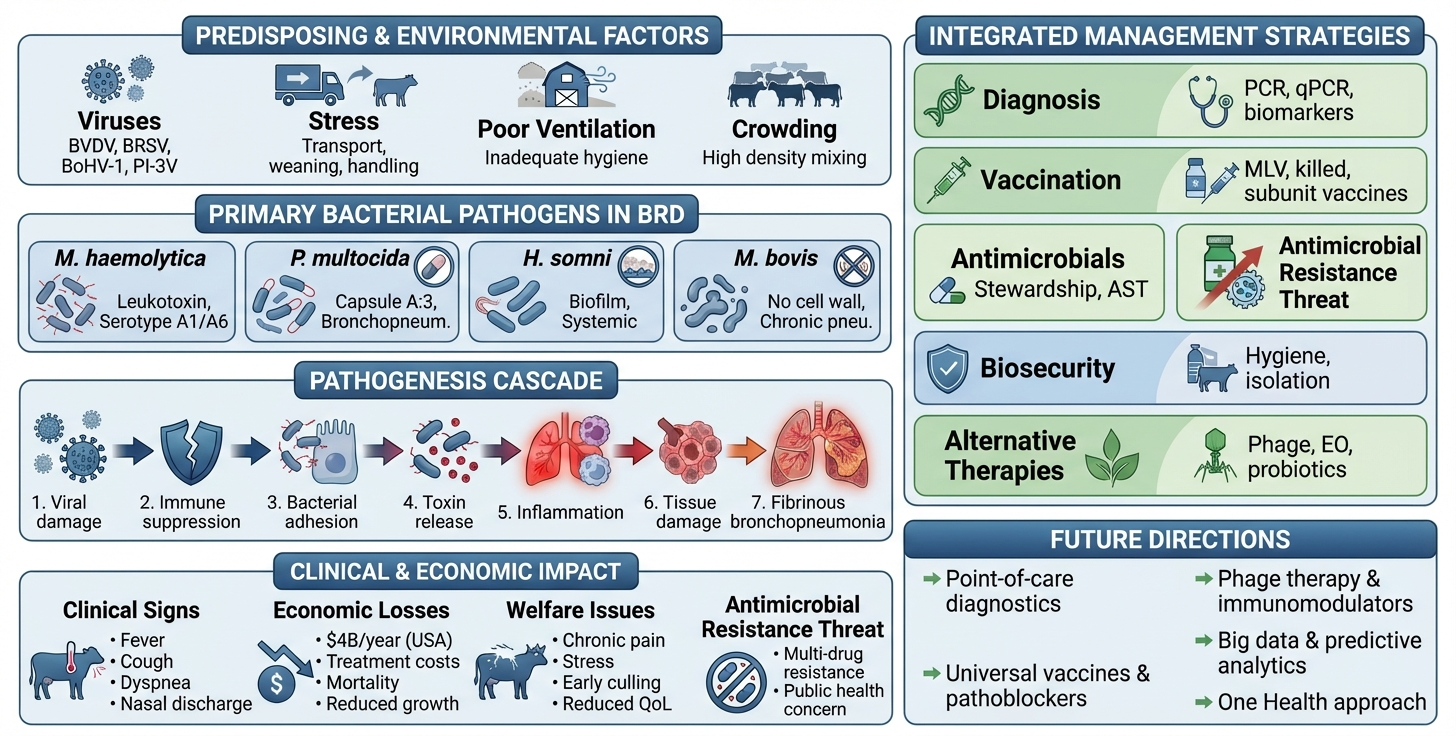
Graphical Abstract

1. Introduction

Bovine respiratory disease (BRD) represents one of the most prevalent and economically impactful disease complexes affecting cattle worldwide, with substantial consequences for animal welfare, antimicrobial use, and production efficiency. The syndrome is multifactorial in nature, arising from complex interactions between environmental stressors, host immunity, viral infections, and bacterial pathogens [1]. Among these components, bacteria play a central role in the development of clinical disease, lung pathology, treatment failure, and mortality, particularly in intensive production systems. Following neonatal diarrhea, BRD is the most common disease in the cattle industry. Therefore, it is a prime cause of huge economic losses, especially in post-weaned calves [1]. These losses occur due to direct treatment costs, reduced animal performance, and mortality, which impose a massive financial burden on producers [2,3]. The economic impact is still increased by the indirect costs, involving decreased carcass quality and longer times to market. It is estimated that the US beef industry alone loses over $4 billion annually [2,3].
Key environmental stressors comprise transportation, weaning, handling, and over-crowding, which can induce immunosuppression, hence increasing the susceptibility of the host animals [1]. The impact of this transport-related factor is so significant that this syndrome has earned another common synonym: “shipping fever.” These stressors, along with poor ventilation and improper hygiene management, facilitate primary viral infection by several virus such as Bovine Respiratory Syncytial Virus (BRSV), Parainfluenza-3 Virus (PI-3V), Bovine Herpesvirus-1 (BoHV-1), and Bovine Viral Diarrhea Virus (BVDV) [4]. These viruses compromise the respiratory mucosa, thus creating a conducive environment for secondary bacterial colonization and proliferation [3,4,5,6].
These secondary bacterial infections are, however, the primary cause of the severe clinical signs and pulmonary damage that characterize BRD, even though the diseases are often initiated by viral infections [7]. The most common bacterial pathogens belong to the Pasteurellaceae and Mycoplasmataceae families. Specifically, Mannheimia haemolytica, Pasteurella multocida, and Histophilus somni are commensals of the upper respiratory tract of healthy cattle but can become opportunistic pathogens and descend into the lower respiratory tract following viral injury [8,9]. Their virulence factors, including lipopolysaccharides and cytotoxins, are crucial for overcoming host defenses and establishing infection [2]. In a similar way, Mycoplasma bovis is a widespread agent of high morbidity. The interrelation between viruses and bacteria leads to inflammation, lesions in lung tissue, and a reduction in the capacity for gas exchange, which clinically shows itself in a progressive development from nonspecific signs of disease such as inappetence and depression to frank respiratory signs that include nasal discharge, coughing, tachypnea, and dyspnea.
A significant challenge in BRD management is the difficulty of early and accurate diagnosis. The most common current practice involves visual-clinical assessment, which is highly subjective and has low sensitivity, partly because cattle, as prey animals, instinctively mask signs of illness [10]. This usually results in late detection and treatment. Moreover, the non-specificity of clinical signs implies that a large proportion of treated animals might not have BRD, adding to the excessive use of antibiotics. This practice raises serious concerns regarding the selection and spread of antimicrobial resistance (AMR), a factor that represents a wider risk to public health via the food chain and environment. Increased diagnostic specificity, possibly through advanced imaging or biomarker analysis, becomes important for more prudent use of antimicrobials and better control [11,12]. To date, specific studies have been conducted on novel, advanced diagnostic techniques.
Given the central role of bacterial agents in the most severe stages of BRD and as the main targets of intervention, this review provides a comprehensive and critical overview of the bacterial agents involved in BRD, with particular emphasis on M. haemolytica, P. multocida, H. somni, and M. bovis. We summarize pathogen-specific epidemiological features and virulence mechanisms, while placing them within the broader context of BRD pathogenesis. Furthermore, we discuss current knowledge on diagnostic approaches, therapeutic strategies, and management practices, highlighting their limitations and regional variability. Special attention is given to antimicrobial resistance, including the role of mobile genetic elements in resistance dissemination, as well as to emerging diagnostic tools and preventive strategies. Finally, we address future challenges and perspectives, considering scientific advances alongside their practical and economic feasibility in modern cattle production systems.

2. Etiology of Bacterial Bovine Respiratory Disease

In the context of bovine respiratory disease, bacterial pathogens are frequently categorized as primary, secondary, or tertiary based on their epidemiological relevance and typical role within the disease complex, rather than on an absolute capacity to cause disease in the absence of predisposing factors.
Primary bacterial pathogens are defined as those most consistently associated with BRD across production systems and geographical regions and most frequently isolated from acute cases. These bacteria possess virulence factors that enable rapid proliferation in the lower respiratory tract once host defenses are compromised. Importantly, even primary bacterial pathogens usually require predisposing factors, such as viral respiratory infections, environmental stressors, or impaired host immunity, to establish infection. Typical primary bacterial pathogens in BRD include M. haemolytica and P. multocida.

2.1. Mannheimia haemolytica

M. haemolytica is considered one of the most important bacterial agents associated with acute fibrinous pneumonia in cattle and is frequently isolated from severe cases of BRD worldwide. The bacterium commonly colonizes the upper respiratory tract of healthy cattle but can invade the lower airways following stressors such as transport, commingling, or concurrent viral infections, leading to rapid disease progression. Previously known as Pasteurella haemolytica, a revision of the Pasteurellaceae family classification, based on genomic homology, led to its reclassification into a new genus, Mannheimia [13]. Currently, M. haemolytica, a Gram-negative bacterium, is categorized into 12 capsular serotypes. Serotypes A1 and A6 are predominantly associated with respiratory disease in cattle [14].
The principal virulence determinant of M. haemolytica is its leukotoxin (LktA), a member of the RTX toxin family, which specifically targets ruminant leukocytes. Leukotoxin-mediated cytotoxicity induces neutrophil lysis and release of pro-inflammatory mediators, contributing to extensive pulmonary inflammation and tissue damage. Additional virulence factors include lipopolysaccharide (LPS), outer membrane proteins, adhesins, and iron acquisition systems, which collectively promote colonization, immune evasion, and persistence within the host [15]. While certain pathological features such as fibrinous bronchopneumonia are commonly associated with M. haemolytica, these findings are not pathognomonic and may occur in mixed bacterial infections. Acute fibrinous pleuropneumonia, resulting from the obstruction of bronchioles and alveoli with fibrinous exudate, is the main cause of death [16]. Necropsy commonly reveals fibrinous pneumonia, a necrotizing inflammatory response, and alveolar damage and necrosis, primarily due to the infiltration of neutrophils and macrophages into the lung and fibrin deposition in the alveoli [14]. Therapy involves administering various antibiotics, such as phenicols, β-lactams, macrolides, and quinolones, sometimes in conjunction with anti-inflammatories. Vaccines containing M. haemolytica leukotoxin, its primary virulence factor, are currently available [17]. However, scientific literature currently lacks sufficient data to confirm the full efficacy of this preventive measure [18]. A clinical study evaluated the intranasal administration of a Lactobacillus strain to prevent M. haemolytica colonization of the upper respiratory tract, suggesting a potential future avenue for bovine pneumonia prevention [19]. Furthermore, exploring novel vaccine formulations that target multiple virulence factors or incorporate adjuvants to enhance immune responses could improve protective efficacy against M. haemolytica [6].

2.2. Pasteurella multocida

P. multocida is a globally distributed opportunistic pathogen frequently isolated from both healthy and diseased cattle. In contrast to M. haemolytica, P. multocida is more often associated with subacute or chronic forms of pneumonia, although it can also contribute to acute disease in polymicrobial infections. P. multocida is a Gram-negative bacterium that can infect a wide range of domestic mammals and birds. It was first discovered by Louis Pasteur around 1881 during investigations into the etiology of fowl cholera [20,21]. It is currently classified into five capsular groups and 16 somatic serotypes. In cattle, P. multocida A:3 is the serotype most isolated from animals with BRD, and its pathogenicity has been confirmed by experimental studies [22]. Furthermore, serogroups B, E, and F can be pathogenic in this species [23]. Virulence factors of P. multocida include its polysaccharide capsule, which inhibits phagocytosis, as well as LPS, adhesins, and various outer membrane proteins involved in host–pathogen interactions. Unlike M. haemolytica, P. multocida does not produce leukotoxin; however, its ability to persist in the respiratory tract and exacerbate inflammation plays a significant role in disease progression. Certain strains exhibit biofilm-forming capacity, which may enhance survival under adverse conditions and contribute to antimicrobial tolerance. P. multocida infection in cattle can cause various types of bronchopneumonia, ranging from subacute to chronic fibrinopurulent, as well as fibrinous and fibro-necrotic forms. These may be accompanied by varying degrees of intra-alveolar hemorrhages and moderate to severe infiltration of neutrophils and macrophages in the bronchi and bronchioles [24]. The primary available treatments are antibiotics, such as β-lactams, macrolides, and phenicols, although growing antibiotic resistance has been recently reported [25]. Vaccines to prevent P. multocida infection include bacterins, which are used alone or, more commonly, in combination with other viral etiological agents [26]. Some National Institutes can also prepare autogenous vaccines. This process involves isolating P. multocida from organs with lesions or from nasal swabs taken from sick cattle, following careful nostril disinfection. The vaccine consists of a formalin-inactivated broth culture adjuvanted with aluminum hydroxide. It is administered subcutaneously at 5 mL/head, with a booster dose repeated after 20 days [27]. Some modified live vaccines administered intranasally show good efficacy. This method allows for earlier vaccination without interfering with maternal immunity, leading to a strong local immune response and significant interferon production. In feedlot settings, inconsistent and sometimes limited vaccine efficacy is likely related to high pathogen pressure, transport- and commingling-associated stress, interference from maternal antibodies, and suboptimal timing of vaccination relative to pathogen exposure [28,29,30,31].
Secondary bacterial pathogens are opportunistic organisms that commonly colonize the upper respiratory tract of healthy cattle and contribute to BRD primarily by exploiting pre-existing lung damage caused by viral infection, inflammation, or primary bacterial agents. Their involvement is often associated with subacute or chronic disease courses and disease progression rather than disease initiation. H. somni is frequently considered a secondary pathogen in BRD, although its pathogenic role can vary depending on host and environmental conditions.

2.3. Histophilus somni

H. somni is a fastidious Gram-negative bacterium that is part of the normal mucosal flora of cattle but can act as an important pathogen in BRD and systemic disease. It is particularly associated with chronic pneumonia, thrombotic meningoencephalitis, myocarditis, and septicemia, reflecting its capacity for systemic dissemination [32]. Unlike P. multocida and M. haemolytica, circulating strains of H. somni are not currently classified into specific serotypes, and a complete nomenclature is not available to date. It was first isolated in 1956 from cattle suffering from meningoencephalitis [33]. Key virulence mechanisms of H. somni include immune evasion strategies such as phase variation of surface antigens, binding of host immunoglobulins, and resistance to complement-mediated killing. The organism is also capable of inducing apoptosis in bovine endothelial cells, promoting vascular damage and thrombosis. These characteristics distinguish H. somni from other bacterial BRD pathogens and explain its association with both respiratory and extrapulmonary disease manifestations. While animals of all ages can be affected, recent findings suggest that weaned calves are at a higher risk of infection [34]. Although H. somni is considered, like other members of the Pasteurellaceae family, a commensal bacterium of the nasal tract, various strains have also been isolated from urogenital secretions, suggesting a potential role in venereal spread [35]. When the bacterium colonizes the lungs and accesses the bloodstream, it can cause a systemic disease extending beyond the respiratory tract. H. somni infection can also cause encephalitis, myocarditis, and sudden death from acute septicemia [36]. Post-mortem findings in the lungs include bronchopneumonia and fibrinous pleuritis [37]. Diagnosis based on macroscopic lesions is typically confirmed through culture isolation and molecular tests. Therapeutic options include broad-spectrum antibiotics, such as phenicols. However, like M. haemolytica, while bacterins are currently available as a preventive measure, they have not demonstrated effective protection in vaccinated animals [38]. This highlights the need for continued research into more efficacious vaccines or alternative preventive strategies against H. somni [6].
Tertiary bacterial pathogens are typically implicated in chronic, persistent, or treatment-refractory cases of BRD and are often associated with long-term lung lesions, poor therapeutic response, and reduced production performance. These pathogens generally possess mechanisms that promote immune evasion, persistence, and antimicrobial tolerance. M. bovis is commonly categorized as a tertiary pathogen due to its association with chronic pneumonia, biofilm formation, antigenic variation, and frequent involvement in mixed infections.

2.4. Mycoplasma bovis

Mycoplasma bovis is a major cause of chronic, treatment-refractory pneumonia in cattle and is increasingly recognized as a significant contributor to BRD worldwide. Unlike other bacterial BRD pathogens, M. bovis lacks a cell wall, which has important implications for its pathogenicity, antimicrobial susceptibility profile, and diagnostic detection [39]. First isolated in 1961 [40], M. bovis is responsible for outbreaks of pneumonia in calves and young cattle, as well as mastitis in dairy cows, otitis, and occasionally abortion [41]. M. bovis can exacerbate the severity of respiratory disease in calves, leading to increased morbidity and mortality rates [42]. The virulence of M. bovis is multifactorial and includes variable surface proteins that undergo antigenic variation, allowing immune evasion and persistence. The bacterium is also capable of biofilm formation and modulation of host immune responses, leading to chronic inflammation and lung damage. Post-mortem examination often reveals bronchopneumonia characterized by caseous necrotic lesions, alongside fibrinous-suppurative bronchopneumonia [43]. The pathogen also contributes to persistent inflammation and treatment failure in mixed infections. The absence of a cell wall also makes M. bovis intrinsically resistant to β-lactams antibiotics, complicating treatment protocols and necessitating alternative antimicrobial strategies [3].
Preventing and controlling M. bovis largely relies on the careful introduction of new, healthy animals into herds. Pre-introduction ELISA testing to assess prior exposure, coupled with molecular detection for suspected individuals, offers an effective strategy to manage latent or new infections. Furthermore, effective management practices include adequate ventilation, thorough cleaning and disinfection of animal areas, careful control of milk-based feeding, regular monitoring of clinical signs, and prompt isolation of infected or treated animals. Once established in a herd, eradication proves challenging due to its robust environmental resistance and propensity for direct-contact transmission [44]. Its nature as a persistent intracellular bacterium, severely limits antibiotic treatment options, posing a significant barrier to eradication. Moreover, additional challenges stem from the high antigenic variability of its surface glycoproteins, which enable it to effectively evade the host’s immune system [45]. The efficacy of treatment is often debated, as treated animals frequently relapse after a few weeks, partly attributed to increasing antibiotic resistance [46]. While several inactivated and live attenuated vaccines are commercially available, they primarily reduce lesion severity rather than providing complete protection against infection [45]. M. bovis can maintain viability for months in low-temperature environments and for weeks at room temperature on various substrates, further complicating its elimination from infected herds [47]. The fastidious nature of M. bovis, requiring specialized media and techniques for isolation, further hinders diagnostic efforts, contributing to its persistent presence in affected populations [2,48]. Rapid and accurate pen-side diagnostic tests or a combination of tests is therefore crucial for identifying and culling infected animals before the infection spreads throughout the herd, particularly when new animals are introduced or segregation is required [49].
This functional classification should be interpreted as a conceptual framework rather than a rigid hierarchy, as the role of individual bacterial species in BRD may vary depending on management practices, husbandry systems, pathogen pressure, and regional epidemiological factors.

2.5. Other Bacteria Involved in BRD

Other microorganisms often capitalize on immunosuppression or prior viral insult to establish infections, contributing significantly to the complexity and severity of BRD [4]. They often colonize the respiratory tract after viral infections or environmental stressors, leading to severe pneumonia and pleuritis that are hallmarks of BRD complex.
The following pathogens play a crucial role in this second, bacterial phase.
Bibersteinia trehalosi. Previously classified as Pasteurella trehalosi, is phylogenetically and pathogenically very similar to M. haemolytica. It is a common commensal of the tonsils and nasopharynx that acts as an opportunistic pathogen, causing severe fibrino-necrotic pneumonia and septicemia. Its primary virulence factor is a leukotoxin (Lkt) that is immunologically cross-reactive with the leukotoxin of M. haemolytica. This toxin causes lysis of neutrophils and macrophages, leading to intense inflammation and damage to tissues. It is especially important in young, recently weaned or transported beef calves. There is some evidence that its prevalence is increasing in feedlots, possibly due to widespread vaccination against M. haemolytica [14,50].
Trueperella pyogenes is a true secondary invader or tertiary pathogen. It is seldom a primary cause of acute pneumonia, but it is unusually adept at colonizing lungs whose integrity has been compromised by viruses or other bacteria. Its involvement often signals a transition to a chronic, suppurative pneumonia. It is a pyogenic bacterium, and it promotes the formation of pus and pulmonary abscesses. Infections complicated by T. pyogenes are often much more serious, chronic, and refractory to therapy because antibiotics cannot adequately penetrate the walled-off abscesses. Pyolysin, a pore-forming hemolysin, is its major virulence factor and is toxic to pulmonary epithelial cells and immune cells [51,52].
Pseudomonas aeruginosa rarely causes primary outbreaks in the field but is an important etiologic agent of nosocomial pneumonia. It is a major problem in calves that have been previously treated with antimicrobials or have received invasive procedures. P. aeruginosa is an environmental bacterium known for its intrinsic and acquired multidrug resistance. It also can form biofilms and survive in disinfectants, allowing it to contaminate veterinary equipment such as multidose vials, endotracheal tubes, and nebulizers. Many outbreaks have been traced back to a common contaminated source within the treatment facility [53,54].
Other pathogens like Escherichia coli, and Streptococcus spp. are generally considered opportunists that may be isolated from polymicrobial infections. They are more likely to be significant in neonates or severely immunocompromised animals [55].
Escherichia coli. While more famous for enteric disease, certain strains can cause septicemia and be isolated from pneumonic lungs, usually in very young, immunocompromised calves or as part of a polymicrobial infection.
Streptococcus spp. Various Streptococcus species (e.g., S. dysgalactiae and S. uberis) can be found. They are generally considered opportunistic invaders that exacerbate existing lung damage.
Fusobacterium necrophorum. More commonly associated with liver abscesses and foot rot, it can sometimes be isolated from pneumonic lungs, particularly in advanced cases with necrotic tissue, where it contributes to tissue destruction.
Staphylococcus aureus. An opportunistic pathogen that can be involved in sporadic cases, often secondary to significant epithelial damage.

3. Viral Coinfections and Predisposition

Viral infections are critical predisposing factors that significantly increase the susceptibility of cattle to secondary bacterial infections, which are the primary cause of morbidity and mortality in BRD. Viruses commonly implicated in BRD, such as Bovine Viral Diarrhea Virus (formerly Pestivirus bovis—BVDV), Bovine Herpesvirus 1 (BoHV-1), Parainfluenza-3 Virus (PI-3V), Bovine Respiratory Syncytial Virus (BRSV), Influenza D virus and Bovine Coronavirus compromise the host’s respiratory defenses through various mechanisms. These mechanisms include direct damage to the respiratory epithelium, impairing the mucociliary escalator, and inducing immunosuppression, thereby creating an environment conducive for bacterial proliferation and invasion. For instance, BVDV is well-known for its immunosuppressive effects, which can significantly reduce the animal’s ability to mount an effective immune response against bacterial pathogens. Similarly, BoHV-1 and BRSV can cause extensive damage to the tracheal and bronchial epithelium, leading to loss of ciliary function and increased adherence sites for bacteria. Following viral and environmental predisposition, bacterial pathogens often result in more severe clinical signs, complicated disease progression, and reduced efficacy of antimicrobial treatments compared to infections with either pathogen alone. Moreover, primary viral infections can exacerbate the pathogenicity of subsequent viral infections, although the specific mechanisms for many viral coinfections remain to be fully elucidated [6].

4. Pathogenesis and Immunology

A comprehensive understanding of the pathogenesis and immunology of BRD is paramount for developing effective diagnostic, preventative, and therapeutic strategies. As previously discussed, bacterial and viral pathogens orchestrate a cascade of events leading to severe respiratory compromise (Table 1). This section elucidates the intricate mechanisms by which these pathogens initiate and sustain infection, the host’s subsequent immune responses, and the various intrinsic and extrinsic factors that ultimately influence disease severity. The pathogenesis of BRD typically begins with viral infections that compromise the host’s innate immune defenses, facilitating the colonization and proliferation of opportunistic bacterial pathogens [56]. These initial viral insults often induce a state of immunosuppression, characterized by leukocyte depletion, impaired phagocytic function, and dysregulation of cytokine signaling, thereby creating an environment conducive for secondary bacterial colonization and replication [3]. This initial viral infection can interfere with the mucociliary clearance of the upper respiratory tract and dysregulate tracheal antimicrobial peptides, further weakening the respiratory innate defenses and enhancing the severity of a secondary bacterial infection [57]. Specifically, viral infections can cause erosion of the mucosa, which creates a more accessible entry point for bacterial pathogens, even in areas where the mucosa was previously intact [11]. This compromise of the epithelial barrier, coupled with viral-induced immunosuppression, subsequently enables bacterial agents like M. haemolytica, P. multocida, H. somni, and M. bovis to proliferate in the upper respiratory tract and translocate into the lower respiratory tract, initiating bacterial pneumonia [4,6]. Furthermore, certain bacterial species, such as M. haemolytica, actively contribute to this impairment by producing cytotoxins that directly target and degrade phagocytic cells, thereby exacerbating the host’s inability to clear the infection [58]. Moreover, M. haemolytica and P. multocida employ toxins and extracellular components to destroy phagocytes, thereby impeding phagocytosis and releasing reactive oxygen metabolites that intensify pulmonary inflammation [59]. This polymicrobial etiology makes BRD a complex disease, as evidenced by studies detecting multiple respiratory pathogens in a high percentage of clinical samples [6,11].

4.1. Mechanisms of Infection

The initiation and perpetuation of BRD involve a complex interplay of virulence factors employed by bacterial and viral pathogens to overcome host defenses and establish infection. At the outset, bacterial pathogens, such as M. haemolytica, P. multocida, H. somni, and M. bovis, must first adhere to the respiratory epithelium, often utilizing specific adhesins to colonize the upper and lower respiratory tracts. M. haemolytica, for instance, employs adhesins to attach to bovine lung tissue, while its polysaccharide capsule provides protection against phagocytosis and complement-mediated lysis, enabling sustained colonization.
Following adhesion, these bacteria unleash an array of virulence factors. M. haemolytica is particularly notable for its leukotoxin, a pore-forming toxin that specifically targets ruminant leukocytes, leading to their apoptosis or necrosis. This not only impairs the host’s primary immune response but also releases pro-inflammatory mediators, exacerbating lung inflammation and tissue damage. Furthermore, its ability to induce ciliary stasis disrupts the mucociliary escalator, a crucial innate defense mechanism, allowing bacterial proliferation and deeper penetration into the respiratory system. Similarly, H. somni produces lipo-oligosaccharide and can form biofilms, which contribute to immune evasion and persistent infection. It also causes direct damage to the respiratory epithelium and is associated with vasculitis and thrombosis, leading to severe pneumonia and systemic manifestations. M. bovis, lacking a cell wall, exhibits unique mechanisms, including intracellular persistence and high antigenic variability of its surface glycoproteins, which allow it to effectively evade both antibiotic treatment and the host immune system, making eradication challenging. Its presence can significantly exacerbate the severity of respiratory disease, leading to increased morbidity and mortality.
A critical element in BRD pathogenesis is the predisposing and often devastating role of viral infections. Viruses such as BVDV, BoHV-1, PI-3V, and BRSV initiate infection by directly damaging the respiratory epithelium. This damage profoundly compromises the integrity of the airway lining, impairs the mucociliary escalator, and creates an ideal environment conducive for bacterial adherence and proliferation [4,11]. BVDV is a potent immunosuppressive agent, significantly reducing the animal’s capacity to mount an effective immune response against subsequent bacterial invaders through mechanisms such as leukocyte depletion, neutrophil dysfunction, and impaired cytokine signaling [3,60]. BoHV-1 and BRSV also cause extensive damage to the tracheal and bronchial epithelium, leading to ciliary dysfunction and increasing the availability of attachment sites for bacteria. This synergistic interaction between viral-induced tissue damage and profound immunosuppression, further compounded by bacterial virulence factors, results in more severe clinical signs, complicated disease progression, and often a significantly reduced efficacy of antimicrobial treatments compared to infections with either pathogen alone [6,58]. This profound viral-induced immunosuppression establishes a critical “window of susceptibility”, enabling normally commensal bacteria, such as M. haemolytica, P. multocida, and H. somni, to transform into aggressive opportunistic pathogens capable of initiating severe and often intractable secondary bacterial pneumonia [11]. This is characterized by a necrotizing inflammatory response and progressive fibrinous bronchopneumonia [11,61]. The resultant persistent inflammation and extensive tissue damage not only critically impede host recovery but also markedly heighten the propensity for chronic lung lesions and irreversible pulmonary dysfunction, as viral infections can directly damage lung parenchyma and suppress immune responses [62]. This intricate pathogenic synergy profoundly amplifies morbidity, mortality, and the substantial economic burden on livestock production, underscoring why BRD often presents as a complex, multifactorial challenge [6]. Among bacterial pathogens, M. haemolytica and P. multocida are pathogens traditionally classified as primary within the BRD complex, while M. bovis is a prominent mycoplasmal factor often isolated from BRD cases [63]. The increased detection of M. bovis in recent Canadian studies may partly reflect widespread use of M. haemolytica vaccines, alongside improved diagnostics and management changes [64]. The heightened pathogenicity of M. haemolytica is amplified by prior viral infections, leading to an acute form of BRD characterized by significant bacterial adherence to bronchial epithelial cells and progressive inflammation, culminating in fibrinous bronchopneumonia [11].

4.2. Host Immune Responses

The bovine immune system mounts a multifaceted response to BRD pathogens, involving both innate and adaptive mechanisms to clear infection and mitigate tissue damage. Initially, epithelial cells and immune sentinel cells lining the respiratory tract secrete pro-inflammatory cytokines, initiating a rapid innate response that involves the recruitment of neutrophils, which play a crucial role in eliminating pathogens but can also contribute to lung tissue damage through excessive inflammation [65]. Concurrently, macrophages and dendritic cells phagocytose pathogens, process antigens, and present them to lymphocytes, thus bridging the innate and adaptive arms of immunity [63]. Viral infections, such as those caused by BVDV, can significantly impair these early immune responses by directly suppressing leukocyte function and inhibiting interferon production, thus exacerbating susceptibility to secondary bacterial infections [6,63]. For instance, BVDV’s immunosuppressive nature is a critical factor in its interaction with other viruses and bacteria, particularly in BRD, often causing leukocyte depletion, neutrophil dysfunction, and impaired cytokine signaling [3,60]. This primary viral insult frequently facilitates bacterial superinfections, leading to a more severe disease presentation characterized by extensive lung inflammation and tissue destruction [63]. Furthermore, viral infections not only directly damage respiratory tissues and suppress immunity but also disrupt the delicate balance of the respiratory microbiota, altering its structure and composition [4]. This microbial dysbiosis compromises the host’s innate defense mechanisms, which typically rely on a balanced microbiota for immune regulation and protection against opportunistic pathogens [66]. Consequently, this disruption facilitates the proliferation and colonization of pathogenic bacteria, exacerbating the inflammatory response and contributing to the severity of BRD [4,6,11]. This immunocompromise is further compounded by the anaerobic conditions within the lungs, often caused by atelectasis and edema, which diminish the phagocytic capacity of alveolar macrophages, thereby hindering their ability to clear invading bacteria and cellular debris effectively [58]. The resident phagocytes of the lung, primarily alveolar macrophages, normally provide a pivotal defense against bacterial infections, yet their function is significantly impaired during inflammatory processes. Indeed, studies have shown that viral infections induce a functional paralysis of the alveolar macrophage phagocytic system, evidenced by dysfunctions in receptor binding, phagocytic ingestion, phagosome-lysosome fusion, intracellular killing, and bacterial degradation [58].

5. Risk Factors and Epidemiology

5.1. Epidemiology and Global Prevalence

Bovine respiratory disease (BRD) is a globally distributed disease complex affecting cattle in a wide range of production systems [29,67]. Its epidemiology is shaped by the interaction between infectious agents, host factors, environmental stressors, and husbandry practices. Although bacterial pathogens are central to the development of clinical disease, their relative importance and prevalence vary substantially between regions, reflecting differences in cattle production systems, animal movement patterns, climate, and regulatory frameworks.

5.2. Regional Distribution and Prevalence

In North America, particularly in large-scale feedlot systems in the United States and Canada, BRD represents the leading cause of morbidity and mortality in beef cattle [28,67]. High animal density, long-distance transport, commingling of cattle from multiple sources, and abrupt dietary changes contribute to the predominance of so-called shipping fever–associated BRD. In this context, bacterial pathogens such as M. haemolytica and P. multocida are frequently isolated from acute cases, while M. bovis is commonly associated with chronic or treatment-refractory disease. Prevalence estimates in North American feedlots consistently indicate that a substantial proportion of cattle are affected during the early feeding period, although reported values vary depending on study design and case definitions.
In South America, particularly in major beef-producing countries such as Brazil and Argentina, BRD is also recognized as a significant health and economic issue, although fewer large-scale epidemiological studies are available [68]. Production systems often combine pasture-based rearing with feedlot finishing, resulting in heterogeneous risk profiles. Available data suggest that bacterial BRD pathogens are widely present, but prevalence estimates are less standardized, highlighting the need for region-specific surveillance.
In Europe, cattle production systems are more diverse and generally characterized by smaller herd sizes, shorter transport distances, and a higher proportion of dairy and mixed-production herds. BRD in Europe often shows a more seasonal pattern, particularly affecting young calves during periods of housing, climatic stress, and management changes. While bacterial pathogens involved are broadly similar to those reported elsewhere, differences in antimicrobial usage policies, vaccination strategies, and biosecurity measures influence disease dynamics and reported prevalence. Published prevalence data vary widely between countries and production systems, limiting direct comparisons.
In Oceania, including Australia and New Zealand, BRD remains a major concern, particularly in feedlot-finished beef cattle [69]. Like North American systems, transport stress, commingling, and feedlot entry are key risk factors. Epidemiological studies from this region have documented the involvement of classical bacterial BRD pathogens and have contributed substantially to the characterization of antimicrobial resistance and mobile genetic elements within bovine respiratory bacteria.

5.3. Influence of Husbandry Systems on BRD Epidemiology

Differences in husbandry systems play a critical role in shaping BRD epidemiology and pathogenesis. In large-scale feedlot systems, the disease is often characterized by rapid onset following arrival, high transmission pressure, and predominance of acute fibrinous pneumonia. In contrast, pasture-based or seasonal production systems more commonly experience sporadic or enzootic disease patterns, with chronic or recurrent infections occurring in specific age groups.
These differences also influence preventive and therapeutic strategies, including vaccination schedules, metaphylactic antimicrobial use, and diagnostic approaches. Moreover, legally permitted interventions, particularly regarding antimicrobial use, vary substantially between regions, further contributing to observed epidemiological differences.

5.4. Limitations of Available Prevalence Data

Despite the global importance of BRD, direct comparisons of prevalence between regions are complicated by variations in study design, diagnostic criteria, and reporting standards. In many regions outside North America, detailed prevalence data remain scarce or fragmented. Consequently, published figures should be interpreted with caution, and future studies using harmonized methodologies are needed to better define the global burden of bacterial BRD.

5.5. Environmental Factors and Management Practices

Beyond inflicting direct cellular damage, viral pathogens critically undermine the host’s immune landscape, fundamentally compromising its capacity to effectively combat subsequent bacterial infections. Specifically, viral infections can drastically deplete or severely impair the critical function of alveolar macrophages and neutrophils, which are indispensable components of innate immunity essential for robust bacterial clearance [59,61]. Furthermore, these viral assaults often precipitate a detrimental shift in cytokine profiles, forcibly suppressing vital protective Th1-mediated responses while inadvertently promoting Th2 responses, which are demonstrably less effective against the aggressive proliferation of bacterial pathogens. This intricate and profound dysregulation compromises both local and systemic immune defenses, thereby prolonging infection and exacerbating tissue pathology, ultimately facilitating rampant bacterial colonization and growth. Consequently, this dire immunological vulnerability inevitably predisposes animals to severe and often intractable secondary bacterial pneumonia, which stands as a major contributor to morbidity and mortality in BRD and significantly complicates therapeutic interventions. Moreover, the stress associated with weaning and transportation further exacerbates this immunosuppression, increasing susceptibility to fatal secondary bacterial infections [61]. For instance, calves subjected to abrupt weaning exhibit significant physiological alterations for several days post-separation, thereby compromising their host responses to various pathogens that contribute to BRD [61]. In addition, factors such as commingling with cattle from diverse origins in sale barns significantly elevate the risk of exposure to various pathogens, thereby increasing the susceptibility of feedlot cattle to BRD compared to those acquired directly from farms or ranches [62]. Environmental stressors, including insufficient ventilation, unsanitary bedding conditions, and overcrowding, further contribute to increased pathogen transmission and heightened susceptibility to infection [6]. These environmental determinants, coupled with management practices such as early weaning, contribute significantly to the overall epidemiological burden of BRD [61].
Compounding these biological factors, management practices such as transportation, which leads to substantial stress, also play a crucial role in the etiology of BRD, earning it the colloquial name “shipping fever” [11]. This stress, arising from factors like commingling, changes in diet, and novel environments, significantly compromises the calf’s immune system, making it highly vulnerable to opportunistic pathogens that are often commensal in the upper respiratory tract [62,70]. Furthermore, high population densities, inadequate housing, and rapid fluctuations in temperature and humidity further contribute to environmental stress, exacerbating the impact on animal health and increasing the risk of BRD [71,72]. The complex interplay of these environmental and management-related stressors often collectively suppresses the host immune system, further facilitating pathogen exposure and proliferation, which are critical co-requisites in many BRD outbreaks [73,74].

6. Clinical Signs

The clinical manifestations characteristic of bovine respiratory infections, particularly those caused by key bacterial pathogens such as P. multocida, M. haemolytica, M. bovis, and H. somni, are highly diverse and often non-specific. This is largely due to their nature as opportunistic pathogens, frequently existing as commensals in the upper respiratory tract of cattle [4,73,75,76]. Their transition to pathogenicity is typically triggered by predisposing factors. This multifactorial etiology significantly contributes to the broad and often overlapping clinical signs observed in BRD [1,75], thereby necessitating precise identification for accurate diagnosis and effective management. Diagnosis of BRD often relies on observing clinical signs such as fever, cough, and nasal discharge, which necessitates skilled personnel for accurate detection [1]. However, these clinical signs are not pathognomonic for BRD and can be indicative of other disease conditions, highlighting the limitations of diagnosis based solely on observable symptoms. Therefore, to overcome these limitations and enable precise identification and targeted interventions, advanced diagnostic methods are crucial for differentiating between the various bacterial and viral pathogens involved in BRD [1]. These methods provide specific information beyond clinical observation, which is vital for effective management and treatment.

7. Diagnostic Approaches

Accurate and timely diagnosis of bacterial bovine respiratory disease (BRD) is essential for effective case management, antimicrobial stewardship, and epidemiological surveillance [77]. Given the multifactorial nature of BRD and the economic constraints of cattle production systems, diagnostic strategies must balance diagnostic accuracy, turnaround time, and cost-effectiveness.

7.1. Bacteriological Culture and Identification

Bacteriological culture remains the cornerstone of routine diagnostic investigation for bacterial BRD and is widely implemented in veterinary diagnostic laboratories due to its reliability and comparatively low cost. Isolation of bacterial pathogens from appropriate lower respiratory tract samples, such as bronchoalveolar lavage fluid, transtracheal aspirates, or lung tissue collected postmortem, allows definitive identification of causative agents.
Culture-based diagnostics enable differentiation between bacterial species involved in acute, subacute, and chronic infections and provide essential material for subsequent antimicrobial susceptibility testing and molecular characterization. However, the diagnostic sensitivity of culture may be affected by prior antimicrobial treatment, sample quality, and the fastidious nature of certain pathogens. Despite the foundational role of culture-based methods, their utility is somewhat limited by the time required for bacterial growth and identification, which can delay the initiation of targeted antimicrobial interventions. Moreover, the sensitivity of these traditional culture techniques is often lower than that of molecular tools, potentially leading to missed organisms due to handling or inherent limitations [78]. This underscores the critical need for a diagnostic paradigm shift towards rapid, multiplexed molecular approaches that can overcome these inherent limitations, particularly for fastidious bacteria [63]. However, standard bacteriological culture and qPCR methods for identifying bacterial and mycoplasmal pathogens still play a significant role in diagnostic laboratories [79]. The increasing complexity of polymicrobial infections and the emergence of antimicrobial resistance necessitate a comprehensive approach that integrates phenotypic and genotypic characterization for more precise diagnostics and therapeutic strategies [80].
The integration of these advanced diagnostic methods enables a comprehensive understanding of the BRD etiology in affected animals, facilitating precise diagnosis, differentiation of pathogens, and the implementation of targeted and effective interventions [1]. This shift from symptomatic treatment to pathogen-specific management is critical for improving animal health outcomes and reducing the economic impact of BRD.

7.2. Antimicrobial Susceptibility Testing

Antimicrobial susceptibility testing (AST) is a critical component of bacterial BRD diagnostics, supporting evidence-based antimicrobial therapy and contributing to regional and global antimicrobial resistance (AMR) surveillance [77]. Phenotypic AST methods, such as broth microdilution or disk diffusion, provide direct information on the susceptibility of isolates to antimicrobial classes commonly used in cattle. AST rarely informs initial treatment decisions in acute BRD cases, but remains essential for surveillance, stewardship, and herd-level management.
Despite advances in diagnostics, phenotypic AST remains indispensable, as genotypic detection of resistance determinants does not consistently predict phenotypic resistance across all antimicrobial classes and pathogens [81]. Recent systematic analyses have documented diverse resistance trends among BRD pathogens, highlighting the need for ongoing surveillance [82]. AST results are increasingly required by regulatory frameworks in several regions prior to the use of certain antimicrobial classes, underscoring their importance for both clinical decision-making and antimicrobial stewardship.

7.3. Molecular Diagnostic Methods

Molecular techniques, including polymerase chain reaction (PCR) and quantitative PCR (qPCR), are widely used for the rapid detection of bacterial BRD pathogens directly from clinical samples. These methods offer high sensitivity and specificity and are particularly useful for the detection of fastidious organisms such as M. bovis, or in cases where prior antimicrobial treatment compromises culture results.
Molecular assays can also be applied to detect selected antimicrobial resistance genes and virulence-associated determinants.
Moreover, the integration of novel diagnostic platforms, such as GeneXpert, allows for multiplexed detection of a broad spectrum of pathogens, enhancing both sensitivity and coverage. This capability is particularly beneficial in cases where rapid, on-site diagnostics are required to inform immediate treatment decisions and prevent widespread disease transmission [83]. These molecular approaches have significantly improved upon traditional diagnostic methods by offering enhanced precision and speed in pathogen identification [63,84]. However, despite these advances, targeted qPCR diagnostics for BRD still face challenges, primarily due to the vast number of potential bacterial and viral pathogens involved, making comprehensive screening economically and logistically unfeasible for routine application [85]. Newer diagnostic methods such as 16S rRNA gene amplicon sequencing and Oxford Nanopore MinION Sequencing are now being utilized for identifying both known and novel bacterial and viral agents causing BRD, offering advantages in speed and comprehensiveness over traditional methods [85]. These advanced molecular and metagenomic sequencing techniques enable the simultaneous identification of multiple pathogens, including those that are difficult to cultivate, thereby providing a more complete understanding of the polymicrobial nature of BRD and informing more precise antimicrobial interventions [86]. Furthermore, current diagnostic strategies relying on clinical sign observation necessitate skilled personnel and often lack standardization, complicating accurate diagnosis and treatment [1]. However, at present, molecular tools alone are insufficient to reliably predict phenotypic resistance profiles, particularly in the context of multifactorial resistance mechanisms and variable gene expression. Consequently, molecular diagnostics are best used as a complement rather than a replacement for culture and AST in routine BRD diagnostics.

7.4. Serological Assays

Serological testing plays a limited role in the diagnosis of bacterial BRD at the individual animal level [87,88]. Due to widespread exposure and colonization, antibody detection does not reliably distinguish between active infection, previous exposure, or vaccination. As a result, serology is generally unsuitable for guiding therapeutic decisions in acute BRD cases.
Nevertheless, serological assays may be valuable for herd-level surveillance, retrospective epidemiological studies, and assessment of immune responses following vaccination [88]. Their use should therefore be interpreted cautiously and within the appropriate epidemiological context. For instance, ELISA techniques are widely utilized for detecting specific antiviral antibodies, including those against BVDV, BoHV-1, PI-3V, and BRSV [63]. However, a significant limitation of serological assays is their inability to differentiate between antibodies resulting from natural infection and those induced by vaccination. This inherent ambiguity can complicate the interpretation of results, particularly in vaccinated populations, and may obscure the true extent of field exposure or vaccine breakthrough. This necessitates integrating serological data with other diagnostic modalities, such as molecular assays or clinical observations, to achieve a more conclusive diagnosis and to effectively monitor disease status within a herd [80].

7.5. Emerging and Experimental Diagnostic Approaches

Emerging diagnostic technologies, including advanced molecular platforms, omics-based approaches, and fluorescence in situ hybridization–based methods, have shown promise for improving pathogen detection and characterization. For example, advanced FISH-derived techniques aim to combine rapid bacterial identification with antimicrobial susceptibility assessment. However, these approaches remain largely experimental, and their routine implementation in cattle production systems is currently limited by cost, technical complexity, and validation status.
While such innovations represent important scientific advances, their practical applicability must be evaluated considering economic constraints and the need for robust, field-applicable diagnostic tools in the livestock sector.

7.6. Differential Diagnosis

The differential diagnosis for BRD must encompass a range of bacterial and viral pathogens, with emerging pathogens such as Influenza D virus and Bovine Coronavirus also warranting consideration [85,89]. Furthermore, recent metagenomic analyses have broadened this scope to include Bovine Rhinitis A and B viruses as contributors to BRD, underscoring the dynamic and evolving understanding of the disease’s viral etiology [90]. The intricate interplay between these bacterial and viral agents, coupled with environmental stressors such as overcrowding and poor ventilation, significantly contributes to the complex pathogenesis of BRD [1]. It is critical to distinguish BRD from aspiration pneumonia, which can arise from improper feeding practices, and purely viral pneumonias as misdiagnosis can lead to ineffective treatment strategies [63]. Accurate differentiation among these conditions is crucial for guiding appropriate therapeutic interventions and preventing the widespread use of antimicrobials where viral etiologies dominate [63].

8. Management and Prevention

Effective management and prevention of BRD rely on a multifactorial approach addressing animal-related, environmental, and management-associated risk factors. Given the central role of stress, immunosuppression, and pathogen exposure in BRD pathogenesis, preventive strategies should prioritize husbandry optimization and early disease detection, thereby reducing reliance on antimicrobial interventions [29,72].

8.1. Animal Management and Monitoring

Close and continuous monitoring of cattle is essential for the early detection of BRD. Individual animal observation, including assessment of behavior, feed intake, respiratory signs, and body condition, allows prompt identification of affected animals and timely intervention. In intensive systems, structured health scoring systems and, where feasible, automated monitoring technologies may support early case detection [29,72]. Early intervention is associated with improved therapeutic outcomes and reduced progression to chronic disease.

8.2. Stress Reduction and Animal Handling

Stress is a major predisposing factor for BRD and should be minimized wherever possible. Transport, commingling, weaning, dietary transitions, and handling procedures are well-recognized stressors that impair immune function and facilitate pathogen transmission. Management practices aimed at reducing stress include gradual weaning strategies, minimizing transport duration, avoiding unnecessary commingling, and ensuring adequate adaptation periods following arrival at new production facilities. Calm handling techniques and appropriate stocking densities further contribute to disease prevention.

8.3. Colostrum Management and Immune Status

Adequate passive transfer of maternal immunity through high-quality colostrum intake is a cornerstone of BRD prevention in young calves. Insufficient colostrum intake or poor colostrum quality is associated with increased susceptibility to respiratory infections and higher morbidity rates. Management practices should ensure timely colostrum administration in sufficient volume and quality, alongside monitoring of passive transfer success at the herd level [91].

8.4. Environmental and Housing Conditions

Housing and environmental conditions strongly influence BRD risk. Poor ventilation, high humidity, dust exposure, and extreme temperatures contribute to respiratory tract irritation and increased pathogen survival. Proper ventilation, climate control, bedding management, and hygiene are essential components of preventive strategies. In housed systems, particular attention should be paid to air quality and stocking density, while in outdoor systems, protection from adverse weather conditions remains critical.

8.5. Biosecurity and Herd-Level Prevention

Biosecurity measures are fundamental to limiting pathogen introduction and spread within and between herds. Quarantine of newly introduced animals, control of animal movements, hygiene protocols for personnel and equipment, and separation of age groups reduce transmission pressure. Herd-level prevention strategies should be tailored to specific production systems and epidemiological circumstances, with regular review and adaptation based on disease occurrence and risk assessments.

8.6. Integration with Antimicrobial Stewardship

Preventive management strategies are closely linked to antimicrobial stewardship efforts. By reducing BRD incidence through optimized husbandry and early detection, the need for antimicrobial treatment—including metaphylactic use—can be minimized. This is particularly relevant in regions where prophylactic antimicrobial administration is restricted or prohibited by legislation. Effective prevention thus contributes not only to animal health and welfare but also to the responsible use of antimicrobial agents.

8.7. Economic Considerations

Implementation of preventive management measures must be economically feasible within the context of commercial cattle production. While some interventions require initial investment, such as improved housing or monitoring systems, these costs may be offset by reductions in morbidity, mortality, treatment expenses, and production losses. Preventive strategies should therefore be evaluated not only for their biological effectiveness but also for their cost–benefit ratio under real-world production conditions.

8.8. Antimicrobial Therapy

Antibiotics are conventionally employed as a primary treatment for bacterial components of BRD; however, the emergence of antimicrobial resistance poses a significant concern for their continued efficacy [1]. Consequently, judicious antibiotic stewardship is imperative, involving the selection of appropriate antimicrobial agents based on susceptibility testing and the implementation of responsible dosing regimens [92]. Commonly used classes include macrolides, tetracyclines, cephalosporins, and, in severe cases, fluoroquinolones, although the escalating resistance to these agents necessitates careful consideration and often limits their utility [3]. Empirical antimicrobial therapy, which frequently includes penicillins, tetracyclines, macrolides, and quinolones, is often initiated due to the polymicrobial nature of BRD development [93]. Despite their broad-spectrum activity, the indiscriminate use of these antibiotics can contribute to the selection of resistant bacterial strains, thereby diminishing their long-term effectiveness [63]. This underscores the urgent need for novel antimicrobial agents and alternative therapeutic strategies to combat the rising prevalence of multidrug-resistant pathogens in BRD [2]. The administration of antimicrobials can be categorized into therapeutic or preventative approaches, with preventative use further delineated into prophylactic and metaphylactic applications [94]. Prophylactic administration aims to prevent disease before any clinical signs appear, typically in animals at high risk, while metaphylactic treatment involves administering antimicrobials to an entire group when a certain percentage of animals within that group show clinical signs of BRD, thereby controlling the spread of infection and reducing morbidity and mortality [95]. However, evidence suggests that mass medication with antimicrobials provides inconsistent control of BRD and raises concerns regarding the emergence of antimicrobial resistance [96]. Despite considerable resources invested in developing new technologies and management strategies to mitigate BRD, the incidence of morbidity and mortality has remained relatively constant over the past 45 years [97]. This stability suggests that current prophylactic and metaphylactic strategies, while widely implemented, may not be adequately addressing the complex pathogenesis of BRD, or that the resistance patterns of common pathogens are rapidly eroding their efficacy [95]. Consequently, this necessitates a critical re-evaluation of current treatment protocols and an increased focus on alternative therapies and preventive measures [98]. Despite the widespread initiatives encouraging responsible antimicrobial use in veterinary medicine, the economic burden and welfare concerns associated with chronic respiratory infections persist, often exacerbated by the polymicrobial nature of BRD and the potential for antimicrobial resistance [99,100]. This necessitates further exploration into the complex dynamics of antimicrobial resistance development in feedlot settings, particularly given the increased resistance to enrofloxacin, florfenicol, and macrolides observed after metaphylactic treatments compared to unexposed bacteria [101]. However, two meta-analyses examining metaphylaxis in beef cattle have yielded conflicting results regarding the comparative efficacy of macrolides versus tetracyclines, highlighting the need for more targeted research to identify specific circumstances where these antimicrobials are most effective [102].
In addition, the development of novel anti-virulence strategies targeting bacterial pathogenicity mechanisms, rather than growth, could offer a promising avenue to reduce selective pressure for antimicrobial resistance [4]. Furthermore, non-antimicrobial alternatives, such as bacteriophages and immunomodulatory agents, are being explored to increase host defenses and directly combat pathogens without contributing to resistance development. The One Health approach, which recognizes the interconnectedness of human, animal, and environmental health, is increasingly being adopted to address the complex challenges of BRD by integrating strategies that consider these interdependencies. This holistic framework emphasizes interdisciplinary collaboration and shared responsibility in developing sustainable solutions for bovine respiratory health. This integrated perspective, encompassing animal welfare and broader ecological contexts, is crucial given the complexity of viral communities and the emergence of novel pathogens. Such collaborative efforts, involving veterinary academic institutions, private practitioners, and pharmaceutical industries, enable a more robust response to health crises by fostering shared knowledge and resources across sectors.

8.9. Supportive Care

Supportive care strategies play a crucial adjunctive role in managing BRD, focusing on alleviating symptoms, bolstering the animal’s natural defenses, and promoting recovery. These interventions include providing adequate hydration, nutritional support to maintain energy levels, and anti-inflammatory medications to reduce fever and discomfort, thereby improving overall animal welfare and facilitating a quicker return to productivity. While non-steroidal anti-inflammatory drugs such as flunixin meglumine are commonly used to mitigate inflammation and pain, their efficacy as a monotherapy for BRD is limited, underscoring the need for their integration within a comprehensive treatment regimen [103]. Furthermore, novel research indicates that certain plant-based therapeutics, such as essential oils, may offer a promising alternative or supplementary approach to conventional treatments, potentially mitigating inflammation and possessing antimicrobial properties against BRD pathogens [3]. However, further research is required to ascertain the effects of essential oils on the respiratory commensal microbiota of cattle and to evaluate their cytotoxicity on the lower respiratory tract [62]. Furthermore, the development of nasal-delivered probiotics and essential oils offers a targeted approach to inhibit pathogenic bacteria with minimal disruption to commensal flora, representing a significant advancement in alternative BRD management strategies [4,101]. Additionally, studies have demonstrated that certain Lactobacillus strains, specifically those isolated from the nasopharynx of healthy feedlot cattle, exhibit in vitro antimicrobial activity against key BRD pathogens such as M. haemolytica [19]. Further investigations have shown that intranasal inoculation of Lactobacillus spp. can inhibit the colonization of M. haemolytica in the nasopharynx of dairy calves, suggesting their potential as a probiotic intervention to mitigate BRD bacterial pathogens in feedlot cattle [4]. Similarly, plant-based therapeutics, including essential oils like thymol and carvacrol, have demonstrated synergistic effects with conventional antibiotics by disrupting bacterial membranes and enhancing drug penetration [3]. Moreover, a single intranasal application of essential oil spray has been shown to modulate the bovine respiratory microbiome, suggesting its potential to mitigate BRD as an alternative to antimicrobial metaphylaxis. This approach provides a targeted intervention that could reduce the reliance on systemic antibiotics, thereby decreasing the risk of antimicrobial resistance development [4,101]. Further investigation into plant-based therapeutics, or phytotherapy, reveals a growing recognition of their potential as environmentally friendly and efficient alternatives for preventing and managing bovine diseases [3]. However, comprehensive toxicological data for many plant-based therapeutics, including essential oils, remains largely absent, posing risks of inadvertent toxicity or treatment failure without standardized safety testing for residues, interactions, and toxic thresholds. It should also be emphasized that variability in composition and standardization of essential oils likely contributes to inconsistent experimental and clinical outcomes.

8.10. Vaccination Strategies

Vaccination represents a key preventive tool in the control of BRD and is most effective when integrated into comprehensive herd health and management programs. In the context of bacterial BRD, vaccines aim to reduce disease severity, bacterial load, and economic losses rather than to provide complete protection against infection. Vaccination strategies must therefore be tailored to production systems, regional epidemiology, and animal age groups.

8.10.1. Available Bacterial Vaccines and Target Pathogens

Commercial vaccines targeting major bacterial BRD pathogens are available in many regions and primarily include products directed against M. haemolytica, P. multocida, and H. somni. These vaccines are commonly based on inactivated whole-cell preparations, bacterial subunits, or toxoids, such as leukotoxin-containing formulations for M. haemolytica. Vaccines targeting M. bovis are available in some regions; however, their efficacy remains variable and is influenced by strain diversity and antigenic variation.
Bacterial BRD vaccines are often formulated as multivalent products, sometimes combined with viral antigens, reflecting the multifactorial nature of the disease. The composition and licensing of vaccines vary between regions, depending on regulatory frameworks and local epidemiological priorities.

8.10.2. Vaccination Programs and Timing

Effective vaccination programs depend on appropriate timing relative to anticipated exposure and immune status. In beef production systems, vaccination is commonly administered prior to high-risk periods such as weaning, transport, or feedlot entry. In dairy systems, vaccination strategies are often focused on young calves and replacement heifers.
Maternal antibodies can interfere with vaccine-induced immunity in young calves, particularly for inactivated bacterial vaccines. Consequently, vaccination schedules should account for colostrum-derived immunity and may require booster doses to achieve optimal protection. Recommended vaccination programs are typically provided by vaccine manufacturers and supported by national or regional veterinary organizations, although specific guidelines may differ between countries.

8.10.3. Efficacy and Limitations of Vaccine

The efficacy of bacterial BRD vaccines varies across studies and production systems. While vaccination has been shown to reduce disease severity, treatment rates, and mortality under certain conditions, inconsistent and sometimes limited efficacy has been reported, particularly in high-risk feedlot environments [31,84]. Factors contributing to variable outcomes include timing of vaccination, pathogen pressure, stress levels, and concurrent viral infections.
Importantly, vaccination does not eliminate the need for optimized management practices and should not be considered a standalone control measure. Its greatest benefit is achieved when combined with stress reduction, biosecurity, and early disease detection.
By reducing BRD incidence and severity, vaccination can contribute indirectly to reduced antimicrobial use, supporting antimicrobial stewardship objectives. However, vaccination alone is insufficient to replace antimicrobial therapy in acute disease situations. Instead, it should be viewed as a complementary strategy that enhances overall disease control while mitigating selection pressure for antimicrobial resistance.

8.10.4. Economic and Practical Considerations

The implementation of vaccination programs must consider cost-effectiveness, labor requirements, and logistical feasibility. Economic benefits may include reduced treatment costs, lower mortality, and improved growth performance; however, these outcomes are not guaranteed and depend on proper program design and herd-specific risk factors. Consequently, vaccination strategies should be evaluated on a herd-by-herd basis in consultation with veterinary professionals.

9. Impacts of Bacterial Bovine Respiratory Disease

9.1. Economic Impact

BRD imposes significant economic burdens on the global cattle industry due to direct costs associated with treatment, mortality, and production losses, as well as indirect costs related to antimicrobial resistance and reduced market access [104]. The substantial financial impact of BRD, particularly within intensive livestock operations like feedlots, is further exacerbated by the widespread use of antibiotics, which raises concerns regarding antimicrobial resistance and trade implications [3]. Moreover, the economic burden extends to public health concerns, given the potential for transferable resistance genes in BRD pathogens to spread to zoonotic bacteria, posing a threat to human health [4]. The economic ramifications of BRD also extend to indirect costs such as reduced carcass quality, decreased feed efficiency, and increased labor requirements, significantly impacting the overall profitability and sustainability of beef and dairy production [3]. Beyond immediate financial losses, these long-term effects compromise the genetic potential of affected herds and diminish consumer confidence in livestock products [7]. Indeed, the economic toll on the US beef industry alone exceeds $4 billion annually, surpassing the combined financial impact of all other bovine diseases [2]. Globally the economic loss attributed to BRD, including treatment costs, weight loss, and mortality, is estimated to exceed $333 million annually [105]. BRD is a leading cause of morbidity and mortality in feedlot cattle, accounting for up to 80% of illnesses and nearly 50% of fatalities in some operations, thereby creating significant economic losses [3]. This substantial economic impact underscores the urgent need for effective prevention and control strategies to mitigate both the financial burden and the significant animal welfare challenges posed by BRD [63,106,107].

9.2. Animal Welfare Implications

The suffering endured by affected animals, encompassing symptoms such as coughing, fever, and dyspnea, raises ethical concerns regarding animal husbandry practices and necessitates comprehensive welfare-oriented management strategies [108]. Beyond the overt clinical signs, chronic pain, stress, and reduced quality of life associated with BRD can have lasting impacts on an animal’s well-being, even after recovery [96]. These welfare implications are compounded by the necessity of repeated handling and treatments, which can further elevate stress levels and compromise the immune response of already compromised animals [109]. The prolonged recovery periods and potential for permanent lung damage also contribute to a diminished welfare state, often leading to early culling, although this mainly affects animals with chronic or reproductive diseases rather than beef cattle with acute diseases [6]. The subclinical forms of BRD, which are often difficult to detect, also contribute to poor animal welfare by causing chronic discomfort and hindering normal physiological functions without displaying overt signs [63,110]. Furthermore, the psychological stress associated with social disruption and isolation during treatment can exacerbate an animal’s distress, highlighting the need for holistic welfare considerations [72].

9.3. Public Health Concerns (Antimicrobial Resistance)

Beyond the direct impact on cattle health and producer economics, BRD also presents significant public health concerns, primarily through the potential for zoonotic disease transmission and the exacerbation of antimicrobial resistance (AMR). The extensive use of antibiotics in BRD treatment contributes to the development and spread of resistant bacterial strains, potentially compromising the efficacy of these drugs in both veterinary and human medicine. The widespread use of antibiotics to combat BRD, particularly in intensive livestock operations, has profound public health implications, primarily due to the acceleration of antimicrobial resistance. This concern is compounded by the fact that resistant bacteria can transfer from animals to humans through direct contact, cross-contamination, or the food chain, thereby contributing to a global public health crisis [3]. The emergence of AMR in BRD pathogens is not merely an animal health issue; it poses a direct threat to human health because resistant genes within these pathogens can spread to zoonotic bacteria via self-transmissible conjugative elements. This genetic exchange means that resistance can be transferred not only between BRD-related bacteria but also to other non-BRD pathogens, such as E. coli [4]. Consequently, the high consumption of antibiotics for BRD treatment fuels the development of drug-resistant strains in cattle, which can then impact human populations indirectly through the food chain, water, air, and agricultural practices like the use of manured and sludge-fertilized soils [6]. This interconnectedness underscores the critical need for counteracting measures to reduce the development and spread of AMR in BRD pathogens to safeguard both animal and human health [2,4]. The economic and trade implications are also significant, as nations with frequent incidence or weak control policies risk losing market access due to global concerns regarding animal welfare and antimicrobial resistance [3]. Furthermore, the potential for transferable elements carrying resistance genes to move from BRD pathogens into zoonotic pathogens presents a direct public health threat [4]. Despite these economic losses, reducing the prevalence of BRD could lead to net societal gains in the United States, as benefits from lower beef prices would outweigh increased costs in other protein markets [109]. These benefits are not limited to North America but are also applicable in other regions with intensive cattle production, including Europe, South America, and Oceania. The judicious implementation of mitigation strategies, such as the conservation of antimicrobials of critical importance to human medicine, the prudent use of antimicrobials, the improvement of diagnostics and alternative strategies, together with better hygiene practices, could significantly reduce the spread of antimicrobial resistance [111]. From an economic perspective, the negative externalities associated with antimicrobial use in livestock production, particularly in the context of BRD, necessitate a comprehensive assessment of its total economic value, extending beyond direct healthcare costs to include agricultural productivity and international trade disruptions [112,113].

9.3.1. Antimicrobial Resistance and Mobile Genetic Elements

Antimicrobial resistance (AMR) among bacterial pathogens involved in bovine respiratory disease (BRD) represents a growing challenge for effective disease control and antimicrobial stewardship. Resistance development in BRD-associated bacteria is driven by antimicrobial exposure, pathogen ecology, and the horizontal dissemination of resistance determinants mediated by mobile genetic elements. Understanding these mechanisms is essential for interpreting resistance trends and for developing sustainable diagnostic and therapeutic strategies.

9.3.2. Antimicrobial Resistance Patterns in BRD Pathogens

AMR has been reported with increasing frequency in major bacterial BRD pathogens, including M. haemolytica, P. multocida, H. somni, and M. bovis. Resistance has been described against multiple antimicrobial classes commonly used in cattle, including tetracyclines, macrolides, β-lactams, and phenicols. While resistance prevalence varies between regions and production systems, multidrug-resistant isolates have been documented in several countries.
Regional surveillance studies indicate that resistance profiles are influenced by antimicrobial usage patterns, regulatory frameworks, and husbandry systems. Feedlot production systems with high animal density and historical use of metaphylactic treatments have been associated with higher frequencies of resistant isolates, although this relationship is complex and influenced by multiple confounding factors.

9.3.3. Role of Mobile Genetic Elements in Resistance Dissemination

Horizontal gene transfer plays a central role in the dissemination of AMR among BRD pathogens. Among bovine Pasteurellaceae, integrative and conjugative elements (ICEs) have emerged as particularly important vectors for the acquisition and spread of resistance genes [53,114]
ICEs are self-transmissible mobile genetic elements that integrate into the bacterial chromosome and encode the machinery required for excision, transfer, and reintegration into recipient cells. These elements frequently carry clusters of antimicrobial resistance genes, conferring resistance to multiple antimicrobial classes simultaneously. In M. haemolytica, P. multocida, and H. somni, ICEs have been identified that harbor resistance determinants against tetracyclines, macrolides, aminoglycosides, sulfonamides, and other agents.
Extensive molecular characterization of ICEs has been conducted in multiple regions, including North America, Australia, and Europe [80,115,116], with detailed studies reported from countries such as Germany and Spain [117]. These investigations have demonstrated high structural conservation of certain ICE backbones, alongside regional variation in resistance gene cargo, suggesting both clonal expansion and ongoing horizontal exchange within and between bacterial species.

9.3.4. Implications for Diagnostics and Surveillance

The predominance of ICE-mediated resistance among BRD pathogens has important implications for diagnostic approaches and AMR surveillance. Molecular detection of resistance genes can provide valuable insights into the genetic basis of resistance; however, the presence of resistance determinants does not always correlate directly with phenotypic expression [116]. This reinforces the continued importance of phenotypic antimicrobial susceptibility testing in routine diagnostics.
At the same time, knowledge of ICE-associated resistance profiles offers opportunities for the development of targeted molecular surveillance tools, which may complement phenotypic testing in monitoring resistance trends and identifying high-risk strains. Integration of genomic data into surveillance programs may therefore enhance early detection of emerging resistance patterns, provided such approaches are applied in a cost-effective and standardized manner.

9.3.5. AMR, Stewardship, and Future Perspectives

Efforts to control AMR in BRD pathogens must be embedded within broader antimicrobial stewardship frameworks that emphasize prudent antimicrobial use, optimized diagnostics, and preventive measures such as vaccination and improved management. The concept of reserving certain antimicrobial classes for human medicine, rather than attempting to create entirely separate veterinary-only compounds, represents a more realistic and widely endorsed strategy for preserving antimicrobial efficacy.
Future research should focus on elucidating the dynamics of ICE transfer within cattle populations, identifying factors that promote or limit horizontal gene exchange, and assessing the impact of management and regulatory interventions on resistance dissemination. Such insights will be critical for designing integrated approaches that address both animal health needs and public health concerns within a One Health framework.

10. Future Directions and Research Gaps

10.1. Novel Diagnostic Tools

The development of advanced diagnostic tools is crucial for the early and accurate identification of BRD pathogens. This enables targeted treatment strategies and reduces the need for empirical antimicrobial use. Current diagnostic limitations, such as the time required for bacterial culture and antimicrobial susceptibility testing, often delay appropriate therapeutic interventions, leading to suboptimal outcomes and increased selective pressure for resistance [118]. Point-of-care diagnostics, leveraging molecular techniques or biosensors, could provide rapid and precise pathogen identification, thereby facilitating timely and effective antimicrobial stewardship [113]. For instance, untargeted nanopore sequencing on portable devices like the MinION Mk1B offers the potential for rapid, simultaneous identification of viral and bacterial BRD pathogens directly on farms, allowing for more prudent antibiotic usage [108]. Furthermore, the introduction of a new technology, C-FISH, supported by artificial intelligence, although still only tested on humans and horses, could be of great help in diagnosing pathogens with high accuracy [119]. This technology is also capable of performing antibiotic sensitivity tests with MIC values in a very short time [personal communication]. Beyond individual pathogen detection, integrating environmental detection techniques into surveillance strategies could significantly enhance early warning systems, particularly for pathogens with environmental reservoirs or shedding. These sophisticated diagnostic capabilities, coupled with enhanced surveillance, will enable the timely identification of emerging pathogen threats and facilitate rapid responses to prevent potential pandemics.

10.2. Vaccine Development

Ongoing research into vaccine development remains paramount for robustly enhancing herd immunity and significantly reducing both the incidence and severity of BRD, thereby fundamentally decreasing the reliance on antimicrobial treatments [94]. The investigation into novel vaccine platforms, including subunit, live attenuated, and vector-based vaccines, is essential for achieving comprehensive and durable protection against the diverse spectrum of BRD pathogens, which frequently involve multiple viral and bacterial agents. Furthermore, concentrated efforts toward developing multivalent vaccines that target several key pathogens simultaneously are crucial, as this approach offers not only extensive protection but also streamlines vaccination protocols for livestock [6]. Such advancements are poised to profoundly reduce the overall disease burden and critically alleviate the selective pressure driving antimicrobial resistance [95]. The dedicated pursuit of novel vaccine adjuvants, vital for enhancing immune responses and prolonging protective immunity, represents another pivotal area of investigation. Ultimately, a robust vaccine development program, meticulously incorporating advanced immunogen design and delivery systems, is indispensable for improving animal welfare and ensuring sustainable livestock production by drastically cutting both disease incidence and the imperative for antimicrobial interventions. Moreover, research into nano-vaccines offers promising avenues for improved protection against respiratory and other diseases in farm animals, potentially leading to substantial benefits in global cattle health and welfare [74]. This is particularly relevant given the emergence of new pathogens and the limitations of current commercial vaccines, which often lack cross-protection against evolving strains [6]. While existing commercial vaccines often demonstrate variable efficacy in mitigating morbidity and mortality from BRD, particularly against diverse viral agents like BVDV and BoHV-1, further optimization and a deeper understanding of the bovine immune response across different ages and production groups are warranted [93]. For instance, modified live vaccines offer robust immunity but demand meticulous handling, whereas killed vaccines, despite being safer, necessitate multiple doses and adjuvants [3]. Nanoparticle-based vaccine platforms, for example, demonstrate potential for enhanced immunogenicity and targeted delivery, addressing some of these limitations [120].

10.3. Alternative Therapies

The exploration of alternative therapies is crucial for mitigating the widespread reliance on conventional antimicrobial treatments for BRD. Emerging strategies, such as plant-based therapeutics, offer promising avenues for innovative livestock health management [3]. These alternatives are vital for reducing the selection pressure that drives antimicrobial resistance and for promoting sustainable practices in animal agriculture. For example, bacteriophages and antimicrobial peptides represent viable alternatives, demonstrating targeted pathogen destruction and immunomodulatory effects with reduced risk of resistance development [112]. Additionally, the application of immunomodulators, such as phytochemicals derived from botanicals, could enhance the host’s natural defenses against respiratory pathogens, thereby minimizing the need for conventional antibiotics [3]. Nutraceuticals and prebiotics also show potential in bolstering gut and respiratory tract immunity, contributing to overall host resilience against BRD. Furthermore, the strategic incorporation of probiotic interventions can modulate the respiratory microbiota, thereby competitively exclude pathogens and fortify mucosal barriers against infectious agents. Phytochemicals from medicinal plants like garlic, turmeric, and neem, as well as essential oils from species such as Eucalyptus spp., have demonstrated antimicrobial, antioxidant, and immunomodulatory properties, suggesting their potential to enhance respiratory health and reduce pathogen load in cattle [3]. This diversification of treatment options aligns with a broader strategy of reducing antimicrobial usage, and studies exploring the efficacy of non-antimicrobial interventions, such as preconditioning and optimized bedding, could provide further insights into holistic BRD management [121]. These therapeutics, such as Azadirachta indica, Curcuma longa, and Eucalyptus spp., offer therapeutic activity against key BRD-associated pathogens like P. multocida, M. haemolytica, and M. bovis, while simultaneously presenting a lower risk for antimicrobial resistance development compared to traditional chemical drugs. The significant advantages of plant therapeutics, notably their broad-spectrum antimicrobial activity against bacterial, fungal, viral, and protozoal growth, are increasingly supported by empirical evidence, forming a robust foundation for their integration into veterinary protocols [3].

10.4. Genomic and Proteomic Approaches

Genomic and proteomic approaches, alongside other “omics technologies” like epigenomics and transcriptomics, offer unprecedented opportunities to decipher the complex interplay between host genetics, pathogen virulence, and disease progression in BRD [112]. These methodologies facilitate the identification of novel therapeutic targets and biomarkers for early detection and prognosis. Advanced techniques such as Next-Generation Sequencing are crucial for discovering new pathogens, understanding respiratory pathogenic interactions, and elucidating the mechanisms underlying disease pathogenesis, leading to improved early risk assessment and surveillance programs [6]. Such analyses provide crucial insights into host susceptibility or resistance to BRD by identifying specific genetic markers associated with immune responses and disease outcomes [3]. This enables the development of precision breeding strategies aimed at enhancing genetic resistance to BRD within cattle populations and supports the development of precise and personalized immunotherapies [112]. Further, comparative genomics can identify virulence factors and antibiotic resistance genes in bacterial pathogens, guiding the development of targeted antimicrobials and more effective vaccines [6,122]. Proteomics, on the other hand, allows for the comprehensive analysis of protein expression profiles in response to infection, providing insights into host–pathogen interactions and potential drug targets [86]. This includes the identification of biomarkers for disease progression and vaccine efficacy, allowing for more accurate monitoring and evaluation of intervention strategies. The application of metagenomic approaches also reveals the presence of previously undetected pathogens in bovine lungs, expanding the understanding of BRD’s polymicrobial nature [94].

11. Conclusions

Bovine respiratory disease remains a major global health and economic challenge in cattle production systems, with bacterial pathogens playing a central role in disease progression, treatment failure, and antimicrobial use. The principal bacterial agents associated with BRD—M. haemolytica, P. multocida, H. somni, and M. bovis—exhibit distinct epidemiological and pathogenic characteristics yet commonly act within a multifactorial disease complex shaped by host, environmental, and management-related factors.
Effective control of bacterial BRD requires an integrated approach combining optimized husbandry and biosecurity measures, early disease detection, and appropriate diagnostic strategies. Bacteriological culture and phenotypic antimicrobial susceptibility testing remain indispensable tools for guiding targeted therapy and supporting antimicrobial stewardship, while molecular methods provide valuable complementary information. Unfortunately, as discussed above, current AST methods are not rapid enough for acute case management and do not allow real-time therapeutic decision-making in acute BRD, reinforcing their role in stewardship rather than immediate case management. The same considerations could be applied to the evaluation of MIC; the need for diagnostic tools that better correlate laboratory results with in vivo efficacy is a very important issue for veterinarians.
Preventive strategies, including vaccination, can reduce disease severity and antimicrobial use when appropriately implemented, but their effectiveness depends on timing, production system, and pathogen pressure.
The emergence and dissemination of antimicrobial resistance, particularly through mobile genetic elements such as integrative and conjugative elements, underscore the need for prudent antimicrobial use and coordinated surveillance efforts. Addressing bacterial BRD therefore demands a balanced, evidence-based approach that integrates scientific advances with practical and economic considerations across diverse cattle production systems. Such strategies are essential to safeguard animal health and welfare while supporting sustainable livestock production.

12. Future Perspectives and Take-Home Messages

The continued global significance of BRD, despite concerted research and management efforts, underlines the fact that conventional approaches are reaching their limits. The polymicrobial and multifactorial nature of BRD demands a paradigm shift from reactive, antibiotic-oriented treatment to proactive, integrated, and precision-based management strategies. Key messages from this review emphasize that progress in effective control depends on disrupting the interrelated chain of events resulting from stress, viral infection, and bacterial proliferation. Accordingly, future efforts must be directed into several crucial and interlinked domains.

12.1. Advanced Diagnostics and Precision Medicine

Accurate and timely diagnosis provides the future for BRD control. Beyond subjective clinical scoring, research efforts should focus on the validation and commercialization of rapid, pen-side diagnostic tools. Potential examples could include:
Multiplex Pathogen Detection: Devices that can simultaneously identify a panel of major viral and bacterial pathogens from a single nasal swab to inform etiology-specific treatment decisions.
Host-Specific Biomarkers: Development and use of biomarkers (for example, acute phase proteins like haptoglobin, or specific microRNAs) present in blood or saliva capable of objectively identifying animals in the early subclinical stage of disease, predict the severity, and differentiate bacterial from viral infections.
Antimicrobial Susceptibility Testing at the Point of Care: Development of rapid tests to guide antibiotic choice at the individual or group level, contributing to combating AMR through good antimicrobial stewardship.

12.2. Next-Generation Vaccinology

Though vaccines are available, their efficacies vary. The next generation in vaccinology should study:
Universal Viral Vaccines: Development of vaccines that target conserved epitopes across viral strains for the induction of broader and longer-lasting immunity against primary initiators such as BVDV, BRSV, and BoHV-1.
Pathoblocker and Subunit Vaccines: For bacterial agents such as M. haemolytica, it may be more productive to develop vaccines targeting important virulence factors rather than the whole bacterium. Such “pathoblocker” vaccines could prevent disease without driving bacterial clearance and, by extension, reduce selection pressure for resistance.
Mucosal Delivery Platforms: This approach enhances mucosal immunity via intranasal or oral vaccines, providing a strong first line of defense at the primary site of infection.

12.3. Sustainable Therapeutics and Antibiotics Alternatives

Overuse is unsustainable. Some promising alternatives requiring intensive research include:
Phage Therapy: The application of bacteriophages in a targeted manner to lyse specific BRD-associated bacteria, thus providing a very specific alternative to broad-spectrum antibiotics.
Immunomodulators and Host-Directed Therapies: Development of compounds that enhance the innate immune response of the host, like interferons or other innate immune stimulants, to better clear infections in cattle without direct antimicrobial pressure.
Anti-Virulence Compounds: Agents that disarm pathogens by inhibiting toxin production, biofilm formation, or quorum-sensing to render them less harmful without killing them, thereby minimizing resistance development.
Plant-Based Therapeutics and Essential Oils: As identified in the latest research, standardized and formulated plant-derived compounds with known antimicrobial, anti-biofilm, and immunomodulatory properties represent a natural armamentarium for prevention and adjuvant therapy.

12.4. Data Integration and Predictive Analytics

“Big Data” from automated monitoring systems—infrared thermography for fever, accelerometers for activity, and Radio Frequency Identification (RFID) feeders for intake—will revolutionize BRD management. Integrating real-time zootechnical data with information on pathogens and biomarkers through machine learning algorithms will enable the construction of early warning systems to predict BRD outbreaks before clinical signs appear, thus offering the possibility of pre-emptive intervention.
In conclusion, the battle against BRD is evolving from a simple war of attrition using antibiotics to a sophisticated campaign requiring intelligence—that is, advanced diagnostics-specialized special forces, or novel vaccines and therapeutics—and a strong home-front defense—or optimized management and nutrition. There is a dire need for a collaborative approach that unites microbiologists, immunologists, clinicians, data scientists, and farmers. Embracing these future perspectives will enable the cattle industry to move toward a more sustainable, effective, welfare-focused control of this devastating disease complex.

Author Contributions

Conceptualization, V.C., C.S. and S.P.; investigation, A.-R.A. and C.S.; writing—original draft preparation, C.S.; writing—review and editing, V.C. and S.P.; visualization, A.-R.A.; supervision, Y.L. All authors have read and agreed to the published version of the manuscript.

Funding

This research received no external funding.

Institutional Review Board Statement

Not applicable.

Informed Consent Statement

Not applicable.

Data Availability Statement

No new data were created or analyzed in this study.

Acknowledgments

The authors would like to thank Ennio Cuteri for creating the graphic abstract, generated using the AI Gemini 3 pro image preview tool. The authors have reviewed and edited the output and take full responsibility for the content of this publication.

Conflicts of Interest

The authors declare no conflicts of interest.

References

  1. Kamel, M.; Davidson, J.L.; Verma, M.S. Strategies for Bovine Respiratory Disease (BRD) Diagnosis and Prognosis: A Comprehensive Overview. Animals 2024, 14, 627. [Google Scholar] [CrossRef]
  2. Amat, S. Bovine Respiratory Disease in Feedlot Cattle: Antimicrobial Resistance in Bovine Respiratory Bacterial Pathogens and Alternative Antimicrobial Approaches. In Bacterial Cattle Diseases; IntechOpen: London, UK, 2019. [Google Scholar] [CrossRef]
  3. Alkheraije, K.A. Plant-based therapeutics against bovine respiratory disease complex (BRDC): Emerging alternatives in livestock health management. Pak. Vet. J. 2025, 45, 935–946. [Google Scholar] [CrossRef]
  4. Kaoud, H.A. Bacterial Cattle Diseases; IntechOpen: London, UK, 2019. [Google Scholar] [CrossRef]
  5. Behura, S.K.; Tizioto, P.C.; Kim, J.; Grupioni, N.V.; Seabury, C.M.; Schnabel, R.D.; Gershwin, L.J.; Eenennaam, A.L.V.; Toaff-Rosenstein, R.L.; Neibergs, H.L.; et al. Tissue Tropism in Host Transcriptional Response to Members of the Bovine Respiratory Disease Complex. Sci. Rep. 2017, 7, 17938. [Google Scholar] [CrossRef]
  6. Gaudino, M.; Nagamine, B.; Ducatez, M.; Meyer, G. Understanding the mechanisms of viral and bacterial coinfections in bovine respiratory disease: A comprehensive literature review of experimental evidence. Vet. Res. 2022, 53, 70. [Google Scholar] [CrossRef]
  7. Sorin-Dupont, B.; Poyard, A.; Assié, S.; Picault, S.; Ezanno, P. Individual or collective treatments: How to target antimicrobial use to limit the spread of respiratory pathogens among beef cattle? arXiv 2024, arXiv:2408.16269. [Google Scholar] [CrossRef]
  8. Lapczak, J.C.D.O.; Rossi, P.S.; Thomaz, G.R.; Garbossa, G.; Neumann, M.; Bertagnon, H.G. Therapeutic efficacy of marbofloxacin and ceftiofur in feedlot steers with bovine respiratory disease complex. Acta Vet. Bras. 2022, 16, 371–377. [Google Scholar] [CrossRef]
  9. Lion, A.; Secula, A.; Rançon, C.; Boulesteix, O.; Pinard, A.; Deslis, A.; Hägglund, S.; Salem, E.; Cassard, H.; Näslund, K.; et al. Enhanced Pathogenesis Caused by Influenza D Virus and Mycoplasma bovis Coinfection in Calves: A Disease Severity Linked with Overexpression of IFN-γ as a Key Player of the Enhanced Innate Immune Response in Lungs. Microbiol. Spectr. 2021, 9, e01690-21. [Google Scholar] [CrossRef] [PubMed]
  10. Santos-Rivera, M.; Woolums, A.R.; Thoresen, M.; Blair, E.; Jefferson, V.A.; Meyer, F.; Vance, C.K. Profiling Mannheimia haemolytica infection in dairy calves using near infrared spectroscopy (NIRS) and multivariate analysis (MVA). Sci. Rep. 2021, 11, 1392. [Google Scholar] [CrossRef] [PubMed]
  11. Kurčubić, V.; Đoković, R.; Ilić, Z.; Petrović, M. Etiopathogenesis and economic significance of bovine respiratory disease complex (BRDC). Acta Agric. Serb. 2018, 23, 85–100. [Google Scholar] [CrossRef]
  12. Lee, H.-H.; Thongrueang, N.; Liu, S.-S.; Hsu, H.-Y.; Tsai, Y. Prevalence of respiratory bacterial pathogens and associated management factors in dairy calves in Taiwan. J. Vet. Med. Sci. 2022, 84, 946–953. [Google Scholar] [CrossRef]
  13. Angen, Ø.; Mutters, R.; Caugant, D.A.; Olsen, J.E.; Bisgaard, M. Taxonomic relationships of the [Pasteurella] haemolytica complex as evaluated by DNA-DNA hybridizations and 16S rRNA sequencing with proposal of Mannheimia haemolytica gen. nov., comb. nov., Mannheimia granulomatis comb. nov., Mannheimia glucosida sp. nov., Mannheimia ruminalis sp. nov. and Mannheimia varigena sp. nov. Int. J. Syst. Bacteriol. 1999, 49, 67–86. [Google Scholar] [CrossRef]
  14. Rice, J.A.; Carrasco-Medina, L.; Hodgins, D.C.; Shewen, P.E. Mannheimia haemolytica and bovine respiratory disease. Anim. Health Res. Rev. 2007, 8, 117–128. [Google Scholar] [CrossRef]
  15. Confer, A.W.; Ayalew, S. Mannheimia haemolytica in bovine respiratory disease: Immunogens, potential immunogens, and vaccines. Anim. Health Res. Rev. 2018, 19, 79–99. [Google Scholar] [CrossRef]
  16. Singh, K.; Ritchey, J.W.; Confer, A.W. Mannheimia haemolytica: Bacterial-host interactions in bovine Pneumonia. Vet. Pathol. 2011, 48, 338–348. [Google Scholar] [CrossRef]
  17. Tucci, P.; Estevez, V.; Becco, L.; Cabrera-Cabrera, F.; Grotiuz, G.; Reolon, E.; Marín, M. Identification of Leukotoxin and other vaccine candidate proteins in a Mannheimia haemolytica commercial antigen. Heliyon 2016, 2, e00158. [Google Scholar] [CrossRef] [PubMed][Green Version]
  18. Capik, S.F.; Moberly, H.K.; Larson, R.L. Systematic review of vaccine efficacy against Mannheimia haemolytica, Pasteurella multocida, and Histophilus somni in North American cattle. Bov. Pract. 2021, 55, 125–133. [Google Scholar] [CrossRef]
  19. Amat, S.; Alexander, T.W.; Holman, D.B.; Schwinghamer, T.; Timsit, E. Intranasal bacterial therapeutics reduce colonization by the respiratory pathogen Mannheimia haemolytica in dairy calves. Systems 2020, 5, e00629–e00719. [Google Scholar] [CrossRef]
  20. Rosenbusch, C.T.; Merchant, I.A. A study of the hemorrhagic septicemia Pasteurellae. J. Bacteriol. 1939, 37, 69–89. [Google Scholar] [CrossRef]
  21. Harper, M.; Boyce, J.D.; Adler, B. Pasteurella multocida pathogenesis: 125 years after Pasteur. FEMS Microbiol. Lett. 2006, 265, 1–10. [Google Scholar] [CrossRef] [PubMed]
  22. Dowling, A.; Hodgson, J.C.; Schock, A.; Donachie, W.; Eckersall, P.D.; Mckendrick, I.J. Experimental induction of pneumonic pasteurellosis in calves by intratracheal infection with Pasteurella multocida biotype A: 3. Res. Vet. Sci. 2002, 73, 37–44. [Google Scholar] [CrossRef]
  23. Dabo, S.M.; Taylor, J.D.; Confer, A.W. Pasteurella multocida and bovine respiratory disease. Anim. Health Res. Rev. 2007, 8, 129–150. [Google Scholar] [CrossRef]
  24. Praveena, P.E.; Periasamy, S.; Kumar, A.A.; Singh, N. Pathology of experimental infection by Pasteurella multocida serotype A: 1 in buffalo calves. Vet. Pathol. 2014, 51, 1109–1112. [Google Scholar] [CrossRef]
  25. Cuevas, I.; Carbonero, A.; Cano, D.; García-Bocanegra, I.; Amaro, M.Á.; Borge, C. Antimicrobial resistance of Pasteurella multocida type B isolates associated with acute septicemia in pigs and cattle in Spain. BMC Vet. Res. 2020, 16, 222. [Google Scholar] [CrossRef] [PubMed]
  26. Mostaan, S.; Ghasemzadeh, A.; Sardari, S.; Shokrgozar, M.A.; Nikbakht Brujeni, G.; Abolhassani, M.; Ehsani, P.; Asadi Karam, M.R. Pasteurella multocida vaccine candidates: A systematic review. Avicenna J. Med. Biotechnol. 2020, 12, 140–147. [Google Scholar]
  27. Catalogo Dei Vaccini Stabulogeni. Available online: https://www.izsler.it/wp-content/uploads/sites/2/2019/10/CATALOGO-VACCINI-STABULOGENI-Rev01_2019.pdf (accessed on 30 December 2025).
  28. Duff, G.C.; Galyean, M.L. Board-invited review: Recent advances in management of highly stressed, newly received feedlot cattle. J. Anim. Sci. 2007, 85, 823–840. [Google Scholar] [CrossRef] [PubMed]
  29. Taylor, J.D.; Fulton, R.W.; Lehenbauer, T.W.; Step, D.L.; Confer, A.W. The epidemiology of bovine respiratory disease: What is the evidence for predisposing factors? Can. Vet. J. 2010, 51, 1095–1102. [Google Scholar]
  30. Fulton, R.W.; Briggs, R.E.; Payton, M.E.; Confer, A.W.; Saliki, J.T.; Ridpath, J.F.; Burge, L.J.; Duff, G.C. Maternally derived humoral immunity to bovine viral diarrhea virus (BVDV) 1a, BVDV1b, BVDV2, bovine herpesvirus-1, parainfluenza-3 virus, bovine respiratory syncytial virus, Mannheimia haemolytica and Pasteurella multocida in beef calves, antibody decline by half-life studies and effect on response to vaccination. Vaccine 2004, 22, 643–649. [Google Scholar] [CrossRef]
  31. Theurer, M.E.; Larson, R.L.; White, B.J. Systematic review and meta-analysis of the effectiveness of commercially available vaccines against bovine herpesvirus, bovine viral diarrhea virus, bovine respiratory syncytial virus, and parainfluenza type 3 virus for mitigation of bovine respiratory disease complex in cattle. J. Am. Vet. Med. Assoc. 2015, 246, 126–142. [Google Scholar] [CrossRef] [PubMed]
  32. Headley, S.A.; Pereira, A.H.T.; Balbo, L.C.; Di Santia, G.W.; Bracarense, A.P.F.R.L.; Filho, L.F.C.C.; Schade, J.; Okano, W.; Pereira, P.F.V.; Morotti, F.; et al. Histophilus somni-associated syndromes in sheep from Southern Brazil. Brazil. J. Microbiol. 2018, 49, 591–600. [Google Scholar] [CrossRef]
  33. Corbeil, L.B.; Widders, P.R.; Gogolewski, R.; Arthur, J.; Inzana, T.J.; Ward, A.C. Haemophilus somnus: Bovine reproductive and respiratory disease. Can. Vet. J. 1986, 27, 90. [Google Scholar] [PubMed]
  34. Murray, G.M.; More, S.J.; Sammin, D.; Casey, M.J.; McElroy, M.C.; O’Neill, R.G.; Byrne, W.J.; Earley, B.; Clegg, T.A.; Ball, H.; et al. Pathogens, patterns of pneumonia, and epidemiologic risk factors associated with respiratory disease in recently weaned cattle in Ireland. J. Vet. Diagn. Investig. 2017, 29, 20–34. [Google Scholar] [CrossRef]
  35. Givens, M.D. Review: Risks of disease transmission through semen in cattle. Animal 2018, 12, s165–s171. [Google Scholar] [CrossRef]
  36. Corbeil, L.B. Histophilus somni host–parasite relationships. Anim. Health Res. Rev. 2007, 8, 151–160. [Google Scholar] [CrossRef]
  37. Jánosi, K.; Stipkovits, L.; Glávits, R.; Molnár, T.; Makrai, L.; Gyuranecz, M.; Varga, J.; Fodor, L. Aerosol infection of calves with Histophilus somni. Acta. Vet. Hung. 2009, 57, 347–356. [Google Scholar] [CrossRef]
  38. Guzmán-Brambila, C.; Rojas-Mayorquín, A.E.; Flores-Samaniego, B.; Ortuño-Sahagún, D. Two outer membrane lipoproteins from Histophilus somni are immunogenic in rabbits and sheep and induce protection against bacterial challenge in mice. Clin. Vaccine Immunol. 2012, 19, 1826–1832. [Google Scholar] [CrossRef]
  39. Lysnyansky, I.; Ayling, R.D. Mycoplasma bovis: Mechanisms of resistance and trends in antimicrobial susceptibility. Front. Microbiol. 2016, 7, 595. [Google Scholar] [CrossRef] [PubMed]
  40. Hale, H.H.; Hemlboldt, C.F.; Plastridge, W.N.; Stula, E.F. Bovine mastitis caused by a Mycoplasma species. Cornell Vet. 1962, 52, 582–591. [Google Scholar] [PubMed]
  41. Nicholas, R.A.J.; Ayling, R.D. Mycoplasma bovis: Disease, diagnosis, and control. Res. Vet. Sci. 2003, 74, 105–112. [Google Scholar] [CrossRef]
  42. Gourlay, R.N.; Thomas, L.H.; Wyld, S.G. Increased severity of calf pneumonia associated with the appearance of Mycoplasma bovis in a rearing herd. Vet. Rec. 1989, 124, 420–422. [Google Scholar] [CrossRef]
  43. Dudek, K.; Nicholas, R.A.J.; Szacawa, E.; Bednarek, D. Mycoplasma bovis infections—Occurrence, diagnosis and control. Pathogens 2020, 9, 640. [Google Scholar] [CrossRef] [PubMed]
  44. McAuliffe, L.; Ellis, R.J.; Miles, K.; Ayling, R.D.; Nicholas, R.A.J. Biofilm formation by Mycoplasma species and its role in environmental persistence and survival. Microbiology 2006, 152, 913–922. [Google Scholar] [CrossRef] [PubMed]
  45. Dudek, K.; Szacawa, E.; Nicholas, R.A.J. Recent developments in vaccines for bovine mycoplasmoses caused by Mycoplasma bovis and Mycoplasma mycoides subsp. mycoides. Vaccines 2021, 9, 549. [Google Scholar] [CrossRef]
  46. Cai, H.Y.; McDowall, R.; Parker, L.; Kaufman, E.I.; Caswell, J.L. Changes in antimicrobial susceptibility profiles of Mycoplasma bovis over time. Can. J. Vet. Res. 2019, 83, 34–41. [Google Scholar]
  47. Fanelli, A.; Cirilli, M.; Lucente, M.S.; Zarea, A.A.K.; Buonavoglia, D.; Tempesta, M.; Greco, G. Fatal Calf Pneumonia Outbreaks in Italian Dairy Herds Involving Mycoplasma bovis and Other Agents of BRD Complex. Front. Vet. Sci. 2021, 8, 742785. [Google Scholar] [CrossRef]
  48. Enevoldsen, C.; Garcia, E.; Klaas, I.C. An adaptive approach to a quantitative diagnosis of a complex dairy herd health problem. In Proceedings of the Abstract Fra 8th ECBHM Symposium, Bern, Switzerland, 28–30 August 2013. [Google Scholar]
  49. Gelgie, A.E.; Desai, S.; Gelalcha, B.D.; Dego, O.K. Mycoplasma bovis mastitis in dairy cattle. Front. Vet. Sci. 2024, 11, 1322267. [Google Scholar] [CrossRef]
  50. Caswell, J.L.; Czuprynski, C.J. Mannheimia and Bibersteinia. In Pathogenesis of Bacterial Infections in Animals; Prescott, J.F., Rycroft, A.N., Boyce, J.D., MacInnes, J.I., Van Immerseel, F., Vázquez-Boland, J.A., Eds.; Wiley Online Library: Hoboken, NJ, USA, 2022. [Google Scholar] [CrossRef]
  51. Wen, X.; Cheng, J.; Liu, M. Virulence factors and therapeutic methods of Trueperella pyogenes: A review. Virulence 2025, 16, 2467161. [Google Scholar] [CrossRef] [PubMed]
  52. Dorella, F.A.; Pacheco, L.G.; Oliveira, S.C.; Miyoshi, A.; Azevedo, V. Corynebacterium pseudotuberculosis: Microbiology, biochemical properties, pathogenesis and molecular studies of virulence. Vet. Res. 2006, 37, 201–218. [Google Scholar] [CrossRef]
  53. Watts, J.L.; Sweeney, M.T. Antimicrobial resistance in bovine respiratory disease pathogens: Measures, trends, and impact on efficacy. Vet. Clin. N. Am. 2010, 26, 79–88. [Google Scholar] [CrossRef]
  54. López, A. Respiratory System. In Pathologic Basis of Veterinary Disease, 7th ed.; ScienceDirect: Amsterdam, The Netherlands, 2020. [Google Scholar]
  55. Timsit, E.; Workentine, M.; Schryvers, A.B.; Holman, D.B.; van der Meer, F.; Alexander, T.W. Evolution of the nasopharyngeal microbiota of beef cattle from weaning to 40 days after arrival at a feedlot. Vet. Microbiol. 2016, 187, 75–81. [Google Scholar] [CrossRef]
  56. Mašić, A.; Sobecki, B.; Mahan, S.M.; Brice, C.; Mattern, S.; Peterson, D.; Barret, P.; Daugherty, C.; Meinert, T.R.; Correas, I.; et al. Efficacy of a combination modified-live IBR-BVD-PI3-BRSV vaccine + Mannheimia haemolytica toxoid against challenge with virulent BVDV-1b and BVDV-2 viruses in young calves 60 days of age. Bov. Pract. 2021, 55, 1–12. [Google Scholar] [CrossRef]
  57. Padalino, B.; Cirone, F.; Zappaterra, M.; Tullio, D.; Ficco, G.; Giustino, A.; Ndiana, L.A.; Pratelli, A. Factors Affecting the Development of Bovine Respiratory Disease: A Cross-Sectional Study in Beef Steers Shipped from France to Italy. Front. Vet. Sci. 2021, 8, 627894. [Google Scholar] [CrossRef]
  58. Smith, R.A. Review of Bovine Respiratory Disease. In Proceedings of the 16th American Association of Bovine Practitioners Conference Proceedings, Oklahoma, OK, USA, 28 November–1 December 1983; p. 102. [Google Scholar] [CrossRef]
  59. Hasankhani, A.; Bahrami, A.; Sheybani, N.; Fatehi, F.; Abadeh, R.; Farahani, H.G.M.; Behzadi, M.R.B.; Javanmard, G.; Isapour, S.; Khadem, H.; et al. Integrated Network Analysis to Identify Key Modules and Potential Hub Genes Involved in Bovine Respiratory Disease: A Systems Biology Approach. Front. Genet. 2021, 12, 753839. [Google Scholar] [CrossRef] [PubMed]
  60. Basqueira, N.S.; Martin, C.C.; dos Reis Costa, J.F.; Okuda, L.H.; Pituco, M.E.; Batista, C.F.; Libera, A.M.M.P.D.; Gomes, V. Bovine Respiratory Disease (BRD) Complex as a Signal for Bovine Viral Diarrhea Virus (BVDV) Presence in the Herd. Acta Sci. Vet. 2017, 45, 6. [Google Scholar] [CrossRef]
  61. Hodgson, P.D.; Aich, P.; Stookey, J.; Popowych, Y.; Potter, A.; Babiuk, L.; Griebel, J.P. Stress significantly increases mortality following a secondary bacterial respiratory infection. Vet. Res. 2012, 43, 21. [Google Scholar] [CrossRef]
  62. Amat, S.; Holman, D.B.; Timsit, E.; Schwinghamer, T.; Alexander, T.W. Evaluation of the Nasopharyngeal Microbiota in Beef Cattle Transported to a Feedlot, With a Focus on Lactic Acid-Producing Bacteria. Front. Microbiol. 2019, 10, 1988. [Google Scholar] [CrossRef] [PubMed]
  63. Marín, C. A Bird’s-Eye View of Veterinary Medicine; IntechOpen: London, UK, 2012. [Google Scholar] [CrossRef]
  64. Sequence to Discover: The Metagenomic Context Surrounding Mycoplasma bovis Infection in Cattle. Available online: https://norgenbiotek.com/stories/sequence-discover-metagenomic-context-surrounding-mycoplasma-bovis-infection-cattle?srsltid=AfmBOooleWP28YaK2tadt67lLMAhPiThlJ6Xw4d7pr3vNd43g4vnXXSt (accessed on 30 December 2025).
  65. Ghahramani, N.; Hashemi, A.; Panahi, B. Weighted gene co-expression network analysis identifies functional modules related to bovine respiratory disease. PLoS ONE 2025, 20, e0334688. [Google Scholar] [CrossRef]
  66. Liu, G.; Zhang, S.; Xiang, Z.; Shirani, I.; Chen, Y.; Guo, A. Effects of vaccination and interventions on nasal microbiome and BRD-associated pathogens in calves. Front. Microbiol. 2024, 15, 1467908. [Google Scholar] [CrossRef]
  67. Griffin, D.; Chengappa, M.M.; Kuszak, J.; McVey, D.S. Bacterial pathogens of the bovine respiratory disease complex. Vet. Clin. N. Am. Food Anim. Pract. 2010, 26, 381–394. [Google Scholar] [CrossRef]
  68. Baptista, A.L.; Rezende, A.L.; Fonseca, P.A.; Massi, R.P.; Nogueira, G.M.; Magalhães, L.Q.; Headley, S.A.; Menezes, G.L.; Alfieri, A.A.; Saut, J.P.E. Bovine respiratory disease complex associated mortality and morbidity rates in feedlot cattle from southeastern Brazil. J. Infect. Dev. Ctries. 2017, 11, 791–799. [Google Scholar] [CrossRef]
  69. Cusack, P.M.; McMeniman, N.P.; Lean, I.J. Feedlot entry characteristics and climate: Their relationship with cattle growth rate, bovine respiratory disease and mortality. Aust. Vet. J. 2007, 85, 311–316. [Google Scholar] [CrossRef]
  70. Marutsov, P.; Boneva-Marutsova, B.; Tsankov, P. An Evaluation of the Field Efficacy of Tildipirosin for Control of Bovine Respiratory Disease in Feedlot Calves in Bulgaria. Bulg. J. Anim. Husb. 2024, 61, 63–69. [Google Scholar] [CrossRef]
  71. Corona-Torres, R. Structure and function of the neuraminidase produced by Mannheimia haemolytica. In University of Birmingham Institutional Research Archive; University of Birmingham: Birmingham, UK, 2017. [Google Scholar]
  72. Snowder, G.D.; Vleck, L.D.V.; Cundiff, L.V.; Bennett, G.L. Bovine respiratory disease in feedlot cattle: Environmental, genetic, and economic factors. J. Anim. Sci. 2006, 84, 1999–2008. [Google Scholar] [CrossRef]
  73. Workman, A.M.; Kuehn, L.A.; McDaneld, T.G.; Clawson, M.L.; Loy, J.D. Longitudinal study of humoral immunity to bovine coronavirus, virus shedding, and treatment for bovine respiratory disease in pre-weaned beef calves. BMC Vet. Res. 2019, 15, 161. [Google Scholar] [CrossRef] [PubMed]
  74. El-Seedy, F.R.; Hassan, H.M.; Nabih, A.; Salem, S.E.; Khalifa, E.; Menshawy, A.M.S.; Abed, A.H. Respiratory Affections in Calves in Upper and Middle Egypt: Bacteriologic, Immunologic and Epidemiologic Studies. Adv. Anim. Vet. Sci. 2020, 8, 558–569. [Google Scholar] [CrossRef]
  75. Nicola, I.; Cerutti, F.; Grego, E.; Bertone, I.; Gianella, P.; D’Angelo, A.; Peletto, S.; Bellino, C. Characterization of the upper and lower respiratory tract microbiota in Piedmontese calves. Microbiome 2017, 5, 152. [Google Scholar] [CrossRef] [PubMed]
  76. Clawson, M.L.; Schuller, G.; Dickey, A.M.; Bono, J.L.; Murray, R.W.; Sweeney, M.T.; Apley, M.D.; DeDonder, K.D.; Capik, S.F.; Larson, R.L.; et al. Differences between predicted outer membrane proteins of genotype 1 and 2 Mannheimia haemolytica. BMC Microbiol. 2020, 20, 250. [Google Scholar] [CrossRef]
  77. Schwarz, S.; Silley, P.; Simjee, S.; Woodford, N.; van Duijkeren, E.; Johnson, A.P.; Gaastra, W. Assessing the antimicrobial susceptibility of bacteria obtained from animals. J. Antimicrob. Chemother. 2010, 65, 601–604. [Google Scholar] [CrossRef] [PubMed]
  78. Saminathan, M.; Rana, R.; Ramakrishnan, M.A.; Karthik, K.; Malik, Y.S.; Dhama, K. Prevalence, diagnosis, management and control of important diseases of ruminants with special reference to Indian scenario. J. Exp. Biol. Agric. Sci. 2016, 4, 338–367. [Google Scholar] [CrossRef]
  79. Neibergs, H.L.; Seabury, C.M.; Wójtowicz, A.; Wang, Z.; Scraggs, E.; Kiser, J.N.; Neupane, M.; Womack, J.E.; Eenennaam, A.L.V.; Hagevoort, G.R.; et al. Susceptibility loci revealed for bovine respiratory disease complex in pre-weaned holstein calves. BMC Genom. 2014, 15, 1164. [Google Scholar] [CrossRef]
  80. Wang, C.; Bai, X.; Wang, J.; Ye, D.; Dou, L.; Yang, Z. Exploring the diagnostic landscape of Mannheimia haemolytica: Technologies, applications, and perspectives. Front. Microbiol. 2025, 16, 1680478. [Google Scholar] [CrossRef]
  81. Ing, A.; Humphries, R. The Genotype-Phenotype Conundrum for Antimicrobial Susceptibility Testing. Clin. Chem. 2023, 69, 316–318. [Google Scholar] [CrossRef]
  82. Lubbers, B.V.; Warren, A.; White, B.J.; Torres, S.; Rodriguez, P. Antimicrobial Resistance in Bovine Respiratory Disease Pathogens: A Systematic Review and Analysis of the Published Literature. Animals 2025, 15, 1789. [Google Scholar] [CrossRef] [PubMed]
  83. Klompmaker, A.F.; Brydensholt, M.; Michelsen, A.M.; Denwood, M.; Kirkeby, C.; Larsen, L.E.; Goecke, N.B.; Otten, N.D.; Nielsen, L.R. Estimating Clinically Relevant Cut-Off Values for a High-Throughput Quantitative Real-Time PCR Detecting Bacterial Respiratory Pathogens in Cattle. Front. Vet. Sci. 2021, 8, 674771. [Google Scholar] [CrossRef]
  84. Fulton, R.W.; Confer, A.W. Laboratory test descriptions for bovine respiratory disease diagnosis and their strengths and weaknesses: Gold standards for diagnosis, do they exist? Can. Vet. J. 2012, 53, 754–761. Available online: https://pubmed.ncbi.nlm.nih.gov/23277642 (accessed on 30 December 2025).
  85. Esnault, G.; Earley, B.; Cormican, P.; Waters, S.M.; Lemon, K.; Barry, T.; Reddington, K.; McCabe, M.S. Optimization of rapid untargeted nanopore DNA virus metagenomics using cell cultures and calves experimentally infected with bovine herpes virus-1. Res. Sq. 2021. Preprint. [Google Scholar] [CrossRef]
  86. Freeman, C.N.; Herman, E.K.; Younes, J.A.; Ramsay, D.; Erikson, N.; Stothard, P.; Links, M.G.; Otto, S.J.G.; Waldner, C. Evaluating the potential of third generation metagenomic sequencing for the detection of BRD pathogens and genetic determinants of antimicrobial resistance in chronically ill feedlot cattle. BMC Vet. Res. 2022, 18, 211. [Google Scholar] [CrossRef] [PubMed]
  87. Panciera, R.J.; Confer, A.W. Pathogenesis and pathology of bovine pneumonia. Vet. Clin. N. Am. Food Anim. Pract. 2010, 26, 191–214. [Google Scholar] [CrossRef] [PubMed]
  88. Parker, A.M.; Sheehy, P.A.; Hazelton, M.S.; Bosward, K.L.; House, J.K. A review of Mycoplasma diagnostics in cattle. J. Vet. Intern. Med. 2018, 32, 1241–1252. [Google Scholar] [CrossRef]
  89. Rahe, M.C.; Magstadt, D.R.; Groeltz-Thrush, J.; Gauger, P.C.; Zhang, J.; Schwartz, K.J.; Siepker, C.L. Bovine coronavirus in the lower respiratory tract of cattle with respiratory disease. J. Vet. Diagn. Investig. 2022, 34, 482–488. [Google Scholar] [CrossRef]
  90. Kishimoto, M.; Tsuchiaka, S.; Rahpaya, S.S.; Hasebe, A.; Otsu, K.; Sugimura, S.; Kobayashi, S.; Komatsu, N.; Nagai, M.; Omatsu, T.; et al. Development of a one-run real-time PCR detection system for pathogens associated with bovine respiratory disease complex. J. Vet. Med. Sci. 2017, 79, 517–523. [Google Scholar] [CrossRef]
  91. Windeyer, M.C.; Leslie, K.E.; Godden, S.M.; Hodgins, D.C.; Lissemore, K.D.; LeBlanc, S.J. Factors associated with morbidity, mortality, and growth of dairy heifer calves up to 3 months of age. Prev. Vet. Med. 2014, 113, 231–240. [Google Scholar] [CrossRef] [PubMed]
  92. Amat, S.; Magossi, G.; Rakibuzzaman, A.; Holman, D.B.; Schmidt, K.N.; Kosel, L.; Ramamoorthy, S. Screening and selection of essential oils for an intranasal spray against bovine respiratory pathogens based on antimicrobial, antiviral, immunomodulatory, and antibiofilm activities. Front. Vet. Sci. 2024, 11, 1360398. [Google Scholar] [CrossRef] [PubMed]
  93. Vlasova, A.N.; Saif, L.J. Bovine Immunology: Implications for Dairy Cattle. Front. Immunol. 2021, 12, 643206. [Google Scholar] [CrossRef]
  94. Smith, T. Perspective on bovine respiratory disease: New technologies open new avenues. Adv. Anim. Biosci. 2018, 9, 269. [Google Scholar] [CrossRef]
  95. Lhermie, G.; Toutain, P.; Garch, F.E.; Bousquet-mélou, A.; Assié, S. Implementing Precision Antimicrobial Therapy for the Treatment of Bovine Respiratory Disease: Current Limitations and Perspectives. Front. Vet. Sci. 2017, 4, 143. [Google Scholar] [CrossRef]
  96. Stokstad, M.; Klem, T.B.; Myrmel, M.; Oma, V.S.; Toftaker, I.; Østerås, O.; Nødtvedt, A. Using Biosecurity Measures to Combat Respiratory Disease in Cattle: The Norwegian Control Program for Bovine Respiratory Syncytial Virus and Bovine Coronavirus. Front. Vet. Sci. 2020, 7, 167. [Google Scholar] [CrossRef]
  97. Andrés-Lasheras, S.; Ha, R.; Zaheer, R.; Lee, C.; Booker, C.W.; Dorin, C.; Donkersgoed, J.V.; Deardon, R.; Gow, S.; Hannon, S.J.; et al. Prevalence and Risk Factors Associated With Antimicrobial Resistance in Bacteria Related to Bovine Respiratory Disease—A Broad Cross-Sectional Study of Beef Cattle at Entry Into Canadian Feedlots. Front. Vet. Sci. 2021, 8, 692646. [Google Scholar] [CrossRef]
  98. Vasseur, M.V.; Lacroix, M.Z.; Toutain, P.; Bousquet-mélou, A.; Ferran, A. Infection-stage adjusted dose of beta-lactams for parsimonious and efficient antibiotic treatments: A Pasteurella multocida experimental pneumonia in mice. PLoS ONE 2017, 12, e0182863. [Google Scholar] [CrossRef]
  99. Baggott, D.G.; Casartelli, A.; Fraisse, F.; Manavella, C.; Marteau, R.; Rehbein, S.; Wiedemann, M.; Yoon, S. Demonstration of the metaphylactic use of gamithromycin against bacterial pathogens associated with bovine respiratory disease in a multicentre farm trial. Vet. Rec. 2011, 168, 241. [Google Scholar] [CrossRef]
  100. Andrés-Lasheras, S.; Zaheer, R.; Jelinski, M.; McAllister, T.A. Role of biofilms in antimicrobial resistance of the bacterial bovine respiratory disease complex. Front. Vet. Sci. 2024, 11, 1353551. [Google Scholar] [CrossRef]
  101. Magossi, G.; Schmidt, K.N.; Winders, T.; Carlson, Z.E.; Holman, D.B.; Underdahl, S.R.; Swanson, K.C.; Amat, S. A Single Intranasal Dose of Essential Oil Spray Confers Modulation of the Nasopharyngeal Microbiota and Short-term Inhibition of Mannheimia in Feedlot Cattle: A Pilot Study. Sci. Rep. 2024, 14, 823. [Google Scholar] [CrossRef]
  102. Nóbrega, D.B.; Andrés-Lasheras, S.; Zaheer, R.; McAllister, T.A.; Homerosky, E.R.; Anholt, R.M.; Dorin, C. Prevalence, Risk Factors, and Antimicrobial Resistance Profile of Respiratory Pathogens Isolated from Suckling Beef Calves to Reprocessing at the Feedlot: A Longitudinal Study. Front. Vet. Sci. 2021, 8, 764701. [Google Scholar] [CrossRef]
  103. EFSA AHAW Panel (EFSA Panel on Animal Health and Welfare); Nielsen, S.S.; Bicout, D.J.; Calistri, P.; Canali, E.; Drewe, J.A.; Garin-Bastuji, B.; Gonzales Rojas, J.L.; Gortazar Schmidt, C.; Herskin, M.; et al. Scientific Opinion on the assessment of animal diseases caused by bacteria resistant to antimicrobials: Cattle. EFSA J. 2021, 19, e06955. [Google Scholar] [CrossRef]
  104. Merca, C.; Sorin-Dupont, B.; Kristensen, A.R.; Picault, S.; Assié, S.; Ezanno, P. Combining dynamic generalized linear models and mechanistic modelling to optimize treatment strategies against bovine respiratory disease. Vet. Res. 2025, 56, 181. [Google Scholar] [CrossRef]
  105. Cummins, J.Μ.; Hutcheson, D.P. Low Dosage of Interferon to Enhance Vaccine Efficiency in Feedlot Calves. In Proceedings of the 18th American Association of Bovine Practitioners Conference, Buffalo, NY, USA, 19–22 November 1985; p. 135. [Google Scholar] [CrossRef]
  106. Dewell, R.D.; Millman, S.T.; Parsons, R.L.; Sadler, L.J.; Noffsinger, T.; Busby, W.D.; Wang, C.; Dewell, G.A. Clinical trial to assess the impact of acclimation and low-stress cattle handling on bovine respiratory disease and performance during the feedyard finishing phase. Bov. Pract. 2019, 53, 71–80. [Google Scholar] [CrossRef]
  107. Rattanapanadda, P.; Ramsay, D.; Butters, A.; Booker, C.W.; Hannon, S.J.; Hendrick, S.; Donkersgoed, J.V.; Warr, B.N.; Gow, S.; Morley, P.S. The prevalence and antimicrobial resistance of respiratory pathogens isolated from feedlot cattle in Canada. Front. Microbiol. 2025, 16, 1497402. [Google Scholar] [CrossRef]
  108. Mee, J.F.; Barrett, D.; Boloña, P.S.; Conneely, M.; Earley, B.; Fagan, S.; Keane, O.M.; Lane, E. Ruminant health research—Progress to date and future prospects, with an emphasis on Irish research. Ir. J. Agric. Food Res. 2022, 61, 55–86. [Google Scholar] [CrossRef]
  109. Johnson, K.K.; Pendell, D.L. Market Impacts of Reducing the Prevalence of Bovine Respiratory Disease in United States Beef Cattle Feedlots. Front. Vet. Sci. 2017, 4, 189. [Google Scholar] [CrossRef] [PubMed]
  110. Arslan, H.H. Current Approach to Bovine Respiratory Disease. JDVS 2018, 5, 555658. [Google Scholar] [CrossRef]
  111. Cameron, A.; McAllister, T.A. Antimicrobial usage and resistance in beef production. J. Anim. Sci. Biotech. 2016, 7, 68. [Google Scholar] [CrossRef]
  112. Ibeagha-Awemu, E.M.; Omonijo, F.; Piché, L.C.; Vincent, A.T. Alternatives to antibiotics for sustainable livestock production in the context of the One Health approach: Tackling a common foe. Front. Vet. Sci. 2025, 12, 1605215. [Google Scholar] [CrossRef]
  113. Lhermie, G.; Chiu, L.J.V.; Kaniyamattam, K.; Tauer, L.W.; Scott, H.M.; Gröhn, Y.T. Antimicrobial Policies in United States Beef Production: Choosing the Right Instruments to Reduce Antimicrobial Use and Resistance Under Structural and Market Constraints. Front. Vet. Sci. 2019, 6, 245. [Google Scholar] [CrossRef] [PubMed]
  114. Michael, G.B.; Kadlec, K.; Sweeney, M.T.; Brzuszkiewicz, E.; Liesegang, H.; Daniel, R.; Murray, R.W.; Watts, J.L.; Schwarz, S. ICEPmu1, an integrative conjugative element (ICE) of Pasteurella multocida: Structure and transfer. J. Antimicrob. Chemother. 2012, 67, 91–100. [Google Scholar] [CrossRef] [PubMed]
  115. Klima, C.L.; Zaheer, R.; Cook, S.R.; Booker, C.W.; Hendrick, S.; Alexander, T.W.; McAllister, T.A. Pathogens of bovine respiratory disease in North American feedlots conferring multidrug resistance via integrative conjugative elements. J. Clin. Microbiol. 2014, 52, 438–448. [Google Scholar] [CrossRef] [PubMed]
  116. Alhamami, T.; Roy Chowdhury, P.; Gomes, N.; Carr, M.; Veltman, T.; Khazandi, M.; Mollinger, J.L.; Deutscher, A.T.; Turni, C.; Mahdi, L.; et al. First Emergence of Resistance to Macrolides and Tetracycline Identified in Mannheimia haemolytica and Pasteurella multocida Isolates from Beef Feedlots in Australia. Microorganisms 2021, 9, 1322. [Google Scholar] [CrossRef]
  117. Eidam, C.; Poehlein, A.; Leimbach, A.; Michael, G.B.; Kadlec, K.; Liesegang, H.; Daniel, R.; Sweeney, M.T.; Murray, R.W.; Watts, J.L.; et al. Analysis and comparative genomics of ICEMh1, a novel integrative and conjugative element (ICE) of Mannheimia haemolytica. J. Antimicrob. Chemother. 2015, 70, 93–97. [Google Scholar] [CrossRef]
  118. Coetzee, J.F.; Magstadt, D.R.; Sidhu, P.K.; Follett, L.; Schuler, A.M.; Krull, A.C.; Cooper, V.L.; Engelken, T.J.; Kleinhenz, M.D.; O’Connor, A.M. Association between antimicrobial drug class for treatment and retreatment of bovine respiratory disease (BRD) and frequency of resistant BRD pathogen isolation from veterinary diagnostic laboratory samples. PLoS ONE 2019, 14, e0219104. [Google Scholar] [CrossRef]
  119. Jansen, G.J.; Schouten, G.P.; Wiersma, M. Advancements in analytical methods for studying the human gut microbiome. J. Biol. Methods 2024, 12, e99010038. [Google Scholar] [CrossRef]
  120. Maina, T.; Grego, E.; Boggiatto, P.M.; Sacco, R.E.; Narasimhan, B.; McGill, J.L. Applications of Nanovaccines for Disease Prevention in Cattle. Front. Bioeng. Biotechnol. 2020, 8, 608050. [Google Scholar] [CrossRef]
  121. Murphy, C.P.; Fajt, V.R.; Scott, H.M.; Foster, M.; Wickwire, P.; McEwen, S.A. Scoping review to identify potential non-antimicrobial interventions to mitigate antimicrobial resistance in commensal enteric bacteria in North American cattle production systems. Epidemiol. Infect. 2015, 144, 1–18. [Google Scholar] [CrossRef]
  122. Crosby, W.B.; Pinnell, L.J.; Richeson, J.T.; Wolfe, C.; Castle, J.; Loy, J.D.; Gow, S.; Seo, K.S.; Capik, S.F.; Woolums, A.R.; et al. Does swab type matter? Comparing methods for Mannheimia haemolytica recovery and upper respiratory microbiome characterization in feedlot cattle. Anim. Microbiome 2022, 4, 49. [Google Scholar] [CrossRef] [PubMed]

Table 1. Main characteristics of primary bacterial pathogens in BRD.
PathogenTaxonomyKey Virulence FactorsClinical/Pathological FeaturesTreatment and Notes
Mannheimia haemolyticaPasteurellaceae
Gram-negative
Leukotoxin (Lkt), capsule, adhesins, LPSAcute fibrinous pleuropneumonia, necrotizing inflammation, high mortality in feedlotsPhenicols, β-lactams, macrolides; leukotoxoid vaccines available but variable efficacy
Pasteurella multocidaPasteurellaceae
Gram-negative
Capsule (serotype A:3 most common in BRD), LPS, adhesinsFibrinopurulent bronchopneumonia, hemorrhages, neutrophil infiltrationβ-lactams, macrolides, phenicols; rising resistance; bacterin vaccines often combined with viral antigens
Histophilus somniPasteurellaceae
Gram-negative
Biofilm formation, LOS, Ig-binding proteinsSystemic spread possible (septicemia, myocarditis, encephalitis); fibrinous pleuritis and bronchopneumoniaPhenicol, broad-spectrum antibiotics; bacterins show limited protection; no serotype classification
Mycoplasma bovisMycoplasmataceae
lack cell wall
Surface protein variation, intracellular persistence, biofilmChronic pneumonia with caseous necrosis, mastitis, otitis; often complicates mixed infectionsIntrinsically resistant to β-lactams; macrolides, tetracyclines; vaccines reduce severity but do not prevent infection
LPS: Lipopolysaccharide; LOS: Lipo-oligosaccharide.
Disclaimer/Publisher’s Note: The statements, opinions and data contained in all publications are solely those of the individual author(s) and contributor(s) and not of MDPI and/or the editor(s). MDPI and/or the editor(s) disclaim responsibility for any injury to people or property resulting from any ideas, methods, instructions or products referred to in the content.