
Article

Urinalysis and Antimicrobial Susceptibility of Bacteria Isolated from Urine of Dogs and Cats in Poland in 2023: Associations Between Urine Parameters and Bacteriuria


by
Dawid Jańczak
1,2,*,
Piotr Górecki
2,
Natalia Skrzypek
2,
Dominika Sobkiewicz
2,
Magda Paczocha
2,
Aleksander Chrzanowski
2,
Aleksandra Kornelia Maj
2,
Rafał Stryjek
3,
Aleksandra Anna Zasada
4 and
Anna Golke
5,*
1
Department of Infectious and Invasive Diseases and Veterinary Administration, Institute of Veterinary Medicine, Faculty of Biological and Veterinary Sciences, Nicolaus Copernicus University, Gagarina 7, 87-100 Toruń, Poland
2
Animallab Veterinary Laboratory, Środkowa 2/4, 03-430 Warsaw, Poland
3
Institute of Psychology, Polish Academy of Sciences, Stefana Jaracza 1, 00-378 Warsaw, Poland
4
Department of Sera and Vaccines Evaluation, National Institute of Public Health NIH-NRI, Chocimska 24, 00-791 Warsaw, Poland
5
Department of Preclinical Sciences, Institute of Veterinary Medicine, Warsaw University of Life Sciences-SGGW, Ciszewskiego 8, 02-786 Warsaw, Poland
*
Authors to whom correspondence should be addressed.
Microbiol. Res. 2026, 17(1), 11; https://doi.org/10.3390/microbiolres17010011
Submission received: 7 November 2025 / Revised: 22 December 2025 / Accepted: 4 January 2026 / Published: 7 January 2026

Abstract

Bacterial urinary tract infections (UTIs) are common in dogs and cats. This study examined the correlations between routine urinalysis and culture-confirmed infections and described the etiologic agents and antimicrobial susceptibility to support stewardship. In 2023, 1787 urine samples (854 dogs, 933 cats) underwent urinalysis, aerobic culture with species identification, and disk-diffusion testing per Clinical and Laboratory Standards Institute standards; non-parametric statistics with effect sizes were applied. Pyuria was the strongest correlate of infection in both species. Low urine specific gravity was associated with infection and crystal detection, and urine pH correlated weakly with growth in dogs. Nitrite positivity was strongly associated with infection in dogs but showed no diagnostic value in cats. Hematuria showed a weak inverse association in dogs and no association in cats. Females and older animals were more frequently infected, and infections were slightly more common in summer. Most episodes were monomicrobial (85%), predominantly caused by Escherichia coli (48.4% of dogs; 51.5% of cats). E. coli remained broadly susceptible to nitrofurantoin and aminoglycosides. Fluoroquinolone activity was variable. Pseudomonas spp. showed the highest susceptibility to ceftazidime, cefepime, and aminoglycosides. These findings support culture when pyuria, dilute urine, or nitrite positivity is detected and favour short, targeted empiric therapy pending results, guided by a stepwise clinical decision pathway.

1. Introduction

Urinary tract infections (UTIs) are relatively common disorders among dogs and cats. About 14% of dogs suffer from bacterial UTIs during their lifetime [1,2,3], and less than 3% of cats present symptoms of bacterial cystitis, but the percentage increases with age [4,5] and with some disorders, such as diabetes, endocrinopathies, or kidney diseases. In cats, while symptomatic bacterial cystitis is relatively infrequent, subclinical bacteriuria has been reported more frequently in geriatric or comorbid cats. Upper-tract infections (e.g., pyelonephritis) are considered uncommon but clinically important [6]. The other comorbidities that should be considered among pets with bacterial cystitis are urolithiasis, bladder tumors, prostatic diseases, and immunosuppressive therapy [7]. In veterinary medicine, subclinical bacteriuria analogous to asymptomatic bacteriuria in human medicine refers to the presence of bacteria in the urinary tract without overt clinical signs and without evidence of inflammation in the urine sediment [8,9]. A urinary tract infection is a condition in which a microbial pathogen attaches to, multiplies within, and remains in the urinary system, triggering inflammation and clinical symptoms. In most cases, UTIs are caused by bacteria, while infections resulting from viruses, fungi, or parasites account for less than 1% of all cases [6,10]. In dogs, the most common clinical signs of bacterial UTI include stranguria, hematuria, pollakiuria, and urinary incontinence [11]. Moreover, the urine becomes cloudy and malodorous, and increased licking of the perigenital area is often observed [12,13]. The International Society for Companion Animal Infectious Diseases (ISCAID) differentiates subclinical bacteriuria from clinical UTIs; clinical UTIs are further categorized as uncomplicated, complicated, or upper-tract infections (e.g., pyelonephritis), each with distinct diagnostic pathways and antimicrobial recommendations [7]. One of the most common bacteria isolated from urine of dogs, cats, and humans with suspected UTI is uropathogenic Escherichia coli (UPEC), which is responsible for 33–51% of all canine and feline urinary tract infection cases [14,15,16,17,18,19,20,21,22], followed by Enterococcus faecalis and Enterococcus faecium [23,24,25]. The detection rate of Enterococcus species ranges from 5% to 55% [26]. However, in dogs, members of the Staphylococcus intermedius group and Proteus spp. have been reported as more prevalent causative agents of UTIs, whereas in cats, Enterococcus spp. and coagulase-negative Staphylococci are more frequently isolated. These findings are supported by studies conducted in various European countries between 2013 and 2018 [24]. Comparable distributions of common uropathogens have also been reported in human UTIs [27].
Urinary tract infections are usually the main reason for antimicrobial therapy in veterinary medicine [7]. In small animal practice, aminopenicillins (e.g., amoxicillin) with or without a β-lactamase inhibitor are commonly used as first-line options for uncomplicated lower UTIs, whereas in human medicine, short-course (3–5 days) regimens for uncomplicated cystitis frequently include trimethoprim–sulfamethoxazole, nitrofurantoin, or Fosfomycin. The β-lactams and other agents remain widely used for complicated UTIs and pyelonephritis [7,28,29]. Unreasonable and long-term antimicrobial treatment can lead to multidrug antimicrobial resistance and the risk of extended-spectrum β-lactamase bacteria [29]. The decision to use antimicrobial drugs should correspond with clinical signs of UTIs, urinalysis, and microbiological evaluation of the urine sample, with susceptibility of cultured bacteria [6,7,30].
The aim of this study is to identify the most significant changes observed in urinalysis during UTI in dogs and cats, as well as to determine the prevalence of bacterial species responsible for these infections. Additionally, the study assesses the antimicrobial susceptibility patterns of the isolated strains to commonly used antibiotics in Poland, providing valuable insights for effective therapeutic decision-making in veterinary practice.

2. Materials and Methods

2.1. Specimen Collection

From January to December 2023, 1787 urine samples from 854 dogs and 933 cats were processed at Animallab Veterinary Laboratory (Warsaw, Poland). Urinalysis (with or without urine albumin-to-creatinine ratio, UACR) was performed when requested by the submitting veterinarian and/or when sufficient sample volume and complete laboratory data were available, and all samples were cultured for bacterial growth. This was a retrospective analysis of anonymized results generated during routine clinical diagnostics. No additional sampling, handling, or animal procedures were performed for research purposes. Accordingly, the study was considered exempt from institutional animal ethics review under the EU Directive 2010/63/EU and its implementation in Polish law (Act of 15 January 2015; Dz.U. 2015 poz. 266). Clinical metadata (e.g., sporadic vs. recurrent infection, lower vs. upper UTI classification, comorbidities) and urine collection method (cystocentesis/catheter/free-catch) were not systematically available in laboratory submissions; therefore, analyses reflect a laboratory-based dataset rather than a clinically phenotyped cohort.
All urine samples were submitted to the laboratory as part of routine diagnostic work-up, and only anonymized data were used for analysis.

2.2. Study Population Characteristics

Among the 854 dogs included in the study, 391 were males and 463 were females. The minimum and maximum ages recorded were 1 month and 18 years, respectively, with a median age of 7 years and 9 months. Of the 933 cats analysed, 489 were males and 444 were females. The age of the feline population ranged from 1 month to 19 years and 9 months, with a median age of 7 years and 7 months. Age data were not available for 35 dogs and 154 cats.

2.3. Urinalysis and UACR

The Mission® U500 Urine Analyser (ACON Laboratories, Inc., San Diego, CA, USA) was used to determine chemical parameters, including pH, proteins, glucose, urobilinogen, bilirubin, ketone bodies, and nitrites. Using an Atago PAL-DOG&CAT Digital Hand-Held Pocket Refractometer (ATAGO Co., Ltd., Tokyo, Japan), the specific gravity of urine was measured. The examination of urine sediment was conducted under a microscope, using a low-power field to examine casts and a high-power field to view bacteria, erythrocytes, leukocytes, epithelial cells, and crystals. Leukocyturia and hematuria were reported when there were more than five leukocytes or erythrocytes in a high-power field. The urine albumin-creatinine ratio (UACR) was measured using the Mindray BA-800M Chemistry and Toxicology Analyser (Shenzhen Mindray Bio-Medical Electronics Co., Ltd., Shenzhen, China). Urine specimens were delivered to the laboratory as routine submissions, usually refrigerated during transport. When urinalysis and culture were requested for the same specimen, urinalysis was performed upon receipt and aliquots were then used for microbiological culture. Exact pre-analytical times (collection-to-analysis) and transport/storage conditions were not consistently documented for all submissions; however, according to the laboratory’s routine workflow, the time from sample collection to analysis did not exceed 6 h. These pre-analytical variables are nevertheless acknowledged as a limitation when interpreting associations between urinalysis parameters and bacteriuria.

2.4. Bacterial Culture and Molecular Biology Testing

Urine samples were inoculated onto 5% defibrinated sheep blood agar, MacConkey agar plates (GRASO Biotech, Starogard Gdański, Poland), and UriSelect™4 Agar (Bio-Rad Laboratories, Inc., Hercules, CA, USA). The plates were incubated under aerobic conditions at 35 ± 2 °C for 24, 48, and 72 h. Bacterial growth ≥105 CFU/mL in dogs and ≥104 CFU/mL in cats was considered significant [7]. Bacterial identification was based on colony morphology, Gram staining, catalase, coagulase, and oxidase tests, as well as other biochemical characteristics using commercial test panels GN24, GP24, and ST16 (DIAGNOSTICS s.r.o., Galanta, Slovakia). Enterobacterales (including Escherichia coli, Klebsiella spp., Proteus spp., and other Gram-negative rods) were identified using the phenotypic methods described above. Molecular confirmation was not routinely performed for these organisms. For the identification of Enterococcus spp. and coagulase-positive Staphylococcus spp., multiplex PCR was performed. Genomic DNA was extracted using the Sherlock AX commercial kit (A&A Biotechnology, Gdańsk, Poland). PCR protocols were conducted as previously described by Jackson et al. [31] for enterococci and by Sasaki et al. [32] for coagulase-positive staphylococci. Although MALDI-TOF MS can provide rapid, highly accurate species-level identification, it was not available in this workflow; therefore, identification relied on culture characteristics and conventional biochemical methods, which may be less precise for uncommon taxa.
The PCR reaction mixture for the detection of coagulase-positive Staphylococcus species consisted of 3 μL of extracted DNA, 0.5 μL of each primer (10 μM), 25 μL of StartWarm HS-PCR Mix (A&A Biotechnology, Gdańsk, Poland), and 15 μL of ultrapure water (A&A Biotechnology, Gdańsk, Poland). The thermal cycling conditions consisted of 35 cycles, each comprising denaturation at 95 °C for 30 s, annealing at 56 °C for 45 s, and extension at 72 °C for 1 min, followed by a final extension at 72 °C for 10 min. The primers used in this reaction are listed in Table 1.
Identification of enterococci was carried out for eight species: E. faecium, E. faecalis, E. avium, E. columbae, E. gallinarum, E. dispar, E. casseiflavus and E. hirae. PCR reactions were performed in a final volume of 25 µL, containing 3 µL of extracted DNA, 12.5 µL of StartWarm HS-PCR Mix (A&A Biotechnology, Gdańsk, Poland), 7.5 µL of ultrapure water (A&A Biotechnology, Gdańsk, Poland), and 0.5 µL of each primer (Table 2). The PCR conditions consisted of 35 cycles of denaturation at 95 °C for 30 s, annealing at 55 °C for 1 min, and extension at 72 °C for 1 min, followed by a final extension at 72 °C for 10 min. Both PCR protocols for coagulase-positive staphylococci and enterococci were performed using a MultiGene OptiMax thermocycler (Labnet International Inc., Taoyuan, Taiwan). All amplified PCR products were analysed by electrophoresis on a 2% agarose gel under UV light.

2.5. Antimicrobial Susceptibility Testing

Antimicrobial susceptibility for isolated bacteria was determined by the disc diffusion method based on the inhibition zone of the veterinary VET08, VET01S and human M100-specific CLSI guidelines if the inhibition zone was not available in the veterinary CLSI guidelines [33,34,35]. The inhibition zone of marbofloxacin, enrofloxacin and ciprofloxacin for Pseudomonas spp. was based on an available publication [36]. Antibiotics used against different bacterial groups are listed in Table 3. Where veterinary interpretive criteria were unavailable, human CLSI M100 breakpoints were applied; this approach may yield different categorical interpretations compared with MIC-based methods or veterinary-specific breakpoints and is considered a study limitation. The antimicrobial panel was selected to include first-line agents commonly recommended for uncomplicated lower UTIs in dogs and cats, frequently used alternatives/second-line drugs in small animal practice, and selected reserve agents of critical importance in human medicine that were included for surveillance purposes only and are not advocated for empirical veterinary use (e.g., carbapenems, linezolid). For staphylococci, CLSI veterinary breakpoints were applied for Staphylococcus pseudintermedius where available; for other staphylococcal species lacking validated veterinary breakpoints, CLSI M100 Staphylococcus spp. breakpoints were used as surrogate interpretive criteria and results should be interpreted cautiously.

2.6. Statistical Data Analysis

Statistical analyses were conducted in IBM SPSS Statistics, version 29.0 (IBM Corp., Armonk, NY, USA). Because distributions were non-normal and group sizes were unequal, non-parametric procedures were applied. Associations between categorical variables (e.g., season and infection status; pyuria/hematuria or nitrite positivity and infection; urine specific gravity and infection; crystal presence and urine specific gravity; pathogen distribution) were examined using chi-square tests of independence, with effect size quantified by Cramér’s V (or phi for 2 × 2 tables). Monotonic associations between continuous or ordinal variables (e.g., age and number of bacterial strains; urine pH and semi-quantitative growth) were assessed using two-sided Spearman rank correlations (r_s). Group differences in age by infection status were tested using the two-sided Mann–Whitney U test, with the effect size (r) reported. Statistical significance was set at α = 0.05 (two-tailed). Effect sizes were interpreted using conventional benchmarks [37].

3. Results

3.1. Urinalysis and Urine Albumin-Creatinine Ratio (UACR)

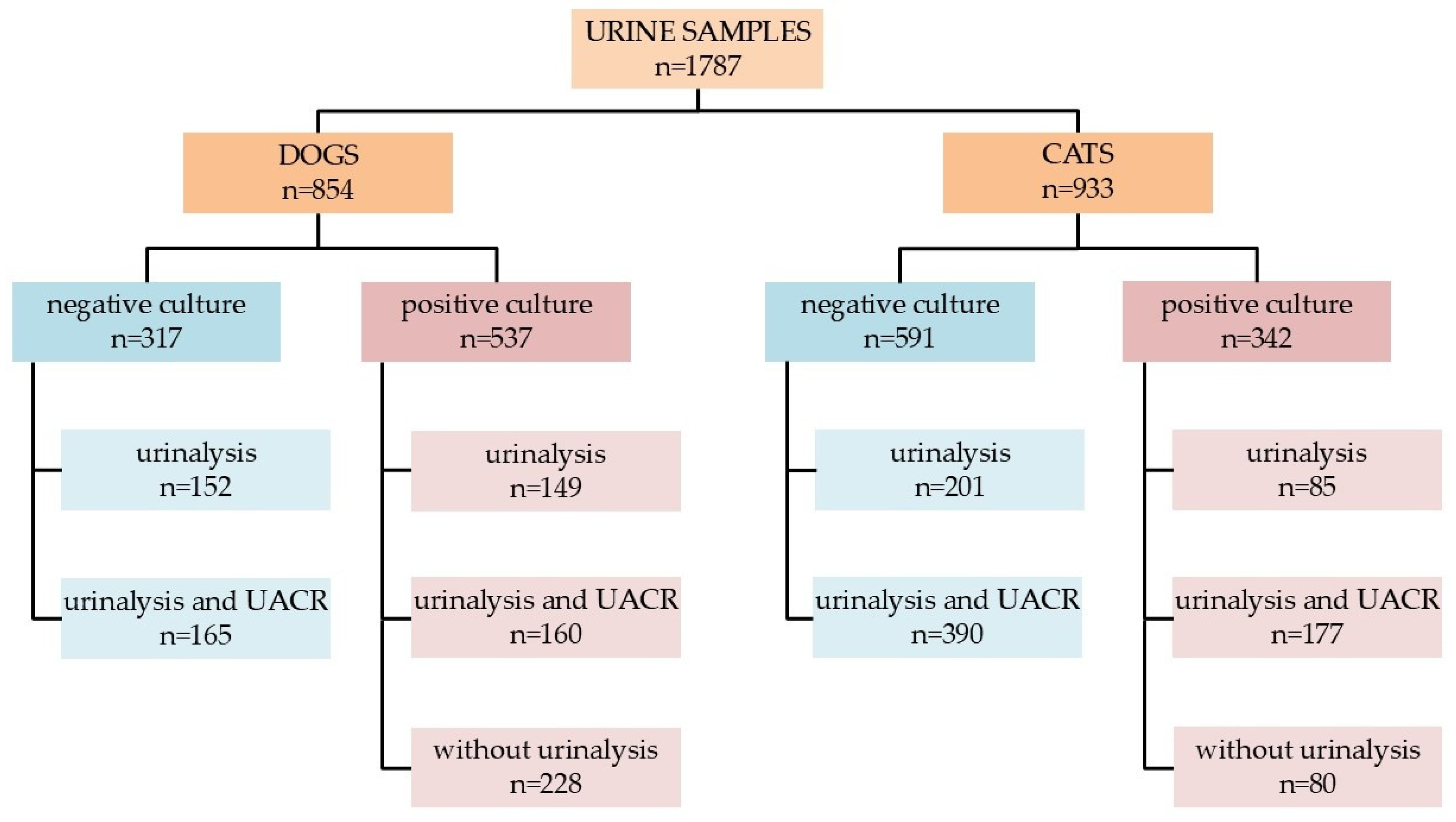
Urinalysis alone was performed on 301 urine samples from dogs and 286 samples from cats. Urinalysis combined with an additional measurement of the urinary albumin-to-creatinine ratio (UACR) was conducted on 325 samples from dogs and 567 from cats. A total of 228 samples from dogs and 80 from cats were not subjected to urinalysis because submissions were culture-only and/or lacked sufficient sample volume or complete urinalysis data (Figure 1). Accordingly, associations between urinalysis parameters and bacteriuria were evaluated in the subset with available urinalysis results. The results of general urinalysis were stratified by species and by the presence or absence of bacterial growth (Table 4).

3.2. Bacteriological Culture Results

Bacterial growth was detected in 537 (62.9%) out of 854 canine urine samples and in 342 (36.7%) out of 933 feline urine samples. The total number of isolates exceeded the number of culture-positive samples (666 canine isolates and 361 feline isolates) because a proportion of samples yielded polymicrobial growth. The distribution of isolates by species is presented in Table 5. Specifically, mixed (polymicrobial) infections (≥2 bacterial species from a single urine sample) were detected in 129 dog samples and 19 cat samples, whereas 408 dog samples and 323 cat samples showed monomicrobial growth (Table 6).

3.3. Antimicrobial Susceptibility

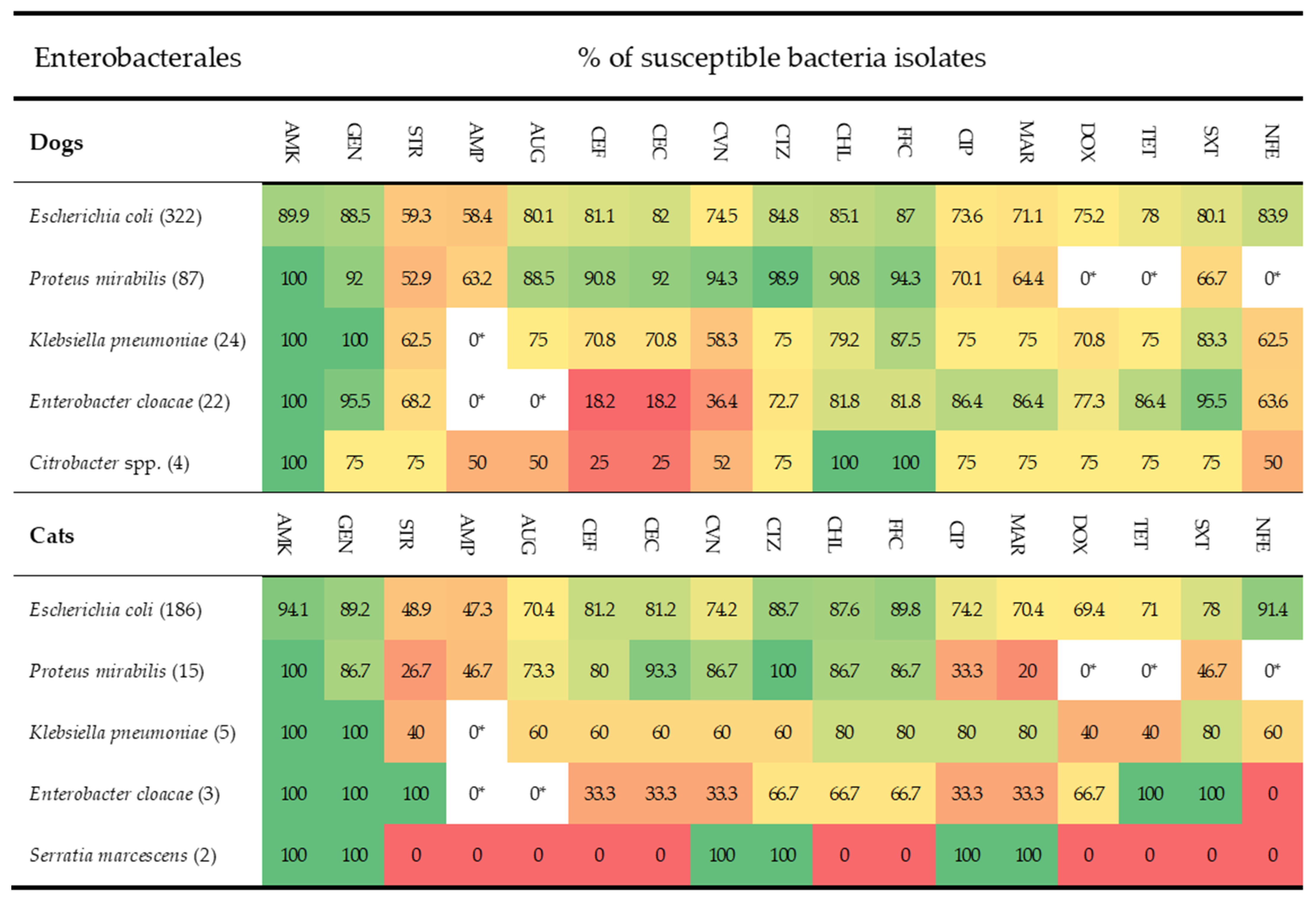
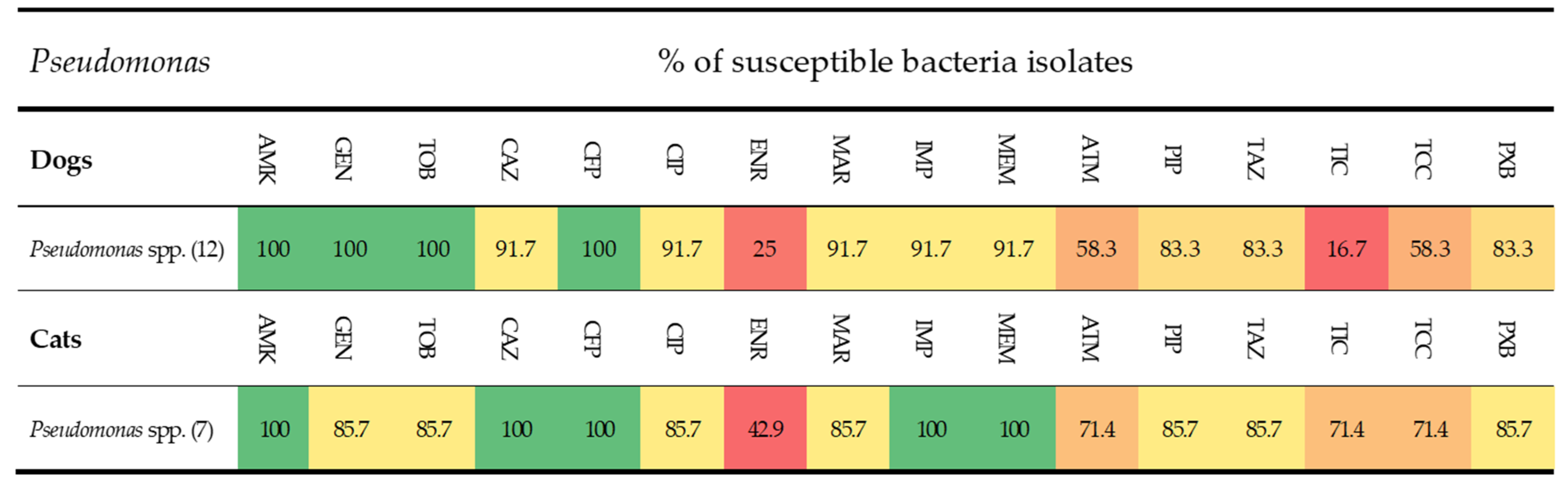
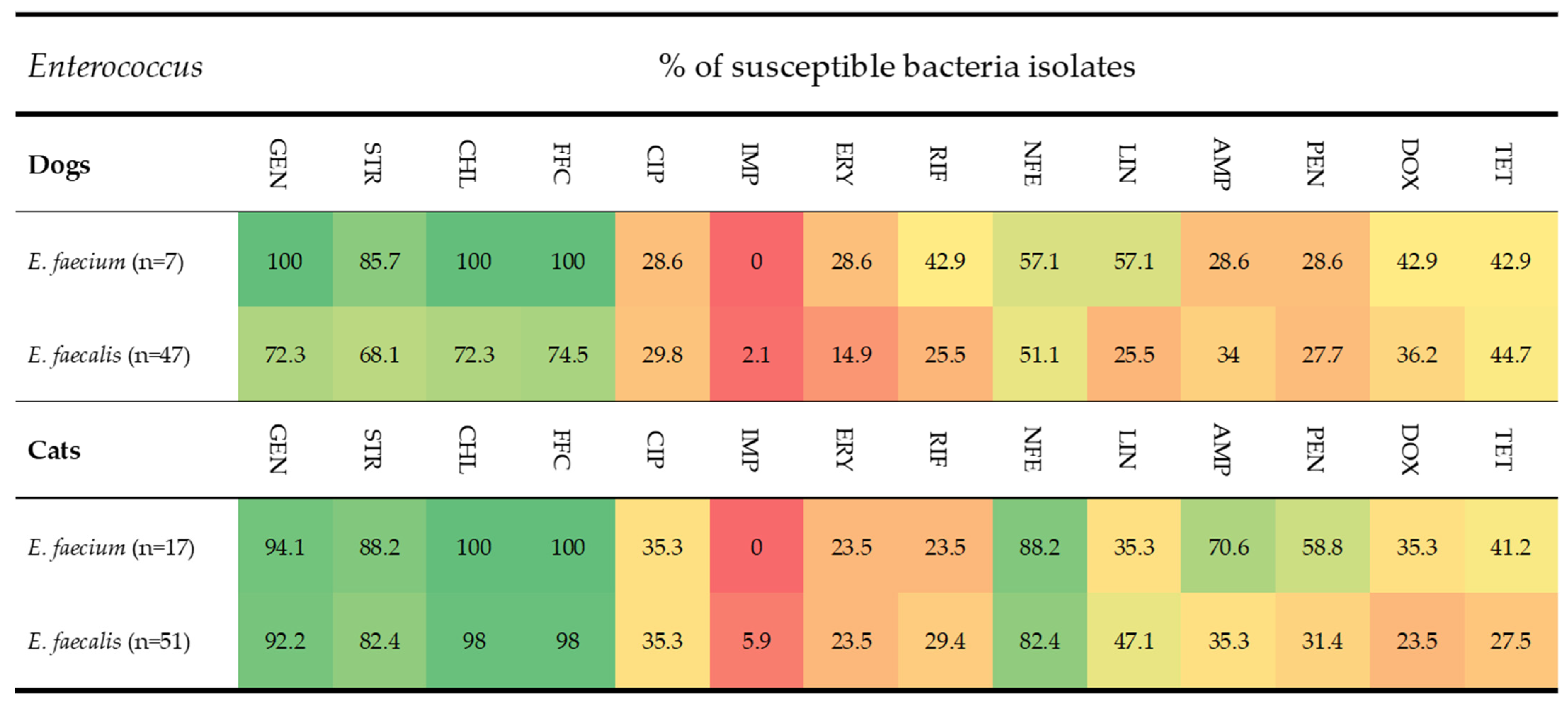
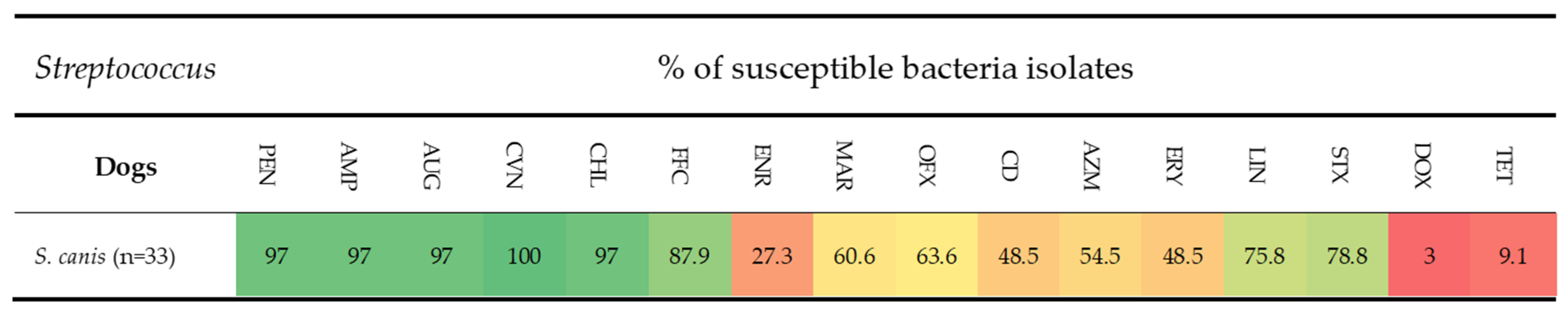
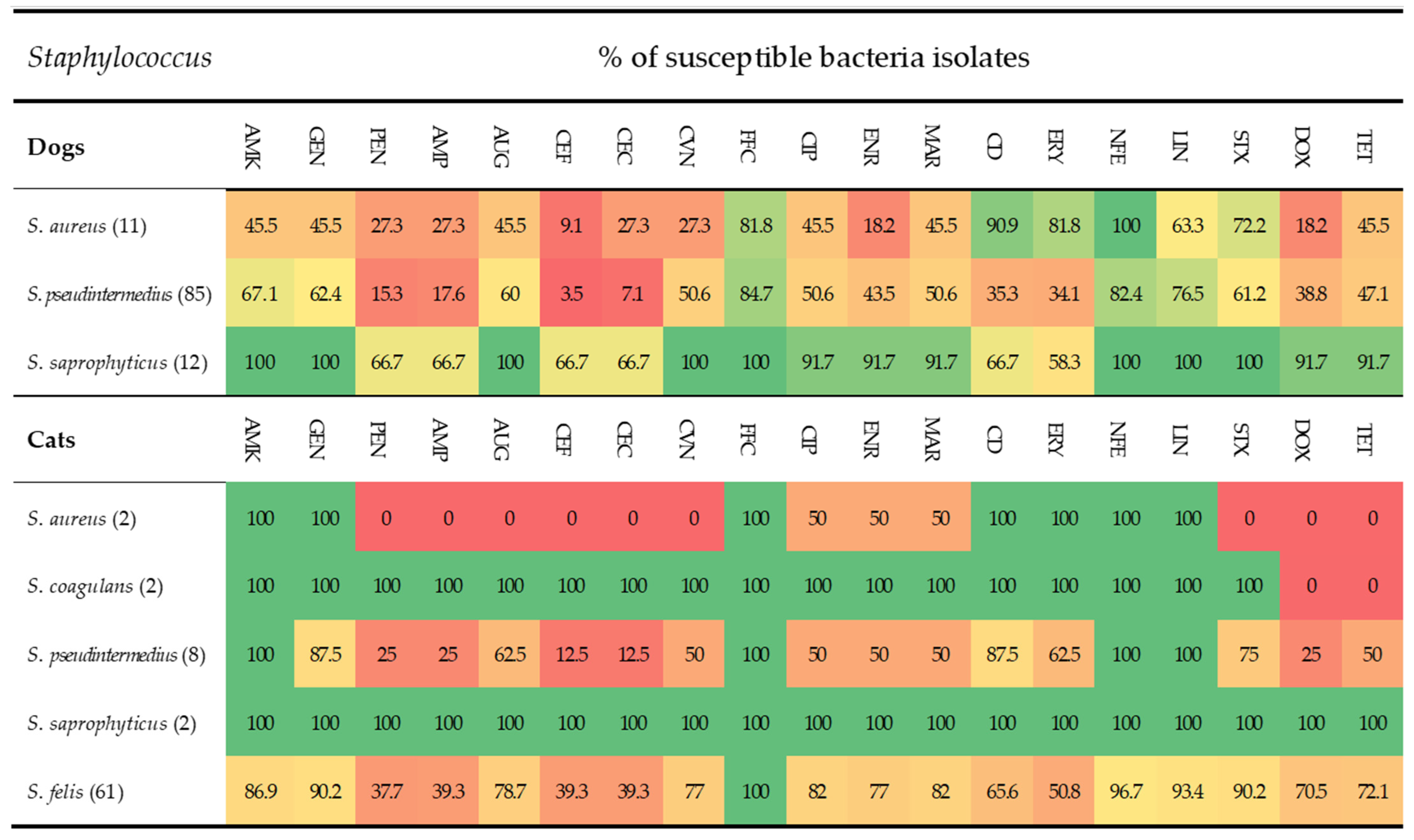
Antimicrobial susceptibility profiles for Enterobacterales showed high activity of nitrofurantoin and aminoglycosides across isolates from both dogs and cats, while aminopenicillins without β-lactamase inhibition demonstrated the lowest susceptibility. Amoxicillin–clavulanate and first-generation oral cephalosporins exhibited intermediate to high activity, and fluoroquinolone susceptibility was moderate (Figure 2). Pseudomonas spp. retained the greatest susceptibility to aminoglycosides and antipseudomonal cephalosporins, with variable and overall lower susceptibility to fluoroquinolones and poor activity of agents lacking Pseudomonas spp. coverage. Carboxypenicillins were inactive or minimally active against this genus (Figure 3). Among Gram-positive cocci, streptococci displayed uniformly high susceptibility to β-lactams and low activity of tetracyclines, whereas enterococci demonstrated intrinsic non-susceptibility to cephalosporins with comparatively favourable nitrofurantoin activity; β-lactam activity varied by species, with higher susceptibility typically observed in Enterococcus faecalis than in Enterococcus faecium (Figure 4 and Figure 5). Staphylococcal isolates (including Staphylococcus pseudintermedius and other species) showed good activity of β-lactams aligned with methicillin-susceptible phenotypes and variable performance of clindamycin and fluoroquinolones; doxycycline susceptibility was lower and inconsistent between species (Figure 6). Susceptibility categories were assigned according to laboratory breakpoints; only % susceptible isolates (%S) are displayed in the heat-maps.

3.4. Statistical Analysis

When dogs and cats were analysed together, a chi-square test indicated a significant association between season and infection count, with the fewest infections in winter and autumn and the most in summer (χ2(3) = 7.97, p = 0.047; Cramér’s V = 0.092, small effect). No seasonal effect was detected in dogs (p = 0.242). Age correlated positively with the number of bacterial strains cultured, with weak but significant effects in both species: dogs r_s(723) = 0.189, p < 0.001; cats r_s(778) = 0.113, p = 0.002. Pyuria showed a strong association with infection overall (χ2(1) = 710.48, p < 0.001; phi = 0.695) and within species (dogs: χ2(1) = 298.10, p < 0.001; phi = 0.694; cats: χ2(1) = 382.04, p < 0.001; phi = 0.672). Animals with pyuria were significantly more likely to be culture-positive. In dogs, hematuria was weakly but significantly inversely associated with infection (χ2(1) = 4.58, p = 0.032; phi = 0.090), indicating that infected dogs were less likely to have hematuria. No significant association was observed in cats. Nitrite positivity in dipstick urinalysis was significantly associated with bacterial growth when all samples were analysed together (χ2(1) = 66.09, p < 0.001; phi = 0.325). In dogs, this association remained strong (χ2(1) = 65.30, p < 0.001; phi = 0.323): nitrites were present in 16 of 317 culture-negative (5.0%) and 91 of 309 culture-positive (29.4%) samples, indicating a moderate effect and confirming the diagnostic utility of nitrite detection for bacteriuria. In cats, however, no significant association was observed (χ2(1) = 0.69, p = 0.41; phi = 0.03; Fisher’s exact p = 0.42). Among feline samples, nitrites were detected in 7 of 591 culture-negative (1.2%) and 5 of 262 culture-positive (1.9%) urines. These findings suggest that nitrite testing has diagnostic value for dogs but poor sensitivity and limited interpretive value in cats, consistent with physiological and microbiological factors such as shorter bladder retention time and the prevalence of non-nitrate-reducing bacterial species (e.g., Enterococcus spp. and staphylococci) in feline infections. A summary of key statistical associations is provided in Table 7.

4. Discussion

Urinalysis remains the most accessible screening tool for evaluating suspected bacterial UTIs, but its parameters differ substantially in diagnostic yield and must be interpreted in the context of clinical evaluation and appropriate microbiology [38]. In human medicine, leukocyte esterase and nitrite on urine test strips provide useful rule-in information when jointly positive, whereas isolated microscopic abnormalities are nonspecific [39] overall, dipstick performance is imperfect across settings and cannot replace culture [40]. In companion animals ISCAID recommends that urinalysis inform, but not replace, urine culture with antimicrobial susceptibility testing (AST; antimicrobial susceptibility testing) whenever the pre-test probability for infection is more than trivial or antimicrobial therapy is contemplated [7].
The present analysis identified pyuria as the strongest single correlate of culture-confirmed infection, with large effect sizes in both species. This agrees with prior veterinary work indicating that pyuria and bacteriuria increase the post-test probability of infection, but that absence of pyuria does not exclude it [6], and with feline risk studies in which inflammatory sediment findings cluster with positive cultures [41]. The clinical implication is that the finding of pyuria, particularly when accompanied by compatible lower urinary tract signs should prompt culture rather than empiric therapy alone.
Hematuria showed limited diagnostic utility. A weak inverse association with culture positivity was observed in dogs, and no association was found in cats, consistent with the well-recognised nonspecificity of hematuria across urolithiasis, sterile inflammatory conditions, trauma, and neoplasia [42]. Hematuria should therefore not be used as an isolated trigger for antimicrobial therapy or as evidence against infection when absent.
Urine specific gravity (USG) emerged as a meaningful urine matrix characteristic. Lower USG was associated with higher odds of infection and more frequent crystal detection. Earlier feline studies reported lower USG among culture-positive cats relative to other lower urinary tract disease groups, although not all cohorts have agreed [41,43]. From a pathophysiological standpoint, dilute urine reduces bacteriostatic effects (lower urea and osmolality), often reflects polyuric comorbidities that predispose to infection, and may favor certain crystal types; these mechanisms plausibly account for the observed clustering of infection with low USG [39]. In practice, low USG in a symptomatic patient should lower the threshold for culture even if the sediment is otherwise equivocal.
Urine pH correlated weakly but significantly with the severity of bacterial growth in dogs. This observation is compatible with infection by urease-positive organisms, notably Proteus mirabilis and some staphylococci, which alkalinise urine and can co-promote struvite crystallisation [39]. European surveillance confirms a non-trivial contribution of these taxa to canine UTIs [24]. Where alkaline pH and struvite are present, nitrofurantoin should be avoided empirically because of intrinsic resistance in Proteus [7]. In addition, alkaline urine can reduce the antibacterial activity of nitrofurantoin; therefore, markedly alkaline pH should further discourage empiric nitrofurantoin use pending culture results [44].
Age and sex followed expected patterns. Culture-positive animals were older than culture-negative animals, and females were over-represented among positives in both species, paralleling established risk gradients related to anatomy and comorbidity burden [6,41]. A modest seasonality signal was observed, with the fewest infections in winter/autumn and the most in summer overall; no seasonality was detected in dogs. Seasonality is seldom quantified in small-animal UTI literature, and this pattern, although of small magnitude may have operational relevance for scheduling follow-ups and anticipating culture load.
The etiologic spectrum was typical for Central Europe. Escherichia coli accounted for approximately one-half of culture-positive cases in dogs and cats, with Enterococcus spp., Staphylococcus pseudintermedius, Proteus mirabilis, and members of the Klebsiella/Enterobacter complex comprising the remainder, consistent with multi-country datasets [24]. Most infections were mono-microbial, which simplifies empiric reasoning and aligns with routine laboratory experience.
Resistance patterns from aggregated disc-diffusion results were clinically coherent and broadly concordant with those reported in Central Europe. In E. coli from dogs, high susceptibility was observed to aminoglycosides (e.g., amikacin and gentamicin) and nitrofurantoin, with intermediate performance for amoxicillin–clavulanate and first-generation oral cephalosporins, lower activity for ampicillin alone, and a mid-range activity for fluoroquinolones. Feline E. coli demonstrated a similar pattern with particularly strong nitrofurantoin activity. Such distributions match recent regional observations from Poland and the broader European Union, where resistance to aminopenicillins is frequent, fluoroquinolone susceptibility is variable, and nitrofurantoin remains a robust cystitis option when lower-tract disease is likely [19,24]. Proteus mirabilis exhibited the expected intrinsic resistance to nitrofurantoin and retained activity against several cephalosporins and enrofloxacin, and these features align with European veterinary datasets [24]. Enterococcus spp. exhibited intrinsic resistance to cephalosporins and comparatively favourable nitrofurantoin activity, with beta-lactam responses varying between E. faecalis and E. faecium, underscoring the importance of speciation when these organisms are recovered [7]. Streptococcus canis in dogs remained highly susceptible to beta-lactams, while showing strikingly low doxycycline activity, cautioning against the use of tetracyclines for presumed streptococcal cystitis. Pseudomonas spp. displayed the familiar phenotype of high susceptibility to aminoglycosides and anti-pseudomonal cephalosporins with variable and in some instances poor enrofloxacin activity; empirical coverage should therefore be avoided unless dictated by severity, with rapid de-escalation to culture results [45]. For interpretive clarity in the narrative, we use descriptive categories based on the proportion susceptible—high (≥90% susceptible), moderate (70–89%), and low (<70%)—without implying formal resistance thresholds. We also explicitly note that several drug classes included for monitoring (e.g., carboxy- and ureidopenicillins, cephalosporins combined with β-lactamase inhibitors, carbapenems, and oxazolidinones) are restricted for human use and not allowed for veterinary treatment in the EU [46].
Urine collection methods shape interpretation and stewardship. When culture or AST is planned, cystocentesis is preferred in both species to minimise contamination. Free-catch samples are acceptable for screening, but cannot confirm infection and are not suitable for culture. Catheterisation in dogs is acceptable with an appropriate technique; in cats, catheterisation should be reserved for specific indications [7]. These principles should be paired with short-course, narrow-spectrum empiric therapy only after sampling, in line with ISCAID recommendations and European antimicrobial-use audits, which document the frequent empiric use of amoxicillin–clavulanate and fluoroquinolones, as well as excessive reliance on third-generation cephalosporins [47]. Given the susceptibility patterns observed, many uncomplicated lower UTIs could be managed pending culture with amoxicillin–clavulanate or trimethoprim–sulfonamide for three to five days, reserving fluoroquinolones and third-generation cephalosporins for pyelonephritis, prostatitis, or culture-directed indications [7,24]. Nitrofurantoin is a viable option for lower-tract E. coli cystitis—particularly in cats—assuming the absence of upper-tract involvement and Proteus spp. infection. The risk of recurrence or ascending infection is low, and owners should be counselled regarding appropriate dosing and tolerability.
Whether Gram status can be inferred from urinalysis alone remains uncertain. Alkaline pH with struvite crystals increases the likelihood of urease-positive Gram-negative bacilli such as Proteus, and the presence of cocci on sediment may suggest Gram-positive organisms; however, overlap is substantial, microscopy is operator-dependent, and sterile feline lower urinary tract disease often confounds interpretation [5]. Consequently, while urinalysis can inform empiric choices, definitive organism identification and AST remain essential.
Limitations of this study should be acknowledged. First, this was a retrospective analysis of laboratory submissions, and detailed clinical metadata (e.g., sporadic vs. recurrent infection, uncomplicated vs. complicated disease, lower vs. upper tract involvement, comorbidities, prior antimicrobial exposure, and urine collection method) were not consistently available, which limits treatment-context inference. Second, urinalysis results were available only for a subset of submissions (i.e., those for which urinalysis/UACR was requested and/or complete data were available), and exact pre-analytical conditions (collection-to-analysis time, storage, and transport) were not uniformly documented. Therefore, correlations between urinalysis parameters and bacteriuria should be interpreted cautiously. Third, a proportion of positive cultures were polymicrobial (129 dogs and 19 cats), increasing the total number of isolates relative to culture-positive samples; the presence of mixed growth may reflect true co-infection or, in some cases, contamination, and could influence both urinalysis correlations and antimicrobial susceptibility summaries. Fourth, susceptibility was assessed by disk diffusion and categorised using veterinary CLSI criteria when available and human CLSI criteria when not; for some taxa (e.g., non-aureus/non-pseudintermedius staphylococci) validated veterinary breakpoints are lacking and surrogate criteria were applied for descriptive purposes. Finally, the antimicrobial panel included agents that are considered last-resort or inappropriate for routine companion-animal UTI management (e.g., carbapenems, linezolid, rifampicin); these were included for surveillance and are not advocated as empirical options.
Beyond optimizing empiric selection and de-escalation, there is a growing need for innovative strategies to address Gram-negative resistance. One approach is the “Trojan horse” concept, where antibiotics are conjugated to siderophores to hijack bacterial iron-uptake systems and enhance intracellular delivery [48]. Another emerging direction involves targeting bacterial metallophore pathways required for metal acquisition and virulence, offering potential new drug targets and antibiotic classes [49].
A practical synthesis of these findings suggests that certain demographic and analytical profiles should prompt timely culture and AST, particularly when antimicrobial therapy is being considered, when infection is recurrent/complicated, or when systemic illness suggests upper-tract involvement. Table 8 summarises profiles that, based on observed associations and the literature, support urine culture with quantitative bacterial count, species identification, and AST, alongside cautious provisional expectations for likely pathogens and narrow-spectrum, short-course empiric options after sampling while awaiting results.
Drawing on these findings, the following step-by-step clinical decision pathway is proposed. Presentation with compatible lower urinary tract signs prompts immediate collection of urine by cystocentesis whenever culture may be needed. If cystocentesis is not feasible, screening by free-catch can be performed, with culture deferred until a cystocentesis sample is available. Urinalysis is performed without delay, with documentation of USG, pH, leukocytes, erythrocytes, crystals, and sediment morphology, and with consideration of test-strip nitrite and leukocyte esterase. The presence of pyuria, or a low USG with compatible signs, or an alkaline pH with struvite crystals, should prompt submission of urine for culture with AST. When antimicrobial therapy cannot be deferred after sampling, a first-line oral agent aligned with local susceptibility should be selected. Typically amoxicillin (preferred) or trimethoprim–sulfonamide for suspected uncomplicated lower UTI and nitrofurantoin considered only when first-line options are not appropriate and lower-tract Escherichia coli cystitis is presumed without evidence of upper-tract disease or urease-positive organisms. Fluoroquinolones and third-generation cephalosporins are reserved for pyelonephritis, prostatitis, or culture-directed indications. Clinical response is reassessed within forty-eight to seventy-two hours, and therapy is adjusted or de-escalated to the shortest effective course once culture and AST are available.

5. Conclusions

In conclusion, pyuria was confirmed as the most decisive routine marker of bacterial infection in dogs and cats, whereas hematuria alone remained uninformative. Low urine specific gravity was identified as an independent, practice-relevant risk signal that should lower the threshold for culture, and a modest overall seasonality of UTIs was observed, which may have operational implications. The etiologic spectrum was dominated by Escherichia coli, and the susceptibility profile supported the restrained, first-line use of amoxicillin–clavulanate or trimethoprim–sulfamethoxazole and, in selected lower-tract cases, nitrofurantoin, while avoiding nitrofurantoin where Proteus was likely and avoiding routine empirical use of fluoroquinolones or third-generation cephalosporins. These conclusions address two common problems: missed infections in dilute urine with minimal sediment activity, and unnecessary exposure to broad-spectrum agents when narrow, short-course options are sufficient. Adoption of these recommendations should improve clinical outcomes while advancing antimicrobial stewardship in routine small animal practice.

Author Contributions

Conceptualization, D.J. and A.G.; methodology, D.J. and P.G.; software, R.S.; validation, R.S. and D.J.; formal analysis, R.S. and D.J.; investigation, P.G., N.S., D.S., M.P., A.C. and A.K.M.; resources, D.J. and A.A.Z.; data curation, D.J.; writing—original draft preparation, A.G. and D.J.; writing—review and editing, A.G.; visualization, D.J.; supervision, D.J.; project administration, D.J. All authors have read and agreed to the published version of the manuscript.

Funding

This research received no external funding.

Institutional Review Board Statement

Not applicable. The study was retrospective and based exclusively on anonymized routine diagnostic laboratory results. No additional animal procedures were performed for research purposes. According to EU Directive 2010/63/EU and its implementation in Poland (Act of 15 January 2015; Dz.U. 2015 poz. 266), the use of surplus diagnostic material and retrospective data analyses do not constitute an animal experiment requiring approval by a local ethics committee.

Informed Consent Statement

Not applicable.

Data Availability Statement

The raw data supporting the conclusions of this article will be made available by the authors on request.

Conflicts of Interest

The authors declare no conflicts of interest.

References

  1. Ling, G.V. Therapeutic strategies involving antimicrobial treatment of the canine urinary tract. J. Am. Vet. Med. Assoc. 1984, 185, 1162–1164. [Google Scholar] [CrossRef] [PubMed]
  2. Komala, M.; Kumar, K.S. Urinary tract infection: Causes, symptoms, diagnosis and its management. Indian J. Res. Pharm. Biotechnol. 2013, 1, 226–233. [Google Scholar]
  3. Pereira, A.; Jota Baptista, C.; Oliveira, P.A.; Coelho, A.C. Urinary tract bacterial infections in small animal practice: Clinical and epidemiological aspects. Vet. Stanica 2024, 55, 703–720. [Google Scholar] [CrossRef]
  4. Lekcharoensuk, C.; Osborne, C.; Lulich, J. Epidemiologic study of risk factors for lower urinary tract diseases in cats. J. Am. Vet. Med. Assoc. 2001, 218, 1429–1435. [Google Scholar] [CrossRef]
  5. Litster, A.; Moss, S.; Platell, J.; Trott, D.J. Occult bacterial lower urinary tract infections in cats—Urinalysis and culture findings. Vet. Microbiol. 2009, 136, 130–134. [Google Scholar] [CrossRef]
  6. Dorsch, R.; Teichmann-Knorrn, S.; Sjetne Lund, H. Urinary tract infection and subclinical bacteriuria in cats: A clinical update. J. Feline Med. Surg. 2019, 21, 1023–1038. [Google Scholar] [CrossRef]
  7. Weese, J.S.; Blondeau, J.; Boothe, D.; Guardabassi, L.; Gumley, N.; Papich, M.; Jessen, L.R.; Lappin, M.; Rankin, S.; Westropp, J.L.; et al. International Society for Companion Animal Infectious Diseases (ISCAID) guidelines for the diagnosis and management of bacterial urinary tract infections in dogs and cats. Vet. J. 2019, 247, 8–25. [Google Scholar] [CrossRef]
  8. Sykes, J.E.; Westropp, J.L. Bacterial infections of the genitourinary tract. In Canine and Feline Infectious Diseases; Sykes, J.E., Ed.; Elsevier Saunders: St. Louis, MO, USA, 2014; pp. 871–885. [Google Scholar]
  9. Nicolle, L.E.; Bradley, S.; Colgan, R.; Rice, J.C.; Schaeffer, A.; Hooton, T.M. Infectious Diseases Society of America guidelines for the diagnosis and treatment of asymptomatic bacteriuria in adults. Clin. Infect. Dis. 2005, 40, 643–654. [Google Scholar] [CrossRef]
  10. Wood, M.W. Lower urinary tract infections. In Textbook of Veterinary Internal Medicine, 8th ed.; Ettinger, S.J., Feldman, E.C., Côté, E., Eds.; Elsevier: St. Louis, MO, USA, 2017; pp. 1992–1996. [Google Scholar]
  11. Grant, D.C.; Nappier, M.T.; Corrigan, V.K. Diagnostic accuracy of a point-of-care test using voided urine samples for detection of bacteriuria in dogs with signs of lower urinary tract disease. J. Vet. Intern. Med. 2021, 35, 993–996. [Google Scholar] [CrossRef]
  12. Sørensen, T.M.; Holmslykke, M.; Nordlund, M.; Siersma, V.; Jessen, L.R. Pre-test probability of urinary tract infection in dogs with clinical signs of lower urinary tract disease. Vet. J. 2019, 247, 65–70. [Google Scholar] [CrossRef]
  13. Llido, M.; Vachon, C.; Dickinson, M.; Beauchamp, G.; Dunn, M. Transurethral cystoscopy in dogs with recurrent urinary tract infections: Retrospective study (2011–2018). J. Vet. Intern. Med. 2020, 34, 790–796. [Google Scholar] [CrossRef] [PubMed]
  14. Flores-Mireles, A.L.; Walker, J.N.; Caparon, M.; Hultgren, S.J. Urinary tract infections: Epidemiology, mechanisms of infection and treatment options. Nat. Rev. Microbiol. 2015, 13, 269–284. [Google Scholar] [CrossRef] [PubMed]
  15. Hall, J.L.; Holmes, M.A.; Baines, S.J. Prevalence and antimicrobial resistance of canine urinary tract pathogens. Vet. Rec. 2013, 173, 549. [Google Scholar] [CrossRef] [PubMed]
  16. Teh, H. A review of the current concepts in canine urinary tract infections. Aust. Vet. J. 2022, 100, 56–62. [Google Scholar] [CrossRef]
  17. Bonten, M.; Johnson, J.R.; van den Biggelaar, A.H.J.; Georgalis, L.; Geurtsen, J.; de Palacios, P.I.; Gravenstein, S.; Verstraeten, T.; Hermans, P.; Poolman, J.T. Epidemiology of Escherichia coli bacteremia: A systematic literature review. Clin. Infect. Dis. 2021, 72, 1211–1219. [Google Scholar] [CrossRef]
  18. Yousefi, A.; Torkan, S. Uropathogenic Escherichia coli in the urine samples of Iranian dogs: Antimicrobial resistance pattern and distribution of antibiotic resistance genes. Biomed. Res. Int. 2017, 2017, 4180490. [Google Scholar] [CrossRef]
  19. Jańczak, D.; Górecki, P.; Stryjek, R.; Zasada, A. Multidrug Resistance of Escherichia coli Isolated from the Urinary Bladder of Dogs and Cats with Suspected Urinary Tract Infections. Ann. Agric. Environ. Med. 2024, 31, 178–184. [Google Scholar] [CrossRef]
  20. Lund, H.S.; Skogtun, G.; Sørum, H.; Eggertsdóttir, A.V. Antimicrobial susceptibility in bacterial isolates from Norwegian cats with lower urinary tract disease. J. Feline Med. Surg. 2015, 17, 507–515. [Google Scholar] [CrossRef]
  21. Hansen-Jones, C.L.; Hill, K.E.; Cogger, N. Feline urinary tract pathogens in western Canada: Prevalence of bacterial species and antimicrobial resistance from 2012 to 2018. Can. Vet. J. 2023, 64, 558–564. [Google Scholar]
  22. Hernando, E.; Vila, A.; D’Ippolito, P.; Rico, A.J.; Rodon, J.; Roura, X. Prevalence and characterization of urinary tract infection in owned dogs and cats from Spain. Top. Companion Anim. Med. 2021, 43, 100512. [Google Scholar] [CrossRef]
  23. Osman, M.; Altier, C.; Cazer, C. Antimicrobial resistance among canine enterococci in the northeastern United States, 2007–2020. Front. Microbiol. 2023, 13, 1025242. [Google Scholar] [CrossRef] [PubMed]
  24. Temmerman, R.; Berlamont, H.; El Garch, F.; Rose, M.; Simjee, S.; Meschi, S.; de Jong, A. Antimicrobial susceptibility of canine and feline urinary tract infection pathogens isolated from animals with clinical signs in European veterinary practices during the period 2013–2018. Antibiotics 2024, 13, 500. [Google Scholar] [CrossRef] [PubMed]
  25. Orujov, P.; Celik, B.; Kekec, A.I.; Diren Sigirci, B. Presence of enterococci in cats with urinary tract infections and antibiotic resistance profiles. Indian J. Anim. Res. 2024, 58, 1–7. [Google Scholar] [CrossRef]
  26. Seidel, E.J.; Hess, R.S.; Cole, S.J.; McClosky, M.E. Clinical differences in enterococcal bacteriuria compared with other bacteriuria in cats. J. Feline Med. Surg. 2022, 24, e546–e550. [Google Scholar] [CrossRef]
  27. Sokhn, E.S.; Salami, A.; El Roz, A.; Salloum, L.; Bahmad, H.F.; Ghssein, G. Antimicrobial Susceptibilities and Laboratory Profiles of Escherichia coli, Klebsiella pneumoniae, and Proteus mirabilis Isolates as Agents of Urinary Tract Infection in Lebanon: Paving the Way for Better Diagnostics. Med. Sci. 2020, 8, 32. [Google Scholar] [CrossRef]
  28. Gupta, K.; Hooton, T.M.; Naber, K.G.; Wullt, B.; Colgan, R.; Miller, L.G.; Moran, G.J.; Nicolle, L.E.; Raz, R.; Schaeffer, A.J.; et al. International clinical practice guidelines for the treatment of acute uncomplicated cystitis and pyelonephritis in women: A 2010 update by the Infectious Diseases Society of America and the European Society for Microbiology and Infectious Diseases. Clin. Infect. Dis. 2011, 52, e103–e120. [Google Scholar] [CrossRef]
  29. Abou Heidar, N.F.; Degheili, J.A.; Yacoubian, A.A.; Khauli, R.B. Management of urinary tract infection in women: A practical approach for everyday practice. Urol. Ann. 2019, 11, 339–346. [Google Scholar] [CrossRef]
  30. Sutter, C.M.; Dear, J.D.; Fine, J.R.; Pires, J.; Sykes, J.E.; Segev, G.; Westropp, J.L. Evaluation of a rapid immunoassay for bacteriuria in dogs. J. Vet. Intern. Med. 2023, 37, 1015–1020. [Google Scholar] [CrossRef]
  31. Jackson, C.R.; Fedorka-Cray, P.J.; Barrett, J.B. Use of a genus- and species-specific multiplex PCR for identification of enterococci. J. Clin. Microbiol. 2004, 42, 3558–3565. [Google Scholar] [CrossRef]
  32. Sasaki, T.; Tsubakishita, S.; Tanaka, Y.; Sakusabe, A.; Ohtsuka, M.; Hirotaki, S.; Kawakami, T.; Fukata, T.; Hiramatsu, K. Multiplex-PCR method for species identification of coagulase-positive staphylococci. J. Clin. Microbiol. 2010, 48, 765–769. [Google Scholar] [CrossRef]
  33. CLSI. Performance Standards for Antimicrobial Disk and Dilution Susceptibility Tests for Bacteria Isolated from Animals, 4th ed.; CLSI Supplement VET08; Clinical and Laboratory Standards Institute: Wayne, PA, USA, 2018. [Google Scholar]
  34. CLSI. Performance Standards for Antimicrobial Disk and Dilution Susceptibility Tests for Bacteria Isolated from Animals; CLSI Report VET01S ED5; Clinical and Laboratory Standards Institute: Wayne, PA, USA, 2020. [Google Scholar]
  35. CLSI. Performance Standards for Antimicrobial Susceptibility Testing, 29th ed.; CLSI Supplement M100; Clinical and Laboratory Standards Institute: Wayne, PA, USA, 2019. [Google Scholar]
  36. Pintarić, S.; Matanović, K.; Martinec, B.Š. Fluoroquinolone susceptibility in Pseudomonas aeruginosa isolates from dogs—Comparing disk diffusion and microdilution methods. Vet. Arhiv 2017, 87, 291–300. [Google Scholar] [CrossRef]
  37. Cohen, J. A Power Primer. In Methodological Issues and Strategies in Clinical Research, 4th ed.; Kazdin, A.E., Ed.; American Psychological Association: Washington, DC, USA, 2016; pp. 279–284. [Google Scholar]
  38. Weese, J.S.; Blondeau, J.M.; Boothe, D.; Breitschwerdt, E.B.; Guardabassi, L.; Hillier, A.; Lloyd, D.H.; Papich, M.G.; Rankin, S.C.; Turnidge, J.D.; et al. Antimicrobial use guidelines for treatment of urinary tract disease in dogs and cats: Antimicrobial Guidelines Working Group of the International Society for Companion Animal Infectious Diseases. Vet. Med. Int. 2011, 2011, 263768. [Google Scholar] [CrossRef] [PubMed]
  39. Simerville, J.A.; Maxted, W.C.; Pahira, J.J. Urinalysis: A Comprehensive Review. Am. Fam. Physician 2005, 71, 1153–1162. [Google Scholar] [PubMed]
  40. Devillé, W.L.J.M.; Yzermans, J.C.; van Duijn, N.P.; Bezemer, P.D.; van der Windt, D.A.W.M.; Bouter, L.M. The Urine Dipstick Test Useful to Rule Out Infections. A Meta-Analysis of the Accuracy. BMC Urol. 2004, 4, 4. [Google Scholar] [CrossRef]
  41. Martínez-Ruzafa, I.; Kruger, J.M.; Miller, R.; Swenson, C.L.; Bolin, C.A.; Kaneene, J.B. Clinical Features and Risk Factors for Development of Urinary Tract Infections in Cats. J. Feline Med. Surg. 2012, 14, 729–740. [Google Scholar] [CrossRef]
  42. Forrester, S.D.; Lees, G.E.; Brown, S.A.; Bunch, S.E. Diagnostic Approach to Hematuria in Dogs and Cats. Vet. Clin. N. Am. Small Anim. Pract. 2004, 34, 849–866. [Google Scholar] [CrossRef]
  43. Bailiff, N.L.; Nelson, R.W.; Feldman, E.C.; Griffey, S.M.; Gregory, C.R.; Osborne, C.A.; Polzin, D.J.; Willits, N. Frequency and Risk Factors for Urinary Tract Infection in Cats with Diabetes Mellitus. J. Vet. Intern. Med. 2006, 20, 850–855. [Google Scholar] [CrossRef]
  44. Fransen, F.; Melchers, M.J.B.; Lagarde, C.M.C.; Meletiadis, J.; Mouton, J.W. Pharmacodynamics of nitrofurantoin at different pH levels against pathogens involved in urinary tract infections. J. Antimicrob. Chemother. 2017, 72, 3366–3373. [Google Scholar] [CrossRef]
  45. Wood, S.J.; Kuzel, T.M.; Shafikhani, S.H. Pseudomonas aeruginosa: Infections, Animal Modeling, and Therapeutics. Pathogens 2023, 12, 199. [Google Scholar] [CrossRef]
  46. European Commission. Commission Implementing Regulation (EU) 2022/1255 of 19 July 2022 Designating Antimicrobials or Groups of Antimicrobials Reserved for Treatment of Certain Infections in Humans, Under Regulation (EU) 2019/6. Off. J. Eur. Union 2022, L 191, 58–64. Available online: https://eur-lex.europa.eu/eli/reg_impl/2022/1255/oj/eng (accessed on 10 September 2025).
  47. De Marchi, L.; Vernaccini, M.; Meucci, V.; Briganti, A.; Lippi, I.; Marchetti, V.; Intorre, L. Six-Year Prescription Pattern of Antimicrobial Use in Cats at the Veterinary Teaching Hospital of the University of Pisa. Animals 2024, 14, 521. [Google Scholar] [CrossRef]
  48. Tillotson, G.S. Trojan Horse Antibiotics—A Novel Way to Circumvent Gram-Negative Bacterial Resistance? Infect. Dis. (Auckl.) 2016, 9, 45–52. [Google Scholar] [CrossRef]
  49. Ezzeddine, Z.; Ghssein, G. Towards new antibiotics classes targeting bacterial metallophores. Microb. Pathog. 2023, 182, 106221. [Google Scholar] [CrossRef]
Figure 1. Flowchart of urine sample processing in dogs and cats. Urinalysis (with or without UACR) was performed when requested by the submitting veterinarian and/or when sufficient sample volume and complete urinalysis data were available; remaining submissions were culture-only.
Microbiolres 17 00011 g001
Figure 2. Antimicrobial susceptibility heat-maps for Enterobacterales. The percentage susceptible was calculated as (number susceptible/number tested × 100). The colour scale ranges from 0 to 100% susceptible and indicates the percentage of susceptible isolates: darker green denotes higher susceptibility, whereas a shift toward red denotes lower susceptibility (higher resistance). Values are expressed as the percentage of susceptible isolates. * Indicates that interpretive criteria were unavailable for a given organism–drug combination and results are shown descriptively for completeness and should not be interpreted as acquired resistance. Some 0% susceptibility values can reflect intrinsic non-susceptibility (intrinsic resistance) of a bacterial taxon to a given agent.
Microbiolres 17 00011 g002
Figure 3. Antimicrobial susceptibility heat-maps for Pseudomonas spp. The percentage susceptible was calculated as (number susceptible/number tested × 100). The colour scale ranges from 0 to 100% susceptible and indicates the percentage of susceptible isolates: darker green denotes higher susceptibility, whereas a shift toward red denotes lower susceptibility (higher resistance). Values are expressed as the percentage of susceptible isolates.
Microbiolres 17 00011 g003
Figure 4. Antimicrobial susceptibility heat-maps for canine and feline Enterococcus spp. The percentage susceptible was calculated as (number susceptible/number tested × 100). The colour scale ranges from 0 to 100% susceptible and indicates the percentage of susceptible isolates: darker green denotes higher susceptibility, whereas a shift toward red denotes lower susceptibility (higher resistance). Values are expressed as the percentage of susceptible isolates.
Microbiolres 17 00011 g004
Figure 5. Antimicrobial susceptibility heat-maps for Streptococcus canis. The percentage susceptible was calculated as (number susceptible/number tested × 100). The colour scale ranges from 0 to 100% susceptible and indicates the percentage of susceptible isolates: darker green denotes higher susceptibility, whereas a shift toward red denotes lower susceptibility (higher resistance). Values are expressed as the percentage of susceptible isolates.
Microbiolres 17 00011 g005
Figure 6. Antimicrobial susceptibility heat-maps for canine and feline Staphylococcus spp. The percentage susceptible was calculated as (number susceptible/number tested × 100). The colour scale ranges from 0 to 100% susceptible and indicates the percentage of susceptible isolates: darker green denotes higher susceptibility, whereas a shift toward red denotes lower susceptibility (higher resistance). Values are expressed as the percentage of susceptible isolates.
Microbiolres 17 00011 g006
Table 1. Oligonucleotide primers for species-level identification of coagulase-positive staphylococci with expected PCR product lengths.
Primers NamePrimers Sequences (5′-3′)PCR Product (bp)Staphylococcus Species
au-F3TCGCTTGCTATGATTGTGG359S. aureus
au-nucRGCCAATGTTCTACCATAGC
in-FCATGTCATATTATTGCGAATGA430S. intermedius
in-R3AGGACCATCACCATTGACATATTGAAACC
sch-FAATGGCTACAATGATAATCACTAA526S. schleiferi subsp. coagulans
S. schleiferi subsp. schleiferi
sch-RCATATCTGTCTTTCGGCGCG
dea-FTGAAGGCATATTGTAGAACAA661S. delphini group A
dea-RCGRTACTTTTCGTTAGGTCG
hy-F1CATTATATGATTTGAACGTG793S. hyicus
hy-R1GAATCAATATCGTAAAGTTGC
pse-F2TRGGCAGTAGGATTCGTTAA926S. pseudintermedius
pse-R5CTTTTGTGCTYCMTTTTGG
deb-FGGAAGRTTCGTTTTTCCTAGAC1135S. delphini group B
deb-R4TATGCGATTCAAGAACTGA
Notes: Primer pairs target the thermonuclease (nuc) gene for species-level identification of coagulase-positive staphylococci.
Table 2. Oligonucleotide primers for species-level identification of Enterococcus spp.: sequences and product lengths (A, B, C—multiplex groups).
Primers NamePrimers Sequences (5′-3′)PCR Product (bp)Enterococcus Species
FL1ACTTATGTGACTAACTTAACC360E. faecalis (A)
FL2TAATGGTGAATCTTGGTTTGG
FM1GAAAAAACAATAGAAGAATTAT215E. faecium (A)
FM2TGCTTTTTTGAATTCTTCTTTA
GA1TTACTTGCTGATTTTGATTCG173E. gallinarum (B)
GA2TGAATTCTTCTTTGAAATCAG
CO1GAATTTGGTACCAAGACAGTT284E. columbae (B)
CO2GCTAATTTACCGTTATCGACT
DI1GAACTAGCAGAAAAAAGTGTG284E. dispar (A)
DI2GATAATTTACCGTTATTTACC
AV1GCTGCGATTGAAAAATATCCG368E. avium (C)
AV2AAGCCAATGATCGGTGTTTTT
CA1TCCTGAATTAGGTGAAAAAAC288E. casseliflavus (C)
CA2GCTAGTTTACCGTCTTTAACG
HI1CTTTCTGATATGGATGCTGTC187E. hirae (C)
HI1TAAATTCTTCCTTAAATGTTG
Notes: The primer set includes Enterococcus genus-specific 16S rRNA primers (E1/E2) and species-specific primers targeting the superoxide dismutase (sodA) gene.
Table 3. Antimicrobial agents included in susceptibility testing by bacterial group.
AntibioticInterpretive
Criteria Source
EnterobacteralesStaphylococcusStreptococcusEnterococcusPseudomonas
PEN-penicillinVET08/VET01S +++
AMP-ampicillinVET08/VET01S++++
AUG-amoxicillin/clavulanic acidVET08/VET01S +++
PIP-piperacillin EUCLSI M100 +
TAZ-piperacillin/tazobactam EUCLSI M100 +
TIC-ticarcillin EUCLSI M100 +
TCC-ticarcillin/clavulanic acid EUCLSI M100 +
IMP-imipenem EUCLSI M100 ++
MEM-meropenem EUCLSI M100 +
ATM-aztreonamCLSI M100 +
CEF-cefalexinVET08/VET01S++
CEC-cefaclorVET08/VET01S++
CVN-cefovecinVET08/VET01S+++
CTZ-ceftazidimeCLSI M100+ +
CFP-cefepimeCLSI M100 +
AMK-amikacinVET08/VET01S++ +
GME-gentamicinVET08/VET01S++ ++
STR-streptomycinVET08/VET01S+ +
TOB-tobramycinVET08/VET01S +
CHL-chloramphenicolVET08/VET01S+ ++
FFC-florphenicolVET08/VET01S++++
CIP-ciprofloxacinRef. [36]++ ++
ENR-enrofloxacinRef. [36] ++ +
MAR-marbofloxacinRef. [36]+++ +
OFX-ofloxacinCLSI M100 +
PRA-pradofloxacinVET08/VET01S +
AZM-azithromycinVET08/VET01S +
ERY-erythromycinVET08/VET01S +++
RIF-rifampicinCLSI M100 +
CD-clindamycinVET08/VET01S +
LIN-linezolid EUCLSI M100 +++
PXB-polymyxin BCLSI M100 +
STX-sulfamethoxazole/TMPVET08/VET01S+++
DOX-doxycyclineVET08/VET01S++++
TET-tetracyclineVET08/VET01S++++
NFE-nitrofurantoinVET08/VET01S++ +
Abbreviations: “+” indicates that the agent was included in the test panel for the respective bacteria group; interpretive criteria sources used for disk-diffusion antimicrobial susceptibility testing: VET08/VET01S (veterinary), CLSI M100 (human surrogate), EU (Human reserve list—antimicrobial reserved for human use and not permitted for routine veterinary therapy in the EU).
Table 4. General comparison of urinalysis values with positive and negative bacteria culture growth in canine and feline urine.
DogsCats
UrinalysisNegative
Bacteria Culture
Positive
Bacteria Culture
UrinalysisNegative
Bacteria Culture
Positive
Bacteria Culture
n = 317%n = 309%n = 591%n = 262%
SG SG
<1.0156520.510433.7<1.02515526.213551.5
1.015–1.04523072.619362.51.025–1.06542972.68733.2
>1.045226.9123.9>1.06571.24015.3
pH pH
<6144.4247.8<6172.962.3
6–7.526683.922773.56–6.539867.317968.3
>7.53711.75818.8>6.517629.87729.4
NO2 NO2
negative30195.021870.6negative58498.825798.1
positive165.09129.4positive71.251.9
glucose glucose
positive154.761.9positive294.9103.8
negative30295.330398.1negative56295.125296.2
protein protein
undetectable15247.9165.2undetectable24942.1207.6
>15–10011135.15116.5>15–10023339.47327.9
>1005417.024278.3>10010918.416964.5
UACR UACR
<0.5118/165 *71.589/160 *55.6<0.4295/390 *66.4123/177 *69.5
>0.547/165 *28.571/160 *44.4>0.495/390 *24.454/177 *30.5
leukocytes leukocytes
<5 hpf28991.26922.3<5 hpf58398.63814.5
>5 hpf288.824077.7>5 hpf81.422485.5
erythrocytes erythrocytes
<5 hpf25480.126184.5<5 hpf41670.44717.9
>5 hpf6420.24815.5>5 hpf17529.621582.1
bacteria bacteria
few hpf18859.05216.8few hpf41770.66725.6
numerous hpf12941.025783.2numerous hpf17429.419574.4
crystals crystals
struvite4413.7022.7struvite11519.55320.2
oxalate82.541.3oxalate71.262.3
uric acid10.300uric acid0000
bilirubin00103.2bilirubin0000
Abbreviations: SG, urine specific gravity; UACR, urine albumin-to-creatinine ratio; NO2, nitrite; hpf, high-power field; * Urine samples additionally tested for UACR.
Table 5. Species distribution of urine culture isolates in dogs and cats.
Bacterial SpeciesDogsCats
Escherichia coli322186
Proteus mirabilis8715
Klebsiella pneumoniae245
Enterobacter cloacae223
Citrobacter spp.40
Serratia marcescens02
Staphylococcus aureus112
Staphylococcus coagulans02
Staphylococcus pseudintermedius858
Staphylococcus felis061
Staphylococcus saprophyticus122
Enterococcus faecium717
Enterococcus faecalis4751
Streptococcus canis330
Pseudomonas spp.127
Total number of isolates666361
Table 6. Distribution of mixed (polymicrobial) urinary infections in dogs and cats.
BacteriaDogsCats
E. coli and P. mirabilis420
E. coli and E. faecalis3116
S. canis and S. pseudintermedius240
E. coli and S. saprophyticus100
E. coli and S. pseudintermedius90
S. aureus and K. pneumoniae70
E. faecalis and P. mirabilis60
E. coli and S. felis03
Total number of animals with mixed infections12919
Table 7. Summary of key statistical associations; significant results marked with *.
ParameterSpecies GroupTestStatisticp-Value
(* p < 0.05)
Effect Size/Direction
Season vs. bacteriuriaDogs + CatsChi-squareχ2(3) = 7.970.047 *Cramér’s V = 0.092 (small)
Season vs. bacteriuriaDogsChi-square0.242Not significant
Age vs. no. of strainsDogsSpearmanr_s(723) = 0.189<0.001 *Positive correlation
Age vs. no. of strainsCatsSpearmanr_s(778) = 0.1130.002 *Positive correlation
Pyuria vs. bacteriuriaDogs + CatsChi-squareχ2(1) = 710.48<0.001 *phi = 0.695 (strong)
Pyuria vs. bacteriuriaDogsChi-squareχ2(1) = 298.10<0.001 *phi = 0.694 (strong)
Pyuria vs. bacteriuriaCatsChi-squareχ2(1) = 382.04<0.001 *phi = 0.672 (strong)
Hematuria vs. bacteriuriaDogsChi-squareχ2(1) = 4.580.032 *phi = 0.090 (weak inverse)
Nitrite positivity vs. bacteriuriaDogs + CatsChi-squareχ2(1) = 66.09<0.001 *phi = 0.325
Nitrite positivity vs. bacteriuriaDogsChi-squareχ2(1) = 65.30<0.001 *phi = 0.323
Nitrite positivity vs. bacteriuriaCatsChi-square/Fisherχ2(1) = 0.690.41/0.42phi = 0.03 (not significant)
Abbreviations: χ2, chi-square statistic; r_s, Spearman rank correlation coefficient; r, effect size for Mann–Whitney U; V, Cramér’s V effect size; p, p-value.
Table 8. Profiles linking urinalysis findings to likely bacterial pathogen groups and recommended first-line, short-course empiric therapy.
SpeciesProfile Indicating High Likelihood of Infection and Need for CultureProvisional Organism Expectation (Cautious)Empiric Option After Sampling (Short Course if Uncomplicated)
DogOlder female with dysuria/pollakiuria, pyuria present, USG < 1.020, pH ≤ 7.0, no crystalsEnterobacterales dominated by Escherichia coliFirst-line (if uncomplicated): amoxicillin (preferred) or trimethoprim–sulfonamide (TMS), guided by local AST; avoid empirical fluoroquinolones. Consider nitrofurantoin only when amoxicillin/TMS are not appropriate and lower-tract disease is likely (and Proteus is unlikely) [7,19,24].
DogAny sex with pyuria, USG low-normal, pH ≥ 7.5 with struviteProteus mirabilis (±staphylococci)Amoxicillin (preferred) or a first-generation oral cephalosporin; consider amoxicillin–clavulanate if prior antimicrobial exposure or β-lactamase risk; avoid nitrofurantoin (predictable Proteus non-susceptibility) [7,24].
DogSystemic signs (fever, flank pain) or relapse after recent fluoroquinoloneEnterobacterales; Pseudomonas spp. possibleHospital management; parenteral anti-pseudomonal β-lactam or aminoglycoside only if severity dictates; de-escalate promptly to culture [7,45].
CatSenior female with subtle lower urinary signs, pyuria present, USG < 1.030, nitrite may be negativeEscherichia coli; Enterococcus spp. considered in seniorsFirst-line (if uncomplicated): amoxicillin (preferred) or trimethoprim–sulfonamide (TMS), guided by local AST. Consider nitrofurantoin only when amoxicillin/TMS are not appropriate and lower-tract disease is likely (and Proteus is unlikely) [6,7,19,24].
CatAny age with pyuria and pH ≥ 7.5 with struviteProteus spp. or staphylococci are more likely than baselineAmoxicillin (preferred) or a first-generation oral cephalosporin; consider amoxicillin–clavulanate if prior antimicrobial exposure or β-lactamase risk; avoid nitrofurantoin [7,24].
Cat or
Dog
Pyuria present with cocci on sediment; dermatologic history or prior antibioticsStreptococcus canis, Staphylococcus spp.A beta-lactam (e.g., amoxicillin or cephalexin); avoid doxycycline for suspected streptococcal cystitis, given poor activity in the present set.
Disclaimer/Publisher’s Note: The statements, opinions and data contained in all publications are solely those of the individual author(s) and contributor(s) and not of MDPI and/or the editor(s). MDPI and/or the editor(s) disclaim responsibility for any injury to people or property resulting from any ideas, methods, instructions or products referred to in the content.