
Genetic Diversity of Streptococcus pneumoniae Isolated from Thirteen Arab Countries and over 22 Years: A Retrospective Bioinformatics Analysis


Abstract
1. Introduction
2. Materials and Methods
2.1. Bacterial Strains and Data Sources
2.2. Genetic Polymorphism Analysis
2.3. Discriminatory Power of MLST
2.4. Population Structure
2.5. Recombination Tests
2.6. Statistical Analysis
3. Results
3.1. Allelic Polymorphism of the Seven Loci
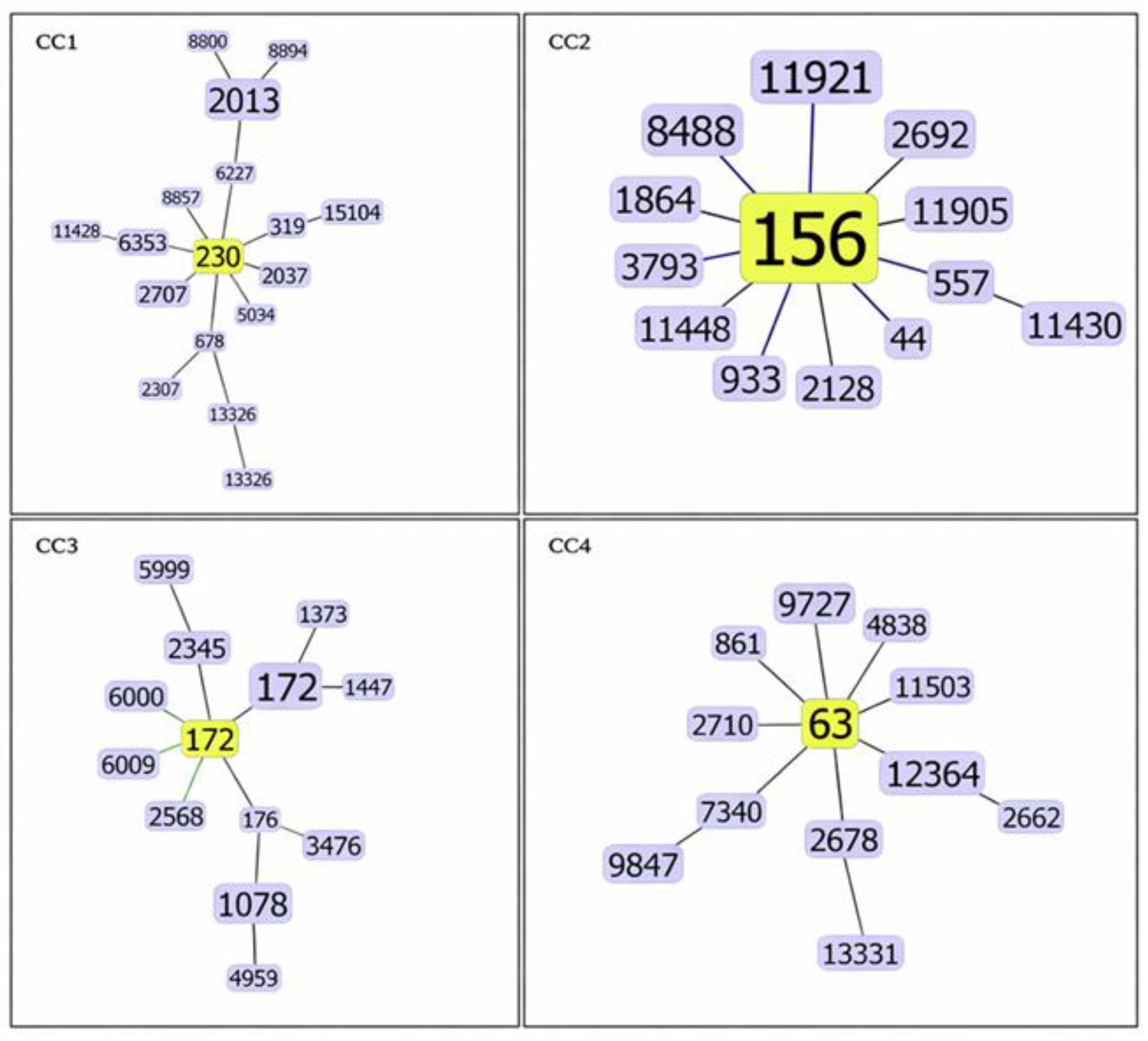
3.2. goeBURST Analysis
3.3. Population Structure According to Geographical Origin, Decade of Isolation, Age Group, Disease Type, and Serotype
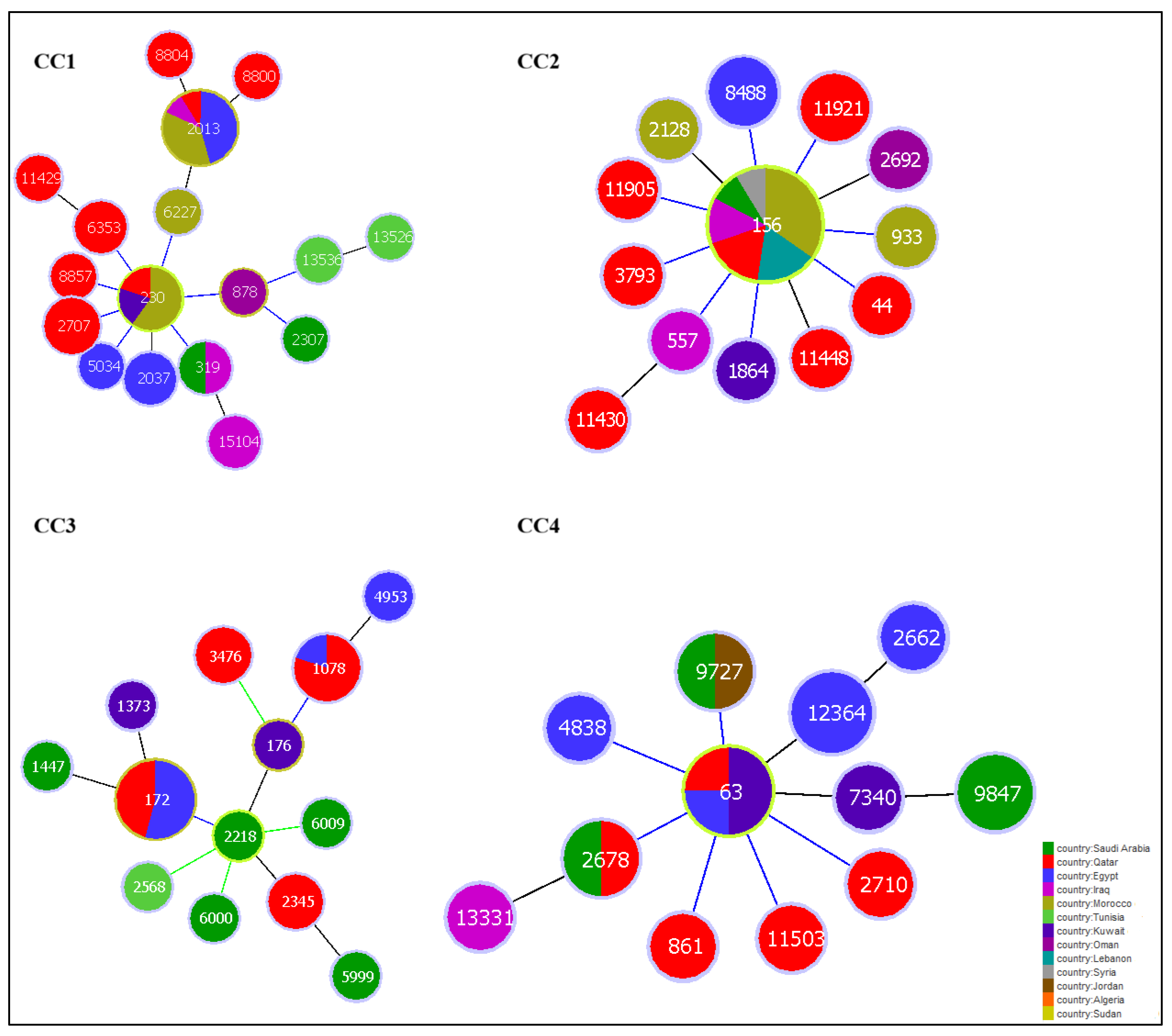
3.3.1. Geographical Origin
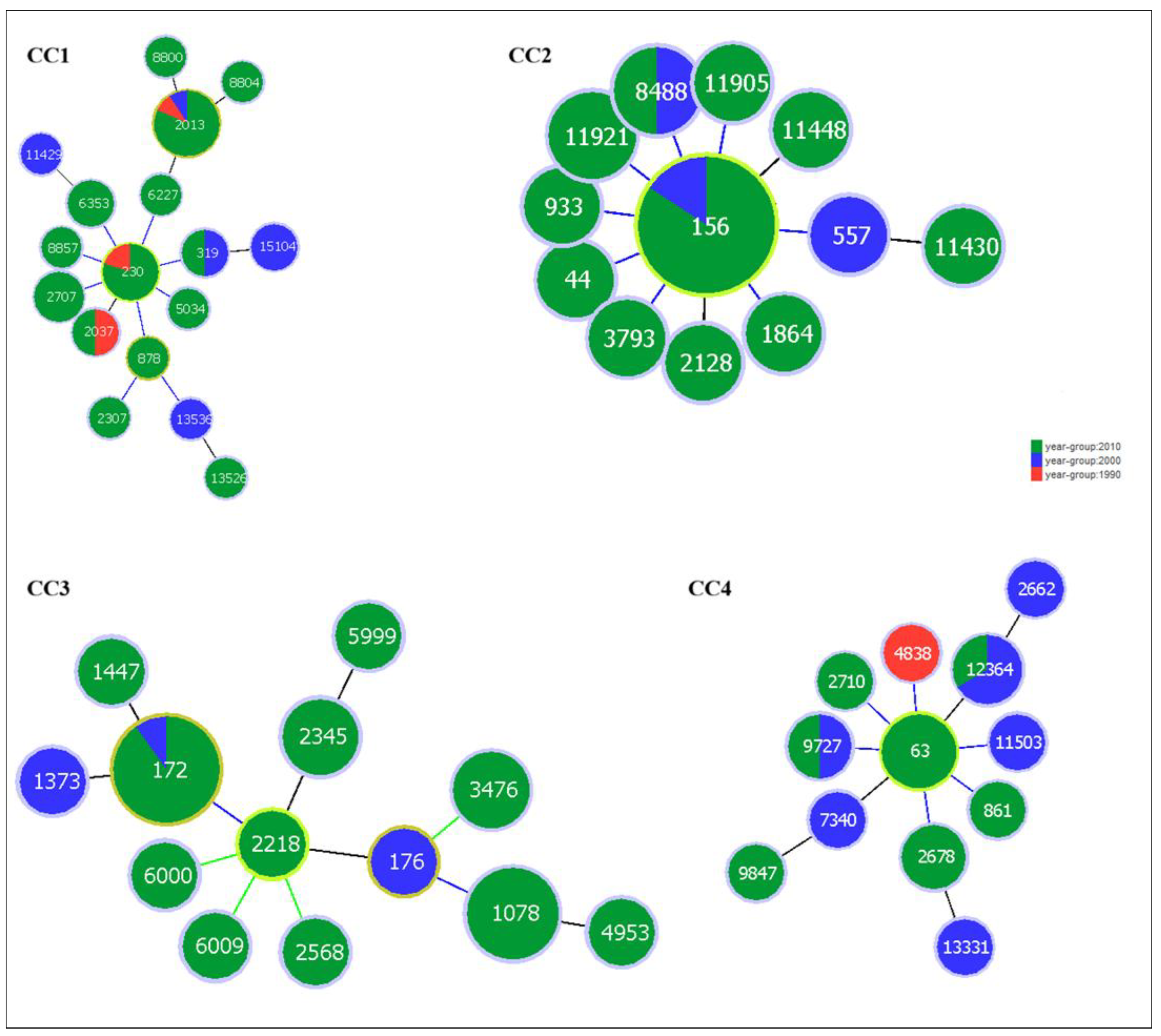
3.3.2. Decade of Isolation
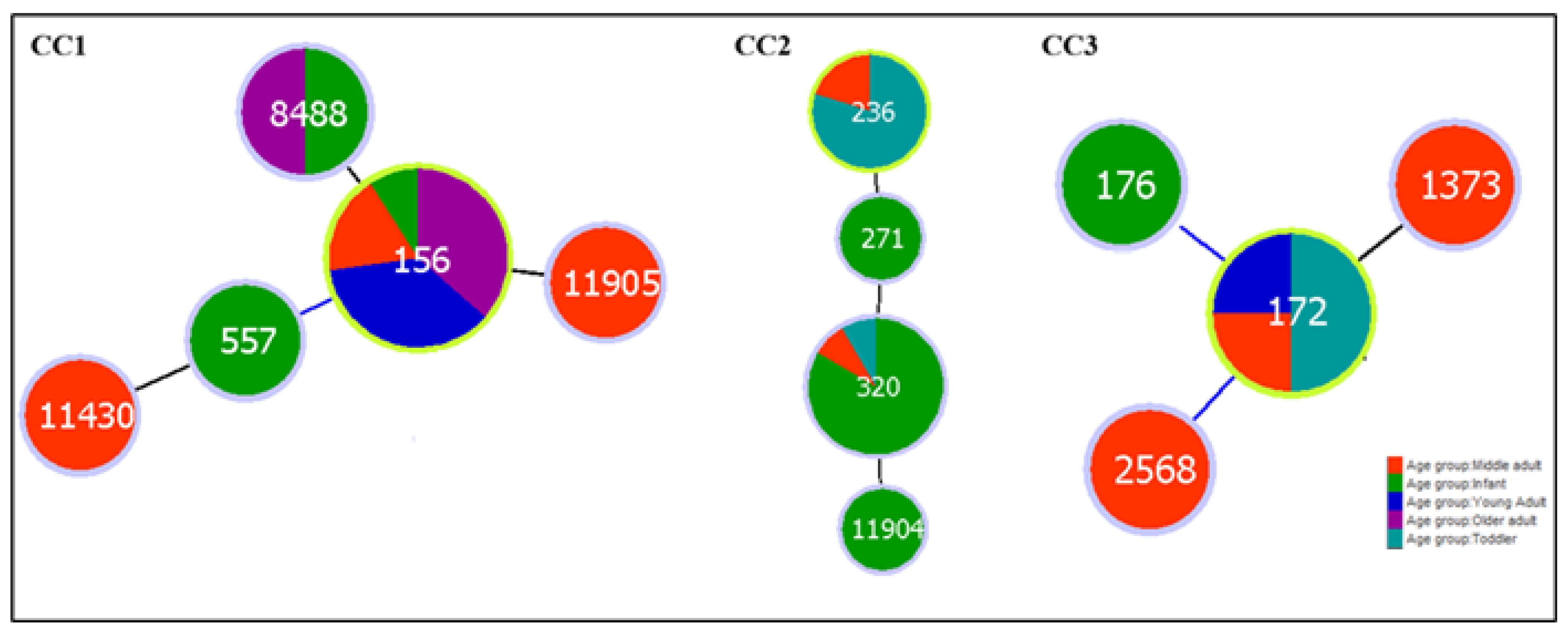
3.3.3. Age of Patients
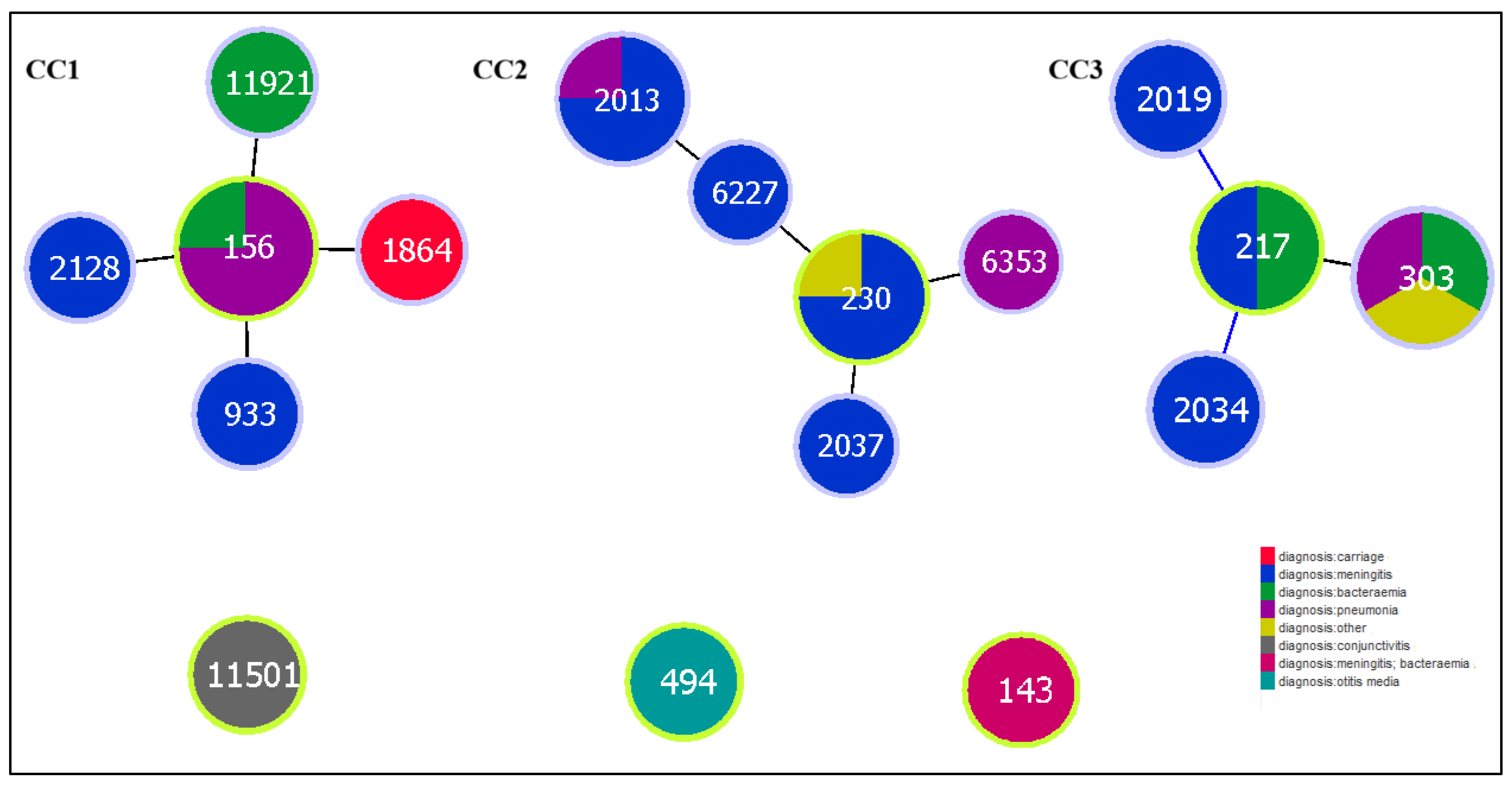
3.3.4. Disease
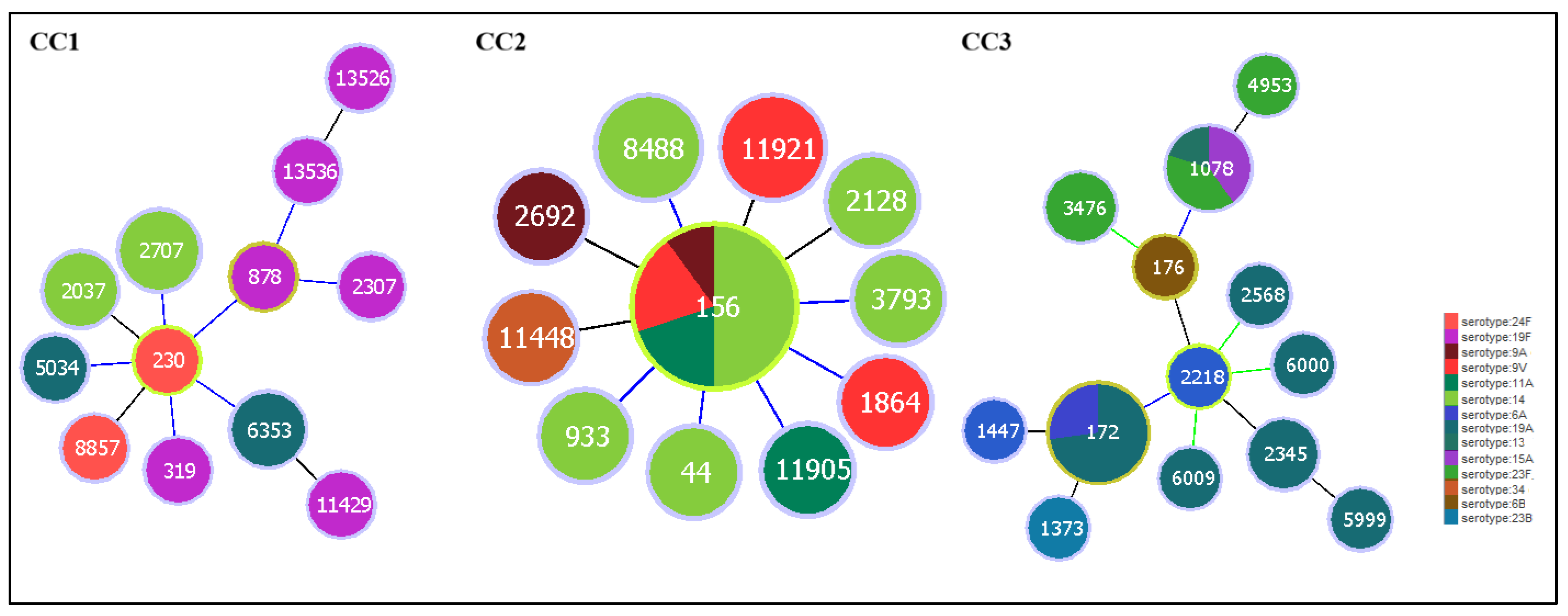
3.3.5. Serotype
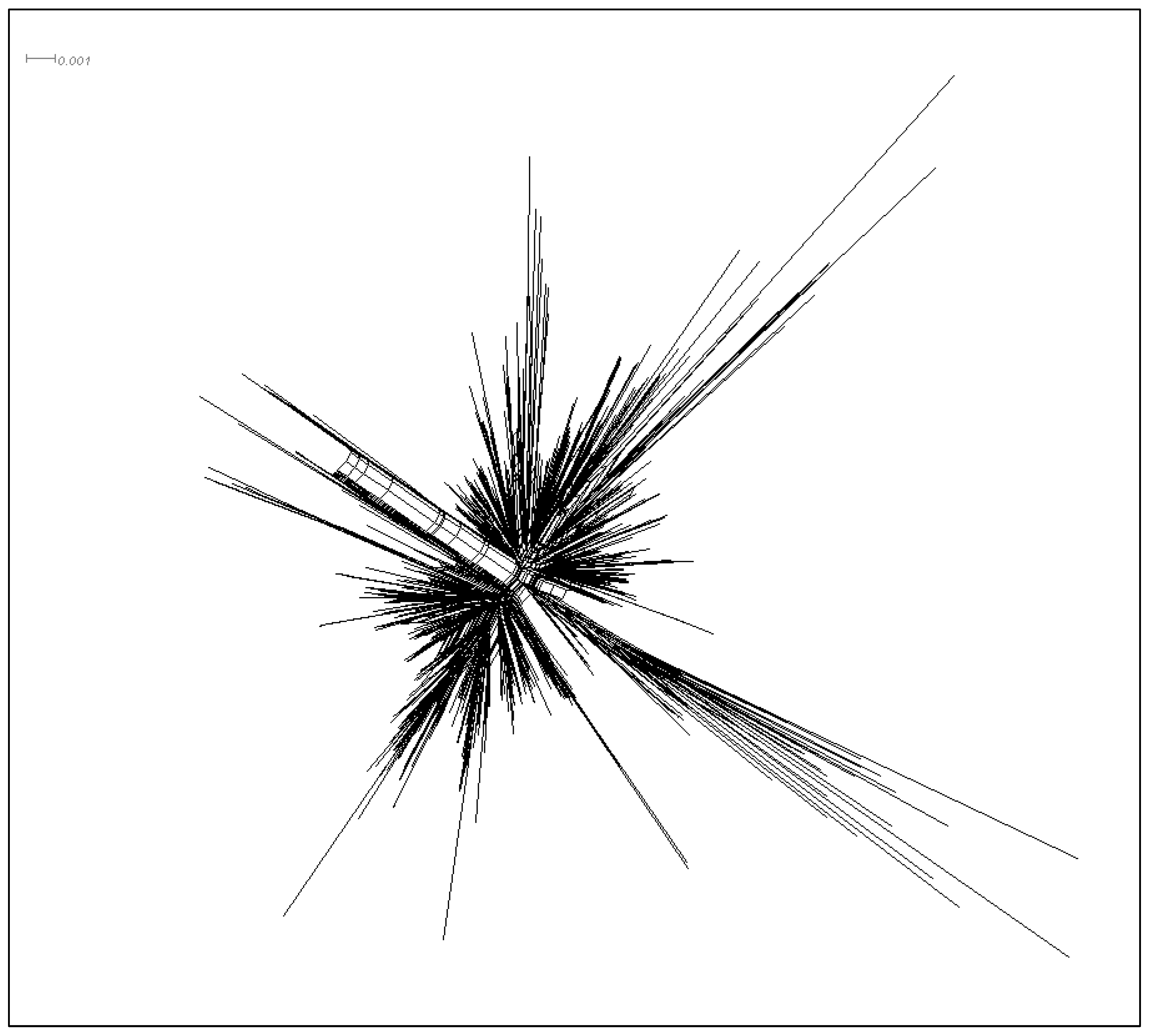
3.3.6. Recombination Analysis
4. Discussion
5. Conclusions
Supplementary Materials
Author Contributions
Funding
Institutional Review Board Statement
Informed Consent Statement
Data Availability Statement
Conflicts of Interest
References
- Weiser, J.N.; Ferreira, D.M.; Paton, J.C. Streptococcus pneumoniae: Transmission, colonization and invasion. Nat. Rev. Microbiol. 2018, 16, 355–367. [Google Scholar] [CrossRef] [PubMed]
- Orihuela, C.J.; Mahdavi, J.; Thornton, J.; Mann, B.; Wooldridge, K.G.; Abouseada, N.; Oldfield, N.J.; Self, T.; Ala’Aldeen, D.A.A.; Tuomanen, E.I. Laminin receptor initiates bacterial contact with the blood brain barrier in experimental meningitis models. J. Clin. Investig. 2009, 119, 1638–1646. [Google Scholar] [CrossRef] [PubMed]
- Bogaert, D.; De Groot, R.; Hermans, P.W.M. Streptococcus pneumoniae colonisation: The key to pneumococcal disease. Lancet Infect. Dis. 2004, 4, 144–154. [Google Scholar] [CrossRef] [PubMed]
- Dion, C.F.; Ashurst, J.V. Streptococcus pneumoniae. In StatPearls; StatPearls Publishing: Treasure Island, FL, USA, 2024. [Google Scholar]
- Almazrou, Y.; Shibl, A.M.; Alkhlaif, R.; Pirçon, J.-Y.; Anis, S.; Kandeil, W.; Hausdorff, W.P. Epidemiology of invasive pneumococcal disease in Saudi Arabian children younger than 5 years of age. J. Epidemiol. Glob. Health 2015, 6, 95. [Google Scholar] [CrossRef]
- Ganaie, F.; Saad, J.S.; McGee, L.; Van Tonder, A.J.; Bentley, S.D.; Lo, S.W.; Gladstone, R.A.; Turner, P.; Keenan, J.D.; Breiman, R.F.; et al. A New Pneumococcal Capsule Type, 10D, is the 100th Serotype and Has a Large cps Fragment from an Oral Streptococcus. mBio 2020, 11, e00937-20. [Google Scholar] [CrossRef]
- Bishop, C.; Parashar, D.; Kizza, D.; Abeshu, M.; Kaddar, M.; Bchir, A.; El Maghraby, A.; Schirrmacher, H.; Wang, Z.; Griffiths, U.; et al. New Vaccine Introduction in Middle-Income Countries Across the Middle East and North Africa—Progress and Challenges. Vaccines 2025, 13, 860. [Google Scholar] [CrossRef]
- Varghese, R.; Neeravi, A.; Subramanian, N.; Pavithra, B.; Kavipriya, A.; Kumar, J.L.; Kumar, C.P.G.; Jeyraman, Y.; Karthik, G.; Verghese, V.P.; et al. Clonal Similarities and Sequence-Type Diversity of Invasive and Carriage Streptococcus pneumoniae in India among Children under 5 Years. Indian J. Med. Microbiol. 2019, 37, 358–361. [Google Scholar] [CrossRef]
- Rayner, R.E.; Savill, J.; Hafner, L.M.; Huygens, F. Genotyping Streptococcus pneumoniae. Future Microbiol. 2015, 10, 653–664. [Google Scholar] [CrossRef]
- Enright, M.C.; Spratt, B.G. A multilocus sequence typing scheme for Streptococcus pneumoniae: Identification of clones associated with serious invasive disease. Microbiology 1998, 144, 3049–3060. [Google Scholar] [CrossRef]
- El Moujaber, G.; Osman, M.; Rafei, R.; Dabboussi, F.; Hamze, M. Molecular mechanisms and epidemiology of resistance in Streptococcus pneumoniae in the Middle East region. J. Med. Microbiol. 2017, 66, 847–858. [Google Scholar] [CrossRef]
- Memish, Z.A.; El-Saed, A.; Al-Otaibi, B.; Shaalan, M.A.; Alola, S.A.; Thaqafi, A.O. Epidemiology of invasive pneumococcal infection in children aged five years and under in Saudi Arabia: A five-year retrospective surveillance study. Int. J. Infect. Dis. 2010, 14, e708–e712. [Google Scholar] [CrossRef] [PubMed][Green Version]
- Rozas, J.; Ferrer-Mata, A.; Sánchez-DelBarrio, J.C.; Guirao-Rico, S.; Librado, P.; Ramos-Onsins, S.E.; Sánchez-Gracia, A. DnaSP 6: DNA Sequence Polymorphism Analysis of Large Data Sets. Mol. Biol. Evol. 2017, 34, 3299–3302. [Google Scholar] [CrossRef] [PubMed]
- Tajima, F. Statistical method for testing the neutral mutation hypothesis by DNA polymorphism. Genetics 1989, 123, 585–595. [Google Scholar] [CrossRef] [PubMed]
- Francisco, A.P.; Vaz, C.; Monteiro, P.T.; Melo-Cristino, J.; Ramirez, M.; Carriço, J.A. PHYLOViZ: Phylogenetic inference and data visualization for sequence based typing methods. BMC Bioinform. 2012, 13, 87. [Google Scholar] [CrossRef]
- Hunter, P.R.; Gaston, M.A. Numerical index of the discriminatory ability of typing systems: An application of Simpson’s index of diversity. J. Clin. Microbiol. 1988, 26, 2465–2466. [Google Scholar] [CrossRef]
- Huson, D.H.; Bryant, D. Application of Phylogenetic Networks in Evolutionary Studies. Mol. Biol. Evol. 2006, 23, 254–267. [Google Scholar] [CrossRef]
- Bruen, T.C.; Philippe, H.; Bryant, D. A Simple and Robust Statistical Test for Detecting the Presence of Recombination. Genetics 2006, 172, 2665–2681. [Google Scholar] [CrossRef]
- Martin, D.P.; Varsani, A.; Roumagnac, P.; Botha, G.; Maslamoney, S.; Schwab, T.; Kelz, Z.; Kumar, V.; Murrell, B. RDP5: A computer program for analyzing recombination in, and removing signals of recombination from, nucleotide sequence datasets. Virus Evol. 2021, 7, veaa087. [Google Scholar] [CrossRef]
- Haubold, B.; Hudson, R.R. LIAN 3.0: Detecting linkage disequilibrium in multilocus data. Bioinformatics 2000, 16, 847–849. [Google Scholar] [CrossRef]
- George, D.; Mallery, P. IBM SPSS Statistics 25 Step by Step: A Simple Guide and Reference. In SPSS for Windows Step by Step, 15th ed.; Routledge: New York, NY, USA, 2018; ISBN 978-1-351-03390-9. Available online: https://www.taylorfrancis.com/books/9781351033893 (accessed on 29 December 2025).
- White, N.M.; Balasubramaniam, T.; Nayak, R.; Barnett, A.G. An observational analysis of the trope “A p-value of < 0.05 was considered statistically significant” and other cut-and-paste statistical methods. PLoS ONE 2022, 17, e0264360. [Google Scholar] [CrossRef]
- Del Amo, E.; Esteva, C.; Hernandez-Bou, S.; Galles, C.; Navarro, M.; Sauca, G.; Diaz, A.; Gassiot, P.; Marti, C.; Larrosa, N.; et al. Serotypes and Clonal Diversity of Streptococcus pneumoniae Causing Invasive Disease in the Era of PCV13 in Catalonia, Spain. PLoS ONE 2016, 11, e0151125. [Google Scholar] [CrossRef] [PubMed]
- Urwin, R.; Maiden, M.C.J. Multi-locus sequence typing: A tool for global epidemiology. Trends Microbiol. 2003, 11, 479–487. [Google Scholar] [CrossRef] [PubMed]
- Spilker, T.; Vandamme, P.; LiPuma, J.J. A Multilocus Sequence Typing Scheme Implies Population Structure and Reveals Several Putative Novel Achromobacter Species. J. Clin. Microbiol. 2012, 50, 3010–3015. [Google Scholar] [CrossRef] [PubMed]
- Dalmieda, J.; Hitchcock, M.; Xu, J. High diversity within and low but significant genetic differentiation among geographic and temporal populations of the global Streptococcus pneumoniae. Can. J. Microbiol. 2024, 70, 226–237. [Google Scholar] [CrossRef]
- Coffey, T.J.; Enright, M.C.; Daniels, M.; Morona, J.K.; Morona, R.; Hryniewicz, W.; Paton, J.C.; Spratt, B.G. Recombinational exchanges at the capsular polysaccharide biosynthetic locus lead to frequent serotype changes among natural isolates of Streptococcus pneumoniae. Mol. Microbiol. 1998, 27, 73–83. [Google Scholar] [CrossRef]
- Gherardi, G.; D’Ambrosio, F.; Monaco, M.; Camilli, R.; Florio, L.; D’Ancona, F.; Dicuonzo, G.; Pantosti, A. Population structure of invasive Streptococcus pneumoniae isolates in Italy prior to the implementation of the 7-valent conjugate vaccine (1999–2003). Eur. J. Clin. Microbiol. Infect. Dis. 2009, 28, 99–103. [Google Scholar] [CrossRef]
- Gopi, T.; Ranjith, J.; Anandan, S.; Balaji, V. Epidemiological characterisation of Streptococcus pneumoniae from India using multilocus sequence typing. Indian J. Med. Microbiol. 2016, 34, 17–21. [Google Scholar] [CrossRef]
- Li, X.-X.; Xiao, S.-Z.; Gu, F.-F.; Zhao, S.-Y.; Xie, Q.; Sheng, Z.-K.; Ni, Y.-X.; Qu, J.-M.; Han, L.-Z. Serotype Distribution, Antimicrobial Susceptibility, and Multilocus Sequencing Type (MLST) of Streptococcus pneumoniae From Adults of Three Hospitals in Shanghai, China. Front. Cell. Infect. Microbiol. 2019, 9, 407. [Google Scholar] [CrossRef]
- Yang, S.; Chen, J.; Fu, J.; Huang, J.; Li, T.; Yao, Z.; Ye, X. Disease-Associated Streptococcus pneumoniae Genetic Variation. Emerg. Infect. Dis. 2024, 30, 39. [Google Scholar] [CrossRef]
- Sadowy, E.; Kuch, A.; Gniadkowski, M.; Hryniewicz, W. Expansion and Evolution of the Streptococcus pneumoniae Spain9V-ST156 Clonal Complex in Poland. Antimicrob. Agents Chemother. 2010, 54, 1720–1727. [Google Scholar] [CrossRef]
- Kalizang’oma, A.; Swarthout, T.D.; Mwalukomo, T.S.; Kamng’ona, A.; Brown, C.; Msefula, J.; Demetriou, H.; Chan, J.M.; Roalfe, L.; Obolski, U.; et al. Clonal Expansion of a Streptococcus pneumoniae Serotype 3 Capsule Variant Sequence Type 700 with Enhanced Vaccine Escape Potential After 13-Valent Pneumococcal Conjugate Vaccine Introduction. J. Infect. Dis. 2024, 230, e189–e198. [Google Scholar] [CrossRef] [PubMed]
- Jefferies, J.M.C.; Tee, W.S.N.; Clarke, S.C. Molecular analysis of Streptococcus pneumoniae clones causing invasive disease in children in Singapore. J. Med. Microbiol. 2011, 60, 750–755. [Google Scholar] [CrossRef] [PubMed]
- Muñoz-Almagro, C.; Ciruela, P.; Esteva, C.; Marco, F.; Navarro, M.; Bartolome, R.; Sauca, G.; Gallés, C.; Morta, M.; Ballester, F.; et al. Serotypes and clones causing invasive pneumococcal disease before the use of new conjugate vaccines in Catalonia, Spain. J. Infect. 2011, 63, 151–162. [Google Scholar] [CrossRef] [PubMed]
- McGee, L.; McDougal, L.; Zhou, J.; Spratt, B.G.; Tenover, F.C.; George, R.; Hakenbeck, R.; Hryniewicz, W.; Lefévre, J.C.; Tomasz, A.; et al. Nomenclature of Major Antimicrobial-Resistant Clones of Streptococcus pneumoniae Defined by the Pneumococcal Molecular Epidemiology Network. J. Clin. Microbiol. 2001, 39, 2565–2571. [Google Scholar] [CrossRef]
- Zhou, J.; Enright, M.C.; Spratt, B.G. Identification of the Major Spanish Clones of Penicillin-Resistant Pneumococci via the Internet Using Multilocus Sequence Typing. J. Clin. Microbiol. 2000, 38, 977–986. [Google Scholar] [CrossRef]
- Gladstone, R.A.; Lo, S.W.; Lees, J.A.; Croucher, N.J.; Van Tonder, A.J.; Corander, J.; Page, A.J.; Marttinen, P.; Bentley, L.J.; Ochoa, T.J.; et al. International genomic definition of pneumococcal lineages, to contextualise disease, antibiotic resistance and vaccine impact. EBioMedicine 2019, 43, 338–346. [Google Scholar] [CrossRef]
- Aguinagalde, L.; Corsini, B.; Domenech, A.; Domenech, M.; Cámara, J.; Ardanuy, C.; García, E.; Liñares, J.; Fenoll, A.; Yuste, J. Emergence of Amoxicillin-Resistant Variants of Spain9V-ST156 Pneumococci Expressing Serotype 11A Correlates with Their Ability to Evade the Host Immune Response. PLoS ONE 2015, 10, e0137565. [Google Scholar] [CrossRef]
- Miyazaki, H.; Chang, B.; Ogawa, M.; Shibuya, R.; Takata, M.; Nakamura, S.; Ubukata, K.; Miyazaki, Y.; Matsumoto, T.; Akeda, Y. Bacteriological characteristics and changes of Streptococcus pneumoniae serotype 35B after vaccine implementation in Japan. Epidemiol. Infect. 2024, 152, e114. [Google Scholar] [CrossRef]
- Brueggemann, A.B.; Muroki, B.M.; Kulohoma, B.W.; Karani, A.; Wanjiru, E.; Morpeth, S.; Kamau, T.; Sharif, S.; Scott, J.A.G. Population Genetic Structure of Streptococcus pneumoniae in Kilifi, Kenya, Prior to the Introduction of Pneumococcal Conjugate Vaccine. PLoS ONE 2013, 8, e81539. [Google Scholar] [CrossRef][Green Version]
- Edouard, S.; Al-Tawfiq, J.A.; Memish, Z.A.; Yezli, S.; Gautret, P. Impact of the Hajj on pneumococcal carriage and the effect of various pneumococcal vaccines. Vaccine 2018, 36, 7415–7422. [Google Scholar] [CrossRef]
- Belman, S.; Lefrancq, N.; Nzenze, S.; Downs, S.; Du Plessis, M.; Lo, S.W.; The Global Pneumococcal Sequencing Consortium; Corso, A.; Gagetti, P.; Brooks, A.W.; et al. Geographical migration and fitness dynamics of Streptococcus pneumoniae. Nature 2024, 631, 386–392. [Google Scholar] [CrossRef]
- Zhou, H.; Guo, J.; Qin, T.; Ren, H.; Xu, Y.; Wang, C.; Xu, X. Serotype and MLST-based inference of population structure of clinical Streptococcus pneumonia e from invasive and noninvasive pneumococcal disease. Infect. Genet. Evol. 2017, 55, 104–111. [Google Scholar] [CrossRef] [PubMed]
- Mokaddas, E.; Asadzadeh, M.; Syed, S.; Albert, M.J. High Prevalence of Novel Sequence Types in Streptococcus pneumoniae That Caused Invasive Diseases in Kuwait in 2018. Microorganisms 2024, 12, 225. [Google Scholar] [CrossRef] [PubMed]
- Inostroza, J.; Vinet, A.M.; Retamal, G.; Lorca, P.; Ossa, G.; Facklam, R.R.; Sorensen, R.U. Influence of Patient Age on Streptococcus pneumoniae Serotypes Causing Invasive Disease. Clin. Diagn. Lab. Immunol. 2001, 8, 556–559. [Google Scholar] [CrossRef] [PubMed]
- Hanage, W.P.; Kaijalainen, T.H.; Syrjänen, R.K.; Auranen, K.; Leinonen, M.; Mäkelä, P.H.; Spratt, B.G. Invasiveness of Serotypes and Clones of Streptococcus pneumoniae among Children in Finland. Infect. Immun. 2005, 73, 431–435. [Google Scholar] [CrossRef]
- Geng, Q.; Zhang, T.; Ding, Y.; Tao, Y.; Lin, Y.; Wang, Y.; Black, S.; Zhao, G. Molecular Characterization and Antimicrobial Susceptibility of Streptococcus pneumoniae Isolated from Children Hospitalized with Respiratory Infections in Suzhou, China. PLoS ONE 2014, 9, e93752. [Google Scholar] [CrossRef]
- Alnimr, A.M.; Farhat, M. Phenotypic and molecular study of pneumococci causing respiratory tract infections: A 3-year prospective cohort. Saudi Med. J. 2017, 38, 350–358. [Google Scholar] [CrossRef]
- Ktari, S.; Jmal, I.; Mroua, M.; Maalej, S.; Ben Ayed, N.E.; Mnif, B.; Rhimi, F.; Hammami, A. Serotype distribution and antibiotic susceptibility of Streptococcus pneumoniae strains in the south of Tunisia: A five-year study (2012–2016) of pediatric and adult populations. Int. J. Infect. Dis. 2017, 65, 110–115. [Google Scholar] [CrossRef]
- Wang, Q.; Shi, W.; Li, Y.; Gao, W.; Yuan, L.; Dong, F.; Yao, K. Serotype distribution of Streptococcus pneumoniae isolated from children hospitalized in Beijing children’s hospital (2013–2019). Vaccine 2020, 38, 7858–7864. [Google Scholar] [CrossRef]
- Cremers, A.J.H.; Mobegi, F.M.; Van Der Gaast–de Jongh, C.; Van Weert, M.; Van Opzeeland, F.J.; Vehkala, M.; Knol, M.J.; Bootsma, H.J.; Välimäki, N.; Croucher, N.J.; et al. The Contribution of Genetic Variation of Streptococcus pneumoniae to the Clinical Manifestation of Invasive Pneumococcal Disease. Clin. Infect. Dis. 2019, 68, 61–69. [Google Scholar] [CrossRef]
- Croucher, N.J.; Harris, S.R.; Fraser, C.; Quail, M.A.; Burton, J.; Van Der Linden, M.; McGee, L.; Von Gottberg, A.; Song, J.H.; Ko, K.S.; et al. Rapid Pneumococcal Evolution in Response to Clinical Interventions. Science 2011, 331, 430–434. [Google Scholar] [CrossRef]
- Hanage, W.P.; Fraser, C.; Tang, J.; Connor, T.R.; Corander, J. Hyper-Recombination, Diversity, and Antibiotic Resistance in Pneumococcus. Science 2009, 324, 1454–1457. [Google Scholar] [CrossRef] [PubMed]
- Crisafulli, G.; Guidotti, S.; Muzzi, A.; Torricelli, G.; Moschioni, M.; Masignani, V.; Censini, S.; Donati, C. An extended multi-locus molecular typing schema for Streptococcus pneumoniae demonstrates that a limited number of capsular switch events is responsible for serotype heterogeneity of closely related strains from different countries. Infect. Genet. Evol. 2013, 13, 151–161. [Google Scholar] [CrossRef] [PubMed]
- Shapiro, B.J. How clonal are bacteria over time? Curr. Opin. Microbiol. 2016, 31, 116–123. [Google Scholar] [CrossRef] [PubMed]
- Gherardi, G.; D’Ambrosio, F.; Visaggio, D.; Dicuonzo, G.; Del Grosso, M.; Pantosti, A. Serotype and Clonal Evolution of Penicillin-Nonsusceptible Invasive Streptococcus pneumoniae in the 7-Valent Pneumococcal Conjugate Vaccine Era in Italy. Antimicrob. Agents Chemother. 2012, 56, 4965–4968. [Google Scholar] [CrossRef]



| Gene | Amplicon Size (bp) | No. of Alleles | No. of Polymorphic Sites (%) | Total Number of Mutations (%) | Haplotype Diversity (H) | dN/dS | Tajima’s Test (D) |
|---|---|---|---|---|---|---|---|
| aroE | 405 | 48 | 14 (3.46) | 14 (3.46) | 0.843 | 0.307 | −0.325, p > 0.10 |
| ddl | 441 | 88 | 80 (18.14) | 91 (20.63) | 0.909 | 0.072 | −1.700, p > 0.10 |
| gdh | 460 | 68 | 32 (6.96) | 33 (7.17) | 0.867 | 0.193 | −1.557 p > 0.10 |
| gki | 483 | 63 | 34 (7.04) | 35 (7.24) | 0.846 | 0.041 | 0.247, p > 0.10 |
| recP | 450 | 52 | 12 (2.67) | 12 (2.67) | 0.793 | 0.296 | −0.665, p > 0.10 |
| spi | 474 | 58 | 34 (7.17) | 34 (7.17) | 0.883 | 0.184 | −0.237, p > 0.10 |
| xpt | 486 | 84 | 17 (3.50) | 17 (3.50) | 0.836 | 0.146 | −0.233, p > 0.10 |
| Event | Recombinant | Major Parent | Minor Parent | Detection Method | |||||
|---|---|---|---|---|---|---|---|---|---|
| RDP | GenConv | MaxiChi | Chimera | SiScan | 3Seq | ||||
| 1 | ST11446 (Qatar) | Unknown | ST11448 (Qatar) | + | + | + | + | + | + |
| 2 | ST1447 (Saudi Arabia) | ST172 (Egypt/Qatar) | Unknown | + | + | + | + | + | + |
| 3 | ST8935 (Saudi Arabia) | Unknown | ST172 (Egypt/Qatar) | + | + | + | + | + | + |
| 4 | ST8488 (Egypt) | ST306 (Morocco/Qatar) | Unknown | + | + | + | + | + | + |
| 5 | ST9215 (Saudi Arabia) | Unknown | ST13528 (Tunisia) | + | + | + | + | + | + |
| 6 | ST9598 (Saudi Arabia) | Unknown | ST9220 (Saudi Arabia) | + | + | + | + | + | + |
| 7 | ST9186 (Saudi Arabia) | ST9188 (Saudi Arabia) | Unknown | + | + | + | + | + | + |
| 8 | ST9185 (Saudi Arabia) | ST9184 (Saudi Arabia) | Unknown | + | + | + | + | + | + |
| 9 | ST13528 (Tunisia) | ST11501 (Qatar) | Unknown | + | + | + | + | + | + |
| 10 | ST11452 (Qatar) | Unknown | ST3804 (Saudi Arabia) | + | + | + | + | + | + |
| 11 | ST9218 (Saudi Arabia) | ST8933 (Saudi Arabia) | Unknown | + | + | + | + | + | + |
| 12 | ST9221 (Saudi Arabia) | Unknown | ST2685 (Iraq/Kuwait/Qatar) | + | + | + | + | + | + |
Disclaimer/Publisher’s Note: The statements, opinions and data contained in all publications are solely those of the individual author(s) and contributor(s) and not of MDPI and/or the editor(s). MDPI and/or the editor(s) disclaim responsibility for any injury to people or property resulting from any ideas, methods, instructions or products referred to in the content. |
© 2026 by the authors. Licensee MDPI, Basel, Switzerland. This article is an open access article distributed under the terms and conditions of the Creative Commons Attribution (CC BY) license.
Share and Cite
Halwani, M.; Al Daajani, M.; Boujemaa, S. Genetic Diversity of Streptococcus pneumoniae Isolated from Thirteen Arab Countries and over 22 Years: A Retrospective Bioinformatics Analysis. Microbiol. Res. 2026, 17, 12. https://doi.org/10.3390/microbiolres17010012
Halwani M, Al Daajani M, Boujemaa S. Genetic Diversity of Streptococcus pneumoniae Isolated from Thirteen Arab Countries and over 22 Years: A Retrospective Bioinformatics Analysis. Microbiology Research. 2026; 17(1):12. https://doi.org/10.3390/microbiolres17010012
Chicago/Turabian StyleHalwani, Muhammad, Manal Al Daajani, and Safa Boujemaa. 2026. "Genetic Diversity of Streptococcus pneumoniae Isolated from Thirteen Arab Countries and over 22 Years: A Retrospective Bioinformatics Analysis" Microbiology Research 17, no. 1: 12. https://doi.org/10.3390/microbiolres17010012
APA StyleHalwani, M., Al Daajani, M., & Boujemaa, S. (2026). Genetic Diversity of Streptococcus pneumoniae Isolated from Thirteen Arab Countries and over 22 Years: A Retrospective Bioinformatics Analysis. Microbiology Research, 17(1), 12. https://doi.org/10.3390/microbiolres17010012