


Abstract
The genus Kocuria includes Gram-positive and environmentally versatile bacteria, which are of biotechnological interest due to their ability to synthesize secondary metabolites. In this study, the genome of Kocuria sp. KH4, isolated from alkaline mine tailings (southeastern Mexico), was sequenced and analyzed to determine its taxonomic affiliation and explore its metabolic and adaptive potential. The assembled genome showed a size of 3.89 Mb, a GC content of 73.2%, and 3609 coding genes. Phylogenomic analyses and genomic relationship indices (ANI, AAI, and dDDH) confirmed that strain KH4 represents a novel genomospecies within the genus Kocuria. Functional analysis revealed broad metabolic diversity, with genes associated with the transport and metabolism of amino acids, carbohydrates, and inorganic ions. A total of 165 genes linked to metal resistance and homeostasis mechanisms were identified, including ABC-type transport systems and ATPases, as well as specific genes for Fe, Ni, Zn, Cu, As, and Hg. Forty-eight genomic islands were also identified, encoding a wide variety of functions and mobile genetic elements (MGEs). Furthermore, six biosynthetic gene clusters (BGCs) involved in the production of nonribosomal peptides, type III polyketides, terpenes, and siderophores were detected, suggesting a remarkable potential for the synthesis of bioactive compounds. Taken together, the results highlight this strain as a promising source of secondary metabolites with potential applications in environmental, pharmaceutical, and industrial biotechnology, underscoring the importance of Kocuria genomes as natural reservoirs of new biosynthetic pathways.
1. Introduction
The genus Kocuria belongs to the phylum Actinomycetota, order Micrococcales, and family Micrococcaceae [1]. This group was formally proposed by Stackebrandt et al. [2], who reclassified several species previously included in the genus Micrococcus. This taxonomic separation was based on phylogenetic analyses of the 16S rRNA gene and differences in the amino acid composition of peptidoglycan, which revealed consistent evolutionary divergence between the two lineages. In general, strains of this genus are characterized by being Gram-positive, non-spore-forming, catalase-positive, coagulase-negative, mesophilic cocci that typically grow in tetrads or irregular clusters. These bacteria display an aerobic or facultatively anaerobic metabolism and are nutritionally versatile, capable of utilizing a broad range of carbon sources, including amino acids, organic acids, simple sugars, and, in some cases, complex carbohydrates. Several species can also metabolize lipids and aromatic compounds [3]. Additionally, Kocuria strains often tolerate high salt concentrations, variable pH conditions, and limited nutrient availability [4]. According to The List of Prokaryotic Names with Standing in Nomenclature (LPSN, 2025), Kocuria comprises approximately 30 validly published species, isolated from environments as diverse as soils, deserts, sediments, marine systems, hypersaline lakes, plant tissues, and rhizospheres; some have even been associated with infections in immunosuppressed patients, reflecting their broad ecological plasticity [4,5,6,7,8,9,10].
Kocuria also exhibits remarkable metabolic versatility, expressed in the synthesis of extracellular enzymes such as amylases, lipases, proteases, and keratinases [11,12,13] and secondary metabolites such as carotenoid pigments, antibiotics, extracellular polymeric substances (EPSs), and phytohormones [14,15,16]. The enzymes responsible for producing these specialized metabolites are typically encoded within biosynthetic gene clusters (BGCs)—groups of physically linked genes that act together in substrate activation, assembly, modification, transport, and regulation of the final product [17]. Their organization enables coordinated expression and, in some cases, horizontal transfer, enhancing the ecological adaptability and biotechnological potential of Kocuria species [18]. Owing to this metabolic versatility and adaptive capacity, several Kocuria strains have been employed as key agents in bioremediation strategies targeting soil and water contaminated with polycyclic aromatic hydrocarbons (PAHs), textile dyes, heavy metals, and metalloids [11,19,20,21].
On the other hand, mine tailings represent one of the largest industrial waste streams globally, with an estimated annual production of between 7 and 14 billion tons [22]. These solid wastes are composed of fine particles of rock and residual minerals, with a composition dominated by silica, metal oxides, and traces of potentially toxic elements such as As, Pb, Zn, and Hg [23]. Mine tailings are home to proliferating metallotolerant microbial communities capable of withstanding high metal concentrations, low nutrient availability, and extreme pH levels through mechanisms of ion exclusion, biotransformation, metal precipitation, and biofilm formation [24,25]. These metallophilic microorganisms not only modulate the mobility and bioavailability of metals but also provide a valuable resource for environmental and biotechnology, with applications in bioremediation and biocatalysis under extreme conditions [26,27].
In this context, we hypothesize that genomic analysis of bacteria adapted to sulfide bearing tailings, particularly the genus Kocuria, will provide insight into the molecular mechanisms underlying their metal tolerance and their ability to biosynthesize bioactive compounds. The goal of this study was to sequence, assemble, and analyze the genome of Kocuria sp. KH4, a strain isolated from a mining region in southeastern Mexico, in order to determine its taxonomic affiliation, explore its potential for the production of secondary metabolites, and evaluate its adaptive and biotechnological capabilities through phylogenomic, pangenomic, and genome mining analyses.
2. Materials and Methods
2.1. Isolation of Kocuria Strains from Mine Tailings
During 2020, samples were collected from the upper zone of the “La Concha” sulfide bearing tailings, located 10 km southwest of Taxco city, Guerrero, in southeastern Mexico (18°32′22″ N, 99°38′09″ W). These tailings were generated between the 1960s and 1970s during silver and gold extraction activities. The deposits are still unoxidized, exhibit a brownish-gray coloration, and are characterized by a high pH (~8.4), elevated carbonate concentration, and distinctly low electrical conductivity (88 μS cm−1). In terms of metal content, they contain predominant concentrations of Cd (8–780 mg kg−1), Cu (71.8–1320 mg kg−1), Zn (780–10,000 mg kg−1), As (1140–11,800 mg kg−1), Fe (6000–12,300 mg kg−1), and Pb (10,100–43,700 mg kg−1) [28]. The tailing samples were serially diluted using a sterile MgSO4 solution (10 mM) and spread onto plates containing alkalized Reasoner’s 2A (R2A) agar (pH 8.0), prepared with the following composition (g L−1): hydrolyzed casein, 0.25; peptone, 0.25; yeast extract, 0.5; meat extract, 0.3; glucose, 0.5; soluble starch, 0.5; tryptone, 0.5; sodium pyrophosphate, 0.03; and agar, 15.0. The pH was adjusted to 8.0 with 1 N NaOH prior to sterilization. Plates were incubated at 30 °C for 72 h. A representative colony exhibiting distinctive carotenoid pigmentation was subcultured at least three times under identical conditions until an axenic isolate was obtained.
2.2. Whole Genome Sequencing (WGS)
A pure culture of strain KH4 was sent to MicrobesNG (The BioHub Birmingham, Birmingham, UK) for genomic DNA sequencing. Between 5 and 40 µL of a cell suspension was lysed with 120 µL of TE buffer containing lysozyme and RNase A (0.1 mg/mL) and incubated for 25 min at 37 °C. Proteinase K (0.1 mg/mL) and SDS (0.5% v/v) were then added, and the mixture was incubated at 65 °C for 5 min. Genomic DNA was purified using an equivalent volume of SPRI beads and resuspended in 10 mM Tris-HCl (pH 8.0). DNA quantification was performed using the Quant-iT dsDNA HS kit (Thermo Fisher Scientific, Waltham, MA, USA) on an Eppendorf AF2200 plate reader. Library preparation was carried out on a Hamilton Microlab STAR automated liquid-handling system using the Nextera XT Library Prep kit (Illumina, San Diego, CA, USA), following the manufacturer’s instructions with two modifications: the DNA concentration was doubled, and the PCR elongation time was extended to 45 s. Finally, sequencing was performed on an Illumina NovaSeq 6000 platform using 250 bp paired-end reads.
2.3. Genome Assembly and Functional Annotation
The quality of raw sequencing reads was evaluated using FastQC v0.12.1, and low-quality bases (Phred < 30) were trimmed with TrimGalore v0.6.4. Genome assembly was carried out with SPAdes v3.15.5 [29], while assembly completeness and contamination levels were assessed using CheckM v1.2.2 [30]. Gene prediction and annotation were performed using Prokka v1.14.6, and tRNA and rRNA genes were identified with Aragorn and Barrnap, respectively [31]. The circular genome map was generated with MGCplotter v1.0.1, based on GenBank files to visualize forward and reverse coding sequences, rRNA and tRNA genes, GC content, and GC skew. Functional gene classification was automatically assigned using the COGclassifier module v1.0.4 integrated into MGCplotter.
2.4. Phylogenomic and Pangenomic Analyses
Comparative genomic analysis was performed using the genome of strain KH4 together with 29 additional representative Kocuria species retrieved from the RefSeq database prior to October 2025 (Table S1). The structure of the pangenome was inferred using GET_HOMOLOGUES v2.0 [32] and visualized with anvi’o v8 [33], and the genes were classified as core, soft-core, shell, or cloud using parse_pangenome_matrix.pl. Phylogenetic markers were identified with GET_PHYLOMARKERS v2.8.1.4. The species phylogenetic tree was inferred using ASTRAL-IV, which accounts for discordance among gene trees and estimates branch lengths in substitutions per site, as implemented in IQ-TREE [34]. Phylogenetic dendrogram was visualized using FigTree v1.4.4. In silico DNA–DNA hybridization (dDDH) analyses were performed with closely related strains. Average Nucleotide Identity (ANI) was calculated from MUMmer alignments (ANIm) using pyani v0.2.12 [35], while Average Amino Acid Identity (AAI) was obtained with CompareM v0.1.2.
2.5. Screening for Metal Resistance Genes (MRGs) and Genomic Islands (GIs)
A targeted search for bacterial metal(loid) resistance genes was performed in the genome of Kocuria sp. KH4 using a hidden Markov model (HMM)-based approach. Predicted protein sequences were analyzed with HMMER v3.4 against the MetHMMDB database. To ensure high-confidence detection, a stringent filtering criterion was applied: bit score ≥ 60, HMM coverage ≥ 70%, and E-value ≤ 1 × 10⁻¹⁰ [36]. Only matches meeting all three thresholds were considered valid, minimizing false positives. The detected genes were subsequently classified according to (i) the associated metal or metalloid (e.g., As, Cd, Co, Cu, Hg, Ni, Zn, Fe, Mn); (ii) the encoded functional mechanism, including efflux pumps, membrane transporters, biotransformation enzymes, metal-binding proteins, and metal-dependent redox systems; and (iii) the functional nature of the metal (essential vs. toxic). The relative abundance of each resistance category was quantified to estimate the proportional representation of each functional profile within the metal resistance gene repertoire of Kocuria sp. KH4. In parallel, genomic islands (GIs) were predicted using IslandViewer4 based on three search algorithms (IslandPath-DIMOB, SIGI-HMM, and IslandPick) that detect unusual patterns of nucleotide composition (deviations in G+C content, differences in oligonucleotide frequency, and atypical genetic codes) (Bertelli et al., 2017) [37].
2.6. Genome Mining to Identify Valuable Secondary Metabolites
The identification and characterization of biosynthetic gene clusters (BGCs) responsible for the production of specialized metabolites in Kocuria spp. strains were conducted using antiSMASH v8.0.4 (Antibiotics and Secondary Metabolite Analysis Shell) [38]. All genomes were analyzed with default parameters, enabling the KnownClusterBlast, ClusterBlast, and Pfam domain annotation modules to improve the detection accuracy and functional prediction of BGCs. This configuration allowed for the identification of canonical BGC classes (e.g., NRPS, PKS, RiPPs, terpenes, and siderophores), as well as hybrid and less-characterized cluster types. To explore BGC diversity across strains, the antiSMASH outputs were processed using BiG-SCAPE v1.1.8 (Biosynthetic Gene Similarity Clustering and Prospecting Engine). BiG-SCAPE was employed to (i) generate presence/absence matrices for all BGC classes detected in each genome and (ii) construct BGC similarity networks based on pairwise comparisons of domain architecture, gene order, copy number, and sequence identity [39]. This approach allowed BGCs to be grouped into Gene Cluster Families (GCFs), facilitating the assessment of biosynthetic potential, strain-level divergence, and putative functional redundancy within the genus. Network topologies and GCF distributions were subsequently examined to infer the degree of conservation, novelty, and diversification of specialized metabolite pathways among the analyzed Kocuria species.
3. Results
3.1. Functional Genomic Analysis of Kocuria sp. KH4
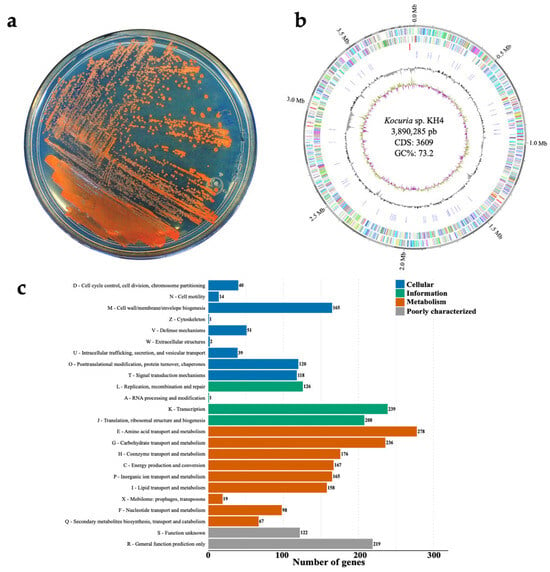
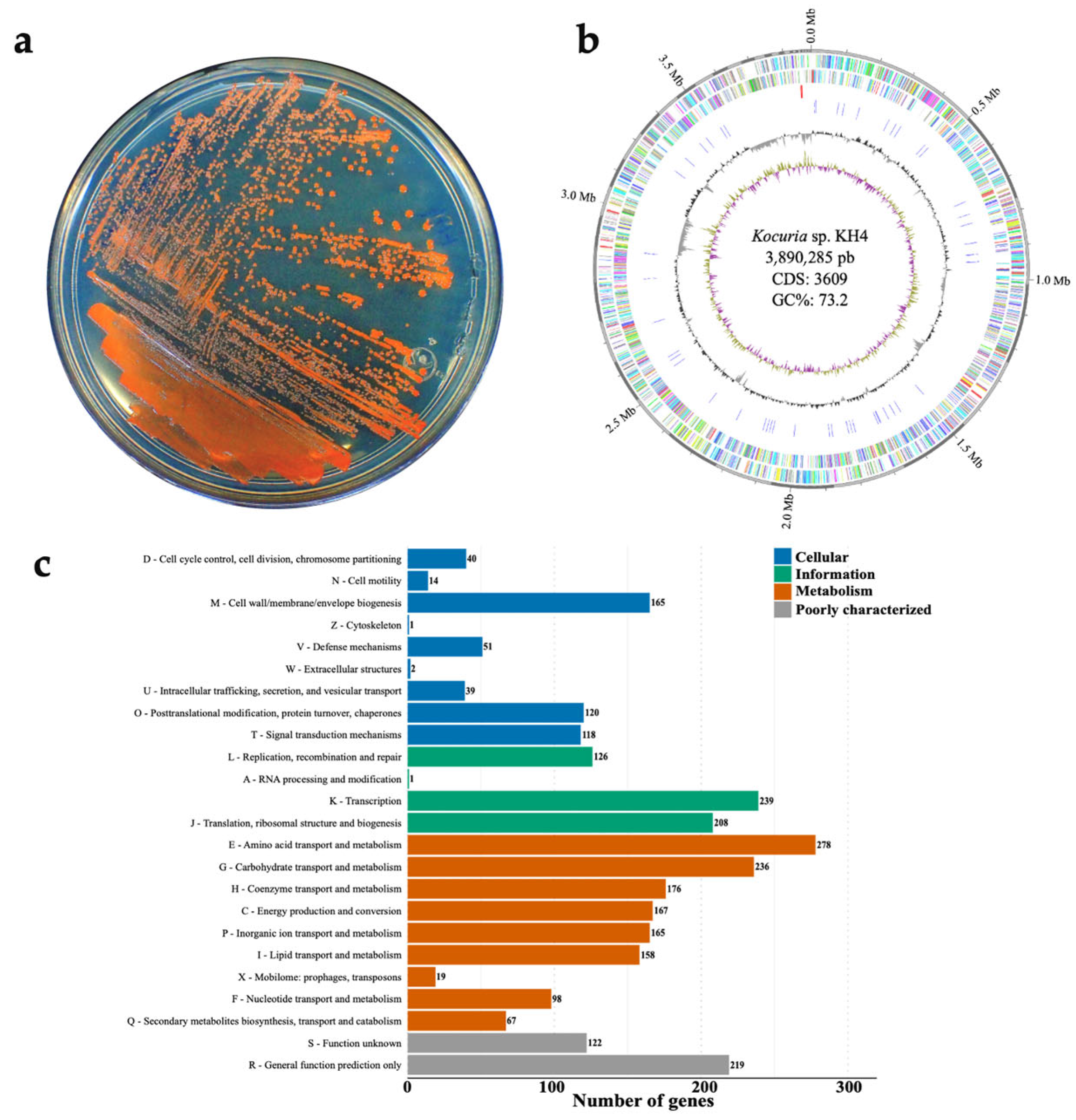
The Kocuria sp. strain KH4 was isolated from non-oxidized alkaline sulfide bearing tailings and was initially identified by analyzing its 16S rRNA gene. In a nutrient medium, this strain’s colonies were bright reddish-orange, circular, convex with smooth edges, and had a diameter of 3 mm (Figure 1a). Its genome was sequenced and assembled, achieving 99% completeness with no evidence of contamination (0%). The assembly showed a mean sequencing coverage of 64.3× and consisted of 51 contigs, with an N50 of 180.2 kb and an L50 of 8 contigs. The largest contig reached 499.9 kb. The genome has a total size of 3,890,285 base pairs (bp) and contains 3609 protein-coding sequences (CDSs), 50 tRNA genes, 5 rRNA genes, and a GC content of 73.2% (Figure 1b).
Figure 1.
Phenotypic and genotypic characteristics of Kocuria sp. strain KH4. (a) Colonies of Kocuria sp. strain KH4 grown on tryptic soy agar (TSA). (b) Circular visualization of the genome. Genome size (outermost circle), genes on the positive and negative strands (2nd and 3rd circles), tRNA genes (4th circle), rRNA genes (5th circle), GC content (6th circle), and GC skew (7th circle). (c) Classification of protein-coding sequences (CDSs) according to COG categories.
Functional genome analysis, based on the Clusters of Orthologous Genes (COG) database, revealed broad metabolic diversity, with 78.39% of the predicted CDSs assigned to different functional categories (Figure 1c). The most represented categories were E (amino acid transport and metabolism, 278 CDSs), K (transcription, 239 CDSs), and G (carbohydrate transport and metabolism, 236 CDSs). Other notable categories included J (translation, ribosomal structure, and biogenesis, 208 CDSs), H (coenzyme transport and metabolism, 176 CDSs), and C (energy production and conversion, 167 CDSs). Likewise, a high representation of category P (inorganic ion transport and metabolism) was observed, with 165 CDSs associated with metal homeostasis mechanisms, which are analyzed in detail in a later section.
3.2. Genome-Based Taxonomy for Kocuria sp. KH4
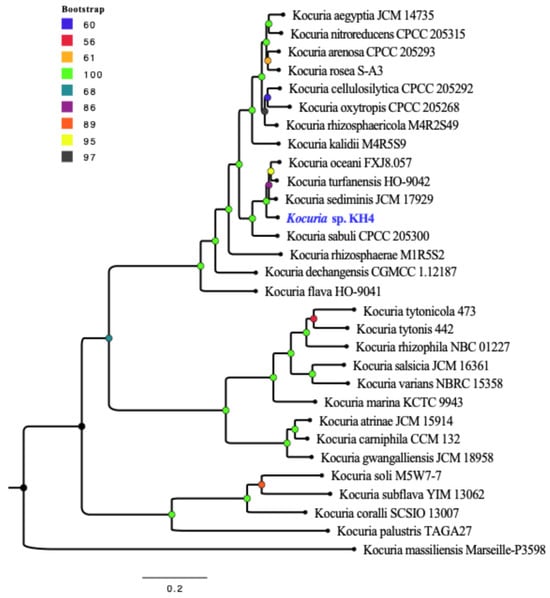
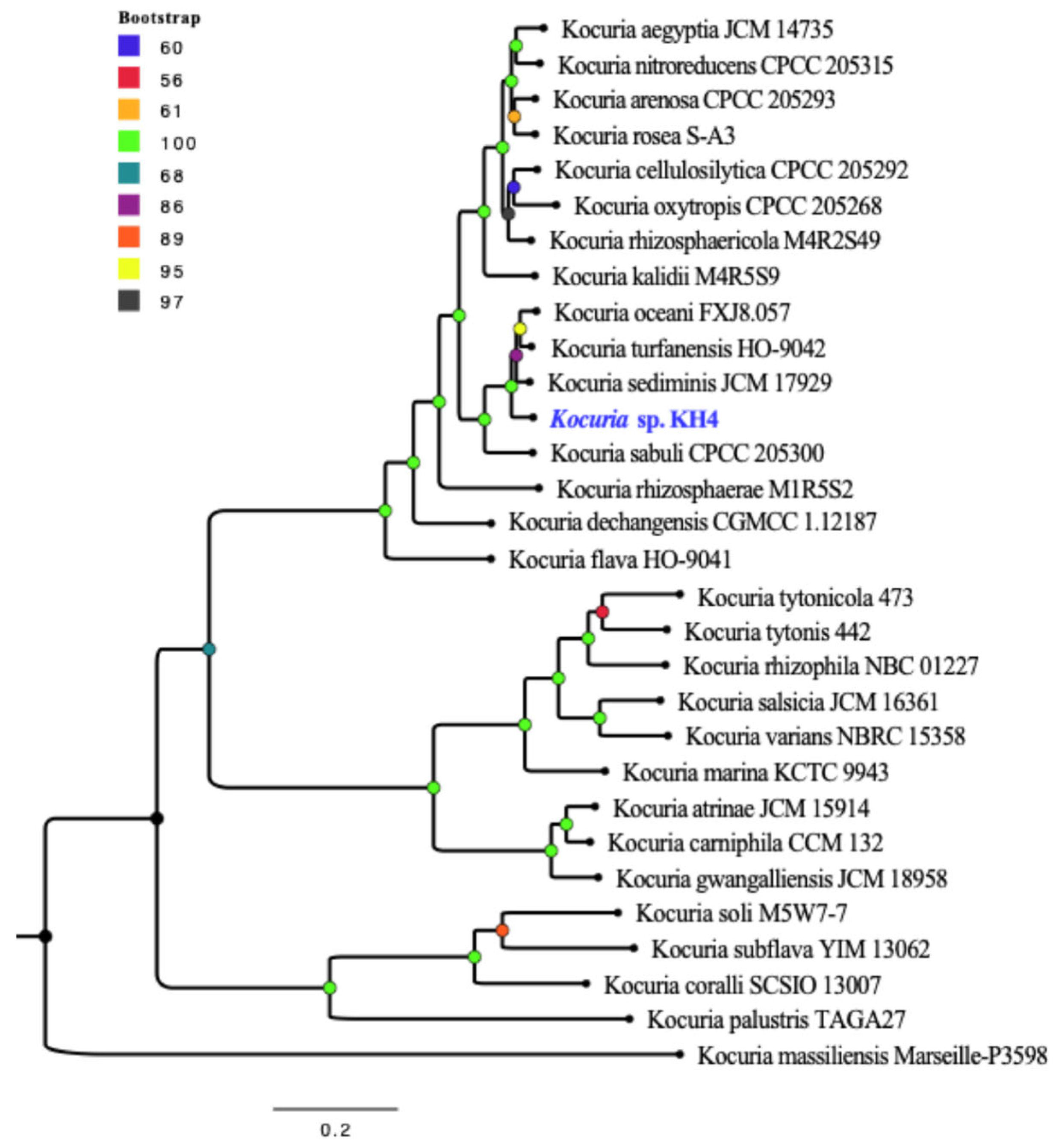
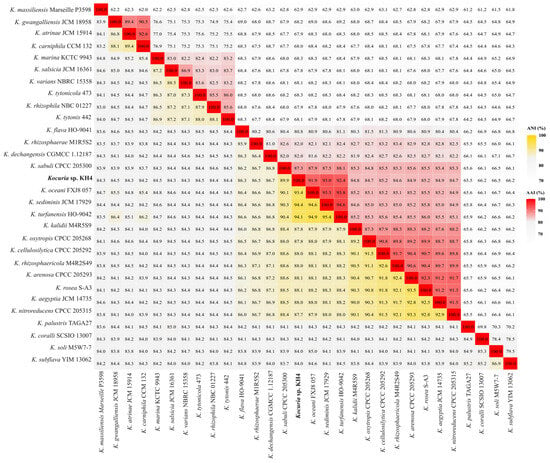
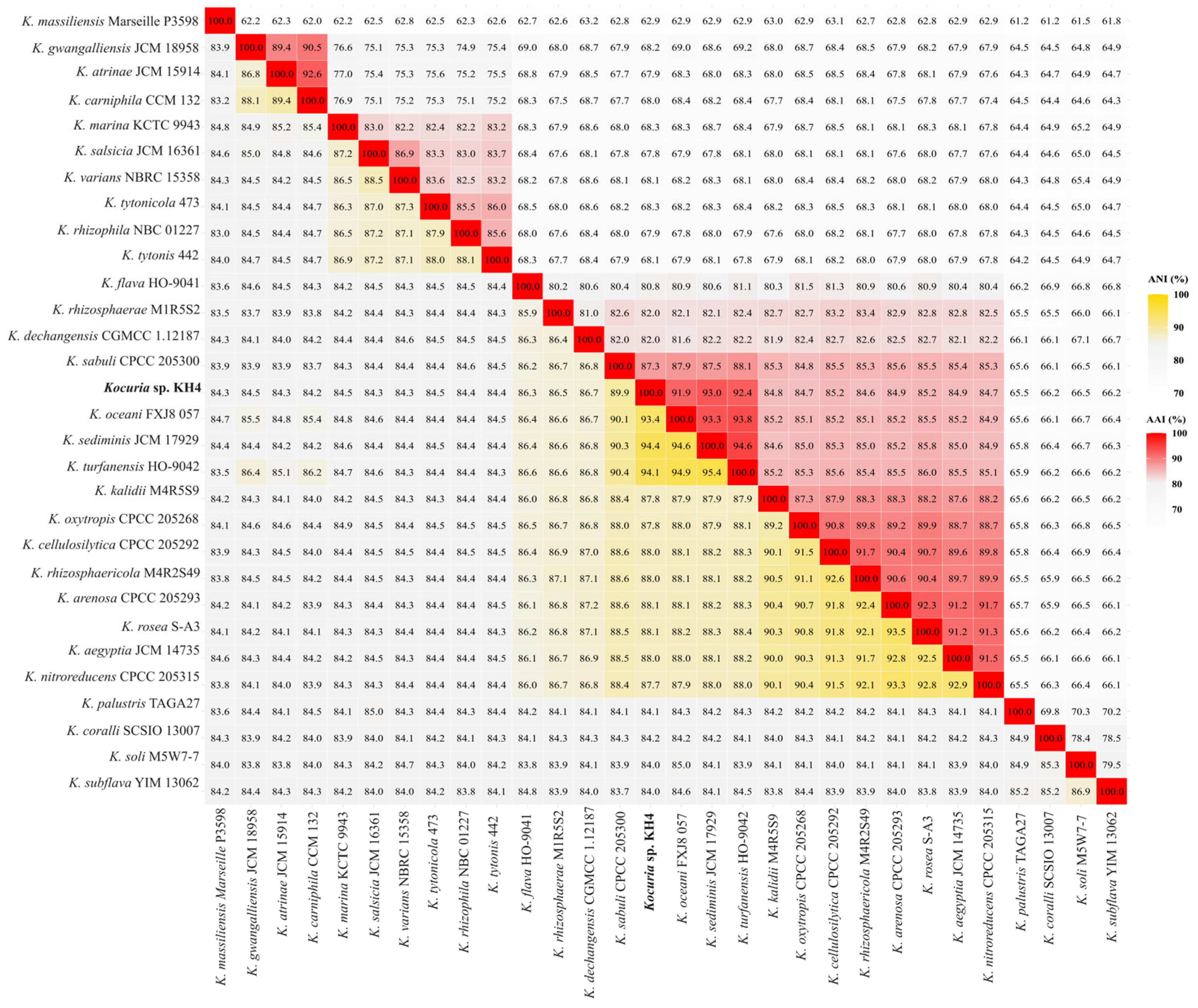
To establish the taxonomic assignment of Kocuria sp. KH4, its assembled genome was analyzed using the GTDB Toolkit (GTDB-Tk). The results confirmed that KH4 belongs to the phylum Actinomycetota, class Actinomycetes, order Actinomycetales, family Micrococcaceae, and genus Kocuria, with K. turfanensis (GCF_001580365.1) being the closest species. For a more detailed approach, a phylogenomic comparison was performed using 29 reference genomes from the genus Kocuria. Sixty-seven CDSs shared by all genomes (core genome) were identified and used to construct the phylogenomic tree. This analysis revealed that Kocuria sp. KH4 belongs to an independent clade. The closest phylogenetic neighbors were K. sediminis JCM 17929R, K. turfanensis HO-9042R, and K. oceani FXJ8.057R (Figure 2). Furthermore, Overall Genome Relatedness Indices (OGRIs) were estimated, which are considered standard parameters for the delimitation of bacterial species. The average nucleotide identity (ANI) between strain KH4 and its closest relatives was below the species threshold (95%): 94.4% with K. sediminis JCM 17929R, 94.1% with K. turfanensis HO-9042R, and 93.4% with K. oceani FXJ8.057R, with coverage greater than 73% in all cases. Consistently, the average amino acid identity (AAI) values were also below the interspecific threshold, with 93.0%, 92.4%, and 91.9% for K. sediminis, K. turfanensis, and K. oceani, respectively (Figure 3). Lastly, the in silico DNA–DNA hybridization (dDDH) values were below the species demarcation threshold (70%), with 54.9% for K. sediminis JCM 17929R, 52.1% for K. turfanensis HO-9042R, and 49.6% for K. oceani FXJ8.057R. Collectively, the phylogenomic analyses and OGRIs (ANI, AAI, and dDDH) confirm that isolate KH4 is a novel genomospecies within the genus Kocuria.
Figure 2.
Phylogenomic tree with 30 genomes of the genus Kocuria, with 67 major single-copy genes using a GTR+F+ASC+R6 model. Strain in blue correspond to Kocuria sp. KH4. The color scale represents the value of the bootstraps associated with each clade.
Figure 3.
Heatmap showing the values (%) of average nucleotide identity (ANI) and average amino acid identity (AAI) between strains of the genus Kocuria. A higher color strength indicates a high degree of sequence similarity. The results for Kocuria sp. KH4 are highlighted in bold.
3.3. Pangenome of Kocuria Genus
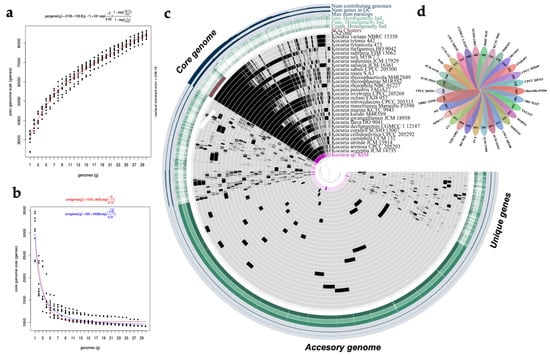
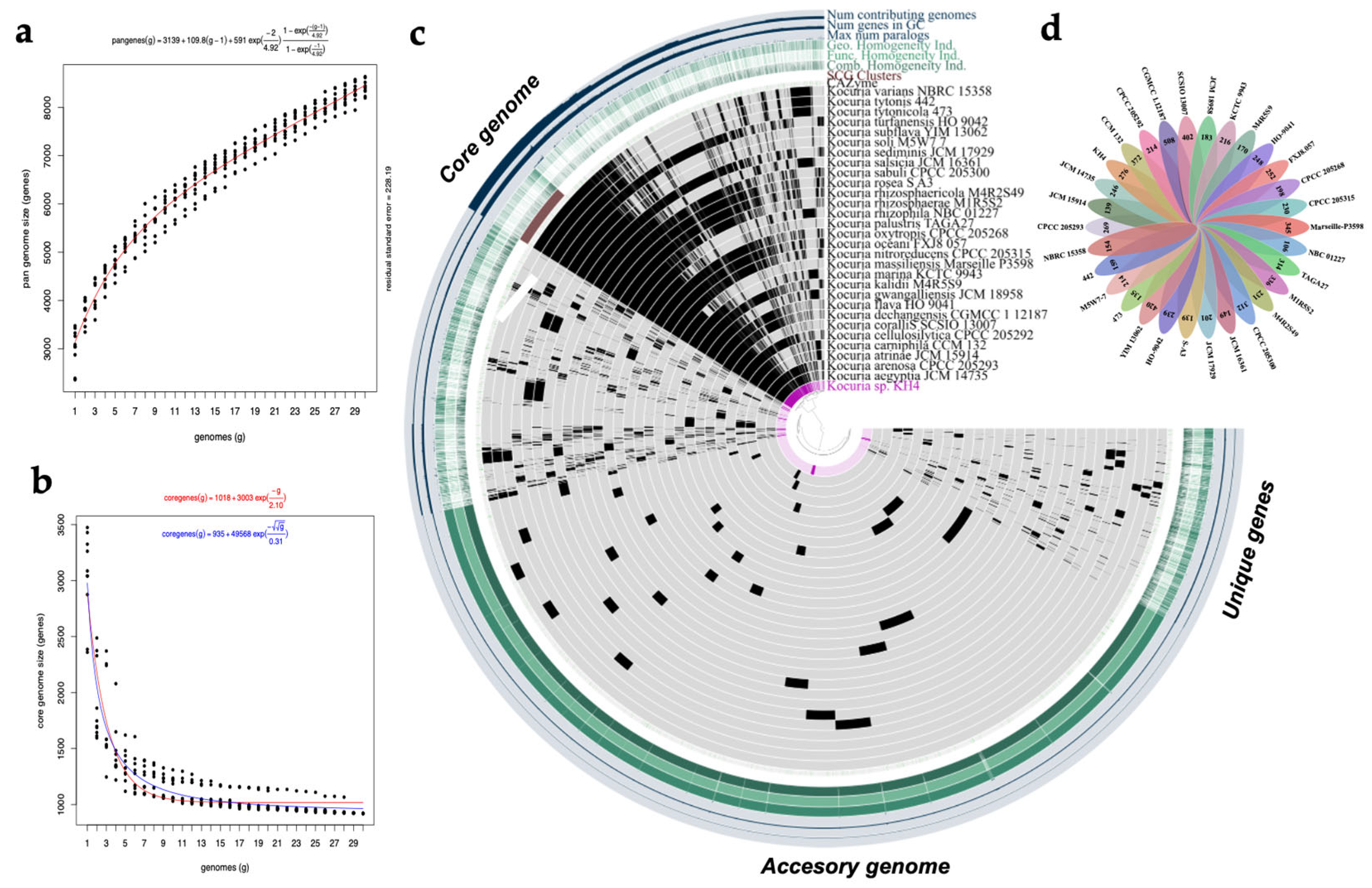
The pangenome, which is the total set of genes present in a group of genomes, was analyzed for the Kocuria genus using 30 strains belonging to different species. The results revealed an open pangenome consisting of 16,913 gene clusters, indicating a high capacity to incorporate new functions as more genomes are added. On average, 129 new gene families were incorporated with each additional genome without reaching a saturation point, a trend characteristic of expanding pangenomes (Figure 4a). Conversely, the core genome curve shows a marked decrease in shared genes as the number of included genomes increases, stabilizing at around 730 orthologous groups (Figure 4b). Regarding the accessory genome, the strains were found to carry between 106 and 508 unique genes (Figure 4c). Notably, strain KH4 was found to have 276 non-shared genes (Figure 4d). These mainly encode hypothetical proteins but also elements with functions potentially relevant for environmental adaptation. These include genes encoding Hin-type recombinases and invertases and multiple transposases from the IS5, IS481, and IS1421 families, as well as the ParB protein and the nucleoid-associated protein Lsr2. Genes linked to transcriptional regulation (such as RpoD and an HTH-type regulator) were also identified, in addition to genes associated with redox metabolism (e.g., the Alx modulator), amino acid transport (YhdG), and various dehydrogenases and methyltransferases involved in specialized metabolic pathways. Taken together, these results suggest that the Kocuria genus has a highly diverse gene repertoire, likely due to its wide ecological distribution and ability to adapt to different niches.
Figure 4.
Analysis of the Kocuria genus pangenome. (a) Curve and estimation of pangenome size. (b) Curve and estimation of core genome size. (c) Distribution of core genome, accessory genome, and unique genes across the Kocuria pangenome in anvi’o v8. (d) Number of unique genes by strain.
3.4. Metal Resistance Genes in Kocuria sp. KH4
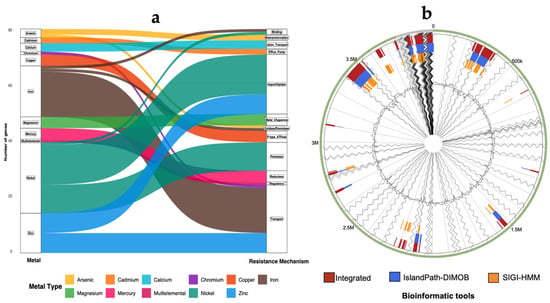
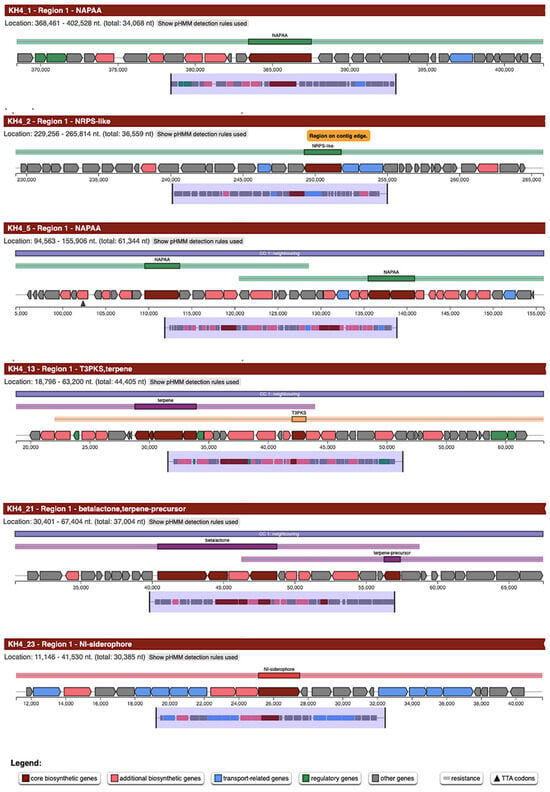
The genetic profile of metal resistance in Kocuria sp. KH4 was inferred from the information encoded in its genome by comparing it with the MetHMMDB database, which includes 254 hidden Markov models (HMMs) covering 121 microbial genes associated with metal resistance (MMRGs) and their functions. The identified genes were grouped according to the type of metal to which they confer resistance and the functional mechanism involved (Figure 5a). A predominance of genes associated with homeostasis and resistance to essential metals such as iron (37 genes), nickel (31), and zinc (20) was observed, followed by copper (9) and toxic metals such as mercury and arsenic (4 genes each). In terms of molecular mechanisms, the most represented correspond to ABC transporters (47 genes) and other nonspecific resistance mechanisms (46 genes), followed by metal-binding proteins (8), biotransformation enzymes (6), and P-type ATPases (4). In detail, genes related to iron transport and uptake were detected, such as fecD, fecE, fbpB, and fbpC, which are involved in the acquisition of this essential element under limiting conditions. Likewise, genes linked to nickel absorption and transport were identified, including nikB, nikC, nikD, and nikE, which encode permeases and importers of the Nik system, essential for the uptake and intracellular transport of the cation. In the case of zinc, genes from the ZnuABC system and the troB and zupT transporters were found, which participate in both the entry and intracellular regulation of Zn2+. Determinants for copper, mainly Cu-transporting ATPases (copA-like), and for cadmium, cobalt, and zinc via the czcD efflux system were also detected. Furthermore, genes related to resistance to toxic metals were observed, including aioA and acr3 for arsenic, as well as several copies of the merA gene, which encodes mercuric reductases involved in mercury detoxification. Finally, genes with nonspecific but potentially relevant functions in metal resistance were identified, such as mntH (divalent cation transporter), actP (cation symporter), and the corC system, associated with magnesium and cobalt homeostasis (Table S2).
Figure 5.
Distribution of genes related to metal resistance in Kocuria sp. KH4. (a) Alluvial diagram showing metal-resistance genes grouped by element and by their associated biochemical mechanisms. (b) Distribution and size of the genomic islands identified by three bioinformatic algorithms.
3.5. Genomic Islands (GIs) in Kocuria sp. KH4
A comprehensive genomic analysis aimed at identifying unusual patterns in nucleotide composition revealed 48 genomic islands (GIs) in Kocuria sp. KH4. Table S3 and Figure 5b show the start and end coordinates of the GIs, their sizes (7.7–62.7 kb), and the products they encode. These islands contain numerous transposases (IS3, IS4, IS5, and IS402 families), integrases/recombinases (including serine- and tyrosine-recombinases and resolvases/invertases), a relaxase protein of the MOB-F family, and components of conjugation systems (such as TraD/TraG and TrbL/VirB6). These features suggest that these segments are mobile genetic elements (MGEs). Additionally, multiple transcriptional regulators belonging to families such as MerR, ArsR/SmtB, MarR, IclR, and XRE were detected, as well as two-component systems, particularly those associated with sensing metal toxicity and oxidative stress. Regarding metal tolerance, some GIs harbor genes that encode cation diffusion facilitators (CDFs), efflux pumps, and copper-resistance proteins (CopD). These genes also encode domains associated with metal sequestration and detoxification.
3.6. Biosynthetic Gene Clusters (BGCs) in Kocuria spp.
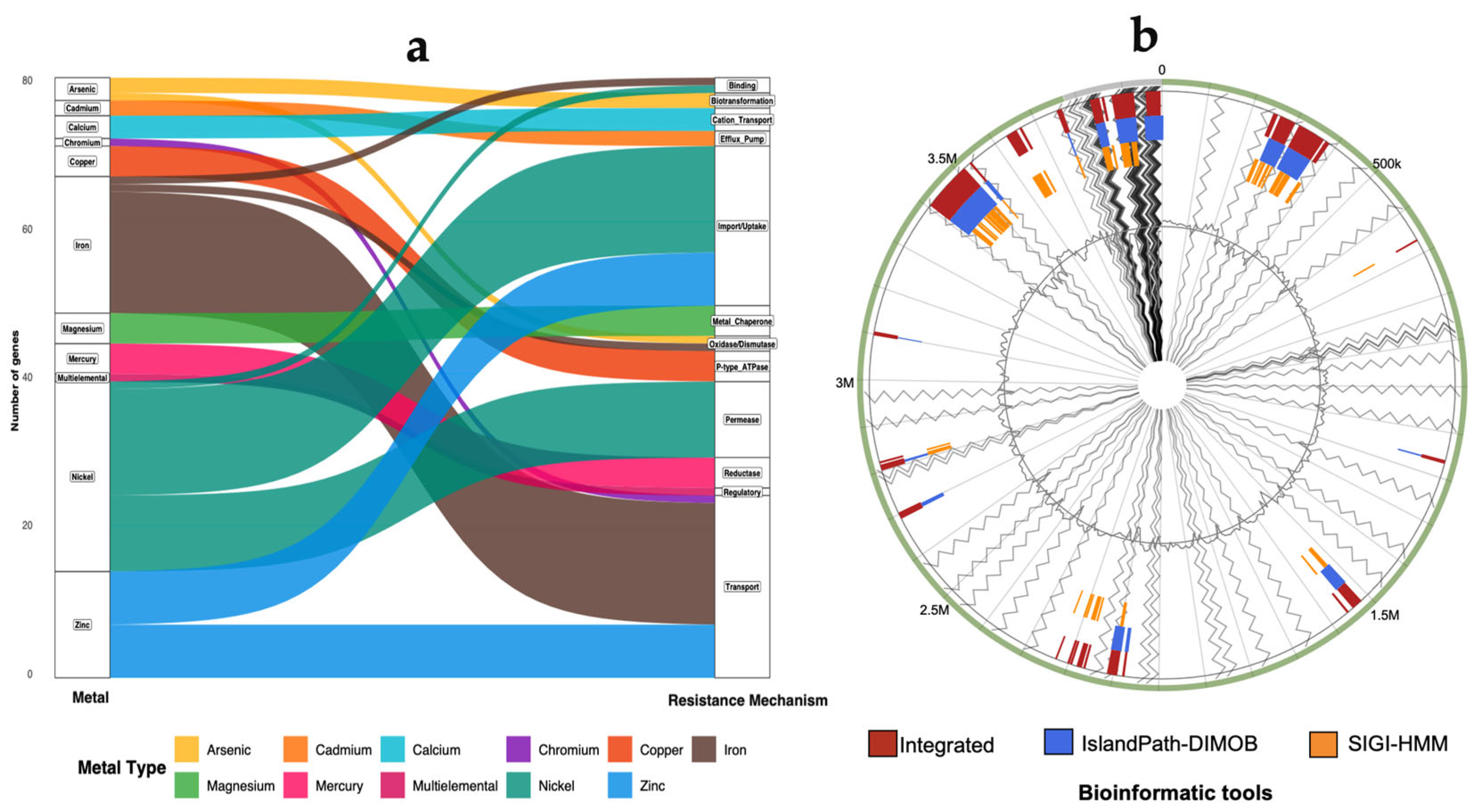
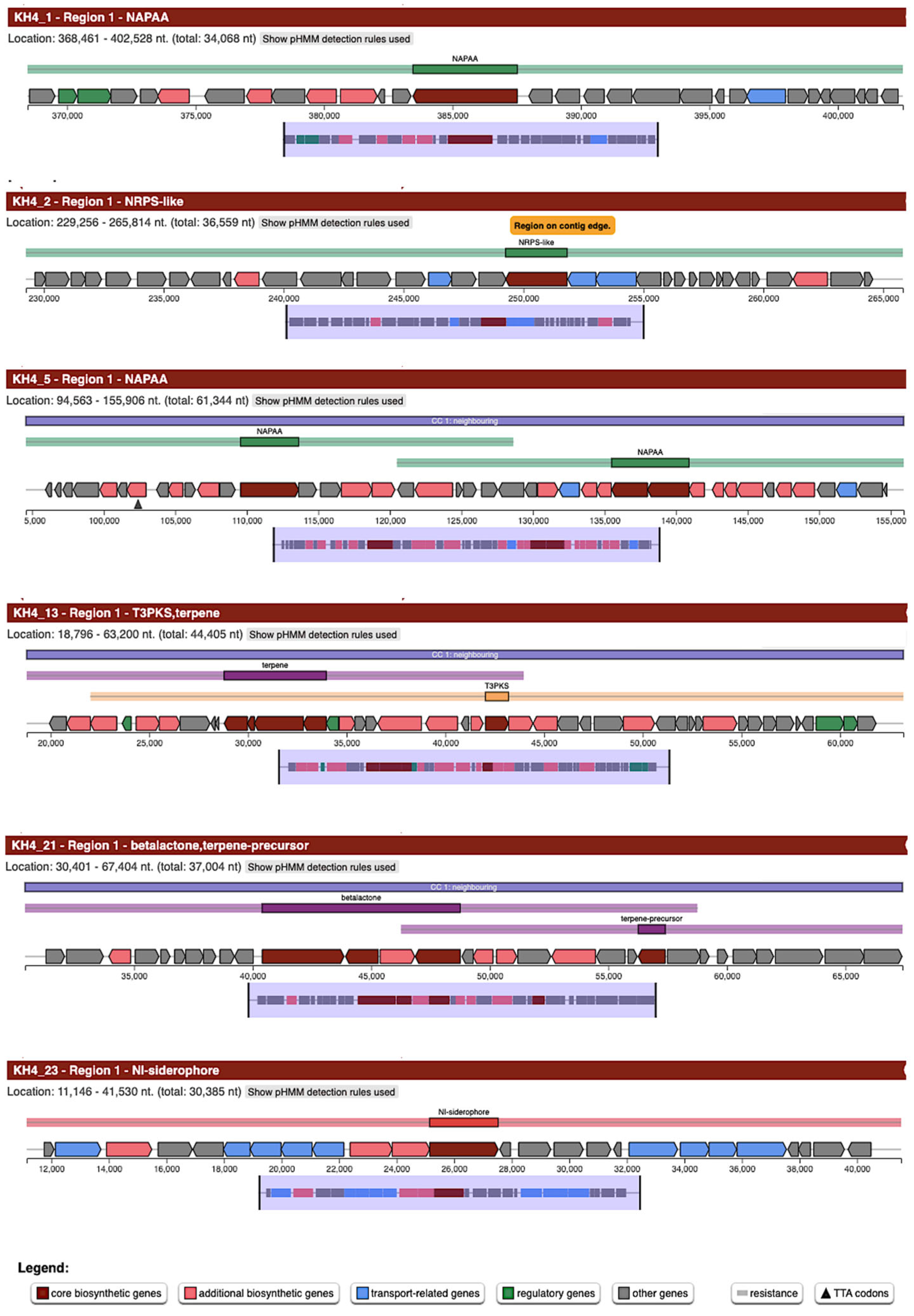
For the purpose of predicting the biotechnological potential associated with the production of specialized metabolites, genome mining was performed to detect BGCs in the Kocuria sp. KH4 strain and in the 30 reference strains used for phylogenomic analyses. The results revealed that the genome of Kocuria sp. KH4 harbors six classes of BGCs, which encode genes associated with the synthesis of NAPAA (non-α-poly-amino acids), NRPS (nonribosomal peptide synthetases), T3PKS (type III polyketide synthases), terpenes, and Ni-siderophores (Figure 6). These BGCs are shared with other species, as indicated in the absence and presence matrix in Figure S1. On a global scale, 192 BGCs were identified among the Kocuria species analyzed, corresponding mainly to the NRPS, RiPPs (ribosomally synthesized and post-translationally modified peptides), PKS (polyketide synthases), and terpenes (Table 1). At the interspecific level, it was observed that certain classes of BGCs are shared by most species, suggesting the conservation of essential biosynthetic pathways. For instance, terpene and NRPS-like clusters were detected in almost all analyzed genomes. In contrast, PKS-type BGCs (particularly T3PKS) and those associated with siderophores showed a more restricted distribution, predominating in species such as K. marina, K. sediminis, and K. flava. Likewise, species such as K. rosea, K. polaris, and K. palustris stood out for presenting complex combinations of hybrid BGCs, which integrate NRPS–PKS or RiPP–terpene modules, reflecting greater metabolic plasticity. In contrast, species such as K. rhizophila and K. kristinae showed a more limited repertoire, dominated by simple terpenes and RiPPs. Overall, the analysis suggests that, although the genus Kocuria retains a common core of BGCs, there is notable variability in the number and type of clusters between species, reflecting their metabolic diversification and adaptation.
Figure 6.
Biosynthetic gene clusters (BGCs) in Kocuria sp. strain KH4. The location, genetic arrangement, and class of BGCs are shown. NAPAA (non-α-poly-amino acids), NRPS (nonribosomal peptide synthetases), T3PKS (type III polyketide synthases), terpenes, and Ni-siderophores. The colors of the boxes denote the function of proteins encoded by each gene in the biosynthesis of specialized metabolites.
Table 1.
Classes of biosynthetic gene clusters (BGCs) identified in genomes of Kocuria species.
4. Discussion
The genus Kocuria includes widely distributed actinobacteria found in soils, deserts, marine environments, rhizospheres, and in association with plant tissues. From a biotechnological point of view, it is notable for its production of carotenoids, antibiotics, and exopolysaccharides, as well as its potential in agriculture and environmental remediation. In the present study, Kocuria sp. strain KH4 was isolated from sulfide bearing tailings (“La Concha”) in Guerrero, Mexico. A functional analysis of its genome was performed to determine its precise taxonomic classification, identify genes associated with metal tolerance or resistance, and explore its genotypic potential for the production of secondary or specialized metabolites.
Various strains of the genus Kocuria have demonstrated an arsenal of metabolic strategies necessary to colonize environments with extreme geochemical characteristics and oligotrophic conditions. For example, K. arsenatis sp. nov., resistant to arsenic, was isolated as an endophyte of Prosopis laevigata growing on mining tailings in San Luis Potosí (Mexico) [9]. Similarly, Kocuria sp. CRB15, a strain highly resistant to Cu, was obtained from the rhizosphere of Saccharum spontaneum in copper mines in Rakha [40]. Likewise, K. flava CR1 has been recovered from copper-contaminated soils in Urumqi, China [21], while K. dechangensis RSKoc01 was found associated with Trifolium roots in lead-zinc mines [41]. Taken together, these findings show that Kocuria not only tolerates but thrives in metal-rich niches, highlighting its ecological relevance and biotechnological potential for bioremediation and phytoremediation of contaminated environments.
Genomic analysis of Kocuria sp. KH4 revealed a set of features consistent with physiological and metabolic adaptation to metalliferous and stressful habitats. Its genome size (~3.89 Mb), high GC content (73.2%), and proportion of genes with functional annotation according to COG (~78%) are within the known range for the genus. Kocuria species have genome sizes between 2.7 and 4.0 Mb, with an approximate average of 3.7 Mb and a GC content of 60–75%, an attribute associated with greater structural stability and resistance to environmental stress [42]. Phylogenomic analyses placed strain KH4 in a monophyletic clade separate from the rest of the species, and it showed no close relationship (ANI < 95%) with reference strains deposited in the GTDB (Genome Taxonomy Database; release 19 October 2024). These results, complemented by Genome Relatedness Indices (OGRIs), suggest that this bacterium represents a new genomospecies. A genomospecies is a bacterial taxonomic group defined exclusively on the basis of its genomic relationship, i.e., by the degree of overall similarity between its complete genomes. Unlike novel species traditionally defined by phenotypic, physiological, or ecological characteristics, a genomospecies does not require or consider phenotypic traits for its delimitation [43]. In agreement, recent studies have demonstrated the usefulness of phylogenomic analyses, ANI, AAI, and dDDH to describe new lineages within the genus Kocuria [44]. However, culture-dependent studies—such as the use of substrates, growth under variable conditions (temperature, pH, salinity, etc.), and fatty acid profile analysis—are still required for the formal description of novel bacterial species [45].
In functional terms, Kocuria sp. KH4 exhibits a clear bias toward genes involved in amino acid and carbohydrate metabolism, as well as in the transport and metabolism of inorganic ions. The latter category is particularly relevant, as it coincides with the selective pressures associated with the “La Concha” sulfide bearing tailings. These are characterized by high concentrations of metals [As (1140–11,800 mg kg−1), Cd (8–780 mg kg−1), Cu (71.8–1320 mg kg−1), Fe (6000–12,300 mg kg−1), Pb (10,100–43,700 mg kg−1), Zn (780–10,000 mg kg−1)] in highly bioavailable chemical forms, a wide diversity of sulfide minerals, and limited nutrient availability [28]. These abiotic factors act as ecological filters that shape the structure and functionality of microbial communities, giving them unique functional adaptive traits [46]. In this context, the genome of Kocuria sp. KH4 showed a broad repertoire of genes associated with metal resistance, including those associated with iron, nickel, zinc, copper, arsenic, and mercury. These genes encode ABC transporters, P-type ATPases, metal-binding proteins, and biotransformation enzymes. These genes encode proteins and enzymes that together orchestrate mechanisms of metal tolerance such as biotransformation, bioadsorption, bioprecipitation, and bioaccumulation, among others.
The biotransformation is one of the most important mechanisms, as it allows the redox state of metals to be modified, reducing their mobility and toxicity [47]. In several species of Kocuria spp. isolated from metal-rich environments—for example, K. arsenatis and K. palustris—enzymes such as arsenate reductase have been described, capable of converting As (V) to As (III), which is subsequently expelled by Acr3-type transporters [9,48]. Similarly, several actinobacteria, including Kocuria spp., possess merA, which reduces Hg (II) to Hg (0) [44], a mechanism also present in the KH4 strain. Besides biotransformation, Kocuria spp. employ mechanisms such as biosorption, where metal ions passively adhere to the cell surface through electrostatic interactions with functional groups such as phosphate, carboxylate, or sulfate present in the cell wall or exopolysaccharides (EPS) [49]. This process has been demonstrated in K. rosea, used in the removal of U(VI) and Hg [50,51]. Another important mechanism is bioprecipitation, whereby bacteria transform highly soluble metals into thermodynamically stable, low-solubility chemical forms such as carbonates, sulfides, or oxides [52]. Microbial-induced carbonate precipitation (MICP), facilitated by urease activity, has been documented in K. flava CR1, which is capable of precipitating copper through the formation of metal carbonates [21]. Another strategy is bioaccumulation, which allows for the active incorporation of metals into the cell, where they are sequestered by specific metalloproteins and chaperones [53]. This strategy, widely distributed in Actinobacteria, has also been reported in species such as K. rhizophila 14ASP and Kocuria sp. BR1-36 [54,55].
Forty-eight genomic islands were identified in the genome of Kocuria sp. KH4, ranging in size from 7.7 kb to 62.7 kb and collectively encoding a wide variety of functions and mobile genetic elements (MGEs). Similarly, genomic studies in K. rhizophila and K. pseudorhizophila close species have reported the presence of new insertion sequences (ISs) (ISKrh4–7, ISKrh1–3, and IS481) and specific mobile elements [56], which is consistent with the recurrence of transposases, integrases, and recombinases, as well as a relaxase and transfer proteins (MobF, TraD/TraG, TrbL/VirB6) in our strain. This set of MGEs has been involved in the horizontal mobilization of genetic determinants between strains, favoring their evolution and adaptation to stressful environments [57].
One of the aspects where the genetic diversity of the Kocuria genus is most evident is in the presence of secondary metabolite biosynthesis clusters (BGCs). Multiple BGCs were identified in the genome of Kocuria sp. KH4, including NRPS (nonribosomal peptide synthetases), T3PKS (type III polyketide synthases), NAPAA (non-α-poly-amino acids), terpenes, and siderophores. In other microorganisms, these compounds are associated with the production of antibiotics, pigments, antioxidant agents, and molecules involved in metal mobilization or complexation [58,59]. NRPS are multi-modular megaenzymes that synthesize nonribosomal peptides from proteinogenic and non-proteinogenic amino acids [60]. In contrast, T3PKS are monofunctional enzymes that produce polyketides derived from acetone-malonate units [61]. NAPAA represent polymers whose amino acids are linked through alternative positions (β, γ, or δ) and are usually synthesized through specialized pathways that modify amino acids through transamidation, oxidation-reduction, or cyclization reactions [62]. Bacterial terpenes, derived from IPP and DMAPP, include monoterpenes, sesquiterpenes, diterpenes, and carotenoids [63]. Siderophores, on the other hand, are low-molecular-weight molecules with high affinity for iron and, in some cases, other metals, and they can be synthesized via NRPS-dependent or NRPS-independent pathways [64].
The chemical nature and biological activity of the metabolites produced by Kocuria have been widely reported in Kocuria isolates, although the BGCs involved are not known in all cases. For example, K. sediminis As04 produces specific carotenoids (phytoene and β-cryptoxanthin) with potential industrial applications [65], while K. flava NIO_01 harbors multiple BGCs corresponding to terpenes, T3PKS, and siderophores, as well as NRPS and NAPAA [18]. A notable example is K. palustris, which produces the antibiotic kocurin, a thiazolyl peptide with activity against Methicillin-resistant Staphylococcus aureus (MRSA) [66]. Further notable cases are Kocuria strains that have the machinery for the biosynthesis of alkanoyl imidazoles with antimicrobial activity (nocarimidazoles) [67]. Furthermore, several novel species, including K. rhizosphaerae sp. nov., K. kalidii sp. nov., and K. rhizosphaericola sp. nov., are capable of degrading phenolic acids [44]. Also, multiple strains of Kocuria spp. have been shown to produce indole-3-acetic acid (IAA), giving them the ability to stimulate plant growth [1].
The metabolic versatility and genomic plasticity of Kocuria sp. KH4 involved in the biosynthesis of multiple secondary or specialized metabolites, as well as their intrinsic resistance to diverse toxic metals, suggest a functional link between both systems. Several microbial metabolites can act as protective molecules against metal stress, either as antioxidant agents that counteract the generation of reactive oxygen species (ROS) derived from redox-active metals, or as siderophores that participate in iron acquisition and heavy metal chelation. This type of co-adaptation has been reported in several metalliferous environments [68,69,70,71] and could explain, at least partially, the ecological success of actinobacteria in mine tailings.
5. Conclusions
The genomic analysis of Kocuria sp. KH4 revealed a novel genomospecies with remarkable metabolic versatility and adaptive potential. The presence of multiple metal resistance genes and six biosynthetic gene clusters (BGCs) for nonribosomal peptides, polyketides, terpenes, bacteriocins, and siderophores highlights its capacity to produce diverse secondary metabolites. These features suggest an interplay between metal tolerance and secondary metabolism that confers ecological resilience in metal-rich environments. Overall, Kocuria sp. KH4 represents a promising source of bioactive compounds with potential applications in environmental and industrial biotechnology. Further functional studies and complementary Omics approaches (including transcriptomics, proteomics, and metabolomics) will be essential to fully uncover its biosynthetic potential and to characterize its biological activities.
Supplementary Materials
The following supporting information can be downloaded at: https://www.mdpi.com/article/10.3390/microbiolres16120255/s1. Table S1. Kocuria genomes used for phylogenetic analysis in this study; Table S2. Unique genes in Kocuria sp. KH4 compared to other Kocuria species; Table S3. Data from genomic islands (GIs) in Kocuria sp. KH4; Figure S1: Presence/Absence matrix of biosynthetic gene clusters (BGCs) identified in Kocuria species. NAPAA (non-α-poly-amino acids), NRPS (nonribosomal peptide synthetases), T3PKS (type III polyketide synthases), RiPPs (ribosomally synthesized and post-translationally modified peptides).
Author Contributions
Conceptualization, J.L.A.-N.; Methodology, G.C.-F. and J.L.A.-N.; Software, G.C.-F.; Validation, G.C.-F.; Formal analysis, G.C.-F., A.A.-M. and J.R.-G.; Investigation, L.X.Z.-M. and J.R.-G.; Resources, J.L.A.-N.; Data curation, G.C.-F.; Writing—original draft, G.C.-F., L.J.G.-G., A.A.-M., L.X.Z.-M., J.R.-G. and J.L.A.-N.; Writing—review and editing, L.J.G.-G., A.A.-M., L.X.Z.-M., J.R.-G. and J.L.A.-N.; Visualization, L.J.G.-G.; Supervision, J.R.-G. and J.L.A.-N.; Project administration, J.R.-G. and J.L.A.-N.; Funding acquisition, J.L.A.-N. All authors have read and agreed to the published version of the manuscript.
Funding
Genome sequencing was funded by the GetGenome initiative at the Sainsbury Laboratory in Norwich, UK, with support from the Gatsby Charitable Foundation and the Biotechnology and Biological Sciences Research Council, as part of the “GetGenome Mexico 2023” project. Grant number: ID5706.
Institutional Review Board Statement
Not applicable.
Informed Consent Statement
Not applicable.
Data Availability Statement
The original data presented in the study are openly available in NCBI BioProject PRJNA1365121 (https://www.ncbi.nlm.nih.gov/bioproject/?term=+PRJNA1365121), accessed on 29 November 2025.
Acknowledgments
We thank UATI for their expert technical support and server maintenance at Centro de Ciencias Genómicas, UNAM.
Conflicts of Interest
The authors declare no conflicts of interest.
References
- Li, C.-J.; Jiang, Z.-M.; Zhi, X.-Y.; Chen, H.-H.; Yu, L.-Y.; Li, G.-F.; Zhang, Y.-Q. Genomic insights into Kocuria: Taxonomic revision and identification of five IAA-producing extremophiles. Front. Microbiol. 2025, 16, 1547983. [Google Scholar] [CrossRef] [Scilit]
- Stackebrandt, E.; Koch, C.; Gvodiak, O.; Schumann, P. Taxonomic Dissection of the Genus Micrococcus: Kocuria gen. nov., Nesterenkonia gen. nov., Kytococcus gen. nov., Dermacoccus gen. nov., and Micrococcus Cohn 1872 gen. emend. Int. J. Syst. Evol. Microbiol. 1995, 45, 682–692. [Google Scholar] [CrossRef] [Scilit] [PubMed]
- Lalević, B.; Jović, J.; Raičević, V.; Kljujev, I.; Kiković, D.; Hamidović, S. Biodegradation of methyl-tert-butyl ether by Kocuria sp. Hem. Ind. 2012, 66, 717–722. [Google Scholar] [CrossRef] [Scilit]
- Tang, S.-K.; Wang, Y.; Lou, K.; Mao, P.-H.; Xu, L.-H.; Jiang, C.-L.; Kim, C.-J.; Li, W.-J. Kocuria halotolerans sp. nov., an actinobacterium isolated from a saline soil in China. Int. J. Syst. Evol. Microbiol. 2009, 59, 1316–1320. [Google Scholar] [CrossRef] [Scilit] [PubMed]
- Kovács, G.; Burghardt, J.; Pradella, S.; Schumann, P.; Stackebrandt, E.; Márialigeti, K. Kocuria palustris sp. nov. and Kocuria rhizophila sp. nov., isolated from the rhizoplane of the narrow-leaved cattail (Typha angustifolia). Int. J. Syst. Evol. Microbiol. 1999, 49, 167–173. [Google Scholar] [CrossRef] [Scilit]
- Kim, S.B.; Nedashkovskaya, O.I.; Mikhailov, V.V.; Han, S.K.; Kim, K.-O.; Rhee, M.-S.; Bae, K.S. Kocuria marina sp. nov., a novel actinobacterium isolated from marine sediment. Int. J. Syst. Evol. Microbiol. 2004, 54, 1617–1620. [Google Scholar] [CrossRef] [Scilit] [PubMed]
- Dastager, S.G.; Tang, S.-K.; Srinivasan, K.; Lee, J.-C.; Li, W.-J. Kocuria indica sp. nov., isolated from a sediment sample. Int. J. Syst. Evol. Microbiol. 2014, 64, 869–874. [Google Scholar] [CrossRef] [Scilit] [PubMed]
- Wang, K.; Zhang, L.; Liu, Y.; Pan, Y.; Meng, L.; Xu, T.; Zhang, C.; Liu, H.; Hong, S.; Huang, H.; et al. Kocuria dechangensis sp. nov., an actinobacterium isolated from saline and alkaline soils. Int. J. Syst. Evol. Microbiol. 2015, 65, 3024–3030. [Google Scholar] [CrossRef] [Scilit]
- Román-Ponce, B.; Wang, D.; Soledad Vásquez-Murrieta, M.; Feng Chen, W.; Estrada-de los Santos, P.; Hua Sui, X.; Tao Wang, E. Kocuria arsenatis sp. nov., an arsenic-resistant endophytic actinobacterium associated with Prosopis laegivata grown on high-arsenic-polluted mine tailing. Int. J. Syst. Evol. Microbiol. 2016, 66, 1027–1033. [Google Scholar] [CrossRef] [Scilit]
- Ziogou, A.; Giannakodimos, I.; Giannakodimos, A.; Baliou, S.; Ioannou, P. Kocuria Species Infections in Humans—A Narrative Review. Microorganisms 2023, 11, 2362. [Google Scholar] [CrossRef] [Scilit]
- Abdulameer, A.; Al-Rawi, D.F.; Al-Ani, M.Q. Production of keratinase enzyme from a local isolate of Kocuria rosea using environmental waste. Agric. Biotechnol. J. 2024, 16, 391–412. [Google Scholar] [CrossRef]
- Barik, A.; Sen, S.K.; Rajhans, G.; Raut, S. Purification and Optimization of Extracellular Lipase from a Novel Strain Kocuria flava Y4. Int. J. Anal. Chem. 2022, 2022, 6403090. [Google Scholar] [CrossRef] [Scilit] [PubMed]
- Soto-Padilla, M.Y.; Gortáres-Moroyoqui, P.; Cira-Chávez, L.A.; Levasseur, A.; Dendooven, L.; Estrada-Alvarado, M.I. Characterization of extracellular amylase produced by haloalkalophilic strain Kocuria sp. HJ014. Int. J. Environ. Health Res. 2016, 26, 396–404. [Google Scholar] [CrossRef] [Scilit]
- Ramos, G.L.d.P.A.; Vigoder, H.C.; Nascimento, J.n.d.S. Kocuria spp. in Foods: Biotechnological Uses and Risks for Food Safety. Appl. Food Biotechnol. 2021, 8, 79–88. [Google Scholar] [CrossRef] [Scilit]
- Uzair, B.; Menaa, F.; Khan, B.A.; Mohammad, F.V.; Ahmad, V.U.; Djeribi, R.; Menaa, B. Isolation, purification, structural elucidation and antimicrobial activities of kocumarin, a novel antibiotic isolated from actinobacterium Kocuria marina CMG S2 associated with the brown seaweed Pelvetia canaliculata. Microbiol. Res. 2018, 206, 186–197. [Google Scholar] [CrossRef] [Scilit] [PubMed]
- Kumar, C.G.; Sujitha, P. Kocuran, an exopolysaccharide isolated from Kocuria rosea strain BS-1 and evaluation of its in vitro immunosuppression activities. Enzym. Microb. Technol. 2014, 55, 113–120. [Google Scholar] [CrossRef] [Scilit] [PubMed]
- Bağcı, C.; Nuhamunada, M.; Goyat, H.; Ladanyi, C.; Sehnal, L.; Blin, K.; A Kautsar, S.; Tagirdzhanov, A.; Gurevich, A.; Mantri, S.; et al. BGC Atlas: A web resource for exploring the global chemical diversity encoded in bacterial genomes. Nucleic Acids Res. 2024, 53, D618–D624. [Google Scholar] [CrossRef] [Scilit] [PubMed]
- Juyal, K.; Devkar, H.; Deshpande, A.; Thakur, N.L. Genome assembly, analysis, and mining of Kocuria flava NIO_001: A thiopeptide antibiotic synthesizing bacterium isolated from marine sponge. Genome 2025, 68, 1–10. [Google Scholar] [CrossRef] [Scilit]
- Parshetti, G.K.; Parshetti, S.; Kalyani, D.C.; Doong, R.-a.; Govindwar, S.P. Industrial dye decolorizing lignin peroxidase from Kocuria rosea MTCC 1532. Ann. Microbiol. 2012, 62, 217–223. [Google Scholar] [CrossRef] [Scilit]
- Heidari, P.; Bagheriyeh, N.; Soltanian, H. Bioremediation potential of Kocuria rosea PH1 and Mesobacillus persicus DH1 for lead (Pb(II)) removal from contaminated environments. Bioremediation J. 2025, 1–10. [Google Scholar] [CrossRef] [Scilit]
- Achal, V.; Pan, X.; Zhang, D. Remediation of copper-contaminated soil by Kocuria flava CR1, based on microbially induced calcite precipitation. Ecol. Eng. 2011, 37, 1601–1605. [Google Scholar] [CrossRef] [Scilit]
- Manaviparast, H.R.; Miranda, T.; Pereira, E.; Cristelo, N. A Comprehensive Review on Mine Tailings as a Raw Material in the Alkali Activation Process. Appl. Sci. 2024, 14, 5127. [Google Scholar] [CrossRef] [Scilit]
- Cotrina-Teatino, M.A.; Marquina-Araujo, J.J.; Avalos-Murga, J.A.; Carrion-Villacorta, F.L. Flotation of mine tailings: A bibliometric analysis and systematic literature review. J. Environ. Chem. Eng. 2025, 13, 116136. [Google Scholar] [CrossRef] [Scilit]
- Chung, A.P.; Coimbra, C.; Farias, P.; Francisco, R.; Branco, R.; Simão, F.V.; Gomes, E.; Pereira, A.; Vila, M.C.; Fiúza, A.; et al. Tailings microbial community profile and prediction of its functionality in basins of tungsten mine. Sci. Rep. 2019, 9, 19596. [Google Scholar] [CrossRef] [Scilit] [PubMed]
- Zhu, S.; Mao, H.; Yang, X.; Zhao, W.; Sheng, L.; Sun, S.; Du, X. Resilience mechanisms of rhizosphere microorganisms in lead-zinc tailings: Metagenomic insights into heavy metal resistance. Ecotoxicol. Environ. Saf. 2025, 292, 117956. [Google Scholar] [CrossRef] [Scilit] [PubMed]
- Gadd, G.M. Metals, minerals and microbes: Geomicrobiology and bioremediation. Microbiology 2010, 156, 609–643. [Google Scholar] [CrossRef] [Scilit]
- Cuaxinque-Flores, G.; Aguirre-Noyola, J.L.; Hernández-Flores, G.; Martínez-Romero, E.; Romero-Ramírez, Y.; Talavera-Mendoza, O. Bioimmobilization of toxic metals by precipitation of carbonates using Sporosarcina luteola: An in vitro study and application to sulfide-bearing tailings. Sci. Total Environ. 2020, 724, 138124. [Google Scholar] [CrossRef] [Scilit] [PubMed]
- Talavera Mendoza, O.; Yta, M.; Moreno Tovar, R.; Dótor Almazán, A.; Flores Mundo, N.; Duarte Gutiérrez, C. Mineralogy and geochemistry of sulfide-bearing tailings from silver mines in the Taxco, Mexico area to evaluate their potential environmental impact. Geofísica Int. 2005, 44, 49–64. [Google Scholar] [CrossRef] [Scilit]
- Prjibelski, A.; Antipov, D.; Meleshko, D.; Lapidus, A.; Korobeynikov, A. Using SPAdes De Novo Assembler. Curr. Protoc. Bioinform. 2020, 70, e102. [Google Scholar] [CrossRef] [Scilit] [PubMed]
- Parks, D.H.; Imelfort, M.; Skennerton, C.T.; Hugenholtz, P.; Tyson, G.W. CheckM: Assessing the quality of microbial genomes recovered from isolates, single cells, and metagenomes. Genome Res. 2015, 25, 1043–1055. [Google Scholar] [CrossRef] [Scilit] [PubMed]
- Seemann, T. Prokka: Rapid prokaryotic genome annotation. Bioinformatics 2014, 30, 2068–2069. [Google Scholar] [CrossRef] [Scilit]
- Contreras-Moreira, B.; Vinuesa, P. GET_HOMOLOGUES, a Versatile Software Package for Scalable and Robust Microbial Pangenome Analysis. Appl. Environ. Microbiol. 2013, 79, 7696–7701. [Google Scholar] [CrossRef] [Scilit]
- Eren, A.M.; Esen, Ö.C.; Quince, C.; Vineis, J.H.; Morrison, H.G.; Sogin, M.L.; Delmont, T.O. Anvi’o: An advanced analysis and visualization platform for ‘omics data. PeerJ 2015, 3, e1319. [Google Scholar] [CrossRef] [Scilit] [PubMed]
- Vinuesa, P.; Ochoa-Sánchez, L.E.; Contreras-Moreira, B. GET_PHYLOMARKERS, a Software Package to Select Optimal Orthologous Clusters for Phylogenomics and Inferring Pan-Genome Phylogenies, Used for a Critical Geno-Taxonomic Revision of the Genus Stenotrophomonas. Front. Microbiol. 2018, 9, 771. [Google Scholar] [CrossRef] [Scilit] [PubMed]
- Pritchard, L.; Glover, R.H.; Humphris, S.; Elphinstone, J.G.; Toth, I.K. Genomics and taxonomy in diagnostics for food security: Soft-rotting enterobacterial plant pathogens. Anal. Methods 2016, 8, 12–24. [Google Scholar] [CrossRef] [Scilit]
- Ciuchcinski, K.; Dziurzynski, M. Fast and accurate detection of metal resistance genes using MetHMMDb. bioRxiv 2025. bioRxiv:2024.2012.2026.629440. [Google Scholar] [CrossRef] [Scilit]
- Bertelli, C.; Laird, M.R.; Williams, K.P.; Simon Fraser University Research Computing Group; Lau, B.Y.; Hoad, G.; Winsor, G.L.; Brinkman, F.S. IslandViewer 4: Expanded prediction of genomic islands for larger-scale datasets. Nucleic Acids Res. 2017, 45, W30–W35. [Google Scholar] [CrossRef] [Scilit]
- Blin, K.; Shaw, S.; Vader, L.; Szenei, J.; Reitz, Z.L.; E Augustijn, H.; Cediel-Becerra, J.D.D.; de Crécy-Lagard, V.; A Koetsier, R.; E Williams, S.; et al. antiSMASH 8.0: Extended gene cluster detection capabilities and analyses of chemistry, enzymology, and regulation. Nucleic Acids Res. 2025, 53, W32–W38. [Google Scholar] [CrossRef] [Scilit]
- Navarro-Muñoz, J.C.; Selem-Mojica, N.; Mullowney, M.W.; Kautsar, S.A.; Tryon, J.H.; Parkinson, E.I.; De Los Santos, E.L.C.; Yeong, M.; Cruz-Morales, P.; Abubucker, S.; et al. A computational framework to explore large-scale biosynthetic diversity. Nat. Chem. Biol. 2020, 16, 60–68. [Google Scholar] [CrossRef] [Scilit]
- Hansda, A.; Kumar, V.; Anshumali. Cu-resistant Kocuria sp. CRB15: A potential PGPR isolated from the dry tailing of Rakha copper mine. 3 Biotech 2017, 7, 132. [Google Scholar] [CrossRef] [Scilit]
- Rahal, S.; Menaa, B.; Chekireb, D. Screening of heavy metal-resistant rhizobial and non-rhizobial microflora isolated from Trifolium sp. growing in mining areas. Environ. Monit. Assess. 2024, 196, 283. [Google Scholar] [CrossRef] [Scilit] [PubMed]
- Wang, J.; Nan, J. Comparative Genomic and Transcriptomic Analysis Provides New Insights into the Aflatoxin B1 Biodegradability by Kocuria rosea from Deep Sea. Microorganisms 2025, 13, 875. [Google Scholar] [CrossRef] [Scilit]
- Chun, J.; Oren, A.; Ventosa, A.; Christensen, H.; Arahal, D.R.; da Costa, M.S.; Rooney, A.P.; Yi, H.; Xu, X.-W.; De Meyer, S.; et al. Proposed minimal standards for the use of genome data for the taxonomy of prokaryotes. Int. J. Syst. Evol. Microbiol. 2018, 68, 461–466. [Google Scholar] [CrossRef] [Scilit]
- Xu, L.; Sun, R.-Q.; Zeng, J.-H.; Wei, H.-M.; Shen, B.; Sun, J.-Q. Multiple-omics analysis of three novel haloalkaliphilic species of Kocuria revealed that the phenolic acid-degrading abilities are ubiquitous in the genus. Front. Microbiol. 2025, 16, 1626161. [Google Scholar] [CrossRef] [Scilit] [PubMed]
- Thompson, C.C.; Vidal, L.; Salazar, V.; Swings, J.; Thompson, F.L. Microbial Genomic Taxonomy. Trends Syst. Bact. Fungi 2021, 168–178. [Google Scholar] [CrossRef] [Scilit]
- Peng, F.; Wu, B.; Zheng, Q.; Long, Y.; Jiang, J.; Hu, X. Long-abandoned mining environments reshape soil microbial co-occurrence patterns, community assembly, and biogeochemistry. Appl. Soil Ecol. 2025, 213, 106254. [Google Scholar] [CrossRef] [Scilit]
- Tang, H.; Xiang, G.; Xiao, W.; Yang, Z.; Zhao, B. Microbial mediated remediation of heavy metals toxicity: Mechanisms and future prospects. Front. Plant Sci. 2024, 15, 1420408. [Google Scholar] [CrossRef] [Scilit] [PubMed]
- Zacaria Vital, T.; Román-Ponce, B.; Rivera Orduña, F.N.; Estrada de los Santos, P.; Vásquez-Murrieta, M.S.; Deng, Y.; Yuan, H.L.; Wang, E.T. An endophytic Kocuria palustris strain harboring multiple arsenate reductase genes. Arch. Microbiol. 2019, 201, 1285–1293. [Google Scholar] [CrossRef] [Scilit] [PubMed]
- Gupta, P.; Diwan, B. Bacterial Exopolysaccharide mediated heavy metal removal: A Review on biosynthesis, mechanism and remediation strategies. Biotechnol. Rep. 2017, 13, 58–71. [Google Scholar] [CrossRef] [Scilit]
- Zhou, L.; Dong, F.; Zhang, W.; Chen, Y.; Zhou, L.; Zheng, F.; Lv, Z.; Xue, J.; He, D. Biosorption and biomineralization of U(VI) by Kocuria rosea: Involvement of phosphorus and formation of U–P minerals. Chemosphere 2022, 288, 132659. [Google Scholar] [CrossRef] [Scilit] [PubMed]
- François, F.; Lombard, C.; Guigner, J.-M.; Soreau, P.; Brian-Jaisson, F.; Martino, G.; Vandervennet, M.; Garcia, D.; Molinier, A.-L.; Pignol, D.; et al. Isolation and Characterization of Environmental Bacteria Capable of Extracellular Biosorption of Mercury. Appl. Environ. Microbiol. 2012, 78, 1097–1106. [Google Scholar] [CrossRef] [Scilit]
- Sreedevi, P.R.; Suresh, K.; Jiang, G. Bacterial bioremediation of heavy metals in wastewater: A review of processes and applications. J. Water Process Eng. 2022, 48, 102884. [Google Scholar] [CrossRef] [Scilit]
- Nanda, M.; Kumar, V.; Sharma, D.K. Multimetal tolerance mechanisms in bacteria: The resistance strategies acquired by bacteria that can be exploited to ‘clean-up’ heavy metal contaminants from water. Aquat. Toxicol. 2019, 212, 1–10. [Google Scholar] [CrossRef] [Scilit]
- Haq, F.; Butt, M.; Ali, H.; Chaudhary, H.J. Biosorption of cadmium and chromium from water by endophytic Kocuria rhizophila: Equilibrium and kinetic studies. Desalination Water Treat. 2016, 57, 19946–19958. [Google Scholar] [CrossRef] [Scilit]
- Mulik, A.R.; Bhadekar, R.K. Heavy metal removal by bacterial isolates from the antarctic oceanic region. Int. J. Pharma Bio Sci. 2017, 8, 535–543. [Google Scholar] [CrossRef] [Scilit]
- McCallum, G.E.; Ho, S.F.S.; Cummins, E.A.; Wildsmith, A.J.; McInnes, R.S.; Weigel, C.; Tong, L.Y.S.; Quick, J.; van Schaik, W.; Moran, R.A. The Kocurious case of Noodlococcus: Genomic insights into Kocuria rhizophila from characterisation of a laboratory contaminant. Microb. Genom. 2025, 11, 001526. [Google Scholar] [CrossRef] [Scilit] [PubMed]
- Tokuda, M.; Shintani, M. Microbial evolution through horizontal gene transfer by mobile genetic elements. Microb. Biotechnol. 2024, 17, e14408. [Google Scholar] [CrossRef] [Scilit] [PubMed]
- Gomes, A.F.R.; Sousa, E.; Resende, D.I.S.P. A Practical Toolkit for the Detection, Isolation, Quantification, and Characterization of Siderophores and Metallophores in Microorganisms. ACS Omega 2024, 9, 26863–26877. [Google Scholar] [CrossRef] [Scilit] [PubMed]
- Al-Siyabi, N.; Al-Ansari, A.; Abri, M.A.A.; Sivakumar, N. Genomic insights into biosynthetic gene cluster diversity and structural variability in marine bacteria. Sci. Rep. 2025, 15, 37644. [Google Scholar] [CrossRef] [Scilit]
- Iacovelli, R.; Bovenberg, R.A.L.; Driessen, A.J.M. Nonribosomal peptide synthetases and their biotechnological potential in Penicillium rubens. J. Ind. Microbiol. Biotechnol. 2021, 48, kuab045. [Google Scholar] [CrossRef] [Scilit] [PubMed]
- Komaki, H.; Tamura, T.; Igarashi, Y. Taxonomic Positions and Secondary Metabolite-Biosynthetic Gene Clusters of Akazaoxime- and Levantilide-Producers. Life 2023, 13, 542. [Google Scholar] [CrossRef] [Scilit]
- Christinaki, A.C.; Myridakis, A.I.; Kouvelis, V.N. Genomic insights into the evolution and adaptation of secondary metabolite gene clusters in fungicolous species Cladobotryum mycophilum ATHUM6906. G3 Genes|Genomes|Genet. 2024, 14, jkae006. [Google Scholar] [CrossRef] [Scilit] [PubMed]
- Helfrich, E.J.N.; Lin, G.-M.; Voigt, C.A.; Clardy, J. Bacterial terpene biosynthesis: Challenges and opportunities for pathway engineering. Beilstein J. Org. Chem. 2019, 15, 2889–2906. [Google Scholar] [CrossRef] [Scilit] [PubMed]
- Xie, B.; Wei, X.; Wan, C.; Zhao, W.; Song, R.; Xin, S.; Song, K. Exploring the Biological Pathways of Siderophores and Their Multidisciplinary Applications: A Comprehensive Review. Molecules 2024, 29, 2318. [Google Scholar] [CrossRef] [Scilit] [PubMed]
- López-Mora, D.J.; Flores-Dávalos, A.G.; Lorenzo-Santiago, M.A.; Guardado-Fierros, B.G.; Rodriguez-Campos, J.; Contreras-Ramos, S.M. Maximizing Biomass Production and Carotenoid-like Pigments Yield in Kocuria sediminis As04 Through Culture Optimization. Microorganisms 2025, 13, 1555. [Google Scholar] [CrossRef] [Scilit] [PubMed]
- Martín, J.; Da, S.; Sousa, T.; Crespo, G.; Palomo, S.; González, I.; Tormo, J.R.; De la Cruz, M.; Anderson, M.; Hill, R.T.; et al. Kocurin, the True Structure of PM181104, an Anti-Methicillin-Resistant Staphylococcus aureus (MRSA) Thiazolyl Peptide from the Marine-Derived Bacterium Kocuria palustris. Mar. Drugs 2013, 11, 387–398. [Google Scholar] [CrossRef] [Scilit]
- Karim, M.R.U.; Harunari, E.; Sharma, A.R.; Oku, N.; Akasaka, K.; Urabe, D.; Sibero, M.T.; Igarashi, Y. Nocarimidazoles C and D, antimicrobial alkanoylimidazoles from a coral-derived actinomycete Kocuria sp.: Application of 1JC,H coupling constants for the unequivocal determination of substituted imidazoles and stereochemical diversity of anteisoalkyl chains in microbial metabolites. Beilstein J. Org. Chem. 2020, 16, 2719–2727. [Google Scholar] [CrossRef] [Scilit]
- Schmidt, A.; Haferburg, G.; Sineriz, M.; Merten, D.; Büchel, G.; Kothe, E. Heavy metal resistance mechanisms in actinobacteria for survival in AMD contaminated soils. Geochemistry 2005, 65, 131–144. [Google Scholar] [CrossRef] [Scilit]
- Kannabiran, K. Actinobacteria are better bioremediating agents for removal of toxic heavy metals: An overview. Int. J. Environ. Technol. Manag. 2017, 20, 129–138. [Google Scholar] [CrossRef] [Scilit]
- Bankar, A.; Nagaraja, G. Chapter 18—Recent Trends in Biosorption of Heavy Metals by Actinobacteria. In New and Future Developments in Microbial Biotechnology and Bioengineering; Singh, B.P., Gupta, V.K., Passari, A.K., Eds.; Elsevier: Amsterdam, The Netherlands, 2018; pp. 257–275. [Google Scholar]
- Wang, W.; Qiu, Z.; Tan, H.; Cao, L. Siderophore production by actinobacteria. BioMetals 2014, 27, 623–631. [Google Scholar] [CrossRef] [Scilit]

Disclaimer/Publisher’s Note: The statements, opinions and data contained in all publications are solely those of the individual author(s) and contributor(s) and not of MDPI and/or the editor(s). MDPI and/or the editor(s) disclaim responsibility for any injury to people or property resulting from any ideas, methods, instructions or products referred to in the content. |
© 2025 by the authors. Licensee MDPI, Basel, Switzerland. This article is an open access article distributed under the terms and conditions of the Creative Commons Attribution (CC BY) license (https://creativecommons.org/licenses/by/4.0/).