Article

High-Accuracy Classification of Parkinson’s Disease Using Ensemble Machine Learning and Stabilometric Biomarkers


by
Ana Carolina Brisola Brizzi
1,2,†,
Osmar Pinto Neto
1,3,4,5,*,†,
Rodrigo Cunha de Mello Pedreiro
6 and
Lívia Helena Moreira
1
1
Biomedical Engineering Postgraduate Program, Anhembi Morumbi University, São José dos Campos 12247-016, Brazil
2
Basic Institute of Biosciences, Taubaté University (Unitau), Taubaté 12020-040, Brazil
3
Department of Kinesiology, California State University San Marcos (CSUSM), San Marcos, CA 92096, USA
4
Arena235 Research Lab, São José dos Campos 12246-876, Brazil
5
Center of Innovation Technology and Education-CITÉ, São José dos Campos 12247-016, Brazil
6
Department of Physical Education, Estácio de Sá University, Teresópolis 25963-150, Brazil
*
Author to whom correspondence should be addressed.
These authors contributed equally to this work.
Neurol. Int. 2025, 17(9), 133; https://doi.org/10.3390/neurolint17090133

Submission received: 4 July 2025 / Revised: 17 August 2025 / Accepted: 21 August 2025 / Published: 26 August 2025
(This article belongs to the Section Movement Disorders and Neurodegenerative Diseases)

Abstract

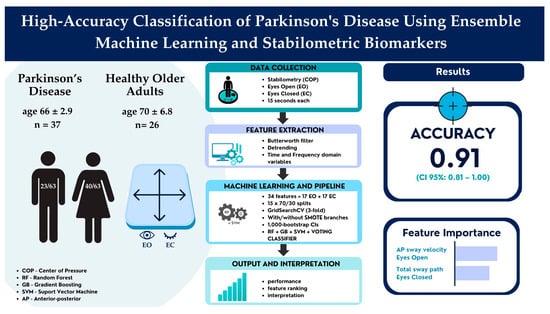
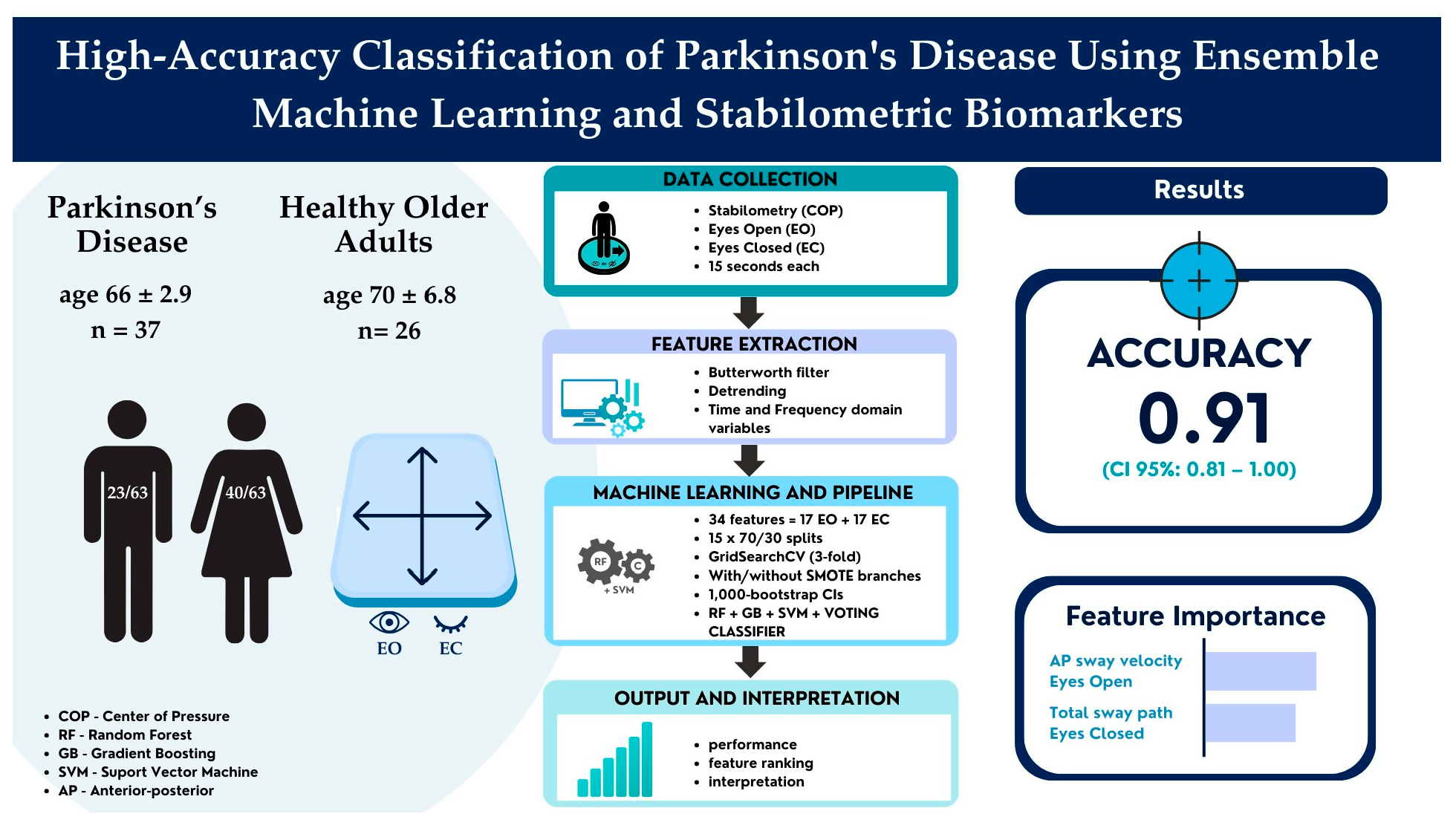
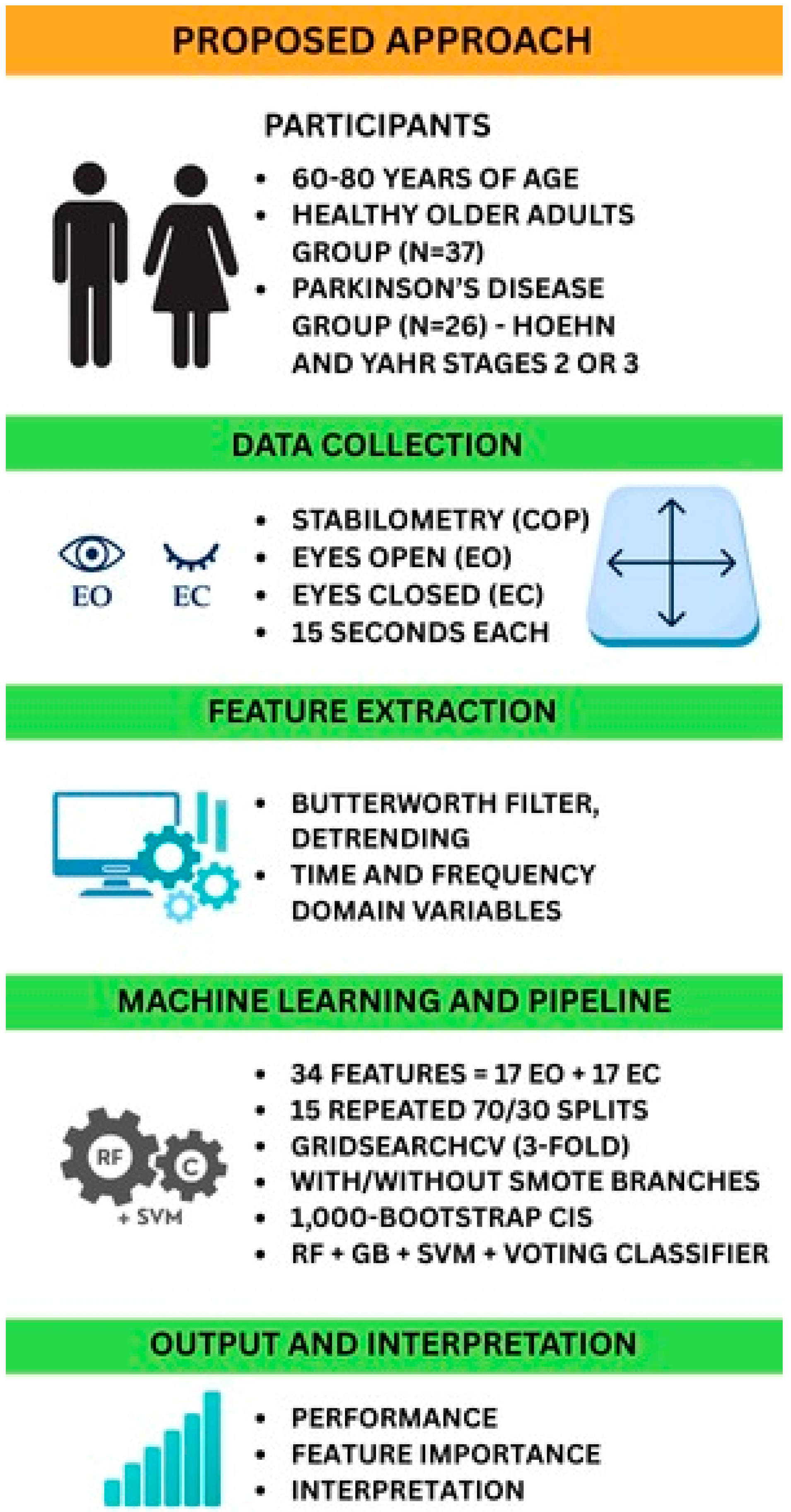
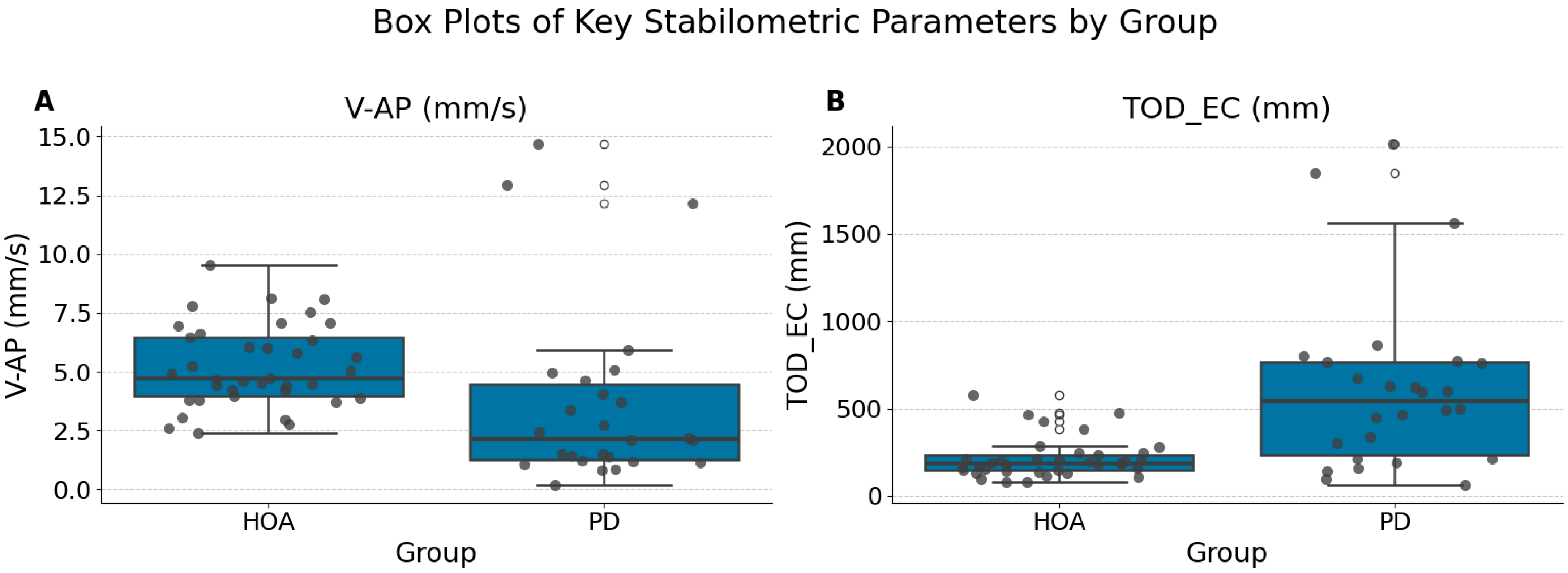
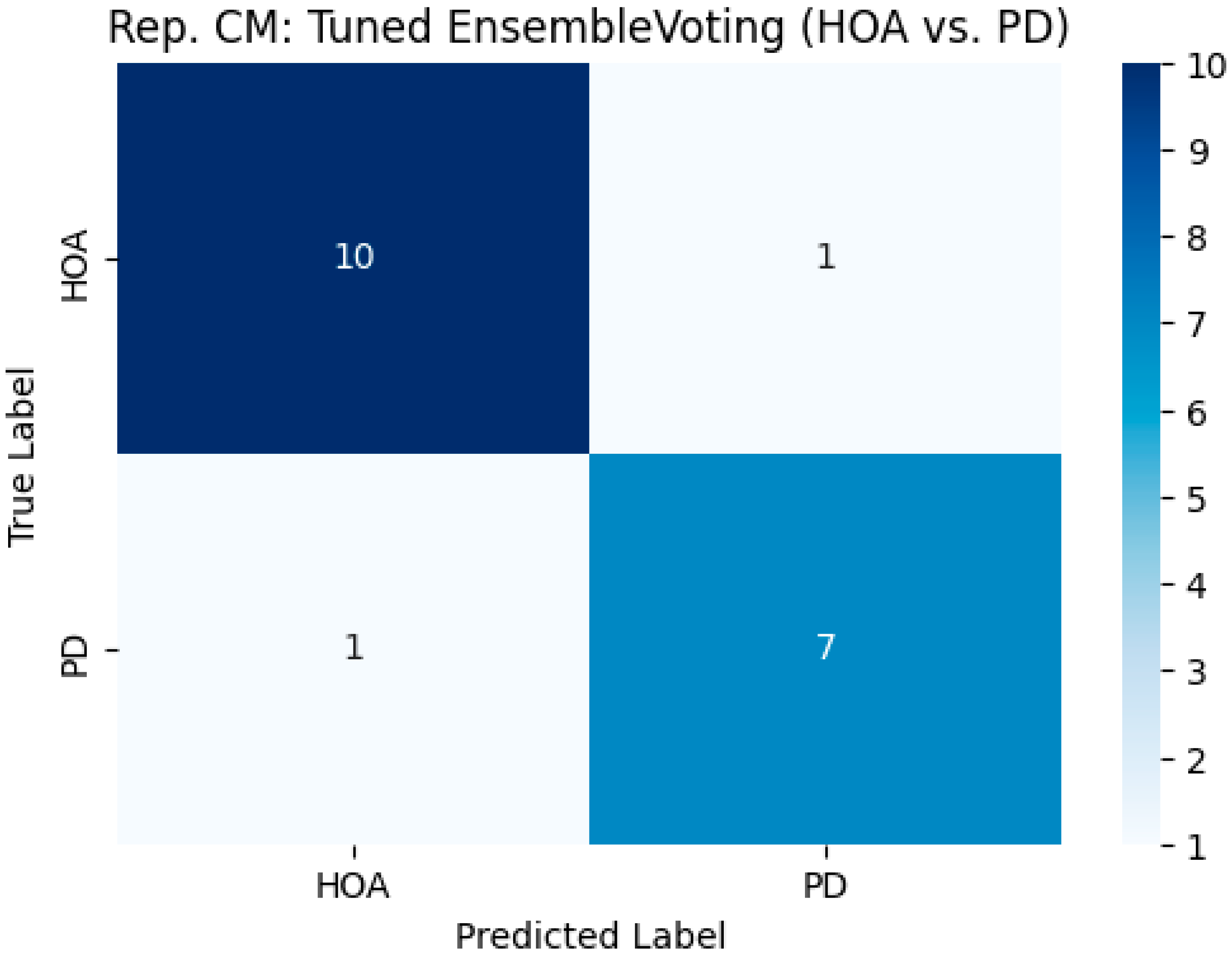
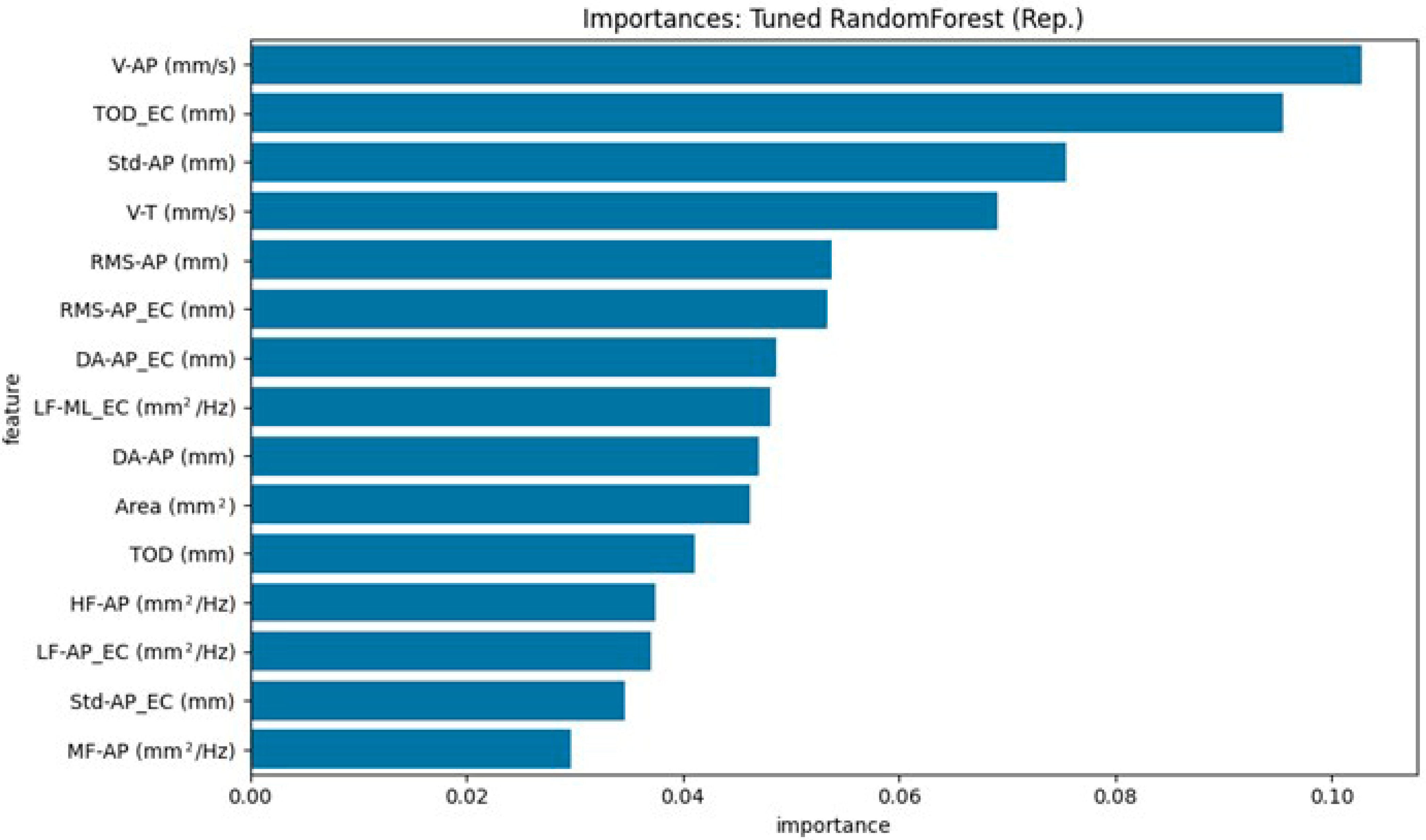
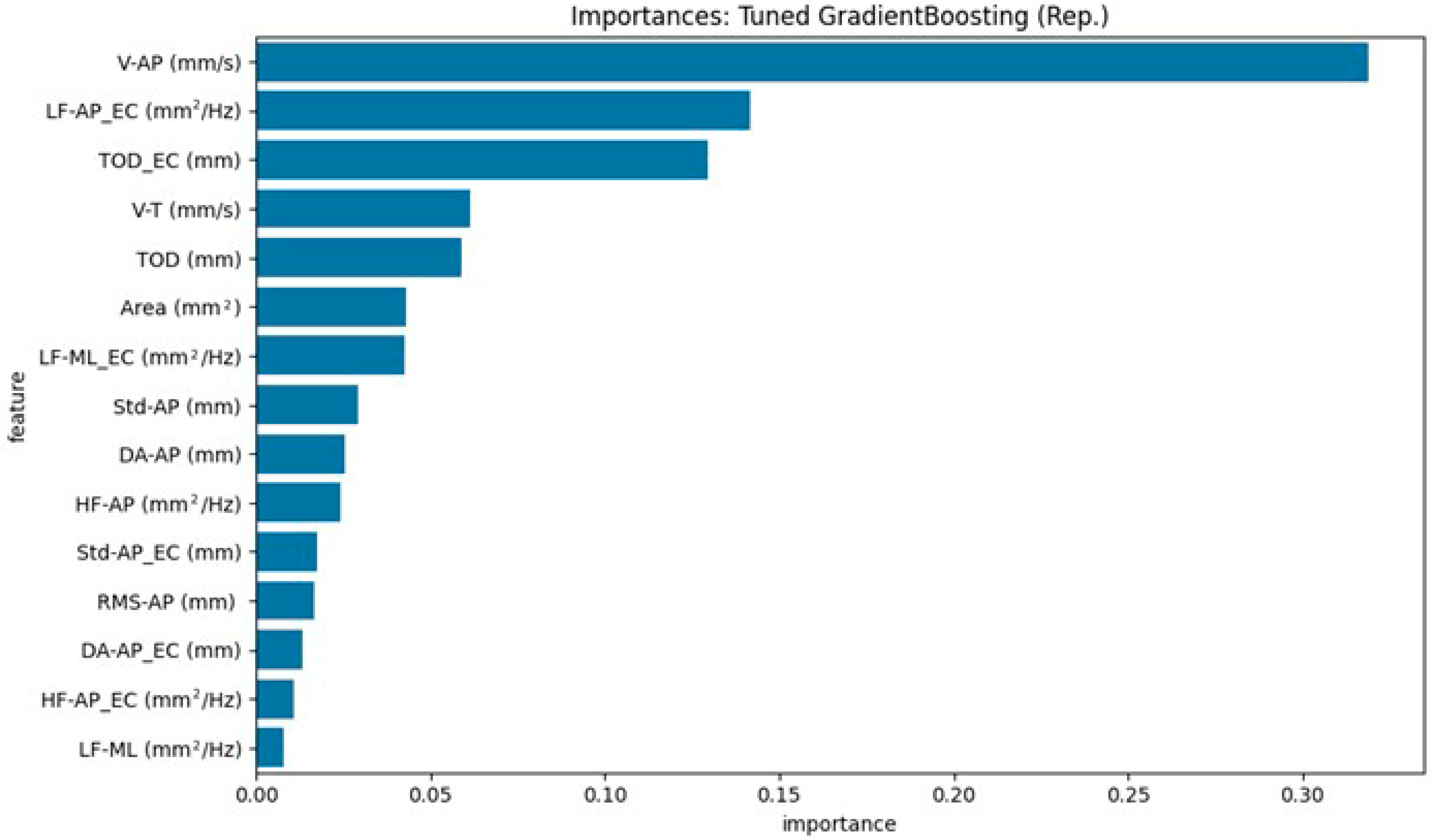
Background: Accurate differentiation of Parkinson’s disease (PD) from healthy aging is crucial for timely intervention and effective management. Postural sway abnormalities are prominent motor features of PD. Quantitative stabilometry and machine learning (ML) offer a promising avenue for developing objective markers to support the diagnostic process. This study aimed to develop and validate high-performance ML models to classify individuals with PD and age-matched healthy older adults (HOAs) using a comprehensive set of stabilometric parameters. Methods: Thirty-seven HOAs (mean age 70 ± 6.8 years) and 26 individuals with idiopathic PD (Hoehn and Yahr stages 2–3, on medication; mean age 66 years ± 2.9 years), all aged 60–80 years, participated. Stabilometric data were collected using a force platform during quiet stance under eyes-open (EO) and eyes-closed (EC) conditions, from which 34 parameters reflecting the time- and frequency-domain characteristics of center-of-pressure (COP) sway were extracted. After data preprocessing, including mean imputation for missing values and feature scaling, three ML classifiers (Random Forest, Gradient Boosting, and Support Vector Machine) were hyperparameter-tuned using GridSearchCV with three-fold cross-validation. An ensemble voting classifier (soft voting) was constructed from these tuned models. Model performance was rigorously evaluated using 15 iterations of stratified train–test splits (70% train and 30% test) and an additional bootstrap procedure of 1000 iterations to derive reliable 95% confidence intervals (CIs). Results: Our optimized ensemble voting classifier achieved excellent discriminative power, distinguishing PD from HOAs with a mean accuracy of 0.91 (95% CI: 0.81–1.00) and a mean Area Under the ROC Curve (AUC ROC) of 0.97 (95% CI: 0.92–1.00). Importantly, feature analysis revealed that anteroposterior sway velocity with eyes open (V-AP) and total sway path with eyes closed (TOD_EC, calculated using COP displacement vectors from its mean position) are the most robust and non-invasive biomarkers for differentiating the groups. Conclusions: An ensemble ML approach leveraging stabilometric features provides a highly accurate, non-invasive method to distinguish PD from healthy aging and may augment clinical assessment and monitoring.
Keywords: Parkinson’s disease; postural sway; stabilometry; machine learning; ensemble learning; biomarkers; feature importance; center of pressure; diagnostic models; geriatric biomechanics Parkinson’s disease; postural sway; stabilometry; machine learning; ensemble learning; biomarkers; feature importance; center of pressure; diagnostic models; geriatric biomechanics
Graphical Abstract