1. Introduction
The global automotive industry is undergoing a significant transformation, with electric vehicles (EVs) emerging as a key driver of sustainable mobility, as they are widely recognised as a key technology contributing to sustainable development and reduced greenhouse gas emissions (Günther et al., 2015) [
1]. Governments, corporations, and consumers worldwide are increasingly recognizing the role of EVs in reducing carbon emissions, mitigating climate change, and decreasing reliance on fossil fuels, as the transportation sector is a major contributor to global CO
2 emissions and environmental degradation (Sathiyan et al., 2022) [
2]. Malaysia has introduced policies and incentives under its National Automotive Policy (NAP) and Low Carbon Mobility Blueprint to accelerate EV adoption and position itself as a regional hub for green technology. Despite these initiatives, the uptake of EVs in Malaysia remains relatively slow compared to developed markets, raising questions about consumer readiness and perceptions (Hamzah et al., 2021) [
3].
Worldwide, governments are promoting vehicle electrification not only to reduce greenhouse gas emissions and improve energy security but also to strengthen their competitiveness within the rapidly evolving automotive value chain. In both developed and developing economies, EV policies increasingly serve dual objectives of achieving environmental sustainability while strengthening domestic automotive industries and technological capabilities. Countries such as China, members of the European Union, and the United States have introduced various policy measures, including tax incentives, subsidies, charging infrastructure investments, and industrial strategies to accelerate EV production and adoption. For example, China has implemented vehicle trade-in subsidy programmes to stimulate EV adoption, reflecting how policy measures can support both environmental objectives and the broader development of the EV sector (Zhao et al., 2024) [
4]. These initiatives demonstrate that EV development has become both an environmental strategy for reducing carbon emissions and an economic strategy for stimulating technological innovation, industrial competitiveness, and sustainable growth. Recent evidence also indicates that continuous improvements in battery technology, charging infrastructure, and supportive government incentives are key drivers accelerating global EV adoption and facilitating the transition towards sustainable transportation (Malik et al., 2025) [
5]. Within this global transition, Malaysia seeks to position itself as a regional EV hub through the National Automotive Policy (NAP) and the Low Carbon Mobility Blueprint. Achieving this ambition depends not only on supportive government policies but also on consumers’ willingness to adopt electric vehicles. Understanding Malaysian consumers’ purchase perceptions therefore contributes not only to domestic EV adoption but also to Malaysia’s long-term participation in the evolving low-carbon automotive economy and its competitiveness within the global automotive value chain. As consumer demand ultimately determines the market success of electric vehicles, understanding consumers’ purchase perceptions is essential for translating policy ambitions into actual EV adoption. While government incentives and industrial policies can improve the supply of EVs and related infrastructure, sustained market growth depends on consumers’ acceptance and willingness to purchase EVs. In the Malaysian context, identifying the factors that influence consumers’ purchase intentions can therefore provide valuable insights for policymakers and industry stakeholders to refine existing strategies, enhance policy effectiveness, and support Malaysia’s long-term objective of strengthening its position within the regional and global low-carbon automotive ecosystem.
Understanding consumer perception is crucial, as purchasing decisions are often shaped not only by economic considerations such as cost and incentives but also by environmental awareness, lifestyle preferences, and social influence (Zhang & Dong, 2020) [
6]. In the Malaysian context, factors such as charging infrastructure availability, vehicle price, after-sales support, and cultural attitudes toward new technologies have been widely identified as key determinants influencing consumer acceptance of EVs (Sari, 2020) [
7].
This study seeks to explore the perceptions of Malaysian consumers toward purchasing EVs using a qualitative approach. By capturing insights from consumer experiences, concerns, and expectations, this research aims to provide a deeper understanding of the drivers and barriers influencing EV adoption in Malaysia. Unlike previous Malaysian studies that mainly use quantitative surveys to examine purchase intention, this study adopts a qualitative approach to understand consumers’ perceptions in depth. Furthermore, this study demonstrates how financial considerations, charging infrastructure, social influence, and service reliability interact in shaping EV purchase decisions, providing richer contextual insights into Malaysian consumers’ concerns regarding long-term ownership, residential charging accessibility, and after-sales support.
1.1. Problem Statement
The global automotive industry is transitioning toward sustainable mobility, with electric vehicles (EVs) positioned as a solution to reduce carbon emissions and dependency on fossil fuels. In Malaysia, the government has introduced policies, incentives, and infrastructure initiatives to encourage EV adoption. However, despite these efforts, the uptake of EVs among Malaysian consumers remains relatively low compared to more developed markets (Adnan et al., 2017) [
8]. This raises questions regarding consumer perceptions, awareness, and preferences when considering the purchase of EVs.
Consumer perception plays a critical role in shaping purchasing decisions, as attitudes toward EV adoption are influenced by multiple factors, including price affordability, charging infrastructure availability, environmental consciousness, government incentives, and perceived convenience (Purwanto & Irawan, 2024) [
9]. At the same time, consumers evaluate both the benefits and challenges of EV ownership, including reduced fuel costs and environmental benefits on the positive side, as well as limited charging infrastructure, higher initial costs, and concerns about battery life on the negative side.
Given Malaysia’s ambition to promote green mobility, it is essential to explore consumer attitudes and perceptions in order to understand the barriers and motivators driving EV adoption. Previous studies have extensively examined factors influencing consumers’ intention to adopt electric vehicles, including demographic, situational, and psychological factors (Li et al., 2017) [
10]. However, existing studies largely focus on consumer adoption intention, while relatively limited research provides in-depth qualitative insights into Malaysian consumers’ personal perceptions, concerns, experiences, and expectations toward purchasing EVs. In addition, many studies primarily examine influencing factors independently, with less emphasis on how financial, infrastructural, social, and technological considerations collectively shape consumer perception toward EV adoption. Therefore, this study seeks to address this gap by exploring Malaysian consumers’ perceptions toward purchasing EVs through a qualitative approach.
1.2. Research Questions
This study focuses on understanding Malaysian consumers’ perceptions toward purchasing electric vehicles (EVs), particularly in relation to the factors that influence their purchase decisions and acceptance of EV technology. Accordingly, this study seeks to examine the key factors influencing Malaysian consumers’ preferences toward purchasing electric vehicles.
1.3. Research Objectives
The purpose of this study is to investigate Malaysian consumers’ perceptions toward electric vehicle (EV) adoption by identifying the factors that influence consumer preferences and purchase decisions. The study focuses on understanding how various financial, technological, infrastructural, and social factors shape consumers’ perceptions toward purchasing EVs in Malaysia. Accordingly, this study aims to identify and explore the key factors influencing Malaysian consumers’ preferences toward purchasing electric vehicles.
2. Literature Review
The increasing concern toward environmental sustainability and carbon emission reduction has accelerated global interest in electric vehicles (EVs) as an alternative mode of transportation (Hossain et al., 2022) [
11]. EVs are widely recognised as environmentally friendly technology due to their lower greenhouse gas emissions and reduced dependency on fossil fuels (Hossain et al., 2022) [
11]. As governments continue promoting green mobility initiatives, consumer acceptance has become a critical factor determining the successful adoption of EVs. Previous studies have shown that consumers evaluate EV adoption based on multiple barriers and considerations, including technological, financial, infrastructural, and environmental factors that influence their acceptance and intention to use electric vehicles (Pamidimukkala et al., 2023) [
12]. Similarly, Boubker et al. (2024) [
13] found that environmental concern, social influence, perceived ease of use, and perceived usefulness significantly shape consumers’ attitudes and intentions toward adopting electric cars, highlighting that EV adoption is influenced by multiple interrelated behavioural factors rather than a single determinant.
In Malaysia, EV adoption remains at a relatively early stage compared to more developed countries. Although the Malaysian government has introduced various initiatives, including tax exemptions, incentives, and infrastructure development programmes, consumers continue to demonstrate hesitation toward EV adoption due to concerns regarding affordability, convenience, and technological reliability. Therefore, understanding the factors influencing consumer perception is essential in explaining consumer behaviour toward EV purchase decisions.
2.1. Theory of Planned Behaviour (TPB)
The Theory of Planned Behaviour, developed by Icek Ajzen, is widely used to explain consumer behavioural intention toward new technologies and environmentally sustainable products. The TPB has also been widely applied in behavioural intention research beyond the transportation context. For example, Lotfi et al. (2023) [
14] employed TPB-related constructs such as attitude and subjective norms to explain entrepreneurial intentions among university students, demonstrating the theory’s robustness in predicting behavioural intention across different domains. The theory proposes that behavioural intention is influenced by three main components, namely attitude, subjective norms, and perceived behavioural control (Ajzen, 1991) [
15]. The applicability of TPB in explaining vehicle purchase behaviour has also been demonstrated in the Malaysian context. Afroz et al. (2015) [
16] found that attitudes toward environmentally friendly vehicles, subjective norms, and perceived behavioural control all have significant positive effects on consumers’ purchase intention.
Attitude refers to an individual’s positive or negative evaluation toward a particular behaviour. In the context of electric vehicle (EV) adoption, consumers form attitudes based on perceptions regarding affordability, environmental benefits, technological reliability, and long-term ownership value. Positive attitudes toward EVs may increase consumers’ willingness to adopt EV technology, particularly when EVs are perceived as environmentally friendly and economically beneficial alternatives to conventional vehicles ((Purwanto & Irawan, 2024)) [
9].
Subjective norms refer to the social pressure or influence individuals receive from family members, friends, colleagues, and society when making decisions. This perspective is supported by Boubker et al. (2024) [
13], who integrated the Theory of Planned Behaviour and the Technology Acceptance Model and found that social influence, environmental concern, perceived usefulness, and perceived ease of use positively shaped consumers’ attitudes toward electric cars, which subsequently enhanced their adoption intention. Consumers are often influenced by peer experiences, recommendations, and social media exposure when evaluating EV adoption. Positive social influence may strengthen consumers’ confidence toward EV ownership, while negative opinions and misinformation may discourage adoption.
Perceived behavioural control refers to consumers’ perceptions regarding the ease or difficulty of performing a behaviour. In EV adoption, factors such as charging infrastructure availability, accessibility of service centres, battery reliability, and maintenance support may influence consumers’ confidence and perceived control toward EV ownership. Limited charging infrastructure and concerns regarding battery performance may reduce consumers’ willingness to adopt EVs (Li et al., 2017) [
10]
2.2. Perception of Consumers Towards Purchasing EVs in Malaysia
2.2.1. Financial Considerations
Financial considerations are widely recognised as one of the most influential factors affecting consumer intention to purchase EVs. Consumers often evaluate EVs by comparing their total cost of ownership with conventional internal combustion engine (ICE) vehicles, particularly in terms of purchase price, operating cost, and long-term financial benefits (Weldon et al., 2018) [
17]. In the Malaysian context, Afroz et al. (2015) [
18] found that consumers’ purchase intention is significantly influenced by individual consequences, particularly cost and convenience. Similarly, Mohd Noor et al. (2025) [
19] reported that consumers evaluate electric vehicles based on their functional value, particularly in terms of price, quality, and perceived economic benefits, all of which significantly influence purchase decisions. Despite the potential long-term savings from lower fuel consumption and maintenance costs, the high upfront purchase price of EVs remains a significant barrier influencing consumer adoption, especially in markets with lower household income levels.
In the Malaysian context, affordability remains a major concern due to the relatively higher price of EVs compared to conventional petrol vehicles. Afroz et al. (2015) [
18] found that Malaysian consumers evaluate electric vehicles based on individual consequences, particularly cost and convenience, which significantly influence their purchase intention. Previous studies further indicate that consumers are not only concerned about the initial purchase cost but also about battery replacement expenses, depreciation, and uncertain resale value, which collectively increase perceived financial risk toward EV ownership (Ali et al., 2022) [
20]. Previous studies indicate that consumers are not only concerned about the initial purchase cost but also about battery replacement expenses, depreciation, and uncertain resale value, which collectively increase perceived financial risk toward EV ownership (Ali et al., 2022) [
20]. This suggests that consumers evaluate EVs not solely based on potential economic savings but also on long-term financial security and ownership uncertainty.
Government incentives and subsidies are frequently discussed as important mechanisms to improve EV affordability and encourage consumer adoption. Similarly, Sang and Bekhet (2015) [
21] argued that government interventions, including subsidies, tax incentives, and supportive policies, play an important role in encouraging EV adoption by reducing financial barriers and increasing consumers’ purchase intentions. More recently, Mohd Noor et al. (2025) [
19] also found that government incentives, such as subsidies, tax exemptions, and financial rebates, positively influence consumers’ intention to purchase electric vehicles by reducing perceived financial barriers. Financial incentive policies such as tax exemptions, subsidies, and financial assistance have been found to positively influence consumers’ attitudes and purchase intentions toward EVs by reducing perceived financial barriers (Wang et al., 2018) [
22]. However, previous studies also suggest that financial incentives alone may not be sufficient to fully eliminate consumer hesitation, particularly when concerns regarding long-term ownership costs and technological reliability remain unresolved. Therefore, financial decision-making toward EV adoption involves not only affordability considerations but also consumers’ perceptions of risk, value, and long-term financial confidence.
2.2.2. Charging Infrastructure and Convenience
Infrastructure readiness, including the availability, accessibility, and reliability of charging networks, has been widely recognised as an important determinant of EV purchase intention. Insufficient charging facilities and range anxiety continue to discourage EV adoption, whereas improvements in charging infrastructure can increase consumers’ confidence in adopting EVs. (Mohd Noor et al., 2025) [
19]. Sang and Bekhet (2015) [
21] also argued that infrastructure readiness directly influences Malaysians’ intentions to use electric vehicles. They noted that inadequate charging facilities, range anxiety, and the absence of a well-developed charging network reduce consumers’ confidence in EV adoption, while expanding charging infrastructure is essential for increasing market penetration. The availability, accessibility, and convenience of charging facilities significantly shape consumer confidence, perceived usability, and willingness to adopt EV technology. Adamashvili and Thrassou (2024) [
23] emphasised that the development of charging networks plays a crucial role in facilitating EV adoption, as inadequate infrastructure remains a major barrier to widespread market acceptance. Consumers frequently evaluate EV practicality based on charging station availability, charging duration, and accessibility during long-distance travel. This suggests that charging infrastructure influences not only the functional usability of EVs but also consumers’ overall confidence and sense of convenience regarding EV ownership.
One of the most frequently discussed concerns associated with charging infrastructure is range anxiety. Guo et al. (2018) [
24] defined range anxiety as consumers’ fear that the driving range of EVs may be insufficient to reach their intended destination. Existing studies indicate that limited charging opportunities and insufficient infrastructure coverage contribute significantly to consumers’ hesitation toward EV adoption. When charging stations are not easily accessible, consumers may experience uncertainty regarding travel reliability and become more cautious in planning their journeys. As a result, consumers tend to prefer routes with available charging facilities, reflecting how infrastructure limitations may psychologically affect perceptions of flexibility, mobility, and travel security. This demonstrates that range anxiety is not solely a technical issue but also a psychological concern closely linked to consumer confidence and perceived convenience.
Apart from public charging facilities, home charging accessibility also plays an important role in influencing consumer perception toward EV adoption. Hardman et al. (2018) [
25] highlighted that access to home charging is among the most influential factors encouraging consumers to purchase electric vehicles (EVs). Home charging provides greater convenience, flexibility, and control over daily vehicle usage, thereby improving the practicality of EV ownership. However, consumers living in apartments, condominiums, or residences without dedicated parking spaces may encounter difficulties installing private charging systems. This limitation may reduce the suitability of EVs for certain residential environments and discourage potential buyers from adopting EV technology. Existing studies often focus primarily on public charging infrastructure, while comparatively less attention is given to residential charging accessibility and its impact on consumer lifestyle compatibility.
2.2.3. Social Influence
Social influence plays a significant role in shaping consumer attitudes and behavioural intentions toward electric vehicle (EV) adoption. As EV technology is still relatively new in many markets, consumers often rely on the opinions, experiences, and recommendations of others when evaluating the practicality and suitability of EV ownership. Axsen and Kurani (2009) [
26] found that interpersonal interactions within consumers’ social networks significantly influence individuals’ perceptions and assessments of EV technology. Friends, family members, coworkers, and other social contacts may shape consumers’ understanding of the functional, symbolic, and societal benefits associated with EV adoption. This suggests that consumers do not form perceptions toward EVs independently; rather their attitudes are socially constructed through interactions, shared experiences, and collective discussions.
Positive word-of-mouth communication and shared user experiences are particularly important in strengthening consumer confidence toward EV ownership. Consumers are more likely to develop favourable perceptions when they observe positive experiences from individuals they trust, such as friends, colleagues, family members, or members of online EV communities. Recommendations and testimonials from existing EV users may help reduce uncertainty regarding vehicle performance, battery reliability, charging convenience, and overall usability. As a result, positive social influence can increase consumer trust and encourage greater acceptance of EV technology. Conversely, negative experiences or unfavourable opinions shared within social networks may discourage adoption by increasing perceived risk and uncertainty. Concerns related to battery lifespan, charging inconvenience, or maintenance difficulties may spread through interpersonal communication and negatively affect consumer perceptions. Therefore, word-of-mouth communication functions as both a motivating and discouraging factor influencing consumers’ behavioural intention toward EV adoption (Yulia et al., 2026) [
27].
In addition to interpersonal relationships, social media platforms have become influential communication channels shaping consumer perceptions toward EVs. Platforms such as YouTube, TikTok, Instagram, Facebook, and online review forums expose consumers to EV-related content, reviews, comparisons, and user experiences. According to Almansour (2022) [
28], digital platforms enable consumers to exchange opinions, share experiences, and access information regarding EV performance, charging infrastructure, running costs, and environmental benefits. The widespread accessibility of online information may help consumers reduce uncertainty and develop greater confidence toward EV ownership. Furthermore, social media often portrays EVs as modern, innovative, and environmentally responsible products, which may positively influence consumers’ perceptions and lifestyle aspirations.
However, the influence of social media is not always positive. The rapid spread of misinformation, negative reviews, and exaggerated concerns through online platforms may increase consumers’ perceived risk and hesitation toward EV adoption. Recent evidence from Malaysia suggests that social media may not directly predict consumers’ purchase intention towards electric vehicles once other factors are considered. Instead, social media primarily serves as an information-sharing platform that raises awareness and disseminates knowledge about EV technology, while purchase decisions remain more strongly influenced by perceived usefulness, subjective norms, and supportive government policies (Wolor et al., 2024) [
29]. Consumers may become more cautious when exposed to discussions regarding charging inconvenience, battery degradation, safety concerns, or maintenance difficulties. This demonstrates that social influence extends beyond simple information sharing and also affects consumers psychologically by shaping trust, confidence, and perceived social acceptance. Consequently, social influence acts as both an informational and behavioural factor that significantly affects consumer perception and purchase intention toward EV adoption.
2.2.4. Service Reliability
Service reliability is another important factor influencing consumer acceptance and confidence toward electric vehicles (EVs). As EV technology is still relatively new compared to conventional internal combustion engine (ICE) vehicles, consumers often evaluate EV ownership based on the reliability of maintenance services, after-sales support, repair accessibility, and technical assistance. Existing studies indicate that maintenance accessibility, service quality, and the availability of skilled technicians remain critical factors affecting consumer trust and the expansion of the EV market. Consumers may experience uncertainty regarding battery durability, repair procedures, and the availability of qualified service personnel, particularly due to the specialised technological systems involved in EVs. In addition, concerns related to high-voltage systems, software diagnostics, and limited maintenance infrastructure may further increase perceived technological risk and reduce consumer confidence toward EV ownership. Consequently, reliable after-sales support and effective maintenance services are essential in encouraging consumer acceptance and strengthening long-term confidence toward EV technology (Panciu et al., 2026) [
30].
Battery-related concerns are particularly significant because battery systems represent one of the most expensive and technologically sensitive components of EV ownership. Consumers frequently express concerns regarding battery lifespan, replacement costs, charging performance, and driving range limitations. Unlike conventional petrol vehicles, EV batteries may involve substantial replacement expenses, which contribute to financial uncertainty and perceived ownership risk. In many cases, consumers may hesitate to adopt EVs due to concerns about long-term battery performance and uncertainty regarding future maintenance costs. This suggests that battery reliability influences not only the technical evaluation of EVs but also consumers’ perceptions of financial security and long-term ownership confidence.
Furthermore, the availability of service centres and maintenance support plays a critical role in enhancing consumer trust and perceived convenience toward EV ownership. Consumers are generally more confident in adopting EVs when manufacturers provide accessible technical support, maintenance facilities, warranty protection, and sufficient charging infrastructure. Tu and Yang (2019) [
31] highlighted that consumers’ perceived behavioural control, including their knowledge, confidence, and access to supporting resources, significantly influences their purchase intention toward EVs. This indicates that consumers are more likely to adopt EV technology when they believe sufficient support systems and facilitating conditions are available to assist them throughout the ownership experience.
In addition to technical support, external influences such as expert opinions, professional reviews, and mass media information also contribute to shaping consumer confidence toward EV technology. Positive information regarding vehicle reliability, battery performance, and maintenance support may reduce uncertainty and strengthen trust in EV ownership. Conversely, negative publicity or concerns regarding battery failures, repair difficulties, or inadequate service infrastructure may increase perceived risk and discourage adoption. Therefore, service reliability extends beyond operational maintenance and functions as a broader form of technological assurance that significantly shapes consumer perception and behavioural intention toward EV adoption.
3. Method
3.1. Research Design
This study adopts a qualitative research design to explore Malaysian consumers’ perceptions toward purchasing electric vehicles (EVs). A qualitative approach is appropriate as it allows for an in-depth understanding of consumers’ attitudes, experiences, and subjective interpretations regarding EV adoption. Unlike quantitative methods that focus on numerical measurement, qualitative research enables the exploration of underlying motivations, concerns, and meanings that influence consumer decision-making. The study employs a semi-structured interview approach, allowing flexibility for participants to express their views while ensuring consistency across key themes relevant to the research objectives.
3.2. Population and Sample
This study employs a purposive sampling method to select participants who are able to provide relevant and meaningful insights regarding perceptions toward EV adoption. Purposive sampling is a non-probability sampling technique in which participants are intentionally selected based on the researcher’s judgment and their ability to contribute information that is relevant to the research objectives (Rai & Thapa, 2015) [
32]. Unlike probability sampling, purposive sampling focuses on individuals who possess specific characteristics, experiences, or knowledge that can best help answer the research questions (Rai & Thapa, 2015) [
32].
Participants are selected based on criteria such as awareness of electric vehicles, driving experience, and intention or interest in vehicle ownership. Since this study seeks to explore consumer perceptions in depth rather than produce statistical generalisations, purposive sampling is considered appropriate for obtaining rich and detailed qualitative data. According to Rai and Thapa (2015) [
32], purposive sampling is particularly suitable when researchers aim to focus on specific characteristics of a population that are directly relevant to the phenomenon being studied.
Five participants were interviewed in this study. Although the sample size of five participants is relatively small, it is not uncommon in exploratory qualitative research, where the objective is to obtain rich, context-specific insights rather than statistical generalisation. Participants were selected using purposive sampling because they possessed relevant knowledge and experience related to electric vehicles. Data collection continued until thematic saturation was reached, where no substantial new themes emerged during the later stages of the interviews. This indicates that the sample was adequate to provide information-rich data and address the objectives of the study, consistent with recommendations for qualitative research (Braun & Clarke, 2021) [
33]. Furthermore, this exploratory approach aligns with recent EV research that highlights the importance of context-specific evidence for informing future research priorities and policy development in the rapidly evolving electric vehicle sector (Dua et al., 2024) [
34].
Participant Recruitment
Participants were recruited through the researcher’s personal and professional networks using purposive sampling. Individuals were first approached through WhatsApp and face-to-face communication. Interested individuals were screened according to predefined inclusion criteria, namely: (1) Malaysian adults aged above 18 years; (2) possessing awareness of electric vehicles; (3) holding a driving licence or intending to purchase a vehicle in the future; and (4) willing to participate voluntarily. Existing EV ownership was not required because the study aimed to understand purchase perceptions rather than ownership experiences. Individuals were excluded if they were below 18 years of age, had no awareness of electric vehicles, were unwilling to provide informed consent, or were unable to complete the interview. One potential participant declined participation because of scheduling constraints. Interviews were conducted either face-to-face or via Google Meet depending on participant availability. The demographic characteristics of the participants are presented in
Table 1. This recruitment strategy ensured that all participants possessed sufficient knowledge or awareness of electric vehicles to provide relevant insights into consumers’ purchase perceptions, thereby ensuring that the selected participants were suitable for addressing the research question and aligned with the study’s research objectives.
3.3. Data Collection
Primary data for this study are collected through semi-structured interviews with selected participants. Semi-structured interviews are widely used in qualitative research because they enable researchers to obtain in-depth information while maintaining focus on the objectives of the study (Ruslin et al., 2021) [
35]. This method provides flexibility for researchers to explore participants’ experiences, opinions, and perceptions while allowing new questions to emerge based on participants’ responses. At the same time, the interview remains guided by predetermined themes relevant to the research objectives.
The interview sessions are conducted individually, either face-to-face or through online communication platforms, depending on participants’ availability and convenience. An interview guide consisting of open-ended questions is prepared beforehand to ensure consistency across interviews while allowing participants to elaborate freely on their views regarding electric vehicle (EV) adoption. According to Ruslin et al. (2021) [
35], semi-structured interviews typically employ a framework of themes and questions that helps researchers maintain focus while providing sufficient flexibility to probe deeper into participants’ responses.
The interview questions focus on participants’ awareness of EVs, factors influencing their purchase decisions, perceived benefits and challenges of EV ownership, and overall attitudes towards EV adoption in Malaysia. With participants’ consent, interviews are audio-recorded to ensure accuracy and facilitate subsequent transcription and analysis. The collected data are then transcribed and prepared for thematic analysis.
3.4. Instruments and Measures
The primary research instrument used in this study is a semi-structured interview guide developed based on the research objectives and existing literature on EV adoption. Semi-structured interviews were selected because they provide a balance between consistency and flexibility, enabling researchers to address core themes while allowing participants to express their views and experiences in greater depth. The interview guide consists of open-ended questions designed to encourage participants to share detailed opinions and experiences regarding EV adoption (Chand, 2025) [
36]. Semi-structured interviews are particularly useful for exploring participants’ perceptions and experiences while maintaining flexibility to probe emerging issues during the interview process. Probing questions are included to clarify responses, seek further explanation, and explore emerging themes more deeply. An interview guide serves as a valuable tool for maintaining focus on key themes while allowing flexibility in participants’ responses, thereby ensuring consistency across multiple interviews.
To ensure content validity, the interview questions are reviewed and refined prior to data collection. Where appropriate, pilot testing may be conducted to assess the clarity and relevance of the questions and to eliminate ambiguity. The study does not rely on standardized quantitative scales; instead, meaning and patterns are derived from participants’ narratives through systematic qualitative analysis. Interview data are transcribed and analysed to identify recurring themes and insights related to the factors influencing EV adoption.
3.5. Data Analysis
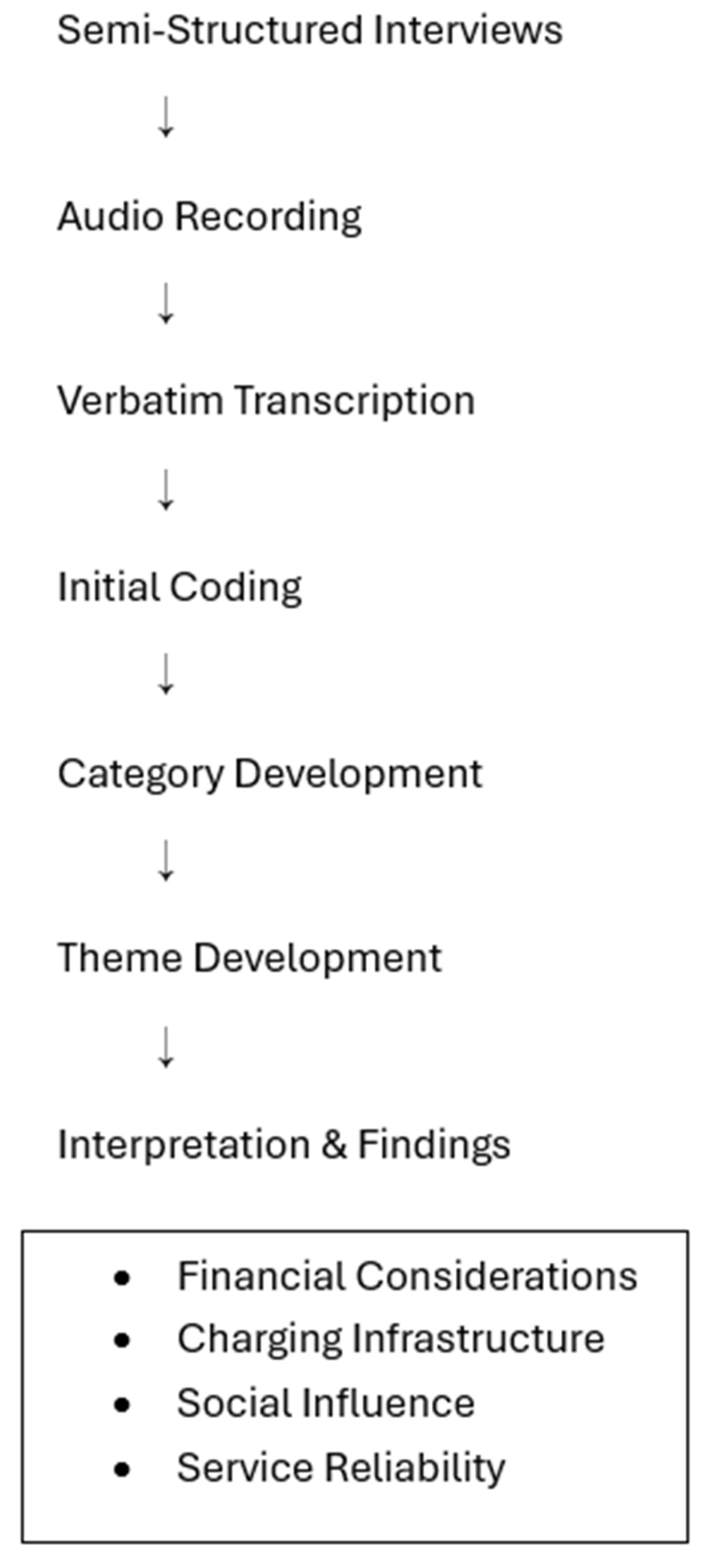
Data analysis in this study was conducted using thematic analysis, which involves identifying, analysing, and interpreting recurring patterns and themes within the qualitative data (Braun & Clarke, 2006) [
37]. The interview recordings were first transcribed verbatim, and the transcripts were read multiple times to achieve familiarisation with the data. Initial codes were then generated to capture significant statements, opinions, and ideas related to consumers’ perceptions toward purchasing electric vehicles (EVs). The overall thematic analysis process is illustrated in
Figure 1.
The coded data were subsequently grouped into broader categories and themes based on similarities and recurring patterns identified across participants’ responses. The themes were then organised according to the key factors influencing consumer perceptions toward EV adoption, namely financial considerations, charging infrastructure, social influence, and service reliability.
The analysis was conducted manually through careful review and comparison of participants’ responses to ensure meaningful interpretation and consistency. The findings were further linked to the research objectives, existing literature, and the Theory of Planned Behaviour (TPB) to enhance analytical rigour and strengthen the interpretation of the data (Ajzen, 1991) [
15].
3.6. Ethical Considerations
This study adheres to ethical principles throughout the research process to protect the rights, privacy, and well-being of all participants. Ethics in qualitative research emphasise researchers’ responsibilities towards participants and require adherence to principles of good research practice (Mirza et al., 2023) [
38].
Prior to data collection, participants are informed about the purpose and objectives of the study and are invited to participate voluntarily. Informed consent is obtained from each participant before the interview is conducted. The consent process includes explanations regarding the nature of the research, the interview procedures, confidentiality measures, and participants’ rights throughout the study. Participants are also informed that they may withdraw from the research at any stage without any negative consequences.
To ensure confidentiality and anonymity, participants’ identities are not disclosed in the research report. Any personal information collected during the study is kept strictly confidential and used solely for academic purposes. Interview recordings, transcripts, and related documents are securely stored and accessible only to the researcher. Researchers should make every effort to protect participants’ anonymity and privacy throughout the research process.
Furthermore, all participants are treated with respect, fairness, and dignity regardless of their background or personal characteristics. During the interview sessions, participants are encouraged to express their views freely without pressure or influence from the researcher. The researcher maintains a neutral position and avoids imposing personal opinions that may affect participants’ responses.
By implementing these ethical measures, the study seeks to maintain the credibility, trustworthiness, and integrity of the research process while safeguarding the interests of all participants involved.
4. Findings
The thematic analysis of interviews conducted with five participants revealed four key themes influencing consumer preferences toward purchasing electric vehicles (EVs) in Malaysia: financial considerations, charging infrastructure, social influence, and service reliability, as presented in
Table 2.
4.1. Financial Considerations
Financial considerations emerged as the most dominant factor influencing participants’ intention to purchase electric vehicles (EVs). Most respondents perceived EVs as significantly more expensive compared to conventional petrol vehicles, leading to major concerns regarding affordability and financial commitment. Participants frequently compared EV prices with traditional internal combustion engine (ICE) vehicles and evaluated whether the additional cost justified the perceived benefits of EV ownership. However, not all participants viewed the higher purchase price negatively. One respondent acknowledged that although EVs are more expensive initially, the potential savings from lower fuel and maintenance costs could partially offset the higher upfront investment over time. This suggests that while affordability remains a concern, some consumers may be willing to accept higher purchase costs if long-term economic benefits are perceived as sufficient. This suggests that consumers assess EV adoption not only based on environmental benefits or technological advancement but also on their personal financial capability and long-term economic security.
For instance, one respondent explained:
“EVs are still more expensive compared to normal petrol cars… the price difference is quite big, almost double.”
Similarly, another participant stated:
“The main factor would be the price because EVs are more expensive than petrol cars.”
The participants’ responses consistently indicated that the high purchase price of EVs remains a major consideration when evaluating vehicle ownership. Most participants compared EVs with conventional petrol vehicles and questioned whether the additional purchase cost justified the perceived benefits. One participant commented:
“If the price difference is too big, I would rather choose a petrol car because it feels more worth it.”
Besides the initial purchase price, participants also considered long-term ownership costs, including fuel savings, maintenance expenses, battery replacement costs, and resale value. Although several participants acknowledged that EVs could reduce fuel and maintenance expenses over time, uncertainty regarding battery replacement costs and future resale value continued to influence their purchase decisions.
Government incentives such as tax exemptions and purchase subsidies were viewed positively by participants because they could improve EV affordability. One participant stated:
“If the government gives subsidy, tax exemption, or other benefits, then I think more people will consider buying EV because the price becomes more affordable.”
Overall, all five participants identified affordability and long-term ownership costs as important considerations when evaluating the purchase of an electric vehicle.
4.2. Charging Infrastructure
Charging infrastructure emerged as another critical factor influencing consumers’ preferences toward purchasing electric vehicles (EVs), particularly in relation to convenience, accessibility, and daily practicality. Participants consistently associated the availability of charging facilities with their confidence and willingness to adopt EV technology. Limited charging infrastructure, especially outside urban areas and residential locations, created concerns regarding travel flexibility and convenience, causing some participants to perceive EV ownership as less practical compared to conventional petrol vehicles. The findings highlight that charging infrastructure plays an important role in shaping consumers’ confidence toward EV ownership. Participants often linked the availability of charging facilities with convenience, travel flexibility, and overall practicality.
One respondent highlighted:
“If there are not enough charging stations, it would be inconvenient, especially for long-distance travel.”
Similarly, another participant explained:
“Not every place has charging stations… if I need to always go to shopping mall to charge, then it may be inconvenient.”
Participants consistently highlighted public charging availability as an important factor affecting EV practicality. Limited charging stations, particularly outside urban areas, created concerns regarding long-distance travel and route planning. Several participants also expressed concerns that charging stations might be occupied during busy periods, requiring additional waiting time before charging.
Charging duration was another frequently discussed issue. Compared with the short refuelling time of conventional petrol vehicles, participants perceived EV charging as more time-consuming and less convenient for daily use. One participant explained:
“Petrol car refuel only takes about 5 minutes, but EV charging can take 30 minutes to a few hours.”
Home charging accessibility also influenced participants’ perceptions. Those living in apartments or condominiums believed that installing private charging facilities could be difficult because of shared parking arrangements. One participant noted:
“Not everyone can install a charger at home, especially those living in apartments. So it depends on living conditions as well.”
4.3. Social Influence
Social influence emerged as a significant factor shaping consumers’ perceptions, confidence, and behavioural intentions toward electric vehicle (EV) adoption. Participants frequently relied on the opinions, experiences, and recommendations of people around them when evaluating EV ownership, particularly because purchasing a vehicle is considered a major financial commitment. Friends, family members, colleagues, and other social contacts were perceived as important sources of reassurance and practical information, influencing how participants assessed the reliability, convenience, and suitability of EVs. This suggests that consumers do not form perceptions toward EVs independently; rather, their attitudes are strongly influenced by social interactions and shared experiences within their surrounding environment.
For example, one participant stated:
“If people around me have good experiences using EVs, I would feel more confident about buying one.”
Similarly, another respondent explained:
“If my friends are using Tesla or BYD and they tell me the car is good… I may be more interested to buy.”
Participants generally regarded recommendations from family members, friends, and colleagues as more trustworthy than commercial advertisements when considering EV purchases. Positive ownership experiences shared by people they knew increased their interest and confidence, whereas negative experiences created hesitation.
Social media platforms, including YouTube, TikTok, Instagram, and online review channels, were also identified as important information sources. Participants frequently referred to online reviews and user experiences when learning about EV performance, charging convenience, and ownership costs. One participant commented:
“I also see many EV review videos on YouTube and TikTok… it influences my perception.”
Overall, four of the five participants indicated that recommendations from trusted individuals and information obtained through social media influenced their perceptions of EVs. Positive experiences generally encouraged interest, whereas negative comments regarding charging, battery performance, and maintenance reduced confidence toward EV adoption.
4.4. Service Reliability
Service reliability emerged as an important factor influencing consumer trust, confidence, and acceptance toward electric vehicle (EV) adoption. Participants frequently associated EV ownership with concerns regarding battery durability, vehicle reliability, maintenance accessibility, and the availability of after-sales support. As EV technology is still perceived as relatively new compared to conventional petrol vehicles, participants appeared to experience greater uncertainty regarding long-term reliability and maintenance requirements. This suggests that consumers evaluate EV adoption not only based on vehicle performance but also on whether sufficient technical support and service infrastructure are available to ensure a secure and reliable ownership experience.
Battery-related concerns were consistently highlighted as one of the most significant issues affecting consumer confidence toward EV ownership. Participants frequently expressed worries regarding battery lifespan, replacement costs, and long-term performance reliability, particularly because EV batteries are perceived as expensive and technologically sensitive components.
One respondent mentioned:
“I will also look at the warranty, especially battery warranty… this makes me feel safer because the battery is very expensive.”
Similarly, another participant explained:
“I will worry whether the battery can last long enough, especially if I travel outstation.”
Participants consistently associated service reliability with battery durability, maintenance accessibility, and after-sales support. Battery warranty was frequently mentioned as an important source of reassurance because participants perceived battery replacement as expensive.
Participants also believed that the availability of qualified technicians and accessible service centres would influence their confidence in owning an EV. Compared with conventional petrol vehicles, participants perceived EVs as requiring more specialised technical support.
Participants considered battery warranty, battery durability, service-centre availability, qualified technicians, and manufacturer support as important factors when evaluating the long-term reliability of EV ownership.
5. Discussion
5.1. Discussion of Findings
The qualitative interviews revealed that financial considerations were the most influential factor affecting participants’ willingness to purchase electric vehicles. All five participants expressed concerns regarding the high purchase price, battery replacement costs, and uncertainty surrounding long-term ownership expenses. These findings suggest that Malaysian consumers evaluate EVs primarily from the perspective of financial affordability rather than environmental benefits alone. Furthermore, these financial concerns were closely associated with participants’ expectations regarding battery durability, warranty coverage, and after-sales support, indicating that affordability and service reliability jointly influence purchase decisions.
This observation can be explained using the Theory of Planned Behaviour (TPB). Consumers who perceive EV ownership as financially risky are less likely to develop favourable attitudes towards purchasing an EV. The interview-based methodology enabled participants to explain these concerns in detail, demonstrating that financial uncertainty extends beyond the initial purchase price to include battery replacement and resale value. Similar findings were reported by Ali et al. (2022) [
20], who identified perceived financial risk as a major barrier to EV adoption. However, the present study provides additional qualitative evidence that long-term ownership uncertainty is equally important in influencing Malaysian consumers’ purchase decisions.
The interview findings showed that charging infrastructure strongly influenced participants’ confidence in EV ownership. Besides public charging station availability, participants also discussed home charging accessibility, residential constraints, long-distance travel, and potential waiting time at charging stations as important considerations when evaluating the practicality of EV ownership. Most participants were concerned about the limited availability of charging stations, long charging times, home charging accessibility, and the practicality of long-distance travel. Participants emphasised that public charging accessibility was particularly important when travelling outside urban areas, where charging facilities were perceived to be less available. These concerns indicate that consumers evaluate EVs based on their compatibility with everyday travel rather than solely on environmental considerations. Participants residing in apartments or condominiums also highlighted greater concerns regarding home charging installation, suggesting that residential conditions may influence the perceived practicality of EV ownership. Home charging was viewed as a convenient alternative because it reduced dependence on public charging stations. Participants indicated that home charging was perceived as a convenient alternative because it reduced dependence on public charging stations and supported daily vehicle use. Another participant similarly stated that charging at home would be acceptable, but relying on shopping malls for charging would be inconvenient. These responses suggest that home charging improves the practicality of daily EV ownership. However, Participants also recognised that home charging may not be equally accessible for all consumers, particularly those living in apartments or condominiums where installing private charging facilities may be more challenging. Another participant similarly stated that charging at home would be acceptable, but relying on shopping malls for charging would be inconvenient. These responses suggest that home charging improves the practicality of daily EV ownership.
From the TPB perspective, inadequate charging infrastructure reduces perceived behavioural control because consumers feel less confident about using EVs conveniently in their daily lives. The qualitative interview approach allowed participants to describe practical experiences and concerns that may not be fully captured through structured questionnaires. These findings support Adamashvili and Thrassou (2024) [
23], who also identified charging infrastructure as a key determinant of EV adoption. The findings further suggest that improving charging infrastructure alone may not be sufficient unless accompanied by greater confidence in long-term ownership costs and service reliability.
The interviews demonstrated that recommendations from family members, friends, and existing EV owners significantly shaped participants’ perceptions. Participants generally trusted personal experiences more than promotional advertisements when evaluating EVs, suggesting that interpersonal communication remains an important source of information for high-value purchasing decisions. Positive ownership experiences appeared to reduce concerns regarding affordability, charging convenience, and service reliability, whereas negative experiences reinforced purchase hesitation.
This finding reflects the concept of subjective norms within the Theory of Planned Behaviour, where individuals’ behavioural intentions are influenced by the opinions and expectations of significant others. Similar findings were reported by Axsen and Kurani (2009) [
26], who found that social interactions play an important role in consumers’ EV adoption decisions.
Service reliability emerged as another important determinant of EV adoption. Participants consistently highlighted battery warranty, after-sales support, and maintenance accessibility as factors that would increase their confidence in purchasing an EV. These findings suggest that consumers require assurance regarding the long-term reliability of EV technology before making a purchase decision. This also reinforces the importance of reducing consumers’ perceived financial risk, as reliable after-sales support and warranty coverage may alleviate concerns regarding future ownership costs.
According to the TPB, accessible maintenance services and reliable after-sales support enhance perceived behavioural control by increasing consumers’ confidence in managing potential vehicle issues. The interview findings support those of Tu and Yang (2019) [
31], who reported that facilitating conditions positively influence EV purchase intention.
5.2. Practical Implications for Malaysia’s EV Market
The findings of this study provide several practical implications for accelerating EV adoption in Malaysia. As financial considerations, charging infrastructure, social influence, and service reliability collectively influence consumers’ purchase decisions, coordinated efforts from multiple stakeholders are required to address these interconnected barriers. Rather than focusing on a single aspect of EV adoption, a comprehensive ecosystem approach is needed to improve affordability, infrastructure readiness, consumer confidence, and the overall ownership experience.
For the government, improving EV affordability should remain a policy priority through appropriate financial incentives, including tax exemptions and purchase subsidies. However, policymakers should adopt well-designed and targeted policy mixes, as the effectiveness of individual incentives may vary across different market conditions (Zhao et al., 2024) [
4]. At the same time, continued investment in public charging infrastructure, particularly in locations that support daily travel and long-distance journeys, would improve charging accessibility and help alleviate concerns about EV driving range, thereby encouraging EV adoption (Hardman et al., 2018) [
25].
Automakers should introduce more affordable EV models, provide transparent information regarding battery lifespan, expected maintenance costs, and total cost of ownership, and strengthen warranty coverage to enhance consumer trust. Comprehensive warranty protection and clear communication regarding long-term ownership costs may reduce consumers’ perceived financial risk and improve confidence in EV ownership, particularly among first-time buyers (Lee et al., 2025) [
39].
Charging operators should prioritise expanding charging networks beyond major urban centres to improve access to charging across different locations. In addition to increasing the availability of charging stations, operators should improve the dependability and accessibility of charging services to reduce congestion and ensure that consumers can access charging when needed. These improvements are consistent with previous research highlighting the importance of accessible public and corridor charging infrastructure in supporting longer journeys and encouraging EV adoption (Hardman et al., 2018) [
25].
Residential property managers and developers also play an important role in supporting EV adoption, particularly for consumers living in apartments and condominiums who may have limited access to convenient home charging. Property managers could collaborate with charging providers to establish shared charging facilities and improve access to charging for residents who cannot install private charging equipment. Meanwhile, new residential developments could consider incorporating charging infrastructure during the planning and construction stages to accommodate future EV demand and improve long-term charging accessibility. These measures are consistent with previous research highlighting the importance of convenient and accessible charging infrastructure in supporting EV adoption (Hardman et al., 2018) [
25].
Service providers and authorised workshops should strengthen after-sales support by expanding the availability of qualified EV technicians, specialised diagnostic equipment, and battery diagnostic and maintenance capabilities. Improving service accessibility and maintenance readiness, together with appropriate training and reskilling of service personnel, would help address consumers’ concerns regarding long-term vehicle reliability and ownership. Continuous technical training is also essential to ensure that service personnel can keep pace with advances in EV technologies, particularly high-voltage systems, software-driven diagnostics, and battery systems, thereby strengthening consumer confidence in the long-term ownership experience (Panciu et al., 2026) [
30].
Overall, these stakeholder-specific recommendations directly address the four themes identified in this study—financial considerations, charging infrastructure, social influence, and service reliability. By adopting a coordinated approach involving government agencies, automakers, charging operators, residential property managers, and service providers, Malaysia can create a more supportive EV ecosystem that reduces consumers’ perceived risks, strengthens trust in EV technology, and accelerates the transition towards sustainable mobility.
6. Conclusions
This study set out to explore consumer perceptions toward purchasing electric vehicles (EVs) in Malaysia, with the aim of identifying key factors influencing purchase decisions and understanding perceived challenges and benefits. Through qualitative analysis, four key themes were identified: financial considerations, charging infrastructure, social influence, and service reliability.
The findings reveal that while consumers generally recognise the environmental and long-term economic benefits of EVs, their purchase decisions are largely constrained by practical concerns related to cost, convenience, and reliability. Among these, financial considerations remain the most dominant factor, highlighting the need for improved affordability and clearer long-term cost communication.
Additionally, the study demonstrates that charging infrastructure limitations and service reliability concerns continue to hinder consumer confidence, particularly in relation to daily usability and long-distance travel. Social influence further shapes perception by reinforcing both positive and negative attitudes, indicating the importance of experiential knowledge and peer validation in decision-making.
From a theoretical perspective, this study contributes to the EV adoption literature by providing qualitative evidence from Malaysia, where previous studies have predominantly relied on quantitative approaches. The findings demonstrate that financial considerations, charging infrastructure, service reliability, and social influence are interconnected rather than independent determinants. In particular, the study highlights long-term ownership uncertainty including battery replacement costs, warranty coverage, resale value, and residential charging accessibility as important contextual concerns that have received limited attention in previous Malaysian studies.
From a practical standpoint, the findings suggest that accelerating EV adoption in Malaysia requires a multi-dimensional approach, including:
Reducing financial barriers through incentives and pricing strategies.
Improving accessibility and reliability of charging infrastructure.
Enhancing consumer awareness and trust through social influence channels.
Strengthening service support systems and technological assurance.
Despite its contributions, this study is limited by its small sample size and qualitative nature, which may restrict generalisability. Future research could adopt a mixed-method or quantitative approach with a larger sample to validate and extend these findings.
In conclusion, while EV adoption in Malaysia shows promising potential, addressing key consumer concerns is essential to facilitate a successful transition toward sustainable mobility. By aligning policy initiatives, industry strategies, and consumer expectations, Malaysia can accelerate the adoption of EVs and move closer toward achieving its environmental and sustainability goals.