
Electric Vehicle User Behavior Forecasting via Data-Driven Techniques


Abstract
1. Introduction
- (1)
- We construct a three-variable response function model that simultaneously incorporates price sensitivity (α), time-of-day preference (β), and weekend preference (γ), which represents an important extension beyond existing single- or two-variable models.
- (2)
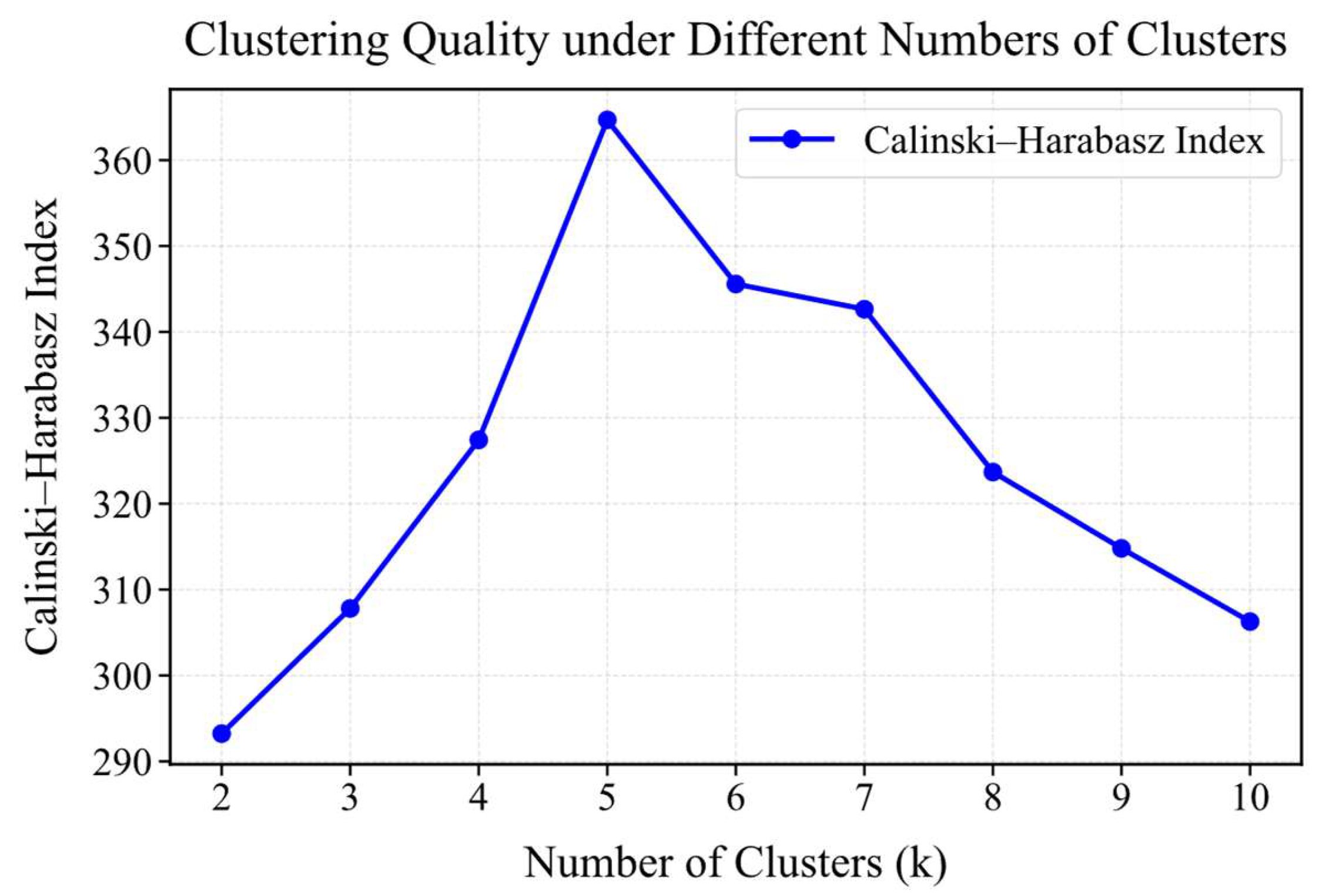
- We propose a comprehensive framework of individual-level parameter estimation combined with unsupervised clustering. Personalized behavioral parameters are extracted for each user using nonlinear least squares (NLS), followed by K-means clustering on the parameter vector (Q0, α, β, γ) to identify five interpretable behavioral patterns.
- (3)
- We provide rigorous quantitative validation through benchmark comparisons and performance metrics (RMSE, MAPE, R2), demonstrating the superiority of the proposed model in both predictive accuracy and behavioral interpretability.
2. Construction of User Response Function Model
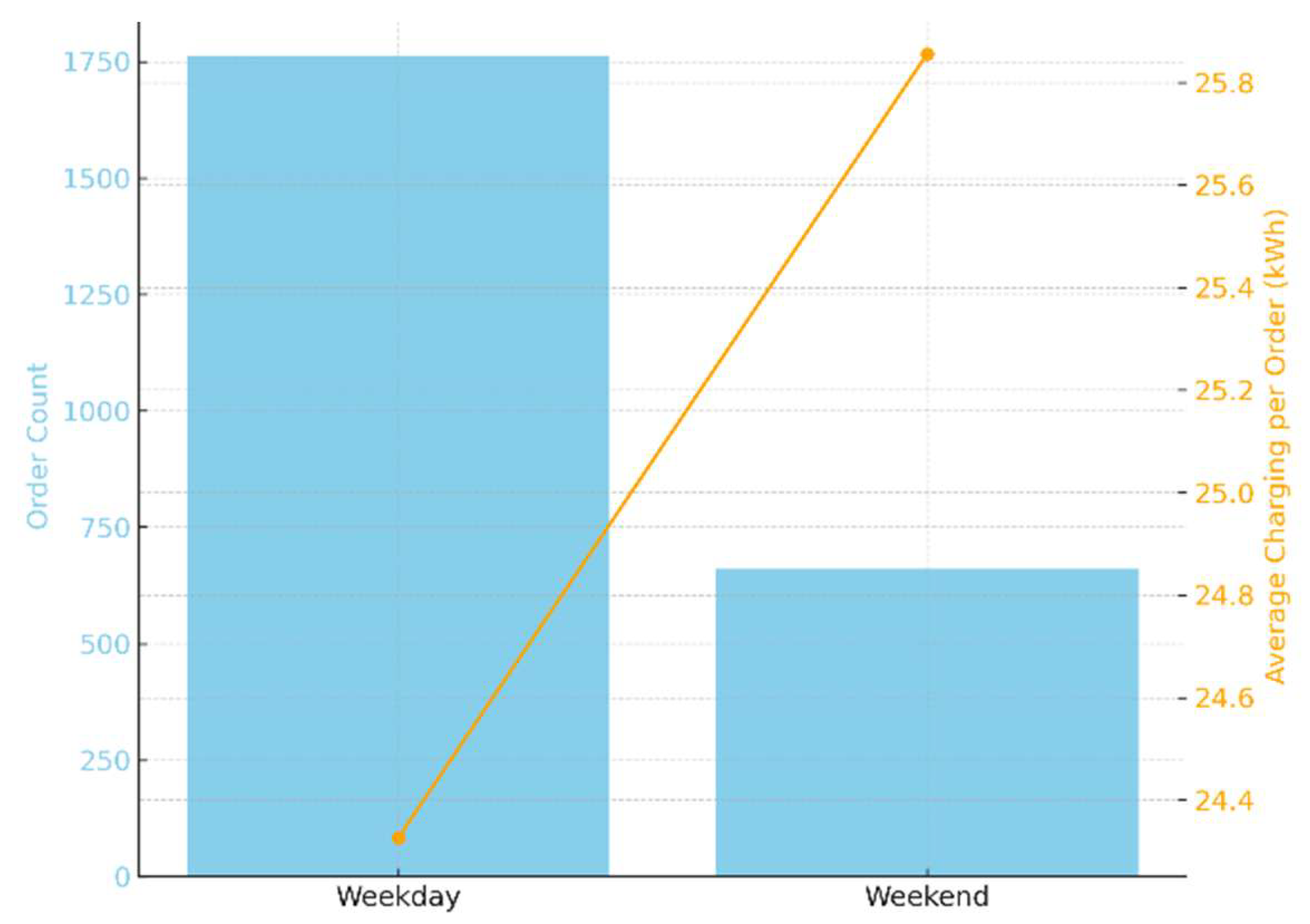
2.1. Data Description and Processing
2.2. Basic Structure of the Price Response Function
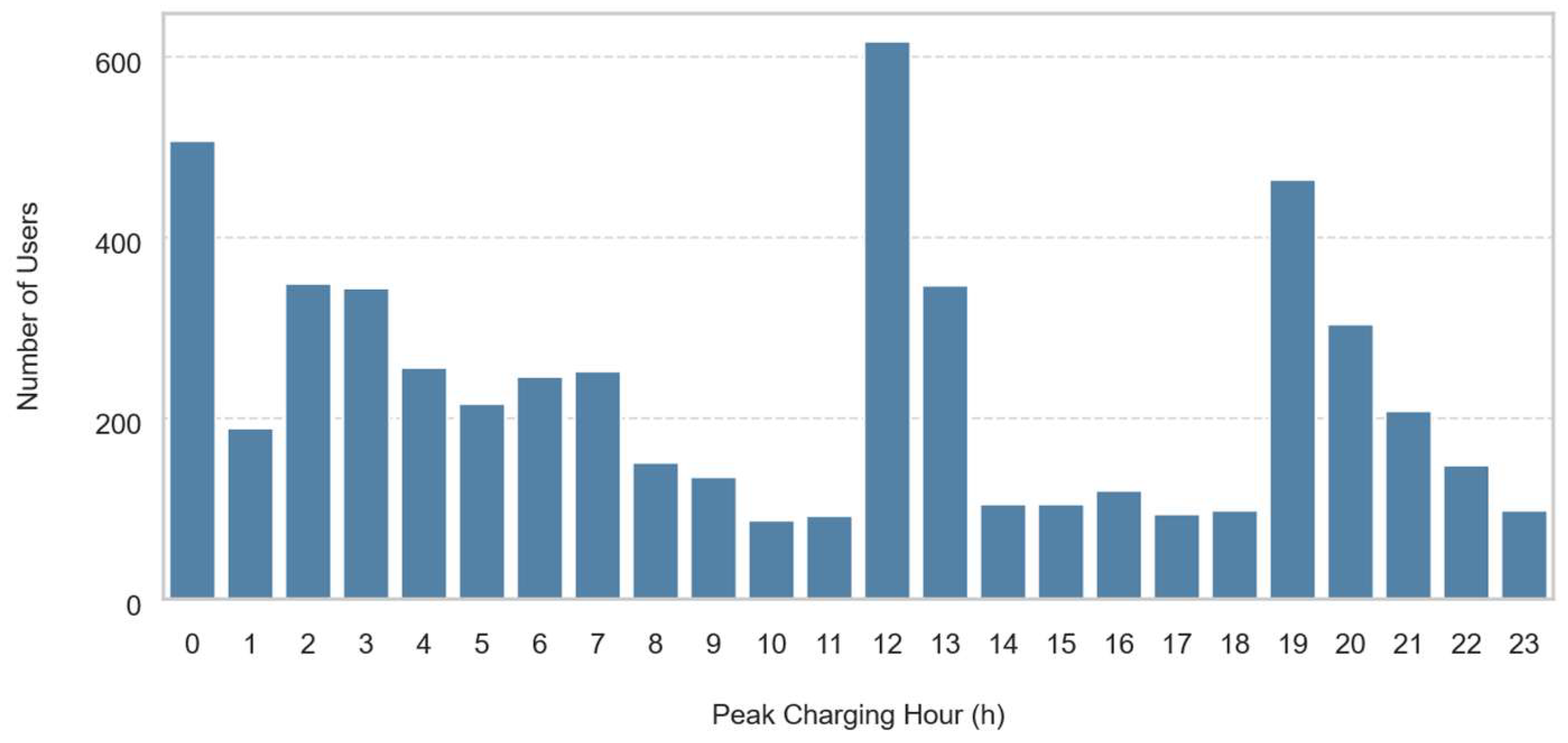
2.3. Incorporation of Time-of-Day Preference Factor
2.4. Behavioral Differences on Weekends
2.5. Parameter Value Range
3. Parameter Extraction and Classification Method
3.1. User Parameter Extraction Method
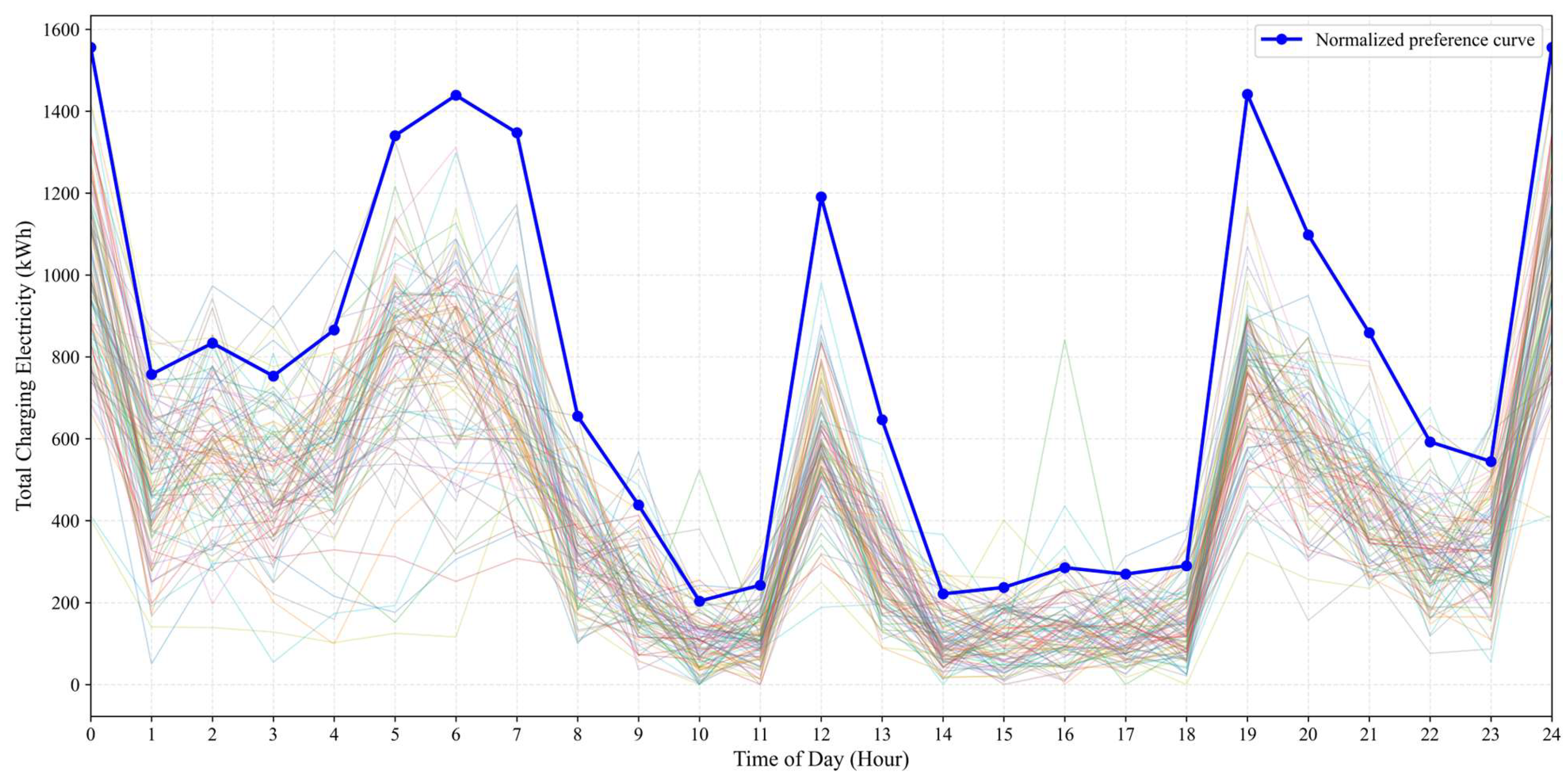
3.2. Construction and Normalization of Response Features
3.3. User Clustering Method
3.4. Interpretation of Classification Results
4. Fitting of User Response Features and Analysis of Behavioral Patterns
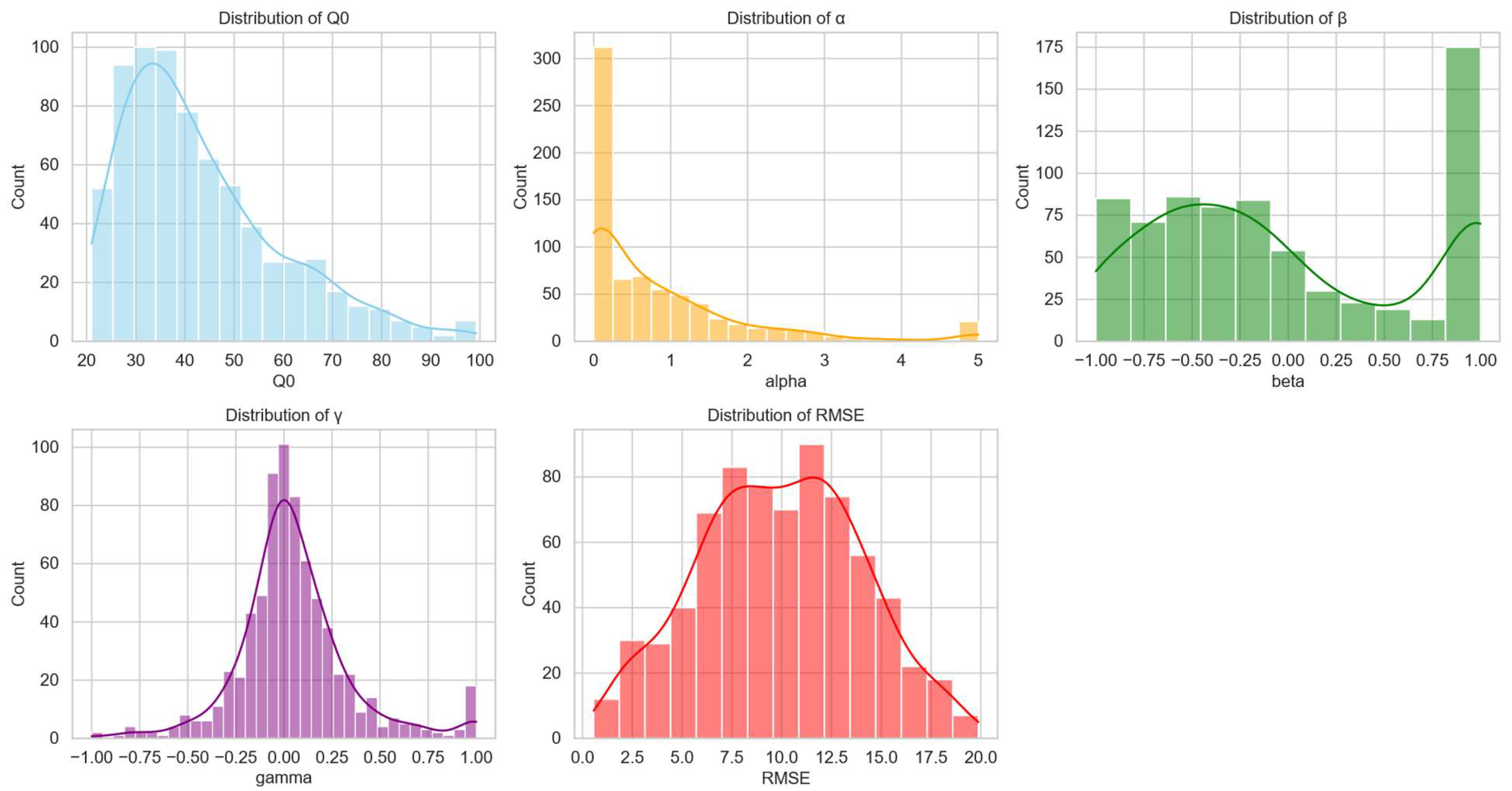
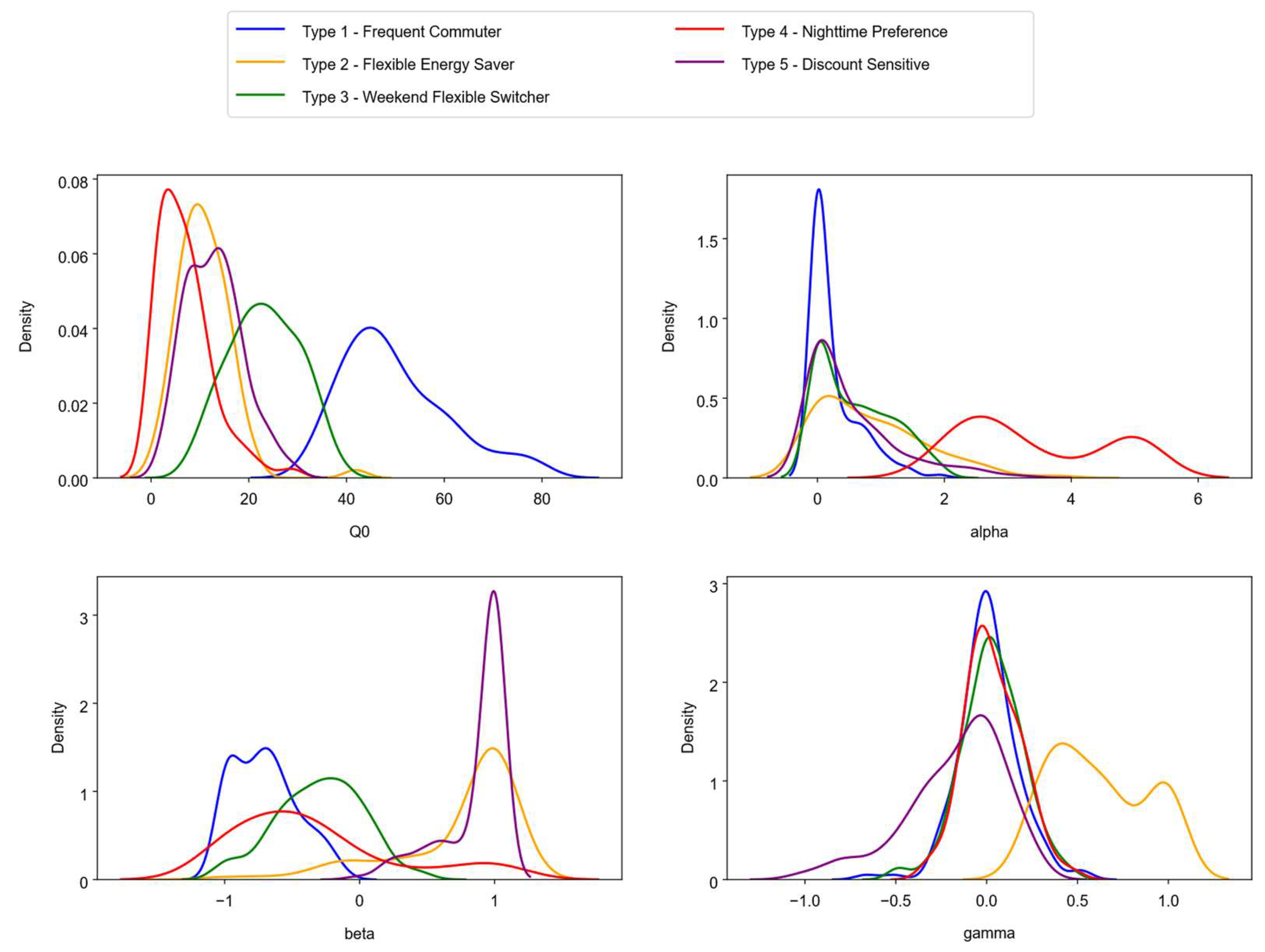
4.1. Analysis of the Overall Distribution of Response Parameters
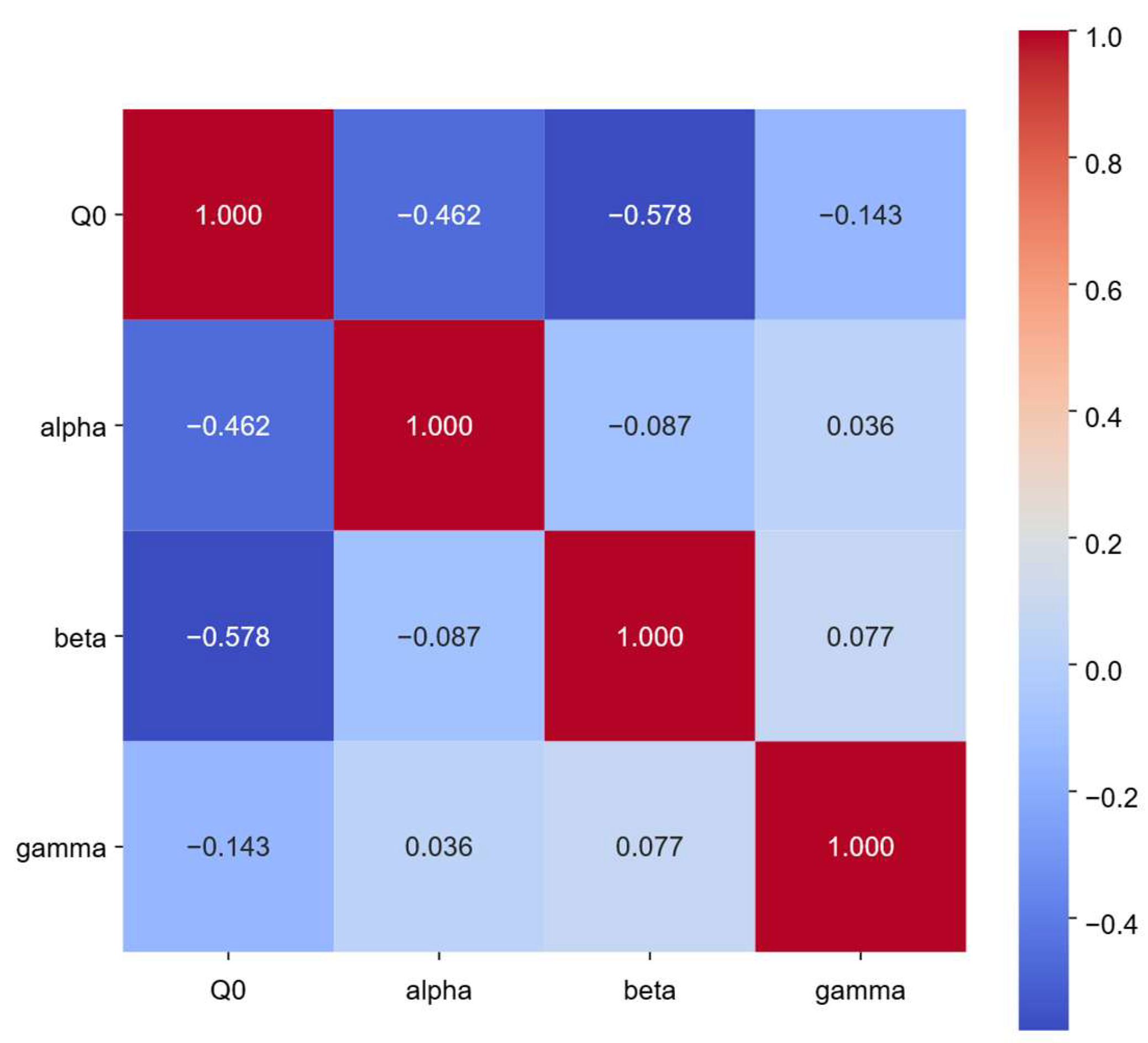
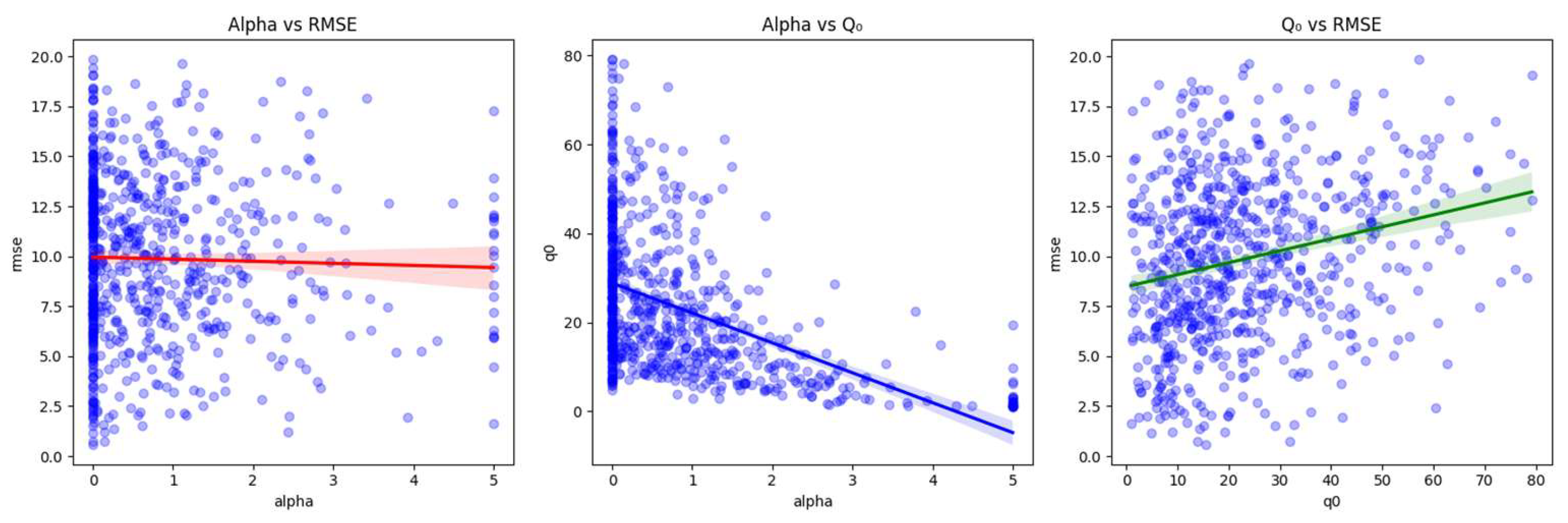
4.2. Parameter Correlation Analysis
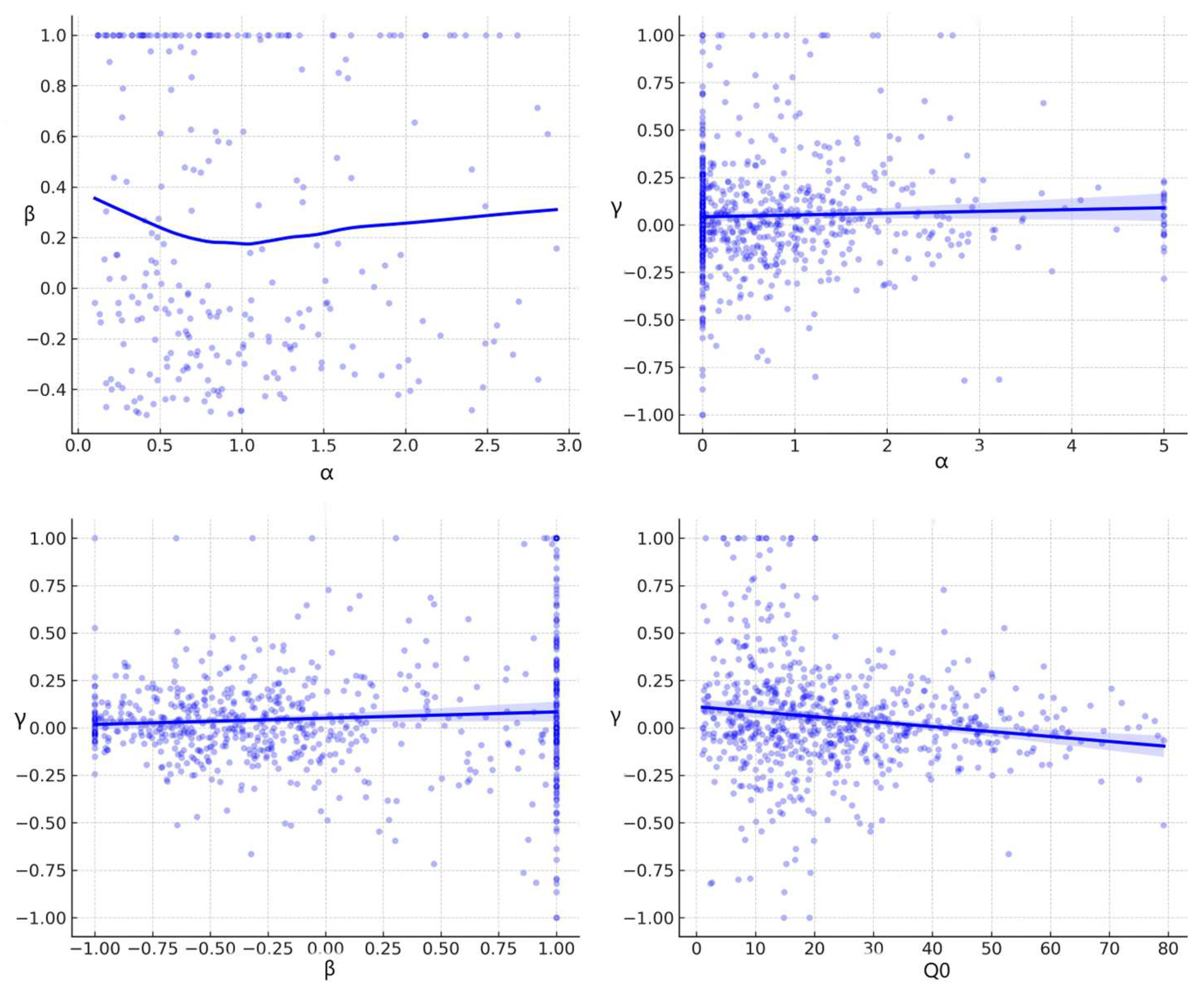
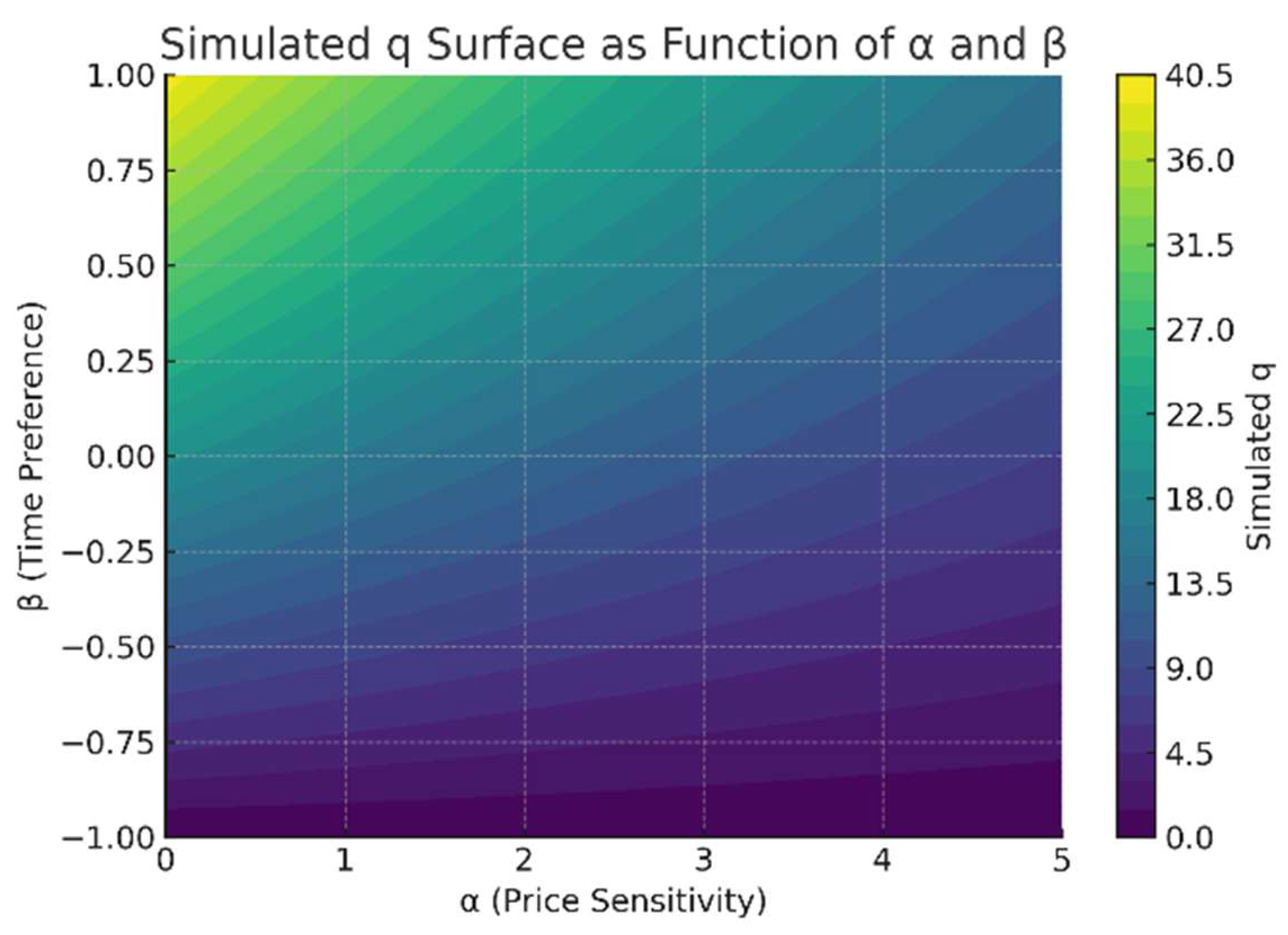
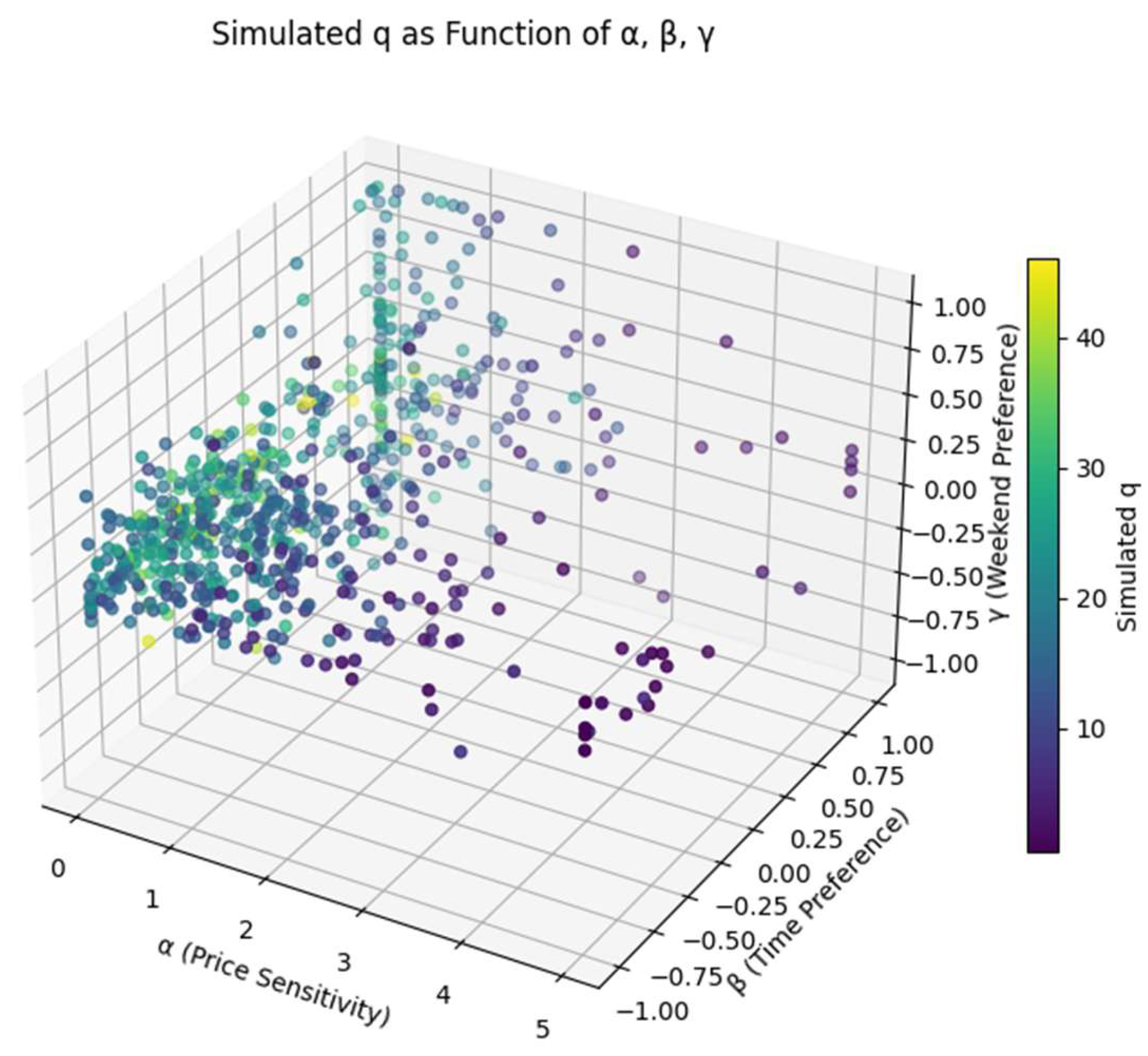
4.3. Analysis of the Three-Variable Relationship in the Response Function
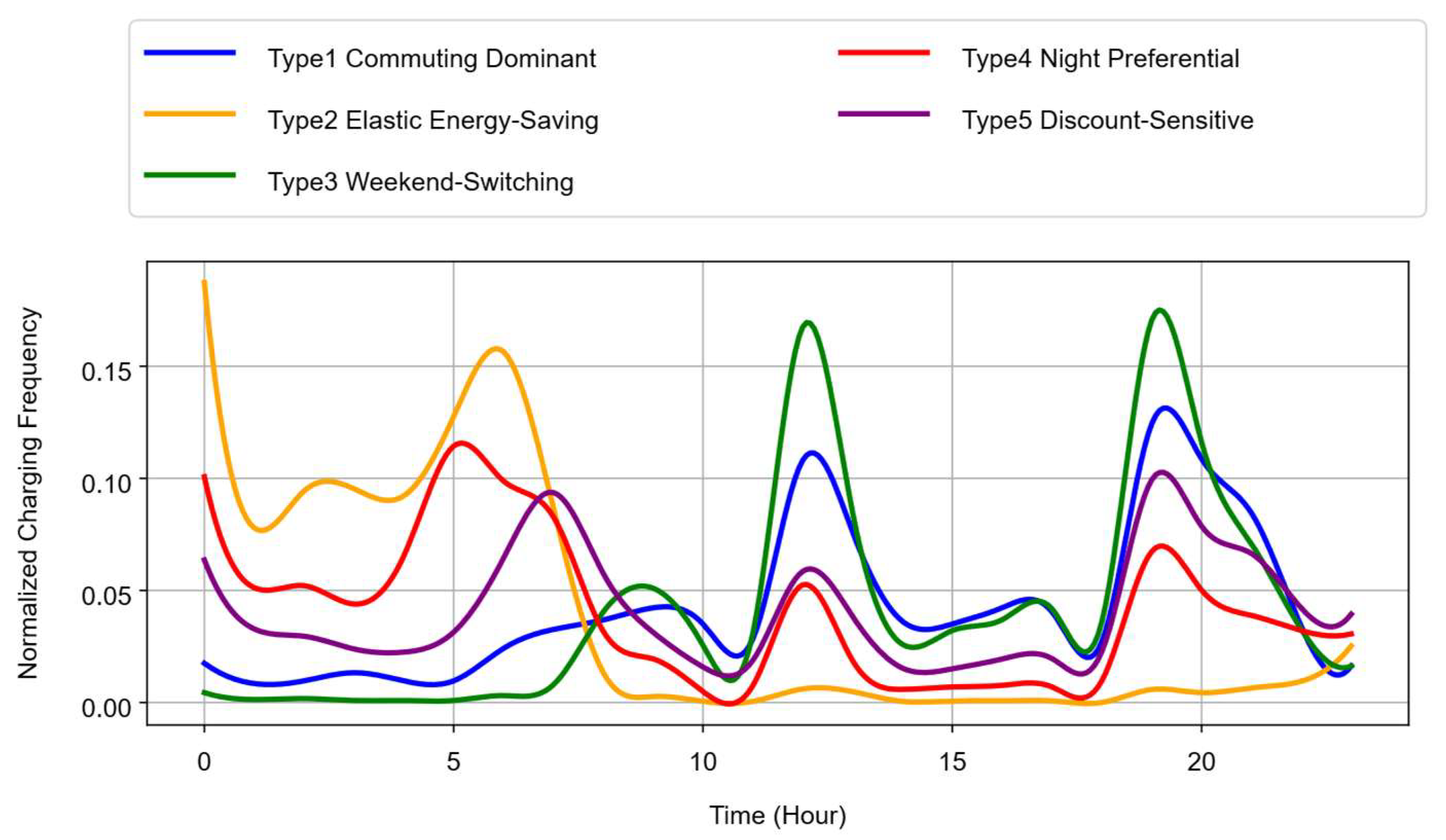
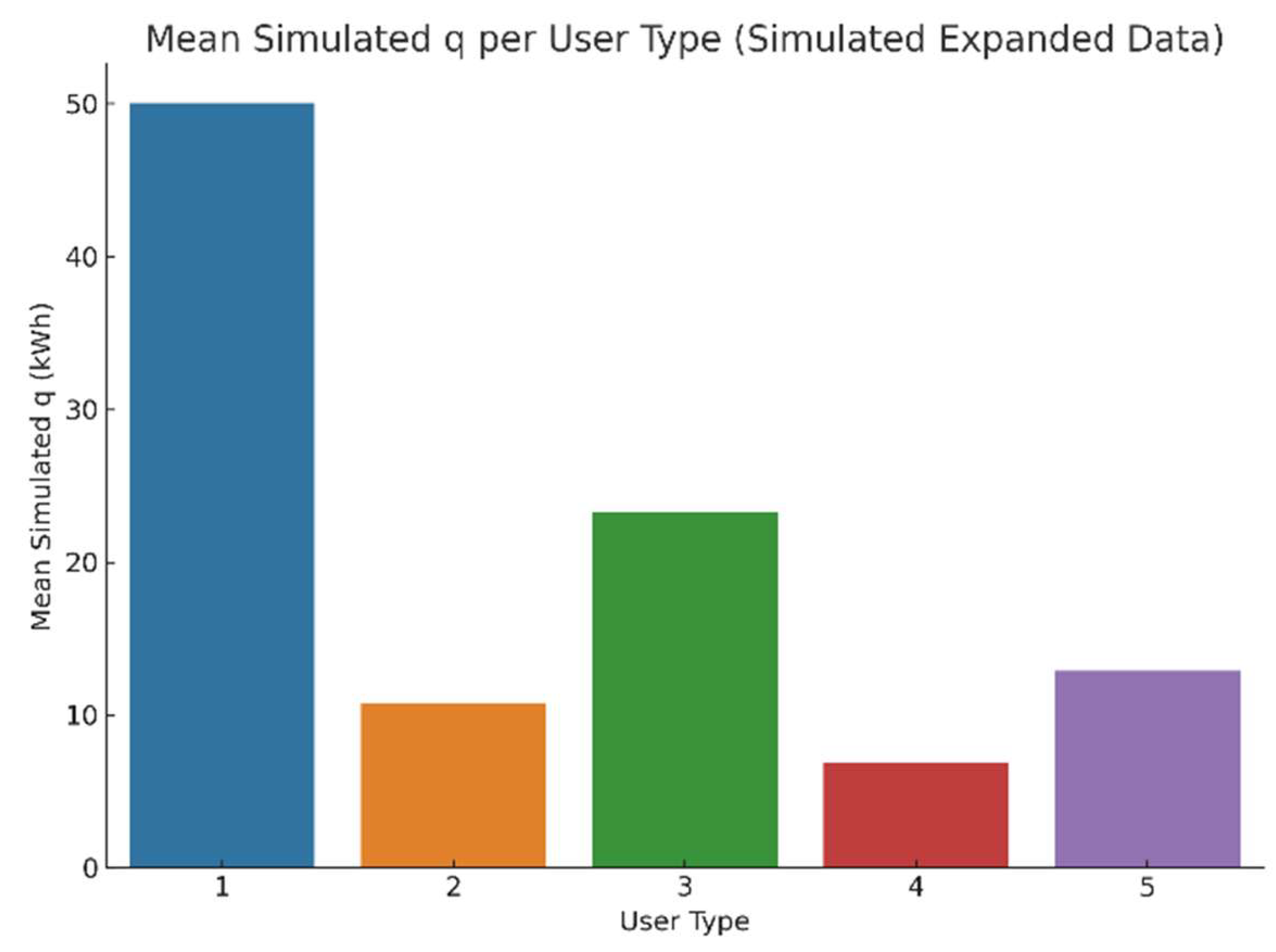
4.4. Behavioral Characterization of Clustered User Types
4.5. Model Validation and Parameter Interpretability Analysis
4.5.1. Verification of Trend Consistency
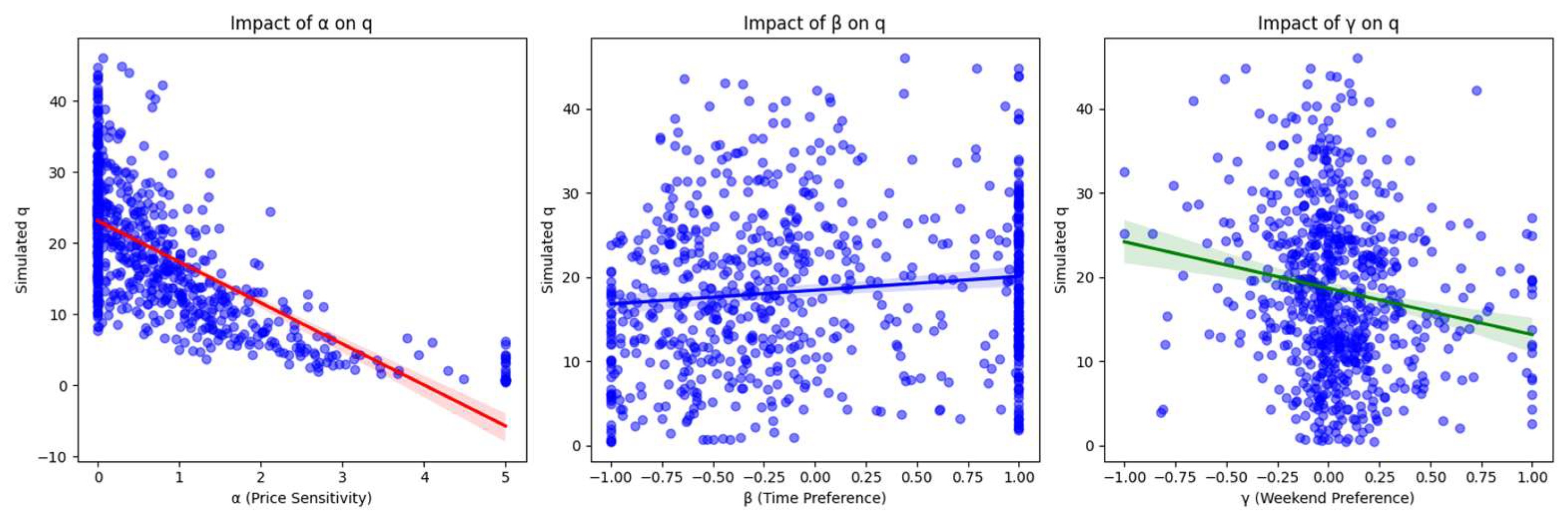
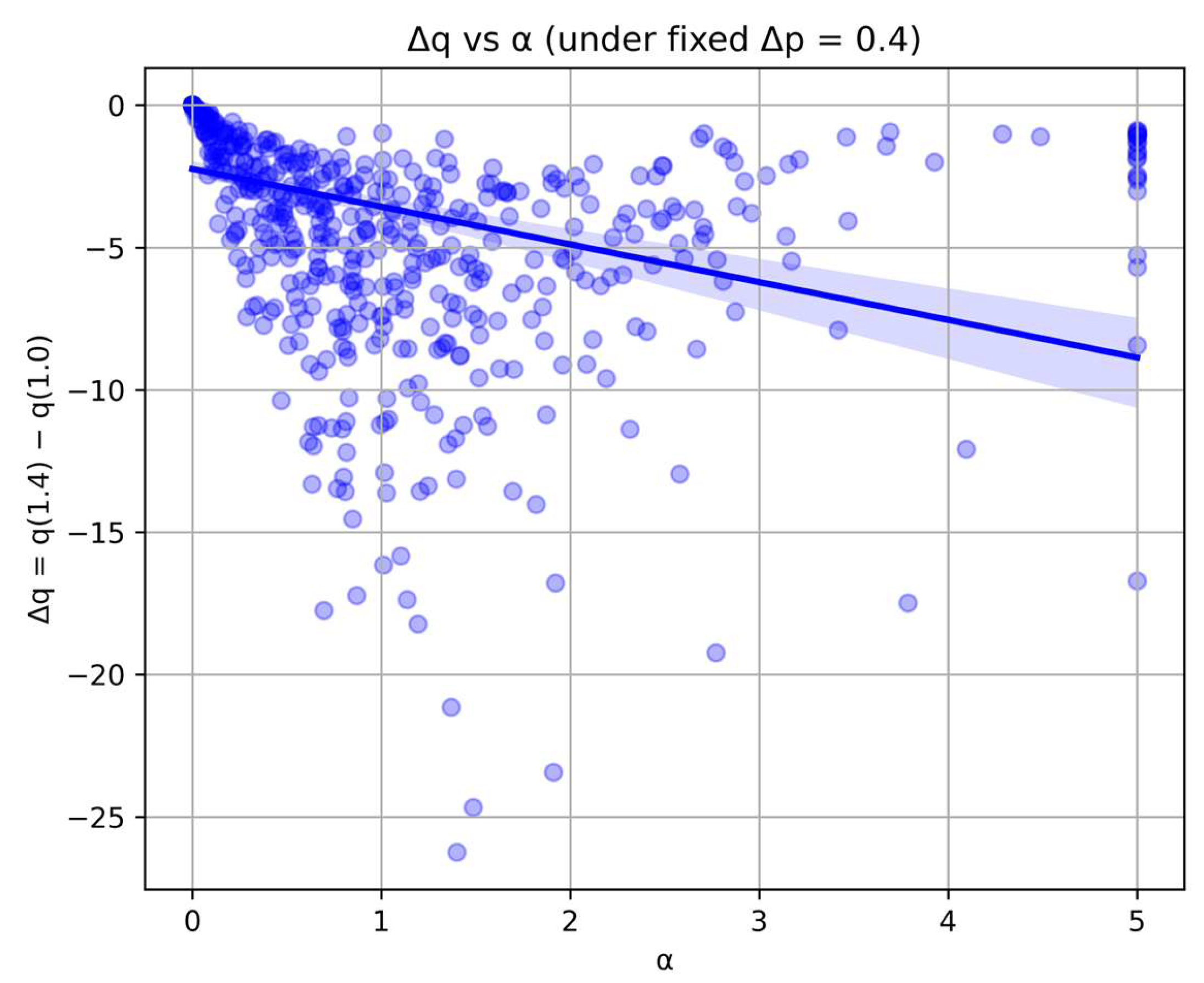
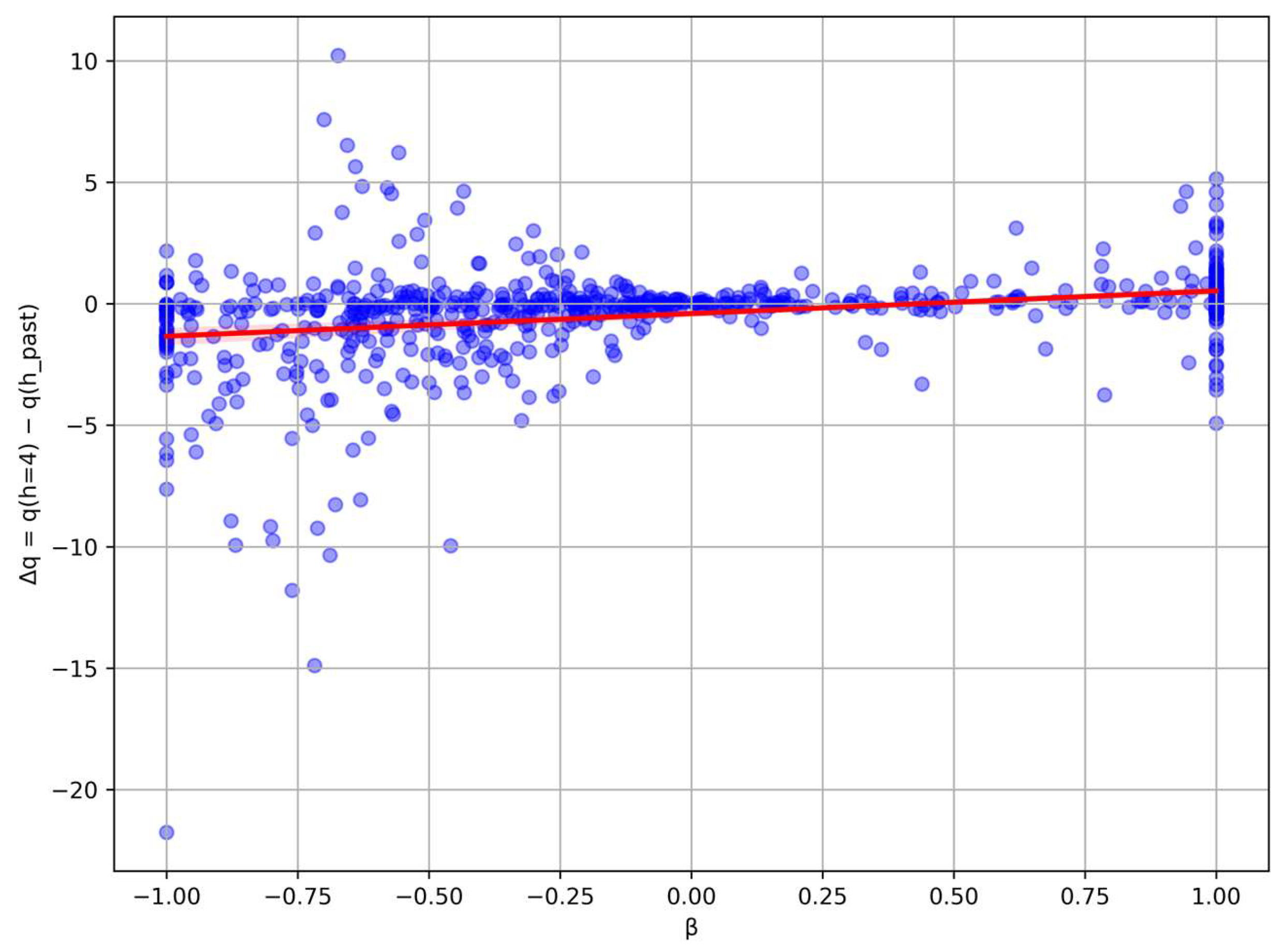
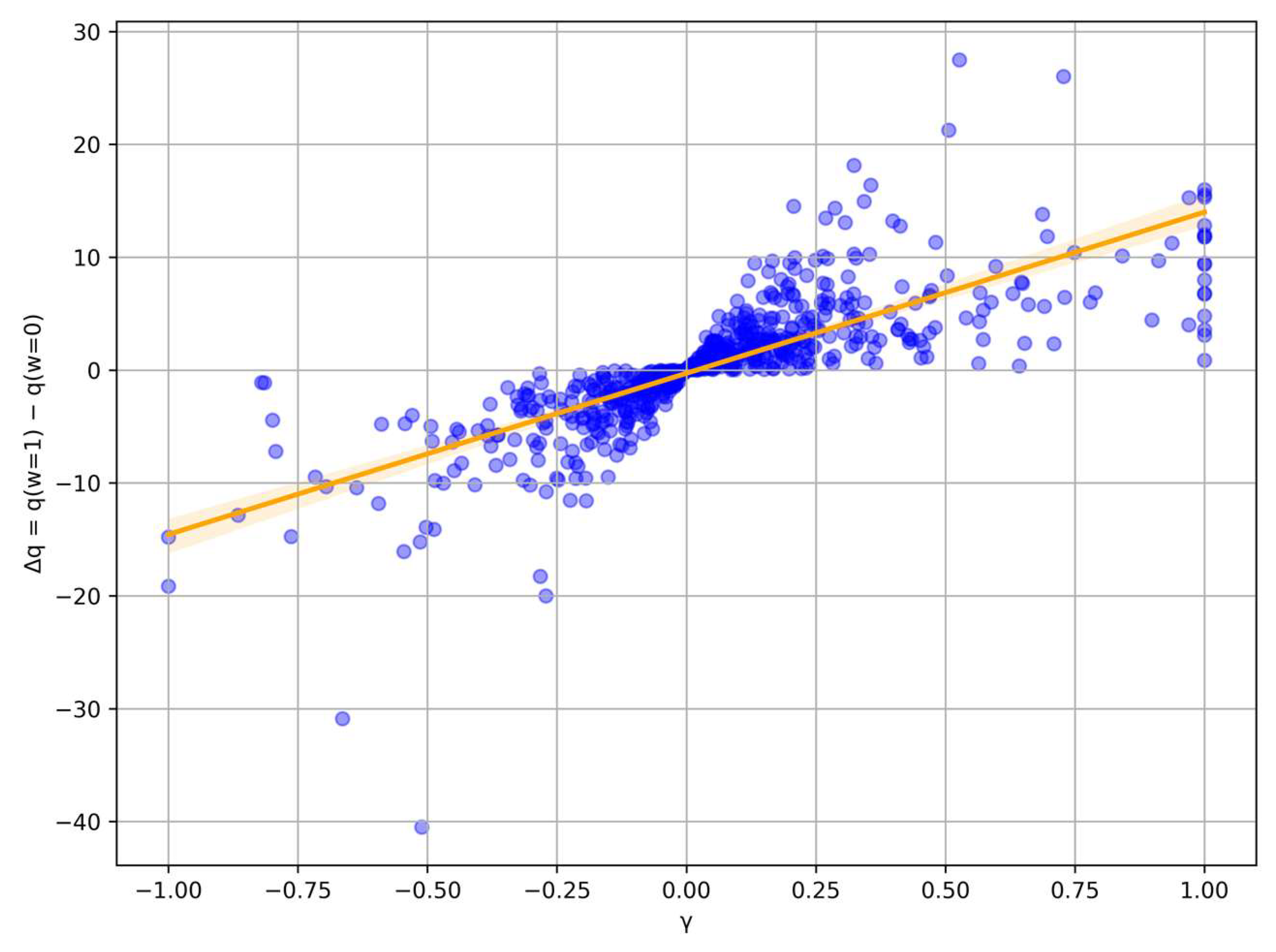
4.5.2. Validation of Parameter Adjustment Mechanism
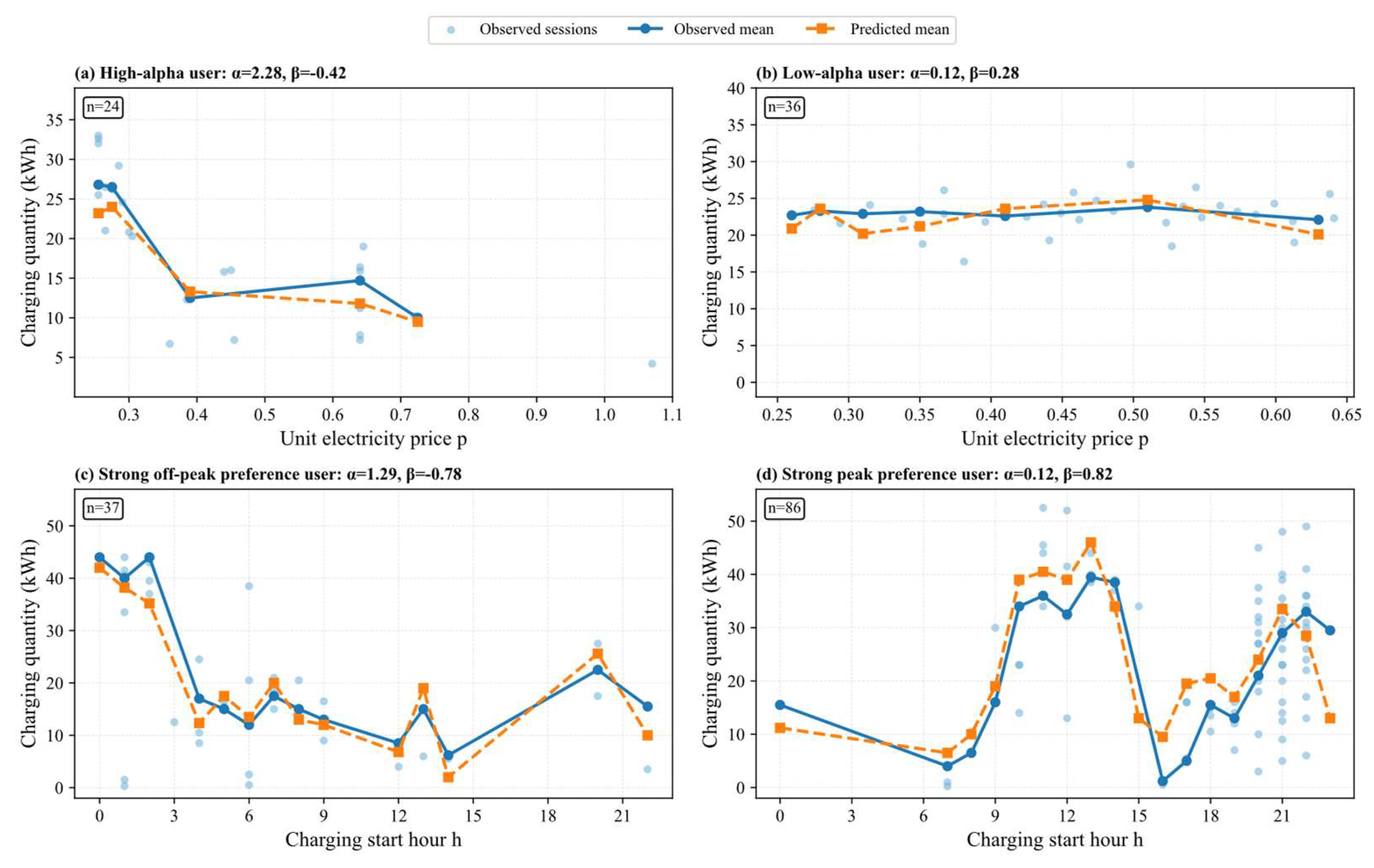
4.5.3. Validation of Parameter Interpretability Through Representative Users
4.6. Quantitative Validation and Benchmark Comparison
- (1)
- Price-only model: Considers only the price factor, simplified as q(p) = Q0 × e^(−alpha·(p − 1)) (setting β = 0, γ = 0);
- (2)
- Time-only model: Considers only the time-of-day preference, simplified as q(h) = Q0 × (1 + β × f(h)) (setting α = 0, γ = 0, with p = 1);
- (3)
- Traditional K-means baseline: Directly applies K-means clustering to user statistical features (mean charging volume, temporal distribution, weekend ratio, etc.).
5. Conclusions
Author Contributions
Funding
Data Availability Statement
Conflicts of Interest
References
- Yang, A.; Zhang, G.; Tian, C.; Peng, W.; Liu, Y. Electric vehicle user charging behavior profiling based on fuzzy C-means clustering. Energies 2024, 17, 1651. [Google Scholar] [CrossRef]
- Chen, Y.; Zhang, J. Impact of large-scale access of electric vehicles on distribution network operation and regulation strategies. Proc. CSEE 2020, 40, 1080–1089. [Google Scholar]
- Shern, S.J.; Sarker, M.T.; Haram, M.H.S.M.; Ramasamy, G.; Thiagarajah, S.P.; Al Farid, F. Artificial intelligence optimization for user prediction and efficient energy distribution in electric vehicle smart charging systems. Energies 2024, 17, 5772. [Google Scholar] [CrossRef]
- Amezquita, H.; Guzman, C.P.; Morais, H. Forecasting electric vehicles’ charging behavior at charging stations. Energies 2024, 17, 3396. [Google Scholar] [CrossRef]
- Zhao, X.; Jiang, T.; Zheng, X. Research on charging patterns of electric taxis based on high-dimensional clustering analysis—A case study of Hangzhou, China. J. Traffic Transp. Eng. 2020, 20, 15–23. [Google Scholar]
- Sun, X.; Wang, J.; Zhao, H.; Zhang, B. Charging demand prediction in Beijing based on real-world electric vehicle data. Energy 2020, 202, 117747. [Google Scholar]
- Märtz, A. Charging behavior of electric vehicles: Temporal patterns and load profiles using clustering. Energies 2022, 15, 6575. [Google Scholar] [CrossRef]
- Wu, W. Data Drive—Charging Behavior of Electric Vehicle Users Based on 5G Real-Time System. Sustainability 2024, 16, 4842. [Google Scholar] [CrossRef]
- Wang, R.; Xing, Q.; Chen, Z.; Zhang, Z.; Liu, B. Modeling and analysis of electric vehicle user behavior based on full data chain driven. Sustainability 2022, 14, 8600. [Google Scholar] [CrossRef]
- Pellegrini, A.; Diana, M.; Rose, J.M. A latent-based segmentation framework for the investigation of charging behaviour of electric vehicle users. Transp. Res. Part C Emerg. Technol. 2024, 165, 104722. [Google Scholar] [CrossRef]
- Baek, K.; Lee, E.; Kim, J. A dataset for multi-faceted analysis of electric vehicle charging transactions. Sci. Data 2024, 11, 262. [Google Scholar] [CrossRef] [PubMed]
- Wang, S. EV charging behavior analysis and load prediction via logistic-function based response modeling. Sustainability 2025, 17, 1807. [Google Scholar] [CrossRef]
- Shao, S.; Pipattanasomporn, M.; Rahman, S. Grid Integration of Electric Vehicles and Demand Response with Customer Choice. IEEE Trans. Smart Grid 2012, 3, 462–469. [Google Scholar] [CrossRef]
- Siebert, L.C.; Sbicca, A.; Aoki, A.R.; Lambert-Torres, G. A behavioral economics approach to residential electricity consumption. Energies 2017, 10, 768. [Google Scholar] [CrossRef]
- Loewenstein, G.; Weber, E.; Hsee, C.; Welch, N. Risk as feelings. Psychol. Bull. 2001, 127, 267–286. [Google Scholar] [CrossRef]
- Wang, Y.; Tian, D.; Wang, X.; Zhang, C.; Jin, D.; Guan, X. Modeling of plug-in electric vehicle travel patterns and charging load based on trip chain generation. J. Power Sources 2017, 359, 468–479. [Google Scholar] [CrossRef]
- Mo, L.; Wang, X.; Wang, Y.; Zhang, B.; Jiang, C. Mutual inductance estimation of SS-IPT system through time-domain modeling and nonlinear least squares. Energies 2024, 17, 3307. [Google Scholar] [CrossRef]
- Munshi, A.; Mohamed, Y.A.I. Unsupervised nonintrusive extraction of electrical vehicle charging load patterns. IEEE Trans. Ind. Inform. 2018, 14, 270–280. [Google Scholar] [CrossRef]
- Hardman, S.; Tal, G.; Nicholas, M. A data driven typology of electric vehicle user types and charging sessions. Transp. Res. Part C Emerg. Technol. 2020, 115, 102637. [Google Scholar]
- Huang, X.; Zhong, J.; Lu, J.; Zhao, J.; Xiao, W.; Yuan, X. Electric vehicle charging load forecasting method based on user profiling. J. Jilin Univ. (Eng. Technol. Ed.) 2023, 53, 2193–2200. [Google Scholar]
- Gough, R.; Dickerson, C.; Rowley, P.; Walsh, C. Vehicle-to-Grid Feasibility: A Techno-Economic Analysis of EV-Based Energy Storage. Appl. Energy 2017, 10, 578. [Google Scholar] [CrossRef]


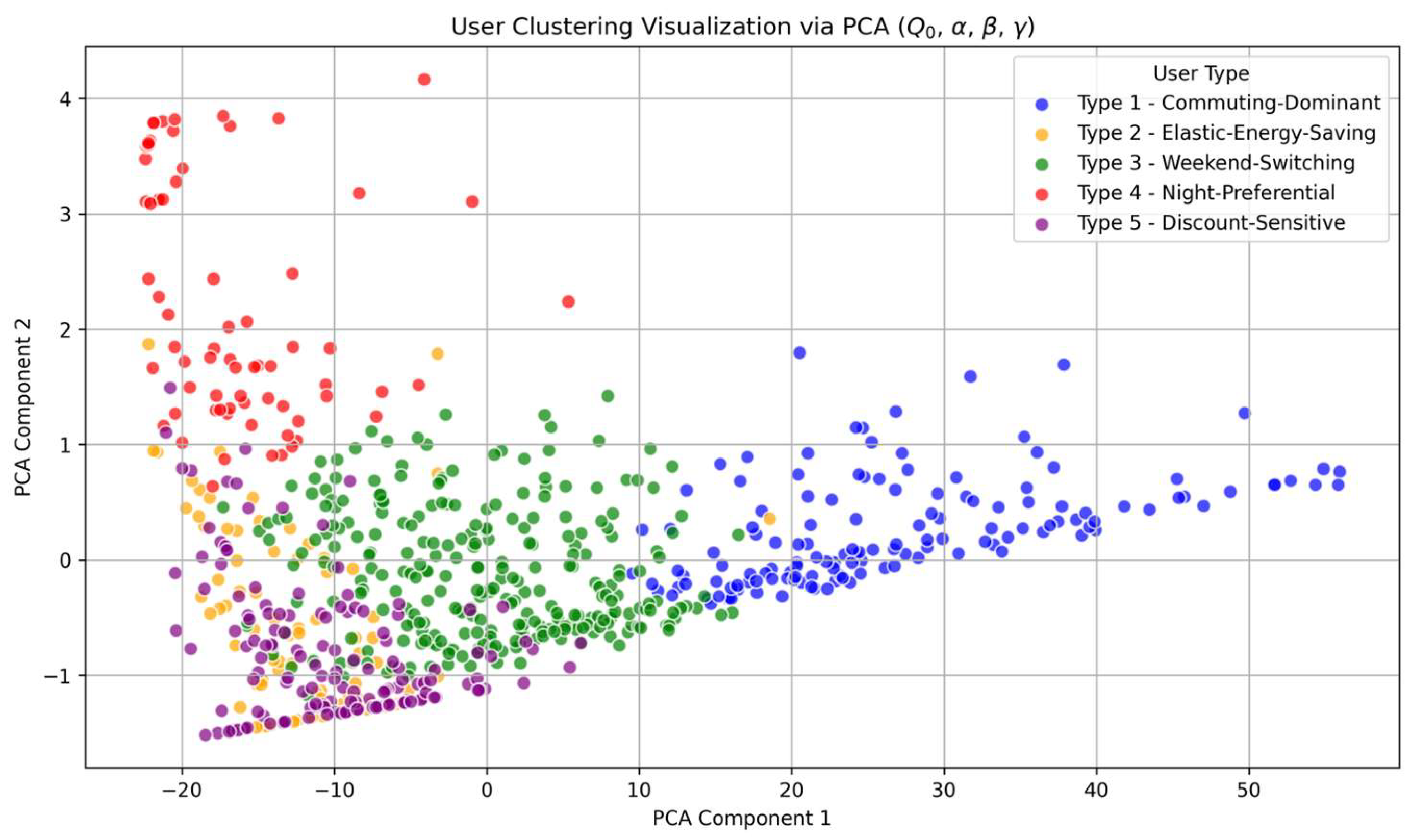


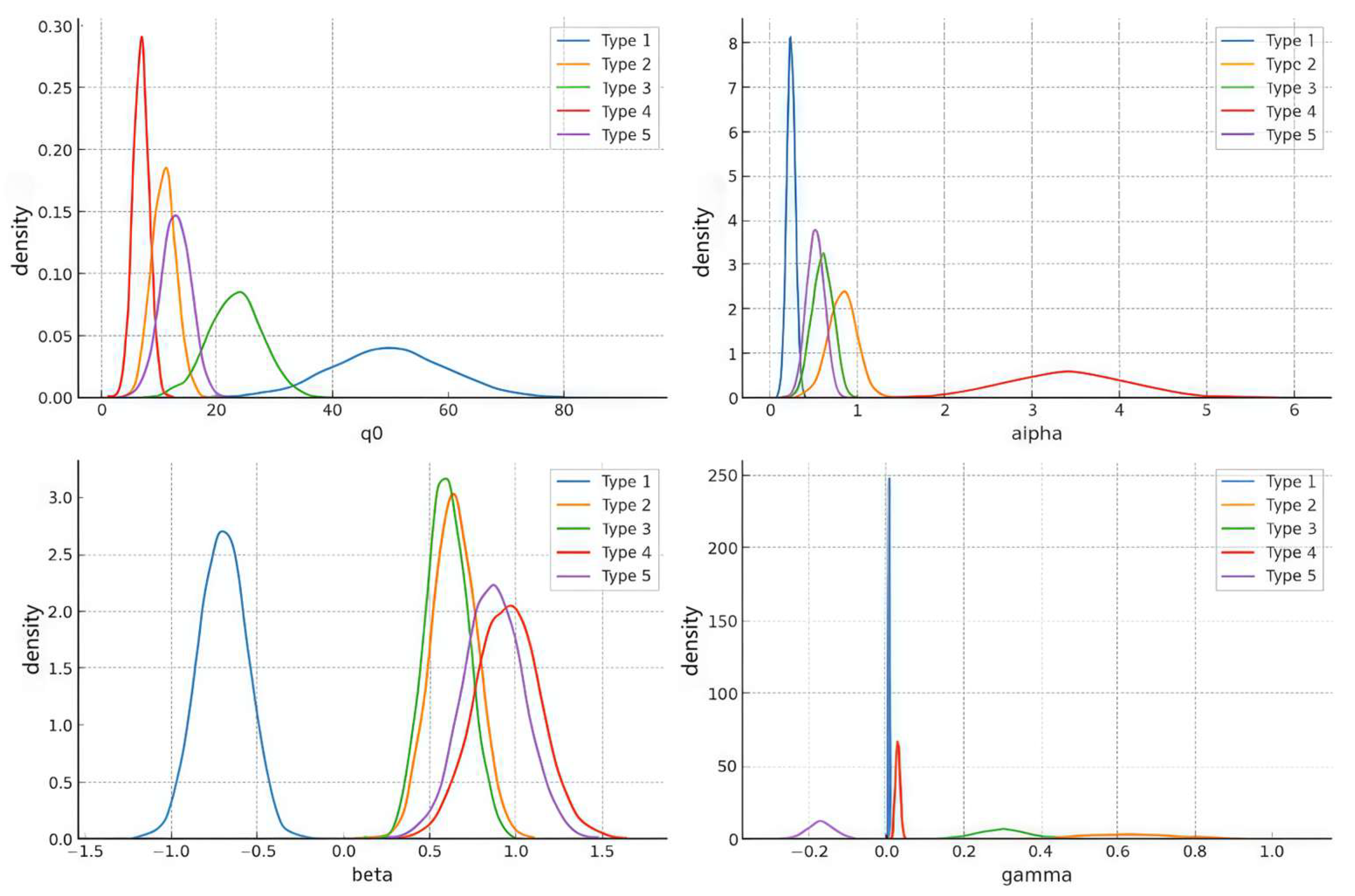




| No. | User Type | Q0 Mean | α Mean | β Mean | γ Mean | Proportion |
|---|---|---|---|---|---|---|
| 1 | Commuting-Dominant | 50.03 | 0.24 | −0.70 | 0.008 | 17.6% |
| 2 | Elastic-Energy-Saving | 10.88 | 0.83 | 0.64 | 0.62 | 25.1% |
| 3 | Weekend-Switching | 23.16 | 0.60 | 0.60 | 0.30 | 19.2% |
| 4 | Night-Preferential | 6.92 | 3.43 | 0.95 | 0.03 | 7.9% |
| 5 | Discount-Sensitive | 12.90 | 0.52 | 0.87 | −0.17 | 30.2% |
| Model | Train RMSE (kWh) | Train MAPE (%) | Train R2 | Test RMSE (kWh) | Test MAPE (%) | Test R2 |
|---|---|---|---|---|---|---|
| Price-only | 13.5 | 31.5 | 0.58 | 14.1 | 33.9 | 0.57 |
| Time-only | 11.8 | 26.3 | 0.69 | 13.4 | 27.8 | 0.65 |
| Traditional K-means | 9.9 | 22.1 | 0.74 | 11.5 | 25.3 | 0.70 |
| Proposed (3-var Response) | 7.4 | 16.2 | 0.79 | 8.3 | 18.7 | 0.80 |
Disclaimer/Publisher’s Note: The statements, opinions and data contained in all publications are solely those of the individual author(s) and contributor(s) and not of MDPI and/or the editor(s). MDPI and/or the editor(s) disclaim responsibility for any injury to people or property resulting from any ideas, methods, instructions or products referred to in the content. |
© 2026 by the authors. Published by MDPI on behalf of the World Electric Vehicle Association. Licensee MDPI, Basel, Switzerland. This article is an open access article distributed under the terms and conditions of the Creative Commons Attribution (CC BY) license.
Share and Cite
Xu, Y.; Tang, X.; Liu, W. Electric Vehicle User Behavior Forecasting via Data-Driven Techniques. World Electr. Veh. J. 2026, 17, 304. https://doi.org/10.3390/wevj17060304
Xu Y, Tang X, Liu W. Electric Vehicle User Behavior Forecasting via Data-Driven Techniques. World Electric Vehicle Journal. 2026; 17(6):304. https://doi.org/10.3390/wevj17060304
Chicago/Turabian StyleXu, Yonghua, Xiangyi Tang, and Wei Liu. 2026. "Electric Vehicle User Behavior Forecasting via Data-Driven Techniques" World Electric Vehicle Journal 17, no. 6: 304. https://doi.org/10.3390/wevj17060304
APA StyleXu, Y., Tang, X., & Liu, W. (2026). Electric Vehicle User Behavior Forecasting via Data-Driven Techniques. World Electric Vehicle Journal, 17(6), 304. https://doi.org/10.3390/wevj17060304