1.1. Background
The escalating global environmental crisis has prompted national governments to intensify their environmental protection efforts, with particular emphasis on mitigating localized ecological degradation. Among these measures, the electrification of public transit systems has gained international prominence, as electric buses demonstrate superior environmental performance compared with conventional diesel buses by reducing carbon emissions and lowering noise pollution [
1]. As a pivotal component of China’s ecological civilization construction, electric bus networks have been extensively deployed nationwide and continue to expand across regions. Since their initial introduction in China in the 2010s, electric buses have undergone rapid proliferation alongside infrastructure development, characterized by three principal trends: systematic municipal policy support, exponential growth in fleet size, and large-scale deployment of charging piles and battery swapping stations [
2]. This transition has contributed significantly to national carbon-reduction targets and environmental governance [
1].
However, as the industry enters a phase of profound restructuring, the sustainable operation of electric bus systems faces numerous practical challenges. In terms of financial support, the gradual phasing out of subsidies has made the full lifecycle cost of vehicles increasingly prominent, while the replacement cost of power battery systems and residual value management have become critical factors affecting operational economics. Regarding market demand, profound changes in urban travel patterns have led to a persistent decline in traditional bus ridership. The rapid expansion of shared mobility, the continuous growth of rail transit networks, and shifts in commuting habits post-pandemic have collectively driven a long-term decline in demand for bus services [
3]. The bus systems of some small and medium-sized cities have become trapped in a vicious cycle characterized by declining ridership, reduced services, and diminished appeal, directly threatening the sustainability of large-scale electric bus deployment.
To tackle these systemic challenges, building a resilient electric bus operation system requires breakthroughs across multiple areas. Technological progress should focus on developing high-durability battery materials, systematically improving vehicle economics by extending battery cycle life, reducing charging times, and lowering energy consumption per mile. AI can further boost system efficiency and flexibility through optimized energy management, vehicle control, and infrastructure design. In the future, AI is expected to become the “intelligent hub” of electric transport systems, which will depend on it to create a smart ecosystem integrating energy, transportation, and information [
4]. In operations management, electrifying vehicles not only cuts carbon emissions and noise but also reshapes urban transit networks and energy system architectures. This calls for a multi-departmental policy framework to handle issues like grid pressure [
5]. Exploring dynamic scheduling models based on big data analytics integrates real-time passenger flow, battery health, time-of-use electricity prices, and other data into decision-making. This enables the combined optimization of vehicle deployment and energy replenishment strategies. In terms of business model innovation, electric bus charging systems have advanced from slow charging to dynamic charging technologies. Future bus charging infrastructure might move toward distributed, intelligent, and dynamic setups, forming an energy-interactive system with the grid to improve overall efficiency [
6]. Combining infrastructure layouts such as charging stations, energy storage facilities, and distributed energy centers can improve asset utilization and expand secondary applications of retired vehicle batteries. This promotes a circular economy involving energy storage, backup power, and low-speed vehicle propulsion. Such innovations address current cost barriers in electric bus operations and are transforming the value-creation mechanism of urban transport. They provide a solution framework for global urban green transitions that balance environmental and economic benefits.
1.2. Motivation and Literature Review
In this study, the battery parameter that demands primary attention is the State of Health (SOH), which represents the current level of health of the battery, usually expressed as a percentage. Generally, SOH denotes the decline in the battery’s maximum capacity. During the operation of electrical devices, various types of batteries, such as lithium batteries, experience gradual capacity loss as a result of a series of chemical reactions, and the complex operating conditions of electric vehicles inevitably accelerate this process. For electric buses, a reduction in battery capacity translates directly into decreased driving range, potentially leading to operational issues. Therefore, carefully monitoring the onboard battery SOH is of critical importance. Liu et al. [
7] employed systematic review and meta-analysis methodologies to quantitatively assess key factors influencing electric vehicle performance. Findings indicate that environmental conditions and operational behavior significantly impact range and energy consumption performance, underscoring the need for enhanced multi-factor experimentation and data modeling within real-world operational scenarios.
However, to integrate battery health into an electric bus scheduling framework, it is insufficient merely to measure and record SOH; accurate forecasting is also required. To predict battery health, one must build an appropriate mathematical model based on existing data to estimate the rate of capacity degradation under varying conditions, such as different temperatures and operating intensities. This topic has long featured prominently in the field of electric vehicles, with numerous domestic and international researchers proposing diverse predictive approaches. Deng [
8] presented an SOH estimation method for lithium-ion traction batteries by selecting a second-order Thevenin equivalent circuit model. The author analyzed the relationship between model parameters and state of charge (SoC), then employed a Kalman filter algorithm to estimate parameters under different operating conditions, achieving a high degree of accuracy. Yan [
9] compared various models and ultimately selected a second-order RC equivalent circuit model for his analysis. Li [
10] utilized data-mining techniques, constructing a neural network based on battery log data and driving records collected from the vehicle’s onboard computer. This approach enabled an in-depth study and accurate prediction of SOH without dismantling the battery. Xie [
11] combined data mining with a recursive least squares (RLS) algorithm to predict the remaining useful life (RUL) of automotive batteries. Lin [
12] applied a LightGBM model, addressing data sparsity issues and proposing specific handling strategies. Huang [
13] compared electrochemical, equivalent circuit, and empirical models, concluding that artificial neural networks offered the best balance of simplicity and accuracy; thus, an LMBP neural network was constructed for SOH prediction. Shen et al. [
14] also developed a neural-network-based predictive model for the SOH of new energy bus batteries. They analyzed extensive operational data, considered various driving conditions, and selected ten key features—voltage differential, operational day type, weather, start time, ambient temperature at start, etc.—to build their model. Zhang [
15] proposed a gray-model–Markov chain method for SOH estimation. Wang et al. [
16] introduced a joint estimation approach for SOH and RUL of lithium-ion batteries, extracting multiple health features and constructing a Gaussian Process Regression (GPR) model. Hu [
17] employed a PSO-GPR model for SOH estimation and an improved Elman neural network (ENN) for RUL prediction. Cheng [
18] approached SOH estimation from a mechanistic perspective, thoroughly analyzing the electrochemical processes, structural composition, and chemical transformations during charge-discharge cycles, and emphasizing capacity and internal resistance as evaluation metrics. Kang [
19], noting the difficulty of direct measurement of pack internal resistance, utilized a Kalman filter algorithm to predict this parameter. Gao et al. [
20] focused on using charging current as a proxy for remaining capacity estimation, arguing that internal parameters are difficult to measure directly and selecting charging current—less influenced by environmental factors—after Box–Cox transformation for model construction. Tang et al. [
21] investigated battery characteristics under electric bus operating conditions, collecting and analyzing data to assess how real-world usage affects battery properties. Qi [
22] studied the impact of different operating scenarios on bus battery health by examining charge–discharge attributes, driving conditions, and operational states. Using ampere-hour integral methods for SOH estimation and factor analysis to identify the most influential factors, the researchers then applied cluster analysis to categorize batteries by degradation rate. Wang et al. [
23] designed an optimization method for wireless charging infrastructure layout that accounts for battery health. By estimating the aging rate through SoC variation intervals and employing a Tabu Search (TS) algorithm, they developed a layout optimization model.
In previous studies, both domestic and international researchers have extensively investigated the dispatching problem of electric buses. Similarly to other public-transport modes, electric-bus dispatching seeks to meet transport demand under resource constraints—fleet size, vehicle capacity and range, depot and charging-station locations—so as to maximize operational efficiency and minimize costs. Generally, when formulating an electric-bus dispatch strategy, scholars consider energy-replenishment methods and charging-station layout, charging strategies, and scheduling policies that accommodate operational uncertainties.
Sui et al. [
24] summarized optimization research in public transport systems across timetables, routes, charging infrastructure and facilities, emphasizing the interdependence and importance of synergistic optimization among these elements. They noted that future research is shifting from localized optimization towards comprehensive optimization that integrates multi-dimensional objectives and element coupling. Zhang et al. [
25] systematically reviewed research progress in electric bus vehicle scheduling and charging scheduling, encompassing optimization models, constraints, and algorithms. The authors noted that research is evolving from static planning towards dynamic, real-time, and multi-objective optimization, emphasizing that future efforts should focus on vehicle-to-grid (V2G) interaction and artificial-intelligence-assisted intelligent scheduling systems. The battery is the energy-storage device of an electric bus, and among its state parameters, SoC directly reflects remaining driving range and cannot be ignored. Jin [
26] systematically reviewed SoC-aware dispatch methods—especially time-constrained models—summarized base formulations and solution algorithms, analyzed battery behaviors during operation, proposed a residual-range estimator, and finally embedded these into a genetic-algorithm-based dispatch model. Li et al. [
27] studied the impact of a “shallow-charge/shallow-discharge” policy, incorporating departure constraints and in-service state dynamics, and developed an optimization algorithm validated numerically. Yang [
28] compared slow-charging versus fast-charging/swapping, modeled each via network-compact and 0–1 integer program, and proposed an exact branch-and-price solution for dispatch.
Recent work has explored ultracapacitors alongside batteries. Song et al. [
29] modeled a dual-system (battery + ultracapacitor) energy-decay dynamic, then solved the optimal energy-allocation via dynamic programming. Fusco et al. [
30] considered mixed fleets of diesel, CNG, hybrid, and electric buses, constructing a comprehensive model that accounts for daily energy production, distribution, consumption, and charging to optimize fleet-wide dispatch.
It can be observed from
Table 1 that in the aforementioned studies, when conducting lifecycle economic assessments of electric buses and formulating scheduling strategies, most research focuses solely on energy consumption and electricity costs, prioritizing the maintenance of individual electric buses’ battery health. Incorporating the economic costs of battery degradation into the objective function remains relatively uncommon. When optimizing the full lifecycle costs of electric buses, efforts should focus on two fronts: leveraging technological iteration to reduce energy consumption and thoroughly exploring cost control potential within operational processes. This particularly addresses the challenge of managing degradation in the power battery system, a core component whose cost contribution throughout the vehicle’s lifecycle cannot be overlooked. Consequently, this study should prioritize developing optimized scheduling schemes for electric bus fleets that account for battery capacity degradation, fully considering its implications to construct a reasonable optimization model.
Power battery capacity degradation exhibits non-linear characteristics, with its deterioration process influenced by the interplay of multiple factors such as depth of charge and discharge. This degradation directly reduces the vehicle’s operational range and triggers a series of other adverse effects. Against this backdrop, intelligent algorithm-based scheduling optimization techniques demonstrate unique value. By constructing multi-objective decision models that deeply integrate battery degradation mechanisms into scheduling strategy formulation, synergistic optimization across multiple dimensions can be achieved.
The cost savings from scheduling optimization yield compound effects: extending battery replacement cycles directly reduces capital expenditure; optimized charging strategies enable more rational allocation of charging time; and enhanced vehicle usability reduces the need for spare vehicle provisioning. The distinctive advantage of this cost-reduction pathway lies in its avoidance of substantial hardware investments. Instead, it leverages data-driven management innovation to unlock latent asset potential, holding particular significance for public transport systems in smaller cities facing fiscal constraints. At this pivotal juncture of industry transformation, establishing an intelligent scheduling system that accounts for battery degradation constraints represents an effective approach to ensuring the sustainable development of public transport services.
After achieving effective battery SOH estimation, researchers have begun embedding SOH into dispatch optimization. Bie et al. [
31] represented the dispatch problem as a directed network, defined objectives and constraints, and solved it using a simulated annealing algorithm with Gurobi-based charging plans. Duan [
32] included SOH in a multi-route linear programming model, revealing how dispatch strategies influence SOH and its correlation with capacity. Zheng et al. [
33] formulated battery degradation cost in a linear program and applied an immune optimization algorithm with greedy heuristics to solve the proposed dispatch problem.
1.3. Contributions
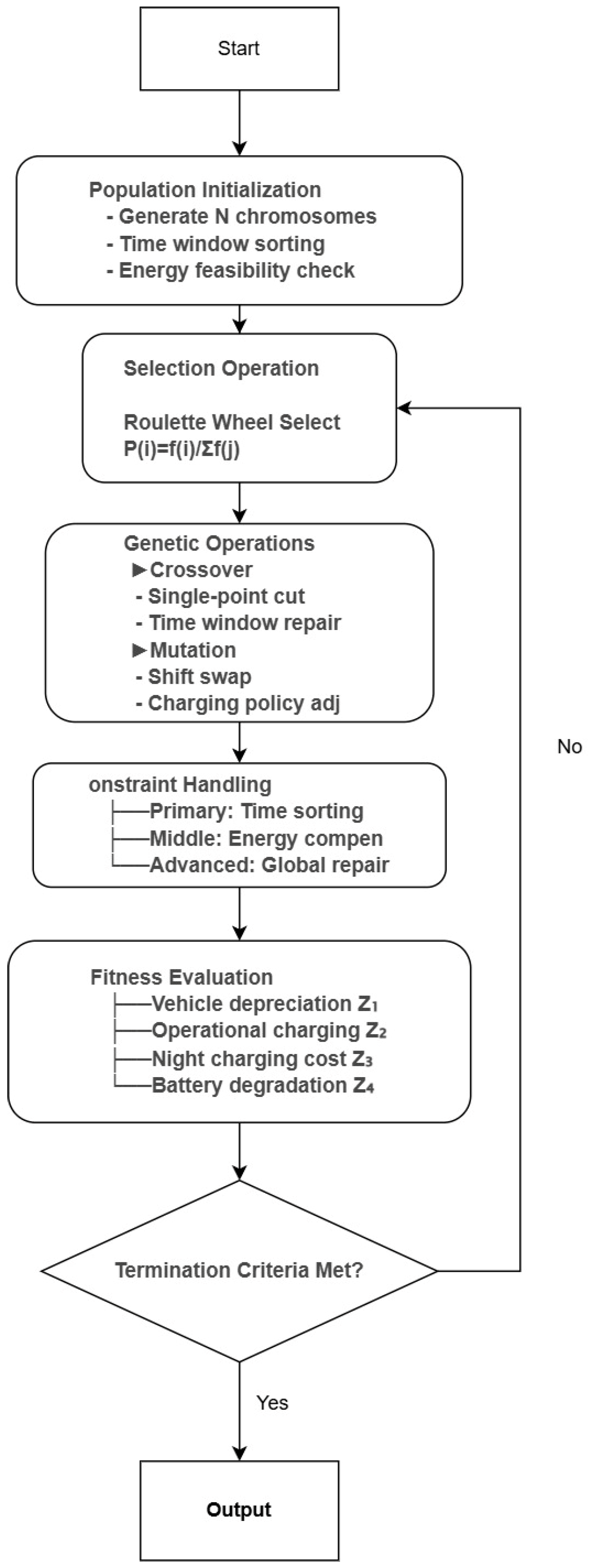
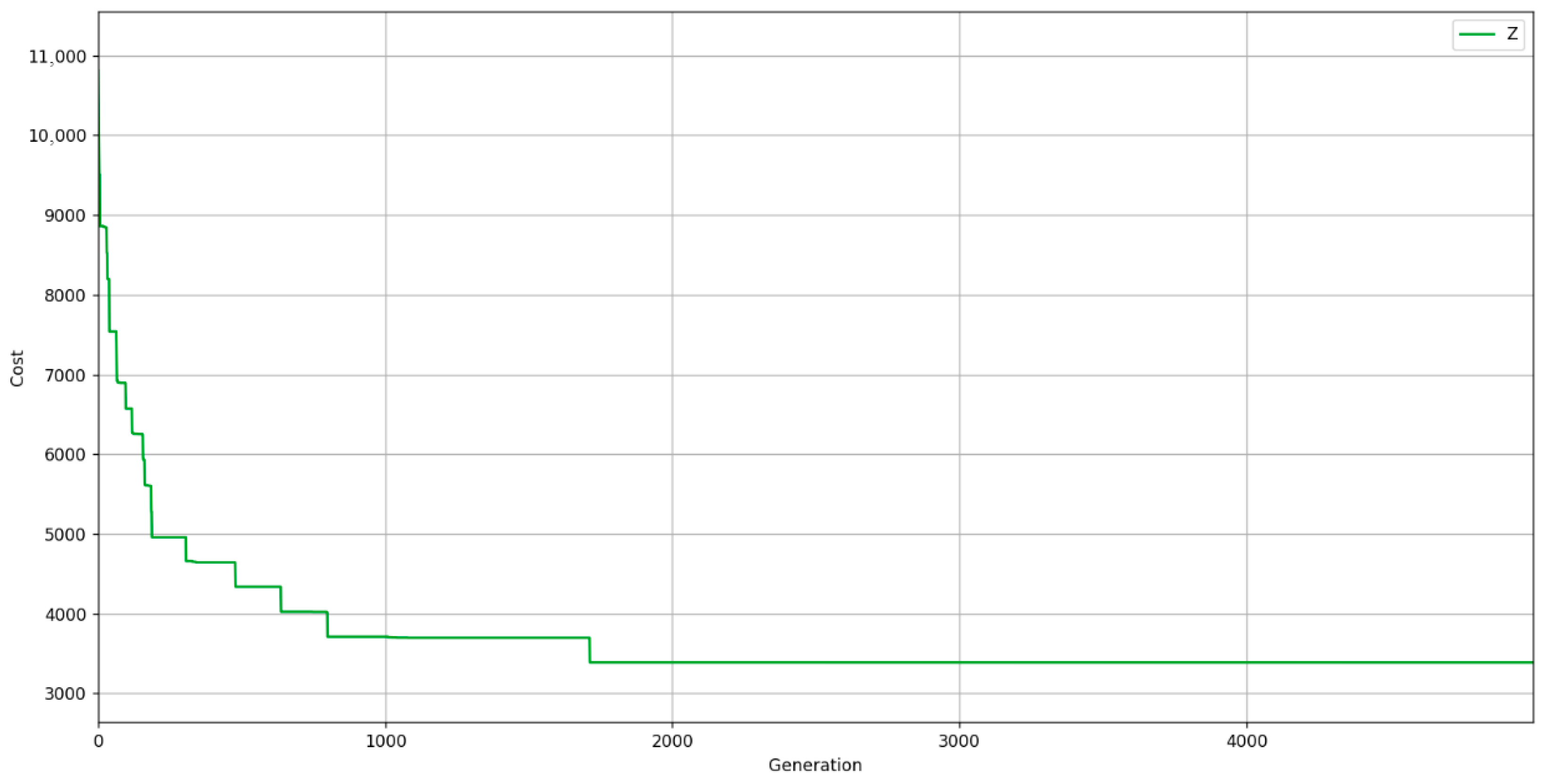
This paper first outlines the current status and challenges faced by domestic electric bus fleets. It then identifies feasible approaches to reduce operational costs at this stage, specifically through optimized scheduling to cut daytime operational expenses—particularly losses stemming from battery capacity degradation. Subsequently, it analyses and summarizes existing research on battery health state prediction and bus fleet scheduling optimization. Subsequently, a specific problem scenario is constructed. The operational costs of electric buses are divided into four distinct components and quantified. Constraints are imposed on the parameter ranges within the model, establishing a fundamental scheduling optimization framework. Subsequently, this paper proposes utilizing the lexicographic optimization method to enhance the original model. Through this refinement, the model can further reduce the cost associated with battery capacity degradation. Finally, a genetic algorithm is selected to solve for the optimal solution, forming a relatively standard genetic algorithm model.
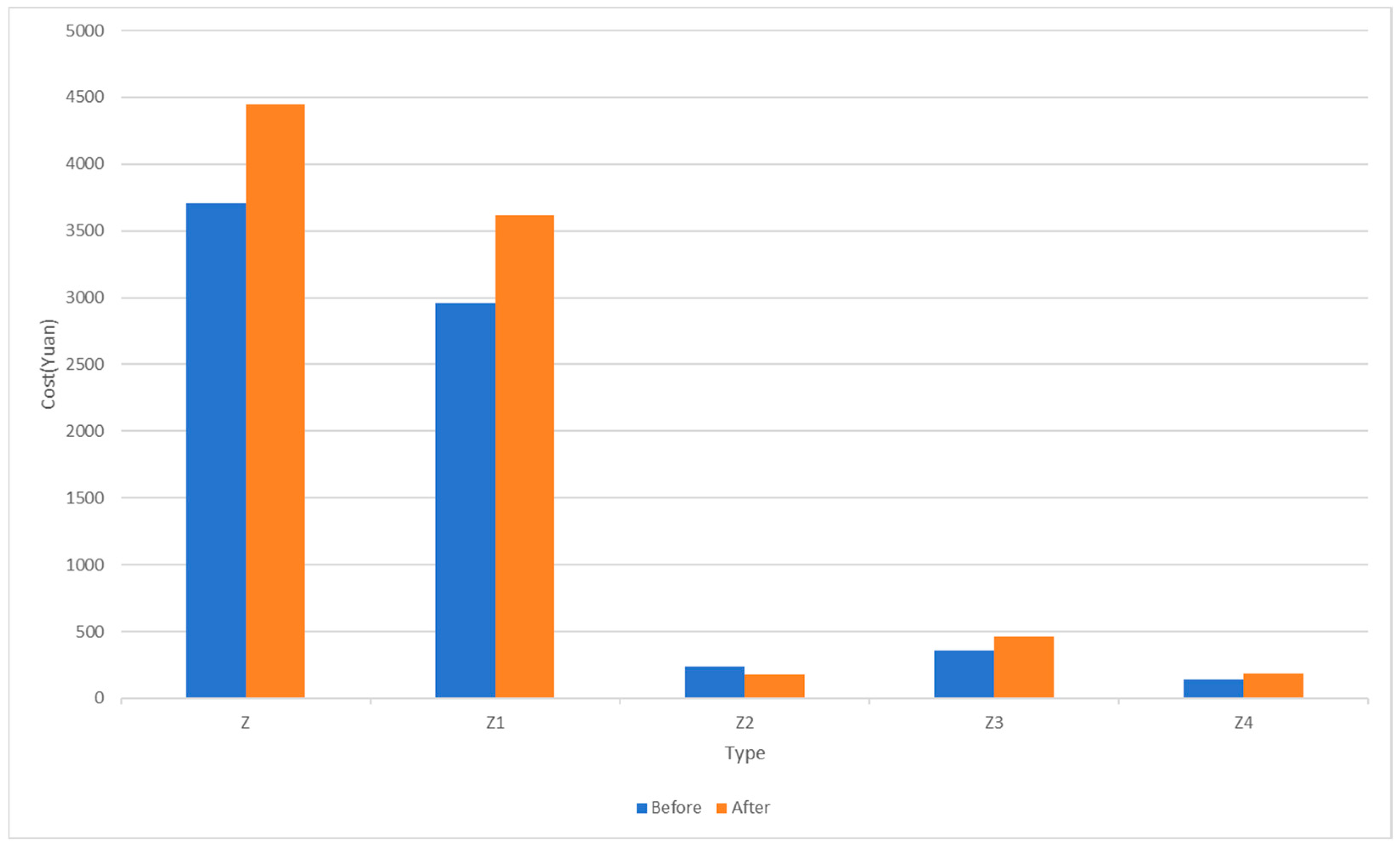
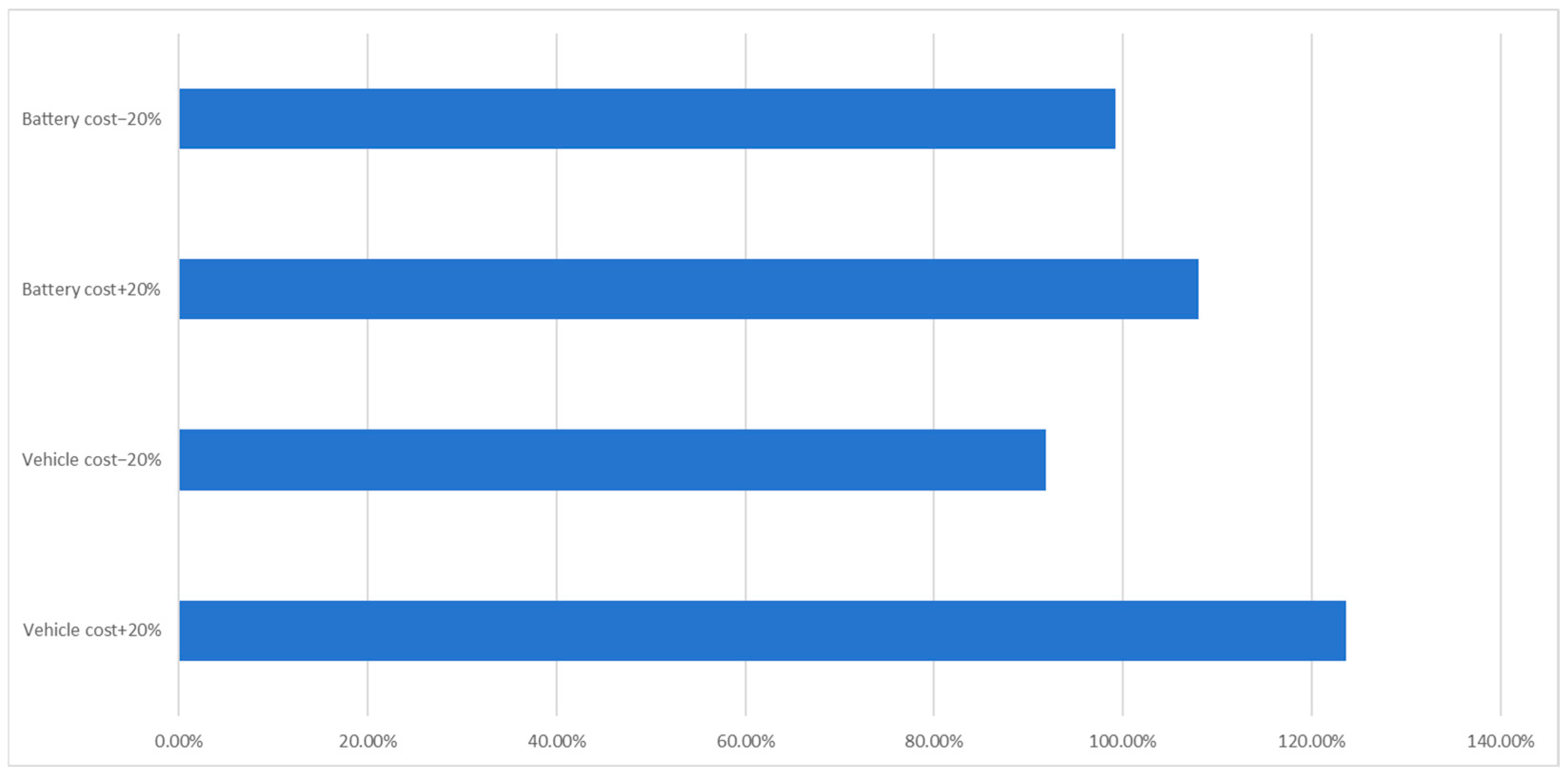
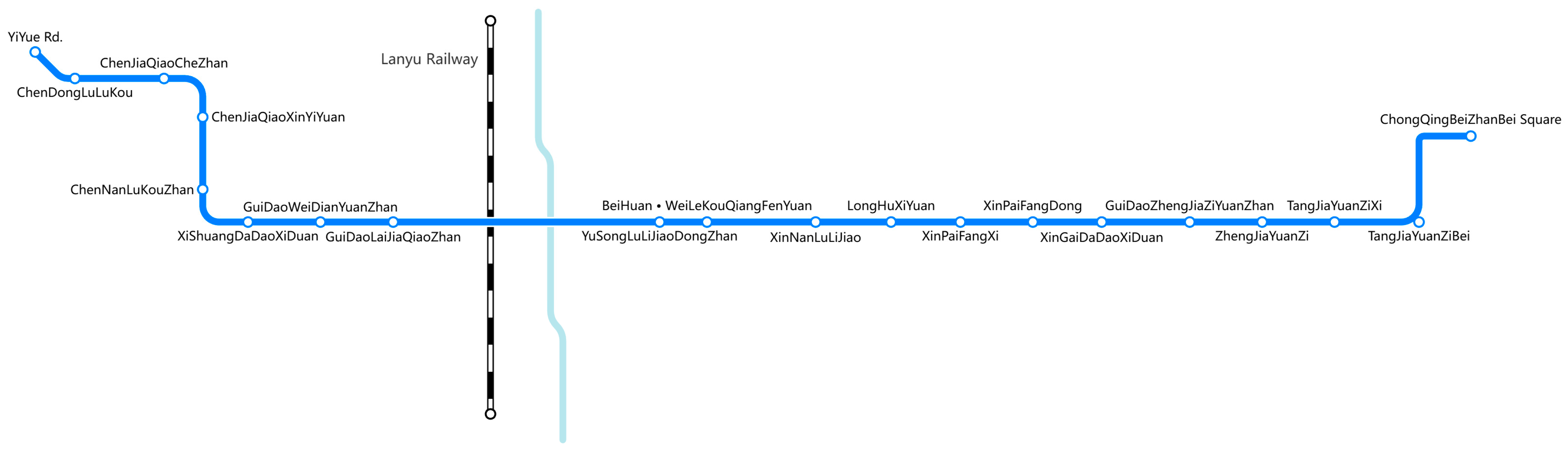
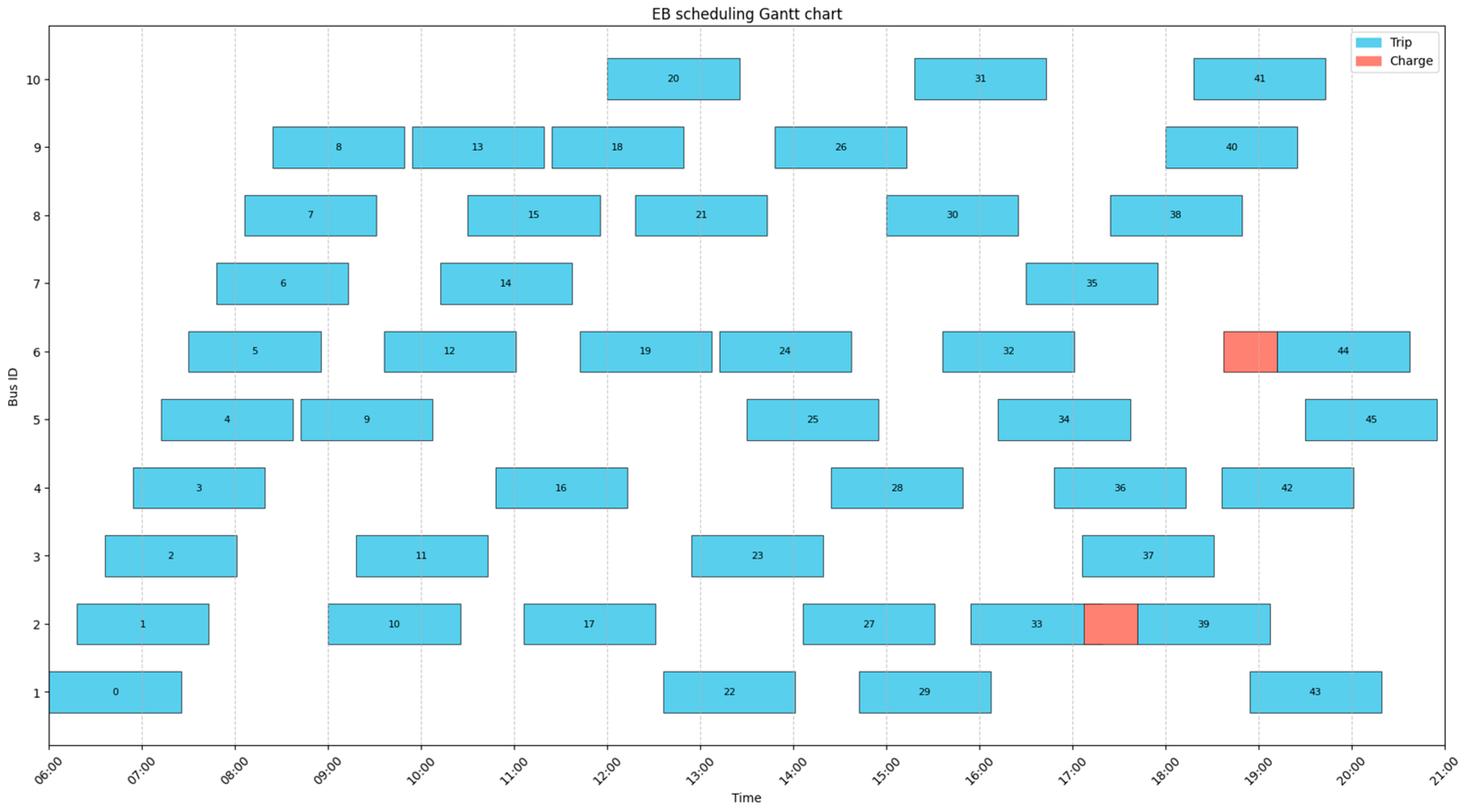
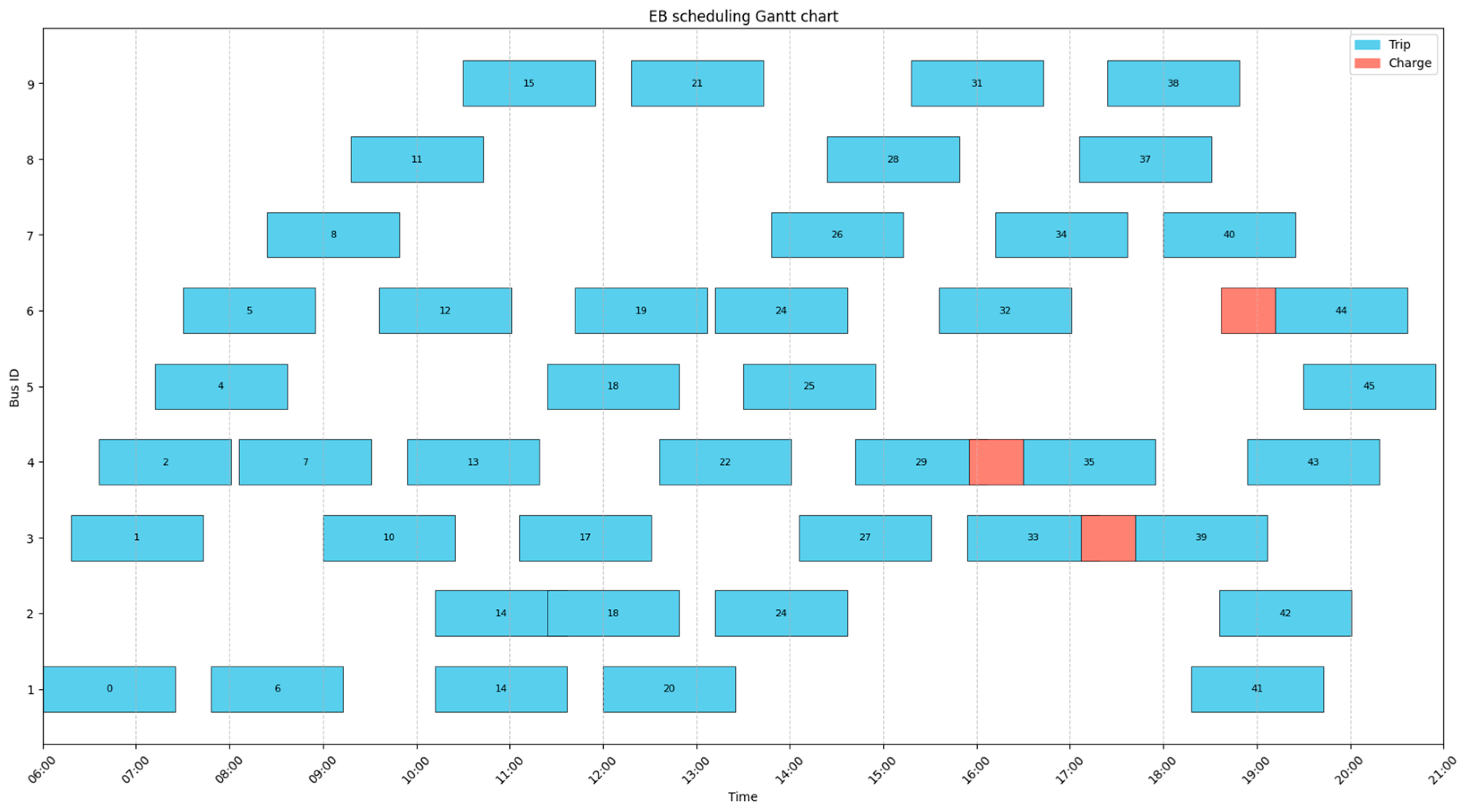
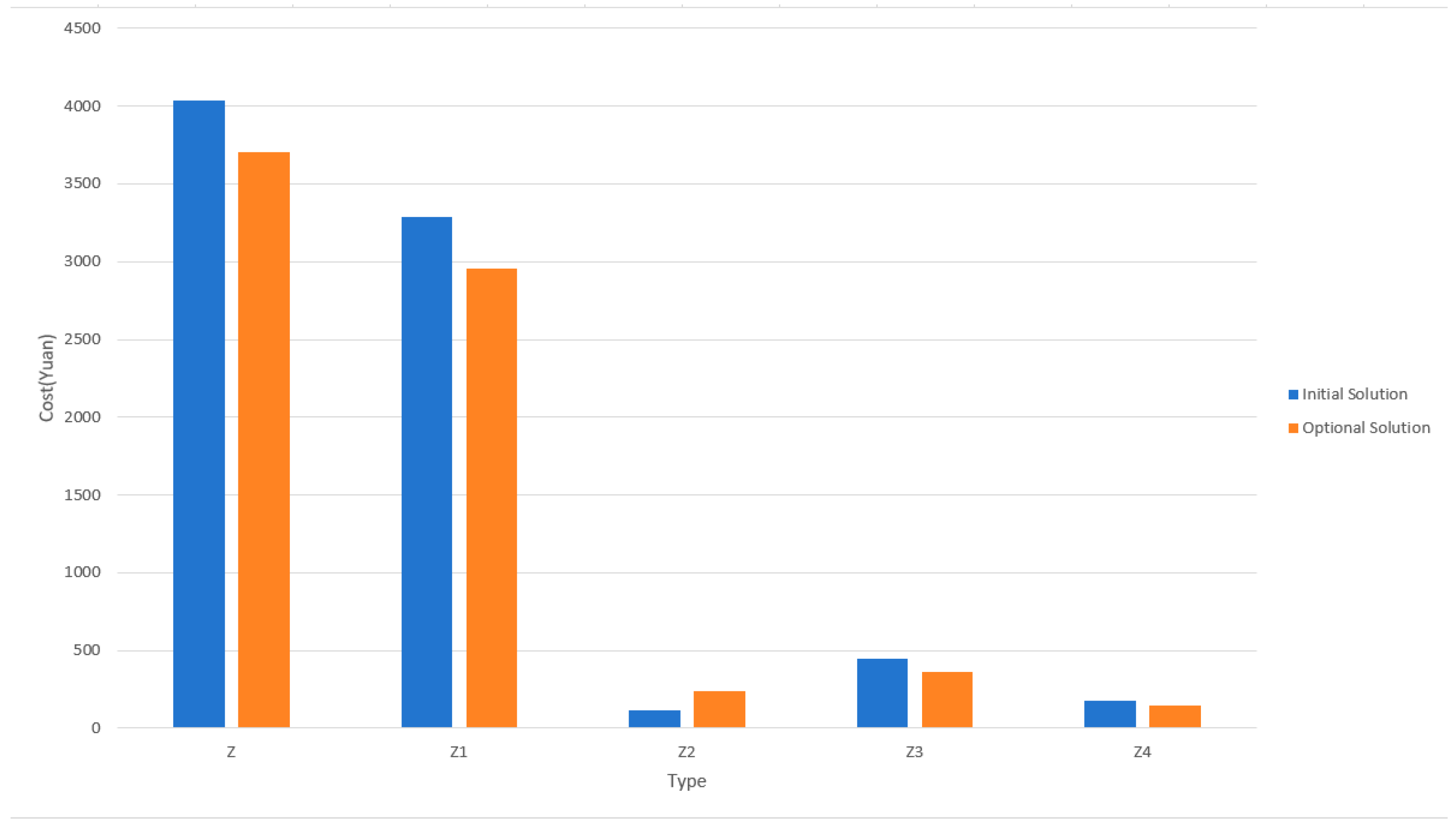
Subsequently, Chongqing Bus Route 579 was selected as the study subject. Using test data from a specific model of BAIC Foton pure electric bus as a reference, the relevant data were input into the model. This yielded both an initial solution and an optimal solution, including the route chain, residual battery charge at the end of daytime operations, total cost, and detailed costs for each component. The results demonstrate a cost reduction in the optimal solution compared with the initial solution. Subsequently, the operational mechanism of the scheduling optimization model was analyzed by examining changes in component costs. A sensitivity analysis was then conducted on vehicle acquisition costs and battery acquisition costs by progressively increasing the proportion of battery acquisition costs in the total cost and evaluating the corresponding impacts. Finally, this paper presents a comparison of the output results before and after the algorithmic improvements, thereby validating the effectiveness of the enhancements.
Compared with previous studies, the uniqueness of this paper lies in integrating battery capacity degradation as an important factor into the scheduling optimization model for electric buses. Previous scheduling optimization models focused more on battery state of charge, mainly tracking the battery charge status of electric buses during operation and optimizing consumption rates to ensure that the entire bus fleet can operate reasonably with lower energy consumption via more efficient scheduling. However, current research on battery aging is limited to analyzing aging rates in experimental environments and has not been widely applied to practical scenarios. Unlike existing studies that combine the two aspects, this research adopts distinct research methods and modeling approaches, thereby demonstrating certain unique advantages.